
Gas adsorption on MoS2/WS2 in-plane heterojunctions and the IV response: a first principles study

Jie Suna, Na Lin*a, Hao Ren*b, Cheng Tanga, Letao Yanga and Xian Zhao*a
aState Key Laboratory of Crystal Materials, Shandong University, 250100 Jinan, Shandong, PR China. E-mail: linnakth@gmail.com; zhaoxian@sdu.edu.cn
bState Key Laboratory of Heavy Oil Processing, Center for Bioengineering and Biotechnology, China University of Petroleum (East China), 266580 Qingdao, PR China. E-mail: renh@upc.edu.cn

Received 20th November 2015 , Accepted 22nd January 2016

First published on 26th January 2016


Abstract

New artificial in-plane heterojunctions based on two-dimensional transition metal dichalcogenides fabricated in recent reports are considered able to offer great scope for applications. Here, we study by first principles calculations the adsorption of CO, H2O, NH3, NO, and NO2 gas molecules on the MoS2/WS2 heterojunction. We have determined the optimal adsorption positions and the adsorption strength, which is driven by charge transfer between the molecules and the heterojunction. Except NH3, which performs as the charge donor, all the other studied molecules act as charge acceptors to the heterojunction. The charge transfer mechanism has been discussed by analyzing the electronic structure of the molecules and the heterojunction. Further calculations show that the molecule adsorption significantly affects the electronic transport properties of the heterojunction. Both the rectification behavior and the value of the passing current can be altered by adsorption, and such sensitivity to adsorption makes the heterojunction a superior gas sensor that promises wide-ranging applications.

1. Introduction

Graphene, a two dimension (2D) material, has drawn significant attention due to its peculiar physical properties and potential applications.1–3 However, the zero band gap nature of graphene limits its applications in logic electronics. Therefore, a great deal of efforts have been made to search for 2D alternatives as replacements.4–6 Transition metal dichalcogenides (TMDs), such as MoS2, WS2, have attracted great interest because of their intrinsic band gaps and their superior optoelectronic properties.7–9 The presence of a band gap makes them promising candidates for future electronic devices and allows them to be fabricated as transistors that can be tuned and used as switches, logic circuits and amplifiers.10–12 For instance, it was reported recently that a field-effect transistor (FET) constructed by monolayer/few-layer MoS2 possesses a room-temperature current with an on/off ratio exceeding 108 and mobility of 200 cm2 V−1 s−1.13

In parallel with the study of the isolation of TMDs materials, in-plane heterojunctions consisting of two TMD monolayers stitched together have also gained much attention. Previous theoretical studies has revealed that some TMD monolayers and their heterojunctions can align their band structures to be suitable for potential applications in spontaneous water splitting, photovoltaics, and optoelectronics.14,15 Recently, in-plane heterojunctions including MoS2/WS2, MoSe2/WSe2 and WS2/WSe2 have been fabricated by means of chemical vapor deposition (CVD).16–19 These heterojunctions greatly enhances localized photoluminescence and can be served as intrinsic monolayer p–n junctions with rectification ratios as high as two orders of magnitude. Further electrical transport measurements demonstrated that the heterojunctions could be used to create complementary inverters with high voltage gain.

2D TMDs are suitable for FET sensor applications to detect environmental pollution due to their large surface-to-volume ratio.20–23 Both theoretical and experimental investigations have demonstrated that the monolayer MoS2 and WS2 sheets are sensitive detectors for NH3, NO, NO2 gas molecules.24–30 This utilization is mainly based on the change in the resistivity due to molecules adsorption, where charge transfer occurs at the molecule–substrate interface. It is expected that the electrical resistivity and rectification effect of the lateral TMD heterojunctions would be affected by molecules adsorbed especially on their in-plane interface. Hence, it is desirable to explore and establish the trends and rules of gas molecule adsorption on heterojunctions which can be used as high-efficiency sensors, and distinct characteristics of the influence of the molecules on transport behavior.

In this paper, we carried out first principles calculations for the CO, H2O, NH3, NO and NO2 molecules, adsorbed on the in-plane MoS2/WS2 heterojunction. Their preferential binding configurations were identified and the charge transfer mechanism is revealed. We also examined the response of electron transport properties of the heterojunction upon the molecular adsorption. This response might be utilized as potential gas sensors.

2. Computational details

All the electronic structure calculations were carried out based on density functional theory (DFT) with the projector-augmented wave (PAW) method, as implemented in the Vienna ab initio simulation package (VASP).31 The generalized gradient approximation (GGA)32 functional of Perdew, Burke and Ernzerhof (PBE) is used to approximate the exchange and correlation interactions. The van der Waals (vdW) correction proposed by Grimme (DFT-D2)33 is chosen to describe the long-range interaction. The local density approximation (LDA) is also adopted in some calculations for comparison. A cutoff energy of 400 eV for the plane-wave basis set and a Monkhorst–Pack mesh of 4 × 6 × 1 for the Brillouin zone integration were employed. A vacuum layer larger than 15 Å is used to avoid interaction between neighboring images. All the structures were fully relaxed by using the conjugate gradient method until the maximum Hellmann–Feynman forces acting on each atom is less than 0.02 eV Å−1. Spin polarization was included in the calculations of the adsorption of NO and NO2 since these molecules are paramagnetic but not considered in other calculations. By means of Bader analysis, charge transfer between the monolayer substrate and the adsorbate is obtained.

Electron transport properties are computed of the optimized structures using the nonequilibrium Green's function (NEGF) method implemented in the TRANSIESTA program.34 The current through the system is calculated according to the Landauer–Büttiker formula:

I = G0T(E,V)[fL(E) − fR(E)]dE
where G0 = 2e2/h is the unit of quantum conductance, T(E,V) is the transmission coefficient at energy E and the bias voltage V, fL(E) and fR(E) are the Fermi distribution functions respectively at left and right electrodes. The k-point samplings for the transmission spectra calculations are respectively 1, 100, and 100 in the x, y, z directions.

To evaluate the stability of the adsorption of gas molecules on the heterojunction, the adsorption energy is defined as

Ea = Egas/heterojunctionEgasEheterojunction
where Egas, Eheterojunction and Egas/heterojunction are the total energies of the gas molecule, heterojunction and the absorbate–substrate system, respectively. A negative value indicates the adsorption of gas molecules on the surface of heterojunction is energetically favorable.

3. Results and discussion

To model the in-plane MoS2/WS2 heterojunction, a supercell with lattice dimensions of 33.061 Å × 9.542 Å is used (Fig. 1), this supercell consists of two individual MoS2 and WS2 grains stitched along the zigzag direction, which has been observed previously by Gong16 et al. In order to determine the favorable molecules adsorption configuration, six adsorption sites are considered, namely, on the top of W (TW) and Mo (TMo) atoms, on top of a S–W (B(S–W)) or S–Mo (B(S–Mo)) bond, on top of a S atom (TS), and on top of a hexagon (H). We initially place the molecule on the above sites and then examined the molecule orientations. Take the NH3 molecule as an example, two orientations of the ammonia molecule are investigated, one with the N atom pointing away from the surface (u) and the other with the N atom pointing to the surface (d). By comparing the adsorption energies of the involved configurations (see ESI Section 1 Fig. S1), we can obtain the optimal ones. We present two most stable configurations of each molecule adsorption except NH3 in Fig. 1. The corresponding adsorption energies (Ea), equilibrium height (d), and charge transfer (ΔQ) upon adsorption calculated with LDA, GGA and PBE+D2 are listed in Table 1. The equilibrium height is defined as the vertical distance between the lowest atom of the gas molecule and the top S-layer of the heterojunction.
image file: c5ra24592c-f1.tif
Fig. 1 Top (left panel) and side view (right panel) of the favorable configurations for (a) CO, (b) H2O, (c) NH3, (d) NO, and (e) NO2 on the heterojunction, respectively.
Table 1 Calculated adsorption energies (Ea), equilibrium height (d), and charge transfer (ΔQ) upon adsorption of the molecules studied with LDA, PBE and PBE with vdW correction
Model Site LDA GGA-PBE PBE+D2
Ea (eV) d (Å) ΔQ (e) Ea (eV) d (Å) ΔQ (e) Ea (eV) d (Å) ΔQ (e)
CO TMo −0.1201 2.8257 −0.0134 0.0087 3.2351 −0.0094 −0.0901 3.2353 −0.0095
TW −0.1185 2.8774 −0.0111 −0.0017 3.4805 −0.0071 −0.0875 3.4809 −0.0072
H2O HMo −0.2281 2.2161 −0.0235 −0.0355 2.5635 −0.0165 −0.1527 2.5346 −0.0165
HW −0.2401 2.2052 −0.0116 −0.0351 2.7989 −0.0119 −0.1555 2.5878 −0.0154
NH3 HD −0.1864 2.7075 0.0427 −0.0286 2.9638 0.0234 −0.1585 2.9587 0.0233
NO TMo −0.2169 2.2240 −0.0031 −0.0219 2.9083 −0.0050 −0.1224 2.9060 −0.0253
TW −0.1870 2.4269 −0.0112 −0.0103 2.8988 −0.0038 −0.1196 2.9002 −0.0040
NO2 TMo −0.5509 2.4097 −0.1132 −0.0103 2.9361 −0.0540 −0.1614 2.8932 −0.0546
TW −0.5431 2.5222 −0.1093 −0.0283 3.3439 −0.0336 −0.1525 3.2135 −0.0405


As previously mentioned, GGA functional cannot account for long-range electron correlation effects and they tend to underestimate weak interactions such as vdW interactions. A pragmatic method to work around this problem has been given by the DFT-D2 approach,33 which has been previously applied for weak interacting systems finding a good agreement of the theoretical results with the experimental ones.22,35 Indeed, all these adsorption energies are significantly increased when the vdW interactions are included, but small changes are found in distances and charge transfer values, as can be seen from Table 1. Different from GGA functional that underestimates the adsorption energy, LDA functional usually has a tendency to overestimate it. As listed in Table 1, the adsorption energies obtained by using LDA functional are even larger that using PBE+D2 method, due to error cancellation between exchange and correlation effects.36 Meanwhile, LDA calculations predicted shorter distances and higher charge transfer values compared with GGA and PBE+D2 results. Since both LDA and GGA cannot capture the van der Waals (vdW) interactions in weakly bonded systems, the following discussions about the adsorption properties are based on the PBE+D2 calculated results.

The calculated results indicate that the CO and NO prefer to locate at the on-top site of the transition metal atoms. H2O is stably adsorbed on the hollow site with two hydrogen atoms pointing toward the surface whereas the oxygen atom resides close to one of the transition metal atoms. The NH3 molecule also prefers to adsorb at the hollow site with the nitrogen atom pointing to the surface. For NO2 molecule adsorption, the two stable configurations are different, one with NO2 located at the on-top site of the Mo atom and in the other configuration it is adsorbed at the hollow site with one oxygen atom close to the W atom. In addition, we observed that the adsorption of CO, NO and NO2 molecules were more stable as close to Mo atom than those close to W atom, although the discrepancies of the adsorption energies are small (less than 6%). However, for H2O molecule, the adsorption configuration near W atom (−0.1555 eV) is more stable compared with that near Mo atom (−0.1527 eV). There is only one stable configuration for NH3 adsorption, in which the NH3 molecule locates at the center of the puckered honeycomb, with adsorption energy of −0.1585 eV. It is worth to note that CO adsorption is the weakest while other molecules exhibit much stronger adsorption energies, especially NO2, which has the largest adsorption energy (−0.1614 eV) among the gas molecules studied in the present work. This indicates that the heterojunction is more sensitive to NO2, which is similar to the previous results for gas molecular adsorption on graphene and MoS2.21,30

Bader charge analysis is performed to examine the charge transfer upon adsorption. It is found that all the molecules studied are charge acceptors with 0.007–0.055e transferred from the heterojunction, except NH3 behaves as a charge donor, providing 0.0233e to the heterojunction. The amount of transferred charge can be correlated with the adsorption energy and the adsorption distance. Strong charge transfer usually corresponds to higher adsorption energy and shorter adsorption distance for the same molecule adsorbed at different positions of the heterojunction. To further elucidate the charge transfer between gas adsorbates and the heterojunction, the isosurface plot of electron charge density difference for these gas molecules are provided in Fig. 2. It is indicated that there is a charge reduction on heterojunction surface for CO, H2O, NO and NO2 adsorbates, suggesting the charge-acceptor characteristics of these molecules. On the other hand, an obvious charge decrease of NH3 molecule indicates its charge-donor property. These results are consistent with Bader analysis and similar to previous reports on the adsorption of gas molecules on graphene21 and carbon nanotube,37 where the gas molecules also behave as either charge acceptors or donors. Recently, in situ photoluminescence measurements also confirmed the donor and acceptor nature of NH3 and NO2 adsorption.28 The charge transfer between the molecule and the heterojunction is expected to have a great impact on the electronic and transport properties of the heterojunction.


image file: c5ra24592c-f2.tif
Fig. 2 Isosurface plot of the electron charge density difference for (a) CO, (b) H2O, (c) NH3, (d) NO, (e) NO2 on heterojunction with the isovalue of ±0.0002 e Bohr−3. The charge accumulation is represented in yellow and charge depletion is in blue, respectively.

Besides the gas molecules adsorbed on the interface of the heterojunction, the adsorption energies of the molecules away from the interface are also calculated with different functionals as shown in Fig. 3. It can be seen from Fig. 3 that both LDA and GGA-PBE calculations indicate the molecules adsorbed on the interface are more stable than those on the region away from it. As the vdW interaction involved, the most favorable adsorption sites shift to the WS2 region. We have carefully checked the configurations of the molecules adsorbed on the WS2 site and note that both the adsorption energies and the charge transfer behavior of the molecules adsorbed on WS2 are similar to those adsorbed on the interface of the heterojunction (more discussions of the molecules adsorbed on WS2 site see ESI Section 2). We should notice that the molecules adsorbed on WS2 have different adsorption strength comparing with those on MoS2. This asymmetric adsorption energy may cause the nonuniform distribution of the molecule on the heterojunction, which probably also have great influence on the electronic and transport properties of the heterojunction. However, further discussions upon this point are out of the scope of present paper, where we will concentrate on the case of the molecule adsorbed on the interface.


image file: c5ra24592c-f3.tif
Fig. 3 The adsorption energies of the molecules adsorbed on different positions of the heterojunction with different functionals.

In the following part, we shift our focus on the effects of gas adsorption on the electronic properties of the heterojunction. We carried out non-spin polarized calculations for nonmagnetic molecules CO, H2O, and NH3 and spin polarized calculations for paramagnetic molecules NO and NO2 using PBE+D2 method. The corresponding band structure of the most stable configurations are displayed in Fig. 4, we can see that the band gap of the heterojunction is 1.67 eV (Fig. 4(a)), which is 0.14 eV smaller than that of our calculated pure WS2 (1.81 eV) and 0.05 eV larger than that of MoS2 (1.62 eV). As nonmagnetic molecules CO, H2O and NH3 adsorbed on it, the valence and conduction bands of the heterojunction remain largely unaltered as shown in Fig. 4(b)–(d), respectively. In contrast, some flat impurity states distributed near the Fermi-level are clearly observed in the band gap when paramagnetic molecules NO, and NO2 are adsorbed. Notably, although adsorption of NO, and NO2 induced formation of flat impurity states in the band gap of the heterojunction, it should be emphasized that these impurity states have almost no influence on the band gap energy of the heterojunction due to the weak physisorption interaction. Moreover, these impurity states are all localized around the adsorbed gas molecules and there is no hybridization between these impurity states and the heterojunction as shown in the projected band structure shown in Fig. 4(e) and (f).


image file: c5ra24592c-f4.tif
Fig. 4 (a) Band structures of heterojunction and with each gas molecule adsorption (b) CO, (c) H2O, (d) NH3, (e) NO and (f) NO2. The bands projected to the molecule orbitals are highlighted by red (b)–(d), the red and green in (e), (f) represents spin up and down projected molecule bands.

To further shed light on the effects of gas adsorption on the electronic properties of the heterojunction. We calculated the density of states (DOS) of the most stable configurations and the positions of important molecule orbitals are displayed in Fig. 5. The adsorption of nonmagnetic molecules CO, H2O, and NH3 does not substantially affect the valence or conduction band of the heterojunction near the Fermi level (Fig. 5(a)–(d)). This can be attributed to the fact that the positions of these molecules' orbitals are far away from the Fermi level, which only hybrid with deeper states. The mixing orbitals cause the charge transfer between the molecules and the heterojunction, but produce no noticeable modifications of the DOS near the Fermi level.


image file: c5ra24592c-f5.tif
Fig. 5 (a) Total DOS of heterojunction and with each gas molecule adsorption (b) CO, (c) H2O, (d) NH3, (e) NO and (f) NO2. The blue dotted lines show the positions of the molecular orbitals. The Fermi level is shifted to zero indicated by the black dashed lines. (g) and (h) show the spatial spin density distribution on NO and NO2 molecules.

The adsorption of paramagnetic molecules NO and NO2 introduces new states near the Fermi level. For NO absorption (Fig. 5(e)), the total magnetic moment is −1.0 μB. A spin-down impurity state derived from the lowest unoccupied molecular orbital (LUMO) of NO appears at the Fermi level. Since charge transfer occurs when the energies of the valence (conductance) band of the substrate match the LUMO (HOMO) of the molecules. In the case of the molecular HOMO is higher than the substrate Fermi level, charge transfers from the molecule to the substrate, and charge transfers in the opposite direction when the molecular LUMO is lower than the substrate Fermi level. Charge transfer is also affected by the mixing of the molecular HOMO/LUMO with the substrate states. We note that the LUMO (2π,↓) of NO is located 0.2 eV below the substrate Fermi level. As the consequence, charge transfers form the heterojunction to the molecule. Adsorption of NO2 on the heterojunction (Fig. 5(f)) leads to a magnetic moment of 1 μB, and the Fermi level shifts downwards to the top of the valence band, indicating a hole doping to the heterojunction. The charge transfer from the heterojunction to the molecule can be caused by the orbital mixing especially the highest occupied molecular orbital (HOMO) (6a1,↑). However, we also notice that the LUMO (6a1,↓) is located at 0.4 eV above the Fermi level, which cause some charge transfer in the opposite direction. The latter charge transfer is relatively weaker and these two effects in total lead to a net charge transfer from the heterojunction to the molecule. The real space distribution of the spin density depicted in Fig. 5(g) and (h), respectively, further illustrate that the spin-polarized electrons are mainly located at the NO or NO2 molecules in both cases.

Although the adsorption of CO, H2O, and NH3 does not substantially affect the electronic structures of the heterojunction, the charge transfer upon adsorption is expected to vary the electron transport characteristics due to hole or electron doping. These effects are potentially applicable as gas sensors. In order to explicitly evaluate the performance of the heterojunction as a gas sensor, a two-probe system, as shown in Fig. 6(a), where two semi-infinite electrodes are connected with the central scattering region, is employed to calculate the electron transport properties at nonequilibrium conditions. The corresponding current–voltage (IV) characteristics and their response upon gas molecule adsorption are examined. We selected two representative cases of gas adsorption on heterojunction NH3, non-spin-polarized; and NO2, spin-polarized in our electron transport simulation.


image file: c5ra24592c-f6.tif
Fig. 6 (a) Two-probe systems where semi-infinite left and right electrode regions are in contact with the central scattering region, the upper panel is top view, while the lower one is side view. (b) and (c) The IV curve of the heterojunction without and with NH3 adsorption, respectively. The rectification ratio R(V) is shown in the insets. (d)–(f) Transmission spectra in 0 V and ±2.2 V. Band structure for the left electrode (left panels), transmission curve (middle panels), and band structure for the right electrode (right panels). The blue and red lines in transmission curves represent the heterojunction and the NH3 molecule adsorbed on it. The green lines indicate the bias window for the transportation.

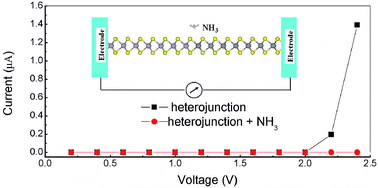
The IV characteristic of the bare heterojunction is shown in Fig. 6(b). The junction remains switched off for bias voltage below 2.0 V, and switched on above. As the bias voltage further increases, we noticed that the current through the heterojunction in positive bias region is larger than that in the negative bias region, implying a good rectification character. This asymmetric feature of the IV curve is quantified by a rectification ratio defined as R(V) = |I(V)/I(−V)|. We found that the R for the heterojunction at 2.2 V is 90 which is close to the experiment result16 where the current at positive bias is two orders of magnitude higher than the reversed. To further understand the rectifying characteristics of the heterojunction, the band alignment of heterojunction are calculated and a type II band alignment of the heterojunction is obtained (see ESI Section 3 Fig. S3). In such a type-II heterojunction, one can readily see that a strong rectification and a strong built-in electric field are expected, which may drive the free electrons and holes generated in the vicinity of the interface to recombine preferentially at the interface. This is pursued further possible optoelectronic applications besides molecule sensors of the heterojunction.

It is interesting that, when NH3 is adsorbed on the junction, the rectifying direction is inversed, as shown in Fig. 6(c). Moreover, the rectifying effect is greatly improved upon NH3 adsorption, with a rectification ratio of ∼190. However, the current of the heterojunction with NH3 is significantly decreased compared with that without NH3 in the positive bias region. The reduction of current indicates the increase of resistance after the NH3 adsorption, which can be directly measured in the experiment. While an opposite trend of current change is displayed in the negative bias region. We notice that the decreased current value in the positive bias is much larger than the increased value in the negative bias, which implies that the heterojunction response to NH3 is rely on the bias direction.

To understand the effect of NH3 adsorption on the transport properties, we consider the bias dependent transmission spectra of the heterojunction with and without the NH3 adsorption. Fig. 6(d)–(f) shows the transmission spectra at 0 V and ±2.2 V. We start from the case of zero bias. It is seen that there is a region of zero transmission around the Fermi level with a width of 1.6 eV, which is near the value of the band gap of the heterojunction (Fig. 4(a)). Beyond this region, it is clear that the transmission ability decreased below the Fermi level especially in the region of around −1.5 eV and increased slightly above the Fermi level by the NH3 adsorption. We consider that the reduced and increased transmission abilities have contribution to the reduction and increment of passing current under the positive and negative bias, respectively. When the bias is applied, the current is mainly attributed to the transmission coefficient around the Fermi level within the bias window. For the transmission spectra of the heterojunction under the bias 2.2 V, the bands shift up and down by 1.1 eV, for the left and right electrodes, respectively. Moreover, nonzero transmission peak emerges around the Fermi level and this transmission peak is well-matched energy bands of both electrodes, which naturally leads to much larger current. However, the peak is vanished due to NH3 adsorption, which results in no transmission under the bias window and largely lessens the current. Contrary to the transmission spectra under the positive bias, there is no transmission peak near the Fermi level for the heterojunction under the negative bias. Nevertheless, some faint transmission peak exists near the Fermi level as the NH3 adsorbed on the heterojunction, which causes the occurrence of the current.

The adsorption of paramagnetic molecules NO and NO2 on the heterojunction induce spin polarization as indicated above, which leads to spin-polarized current. We take heterojunction with the NO2 adsorption as a representative example to explore the spin-dependent transport and the IV curve. The spin-polarized IV curves for the heterojunction with the NO2 adsorption are presented in Fig. 7(a). It should be noted that the rectifying directions for both spin-up and -down current are not changed by NO2 adsorption and the largest rectification ratio at 2.4 V is 123 and 119, respectively. However, it decreases the spin current in two directions: for example, the current of the heterojunction under the positive bias is 1.4 μA, with the adsorption of paramagnetic NO2, the spin-up and -down current is decreased to 0.24 and 0.59 μA, respectively. The current decline is probably because the NO2 adsorption introduces backscattering centers that reduce the electron transmission ability. The evolution of the transmission spectra under bias is also plotted in Fig. 7(b). It is clear to see that the transmission peak exits under the positive bias but disappears under the negative bias, which efficiently controls the passing current and leads the rectifying behavior.


image file: c5ra24592c-f7.tif
Fig. 7 (a) Spin-polarized IV curves of the heterojunction with the NO2 adsorption. The rectification ratio R(V) is shown in the inset. (b) Transmission spectra in 0 V and ±2.2 V. The blue dashed lines indicate the bias window for the transportation.

From above discussions, we can see that the molecule adsorption has a great impact on the electronic transport properties of the heterojunction. The changes of the resistance and rectifying behavior are expected to make the heterojunction a good candidate for the gas sensing application. Here, we only consider the lateral heterojunction with a zigzag interface but not involved that with armchair interface, which also have been observed in the experiment. Moreover, the asymmetric doped by the transition metal existed in two sides of the heterojunction is also found in the experiment and its effect on the molecule adsorption and transport properties will be discussed in further work.

4. Conclusions

In summary, first principles calculations have been applied to systematically study the geometry, electronic structures, and electron transport properties of the MoS2/WS2 in-plane heterojunction with and without CO, H2O, NH3, NO, and NO2 gas molecular adsorption. Our results indicate that the heterojunction is sensitive to gas molecules except CO and NO2 which possesses the largest binding energy among the gas molecules considered here. This behavior is attributed to the modification of the substrate electronic structure and the charge transfer occurred upon adsorption. Electron transport calculations suggest that the heterojunction possesses an outstanding rectification character. The rectifying direction can be inversed by NH3 adsorption and the tunneling resistance can be greatly enhanced. The changes of the resistance and rectifying behavior provide potential applicability for the junction used as gas sensors.

Acknowledgements

We acknowledge the National Nature Science Foundation of China (Grant No. 21573129 and 21403300), the National Nature Science Foundation of Shandong Province (Grant No. ZR2015BQ001), and the General Financial Grant from the China Postdoctoral Science Foundation (Grant No. 2013M531595 and 214M560587). The authors also acknowledge a generous grant of computer time from the Norwegian Programme for Supercomputing and the National Supercomputer Center in Tianjin-TianHe-1(A).

References

  1. K. S. Novoselov, A. K. Geim, S. V. Morozov, D. Jiang, Y. Zhang, S. V. Dubonos, I. V. Grigorieva and A. A. Firsov, Science, 2004, 306, 666–669 CrossRef CAS PubMed.
  2. A. K. Geim and K. S. Novoselov, Nat. Mater., 2007, 6, 183–191 CrossRef CAS PubMed.
  3. A. H. Castro Neto, F. Guinea, N. M. R. Peres, K. S. Novoselov and A. K. Geim, Rev. Mod. Phys., 2009, 81, 109–162 CrossRef CAS.
  4. Q. H. Wang, K. Kalantar-Zadeh, A. Kis, J. N. Coleman and M. S. Strano, Nat. Nanotechnol., 2012, 7, 699–712 CrossRef CAS PubMed.
  5. L. Li, G. J. Ye, Q. Ge, X. Ou, H. Wu, D. Feng, X. H. Chen and Y. Zhang, Nature Nanotech., 2014, 9, 372–377 CrossRef CAS PubMed.
  6. J. N. Coleman, M. Lotya, A. O'Neill, S. D. Bergin and P. J. King, Science, 2011, 331, 568–571 CrossRef CAS PubMed.
  7. K. F. Mak, C. Lee, J. Hone, J. Shan and T. F. Heinz, Phys. Rev. Lett., 2010, 105, 136805 CrossRef PubMed.
  8. S. Ross, P. Klement, A. M. Jones, N. J. Ghimire, J. Yan, D. G. Mandrus, T. Taniguchi, K. Watanabe, K. Kitamura, W. Yao, D. H. Cobden and X. Xu, Nat. Nanotechnol., 2014, 9, 268–272 CrossRef PubMed.
  9. M. Jones, H. Yu, N. J. Ghimire, S. Wu, G. Aivazian, J. S. Ross, B. Zhao, J. Yan, D. G. Mandrus, D. Xiao, W. Yao and X. Xu, Nature Nanotech., 2013, 8, 634–638 CrossRef PubMed.
  10. Z. Yin, H. Li, H. Li, L. Jiang, Y. Shi, Y. Sun, G. Lu, Q. Zhang, X. Chen and H. Zhang, ACS Nano, 2012, 6, 74–80 CrossRef CAS PubMed.
  11. Y. Yoon, K. Ganapathi and S. Salahuddin, Nano Lett., 2011, 11, 3768–3773 CrossRef CAS PubMed.
  12. B. Radisavljevic, M. B. Whitwick and A. Kis, Appl. Phys. Lett., 2012, 101, 043103 CrossRef.
  13. B. Radisavljevic, A. Radenovic, J. Brivio, V. Giacometti and A. Kis, Nat. Nanotechnol., 2011, 6, 147–150 CrossRef CAS PubMed.
  14. J. Kang, S. Tongay, J. Zhou, J. Li and J. Wu, Appl. Phys. Lett., 2013, 102, 012111 CrossRef.
  15. J. Kang, H. Sahin and F. M. Peeters, J. Phys. Chem. C, 2015, 119, 9580–9586 CAS.
  16. Y. Gong, J. Lin, X. Wang, G. Shi, S. Lei, Z. Lin, X. Zou, G. Ye, R. Vajtai, B. I. Yakobson, H. Terrones, M. Terrones, B. K. Tay, J. Lou, S. T. Pantelides, Z. Liu, W. Zhou and P. M. Ajayan, Nat. Mater., 2014, 13, 1135–1142 CrossRef CAS PubMed.
  17. C. Huang, S. Wu, A. M. Sanchez, J. J. P. Peters, R. Beanland, J. S. Ross, P. Rivera, W. Yao, D. H. Cobden and X. Xu, Nat. Mater., 2014, 13, 1096–1101 CrossRef CAS PubMed.
  18. X. Duan, C. Wang, J. C. Shaw, R. Cheng, Y. Chen, H. Li, X. Wu, Y. Tang, Q. Zhang, A. Pan, J. A. Jiang, R. Yu, Y. Huang and X. Duan, Nat. Nanotechnol., 2014, 9, 1024–1030 CrossRef CAS PubMed.
  19. Y. Gong, S. Lei, G. Ye, B. Li, Y. He, K. Keyshar, X. Zhang, Q. Wang, J. Lou, Z. Liu, R. Vajtai, W. Zhou and P. M. Ajayan, Nano Lett., 2015, 15, 6135–6141 CrossRef CAS PubMed.
  20. F. Schedin, A. K. Geim, S. V. Morozov, E. W. Hill, P. Blake, M. I. Katsnelson and K. S. Novoselov, Nat. Mater., 2007, 6, 652–655 CrossRef CAS PubMed.
  21. O. Leenaerts, B. Partoens and F. M. Peeters, Phys. Rev. B: Condens. Matter Mater. Phys., 2008, 77, 125416 CrossRef.
  22. W. Xia, W. Hu, Z. Li and J. Yang, Phys. Chem. Chem. Phys., 2014, 16, 22495–22498 RSC.
  23. L. Kou, T. Frauenheim and C. Chen, J. Phys. Chem. Lett., 2014, 5, 7 Search PubMed.
  24. H. Li, Z. Yin, Q. He, H. Li, X. Huang, G. Lu, D. Wen Hui Fam, A. Iing Yoong Tok, Q. Zhang and H. Zhang, Small, 2012, 8, 63–67 CrossRef CAS PubMed.
  25. Q. He, Z. Zeng, Z. Yin, H. Li, S. Wu, X. Huang and H. Zhang, Small, 2012, 8, 2994–2999 CrossRef CAS PubMed.
  26. D. J. Late, Y. Huang, B. Liu, J. Acharya, S. N. Shirodkar, J. Luo, A. Yan, D. Charles, U. V. Waghmare, V. P. Dravid and C. N. R. Rao, ACS Nano, 2013, 7, 4879–7891 CrossRef CAS PubMed.
  27. N. Huo, S. Yang, Z. Wei, S.-S. Li, J.-B. Xia and J. Li, Sci. Rep., 2014, 4, 5209 CAS.
  28. B. Cho, M. Gwan Hahm, M. Choi, J. Yoon, A. R. Kim, Y.-J. Lee, S.-G. Park, J.-D. Kwon, C. S. Kim, M. Song, Y. Jeong, K.-S. Nam, S. Lee, T. J. Yoo, C. G. Kang, B. H. Lee, H. C. Ko, P. M. Ajayan and D.-H. Kim, Sci. Rep., 2015, 5, 8052 CrossRef CAS PubMed.
  29. Q. Yue, Z. Shao, S. Chang and J. Li, Nanoscale Res. Lett., 2013, 8, 425 CrossRef PubMed.
  30. S. Zhao, J. Xue and W. Kang, Chem. Phys. Lett., 2014, 595, 35–42 CrossRef.
  31. G. Kresse and J. Hafner, Phys. Rev. B: Condens. Matter Mater. Phys., 1993, 47, 558–561 CrossRef CAS.
  32. J. P. Perdew, K. Burke and M. Ernzerhof, Phys. Rev. Lett., 1996, 77, 3865–3868 CrossRef CAS PubMed.
  33. S. Grimme, Comput. Chem., 2006, 27, 1787–1799 CrossRef CAS PubMed.
  34. M. Brandbyge, J.-L. Mozos, P. Ordejón, J. Taylor and K. Stokbro, Phys. Rev. B: Condens. Matter Mater. Phys., 2002, 65, 165401 CrossRef.
  35. V. Barone, M. Casarin, D. Forrer, M. Pavone, M. Sambi and R. Vittadini, J. Comput. Chem., 2008, 30, 934–939 CrossRef PubMed.
  36. J. M. Garcia-Lastra, C. Rostgaard, A. Rubio and K. S. Thygesen, Phys. Rev. B: Condens. Matter Mater. Phys., 2009, 80, 245427 CrossRef.
  37. J. Zhao, A. Buldum, J. Han and J. P. Lu, Nanotechnology, 2002, 13, 195–200 CrossRef CAS.

Footnote

Electronic supplementary information (ESI) available. See DOI: 10.1039/c5ra24592c

This journal is © The Royal Society of Chemistry 2016
Click here to see how this site uses Cookies. View our privacy policy here.