

Grafting bioactive polymers onto titanium implants by UV irradiation
H. Chouirfa,
V. Migonney and
C. Falentin-Daudré*
LBPS/CSPBAT, UMR CNRS 7244, Institut Galilée, Université Paris 13 Sorbonne Paris Cité, 99 avenue JB Clément, 93340-Villetaneuse, France. E-mail: falentin-daudre@univ-paris13.fr
First published on 27th January 2016
Abstract
The anchorage failure of titanium implants in the human body is mainly due to biointegration problems. The use of bioactive polymers bearing anionic groups (such as sulfonates) in combination with titanium-based materials has been shown to be an excellent solution. In this paper, we report the grafting of an ionic polymer poly(sodium styrene sulfonate) (polyNaSS), in a two-step reaction procedure using UV irradiation. First, the titanium surfaces were chemically oxidized to allow the formation of titanium hydroxide and titanium peroxide. Then, titanium samples were immersed in a solution of sodium styrene sulfonate (NaSS) and were placed under UV irradiation to induce the decomposition of titanium peroxides with the formation of radicals capable of initiating the polymerization of the monomer NaSS. Various parameters, such as polymerization time, monomer concentration and lamp power were studied in order to optimize the yield of polyNaSS grafting. Fourier-transform infrared spectra recorded in attenuated total reflection mode (ATR-FTIR), scanning electron microscopy with Oxford energy dispersive spectroscopy (SEM-EDS) and contact angle measurements were applied to characterize the poly(NaSS) grafting. The amount of poly(NaSS) grafted onto the titanium surfaces was determined by the toluidine blue colorimetric method.
Introduction
Titanium is widely used as an implantable biomaterial for its good corrosion resistance, its excellent mechanical properties and “acceptable” biocompatibility with human tissues,1–3 but insufficient integration into the surrounding bone often occurs. This rejection is due to an uncontrolled inflammation process which induces fibrous capsule formation, causing the implant to poorly bind to the host tissue and consequently the implants can fail under shear stress, requiring revision surgery.4 In order to overcome this problem, different techniques have been proposed over the years to modify the surface of titanium. These approaches vary from mechanical to thermal and electrochemical methods.5–8 An alternative method that is gaining popularity, is the grafting of biomolecules and/or bioactive polymers.5Previous studies carried out in our laboratory have shown that anionic polymers or copolymers such as poly(sodium styrene sulfonate) (polyNaSS), poly(methacrylic acid) (polyMA), poly(methacryloyl phosphate) can favor osteoblast cell adhesion and differentiation.9,10 The distribution of these ionic groups along the molecular chains creates active sites which can interact with extracellular proteins, such as fibronectin, implicated in cell response. Recently, the grafting of polyNaSS was successful by using radicals issued from titanium peroxides able to initiate the radical polymerization of sodium styrene sulfonate (NaSS) monomer.11–14 Oxidation of titanium creates titanium peroxides at the surface; which, under heating, produce radicals to initiate the polymerization of ionic monomer NaSS. The drawback of this method is the long polymerization times (15 h). To this end, this study demonstrates the use of UV irradiation to decrease the polymerization time.
UV irradiation has been used to initiate radical graft polymerization of bioactive compounds on polymer surfaces.15–19 When exposed to UV light, polymer surfaces generate reactive sites which can be used to initiate graft polymerization. For example, UV irradiation has been used to introduce carboxylic acid functionality to PMMA,20 as well as to activate polystyrene surfaces for cell tissue.21
Chemical modification using UV irradiation is an easy process that can also be used as a suitable alternative due to its low cost and fast reaction rate. In this paper, we describe a simple method to graft sulfonate groups to the titanium implant surface by using UV radiation. This new method is the object of a patent.22 To demonstrate the success of the procedure, modified surfaces were characterized by various techniques including colorimetric method, contact angle analysis, ATR-FTIR and MEB (EDS).
Experimental section
Materials
Titanium (Grade 2) disks were obtained from Goodfellow, the surfaces of 1.5 cm diameter were polished. The two disk faces were polished with two SiC consecutive papers 500 and 1200. After polishing, the surfaces were cleaned in acetone overnight under stirring. The following day, the surfaces were successively cleaned once in acetone bath and three times in distilled water (dH2O) bath with sonication for 15 min. Then, the disks were put in Kroll's reagent (2% HF, Sigma; 10% HNO3, Acros and 88% dH2O) for one minute with stirring followed by five consecutive dH2O baths with sonication for 15 min each time. Sodium styrene sulfonate (NaSS, Sigma) used for the grafting process was purified by recrystallization in a mixture of water/ethanol (10![[thin space (1/6-em)]](https://www.rsc.org/images/entities/char_2009.gif) :90 v/v).11,22–25 The purified NaSS was then dried under atmospheric pressure at 50 °C overnight and then stored at 4 °C.
:90 v/v).11,22–25 The purified NaSS was then dried under atmospheric pressure at 50 °C overnight and then stored at 4 °C.
Grafting polyNaSS onto titanium surfaces
After washing the surface with Kroll's reagent, the surfaces were immersed in a Piranha solution (H2SO4/H2O2 50:50 v/v) in a controlled and inert atmosphere (>99% argon) (Scheme 1). First, the surfaces were immersed in sulfuric acid for one minute with stirring, then hydrogen peroxide was been added resulting in a color change and an exothermic reaction. The disks were amply rinsed with dH2O before putting them into a round bottom flask containing an aqueous solution of NaSS (0.32 M or 0.7 M). The round bottom flask containing NaSS and the titanium surfaces was irradiated with UV light (365 nm) at ambient temperature with stirring. The grafted surfaces were then rinsed for 48 h with dH2O and dried overnight at 37 °C before characterization.
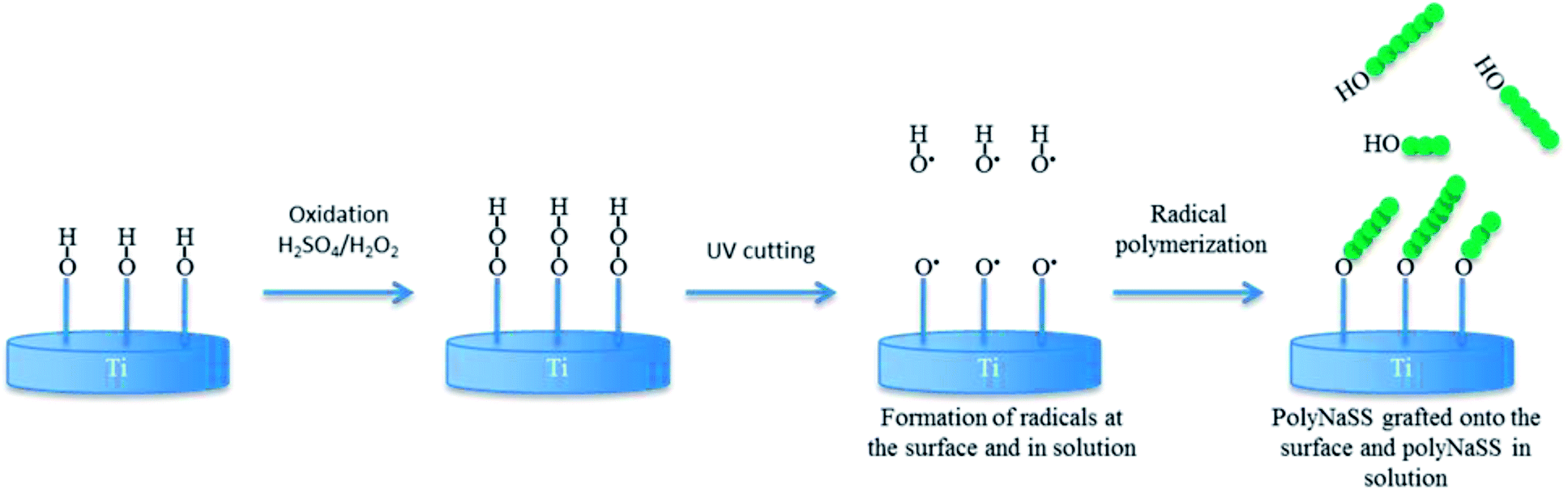 | ||
| Scheme 1 UV grafting process of polyNaSS onto the titanium surface. The surface is oxidized with peroxide formation and the UV irradiation give radicals by homolytic cleavage which initiates the polymerization. | ||
Instrumentation and measurements
Surface characterization
The grafting of poly(NaSS) was confirmed using the toluidine blue (TB) colorimetric method, contact angle, Fourier-transform infrared (FTIR) spectra, recorded in an attenuated total reflection (ATR) mode and scanning electron microscopy with energy dispersive X-ray spectroscopy analysis (SEM-EDS).:50 v/v, Fisher) for 24 h at ambient temperature. Concentration of decomplexed toluidine blue was measured by visible spectroscopy at 633 nm using a Perkin Elmer lambda 25 spectrometer. Ungrafted Ti samples were used as controls and were found not to react with the toluidine blue solution. 3 titanium disks were used per analysis.Results and discussion
Polymer grafting
The grafting of polymers (polyNaSS) onto titanium (Ti) surfaces can be achieved by radical polymerization.23 This method involves the immersion of titanium surfaces in a mixture of sulfuric acid and hydrogen peroxide (30%) produces a surface layer of titanium hydroxide and titanium peroxide species. The existence of the Ti-peroxide radicals was proposed independently by different research groups based on the vibrational modes in the range of 890–900 cm−1 of H2O2-oxidized Ti powder.23 Takemoto et al.28 have shown that the amount of Ti peroxide present decreases upon heating.Immersion of the titanium samples in a heated aqueous solution of the NaSS monomers induces decomposition of the Ti-peroxide radicals and initiates polymerization of the monomers, as shown previously on pure titanium.11,23 Here, we expand on the concept to replace source of radicals from a thermal source to a UV source to reduce reaction times.
We expected that the grafting efficiency of polyNaSS onto titanium surfaces would be strongly dependent on the power of the UV source. Keeping the concentration of NaSS constant (at 0.7 M), we tested several powers (from 75 to 220 mW cm−2) of the UV source. At each power, the sample was irradiated for the same duration (45 min) and we found that a maximum grafting efficiency could be obtained at 160 mW cm−2, 1.75 ± 0.1 μg cm−2 (Fig. 1). With this optimized power we carried out a kinetic study (Fig. 2) where we observed that the curve followed a “Gaussian curve” with an optimum at one hour, 2.48 ± 0.3 μg cm−2.
 | ||
| Fig. 1 UV Grafting at 0.32 M and at 0.7 M according to the power at 45 min. | ||
 | ||
| Fig. 2 Kinetic study of grafting polymerization at 0.32 M and at 0.7 M at 220 mW cm−2 and at 160 mW cm−2 respectively. | ||
The optimization of power and a kinetic study at the optimum power further had also been done at 0.32 M (Fig. 1 and 2). The optimum power was found to be at 220 mW cm−2 (1.27 ± 0.1 μg cm−2), stronger than 0.7 M and we observed at one hour a grafting maximum (4.35 ± 0.1 μg cm−2). Indeed, the polymerizations are significantly faster (complete in 1 h) over previous studies using thermal initiation (complete in 15 h).11,23–25 Furthermore, a comparable grafting efficiency (4.35 μg cm−2 compared to 5.0 μg cm−2) can be achieved at a lower monomer concentration (less wastage). With a weak concentration, it's necessary to increase the power to have a good quantity of grafted polyNaSS while a short time reaction. Beside, with both a high concentration and power, we had weak results because the viscosity increased. We have studied various parameters to optimize the conditions, the balance of the concentration, the power, the viscosity and the exposure time is important. All these parameters had been analysed to allow an excellent result: a high grafted polyNaSS rate in a few time.
With a UV initiated grafting, we observed a decreasing quantity of grafted poly(NaSS) if the surface was irradiated for longer than 60 min. To explain this observation, two scenarios are possible (Scheme 2): the scission of polyNaSS chains or entire removal of polyNaSS chains from the surface.
 | ||
| Scheme 2 UV degradation of the polyNaSS according to possible ways. | ||
To test the extend of chain scission, a polyNaSS standard from Sigma Aldrich (≈10 kDa) was been exposed for 4 hours under UV light at 220 mW cm−2. The chromatograms before and after irradiation showed no change, suggesting no chain scission takes place under the reaction conditions (Fig. 3). Thus the second scenario, involving the entire removal between the polyNaSS and the titanium, was studied in more detail. A grafted surface was exposed for 4 hours with the UV light (220 mW cm−2) in distilled water analysed with TB. The results showed a decrease of more than 90%. We can conclude that the second hypothesis is checked: an important UV exposition is going to break the bound between the polyNaSS and the titanium.
 | ||
| Fig. 3 GPC-SEC chromatogram of polyNaSS before and after UV irradiations. | ||
Indeed, a long UV irradiation time does not degrade the polyNaSS but the bond between the polymer and the Ti surface is easily cleaved.
Moreover, others analysis were done to check the presence of polyNaSS on the surface. Firstly, we evaluated the contact angle: the contact angle (θ) is a measure of the wettability of a solid by a liquid. In the case of complete wetting, the contact angle is close to 0° (super-hydrophilic surface), between [0°–90°], the surface is wetting and above 90°, the surface is hydrophobic (Fig. 4).29,30
 | ||
| Fig. 4 No grafted surface (left) and grafted surface (right). | ||
The two different graftings (thermal and UV), gave a contact angle around 15° suggesting the presence of polyNaSS which is known to be a hydrophilic polymer. In contrast the control sample (polished Ti disk, cleaned with Kroll's reagent and oxidized with Piranha solution) gave a contact angle of 57°. Absolutely, the polyNaSS is an anionic polymer bearing sulfonate groups, allowing when it is grafted to give to the surface a hydrophilic property (interesting wetting, θ inferior at 45°).
The FTIR spectra showed in the two UV initiated graftings, the presence of specific peaks of the polyNaSS at the surface of the titanium disk. The spectra (Fig. 5) shows the titanium surface ungrafted and grafted with polyNaSS between 900 and 1800 cm−1.
 | ||
| Fig. 5 Enlargement of FTIR-ATR spectrum of grafted polyNaSS onto titanium surface. | ||
The aromatic ring and the symmetric vibrations of the SO3− groups generated a NaSS doublet (O![[double bond, length as m-dash]](https://www.rsc.org/images/entities/char_e001.gif) SO) located at 1009 and 1039 cm−1 (Table 1). The absorption of the sulfonate was detected by the peaks between 1130–1185 cm−1, which is also associated with asymmetric vibrations (Table 1). Asymmetric vibrations are also found for the group SO2 at 1414 cm−1. Finally, the series of peaks between 1635 and 1452 cm−1 are attributed to stretching vibrations of bonds (CC) of the benzene ring (Table 1). Whereas, the ungrafted titanium was not IR active.
SO) located at 1009 and 1039 cm−1 (Table 1). The absorption of the sulfonate was detected by the peaks between 1130–1185 cm−1, which is also associated with asymmetric vibrations (Table 1). Asymmetric vibrations are also found for the group SO2 at 1414 cm−1. Finally, the series of peaks between 1635 and 1452 cm−1 are attributed to stretching vibrations of bonds (CC) of the benzene ring (Table 1). Whereas, the ungrafted titanium was not IR active.
| Wavenumber (cm−1) | Peak intensity | Chemical groups & interactions |
|---|---|---|
| 1635–1452 | Weak | ν(CC) from the aromatic ring |
| 1414 | Medium | ν(SO2) |
| 1178–1129 | Strong | SO3− (salt) |
| 1039 | Strong | ν(OSO) |
| 1009 | Strong | Aromatic ring |
The EDS element chemical analysis showed the presence of different atoms (C, O, Na, Ti, S), especially Na and S, essential compounds of the polyNaSS (Table 2). The percentage of oxygen is bigger after grafting because of one hand the oxidation step using peroxide hydrogen permitting to generate more oxygen atoms (Ti–OOH) and the other hand the grafting of polyNaSS (SO3−). A higher carbon percentage is observed due to the grafting of the bioactive polymer.
| EDS atomic composition% | |||||
|---|---|---|---|---|---|
| C | O | Na | S | Ti | |
| Ungrafted | 6.5 ± 0.2 | 8.0 ± 0.6 | — | — | 85.5 ± 0.6 |
| Thermal grafted | 20.8 ± 0.4 | 23.6 ± 0.8 | 1.5 ± 0.2 | 1.9 ± 0.3 | 52.2 ± 2.0 |
| UV grafted 0.32 M | 21.7 ± 1.5 | 19.7 ± 0.8 | 1.8 ± 0.1 | 1.9 ± 0.6 | 54.9 ± 3.2 |
| UV grafted 0.7 M | 20.9 ± 1.5 | 19.3 ± 1.5 | 1.5 ± 0.2 | 1.7 ± 0.4 | 56.6 ± 2.2 |
In order to have a clear view of the distribution of the elements at the surface of the grafted titanium and to confirm the homogeneity of the polyNaSS coating, elemental mapping was carried out using the EDS system on grafted samples (Fig. 6). The same analysis has been done for an ungrafted titanium (Fig. 7), we don't have any sodium and sulfur elements which are characteristic elements of polyNaSS.
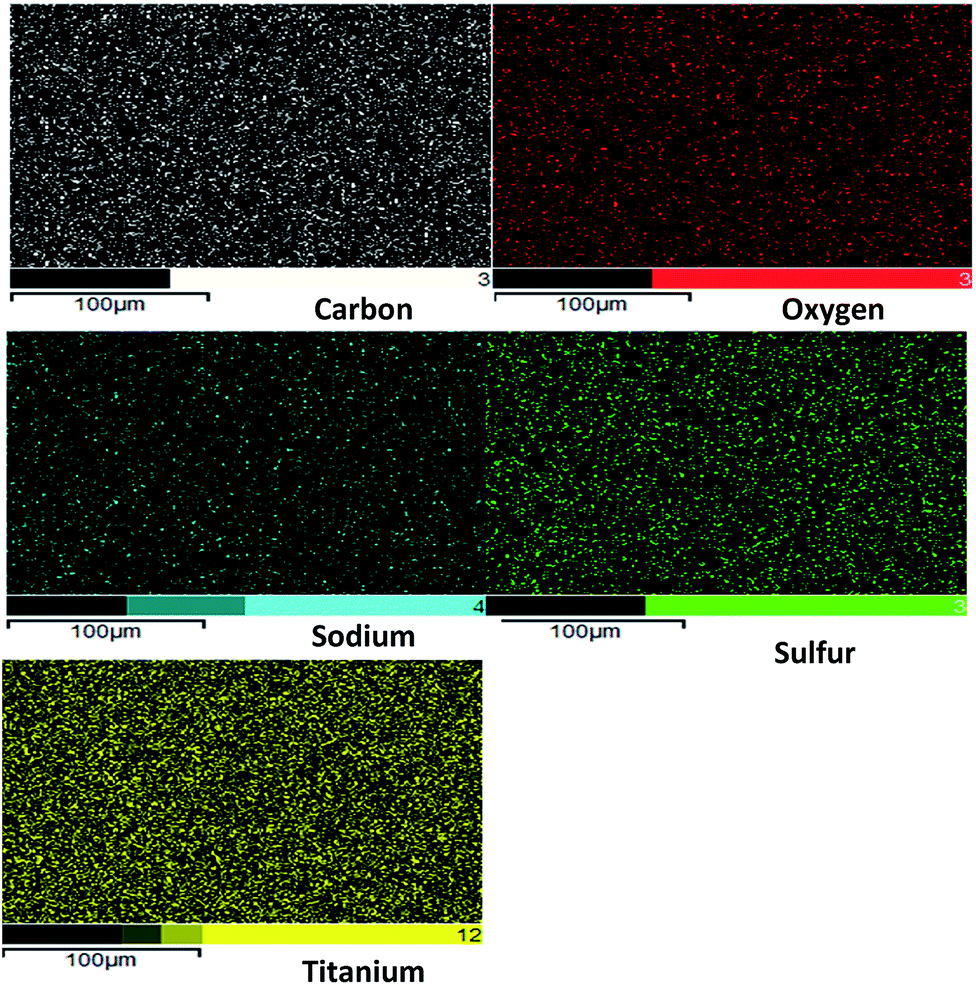 | ||
| Fig. 6 Element mapping/distribution on a grafted titanium surface. | ||
 | ||
| Fig. 7 Element mapping/distribution on an ungrafted titanium surface. | ||
Conclusions
We have developed a new approach to graft bioactive polymers covalently to a titanium surfaces. UV irradiation was used to induce decomposition of titanium peroxide to radicals to initiate the polymerization of an aqueous solution of monomer (NaSS) in which oxidized titanium samples were immersed. Different parameters, such as the time of the irradiation exposure, the monomer concentration and the power of the lamp were found to influence the efficiency of the grafting. Using a range of different techniques to measure the presence of bioactive polymers at the surface of titanium samples, this study has shown a grafting maximum (4.35 ± 0.1 μg cm−2) with a power lamp at 220 mW cm−2, with 0.32 M of monomer concentration and an UV exposure of 1 h. Compared with other modification methods, surface graft polymerization induced by UV irradiation exhibit some advantages such as fast reaction rate, low cost processing, simple equipment, easy industrialization. So, this finding might be adapted to graft bioactive polymers on other metallic devices, such as titanium alloys implants, which are widely used in medical application.Acknowledgements
We thank Dr JS Bauman for his help. This research was supported by the French Ministry of National Education, Higher Education and Research.References
- M. Niimoni, J. Mech. Behav. Biomed. Mater., 2008, 1, 30–42 CrossRef PubMed.
- M. Niimoni, Metall. Mater. Trans. A, 2002, 33, 477–486 Search PubMed.
- M. Long and H. J. Rack, Biomaterials, 1998, 19, 1621–1639 CrossRef CAS PubMed.
- M. K. Windler, in Titanium in medicine, ed. D. M. Brunette, T. P. Tengvall, M. Textor and P. Thomsen, Springer, Berlin, 2001, p. 703 Search PubMed.
- A. Michiardi, G. Hélary, P. C. T. Nguyen, L. J. Gamble, F. Anagnostou, D. G. Castner and V. Migonney, Acta Biomater., 2010, 6, 647–675 CrossRef PubMed.
- Z. Schwartz, M. J. Avaltroni, M. P. Danahy, B. M. Silverman and E. L. Hanson, et al., Mater. Sci. Eng., C, 2003, 23, 395–400 CrossRef.
- A. Puelo and A. Nanci, Biomaterials, 1999, 20, 2311–2321 CrossRef.
- X. Liu, P. K. Chu and C. Ding, Mater. Sci. Eng., R, 2004, 47, 49–121 CrossRef.
- F. El Khadali, G. Hélary, G. Pavon-Djavid and V. Migonney, Biomacromolecules, 2002, 3, 51–56 CrossRef CAS PubMed.
- F. Anagnostou, F. Debet, G. Pavon-Djavid, Z. Goudaby, G. Hélary and V. Migonney, Biomaterials, 2006, 27, 3912–3919 CrossRef CAS PubMed.
- V. Migonney, G. Hélary and F. Noirclere, Method for grafting bioactive polymers on prosthetic materials, WO patent 2007/141460 A3, 2006.
- G. Hélary, F. Noirclere, J. Mayingi and V. Migonney, Acta Biomater., 2009, 4, 121–133 Search PubMed.
- G. Hélary, F. Noirclere, J. Mayingi, B. Bacroix and V. Migonney, J. Mater. Sci.: Mater. Med., 2010, 21, 655–663 CrossRef PubMed.
- S. Kerner, V. Migonney, G. Pavon-Djavid, G. Hélary, L. Sedel and F. Anagnoustou, J. Mater. Sci.: Mater. Med., 2010, 21, 707–715 CrossRef CAS PubMed.
- B. Kordoghli, R. Khiari, H. Dhaouadi, M. N. Belgacem, M. F. Mhenni and F. Sakli, Colloids Surf., A, 2014, 441, 606–613 CrossRef CAS.
- J. Deng, L. Wang, L. Liu and W. Yang, Prog. Polym. Sci., 2009, 34, 156–193 CrossRef CAS.
- J. M. Goddard and J. H. Hotchkiss, Prog. Polym. Sci., 2007, 32, 698–725 CrossRef CAS.
- K. Hato, E. Uchida, E. T. Kang, Y. Uyama and Y. Ikada, Pogress in Polymer Science, 2003, 28, 209–259 CrossRef.
- G. Oster and O. Shibata, J. Polym. Sci., 1957, 26, 233–234 CrossRef CAS.
- C. Situma, Y. Wang, M. Hupert, F. Barany, R. L. McCarley and S. A. Soper, Anal. Biochem., 2005, 340, 123–135 CrossRef CAS PubMed.
- A. Welle, S. Horn, J. Schimmelpfeng and D. J. Kalka, J. Neurosci. Methods, 2005, 142, 243–250 CrossRef CAS PubMed.
- C. Falentin-Daudré, V. Migonney, H. Chouirfa and J. S. Baumann, Procédé de greffage de polymères bioactifs sur des matériaux métalliques, FR patent, 15 57621, 2015.
- G. Hélary, F. Noirclere, J. Mayingi and V. Migonney, Acta Biomater., 2009, 5, 124–133 CrossRef PubMed.
- H. Felgueiras and V. Migonney, Mater. Sci. Eng., C, 2014, 39, 196–202 CrossRef CAS PubMed.
- D. M. Vasconcelos, C. Falentin-Daudré, D. Blanquaert, D. Thomas, P. L. Granja and V. Migonney, Mater. Sci. Eng., C, 2014, 45, 176–183 CrossRef CAS PubMed.
- S. Sano, K. Kato and Y. Ikada, Biomaterials, 1993, 14(11), 817–822 CrossRef CAS PubMed.
- K. Kato and Y. Ikada, Biotechnol. Bioeng., 1995, 47, 557–566 CrossRef CAS PubMed.
- S. Takemoto and T. Yamamoto, et al., Biomaterials, 2004, 25, 3485–3492 CrossRef CAS PubMed.
- L. Feng, S. Li, Y. Li, H. Li, L. Zhang, J. Zhai, Y. Song, B. Liu, L. Jiang and D. Zhu, Adv. Mater., 2002, 14, 24 CrossRef.
- Y. Yuan and T. R. Lee, Surface Science Techniques, Springer Series in Surface Sciences 51, 2013 Search PubMed.
| This journal is © The Royal Society of Chemistry 2016 |