DOI:
10.1039/C5RA24013A
(Paper)
RSC Adv., 2016,
6, 12782-12787
Efficient conversion of glucose to 5-hydroxymethylfurfural using bifunctional partially hydroxylated AlF3†
Received
13th November 2015
, Accepted 23rd January 2016
First published on 26th January 2016
Abstract
Partially hydroxylated AlF3 (denoted as AlF3) was synthesized by using a sol–gel method, and unambiguously characterized by FT-IR, XRD, NH3-TPD, SEM, TEM, N2 adsorption–desorption, and FTIR (pyridine-adsorption) techniques. The resulting mesoporous material (AlF3) simultaneously bearing Lewis and Brønsted acid sites was efficient for producing 5-hydroxymethylfurfural (HMF) from glucose, and an optimized HMF yield of 57.3% at a glucose conversion of 95.5% was obtained within 10 h at 140 °C. The effects of reaction temperature, time, catalyst amount, solvent and substrate type, and the amount of Brønsted/Lewis acid sites on conversion of glucose to HMF were also investigated. The existence of both Lewis and Brønsted acid sites in AlF3 was found to play a key role in glucose-to-HMF conversion.
1. Introduction
With the increase of general awareness of a low-carbon economy, much attention has been placed on the transformation of renewable biomass-derived resources to the revised top chemicals such as 5-hydroxymethylfurfural (HMF), furfural, 2,5-furandicarboxylic acid (FDCA),1,2 and N-containing furan derivatives,3–5 so as to reduce society's dependence on petroleum-based chemicals.6 Among these compounds, HMF is identified as a primary intermediate for the sustainable production of value-added chemicals and biofuels.7 Catalytic dehydration of fructose and glucose serves as a model reaction to synthesize HMF from biomass-derived carbohydrates.8 As compared with fructose, glucose is more abundant monosaccharide found in nature, thus showing more beneficial for a large scale production of HMF.9 In recent years, increasing attention has been paid to study on converting glucose to HMF. Various catalytic systems such as silica-supported boric acid,10 graphene oxide–ferric oxide,11 phosphate,12 niobia/carbon,13 InCl3–ionic liquids,14 functional polymeric ionic liquids,15,16 mesoporous Al2O3–B2O3,17 sulfated mesoporous niobium oxide18 and activated carbon catalyst19 have been developed for transforming carbohydrates into HMF. Glucose can be dehydrated to HMF in the presence of homogeneous or heterogeneous acids. Among these catalytic systems, homogeneous acids generally have serious deficiencies such as corrosion of equipment, hazard of handling, production of waste, and poor recovery, while heterogeneous catalysts are insoluble, easily separable from products, and recyclable.20 In general, catalytic conversion of glucose to HMF through two steps including glucose-to-fructose isomerization and subsequent dehydration to produce HMF, in which Lewis acid sites facilitate the former reaction while Brønsted acid sites promote the later one.21,22
Partially hydroxylated MgF2, containing both Lewis and Brønsted acid sites, has been used as a heterogeneous catalyst for converting xylose to furfural, in which 79% xylose conversion and 90% furfural selectivity was obtained in water/toluene as solvent in 20 h at 160 °C.23 MgF2 is also applied to dehydrate xylose and glucose, affording HMF with 58% selectivity and 45.2% yield in a water/1-butanol biphasic solvent at 160 °C for 8 h.24 Most recently, AlF3−x(OH)x prepared by a sol–gel method was found to possess both Lewis and Brønsted acid sites, as well as a high specific surface area (100–370 m2 g−1), which was efficient for acylation of 2-methylfuran with acetic anhydride.25 Motivated by above findings, partially hydroxylated AlF3 was synthesized by a sol–gel route in the present study, which was demonstrated to have high specific surface area and Lewis–Brønsted dual acidic sites. The as-prepared catalyst was further employed as a heterogeneous catalyst for conversion of glucose as well as other biomass-derived saccharides to HMF, and effects of several key factors including reaction temperature, reaction time, and catalyst amount on HMF production were investigated.
2. Experimental
2.1 Material
Glucose was purchased from Sigma-Aldrich Corporation. Aluminum isopropoxide (AlP) was bought from Zhejiang Maya reagent Industrial. Dimethylsulfoxide (DMSO), and HMF were from Shanghai Aladdin Industrial Inc. Other reagents used in this work were purchased from Chongqing Chuandong Chemical Reagent Company. All chemicals were of analytical grade and used without purification, unless otherwise noted.
2.2 Catalysts preparation
Partially hydroxylated AlF3 samples were synthesized by a sol–gel route, according to a reported method25 with slight modifications. In a general procedure, aluminum isopropoxide (1.23 g, 6 mmol) was introduced into 38 mL of anhydrous methanol (≥99.9%). After stirring for 30 min, a stoichiometric amount of aqueous HF (0.90 g, 18 mmol, 40 wt% HF in water) was added into this suspension under stirring condition. The resulting solution was stirred for 8 h and aged overnight at ambient temperature. Then, the obtained sol was dried in an oven at 100 °C for 24 h to give a white powder, followed by calcination under dry air at different temperatures of 150, 250 and 350 °C for 5 h, and the obtained sample was denoted AlF3-T, where T corresponds to the calcination temperature.
For comparison, FeF3 and MgF2 were synthesized according to reported procedures,25 and commercially available Al2O3 and aluminum isopropoxide were also calcined under dry air at 150 °C for 5 h.
2.3 Catalysts characterization
X-ray diffraction (XRD) measurements were carried out using a D/Max-3c X-ray diffractometer with Cu Kα (λ = 0.154 nm), scanning from 10° to 80° and using an operating voltage and current of 40 kV and 30 mA, respectively. FT-IR spectra were recorded on an IR prestige-21 FT-IR instrument (KBr disks). SEM was performed using a FESEM XL-30 (Philips) electron microscope. The microscopic features were obtained by TEM on a JEM-2000FXII system operated at 200 kV. NH3-TPD was conducted on an AutoChem 2920 chemisorption analyzer. The Brunauer–Emmett–Teller (BET) method was utilized to calculate the specific surface areas (SBET). The pore volume (VBJH) and mean pore size (DBJH) were derived from the adsorption branches of the isotherms using the Barrett–Joyner–Halanda (BJH) method. FT-IR of adsorbed pyridine was measured by Frontier FT-IR of PE Company.
2.4 Typical procedure for catalytic conversion of glucose into HMF
All glucose dehydration experiments were performed in a 15 mL pressure tube under magnetic stirring condition, unless otherwise mentioned. In a typical run, glucose (50 mg) and AlF3-150 (20 mg) were added into DMSO (1.0 g) in the reactor, which was then immersed into the preheated oil bath. The reaction mixture was stirred at a speed of 500 to 800 rpm for a specific reaction time. Time zero was recorded when the reactor was immersed into the oil bath. Upon completion, the mixture was decanted into a volumetric flask using deionized water as diluent, and analyzed by high performance liquid chromatography (HPLC).
2.5 Analytical methods
Glucose conversion and yield of HMF were analyzed by high-performance liquid chromatography (HPLC; Agilent 1100, USA) fitted with an Aminex HPX-87H column (Bio-Rad, Richmond, CA) and a refractive index (RI) detector. During this process, the column temperature remained constant at 65 °C; while the mobile phase used was 0.005 M H2SO4 at a flow rate of 0.6 mL min−1. The molar concentrations of glucose and HMF were calculated according to the standard curves. Glucose conversion rate (X, mol%) and HMF yield (Y, mol%) were calculated as follows:
| X (%) = [1 − (mole concentration of glucose in products)/(mole concentration of initial glucose)] × 100% |
| Y (%) = (mole concentration of HMF)/(mole concentration of initial glucose) × 100% |
3. Results and discussion
3.1 Characterization of catalysts
The XRD pattern of AlF3-150 is shown in Fig. 1a. All peaks with 2θ ≈ 15°, 30°, 40° and 45° are attributed to the cubic pyrochlore framework of AlF3-150, which are in accordance with reported results.26
 |
| | Fig. 1 XRD pattern (a), FT-IR spectrum (b), N2 adsorption–desorption isotherm (c), and BJH pore-size distribution (d) of AlF3-150. | |
Structure property of AlF3-150 was investigated by FT-IR spectrum in the range of 400–4500 cm−1, as illustrated in Fig. 1b. The sample exhibits peaks at around 1213 and 3442 cm−1, and a shoulder at 3626 cm−1, which can be ascribed to the deformation δ(OH) and stretching ν(OH) modes of isolated bridged Al–OH groups, respectively,26 while the strong band at about 660 cm−1 is assigned to the Al–F stretch center of the corner-sharing Al–F octahedral.27
The texture property of AlF3-150 was evaluated by N2 adsorption–desorption isotherm (Fig. 1c) and BJH pore-size distribution (Fig. 1d). From Fig. 1c, it can been seen that the hysteresis loop of isotherm located in a wide range of relative pressure of 0.0–1.0 strongly suggests the presence of micropores and mesopores in the samples, which is consistent with the pore-size distributions (Fig. 1d) and TEM image (Fig. S1†). Table 1 summarizes BET surface areas and average diameters of AlF3-150 and Al2O3. In comparison to Al2O3 (pore diameter: 9.5 nm, and specific surface area: 185 m2 g−1), AlF3-150 possesses a relatively larger pore diameter of 17.5 nm but a lower specific surface area of 127.7 m2 g−1, which was deduced to be caused by assembly of AlF3-150 particles to form intergranular pores, as illustrated by SEM image (Fig. S2†).
Table 1 Physicochemical properties of AlF3-150, reused AlF3-150, and Al2O3
| Catalyst |
BET surface area/m2 g−1 |
Pore size/nm |
Acid distributiona (mmol g−1) |
Total acid densityb (mmol g−1) |
| Brønsted acid |
Lewis acid |
| Deduced from the intensity of the band of Brønsted acid located at 1540 cm−1 and Lewis acid at 1450 cm−1 obtained from the adsorption–desorption of pyridine followed by IR. Total acid density quantified by NH3-TPD. |
| AlF3-150 |
127.7 |
17.5 |
0.0305 |
0.0669 |
3.25 |
| Reused AlF3-150 |
124 |
19.9 |
0.0282 |
0.0645 |
2.64 |
| Al2O3 |
185 |
9.5 |
0 |
0.0698 |
2.14 |
Furthermore, NH3-TPD was carried out to investigate acid strength and density of the AlF3-150 catalyst (Fig. S3†). The catalyst was found to possess two desorption bands: one big peak at a temperature of around 150 °C and another small one at around 300 °C, implying that the acidic centers of this sample was related to weak and medium strong acid sites, respectively. As shown in Table 1, AlF3-150 exhibited a higher acid density than the others, which was possibly ascribed to the generation of more week acid sites after introduction of Al species and hydroxyl groups.
The acid type on the surface of AlF3-150 and Al2O3 were evaluated by the pyridine adsorption IR spectra (Fig. 2). The bands at around 1453 cm−1 and 1618 cm−1 are assigned to Lewis acid sites associated with the non-coordinated Al sites,28,29 while the peak at 1490 cm−1 is possibly assigned to pyridine simultaneously adsorbed to Brønsted and Lewis acid sites.30 As compared with Al2O3, the spectrum of AlF3-150 shows an additional band at 1540 cm−1, which is characteristic of pyridine adsorbed on Brønsted acid sites derived from OH, and its electronegativity can be enhanced by the neighbour Al and F atoms.31 These results indicate that Al2O3 contains only Lewis acid sites, while the sol–gel synthesized AlF3-150 has both Lewis and Brønsted acid sites.
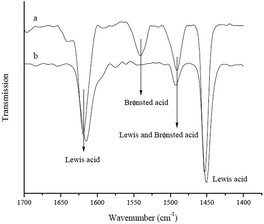 |
| | Fig. 2 Pyridine adsorption IR spectra of AlF3-150 (a) and Al2O3 (b). | |
3.2 Synthesis of HMF from glucose catalyzed by various catalysts
In this work, we initially studied the effect of various catalysts on dehydration of glucose to HMF (Fig. 3). DMSO, a common and cheap reagent, was used as solvent. AlF3-150, Al2O3, aluminium isopropoxide (AlP), and AlCl3 were used to catalyze glucose dehydration. Among above catalysts, AlF3-150 was found to be the best catalyst for transformation of glucose into HMF with 57.3% yield and 95.5% glucose conversion at 140 °C after 10 h. Al2O3 afforded a HMF yield of 38.4% at glucose conversion of 90.9% under identical reaction conditions. The presence of both Lewis and Brønsted acid sites may contribute the higher catalytic activity of AlF3-150 than that of Al2O3.21 On the other hand, homogeneous catalysts AlP (pH = 5.65) and AlCl3 (pH = 4.47) were also used for glucose-to-HMF conversion, and a little difference in HMF yield (i.e., 40.0% and 53.6%, respectively) and glucose conversion (i.e., 89.0% and 93.0%, respectively) was observed, which indicates that the homogeneous catalyst possessing more acidity is more advantageous to convert glucose to HMF.32 Other metal fluorides (i.e., FeF3 and MgF2) were also used for this reaction, while relatively lower catalytic performance (15.5% and 26.8%, respectively) is observed, which could be ascribed to the lack of Brønsted acid sites in these catalysts.23,25 As a control experiment, dehydration of glucose was also carried out without adding a catalyst, and a low HMF yield of 11.5% and glucose conversion of 30.5% were obtained. These results imply that AlF3-150 having both Lewis and Brønsted acid sites can drive glucose dehydration to HMF. AlF3-150, therefore, was selected as the superior catalyst for converting glucose to HMF in the following experiments.
 |
| | Fig. 3 Effects of various catalysts on dehydration of glucose to HMF (reaction conditions: 50 mg glucose, 1.0 g DMSO, 20 mg catalyst, 140 °C, and 10 h). | |
3.3 Effect of reaction time and temperature
In order to explore the effect of reaction conditions on glucose dehydration, reaction temperature and time were firstly studied and results are shown in Fig. 4. It can be seen that reaction temperature immensely affects glucose-to-HMF conversion. When dehydration of glucose was conducted at 120 °C, the increase of reaction time from 2 to 10 h resulted in an increase in HMF yield and glucose conversion, while further increasing the reaction time to 12 h led to a slight decrease of HMF yield and slight increase of glucose conversion. On the other hand, if reaction temperature was elevated to 140 °C, same change trend to the reaction taking place at 120 °C was detected. Gratifyingly, HMF yield increased from 16.4% (84.9% conversion) at 120 °C to 57.3% (95.5% conversion) at 140 °C after reacting for 10 h. Nevertheless, further increasing reaction temperature to 160 °C, along with the increase of reaction time from 2 to 12 h, resulted in decreased HMF yields but increased glucose conversions. These results indicated that dehydration of glucose to HMF required a moderate temperature of 140 °C, while decreased HMF yields were observed at relatively higher temperatures (e.g., 160 °C), which might be caused by the unstable structure of the catalyst.23
 |
| | Fig. 4 Effect of reaction time and temperature on conversion of glucose to HMF (reaction conditions: 50 mg glucose, 1.0 g DMSO, and 20 mg AlF3-150). | |
3.4 Effect of AlF3-150 amount
Fig. 5 shows the influence of AlF3-150 amount (i.e., 10 mg, 20 mg, 30 mg, 40 mg, and 50 mg) on dehydration of glucose to HMF. Increasing the catalyst amount from 10 to 20 mg resulted in an increase in HMF yield from 38.6 to 57.3% and glucose conversion from 86 to 95.5%. However, further increasing the catalyst amount to 50 mg led to HMF yield decreasing from 57.3 to 13.5%, while glucose conversion slightly changed from 95.5 to 96.5%. The increase of catalytic activity should be attributed to an increase in the availability of the number of active sites, while the decrease may be caused by catalyst aggregation (e.g., electrostatic interaction and bonding effect) that hinders the interaction between active sites and glucose molecules after adding an excess amount of catalyst. Hence, 20 mg was chosen as the optimal dosage of AlF3-150.
 |
| | Fig. 5 Influence of AlF3-150 amount on production of HMF from glucose (reaction conditions: 50 mg glucose, 1.0 g DMSO, 140 °C, and 10 h). | |
3.5 The effect of various solvents
The type of solvents such as ionic liquids33 and organic solvents34,35 immensely affects the activity of glucose-to-HMF conversion. Fig. 6 illustrates the effect of various solvents on production of HMF from glucose over 20 mg AlF3-150 at 140 °C for 10 h. In this study, HMF yields of 17.5%, 4.1%, 57.3%, 4.6%, 8.5%, 23.7%, and 18.9% at glucose conversion of 55.6%, 37.8%, 95.5%, 14.3%, 18.6%, 79.5%, and 77.7% were found to be obtained from glucose in DMA, DMF, DMSO, 1-butanol, 2-butanol, [BMIM]Cl and [BMIM]Cl/water, respectively. It seemed that that side reactions were not dominant during glucose dehydration in DMSO, and the formation of byproducts such as levulinic acid and humins was inhibited by DMSO.36
 |
| | Fig. 6 Effect of various solvents on production of HMF from glucose (reaction conditions: 50 mg glucose, 1.0 g solvent, 20 mg AlF3-150, 140 °C, and 10 h). 5/95 w/w water/[BMIM]Cl ratio. | |
3.6 Synthesis of HMF from various carbohydrates catalyzed by AlF3-150
In order to explore the substrate scope of the catalytic system, various carbohydrates including monosaccharides (fructose and glucose), disaccharides (sucrose and cellobiose) and polysaccharide (inulin) were employed as feedstock for HMF production, and the experimental results are presented in Fig. 7. Under the optimized reaction conditions, the highest HMF yield 57.3% with conversion rate of 95.5% was obtained from glucose in DMSO. To our delight, high HMF yield of 54.3%, 55.0%, 40.6%, and 44.3% at conversion of 94.3%, 95.3%, 90%, and 93.1% could also be obtained, when inulin, sucrose, cellobiose, and fructose were used as the substrate, respectively. The results illustrated that the AlF3-150 catalyst containing both Lewis and Brønsted acid sites was efficient for transformation of carbohydrates that contain fructose and glucose units into HMF.
 |
| | Fig. 7 Synthesis of HMF from different carbohydrates over AlF3-150 (reaction conditions: 50 mg substrate, 20 mg catalyst, 1.0 g DMSO, 140 °C, and 10 h). | |
3.7 Influence of Brønsted acid site amount of AlF3
The influence of Brønsted acid site contents of AlF3 on dehydration of glucose to HMF was studied. The results shown in Fig. 8 demonstrate that the yield of HMF decreases with the increase of calcination temperature, which can be ascribed to a gradual elimination of hydroxyl groups associated with Brønsted acidity at high temperatures.23 In other words, higher Brønsted acid density may afford increased HMF yields. In order to explore whether more Brønsted acidity beneficial for a higher HMF yield, the content of Brønsted acid was adjusted by addition of 15 μmol HCl (0.01 wt%) to the reaction system of AlF3-250 and AlF3-350 containing few Brønsted acid sites (Table S1†). It was found that increasing the content of the Brønsted acid sites could increase the yield of HMF and glucose conversion under identical reaction conditions. In order to further study the synergy of Lewis and Brønsted acid sites in dehydration of glucose to HMF, we carried out a range of glucose dehydration reactions over the catalyst AlF3-150 containing Lewis and Brønsted acid sites at 140 °C in different reaction periods (i.e., 15 min, 30 min, 5 h, and 10 h). It can be clearly seen from Fig. S4† that fructose was formed from glucose via isomerization in the early stage (after reacting for 15 and 30 min). However, fructose was not stable enough after a little longer time (>5 h), which will be further dehydrated to HMF. These results illustrated that the activity of the bifunctional catalyst is higher than the monofunctional acid (e.g., HCl) which is lack of active sites (i.e., Lewis acid sites) to promote glucose isomerisation, as shown in Fig. S5.† It was indicated that Lewis acid would promote the isomerization of glucose to fructose, while Brønsted acid sites facilitated fructose dehydration to HMF, which is in consistent with the results reported by Behera and Parida.21
 |
| | Fig. 8 Influence of Brønsted acid site amount on dehydration of glucose to HMF (reaction conditions: 50 mg glucose, 1.0 g DMSO, 20 mg catalyst, 140 °C, and 10 h). a 0.01 wt% HCl: 15 μmol. | |
3.8 Catalyst recycling
Catalyst recycling is an important goal in liquid-phase reactions in terms of green and sustainable chemistry. Thus, the recyclability of AlF3-150 was studied for dehydration of glucose to HMF under optimized reaction conditions (i.e., 50 mg glucose, 20 mg AlF3-150, 1.0 g DMSO, 140 °C, and 10 h). In a typical recovery procedure,24,37 the catalyst was separated by centrifugation after reaction, which was subsequently treated with 30% H2O2 at 100 °C in a Teflon-lined flask under severe stirring for 4 h, followed by filtering, washing with ethanol, and drying at 100 °C. The recovered catalyst was used for the second cycle under the same conditions. The results in four consecutive cycles are shown in Fig. S6,† it was found that HMF yields and glucose conversion slightly decreased from 57.3% to 45.6% and 95.5% to 89.3% in four consecutive cycles, respectively. The IR spectrum (Fig. S7†) and the wide-angle XRD profile (Fig. S8†) of the recovered AlF3-150 are well consistent with those of the fresh one. On the other hand, BET surface areas, BJH pore diameters, and the results of pyridine adsorption IR spectra (Table 1) of the reused and fresh AlF3-150 samples are close to each other, revealing a durable structure of the catalyst, which may be responsible for relatively stable HMF yields of the recovered catalyst in recycles.
4. Conclusions
Partially hydroxylated AlF3-150 with Lewis and Brønsted acid sites was capable of catalyzing conversion of glucose to HMF in DMSO under atmospheric pressure and mild conditions. A high HMF yield of 57.3% at glucose conversion of 95.5% could be achieved in the presence of the AlF3-150 catalyst at 140 °C in 10 h. The presence of both Lewis and Brønsted acid sites on AlF3-150 was found to play a crucial role in this reaction.
Acknowledgements
This work was financially supported by the Natural Science Foundation of China (No. 21576059), the Key Technologies R&D Program (2014BAD23B01), the Research Project of Chinese Ministry of Education (213033A), the International Science & Technology Cooperation Program of China (2010DFB60840), and the Key S&T Projects of Guizhou Province (No. [2012]6012, [2011]3016 & [2008]70011).
References
- J. J. Bozell and G. R. Petersen, Green Chem., 2010, 12, 539 RSC.
- S. Siankevich, G. Savoglidis, Z. Fei, G. Laurenczy, D. T. L. Alexander, N. Yan and P. J. Dyson, J. Catal., 2014, 315, 67 CrossRef CAS.
- N. Yan and X. Chen, Nature, 2015, 524, 155 CrossRef CAS PubMed.
- X. Chen, S. L. Chew, F. M. Kerton and N. Yan, Green Chem., 2014, 16, 2204 RSC.
- X. Chen, Y. Liu, F. M. Kerton and N. Yan, RSC Adv., 2015, 5, 20073 RSC.
- S. P. Teong, G. Yi and Y. Zhang, Green Chem., 2014, 16, 2015 RSC.
- A. J. Ragauskas, C. K. Williams, B. H. Davison, G. Britovsek, J. Cairney, C. A. Eckert, W. J. Frederick Jr., J. P. Hallett, D. J. Leak, C. L. Liotta, J. R. Mielenz, R. Murphy, R. Templer and T. Tschaplinski, Science, 2006, 311, 484 CrossRef CAS PubMed.
- T. Stahlberg, W. Fu, J. M. Woodley and A. Riisager, ChemSusChem, 2011, 4, 451 CrossRef CAS PubMed.
- A. I. Torres, M. Tsapatsis and P. Daoutidis, Comput. Chem. Eng., 2012, 42, 130 CrossRef CAS.
- M. Walia, U. Sharma, V. K. Agnihotri and B. Singh, RSC Adv., 2014, 4, 14414 RSC.
- M. Zhang, K. Su, H. Song, Z. Li and B. Cheng, Catal. Commun., 2015, 69, 76 CrossRef CAS.
- V. V. Ordomsky, V. L. Sushkevich, J. C. Schouten, J. van der Schaaf and T. A. Nijhuis, J. Catal., 2013, 300, 37 CrossRef CAS.
- H. Xiong, T. Wang, B. H. Shanks and A. K. Datye, Catal. Lett., 2013, 143, 509 CrossRef CAS.
- H. Li, Q. Zhang, X. Liu, F. Chang, D. Hu, Y. Zhang, W. Xue and S. Yang, RSC Adv., 2013, 3, 3648 RSC.
- H. Li, X. He, Q. Zhang, F. Chang, W. Xue, Y. Zhang and S. Yang, Energy Technol., 2013, 1, 151 CrossRef CAS.
- H. Li, Q. Zhang, X. Liu, F. Chang, Y. Zhang, W. Xue and S. Yang, Bioresour. Technol., 2013, 144, 21 CrossRef CAS PubMed.
- J. Liu, H. Li, Y. C. Liu, Y. M. Lu, J. He, X. F. Liu, Z. B. Wu and S. Yang, Catal. Commun., 2015, 62, 19 CrossRef CAS.
- E. L. S. Ngee, Y. Gao, X. Chen, T. M. Lee, Z. Hu, D. Zhao and N. Yan, Ind. Eng. Chem. Res., 2014, 53, 14225 CrossRef CAS.
- E. Sairanen, R. Karinen and J. Lehtonen, Catal. Lett., 2014, 144, 1839 CrossRef CAS.
- Y. Wang, X. Tong, Y. Yan, S. Xue and Y. Zhang, Catal. Commun., 2014, 50, 38 CrossRef CAS.
- G. C. Behera and K. M. Parida, Catal. Sci. Technol., 2013, 3, 3278 CAS.
- T. Wang, M. W. Nolte and B. H. Shanks, Green Chem., 2014, 16, 548 RSC.
- I. Agirrezabal-Telleria, F. Hemmann, C. Jäger, P. L. Arias and E. Kemnitz, J. Catal., 2013, 305, 81 CrossRef CAS.
- I. Agirrezabal-Telleria, Y. Guo, F. Hemmann, P. L. Arias and E. Kemnitz, Catal. Sci. Technol., 2014, 4, 1357 CAS.
- F. Frouri, S. Célérier, P. Ayrault and F. Richard, Appl. Catal., B, 2015, 168–169, 515 CrossRef CAS.
- D. Dambournet, A. Demourgues, C. Martineau, E. Durand, J. Majimel, A. Vimont, H. Leclerc, J. C. Lavalley, M. Daturi, C. Legein, J. Y. Buzaré, F. Fayon and A. Tressaud, J. Mater. Chem., 2008, 18, 2483 RSC.
- S. Rüdiger, G. Eltanany, U. Groß and E. Kemnitz, J. Sol-Gel Sci. Technol., 2006, 41, 299 CrossRef.
- L. Wang, J. Zhang, X. Wang, B. Zhang, W. Ji, X. Meng, J. Li, D. S. Su, X. Bao and F.-S. Xiao, J. Mater. Chem. A, 2014, 2, 3725 CAS.
- S. M. Coman, M. Verziu, A. Tirsoaga, B. Jurca, C. Teodorescu, V. Kuncser, V. I. Parvulescu, G. Scholz and E. Kemnitz, ACS Catal., 2015, 5, 3013 CrossRef CAS.
- D. Stošić, S. Bennici, V. Rakić and A. Auroux, Catal. Today, 2012, 192, 160 CrossRef.
- S. Wuttke, S. M. Coman, G. Scholz, H. Kirmse, A. Vimont, M. Daturi, S. L. M. Schroeder and E. Kemnitz, Chem.–Eur. J., 2008, 14, 11488 CrossRef CAS PubMed.
- J. N. Chheda, Y. Roman Leshkov and J. A. Dumesic, Green Chem., 2007, 9, 342 RSC.
- S. Siankevich, Z. Fei, R. Scopelliti, G. Laurenczy, S. Katsyuba, N. Yan and P. J. Dyson, ChemSusChem, 2014, 7, 1647 CrossRef CAS PubMed.
- J. Zhang, X. X. Yu, F. X. Zou, Y. H. Zhong, N. Du and X. Huang, ACS Sustainable Chem. Eng., 2015, 3, 3338 CrossRef CAS.
- T. Kobayashi, M. Yoshino, Y. Miyagawa and S. Adachi, Sep. Purif. Technol., 2015, 155, 26 CrossRef CAS.
- C. Lansalot-Matras and C. Moreau, Catal. Commun., 2003, 4, 517 CrossRef CAS.
- X. Shi, Y. Wu, H. Yi, G. Rui, P. Li, M. Yang and G. Wang, Energies, 2011, 4, 669 CrossRef CAS.
Footnote |
| † Electronic supplementary information (ESI) available. See DOI: 10.1039/c5ra24013a |
|
| This journal is © The Royal Society of Chemistry 2016 |
Click here to see how this site uses Cookies. View our privacy policy here. 


