DOI:
10.1039/C5RA23367D
(Paper)
RSC Adv., 2016,
6, 3393-3398
Determination of hypochlorite by quenching the fluorescence of 1-pyrenylboronic acid in tap water†
Received
6th November 2015
, Accepted 16th December 2015
First published on 21st December 2015
Abstract
In neutral conditions, hypochlorite-assisted oxidative conversion of 1-pyrenylboronic acid into 1-hydroxypyrene, which leads to 1-pyrenylboronic acid fluorescence quenching, was used as the signaling tool. Compared with 1-pyrenylboronic acid, the maximum excitation (λex = 347 nm) and emission (λem = 392 nm) wavelength of 1-hydroxypyrene had no obvious change. The surfactant Triton X-100, as a micellar additive, was not only used to enhance the stability of the fluorescence probe, but also to improve its sensitivity. When using Triton X-100, the signaling of 1-pyrenylboronic acid was markedly enhanced. Herein, a spectrofluorimetric method for highly selective and sensitive hypochlorite determination has been performed. It can be noted that the fluorescence intensities positively correlated with the hypochlorite concentration over the range of 0.69–6.0 μmol L−1. The detection limit was 0.21 μmol L−1, which is lower than for most of the recently published methods. The experimental conditions were optimized and the effects of coexisting substances are evaluated. The results showed excellent priority because a certain amount of ions, including SO32−, NH4+, Cu2+ and other acid radicals, would not interfere with the measurement. The accuracy and reliability of the method was further ensured by recovery studies using the standard-addition method. In addition, the quenching mechanism, which was proven to be static quenching, has been investigated systematically by the linear plots at varying temperatures based on the Stern–Volmer equation, fluorescence lifetime, and UV-visible absorbance spectra. This method was finally used to detect hypochlorite in local water samples.
1. Introduction
The increasing public concern about environmental safety has invigorated interest in detecting and quantifying various contaminants, whereas the analysis of hypochlorite in water has attracted much less interest even though hypochlorite may be easily encountered in our daily lives owing to its extensive applications such as household bleaching, industrial cyanide treatment, and drinking water disinfection.1 As a biologically important reactive oxygen species, hypochlorite anion (ClO−) should receive much attention because it plays an essential role in preventing microorganism invasion.2 It is known that hypochlorite anion is synthesized from hydrogen peroxide and chloride ions in a biosystem catalyzed by the enzyme myeloperoxidase (MPO). In living organisms, hypochlorite can damage various biomolecules, including DNA, RNA, fatty acids, cholesterol, and proteins,3 and an abnormal level of hypochlorite can lead to tissue damage and diseases such as atherosclerosis, arthritis, and cancer.4 Nevertheless, the detailed pathogenic mechanism is not fully understood because of a lack of a feasible method for detecting the ClO− anion. On the other hand, hypochlorite (ClO−) is widely used as a disinfection agent in drinking water treatment and as a household bleach agent. It is essential to develop a sensitive and selective method for detecting ClO− such as a critical assay for environmental and biological samples.
Spectrofluorometry is commonly acknowledged as simple, low cost and the most prevalent of all the methods to determine hypochlorite due to both its fast response time and spatial resolution capabilities. Several well-constructed fluorescent probes have been fabricated for hypochlorite detection in the past few years.5–11 These sensors mainly depend on the strong oxidation property of hypochlorite in an acidic medium, which unavoidably suffers from some inherent interference due to cross-reactions with other reactive oxidizing agents such as ClO3− and BrO3−.12
Boronic acids are increasingly used as sensing platforms for assaying several important species, such as glucose and fluoride.13,14 Notable examples are a series of H2O2-specific fluorescent detection probes (used in living cells and animals) developed in Chang's group, such as fluorescein-based boronate,15 naphthalimide-based boronate,16 and aminocoumarin based boronate.17 The transformations of arylboronic acids into their phenolic analogs have been extensively studied in the field of synthetic organic chemistry. These transformations are generally accomplished by oxidants such as hydrogen peroxide,18 oxone,19 oxidant peracetic acid,20 and tert-butyl hydroperoxide.21 On the other hand, the use of micellar systems for chromogenic and fluorogenic sensing of target species in an aqueous solution is a widely employed tactic.22–24
In this study, a new probe based on the oxidative conversion of 1-pyrenylboronic acid to 1-hydroxypyrene was established for fluorescence signaling of the practical hypochlorite. The conversion was conveniently monitored because of a prominent change in the fluorescence behavior. Furthermore, the signaling contrast was enhanced in a micellar environment in the presence of the surfactant Triton X-100. The probe displayed selective signaling behavior towards hypochlorite and it is more sensitive to hypochlorite than to other commonly encountered metal ions, anions, and practical oxidants (such as H2O2).
2. Experimental
2.1 Instrumentation
A F-2500 spectrofluorophotometer (Hitachi, Tokyo, Japan) was employed for obtaining scattering spectra and measuring the scattering intensities. A UV-2450 spectrophotometer (Shimadzu, Japan) was used for acquiring absorption spectra and measure absorbance. A FL-TCSPC Fluorolog-3 fluorescence spectrometer (Horiba Jobin Yvon Inc., France) was used to measure fluorescence emission decay curves of the systems. A pHS-3D pH meter (Shanghai Scientific Instruments Company, China) was used for measuring pH values.
2.2 Reagents
The stock solution of sodium hypochlorite (NaClO, Shanghai Aladdin Reagent Co., Ltd., China), 1-pyrenylboronic acid (Shanghai, Macklin Biochemical Co., Ltd., China), Triton X-100 (Kelon Chemical Reagent Factory, Chengdu, China), sodium dodecylsulfate (SDS), and sodium dodecyl benzene sulfonate (SDBS) were 1.0 × 10⁻⁴ mol L−1, 1.0 × 10⁻⁴ mol L−1, 3.0% (w/v), 3.0% (w/v), 3.0% (w/v), respectively. The Britton–Robinson (BR) buffer solutions at different pH values were prepared by mixing the mixed acid (composed of 2.71 mL 85% H3PO4, 2.36 mL HAc and 2.47 g H3BO3) with 0.2 mol L−1 NaOH in different proportions. The buffer solutions were used to control the acidity. All reagents were of analytical reagent grade and were used without further purification, and doubly distilled water was used throughout.
2.3 General procedure
Into a 10.0 mL calibrated flask, 1.0 mL of pH 7.5 BR, 1.0 mL 1.0 × 10⁻⁵ mol L−1 1-pyrenylboronic acid, 1.0 mL 0.3% Triton X-100 and an appropriate volume of 1.0 × 10⁻⁵ mol L−1 sodium hypochlorite were added. The mixture was then diluted to the mark with doubly distilled water and mixed thoroughly. After 5 min, the fluorescence spectra of the reagent blank and the reaction systems were obtained, and the fluorescence intensities of the reagent blank (F0) and the reaction system (F) were measured at λex = 347 nm, λem = 392 nm, ΔF = F0 − F.
3. Results and discussion
3.1 Fluorescence spectra
As shown in Fig. 1, the fluorescence intensity of 1-pyrenylboronic acid (λem = 347 nm, λex = 392 nm) was enhanced only when Triton X-100 was added. However, it decreased when hypochlorite was added in, which indicated that 1-pyrenylboronic acid had been converted into 1-hydroxypyrene by hypochlorite. The wavelength of their maximum excitation and emission had no clear changes, as was the fluorescence peak. When the different concentrations of ClO− were added into the BR buffer solution (pH 7.5), which contained 1-pyrenylboronic acid and Triton X-100, the fluorescence intensity was gradually decreased with added ClO−.
 |
| | Fig. 1 Fluorescence spectra of 1-pyrenylboronic acid (1.0 × 10⁻⁶ mol L−1), Triton X-100 (0.03%), and different concentration of ClO− (cNaClO(a–g)): 0; 1.0; 2.0; 3.0; 4.0; 5.0; 6.0 × 10⁻⁶ mol L−1. | |
3.2 Optimization of experimental variables
3.2.1 Effects of surfactant and its concentration. Surfactants are used as solubilizers to accelerate adsorption processes on fiber, as auxiliaries for improving its adsorption and as leveling or dispersing agents. Therefore, surfactants Tween 20, SDS and Triton X-100 were studied in this experiment. As observed from Fig. 2, it is clear that the fluorescence intensity was weak when there was only 1-pyrenylboronic acid. However, when the surfactants were added, the blank solution, which contained Triton X-100, increases higher than the others. Moreover, the concentration of Triton X-100 was also studied. From Fig. 3, the fluorescence intensity of the blank solution increased with the volume of Triton X-100 increasing until it reached 0.8 mL. Then, the volume of 1.0 mL Triton X-100 (0.3%) was chosen in this experiment.
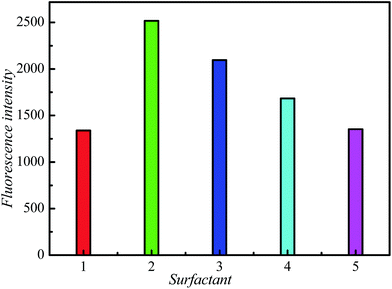 |
| | Fig. 2 Fluorescence spectra of 1-pyrenylboronic acid (1.0 × 10⁻⁶ mol L−1) with different surfactants ((1) without surfactants; (2) Triton X-100, (3) Tween 20; (4) SDBS; and (5) SDS). | |
 |
| | Fig. 3 Fluorescence spectra of 1-pyrenylboronic acid (1.0 × 10⁻⁶ mol L−1), and different volumes of Triton X-100 (0.03%). | |
3.2.2 The effects of acidity. The effects of pH on the fluorescence intensity of the probe and reaction systems were investigated in the range of 5.0–8.5. As shown in Fig. 4, it is clear that the fluorescence intensity of the probe remained stable in the pH 5.0–8.5 range. Upon addition of hypochlorite, the fluorescence intensity of the reaction system obviously decreased at pH 6.5 and reached a maximum at pH 7.5. Therefore, pH 7.5 was selected as the optimum value for the analytical system.
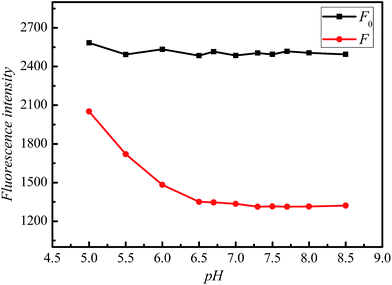 |
| | Fig. 4 Effects of acidity on fluorescence intensity of the system. c(1-pyrenylboronic acid) = 1.0 × 10⁻⁶ mol L−1, c(Triton X-100) = 0.03%. c(ClO−) = 0 (F0), c(ClO−) = 3.0 × 10⁻⁶ mol L−1 (F). | |
3.2.3 Selectivity of the method. The influence of foreign coexisting substances was investigated by premixing hypochlorite with foreign substances and the results are listed in Table 1. The tolerance limit was taken as the maximum concentration of the foreign substances, which caused an approximately ±5% relative error in the determination. It can be observed that sugars, amino acids and common ions, such as F−, Br−, Cl−, I−, SO42−, SO32−, NH4+, Cu2+, Na+, Mn2+, and Co2+, were investigated in the experiment. Therefore, the method not only had good selectivity, but also could be applied to detect the hypochlorite.
Table 1 Effects of foreign substances (cClO−: 3.0 × 10⁻⁶ mol L−1)
| Foreign substance |
Concentration (μg mL−1) |
Relative error (%) |
Foreign substance |
Concentration (μg mL−1) |
Relative error (%) |
| KBr |
119 |
−2.9 |
L-Tryptophan |
204 |
3.5 |
| CoSO4 |
129 |
−3.8 |
L-Arginine |
174 |
1.7 |
| NH4Cl |
107 |
1.3 |
Methionine |
149 |
2.4 |
| MgSO4 |
120 |
1.5 |
L-Phenylalanine |
179 |
1.9 |
| CuSO4 |
159 |
1.7 |
Tyrosine |
281 |
3.3 |
| Ni(NO3)2 |
290 |
2.4 |
Glycine |
150 |
2.8 |
| MnSO4 |
151 |
3.2 |
KIO3 |
214 |
−4.5 |
| CdCl2 |
183 |
2.1 |
H2O2 |
34 |
4.6 |
| HgCl2 |
271 |
−3.1 |
Na2SO3 |
126 |
−3.2 |
| NaNO2 |
69 |
4.7 |
VC |
176 |
−4.6 |
| NaF |
84 |
−2.7 |
NH4SCN |
152 |
−3.4 |
| (NH4)2S |
136 |
−3.2 |
Malt sugar |
360 |
4.2 |
| KI |
166 |
−3.6 |
Glucose |
180 |
−1.2 |
3.2.4 The influence of reaction time. The effect of time on the fluorescence intensity of the system was also investigated. Under the pH 7.5 BR buffer solution, the difference of F0 and F reached the maximum within 5 min and remain stable for at least 3 h. Therefore, the measurement was carried out after 5 min.
3.3 Calibration curve
As shown in Fig. 5, a calibration curve was manufactured under the optimum conditions by conducting a series of experiments at various concentrations of ClO− and the graph shows a linear relationship between the signal and the ClO− concentration. According to the IUPAC recommendation, the detection limit (3σ/k) was 0.21 μmol L−1, which is lower than that of most previous studies, which are shown for comparison in Table 2. The fluorescence intensity of the system was linearly proportional to ClO− over the concentration ranges of 0.69–6.0 μmol L−1.
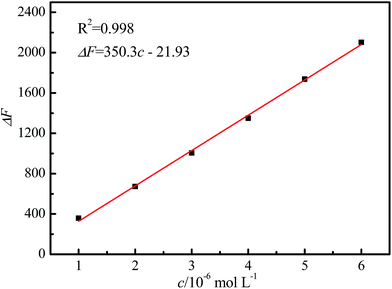 |
| | Fig. 5 Fluorescence spectra of 1-pyrenylboronic acid (1.0 × 10⁻⁶ mol L−1), Triton X-100 (0.03%), and different concentrations of ClO− (cNaClO): 1.0; 2.0; 3.0; 4.0; 5.0; 6.0 × 10⁻⁶ mol L−1. | |
Table 2 Comparing the sensitivity of this method with other methods for determining hypochloritea
| Methods |
Reagent |
Detection limit (μmol L−1) |
Remarks |
| DAP*: 4,4′-diamino-diphenyl sulfone; NED*: (naphthyl)ethylenediamine hydrochloride; FeT4MPyP*: iron(III) tetra-(N-methyl-4-pyridyl)-porphyrin; CuTSPc*: copper tetrasulfonated phthalocyanine. |
| Spectrophotometry25 |
Fuchsin acid, resorcinol |
0.96 |
Complicated coupling steps are needed |
| Spectrophotometry26 |
DAP*; NED* |
1.3 |
Complicated coupling steps are needed |
| Voltammetry27 |
Poly(3-methylthiophene)au nanoparticles |
2.3 |
Costly and insensitive |
| Fluorospectrophotometry28 |
Semicarbazide derivative |
0.33 |
New fluorescent probe, but the synthesis procedure is complex |
| Voltammetry29 |
FeT4mPyP* CuTSPc* |
0.1 |
The electrode is hard to achieve |
| Present work |
1-Pyrenylboronic acid |
0.21 |
Simple, selective, sensitive |
3.4 The reaction mechanism
3.4.1 Oxidation of 1-pyrenylboronic acid by hypochlorite. As shown in Scheme 1, the signaling was due to the oxidative conversion of 1-pyrenylboronic acid to 1-hydroxypyrene30,31 (Scheme 1).
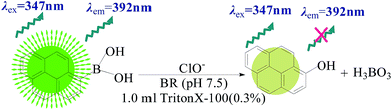 |
| | Scheme 1 Signaling of 1-pyrenylboronic acid by hypochlorite. | |
3.4.2 Fluorescence quenching mechanism. The mechanism for fluorescence quenching, including static and dynamic quenching,32 can be distinguished by investigating the variation of the quenching constant at different temperatures.33 The quenching constant increased with temperature for dynamic quenching, but when it came to static quenching, it performs the opposite way.34 Fluorescence quenching can be a direct consequence of any process that decreases the fluorescence intensity such as excited state reactions, energy transfers, ground-state complex formation and collision between excited molecules and other molecules.35 The ground-state complex formation process generally causes static quenching, whereas dynamic quenching is largely caused by a collision between the chromophore and the quencher.36Herein, to study the quenching process systematically and to distinguish the possible quenching mechanism, fluorescence quenching tests were performed at different temperatures to distinguish the quenching mechanism using temperature dependence.37 The fluorescence quenching mechanism has been analyzed quantitatively at different temperatures (303, 313 K) with the Stern–Volmer equation,38 which is as follows:
| F0/F = 1 + Kqτ0[Q] = 1 + Ksv[Q] |
where
F and
F0 represent the fluorescence intensities with and without hypochlorite, respectively.
Kq, which equals
Ksv/
τ0 is the quenching constant,
Ksv stands for the Stern–Volmer quenching constant,
τ0 is the fluorescence lifetime in the absence of quencher and [Q] is the concentration of quencher, which in the present case was hypochlorite.
Fig. 6 shows the Stern–Volmer plots of F0/F versus [Q] at two different temperatures, which shows that the quenching constant decreased as temperature was increased. This indicated that the quenching process for 1-pyrenylboronic acid to 1-hydroxypyrene may be by static quenching. Herein, the data show some conflicts with the classic quenching mechanism,39 so more proof was needed to verify the real quenching process. Thus, the fluorescence lifetime and UV-visible absorption spectra were acquired to give more evidence for the actual quenching process.
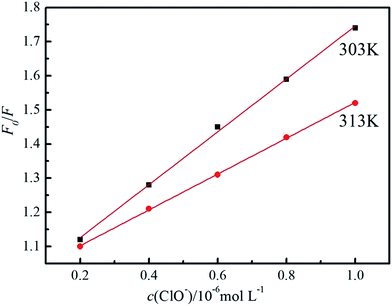 |
| | Fig. 6 Stern–Volmer plots for the solution systems at two different temperatures in pH 7.5 BR. c(1-pyrenylboronic acid) = 1.0 × 10⁻⁶ mol L−1, c(Triton X-100) = 0.03%. | |
A powerful criteria to distinguish whether the quenching mechanism is dynamic or static is from the fluorescence lifetime. If the mechanism is dynamic quenching, τ0/τ = F0/F, the fluorescence lifetime can be reduced by a quenching medium; if it is static quenching, τ0/τ = 1, the quenching medium cannot change the fluorescence lifetime of the excitation state fluorescence molecule.40 Fluorescence emission decay curves of 1-pyrenylboronic acid and 1-pyrenylboronic acid–ClO− were acquired on a FL-TCSPC Fluorolog-3 fluorescence spectrometer at room temperature, as shown in Fig. 7. The fluorescence lifetime of these two systems was 1.09 ns and 1.05 ns, respectively, which demonstrated that the fluorescence quenching of 1-pyrenylboronic acid by ClO− is a static quenching process.
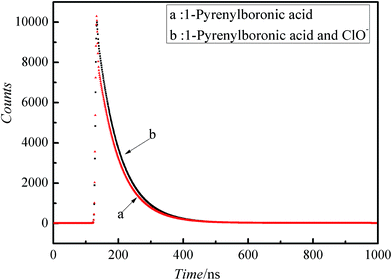 |
| | Fig. 7 Fluorescence emission decay curves of 1-pyrenylboronic acid (A) and 1-pyrenylboronic acid–ClO− system (B). c(1-pyrenylboronic acid) = 1.0 × 10⁻⁶ mol L−1; c(Triton X-100) = 0.03%; c(ClO−) = 3.0 × 10⁻⁶ mol L−1, pH 7.5. | |
The absorption spectrum has important characteristics, which distinguishes static and dynamic quenching. As observed from Fig. 8, the characters of the absorbance spectrum peak (276 nm) are in accordance with the experimental results. The absorption coefficient of 1-pyrenylboronic acid at 276 nm (curve b) was strong and it decreased when it interacted with ClO− (curve a). This indicated that 1-pyrenylboronic acid was converted to 1-hydroxypyrene by hypochlorite. Furthermore, the conversion of the C–B bond to the C–O bond (Scheme 1) was an important cause for fluorescence quenching, which caused the photon transition to decrease.41 The two compounds revealed different absorbance spectrum features: 1-pyrenylboronic acid showed mainly a strong absorbance at 276 nm, whereas 1-hydroxypyrene principally exhibited weaker absorbance with negligible absorbance.
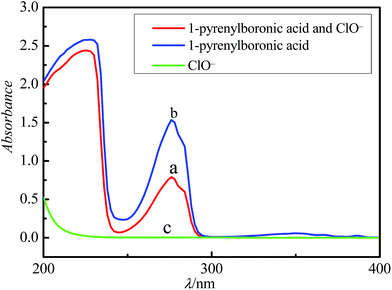 |
| | Fig. 8 Absorption spectra of 1-pyrenylboronic acid and its reaction solution with ClO− in pH 7.5 BR buffer solution and 1 mL 3.0% Triton X-100 mixing solution. c(1-pyrenylboronic acid) = 1.0 × 10⁻⁶ mol L−1. c(ClO−) = 3.0 × 10⁻⁶ mol L−1. | |
3.5 Detection of ClO− in water samples
To verify the method mentioned above, the concentration of hypochlorite was determined, and the recovery was tested using the standard addition method. The results are listed in Table 3, where values of recovery are displayed ranging from 97.5% to 103.1% in tap water samples and 99.5% to 102.4% in local river water samples. This indicated that the proposed method was accurate and reliable. Therefore, the method can be useful for hypochlorite determination in tap water and local river water samples.
Table 3 Results for determining hypochlorite in various water samplesa
| Samples |
Found (μmol L−1) |
Added (μmol L−1) |
Found (μmol L−1) |
Recovery (%) |
RSD* (%, n = 5) |
| ND*: not detected. RSD*: relative standard deviation. |
| Tap water 1 |
ND* |
0.2 |
0.195 |
97.5 |
1.2 |
| Tap water 2 |
ND* |
0.5 |
0.506 |
101.2 |
0.8 |
| Tap water 3 |
ND* |
0.8 |
0.825 |
103.1 |
2.3 |
| River water 1 |
ND* |
0.2 |
0.199 |
99.5 |
1.5 |
| River water 2 |
ND* |
0.5 |
0.502 |
100.4 |
2.6 |
| River water 3 |
ND* |
0.8 |
0.819 |
102.4 |
1.7 |
4. Conclusions
In conclusion, a new sensitive and selective probe is introduced that shows a significant response to hypochlorite. The excellent linear relationship between fluorescence and hypochlorite concentration was obtained under optimized experimental conditions. The proposed method was favorably applied for detecting hypochlorite concentration in tap water and local river water samples. This facile, sensitive and selective probe has the potential to be a useful tool for fast and real-time detection of hypochlorite in more types of water samples.
Acknowledgements
The authors gratefully acknowledge financial support for this study by grants from the National Natural Science Foundation of China (Grant no. 21475014) and the Special Fund of Chongqing Key Laboratory (CSTC).
References
- J. Zhang and X. R. Yang, Analyst, 2013, 138, 434–437 RSC
 .
. - K. Cui, D. Q. Zhang, G. X. Zhang and D. B. Zhu, Tetrahedron Lett., 2010, 51, 6052–6055 CrossRef CAS .
- Y. K. Yang, H. J. Cho, J. Lee, I. Shin and J. Tae, Org. Lett., 2009, 11, 859–861 CrossRef CAS PubMed .
- J. Zhang, X. L. Wang and X. R. Yang, Analyst, 2012, 137, 2806–2812 RSC .
- S. Goswami, A. Manna, S. Paul, C. K. Quah and H. K. Fun, Chem. Commun., 2013, 49, 11656–11658 RSC .
- A. P. Singh, O. G. Tsay, D. P. Murale, T. Jun, H. Liew, Y. H. Suh and D. G. Churchill, Analyst, 2013, 138, 2829–2832 RSC .
- L. L. Long, D. D. Zhang, X. F. Li, J. F. Zhang, C. Zhang and L. P. Zhou, Anal. Chim. Acta, 2013, 775, 100–105 CrossRef CAS .
- G. W. Chen, F. L. Song, J. Y. Wang, Z. G. Yang, S. G. Sun, J. L. Fan, X. X. Qiang, X. Wang, B. R. Dou and X. J. Peng, Chem. Commun., 2012, 48, 2949–2951 RSC .
- S. Goswami, S. Paul and A. Manna, Dalton Trans., 2013, 42, 10097–10101 RSC .
- A. Manna and S. Goswami, New J. Chem., 2015, 39, 4424–4429 RSC .
- S. Goswami, A. K. Das, A. Manna, A. K. Maity, P. Saha, C. K. Quah, H. K. Fun and H. A. Abdel-Aziz, Anal. Chem., 2014, 86, 6315–6322 CrossRef CAS PubMed .
- X. Q. Chen, X. C. Wang, S. J. Wang, W. Shi, K. Wang and H. M. Ma, Chem.–Eur. J., 2008, 14, 4719–4724 CrossRef CAS PubMed .
- J. Hansen and J. Christensen, Biosensors, 2013, 3, 400–418 CrossRef CAS PubMed .
- Z. Q. Guo, I. Shin and J. Yoon, Chem. Commun., 2012, 48, 5956–5967 RSC .
- M. C. Y. Chang, A. Pralle, E. Y. Isacoff and C. J. Chang, J. Am. Chem. Soc., 2004, 126, 15392–15393 CrossRef CAS .
- D. Srikun, E. W. Miller, D. W. Domaille and C. J. Chang, J. Am. Chem. Soc., 2008, 130, 4596–4597 CrossRef CAS PubMed .
- L. C. Lo and C. Y. Chu, Chem. Commun., 2003, 21, 2728–2729 RSC .
- J. Simon, S. Salzbrunn, G. K. S. Prakash, N. A. Petasis and G. A. Olah, J. Org. Chem., 2001, 66, 633–634 CrossRef CAS PubMed .
- R. E. Maleczka Jr, F. Shi, D. Holmes and M. R. Smith, J. Am. Chem. Soc., 2003, 125, 7792–7793 CrossRef PubMed .
- J. Choi, H. J. Lee, M. J. Cho and S. K. Chang, Talanta, 2015, 141, 111–115 CrossRef CAS PubMed .
- S. M. Guo, L. Lu and H. Cai, Synlett, 2013, 24, 1712–1714 CrossRef CAS .
- R. L. Duan, C. Y. Li, S. P. Liu, Z. F. Liu, Y. F. Li, J. H. Zhu and X. L. Hu, J. Taiwan Inst. Chem. Eng., 2015, 50, 43–48 CrossRef CAS .
- M. Maswal, O. A. Chat, S. Jabeen, U. Ashraf, R. Masrat, R. A. Shah and A. A. Dar, RSC Adv., 2015, 5, 7697–7712 RSC .
- M. Vashishtha, M. Mishra, S. Undre, M. Singh and D. O. Shah, J. Mol. Catal. A: Chem., 2015, 396, 143–154 CrossRef CAS .
- D. Wo, P. Zhuang, Z. G. Xu, S. M. Xu, Y. Lu and H. M. Mao, Clin. Chim. Acta, 2013, 424, 187–190 CrossRef PubMed .
- V. H. M. Luiz, L. Pezza and H. R. Pezza, Food Chem., 2012, 134, 2546–2551 CrossRef CAS PubMed .
- X. Huang, Y. X. Li, Y. L. Chen and L. Wang, Sens. Actuators, B, 2008, 134, 780–786 CrossRef CAS .
- X. Zhang, Y. X. Zhang and Z. J. Zhu, Anal. Methods, 2012, 4, 4334–4338 RSC .
- W. J. Santos, P. R. Lima, A. A. Tanaka, S. M. Tanaka and L. T. Kubota, Food Chem., 2009, 113, 1206–1211 CrossRef CAS .
- H. L. Zhang, T. F. Ren, Y. J. Ji, L. G. Han, Y. G. Wu, H. Z. Song, L. B. Bai and X. W. Ba, ACS Appl. Mater. Interfaces, 2015, 7, 23805–23811 CAS .
- L. Z. Gai, H. C. Chen, B. Zou, H. Lu, G. Q. Lai, Z. F. Li and Z. Shen, Chem. Commun., 2012, 48, 10721–10723 RSC .
- J. Wang, H. B. Liu, S. Park, S. Y. Kim, T. Joo and C. S. Ha, RSC Adv., 2012, 2, 4242–4249 RSC .
- X. J. Gan, S. P. Liu, Z. F. Liu, X. L. Hu, Z. P. Cui and Y. Q. Wang, Spectrochim. Acta, Part A, 2012, 97, 161–166 CrossRef CAS PubMed .
- X. L. Li, Y. J. Hu, H. Wang, B. Q. Yu and H. L. Yue, Biomacromolecules, 2012, 13, 873–880 CrossRef CAS .
- Y. Zhang, X. Xiang, P. Mei, J. Dai, L. Zhang and Y. Liu, Spectrochim. Acta, Part A, 2009, 72, 907–914 CrossRef PubMed .
- F. F. Tian, J. H. Li, F. L. Jiang, X. L. Han, C. Xiang, Y. S. Ge, L. L. Li and Y. Liu, RSC Adv., 2012, 2, 501–513 RSC .
- Y. Hu, Y. Liu, J. Wang, X. Xiao and S. Qu, J. Pharm. Biomed. Anal., 2004, 36, 915–919 CrossRef CAS PubMed .
- J. R. Lakowicz, Plasmonics, 2006, 1, 5–33 CrossRef CAS PubMed .
- F. F. Tian, J. H. Li, F. L. Jiang, X. L. Han, C. Xiang, Y. S. Ge, L. L. Li and Y. Liu, RSC Adv., 2012, 2, 501–513 RSC .
- Y. Guan, W. Zhou, X. H. Yao, M. P. Zhao and Y. Z. Li, Anal. Chim. Acta, 2006, 570, 21–28 CrossRef CAS .
- J. Wang, L. Kong, W. Shen, X. L. Hu, Y. Z. Shen and S. P. Liu, Anal. Methods, 2014, 6, 4343–4352 RSC .
Footnote |
| † Electronic supplementary information (ESI) available. See DOI: 10.1039/c5ra23367d |
|
| This journal is © The Royal Society of Chemistry 2016 |
Click here to see how this site uses Cookies. View our privacy policy here. 


