A new approach for pyrene bioremediation using bacteria immobilized in layer-by-layer assembled microcapsules: dynamics of soil bacterial community

Fucai Denga, Changjun Liaoab, Chen Yang*ac, Chuling Guoac, Lin Maa and Zhi Dang*ac
aSchool of Environment and Energy, South China University of Technology, Guangzhou, 510006, China. E-mail: cyanggz@scut.edu.cn; chzdang@scut.edu.cn; Tel: +86-020-87110198
bDepartment of Environmental Engineering, Guangdong Vocational College of Environmental Protection Engineering, Foshan, 528216, China
cThe Key Laboratory of Pollution Control and Ecosystem Restoration in Industry Clusters, Ministry of Education, China

Received 5th November 2015 , Accepted 4th February 2016

First published on 5th February 2016


Abstract

This study reports on the enhanced bioremediation of pyrene (PYR)-contaminated soil resulting from organisms immobilized in layer-by-layer (LBL) assembled microcapsules. The characterization by microscopy indicated that the shape of the microcapsule was like a flake with a diameter of 3–4 μm and that bacteria were encapsulated in the microcapsules. Soil remediation experiments revealed that PYR with an initial concentration of 100 mg kg−1 in dry soil could be 81% removed by an immobilized consortium (107 CFU g−1 in dry soil) in 40 days, while only 42% was removed by the free bacteria. Moreover, the LBL-immobilized cells could cause a significant increase in the biodiversity of the bacterial community, soil enzyme activity and the number of PYR-degrading bacteria in the soil, successfully accounting for accelerated PYR removal. Illumina MiSeq sequencing results showed that Proteobacteria and Actinobacteria were observed as the predominant groups during bioremediation in the LBL groups. The active uncultured bacteria belonged to Xanthomonadaceae, Planococcaceae, Pseudomonas, Mycobacterium, Sphingomonadaceae, Acinetobacter, Flavobacterium, Comamonadaceae, Bacillus, Sphingobacterium, Enterobacteriaceae, and Streptomyces, the latter two classes having rarely been associated with PAH-degrading activity. The results indicated that the LBL microcapsule treatment might be a potential bacteria immobilization option for soil bioremediation.

1. Introduction

Microbial remediation, the utilization of microbes to remove pollutants,1 has been proposed as a promising method to remove soil pollutants,2 due to its low cost, lack of secondary pollution and environmental safety.3 However, exogenous bacteria inoculated into soils often do not survive easily due to predation by protozoa and competition with indigenous bacteria.4

Different bacterial immobilization methods, including entrapment in alginate beads5 and adsorption of bacteria on carriers,6 have been employed to improve the adaptation of exogenous microorganisms and to enhance the bioremediation of organic pollutants in the soil. However, both of these approaches have limitations. For example, the dense gel layers of alginate entrapment beads usually result in low mass transfer of substrates,5 while the protection provided to the bacteria by the adsorption carrier is limited. Some efforts have been made to address these disadvantages. Nanoparticles7–10 have been used to reduce the mass transfer resistance of traditional immobilization processes. However, nanoparticles often have some level of cellular toxicity, which could adversely affect their biodegradation efficiency.

The layer-by-layer (LBL) assembly of microcapsules was developed as an approach for lipase immobilization to protect lipase from protozoa predation and allow substrates and products to move in and out freely via micropores,11 aiming to resolve some of the disadvantages of more traditional methods. However, to our knowledge, there is no study attempting to address these limitations with bacteria by developing LBL assembled microcapsules. Indeed, for polycyclic aromatic hydrocarbons (PAHs), a group of persistent organic pollutants (POPs) that are excellent targets for bioremediation of polluted soil, most previous bioaugmentation research with an immobilized degrading consortium has been conducted using traditional methods. For example, vermiculite was used for immobilization in benzo[a]pyrene degradation in soil and gave better results than without vermiculite.12 Similar results were obtained using corn cobs,13 cinder beads,14 plant residue and biochar15 for pyrene-based soil bioremediation.

On the other hand, identification of the key organisms16 that are involved in pollutant bioremediation processes and revealing the relationship between the change in bacterial community and pollutant biodegradation efficiency,17 which could provide clues about the type of bacteria that are able to adapt to the pollutant,18 are important for the development of optimal bioremediation strategies. For example, Rosenkranz et al.17 found that there is some relationship between pollutant degradation efficiency and the structure of the microbial community during bioremediation; Viñas et al.18 also found that microbial communities dominated by phototrophic cyanobacteria played an active role in the degradation of hydrocarbons in the soil and α-proteobacteria often exhibited the highest positive correlations with the total petroleum hydrocarbon concentration during hydrocarbon bioremediation.

Molecular ecological methods for analyzing the structure of the total bacterial population have proven to be powerful tools, including PCR-DGGE, clone libraries, and high throughput sequencing technologies. However, these technologies have only provided information on a few microbial communities. The Illumina MiSeq sequencing platform, a novel high-throughput sequencing technology providing more comprehensive information on microbial communities,19 can achieve deeper sequencing.20

The main goal of this study was to exploit LBL-assembled microcapsule-immobilized bacteria for the bioremediation of polycyclic aromatic hydrocarbon (PAH)-contaminated soil. This study will thus expand the overall knowledge of how LBL microcapsules affect the microbial community of the soil and the consequent pyrene biodegradation. Thus, in this study, chitosan (CHI) and alginate (ALG) were used for LBL assembly to encapsulate bacteria for the remediation of PAH-contaminated soil. Pyrene (PYR), which has four rings, was selected as a representative PAH. Also, additional parameters that are important during soil bioremediation were investigated, including the PYR removal efficiencies, variations in the PYR-degrading bacterial populations, and activity levels of dehydrogenase (DHA) enzymes and fluorescein diacetate (FDA) in soils treated with bacteria immobilized in LBL-microcapsules. The bacterial community dynamics of the soil was also monitored using next generation sequencing on the Illumina MiSeq platform.

2. Materials and methods

2.1 Materials and microorganisms

Alginate (ALG) was purchased from the Tianjin Fuchen Chemical Reagent Factory (Tianjin, China; A. R. grade, purity ≥ 98%). Chitosan (CHI) was provided by Aladdin Chemical Reagents Co., China (purity ≥ 98%). PYR was purchased from Aldrich (purity ≥ 98%).

The microorganism used in this study was Mycobacterium gilvum CP13, which was isolated from the activated sludge of a coking plant in Shaoguan, Guangdong, China. The bacteria were cultured in fresh nutrient broth for 2–3 days to an optical density (OD) of 2.0.

2.2 Preparation and characterization of the CHI/ALG microcapsules

An approach combining layer-by-layer (LBL) assembly with the alternate deposition of oppositely charged polyelectrolytes onto a template was developed to prepare the CHI/ALG microcapsules. CaCO3 microparticles were used as sacrificial templates for the synthesis, while CHI and ALG were used as positively and negatively charged species, respectively.

The LBL assembled microcapsule-encapsulated cells used in all experiments were prepared using the layer-by-layer assembly technique,11 which occurs through the alternate deposition of oppositely charged polyelectrolytes on calcium carbonate particles. Cells were incorporated into the cores by co-precipitation. A sacrificial CaCO3 template was synthesized immediately before microcapsule preparation by mixing 20 ml of 0.33 M CaCl2 and 20 ml of Na2CO3 solutions with vigorous stirring according to a well-established protocol.11 CHI and ALG were used as synthetic polyelectrolytes. When the cells were incorporated into the microcapsules, 40 ml of a 0.2% CHI solution and 4 ml of bacterial suspension (OD = 2.0) was mixed with CaCl2 prior to the addition of Na2CO3. Then, the CHI-doped CaCO3 microparticles were prepared and were able to adsorb the negatively charged ALG and form the ALG layer. Next, the negatively charged ALG layer allowed a new cycle of CHI deposition. The above cycle was repeated, and the multilayer structure was formed. Finally, microcapsules consisting of 2 bilayers of CHI/ALG were prepared. After the shells were fully constructed, the CaCO3 cores were dissolved in 0.2 M EDTA (pH 6.5), followed by three washing and centrifugation steps, first in EDTA and then in water.

Morphological analysis was performed by scanning electron microscopy (SEM, QUANTA 400) with an acceleration voltage (Acc. V) of 5 kV, transmission electron microscopy (TEM) and atomic force microscopy (AFM). Prior to being observed by SEM, the samples were freeze dried and then coated with a thin layer of gold. Thin sections of the LBL CHI/ALG microcapsules containing cells were stained with uranyl acetate and lead citrate, and then examined in a PHILIPS TECNAI 10 TEM with an acceleration voltage of 100 kV (see the ESI). AFM slides were scanned with a Nanoscope_IIIa Scanning Probe Microscope (Digital Instruments, USA) in a liquid cell at room temperature in contact mode using a silicon nitride (Si3N4) cantilever at a scan rate of 1.850 Hz.

The specific surface area (BET method) of the CaCO3 microparticle template and the microcapsule samples were determined using a surface area analyzer (ASAP 2020M). Five-hundred milligrams of CaCO3 microparticles and three-hundred milligrams of dried LBL beads were degassed under a nitrogen atmosphere at 80 °C for 6 h.

The distribution of cells in the ALG/CHI LBL assembled microcapsules was observed using laser scanning confocal microscopy (LSCM, Leica TCS SP2). Cells labeled with Lodamin-123 were visualized to observe their distribution in the microcapsules.

2.3 Soil preparation

Clean agricultural soil samples were collected from the 0–20 cm depth zone of a farm (Guangzhou, China) and air-dried in the dark. The samples were passed through a 1 mm sieve and then stored in a dark chamber before use. The basic physicochemical properties of the raw soil were as follows: pH = 5.4, total organic matter = 0.81%, total N = 0.05%, total P = 0.14%, total S = 0.064%, clay = 10.6%, silt = 20.2% and sand = 69.2%.

PYR with a target concentration of 100 mg kg−1 was spiked into the soil using a method described by Brinch et al.21 In this method, 0.5 ml of contaminant was added to a 25% fraction (5 g) of the soil sample, and the flasks were closed for 5 min to let the solvent disperse. Thereafter, the solvent was evaporated at room temperature for 16 h, and the subsample was mixed with the remaining 75% (15 g) of the soil sample. The soil samples were stored in a refrigerator at 4 °C. The initial concentrations of PYR in the spiked soil were analyzed before bioremediation.

2.4 The removal of PYR from the soil

PYR removal from the agricultural soil by free and CHI–ALG microcapsule-immobilized microorganisms was performed in 500 ml beakers containing 350 g PYR-spiked agricultural soil inoculated with free bacteria (FB) or LBL microcapsule-immobilized bacteria (LBL). The initial cell concentration was 107 CFU g−1 in dry soil. The initial moisture content of the soil samples was adjusted to 15–18% before incubation at 30 °C in the dark. The initial concentration of PYR in the soil was 100 mg kg−1. Samples were collected on days 0, 6, 10, 20 and 40. The PYR in the soil was extracted using dichloromethane and n-hexane (1[thin space (1/6-em)]:[thin space (1/6-em)]1, v/v).22 The concentration of PYR was determined by high-performance liquid chromatography (HPLC, Agilent 1200).

2.5 Monitoring pyrene-degrading bacteria in the soil

The PYR-degrading microbial populations in the soil samples were estimated using the spread plate method described by Cheng et al.23 PYR was used as the sole carbon source for the PYR-degrading bacterial counts on minimal mineral agar plates. Soil (10 g) was aseptically added to 90 ml of sterile water in a sterile 150 ml conical flask. The flask was capped with aluminum foil and shaken on a rotary shaker at 150 rpm for 1 h. The suspensions were serially diluted and spread evenly onto the plates in triplicate. The plates were incubated at 30 °C, and the colony forming units (CFUs) of the PYR-degrading bacteria were counted after 5–6 days. The resulting microbial population was reported in units of CFU per g of soil.

2.6 Soil enzyme activity

The dehydrogenase activity (DHA) of the soil samples was measured with 2,3,5-triphenyltetrazolium chloride (TTC) using a method reported by Lu et al.24 A 2 g portion of the sample was placed in each tube, to which 2.5 ml of TTC-TRIS (trishydroxymethylaminomethane) buffer (pH 7.6) was added. After incubation for 24 h at 37 °C, reduced formazan was extracted by adding 10 ml of methanol continuously 3–4 times. A spectrophotometer at 485 nm with a methanol blank was used to determine the triphenyl tetrazolium formazan (TPF) reaction product. The results were expressed as μg (of TPF) per g of soil per 24 h. The total microbial activity was determined using the fluorescein diacetate (FDA) method.25 The FDA hydrolytic activity was measured from the absorbance of the supernatant at 490 nm (A490) using a spectrophotometer. The A490 value per gram of soil was taken as the microbial activity in the soil.

2.7 16S rRNA gene Illumina MiSeq sequencing and data analysis

The bacterial community dynamics of the soil were monitored using the Illumina MiSeq sequencing method. The total genomic DNA was extracted using a FastDNA Spin Kit for soil (Q-Biogene, Carlsbad, California) according to the manufacturer’s instructions. Primers 515F (5′-CCGGACTACVSGGGTATCTAAT-3′) and 806R (5′-GTGCCAGCMGCCGCGGTAA-3′), which target the V4 hypervariable regions of the bacterial 16S rRNA genes, were selected. Both the forward and reverse primers were tagged with adapter, pad and linker sequences. Each barcode sequence (12 mer) was added to the reverse primer for pooling multiple samples in one run of MiSep sequencing.

PCR amplification was performed in triplicate in 50 μl reactions, and replicate amplicons were pooled for purification using a QI Aquick Gel Extraction kit (Qiagen, Chatsworth, CA). Following amplification, 2 μl of the PCR product was used for the 1% agarose gel detection. Two-hundred nanograms of PCR product from each sample was removed and pooled with other samples and then sequenced on a Miseq pyrosequencer.

Raw pyrosequencing data were disposed using the pipeline coupling Mothur with QIIME. The chimeras were identified and removed by the commands “pre.cluster” and “chimera.uchime”, respectively. Operational taxonomic units (OTUs) were identified at the 97% sequence similarity level (within a 0.03 difference). Representative sequences were aligned and were used to build the phylogenetic tree using FastTree. The OTU numbers were counted for each sample as the species abundance. Additionally, the evaluated species abundance was indicated with Shannon–Weaver and Simpson’s diversity indices, and the rarefaction curves were both performed by the Mothur program. The taxonomic assignment of the OTUs was determined at the 80% threshold level using the RDP Classifier.

2.8 Statistical analyses

Statistical analyses were performed with one-way analysis of variance (ANOVA) using Minitab 16 software. A multiple comparison Tukey test was applied to assay the differences among the treatments.

3. Results and discussion

3.1 Characterization

3.1.1 Morphology. Scanning electronic microscopy (SEM) micrographs of the LBL microcapsules are shown in Fig. 1a–c. The LBL microcapsules were regular and spherical in shape, with diameters of 3 to 4 μm, which is larger than the bacteria (the Mycobacterium gilvum CP13 used in this study had a 200 nm width and 600 nm length). Thus, theoretically speaking, the bacteria could be encapsulated by the LBL microcapsules.
image file: c5ra23273b-f1.tif
Fig. 1 SEM images of free cells (a) and LBL microcapsules with cells, with (b) or without (c) the CaCO3 template, and TEM images of free cells (d) and LBL microcapsules with cells, with (e) or without (f) the CaCO3 template.

The TEM micrographs of the LBL microcapsules with cells and with or without the CaCO3 microparticle template are shown in Fig. 1d–f. LBL microcapsules with cells and the CaCO3 microparticle template showed a long elliptical shape with a white sphere (Fig. 1e), indicating the presence of the CaCO3 template. Combining the images of the TEM and the SEM, it could be deduced that the shape of the microcapsules was like a flake with a height of 200–400 nm and a length of 3 to 4 μm, which was consistent with the SEM results. The black areas at the two sides demonstrated that the encapsulated cells were squeezed by the CaCO3 templates. When the template was removed, the appearance of the LBL microcapsule was not collapsed and was wholly dark (Fig. 1f), indicating the dispersion of the cells from the two sides to the central cavity caused by the removal of the CaCO3 template. These results further confirmed the removal of the CaCO3 template from the microcapsules and the successful encapsulation of cells in the microcapsules. Nevertheless, it could be observed that the length of some LBL microcapsule sections in Fig. 1f was less than 3 μm, which could be ascribed to the fact that the samples were not sectioned at diameter positions.

The AFM observations are illustrated in Fig. 2. Fig. 2a shows free bacteria with an average width of 200 nm and a length of 600 nm. Fig. 2b illustrates the LBL assembled microcapsules, which have an average diameter of 3 to 4 μm. The height profile of the free bacteria determined as the average vertical height was calculated to be approximately 25 nm, while that of the LBL microcapsules was calculated to be 90 nm (Fig. 2c and d, respectively). The observed contraction in thickness was probably due to the scanning forces acting on the surface of the samples, as was described previously in the work of Haidar et al.26


image file: c5ra23273b-f2.tif
Fig. 2 AFM micrographs illustrating the nanoparticle morphology of (a) free bacteria and (b) LBL microcapsules. (c) and (d) display their relevant height profiles in nm.
3.1.2 Specific surface area (BET) analysis. The N2 adsorption–desorption isotherms for the LBL microcapsule with and without CaCO3 microparticles are shown in ESI Fig. S2a. It can be seen that the adsorption isotherms of the microcapsules showed type V isotherms, indicating the presence of large fractions of mesopores.

The obtained surface area and pore volume parameters are summarized in Table 1. The LBL microcapsule exhibited a surface area of 7.45 m2 g−1 before the removal of the CaCO3 template, which exhibited a low surface area (<2 m2 g−1), and hardly any porosity. However, after removal of the CaCO3 microparticles from the microcapsules, the surface area and total pore volume increased by 158% and 120%, respectively (Table 1), confirming the removal of CaCO3 and the generation of cavities, which were good for the survival and growth of the bacteria in the microcapsules, as well as the mass transfer of substrates. Moreover, the pore size of the microcapsules increased from 14.15 to 17.98 nm, further confirming the development of mesopores in the LBL microcapsule.

Table 1 Surface area, pore size and pore volume parameters for LBL chitosan/alginate microcapsules
Sample SBETa (m2 g−1) Sporeb (m2 g−1) Spore/SBET (%) Vmesc (cm3 g−1) Vmicc (×10−4 cm3 g−1) Vt d (cm3 g−1) Vmes/Vt (%) Pore sizee (d, nm)
a Measured using N2 adsorption with the Brunauer–Emmett–Teller (BET) method.b Pore surface area calculated using the t-plot method.c Vmes, Vmic – mesopore and micropore volume calculated using the t-plot method.d Total pore volume determined at P/P0 = 0.97.e Pore size in diameter are average values.
CaCO3 template 1.78 0.0099
LBL microcapsules with template 7.45 4.68 62.82 0.0387 17.42 0.0458 77.94 14.15
LBL microcapsules without template 19.24 15.19 78.95 0.0701 67.12 0.1008 69.54 17.98


3.1.3 Laser scanning confocal microscopy. Lodamin-123-labeled cells were used to observe the cell distribution of the LBL assembled microcapsules. As illustrated in Fig. 3, the major fluorescence emission originates from the inner microsphere, indicating that the cells were in the interior of the sphere. Furthermore, the strong fluorescence intensity on the inside of the spheres indicates that the majority of the cells are distributed in the inner spheres, demonstrating that the cells were successfully encapsulated into the spheres. The reason why some spheres do not show labelling from the cells is probably due to the release of the cells from the microcapsules, which could be confirmed by the TEM results, as the microcapsules were stored in solution for one night before observation. The LBL assembled microcapsules can be well-dispersed in aqueous solution with a hollow shell structure of approximately 3–4 μm in diameter, which is in accordance with the SEM micrographs.
image file: c5ra23273b-f3.tif
Fig. 3 The LSCM image of free cells labeled with Lodamin 123 (a) and LBL microcapsules encapsulating Lodamin 123-labeled cells (b).

3.2 The removal of PYR from the soil

The removal efficiencies of PYR from the spiked soils after 6, 10, 20, and 40 days of incubation are presented in Fig. 4a. The results showed that only 5–10% of the PYR in all of the treated soils was removed during the first six days of remediation. The PYR removal efficiencies of both treated soils increased from 19.39% and 23.68% on day 10 to 42.30% and 81.60% on day 40 for the free bacteria and LBL, respectively. Fig. 4a shows that the removal efficiencies of PYR with the LBL-immobilized cell treatment were significantly higher than those with the free bacteria treatment during incubation. In contrast, Mycobacterium sp. B2 immobilized in corn cobs13 could only remove the same amount of pyrene as the free cells from saline-alkaline soil after 30 days. The pyrene degradation rate in soil by immobilized cells in cinder beads14 after 30 days was also only 21.6% higher than that by the free cells. Compared to the previous studies mentioned above, the LBL immobilization method showed a better promotive effect for the degradation ability of the cells.
image file: c5ra23273b-f4.tif
Fig. 4 Removal of pyrene from the contaminated soil (a) and changes in the pyrene-degrader populations during the incubation period (b). Treatments: (○) free bacteria, (▷) LBL.

In this study, an immobilized PYR-degrading strain (CP13) was employed for the remediation of the PYR-contaminated soil. Immobilized CP13 in the LBL microcapsules could remove PYR more efficiently than free bacteria and showed a better promotive effect than some previous studies, which was likely because the LBL microcapsules can protect the bacteria from protozoa predation and allow the substrates and products to move freely in and out through the micropores in the capsule wall. This led to an increase in the cell count and availability of the substrates. The other reason was that the microcapsules had a high surface area and micropore volume.

3.3 Monitoring pyrene-degrading bacteria in the soil

One of the main factors affecting the removal of soil pollutants is the composition of the pollutant-degrading microbial populations.27 To determine the survival of the introduced bacteria, the inoculated population in the soil was monitored by selective plate counting. The obtained data (Fig. 4b) showed that the number of PYR-degrading bacteria in the soil increased from day 0 to day 20 and then decreased slightly. Like the PYR removal data, the number of PYR-degrading bacteria in the free bacteria treatment group was less than that in the LBL treatment group, increasing from 1.0 × 10⁷ at the initial time to 4.4 × 10⁷ CFU g−1 in dry soil by day 20.

The measured increases in the PYR-degrading bacterial population in the immobilized treatment groups (LBLs) suggested the enhanced survival of the immobilized cells. This may be because the bacteria that were released for bioremediation could be optimized by using carrier materials, which provide a protective pore space fabricating protective microhabitats.28 This could help explain why there was a higher PYR removal efficiency in the LBL group.

3.4 Soil enzyme activity

Soil enzymes are direct participants in biochemical reactions. Their activities can reflect the degree of biochemical processes, such as energy metabolism, material transformation, and pollutant degradation. In general, organic pollutants can be degraded by enzymes, transformed into intermediates, or mineralized to inorganic compounds (e.g., carbon dioxide and water). Earlier studies have shown that most soil enzyme activities are positively correlated with microbial biomass.29 Previous studies have demonstrated that dehydrogenase activity (DHA) plays an important role in the bioremediation of persistent organic pollutant-contaminated soil. However, fluorescein diacetate (FDA) hydrolysis is widely accepted as an accurate and simple method for measuring the total microbial activity of a range of environmental samples, such as soils and sediments.30

Therefore, DHA and FDA hydrolysis were carried out, and the results were compared to those of the present study to explore how the different enzyme activities responded to different treatments. The soil changes following DHA and FDA hydrolysis during bioremediation are shown in Fig. 5. The highest soil DHA values were observed after 10–20 days of incubation, while the highest FDA values occurred at days 6–20. The results demonstrate that the two types of enzyme activities in the LBL treatment group were remarkably higher than those in the free treatment group, showing that the LBL immobilization using encapsulated bacteria had a positive effect on the survival and breeding of the microorganisms. These results are consistent with the data from the PYR removal efficiencies and PYR degrader counts, indicating positive correlations between soil enzyme activities and microbial biomass. This result is consistent with the findings of previous studies.29 The observed increases in the activities of DHA and FDA after the start of treatment can be explained by the increased substance conversions and mineralization. The decrease in the biological activities at the later stage of bioremediation may be due to the accumulation of toxic intermediates.6


image file: c5ra23273b-f5.tif
Fig. 5 Changes in the DHA (a) and FDA (b) activities in soils during the remediation period. Treatments: (○) free bacteria, (▷) LBL.

3.5 Illumina MiSeq sequencing results and community structures

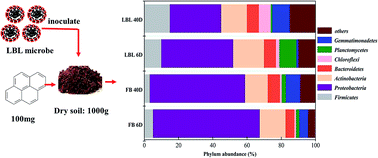
3.5.1 Predominant phyla present in the pyrene-contaminated soil. The microbial community diversities and phylogenetic structure of the initial (6D) and final (40D) inoculums were analyzed by Illumina MiSeq sequencing. The bacterial community structures at the phyla level are shown in Fig. 6. A total of 7 representative phylogenetic groups containing Firmicutes, Proteobacteria, Actinobacteria, Bacteroidetes, Chloroflexi, Planctomycetes, and Gemmatimonadetes were identified in the 4 soil bacterial communities. The distribution of sequences among the known bacterial phyla revealed that Proteobacteria and Actinobacteria predominated in all samples (Fig. 6), with Proteobacteria accounting for 30–60% of the total bacterial load. Proteobacteria were previously identified in the degradation of high molecular weight organic matter in marine ecosystems, in petroleum degradation processes at low temperatures, and in PAH degradation during the bioremediation of creosote-contaminated soils.31
image file: c5ra23273b-f6.tif
Fig. 6 Predominant phyla in the soil sample DNA at days 6 and 40 from the free bacteria (FB) and LBL treatments.

Actinobacteria were also found to be abundant (12–18%) in all treated soils, suggesting that the members of this class also accumulated in response to PYR. In earlier work,32 Actinobacteria were shown to dominate in soil samples supplemented with PAHs, such as fluoranthene. High levels of Actinobacteria in the LBL treatment groups indicated their involvement in the degradation of PYR in the treated soil. Actinobacteria are typically high molecular weight PAH-degraders in the soil, with Mycobacterium being a frequently isolated PYR-degrader.33 The proportion of Gemmatimonadetes increased significantly in both treatment groups, indicating their involvement in PYR degradation. The proportions of Firmicutes and Chloroflexi in LBL also increased, while they were maintained at slightly lower levels in FB. These differences between the two treatments were likely the reason why LBL displayed enhanced PYR removal compared to FB. The proportion of Bacteroidetes was 5–7% in both treatment groups. In comparison, Planctomycetes, as well as the other taxa tested, were found to be less abundant.

In summary, Firmicutes, Proteobacteria, and Actinobacteria were found to be the dominant taxa present following PYR contamination of soil.

3.5.2 Identification of the main PAH degraders. All of the genera classes and subclasses with a relative abundance of >1% in the FB and LBL soil samples on days 6 and 40 as well as in the raw soil (RS) on day 0 are shown in Fig. 7. On day 6, Xanthomonadaceae (18%), Sediminibacterium (8%) and Mycobacterium (8%) dominated in the LBL soil. Further sequence analysis indicated that the community of PAH degraders was dominated by a few genera. In general, the dominant PAH-degrading taxa in both of the samples included Mycobacterium,33 Streptomyces,34 Planococcaceae,35 Sphingobacterium,36 Bacillus,12 Comamonadaceae,31 Xanthomonadaceae,31 Sphingomonadaceae,37 Pseudomonas,38 Acinetobacte,39 Acidithiobacillus,37 Enterobacteriaceae40 and Flavobacteriu,41 most of which belong to Proteobacteria, including the latter 8 genera. Most of these are autochthonous bacteria species that had not been previously exposed to the pollutant, indicating that they have an intrinsic capacity to degrade PYR. Differences in the community structure were observed in FB at the genus level. The genera that predominated in the LBL samples were generally absent in the FB samples, with only a few exceptions, such as Mycobacterium and Bacillus. A significantly smaller number of species was found in FB, with only 7–8 genera, such as Sphingomonas, Dyella, Luteibacter, Luteimonas, and Mycobacterium. Among these, Dyella and Luteibacter were novel phenanthrene-degrading bacteria.42
image file: c5ra23273b-f7.tif
Fig. 7 Proportions of the bacterial classes/subclasses. Sequences were taken from DNA libraries prepared on days 6 and 40 from the free bacteria (FB) and LBL treatment groups, as well as on day 0 from the raw soil (RS) group.
3.5.3 The effect of the bacterial community structure on the progress of bioremediation. The dominant genera classes/subclasses of the bacterial community structure of the RS treatment on day 0 (Fig. 7) were Comamonadaceae, Planococcaceae, Sediminibacterium, Agrobacteri, Sphingobacteriaceae, Cytophagaceae, Bifidobacteriaceae, Chitinophagaceae, Sphingomonas, and Luteimonas, most of which have seldom been reported as PAH-degraders, with the exception of the latter two. Thus, the effect of the bacterial community structure on the raw soil during the bioremediation progress was limited in this work, indicating that the majority of the effect was due to the introduced FB/LBL bacteria.

The shifts in the composition of the bacterial community in these two treatment groups with the introduced bacteria were dramatic (Fig. 7), as sensitive species present in the soil were replaced by more resistant species, which were often reported to be useful in the process of organic pollutant bioremediation. For example, cyanobacteria could supply the degrading bacteria with the fixed nitrogen needed for their activity and the oxygen produced by photosynthesis during the degradation processes. Chloroflexus appeared in the LBL treatment group and was a species with known photoheterotrophic modes of growth,16 which likely made it a good fit for the pollutant biodegradation. Two other species, Pseudomonas and Comamonadaceae, were also observed during this treatment. A search revealed that the former species and Comamonas, a member of the latter group, both possess PAH-ring hydroxylating dioxygenases, which are involved in the initial step of the aerobic metabolism of PAHs.43 Furthermore, some species with PAH-degrading abilities also dominated during bioremediation. The comparison of the LBL sequence sets on the 6th and 40th days showed that the proportion of Proteobacteria dropped from 42 to 30% (Fig. 6). This change could largely be explained by a decline of the bacterial taxa that were identified as dominant PAH-degraders on day 6 (Fig. 7). In the construction of the Proteobacteria, some differences were noted between days 6 and 40 (Fig. 8). On day 6, Xanthomonadaceae was dominant in LBL, accounting for the 60% of the Proteobacteria. On day 40, the predominant taxa were Xanthomonadaceae, Pseudomonas and Acinetobacter, the proportions of which ranged from 20% to 30% of the Proteobacteria. The phyla Firmicutes increased from ∼10% on day 6 to ∼15% on day 40. Bacteroidetes were maintained at ∼7% during the incubation period. Actinobacteria stayed within 12–18% during incubation. The data also showed a sharp increase in the Gemmatimonadetes in the LBL treatment group; they increased from ∼1% on day 6 to ∼10% on day 40 and have rarely been reported in PAH-contaminated soil. A possible explanation is that these groups have evolved natural relationships with indigenous microbial species.


image file: c5ra23273b-f8.tif
Fig. 8 Distribution of Proteobacteria in the best-represented families and genera. Sequences were taken from DNA libraries prepared on days 6 and 40 from the LBL experiments. Ratios were calculated as the number of sequences per taxon versus the total number of sequences affiliated with the Proteobacteria in the library.

Among the PAH-degrading genera present in the samples (Fig. 7), the proportions of Planococcaceae, Pseudomonas, Acidithiobacillus, Acinetobacter and Sphingobacterium increased during incubation, indicating their ability to adapt to the environment. In contrast, the other genera decreased or remained essentially unchanged. On the other hand, Acinetobacter and Sphingobacterium36 were undetectable under the conditions tested on day 6, but they appeared on day 40. Roseiflexales (belonging to Chloroflexi) increased from 2% to 7%. The presence of some PAH-degrading genera in the treated soils, such as genera belonging to Planococcaceae and the genera Pseudomonas and Acinetobacter, suggested their involvement in PYR degradation. Their presence and/or increase might be necessary for, and the result of, the degradation of PYR. Usually, these genera have been found in diesel contaminated soil35 or used as degrading bacteria for the bioremediation of PAH-contaminated soil.38,39 Here, we highlight the significant increase in the Gemmatimonadetes and Chloroflexi, indicating that some of them likely had PAH-degrading abilities, which have seldom been reported in the biodegradation of PAHs. Some genera decreased, such as Xanthomonadaceae, Sphingomonadaceae, Sphingobacterium, and Flavobacterium. These have often been reported in creosote-contaminated soil or are well known to be PAH-degraders.31,33,36,37 Their proportional decrease might be due to the greater growth of other bacteria.

3.5.4 Diversity shifts in the bacterial community. The bacterial diversity changes (Table 2) in the LBL group showed an increase in the Shannon–Weaver’s index (6.58 to 7.74) and Simpson’s index (0.85 to 0.98) between days 6 and day 40. However, for the FB treatment, the indices remained nearly unchanged, i.e., 5.09–5.10 and 0.75–0.78, respectively.
Table 2 Diversity indices of the free bacteria (FB) and LBL treatments
Treatments Shannon–Weaver index Simpson index
FB 6D 5.09 0.75
FB 40D 5.10 0.78
LBL 6D 6.58 0.85
LBL 40D 7.74 0.98


The increase in the overall biodiversity, which usually has a negative correlation with the pollutant content, increased in the LBL-treated soil, as confirmed by PAH removal. The increases in the diversity indices of the LBL groups may be because the degradation process is carried out in different metabolic steps, in which some microbial populations start the degrading activity by converting primary pollutants into secondary products that other bacteria are more suited to degrade.44 Meanwhile, increases in the diversity indices could also result in the easier removal of PYR and its intermediates.

3.5.5 The effect of immobilization on the survival of the introduced bacteria. What most interested us was the change of the level of Mycobacterium, which was encapsulated into LBL and introduced into the soil. Its proportion also improved from 8% to 12% in the LBL groups, while it decreased from 10% to 7% in the free bacteria groups (Fig. 7). This result illustrates the additional protection that the LBL microcapsules provide to the bacteria.

These results confirmed that the presence of immobilized CP13 using LBL immobilization in the soil substantially changed the bacterial biodiversity over the 40 day incubation period, enhancing the presence of PAH-degrading bacteria. The results also demonstrated that some autochthonous bacteria species have an intrinsic capacity to degrade PYR without previous exposure, which is similar to the results of the report of Simarroa et al.45 It is important to note that the microbial diversity changes associated with the inoculation of LBL-immobilized CP13 were concomitant with both the higher proportion of PYR degraders encountered and the higher levels of PYR biodegradation observed in the LBL-immobilized CP13 treatment group.

4. Conclusions

Morphology observation with SEM and AFM provided the theoretical basis for bacteria immobilized in the CHI/ALG LBL assembled microcapsules. LSCM images confirmed the LBL microcapsules were successfully used for CP13 cell encapsulation. The soil bioremediation strategy, with bacteria immobilized in LBL microcapsules, was shown to be an effective remediation method for PYR-polluted soils. Compared to the free bacteria, the LBL-immobilized inoculum produced a significant increase in the detectable biodiversity of the autochthonous bacterial community, promoting PYR biodegradation, PYR-degrading microbial populations and enzyme activity in the soil. Therefore, our results provide useful findings that will have practical implications for future bacterial immobilization strategies in bioremediation, suggesting how immobilization strategies can influence the composition and structure of bacterial communities and PAH degradation.

Acknowledgements

This study was financially supported by the National High Technology Research and Development Program of China (2012AA101403). The authors appreciate helpful comments and suggestions of Dr Donald G. Barnes, guest professor at SCUT, during the drafting of the paper. The authors appreciate Rufang Deng of South China Botanical Garden, Chinese Academy of Sciences, for assistance with transmission electron microscopy.

References

  1. Y. Yang, N. Zhang, M. Xue, S. T. Lu and S. Tao, Environ. Pollut., 2011, 159, 591–595 CrossRef CAS PubMed.
  2. G. M. Colores, R. E. Macur, D. M. Ward and W. P. Inskeep, Appl. Environ. Microbiol., 2000, 66, 2959 CrossRef CAS PubMed.
  3. A. D’Annibale, M. Ricci, V. Leonardi, D. Quaratino, E. Mincione and M. Petruccioli, Biotechnol. Bioeng., 2005, 90, 723–731 CrossRef PubMed.
  4. A. Jousset, Environ. Microbiol., 2012, 14, 1830–1843 CrossRef PubMed.
  5. K. Zhang, Y. Xu, X. Hua, H. Han, J. Wang, J. Wang, Y. Liu and Z. Liu, Biochem. Eng. J., 2008, 41, 251–257 CrossRef CAS.
  6. Y. Xu and M. Lu, J. Hazard. Mater., 2010, 183, 395–401 CrossRef CAS PubMed.
  7. H. Xie, Y. Chen, C. Wang, W. Shi, L. Zuo and H. Xu, RSC Adv., 2015, 5, 44812–44823 RSC.
  8. Q. Li, X. Wang, G. Yin, Z. Gai, H. Tang, C. Ma, Z. Deng and P. Xu, Environ. Sci. Technol., 2009, 43, 8635–8642 CrossRef CAS PubMed.
  9. Y. Liu, Z. Zeng, G. Zeng, L. Tang, Y. Pang, Z. Li, C. Liu, X. Lei, M. Wu, P. Ren, Z. Liu, M. Chen and G. Xie, Bioresour. Technol., 2012, 115, 21–26 CrossRef CAS PubMed.
  10. S. Shi, Y. Qu, F. Ma and J. Zhou, Bioresour. Technol., 2014, 166, 79–86 CrossRef CAS PubMed.
  11. Y. Jiang, D. Yang, L. Zhang, Q. Sun, X. Sun, J. Li and Z. Jiang, Adv. Funct. Mater., 2009, 19, 150–156 CrossRef CAS.
  12. D. Su, P. Li, S. Frank and X. Xiong, J. Environ. Sci., 2006, 18, 1204–1209 CrossRef CAS.
  13. S. Wang, X. Li, W. Liu, P. Li, L. Kong, W. Ren, H. Wu and Y. Tu, J. Environ. Sci., 2012, 24, 1662–1669 CrossRef CAS.
  14. R. Huang, W. Tian, Q. Liu, H. Yu, X. Jin, Y. Zhao, Y. Zhou and G. Feng, Mar. Pollut. Bull., 2015, 1–6 Search PubMed.
  15. B. Chen, M. Yuan and L. Qian, J. Soils Sediments, 2012, 12, 1350–1359 CrossRef CAS.
  16. R. M. M. Abed, N. M. D. Safi, J. Köster, D. de Beer, Y. El-Nahhal, J. Rullkötter and F. Garcia-Pichel, Appl. Environ. Microbiol., 2002, 68, 1674–1683 CrossRef CAS PubMed.
  17. F. Rosenkranz, L. Cabrol, M. Carballa, A. Donoso-Bravo, L. Cruz, G. Ruiz-Filippi, R. Chamy and J. M. Lema, Water Res., 2013, 47, 6739–6749 CrossRef CAS PubMed.
  18. M. Viñas, J. Sabaté, M. J. Espuny, M. Anna and M. Vin, Appl. Environ. Microbiol., 2005, 71, 7008–7018 CrossRef PubMed.
  19. J. G. Caporaso, C. L. Lauber, W. a. Walters, D. Berg-Lyons, J. Huntley, N. Fierer, S. M. Owens, J. Betley, L. Fraser, M. Bauer, N. Gormley, J. a. Gilbert, G. Smith and R. Knight, ISME J., 2012, 6, 1621–1624 CrossRef CAS PubMed.
  20. P. A. Schmidt, M. Bálint, B. Greshake, C. Bandow, J. Römbke and I. Schmitt, Soil Biol. Biochem., 2013, 65, 128–132 CrossRef CAS.
  21. U. C. Brinch, F. Ekelund and C. S. Jacobsen, Appl. Environ. Microbiol., 2002, 68, 1808–1816 CrossRef CAS PubMed.
  22. S. Lu, Y. Teng, J. Wang and Z. Sun, Chemosphere, 2010, 81, 645–650 CrossRef CAS PubMed.
  23. K. Y. Cheng, K. M. Lai and J. W. C. Wong, Chemosphere, 2008, 73, 791–797 CrossRef CAS PubMed.
  24. M. Lu, Z. Zhang, S. Sun, Q. Wang and W. Zhong, Chemosphere, 2009, 77, 161–168 CrossRef CAS PubMed.
  25. Z.-Y. Wang, Y.-Z. Xin, D.-M. Gao, F.-M. Li, J. Morgan and B.-S. Xing, Pedosphere, 2010, 20, 466–478 CrossRef.
  26. Z. S. Haidar, R. C. Hamdy and M. Tabrizian, Biomaterials, 2008, 29, 1207–1215 CrossRef CAS PubMed.
  27. M. K. Banks, P. Kulakow, A. P. Schwab, Z. Chen and K. Rathbone, Int. J. Phytorem., 2003, 5, 225–234 CrossRef CAS PubMed.
  28. J. a. van Veen, L. S. van Overbeek and J. D. van Elsas, Microbiol. Mol. Biol. Rev., 1997, 61, 121–135 CAS.
  29. C. Wang, L. Yu, Z. Zhang, B. Wang and H. Sun, J. Hazard. Mater., 2014, 264, 439–448 CrossRef CAS PubMed.
  30. G. Adam and H. Duncan, Soil Biol. Biochem., 2001, 33, 943–951 CrossRef CAS.
  31. M. Viñas, J. Sabaté, M. J. Espuny and A. M. Solanas, Appl. Environ. Microbiol., 2005, 71, 7008–7018 CrossRef PubMed.
  32. P. Sawulski, N. Clipson and E. Doyle, Biodegradation, 2014, 25, 835–847 CrossRef CAS PubMed.
  33. S. Gallego, J. Vila, M. Tauler, J. M. Nieto, P. Breugelmans, D. Springael and M. Grifoll, Biodegradation, 2014, 25, 543–556 CrossRef CAS PubMed.
  34. J. Peng, Y. Zhang, J. Su, Q. Qiu, Z. Jia and Y.-G. Zhu, Bioresour. Technol., 2013, 143, 608–614 CrossRef CAS PubMed.
  35. R. Das and B. N. Tiwary, J. Basic Microbiol., 2013, 53, 723–732 CrossRef CAS PubMed.
  36. A. Janbandhu and M. H. Fulekar, J. Hazard. Mater., 2011, 187, 333–340 CrossRef CAS PubMed.
  37. F. Martin, S. Torelli, D. Le Paslier, A. Barbance, F. Martin-Laurent, D. Bru, R. Geremia, G. Blake and Y. Jouanneau, Environ. Pollut., 2012, 162, 345–353 CrossRef CAS PubMed.
  38. C. Sathesh Prabu and A. J. Thatheyus, Int. Biodeterior. Biodegrad., 2007, 60, 69–73 CrossRef.
  39. Y. Gao, X. Z. Yu, S. C. Wu, K. C. Cheung, N. F. Y. Tam, P. Y. Qian and M. H. Wong, Sci. Total Environ., 2006, 372, 1–11 CrossRef CAS PubMed.
  40. M. C. Molina, N. González, L. F. Bautista, R. Sanz, R. Simarro, I. Sánchez and J. L. Sanz, Biodegradation, 2009, 20, 789–800 CrossRef CAS PubMed.
  41. F. Maqbool, Z. Wang, Y. Xu, J. Zhao, D. Gao, Y.-G. Zhao, Z. A. Bhatti and B. Xing, J. Hazard. Mater., 2012, 237–238, 262–269 CrossRef CAS PubMed.
  42. C. Muangchinda, R. Pansri, W. Wongwongsee and O. Pinyakong, J. Appl. Microbiol., 2013, 114, 1311–1324 CrossRef CAS PubMed.
  43. A. Cébron, M. P. Norini, T. Beguiristain and C. Leyval, J. Microbiol. Methods, 2008, 73, 148–159 CrossRef PubMed.
  44. M. Zucchi, L. Angiolini, S. Borin, L. Brusetti, N. Dietrich, C. Gigliotti, P. Barbieri, C. Sorlini and D. Daffonchio, J. Appl. Microbiol., 2003, 94, 248–257 CrossRef CAS PubMed.
  45. R. Simarro, N. González, L. F. Bautista and M. C. Molina, J. Hazard. Mater., 2013, 262, 158–167 CrossRef CAS PubMed.

Footnote

Electronic supplementary information (ESI) available. See DOI: 10.1039/c5ra23273b

This journal is © The Royal Society of Chemistry 2016
Click here to see how this site uses Cookies. View our privacy policy here.