DOI:
10.1039/C5RA22798D
(Paper)
RSC Adv., 2016,
6, 8848-8859
Halogen-free synthesis of symmetrical 1,3-dialkylimidazolium ionic liquids using non-enolisable starting materials†
Received
30th October 2015
, Accepted 13th January 2016
First published on 15th January 2016
Abstract
Imidazolium ionic liquids were synthesized from readily available molecules: aldehydes, 1,2-carbonyl components, alkyl amines and acids in a halogen-free procedure. Since the use of enolisable carbonyl functions is not compatible with the modified Debus–Radziszewski reaction, symmetrical 1,3-dialkylimidazolium ionic liquids were made. The use of strong acids, like sulfuric acid, leads to protonation of the amine, low yields and side products that are difficult to remove. Changing the acid in the synthesis to acetic acid greatly improved the isolated yield and produced pure imidazolium acetate ionic liquids. From these imidazolium acetate compounds, many other ionic liquids could be prepared using different metathesis strategies. These strategies were dependent on the acidity of the conjugate acid of the anion, the acid volatility and the hydrophilicity of the used reagents and resulting ionic liquid. The following anions were introduced: bis(trifluoromethylsulfonyl)imide ([Tf2N]−), p-toluenesulfonate (tosylate, [TsO]−), bis(2-ethylhexyl)phosphate ([DEHP]−) and nitrate ([NO3]−). The impact of the different anions on the properties of the ionic liquids was investigated.
Introduction
Ionic liquids (ILs) consist entirely of ion pairs and prefarably melt below 100 °C.1–3 The low volatility, high thermal stability and non-flammable character of ILs make these compounds of interest as replacements for volatile organic solvents or catalysts in industrial processes.3,4 Imidazolium heterocycles are popular cations in ILs since their aromaticity makes them highly stable. The most investigated imidazolium compounds are 1-alkyl-3-methylimidazolium salts, due to the easy alkylation of commercially available N-methylimidazoles.5–11 The most intensively studied imidazolium compounds contain the cations 1-ethyl-3-methylimidazolium [C2mim]+ or 1-butyl-3-methylimidazolium [C4mim]+, because these ionic liquids are the cheapest to prepare and possess relatively low melting points and viscosities. Imidazolium compounds with more than two alkyl chains are rarely used as ILs, as they require more complex synthetic procedures. The synthesis of highly substituted imidazoles is therefore under-explored. Maton et al. have described the synthesis of highly substituted imidazolium ionic liquids from readily available molecules, at 120 °C in pressure vials, yet the products were obtained in low yields.12,13 In the literature on imidazole synthesis, phenyl is the most often used substituent. For instance, the oldest synthetic route to obtain imidazole is the Debus–Radziszewski method where a benzil (1,2-diphenylethane-1,2-dione) molecule reacts with formaldehyde and two ammonia equivalents to form an imidazole ring.14 This approach was used in the synthesis of lophine (2,4,5-triphenylimidazole) by Radziszewski.15 In the modified Debus–Radziszewski method, an improvement was made yielding a tetrasubstituted imidazole ring.16 One of the ammonia equivalents is replaced by an alkylamine in this modification, which results in an extra substituent on the final imidazole product. An acid is added as a catalyst. To limit the amount of reagents and thus to simplify the reaction procedure, the ammonia and acid are mostly added as one compound: an ammonium salt. The reaction couples all five functionalities, primary amine, ammonium and three carbonyl groups, into an imidazole ring with four side chains. The possible side chains however, are limited. First of all, none of the side chains should contain a functional group which can react with amines or carbonyl functions or which may interfere in another way in the reaction. No selectivity is observed for the incorporation of asymmetric 1,2-diketones, resulting in a mixture of imidazole rings with mirrored substitution of the diketone substituents. This problem can easily be avoided by using symmetric 1,2-diketones with identical substituents, as described in a patent by Arduengo et al.16 A library of mono-, di-, tri- and tetra-substituted imidazoles was synthesized by Gelens et al. using microwave irradiation in a multicomponent reaction.17 Interestingly, this procedure only works for benzils and very poor yields were observed for combinations using enolizable 1,2-dioxoalkanes. The direct synthesis of imidazolium compounds can also be performed by replacing the ammonium salt by another amine equivalent. This method was described by Zimmermann et al. for the synthesis of hydrophilic imidazolium ionic liquids, where glyoxal and formaldehyde were used as 1,2-carbonyl components and aldehyde, respectively, in the reaction with the two amine equivalents.18 The acid used in the synthesis is needed in a stoichiometric amount since the conjugate base will become the anion required by the imidazolium cation, forming an ionic liquid. Using a mixture of amines would result in a statistical mixture of three different imidazolium salts, so only one amine can be used, leading to symmetrically substituted 1,3-dialkylimidazolium salts. A major advantage, however, is that this synthetic method directly yields the imidazolium ionic liquids in one step, which can even be performed in a halogen-free fashion if the correct acid is chosen.18 In this paper, it is shown that the direct synthesis of highly substituted imidazolium ionic liquids (i.e. with more than two substituents) is not feasible when enolisable starting materials are used. A versatile, halogen-free synthesis procedure for 1,3-dialkylimidazolium ionic liquids was developed to obtain a series of acetate ionic liquids which can be transformed into other ionic liquids by anion-exchange reactions. A library of symmetrical 1,3-dialkylimidazolium ionic liquids was synthesized (Fig. 1).
 |
| | Fig. 1 Overview of all the synthesized ILs, combination of cations 1,3-diethylimidazolium [EEIM]+, 1,3-diisobutylimidazolium [iBiBIM]+, 1,3-dibutylimidazolium [BBIM]+, 1,3-dihexylimidazolium [HHIM]+, 1,3-bis(2-ethylhexyl)imidazolium [EhEhIM]+, 1,3-dioctylimidazolium [OOIM]+ and 1,3-didecylimidazolium [DDIM]+ and anions acetate [AcO]−, bis(trifluoromethylsulfonyl)imide [Tf2N]−, p-toluenesulfonate [TsO]−, bis(2-ethylhexyl)phosphate [DEHP]−, nitrate [NO3]−. | |
Experimental
Chemicals
Glyoxal (40 wt% in water), n-butylamine (99.5%), ethylamine (70 wt% in water), 2-ethylhexylamine (99%) and n-octylamine (99+%) were purchased from Acros Organics (Geel, Belgium). Diethyl ether (technical grade) and sodium hydroxide (Normapur) were obtained from VWR (Heverlee, Belgium). n-Decylamine (98%) was purchased from TCI Europe (Zwijndrecht, Belgium). Hydrogen bis(trifluoromethylsulfonyl)imide (80 wt% in water) was bought from Iolitec (Heilbronn, Germany). Bis(2-ethylhexyl)phosphate (97%), isobutylamine (99%), n-hexylamine (99%), p-toluenesulfonic acid monohydrate (≥98.5%) and nitric acid (65% in water) were bought from Sigma-Aldrich (Diegem, Belgium). Dichloromethane (analytical reagent grade), acetic acid (analytical reagent grade) and formaldehyde (37 wt% in water) were obtained from Fisher Scientific Limited (Loughborough, UK). All chemicals were used without purification.
General
The 1H NMR and 13C NMR spectra were recorded on a Bruker Avance 300 spectrometer (operating at 300 MHz for 1H, 75 MHz for 13C). The chemical shifts are noted in parts per million (ppm), referenced to tetramethylsilane for 1H and 13C. All solutions were made in CDCl3 or DMSO-d6. The spectra were analyzed with SpinWorks software. All spectra can be found in the ESI.† The Fourier Transform Infrared (FTIR) spectra of the ILs were recorded by a Bruker Vertex 70 spectrometer via the attenuated total reflectance (ATR) technique with a Bruker Platinum ATR accessory. The OPUS software package was used for analysis of the FTIR spectra. The water content was determined by coulometric Karl Fischer titration using a Mettler-Toledo DL39 titrator.
The viscosity of the ionic liquids was measured using an automatic Brookfield plate-cone viscometer, Model LVDV-II CP (Brookfield Engineering Laboratories, USA) equipped with a CPE-40 cone spindle. The elemental analysis of carbon, hydrogen and nitrogen (CHN analysis) was performed on a CE-instruments EA-1110 elemental analyzer for acetate and bistriflimide ionic liquids, the tosylate, bis(2-ethylhexyl)phosphate and nitrate ionic liquids were measured on an Interscience Flash 2000 CHNS/O analyzer. TGA measurements were performed on a TGA-Q500 (TA Instruments).
General reaction procedure for synthesis of acetate ILs
Two equivalents of amine were cooled down to 0 °C in an ice bath. A mixture of formaldehyde (37 wt% in water, 1 eq.) and acetic acid (1.5 eq.) was added dropwise while keeping the temperature below 10 °C. The mixture was stirred for 30 min at 0 °C, after which the glyoxal (40 wt% in water, 1 eq.) was added and the reaction mixture was stirred overnight at RT. The solution was washed with diethyl ether until the organic phase was colorless and the water was removed with a rotary evaporator. The product was dried on a Schlenk line at 50 °C overnight.
1,3-Diethylimidazolium acetate [EEIM][AcO]. Dark orange oil (21.60 g, 0.117 mol, 94%). 1H NMR: (300 MHz, DMSO-d6, δ/ppm): 9.77 (s, 1H, CH), 7.85 (s, 2H, 2CH), 4.22 (m, 4H, 2CH2–N), 1.64 (s, 3H, CH3), 1.42 (m, 6H, 2CH3). 13C NMR: (75 MHz, DMSO-d6, δ/ppm): 173.04 (C
O), 136.21 (N–CH–N), 122.02 (2CH–N), 44.02 (2CH2–N), 24.85 (2CH3), 15.08 (CH3). FTIR: (ν/cm−1): 2960, 2934, 2874 (C–H stretch), 1577 (C
O stretch), 1381 (C–O stretch). CHN analysis: (calculated for C9H16N2O2·2H2O) (220.27 g mol−1): C 48.20% (49.08%), H 8.87% (9.15%), N 12.65% (12.72%).
1,3-Dibutylimidazolium acetate [BBIM][AcO]. Dark orange oil (24.49 g, 0.102 mol, 82%). 1H NMR: (300 MHz, DMSO-d6, δ/ppm): 9.96 (s, 1H, CH), 7.88 (s, 2H, 2CH), 4.21 (m, 4H, 2CH2–N), 1.78 (m, 4H, 2CH2), 1.63 (s, 3H, CH3), 1.23 (m, 4H, 2CH2), 0.90 (m, 6H, 2CH3). 13C NMR: (75 MHz, DMSO-d6, δ/ppm): 173.52 (C
O), 137.50 (N–CH–N), 122.86 (2CH–N), 49.00 (CH2–N), 48.82 (CH2–N), 31.84 (2CH2), 25.61 (2CH2), 19.24 (2CH3), 13.70 (CH3). FTIR: (ν/cm−1): 2960, 2934, 2874 (C–H stretch), 1577 (C
O stretch), 1381 (C–O stretch). CHN analysis: (calculated for C13H24N2O2·H2O) (258.36 g mol−1): C 59.57% (60.44%), H 10.42% (10.14%), N 10.63% (10.84%).
1,3-Diisobutylimidazolium acetate [iBiBIM][AcO]. Dark orange solid (26.93 g, 0.112 mol, 90%). 1H NMR: (300 MHz, DMSO-d6, δ/ppm): 9.97 (s, 1H, CH), 7.88 (s, 2H, 2CH), 4.08 (m, 4H, 2CH2–N), 2.11 (m, 2H, 2CH), 1.67 (s, 3H, CH3), 0.87 (m, 6H, 2CH3). 13C NMR: (75 MHz, DMSO-d6, δ/ppm): 173.47 (C
O), 137.15 (N–CH–N), 122.74 (2CH–N), 55.33 (2CH2–N), 28.67 (2CH), 24.71 (4CH3), 18.98 (CH3). FTIR: (ν/cm−1): 2954, 2929, 2869 (C–H stretch), 1574 (C
O stretch), 1381 (C–O stretch). CHN analysis: (calculated for C13H24N2O2·H2O) (258.36 g mol−1): C 60.65% (60.44%), H 10.14% (10.14%), N 10.55% (10.84%).
1,3-Dihexylimidazolium acetate [HHIM][AcO]. Dark orange oil (26.42 g, 0.089 mol, 71%). 1H NMR: (300 MHz, DMSO-d6, δ/ppm): 9.91 (s, 1H, CH), 7.87 (s, 2H, 2CH), 4.19 (m, 4H, 2CH2–N), 1.79 (m, 4H, 2CH2), 1.62 (s, 3H, CH3), 1.25 (m, 12H, 6CH2), 0.85 (m, 6H, 2CH3). 13C NMR: (75 MHz, DMSO-d6, δ/ppm): 173.35 (C
O), 137.46 (N–CH–N), 123.00 (CH–N), 122.86 (CH–N), 49.15 (2CH2–N), 30.96 (2CH2), 29.75 (2CH2), 25.67 (CH3), 25.57 (CH2), 22.33 (2CH2), 14.22 (2CH3). FTIR: (ν/cm−1): 2956, 2928, 2859 (C–H stretch), 1579 (C
O stretch), 1381 (C–O stretch). CHN analysis: (calculated for C17H32N2O2·1.5H2O) (323.47 g mol−1): C 63.23% (63.12%), H 12.91% (10.91%), N 8.65% (8.66%).
1,3-Dioctylimidazolium acetate [OOIM][AcO]. Dark orange oil (24.38 g, 0.069 mol, 55%). 1H NMR: (300 MHz, DMSO-d6, δ/ppm): 9.97 (s, 1H, CH), 7.89 (s, 2H, 2CH), 4.29 (m, 4H, 2CH2–N), 1.79 (m, 4H, 2CH2), 1.63 (s, 3H, CH3), 1.24 (m, 20H, 10CH2), 0.85 (m, 6H, 2CH3). 13C NMR: (75 MHz, DMSO-d6, δ/ppm): 173.53 (C
O), 137.55 (N–CH–N), 123.02 (CH–N), 122.86 (CH–N), 49.13 (2CH2–N), 31.60 (2CH2), 29.82 (2CH2), 28.98 (2CH2), 28.77 (2CH2), 25.94 (2CH2), 25.62 (CH3), 22.50 (2CH2), 14.32 (2CH3). FTIR: (ν/cm−1): 2956, 2924, 2856 (C–H stretch), 1576 (C
O stretch), 1385 (C–O stretch). CHN analysis: (calculated for C21H40N2O2·H2O) (370.57 g mol−1): C 68.60% (68.06%), H 13.88% (11.42%), N 7.57% (7.56%).
1,3-Didecylimidazolium acetate [DDIM][AcO]. Brown oil (27.07 g, 0.066 mol, 53%). 1H NMR: (300 MHz, DMSO-d6, δ/ppm): 9.76 (s, 1H, CH), 7.86 (s, 2H, 2CH), 4.19 (m, 4H, 2CH2–N), 1.79 (m, 4H, 2CH2), 1.76 (s, 3H, CH3), 1.23 (m, 28H, 14CH2), 0.85 (m, 6H, 2CH3). 13C NMR: (75 MHz, DMSO-d6, δ/ppm): 172.98 (C
O), 137.52 (N–CH–N), 122.87 (2CH–N), 52.02 (2CH2–N), 30.64 (2CH2), 29.30 (2CH2), 27.66 (2CH2), 24.67 (CH3), 22.74 (2CH2), 22.34 (4CH2), 22.33 (4CH2), 13.76 (2CH2), 10.10 (2CH3). FTIR: (ν/cm−1): 2958, 2926, 2853 (C–H stretch), 1578 (C
O stretch), 1385 (C–O stretch). CHN analysis: (calculated for C25H48N2O2) (408.66 g mol−1): C 74.54% (73.48%), H 14.92% (11.84%), N 6.58% (6.85%).
1,3-Bis(2-ethylhexyl)imidazolium acetate [EhEhIM][AcO]. Highly viscous, dark orange oil (20.83 g, 0.059 mol, 47%). 1H NMR: (300 MHz, DMSO-d6, δ/ppm): 9.83 (s, 1H, CH), 7.87 (s, 2H, 2CH), 4.13 (d, 7.0 Hz, 4H, 2CH2–N), 1.84 (m, 2H, 2CH), 1.65 (s, 3H, CH3), 1.25 (m, 16H, 8CH2), 0.85 (m, 12H, 4CH3). 13C NMR: (75 MHz, DMSO-d6, δ/ppm): 173.10 (C
O), 136.90 (N–CH–N), 122.40 (2CH–N), 48.7 (2CH2–N), 31.28 (2CH), 30.61 (2CH2), 29.32 (2CH2), 28.87 (2CH2), 28.70 (2CH2), 28.68 (2CH2), 28.34 (2CH2), 25.45 (CH3), 24.38 (2CH2), 22.08 (2CH2), 13.87 (4CH3). FTIR: (ν/cm−1): 2959, 2928, 2861 (C–H stretch), 1578 (C
O stretch). CHN analysis: (calculated for C21H40N2O2·H2O) (370.57 g mol−1): C 68.35% (68.06%), H 13.70% (11.42%), N 7.54% (7.56%).
General reaction procedure for synthesis of bis(trifluoromethylsulfonyl)imide ILs
Hydrogen bis(trifluoromethylsulfonyl)imide is a superacid,19 therefore the acid was used in the metathesis reaction. 1,3-Dialkylimidazolium acetate (5 mmol) and hydrogen bis(trifluoromethylsulfonyl)imide (80 wt% in water, 5 mmol, 1.76 g) were dissolved in water and stirred at room temperature for 2 h. A hydrophobic layer appeared. Dichloromethane was added to the reaction mixture until the entire hydrophobic liquid was dissolved. The dichloromethane layer was separated from the water phase and washed with water. After removing the dichloromethane by evaporation, the product was dried on a Schlenk line at 50 °C.
1,3-Diethylimidazolium bis(trifluoromethylsulfonyl)imide [EEIM][Tf2N]. Brown oil (1.428 g, 3.52 mmol, 71%). 1H NMR: (300 MHz, DMSO-d6, δ/ppm): 9.18 (s, 1H, CH), 7.80 (s, 2H, 2CH), 4.19 (m, 4H, 2CH2), 1.43 (m, 6H, 2CH3). 13C NMR: (75 MHz, DMSO-d6, δ/ppm): 134.40 (N–CH–N), 122.18 (2CH–N), 119.48 (q, 320 Hz, 2CF3), 45.29 (2CH2–N), 14.88 (2CH3). FTIR: (ν/cm−1): 3153, 3118, 2991 (C–H stretch), 1566 (aromatic C–N stretch), 1455 (aromatic C–C stretch), 1347, 1330, 1135 (S
O stretch), 1180 (C–F stretch), 1053 (N–S stretch), 613 (SO2 bending), 570, 513 (C–F bending). CHN analysis: (calculated for C9H13N3O4S2F6) (405.34 g mol−1): C 27.11% (26.67%), H 3.72% (3.23%), N 10.23% (10.37%).
1,3-Dibutylimidazolium bis(trifluoromethylsulfonyl)imide [BBIM][Tf2N]. Brown oil (2.023 g, 4.38 mmol, 88%). 1H NMR: (300 MHz, CDCl3, δ/ppm): 8.78 (s, 1H, CH), 7.36 (s, 2H, 2CH), 4.18 (t, 7.5 Hz, 4H, 2CH2–N), 1.85 (m, 4H, 2CH2), 1.36 (m, 4H, 2CH2), 0.96 (t, 7.5 Hz, 6H, 2CH3). 13C NMR: (75 MHz, CDCl3, δ/ppm): 130.55 (N–CH–N), 117.65 (2CH–N), 115.07 (q, 320 Hz, 2CF3), 45.16 (2CH2–N), 27.21 (2CH2), 14.54 (2CH2), 8.41 (2CH3). FTIR: (ν/cm−1): 2967, 2939, 2879 (C–H stretch), 1565 (aromatic C–N stretch), 1465 (aromatic C–C stretch), 1348, 1330, 1135 (S
O stretch), 1181 (C–F stretch), 1054 (N–S stretch), 614 (SO2 bending), 570, 512 (C–F bending). CHN analysis: (calculated for C13H21N3O4S2F6) (461.44 g mol−1): C 33.82% (33.84%), H 5.27% (4.59%), N 9.06% (9.11%).
1,3-Diisobutylimidazolium bis(trifluoromethylsulfonyl)imide [iBiBIM][Tf2N]. Brown oil (1.382 g, 2.99 mmol, 60%). 1H NMR: (300 MHz, CDCl3, δ/ppm): 8.81 (s, 1H, CH), 7.33 (s, 2H, 2CH), 4.02 (d, 7.5 Hz, 4H, 2CH2–N), 2.15 (m, 2H, 2CH), 0.95 (d, 6.5 Hz, 12H, 4CH3). 13C NMR: (75 MHz, CDCl3, δ/ppm): 135.90 (N–CH–N), 122.77 (2CH–N), 119.83 (q, 320 Hz, 2CF3), 56.92 (2CH2–N), 29.44 (2CH), 19.09 (4CH3). FTIR: (ν/cm−1): 2967, 2926, 2856 (C–H stretch), 1564 (aromatic C–N stretch), 1465 (aromatic C–C stretch), 1349, 1135 (S
O stretch), 1185 (C–F stretch), 1056 (N–S stretch), 616 (SO2 bending), 571, 513 (C–F bending). CHN analysis: (calculated for C13H21N3O4S2F6) (461.44 g mol−1): C 33.92% (33.84%), H 5.12% (4.59%), N 8.95% (9.11%).
1,3-Dihexylimidazolium bis(trifluoromethylsulfonyl)imide [HHIM][Tf2N]. Orange oil (2.372 g, 4.58 mmol, 92%). 1H NMR: (300 MHz, CDCl3, δ/ppm): 8.80 (s, 1H, CH), 7.35 (s, 2H, 2CH), 4.18 (t, 7.5 Hz, 4H, 2CH2–N), 1.86 (m, 4H, 2CH2), 1.31 (m, 12H, 6CH2), 0.88 (m, 6H, 2CH3). 13C NMR: (75 MHz, CDCl3, δ/ppm): 135.32 (N–CH–N), 122.41 (2CH–N), 119.85 (q, 320 Hz, 2CF3), 50.16 (2CH2–N), 30.90 (2CH2), 30.04 (2CH2), 25.67 (2CH2), 22.26 (2CH2), 13.75 (2CH3). FTIR: (ν/cm−1): 2960, 2933, 2863 (C–H stretch), 1564 (aromatic C–N stretch), 1465 (aromatic C–C stretch), 1348, 1135 (S
O stretch), 1183 (C–F stretch), 1055 (N–S stretch), 615 (SO2 bending), 570, 513 (C–F bending). CHN analysis: (calculated for C17H29N3O4S2F6) (517.55 g mol−1): C 39.29% (39.45%), H 6.34% (5.65%), N 8.04% (8.12%).
1,3-Dioctylimidazolium bis(trifluoromethylsulfonyl)imide [OOIM][Tf2N]. Orange oil (2.65 g, 4.62 mmol, 93%). 1H NMR: (300 MHz, CDCl3, δ/ppm): 8.81 (s, 1H, CH), 7.33 (s, 2H, 2CH), 4.18 (t, 7.5 Hz, 4H, 2CH2–N), 1.86 (m, 4H, 2CH2), 1.29 (m, 20H, 10CH2), 0.87 (m, 6H, 2CH3). 13C NMR: (75 MHz, CDCl3, δ/ppm): 135.32 (N–CH–N), 122.38 (2CH–N), 119.82 (q, 320 Hz, 2CF3), 50.18 (2CH2–N), 31.58 (2CH2), 30.10 (2CH2), 28.91 (2CH2), 28.77 (2CH2), 26.04 (2CH2), 22.51 (2CH2), 13.96 (2CH3). FTIR: (ν/cm−1): 2928, 2859 (C–H stretch), 1564 (aromatic C–N stretch), 1465 (aromatic C–C stretch), 1349, 1135 (S
O stretch), 1184 (C–F stretch), 1055 (N–S stretch), 616 (SO2 bending), 570, 513 (C–F bending). CHN analysis: (calculated for C21H37N3O4S2F6) (573.66 g mol−1): C 43.94% (43.97%), H 7.36% (6.50%), N 7.29% (7.32%).
1,3-Didecylimidazolium bis(trifluoromethylsulfonyl)imide [DDIM][Tf2N]. Orange oil (1.523 g, 2.42 mmol, 48%). 1H NMR: (300 MHz, CDCl3, δ/ppm): 8.83 (s, 1H, CH), 7.30 (s, 2H, 2CH), 4.19 (t, 7.5 Hz, 4H, 2CH2–N), 1.87 (m, 4H, 2CH2), 1.28 (m, 28H, 14CH2), 0.87 (m, 6H, 2CH3). 13C NMR: (75 MHz, CDCl3, δ/ppm): 135.38 (N–CH–N), 122.36 (2CH–N), 119.81 (q, 320 Hz, 2CF3), 50.22 (2CH2–N), 31.82 (2CH2), 30.12 (2CH2), 29.39 (2CH2), 29.29 (2CH2), 29.21 (2CH2), 28.87 (2CH2), 26.09 (2CH2), 22.63 (2CH2), 14.05 (2CH3). FTIR: (ν/cm−1): 3148, 2926, 2856 (C–H stretch), 1564 (aromatic C–N stretch), 1465 (aromatic C–C stretch), 1349, 1135 (S
O stretch), 1184 (C–F stretch), 1055 (N–S stretch), 616 (SO2 bending), 571, 513 (C–F bending). CHN analysis: (calculated for C25H45N3O4S2F6·H2O) (647.78 g mol−1): C 46.45% (46.35%), H 7.87% (7.31%), N 6.58% (6.49%).
1,3-Bis(2-ethylhexyl)imidazolium bis(trifluoromethylsulfonyl)imide [EhEhIM][Tf2N]. Orange oil (2.47 g, 4.31 mmol, 86%). 1H NMR: (300 MHz, CDCl3, δ/ppm): 8.77 (s, 1H, CH), 7.33 (s, 2H, 2CH), 4.10 (d, 7.5 Hz, 4H, 2CH2–N), 1.83 (m, 2H, 2CH), 1.23 (m, 16H, 8CH2), 0.90 (m, 12H, 4CH3). 13C NMR: (75 MHz, CDCl3, δ/ppm): 136.13 (N–CH–N), 122.81 (2CH–N), 119.84 (q, 320 Hz, 2CF3), 53.60 (2CH2–N), 40.01 (2CH), 29.82 (2CH2), 28.14 (2CH2), 23.18 (2CH2), 22.73 (2CH2), 13.76 (2CH3), 10.08 (2CH3). FTIR: (ν/cm−1): 2963, 2933, 2864 (C–H stretch), 1563 (aromatic C–N stretch), 1462 (aromatic C–C stretch), 1349, 1135 (S
O stretch), 1184 (C–F stretch), 1055 (N–S stretch), 615 (SO2 bending), 570, 513 (C–F bending). CHN analysis: (calculated for C21H37N3O4S2F6·H2O) (591.67 g mol−1): C 43.11% (42.63%), H 7.35% (6.64%), N 7.25% (7.10%).
General reaction procedure for synthesis of tosylate ILs
p-Toluenesulfonic acid is a strong acid with a pKa of −2.8, therefore the acid was suitable in the metathesis reaction. Acetic acid could be safely removed by evaporation if necessary, due to the high boiling point of the p-toluenesulfonic acid. 1,3-Dialkylimidazolium acetate (5 mmol) was dissolved in water and p-toluenesulfonic acid (monohydrate, 5 mmol, 0.952 g) was added and the reaction mixture was stirred overnight at room temperature. Depending on the hydrophobicity of the p-toluenesulfonate ionic liquids, different purification steps were required. In case of the water-soluble ionic liquids: 1,3-diethylimidazolium tosylate, 1,3-dibutylimidazolium tosylate and 1,3-diisobutylimidazolium tosylate, water and excess of acetic acid were removed by evaporation and further drying on a Schlenk line at 70 °C. For 1,3-di(2-ethylhexyl)imidazolium tosylate and 1,3-dihexylimidazolium tosylate, water-insoluble products were formed, the water layer was separated and 1H NMR indicated that a little excess 1,3-dialkylimidazolium acetate was present in the product. After redissolving the product in water, an excess of p-toluenesulfonic acid was added. The remaining p-toluenesulfonic acid and acetic acid were washed out with water and the product was dried on a Schlenk line. In the case of 1,3-dioctylimidazolium tosylate and 1,3-didecylimidazolium tosylate, a suspension was formed after reaction. The solid product was separated using a glass filter, washed with water and dried in the vacuum oven.
1,3-Diethylimidazolium tosylate [EEIM][OTs]. Dark brown liquid (1.36 g, 4.59 mmol, 92%). 1H NMR: (300 MHz, CDCl3, δ/ppm): 9.75 (s, 1H, CH), 7.75 (s, 2H, 2CH), 7.29 (s, 2H, 2CH), 7.14 (s, 2H, 2CH), 4.28 (m, 4H, 2CH2), 2.34 (s, 3H, CH3), 1.50 (m, 6H, 2CH3). 13C NMR: (75 MHz, CDCl3, δ/ppm): 142.05 (C–S), 140.19 (C–CH3), 136.52 (CH), 128.81 (2CH), 125.97 (2CHN), 121.68 (2CH), 45.07 (2CH2), 21.33 (1CH3), 15.34 (2CH3). FTIR: (ν/cm−1): 3097–2876 (C–H stretch), 1563 (N–C–N stretch), 1470 (C–C stretch), 1166, 1120 (SO2 stretch), 1032, 1010, 816 (C–H bending), 679 (S
O stretch), 565 (C–S bending). CHN analysis: (calculated for C14H20N2O3S·H2O) (314.4 g mol−1): C 53.50% (53.48%), H 7.88% (7.08%), N 8.07% (8.91%).
1,3-Dibutylimidazolium tosylate [BBIM][OTs]. Light brown liquid (1.76 g, 4.99 mmol, 99%). 1H NMR: (300 MHz, CDCl3, δ/ppm): 9.78 (s, 1H, CH), 7.77 (s, 2H, 2CH), 7.25 (s, 2H, 2CH), 7.14 (s, 2H, 2CH), 4.23 (m, 4H, 2CH2), 2.34 (s, 3H, CH3), 1.81 (m, 4H, 2CH2), 1.30 (m, 4H, 2CH2), 0.91 (m, 6H, 2CH3). 13C NMR: (75 MHz, CDCl3, δ/ppm): 142.20 (C–S), 140.04 (C–CH3), 137.53 (CH), 128.73 (2CH), 126.05 (2CHN), 121.76 (2CH), 49.76 (2CH2), 32.05 (2CH2), 21.33 (CH3), 19.43 (2CH2), 13.41 (2CH3). FTIR: (ν/cm−1): 3097–2874 (C–H stretch), 1564 (N–C–N stretch), 1460 (C–C stretch), 1166, 1120 (SO2 stretch), 1033, 1010, 816 (C–H bending), 680 (S
O stretch), 566 (C–S bending). CHN analysis: (calculated for C18H28N2O3S·0.5H2O) (361.50 g mol−1): C 59.73% (59.80%), H 8.70% (8.09%), N 7.47% (7.75%).
1,3-Diisobutylimidazolium tosylate [iBiBIM][OTs]. Light brown powder (1.64 g, 4.65 mmol, 93%). 1H NMR: (300 MHz, CDCl3, δ/ppm): 9.78 (s, 1H, CH), 7.76 (s, 2H, 2CH), 7.23 (s, 2H, 2CH), 7.15 (s, 2H, 2CH), 4.10 (m, 4H, 2CH2), 2.35 (s, 3H, CH3), 2.13 (m, 2H, 2CH), 0.91 (m, 12H, 4CH3). 13C NMR: (75 MHz, CDCl3, δ/ppm): 141.85 (C–S), 140.22 (C–CH3), 137.97 (CH), 128.77 (2CH), 126.11 (2CHN), 122.17 (2CH), 56.79 (2CH2), 29.40 (2CH), 21.34 (CH3), 19.33 (4CH3). FTIR: (ν/cm−1): 3141–2982 (C–H stretch), 1565 (N–C–N stretch), 1450 (C–C stretch), 1165, 1119 (SO2 stretch), 1032, 1009, 817 (C–H bending), 680 (S
O stretch), 565 (C–S bending). CHN analysis: (calculated for C18H28N2O3S·H2O) (370.51 g mol−1): C 58.64% (58.35%), H 8.87% (8.16%), N 7.27% (7.56%).
1,3-Dihexylimidazolium tosylate [HHIM][OTs]. Light brown powder (1.36 g, 3.32 mmol, 66%). 1H NMR: (300 MHz, CDCl3, δ/ppm): 10.22 (s, 1H, CH), 7.81 (s, 2H, 2CH), 7.17 (s, 2H, 2CH), 7.12 (s, 2H, 2CH), 4.29 (m, 4H, 2CH2), 2.36 (s, 3H, CH3), 1.86 (m, 4H, 2CH2), 1.29 (m, 12H, 6CH2), 0.87 (m, 6H, 2CH3). 13C NMR: (75 MHz, CDCl3, δ/ppm): 143.79 (C–S), 139.13 (C–CH3), 138.44 (CH), 128.55 (2CH), 125.96 (2CHN), 121.35 (2CH), 50.10 (CH3), 31.08 (2CH2), 30.18 (2CH2), 25.88 (2CH2), 22.39 (2CH2), 21.30 (2CH2), 13.91 (2CH3). FTIR: (ν/cm−1): 3086–2870 (C–H stretch), 1565 (N–C–N stretch), 1466 (C–C stretch), 1194, 1121 (SO2 stretch), 1035, 1012, 814 (C–H bending), 679 (S
O stretch), 561 (C–S bending). CHN analysis: (calculated for C22H36N2O3S·0.5H2O) (417.60 g mol−1): C 63.87% (63.27%), H 8.56% (8.93%), N 7.73% (6.71%).
1,3-Dioctylimidazolium tosylate [OOIM][OTs]. White powder (1.98 g, 4.26 mmol, 85%). 1H NMR: (300 MHz, CDCl3, δ/ppm): 10.24 (s, 1H, CH), 7.82 (s, 2H, 2CH), 7.15 (s, 2H, 2CH), 7.13 (s, 2H, 2CH), 4.29 (m, 4H, 2CH2), 2.34 (s, 3H, CH3), 1.87 (m, 4H, 2CH2), 1.27 (m, 20H, 10CH2), 0.87 (m, 6H, 2CH3). 13C NMR: (75 MHz, CDCl3, δ/ppm): 143.83 (C–S), 139.10 (C–CH3), 138.40 (CH), 128.55 (2CH), 125.96 (2CHN), 121.38 (2CH), 50.10 (2CH2), 31.69 (2CH2), 30.24 (2CH2), 29.05 (2CH2), 28.95 (2CH2), 26.23 (2CH2), 22.59 (2CH2), 21.37 (CH3), 13.91 (2CH3). FTIR: (ν/cm−1): 3060–2854 (C–H stretch), 1561 (N–C–N stretch), 1467 (C–C stretch), 1195, 1120 (SO2 stretch), 1033, 1011, 814 (C–H bending), 678 (S
O stretch), 564 (C–S bending). CHN analysis: (calculated for C26H44N2O3S) (464.71 g mol−1): C 66.81% (67.20%), H 9.42% (9.42%), N 7.42% (6.03%).
1,3-Didecylimidazolium tosylate [DDIM][OTs]. Light brown powder (2.20 g, 4.22 mmol, 84%). 1H NMR: (300 MHz, CDCl3, δ/ppm): 10.13 (s, 1H, CH), 7.81 (s, 2H, 2CH), 7.20 (s, 2H, 2CH), 7.15 (s, 2H, 2CH), 4.27 (m, 4H, 2CH2), 2.34 (s, 3H, CH3),1.85 (m, 4H, 2CH2), 1.24 (m, 28H, 14CH2), 0.88 (m, 6H, 2CH3). 13C NMR: (75 MHz, CDCl3, δ/ppm): 143.73 (C–S), 139.16 (C–CH3), 138.25 (CH), 128.58 (2CH), 125.95 (2CHN), 121.43, 121.38 (2CH), 50.09 (CH3), 31.86 (2CH2), 30.24 (2CH2), 29.47 (2CH2), 29.40 (2CH2), 29.27 (2CH2), 29.00 (2CH2), 26.24 (2CH2), 22.67 (2CH2), 21.30 (2CH2), 14.11 (2CH3). FTIR: (ν/cm−1): 3096–2852 (C–H stretch), 1564 (N–C–N stretch), 1467 (C–C stretch), 1194, 1121 (SO2 stretch), 1034, 1012, 814 (C–H bending), 679 (S
O stretch), 563 (C–S bending). CHN analysis: (calculated for C30H52N2O3S) (520.81 g mol−1): C 68.57% (69.18%), H 9.78% (10.06%), N 6.93% (5.38%).
1,3-Bis(2-ethylhexyl)imidazolium tosylate [EhEhIM][OTs]. Yellow solid (1.80 g, 3.86 mmol, 77%). 1H NMR: (300 MHz, CDCl3, δ/ppm): 10.05 (s, 1H, CH), 7.80 (s, 2H, 2CH), 7.16 (s, 2H, 2CH), 7.12 (s, 2H, 2CH), 4.19 (m, 4H, 2CH2), 2.34 (s, 3H, CH3), 1.78 (m, 2H, 2CH), 1.24 (m, 16H, 8CH2), 0.88 (m, 12H, 4CH3). 13C NMR: (75 MHz, CDCl3, δ/ppm): 143.91 (C–S), 139.21 (C–CH3), 139.02 (CH), 128.49 (2CH), 126.01 (2CHN), 121.77 (2CH), 53.40 (CH3), 40.07 (2CH), 29.95 (2CH2), 28.30 (2CH2), 23.29 (2CH2), 22.83 (2CH2), 21.29 (2CH2), 13.93 (2CH3), 10.34 (2CH3). FTIR: (ν/cm−1): 3087–2861 (C–H stretch), 1564 (N–C–N stretch), 1460 (C–C stretch), 1192, 1120 (SO2 stretch), 1033, 1011, 815 (C–H bending), 679 (S
O stretch), 563 (C–S bending). CHN analysis: (calculated for C26H44N2O3S) (464.72 g mol−1): C 66.32% (67.20%), H 9.32% (9.54%), N 7.73% (6.03%).
General reaction procedure for synthesis of bis(2-ethylhexyl)phosphate ILs
The pKa of bis(2-ethylhexyl)phosphoric acid (pKa = 1.47) is not sufficiently low to guarantee a full protonation of the acetate anion to acetic acid (pKa < 0.7). The sodium salt, sodium bis(2-ethylhexyl)phosphate (NaDEHP) was therefore used. This salt was prepared from the neutralization reaction of di(2-ethylhexyl)phosphoric acid with sodium hydroxide. Next, the formed water was evaporated, the product was dried on a Schlenk line and in a vacuum oven and stored for further use.
When the metathesis reactions are performed with sodium salts, the crucial step is the removal of the formed sodium acetate. To decrease its solubility, the synthesis was carried out in dry ethyl acetate and under argon atmosphere. The 1,3-dialkylimidazolium acetate (5 mmol) and sodium bis(2-ethylhexyl)phosphate (5 mmol, 1.812 g) were dissolved in ethyl acetate under argon atmosphere (Scheme 3). A minimum amount of solvent was used (approximately 10 mL), therefore heating was required to dissolve the products. The solution was stirred overnight and cooled down to 0 °C in order to decrease the solubility of sodium acetate, which was separated by filtration with a glass filter. The ethyl acetate was removed with a rotary evaporator. 1H NMR indicated that there was still acetate present in all of the imidazolium DEHP products, which were dissolved in dichloromethane and washed twice with ice water. In case of the more hydrophilic imidazolium cations, centrifugation was needed to separate the two phases completely. This technique resulted in pure 1,3-dialkylimidazolium DEHP for the following cations: [OOIM]+, [DDIM]+ and [EhEhIM]+. The other products contained an excess of NaDEHP, since some imidazolium acetate also migrated to the water phase, leaving NaDEHP behind. To tackle this problem, the product was redissolved in dichloromethane and an excess (2 mmol) of the corresponding imidazolium acetate was added, the phase was carefully washed with small amounts of ice water. In this way, the remainder of sodium acetate was removed. With this procedure all hydrophobic DEHP ionic liquids could be purified. The most hydrophilic ILs: [EEIM][DEHP], [BBIM][DEHP] and [iBiBIM][DEHP] again contained an excess of NaDEHP in spite of careful washing and could not be purified.
1,3-Dihexylimidazolium bis(2-ethylhexyl)phosphate [HHIM][DEHP]. Highly viscous oil (2.20 g, 3.94 mmol, 79%). 1H NMR: (300 MHz, CDCl3, δ/ppm): 11.04 (s, 1H, CH), 7.09 (s, 2H, 2CH), 4.35 (m, 4H, 2CH2), 3.76 (m, 4H, 2CH2), 1.88 (m, 4H, 2CH2), 1.31 (m, 30H, 2CH + 14CH2), 0.87 (m, 18H, 6CH3). 13C NMR: (75 MHz, CDCl3, δ/ppm): 140.48 (N–CH–N), 120.73 (2CH–N), 67.70 (2CH2–O), 50.01 (2CH2–N), 40.47 (2CH), 31.21 (2CH2), 30.22 (2CH2), 30.15 (2CH2), 29.11 (2CH2), 25.99 (2CH2), 23.39 (2CH2), 23.18 (2CH2), 22.42 (2CH2), 14.15 (2CH3), 13.93 (2CH3), 11.01 (2CH3). FTIR: (ν/cm−1): 2957–2873 (C–H stretch), 1564 (N–C–N stretch), 1461 (C–C stretch), 1239 (P
O stretch), 1038 (P–O–C stretch), 852, 815 (C–H bending), 555 (C–S bending). CH analysis: (calculated for C31H63N2O4P·H2O) (576.83 g mol−1): C 64.68% (64.55%), H 9.81% (11.36%).
1,3-Dioctylimidazolium bis(2-ethylhexyl)phosphate [OOIM][DEHP]. Highly viscous oil (2.97 g, 4.86 mmol, 97%). 1H NMR: (300 MHz, CDCl3, δ/ppm): 11.01 (s, 1H, CH), 7.10 (s, 2H, 2CH), 4.35 (m, 4H, 2CH2), 3.76 (m, 4H, 2CH2), 1.89 (m, 4H, 2CH2), 1.26 (m, 38H, 2CH + 18CH2), 0.87 (m, 18H, 6CH3). 13C NMR: (75 MHz, CDCl3, δ/ppm): 140.50 (N–CH–N), 120.70 (2CH–N), 67.55 (2CH2–O), 50.01 (2CH2–N), 40.50 (2CH), 31.70 (2CH2), 30.28 (2CH2), 30.17 (2CH2), 29.11 (2CH2), 29.06 (2CH2), 29.05 (2CH2), 26.33 (2CH2), 23.40 (2CH2), 23.18 (2CH2), 22.59 (2CH2), 14.15 (2CH3), 14.04 (2CH3), 11.02 (2CH3). FTIR: (ν/cm−1): 2957–2873 (C–H stretch), 1563 (N–C–N stretch), 1461 (C–C stretch), 1239 (P
O stretch), 1039 (P–O–C stretch), 851, 815 (C–H bending), 556 (C–S bending). CH analysis: (calculated for C35H71N2O4P·2H2O) (650.95 g mol−1): C 64.15% (64.58%), H 10.39% (11.61%).
1,3-Didecylimidazolium bis(2-ethylhexyl)phosphate [DDIM][DEHP]. Highly viscous oil (2.91 g, 4.34 mmol, 87%). 1H NMR: (300 MHz, CDCl3, δ/ppm): 11.06 (s, 1H, CH), 7.09 (s, 2H, 2CH), 4.35 (m, 4H, 2CH2), 3.75 (m, 4H, 2CH2), 1.87 (m, 4H, 2CH2), 1.26 (m, 46H, 2CH + 22CH2), 0.87 (m, 18H, 6CH3). 13C NMR: (75 MHz, CDCl3, δ/ppm): 140.43 (N–CH–N), 120.72 (2CH–N), 67.61 (2CH2–O), 50.02 (2CH2–N), 40.48 (2CH), 31.86 (2CH2), 30.30 (2CH2), 30.17 (2CH2), 29.49 (2CH2), 29.42 (2CH2), 29.27 (2CH2), 29.12 (2CH2), 29.11 (2CH2), 26.34 (2CH2), 23.40 (2CH2), 23.19 (2CH2), 22.67 (2CH2), 14.16 (2CH3), 14.10 (2CH3), 11.03 (2CH3). FTIR: (ν/cm−1): 2957–2873 (C–H stretch), 1564 (N–C–N stretch), 1463 (C–C stretch), 1236 (P
O stretch), 1039 (P–O–C stretch), 852, 815 (C–H bending), 555 (C–S bending). CH analysis: (calculated for C39H79N2O4P·2H2O) (707.06 g mol−1): C 66.71% (66.25%), H 11.39% (11.83%).
1,3-Bis(2-ethylhexyl)imidazolium bis(2-ethylhexyl)phosphate [EhEhIM][DEHP]. Highly viscous oil (2.65 g, 4.30 mmol, 86%). 1H NMR: (300 MHz, CDCl3, δ/ppm): 10.91 (s, 1H, CH), 7.07 (s, 2H, 2CH), 4.28 (m, 4H, 2CH2), 3.71 (m, 4H, 2CH2), 1.82 (m, 2H, 2CH), 1.26 (m, 34H, 2CH + 16CH2), 0.86 (m, 24H, 8CH3). 13C NMR: (75 MHz, CDCl3, δ/ppm): 141.24 (N–CH–N), 121.11 (2CH–N), 67.76 (2CH2–O), 53.29 (2CH2–N), 40.45 (2CH), 40.17 (2CH), 30.15 (2CH2), 30.06 (2CH2), 29.11 (2CH2), 28.47 (2CH2), 23.38 (2CH2), 23.35 (2CH2), 23.17 (2CH2), 22.83 (2CH2), 14.02 (4CH3), 10.74 (4CH3). FTIR: (ν/cm−1): 2958–2873 (C–H stretch), 1563 (N–C–N stretch), 1461 (C–C stretch), 1240 (P
O stretch), 1038 (P–O–C stretch), 852, 816 (C–H bending), 555 (C–S bending). CH analysis: (calculated for C35H71N2O4P·2H2O) (650.95 g mol−1): C 64.77% (64.58%), H 10.76% (11.61%).
General reaction procedure for synthesis of nitrate ILs
The pKa of nitric acid is low enough (pKa = −1.4) to use the acid during the metathesis towards nitrate imidazolium ionic liquids. The removal of the resulting acetic acid is a big concern since nitric acid has a lower boiling point (Tb = 83 °C) than water (Tb = 100 °C) and acetic acid (Tb = 118 °C). Therefore, minor traces of nitric acid left in the solution might evaporate before water and acetic acid. According to the principles of Le Chatelier, these trace amounts will be regenerated and eventually this might result in a significant amount of evaporated nitric acid, leaving acetate anions behind. This would result in contamination by the starting products and impure imidazolium nitrate. Because of this reason, the water-soluble 1,3-diethylimidazolium nitrate, 1,3-dibutylimidazolium nitrate and 1,3-diisobutylimidazolium nitrate were not synthesized in pure form. When the resulting IL is not soluble in water, the acetic acid and excess nitric acid can easily be removed by washing with water. 1,3-Dialkylimidazolium acetate (5 mmol) was dissolved in water and nitric acid (65 wt% in water, 2 eq. 10 mmol, 0.697 mL) was added to the solution. After addition of nitric acid, a water-insoluble product appeared. After two hours, dichloromethane was added to the reaction mixture and the two phases were separated, the organic phase was washed two times with water and the dichloromethane was removed with a rotary evaporator. The last traces of DCM were removed on a Schlenk line at 50 °C.
1,3-Dihexylimidazolium nitrate [HHIM][NO3]. Dark yellow, viscous liquid (1.05 g, 3.51 mmol, 70%). 1H NMR: (300 MHz, CDCl3, δ/ppm): 10.09 (s, 1H, CH), 7.39 (s, 2H, 2CH), 4.26 (m, 4H, 2CH2), 1.89 (m, 4H, 2CH2), 1.30 (m, 12H, 6CH2), 0.87 (m, 6H, 2CH3). 13C NMR: (75 MHz, CDCl3, δ/ppm): 137.81 (N–CH–N), 122.00 (2CH–N), 50.14 (2CH2–N), 31.03 (2CH2), 30.19 (2CH2), 25.85 (2CH2), 22.38 (2CH2), 13.90 (2CH3). FTIR: (ν/cm−1): 2956–2859 (C–H stretch), 1564 (N–C–N stretch), 1461 (C–C stretch), 1334 (N–O symmetric stretch), 830 (C–H bending). CHN analysis: (calculated for C15H29N3O3) (299.41 g mol−1): C 59.63% (60.17%), H 9.57% (9.76%), N 14.72% (14.03%).
1,3-Dioctylimidazolium nitrate [OOIM][NO3]. Brown liquid (1.09 g, 3.07 mmol, 61%). 1H NMR: (300 MHz, CDCl3, δ/ppm): 10.06 (s, 1H, CH), 7.40 (s, 2H, 2CH), 4.26 (m, 4H, 2CH2), 1.89 (m, 4H, 2CH2), 1.27 (m, 20H, 10CH2), 0.87 (m, 6H, 2CH3). 13C NMR: (75 MHz, CDCl3, δ/ppm): 137.71 (N–CH–N), 122.05 (2CH–N), 50.14 (2CH2–N), 31.66 (2CH2), 30.24 (2CH2), 29.01 (2CH2), 28.90 (2CH2), 26.23 (2CH2), 22.56 (2CH2), 14.02 (2CH3). FTIR: (ν/cm−1): 2956–2856 (C–H stretch), 1564 (N–C–N stretch), 1464 (C–C stretch), 1335 (N–O symmetric stretch), 829 (C–H bending). CHN analysis: (calculated for C19H37N3O3) (355.52 g mol−1): C 63.26% (64.19%), H 10.04% (10.49%), N 12.63% (11.82%).
1,3-Didecylimidazolium nitrate [DDIM][NO3]. Brown, viscous liquid (1.71 g, 4.15 mmol, 83%). 1H NMR: (300 MHz, CDCl3, δ/ppm): 10.04 (s, 1H, CH), 7.40 (s, 2H, 2CH), 4.25 (m, 4H, 2CH2), 1.89 (m, 4H, 2CH2), 1.27 (m, 28H, 14CH2), 0.87 (m, 6H, 2CH3). 13C NMR: (75 MHz, CDCl3, δ/ppm): 137.81 (N–CH–N), 121.93 (2CH–N), 50.15 (2CH2–N), 31.84 (2CH2), 30.25 (2CH2), 29.45 (2CH2), 29.38 (2CH2), 29.24 (2CH2), 28.96 (2CH2), 26.24 (2CH2), 22.65 (2CH2), 14.09 (2CH3). FTIR: (ν/cm−1): 2956–2854 (C–H stretch), 1564 (N–C–N stretch), 1465 (C–C stretch), 1336 (N–O symmetric stretch), 829 (C–H bending). CH analysis: (calculated for C23H45N3O3·0.5H2O) (420.63 g mol−1): C 65.56% (65.67%), H 10.59% (11.02%).
1,3-Bis(2-ethylhexyl)imidazolium nitrate [EhEhIM][NO3]. Dark yellow, viscous liquid (1.43 g, 4.02 mmol, 80%). 1H NMR: (300 MHz, CDCl3, δ/ppm): 10.25 (s, 1H, CH), 7.27 (s, 2H, 2CH), 4.18 (m, 4H, 2CH2), 1.85 (s, 2H, 2CH), 1.28 (m, 16H, 8CH2), 0.88 (m, 12H, 4CH3). 13C NMR: (75 MHz, CDCl3, δ/ppm): 139.11 (N–CH–N), 122.13 (2CH–N), 53.49 (2CH2–N), 40.15 (2CH), 30.00 (2CH2), 28.28 (2CH2), 23.34 (2CH2), 22.84 (2CH2), 13.92 (2CH3), 10.29 (2CH3). FTIR: (ν/cm−1): 2959–2862 (C–H stretch), 1564 (N–C–N stretch), 1461 (C–C stretch), 1335 (N–O symmetric stretch), 829 (C–H bending). CH analysis: (calculated for C19H37N3O3·0.5H2O) (364.52 g mol−1): C 62.31% (64.19%), H 9.66% (10.51%).
Results and discussion
The building blocks for the imidazolium synthesis were an alkyl amine (2 eq.), a 1,2-dicarbonyl compound and an aldehyde. It must be emphasized that the use of enolisable aldehydes and ketones is not compatible with the modified Debus–Radzsizewski reaction. The desired imidazole is formed, yet due to the keto–enol equilibrium, a large variety of aldol-type side-products make purification of the desired product difficult or even impossible. Therefore, the use of enolisable substituents has to be avoided. However, this significantly reduces the number of starting materials that can be used in the synthesis of imidazoles and imidazolium compounds. The most obvious choices of non-enolisable substituents are: hydrogen, trifluoromethyl, trisubstituted carbon atoms and phenyl substituents. Several of these substituents are not compatible in the ionic liquid design. First of all, the ionic liquid should have a low melting point. Therefore, the use of phenyl groups should be limited since the increased intermolecular forces caused by the π-stacking between the aromatic rings will significantly increase the melting point. Next, to get ionic liquids with a green character and a low toxicity, fluorinated carbonyl groups have to be avoided. In case of the trisubstituted carbon as substituent, steric hindrance is the main problem with two of these substituents on neighboring carbonyl groups. Substituting the 1,2-diketone compound with one trisubstituted carbon and one hydrogen atom is theoretically possible, although this would imply the use of the non-readily available 3,3-dimethyl-2-oxobutanal. The only relevant substituent left to use is the hydrogen atom. The corresponding 1,2-diketone compound is glyoxal, the simplest 1,2-dicarbonyl compound. It was used in all further syntheses of both imidazoles and imidazolium compounds. The consequence is that the 4,5-positions remain unsubstituted.
Not only the non-enolisable character of the aldehyde and 1,2-diketone is important, also the reactivity has an influence, as was seen in test reactions using glyoxal and pivaldehyde (trimethylacetaldehyde) or benzaldehyde. The 1H NMR spectrum taken after these test reactions indicated that considerable amounts of starting reagents were still present as well as the proton peak corresponding to the C2–H of imidazolium. Together with the complete lack of any tert-butyl peak for the reaction with pivaldehyde and a deficient signal for aromatic protons for the benzaldehyde reaction, this indicates an unsuccessful synthesis procedure for C2-functionalized ILs since only the non-substituted acetate ionic liquid was formed. An explanation might be that the glyoxal is incorporated in the ring instead of the mono aldehyde. The imidazole formation then begins with a nucleophilic attack by an unprotonated amine group on glyoxal monohydrate's carbonyl moiety. In a next step, proton transfer and water loss produce an imine which dimerizes and gains a proton to form the five-membered ring, followed by dehydration to form the disubstituted imidazole.20–23 In a simple test reaction where the equivalent of mono aldehyde was replaced by an extra equivalent of glyoxal, it was proven that imidazolium formation indeed occurs without aldehyde present.
The synthetic procedure for symmetrical 1,3-dialkylimidazolium based ionic liquids was inspired by the procedure described by Zimmermann et al.18 The goal of these authors was to prepare hydrophilic ionic liquids in a continuous way via a microreactor setup. They investigated the influence of the sequence of reactant addition, the effect of reaction time and type of acid. The addition of a mixture of acetic acid and formaldehyde to 2 eq. of amine in a first step and subsequent addition of glyoxal proved to be the best choice. We further optimized the halogen-free synthesis towards 1,3-dialkylimidazolium ionic liquids, using n-butylamine. The effect and applicability of different acids on the synthesis were tested with acetic acid, hydrochloric acid, sulfuric acid and n-butyric acid. Hydrochloric acid and sulfuric acid were chosen for their availability and low cost, n-butyric acid was chosen for its similar acidic properties and more hydrophobic character compared to acetic acid. The physical properties of the acids and the isolated yield of the resulting ionic liquids are given in Table 1. If any excess of acid would be present in the ionic liquids after reaction, it could be removed by evaporation when the boiling point of the acid is low. Otherwise, more complex purification steps are required, resulting in more synthetic efforts and lower yields. Hydrochloric acid and acetic acid have low boiling points, and under vacuum they can be evaporated at lower temperatures. The boiling point of sulfuric acid is too high (337 °C) and is even under vacuum conditions difficult to remove.
Table 1 pKa and boiling point Tb of the used acids, isolated yields (%) and purity of the resulting 1,3-dibutylimidazolium ionic liquids incorporating the different anions
| Acid |
pKa |
Tb (°C) |
Tb at 20 mmHg (°C) |
Isolated yield (%) |
Pure product after extraction?a |
| Purity determined via 1H NMR. |
| Acetic acid |
4.8 |
118 |
19.8 |
77 |
Yes |
| HCl |
−7.0 |
<100 |
<4.6 |
61 |
No |
| H2SO4 |
−3.0 |
>250 |
>130.9 |
83 |
No |
| n-Butyric acid |
4.8 |
164 |
58.5 |
39 |
No |
Heating the imidazolium compounds to such high temperatures would result in their thermal decomposition.24 n-Butyric acid is an intermediate case having a boiling point of 164 °C. However, experiments showed that removing an excess of n-butyric acid from the ionic liquids via evaporation was not possible. The overall yield of the reaction clearly differs from acid to acid. Yet, the yield is not solely determined in the synthetic step, the extraction of the ionic liquid into diethyl ether can also result in losses. More hydrophilic acids result in more hydrophilic anions, and therefore a lower loss of product during extraction. The most important criterion, however, is the purity of the resulting 1,3-dibutylimidazolium salt after the extraction step. The only acid that gave pure imidazolium salts was acetic acid. The use of hydrochloric acid and sulfuric acid resulted in the formation of several side products that could not be removed by extraction. n-Butyric acid did not result in any side product formation, but the acid itself was present in excess and could not be removed by evaporation or by a washing step. This indicates that the reaction is dependent on the strength of the acid used: the strong acids (hydrochloric and sulfuric acid) caused several side reactions, while the weak acids (acetic and butyric) did not give such problems. Via 1H NMR spectroscopy, it was found that in case of strong acids, protonation of the amine lead to ammonium based side products which could not be separated from the IL.
Due to the high purity and yield of the acetate ionic liquid obtained, acetic acid was selected for further syntheses. When the formation of 1,3-dibutylimidazolium salts proceeds, the acid is consumed since its conjugate base serves as the anion of the ionic liquid. This might result in a shortage of acid towards the end of the synthesis. To investigate the effect of this phenomenon, the synthesis was carried out with different equivalents of acetic acid. A small increase in yield was observed for higher acid equivalents, an optimum yield of 89% is obtained with 1.5 equivalents of acetic acid. The research of Zimmermann et al. showed similar results, the maximum yield found was 86% for 1.2 equivalents of acid. The effects of larger excesses of acid were not investigated.18
The effect of the used amine was tested by performing the reaction with both n-butylamine and 2-ethylhexylamine. A much higher yield for n-butylamine in comparison with 2-ethylhexylamine was found. The explanation behind this difference in yield might be twofold. First, 2-ethylhexylamine is much more sterically hindered, resulting in a lower reactivity. Nevertheless, this effect seems too weak to result in such a large difference, since both amines are primary which implies no large difference in reactivity is expected. Secondly, the lower yield is again also partly caused by the hydrophilicity of the products and the more hydrophobic cation 1,3-bis(2-ethylhexyl)imidazolium results in more product losses during the washing steps. This is confirmed by the similar yields for different equivalents of acetic acid, indicating that the overall yield is not significantly influenced during the synthetic step but elsewhere, namely in the extraction with diethyl ether. It must be noted that the synthetic method did not work for long-chain amines; n-dodecylamine gave virtually no product, while the overall yield of the synthesis with n-decylamine was still around 50%.
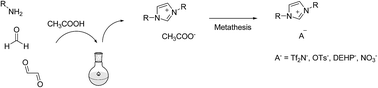
The optimized reaction conditions were used in the following standard procedure (Scheme 1). Two equivalents of amine were cooled down to 0 °C in an ice bath, afterwards a mixture of formaldehyde (37 wt% in water, 1 eq.) and acetic acid (1.5 eq.) was added dropwise while keeping the temperature below 10 °C. The mixture was stirred for 30 min at 0 °C, after which the glyoxal (40 wt% in water, 1 eq.) was added and the reaction mixture was stirred overnight at room temperature. The solution was washed with diethyl ether until the organic phase was colorless and the water was removed with a rotary evaporator. The product was dried on a Schlenk line at 50 °C. A total of seven acetate ionic liquids were synthesized via this halogen-free procedure. The full characterization can be found in the Experimental section.
 |
| | Scheme 1 General synthetic procedure for imidazolium acetate ionic liquids. | |
After the synthesis reactions with the different acids, a correlation between the yield of the imidazolium formation and the hydrophilicity of the anion (used acid) was observed (Fig. 2). In the Hofmeister series, anions and cations are listed according to their capability to salt-in or salt-out certain compounds from a water phase.25,26 Since this property is directly linked to their charge density, it is a good indication of their relative hydrophilicity.25,27 When the anions are listed according to decreasing hydrophilicity in the Hofmeister series, and the butyrate is assumed to be the least hydrophilic (most hydrophobic) of the four anions, the following sequence is obtained: sulfate > acetate > chloride > butyrate.28 When the acids are ranked according to decreasing yield the same sequence is observed, indicating a correlation between the hydrophilicity of the anion and the reaction yield (Fig. 2). This decrease can be explained by the increased affinity for the apolar diethyl ether phase during the extraction. The less hydrophilic the ionic liquid, the more it is extracted to the organic phase and the lower the reaction yield. The alkyl chains on the imidazolium cation also had an influence on the reaction yield. The same trend as with the anions was observed for the 1,3-dialkylimidazolium cations. When they are listed with increasing number of carbon atoms in the sidechain, the reaction yield decreases (Fig. 3). The branched substituents (isobutyl and 2-ethylhexyl) are indicated with a different color since the lower yield might be partially explained by their increased steric hindrance. Since the lowest yield (47%) was observed with the 2-ethylhexyl side chain, this synthesis was repeated to test the effect of another extractant on the yield of the product. Instead of diethyl ether, heptane was used in the extraction, significantly improving the yield to 65%.
 |
| | Fig. 2 Isolated reaction yield (%) as a function of anion hydrophobicity, using different acids in the synthesis of imidazolium ILs. | |
 |
| | Fig. 3 Isolated reaction yield (%) as a function of imidazolium cation (diethyl ether as extractant). Listed cations are: 1,3-diethylimidazolium [EEIM]+, 1,3-diisobutylimidazolium [iBiBIM]+, 1,3-dibutylimidazolium [BBIM]+, 1,3-dihexylimidazolium [HHIM]+, 1,3-bis(2-ethylhexyl)imidazolium [EhEhIM]+, 1,3-dioctylimidazolium [OOIM]+, 1,3-didecylimidazolium [DDIM]+. | |
Several approaches for metathesis reactions starting from acetate ionic liquids were tested. Not all of them were equally efficient with respect to time or yield. Different procedures were required depending on following factors: acidity of the conjugate acid of the anion, the volatility of this acid, and the hydrophilicity of the used reagents and the resulting ionic liquid. If the conjugate acid of the anion is a much stronger acid than acetic acid, its use in the metathesis holds many benefits over the use of the sodium salt of the anion. Most acids are commercially available, and a strong acid will ensure a complete protonation of the acetate with formation of acetic acid, which can be removed by evaporation, an advantage that the procedure with acetate salts does not hold. Therefore using an acid is beneficial provided that it is strong enough (by convention when pKa ≤ 0.7). Looking at the volatility of the acids, the boiling point of the conjugate acid of the new anion is ideally much higher than the boiling point of acetic acid (118 °C). This allows complete removal of acetic acid via evaporation. This technique was successfully applied to the hydrophilic tosylate ionic liquids. Evaporating the acetic acid from ionic liquids synthesized using acids with a boiling point below 118 °C might be troublesome. The extent of this problem was not investigated since the only used acid with a low boiling point was nitric acid, which has the additional problem of being potentially dangerous when heating to high temperatures in the presence of organic materials.27,29 When the difference in hydrophilicity between the ionic liquid with the new anion and the acetate ionic liquid is large, they can be separated via extraction, as was done for all the water-immiscible ionic liquids (e.g. bistriflimide ILs). If the difference in hydrophilicity is too small, for example: [BBIM][TsO], other methods must be applied to purify the ionic liquid, for instance the evaporation of acetic acid. Depending on the properties of the used reagents and the ionic liquid created in the metathesis, different synthetic parameters are required. Most of them easily result in pure ionic liquids, others require intensive purification steps and some could not be synthesized. In general, two main paths were followed, for the bis(trifluoromethylsulfonyl)imide, tosylate and nitrate ionic liquids, acid was added to guarantee full anion exchange (Scheme 2). In case of the bis(2-ethylhexyl)phosphate ionic liquids, the respective sodium salt was used for the metathesis reaction (Scheme 3).
 |
| | Scheme 2 General metathesis reactions by the addition of acid. | |
 |
| | Scheme 3 Metathesis reaction by the addition of sodium bis(2-ethylhexyl)phosphate. | |
Using these synthetic procedures, a library of symmetrical 1,3-dialkylimidazolium ionic liquids was synthesized (Fig. 1). The general characteristics of these ionic liquids were investigated, starting with the thermal properties, since some synthesized ionic liquids were solids at room temperature. Their melting temperatures are listed in Table 3. These include most of the tosylate ionic liquids and one acetate ionic liquid: 1,3-diisobutylimidazolium acetate. A general rule is that the more symmetrical the compound, the better the crystal packing, the higher its melting point.30,31 [iBiBIM][AcO] is the only acetate IL that is solid at room temperature with a melting point of 60 °C. It must be noted that this ionic liquid is only solid when completely dry and liquefies when it is exposed to the atmosphere. All tosylate ILs melt above 50 °C, except for the RTILs [EEIM][TsO] and [BBIM][TsO].
The water content of all ionic liquids with a melting point lower than room temperature was measured (Table 3). This was done after drying them on a Schlenk line at 70 °C. The value of 1,3-diethylimidazolium acetate ([EEIM][AcO]) is not displayed, due to its unusually high water content: 0.73 wt%.
The viscosities of all the room temperature ionic liquids were determined using a rotating disk viscometer (Table 3). Since the viscosities are very sensitive towards contamination of the ionic liquid by water traces, the viscosity of [EEIM][AcO] was not measured due to its high water content: 0.73 wt%.
The different anions and imidazolium cations influence the viscosities of the imidazolium ionic liquids. The longer the alkyl substituents on the imidazolium cation, and the higher the degree of branching, the higher the viscosity. This is clearly observed when looking at the bis(trifluoromethylsulfonyl) imide series: the viscosity increases from 29 mPa s ([EEIM][Tf2N]) up to 424 mPa s ([EhEhIM][Tf2N]). These results are in line with the observed trends found in the literature.31–33 The anions have an even larger effect on the viscosity: the following order is observed: Tf2N− < AcO− < TsO−/NO3− < DEHP−. These results might seem surprising since the two largest anions: Tf2N− and DEHP−, give ionic liquids with the highest and lowest viscosities, respectively. However, not only the bulkiness but also the charge delocalization of the anion contributes to the viscosity of the ionic liquid.31,32 The effect of increasing viscosity with more voluminous substituents is not only clear for the imidazolium cations, but also for the anions. TsO− and DEHP− anions have a comparable charged entity (sulfate and phosphate), however the DEHP− has more, longer and branched substituents. This is translated in a much higher viscosity, even up to 23
508 mPa s for [EhEhIM][DEHP]. As expected, the bis(trifluoromethylsulfonyl)imide series shows low viscosities due to a good charge distribution over the entire anion structure. The acetate and nitrate anions also show the expected properties: the acetate anion is rather small and has a good charge delocalization therefore having intermediate viscosities. In the nitrate anion two negative charges are delocalized over three oxygen atoms, this increased charge density is translated into higher viscosities.
It is known that intermolecular interactions among anions and cations in ionic liquids greatly determine the properties of ionic liquids.34 Hydrogen bonding between the ions is evidenced by downfield shifted C–H proton chemical shifts and redshifted C–H frequencies in infrared.35 Numerous studies on the influence of hydrogen bonding on the properties of imidazolium ionic liquids exist.34,36,37 A 1,3-dialkylimidazolium ionic liquid has three possible interaction sites at C2, C4 and C5. It has been reported that no shifts are observed for interaction via C(4/5)–H.38 In the 1H NMR spectra of the different synthesized imidazolium compounds in this study, it can be observed that the peak position of the hydrogen on the 2-position in the imidazolium ring changes with different anion (Table 2). Bis(trifluoromethylsulfonyl)imide is a weakly coordinating anion, the peak position of the C2–H is the most upfield, as to be expected. The ionic liquids with the bis(2-ethylhexyl)phosphate (DEHP−) show the strongest downfield shift. This indicates that the bond between the bis(2-ethylhexyl)phosphate anion and the C2–H is the strongest hydrogen bond.
Table 2 Peak position of C2–H in 1H NMR over the different ionic liquid series
| Ionic liquid series |
1H NMR peak position 2-H (ppm) |
| [Tf2N]− |
8.77–9.18 |
| [OTs]− |
9.75–10.24 |
| [AcO]− |
9.76–9.98 |
| [NO3]− |
10.03–10.25 |
| [DEHP]− |
10.91–11.04 |
Another aspect to consider is the stability of the synthesized ionic liquids. Thermogravimetric analysis was carried out under nitrogen atmosphere (TGA), the thermal decomposition temperatures ranged from 257 °C to 421 °C with bistriflimide ionic liquids having the highest decomposition temperatures in contrast to the lowest values for the acetate ionic liquids (Table 3).
Table 3 Water content and viscosities of all synthesized room temperature imidazolium ILs (RT IL), melting temperatures of the ionic liquids which are solid at room temperature and thermal decomposition temperature for all synthesized ionic liquids. The viscosity of [EEIM][AcO] was not determined due to the high water content in the IL: 0.73 wt%, with the exception of nitrate ILs (incompatible with Karl Fischer)a
| Imidazolium IL |
Water content (ppm) |
Viscosity (mPa s) (25 °C) |
Melting point (°C) |
Thermal decomposition temperature (°C) |
Imidazolium IL |
Water content (ppm) |
Viscosity (mPa s) (25 °C) |
Melting point (°C) |
Thermal decomposition temperature (°C) |
| s = solid, no water content and viscosity were measured. i = incompatible to measure with KF coulometric titration. RT IL = room-temperature ionic liquid, no melting point determination. |
| [EEIM][AcO] |
0.73 wt% |
Water contaminated |
RT IL |
258 |
[EEIM][TsO] |
4905 |
1209 |
RT IL |
344 |
| [BBIM][AcO] |
6813 |
516 |
RT IL |
260 |
[BBIM][TsO] |
4174 |
2404 |
RT IL |
348 |
| [iBiBIM][AcO] |
s |
s |
60 |
277 |
[iBiBIM][TsO] |
s |
s |
95 |
361 |
| [HHIM][AcO] |
4049 |
682 |
RT IL |
257 |
[HHIM][TsO] |
s |
s |
67 |
342 |
| [OOIM][AcO] |
3727 |
861 |
RT IL |
266 |
[OOIM][TsO] |
s |
s |
97 |
341 |
| [DDIM][AcO] |
2203 |
475 |
RT IL |
259 |
[DDIM][TsO] |
s |
s |
76 |
347 |
| [EhEhIM][AcO] |
3231 |
4659 |
RT IL |
259 |
[EhEhIM][TsO] |
s |
s |
56 |
350 |
| [EEIM][Tf2N] |
2291 |
29 |
RT IL |
312 |
[HHIM][DEHP] |
7593 |
7928 |
RT IL |
287 |
| [BBIM][Tf2N] |
351 |
66 |
RT IL |
421 |
[OOIM][DEHP] |
8507 |
11 402 |
RT IL |
288 |
| [iBiBIM][Tf2N] |
1953 |
131 |
RT IL |
353 |
[DDIM][DEHP] |
5191 |
12 337 |
RT IL |
288 |
| [HHIM][Tf2N] |
108 |
102 |
RT IL |
406 |
[EhEhIM][DEHP] |
4401 |
23 508 |
RT IL |
290 |
| [OOIM][Tf2N] |
199 |
147 |
RT IL |
416 |
[HHIM][NO3] |
i |
1520 |
RT IL |
306 |
| [DDIM][Tf2N] |
502 |
131 |
RT IL |
414 |
[OOIM][NO3] |
i |
1944 |
RT IL |
301 |
| [EhEhIM][Tf2N] |
1037 |
424 |
RT IL |
397 |
[DDIM][NO3] |
i |
3341 |
RT IL |
304 |
| |
|
|
|
|
[EhEhIM][NO3] |
i |
12 245 |
RT IL |
321 |
As a final remark, the environmental concerns and toxicity of these synthesized ionic liquids should be further assessed. The low vapour pressure of ionic liquids causes a minimum risk of air pollution, yet ILs can have a significant water miscibility which inquires a study of aqueous toxicology for ILs. There are five factors that greatly influence the toxicity of an ionic liquid: (i) alkyl chain length in the cation, (ii) presence of functional groups in the alkyl chain on the cation, (iii) anion nature, (iv) cation nature, and (v) combined influence of anion and cation.39 Most literature descriptions concerning toxicity of imidazolium ionic liquids only assess the 1-alkyl-3-methylimidazolium ILs. For these types of ionic liquids, a general conclusion was postulated: a clear alkyl-chain length–toxicity correlation can be observed in the toxicities of the ionic liquids. Comparisons of different cations demonstrated that phosphonium-based ionic liquids have the highest toxicity whilst morpholinium-based ones are the least toxic.40,41 An intermediate toxicity was found for the imidazolium ionic liquid when compared to similar alkyl chains.
Interpreting these factors to the newly synthesized ionic liquids, we suggest that also here, the longer the alkyl chain length, the higher the toxicity would be, with EEIM having the lowest toxicity and DDIM the highest. It could be assumed that the branched chain ionic liquids will have a lower toxicity due to their reduced lipophilicity when compared to their non-branched counterparts. The effect of the anion nature should be studied further, yet most probably the bistriflimide ionic liquids will have the highest toxicity.
Conclusions
Imidazolium ionic liquids were synthesized from readily available molecules: formaldehyde, glyoxal, alkyl amines and acids in a halogen-free procedure. The synthesis procedure was investigated for 1,3-dibutylimidazolium ILs testing different acids and acid equivalents. The optimized synthesis involved the synthesis of 1,3-dialkylimidazolium acetate from glyoxal, formaldehyde, a primary amine (2 eq.) and an excess of acetic acid (1.5 eq.). These acetate ILs could be purified by a simple extraction with diethyl ether with excellent yields, depending on the hydrophilicity of the ILs. The yield for the more hydrophobic ILs can be increased by changing the extractant to heptane. Starting from this 1,3-dialkylimidazolium acetate platform, several other 1,3-dialkylimidazolium ILs were prepared via metathesis reactions. If anions were incorporated with an acid which was sufficiently strong (by convention pKa < 0.7), the acid was used. The resulting acetic acid could be removed via evaporation. If the acids were not sufficiently strong, sodium salts of the new anion were employed. The completeness of the metathesis reactions in water was influenced by the position of both anions in the Hofmeister series. A general rule for these metatheses is that exchange towards more hydrophobic anions exceeds more efficiently. When the metatheses resulted in hydrophobic ILs, the acetate (salt or acid) was removed by washing with water. The acetic acid could also be completely removed via evaporation, but this step is more time consuming compared to washing the ionic liquid. The evaporation of acetic acid was used to purify water-soluble ILs, since they cannot be purified by washing. Sodium salts were eliminated by precipitation in an apolar solvent. The ILs were fully characterized and their properties listed. The water content in the ionic liquid drops with increasing alkyl chain length on the imidazolium cation as a result of the decreasing hydrophilicity of the cations. Longer alkyl substituents, a higher degree of branching on the imidazolium cation, and a higher coordination between cation and anion increases the viscosity of the ionic liquid.
Acknowledgements
This research was financially supported by IWT-Flanders (PhD fellowship to DD), the FWO Flanders (research project G.0900.13) and the KU Leuven (projects GOA/13/008 and IOF-KP RARE3). The authors also wish to thank Karel Duerinckx for the help with NMR measurements. Dirk Henot and Danny Vandeput are thanked for performing CHN analysis. Dorien Baeten is thanked for the help with TGA measurements.
References
- T. Welton, Chem. Rev., 1999, 99, 2071 CrossRef CAS PubMed.
- P. Wasserscheid and W. Keim, Angew. Chem., Int. Ed., 2000, 39, 3772 CrossRef CAS.
- N. V. Plechkova and K. R. Seddon, Chem. Soc. Rev., 2008, 37, 123 RSC.
- R. D. Rogers and K. R. Seddon, Science, 2003, 302, 792 CrossRef PubMed.
- J. D. Holbrey, W. M. Reichert, R. P. Swatloski, G. A. Broker, W. R. Pitner, K. R. Seddon and R. D. Rogers, Green Chem., 2002, 4, 407 RSC.
- D. Holbrey and R. Seddon, J. Chem. Soc., Dalton Trans., 1999, 2133 RSC.
- T. L. Merrigan, E. D. Bates, S. C. Dorman and J. Davis, Chem. Commun., 2000, 2051 RSC.
- A. E. Visser, R. P. Swatloski, W. M. Reichert, R. Mayton, S. Sheff, A. Wierzbicki, J. Davis and R. D. Rogers, Chem. Commun., 2001, 135 RSC.
- L. C. Branco, J. N. Rosa, J. J. Moura Ramos and C. A. M. Afonso, Chem.–Eur. J., 2002, 8, 3671 CrossRef CAS.
- S. V. Dzyuba and R. A. Bartsch, ChemPhysChem, 2002, 3, 161 CrossRef CAS PubMed.
- J. Pernak, A. Czepukowicz and R. Pozniak, Ind. Eng. Chem. Res., 2001, 40, 2379 CrossRef CAS.
- C. Maton, N. de Vos, B. I. Roman, E. Vanecht, N. R. Brooks, K. Binnemans, S. Schaltin, J. Fransaer and C. V. Stevens, ChemPhysChem, 2012, 13, 3146 CrossRef CAS PubMed.
- C. Maton, N. R. Brooks, L. van Meervelt, K. Binnemans, S. Schaltin, J. Fransaer and C. V. Stevens, ChemPhysChem, 2013, 3503 CrossRef CAS PubMed.
- H. Debus, Ueber Die Einwirkung Des Ammoniaks Auf Glyoxal, WILEY-VCH, Weinheim, 1858, pp. 199–208 Search PubMed.
- R. D. Crouch, J. L. Howard, J. L. Zile and K. H. Barker, J. Chem. Educ., 2006, 83, 1658 CrossRef CAS.
- A. J. Arduengo, F. P. J. Gentry, P. K. Taverkere and H. E. Simmons, Process for Manufacture of Imidazoles, US Pat., 6 177 575, 2001.
- E. Gelens, F. J. J. de Kanter, R. F. Schmitz, L. A. J. M. Sliedregt, B. J. van Steen, C. G. Kruse, R. Leurs, M. B. Groen and R. V. A. Orru, Mol. Diversity, 2006, 10, 17 CrossRef CAS PubMed.
- J. Zimmermann, B. Ondruschka and A. Stark, Org. Process Res. Dev., 2010, 14, 1102 CrossRef CAS.
- S. N. Suarez, J. R. P. Jayakody, S. G. Greenbaum, T. Zawodzinski and J. J. Fontanella, J. Phys. Chem. B, 2010, 114, 8941 CrossRef CAS PubMed.
- A. T. Nielsen, R. A. Nissan, D. J. Vanderah, C. L. Coon, R. D. Gilardi, C. F. George and J. Flippen-Anderson, J. Org. Chem., 1990, 55, 1459 CrossRef CAS.
- D. O. D. Haan, A. L. Corrigan, K. W. Smith, D. R. Stroik, J. J. Turley, F. E. Lee, M. A. Tolbert, J. L. Jimenez, K. E. Cordova and G. R. Ferrell, Environ. Sci. Technol., 2009, 43, 2818 CrossRef PubMed.
- J. Velisek, T. Davidek, J. Daviek, P. Trska, F. Kvasnicka and K. Velcova, J. Food Sci., 1989, 54, 1544 CrossRef CAS.
- J. Kua, H. E. Krizner and D. O. de Haan, J. Phys. Chem. A, 2011, 115, 1667 CrossRef CAS PubMed.
- J. G. Huddleston, A. E. Visser, W. M. Reichert, H. D. Willauer, G. A. Broker and R. D. Rogers, Green Chem., 2001, 3, 156 RSC.
- D. Dupont, D. Depuydt and K. Binnemans, J. Phys. Chem. B, 2015, 119, 6747 CrossRef CAS PubMed.
- L. Cammarata, S. G. Kazarian, P. A. Salter and T. Welton, Phys. Chem. Chem. Phys., 2001, 3, 5192 RSC.
- M. G. Cacace, E. M. Landau and J. J. Ramsden, Q. Rev. Biophys., 1997, 30, 241 CrossRef CAS PubMed.
- Y. Zhang, S. Furyk, D. E. Bergbreiter and P. S. Cremer, J. Am. Chem. Soc., 2005, 127, 14505 CrossRef CAS PubMed.
- S. Wellens, B. Thijs and K. Binnemans, Green Chem., 2013, 15, 3484 RSC.
- H. L. Ngo, K. LeCompte, L. Hargens and A. B. McEwen, Thermochim. Acta, 2000, 97, 357–358 Search PubMed.
- G. Yu, D. Zhao, L. Wen, S. Yang and X. Chen, AIChE J., 2012, 58, 2885 CrossRef CAS.
- A. Ahosseini and A. M. Scurto, Int. J. Thermophys., 2008, 29, 1222 CrossRef CAS.
- H. Tokuda, K. Hayamizu, K. Ishii, Md. A. B. H. Susan and M. Watanabe, J. Phys. Chem. B, 2005, 109, 6103 CrossRef CAS PubMed.
- K. Fumino, T. Peppel, M. Geppert-Rybczynska, D. H. Zaitsau, J. K. Lehmann, S. P. Verevkin, M. Kockerling and R. Ludwig, Phys. Chem. Chem. Phys., 2011, 13, 14064 RSC.
- P. Bonhote, A. P. Dias, N. Papageorgiou, K. Kalyanasundaram and M. Gratzel, Inorg. Chem., 1996, 35, 1168 CrossRef CAS PubMed.
- K. Dong, S. Zhang, D. Wang and X. Yao, J. Phys. Chem. A, 2006, 110, 9775 CrossRef CAS PubMed.
- T. Peppel, C. Roth, K. Fumino, D. Paschek, M. Köckerling and R. Ludwig, Angew. Chem., Int. Ed., 2011, 50, 6661 CrossRef CAS PubMed.
- T. Köddermann, C. Wertz, A. Heintz and R. Ludwig, ChemPhysChem, 2006, 7, 1944 CrossRef PubMed.
- K. S. Egorova and V. P. Ananikov, ChemSusChem, 2014, 7, 336 CrossRef CAS PubMed.
- S. Stolte, J. Arning, U. Bottin-Weber, A. Müller, W.-R. Pitner, U. Welz-Biermann, B. Jastorff and J. Ranke, Green Chem., 2007, 9, 767 Search PubMed.
- J. Ranke, A. Müller, U. Bottin-Weber, F. Stock, S. Stolte, J. Arning, R. Störmann and B. Jastorff, Ecotoxicol. Environ. Saf., 2007, 67, 430 CrossRef CAS PubMed.
Footnote |
| † Electronic supplementary information (ESI) available: All 1H NMR and 13C NMR spectra. See DOI: 10.1039/c5ra22798d |
|
| This journal is © The Royal Society of Chemistry 2016 |
Click here to see how this site uses Cookies. View our privacy policy here.