Mechanistic insights into the activation process in electrocatalytic ethanol oxidation by phosphomolybdic acid-stabilised palladium(0) nanoparticles (PdNPs@PMo12)

Sara Khadempira, Ali Ahmadpour*a, Mohammad Taghi Hamed Mosaviana, Narges Ashrafb, Fatemeh F. Bamoharramc, Rodrigo Fernández-Pachecod, Jesús M. de la Fuentee and Scott G. Mitchell*e
aDepartment of Chemical Engineering, Ferdowsi University of Mashhad, Mashhad, Iran. E-mail: ahmadpour@um.ac.ir
bDepartment of Chemistry, Faculty of Sciences, Ferdowsi University of Mashhad, Mashhad, Iran
cDepartment of Chemistry, Mashhad Branch, Islamic Azad University, Mashhad, Iran
dInstituto de Nanociencia de Aragon (INA), Universidad de Zaragoza, Zaragoza 50018, Spain
eInstituto de Ciencia de Materiales de Aragón-CSIC/Universidad de Zaragoza, Spain. E-mail: scott@unizar.es

Received 29th October 2015 , Accepted 25th December 2015

First published on 6th January 2016


Abstract

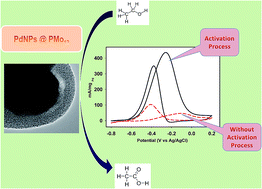
A Keggin type polyoxometalate (POM), phosphomolybdic acid (PMo12), has been employed to encapsulate and stabilise pseudo-spherical Pd(0) nanoparticles (PdNPs). The resulting nanohybrid phosphomolybdic acid-stabilised PdNPs (PdNPs@PMo12) were characterised by transmission electron microscopy (TEM), high-angle annular dark field-scanning transmission electron microscopy (HAADF-STEM), energy-dispersive X-ray spectroscopy (EDS), Fourier transform infrared spectroscopy (FTIR) and powder X-ray diffraction (XRD). The PdNPs@PMo12 were used as an electrocatalyst for ethanol oxidation in alkaline media and the best electrocatalytic activity was assessed by applying an activation process. The electrochemical data (chronoamperometry, cyclic voltammetry and linear sweep voltammetry) allowed us to attribute the superior performance of the nanohybrid to the generation of Pd–OHads sites at the surface of the PdNPs@PMo12, reinforced by the formation of a new molybdenum species on the surface of the electrocatalyst.

Introduction

Today, continuing global demands for energy and limited traditional power sources make serious challenges for scientists to develop alternative clean energy technologies. In this regard, new kinds of technologies are becoming more appealing; they include fuel cells, high energy density batteries, supercapacitors, and so on.1–4 Among them, fuel cells are devices that convert chemical energy of a fuel into electrical energy through a chemical reaction. They are designed as efficient sources of energy and environmentally friendly with little or no pollution. Among the various types of fuel cells, direct alcohol fuel cells (DAFCs) are fascinating due to their low operation temperature (<100 °C) and portable applications. However, the commercialisation of the fuel cell technology depends strongly on the design and development of new electrocatalyst materials that are capable of lowering their cost, while simultaneously enhancing their efficiency and increasing their durability.5–10

Nanoscopic materials have found widespread attention because particles in the nanoscale range possess unique and applicable physical, optical, electronic and magnetic properties that often differ greatly from the corresponding bulk materials.11,12 In this view, one of the wide applications of noble-metal nanoparticles (NPs), such as Pd and Pt, is in the field of electrocatalysis, concerning reactions that involve charge transfer at the interface between a solid catalyst and an electrolyte solution.13–16

Among these noble-metal NPs, nanostructured Pd-based materials are the preferred candidate over Pt. Although the latter is undoubtedly the best electrocatalyst, Pd is a less expensive, more abundant, and more accessible element; and also has the potential to stimulate oxidation of low molecular weight alcohols, such as ethanol, especially in alkaline media.17–21 However, rather than using the bulk metal, the use of PdNPs with high relative surface area can reduce the noble-metal loading of catalysts and further reduce the cost while at the same time increase the efficiency. Polyoxometalates (POMs), early row transition metal-oxygen anionic clusters, known to be effective reducing and stabilizing agents, have long been known to produce NPs, from Au, Ag, Pt and Pd to Fe2O3 etc. Recently, several green facile synthetic routes have been reported and summarised in the recent reviews.12,22–26

Electrooxidation of alcohol by metal NPs@POM was surveyed by several researchers.27–29 We recently reported PdNPs@PMo12 nanohybrids as one of the most efficient alkaline media electrocatalysts for use in direct ethanol fuel cells (DEFCs).30 In that study, we addressed a keynote, namely, the activation process that significantly increases the efficiency of electrocatalytic activity of PdNPs@PMo12 for oxidation of ethanol. The activation process involved applying a constant potential step of −1.5 V for 300 s duration in phosphate buffer solution (pH 8.5). It was claimed that upon the activation process the following reaction (eqn (1)) would occur at the electrode–electrolyte interface that leads to the formation of Pd–OHads sites, which participate in the rate determining step of ethanol electrooxidation and thus significantly improve the efficiency of the reaction.

 
2H2O + 2e → H2 + 2OH (1)

In the research presented here within, we focus on the electrochemical evidence for the events that happen during the activation process. The ultimate goal is to understand the activation process at the molecular level in order to design electrocatalysts with the desired activity and selectivity for application in DAFCs.

Experimental

Materials and methods

Palladium(II) chloride (PdCl2), ethanol, sodium dihydrogen phosphate dihydrate (NaH2PO4·2H2O), sodium hydroxide (NaOH), DMF (N,N-dimethylformamide), commercial Pd/C and sulphuric acid (H2SO4) were purchased from Merck (Darmstadt, Germany). Phosphomolybdic acid, H3PMo12O40·xH2O (PMo12) and Nafion (5 wt% in lower aliphatic alcohols and water) were from Sigma-Aldrich. Deionised (DI) water was used throughout all the experiments. Phosphate buffer solution (PBS, 0.1 M) was made by dissolving NaH2PO4·2H2O in DI water and adjusting the pH to 7 and 8.5 by 0.1 M NaOH (aq) solution.

High-angle annular dark field-scanning transmission electron microscopy (HAADF-STEM) images were collected using a Tecnai S-Twin30, 300 keV, GIF-TRIDIEM. Energy-dispersive X-ray spectroscopy (EDS) data were obtained on the same instrument. X-Ray diffraction (XRD) pattern of the as-prepared catalyst was recorded on X-ray diffractometer (X'Pert Pro MPD) using Cu-Kα as the radiation source. Fourier transform infrared spectroscopy (FTIR) was performed on an AVATAR-370 spectrometer by pressed KBr pellets.

Electrochemical experiments were performed using a μ-Autolab type III electrochemical workstation. The experiments were carried out at room temperature (∼25 °C), using a conventional three-electrode set-up. Platinum wire (Azar Electrode Co.) served as the counter electrode and Ag/AgCl as the reference electrode (Azar Electrode Co.).

Synthesis of PdNPs@PMo12

The catalyst, PdNPs@PMo12 was prepared by the polyoxometalate assisted photochemical reduction method.24 In a typical procedure, 9.6 mL of the PMo12 (0.15 mM) and PdCl2 (0.2 mM) mixed solution was placed into a cell and mixed with 0.4 mL isopropyl alcohol, then it was irradiated under a UV lamp (125 W high pressure mercury vapour lamp) for 2 h under continuous magnetic stirring. The reaction was done at a constant room temperature (∼25 °C) using a water circulating system. The colour of the solution changed from bright yellow (initial solution) to resulting greyish-brown colloidal solution, indicating the formation of PdNPs.31,32 The resulting colloidal suspension of the PdNPs@PMo12 was centrifuged at 14[thin space (1/6-em)]000 rpm for 9 min. The PdNPs@PMo12 precipitated at the bottom of the microtube and were dried at room temperature overnight.

Fabrication of working electrode

The working electrode was fabricated using the following procedure: catalyst ink (1 mgPd mL−1) was prepared by dispersion of the as-prepared dried catalyst in 200 μL DI water. Then, 2 μL of the catalyst ink was loaded onto a clean pre-polished glassy carbon electrode (GCE, 0.03 cm2 surface area, Azar Electrode Co.) and dried in air.

Electrochemical activation process

Chronoamperometry technique was employed for the electrochemical activation process. Activation of the PdNPs@PMo12 catalyst was performed at the surface of the electrode by applying a constant potential step of −1.5 V for 300 s duration in nitrogen-bubbled PBS (pH 8.5) as the electrolyte. Ethanol electrooxidation was carried out just after the activation process.

Electrochemical measurements

Ethanol electrooxidation of the as-prepared catalyst was acquired by cyclic voltammetry at a scan rate of 50 mV s−1 in a mixed solution of 1 M ethanol and 1 M NaOH (aq) as the electrolyte.

Linear sweep voltammetry (LSV) experiments were performed at a scan rate of 50 mV s−1 in an electrolyte solution of 0.5 M H2SO4 (pH 0.3), 1.0 M NaOH (pH 14), 0.1 M PBS (pH 7) or 0.1 M PBS (pH 8.5).

Results and discussion

Structural analysis

The crystallinity of the as-prepared PdNPs@PMo12 was verified by powder X-ray diffraction (PXRD) analysis (see Fig. 1). There are five distinct reflections in the diffractogram at 40.02° (111), 46.49° (200), 68.05° (220), 81.74° (311) and 86.24° (222). These characteristic reflections can be indexed to the face centered cubic (fcc) structure of Pd (JCPDS: 87-0641).31,33
image file: c5ra22698h-f1.tif
Fig. 1 PXRD pattern of PdNPs@PMo12.

FT-IR spectra of pure PMo12 and PdNPs@PMo12 are shown in Fig. 2. Several bands characteristic of the pure PMo12 could be found at 1063, 961, 873 and 781 cm−1 and that are attributed to the vibration (P–Oa), (Mo–Od), (Mo–Ob–Mo) and (Mo–Oc–Mo) (Fig. 2a), respectively.34–36


image file: c5ra22698h-f2.tif
Fig. 2 FT-IR spectra of PMo12 (solid line) and PdNPs@PMo12 (dashed line).

The comparison of the spectra of PdNPs@PMo12 with the pure PMo12, indicate that except for some negligible differences due to Pd–PMo12 surface interaction, both FT-IR spectra are the same, indicating the presence of the PMo12 stabilising the PdNPs, presumably retaining its original molecular Keggin structure.

The TEM image of PdNPs@PMo12 reveals that the particles possess an average diameter of ∼20 nm and are all surrounded by a deep (ca. 5–10 nm) layer (light contrast) (see Fig. 3a). This amorphous layer and the composition of the metallic particle at the atomic scale were studied further using HAADF-STEM and EDS. A cross-sectional EDS line scan profiles extracted from the HAADF-STEM image clearly confirms that the immediate area surrounding the PdNPs is covered by Mo elements, implying they are from PMo12 structure (see Fig. 3b). It should be noted the EDS spectra was adjusted to determine only Pd and Mo elements.


image file: c5ra22698h-f3.tif
Fig. 3 (a) TEM image of PdNPs@PMo12. The inset in (a) corresponds to the particle size distribution histogram showing average diameter of 20 nm (from ∼125 NPs), (b) EDS line scan profile. The inset in (b) corresponds to the HAADF-STEM image of PdNPs@PMo12.

Electrochemical investigations

Here, electrocatalytic ethanol oxidation is considered as a typical reaction. It is widely accepted that the cyclic voltammogram (CV) of this process is characterised by two anodic current peaks: one in the forward (i.e. anodic scan: If) and the other one in the backward sweeps (i.e. cathodic scan: Ib). The former is related to the oxidation of freshly chemisorbed ethanol and the latter, to the oxidation of residual carbonaceous species generated in the forward scan.30,37 The criteria to evaluate the electrocatalyst performance are onset potential (Eop), mass current density peaks (Jp), and current peak potentials (Ep). It is desired to introduce such electrocatalyst with lower Eop value and higher If/Ib parameter.
Effect of activation process on the electrocatalytic performance of PdNPs@PMo12. To examine the effect of activation process on the electrocatalytic performance of PdNPs@PMo12, experiments were performed with and without activation process. Fig. 4 represents the CVs of the activated and non-activated PdNPs@PMo12 electrodes in 1 M NaOH (aq) and 1 M ethanol solution. To interpret CVs in Fig. 4, the values of Jp, Eop and Ep are shown in Table 1. The forward peak mass current density (Jf) for the activated PdNPs@PMO12 is 9.5 times larger than that of the non-activated PdNPs @PMo12.
image file: c5ra22698h-f4.tif
Fig. 4 Cyclic voltammograms (CVs) in 1.0 M NaOH and 1.0 M ethanol solution for non-activated PdNPs@PMo12 (dashed line) and activated PdNPs@PMo12 (solid line).
Table 1 Electrocatalytic ethanol oxidation properties of activated PdNPs@PMo12 and non-activated PdNPs@PMo12
  Eopa (V) Jf (mA mg−1pd cm−2) Efb (V) Jb (mA mg−1Pd cm−2) Ebc (V) If/Ib
a Eop = onset potential.b Ef = forward current peak potential.c Eb = backward current peak potential.
Activated PdNPs@PMo12 −0.60 14[thin space (1/6-em)]533 −0.26 11[thin space (1/6-em)]678 −0.4 1.24
Non-activated PdNPs@PMo12 −0.45 1533 −0.12 3433 −0.4 0.45


Moreover, If/Ib parameter, which is an important criterion to evaluate the performance of the catalysts, is ∼2.7 times higher for activated PdNPs@PMo12 compared to the non-activated PdNPs@PMo12.

In addition, the Ef for the activated catalyst is clearly more negative than that observed for the non-activated one; while, the Eb values are comparable in both cases. Also, the Eop for the activated PdNPs@PMo12 is more negative than for the non-activated PdNPs@PMo12, indicating that the reaction is facilitated on the activated catalyst.

Also, the stability of the activated and non-activated PdNPs@PMo12 are examined by chronoamperometry at a potential of −0.2 V in 1 M NaOH + 1 M ethanol and the results are shown in Fig. 5. It is obvious that a gradual decrease with time occurs in the oxidation current. In comparison, the current for non-activated catalyst decay to approximately zero value, however, in the case of activated catalyst it is seen that the current reaches a constant value of 40 μA.


image file: c5ra22698h-f5.tif
Fig. 5 Chronoamperograms of activated and non-activated PdNPs@PMo12 at −0.2 V in 1.0 M NaOH and 1.0 M ethanol solution.

All of these lines of evidence confirm that the activation process has a considerable effect on electrocatalytic activity of the catalyst. Now, a critical question arises: what is the mechanism involved in the activation process?

From this point on our research focussed on using electrochemical techniques to gain further insight into the processes occurring during the activation step.

Chronoamperometry experiments. In order to elucidate the mechanism of the activation process, several chronoamperometry experiments (similar to activation process) have been performed using GCE and PdNPs@PMo12 modified GCE in PBS (pH 8.5) at the applied potential of −1.5 V. A quick glance at Fig. 6a reveals much higher currents (∼100 times) for PdNPs@PMo12 modified GCE which indicates the key role of the PdNPs@PMo12 in the activation process.
image file: c5ra22698h-f6.tif
Fig. 6 (a) and (b) Chronoamperograms of different modified electrodes at −1.5 V in PBS (pH 8.5).

To distinguish between the role of Pd and PMo12, it was necessary to perform further experiments. In this regard, chronoamperometry experiments have been performed (at the same conditions as before) using PMo12 and PdNPs@PMo12 modified GCEs. It should be noted that because the PMo12 is highly soluble in aqueous solutions; a Nafion coating has been applied to stabilise the PMo12 at the surface of GCE. To account for the probable effects of Nafion coating on the obtained currents, PdNPs@PMo12 was also covered with Nafion. Fig. 6b shows the chronoamperograms of Nafion-coated PMo12 and PdNPs@PMo12-modified GCEs. Here, the obtained current with PdNPs@PMo12 is only about 2.5 times higher than that of PMo12; thus, it can be inferred that both the Pd and PMo12 play key role in the activation process.

Cyclic voltammetry experiments. Based on the results of chronoamperometry experiments, further studies were accomplished using cyclic voltammetry to clarify the possible events that may occur for Pd and/or PMo12 during the activation process. To this end, two hypotheses can be considered: first, it is possible that OH species that are created at the catalyst surface during the activation process facilitate the electrocatalytic ethanol oxidation by a mechanism that is discussed later in Section A; second, it is possible that the structure of PMo12 changes during this process and some new Mo-based compounds are produced; for which the details are explained in Section B.
A: Hypothesis I. Fig. 7 shows the CV of the PdNPs@PMo12-modified GCE in the activation solution (PBS, 0.1 M, pH 8.5) in the potential range between 0.6 and −1.6 V. It is seen that by sweeping the potential toward negative values, an abrupt rise in the current is observed at around ∼−1.12 V which corresponds to hydrogen evolution reaction (HER).38,39 It is necessary to mention that during HER in neutral and alkaline media, OH ions are created at the electrode surface (eqn (1)). These OH species are captured within the nanoscopic cavities of the catalyst and entrapped in such a way that they cannot be removed even by washing.
image file: c5ra22698h-f7.tif
Fig. 7 Cyclic voltammogram (CV) of non-activated PdNPs@PMo12 in 0.1 M PBS (pH 8.5).

Now, it is useful to point to the electrocatalytic ethanol oxidation mechanism on Pd in alkaline media, for which the successive reactions can be expressed as follows:

 
Pd + CH3CH2OH ↔ Pd–(CH3CH2OH)ads (2)
 
Pd–(CH3CH2OH)ads + 3OH → Pd–(CH3CO)ads + 3H2O + 3e (3)
 
Pd–(CH3CO)ads + Pd–OHads → Pd–CH3COOH + Pd (4)
 
Pd–CH3COOH + OH → Pd + CH3COO + H2O (5)

It is generally accepted that the eqn (4) is the rate determining step, so that, it is important for Pd–OHads species to be available during the ethanol oxidation. These species are obtained by chemisorption of OH ions at the surface of Pd.37,40,41 The activation process plays a key role on this stage as it can produce huge amounts of OH ions which are readily adsorbed at the surface of neighbouring PdNPs to form pre-adsorbed Pd–OHads.42,43

In order to eliminate the effect of PMo12 layer on catalytic activity of the PdNPs@PMo12 after activation treatment in this hypothesis, the behaviour of a commercial Pd/C catalyst was also investigated. Fig. 8 compares the catalytic activity of activated and non-activated Pd/C catalyst toward ethanol electrooxidation and confirms the positive effect of the activation process on the Pd/C catalyst.


image file: c5ra22698h-f8.tif
Fig. 8 CVs in 1.0 M NaOH and 1.0 M ethanol solution for non-activated Pd/C (dashed line) and activated Pd/C (solid line).

To obtain further information on the role of HER in the activation process, the behaviour of PdNPs@PMo12-modified GCE towards this reaction was investigated over several pH values using linear sweep voltammetry (LSV) and the results are shown in Fig. 9. In acidic media (0.5 M H2SO4) the HER involves the consumption of H+ and production of gaseous H2 which do not contribute in the activation process; on the other hand, based on eqn (1), in neutral and basic media the overall reaction promotes the mass transfer of OH to the surface of PdNPs. Fig. 9 compares the behaviour of the catalyst at pH 7, 8.5 and 14, respectively. It is obvious that the rate of HER in potentials lower than ∼−1.5 V (which is the applied potential in the activation step) is highest at pH 8.5 which means that the hydroxide ions are generated more efficiently in this condition. Also, more basic solutions are not proposed for activation process as they can prompt a chemical reaction for PMo12 and do not show any significant difference on HER efficiency at the applied potential. These results are in complete accordance with our experimental evidences for the optimised operating potential and pH for activation step (not shown).


image file: c5ra22698h-f9.tif
Fig. 9 Linear sweep voltammetry (LSV) for non-activated PdNPs@PMo12 in 0.5 M H2SO4 (pH 0.3), 1.0 M NaOH (pH 14), 0.1 M PBS (pH 7), 0.1 M PBS (pH 8.5).

B: Hypothesis II. To investigate the second claim, whether or not the PMo12 maintain its original molecular structure during the activation process, the CVs of Nafion coated PMo12 modified GCE was obtained before and after applying the activation process (Fig. 10). For PMo12, it is difficult to obtain well-defined redox peaks in pure aqueous solvent because of hydrolysis of PMo12. However, PMo12 is stabilised by addition of equal amounts of some organic solvents. Thus, cyclic voltammetry is generally performed in mixed organic-aqueous solvents containing acid (50% v/v water[thin space (1/6-em)]:[thin space (1/6-em)]DMF solution containing 0.5 M H2SO4).44,45 Also, it is important to note that because the PMo12 is highly soluble in water, a Nafion coating has been applied to stabilise the PMo12 at the surface of GCE. Fig. 10a shows the CVs of PMo12-modified GCE, three pair of redox peaks (1, 2 and 3) at E1/2 of about 0.31, 0.19 and −0.06 V corresponded to a two-electron redox reversible reaction for each step, which can be explained by the following equations:
 
PMo12O403− + 2e + 2H+ ↔ H2PMo12O403− (6)
 
H2PMo12O403− + 2e + 2H+ ↔ H4PMo12O403− (7)
 
H4PMo12O403− + 2e + 2H+ ↔ H6PMo12O403− (8)

image file: c5ra22698h-f10.tif
Fig. 10 Cyclic voltammograms (CVs) of Nafion coated PMo12 in 50% (v/v) water–DMF solution containing 0.5 M H2SO4: (a) before activation step (dashed line), (b) after activation step (solid line).

Further reversible four-electron process can be assigned to peak 4. Also, peak 5 is related to an irreversible process.46–48 The absences of all of characteristic waves after the activation process in Fig. 10b highly reinforce our second hypothesis. The same behaviour was also observed when PMo12 is in the nanohybrid structure (Fig. 11a). It is noteworthy that the redox peaks (4 and 5) of PMo12 overlap with hydrogen evolution area and are difficult to distinguished; therefore, the three first peaks are considered. A comparison of Fig. 11a and b indicate the complete disappearing of all three characteristic peaks and again verifies the second postulation.


image file: c5ra22698h-f11.tif
Fig. 11 Cyclic voltammograms (CVs) of PdNPs@PMo12 in 50% (v/v) water–DMF solution containing 0.5 M H2SO4: (a) before activation step (dashed line), (b) after activation step (solid line), inset: magnified of the CVs.

Another issue which strongly reinforce this hypothesis is that in alkaline media, PMo12 is not stable; thus it may decompose to some new Mo-based compounds and change the structure of the nanohybrid.47,49,50

Herein, we think that the possible reason for the superior catalytic activity of the nanocatalyst after applying the activation process can be attributed to the fragments issued from the decomposition of PMo12 units.

Now, a fundamental question arises: which one of the hypotheses is really responsible for the unique performance of the activation process? Indeed, the increase in the nanocatalyst activity is related to a bifunctional mechanism. Also, a final point that must not be ignored is that the Mo-based materials are active hydrogen evolution reaction catalysts.51,52 Therefore, upon production of these compounds during the activation process, the HER may also being fortified simultaneously, and the pre-adsorbed Pd–OHads could be formed more efficiently according to hypothesis I.

Conclusion

Nanohybrid phosphomolybdic acid-stabilised palladium nanoparticles (PdNPs@PMo12) were synthesised using a previously reported experimental procedure.30 The as-prepared nanohybrid was employed as an electrocatalyst for the ethanol electrooxidation reaction. We found that the electrocatalytic activity of the as-prepared nanocatalyst was significantly increased by applying an activation step. The focus of our current research has been to uncover what happens during this activation process. To conclude, electrochemical experiments – involving chronoamperometry, cyclic voltammetry and linear sweep voltammetry – were employed to trace this process and to illuminate the possible events that may occur during the activation process. Based on our research, two possible mechanisms could occur. On the one hand, it is possible that HER occurs at the surface of the catalyst and facilitates the formation of Pd–OHads sites. These Pd–OHads species are major participants in rate determining step of ethanol electrooxidation mechanism; so that, their presence significantly facilitates the oxidation reaction (hypothesis I). On the other hand, it is possible that some new Mo-based compounds with enhanced electrocatalytic activity are generated (hypothesis II). Our results suggest that the real function of the activation process is based on a synergistic effect between these two hypotheses. To shed more light on this issue we are currently investigating the use of hybrid nanoparticles for the HER in more detail.

Acknowledgements

This work was supported by a Grant-in-Aid for Renewable Energy Organization of Iran. This work has also been funded in part by the Marie Curie Intra-European Fellowship 328985-COCOPOPS and the ERC-Starting Grant 239931-NANOPUZZLE. The authors would like to acknowledge the use of The Advanced Microscopy Laboratory (LMA-INA).

Notes and references

  1. T. R. Cook, D. K. Dogutan, S. Y. Reece, Y. Surendranath, T. S. Teets and D. G. Nocera, Chem. Rev., 2010, 110, 6474 CrossRef CAS PubMed.
  2. M. S. Faber and S. Jin, Energy Environ. Sci., 2014, 7, 3519 CAS.
  3. J. Baxter, Z. Bian, G. Chen, D. Danielson, M. S. Dresselhaus, A. G. Fedorov, T. S. Fisher, C. W. Jones, E. Maginn and U. Kortshagen, Energy Environ. Sci., 2009, 2, 559 CAS.
  4. A. Manthiram, A. V. Murugan, A. Sarkar and T. Muraliganth, Energy Environ. Sci., 2008, 1, 621 CAS.
  5. E. Antolini and E. Gonzalez, J. Power Sources, 2010, 195, 3431 CrossRef CAS.
  6. C. Bianchini and P. K. Shen, Chem. Rev., 2009, 109, 4183 CrossRef CAS PubMed.
  7. S. Basri and S. Kamarudin, Int. J. Hydrogen Energy, 2011, 36, 6219 CrossRef CAS.
  8. R. Kannan, A. R. Kim and D. J. Yoo, J. Appl. Electrochem., 2014, 44, 893 CrossRef CAS.
  9. Z. Yin, L. Lin and D. Ma, Catal. Sci. Technol., 2014, 4, 4116 CAS.
  10. C. Lamy, A. Lima, V. LeRhun, F. Delime, C. Coutanceau and J.-M. Léger, J. Power Sources, 2002, 105, 283 CrossRef CAS.
  11. A. Nemamcha, J.-L. Rehspringer and D. Khatmi, J. Phys. Chem. B, 2006, 110, 383 CrossRef CAS PubMed.
  12. S. G. Mitchell and J. M. de la Fuente, J. Mater. Chem., 2012, 22, 18091 RSC.
  13. M. K. Debe, Nature, 2012, 486, 43 CrossRef CAS PubMed.
  14. E. Antolini, Energy Environ. Sci., 2009, 2, 915 CAS.
  15. Z. Bai, P. Xu, S. Chao, H. Yan, Q. Cui, L. Niu, L. Yang and J. Qiao, Catal. Sci. Technol., 2013, 3, 2843 CAS.
  16. S. Li, H. Yang, Z. Dong, S. Guo, J. Zhao, G. Gou, R. Ren, J. Huang, J. Jin and J. Ma, Catal. Sci. Technol., 2013, 3, 2303 CAS.
  17. P. S. Roy, J. Bagchi and S. K. Bhattacharya, Catal. Sci. Technol., 2012, 2, 2302 CAS.
  18. A. Santasalo-Aarnio, Y. Kwon, E. Ahlberg, K. Kontturi, T. Kallio and M. T. Koper, Electrochem. Commun., 2011, 13, 466–469 CrossRef CAS.
  19. C. Peng, M. Liu, Y. Hu, W. Yang, J. Guo and Y. Zheng, RSC Adv., 2015, 5, 49899 RSC.
  20. S. J. Ye, D. Y. Kim, S. W. Kang, K. W. Choi, S. W. Han and O. O. Park, Nanoscale, 2014, 6, 4182 RSC.
  21. L. Gao, W. Yue, S. Tao and L. Fan, Langmuir, 2013, 29, 957 CrossRef CAS PubMed.
  22. A. Ayati, A. Ahmadpour, F. F. Bamoharram, M. M. Heravi and M. Sillanpää, Gold Bull., 2012, 45, 145 CrossRef CAS.
  23. F. F. Bamoharram, A. Ahmadpour, M. M. Heravi, A. Ayati, H. Rashidi and B. Tanhaei, Synth. React. Inorg. Met.-Org. Chem., 2012, 42, 209 CrossRef CAS.
  24. A. Troupis, A. Hiskia and E. Papaconstantinou, Angew. Chem., Int. Ed., 2002, 41, 1911 CrossRef CAS.
  25. Y. Wang and I. A. Weinstock, Chem. Soc. Rev., 2012, 41, 7479 RSC.
  26. R. Villanneau, A. Roucoux, P. Beaunier, D. Brouri and A. Proust, RSC Adv., 2014, 4, 26491 RSC.
  27. J. Yuan, B. He, L. Hong, J. Lu, J. Miao and L. Niu, J. Mater. Chem., 2012, 22, 19658 RSC.
  28. D. Han, Z. Guo, R. Zeng, C. Kim, Y. Meng and H. Liu, Int. J. Hydrogen Energy, 2009, 34, 2426 CrossRef CAS.
  29. R. Liu, S. Li, X. Yu, G. Zhang, S. Zhang, J. Yao and L. Zhi, J. Mater. Chem., 2012, 22, 3319 RSC.
  30. S. Khadempir, A. Ahmadpour, M. T. H. Mosavian, N. Ashraf, F. F. Bamoharram, S. G. Mitchell and J. M. de la Fuente, RSC Adv., 2015, 5, 24319 RSC.
  31. M. Khan, M. Khan, M. Kuniyil, S. F. Adil, A. Al-Warthan, H. Z. Alkhathlan, W. Tremel, M. N. Tahir and M. R. H. Siddiqui, Dalton Trans., 2014, 43, 9026 RSC.
  32. N. Basavegowda, K. Mishra and Y. R. Lee, New J. Chem., 2015, 39, 972 RSC.
  33. R. K. Petla, S. Vivekanandhan, M. Misra, A. K. Mohanty and N. Satyanarayana, J. Biomater. Nanobiotechnol., 2011, 3, 14 CrossRef.
  34. C. Rocchiccioli-Deltcheff and R. Thouvenot, Spectrosc. Lett., 1979, 12, 127 CrossRef CAS.
  35. D. Zhou and B.-H. Han, Adv. Funct. Mater., 2010, 20, 2717 CrossRef CAS.
  36. Y. Kim and S. Shanmugam, ACS Appl. Mater. Interfaces, 2013, 5, 12197 CAS.
  37. J. Yin, S. Shan, M. S. Ng, L. Yang, D. Mott, W. Fang, N. Kang, J. Luo and C.-J. Zhong, Langmuir, 2013, 29, 9249 CrossRef CAS PubMed.
  38. M. Sawangphruk, A. Krittayavathananon, N. Chinwipas, P. Srimuk, T. Vatanatham, S. Limtrakul and J. Foord, Fuel Cells, 2013, 13, 881 CAS.
  39. M. Smiljanic, Z. Rakocevic, A. Maksic and S. Strbac, Electrochim. Acta, 2014, 117, 336 CrossRef CAS.
  40. Z. Liang, T. Zhao, J. Xu and L. Zhu, Electrochim. Acta, 2009, 54, 2203 CrossRef CAS.
  41. X.-M. Chen, Z.-J. Lin, T.-T. Jia, Z.-M. Cai, X.-L. Huang, Y.-Q. Jiang, X. Chen and G.-N. Chen, Anal. Chim. Acta, 2009, 650, 54 CrossRef CAS PubMed.
  42. M. Simões, S. Baranton and C. Coutanceau, Appl. Catal., B, 2010, 93, 354 CrossRef.
  43. A. B. Delpeuch, M. Chatenet, M. S. Rau and C. Cremers, Phys. Chem. Chem. Phys., 2015, 17, 10881 RSC.
  44. E. Itabashi, Bull. Chem. Soc. Jpn., 1987, 60, 1333 CrossRef CAS.
  45. K. Unoura and N. Tanaka, Inorg. Chem., 1983, 22, 2963 CrossRef CAS.
  46. J. Chen, S. Liu, W. Feng, G. Zhang and F. Yang, Phys. Chem. Chem. Phys., 2013, 15, 5664 RSC.
  47. M. Sadakane and E. Steckhan, Chem. Rev., 1998, 98, 219 CrossRef CAS PubMed.
  48. F. Xin and M. T. Pope, Inorg. Chem., 1996, 35, 5693 CrossRef CAS PubMed.
  49. E. Bae, J. W. Lee, B. H. Hwang, J. Yeo, J. Yoon, H. J. Cha and W. Choi, Chemosphere, 2008, 72, 174 CrossRef CAS PubMed.
  50. R. Liu, X. Yu, G. Zhang, S. Zhang, H. Cao, A. Dolbecq, P. Mialane, B. Keita and L. Zhi, J. Mater. Chem. A, 2013, 1, 11961 CAS.
  51. A. Phuruangrat, D. J. Ham, S. Thongtem and J. S. Lee, Electrochem. Commun., 2009, 11, 1740 CrossRef CAS.
  52. L. Wu, X. Wang, Y. Sun, Y. Liu and J. Li, Nanoscale, 2015, 7, 7040 RSC.

This journal is © The Royal Society of Chemistry 2016
Click here to see how this site uses Cookies. View our privacy policy here.