DOI:
10.1039/C5RA22530B
(Paper)
RSC Adv., 2016,
6, 6540-6550
Highly selective and sensitive colorimetric and fluorescent chemosensor of Fe3+ and Cu2+ based on 2,3,3-trimethylnaphto[1,2-d] squaraine
Received
27th October 2015
, Accepted 30th December 2015
First published on 6th January 2016
Abstract
A squarylium dye, 2,3,3-trimethylnaphto[1,2-d]pyrrole squaraine (TPSQ) based dual signaling probe was found to exhibit colorimetric and fluorescent properties on selective binding towards Fe3+ and Cu2+ in ethanol/water (4![[thin space (1/6-em)]](https://www.rsc.org/images/entities/char_2009.gif) :1, v/v) solution, respectively. The binding constants were determined to be 6.22 × 10⁴ M−1 and 4.08 × 10⁴ M−1 for Fe3+ and Cu2+, respectively. Most importantly, the 1:1 stoichiometry of the host–guest complexation was confirmed by Job's method. Meanwhile, the selectivity experiments revealed that the colorimetric and fluorescent sensor were specific for Fe3+ and Cu2+ even with interference by high concentrations of other metal ions. Moreover, the sensing abilities of the receptor toward Fe3+ and Cu2+ were also investigated by electrochemical technique. The present results indicated that the TPSQ chemosensor could be adopted as a sensitive and reversible colorimetric and fluorescent sensor for Fe3+ and Cu2+.
:1, v/v) solution, respectively. The binding constants were determined to be 6.22 × 10⁴ M−1 and 4.08 × 10⁴ M−1 for Fe3+ and Cu2+, respectively. Most importantly, the 1:1 stoichiometry of the host–guest complexation was confirmed by Job's method. Meanwhile, the selectivity experiments revealed that the colorimetric and fluorescent sensor were specific for Fe3+ and Cu2+ even with interference by high concentrations of other metal ions. Moreover, the sensing abilities of the receptor toward Fe3+ and Cu2+ were also investigated by electrochemical technique. The present results indicated that the TPSQ chemosensor could be adopted as a sensitive and reversible colorimetric and fluorescent sensor for Fe3+ and Cu2+.
1. Introduction
Design of chromogenic or fluorescent chemosensors for the selective detection of cations, especially for metal ions with biological interest, has always been of particular significance owing to their potential applications in many fields including chemistry, biology, medicine and the environment.1 Recently, much attention has been taken to the recognition of heavy metal ions owing to their own importance in environmental and biological concerns.2 Among heavy metals, iron has become the most essential trace element and performs a major function in the cells of all organisms systems as well as in various cellular bio-chemical processes.3 Deficiency of Fe3+ causes anemia, hemochromatosis, liver damage, diabetes, Parkinson's disease and cancer.4 Copper, another heavy metal ion, plays a pivotal role as a catalytic cofactor for various metalloenzymes, including superoxide dismutase, cytochrome c oxidase, tyrosinase and nuclease.5,6 However, if the intake of copper exceeds cellular needs, copper exhibits toxicity, causing serious neurodegenerative diseases, such as Alzheimer's, Menkes and Wilson's diseases owing to the displacement of other vital metal ions in enzyme-catalyzed reactions.7 Because of these environmental and health problems of Fe3+ and Cu2+, developing methods for the detection of these two metal ions is greatly necessary. In recent years, a number of detection approaches for Fe3+ or Cu2+ have included atomic absorption spectrometry (AAS),8,9 inductively coupled mass atomic emission spectrometry (ICP-AES),10 inductively coupled plasma mass spectroscopy (ICP-MS),11 and plasmon resonance Rayleigh scattering (PRRS) spectroscopy.12 However, a common limitation of all the above mentioned methods is that they are rather complicated, costly instruments and that their analytical results are easily influenced by the presence of other metal ions.13 Thus, a rapid, highly sensitive and reliable analytical method is urgently needed. Chemosensors for heavy metal ions have attracted much attention owing to their high selectivity, low cost, and real time monitoring.14 Although there are various colorimetric and fluorescent sensors designed for Fe3+ or Cu2+, most reported probes exhibited colorimetric or fluorescence “off–on” behavior owing to the intrinsic spectral property of Fe3+ or Cu2+. To the best of our knowledge, few dual sensors have been reported as “off–on” probes for Fe3+ and Cu2+.15–17
Squaraines are versatile organic dyes that have been widely applied in the optoelectronics fields such as optical recording,18,19 solar energy conversion,20,21 electrophotography,22,23 nonlinear optical materials24 and chemosensors owing to their desirable optical properties, especially their intense near-infrared absorption and fluorescent emission.25–27 The intermolecular charge transfer between two nitrogen atoms of nitrogen-containing heterocyclic such as aniline or indole group and two oxygen atoms of central four-membered ring can lead to a resonance-stabilized zwitterionic structure. The coordination between squaraine and protons or metals could cause a rich modulation of the dye's color and nucleophilic attack on the electron-deficient central cyclobutene ring. It will lead to delocalization of the intermolecular π-system, therefore, obvious changes of the squaraine absorption and fluorescence are engaged.
Herein, in the present study, we selected a squarylium dye, 2,3,3-trimethylnaphto[1,2-d]pyrrole squaraine (TPSQ), as a dual colorimetric and fluorescent probe, which remarkably exhibited high sensitivity and reversibility for sensing Fe3+ and Cu2+ in ethanol/water (4:1, v/v).
2. Experimental
2.1 Materials and instruments
All solutions were prepared with deionized water. All the other reagents used were of analytical grade. Salts of the different cations (Pb2+, Na+, Ni2+, Mg2+, K+, Cr3+, Zn2+, Ag+, Ca2+, Ba2+, Cu2+ and Fe3+ ions) were obtained from Shanghai Chemical Reagents Company (China) and used without further purification.
The infrared spectra were obtained using a PROTÉGÉ 460 spectrometer with KBr discs. Elemental analysis of C, H, O and N was recorded through an EA2400 II. 1H NMR, 13C NMR spectra were obtained using a Bruker Avance III 300 MHz NMR with CDCl3 as the solvent and tetramethylsilane (TMS) as the internal standard. Mass spectral studies were carried out using an LCMS-2020 mass spectrometer bypassing the LC step. UV-vis spectra were obtained in 1 cm path length quartz cell using an UV-759 spectrophotometer in ethanol/water (4:1, v/v). Fluorescence emission spectra were recorded on an F-280 spectrometer. The morphologies of the samples were characterized by field-emission scanning electron microscopy (FESEM, JEOL, JSM-6360LA).
2.2 Synthesis of 2,3,3-trimethylnaphto[1,2-d] squaraine
The synthesis route of 2,3,3-trimethylnaphto[1,2-d]pyrrole squaraine (TPSQ) is shown in Scheme 1. In a 250 mL three neck round bottom flask equipped with a temperature probe, magnetic stir bar and a nitrogen inlet adaptor with the condenser and the condenser filled with water, 1.1027 g of 2,3,3-trimethylnaphto[1,2-d]pyrrole, 0.3039 g of squaric acid in n-butanol of 20 mL and 20 mL of toluene was refluxed for 6 h with N2 and azeotropic removal of water. After cooling to room temperature, the product was collected by filtration. The crude product was further purified by a silica gel solid phase and an eluent consisting of petroleum ether/ethanol (8:1, v/v) and then dried under vacuum to give a yield of 57.2% as a green solid. 1H NMR (300 MHz, CDCl3) δ (ppm): 1.745 (s, 12H, –CH3), 5.575 (d, J = 19.2 Hz, 2H, –CH![[double bond, length as m-dash]](https://www.rsc.org/images/entities/char_e001.gif) ), 7.480–7.820 (m, 6H, aromatic), 7.928–8.101 (m, 6H, aromatic), 12.811, 13.103 (2H, N–H) FTIR (KBr): 3428.5 (N–H), 1561.4 (CC), 1599.9 (oxygen acid quaternary-skeleton vibration in squaric acid). 13C NMR (300 MHz, CDCl3) δ (ppm): 177.08, 176.59, 139.40, 139.25, 130.02, 129.91, 127.17, 121.87, 112.57, 112.38, 86.24, 86.03, 50.57, 29.72, 29.34, 27.23, 26.29. MS (ESI): m/z = 497.35 [M + H]+; calcd m/z = 496.32 for C34H28N2O2. Elemental analysis calculated for C34H28N2O2: C, 82.24; H, 5.64; N, 5.67; found: C, 82.27; H, 5.61; N, 5.68.
), 7.480–7.820 (m, 6H, aromatic), 7.928–8.101 (m, 6H, aromatic), 12.811, 13.103 (2H, N–H) FTIR (KBr): 3428.5 (N–H), 1561.4 (CC), 1599.9 (oxygen acid quaternary-skeleton vibration in squaric acid). 13C NMR (300 MHz, CDCl3) δ (ppm): 177.08, 176.59, 139.40, 139.25, 130.02, 129.91, 127.17, 121.87, 112.57, 112.38, 86.24, 86.03, 50.57, 29.72, 29.34, 27.23, 26.29. MS (ESI): m/z = 497.35 [M + H]+; calcd m/z = 496.32 for C34H28N2O2. Elemental analysis calculated for C34H28N2O2: C, 82.24; H, 5.64; N, 5.67; found: C, 82.27; H, 5.61; N, 5.68.
 |
| | Scheme 1 Synthesis of 2,3,3-trimethylnaphto[1,2-d]pyrrole squaraine (TPSQ). | |
2.3 General UV-vis and fluorescence titration experiments
All titration experiments were carried out at room temperature. Stock solutions (1 × 10⁻² M) of the metal ions of Pb2+, Mn2+, Na+, Ni2+, Mg2+, K+, Cr3+, Zn2+, Ag+, Ca2+, Ba2+, Cu2+ and Fe3+ in distilled water were prepared. Compound TPSQ was dissolved in ethanol/water (4:1, v/v) at ambient temperature to afford the probe stock solution (1 × 10⁻⁵ M). Test solutions were prepared by placing 3 mL of the sensor stock solution into a cuvette, adding 0.05 mL of each metal ion. After shaking them well for a few seconds, the absorption and emission spectra were recorded. For all measurements of absorption spectra, the absorption wavelength was 675 nm.
3. Results and discussions
3.1 Absorption selectivity and titration of Fe3+/Cu2+ with TPSQ
Selectivity is an important index to evaluate whether a chemosensor is an excellent probe.28 Furthermore, high selective recognition of the target ion from various cations has emerged as an attractive tool owing to its wide applications in diverse areas and imperative impact on the environment.29 Thus, high selectivity is usually required for chemosensors to accomplish detection successfully. The ability of TPSQ to recognize cations was evaluated in ethanol/water (4:1, v/v) by observing the changes in the absorption spectra. Except for Fe3+ and Cu2+, the addition of 0.05 mL of other metal ions (Pb2+, Mn2+, Na+, Ni2+, Mg2+, K+, Cr3+, Zn2+, Ag+, Ca2+ and Ba2+) to the solution did not result in any drastic absorbance change. The UV-visible absorption spectra of TPSQ (1.0 × 10⁻⁵ M) for the various metal ions are given in Fig. 1. On addition of Fe3+ and Cu2+, the absorption band of TPSQ at 675 nm gradually decreased, also resulting in a color change from light green to yellow and to almost colorless, respectively. These results indicated the chelation between Fe3+/Cu2+ and the TPSQ dye.
 |
| | Fig. 1 UV-vis absorption of TPSQ (1.0 × 10⁻⁵ M) upon titration of 0.05 mL of different metal ions (Pb2+, Mn2+, Na+, Ni2+, Mg2+, K+, Cr3+, Zn2+, Ag+, Ca2+, Ba2+, Cu2+ and Fe3+) at 675 nm. | |
To evaluate the sensing behavior of the TPSQ dye toward Fe3+/Cu2+, the absorption spectral titration of TPSQ dye with Fe3+/Cu2+ in ethanol/water (4:1, v/v) was carried out. As shown in Fig. 2, upon the addition of Fe3+ (up to 0.17 mM), the intensity of original absorption band at 675 nm was progressively decreased. The binding constant (Ka) was estimated using a Benesi–Hildebrand plot, which was done by absorbance changes of consequent titration (A0/A0 − A) against 1/[Fe3+] (Fig. 3). The magnitude of Ka was calculated from the intercept and slope of the straight line, and the estimated value is about 6.22 × 10⁴ M−1. Furthermore, Job's plot showed that the receptor binds with Fe3+ in 1:1 stoichiometry (inset of Fig. 2). A similar trend was observed with Cu2+. As can be seen in Fig. 4, with increasing Cu2+ concentration, the absorption of TPSQ dye at 675 nm gradually decreased. The spectra had almost no changes after the addition of 0.059 mM Cu2+ ions to the TPSQ solution. Meanwhile, a maximum absorption was observed when the Cu2+ ion formed a 1:1 complex with the sensing compound (inset of Fig. 4). The binding constant of the TPSQ–Cu2+ complex was then calculated to be 4.08 × 10⁴ M−1 (Fig. 5) with a good linear relationship. Therefore, the above results indicated that the compound TPSQ exhibits a high selectivity for Fe3+ and Cu2+ ions with a clear color change.
 |
| | Fig. 2 Absorption spectra of TPSQ (1.0 × 10⁻⁵ M) in ethanol/water (4:1, v/v) solution upon the addition of Fe3+ (0–0.17 mM). Inset: Job's plot of TPSQ according to the method for continuous variations, indicating the 1:1 stoichiometry for TPSQ–Fe3+. | |
 |
| | Fig. 3 Benesi–Hildebrand plot (absorbance at 675 nm) of [A0/(A0 − A)] as a function of 1/[Fe3+]. | |
 |
| | Fig. 4 Absorption spectra of TPSQ (1.0 × 10⁻⁵ M) in ethanol/water (4:1, v/v) solution upon addition of Cu2+ (0–0.059 mM). Inset: Job's plot of TPSQ according to the method for continuous variations, indicating the 1:1 stoichiometry for TPSQ–Cu2+. | |
 |
| | Fig. 5 Benesi–Hildebrand plot (absorbance at 675 nm) of [A0/(A0 − A)] as a function of 1/[Cu2+]. | |
3.2 Fluorescence selectivity and titration of Fe3+/Cu2+ with TPSQ
The above absorption results encouraged us to explore the fluorescence changes of TPSQ dye in the metal complex form. We chose the same metal ions used for the fluorescence studies, such as Pb2+, Mn2+, Na+, Ni2+, Mg2+, K+, Cr3+, Zn2+, Ag+, Ca2+, Ba2+, Cu2+ and Fe3+ in ethanol/water (4:1, v/v). The changes of fluorescence emission intensity of TPSQ (1.0 × 10⁻⁵ M) in the presence of different ions are shown in Fig. 6. It was found that upon interaction with various metal ions, TPSQ exhibited significant changes in fluorescence intensity. Among the tested metal ions, Fe3+ and Cu2+ (0.05 mL) induced the most pronounced fluorescence quenching. Therefore, the results indicated that TPSQ gave an excellent selectivity for Fe3+ and Cu2+ ions in both fluorimetric and colorimetric changes.
 |
| | Fig. 6 Fluorescence intensity of TPSQ (1.0 × 10⁻⁵ M) upon titration of 0.05 mL of different metal ions (Pb2+, Mn2+, Na+, Ni2+, Mg2+, K+, Cr3+, Zn2+, Ag+, Ca2+, Ba2+, Cu2+ and Fe3+). | |
To evaluate the sensing behavior of TPSQ dye with Fe3+/Cu2+ metal ions, titration studies were carried out for emission spectra. The assessment of the selectivity of TPSQ (1.0 × 10⁻⁵ M) toward Fe3+ and Cu2+ studied by fluorescence spectroscopy is given in Fig. 7 and 8. As the concentration of Fe3+ and Cu2+ increased, the intensity in the emission peak of TPSQ gradually decreased and the emission peak intensity approximately decreased to 0 fold when the Fe3+ and Cu2+ concentration reached 1.4 × 10⁻⁴ M and 4 × 10⁻⁵ M, respectively.
 |
| | Fig. 7 Absorption spectra of TPSQ (1.0 × 10⁻⁵ M) in ethanol/water (4:1, v/v) solution upon addition of Fe3+ (0–0.14 mM). | |
 |
| | Fig. 8 Absorption spectra of TPSQ (1.0 × 10⁻⁵ M) in ethanol/water (4:1, v/v) solution upon addition of Cu2+ (0–0.04 mM). | |
3.3 Anti-interference studies
One challenge for the chemosensor is to achieve the specific detection of Fe3+ and Cu2+ in the presence of a wide range of potentially competing ions because the system might exhibit cross-sensitivity toward other metal ions. The visible selectivities of TPSQ for Fe3+ and Cu2+ were investigated via colorimetric and fluorimetric experiments in a solution of ethanol/water (4:1, v/v). We tested the fluorescence selectivity at an emission wavelength of 710 nm and recorded the fluorescence response to the competing metal ions, as shown in Fig. 9 and 10. The addition of 1 mL of Fe3+ and Cu2+ induced a significant fluorescence failing of TPSQ. However, the other metal ions (Zn2+, K+, Na+, Ba2+, Mg2+, Ni2+, Ca2+) at the same concentration did not induce a substantial decrease in fluorescence. In addition, the competitive experiments also confirmed that the examined metal ions exhibited very low interference with the detection of Fe3+ and Cu2+ in ethanol/water (4:1, v/v). Although these metal ions bind to the spiro-ring, they do not induce the ring opening reaction of TPSQ. Therefore, Fe3+ and Cu2+ lead to the fluorescence failing of TPSQ under competitive experimental conditions.
 |
| | Fig. 9 Fluorescence intensity changes of the TPSQ (1.0 × 10⁻⁵ M) to Fe3+ (0.05 mL) in the presence of various test cations in ethanol/water (4:1, v/v). | |
 |
| | Fig. 10 Fluorescence intensity changes of the TPSQ (1.0 × 10⁻⁵ M) to Cu2+ (0.05 mL) in the presence of various test cations in ethanol/water (4:1, v/v). | |
3.4 Reversibility of the binding of Fe3+ and Cu2+ by TPSQ
Reversible usage is an important feature for optical chemosensors that allows improvement of on–off sensors and decreases the analysis cost. In order to observe whether the spectra of TPSQ could be regenerated upon the addition of cation-chelating agents, EDTA was added to the TPSQ–Cu2+ and TPSQ–Fe3+ solution, respectively. As seen in Fig. 11a, after addition of 0.05 mL of EDTA into a solution of TPSQ–Fe3+, the solution spectrum did not return to the metal-free state. However, addition of EDTA resulted in a partial reversal in the absorption spectrum. This indicated that the chelate ability of the EDTA and Fe3+ is higher than that of TPSQ and Fe3+. Therefore, the absorption spectrum of TPSQ–Fe3+ solution increased with the addition of EDTA. The interaction between TPSQ and Cu2+ was the same as that of TPSQ and Fe3+, which can be verified by the introduction of EDTA into the system containing TPSQ and Cu2+ (Fig. 11b).
 |
| | Fig. 11 UV-vis absorption of TPSQ (1.0 × 10⁻⁵ M) in the presence of Fe3+ (0.05 mL) (a), and Cu2+ (b) with EDTA (0.05 mL) in ethanol/water (4:1, v/v). | |
3.5 Electrochemical behaviors of TPSQ–Fe3+ and TPSQ–Cu2+
In order to further study the complexation behavior of TPSQ with Fe3+ and Cu2+, the electrochemical properties of TPSQ, TPSQ–Fe3+ and TPSQ–Cu2+ were evaluated. In the presence of 0.05 mL of Fe3+, the reduction peak changed rather significantly in a dramatic negative shift from 0.1 V to 0.2 V (as shown in Fig. 12). Simultaneously, when 0.05 mL of Cu2+ was kept in TPSQ solution, a single reduction peak was decayed while there was a complementary oxidation peak of TPSQ from 0.1 V to 0.2 V. The changes in the voltammetric behavior of TPSQ might arise from the incorporation of Fe3+ and Cu2+ ions, which caused some structural changes of TPSQ.
 |
| | Fig. 12 Cyclic voltammograms of TPSQ solution (1.0 × 10⁻⁴ M) in ethanol/water (4:1, v/v): without Fe3+ and Cu2+ (black line), with 0.05 mL of Fe3+ (red dash line), and with 0.05 equiv. Cu2+ (blue dot line) and (v = 50 mV s−1). | |
3.6 FESEM studies of TPSQ–Fe3+ and TPSQ–Cu2+
In order to further investigate the coordination behavior of metal ions to the ligand of TPSQ, the morphologies of TPSQ solution, TPSQ–Fe3+ and TPSQ–Cu2+ complexations were sampled and studied by FESEM (Fig. 13). It was found that the neat TPSQ formed multi-particle aggregates (Fig. 13a) because the squaraine derivatives are able to form both H- and J-aggregates generally. This makes aggregation of squaraines an interesting phenomenon that has already been studied in solution.29–31 Fig. 13b and c show the morphologies of TPSQ–Fe3+ complexation and TPSQ–Cu2+ complexation, respectively. It was observed that the agglomeration degree of the TPSQ–Fe3+ was weaker than that of TPSQ–Cu2+ and the particles take on a large number of agglomeration for as-prepared TPSQ–Cu2+, which may be attributed to the more efficient complexation of TPSQ–Cu2+.
 |
| | Fig. 13 FESEM images of TPSQ (1.0 × 10⁻⁵ M) in ethanol/water (4:1, v/v) (a), TPSQ–Fe3+ (b) and TPSQ–Cu2+ (c). | |
3.7 Influence of pH on TPSQ
To study the influence of pH on TPSQ, the pH absorption titration of TPSQ was performed in ethanol/water (4:1, v/v) at a probe concentration of 10 μM. As shown in Fig. 14 (in acidic environment), as the pH value decreased from 6.84 to 0, the absorption band at 675 nm decreased. In addition, a notable color change from green to blue can be observed with the pH decreasing. When the pH increased from 6.84 to 13.00 (Fig. 15), the absorption band at 675 nm decreased and a striking new peak at 536 nm increased with a blue shift of 139 nm. Furthermore, a notable color change from green to purple was observed and an isoemissive point at 592 nm appeared when the pH value increased. Similar to the pH absorption titration system, the probe exhibits remarkable pH-dependent behavior in fluorescence emission spectra (as shown in Fig. 16 and 17). In conclusion, in an alkaline environment, these spectral changes at high pH suggest deprotonation of N cation in thiazole, which led to the red shift of the absorption and emission spectra. In an acidic environment, the changes of absorption and emission spectra were owing to the protonation of the N atom in benzothiazole. Under strongly acid conditions, the protonation of the N atom in thiazole group improved its electron withdrawing ability. We gave the proposed explanation of the presence of acid–base and alkali–base equilibrium between the two forms of TPSQ (Scheme 2).
 |
| | Fig. 14 UV-vis absorption spectra of TPSQ (1.0 × 10⁻⁵ M) in ethanol/water (4:1, v/v) at different pH values (0–6.84). | |
 |
| | Fig. 15 UV-vis absorption spectra of TPSQ (1.0 × 10⁻⁵ M) in ethanol/water (4:1, v/v) at different pH values (6.84–13.00). | |
 |
| | Fig. 16 Emission spectra of TPSQ (1.0 × 10⁻⁵ M) in ethanol/water (4:1, v/v) at 0–6.84 pH. | |
 |
| | Fig. 17 Emission spectra of TPSQ (1.0 × 10⁻⁵ M) in ethanol/water (4:1, v/v) at 6.84–12.65 pH. | |
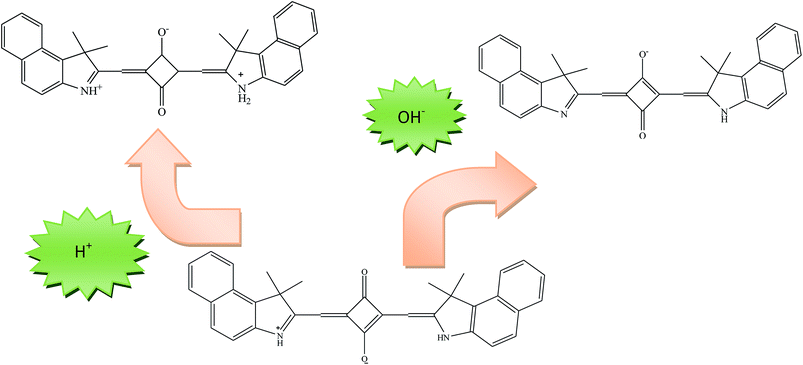 |
| | Scheme 2 Proposed explanation of the presence of acid–base and alkali–base equilibrium between the two forms of TPSQ. | |
3.8 Influence of pH to TPSQ–Fe3+ and TPSQ–Cu2+
In order to determine the influence of pH on TPSQ–Fe3+ and TPSQ–Cu2+, the colorimetric response of TPSQ for Cu2+ and Fe3+ ions with respect to pH was studied (Fig. 18–21). In acidic environment (pH: 1.94–6.84), the TPSQ–Cu2+ complex showed lowering at 675 nm and a striking new peak at 729 nm decreased with a red shift of 54 nm, and the color of the solution changed to yellow (Fig. 18a). The appearance of new peak probably indicated the formation of an aggregation of squaraine. Therefore, the intensity of the fluorescence spectra reached a maximum when pH = 1.94, and the new peak appeared at 597 nm which red-shifted to 603 nm as the pH increased (Fig. 18b). Similarly, in an alkaline environment, as shown in Fig. 19a, with increased pH, the intensity of the original absorption band at 675 nm was progressively decreased. In addition, a new peak appeared at 536 nm along with an isosbestic point at 588 nm, meanwhile the color changed to purple. As the concentration of OH− increased, the intensity in the new emission peak at 631 nm gradually decreased. For the TPSQ–Cu2+ complex, it was found that similar results, including the changing of solution color and the emergence of new peak, existed (Fig. 20 and 21). However, TPSQ–Fe3+ was more sensitive to pH than TPSQ–Cu2+.
 |
| | Fig. 18 Absorption and emission spectra of TPSQ–Cu2+ and after addition of H+ in ethanol/water (4:1, v/v) solutions as a function of different pH values. | |
 |
| | Fig. 19 Absorption and emission spectra of TPSQ–Cu2+ and after addition of OH− in ethanol/water (4:1, v/v) solutions as a function of different pH values. | |
 |
| | Fig. 20 Absorption and emission spectra of TPSQ–Fe3+ and after addition of H+ in ethanol/water (4:1, v/v) solutions as a function of different pH values. | |
 |
| | Fig. 21 Absorption and emission spectra of TPSQ–Fe3+ and after addition of OH− in ethanol/water (4:1, v/v) solutions as a function of different pH values. | |
3.9 Proposed binding mode of TPSQ–Fe3+ and TPSQ–Cu2+
To gain an understanding of the structures of TPSQ–Fe3+ and TPSQ–Cu2+ complexes, 1H NMR spectra of TPSQ, TPSQ–Fe3+ and TPSQ–Cu2+ were studied because Fe3+ and Cu2+ are metal ions and can affect proton signals. The results (Fig. 22) indicated that the peaks appearing at 12.811 ppm and 13.103 ppm were attributable to the N–H of TPSQ, which disappeared with the addition of 1 equiv. of Fe3+ and Cu2+. Thus, the typical change in the 1HNMR spectral pattern of the TPSQ–Fe3+/Cu2+ complex clearly supports the interaction of probe TPSQ with Fe3+ and Cu2+ through the oxygen anion of TPSQ in 1:1 stoichiometry. The proposed complexation mechanism of TPSQ with Fe3+ and Cu2+ is shown in Scheme 3.
 |
| | Fig. 22 1H NMR spectra of TPSQ, TPSQ–Fe3+ and TPSQ–Cu2+ in CDCl3 (note: for the complexes, 1 equiv. of Fe3+/Cu2+was added to the TPSQ). | |
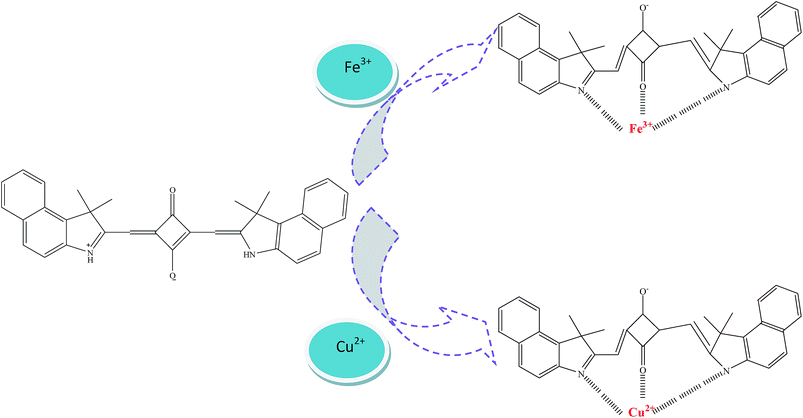 |
| | Scheme 3 Proposed complexation mechanism of TPSQ with Fe3+ and Cu2+. | |
4. Conclusion
In conclusion, we have synthesized and demonstrated the use of symmetrical TPSQ dye as a highly selective dual-mode sensor for the detection of Fe3+ and Cu2+ in ethanol/water (4:1, v/v) condition and shown that the pH has a strong effect on the sensor. Optical properties of this TPSQ dye were investigated with various metal ions, such as Pb2+, Na+, Ni2+, Mg2+, K+, Cr3+, Zn2+, Ag+, Ca2+, Ba2+, Cu2+ and Fe3+. The chemosensor can be immediately utilized for the detection of Fe3+ and Cu2+ in the presence of other competitive metal ions by both colorimetric and fluorescent change, which can be further prominently observed by the naked eye.
Acknowledgements
This work was financially supported by the Open Fund of the Key Laboratory of Regional Environment and Eco-remediation of Ministry of Education, China (SYU-KF-E-12), the Open Fund of the Key Laboratory of Contaminated Environment Control and Regional Ecology Safety, Shenyang University (SYU-KF-L-12), the Project for Six Major Talent Peaks of Jiangsu Province (2011-XCL-004) and the Natural Science Foundation of Changzhou City (CJ20140053).
References
- X. W. Cheng, Y. Zhou, Y. Fang, Q. Q. Rui and C. Yao, RSC Adv., 2015, 5, 19465–19469 RSC.
- S. Suganya, S. Velmathi and D. MubarakAli, Dyes Pigm., 2014, 104, 116–122 CrossRef CAS.
- H.-D. Li, L.-L. Li and B.-Z. Yin, Inorg. Chem. Commun., 2014, 42, 1–4 CrossRef CAS.
- Y. R. Bhorge, H. T. Tsai, K. F. Huang, A. J. Pape, S. N. Janaki and Y. P. Yen, Spectrochim. Acta, Part A, 2014, 130, 7–12 CrossRef CAS PubMed.
- G. J. Park, I. H. Hwang, E. J. Song, H. Kim and C. Kim, Tetrahedron, 2014, 70, 2822–2828 CrossRef CAS.
- Z. M. Zhang, Y. P. Shi, Y. Pan, X. Cheng, L. L. Zhang, J. Y. Chen, M. J. Li and C. Q. Yi, J. Mater. Chem. B, 2014, 2, 5020–5027 RSC.
- X. X. He, J. Zhang, X. G. Liu, L. Dong, D. Li, H. Y. Qiu and S. C. Yin, Sens. Actuators, B, 2014, 192, 29–35 CrossRef CAS.
- T. W. Lin and S. D. Huang, Anal. Chem., 2001, 73, 4319–4325 CrossRef CAS PubMed.
- N. Pourreza and R. Hoveizavi, Anal. Chim. Acta, 2005, 549, 124–128 CrossRef CAS.
- Y. Lin, P. Liang and L. Guo, Talanta, 2005, 68, 25–30 CrossRef PubMed.
- J. S. Becker, M. V. Zoriy, C. Pickhardt, G. N. Palomer and K. Zilles, Anal. Chem., 2005, 77, 3208–3216 CrossRef CAS PubMed.
- L. Shi, C. Jing, W. Ma, D. W. Li, J. E. Halls, F. Marken and Y. T. Long, Angew. Chem., Int. Ed., 2013, 125, 6127–6130 CrossRef.
- R. X. Zhang, X. Y. Zhuang, S. Liu, F. G. Song and Z. Q. Liu, Anal. Methods, 2014, 6, 5746–5752 RSC.
- P. Puangploy, S. Smanmoo and W. Surareungchai, Sens. Actuators, B, 2014, 193, 679–686 CrossRef CAS.
- L. Yang, N. W. Zhu, M. Fang, Q. Zhang and C. Li, Spectrochim. Acta, Part A, 2013, 109, 186–192 CrossRef CAS PubMed.
- B. K. Paul, S. Kar and N. Guchhait, J. Photochem. Photobiol., A, 2011, 220, 153–163 CrossRef CAS.
- J. Fabian, H. Nakazumi and M. Matsuoka, Chem. Rev., 1992, 92, 1197–1226 CrossRef CAS.
- M. Emmelius, G. Pawlowski and H. W. Vollmann, Angew. Chem., Int. Ed. Engl., 1989, 28, 1445–1471 CrossRef.
- T. Inoue, S. S. Pandey, N. Fujikawa, Y. Yamaguchi and S. Hayase, J. Photochem. Photobiol., A, 2010, 213, 23–29 CrossRef CAS.
- T. Maeda, H. Nakao, H. Kito, H. Ichinose, S. Yagi and H. Nakazumi, Dyes Pigm., 2011, 90, 275–283 CrossRef CAS.
- S. Webster, J. Fu, L. A. Padilha, O. V. Przhonska, D. J. Hagan, E. W. V. Stryland, M. V. Bondar, Y. L. Slominsky and A. D. Kachkovski, Chem. Phys., 2008, 348, 143–151 CrossRef CAS.
- D. E. Lynch, I. R. Peterson, M. Floersheimer, D. Essing, L. F. Chi, H. Fuchs, N. J. Calos, B. Wood, C. H. L. Kennard and G. J. Lanqley, J. Chem. Soc., Perkin Trans. 2, 1998, 779–784 RSC.
- K. Y. Law, Chem. Rev., 1993, 93, 449–486 CrossRef CAS.
- W. D. Wang, A. F. Fu, J. S. You, G. Gao, J. B. Lan and L. J. Chen, Tetrahedron, 2010, 66, 3695–3701 CrossRef CAS.
- Y. W. Huang, Q. Lin, J. Wu and N. Y. Fu, Dyes Pigm., 2013, 99, 699–704 CrossRef CAS.
- Q. Lin, Y. W. Huang, J. Fan, R. Y. Wang and N. Y. Fu, Talanta, 2013, 114, 66–72 CrossRef CAS PubMed.
- W. F. Li, H. C. Ma, C. Lu, Y. Ma, C. X. Qi, Z. W. Zhang, Z. M. Yang, H. Y. Cao and Z. Q. Lei, RSC Adv., 2015, 5, 6869–6878 RSC.
- G. Li, F. R. Tao, H. Wang, Y. C. Li and L. P. Wang, Sens. Actuators, B, 2015, 211, 325–331 CrossRef CAS.
- S. Das, K. G. Thomas, K. J. Thomas, V. Madhavan, D. Liu, P. V. Kamat and M. V. George, J. Phys. Chem., 1996, 100, 17310–17315 CrossRef.
- A. J. McKerrow, E. Buncel and P. M. Kazmaier, Can. J. Chem., 1995, 73, 1605–1615 CrossRef CAS.
- S. Alex, M. C. Basheer, K. T. Arun, D. Ramaiah and S. Das, J. Phys. Chem. A, 2007, 111, 3226–3230 CrossRef CAS PubMed.
|
| This journal is © The Royal Society of Chemistry 2016 |
Click here to see how this site uses Cookies. View our privacy policy here. 


