One-step synthesis of Ni3S2 nanoplatelets on graphene for high performance supercapacitors

Xuewu Ou and Zhengtang Luo*
Department of Chemical and Biomolecular Engineering, Hong Kong University of Science and Technology, Clear Water Bay, Kowloon, Hong Kong, China. E-mail: keztluo@ust.hk

Received 26th October 2015 , Accepted 19th January 2016

First published on 21st January 2016


Abstract

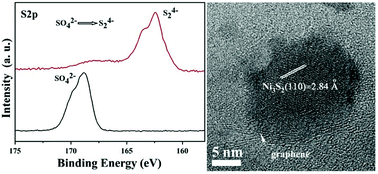
Here, we present a one-step hydrogen reduction synthesis of Ni3S2 nanoplatelets on graphene surface by using NiSO4·3N2H4/GO as precursor. In this process, we have demonstrated that hydrazine molecule, which can coordinate with NiSO4 in the form of pink precipitation, not only contributes to the formation of Ni3S2 nanoplatelets structure, but also enhances the efficiency of SO42− to S24− conversion compared with NiSO4/GO. Supercapacitors made from the obtained Ni3S2/rGO composite exhibits a specific capacitance of 912.2 F g−1 at 2 mV s−1 scanning rate, and 875.6 F g−1 at galvanostatic discharge current density of 1 A g−1, along with exceptional rate capability of 83.2% at discharge current density from 1 A g−1 to 10 A g−1 as well as good cycling stability. We attribute the excellent performance from the improved contact between graphene and the planar Ni3S2 structure, which strengthens the synergistic effect with graphene as conductive support and Ni3S2 nanoplatelets as the pseudocapacitive materials. This method allows the direct and efficient preparation of Ni3S2, and provides a simple route to integrate them with graphene for energy storage applications.

Introduction

Transition metal oxides and chalcogenides have been intensively studied because of their broad applications such as energy storage and catalyst.1–3 Among transition metal chalcogenides (TMCs), recently, Ni3S2 has attracted tremendous attention ascribed to their superior performance in energy storage. For example, it was reported that Ni3S2 nanorods prepared via hydrothermal method exhibits a specific capacitance of 1277 F g−1 at 2 mV s−1 scanning rate.4 Similar method is used to produce NixCo3−xS4 hollow nanoprisms, which also perform enhanced pseudocapacitive behavior.5 However, those methods relies on wet chemistry through the sulfidation of Ni using H2S decomposed from sulfur-containing molecules like thioacetamide (TAA) or thiourea that used in work mentioned above. Other methods like CVD method have also been reported, but the process involve many different steps thus are less efficient.6

On the other hand, due to the semiconducting property of TMCs, conductive materials like carbon materials are commonly used to combine with TMCs to improve their electron conductivity in order to fully exploit their pseudocapacitive capacity for energy storage application. However, to composite TMCs with carbon materials through wet chemistry is not efficient since transition metal nanoparticles should be integrated with the desired carbon materials firstly. Previously, we have developed a two-step method to prepare graphene supported droplet-shape structure of hollow Ni3S2/rGO and core–shell Ni@Ni3S2/rGO for supercapacitors application.7 Although enhanced pseudocapacitance has been achieved, the process is still not easy enough.

In this work, we have further developed a direct method to prepare Ni3S2 nanoplatelets through H2 reduction of NiSO4–hydrazine complex (NiSO4·3N2H4). In addition, this method allows the convenient integration of Ni3S2 nanoplatelets with graphene through one-step H2 reduction of NiSO4·3N2H4/GO. Compared with wet chemistry through the sulfidation of transition metals adopted elsewhere, this presented method shows several obvious advantages. Firstly, Ni3S2 are reduced directly from NiSO4·3N2H4, with no need to prepare nickel nanoparticles in advance as common methods. Secondly, Ni3S2 prepared from this method can be easily integrated with carbon materials like graphene avoiding the prior preparation of nickel/carbon material composites. Moreover, because of the interaction between Ni2+ and oxygen-containing groups on graphene oxide, the prepared Ni3S2 nanoplatelets have good contact with graphene, enabling better charge transfer between them. After made into electrodes and tested for supercapacitors, a specific capacitance of 912.2 F g−1 at scanning rate of 2 mV s−1 and 875.6 F g−1 at 1 A g−1 galvanostatic discharge current density are obtained for Ni3S2/rGO composite reduced from NiSO4·3N2H4/GO. Compared with the two-step method we developed before,7 the main advantage of this presented method is the simple process but comparable performance.

Results and discussion

We have firstly investigated the hydrogen reduction of NiSO4 and NiSO4·3N2H4, respectively. Here, NiSO4·3N2H4 is prepared according to previous reported method,8 and the corresponding XRD result is shown in Fig. S1. During hydrogen reduction process, NiSO4·7H2O and NiSO4·3N2H4 are separately loaded into a furnace under 200 sccm Ar and 20 sccm H2 at 400 °C for 2 h. After hydrogen reduction, as shown in XRD results in Fig. S2, peaks at 21.8° (101), 31.2° (110), 37.9° (003), 44.5° (202), 49.7° (211), 55.3° (300) of Ni3S2 (JCPDS no. 44-1418) are identified for both NiSO4·7H2O and NiSO4·3N2H4, suggesting the formation of Ni3S2 and the successful conversion of SO42− into S24−, and peaks at 51.9° (200), 76.5° (220) of Ni (JCPDS no. 04-0850) indicates partial reduction of Ni ions in NiSO4 or Ni3S2 under H2 environment. In a control experiment without introduction of H2, after loading NiSO·7H2O into furnace annealed under argon at 400 °C for 2 h, only peaks for NiSO4 are observed (Fig. S3), indicating that H2 is a crucial reactant in this conversion. X-ray photoelectron spectroscopy (XPS) is then used to demonstrate the state change of sulphur element. From high resolution S2p XPS spectrum, after H2 reduction of NiSO4·3N2H4, peak at range of 167–172 eV corresponding to SO42− has been almost vanished along with the appearance of a new peak for S24− at range of 160.5–163.5 eV in Fig. 1,9,10 indicating a complete conversion of SO42− into S24−. While using NiSO4·7H2O as precursor, besides the new peak for S24−, high intensity SO42− peak at range of 167–172 eV (Fig. S4) is still observed. Compared with NiSO4·7H2O, it can be concluded that N2H4 indeed enhances the conversion of SO42− to S24− in NiSO4·3N2H4. Previous methods to realize such conversion relies on the use of sulphate-reducing bacteria (SRB), a type of anaerobic microorganisms, for sulphate degradation,11 however, hydrogen reduction of transition metal sulphate or transition metal sulphate–hydrazine complex has not been reported before. At current stage, the conversion mechanism of NiSO4 and NiSO4·3N2H4 into Ni3S2 is not clear. A possible explanation is that under H2 environment at 400 °C, Ni2+ and SO42− will be reduced to Ni and H2S/SO2, respectively, followed by reaction between them to form Ni3S2.7,12,13 Since the precursor NiSO4 is water-soluble, the method we have developed here makes the convenient integration of Ni3S2 with carbon materials possible.
image file: c5ra22426h-f1.tif
Fig. 1 High-resolution S2p XPS spectrum of pure NiSO4 (black line) and Ni3S2 reduced from NiSO4·3N2H4 by H2 (red line).

To integrate Ni3S2 with graphene for supercapacitors application, Fig. 2 displays the scheme for the preparation of Ni3S2/rGO from NiSO4·3N2H4/GO. In detail, firstly, NiSO4/GO (Fig. 2a) is prepared by simply mixing NiSO4 solution with graphene oxide (GO) dispersion. After the observation of well mixing of NiSO4 with GO, excess N2H4 solution is added dropwise. The key reason we use N2H4 here is that it can precipitate NiSO4 in the form of NiSO4·3N2H4. Ascribed to electrostatic interaction between Ni2+ and oxygen-containing group on GO, the formed NiSO4·3N2H4 is supposed to sedimentate in situ and attach tightly onto graphene surface as shown in Fig. 2b. After that, through one-step H2 reduction of NiSO4·3N2H4/GO, Ni3S2/rGO are obtained and denoted as Ni3S2/rGO-2 (Fig. 2c), and the XPS result is shown in Fig. S5, in which N element is detected due to the usage of N2H4. In another experiment, Ni3S2/rGO reduced directly from NiSO4/GO by H2 is denoted as Ni3S2/rGO-1. Fig. 3 shows the XRD results of Ni3S2/rGO-1 and Ni3S2/rGO-2. Besides peaks for Ni3S2, graphene peak C(002) is also identified, confirming the successful integration of Ni3S2 with rGO. The lack of strong Ni3S2 diffraction peaks in sample Ni3S2/rGO-2 results from the well dispersion of Ni3S2 nanoplatelets on graphene surface and the small thickness of obtained Ni3S2 nanoplatelets, as confirmed by TEM results (shown later in Fig. 4). Fig. S6 shows the Raman spectrum of GO in comparison with reduced graphene oxide in Ni3S2/rGO-1 and Ni3S2/rGO-2. The increase of ID/IG ratio from 0.733 (GO) to 1.051 for Ni3S2/rGO-1 and 1.066 for Ni3S2/rGO-2 indicates the reduction of GO.


image file: c5ra22426h-f2.tif
Fig. 2 Schematic illustration for the synthesis of Ni3S2/rGO. (a) Graphene oxide (GO) and Ni2+ aqueous solution. (b) NiSO4 precipitates in the form of NiSO4·3N2H4 on GO after the introduction of hydrazine. (c) Ni3S2 nanoplatelets formed in situ on graphene surface after H2 reduction, accompanied with the reduction of GO into rGO.

image file: c5ra22426h-f3.tif
Fig. 3 XRD spectrum of Ni3S2/rGO-1 reduced by H2 from NiSO4/GO and Ni3S2/rGO-2 reduced from NiSO4·3N2H4/GO, respectively.

image file: c5ra22426h-f4.tif
Fig. 4 TEM results of Ni3S2/rGO reduced from NiSO4·3N2H4/GO. (a) Ni3S2 nanoplatelets with uniform size distributed on graphene surface. (b) Particle size analysis histogram of Ni3S2 nanoplatelets (mean: 29.6 nm, standard deviation: 9.4 nm). (c) and (d) High resolution TEM of Ni3S2 nanoplatelets on graphene surface.

Morphology of Ni3S2/rGO is characterized by transmission electron microscopy (TEM), and shown in Fig. 4, for Ni3S2/rGO-2 (i.e. reduced from NiSO4·3N2H4/GO). We can see small nanoplatelets with uniform size are distributed on the graphene surface without obvious aggregation. In contrast, TEM images of Ni3S2/rGO-1 (i.e. reduced from NiSO4/GO) show round and irregular nanoparticles with broad diameter distribution, as depicted in Fig. S7. The morphology difference observed should be resulted from the different precipitation process. In NiSO4/GO, NiSO4 deposits from solution and randomly anchors on the graphene surface during the drying-recrystallization process. On the contrary, for NiSO4·3N2H4/GO, with the aid of N2H4, NiSO4 is precipitated in the form of NiSO4·3N2H4 and tightly fixed on the graphene surface due to the interaction between Ni2+ and oxygen-containing groups, similar to previous work for the preparation of NiO/Ni(OH)2 nanosheets/nanoplates.14,15 During the following H2 reduction of NiSO4·3N2H4/GO, Ni3S2 will be prepared in situ to form Ni3S2/rGO, while Ni3S2 is more likely to aggregate into different morphology and size in Ni3S2/rGO-1 (i.e. reduced from NiSO4/GO). From the particle size analysis histogram in Fig. 4b, the average size of these Ni3S2 nanoplatelets is about 29.6 nm for Ni3S2/rGO-2. High resolution TEM image in Fig. 4c shows the crystal structure, and plane spacing of 2.84 Å corresponds to Ni3S2 (300). More importantly, these Ni3S2 nanoplatelets are in good contact with graphene as pointed out by white arrow in Fig. 4c, in agreement with our previous analysis. In addition, Ni domains from partial reduction of Ni ions in NiSO4/Ni3S2 can be detected in some particles as illustrated in Fig. 4d, consistent with XRD results stated before.

To demonstrate their potential application in energy storage, we further use electrochemical methods to investigate capacitive property of Ni3S2/rGO-1 (i.e. reduced from NiSO4/GO) and Ni3S2/rGO-2 (i.e. reduced from NiSO4·3N2H4/GO), respectively. The electrochemical tests of those synthesized materials are carried out in a three-electrode setup, where Pt works as the counter electrode, Hg/HgO as the reference electrode and 2 M KOH as the electrolyte solution. Electrochemical results are shown in Fig. 5, in which cyclic voltammetry (CV) test is conducted between 0.1 V and 0.6 V, and galvanostatic charge/discharge test range is from 0.1 V to 0.55 V. Fig. 5a shows the CV curves for Ni3S2/rGO-1 and Ni3S2/rGO-2 at scanning rate of 2 mV s−1, and both of these two composites show a pair of reversible redox peaks at the range between 0.25 V and 0.5 V, demonstrating their pseudocapacitive properties. And a specific capacitance of 360 F g−1 for Ni3S2/rGO-1 and 912.2 F g−1 for Ni3S2/rGO-2 can be calculated from these CV curves (for detailed calculation see the ESI). CV results at different scanning rate from 2 mV s−1 to 50 mV s−1 are presented in Fig. S8a and c for Ni3S2/rGO-1 and Ni3S2/rGO-2, respectively. Fig. 5b displays the galvanostatic discharge curves at 1 A g−1, and a specific capacitance of 140.0 F g−1 for Ni3S2/rGO-1 and 875.6 F g−1 for Ni3S2/rGO-2 are obtained (see the ESI for calculation method). The significantly increased performance for Ni3S2/rGO-2 is possibly due to several reasons. Firstly, with the aid of N2H4, the conversion of SO42− into S24− is more complete, as confirmed with XPS result. Thus after H2 reduction, NiSO4·3N2H4/GO leads to higher ratio of Ni3S2 active materials than that of NiSO4/GO. Secondly, the Ni3S2 nanoplatelets in Ni3S2/rGO-2 have better contact with graphene substrate than round/irregular shape Ni3S2 nanoparticles with non-uniform size randomly deposited on graphene in Ni3S2/rGO-1. Thirdly, due to its highly reductive property, hydrazine can help reduce GO into rGO, contributing to improved electronic conductivity. Ni3S2/rGO-2 also delivers better rate capability than Ni3S2/rGO-1 as plotted in Fig. 5c. By increasing galvanostatic charge/discharge current density from 1 A g−1 to 10 A g−1, the calculated specific capacitance for Ni3S2/rGO-2 varies from 875.6 F g−1 to 728.5 F g−1, equal to 83.2% capacitance is retained. While for Ni3S2/rGO-1, specific capacitance decreases rapidly from 140 F g−1 to 42.2 F g−1, only 30.1% capacitance maintained. Fig. S8b and d present the galvanostatic discharge curves for these two composites at different current density from 1 A g−1 to 10 A g−1. The CV and galvanostatic discharge curves for pure Ni3S2-2 reduced from NiSO4·3N2H4 and pure rGO are presented in Fig. S9, and a capacitance value of 333.8 F g−1 for Ni3S2-2 and 78.2 F g−1 for rGO are obtained at 1 A g−1 discharge current density. Taking into account the rGO weight percentage of 55.6%, the faradaic capacitance is 832.1 F g−1 for Ni3S2/rGO-2 at 1 A g−1 current density. Electrochemical impedance spectroscopy (EIS) is also employed to measure the ion diffusion and charge transfer process at the frequency from 100 kHz to 10 MHz with amplitude of 5 mV, and results are shown in Nyquist plots in Fig. 5d, with inset equivalent circuit, where Rs is the ohmic resistance accounting for the intrinsic resistance of electrode, contact resistance between current collector and electrode materials as well as the electrolyte resistance, CDL is the double layer capacitance, RCT is the charge transfer resistance, W is the Warburg diffusion element and CF is the faradaic capacitance.7,16 The Nyquist plots fit well with the equivalent circuit by the equation:16

image file: c5ra22426h-t1.tif


image file: c5ra22426h-f5.tif
Fig. 5 Electrochemical results of Ni3S2/rGO. (a) CV at scanning rate of 2 mV s−1 for Ni3S2/rGO reduced from NiSO4/GO (Ni3S2/rGO-1) and NiSO4·3N2H4/GO (Ni3S2/rGO-2) respectively. (b) Corresponding galvanostatic discharge results at 1 A g−1 for Ni3S2/rGO-1 and Ni3S2/rGO-2. (c) Rate capability comparison of Ni3S2/rGO-1 and Ni3S2/rGO-2 at discharge current density from 1 A g−1 to 10 A g−1. (d) Nyquist plots at amplitude of 5 mV over frequency range from 100 kHz to 0.01 Hz. Inset are the equivalent circuit and high frequency part zoomed in.

The lower Rs of 0.53 Ω for Ni3S2/rGO-2 than Ni3S2/rGO-1 (0.78 Ω) should be mainly resulted from its better conductivity due to the introduction of N2H4. The RCT for Ni3S2/rGO-1 and Ni3S2/rGO-2 are 1.23 Ω and 1.01 Ω, respectively. Smaller RCT value for Ni3S2/rGO-2 indicates better charge transfer, attributed to the good contact of Ni3S2 nanoplatelets with graphene. At last, we have conducted the cycling performance test for Ni3S2/rGO-2 (i.e. reduced from NiSO4·3N2H4/GO) at current density of 5 A g−1, as shown in Fig. S10. After 1000 cycles at this current density, 91.3% capacitance is maintained, demonstrating its good cycling stability.

Experimental

Chemicals

Graphite (Grafguard 160-50N with the average particle size of 350 um) was expanded by microwave before use. K2S2O8, P2O5, H2SO4, KMnO4, H2O2, NiSO4·7H2O, N2H4 (35 wt% in water) and poly(vinylidene fluoride) (PVDF) were all purchased from Sigma-Aldrich with analytical grade and used without further purification.

Preparation of graphene oxide (GO)

Graphene oxide (GO) is prepared through modified Hummers method.17,18 In brief, firstly, 30 mL concentrated sulfuric acid is added into a flask containing 1 g graphite, 5 g K2S2O8 and 5 g P2O5, reacted at 90 °C for 4.5 h. Then filtrate the product through a 0.2 micron Nylon Millipore filter and wash the sample with excess DI until the pH is around 5.5. Secondly, after drying the sample at 60 °C, 150 mL concentrated sulfuric acid and 30 g KMnO4 are added in sequential slowly and reacted at 35 °C for another 4 h. Thirdly, the mixture product is added to 1 L DI water and stirred for 2 h, followed by the addition of 50 mL 30% H2O2 until the solution turns into bright yellow. After stirred for another 2 h, settle down the solution for 24 h. Finally, discard the supernatant and use 1 L of 10% HCl solution and excess DI to wash the product until the pH ∼ 7.

Preparation of NiSO4·3N2H4 complex

To 2 mL 0.1 M NiSO4 solution, 1 mL hydrazine solution (35 wt% in H2O) is added and stirred for 10 min. After filtration and drying the pink precipitate, NiSO4·3N2H4 is obtained.

Preparation of NiSO4/GO and NiSO4·3N2H4/GO composites

To 20 mL 1 mg mL−1 GO solution, 2 mL 0.1 M NiSO4 is added slowly under vigorous stirring, and then stirred for another 1 h. After freeze-drying the mixture solution, NiSO4/GO composite is obtained. To prepare NiSO4·3N2H4/GO composite, 1 mL hydrazine solution (35 wt% in H2O) is added into the above NiSO4/GO solution. After filtration and drying the product, NiSO4·3N2H4/GO composite is obtained.

Preparation of Ni3S2/rGO composites

Load the prepared NiSO4/GO and NiSO4·3N2H4/GO composite into a furnace under 200 sccm Ar and 20 sccm H2 at 400 °C for 2 h, respectively. After cooling down to room temperature, the products are collected. rGO and Ni3S2 are prepared separately through a procedure similar to the preparation of Ni3S2/rGO, apart from the absence of NiSO4 and GO respectively. The mass ratio of Ni3S2 in Ni3S2/rGO-1 and Ni3S2/rGO-2 are 63.1% and 55.6%, respectively.

Crystal structure and morphology characterization

All the characterization tests are done in materials characterization and preparation facility (MCPF) in Hong Kong University of Science and Technology (HKUST). XRD (PW 1830, Philips) with Cu Kα radiation (λ = 1.5406 Å) is used to test the phase structure. The state change of sulphur is checked with XPS (VG Micro Tech ESCA 2000). And transmission electron microscope (TEM, JEOL 2010) is used to characterize the morphology and crystal structure.

Electrode preparation and electrochemical measurement

90 wt% electrode materials and 10 wt% PVDF as the binder are put into an agate mortar to make slurry. Then coat the slurry onto Ni foam with area of 1 cm2 uniformly. After drying at 80 °C for 12 h under vacuum environment, the prepared electrodes are pressed tightly under 10 MPa. Three-electrode system is employed here to measure the electrochemical properties of the electrodes. In this system, the prepared electrode is used as the working electrode, platinum plate as counter electrode and Hg/HgO as reference electrode. The electrolyte used here is 2 M KOH. Before the electrochemical test, the electrodes are dipped into the electrolyte for 6 h. The electrochemical test is carried out on an electrochemical workstation (CHI 660). Cyclic voltammetry test and galvanostatic charge/discharge test are conducted at the range from 0.1 V to 0.6 V and 0.1 V to 0.55 V, respectively. The electrochemical impedance spectroscopy (EIS) is done at the frequency range from 100 kHz to 0.01 Hz under amplitude of 5 mV.

Conclusions

In summary, we have synthesized Ni3S2 directly from NiSO4–hydrazine complex (NiSO4·3N2H4) through H2 reduction, and integrated these Ni3S2 nanoplatelets with graphene for supercapacitors application. As a result, Ni3S2/rGO reduced from NiSO4·3N2H4/GO shows a specific capacitance of 912.2 F g−1 at scanning rate of 2 mV s−1 and 875.6 F g−1 at 1 A g−1 discharge current density. We believe that hydrazine molecule introduced in NiSO4·3N2H4 contributes to the enhancement of conversion of SO42− into S24−, and also allows the formation of Ni3S2 nanoplatelets, ensuring better contact with the underlying graphene. The method presented here provides a new simple route for the preparation of Ni3S2 as well as Ni3S2/rGO composite for energy storage.

Acknowledgements

This project is supported by the Research Grant Council of Hong Kong SAR (Project number 623512 and DAG12EG05). Technical assistance from the Materials Characterization and Preparation Facilities is greatly appreciated.

Notes and references

  1. J. Jiang, Y. Li, J. Liu, X. Huang, C. Yuan and X. W. D. Lou, Adv. Mater., 2012, 24, 5166 CrossRef CAS PubMed.
  2. I. E. Wachs, Catal. Today, 2005, 100, 79 CrossRef CAS.
  3. D. Kong, J. J. Cha, H. Wang, H. R. Lee and Y. Cui, Energy Environ. Sci., 2013, 6, 3553 CAS.
  4. W. Zhou, X. Cao, Z. Zeng, W. Shi, Y. Zhu, Q. Yan, H. Liu, J. Wang and H. Zhang, Energy Environ. Sci., 2013, 6, 2216 CAS.
  5. L. Yu, L. Zhang, H. B. Wu and X. W. D. Lou, Angew. Chem., 2014, 126, 3785 CrossRef.
  6. R. Lin, D. Hu and Y. Chang, Metall. Trans. B, 1978, 9, 531 CrossRef.
  7. X. Ou, L. Gan and Z. Luo, J. Mater. Chem. A, 2014, 2, 19214 CAS.
  8. Y. Li, C. Li, H. Wang, L. Li and Y. Qian, Mater. Chem. Phys., 1999, 59, 88 CrossRef CAS.
  9. Y. Liao, K. Pan, Q. Pan, G. Wang, W. Zhou and H. Fu, Nanoscale, 2015, 7, 1623 RSC.
  10. D. L. Legrand, H. W. Nesbitt and G. M. Bancroft, Am. Mineral., 1998, 83, 1256 CAS.
  11. G. Muyzer and A. J. Stams, Nat. Rev. Microbiol., 2008, 6, 441 CAS.
  12. W. Zhou, W. Chen, J. Nai, P. Yin, C. Chen and L. Guo, Adv. Funct. Mater., 2010, 20, 3678 CrossRef CAS.
  13. J. Gilewicz-Wolter, Oxid. Met., 1988, 29, 225 CrossRef CAS.
  14. G. Zhou, D.-W. Wang, L.-C. Yin, N. Li, F. Li and H.-M. Cheng, ACS Nano, 2012, 6, 3214 CrossRef CAS PubMed.
  15. H. Wang, H. S. Casalongue, Y. Liang and H. Dai, J. Am. Chem. Soc., 2010, 132, 7472 CrossRef CAS PubMed.
  16. B. G. Choi, J. Hong, W. H. Hong, P. T. Hammond and H. Park, ACS Nano, 2011, 5, 7205 CrossRef CAS PubMed.
  17. W. S. Hummers and R. E. Offeman, J. Am. Chem. Soc., 1958, 80, 1339 CrossRef CAS.
  18. Z. Luo, Y. Lu, L. A. Somers and A. C. Johnson, J. Am. Chem. Soc., 2009, 131, 898 CrossRef CAS PubMed.

Footnote

Electronic supplementary information (ESI) available: The calculation method for specific capacitance, XRD, XPS, Raman, TEM and electrochemical test results. See DOI: 10.1039/c5ra22426h

This journal is © The Royal Society of Chemistry 2016
Click here to see how this site uses Cookies. View our privacy policy here.