
High-throughput measurement of drug–cyclodextrin kinetic rate constants by a small molecule microarray using surface plasmon resonance imaging

Vikramjeet Singhab, Zhuo Liac, Xiaotong Zhoua, Xiaonan Xua, Jianghui Xua, Amita Nandb, Huajie Wend, Haiyan Lia, Jingsong Zhu*bd and Jiwen Zhang*a
aCenter for Drug Delivery Systems, Shanghai Institute of Materia Medica, Chinese Academy of Sciences, Shanghai 201203, China. E-mail: jwzhang@simm.ac.cn
bNational Center for Nanoscience and Technology, Beijing, 100190, China
cSchool of Pharmacy, Shenyang Pharmaceutical University, Shenyang 110016, China
dGuangzhou Gaotong Biological Technology Co. Ltd., Guangzhou, 510663, China

Received 14th October 2015 , Accepted 2nd December 2015

First published on 7th December 2015


Abstract

Applications of small molecule microarrays (SMMs) has been extensively studied but have been limited to the screening of small molecule inhibitors. Here for the first time, we conjugated SMMs with label free surface plasmon resonance imaging (SPRi) for measurement of kinetic parameters for drug–cyclodextrins interactions in high-throughput manner. A collection of insoluble drugs was immobilized onto biosensor surface using photo-cross-linked technique to form SMMs. A highly sensitive and recently reported surface chemistry based on surface initiated polymerization chemistry was used for SMMs fabrication. In total, 38 insoluble drugs were evaluated for their interaction profile and kinetic rate constants against 5 different types of cyclodextrins (CDs) including, α-CD, β-CD, γ-CD, 2-hydroxylpropyl β-CD (HP-β-CD) and sulphobutyl-ether-β-CD (SBE-β-CD). For the supramolecular drug–CD interaction kinetics, the response magnitude and detailed kinetic parameters were calculated and presented in the article. The presented method described a label free and high-throughput technique for real time measurement of kinetic constants for drug–CDs interactions which will assist the selection and use of different CDs in number of different applications.

Introduction

Aqueous solubility is one of the major roadblocks in developing novel small molecules into successful drugs.1 A number of techniques have been developed to increase the apparent solubility of lipophilic compounds without decreasing their optimized potency. These techniques include particle size reduction, pH adjustment, addition of solubilizing excipients, solid dispersion, micro-emulsification, nano crystallization, and inclusion complex formation.2

Cyclodextrins (CDs) have been playing a key role in pharmaceutical formulations to increase aqueous solubility and bioavailability of poorly soluble drugs through inclusion complex formation or solid dispersion.3 The formation of an inclusion complex depends totally upon the binding affinity of drug molecules with CDs and therefore, it is very important to study the affinity behaviour and kinetic parameters. It is assumed that the free and bound drugs exist in a state of equilibrium for the CD–drug supramolecular systems in aqueous solution, which is determined by the equilibrium binding constants (KA).

The KA is conventionally used to estimate the binding affinity between drugs and cyclodextrins. The KA values for a range of drugs and small molecules have been reported to be relatively weak in the milli to micromolar range.4,5 The CDs are able to include a wide range of organic and inorganic molecules within the hydrophobic cavity of the inner surface through non-covalent interactions, explaining the high affinity towards drug molecules.

The details of CDs inclusion complex have been studied by molecular structural studies, providing information about stoichiometry, geometry, association sites and heterogeneity. Although the kinetics of the association and dissociation processes are the basis for this supramolecular system formation and in vivo functions of the drug–CD complex,6–8 quantitative measurement has proved challenging.9–11 The short relaxation time (<1 s) and the requirement of high time resolution is difficult to achieve.12 To date, few studies have been reported focusing on the kinetic parameters (usually labelled as ka and kd for association and dissociation, sometimes as kon and koff) of drug–CD supramolecules.13 Fluorescence correlation spectroscopy (FCS)14 has been employed to compare the complexation kinetics of pyronines and analyze the individual steps during association and dissociation. However, this method is not applicable in the kinetic study of most drug molecules without fluorescence. Capillary electrophoresis (CE)15 has also been employed to estimate the rate constants of drug–CD interactions. The relatively poor reproducibility for CE also limits its application in interactions with weak to moderate affinities. Recently we have reported a novel method based on high performance affinity chromatography (HPAC) for determination of kinetic rate constants.16 Although the method was able to measure the weak affinities and the results were in agreement with the capillary electrophoresis method, the HPAC method was also relatively laborious and time consuming. In HPAC, the modified mono-6A-N-propargylamino-6A-deoxy-CD was used as a stationary phase in a silica column, which changed CDs chemically. Therefore, it is of special interest to establish a high-throughput methodology to measure the kinetics of the drug–CD supramolecular system with extensive, weak binding and fast dissociation.

Previously, two researchers reported the use of an SPR system for the measurement of drug–CDs interaction, which described the interactions of β and γ-CD with selected drugs. The modified CD (6-monodeoxy-6-monoamino-γ-CD) was fixed onto a gold sensor chip and drugs were flowed as analytes using Biacore SPR system.17,18 However, the methodology did not prove very productive due to the non-high throughput nature.

A great advantage of surface plasmon resonance imaging (SPRi) over the classical SPR technique is high-throughput,19 allowing the parallel evaluation of hundreds or thousands of compounds simultaneously.20 Moreover, it provides a rapid identification of biomolecular interaction along with their kinetic parameters in real time.21 A variety of bio-interactions have been reported on SPRi for measuring protein–ligand interaction and protein–protein inhibition.22 The performance and efficiency of SPRi are mainly dependent upon the surface chemistry. We recently reported a small-molecule microarray screening platform based on a surface with high sensitivity and immobilization capacity which is able to detect weak interactions in the micromolar range.23 The photo-cross-linked technique with surface initiated polymerization (SIP) chemistry proved to be highly efficient for screening of thousands of molecules on a single platform.

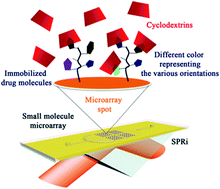
In this article, a high-throughput SPRi method was established with employment of the same methodology by using an SIP platform to measure the kinetic rate constant of drug–CD interactions. The schematic for drug immobilization is presented in Fig. 1. The small molecule microarray of drugs in conjugation with SPRi has been proved as a breakthrough to provide high throughput screening and accurate kinetic measurements of drug–CD supramolecular systems. A small library of insoluble drugs was fabricated onto the SIP surface by using photo-cross-linked chemistry and solutions of 5 different types of CDs (α-CD, β-CD, γ-CD, HP-β-CD and SBE-β-CD) were flowed at multiple concentrations as analytes. The photo-cross linking chemistry allowed non-selective and covalent immobilization of drugs which helped the retention of their activity. The data was evaluated for signal magnitude and the kinetic rate constant of each interaction.


image file: c5ra21298g-f1.tif
Fig. 1 A schematic representing the fabrication of a 3D photo-cross-linking based small-molecule microarray for the measurement of drug–CD interactions.

Experimental

Preparation of a 3D polymer brush (SIP) surface

The SIP surface was prepared according to our previously published work.18 In brief, a mixed self-assembled (SAM) solution was prepared by initiators ω-mercaptoundecyl bromoisobutyrate (BrC(CH3)2COO(CH2)11SH) and EG3-thiol in a 1[thin space (1/6-em)]:[thin space (1/6-em)]99 ratio. The chips were immersed in this mixture (1 mM total concentration) for 16 hours at room temperature, and then thoroughly washed by ethanol and Milli-Q water and dried in a nitrogen stream. The polymerization solution was prepared by 64 mg Bipy, 10 ml 0.04 M CuCl2, 2.6 g HEMA, 7.2 g OEGMA, 20 ml Milli-Q water and 20 ml methanol. After 30 min deoxygenation, 10 ml of AscA (0.04 M) were added to the solution and the chips were immersed in this solution for 16 hours at room temperature under an atmosphere of nitrogen. After being thoroughly washed with methanol and Milli-Q water, the chip were incubated in a DMF solution containing 0.1 M N,N′-disuccinimidyl carbonate (DSC) and 0.1 M dimethyl amino pyridine (DMAP) for 16 hours for acidification.24

SMMs preparation

The photo-cross-linker moiety (3-trifluoromethyle diazarine) was synthesized according to a previously reported protocol by Kanoh et al.25 PEG and SIP assembled slides were activated by a freshly prepared aqueous mixture (1[thin space (1/6-em)]:[thin space (1/6-em)]1) of EDC/NHS solution for 20 minutes. Slides were then incubated with a 100 mM base-added (500 mM DIPEA) solution (DMF) of photo-cross-linker (20 μl), covered with cover slips and placed in the dark for 4 hours at room temperature. Slides were then extensively washed with DMF for 30 minutes and blocked with a 1 M solution of ethanolamine in DMF. After washing with DMF and ethanol (10 minutes) and drying with N2, the slides were ready for printing. Stock solutions (10 mM) in 100% DMSO were spotted in multiplex using a Genetix QArray 2 spotter (produced 300 μm features) and left for complete evaporation of DMSO (under vacuum) at room temperature for 2 h. After printing, the slides were exposed to UV irradiation 2.4 J cm−2 (365 nm) in a UV chamber (Amersham life science). The slides were subsequently washed with DMSO, DMF, ACN, ethanol, phosphate buffered saline (PBST) and finally with distilled water for 30 minutes (ultrasonically), respectively, to remove non-covalently bound compounds. Dried slides were assembled with a flow cell and then mounted on the SPRi instrument for measurement.

SPRi method

All the experiments were carried out using the PlexArray® HT system (Plexera, LLC) which is based on surface plasmon resonance imaging.23 All samples were injected at the rate of 2 μl s−1 and 25 °C. Oval regions of interest (ROIs) were set as a 9 pixel × 7 pixel area in imaging area. ROIs of bovine serum albumin (BSA) were used as controls for the measurement of specific signals. CDs solutions in PBST containing Tween 20 (0.05%), pH 7.4 were used as analytes with an association and dissociation flow rate of 2 μl s−1 at different concentrations by serial dilution. A solution of glycine·HCl (pH 4.2) was used to regenerate the surface and remove bound proteins from the small molecules enabling the sensor chip to be reused for additional analyte injections.

Binding experiments and data analysis

All small molecules were stored as stock solution in 100% dimethyl sulphoxide (DMSO) at −20 °C. Protein samples were stored in PBST at −80 °C. PBST was used as both analyte and running buffer. A typical sample injection cycle consists of a 300 s association phase with the analyte solution and a 400 s dissociation phase with the running buffer at a 2 μl s−1 flow rate. Three different concentrations of each cyclodextrin (0.25, 0.5 and 1 mM) were used to flow onto the microarray to ensure accurate kinetics. All the experiments were repeated at least three times to ensure data repeatability. Data was analyzed according to our previous work.23 For data analysis we choose two software packages, ORIGIN Lab and the Data Analysis Module (DAM) of Plexera. All data from SPRi reported here are after subtraction of the background intensity/signal by DAM software. In short, the entire concentration of the analyte was fitted with a 1[thin space (1/6-em)]:[thin space (1/6-em)]1 Langmuir interaction integrated rate equation to obtain the kinetic constants.

Results and discussion

Identification and signal response

Small molecule microarrays of 38 insoluble drugs were constructed onto 3D SIP platform using a photo-cross-linking technique. All the solutions of 5 different types of CDs were flowed through the flow cell separated by single regeneration step at multiple concentrations on single chip. A slightly acidic solution of glycine·HCl (pH 4.2) was used as a regeneration solution to remove bound and physically adsorbed CDs from the microarray region to flow the next analyte cycle. Bovine serum albumin (BSA) of 1 mM concentration was printed along with drugs and used as a negative control in experiments.

Fig. 2 shows the microarray image directly captured from the SPRi instrument. All drug compounds were spotted in triplicate to ensure the uniformity of the measurement and are highlighted by block 1, 2 and 3 with the last spot of a negative control (BSA) in each block. The final signal responses shown in Fig. 3 were obtained after subtraction of the signal from BSA to get a specific binding response. Response graphs plotted and shown in Fig. 3 were obtained from the single highest concentration (1 mM) of CDs. The standard deviation was calculated from the triplicate spot of all drugs at a single concentration of each CD which suggested that the surface was very uniform and suitable for the measurement of interactions on single platform. Each drug showed a different response to different CDs, especially parent CDs (α-CD, β-CD and γ-CD). It is very important to note that the β-CD and its two derivative forms, HP-β-CD and SBE-β-CD showed very similar trends of signal responses to a large portion of the drugs. This is possibly due to the same inner cavity and that the change in functional groups affects the interaction profile to little extent. Two drugs, silymarin and maloxicam showed no or negligible interaction with β-CD and HP-β-CD but in the case of SBE-β-CD the interactions were detectable, which could justify the effect of modified functional groups. Very recently, a dramatic improvement in the solubility of a natural active compound, namely, pseudolaric acid B (PAB), has been found with a 600 fold increase by HP-β-CD complexation. In addition, the solubility enhancement of PAB by HP-β-CD and SBE-β-CD were recorded to be significantly higher than β-CD by phase solubility studies. Interestingly, the signal response of PAB also increased in the case of HP-β-CD and SBE-β-CD when compared to β-CD and was in strong agreement with phase solubility data. In last, apart from the kinetic parameters, the response charts are quite useful to explain the binding profiles of each drug to different CDs.


image file: c5ra21298g-f2.tif
Fig. 2 Microarray image showing triplicate printing of each drug. The image was collected (14 × 14 mm) after the washing process and therefore the drug spots are almost invisible.

image file: c5ra21298g-f3.tif
Fig. 3 A whole chart showing the SPRi signal response for each drug against 5 different types of CDs (α-CD, β-CD and γ-CD, HP-β-CD and SBE-β-CD) with drug list. Standard deviations were calculated from triplicate spots of each drug from a single slide.

Affinity profile based on signal response

As discussed above, the signal response generated from the drug–CD interactions provided the affinity information and varied with the types of CDs. However, if we look over the SPRi response graphs, it is hard to interpret the response of each interaction and the conditions will be worse with an increase in the number of drugs. Therefore, it is necessary to plot the response values in one easily readable graph, and a heat map or cluster analysis is the best way to represent these profiles. The signal responses from the single highest concentration were averaged using statistics analysis and a heat map (Fig. 4) was generated using MAT LAB software. The heat map provides the range of affinity of all drugs towards each type of CD after automatic calculations and arranges the signal response in a classified manner. Interestingly, the affinity profiles of β-CD, HP-β-CD and SBE-β-CD appeared in one class, which is well-justified due to the presence of similar hydrophobic cavities, and the contribution of additional functional groups to the affinities were also measured. The heat map is of some importance and helps to interpret the data, as it is difficult to compare the affinity response at a single platform in the case of high-throughput measurement. In simple words, the affinity of interaction can be easily estimated from the signal magnitude, and classification from the heat map.
image file: c5ra21298g-f4.tif
Fig. 4 Classification of drug–CD interaction responses by unsupervised cluster analysis. Small-molecule microarray data of 38 drugs against 5 different types of CDs (α-CD, β-CD and γ-CD, HP-β-CD and SBE-β-CD) were mean-normalized, log-transformed, and analyzed by MAT LAB.

Kinetic analysis from SPRi

Apart from the signal response, our main purpose of this study was to provide accurate kinetic parameters for drug–CD interaction as it is quite important to evaluate the strength and behaviour of the interactions. For the same purpose, all 5 types of CDs were flowed at multiple concentrations (0.25, 0.5 and 1 mM) over the small-molecule microarray on a single slide. The average value of kinetics was calculated by using Plexera SPRi data module software.23 The ka of all drugs against each type of CDs are presented in Table 1. Detailed kinetic parameters including association rate constants (ka), dissociation rate constants (kd) and equilibrium association constant (KA) were calculated and are presented in the ESI Tables S-1 and S-2. If we look roughly at the kinetic data from SPRi, a general trend can be easily seen in the kinetic values. We know that non-specific adsorption is a very common problem in SPRi-based measurement, and this affects the kinetic parameters. The SIP has been proved most efficient in comparison to other 3D surface chemistries to reduce non-specific binding in a recently published report.24 A 1 M solution of ethanolamine was used for surface blocking which had been evaluated previously and been found to be very efficient to reduce non-specific adsorption.23 To minimize this problem, we have used advanced and newly developed surface chemistry with more efficient blocking agents. After all this, measurable signals were observed from non-specific adsorptions which were subtracted from desired spots to get specific interaction sensograms and kinetic calculations. Above all, it could be inferred that SPRi was able to measure the drug–CDs interactions and provide kinetic parameters in a high-throughput manner.
Table 1 The calculated association rate constants (ka) obtained from SPRi
Drugs α-CD β-CD γ-CD HP-β-CD SBE-β-CD
Glyburide 1790 1590 1800 6530 943
Glipizide 1860 601 4460 7170 4070
Silymarin 4990 73.6 6540 2660
Captopril 360 2880 2840 9210 2950
Melatonin 5660 6990 512 7370 2030
Enalapril 1650 78[thin space (1/6-em)]700 6560 5180 1580
Sunitinib 2660 1150 4200 1900 4620
Ethionamide 185 6000 615 7930 308
Fenbufen 15.2 39 588 1330 2480
Phenacetin 758 1730 4500 1760 2140
Artemether 1950 1020 1770 4000 2350
Salicylic acid 1620 2060 1010 5750 2340
Theophylline 57.5 3640 4680 8020 1790
Paclitaxel 1910 1000 734 2370 1990
Doctaxel 7840 1000 5900 6800 5160
Dihydroatemisinin 4020 4600 3290 2460 1630
Budesonide 2660 6270 200 604 2040
Diclofenac 1750 3540 620 143 397
Flurbiprofen 3140 2270 1680 2690 1780
Caffeine 1900 4590 1480 4510 2360
Metronidazole 1900 8.54 658 543 1090
Paracetamol 3990 6730 6090 2180 668
Acyclovir 619 86[thin space (1/6-em)]900 2020 8870 2250
Fluconzole 4530 55[thin space (1/6-em)]800 2800 1390 6530
Clenbuterol 1880 3190 3400 5720 1660
Trimethoprim 1540 969 518 2210 886
Diazepam 398 1480 1450 361 1580
Artemisinin 9990 6610 2050 535 1590
Nifedipine 1170 4420 1230 88.8 162
Indapamide 6920 6070 2650 1130 1270
Granisetron 1750 2660 1670 2120 807
Tolbutamide 1000 3140 137 1980 4220
Diphenhydramine 5570 6260 3780 1230 3430
Ketoprofen 1840 1710 1500 4650 6730
Piroxicam 6470 8760 3830 1780 2330
Pseudolaric acid B 2950 1800 5160 1930 380
Prednisolone 881 1660 3060 2010 1640
Meloxicam 3520 1940 913 1520


Comparison with other methods

Due to its remarkable importance, a number of different methods have been reported for the measurement of kinetic rate constants of drug–CD interactions including fluorescence correlation spectroscopy (FCS), capillary electrophoresis (CE), phase solubility, phase distribution, HPAC and the SPR method. However, the fluorescence limitations, large sample amounts, and time consuming and laborious procedures limit their application for drug–CD interaction measurement. In comparison, with the superiority of rapid and real time kinetics measurement in high throughput manner, the SPRi method could be the best method for the measurement of multiple drug–CD interactions. Very recently, we have published several articles focused on SPRi applications including biomarker identification, in situ protein synthesis and SMMs for screening of small molecule inhibitors with very advanced surface chemistries.26–29 It is concluded that SPRi was able to generate significant signals for weak interactions from high sensitive surface chemistries. In general, a notable difference can be always found when the kinetic values from SPRi were compared with other reported methods. But this difference or the non-correlation between different methods can be explained by the difference in methodology used. For example, in SPRi, the drug molecules were immobilized over the sensor surface and CDs were used as the mobile phase. Meanwhile, the conditions were totally reversed in HPAC and SPR, where the drugs were used as a mobile phase and CDs were modified and fixed onto the surface. Even in the caes of those (SPR and HPAC) that shared the same strategy, a significant deviation in the magnitude of kinetics parameters were observed, which might be due the different environment and instrument itself. However in this report, the photo-cross-linking technique was used to immobilize the drug molecules which allowed one molecule to display in various orientations. Each orientation may have different binding affinity to the specific CD and therefore, the kinetic constant we have obtained from our method is probably the average of different multiple orientations. The other more important factor which is difficult to ignore even after so much study is the non-specific binding which is present in all systems but quite different and opposite to each other and might contribute to the kinetic parameters.

Conclusions

A novel high-throughput method to measure kinetic rate constants of drug–CD interactions based on the SPRi was presented and thoroughly discussed here. Apart from those above, thousands of drugs can be easily fabricated into this small microarray format for kinetic measurement against desired types of cyclodextrins. In addition to kinetic values, the strength of interaction can be directly evaluated from the signal magnitude for a huge drug library and an affinity profile could be designed and arranged in affinity-based order. This affinity based profile can be very helpful for the selection of cyclodextrin as a solubility enhancer and excipient for drug delivery purposes.

Acknowledgements

We gratefully acknowledge financial support from the Natural Science Foundation of China (81373358 and 81430087).

References

  1. T. Loftsson, D. Hreinsdottir and M. Masson, Int. J. Pharm., 2005, 302, 18–28 CrossRef CAS PubMed.
  2. N. G. Das and S. K. Das, Drug Delivery Report Spring–Summer, 2006, pp. 52–55 Search PubMed.
  3. G. Crini, Chem. Rev., 2014, 114, 10940–10975 CrossRef CAS PubMed.
  4. H. Li, J. Sun, Y. Wang, X. Sui, L. Sun, J. Zhang and Z. He, Eur. J. Pharm. Sci., 2011, 42, 55–64 CrossRef CAS PubMed.
  5. K. A. Connors, Chem. Rev., 1997, 97, 1325–1358 CrossRef CAS PubMed.
  6. T. Loftsson, S. B. Vogensen, M. E. Brewster and F. Konrádsdóttir, J. Pharm. Sci., 2007, 96, 2532–2546 CrossRef CAS PubMed.
  7. T. Loftsson and M. E. Brewster, J. Pharm. Pharmacol., 2011, 63, 1119–1135 CrossRef CAS PubMed.
  8. A. Dahan, J. M. Miller, A. Hoffman, G. E. Amidon and G. L. Amidon, J. Pharm. Sci., 2010, 99, 2739–2749 CAS.
  9. R. A. Copeland, D. L. Pompliano and T. D. Meek, Nat. Rev. Drug Discovery, 2006, 5, 730–739 CrossRef CAS.
  10. R. Zhang and F. Monsma, Expert Opin. Drug Discovery, 2010, 5, 1023–1029 CrossRef CAS PubMed.
  11. M. Novo, D. Granadero, J. Bordello and W. Al-Soufi, J. Inclusion Phenom. Macrocyclic Chem., 2011, 70, 259–268 CrossRef CAS.
  12. C. Bohne, Langmuir, 2006, 22, 9100–9111 CrossRef CAS PubMed.
  13. F. Cramer, W. Saenger and H. C. Spatz, J. Am. Chem. Soc., 1967, 89(1), 14–20 CrossRef CAS.
  14. W. Al-Soufi, B. Reija, S. Felekyan, C. A. Seidel and M. Novo, ChemPhysChem, 2008, 9, 1819–1827 CrossRef CAS PubMed.
  15. G. G. Mironov, V. Okhonin, S. I. Gorelsky and M. V. Berezovski, Anal. Chem., 2011, 83, 2364–2370 CrossRef CAS PubMed.
  16. H. Li, J. Ge, T. Guo, S. Yang, Z. He, P. York, L. Sun, X. Xu and J. Zhang, J. Chromatogr. A, 2013, 1305, 139–148 CrossRef CAS PubMed.
  17. H. Kobayashi, T. Endo, N. Ogawa, H. Nagase, M. Iwata and H. Ueda, J. Pharm. Biomed. Anal., 2011, 54, 258–263 CrossRef CAS PubMed.
  18. K. Abe, N. Ogawa, H. Nagase, T. Endo and H. Ueda, J. Inclusion Phenom. Macrocyclic Chem., 2011, 70, 385–388 CrossRef CAS.
  19. F. Pillet, C. Thibault, S. Bellon, E. Maillart, E. Trevisiol, C. Vieu, J. M. Francois and V. Anton-Leberre, Sens. Actuators, B, 2010, 147, 87–92 CrossRef CAS.
  20. M. J. Mcdonnell, Curr. Opin. Chem. Biol., 2001, 5, 572–577 CrossRef PubMed.
  21. O. S. Jung, H. S. Ro, H. S. Kho, Y. B. Shin, M. G. Kim and B. Chung, Proteomics, 2005, 5, 4427–4431 CrossRef PubMed.
  22. Y. Li, H. J. Lee and R. M. Corn, Anal. Chem., 2007, 79, 1082–1088 CrossRef CAS PubMed.
  23. V. Singh, A. Nand and Sarita, RSC Adv., 2015, 5(106), 87259–87265 RSC.
  24. V. Singh, A. Nand, Sarita, J. Zhang and J. Zhu, Arabian J. Chem., 2015 DOI:10.1016/j.arabjc.2015.06.037.
  25. N. Kanoh, M. Kyo, K. Inamori, A. Ando, A. Asami, A. Nakao and H. Osada, Anal. Chem., 2006, 78, 2226–3220 CrossRef CAS PubMed.
  26. V. Singh, A. Nand, Z. Cheng, M. Yang and J. Zhu, RSC Adv., 2014 10.1039/C4RA07306A.
  27. A. Nand, V. Singh, J. B. Perez, D. Tyagi, Z. Cheng and J. Zhu, Anal. Biochem., 2014, 464, 30–35 CrossRef CAS PubMed.
  28. A. Nand, V. Singh, P. Wang, J. Na and J. Zhu, Anal. Biochem., 2014, 465, 114–120 CrossRef CAS PubMed.
  29. V. Singh, K. Singh, A. Nand, H. Dai, J. Wang, L. Zhang, A. Merino and J. Zhu, Arabian J. Chem., 2015 DOI:10.1016/j.arabjc.2014.12.020.

Footnote

Electronic supplementary information (ESI) available. See DOI: 10.1039/c5ra21298g

This journal is © The Royal Society of Chemistry 2016
Click here to see how this site uses Cookies. View our privacy policy here.