DOI:
10.1039/C5RA20802E
(Paper)
RSC Adv., 2016,
6, 6125-6132
Extraction of aniline from wastewater: equilibria, model, and fitting of apparent extraction equilibrium constants
Received
8th October 2015
, Accepted 3rd December 2015
First published on 21st December 2015
Abstract
The physical and reactive extraction equilibria of aniline at 298.2 ± 0.5 K were studied. n-Butylacetate (BA), n-decanol, n-heptane and methyl tert-butyl ether (MTBE) were used for physical extraction. The distribution coefficient (D) of aniline follows the sequence BA > MTBE > n-decanol > n-heptane. The largest distribution coefficient (D = 22.58) can be obtained with BA owing to its strong polarity. The equilibrium temperature almost has no effect on the distribution coefficient except for MTBE. Tributyl phosphate (TBP), acetamide (N503), trialkylamine (N235), di-(2-ethylhexyl) phosphoric acid (D2EHPA) and (2-ethylhexyl) 2-ethylhexylphosphanate (P507) were used as extractants with BA, kerosene and n-heptane as diluents for the reactive extraction. TBP, N503 and N235 show weak removal abilities because of their neutral and basic characteristics. For the acidic phosphorus-containing extractants, namely, D2EHPA and P507, equilibrium models are presented that employ the mass action law and used to determine model parameters and apparent extraction equilibrium constants (K11, K12, and K21). The reactive extraction complexes are considered as 1![[thin space (1/6-em)]](https://www.rsc.org/images/entities/char_2009.gif) :1 and 1:2 aniline to D2EHPA complexes with BA as diluent, 1:2 aniline to D2EHPA complexes with kerosene and n-heptane as diluents, and 1:1 and 1:2 aniline to P507 complexes with kerosene and n-heptane as diluents. The distribution coefficients and loadings of D2EHPA and P507 calculated using the equilibrium model parameters and apparent extraction equilibrium constants efficiently agree with the experimental data, which indicates that the models are valid in representing the equilibrium behavior of aniline with the selected extractants in reactive extraction. The effects of temperature on extraction abilities were investigated and the enthalpy change of the extraction process with D2EHPA in kerosene was obtained.
:1 and 1:2 aniline to D2EHPA complexes with BA as diluent, 1:2 aniline to D2EHPA complexes with kerosene and n-heptane as diluents, and 1:1 and 1:2 aniline to P507 complexes with kerosene and n-heptane as diluents. The distribution coefficients and loadings of D2EHPA and P507 calculated using the equilibrium model parameters and apparent extraction equilibrium constants efficiently agree with the experimental data, which indicates that the models are valid in representing the equilibrium behavior of aniline with the selected extractants in reactive extraction. The effects of temperature on extraction abilities were investigated and the enthalpy change of the extraction process with D2EHPA in kerosene was obtained.
Introduction
As one of the important organic raw chemical materials and intermediates, aniline has been extensively used in the manufacture of dyes, rubbers, pharmaceutical preparations, plastics, paints, reagent intermediates, petrochemicals, and other industrial products.1 More than 840000 and 600000 tons of aniline waste water are produced in Europe and the United States per year.2 It has a bad smell and generally regarded as a toxic compound because of its carcinogenicity and high solubility in water (up to 3.6 wt% at 293.16 K), which widely threatens public health and environmental quality.3 According to the United States Environmental Protection Agency (US EPA),4 the maximum concentration of aniline in water needs to be less than 0.262 mg L−1 in the US. Therefore, it is imperative for researchers to find out effective treatment methods to eliminate aniline water pollution.
To date, there have been several attempts to remove the chemicals or recover aniline and recycle the water via liquid–liquid extraction,5,6 adsorption,7–9 ligand exchange,10 biological treatment,11 emulsion liquid membrane (ELM) pertraction,12 hollow fiber renewal liquid membrane pertraction,13 micellar-enhanced ultrafiltration (MEUF),14 dual-electrode oxidation,15 photocatalytic degradation,16 electro-Fenton process,17 electrochemical degradation,2 and other processes. Liquid–liquid extraction is considered to have the advantages of simple equipment, effective operation and it deals with a large number of wastewaters in a short amount of time.
In a commercial process, aniline is usually recovered by physical extractants (e.g., benzene, toluene, cyclohexane, and nitrobenzene).5,18 In order to improve the extraction efficiency of extractants, salts including both inorganic solid salts and ionic liquids were added as additives.4,5 However, these extractants, mostly poisonous, will pollute the water again. In the 1980s, King19 came up with the method based upon the reversible reaction of specific functional groups of solute and extractants, called reactive extraction. Aniline is a typical Lewis base, thus its reactive extraction can lead to a satisfying distribution coefficient, according to Lewis Theory. Reactive extractants can be classified into two major types: phosphorus-bonded, oxygen-containing extractants and high molecular weight aliphatic amines.20 Reactive extraction has been widely applied for the separation of carboxylic acids, amines, alcohol, phenols, amphoteric compounds and other similar materials.21,22
A series of extractants have been applied for the removal of aniline from wastewater to date, such as tributyl phosphate23 and trialkyl amine.24 Unfortunately, only few studies have been reported on the extraction equilibria of aniline by reactive extraction, which obviously should play a fundamental role in aniline recovery processes.
Therefore, extraction equilibria of aniline were explored in this study, including those of physical extraction with n-butylacetate (BA), n-decanol, n-heptane and methyl tert-butyl ether (MTBE) as the extractants and reactive extraction with TBP, N503, N235, D2EHPA and P507 as the extractants and BA, kerosene, and n-heptane as the diluents. To treat the wastewater efficiently, the mechanisms of extraction were investigated as well. The influences of organic composition, pH, temperature, and initial aniline concentration in the feed solution were discussed. In addition, an equilibrium model was used to determine the model parameters and apparent extraction equilibrium constants in the reactive extraction.
Experimental
Materials
Aniline (purity > 99.5 wt%, Tianjin GuangFu Fine Chemical Research Institute, Tianjin, China) is a colorless oily liquid and model organic pollutant with a molecular weight of 93.128 and a Lewis base group of –NH2. Methyl tert-butyl ether (MTBE, analytical grade, Tianjin GuangFu Fine Chemical Research Institute, Tianjin, China), di-(2-ethylhexyl) phosphoric acid (D2EHPA) and n-decanol (analytical grade, Tianjin Jinke Fine Chemical Industry Research Institute, Tianjin, China), Tributyl phosphate (TBP), n-butylacetate (BA) and n-heptane (analytical grade, Beijing Chemical Works, Beijing, China), kerosene (analytical grade, Tianjin Fuchen Chemical Reagent Plant, Tianjin, China), (2-etlythexyl) 2-etlythexylphosphanate (P507, industrial grade, Kopper Chemical Industry Co., Ltd., Chongqing, China), N,N-di(1-methyl-heptyl) acetamide (N503) and trialkylamine (N235) (analytical grade, Zhengzhou qinshikeji Co., Ltd., Zhengzhou, China). Purities of the abovementioned chemicals are more than 95% in mass and the chemicals were used without further purification. Phosphate buffers were prepared with NaOH (purity > 96.0 wt%, Beijing Chemical Works, Beijing, China) and KH2PO4 (analytical grade, Sinopharm Chemical Reagent Co., Ltd., Beijing, China).
Procedure
(1) Physical extraction. The aqueous solution of aniline was prepared using distilled water. Aniline solutions of several different pH values were obtained to investigate the influence of pH. Various initial concentrations of aniline were also used for the investigation of the equilibrium of physical extraction.
(2) Reactive extraction. More than six different concentrations of extractants (ranging from 0.1 to 0.7 mol L−1), such as TBP, N235, N503, D2EHPA and P507, were used to prepare the extraction phases, and each was dissolved in three different diluents (BA, kerosene, and n-heptane) to perform experiments on the equilibrium of reactive extraction.
All the extraction experiments were conducted in 50 mL stoppered flasks at 298.2 ± 0.5 K (except for experiments on the effect of temperature) in a thermostated shaker bath. Equal volumes (10 mL) of the aqueous and organic phase were added to each flask. The flask containing the mixture was shaken for about 1 h, which was found to be sufficient for reaching the equilibrium. The aqueous raffinates were removed for assay after a few minutes of standing.
Sample analysis
The aqueous samples were analyzed for aniline concentration using spectrometric absorption measurements (UV-1800, Shimadzu Corporation, Japan) at 230 nm. The samples were appropriately diluted and analyzed at pH 7, adjusted by the phosphate buffer. The aniline concentration in the organic phase was calculated by material balance based on the volumes of the two phases and the aniline concentration in the aqueous phase at equilibrium. A digital precision ionometer (PXS-450, Shanghai Dapu Co., Ltd., Shanghai, China) with a combined glass electrode was used for pH measurements (±0.01 pH unit).
The distribution coefficient (D) and extraction rate (E) in the extraction process are defined by eqn (1) and (2), respectively.
| |
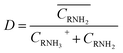 | (1) |
| |
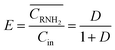 | (2) |
where

represents the total concentration of aniline in the organic phase at equilibrium,
CRNH2 represents the overall concentration in the aqueous phase at equilibrium, including the dissociated aniline, and
Cin represents the initial aniline concentration in the aqueous phase.
Results and discussion
Aniline has a Lewis base group –NH2, which exhibits Lewis base characteristics. The dissociation equilibrium exists in the aqueous solutions as follows:| |
 | (3) |
The dissociation constant (Ka) can be written as follows:
| |
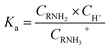 | (4) |
Physical extraction
Effect of initial concentration of aniline. The effects of initial concentration of aniline on the extraction equilibrium of aniline in physical extraction are shown in Fig. 1. The distribution coefficient of aniline follows the sequence BA > MTBE > n-decanol > n-heptane. As is well known, the polarity of the solvent follows the sequence BA > MTBE > n-decanol > n-heptane. According to the “like dissolves like” principle, because BA, MTBE, n-decanol and aniline are polar molecules, the stronger the solvent polarity is, the higher the concentration of aniline in the organic phase is. Because there are hydrogen atoms and a lone electron pair of nitrogen atom existing in the –NH2 group, BA, MTBE and n-decanol can form hydrogen bonds with aniline. Furthermore, n-heptane is considered to be a typical inert solvent that nearly has no effect on aniline removal. Moreover, the distribution coefficients of all extractants except for n-heptane increase with the increase of initial aniline concentration. Thus, BA may be the best extractant in physical extraction.
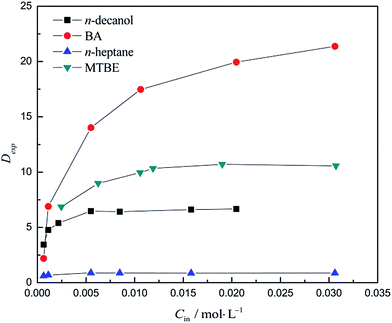 |
| | Fig. 1 Effect of initial aniline concentration (Cin) on extraction equilibrium of aniline in physical extraction at 298.2 K. | |
Effect of initial pH value. As shown in Fig. 2, the distribution coefficients for all four extractants increase with increasing of the initial pH value. Because the pH value plays a vital role in the existing form of aniline in the aqueous phase, the higher the pH value is, the larger the D value is. When the equilibrium pH value in the aqueous solution is smaller than the pKa (4.60) of aniline,25 RNH3+ dominates the existing form of aniline, which undermines the physical extraction process; when the equilibrium pH value in the aqueous solution is larger than the pKa (4.60) of aniline, RNH2 dominates the existing form of aniline, which benefits the physical extraction process. Thus, the pH value in the aqueous solution is usually maintained at 6.0 to 8.0 to keep the aniline in a moderate state. According to Fig. 2, the distribution coefficients follow the sequence: BA > MTBE > n-decanol > n-heptane. As the n-heptane molecule is nonpolar, it prefers to combine with nonpolar molecules according to the “like dissolves like” principle, thus the distribution coefficient of n-heptane is approximately 0.
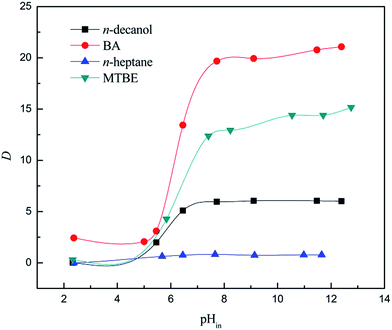 |
| | Fig. 2 Effect of initial pH value on extraction equilibrium of aniline at 298.2 K; Cin = 0.01 mol L−1. | |
Effect of temperature. Temperature generally has an influence on the extraction equilibrium. When the extraction process is exothermic, the distribution coefficient decreases with the increase of temperature. Otherwise, the distribution coefficient increases with the increase of temperature. As shown in Fig. 3, the extraction rate and distribution coefficient of BA and n-decanol have little change with increasing temperature, which indicates that they are not sensitive to temperature changes. Because the extraction process with MTBE is exothermic,4 the extraction rate and distribution coefficient decrease with the increase of temperature, which agrees well with the experimental data. For n-heptane, the extraction rate and distribution coefficient slightly increase with increasing temperature, which indicates that the process is endothermic.
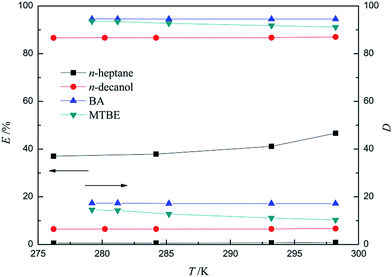 |
| | Fig. 3 Effect of temperature on extraction equilibrium of aniline, Cin = 0.01 mol L−1. | |
Reactive extraction
TBP, N503, N235, D2EHPA and P507 were used as extractants in the range of 0.1–0.7 mol L−1 with BA, kerosene, and n-heptane as diluents. Most extractants need to be diluted owing to their high viscosity. A good diluent should not only improve the extraction operation process but also increase the extraction capacity.
Effect of initial concentration of neutral and basic extractants. As shown in Fig. 4, because the BA molecule is polar, it prefers to combine with polar molecules according to the “like dissolves like” principle, the distribution coefficient of aniline with TBP in BA is much larger than that in kerosene and n-heptane. Thus, BA is considered to play a leading role in the aniline removal process. However, the values of D decrease with increasing of the concentration of N235 and N503. These two typical Lewis basic extractants may diminish the organic phase by decreasing the concentration of BA. However, the general rule is that the extraction capacity depends on three factors: physical extraction of diluent, dissolving capacity of complexes and apparent basicity of extractant.21 It is apparent that N235 and N503 exhibit their basicities. Because N235 has stronger basicity than N503, the distribution coefficient of N235 is smaller than that of N503 in BA. Thus, it can be concluded that N235 and N503 exhibit weak selective extraction ability for aniline.
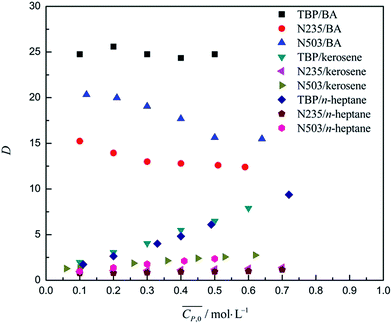 |
| | Fig. 4 Effect of initial concentration  of TBP, N235, and N503 in three diluents on extraction equilibrium of aniline in reactive extraction at 298.2 K, Cin = 0.01 mol L−1. of TBP, N235, and N503 in three diluents on extraction equilibrium of aniline in reactive extraction at 298.2 K, Cin = 0.01 mol L−1. | |
Actually, because TBP is a neutral phosphorus-based extractant, which has a certain extraction capability for the basic solute aniline, the distribution coefficient of aniline increases with increasing concentration of TBP in a certain range. It was also found that the difference when using kerosene and n-heptane as diluents was negligible, due to their very weak polarity. Therefore, the basicity of N235 and N503 dominate the extraction capacity of aniline in nonpolar solvent. Thus, the distribution coefficient with N235 as extractant is lower than that with N503 in kerosene and n-heptane owing to the stronger basicity of N235.
Effect of initial concentration of acidic phosphorus-containing extractants. The effects of the initial concentration of D2EHPA and P507 in the three diluents on the extraction distribution of aniline are presented in Fig. 5. BA is considered to be the best diluent for D2EHPA, which shows much larger D values than that of kerosene and n-heptane. Because a higher concentration of the extractant can favorably promote the shift of reaction equilibrium to increase the product concentration, the distribution coefficient increases with increasing concentration of D2EHPA and P507, which leads to a more satisfying extraction rate but worse loading of extractants, as shown in Fig. 6. However, because the concentration of aniline molecules in the aqueous phase decreases with decreasing equilibrium pH value according to eqn (3), the distribution coefficient and extraction rate decrease with decreasing equilibrium pH value.
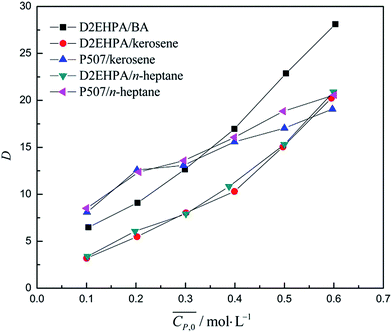 |
| | Fig. 5 Effect of initial concentration  of D2EHPA and P507 in three diluents on the extraction distribution of aniline in reactive extraction at 298.2 K, Cin = 0.01 mol L−1. of D2EHPA and P507 in three diluents on the extraction distribution of aniline in reactive extraction at 298.2 K, Cin = 0.01 mol L−1. | |
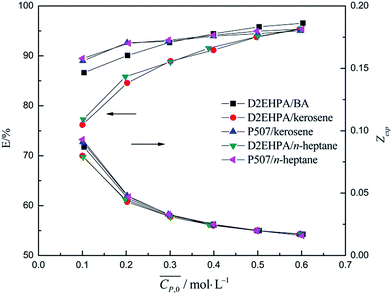 |
| | Fig. 6 Effect of initial concentration  of D2EHPA and P507 in three diluents on the extraction rate (E) and loading of aniline (Zexp) in reactive extraction at 298.2 K, Cin = 0.01 mol L−1. of D2EHPA and P507 in three diluents on the extraction rate (E) and loading of aniline (Zexp) in reactive extraction at 298.2 K, Cin = 0.01 mol L−1. | |
Equilibrium model for D2EHPA and P507. To simplify the model, the mechanism of reactive extraction for D2EHPA and P507 can be written as follows:| |
 | (5) |
where  represents the complexing extractants in the organic phase; q is the stoichiometric ratio of the aniline to extractant.
The equilibrium constant KE can be defined as follows:
| |
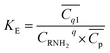 | (6) |
where

represents the equilibrium concentration of

in the organic phase.
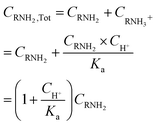
The total concentration of RNH2 in the aqueous phase can be expressed in terms of undissociated RNH2 concentration  , Ka, and H+ concentration
| |
 | (7) |
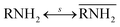
The physical extraction can be expressed as follows:
| |
 | (8) |
| |
 | (9) |
where

represents the concentration of aniline extracted by physical extraction in the organic phase;
s is the physical extraction constant of the aniline for the pure diluent obtained from the distribution coefficient with the same initial concentration of aniline.
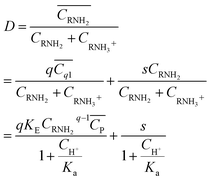
The distribution coefficient can be derived from eqn (4), (7) and (9):
| |
 | (10) |
The material balance of extractants in the organic phase can be written as follows:
| |
 | (11) |
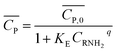
The concentration of the extractant in the organic phase at equilibrium can be derived by eqn (6) and (11):
| |
 | (12) |
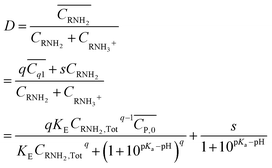
Thus, the distribution coefficient can be deduced from eqn (10) and (12):
| |
 | (13) |
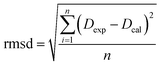
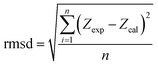
The Error function can be defined as root-mean-square deviation (rmsd):
| |
 | (14) |
The stoichiometric ratio of aniline to acidic extractants q, physical extraction constant of the aniline s, correlation coefficient R2 and rmsd in different diluents are determined by fitting the experimental data for D with eqn (13) and (14) using a least squares regression method. For all the extraction systems used in this study, the values of q range from 0 to 1, which indicates that more than one form of the aniline to acidic extractant complex exist in the organic phase. Besides, all the values of s are 0 except for D2EHPA in BA, which indicates that the physical extraction can be totally ignored for extractants in kerosene and n-heptane. In other words, kerosene and n-heptane are inert diluents and barely have extraction capacity for aniline. Thus, the reactive extraction plays the leading role in aniline removal with D2EHPA and P507 in kerosene and n-heptane. However, the value of s for D2EHPA in BA reveals that the physical extraction should be considered in BA and other polar solvents (Table 1).
Table 1 Value of stoichiometric ratio of aniline to D2EHPA and P507 q, physical extraction constant s, correlation coefficient R2, and rmsd in different diluents at 298.2 K
| Extractant |
Diluent |
q |
s |
R2 |
rmsd |
| D2EHPA |
BA |
0.5943 |
23.7237 |
0.9997 |
0.1396 |
| Kerosene |
0.4570 |
0 |
0.9984 |
0.2277 |
| n-Heptane |
0.4837 |
0 |
0.9964 |
0.3574 |
| P507 |
Kerosene |
0.6049 |
0 |
0.9934 |
0.2861 |
| n-Heptane |
0.5853 |
0 |
0.9996 |
0.0854 |
The comparison of experimental and calculated data for the distribution coefficient of aniline in reactive extraction are shown in Fig. 7. The calculated values of D agree with the experimental values of D very well, which indicates that the model is valid in representing the equilibrium behavior of aniline with the selected extractants in reactive extraction.
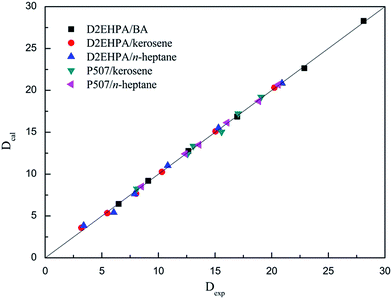 |
| | Fig. 7 Comparison of experimental and calculated data for distribution coefficient of aniline in reactive extraction. | |
For D2EHPA and P507, because all the values of q are smaller than 1, the reactive extraction productions are considered as the formation of 1:1, 2:1 and 1:2 aniline to acidic extractant complexes, where the 2:1 complex results from the dimer of the aniline in the organic phase, whereas the 1:2 complex results from ion-pair or hydrogen-bond association between the 1:1 complex and acidic extractants. The complexes are formed by reactions as follows:
| |
 | (15) |
| |
 | (16) |
| |
 | (17) |
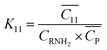
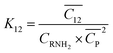
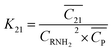
The equilibrium constants (K11, K12 and K21) can be given as follows:
| |
 | (18) |
| |
 | (19) |
| |
 | (20) |
where

,

and

represent the concentrations of the formed 1
:
1, 1
:
2 and 2
:
1 aniline to acidic extractant complexes, respectively.
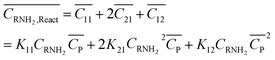
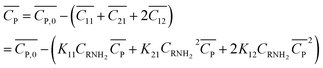
The concentrations of aniline by reactive extraction and free extractants in the organic phase can be calculated by eqn (21) and (22), respectively,
| |
 | (21) |
| |
 | (22) |
where

represents the total concentration of aniline extracted by reacti-ve extraction in the organic phase.
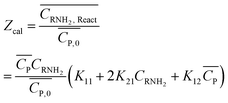
Then, the calculated loading of D2EHPA and P507, Zcal, can be expressed as follows:
| |
 | (23) |
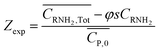
The experimental loading, Zexp, can be written as follows:
| |
 | (24) |
where
φ is the volume fraction of diluent in the organic phase.
The error function also can be defined as follows:
| |
 | (25) |
Then, the values of K11, K12 and K21 also can be calculated and are listed in Table 2. As all the values of K21 equal 0, it is obvious that the 2:1 complex resulting from the dimer of the aniline in the organic phase can be neglected. It is considered that the dominating formation of D2EHPA is the dimer form in inert solvent with D2EHPA as extractant, and the solute would be extracted by reacting with the dimer. Thus, the values of K11 should be equal to 0 in kerosene and n-heptane with D2EHPA as extractant, which agrees well with the experiment results. It should also be noticed that the values of K11 and K12 are not zero with BA as diluent, which indicates that both the monomer and dimer forms of D2EHPA exist in the organic phase with BA as diluent.
Table 2 Value of aniline molecules to D2EHPA and P507 equilibrium constants (K11, K12 and K21), correlation coefficient (R2) and rmsd in different diluents at 298.2 K
| Extractant |
Diluent |
K11 |
K12 |
K21 |
R2 |
rmsd |
| D2EHPA |
BA |
777.97 |
5677.55 |
0 |
0.9991 |
0.0006 |
| Kerosene |
0 |
9863.14 |
0 |
0.9782 |
0.0068 |
| n-Heptane |
0 |
10903.25 |
0 |
0.9492 |
0.0065 |
| P507 |
Kerosene |
79.57 |
985.35 |
0 |
0.9944 |
0.0020 |
| n-Heptane |
76.01 |
1107.24 |
0 |
0.9982 |
0.0011 |
For P507 in both kerosene and n-heptane, it is considered that there are two major formations of 1:1 and 1:2 aniline to P507 complexes existing in the organic phase, which indicates that both the monomer and dimer forms of P507 exist in the organic phase with kerosene and n-heptane as diluents. As shown in Fig. 8, the calculated values of Z agree with the experimental values of Z and most points are within a deviation of ±10%, which indicates that the model is valid in representing the equilibrium behavior of aniline with the selected acidic extractants.
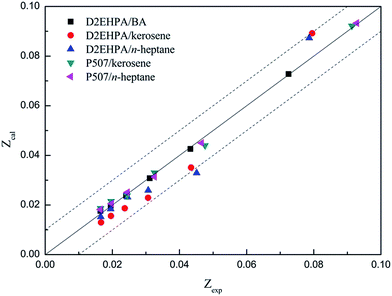 |
| | Fig. 8 Comparison of experimental and calculated data for loading of D2EHPA and P507. | |
Effect of temperature. As shown in Fig. 9, the distribution coefficient has little change with increasing temperature with P507, TBP, N235 and N503 as the extractants. However, the distribution coefficient remarkably decreases with increasing temperature for D2EHPA.
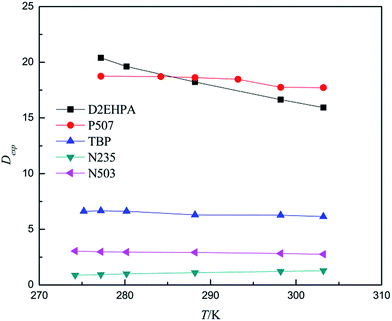 |
| | Fig. 9 Effect of temperature on extraction distribution of aniline with various extractants in kerosene;  = 0.6 mol L−1 and Cin = 0.01 mol L−1. = 0.6 mol L−1 and Cin = 0.01 mol L−1. | |
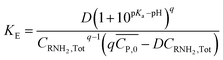
As q = 0.4570 and s = 0 for D2EHPA in kerosene, KE of aniline with D2EHPA can be written using eqn (13) as follows:
| |
 | (26) |
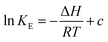
The relationship between the extraction equilibrium constant KE and the enthalpy change of the extraction process ΔH can be expressed as
| |
 | (27) |
where
R is the molar gas constant (8.314 J mol
−1 K
−1),
T is the absolute temperature, and
c is a constant.
Fig. 10 shows the linear change of the logarithmic distribution coefficient with inverse temperature. The enthalpy change of the extraction process and correlation coefficient (
R2) with D2EHPA in kerosene are deduced to be −4.183 kJ mol
−1 and 0.9332, respectively, which means that the extraction process with D2EHPA in kerosene is exothermic. It is concluded that temperature variation has greater effect on the extraction process with D2EHPA than P507. In addition, P507 can obviously be regarded as a suitable extractant in aniline wastewater treatment in a large temperature range.
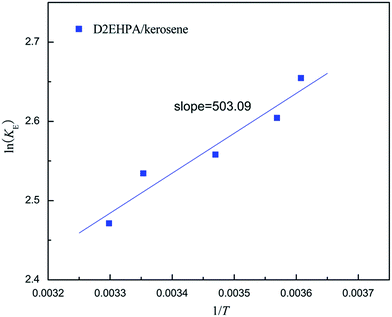 |
| | Fig. 10 Dependence of lnKE on 1/T for aniline extraction with D2EHPA in kerosene; Cin = 0.01 mol L−1 and CP,0 = 0.60 mol L−1. | |
Conclusions
In this study, physical and reactive solvent extraction equilibria and complex structure investigation for aniline with several extractants and diluents were conducted at 298.2 ± 0.5 K. In physical extraction, the distribution coefficient of aniline follows the sequence BA > MTBE > n-decanol > n-heptane. The equilibrium temperature almost has no effect on the distribution coefficient except for MTBE. In reactive extraction, TBP, N503 and N235 have very weak interaction with aniline owing to their neutral and basic characteristics. For acidic phosphorus-containing extractants, the distribution coefficient increases with increasing concentration of D2EHPA and P507, which leads to a more satisfying extraction rate but worse loading of extractants. When the mass action law and suitable assumptions were used, models for extraction equilibrium were evaluated and the apparent extraction equilibrium constants (K11, K12, and K21) were determined by fitting the experimental data using a least-squares regression method. The 1:1 and 1:2 aniline to D2EHPA complexes with BA as diluent, 1:2 aniline to D2EHPA complexes with kerosene and n-heptane as diluents and 1:1 and 1:2 aniline to P507 complexes with kerosene and n-heptane as diluents could be formed. Using the equilibrium model parameters and apparent extraction equilibrium constants, the distribution coefficients and loadings of D2EHPA and P507 agree well with the experimental data. The reactive extraction process with D2EHPA in kerosene is exothermic, and the enthalpy change is −4.183 kJ mol−1.
Acknowledgements
This study was supported by the National Natural Science Foundation (21076011, 21276012 and 21576010), National Science and Technology Major Project (2013ZX09201006001, 2013ZX09202005 and 2014ZX09201001-006-003), Fundamental Research Funds for the Central Universities (BUCTRC-201515), and BUCT Fund for Disciplines Construction and Development (XK1508). The authors gratefully acknowledge these grants.
References
- G. Pieraccinib, G. Monetia and P. Dolaraa, Chemosphere, 2001, 43, 355–361 CrossRef.
- V. Santsos, J. Diogo, M. J. A. Pacheco, L. Ciríaco, A. Morão and A. Lopes, Chemosphere, 2010, 79, 637–645 CrossRef PubMed.
- S. Laha and R. G. Luthy, Environ. Sci. Technol., 1990, 24, 363–373 CrossRef CAS.
- G. Ersöz and S. Atalay, J. Environ. Manage., 2012, 113, 244–250 CrossRef PubMed.
- X. Wu, Z. Lei, Q. Li, J. Zhu and B. Chen, Ind. Eng. Chem. Res., 2010, 49, 2581–2588 CrossRef CAS.
- C. Li, Biomed. Environ. Sci., 2010, 23, 208–212 CrossRef CAS PubMed.
- S. Suresh, V. C. Srivastava and I. M. Mishrab, Environ. Technol., 2012, 33, 773–781 CrossRef CAS PubMed.
- F. An, X. Feng and B. Gao, Chem. Eng. J., 2009, 151, 183–187 CrossRef CAS.
- G. Xiao and L. Long, Appl. Surf. Sci., 2012, 258, 6465–6471 CrossRef CAS.
- A. A. Gürten, S. Uçan, M. A. Özler and A. Ayar, J. Hazard. Mater., 2005, 120, 81–87 CrossRef PubMed.
- L. Wang, S. Barrington and J. W. Kim, J. Environ. Manage., 2007, 83, 191–197 CrossRef CAS PubMed.
- R. Devulapalli and F. Jones, J. Hazard. Mater., 1999, 70, 157–170 CrossRef CAS PubMed.
- Z. Ren, X. Zhu, W. Liu, W. Sun, W. Zhang and J. Liu, Chin. J. Chem. Eng., 2014, 22, 1187–1192 CrossRef CAS.
- B. Tanhaei, M. P. Chenar and N. Saghatoleslami, Desalin. Water Treat., 2014, 52, 5748–5756 CrossRef CAS.
- Y. Chu, L. Li and M. Bai, Water Sci. Technol., 2011, 63, 2583–2589 CrossRef CAS.
- H. Tang, J. Li, Y. Bie, L. Zhu and J. Zou, J. Hazard. Mater., 2010, 175, 977–984 CrossRef CAS PubMed.
- C. C. Su, M. Pukdee-Asa, C. Ratanatamskul and M. C. Lu, Sep. Purif. Technol., 2011, 83, 100–105 CrossRef.
- X. Jing, S. Chen and G. Li, J. Ind. Eng. Chem., 2008, 25, 248–250 Search PubMed , in Chinese.
- J. A. Tamada, A. S. Kertes and C. J. King, Ind. Eng. Chem. Res., 1990, 29, 1319–1326 CrossRef CAS.
- W. Qin, D. Li and Y. Dai, J. Chem. Eng. Data, 2003, 48, 1606–1609 CrossRef CAS.
- L. Zhang, F. Yu, Z. Chang, Y. Guo and D. Li, J. Chem. Eng. Data, 2012, 57, 577–581 CrossRef CAS.
- H. Uslu, D. Datta and S. Kumar, J. Chem. Eng. Data, 2014, 59, 2623–2629 CrossRef CAS.
- X. Ma and M. Wu, Jiangsu Chem. Ind., 2001, 1, 42–44 Search PubMed , in Chinese.
- J. Lu, G. Guan and H. Yao, Jiangsu Chem. Ind., 2004, 32, 39–41 CAS , in Chinese.
- J. A. Dean, Lange's Handbook of Chemistry 15th Edition, McGraw-Hill, New York, 1998, sect. 8 Search PubMed.
|
| This journal is © The Royal Society of Chemistry 2016 |
Click here to see how this site uses Cookies. View our privacy policy here. 


 represents the total concentration of aniline in the organic phase at equilibrium, CRNH2 represents the overall concentration in the aqueous phase at equilibrium, including the dissociated aniline, and Cin represents the initial aniline concentration in the aqueous phase.


 of TBP, N235, and N503 in three diluents on extraction equilibrium of aniline in reactive extraction at 298.2 K, Cin = 0.01 mol L−1.
 of D2EHPA and P507 in three diluents on the extraction distribution of aniline in reactive extraction at 298.2 K, Cin = 0.01 mol L−1.
 of D2EHPA and P507 in three diluents on the extraction rate (E) and loading of aniline (Zexp) in reactive extraction at 298.2 K, Cin = 0.01 mol L−1.
 represents the complexing extractants in the organic phase; q is the stoichiometric ratio of the aniline to extractant.
 represents the equilibrium concentration of
  in the organic phase.
 , Ka, and H+ concentration


 represents the concentration of aniline extracted by physical extraction in the organic phase; s is the physical extraction constant of the aniline for the pure diluent obtained from the distribution coefficient with the same initial concentration of aniline.


 ,
,  and
and  represent the concentrations of the formed 1

 represents the total concentration of aniline extracted by reacti-ve extraction in the organic phase.


 = 0.6 mol L−1 and Cin = 0.01 mol L−1.

