
DOI:
10.1039/C5RA20370H
(Paper)
RSC Adv., 2016,
6, 13686-13697
Improved bone formation and ingrowth for additively manufactured porous Ti6Al4V bone implants with strontium laden nanotube array coating†
Received
1st October 2015
, Accepted 18th January 2016
First published on 22nd January 2016
Abstract
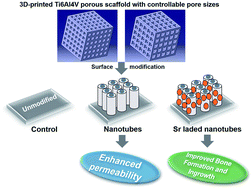
A Ti implant with an interconnected porous structure may be a better choice for bone defect restoration; an important issue is to improve its bone formation and ingrowth abilities. In this study, a porous Ti6Al4V implant is fabricated via electron beam melting (EBM) technology with a precisely controlled pore shape and size as well as good interconnectivity. Anodization treatment and further Sr incorporation give rise to an even distribution of the titania nanotube array (NT) and a strontium-laden NT (NTSr) coating on the outer and inner surface of the porous implant, which significantly enhance its hydrophilicity. The NT and NTSr coatings, especially NTSr, significantly improve the in vitro infiltration and osteogenic differentiation of bone marrow mesenchymal stem cells (BMMSCs) as well as the in vivo bone formation and ingrowth abilities of the porous implant. The data also show that the pore size differentially influences the biological effect of the porous implant, especially after surface modification. The smaller pores (600 μm) favor in vitro BMMSC proliferation and osteogenic differentiation and in vivo new bone mass formation, while the larger pores (800 μm) favor in vitro cell ingrowth and in vivo bone ingrowth. Our study suggests that the NTSr coating is very promising for porous implant applications to improve their biological performance and also uncover the differential effect of the pore size on the biological effect of the porous implant.
1. Introduction
Bone defects beyond the body’s regenerative capacity are very common in clinical practice, and great efforts have been made towards their reconstruction with biomaterials. As a representative, titanium (Ti) and its alloys are widely used in clinic for bone defect reconstruction thanks to their good biocompatibility, strength and corrosion resistance.1 Currently, nearly all Ti based bone implants are composed of a solid structure such as an artificial joint and an internal fixation plate, which suffer problems of stress shielding2 and defective bone–implant bonding that may result in implant failure. Regarding these issues, a porous Ti implant with good interconnectivity may be a good choice. On one hand, porous Ti possesses a lower elastic modulus and thus a better mechanical compatibility to bone. On the other hand, possible bone growth into the porous structure is anticipated to form a hybrid bone/Ti structure that should have more rigid bone–implant bonding than that of the solid implant surface. An important issue for the future clinical application of porous Ti implants is to improve their bone formation and ingrowth abilities.
To achieve bone ingrowth to a porous structure, good interconnectivity of the pores is essential and the pore shape, size, strut size and porosity must be well controlled and optimized.3,4 The recent and rapid advances in additive manufacturing (AM) techniques, especially those available for Ti and its alloys, allow us to control the above-mentioned microstructural parameters as well as customize the gross shape of the porous implants for specific applications.5 Electron beam melting (EBM) technology, as a representative AM technique, has been demonstrated to generate successfully individualized orthopedic implants for knee and hip replacement, showing high clinical significance.6
Naturally, the surface of Ti or its alloys is covered by a spontaneously formed thin oxide film, which endows the Ti implant with good biocompatibility but has poor bioactivity. Surface modification, including micro/nano-texturing, has been extensively conducted on solid Ti implants to make the bio-inert Ti surface bioactive. Many papers from others and our group have shown that the titania nanotube array (NT) is a powerful modulator of cell shape, adhesion, proliferation and differentiation.7–11 Specifically, inspired by the fact that the natural bone tissue has a highly organized hierarchical structure with functional building blocks from the micro- to nanoscale, hierarchical micro/nano-textured topographies combining both nanotubular and micropitted topography have been developed that exhibit more pronounced effects on osteoblast maturation as well as MSC osteogenic differentiation.9,11 Yet, the availability of a topographical modification that can form an evenly coated layer on the inner surface of the macroporous Ti implant as well as its biological effect are quite unclear. It is noted that NT is superhydrophilic,12 which, once evenly formed on the inner surface of porous Ti, may facilitate cell and bone ingrowth; this is supported by the fact that a commercial hydrophilic dental implant SLActive® (Straumann, Switzerland) can induce faster and better osseointegration.13,14
Another important strategy to enhance the bone-bonding capability of Ti implants is drug loading and delivery, especially of trace elements such as strontium (Sr)15 as well as some others,16 for their low effective dose and easy loading. Sr can increase osteoblast replication, differentiation and bone matrix mineralization, probably via a calcium sensing receptor (CaR) dependent mechanism,17–20 and can direct mesenchymal stem cell (MSC) commitment to the bone lineage but repress their commitment to other lineages.21–25 On the other hand, Sr can inhibit bone resorption by reducing the osteoclast differentiation and resorbing activity.17,19,26 Accordingly, Sr has already been widely incorporated into biomaterials to enhance bone formation and regeneration.20,27–30 Our lab has also developed Sr-incorporated NT (NTSr) coatings on Ti implants, which show an improved effect on the proliferation, spread and osteogenic differentiation of MSCs.15
In the present study, porous Ti6Al4V bone implants with controllable pore sizes and good interconnectivity were fabricated via EBM, and were further subjected to nanotopographical modification as well as Sr incorporation for potentially enhanced bone formation and ingrowth. The in vitro responses of bone marrow MSCs (BMMSCs) to the porous implants and their in vivo bone formation and ingrowth were systematically studied.
2. Materials and methods
2.1. Design and fabrication of porous Ti6Al4V bone implants and their mechanical strength
The porous Ti6Al4V bone implants were fabricated by an EBM system (Arcam A2, Arcam AB, Sweden) using medical-grade Ti6Al4V powder with an average diameter of 30 μm. Briefly, porous structures of cubic gross shape (6.4 mm in length) but with different macrostructures, a strut size of 400 μm and pore size of 600 or 800 μm, were designed with commercial CAD software (Catia V5R20, Dassault Systemes, France), as shown in Fig. 1a and b. For in vivo bone implantation and characterization, cylinder-shaped implants (Ø = 5 mm, height = 5 mm) were built. The CAD files were imported into the EBM machine to fabricate the porous implants, denoted as C600 and C800, respectively. After fabrication, the unsintered Ti6Al4V powders in the implants were removed by thorough air blasting (Arcam Powder Recovery System, Arcam AB, Sweden). The geometric parameters of the as-fabricated implants were obtained by Micro CT scanning (Siemens Inveon Micro-CT, Siemens, Germany), and were compared to the designed parameters to reveal manufacturing errors. The mechanical strength of the porous Ti6Al4V implants was evaluated through compression testing (Instron 5967, Instron, USA). The compression rate was set to be 1.5 mm min−1, and a real-time compressive load versus displacement was continuously monitored.
 |
| | Fig. 1 (a and b) Porous structures with a cubic gross shape (6.4 mm in length) but different macrostructures, a strut size of 400 μm and pore size of 600 or 800 μm, designed with commercial CAD software. (c) Schematics showing the three-layered sample designed for the cell distribution assessment. The left side shows the 3D structure of a single layer. The white dotted wireframe marks the region for microscopic observation. The right side displays the lateral view of a piled-up test unit, while the top layer is marked as layer 1, the middle layer is marked as layer 2, and the bottom layer is marked as layer 3. | |
2.2. Surface modification and characterization of porous Ti6Al4V bone implants
After sequential ultrasonic cleaning with acetone, ethanol and deionized water, C600 and C800 were modified according to the previously described procedure.9 Anodization was conducted in an electrolyte containing 0.5 wt% hydrofluoric acid (HF) with a DC power supply and a platinum cathode at 20 V for 2 hours. The anodized C600 and C800, denoted as NT600 and NT800, were rinsed ultrasonically with deionized water and dried in nitrogen gas. Afterwards, Sr was loaded onto the NT samples according to the previously reported procedure.15 Briefly, NT600 and NT800 were placed in 40 ml of 0.02 M Sr(OH)2 solution in a 60 ml Teflon-lined autoclave and heated at 200 °C for 1 hour to obtain the Sr loaded samples, denoted as NTSr600 and NTSr800, respectively, which were ultrasonically rinsed with distilled water and dried in nitrogen gas.
The surface micromorphological and elemental features of the samples were characterized by field-emission scanning electron microscopy (FE-SEM, Scanning Electron Microscope S-4800, Hitachi, Japan) and energy dispersive spectroscopy (EDS, TEAM™ EDS Analysis Systems, EDAX, USA). To investigate the wettability of the samples by the sessile-drop method, deionized water (≈30 μl) was dropped onto the samples and this process was recorded by a contact angle measurement instrument (DSA25, KRUSS, Germany). The Sr release of NTSr600 and NTSr800 was tested at different time intervals by inductively-coupled plasma atomic emission spectrometry (ICP-AES, IRIS Advantage ER/S, Thermo Jarrell, USA). Succinctly, NTSr600 and NTSr800 were immersed in 6 ml of phosphate buffered saline (PBS) with the medium changed every day. The replaced medium collected at day 1, 4, 7, 14, 20 and 30 was sent to ICP-AES test to acquire the Sr release time profile.
2.3. In vitro biological assessment
2.3.1. Primary cell culture. BMMSCs were obtained from one-week-old Sprague Dawley rats according to a previously described procedure.11 The cells were cultured in a complete medium (α-MEM medium supplemental with 10% fetal bovine serum, 100 U ml−1 penicillin and 100 μg ml−1 streptomycin) in a humidified incubator at 37 °C with 5% CO2. The medium was changed every 2 days and the cells at passages 2–4 were used in the following experiments. BMMSCs were seeded on samples placed in 48 well plates at a density of 4 × 10⁴ cells per well in 500 μl culture medium.
2.3.2. Cell distribution. To view clearly the distribution of adherent cells in the porous implants, green fluorescent protein (GFP) labeled Sprague Dawley rat MSCs (RASXM-00101, Cyagen, USA) were seeded onto specifically designed three-layered samples placed in 48 well plates, as shown in the left part of Fig. 1c. The GFP-labeled cells were seeded and cultured for 1 day. Then the attached cells on the central region of each layer were pictured with a fluorescence microscope (CK40, Olympus, Japan) and quantified using the ImageJ software.
2.3.3. Cell proliferation. The cell proliferation assay was conducted at day 1, 4 and 7 using the CCK-8 assay (7Sea-Cell Counting kit, 7Sea Biotech, China). Briefly, at each time point, the samples were rinsed with PBS and transferred to new wells. According to the instruction, 400 μl culture medium and 40 μl CCK-8 were added to the wells and then incubated at 37 °C for 2 hours. After that, 100 μl of the reaction solution was transferred into a new 96-well plate to measure the absorbance at 450 nm by a microplate reader (Epoch, BioTek, USA).To inspect clearly the growth of the cells on the porous implants, the GFP-labeled MSCs were seeded on the samples and tracked constantly for 24 days using a fluorescence microscope (CK40, Olympus, Japan).
2.3.4. Cell morphology. The cell morphology on the porous implants was examined by FE-SEM. After 24 hours incubation, the porous implants with attached cells were rinsed with PBS, followed by fixation in 2.5% w/v glutaraldehyde at 4 °C overnight. Then the samples were dehydrated in a graded series of ethanol (30, 50, 70, 80, 90, 95 and 2 × 100 vol% for 15 min each), freeze-dried, sputter-coated with gold and finally observed by FE-SEM.
2.3.5. Alkaline phosphatase (ALP) activity. After 7 days of culturing on the porous implants, the ALP activity of BMMSCs was determined by a colorimetric assay using an ALP reagent containing p-nitrophenyl phosphate (p-NPP) as the substrate (A059 AKP Detection kit, Nanjing Jiancheng, China). The absorbance of formed p-nitrophenol was measured at 520 nm. The intracellular total protein content was determined using the MicroBCA protein assay kit (Pierce® BCA Protein Assay Kit, Thermo Scientific, USA) and the ALP activity was normalized to it.
2.3.6. Quantitative reverse transcription polymerase chain reaction (qRT-PCR). The osteogenic gene expression levels of BMMSCs on the porous implants were assessed using qRT-PCR according to a previously described procedure.15 The cells were incubated for 4 days in complete medium. After incubation, RNA was extracted using RNAiso (Takara) and reverse transcribed into complementary DNA (cDNA) with a PrimeScript RT reagent Kit (Takara). The qRT-PCR analysis was performed on the Bio-Rad CFX Manager 2.1 using SYBR Premix Ex Taq II (Takara). The primers are listed in Table S1.† The expression levels of target genes were normalized to that of the housekeeping gene GAPDH.
2.4. In vivo bone implantation
2.4.1. Surgical procedure. Male New Zealand white rabbits with an average body weight of 2.5–3.0 kg were chosen. The porous implants were inserted into the lateral femoral epicondyle of the hind legs randomly (n = 6 for each implant type). The rabbits were anesthetized via auricular intravenous injection of phenobarbital sodium. The hairs at the surgical region were shaved and the skin was sterilized. An incision of about 2 cm long was made and the subcutaneous tissue was dissected to expose the bone surface. A cylindrical hole with the same size to the cylinder-shaped implants was drilled under water cooling. The implants were press fitted, and the wound was closed with sutures. To prevent infection, 40
000 U of penicillin per day was given via intramuscular injection for 3 days. After implantation for 4 and 12 weeks, the rabbits were sacrificed by intravenous injection of overdose anesthesia. All experimental procedures were approved by the ethics committee of the Fourth Military Medical University.
2.4.2. Micro CT analysis. After sacrifice, the femurs were retrieved and immediately fixed in 80% ethanol for 48 hours. The overall bone formation was measured by Micro CT scanning (Y. Cheetah, YXLON international GmbH, Germany) with an X-ray source voltage of 90 kV, a beam current of 50 μA and a scanning resolution of about 17 μm. The 450 projections were reconstructed using a modified parallel Feldkamp algorithm, and segmented into 12 bit X-ray attenuation coefficient values that are related to the density of the material being probed. The area of the implant (a cylinder with Ø = 5 mm, height = 5 mm) was selected as the region of interest (ROI). Data of bone and materials were calculated using the threshold of 400 for bone and 1200 for implant via a VGStudio MAX software with beam hardening correction which can decrease metal artifacts.
2.4.3. Histological analysis. After sacrifice, the samples were dehydrated with a graded series of ethanol from 80% to 100% and finally embedded in methyl methacrylate (MMA). The embedded specimens were sectioned into 150 μm thick using a saw microtome (SP1600, Leica, Germany), which were subsequently ground and polished to a final thickness of about 40 μm. Slices were then stained with 1.2% trinitrophenol and 1% acid fuchsin (van Gieson staining) and observed under a light microscope (M205 FA, Leica, Germany).
2.5. Statistical analysis
The data were collected from three separate experiments and expressed as mean ± standard deviation (SD). One way ANOVA and Student–Newman–Keuls post hoc tests were used to determine the level of significance. The p values of less than 0.05 and 0.01 were considered to be significant and highly significant, respectively.
3. Results
3.1. Characterization of porous Ti6Al4V implants
The as-manufactured porous Ti6Al4V implants were scanned with Micro CT and then reconstructed via 3D reconstruction software (VGStudio MAX) to measure the porosity and surface area, which were compared to the designed ones. The porosity of the as-manufactured implants (55.23 ± 2.68% for C600 and 67.32 ± 1.73% for C800) is very close to the designed one of 59.31% for C600 and 68.37% for C800. Nonetheless, the surface areas of the as-manufactured implants (959.68 ± 4.88 mm2 for C600 and 792.77 ± 9.34 mm2 for C800) are a little larger than the designed ones of 893.8 mm2 for C600 and 725.8 mm2 for C800, respectively. It is noted that the sintering of Ti6Al4V powders does not give rise to a smooth surface but a porous one, thus leading to relatively larger surface area.
The compressive stress–strain curves of C600 and C800 are shown in Fig. S1.† Initially the implants are compressed elastically so a linear stress–strain curve is obtained and the Young’s modulus is gauged according to the linear fit. The maximal compressive strength is recorded before collapse of the porous implants. The maximal compressive strength and Young’s modulus of the porous implants are compared to those of human bone and dense Ti,31–33 as shown in Table 1. It is seen that the porous implants retain good compressive strength and simultaneously low modulus, compatible to natural bone.
Table 1 Maximal compressive strength and Young’s modulus of porous Ti6Al4V bone implants compared to human bone and dense Ti
| |
Ultimate compressive strength/MPa |
Young’s modulus/GPa |
| C600 |
205.06 |
4.51 |
| C800 |
114.98 |
3.11 |
| Human cortical bone |
2–180 (ref. 31) |
1–20 (ref. 32) |
| Dense titanium |
— |
110 (ref. 33) |
3.2. Surface modification and characterization of porous Ti6Al4V bone implants
The morphology of the porous implants before and after surface modification is inspected by FE-SEM (Fig. 2a). Since no obvious difference in micromorphology is observed between the 600 μm samples and the 800 μm counterparts, representative images are shown, denoted as C, NT and NTSr. The surface of the porous implants is not absolutely smooth, but rough at the microscale. A relatively evenly distributed and well-ordered nanotube array is formed on the outer and inner surface of porous implants after anodization. The tube diameter is approximately 70 nm and the tube wall is quite thin. After Sr incorporation, the nanotubular structure is well retained but the nanotube wall becomes obviously thicker with precipitation of SrTiO3, as also reported elsewhere.34,35 The surface modification of the porous implants leads to a significant change in the wettability (Fig. 2b). Videos of the water drop laid on the top of the porous implants are provided in the ESI.† The pristine porous implants are hydrophobic, with a water contact angle of about 90° while the anodization and further Sr incorporation makes the porous implants superhydrophilic, where a water drop infiltrates immediately once it contacts the top of the porous implants.
 |
| | Fig. 2 (a) Representative FE-SEM images to show the surface micro and nanostructure of C, NT and NTSr. The insets show 20× magnified FE-SEM pictures. (b) Images of the water drop captured immediately after dropping water on the top of the porous implants. | |
The surface chemistry of the porous implants is analyzed by EDS (Fig. S2† and Table 2). Compared to the pristine porous implants, the modified ones have an increased O content and a decreased Ti content, related to the anodization process. F residuals from the electrolyte are also seen in NT and NTSr. The presence of Sr element, as displayed by EDS, indicates successful Sr incorporation by hydrothermal treatment. The Sr release kinetics were then evaluated (Fig. 3). Generally, NTSr600 releases more Sr than NTSr800. An initial Sr burst release at the first few days followed by a relatively stable Sr release with slight decline during the 30 days observation duration is witnessed for NTSr600 and NTSr800, suggesting a relatively long-lasting Sr delivery.
Table 2 Surface elemental contents of C, NT and NTSr evaluated by EDS
| |
Ti |
O |
Al |
V |
F |
Sr |
| Wt% |
At% |
Wt% |
At% |
Wt% |
At% |
Wt% |
At% |
Wt% |
At% |
wt% |
at% |
| C |
82.49 |
66.01 |
9.25 |
22.16 |
4.00 |
5.68 |
3.06 |
2.30 |
— |
— |
— |
— |
| NT |
73.78 |
52.17 |
14.64 |
30.99 |
5.05 |
6.34 |
2.49 |
1.66 |
2.47 |
4.40 |
— |
— |
| NTSr |
70.79 |
51.22 |
15.88 |
34.41 |
4.17 |
5.35 |
2.60 |
1.77 |
1.41 |
2.57 |
4.08 |
1.61 |
 |
| | Fig. 3 Non-cumulative Sr release curves of NTSr600 and NTSr800 immersed in PBS. | |
3.3. Initial cell adhesion
The initial cell adhesion on the outer and inner surface of the porous implants was visualized by seeding the GFP-labeled BMMSCs on specifically designed samples composed of three separate layers (Fig. 1c). Briefly, Fig. 1c shows the 3D structure of a single layer. Three such layers were piled up to make a test sample, as shown in the right side of Fig. 1c. The layers were marked the first, second and third layers from top to bottom, respectively. After 1 day incubation, the cell numbers on the upper surface of each layer were recorded with an inverted fluorescence microscope (Fig. 4) and the quantified data using ImageJ software are shown in Fig. 5a. For the pristine porous implants (C600 and C800), the cells cannot easily go into the porous structure but mostly locate on the outer surface, as evidenced by the significant decreasing trend in the adherent cell number from the first layer to the third layer. Such a decreasing trend becomes less obvious for the modified samples, especially the Sr laden ones, as verified by the adherent cell numbers, which follow the order of C600 > NT600 > NTSr600 and C800 > NT800 > NTSr800 on the first layer but the reverse order of NTSr600 > NT600 > C600 and NTSr800 > NT800 > C800 on the third layer. The data indicate that the surface modification facilitates cell infiltration into the porous Ti structure. For a comparison between the samples of different porous sizes, C800 has slightly less cells on the first layer but more cells on the third layer than C600, suggesting that C800 facilitates a slightly better cell infiltration compared to C600. A similar trend is observed for NT600 and NT800. Nonetheless, NTSr600 and NTSr800 show a similar cell infiltration ability for a similar cell number on the first layer and the third layer.
 |
| | Fig. 4 Representative fluorescent images of GFP-labeled cells on each layer of samples after culturing for one day. | |
 |
| | Fig. 5 (a) Quantified initial adherent cell numbers on each layer of the specifically designed samples composed of three layers after one day of culture. (b) Cell proliferation measured by the CCK-8 assay after culturing BMMSCs on the samples for 1, 4 and 7 days. * and ** represent p < 0.05 and 0.01 vs. C600; # and ## represent p < 0.05 and 0.01 vs. NT600; $ and $$ represent p < 0.05 and 0.01 vs. NTSr600; % and %% represent p < 0.05 and 0.01 vs. C800; ⁁ and ⁁⁁ represent p < 0.05 and 0.01 vs. NT800. | |
3.4. Cell proliferation
Cell proliferation measured by the CCK-8 assay at 1, 4 and 7 days is shown in Fig. 5b. A time dependent cell growth pattern is observed on all samples. At day 1 the cell proliferation on all samples shows no difference, and a difference is witnessed after 4 days of culture. The surface modification leads to a decrease in cell proliferation with the trend of C600 > NT600 > NTSr600 and C800 > NT800 > NTSr800, even though statistical difference is not always reached. For comparison between samples of different pore sizes, C800, NT800 and NTSr800 have a slightly lower cell proliferation than their C600, NT600 and NTSr600 counterparts, respectively, although statistical difference is not always reached.
Consecutive fluorescent images of GFP-labeled cells during 24 days of culture on all samples are shown in Fig. 6 to display the cell proliferation, which is in accordance with the results of the CCK-8 assay shown in Fig. 5b, following the order of C600 > NT600 > NTSr600 and C800 > NT800 > NTSr800. On porous Ti, with cell proliferation the pores are gradually covered by the cells. The speed and extent of pore covering is related to the pore size as well as surface modification. Generally, pore covering and closure occurs more quickly on C600, NT600 and NTSr600 than the C800, NT800 and NTSr800 counterparts, respectively. Compared to the primitive porous Ti samples (C600 and C800), the modified counterparts (NT600 and NTSr600, NT800 and NTSr800) show delayed pore covering and closure by the cells.
 |
| | Fig. 6 Consecutive fluorescent images of GFP-labeled cells during the 24 days of culture displaying cell proliferation on all samples. The bars indicate 800 μm. | |
3.5. Cell morphology
The cell morphology on the samples shows no obvious relation to the different pore sizes of the porous implants. Accordingly, the representative FE-SEM images of C, NT and NTSr are shown in Fig. 7. The cells on C have a thin, flat and round shape, with a lack of long extensions. On the contrary, the cells on NT and NTSr assume a more elongated shape with abundant lamellipodia. The higher magnification images disclose that there are large amounts of extracellular matrix (ECM) deposited on NT and NTSr with relatively more on NTSr.
 |
| | Fig. 7 Representative FE-SEM images of BMMSCs on C, NT and NTSr after one day of culture. | |
3.6. ALP activity
The ALP activity of BMMSCs incubated for 7 days on the samples is quantified by an ALP reagent kit and normalized to the total protein content of each sample (Fig. 8a). Generally, the ALP activity follows the trend of NTSr600 > NT600 > C600 and NTSr800 > NT800 > C800. NTSr600 generates higher ALP activity than NTSr800, while C600 and NT600 induce similar ALP activity to C800 and NT800, respectively.
 |
| | Fig. 8 (a) The ALP activity of BMMSCs incubated for 7 days on the samples. (b) Expressions of osteogenesis related genes including RUNX2, ALP, OCN and BMP-2 by BMMSCs cultured on the samples for 4 days. The data are expressed by a ΔΔCq method with C600 as the control group whose expression level is set to be 1. * and ** represent p < 0.05 and 0.01 vs. C600; # and ## represent p < 0.05 and 0.01 vs. NT600; $ and $$ represent p < 0.05 and 0.01 vs. NTSr600; % and %% represent p < 0.05 and 0.01 vs. C800. | |
3.7. Osteogenesis related gene expression
The gene expression levels of RUNX2, ALP, OCN and BMP-2 by BMMSCs after 4 days of incubation on the samples are displayed in Fig. 8b. The gene expressions follow the general trends of NTSr600 > NT600 > C600 and NTSr800 > NT800 > C800, though statistical difference is not always reached. For the comparison between the samples of different porous sizes, C600 and NT600 induce similar gene expressions to C800 and NT800, respectively. NTSr600 generates higher expressions of ALP, OCN and BMP-2 than NTSr800.
3.8. Micro CT analysis
At 4 and 12 weeks after bone insertion, the implants were scanned via Micro CT and reconstructed via a commercial 3D reconstruction software, with representative images shown in Fig. 9a. From the images, it can be observed clearly that the NTSr samples generate obviously more bone formation around the implant than C and NT. For quantitative assessment, the data of bone volume vs. the total ROI volume obtained based on the Micro CT scanning are shown in Fig. 9b. At each time point, the newly formed bone volumes follow the order of NTSr600 > NT600 > C600 and NTSr800 > NT800 > C800. For the comparison between the samples of different porous sizes, at 4 weeks, C800, NT800 and NTSr800 induce similar newly formed bone volumes to their respective C600, NT600 and NTSr600 counterparts. At 12 weeks, C800 and NT800 induce similar newly formed bone volumes to C600 and NT600, respectively, while NTSr600 leads to obviously more bone formation than NTSr800.
 |
| | Fig. 9 (a) Representative images of the 3-D reconstructed porous implants at 4 and 12 weeks after bone insertion. The yellow color represents the newly formed bone and the grey color represents the porous implant. (b) Quantitative data of bone volume vs. total ROI volume (%) calculated based on the Micro CT scanning at 4 and 12 weeks after bone insertion. * and ** represent p < 0.05 and 0.01 vs. C600; # and ## represent p < 0.05 and 0.01 vs. NT600; $ and $$ represent p < 0.05 and 0.01 vs. NTSr600; % represents p < 0.05 vs. C800. | |
To reveal the bone ingrowth to the porous implants, the whole ROI is artificially divided into two regions (Fig. 10a). A cylinder that is 1 mm from the periphery of the whole ROI is set to be the inner region, where the regenerated bone volume is acquired by Micro CT scanning. The regenerated bone amount in the inner region divided by that in the whole ROI is used to show the bone ingrowth ability, which is normalized by that of C600. The data obtained at 4 and 12 weeks after bone insertion are shown in Fig. 10b and c. Generally, the newly formed bone volumes follow the orders of NTSr600 > NT600 > C600 and NTSr800 > NT800 > C800. For the comparison between the samples of different porous sizes, C800, NT800 and NTSr800 do better for bone ingrowth than the C600, NT600 and NTSr600 counterparts, respectively.
 |
| | Fig. 10 (a) Schematics showing that the ROI is artificially divided to assess the bone ingrowth. The outer grey line indicates the whole ROI and the inner red dotted line marks the inner region which is 1 mm away from the periphery of ROI. Normalized bone ingrowth ability of the implants obtained at 4 weeks (b) and 12 weeks (c) after bone insertion. * and ** represent p < 0.05 and 0.01 vs. C600; # represents p < 0.05 vs. NT600; $ represents p < 0.05 vs. NTSr600; % represents p < 0.05 vs. C800. | |
3.9. Histological analysis
The undecalcified sections obtained at 4 and 12 weeks after bone implantation were stained with van-Gieson’s picrofuchsin for histological observation. The representative images are shown in Fig. 11a and the semi-quantitative data are shown in Fig. 11b. From Fig. 11a, we can see that for C600 and C800, there is certain new bone formed on the outer surface but actually no bone ingrowth after as long as 12 weeks of bone implantation. NT and NTSr induce significantly enhanced new bone formation on the outer surface of the porous implants at both 4 weeks and 12 weeks. From the semi-quantitative data (Fig. 11b), we can more obviously see the significant bone formation enhancing ability of NT and NTSr. What’s more, NT and NTSr obviously improve the bone ingrowth and NTSr does much better. At 12 weeks, there are certain amounts of bone in the inner area of the NT coated porous implants and even larger amounts of new bone in the inner area of the NTSr coated ones. NTSr800 better facilitates the bone ingrowth than NTSr600. The new bone distributes relatively evenly in the inner area of NTSr800, with new bone forms in the very central area.
 |
| | Fig. 11 Histological sections with van-Gieson’s picrofuchsin staining at 4 and 12 weeks after bone implantation. (a) Representative images under a 15× light microscope of the sections obtained from the very center of the porous implants along the Z axis. (b) Quantified data that the bone area is divided by the scope area. * and ** represent p < 0.05 and 0.01 vs. C600; ## represents p < 0.01 vs. NT600; $$ represents p < 0.01 vs. NTSr600; %% represents p < 0.01 vs. C800; ⁁⁁ represents p < 0.01 vs. NT800. | |
4. Discussion
A Ti implant with an interconnected porous structure may be a better choice for bone defect restoration because of its better mechanical compatibility to bone and possibly more-rigid bone–implant bonding via formation of a hybrid bone/Ti structure with bone ingrowth. An important issue for the future clinical application of the porous Ti implant is to improve its bone formation and ingrowth ability. Here, porous Ti6Al4V implants are successfully fabricated via the EBM technology, which not only gives precise control on the microstructure including pore shape, size and interconnectivity,36–38 but can also customize the gross shape for specific applications. With the porous implant fabricated via EBM, the availability of surface modification, that has been widely used on solid Ti-based implants, is explored for porous Ti implants. Anodization treatment and further Sr incorporation give rise to an even distribution of NT and NTSr coatings on the outer and inner surface of the porous implant, explicitly demonstrating the feasibility of porous implant surface modification. The NT and NTSr coatings significantly enhance the hydrophilicity of the porous implant. The NT and NTSr coatings, especially NTSr, significantly improve the infiltration and osteogenic differentiation of BMMSCs in vitro, as well as in vivo bone formation and ingrowth abilities of the porous implant. The NTSr coating is thus promising for porous implant application to improve its biological performance. The pore size differentially influences the biological effect of the porous implants, especially after surface modification. The smaller one (600 μm) favors in vitro BMMSC proliferation and osteogenic differentiation and in vivo new bone formation mass, while the larger one (800 μm) favors in vitro cell ingrowth and in vivo bone ingrowth.
There are some basic requirements for cell infiltration and bone ingrowth to a porous implant, including good interconnectivity and suitable size of the pores. The pores should be large enough for cell pass through as well as allow the exchange of nutrition and cell metabolic waste. It is reported that pores with a size of 400 up to 1200 μm show sufficient results for bone ingrowth.36,39 Here, porous implants with pore sizes of 600 and 800 μm of good pore interconnectivity are fabricated. We suppose that rendering the porous implant hydrophilic may further enhance the cell infiltration and bone ingrowth. The NT and NTSr coatings make the porous implant superhydrophilic, which is in line with our previous reports that the NT and NTSr coatings are hydrophilic on the solid Ti surface.15 Once a BMMSC suspension was dropped onto the top of the porous implant, the superhydrophilicity of NT and NTSr causes it to be “sucked” in immediately, while on the contrary the cell suspension only “stands” on the top of the pristine porous implant, as shown in the ESI.† With a specially designed three-layered sample for cell infiltration assessment, it is confirmed that compared to control there are indeed more cells going to the inner area of the NT and NTSr coated porous implants and settling down. The improved infiltration of the cells responsible for bone formation is hoped to lead to improved bone ingrowth in vivo. Furthermore, the superhydrophilicity of NT and NTSr may also be harnessed to facilitate the loading of biomolecules, such as growth factors, into the porous implant to more powerfully augment its biological performance.
Besides infiltration and attachment, the ensuing functions of BMMSCs including proliferation and osteogenic differentiation are also important for final bone formation and ingrowth, which can be modulated by the cell/material interface interaction.40 An elementary requirement for a bone implant is good cytocompatibility; the CCK-8 assay and the consecutive fluorescent images of GFP-labeled cells demonstrate that the porous implants with the NT and NTSr coatings well support BMMSC proliferation to satisfy this requirement. The previous studies on the solid Ti implant show that the NT structure can alter the attachment and shape of the cells and induce MSC osteogenic differentiation.8,41,42 Here, a similar phenomenon has been observed from the interaction of BMMSCs with the NT and NTSr coatings on the porous implant. NT and NTSr induce a more elongated shape with abundant lamellipodia and abundant ECM secretion. The cell morphology is not related to the different pore sizes of 600 to 800 μm. We know that the cells have a size of 100 μm, more-or-less, and the scale of 600 to 800 μm may be beyond the perception of the cells. We know that nanotopography can modulate focal-adhesion-mediated cell attachment as well as the cell shape, which can lead to a change in mechanotransduction thereby steering cell fate.43–46 Accordingly, NT and NTSr lead to enhanced osteogenic differentiation of BMMSCs in terms of higher ALP activity and osteogenic gene expression. Comparatively, NTSr is better at inducing BMMSC osteogenic differentiation, which is related to the effect of Sr release. Sr can direct the commitment of MSCs to the bone lineage via the Wnt/β-catenin and MAPK pathways as well as inducing cyclooxygenase (COX)-2 and prostaglandin E2 expression.21–25 It is noticed that NT and NTSr generate lower cell proliferation than control, which can be related to the reciprocal relationship between cell proliferation and differentiation.47 The cells will lose their proliferative potential as a result of linage commitment.
Finally, the bone formation and ingrowth abilities of the porous implants were assessed in the femoral condyle of New Zealand rabbits. It is noteworthy that even though there is certain bone formation on the outer surface of the pristine porous implants, there is actually little bone ingrowth after as long as 12 weeks of bone implantation, indicating their insufficient bioactivity. The NT and NTSr coatings exhibit a significantly enhancing effect on new bone formation on the outer surface of the porous implants at both 4 weeks and 12 weeks. The bone formation enhancement of the NT and NTSr coatings should be related to their promotion effect on BMMSC osteogenic differentiation. Excitingly, the NT and NTSr coatings give rise to obviously improved bone ingrowth compared to control. As shown in Fig. 11a, after 12 weeks of bone implantation, there are certain amounts of bone in the inner area of the NT coated porous implants and even more in the inner area of the NTSr coated ones. It can be seen that the new bone goes into the center of NTSr600 and NTSr800. The good bone ingrowth of the NT and NTSr coated porous implants is in line with their good cell ingrowth ability in vitro and may be related to their superhydrophilicity. It is of special interest to observe the longer term in vivo bone formation and ingrowth of the NT and NTSr coated porous implants.
The pore size differentially influences the biological effect of the porous implants, especially after surface modification. In the present study, 800 μm porous implants generate better in vitro cell ingrowth compared to the 600 μm ones, possibly due to the relatively larger path facilitating cell suspension infiltration. The slightly lower cell proliferation for the 800 μm porous implants than the 600 μm ones can be explained by the smaller total surface area of the 800 μm ones for cell colonization. For the BMMSC osteogenic differentiation, C800 and NT800 show very similar effects to C600 and NT600, respectively, and the better effect of NTSr600 compared to NTSr800 should be mainly ascribed to the higher Sr release of NTSr600 compared to NTSr800. The in vivo bone formation and bone growth abilities of the 800 μm porous implants versus the 600 μm ones can be well related to their in vitro performance. At 12 weeks, C800 and NT800 induce similar new bone mass to C600 and NT600, respectively. Nonetheless, NTSr600 leads to larger new bone mass than NTSr800, in agreement with their in vitro osteogenic induction abilities and the Sr release amounts. On contrary, NTSr800 facilitates bone ingrowth better than NTSr600. The new bone distributes relatively evenly in the inner area of NTSr800, with new bone forming in the very central area.
5. Conclusion
The EBM technology can generate porous Ti6Al4V implants of controllable pore shape and size with good interconnectivity. Anodization treatment and further Sr incorporation give rise to an even distribution of NT and NTSr coatings on the outer and inner surface of the porous implants, which enhance significantly their hydrophilicity. The NT and NTSr coatings, especially NTSr, improve significantly the ingrowth and osteogenic differentiation of BMMSCs in vitro as well as the in vivo bone formation of the porous implants. The NTSr coating is thus promising for the porous implant application to improve its biological performance. The pore size differentially influences the biological effect of the porous implants, especially after surface modification. The smaller one (600 μm) favors in vitro BMMSC proliferation and osteogenic differentiation and in vivo new bone formation mass while the smaller one (800 μm) favors in vitro cell ingrowth and in vivo bone ingrowth.
Acknowledgements
This work was supported financially by the National Natural Science Foundation of China (No. 81470785, 31200716 and 31570954), A Foundation for the Author of National Excellent Doctoral Dissertation of PR China (FANEDD, No. 201483), the National High Technology Research and Development Program of China (SS2015AA020921), and the Program for Changjiang Scholars and Innovative Research Team in University (IRT13051). Hui-Ping Tang further acknowledges the financial support from the Ministry of Science and Technology China under the International Science & Technology Cooperation Program (No. 2011DFA5290).
References
- D. M. Brunette, Titanium in Medicine: Material Science, Surface Science, Engineering, Biological Responses, and Medical Applications, Springer, 2001 Search PubMed.
- R. Huiskes, H. Weinans and B. van Rietbergen, Clin. Orthop. Relat. Res., 1992, 274, 124–134 Search PubMed.
- J. Parthasarathy, B. Starly and S. Raman, J. Manuf. Processes, 2011, 13, 160–170 CrossRef.
- V. Karageorgiou and D. Kaplan, Biomaterials, 2005, 26, 5474–5491 CrossRef CAS PubMed.
- R. Wauthle, S. M. Ahmadi, S. Amin Yavari, M. Mulier, A. A. Zadpoor, H. Weinans, J. van Humbeeck, J. P. Kruth and J. Schrooten, Mater. Sci. Eng., C, 2015, 54, 94–100 CrossRef CAS PubMed.
- L. E. Murr, S. M. Gaytan, E. Martinez, F. Medina and R. B. Wicker, Int. J. Biomater., 2012, 2012, 245727 Search PubMed.
- K. S. Brammer, S. Oh, C. J. Cobb, L. M. Bjursten, H. van der Heyde and S. Jin, Acta Biomater., 2009, 5, 3215–3223 CrossRef CAS PubMed.
- S. Oh, K. S. Brammer, Y. S. Li, D. Teng, A. J. Engler, S. Chien and S. Jin, Proc. Natl. Acad. Sci. U. S. A., 2009, 106, 2130–2135 CrossRef CAS PubMed.
- L. Zhao, S. Mei, P. K. Chu, Y. Zhang and Z. Wu, Biomaterials, 2010, 31, 5072–5082 CrossRef CAS PubMed.
- L. Zhao, S. Mei, W. Wang, P. K. Chu, Y. Zhang and Z. Wu, J. Biomed. Mater. Res., Part A, 2011, 96A, 100–107 CrossRef CAS PubMed.
- L. Zhao, L. Liu, Z. Wu, Y. Zhang and P. K. Chu, Biomaterials, 2012, 33, 2629–2641 CrossRef CAS PubMed.
- L. Zhao, S. Mei, W. Wang, P. K. Chu, Z. Wu and Y. Zhang, Biomaterials, 2010, 31, 2055–2063 CrossRef CAS PubMed.
- F. Schwarz, M. Herten, M. Sager, M. Wieland, M. Dard and J. Becker, J. Clin. Periodontol., 2007, 34, 78–86 CrossRef CAS PubMed.
- J. Ganeles, A. Zöllner, J. Jackowski, C. Ten Bruggenkate, J. Beagle and F. Guerra, Clin. Oral Implants Res., 2008, 19, 1119–1128 CrossRef PubMed.
- L. Zhao, H. Wang, K. Huo, X. Zhang, W. Wang, Y. Zhang, Z. Wu and P. K. Chu, Biomaterials, 2013, 34, 19–29 CrossRef PubMed.
- K. Huo, X. Zhang, H. Wang, L. Zhao, X. Liu and P. K. Chu, Biomaterials, 2013, 34, 3467–3478 CrossRef CAS PubMed.
- E. Bonnelye, A. Chabadel, F. Saltel and P. Jurdic, Bone, 2008, 42, 129–138 CrossRef CAS PubMed.
- J. Coulombe, H. Faure, B. Robin and M. Ruat, Biochem. Biophys. Res. Commun., 2004, 323, 1184–1190 CrossRef CAS PubMed.
- J. Braux, F. Velard, C. Guillaume, S. Bouthors, E. Jallot, J. M. Nedelec, D. Laurent-Maquin and P. Laquerriere, Acta Biomater., 2011, 7, 2593–2603 CrossRef CAS PubMed.
- C. Capuccini, P. Torricelli, F. Sima, E. Boanini, C. Ristoscu, B. Bracci, G. Socol, M. Fini, I. N. Mihailescu and A. Bigi, Acta Biomater., 2008, 4, 1885–1893 CrossRef CAS PubMed.
- F. Yang, D. Yang, J. Tu, Q. Zheng, L. Cai and L. Wang, Stem Cells, 2011, 29, 981–991 CrossRef CAS PubMed.
- S. Peng, G. Zhou, K. D. Luk, K. M. Cheung, Z. Li, W. M. Lam, Z. Zhou and W. W. Lu, Cell. Physiol. Biochem., 2009, 23, 165–174 CrossRef CAS PubMed.
- S. Choudhary, P. Halbout, C. Alander, L. Raisz and C. Pilbeam, J. Bone Miner. Res., 2007, 22, 1002–1010 CrossRef CAS PubMed.
- C. Fournier, A. Perrier, M. Thomas, N. Laroche, V. Dumas, A. Rattner, L. Vico and A. Guignandon, Bone, 2012, 50, 499–509 CrossRef CAS PubMed.
- S. Peng, X. S. Liu, T. Wang, Z. Li, G. Zhou, K. D. Luk, X. E. Guo and W. W. Lu, J. Orthop. Res., 2010, 28, 1208–1214 CrossRef CAS PubMed.
- A. S. Hurtel-Lemaire, R. Mentaverri, A. Caudrillier, F. Cournarie, A. Wattel, S. Kamel, E. F. Terwilliger, E. M. Brown and M. Brazier, J. Biol. Chem., 2009, 284, 575–584 CrossRef CAS PubMed.
- Y. Li, Q. Li, S. Zhu, E. Luo, J. Li, G. Feng, Y. Liao and J. Hu, Biomaterials, 2010, 31, 9006–9014 CrossRef CAS PubMed.
- H. Zreiqat, Y. Ramaswamy, C. Wu, A. Paschalidis, Z. Lu, B. James, O. Birke, M. McDonald, D. Little and C. R. Dunstan, Biomaterials, 2010, 31, 3175–3184 CrossRef CAS PubMed.
- E. Gentleman, Y. C. Fredholm, G. Jell, N. Lotfibakhshaiesh, M. D. O’Donnell, R. G. Hill and M. M. Stevens, Biomaterials, 2010, 31, 3949–3956 CrossRef CAS PubMed.
- J. W. Park, H. K. Kim, Y. J. Kim, J. H. Jang, H. Song and T. Hanawa, Acta Biomater., 2010, 6, 2843–2851 CrossRef CAS PubMed.
- L. J. Gibson and M. F. Ashby, Cellular Solids: Structure and Properties, Cambridge University Press, 1997 Search PubMed.
- J. Y. Rho, R. B. Ashman and C. H. Turner, J. Biomech., 1993, 26, 111–119 CrossRef CAS PubMed.
- J. Wieding, R. Souffrant, W. Mittelmeier and R. Bader, Med. Eng. Phys., 2013, 35, 422–432 CrossRef PubMed.
- Y. Xin, J. Jiang, K. Huo, T. Hu and P. K. Chu, ACS Nano, 2009, 3, 3228–3234 CrossRef CAS PubMed.
- J. Zhang, J. H. Bang, C. Tang and P. V. Kamat, ACS Nano, 2010, 4, 387–395 CrossRef CAS PubMed.
- J. P. Li, P. Habibovic, M. van den Doel, C. E. Wilson, J. R. de Wijn, C. A. van Blitterswijk and K. de Groot, Biomaterials, 2007, 28, 2810–2820 CrossRef CAS PubMed.
- S. van Bael, Y. C. Chai, S. Truscello, M. Moesen, G. Kerckhofs, H. van Oosterwyck, J. P. Kruth and J. Schrooten, Acta Biomater., 2012, 8, 2824–2834 CrossRef CAS PubMed.
- B. Otsuki, M. Takemoto, S. Fujibayashi, M. Neo, T. Kokubo and T. Nakamura, Biomaterials, 2006, 27, 5892–5900 CrossRef CAS PubMed.
- M. A. Lopez-Heredia, E. Goyenvalle, E. Aguado, P. Pilet, C. Leroux, M. Dorget, P. Weiss and P. Layrolle, J. Biomed. Mater. Res., Part A, 2008, 85A, 664–673 CrossRef CAS PubMed.
- W. L. Murphy, T. C. McDevitt and A. J. Engler, Nat. Mater., 2014, 13, 547–557 CrossRef CAS PubMed.
- J. Park, S. Bauer, K. von der Mark and P. Schmuki, Nano Lett., 2007, 7, 1686–1691 CrossRef CAS PubMed.
- K. C. Popat, L. Leoni, C. A. Grimes and T. A. Desai, Biomaterials, 2007, 28, 3188–3197 CrossRef CAS PubMed.
- M. J. Biggs, R. G. Richards, N. Gadegaard, C. D. Wilkinson, R. O. Oreffo and M. J. Dalby, Biomaterials, 2009, 30, 5094–5103 CrossRef CAS PubMed.
- A. S. Curtis, M. Dalby and N. Gadegaard, Nanomedicine, 2006, 1, 67–72 CrossRef CAS PubMed.
- L. E. McNamara, R. J. McMurray, M. J. Biggs, F. Kantawong, R. O. Oreffo and M. J. Dalby, J. Tissue Eng., 2010, 1, 120623 CrossRef PubMed.
- A. D. Rape, W. H. Guo and Y. L. Wang, Biomaterials, 2011, 32, 2043–2051 CrossRef CAS PubMed.
- G. S. Stein, J. B. Lian and T. A. Owen, FASEB J., 1990, 4, 3111–3123 CAS.
Footnote |
| † Electronic supplementary information (ESI) available. See DOI: 10.1039/c5ra20370h |
|
| This journal is © The Royal Society of Chemistry 2016 |
Click here to see how this site uses Cookies. View our privacy policy here.