DOI:
10.1039/C5RA16242D
(Paper)
RSC Adv., 2016,
6, 4227-4236
Thiourea assisted hydrothermal synthesis of ZnS/CdS/Ag2S nanocatalysts for photocatalytic degradation of Congo red under direct sunlight illumination
Received
12th August 2015
, Accepted 19th December 2015
First published on 28th December 2015
Abstract
Solar light active ternary ZnS/CdS/Ag2S nanocatalysts have been synthesized via a hydrothermal process. The crystal structure, optical, morphological and surface area of the catalyst are characterized by XRD, UV DRS, PL, FE-SEM and BET measurements. The ternary catalyst has a decreased band gap energy value compared to that of the ZnS semiconductor. The catalyst was scrutinized for its catalytic performance under direct sunlight towards the degradation of a textile dye – Congo red at different time intervals. The results confirm that the Ag2S incorporated ternary ZnS/CdS/Ag2S nanocatalyst has good photocatalytic performance under direct sunlight when compared to binary and mono semiconductor systems.
1. Introduction
The textile, dye, paint and paper industries play an important role in the national economy and these industries produces large quantities of wastewater with harmful pollutants that are non-biodegradable, which has arisen as a main environmental concern. The dyes consumed by textile industries have been discharged directly into the water resources without any preventive measures.1 Heterogeneous photocatalysis is considered as a cost effective alternate technology for the purification of environmental pollutants.2 Yet, the higher recombination rate of photogenerated electrons and holes in semiconductors decreased the photocatalytic efficiency and it reduces the direct implementation of photocatalytic techniques for the degradation of pollutants present in the air and water. Thus, the emerging research is focused on the lowering of recombination of electron–hole pairs, which could enhance the catalytic efficiency of semiconductor photocatalyst. In order to improve the photocatalytic efficiency, several approaches have been adopted such as doping of noble metals3 and coupling of semiconductor materials.4 Semiconductor nanomaterials have brought great interest for the photocatalytic degradation of organic dyes because of their size dependent optical, catalytic, surface to volume ratio and electrical properties.
Titanium dioxide (TiO2) discovered by Fujishima and Honda since 1972,5 which was proposed to serve as an effective photocatalyst under ultra violet irradiation. The literature report stated that the ZnS nanoparticles exhibit better photocatalytic activities than that of the TiO2 nanoparticles.6 This is because ZnS material is a direct wide band gap semiconductor, which has higher ability to create photogenerated charge carriers than that of TiO2 and this property can be beneficial for the improvement of photocatalytic activity. Semiconductor nanocomposites have been extensively studied due to their excellent physico-chemical and optical characteristics. Further, ZnS material has good ability to generate charge carriers, which are essential for the photodegradation of dye under UV irradiation. However, the fast recombination of photoexcited charge carriers sternly limits the photocatalytic efficiency of ZnS nanomaterials. ZnS catalyst has a wide band gap energy, which restricts its capability to harvest the solar energy. ZnS catalyst may become a promising photocatalyst for dye degradation application, when its visible light response can be enhanced. Therefore, huge efforts have been offered to narrow the band gap of ZnS semiconductor and to reduce the recombination rate of photogenerated electron–hole carriers. To make ZnS semiconductor material as a solar active catalyst, it can be combined with different narrow band gap semiconductors, which extends its photocatalytic response to the visible-light region.7,8 Otherwise, it might stimulate the separation of photogenerated charge carriers when ZnS semiconductor was combined with other semiconductors like CdS and Ag2S. Both ZnS and CdS are belonging to direct band gap semiconductors with an energy value of 3.77 eV9 and 2.42 eV,10 respectively. They have potential applications in the field of light-emitting diodes, optoelectronic devices, photocatalysis, the phosphors in thin-films, electro-luminescent devices and solar cells.11–13 However, the continuous research demonstrated the development of Ag–CdS,14 PANI–CdS,15 graphene with metal sulfides16 (MoS2, Ag2S, CdS and CuS), SnS2–MgFe2O4/graphene oxide,17 graphene based materials,18 graphitic carbon nitride–metal oxide/metal chalcogenides,19 solar light driven photocatalysts20 and graphene–CdS21 for photocatalysis and hydrogen generation applications. ZnS/CdS nanocatalyst has been obtained through co-precipitation method and its photocatalytic activity of various dyes has been reported.22 Further, Ag2S has received great attention due to its optical and electronic applications such as photoconductors, IR detectors, superionic conductors,23 thermo-electric material and photo-sensitizer for photographic purposes. Ag2S semiconductor has direct and narrow band gap energy of 1.0 eV,24 which can acts as an effective solar light harvesting semiconductor for photocatalytic applications.25 With these views in mind, the present study is focused on the synthesis of the fresh ternary nanocatalyst system by combining the silver sulphide (Ag2S) with ZnS/CdS material, which is believed as an efficient photocatalytic material in order to harvest the sunlight. Further, an attempt has been made to synthesis the ternary nanocatalyst of ZnS/CdS/Ag2S through one pot method using thiourea as a sulphur source. To the best of our knowledge, there is no report available for the synthesis of ZnS/CdS/Ag2S towards photocatalytic degradation of Congo red (CR) dye under direct sunlight illuminations. The results confirm that the ZnS/CdS/Ag2S catalyst shows good photocatalytic applications compared with other ratios under direct sunlight illuminations.
2. Experimental details
2.1. Materials
Analytical grade cadmium acetate dihydrate, zinc acetate dihydrate, silver nitrate and thiourea were purchased from MERCK, India and are used as received.
2.2. Synthesis of ZnS/CdS/Ag2S nanoparticles
ZnS/CdS/Ag2S were synthesized by adding equal molar ratios of Cd(CH3COO)2·2H2O, Zn(CH3COO)2·2H2O, AgNO3 and two fold molar ratio of thiourea as sulphur source. The metal salts like Cd(CH3COO)2·2H2O (1 mM), Zn(CH3COO)2·2H2O (1 mM) and AgNO3 (1 mM) were dissolved in water and the resultant mixture was continuously stirred for 30 minutes in order to get a clear solution. To the above mixture, 6 mM thiourea dissolved in water was added slowly and the pH of the reaction mixture was adjusted to 12 by dropping NH3–H2O mixture (1
:
1, v/v). The resulting reaction mixture was heated at 100–110 °C in an autoclave for 8 hours. The product was centrifuged, washed several times with distilled water and absolute ethanol and then dried at 70 °C. For comparison, bare ZnS, ZnS/CdS and ZnS/Ag2S were synthesized by following the similar procedure as mentioned above from their respective precursors. For ternary system, ZnS1/CdS1/Ag2S0.25, ZnS1/CdS1/Ag2S0.50 and ZnS1/CdS1/Ag2S0.75 catalysts were prepared by varying ratios of AgNO3 using the above mentioned procedure.
2.3. Characterization techniques
Powder X-ray diffraction (XRD) studies were carried out using Rikagu SMART Lab-9 kW model. The peak positions and the crystalline phase in the XRD spectra were identified by comparing with standard JCPDS files. The diffuse reflectance spectra (DRS) and UV-visible spectral measurements were explored by using Jasco V-650 spectrophotometer. The photoluminescence spectra were analyzed using a Jasco spectrofluorometer Model FP – 8300. The surface morphology of the sample was determined by Field emission scanning electron microscope (FE-SEM) and EDX analysis using the Hitachi SU6600 Model. The specific surface area of the sample was determined by nitrogen adsorption at 77 K on the basis of the Brunauer–Emmett–Teller (BET) equation using a Micromeritics ASAP 2020 V3.00 H instrument. The chemical state of the synthesized samples were recorded using Omicron Nanotechnology, GmbH, (Germany) XM 1000 XPS system at a base pressure of 10−10 mbar at room temperature in an air with a monochromatic Mg Kα (hν = 1253.6 eV) source and a charge neutralizer. The identification of byproducts obtained after 30 min of direct sunlight irradiation were characterized by GC (PerkinElmer Clarus 580 GC) to ascertain the reaction mechanism related with CR degradation. The decomposed dye end products were extracted with dichloromethane after centrifuge process for the removal of ZnS/CdS/Ag2S. 1 μL of the sample was injected into the GC analyzer for chromatogram measurements. The FT-IR spectra were analyzed using the infra red spectrometer of JASCO with model FT/IR-4200 type A system.
2.4. Photodegradation experiments
The photocatalytic degradation experiments were performed on sunlight under similar conditions of sunny days between 11 a.m. to 2 p.m. The solar intensity is 1250 × 100 ± 100 Lux and it was nearly constant throughout the experiments. The photocatalytic reactions were carried out in glass tubes of 50 mL capacity. In this work, CR dye was employed as a model environmental pollutant. The aqueous suspensions are magnetically stirred in the dark for 30 min to attain adsorption–desorption equilibrium between the dye and ZnS/CdS/Ag2S catalyst. The irradiation experiments were carried out in an open air conditions. 50 mL of aqueous dye solution (12 ppm) with 50 mg of catalyst was continuously aerated by a pump for complete mixing of reaction mixture. The progress of photocatalytic degradation of CR dye was monitored by measuring its absorption peak with the help of UV-visible spectrophotometer. At a specific time interval, 2–3 mL of reaction mixture was withdrawn and the catalyst was removed through the centrifugation process. The characteristic absorbance peak was measured for CR dye using UV-visible spectrophotometer and the decrease in peak intensity indicates the degradation of the CR dye solution.
3. Results and discussion
The preliminary studies were carried out for the degradation of CR dye on ZnS1/CdS1/Ag2S0.25, ZnS1/CdS1/Ag2S0.50, ZnS1/CdS1/Ag2S0.75 and ZnS1/CdS1/Ag2S1 catalysts. The results corroborate that the ZnS1/CdS1/Ag2S catalyst has an effective photocatalytic activity among other catalysts. Hence, this sample was characterized and used for further experiments.
3.1. XRD analysis
Fig. 1 shows the combined X-ray diffraction pattern of ZnS, ZnS/CdS and ZnS/CdS/Ag2S nanocatalysts. ZnS semiconductor exhibits the diffraction peaks located at 25.09°, 26.6°, 28.0°, 44.0° and 52.12° are corresponding to crystallographic planes of (100), (002), (101), (110) and (112), which are indexed to the hexagonal structure (JCPDS card no. 36-1450).26,27 From the XRD pattern of ZnS/CdS (Fig. 1(b)), it was noticed that the diffraction peaks have shown a shift in peak position that are corresponding to hexagonal phase28 and was found to be good agreement with literature value. In addition to that the monoclinic Ag2S peaks (JCPDF 14-0072) were present in the ZnS/CdS/Ag2S catalyst (Fig. 1(c)).29,30 The data obtained from the mono ZnS, binary ZnS/CdS and ternary ZnS/CdS/Ag2S catalysts were found to be good agreement with the literature values of binary systems of ZnS/CdS and ZnS/Ag2S nanocatalysts.28–30
 |
| | Fig. 1 XRD patterns of (a) ZnS, (b) ZnS/CdS and (c) ZnS/CdS/Ag2S. | |
3.2. UV-visible DRS
UV-visible DRS were recorded to investigate the optical properties of the samples. Fig. 2 and 3 depict the DRS spectra of bare ZnS and various ratios of ZnS/CdS/Ag2S semiconductors. The band gap energy values were calculated by using following formula according to the previous report.31λ is the wavelength in nanometer32 and Ebg is the photon energy.
 |
| | Fig. 2 UV-visible diffuse reflectance spectra of ZnS catalyst. | |
The estimated band gap energy values for bare ZnS, ZnS1/CdS1/Ag2S0.25, ZnS1/CdS1/Ag2S0.50, ZnS1/CdS1/Ag2S0.75 and ZnS1/CdS1/Ag2S1 catalysts are 3.79, 3.02, 2.95, 2.77 and 2.73 eV, respectively. The red shift in the absorption edge was clearly observed from the reflectance spectrum of ZnS/CdS/Ag2S nanocatalysts when compared to ZnS material. The decreased band gap energy infers that the desired catalytic activity of the photocatalyst can be achieved through the coupling of semiconductors,33,34 which will be expected to enhance the number of photo-generations of electron–hole pairs under direct sunlight exposure.
 |
| | Fig. 3 UV-visible diffuse reflectance spectra of (a) ZnS1/CdS1/Ag2S0.25, (b) ZnS1/CdS1/Ag2S0.50, (c) ZnS1/CdS1/Ag2S0.75 and (d) ZnS1/CdS1/Ag2S1 catalysts. | |
3.3. PL studies
The photoluminescence spectra of bare ZnS, ZnS/CdS, ZnS/Ag2S and various ratios of ZnS/CdS/Ag2S nanocatalysts were presented in the Fig. 4. They have two emission bands, which are mainly located at 410 and 450 nm the weak emission bands at 410 is ascribed to the sulfur vacancies or defects in the sample surface.13,35 The reduction in PL intensity peak was observed in the case of ZnS/CdS/Ag2S catalyst when compared to bare ZnS, which reveals that the suppression of photogenerated electron–hole pairs is achieved by ternary system. Further, the Fig. 4(i) shows the photoluminescence spectra of ZnS, ZnS/CdS, ZnS/Ag2S and ZnS/CdS/Ag2S nanocatalysts for comparative studies. The photoluminescence studies confirm that the resultant ternary material has lower PL emission peak when compared to mono and binary semiconductor system, which supports the suppression of electron–hole pair recombination and reduction in the defects of the sample surface. Hence, the ternary catalyst leads to higher photocatalytic activity than that of the mono and binary catalyst.
 |
| | Fig. 4 PL spectra of (i) ZnS (a), ZnS/CdS (b), ZnS/Ag2S (c) and ZnS/CdS/Ag2S (d) and (ii) ZnS1/CdS1/Ag2S0.25 (a), ZnS1/CdS1/Ag2S0.50 (b), ZnS1/CdS1/Ag2S0.75 (c) and ZnS1/CdS1/Ag2S1 (d) nanocatalysts. | |
3.4. FE-SEM and EDX analysis
Fig. 5 shows the FE-SEM images of ZnS/CdS/Ag2S catalyst at various magnifications. From the SEM images, it was noticed that the particles appear as spherical, distorted spherical and hexagonal shape (Fig. 5(a & b)). Fig. 5(c) shows the existence of rod like structure. The EDX spectrum confirms the presence of elements such as Zn, Cd, Ag and S in the ZnS/CdS/Ag2S catalyst (Fig. 5(d)). Further, the EDX analysis has been carried out to determine the actual ratio of the prepared ZnS/CdS/Ag2S catalyst. Based on EDX measurements, the atomic percentages of Zn, Cd, Ag and S were 20.46%, 21.71%, 21.96% and 34.87%, respectively. The above results were found to be close to 1
:
1
:
1 atomic ratio of ZnS/CdS/Ag2S catalyst.
 |
| | Fig. 5 FE-SEM images of ZnS/CdS/Ag2S nanocatalyst (a–c) and (d) EDX spectrum of ZnS/CdS/Ag2S nanocatalyst. | |
3.5. BET surface area measurements
The surface area of the catalyst was determined by using nitrogen adsorption–desorption method. The various ratio of ZnS/CdS/Ag2S (Fig. 6) catalysts show the type II hysteresis loop of nitrogen adsorption–desorption curve. The BET surface areas of ZnS1/CdS1/Ag2S0.25, ZnS1/CdS1/Ag2S0.5, ZnS1/CdS1/Ag2S0.75 and ZnS1/CdS1/Ag2S1 catalyst are 116.74, 96.5, 89.02 and 81.64 m2 g−1, respectively. The BET surface area of ZnS/CdS/Ag2S nanocatalyst (81.64 m2 g−1) is higher than the bare ZnS (68.5 m2 g−1).36 The decreased BET surface area of ZnS/CdS/Ag2S catalyst is expressed in terms of m2 g−1 of the samples, which are related to the quantity or the density of the sample. So, the density of the sample plays an important role for determining the BET surface area of the sample. The density of Ag2S (7.23 g cm−3) is higher than the ZnS (3.98 g cm−3) and CdS (4.82 g cm−3). Hence, the density of the resulting ZnS/CdS/Ag2S sample was increased with the addition of Ag2S semiconductor into ZnS or ZnS/CdS nanocatalyst, which results in the reduction of the BET surface area.37,38
 |
| | Fig. 6 Nitrogen adsorption–desorption isotherm of (a) ZnS1/CdS1/Ag2S0.25, (b) ZnS1/CdS1/Ag2S0.50, (c) ZnS1/CdS1/Ag2S0.75 and (d) ZnS1/CdS1/Ag2S1 catalysts. | |
3.6. XPS analysis
The XPS measurements were performed to investigate the chemical state of the prepared ZnS/CdS/Ag2S catalyst. The XPS survey spectrum of ZnS/CdS/Ag2S sample was recorded and depicted in Fig. 7. It shows the existence of Zn, Cd, Ag and S in the ZnS/CdS/Ag2S catalyst. Fig. 8 represents the XPS spectra of Zn 2p, Cd 3d, Ag 3d and S 2p, respectively. Fig. 8(a) shows two peaks at 1020.41 eV and 1043.51 eV, which are matching to the binding energies of Zn2+ 2p3/2 and 2p1/2, respectively. The obtained values are in good agreement with the previous report.39 The peaks appeared at 405.24 eV and 412.0 eV are belonging to the binding energies of Cd2+ 3d5/2 and 3d3/2 and they are good consistent with the previous results.40 The characteristic binding energies of Ag+ 3d5/2 and 3d3/2 are 368.10 eV and 374.16 eV, which confirms the existence of Ag+ in the ZnS/CdS/Ag2S material.41 The S 2p peak energy was obtained at 162.54 eV, which is in good agreement with the previous reports.40,42 The above XPS results conclude the existence of ZnS, CdS and Ag2S in ZnS/CdS/Ag2S catalyst.
 |
| | Fig. 7 The full survey XPS spectrum of ZnS/CdS/Ag2S nanocatalyst. | |
 |
| | Fig. 8 XPS analysis of ZnS/CdS/Ag2S nanocatalyst showing the binding energy spectrum of (a) Zn 2p peak, (b) Cd 3d peak, (c) Ag 3d peak and (d) S 2p peak. | |
3.7. Photocatalytic degradation of dyes
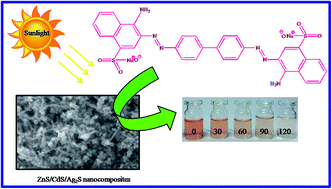
Photocatalytic activity of ZnS/CdS/Ag2S nanocatalyst was verified with the synthetic CR dye solution as a model test pollutant under direct sunlight illumination. Fig. 9 displays the absorption spectra of CR dye solution in the presence of ZnS/CdS/Ag2S material as a solar active photocatalyst under the exposure of natural sunlight for different time durations towards photocatalytic dye degradation process. CR dye shows a characteristic absorption peak at 495 nm and its peak intensity gradually decreased without the appearance of a new absorption peak during the photocatalytic process. Moreover, the intensity of absorption peaks declines more smoothly and it undergoes complete photodegradation of CR within 120 min under direct sunlight exposures.
 |
| | Fig. 9 The optical changes in the UV-visible spectra of CR dye under natural sunlight illumination in the presence of ZnS/CdS/Ag2S catalyst and their respective optical image of CR dye solution during photocatalytic process are inserted as an inset image. | |
The plot of the percentage of photodegradation against time was presented in Fig. 10 for various photocatalyst under dark and direct sunlight illuminations. Compared to others ratios, the ternary system (ZnS/CdS/Ag2S) of 1
:
1
:
1 ratio exhibits improved photocatalytic activity. The photocatalytic experiments were also carried out with ZnS/CdS/Ag2S catalyst under dark condition and it was noticed that the photodegradation efficiency of the catalyst was decreased. In addition, the dye degradation tests were performed without the catalyst and the result indicates that the only an insignificant amount of dye gets degraded in the absence of a catalyst. Hence, these studies inferred that the existence of both sunlight and photocatalyst are the essential factors in photodegradation process. The present investigation proves that the ZnS/CdS/Ag2S catalyst has a higher photocatalytic performance under direct sunlight when compared to that of mono and binary semiconductor systems (Fig. 10). Thus, the above result confirms that the ZnS/CdS/Ag2S material will work as an effective catalyst for the decomposition of dye pollutant present in the wastewater.
 |
| | Fig. 10 Photodegradability of CR dye (a) without catalyst, (b) dark, (c) ZnS, (d) ZnS/CdS, (e) ZnS/Ag2S, (f) CdS/Ag2S, (g) ZnS1/CdS1/Ag2S0.25, (h) ZnS1/CdS1/Ag2S0.5, (i) ZnS1/CdS1/Ag2S75 and (j) ZnS1/CdS1/Ag2S1 catalysts under direct sunlight exposure. | |
Under direct sunlight illuminations, both Ag2S and CdS due to their narrower band gap (1.0 and 2.42 eV)10,24 can be excited to eject the electrons in order to create the h+ and e− pairs, which are essential for the decomposition dye pollutant. CdS has lower energy of highly occupied orbital compared to Ag2S semiconductor. However, the band gap energy of CdS is higher than Ag2S. Hence, the expected ejection of electron will be more in the case of CdS comparable to Ag2S. But, all the range of photons was available in natural solar light and hence the ejected electrons will be more in the case Ag2S when compared to CdS semiconductor (Fig. 11). Further, present result expected to conclude the overlapping of orbital's since the metal atoms were arranged in the atomic level and observed reduced band gap energy. So, the electron in the valence band of CdS was expected to move to conduction band of Ag2S as well as electrons in valence band of Ag2S to conduction band of CdS semiconductor43,44 and vice versa. Further, the electron in the valence band of CdS and Ag2S semiconductor were excited to the conduction band of ZnS semiconductor. The migration of photo-generated charge carriers through the heterojunction interfaces will greatly suppress the recombination of electron–hole pairs and it favors the separation of photogenerated charge carriers on ZnS/CdS/Ag2S catalyst. So, it can actively participate in the photocatalytic reactions to decompose the organic pollutant and hence their photocatalytic properties were improved. The electrons ejected from the catalyst will react with the adsorbed O2 molecule on the surface of the nanocatalyst to produce O2˙− and H2O2, which will favor to degrade CR dye. Further, the holes created in the VB of ZnS/CdS/Ag2S react with H2O molecule to produce reactive hydroxyl species (˙OH), which further enhance the oxidation ability of the catalyst to degrade CR dye. In short, the adsorbed CR dye molecules will react with O2˙− and ˙OH radicals generated on the catalyst in order to form mineralization products such as acids, CO2, etc.
 |
| | Fig. 11 Systematic view for the separation of electron–hole pairs on ZnS/CdS/Ag2S catalyst under direct sunlight illuminations. | |
Further, the photodecomposition of dye molecules may also possible to follow the dye sensitized photodegradation mechanism along with hetero-junction interfaces transitions mechanism. According to photosensitized mechanism, the CR dye molecules are get adsorbed on the surface of the ZnS/CdS/Ag2S catalyst and they work as a solar light harvester. Hence, the solar light excites the CR dye molecules and the excited molecules directly inject the excited e− into the conduction band (CB) of the photocatalyst. As a result, the electron gets transfer to the surface of the catalyst (CB) and thus it increases the rate of oxidation of dyes. So, the photo excited electrons present on the surface of the catalyst were transfer to the adsorbed oxygen. Therefore, the electrons in the surface react with the oxygen molecules at ambient conditions in order to generate O2˙− and the photosensitized dye is converted into cationic dye radicals.45,46 Hence, the cationic dye radicals react with superoxide radicals and they were degraded by the photosensitized mechanism, which are in good agreement with the literature data.47
| | |
CR (dye) + hν (solar) → CR* + e−
| (2) |
| | |
CR* + ZnS/CdS/Ag2S → CR˙+ZnS/CdS/Ag2S + ecb−
| (3) |
| | |
CR˙+ + O2/O2˙− → degardation products
| (5) |
In this study, additionally dye degradation experiments were also carried out in the presence of appropriate quenchers like 1,4-benzoquinone (BQ) which is a superoxide radical (O2˙−) and isopropanol as ˙OH radical scavengers to confirm the generation of oxidative and reductive intermediate species during the solar light illumination.48 Table 1 shows the effect of isopropanol and 1,4-benzoquinone concentrations (0.1 M and 1 M) for the photodegradation of CR dye in presence of ZnS/CdS/Ag2S catalyst. From the results, it has been noticed that the addition of isopropanol and 1,4-benzoquinone inhibit the transformation of CR dye molecules. In addition to that, it was observed that the decrease in degradation efficiency occurs with increasing the concentration of isopropanol and 1,4-benzoquinone. The inhibitory effects of isopropanol and 1,4-benzoquinone on the photodegradation of CR are significant. This is because isopropanol is an ˙OH radical scavenger, which could react with ˙OH radical and quenches the photocatalytic reactions.49 Hence, the present investigation concludes that ˙OH radicals were generated during the dye degradation experiments, which could also support the dye degradation mechanism. Further, the inhibition effect of 1,4-benzoquinone authenticates the generation of O2˙− radicals during dye degradation process.48,50 The above experimental results conclude that the superoxide and hydroxyl radicals are the important active intermediate species generated during dye degradation process are responsible for the photodegradation of CR dye molecules.
Table 1 Effect of isopropanol and 1,4-benzoquinone on the photodegradation efficiency of the CR dye (30 min)
| Quencher |
% degradation of ZnS/CdS/Ag2S |
| No quencher |
65.01 |
| 0.1 M isopropanol |
55.63 |
| 1 M isopropanol |
42.74 |
| 0.1 M 1,4-benzoquinone |
59.82 |
| 1 M 1,4-benzoquinone |
47.57 |
The analysis of CR dye decomposition has been performed using different analytical techniques. In this regard, the GC and FT-IR studies have been performed to support the decomposition of Congo red (CR) dye. The GC spectra of CR dye after treatment with ZnS/CdS/Ag2S nanocatalyst showed two peaks at a retention time of 2.3 and 3.5 min (Fig. 12), while the control dye showed a peak at a retention time of 1.5 min. The disappearance of the control dye peak and appearance of two new peaks in the treated samples suggests the transformation of CR dye into two different byproducts. Further, the intensities of these two peaks are decreasing with respect to the time, which concludes the complete decomposition of CR dye molecules and are good agreement with the FT-IR results.
 |
| | Fig. 12 Chromatograms obtained from GC analysis during the photodegradation of CR dye on (a) control CR dye and (b) treated CR dye ZnS/CdS/Ag2S catalysts. | |
FT-IR analysis of CR dye and its products after decomposition on ZnS/CdS/Ag2S nanocatalyst was shown in Fig. 13. The peaks (Fig. 13(a)) appeared at 1322 and 1064 cm−1 are corresponding to C–N bond and S
O stretching, respectively. The peak observed at 1588 cm−1 indicates the presence of azo –N
N– double bond stretching vibration, which confirms the presence of an azo compounds. The absorption peaks observed at 1445 and 1493 cm−1 were ascribed to the C–C stretching in aromatic rings (aromatic skeletal vibrations). The FT-IR spectrum of CR dye showed the characteristic bands of 1226, 1178 and 1064 cm−1 associated to C–H in-plane bending vibrations and the occurrence of characteristic peaks of 836, 750 and 703 cm−1 corresponds to the out of plane or oop C–H bending indicates the hydrogen substitution in the aromatic ring. In the degradation process of dye on ZnS/CdS/Ag2S nanocatalyst, the characteristic changes in the chemical structure of CR dye were observed (Fig. 13(b)). The peaks due to existence of azo group (1588 cm−1) and C–C aromatic carbon bond (1445 cm−1) were disappeared after ZnS/CdS/Ag2S treatment indicating the breakdown of these bonds present in the CR dye (Fig. 13(b)). Additionally, the peaks from 836 to 703 cm−1 representing the benzene ring structures of the parent CR dye also disappeared suggesting the cleavage of the dye molecule. The overall prediction of the FT-IR spectra conclude that the CR dye have been decolorized or degraded into different products obtained after photodegradation process on ZnS/CdS/Ag2S nanocatalyst, which confirms the transformation of the dye into different byproducts.
 |
| | Fig. 13 FT-IR profile of (a) CR dye and (b) its decolorized products obtained after treatment with ZnS/CdS/Ag2S nanocatalyst. | |
3.8. Recyclability test
To promote the industrialization process, the stability and the recycle efficiency of the catalyst has to be checked under the dye degradation process. Fig. 14 shows four successive cycles of photodegradation of CR dye on ZnS, ZnS/CdS, ZnS/Ag2S and ternary ZnS/CdS/Ag2S catalysts. Hence, the stability and reusability of the photocatalyst were determined by undergoing the dye degradation experiments on the same catalyst for four different cycles towards CR dye decomposition process under direct sunlight irradiation. In the case of ZnS/CdS/Ag2S catalyst, it was observed that degradation efficiency of CR dye remains almost constant for four repeated cycles when compared to that of other mono and binary systems. The results (Fig. 14(d)) indicate that there is no remarkable change in the activity of ZnS/CdS/Ag2S catalyst was perceived after four cycles.
 |
| | Fig. 14 Catalyst reusability tests on (a) ZnS, (b) ZnS/CdS, (c) ZnS/Ag2S and (d) ZnS/CdS/Ag2S catalyst for CR dye degradation under direct sunlight irradiations. | |
Fig. 15 shows the XRD patterns of ZnS/CdS/Ag2S nanocatalyst before and after solar irradiation. The XRD result indicates that no significant changes were occurred in the crystalline nature of the catalyst after the completion of photodegradation process.
 |
| | Fig. 15 XRD patterns of ZnS/CdS/Ag2S nanocatalyst before and after irradiation. | |
4. Conclusion
The ternary sulphide system of ZnS/CdS/Ag2S nanocatalyst was synthesized through hydrothermal method using thiourea as a sulfur source. The low band gap energy and decreased PL emission peak of ZnS/CdS/Ag2S catalyst concludes that the optical properties of the ternary system gets improved which in turn enhances the photocatalytic efficiency of the catalyst under direct sunlight. The photocatalytic experiment results of ZnS/CdS/Ag2S catalyst also show significantly higher photocatalytic activity for the degradation of CR dye than that of mono and binary semiconductors. Hence, the novel ternary ZnS/CdS/Ag2S nanocatalyst can work as a potent catalyst for waste water treatment process, which will attract the industrialist for commercialization process.
Acknowledgements
The authors like to thank DST/Nanomission, New Delhi, India for the financial support to carry out this work and the establishment of the Nanotech research lab through grant No. SR/NM/NS-05/2011(G).
References
- B. Shahmoradi, A. Maleki and K. Byrappa, Catal. Sci. Technol., 2011, 1, 1216 CAS
. - M. I. Litter, Appl. Catal., B, 1999, 23, 89 CrossRef CAS
. - Y. Z. Li, H. Zhang, Z. M. Guo, J. J. Han, X. J. Zhao, Q. N. Zhao and S. J. Kim, Langmuir, 2008, 24, 8351 CrossRef CAS PubMed
. - W. Zhu, X. Liu, H. Q. Liu, D. L. Tong, J. Y. Yang and J. Y. Peng, J. Am. Chem. Soc., 2010, 132, 12619 CrossRef CAS PubMed
. - A. Fujishima and K. Honda, Nature, 1972, 238, 37 CrossRef CAS PubMed
. - S. L. Xiong, B. J. Xi, C. M. Wang, D. C. Xu, X. M. Feng, Z. C. Zhu and Y. T. Qian, Adv. Funct. Mater., 2007, 17, 2728 CrossRef CAS
. - Y. X. Li, G. Chen, C. Zhou and J. X. Sun, Chem. Commun., 2009, 2020–2022 RSC
. - W. Zhang, Z. Y. Zhong, Y. S. Wang and R. Xu, J. Phys. Chem. C, 2008, 112, 17635 CAS
. - X. Fang, Y. Bando, M. Liao, T. Zhai, U. K. Gautam, L. Li, Y. Koide and D. Golberg, Adv. Funct. Mater., 2010, 20, 500 CrossRef CAS
. - R. Maity and K. K. Chattopadhyay, J. Nanopart. Res., 2006, 8, 125 CrossRef CAS
. - J. Liu, C. Zhao, Z. Li, J. Chen, H. Zhou, S. Gu, Y. Zeng, Y. Li and Y. Huang, J. Alloys Compd., 2011, 509, 9428 CrossRef CAS
. - R. Seoudi, A. Shabaka, W. H. Eisa, B. Anies and N. M. Farage, Physica B, 2010, 405, 919 CrossRef CAS
. - X. Wang, B. Zou, Q. Zhang, A. Lei, W. Zhang and P. Ren, J. Alloys Compd., 2011, 509, 9959 CrossRef CAS
. - S. Huang, Y. Lin, J. Yang, X. Li, J. Zhang, J. Yu, H. Shi, W. Wang and Y. Yu, RSC Adv., 2013, 3, 20782 RSC
. - H. Zhang and Y. Zhu, J. Phys. Chem. C, 2010, 114, 5822 CAS
. - H. Wang, X. Yuan, Y. Wu, X. Chen, L. Leng and G. Zeng, RSC Adv., 2015, 5, 32531 RSC
. - X. Yuan, H. Wang, Y. Wu, X. Chen, G. Zeng, L. Leng and C. Zhang, Catal. Commun., 2015, 61, 62 CrossRef CAS
. - H. Wang, X. Yuan, Y. Wu, H. Huang, X. Peng, G. Zeng, H. Zhong, J. Liang and M. Ren, Adv. Colloid Interface Sci., 2013, 195–196, 19 CrossRef CAS PubMed
. - J. Zhang, Y. Chen and X. Wang, Energy Environ. Sci., 2015, 8, 3092 CAS
. - Q. Li, B. Guo, J. Yu, J. Ran, B. Zhang, H. Yan and J. R. Gong, J. Am. Chem. Soc., 2011, 133, 10878 CrossRef CAS PubMed
. - A. Kubacka, M. Fernandez-García and G. Colon, Chem. Rev., 2012, 112, 1555 CrossRef CAS PubMed
. - H. R. Pouretedal and S. Sabzevari, Desalin. Water Treat., 2011, 28, 247 CrossRef CAS
. - W. Zhang, L. Zhang, Z. Hui, X. Zhang and Y. Qian, Solid State Ionics, 2000, 130, 111 CrossRef CAS
. - U. Lee, S. Ham, C. Han, Y. J. Jeon, N. Myung and K. Rajeshwar, Mater. Chem. Phys., 2010, 121, 549 CrossRef CAS
. - B. Subash, B. Krishnakumar, V. Pandiyan, M. Swaminathan and M. Shanthi, Sep. Purif. Technol., 2012, 96, 204 CrossRef CAS
. - X. Wang, B. Zou, Q. Zhang, A. Lei, W. Zhang and P. Ren, J. Alloys Compd., 2011, 509, 9959 CrossRef CAS
. - E. H. Kisi and M. M. Elcombe, Acta Crystallogr., Sect. C: Cryst. Struct. Commun., 1983, 33, 1493 Search PubMed
. - V. Kumar, S. K. Sharma and D. K. Dwivedi, J. Alloys Compd., 2012, 512, 351 CrossRef CAS
. - X. Yang, H. Xue, J. Xu, X. Huang, J. Zhang, Y. Tang, T. Ng, H. Kwong, X. Meng and C. Lee, ACS Appl. Mater. Interfaces, 2014, 6, 9078 CAS
. - M. Shao, D. Wang, B. Hu, G. Yu and Y. Qian, J. Cryst. Growth, 2003, 249, 549 CrossRef CAS
. - V. Stengl, V. Houskova, S. Bakardjieva and N. Murafa, ACS Appl. Mater. Interfaces, 2010, 2, 575 CAS
. - K. M. Reddy, S. V. Manorama and A. R. Reddy, Mater. Chem. Phys., 2002, 78, 239 CrossRef
. - H. Yin, Y. Wada, T. Kitamura and S. Yanagida, Environ. Sci. Technol., 2001, 35, 227 CrossRef CAS PubMed
. - W. Jia, B. Jia, F. Qu and X. Wu, Dalton Trans., 2013, 42, 14178 RSC
. - S. Biswas, S. Kar and S. Chaudhuri, J. Phys. Chem. B, 2005, 109, 17526 CrossRef CAS PubMed
. - K. Kalpana and V. Selvaraj, RSC Adv., 2015, 5, 47766 RSC
. - M. Antoniadou, V. M. Daskalaki, N. Balis, D. I. Kondarides, C. Kordulis and P. Lianos, Appl. Catal., B, 2011, 107, 188 CrossRef CAS
. - J. Zhang, Y. Wang, J. Zhang, Z. Lin, F. Huang and J. Yu, ACS Appl. Mater. Interfaces, 2013, 5, 1031 CAS
. - S. Shen, Y. Zhang, Y. Liu, L. Peng, X. Chen and Q. Wang, Chem. Mater., 2012, 24, 2407 CrossRef CAS
. - P. Kundu, P. A. Deshpande, G. Madras and N. Ravishankar, J. Mater. Chem., 2011, 21, 4209 RSC
. - D. Wagner, Handbook of X-ray Photoelectron Spectroscopy, Perkin-Elmer Corporation, MN, 1979 Search PubMed
. - W. Zhang, L. Zhang, Z. Hui, X. Zhang and Y. Qian, Solid State Ionics, 2000, 130, 111 CrossRef CAS
. - C. Chen, Y. Xie, G. Ali, S. H. Yoo and S. O. Cho, Nanoscale Res. Lett., 2011, 6, 462 CrossRef PubMed
. - S. Liu, H. Li and L. Yan, Mater. Res. Bull., 2013, 48, 3328 CrossRef CAS
. - S. G. Kumar and L. G. Devi, J. Phys. Chem. A, 2011, 115, 13211 CrossRef CAS PubMed
. - T. Wu, G. Liu, J. Zhao, H. Hidaka and N. Serpone, J. Phys. Chem. B, 1998, 102, 5845 CrossRef CAS
. - R. Velmurugan and M. Swaminathan, Sol. Energy Mater. Sol. Cells, 2011, 95, 942 CrossRef CAS
. - E. Borgarello, J. Kiwi, M. Graetzel, E. Pelizzetti and M. Visca, J. Am. Chem. Soc., 1982, 104, 2996 CrossRef CAS
. - Y. Chen, S. Yang, K. Wang and L. Lou, J. Photochem. Photobiol., A, 2005, 172, 47 CrossRef CAS
. - Y. Yang, G. Zhang and W. Xu, J. Colloid Interface Sci., 2012, 376, 217 CrossRef CAS PubMed
.
|
| This journal is © The Royal Society of Chemistry 2016 |
Click here to see how this site uses Cookies. View our privacy policy here.