Influence of photoactivated tetra sulphonatophenyl porphyrin and TiO2 nanowhiskers on rheumatoid arthritis infected bone marrow stem cell proliferation in vitro and oxidative stress biomarkers in vivo

Fawad Ur Rehmana, Chunqiu Zhaoa, Changyu Wua, Hui Jianga, Matthias Selkeb and Xuemei Wang*a
aState Key Laboratory of Bioelectronics, School of Biological Science and Medical Engineering, Southeast University, Sipailou 2, Nanjing 210096, Jiangsu, China. E-mail: xuewang@seu.edu.cn
bDepartment of Chemistry and Biochemistry, California State University, Los Angeles, CA 90032, USA

Received 7th November 2015 , Accepted 30th November 2015

First published on 1st December 2015


Abstract

Photodynamic therapy (PDT) is mostly used to induce apoptosis or necrosis in benign and malignant tumors, along with other microbial infections and suppression of autoimmune diseases including rheumatoid arthritis (RA). The bone marrow stem (BMS) cells are also a focus in translational medicine, tissue engineering and as an autoimmune disease suppressant. In this study we used tetra sulphonatophenyl porphyrin (TSPP) with TiO2 nanowhiskers for RA PDT and evaluated the effect on stress biomarkers (CAT, SOD, GPX, GR, TAO and MDA) in vivo and BMS cell proliferation in vitro. We compared four murine groups, three of which had collagen induced arthritis as TP-L (illuminated), TP-nL (dark) and CIA (control), whereas the other group was normal without disease and treatment. All anti-oxidative enzymes and biomarkers were significantly (p < 0.01) affected by the treatment except TAO (p > 0.05). Moreover, we also evaluated the growth proliferation effect of TSPP–TiO2 (TP) PDT on the in vitro RA infected BMS cells i.e. 25 μl had highest cell count (12.33 × 10⁶ cells per well) and 33% higher growth rate in photoactivated TP when compared with 50 and 100 μl treatment groups. Herein, we report that photoactivated TSPP–TiO2 for RA PDT may be safer than photosensitizers without the titanium nanomaterials in terms of reduced oxidative stress and also promotion of RA BMS cell growth in vitro as a novel finding.

Introduction

Stem cells are specialized, immature cells with prolonged capacity of self-renewal and plasticity to various specialized cell types, i.e., osteoblast, chondrocytes, adipocytes, neurons, and myocytes under certain favorable conditions or differentiation medium.1,2 Almost all the vital organs and tissues in the body contain stem cells. The bone marrow stromal or stem (BMS) cells are named after their origin, i.e., from the bone marrow of long bones, which was first reported by Friedenstein et al.3 BMS cells are clonogenic and have the potential to proliferate ex vivo without any structure or functional deformation and differentiate to various types of specialized cells.4 On the bases of these vital properties BMS cells have been explored for potential curing of various maladies,5 cancers,6 tissue engineering7 and autoimmune diseases; notably rheumatoid arthritis (RA).8,9

RA is an autoimmune progressive joint inflammatory disease in humans with unknown etiology.10 So far, multiple triggers have been attributed to the onset of RA, e.g., age, gender, lifestyle, and genetic makeup of the individual.11 The worst feature of RA is persistent chronic inflammation that leads to 50–70% disability in the patients in 10–15 years.12 TNF-α is the most commonly investigated biomarker for RA and considered as key proinflammatory cytokine in RA synovial milieu.13 To date, only empirical therapy is commonly employed to suppress the clinical signs in RA patients and no proper treatment is available.14

Photodynamic therapy (PDT) is therapeutic procedure which consists of photosensitizer (PS), visible light and biologically available oxygen.15 Porphyrin derivatives are the most popular PS for cancers and infectious diseases,16 despite adverse effects including accumulation of the PS in vital organs, neurotoxicity and phototoxicity. These adverse effects have limited biomedical applications of the porphyrin derivatives.17,18 PDT has been reported as a successful remedy for various neoplastic and non-neoplastic maladies.19 When the PS is photoactivated with visible light it will generate singlet oxygen (1O2)20 as the main cytotoxic agent, although other ROS such as hydroxyl radical and other radicals are also produced. These ROS and 1O2 will interact with cellular signaling pathways and induce apoptosis or necrosis.21 However, the intracellular antioxidant enzyme systems will be activated to neutralize these ROS and protect the cells from injury.21 Superoxide dismutase (SOD), glutathione peroxidase (GPX), and glutathione reductase (GR) are among the vital anti-oxidative enzymes as ROS scavengers while malondialdehyde (MDA) is an oxidative stress biomarker.22

Titanium is second most abundantly used nanomaterial for human consumption; either as a food additive, environmental scavenger, in sunscreens and also in various biomedical applications.23 In biomedical applications it is commonly used in prosthetic orthopedic implants, nano drug delivery systems, sonodynamic therapy, and photodynamic therapy.24 Nano titanium dioxide (TiO2) became popular for cancer theranostics after the first introduction by Fujishima et al. almost two decades ago.25 The use of TiO2 nanowhiskers for cancer therapy was already reported by Li et al.26 And the biomedical applications of TiO2 nanowhiskers combined with TSPP were also reported recently, which demonstrated higher efficacy of tetra sulphonatophenyl porphyrin (TSPP) combined with TiO2 nanowhiskers during RA PDT as compared to TSPP and TiO2 alone.27 It is observed that the TSPP–TiO2 nanocomposites had excellent theranostics effect by successfully lowering the TNF-α and IL-17, i.e., major proinflammatory factors and biomarkers for RA and bio-imaging the subclinical RA that was confirmed at the onset of clinical signs. Similarly, the TSPP–TiO2 nanocomposites had protective effect on circulatory and excretory system in murine models by lowering the relevant liver (i.e. AST, ALT and LDH) and kidneys (i.e. BUN and CRT) functional biomarkers in comparison to TSPP and TiO2 alone during PDT.28

Therefore, considering the above observations and the importance of the cellular antioxidant enzyme systems, herein we report for the first time, the effect of TSPP–TiO2 on isolated RA BMS cells and various stress enzymes during PDT in vivo in murine models.

Materials and methods

Chemicals and animal selection

Male Sprague-Dawley (SD) rats were selected due to their ability to produce excellent model of collagen induced arthritis (CIA). All the animals were provided standard pallet feed and water ad libitum with a 12/24 hours daily light cycle. At the beginning of the experiments the average animal weight was 220 ± 20 grams and eight weeks of age. All the experiments involving animals were conducted under the guidelines of Animal Research Ethics Board of Southeast University and were approved by the National Institute of Biological Science and Animal Care Research Advisory Committee of Southeast University, Nanjing, China. All chemicals used in cell culture experiments were purchased from HyClone Laboratories, Inc. Utah, USA, whereas the collagen type II and adjuvant were obtained from Chondrex, Inc. The chemicals used for differentiation medium, i.e., β-glycerophosphate and L-ascorbic acid were purchased from Sigma-Aldrich Co. LLC., dexamethasone from Adamas-Beta, and TNGβ1 was supplied by PeproTech, Inc. Rocky Hills, NJ, USA.

Experimental layout

To evaluate the in vivo stress biomarkers, all the animals were divided into three main groups (i.e. treatment (TP), control (CIA) and normal (NORM)), containing three animals in each group except treatment, which was further divided into two groups illuminated (TP-IL) and non-illuminated (TP-NL) three animals each. The treatment and control comprised of CIA models, whereas normal was kept without CIA and treatment. Similarly, the TP group was subcutaneously injected with TSPP–TiO2, whereas control was injected placebo and normal had no CIA and no treatment. One hour post-injection the animals were further exposed to 500–550 nm visible LED light (5 mW dm−2 light intensity) for one hour duration with whole body exposure. This light dose is sufficient to achieve the photoactivation through TSPP–TiO2 nanocomposites. Experiment was continued for two weeks with daily treatment.

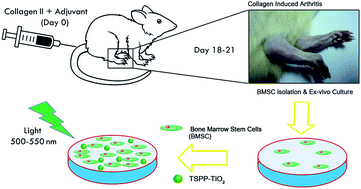
The in vitro cell culture experiments were performed on primary BMS cells culture obtained from the CIA models (Scheme 1). Initially, 3 × 10³ CIA BMS cells ml−1 were cultured in six well plates, and after 24 hours various TSPP–TiO2 concentrations (0, 25, 50, 100 μl of 0.1 mM TSPP + 0.6 mM TiO2) were added to BMS cells culture. Then after two hours, one group was exposed to 500–550 nm light for five minutes (i.e., with same intensity as mentioned earlier) and named as TPiL-CIA, whereas the other group was kept non-illuminated and named as TPnL-CIA. Similarly, normal BMS cells from healthy rats were obtained and group was named as TPiL-N for illuminated and TPnL-N for non-illuminated TSPP–TiO2 treatments. Post 72 hours incubation cells were trypsinized and counted by Hemocytometer according to procedure described earlier.29,30

Photosensitizer preparation

The tetra sulphonatophenyl porphyrin (TSPP) was supplied by ABI chemicals and TiO2 nanowhiskers were generously provided by Dr Xiao Hua Lu from College of Chemical Engineering, Nanjing University of Technology, Nanjing China (Fig. 1). TSPP and TiO2 nanocomposites were separately dissolved in ultrapure deionized water to achieve concentration of 0.1 mM TSPP and 0.6 mM, respectively. TSPP has excellent hydrophilic properties and can readily dissolve in deionized distilled water, whereas TiO2 readily becomes super hydrophilic when photoactivated.31 Then TSPP was physically adsorbed on the porous surface of TiO2 nanowhiskers after mixed in aqueous solution for overnight. The porous nature of TiO2 nanowhiskers and ionic bonding between the TSPP and TiO2 provides effective scaffolds for successful delivery and slow release of TSPP from TiO2 nanowhiskers in desired site. Afterwards, 0.4 ml of TSPP–TiO2 nanocomposites (0.1 mM TSPP + 0.6 mM TiO2) were injected to the TP group. Subsequently, different amount of TSPP–TiO2 were added to various BMS cells culture for in vitro experiments.
image file: c5ra23480h-f1.tif
Fig. 1 SEM micrograph of TiO2 nanowhiskers (A), average size (B) and tetra sulphonatophenyl porphyrin structural formula (b) (scale 200 nm).

Arthritis models

Collagen type II and Freund's adjuvant were mixed together by sonication method to form 1 mg ml−1 insoluble emulsion as described earlier.27 Then immediately within one hour 0.3 ml of emulsion was injected at the base of tail to all animals as subcutaneous parenteral. At day 18 to 21 post injection, all the rats showed obvious clinical signs of CIA. Booster doses were repeated when required.

BMS cells isolation and culture

The long bones (femur and tibia) were collected from CIA and normal rats. Then by using the cold PBS (pH 7.4) at 4 °C with 2% FBS and 1 mM EDTA, all the bones were mechanically crushed and bone marrow was obtained for primary cell culture. The bone marrow containing medium was sieved through 70 μm filter and centrifuged at 3000 rpm for 5 minutes to remove the PBS as supernatant. Then the pallet was dispersed and cultured in DMEM/F12 standard medium containing 10% FBS and 1% penicillin–streptomycin solution at 37 °C temperature, 5% CO2 and 95% humidity. After three days only sticking cells remained in the tissue culture bottle and non-sticking cells were removed by changing medium and washing with PBS.

In vitro BMS cells proliferation and confirmation

After 72 hours, BMS cells were passaged to 75 cm2 tissue culture-flasks as passage one and after one week cells were trypsinized (0.25% trypsin) for further experiments. The BMS cells had typical spindle shaped appearance and their plasticity was confirmed by differentiation to chondrocytes and osteocytes as reported earlier.32 Briefly, cells were trypsinized to 24 well plates as 5 × 10⁴ cells well−1 and incubated for 24 hours to allow cells sticking to the bottom of culture-plate. The standard medium was replaced with chondrogenic differentiation medium supplemented with L-ascorbic acid 50 μg ml−1 and TGFβ1 1 ng ml−1. Post one week incubation cells were washed with PBS, fixed with 3.7% paraformaldehyde and stained with 0.05% alcian blue stain. For osteogenic differentiation cells were incubated in standard medium supplemented with ascorbic acid 50 μg ml−1, Na β-glycerophosphate 10 mM and dexamethasone 10−8 M for two weeks and then stained with alizarin red 1% after washing and fixation as mentioned earlier33 (Fig. 2).
image file: c5ra23480h-s1.tif
Scheme 1 Bone marrow stem cells isolation and in vitro proliferation from collagen induced arthritis murine models.

image file: c5ra23480h-f2.tif
Fig. 2 Collagen induced arthritis bone marrow stem cells; black arrow head clearly demonstrate characteristic typical spindle shaped cells (A), cells differentiated to chondrocytes (green circles) and arrow head shows cartilaginous beads (arrow head) (B) and typical osteoblast (in red circles) with mineral deposition (arrow heads) (C).

Serum sampling

Blood samples were collected from all treatment groups via 3 ml 21 gauge needle syringe intracardiac injection, under general anaesthesia of isoflurane.34 Then the serum was separated by centrifugation at 3000 rpm for 5 minutes and stored at −20 °C for further analysis.

Oxidative stress biomarkers estimation

All antioxidant enzymes and biomarkers were estimated by spectrophotometric methods and the kits were supplied by Nanjing Jiancheng Institute of Bioengineering (Nanjing, Jiangsu, China). The assays were performed according to the manufacturer instructions. The procedure for estimation of CAT, SOD, GPX, TAO and MDA activity was measured by the same procedure as reported earlier.35 Briefly, the GPX activity was measured as the amount of enzymes that will oxidize the 1 μmol L−1 GSH per minute at 37 °C in reaction system for 100 μl of serum. Similarly, the CAT activity was measured by the disappearance rate of H2O2 at 340 nm in 100 μl serum sample. The SOD activity was measured by the inhibition rate of hydroxylamine oxidation by 50 percent in coupled system using xanthine and xanthine oxidase. The TOA were measured as the reduction of ferric ions by the agent and formation of Fe2+ TPTZ (2,4,6-tri(2-pyridyl)-s-triazine) blue complex that was treated with phenanthroline for generation of a stable complex the absorption of which was measured at 520 nm. The MDA results were expressed as thiobarbituric acid reactive substance in μmol 100−1 μl of malondialdehyde.36

Statistical analysis

Data were statistically analyzed by SPSS version 18 for analysis of variance (ANOVA) of BMS cells proliferation in vitro and t-test was performed for serum biomarkers evaluation. The probability value <0.05 was considered as significant.

Results

Oxidative species generated by porphyrin derivatives is essential for PDT of any target tissue. In this study we evaluated the effect on the extent of oxidative stress due to the presence of TSPP–TiO2 nanocomposites for PDT. Subsequently, PDT will lead to drop in oxygen content of the subject system that will influence the BMS cells proliferation rate. Therefore, experiments were performed to find the relationship between the stress enzymes mean during PDT with TSPP combined with TiO2 nanowhiskers and the growth rate of BMS cells from the RA infected murine models.

In vivo stress biomarkers

The TSPP–TiO2 nanocomposites have been successfully used to ameliorate the RA during PDT after evaluating their protective effect on the circulatory and excretory system in the in vivo murine experimental models.27,28 Since in PDT, the PS generates ROS and 1O2 for ablation of tumor or amelioration of other diseases, the relevant stress biomarkers could be further explored in other than targeted tissues. Therefore, the stress biomarkers mean values were estimated from the blood serum after TSPP–TiO2 photoactivation and values expressed are the mean values per 100 μl of various groups.

All the mean values for CAT, SOD, GR, GPX, and MDA were significantly (p < 0.01) affected by the TSPP–TiO2 either illuminated or dark, whereas the value of total antioxidants remained non-significant with probability value more than 0.05.

The CAT mean value in CIA was 11.72 ± 0.75 (SD) U per 100 μl, which was lower than TP-NL (13.08 ± 1.70) and TP-L (13.35 ± 1.26), whereas in normal group its mean remained 14.39 ± 1.53 (SD) U per 100 μl (Fig. 3a). Similarly, the SOD mean value was higher in TP-L (127.74 ± 4.5 (SD) U per 100 μl), followed by TP-NL (118.11 ± 7.87 (SD) U per 100 μl) and CIA (112.77 ± 2.43 (SD) U per 100 μl), whereas the normal group value was highest i.e. 137.44 ± 3.45 (SD) U per 100 μl (Fig. 3d).


image file: c5ra23480h-f3.tif
Fig. 3 (a) Showing blood serum level of CAT (black line), GR (red line) and TAO (green line); (b) GPX mean value; (c) MDA level and (d) is demonstrating SOD in treatment group CIA (collagen induced arthritis) as control, TP-NL (TSPP–TiO2 group without illumination), TP-L (TSPP–TiO2 illuminated) and normal group. Whereas, CAT stand for catalase, GR for glutathione reductase, TAO for total anti-oxidant count, GPX for glutathione peroxidase, MDA for malondialdehyde and SOD for superoxide dismutase. For all oxidative stress biomarkers probability value was <0.01 except TAO (p > 0.05).

The mean value of GPX observed in TP-L (157.90 ± 5.15) was highest among the CIA and TP-NL was 154.03 ± 3.74 (SD) U per 100 μl and 149.714474 ± 7.34 (SD) U per 100 μl, respectively, whereas the normal group serum GPX value was 192.89 ± 11.52 (SD) U per 100 μl (Fig. 3b). The GR serum mean value remained almost the same among all treated groups of CIA, TP-L and TP-NL, i.e., 17.904100 ± 1.48, 17.71 ± 2.16, 17.71 ± 2.167 (SD) U per 100 μl respectively, whereas the normal rats serum value estimate for GR was 25.63 ± 1.56 (SD) U per 100 μl. Moreover, the lowest TAO level was observed in the TP-L group (9.78 ± 1.60 (SD) U per 100 μl) as compared to the CIA (13.06 ± 1.69 (SD) U per 100 μl), TP-NL (13.29 ± 2.13 (SD) U per 100 μl) and normal group (12.15 ± 1.85 (SD) U per 100 μl) (Fig. 3a). The MDA mean concentration value was lowest in TP-L (123.88 ± 10.41 (SD) U per 100 μl) among treated groups, i.e. TP-NL(169.41 ± 6.09 (SD) U per 100 μl) and CIA (143.31 ± 9.97 (SD) U per 100 μl), respectively, and the normal group mean serum concentration was 75.06 ± 7.68 (SD) U per 100 μl (Fig. 3c).

In vitro BMS cells growth effect

The BMS cells proliferation was significantly affected by various concentrations of TSPP–TiO2 (p < 0.01) and illumination (p < 0.05). Similarly, the proliferation rate of BMS cells was also significantly (p < 0.01) affected by the CIA, as compared to normal BMS cells count mean.

In the post treatment highest cell number mean ± standard deviation (SD) was observed in 25 μl TPiL-BMS cells group (12.33 × 10⁶ ± 2.72 (SD)), that is 33.79% higher as compared to TPnL-BMS cells, i.e., 8.17 × 10⁶ ± 1.17 (SD). The cell count mean for 50 μl, 100 μl and control group concentration of nanocomposites TSPP–TiO2 treatment was 8.8 × 10⁶ ± 2.37 (SD), 5.67 × 10⁶ ± 0.57 (SD), 9.33 × 10⁶ ± 3.93 (SD), respectively, in comparison with TPiL-BMS cells group, i.e., 7.2 × 10⁶ ± 2.16 (SD), 5 × 10⁶ ± 1.73 (SD), 6.67 × 10⁶ ± 0.57 (SD), respectively. The percent change in cell proliferation was 18.2, 11.7 and 28.5% in 50 μl, 100 μl and control group, respectively (Fig. 4).


image file: c5ra23480h-f4.tif
Fig. 4 Collagen induced arthritis rat bone marrow stem cells proliferation rate in vitro after treatment with various concentrations of tetra sulphonatophenyl porphyrin and TiO2 nanocomposites illuminated and dark (p < 0.01).

The illumination effect on mean in normal BMS cells was 3 × 10⁶ ± 1.67 (SD), 1.17 × 10⁶ ± 1.0 (SD), 3 × 10⁶ ± 3.4 (SD), 6.67 × 10⁶ ± 3.7 (SD) for 25, 50, 100 μl of nanocomposites TSPP–TiO2 treatment and control group, respectively; whereas 2.60 × 10⁶ ± 1.7 (SD), 2.67 × 10⁶ ± 1.3 (SD), 2 × 10⁶ ± 1.0 (SD), 4 × 10⁶ ± 1.0 (SD), respectively, was mean count in TPnL-N group.

Discussion

PDT is considered one of the most efficient therapy for many superficial malignant and benign tumors, in addition to other microbial infections.37 PDT has been more extensively used to induce apoptosis or necrosis in neoplastic tissues; however, in some cases like hypericin PDT has been reported to coincide with growth enhancement effect on human neoplasms.38 Similarly, aluminum–phthalocyanine mediated PDT has also been associated with growth promoting effect on osteoblast cells.39 The role of PDT is of interest in cures of autoimmune diseases especially RA.40 In previous studies we reported a new therapeutic effect of photoactivated TSPP–TiO2 nanocomposites on RA.27,28 This discovery led us to the new domain in theranostics; therefore we extended its potential applications to the BMS cells in the CIA infected models and evaluated the stress enzymes profile as oxidative stress biomarkers in TSPP–TiO2 nanocomposites treated animal models.

During PDT the ROS and 1O2 are generated from the photoactivated nanocomposite TSPP–TiO2 in the presence biologically available molecular oxygen. These ROS and 1O2 will interfere with cellular signal pathways; meanwhile, the cell in response will neutralize these ROS by activating intra and inter-cellular anti-oxidative cellular enzymes system.41 ROS play a vital role in intra and inter-cellular signaling. However, the uncontrolled generation of ROS will disturb the oxidative and anti-oxidative equilibrium in the cell and lead to lipid peroxidation that is directly proportional to cellular SOD, GPX, CAT, GR and inversely proportional to the MDA level.22 Moreover, the oxidative enzyme activity is lowered due to inhibitory effect of nanocomposites on mRNA expression of these enzymes.22 The disturbance of the ROS equilibrium within the cell is referred to as oxidative stress which leads to oxidation of DNA, and degradation of cellular organelles, proteins and lipids.21

Porphyrin derivatives are well known for oxidative stress during PDT,15,42 although when TSPP was combined with TiO2 nanowhiskers, the oxidative stress effect was mitigated.28 This may do due to the fact that TSPP is adsorbed in the pores of TiO2 nanowhiskers and released slowly during a long time period. The 1O2 quantum yield ΦΔ value for only TSPP was earlier reported as 0.64,43 while we determined a somewhat lower value of 0.44 (ref. 27) for the nanocomposite material TSPP[thin space (1/6-em)]:[thin space (1/6-em)]TiO2 with a ratio of 1[thin space (1/6-em)]:[thin space (1/6-em)]2 (by mass). This quantum yield is still sufficiently high for PDT, consistent with our results presented in this paper. Moreover, the size and type of nano titania also affect the cellular anti-oxidative enzymes, i.e., nano TiO2 with smaller size are more cytotoxic than larger size, similarly, TiO2 nanoparticles are reported more cytotoxic than TiO2 nanowhiskers.44 In our earlier study the MTT assay results also revealed that when TSPP was combined with TiO2 nanowhiskers, the cell viability remained 100% and 80% in lower and higher concentration of TSPP–TiO2 nanocomposites, respectively, as compared to the TSPP alone, i.e., less than 70%.28

Our results showed a higher level of SOD when TSPP–TiO2 nanocomposites were photoactivated in vivo, while the CAT level remained almost same as dark TSPP–TiO2 nanocomposites and control group. H2O2 has potential to penetrate cell membranes and can lead to lipid peroxidation. Generally, SOD, GPX and CAT neutralize H2O2 to stable alcohols and water to avoid damage to biomolecules.45 Additionally, almost the same concentration mean of CAT in nanocomposites TSPP–TiO2 treated groups vouches its inertness to the normal body cells. Moreover, the highest level of GR also demonstrates the least ROS generation from the photoactivated TSPP–TiO2 nanocomposites. The primary role of GR is to reduce the oxidized glutathione by the help of NADPH.21

The MDA is a major product of lipid peroxidation and used as prototype biomarker for cell membrane oxidative damage.46 The MDA least mean was observed in photoactivated nanocomposites TSPP–TiO2 groups. The lower MDA level shows a protective effect of TSPP–TiO2 nanocomposites on lipid peroxidation. Our results are in contrast with findings reported in the literature due to the fact that the previous studies used single and pristine TiO2 nanoparticles only in the brain, which are known to be more cytotoxic.22,47 We used TiO2 nanowhiskers, which were reported to be safer than nanoparticles48 and also combined these whiskers with TSPP to evaluate their stress on the whole body system. Nevertheless, porphyrin in combination with Mn(III) (MnTM-2-PyP5+) has been reported by Benov and Batinic-haberle for lowering the overall MDA level in streptozotocin diabetic rats.49 Their results are in agreement with our findings.

TAO is the measure of estimated antioxidant capacity of the body and its lower value is indicator of overall oxidative stress.35 Generally, the TAO estimates the chain-breaking antioxidants in liquid (thiols, urates, bilirubin, and ascorbate) and lipid phase (flavonoids, α-tocopherol, and carotenoids).50 We found almost the same TAO mean value in all treated groups, which indicate the safety of TSPP–TiO2 nanocomposites.

CIA BMS cells proliferation rate was found surprisingly higher in photoactivated TSPP–TiO2 nanowhiskers treated group. In RA, the synovial milieu has unique pathophysiological environment, i.e., hypoxia and comprised of various stress enzymes and biomarkers.51,52 Jimenez-Boj et al. reported that rheumatoid joint tissue gets bilateral insult, i.e., inflammation in the synovial milieu, and elevated pro-inflammatory cytokines activities and inflammatory (T&B) cells aggregates inside the bone marrow.53 Therefore, we can also assume that hypoxic condition exist inside the bone marrow. Since PDT utilizes biologically available oxygen to generate ROS,54 this will lead to a further drop in oxygen concentration and relatively higher stress enzyme level may have some beneficial effect on the growth rate of CIA BMS cells. Moreover, it has already been proven that lower oxygen level promotes growth rate of hematopoietic stem cells,55 neural crest cells56 and survival of embryonic stem cells.57 Similarly, Yamanaka et al. also reported that hypoxic conditions (5%) promote the growth rate in induced pluripotent stem cells.58

It has been proven that during PDT the bioavailable oxygen at ground state is photochemically consumed by PS to generate 1O2.15 This will result in rapid reduction of oxygen bioavailability in the subject tissue as reported earlier.59,60 Therefore, the TSPP–TiO2 nanocomposites PDT provides scaffolds for the hypoxic environment by utilizing biologically available oxygen to generate ROS and 1O2 in the rheumatoid joint milieu and bone marrow in the vicinity, which is helpful for BMS cells proliferation to cope with RA either by tissue repair61 or by suppressing the autoimmunity.62

Conclusion

In summary, from the above results we conclude that the photoactivated TSPP–TiO2 nanocomposites are safer in terms of anti-oxidative biomarkers during RA PDT, and can be used for biomedical applications. Moreover, in CIA the ex vivo BMS cells treated with photoactivated TSPP–TiO2 nanocomposites can increase the proliferation rate, which is helpful in lowering the autoimmune reactions and ameliorate tissue injury.

Acknowledgements

This work is supported by the National Natural Science Foundation of China (grant 81325011), National High Technology Research & Development Program of China (grants 2015AA020502 and 2012AA022703), and Major Science & Technology Project of Suzhou (grant ZXY2012028). M.S. acknowledges support from the NSF-CREST program (NSF Grant HRD-0932421). The authors are also thankful to Dr Hussain Ahmad for help in stress biomarkers evaluation experiments.

Notes and references

  1. A. I. Caplan, J. Orthop. Res., 1991, 9, 641–650 CrossRef CAS PubMed .
  2. J. E. Grove, E. Bruscia and D. S. Krause, Stem Cells, 2004, 22, 487–500 CrossRef PubMed .
  3. A. Friedenstein, R. Chailakhyan and U. Gerasimov, Cell Proliferation, 1987, 20, 263–272 CrossRef CAS .
  4. A. Corcione, F. Benvenuto, E. Ferretti, D. Giunti, V. Cappiello, F. Cazzanti, M. Risso, F. Gualandi, G. L. Mancardi and V. Pistoia, Blood, 2006, 107, 367–372 CrossRef CAS PubMed .
  5. O. Lindvall, Z. Kokaia and A. Martinez-Serrano, Nat. Med., 2004, 10, S42–S50 CrossRef PubMed .
  6. G. M. Zou, J. Cell. Physiol., 2007, 213, 440–444 CrossRef CAS PubMed .
  7. B. T. Himes, B. Neuhuber, C. Coleman, R. Kushner, S. A. Swanger, G. C. Kopen, J. Wagner, J. S. Shumsky and I. Fischer, Neurorehabilitation and Neural Repair, 2006, 20, 278–296 CrossRef PubMed .
  8. A. Bacigalupo, M. Valle, M. Podestà, A. Pitto, E. Zocchi, A. de Flora, S. Pozzi, S. Luchetti, F. Frassoni and M. T. van Lint, Exp. Hematol., 2005, 33, 819–827 CrossRef CAS PubMed .
  9. M. F. Clarke, J. E. Dick, P. B. Dirks, C. J. Eaves, C. H. Jamieson, D. L. Jones, J. Visvader, I. L. Weissman and G. M. Wahl, Cancer Res., 2006, 66, 9339–9344 CrossRef CAS PubMed .
  10. G. S. Firestein, Nature, 2003, 423, 356–361 CrossRef CAS PubMed .
  11. L. Klareskog, L. Padyukov and L. Alfredsson, Curr. Opin. Rheumatol., 2007, 19, 49–54 CrossRef CAS PubMed .
  12. A. A. Schuna, J. Am. Pharm. Assoc., 1997, 38, 728–735 Search PubMed  , quiz 735–727.
  13. I. B. McInnes and G. Schett, Nat. Rev. Immunol., 2007, 7, 429–442 CrossRef CAS PubMed .
  14. L. Chen, B. Bao, N. Wang, J. Xie and W. Wu, Pharmaceuticals, 2012, 5, 339–352 CrossRef CAS PubMed .
  15. T. J. Dougherty, C. J. Gomer, B. W. Henderson, G. Jori, D. Kessel, M. Korbelik, J. Moan and Q. Peng, J. Natl. Cancer Inst., 1998, 90, 889–905 CrossRef CAS PubMed .
  16. R.-M. Ion, Curr. Top. Biophys., 2000, 24, 21–34 CAS .
  17. L. B. Josefsen and R. W. Boyle, Theranostics, 2012, 2, 916–966 CrossRef CAS PubMed .
  18. L. Guyon, M.-O. Farine, J. C. Lesage, A.-M. Gevaert, S. Simonin, C. Schmitt, P. Collinet and S. Mordon, Photodiagn. Photodyn. Ther., 2014, 11, 265–274 CrossRef CAS PubMed .
  19. D. Daicoviciu, A. Filip, R. M. Ion, S. Clichici, N. Decea and A. Muresan, Folia Biol., 2011, 57, 12–19 CAS .
  20. A. L. N. Francisco, W. R. Correr, L. H. Azevedo, V. G. Kern, C. A. L. Pinto, L. P. Kowalski and C. Kurachi, Photodiagn. Photodyn. Ther., 2014, 11, 82–90 CrossRef CAS PubMed .
  21. J. Nordberg and E. S. Arner, Free Radical Biol. Med., 2001, 31, 1287–1312 CrossRef CAS PubMed .
  22. L. Ma, J. Liu, N. Li, J. Wang, Y. Duan, J. Yan, H. Liu, H. Wang and F. Hong, Biomaterials, 2010, 31, 99–105 CrossRef CAS PubMed .
  23. T. Rajh, N. M. Dimitrijevic, M. Bissonnette, T. Koritarov and V. Konda, Chem. Rev., 2014, 114, 10177–10216 CrossRef CAS .
  24. F. Rehman, C. Zhao, H. Jiang and X. Wang, Biomater. Sci., 2015 10.1039/c5bm00332f .
  25. R. Cai, K. Hashimoto, K. Itoh, Y. Kubota and A. Fujishima, Bull. Chem. Soc. Jpn., 1991, 64, 1268–1273 CrossRef CAS .
  26. Q. Li, X. Wang, X. Lu, H. Tian, H. Jiang, G. Lv, D. Guo, C. Wu and B. Chen, Biomaterials, 2009, 30, 4708–4715 CrossRef CAS PubMed .
  27. C. Zhao, F. U. Rehman, Y. Yang, X. Li, D. Zhang, H. Jiang, M. Selke, X. Wang and C. Liu, Sci. Rep., 2015, 5, 11518 CrossRef PubMed .
  28. F. U. Rehman, C. Zhao, H. Jiang, M. Selke and X. Wang, Photodiagn. Photodyn. Ther., 2015 DOI:10.1016/j.pdpdt.2015.08.005 .
  29. O. Bastidas, Cell counting with neubauer chamber, basic hemocytometer usage, Celeromics, 2013 Search PubMed .
  30. I. Sekiya, B. L. Larson, J. R. Smith, R. Pochampally, J. G. Cui and D. J. Prockop, Stem Cells, 2002, 20, 530–541 CrossRef PubMed .
  31. X. Chen and S. S. Mao, Chem. Rev., 2007, 107, 2891–2959 CrossRef CAS PubMed .
  32. M. Dominici, K. le Blanc, I. Mueller, I. Slaper-Cortenbach, F. Marini, D. Krause, R. Deans, A. Keating, D. Prockop and E. Horwitz, Cytotherapy, 2006, 8, 315–317 CrossRef CAS PubMed .
  33. A. Augello, R. Tasso, S. M. Negrini, A. Amateis, F. Indiveri, R. Cancedda and G. Pennesi, Eur. J. Immunol., 2005, 35, 1482–1490 CrossRef CAS PubMed .
  34. S. Parasuraman, R. Raveendran and R. Kesavan, J. Pharmacol. Pharmacother., 2010, 1, 87–93 CrossRef CAS PubMed .
  35. H. Ahmad, J. Tian, J. Wang, M. A. Khan, Y. Wang, L. Zhang and T. Wang, J. Agric. Food Chem., 2012, 60, 7111–7120 CrossRef CAS PubMed .
  36. J. A. Buege and S. D. Aust, Methods Enzymol., 1978, 52, 302–310 CAS .
  37. Z. Chu, S. Zhang, C. Yin, G. Lin and Q. Li, Biomater. Sci., 2014, 2, 827–832 RSC .
  38. R. Ackroyd, C. Kelty, N. Brown and M. Reed, Photochem. Photobiol., 2001, 74, 656–669 CrossRef CAS PubMed .
  39. S. Y. Vasilchenko, A. I. Volkova, A. V. Ryabova, V. B. Loschenov, V. I. Konov, A. A. Mamedov, S. G. Kuzmin and E. A. Lukyanets, J. Biophotonics, 2010, 3, 336–346 CrossRef CAS PubMed .
  40. J. Neupane, S. Ghimire, S. Shakya, L. Chaudhary and V. P. Shrivastava, Photodiagn. Photodyn. Ther., 2010, 7, 44–49 CrossRef PubMed .
  41. H. Sies, Exp. Physiol., 1997, 82, 291–295 CrossRef CAS PubMed .
  42. C. J. Gomer, A. Ferrario, N. Rucker, S. Wong and A. S. Lee, Cancer Res., 1991, 51, 6574–6579 CAS .
  43. J. Davila and A. Harriman, Photochem. Photobiol., 1990, 51, 9–19 CrossRef CAS PubMed .
  44. J. Zhao, L. Bowman, X. Zhang, V. Vallyathan, S.-H. Young, V. Castranova and M. Ding, J. Toxicol. Environ. Health, Part A, 2009, 72, 1141–1149 CrossRef CAS PubMed .
  45. D. Drobne, A. Jemec and Ž. P. Tkalec, Environ. Pollut., 2009, 157, 1157–1164 CrossRef CAS PubMed .
  46. M. Scott, J. van den Berg, T. Repka, P. Rouyer-Fessard, R. Hebbel, Y. Beuzard and B. Lubin, J. Clin. Invest., 1993, 91, 1706 CrossRef CAS PubMed .
  47. B. L. Baisch, N. M. Corson, P. Wade-Mercer, R. Gelein, A. J. Kennell, G. Oberdorster and A. Elder, Part. Fibre Toxicol., 2014, 11, 5 CrossRef PubMed .
  48. N. Wu, J. Wang, D. N. Tafen, H. Wang, J.-G. Zheng, J. P. Lewis, X. Liu, S. S. Leonard and A. Manivannan, J. Am. Chem. Soc., 2010, 132, 6679–6685 CrossRef CAS PubMed .
  49. L. Benov and I. Batinic-Haberle, Free Radical Res., 2005, 39, 81–88 CrossRef CAS PubMed .
  50. D. Koracevic, G. Koracevic, V. Djordjevic, S. Andrejevic and V. Cosic, J. Clin. Pathol., 2001, 54, 356–361 CrossRef CAS PubMed .
  51. R. Maini and P. Taylor, Annu. Rev. Med., 2000, 51, 207–229 CrossRef CAS PubMed .
  52. I. B. McInnes and F. Y. Liew, Nat. Clin. Pract. Rheumatol., 2005, 1, 31–39 CrossRef CAS PubMed .
  53. E. Jimenez-Boj, K. Redlich, B. Türk, B. Hanslik-Schnabel, A. Wanivenhaus, A. Chott, J. S. Smolen and G. Schett, J. Immunol., 2005, 175, 2579–2588 CrossRef CAS .
  54. K. Sato, T. Nakajima, P. L. Choyke and H. Kobayashi, RSC Adv., 2015, 5, 25105–25114 RSC .
  55. G. H. Danet, Y. Pan, J. L. Luongo, D. A. Bonnet and M. C. Simon, J. Clin. Invest., 2003, 112, 126 CrossRef CAS PubMed .
  56. S. J. Morrison, M. Csete, A. K. Groves, W. Melega, B. Wold and D. J. Anderson, J. Neurosci., 2000, 20, 7370–7376 CAS .
  57. T. Ezashi, P. Das and R. M. Roberts, Proc. Natl. Acad. Sci. U. S. A., 2005, 102, 4783–4788 CrossRef CAS PubMed .
  58. Y. Yoshida, K. Takahashi, K. Okita, T. Ichisaka and S. Yamanaka, Cell Stem Cell, 2009, 5, 237–241 CrossRef CAS PubMed .
  59. J. Zilberstein, A. Bromberg, A. Frantz, V. Rosenbach-Belkin, A. Kritzmann, R. Pfefermann, Y. Salomon and A. Scherz, Photochem. Photobiol., 1997, 65, 1012–1019 CrossRef CAS PubMed .
  60. B. Tromberg, A. Orenstein, S. Kimel, S. Barker, J. Hyatt, J. Nelson and M. Berns, Photochem. Photobiol., 1990, 52, 375–385 CrossRef CAS PubMed .
  61. N. Goonoo, A. Bhaw-Luximon and D. Jhurry, RSC Adv., 2014, 4, 31618–31642 RSC .
  62. C. Bocelli-Tyndall, L. Bracci, G. Spagnoli, A. Braccini, M. Bouchenaki, R. Ceredig, V. Pistoia, I. Martin and A. Tyndall, Rheumatology, 2007, 46, 403–408 CrossRef CAS PubMed .

This journal is © The Royal Society of Chemistry 2015
Click here to see how this site uses Cookies. View our privacy policy here.