Birgitte H. McDonagh*a,
Gurvinder Singhb,
Sulalit Bandyopadhyaya,
Sina M. Lystveta,
Joseph A. Ryanc,
Sondre Voldena,
Eugene Kimd,
Ioanna Sandvigef,
Axel Sandvigfg and
Wilhelm R. Glommah
aUgelstad Laboratory, Department of Chemical Engineering, Norwegian University of Science and Technology (NTNU), 7491 Trondheim, Norway. E-mail: birgitte.h.mcdonagh@ntnu.no; Fax: +47 73 59 40 80; Tel: +47 73 55 03 25
bDepartment of Materials Science and Engineering, Norwegian University of Science and Technology (NTNU), N-7491 Trondheim, Norway
cDepartment of Chemistry, Iona College, New Rochelle, New York, USA
dDepartment of Circulation and Medical Imaging, Norwegian University of Science and Technology (NTNU), N-7491 Trondheim, Norway
eJohn Van Geest Centre for Brain Repair, Department of Clinical Neurosciences, University of Cambridge, CB2 OPY Cambridge, UK
fDepartment of Neuroscience, Faculty of Medicine, Norwegian University of Science and Technology (NTNU), N-7491, Trondheim, Norway
gDivision of Pharmacology and Clinical Neurosciences, Department of Neurosurgery, Umeå University, 901 87 Umeå, Sweden
hSector for Biotechnology and Nanomedicine, SINTEF Materials and Chemistry, Trondheim, Norway
First published on 19th November 2015
While the size-dependent optical properties of BSA-stabilized gold nanoclusters are well known, the time-dependent growth mechanism remains to be described. Herein, we systematically compare two synthesis methods with and without ascorbic acid, and show that tuning of BSA-stabilized gold nanoclusters (AuNCs) of different sizes can be performed without the aid of an extrinsic reducing agent and with good reproducibility. We also show that adding ascorbic acid yields larger BSA-stabilized gold nanoparticles (AuNPs), and that AuNPs can only form above a threshold gold precursor concentration. Using computed tomography, we describe how these biomineralized AuNPs show size-dependent X-ray attenuation. Growth of BSA-stabilized AuNCs and AuNPs, over a range of gold precursor concentrations, was followed with steady-state fluorescence and UV-vis spectroscopy for one week, constituting the first study of its kind. Based on our results, we propose a mechanism for BSA-stabilization of AuNCs and AuNPs that can further aid in selective growth of discrete AuNCs and AuNPs.
The amount of atoms in AuNCs follows a shell model named the Jellium model with the corresponding magic numbers 2, 8, 10, 20, 26, 34, 40. An analogy to the Jellium model is the electronic structure of atoms, in which each shell is stable with an optimal amount of electrons. As the stability of an atom is governed by closed valence shells, so is the stability of magic numbered nanoclusters.8–10
The size-dependent fluorescence of AuNCs can be measured using steady-state fluorescence spectroscopy. However, the actual origin of fluorescence is not clear, as it can arise from the metal core, or from interactions between the metal core and surface ligands.4 Particularly, electron-rich atoms appear to affect the fluorescence intensity in a positive manner. Wu et al. suggests that this can occur in two ways; either as a charge transfer or direct donation of delocalized ligand electrons.11 Proteins offer a plethora of energy donating atoms, such as S, N and O, and can therefore collectively enhance the fluorescence intensity via surface interactions if they are used as capping agents.
The blood plasma protein bovine serum albumin (BSA) was the first protein shown to synthesize and stabilize AuNCs.1 BSA is the major transporter of drugs and metals in the body, and as such has a high affinity for metals.12,13 BSA is also documented to have an affinity for planar and curved gold surfaces.14–16
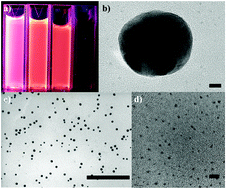
Biomineralization of gold with BSA can give a range of different-sized AuNCs, which in turn show size-dependent fluorescence. The reduction potential of BSA is also strong enough to synthesize AuNPs, and the surface stability imparted by BSA makes these AuNPs more stable in biological buffers compared to citrate-covered AuNPs (Fig. 1b–d).
AuNCs and AuNPs are increasingly being used for a range of different applications in bioimaging,17 such as optical labels in drug delivery,18,19 diagnostics,20 and as sensors of heavy metal ions,21,22 to mention a few. In particular, applications of colloidal AuNPs with diameters less than 100 nm are emerging as promising contrast agents for Computed Tomography (CT).23
However, the key to all of these applications remains controlling the size of the AuNCs and AuNPs.
Gold nanoparticles can be prepared via several methods. For instance, adding an extrinsic reducing agent such as NaBH4 can be used for preparing gold nano rods, and different aspect ratios can be obtained by changing the concentration of NaBH4.24 However, recent reports indicate NaBH4 as an extrinsic reducing agent of protein stabilized AuNCs and AuNPs may perturb the solution stability of the protein–AuNC complex due to alterations of the protein structure. This again may be caused by interactions with the NaBH4 and the protein, or that larger gold species are synthesized in the presence of NaBH4, causing the protein to unfold in a greater extent.25,26
The synthesis of AuNCs and AuNPs with BSA has previously been studied with respect to pH,27 dependences on gold precursor concentrations,25 and temperature.1,22 Ascorbic acid is sometimes added as an extrinsic reducing agent in order to reduce the BSA concentration required,27 but the effect of ascorbic acid is not completely understood. In fact, studies have shown that ascorbic acid can associate with BSA28–30 and even quench AuNCs' fluorescence31 if not removed via e.g. dialysis. Different incubation times have also been reported, but more thorough studies revealing how the incubation time affects size-tuning of BSA–AuNCs or AuNPs are needed. Protein-directed growth of AuNCs is protein dependent, and addition of an extrinsic reducing agent may be redundant to obtain fluorescent AuNCs.32
The mechanism of AuNC growth is still not fully understood despite many reports on the synthesis of BSA-stabilized AuNCs and AuNPs. Since different synthesis protocols and conditions are typically being used between studies, it is problematic to deduce an overall mechanism, which in turn makes it difficult to describe and control the size of BSA-stabilized gold. In order to get a better understanding of the mechanism, there is a need for studies that systematically change one synthesis parameter at a time.
This paper has two aims. First we want to ascribe which parameters are important for self-assembly of gold nanostructures in BSA. This we investigate by varying the concentration of gold precursor, and the presence of an extrinsic reducing agent. The effect of an extrinsic reducing agent (ascorbic acid) is determined by comparing two synthesis methods named the extrinsic and intrinsic method. The former refers to reduction of gold ions with the aid of ascorbic acid as an extrinsic reducing agent, while the latter method solely depends on the intrinsic reduction potential of BSA. The second aim is to describe a growth mechanism for AuNCs and AuNPs in the BSA scaffold, by using time as the dependent variable.
This paper demonstrates that we can influence the size and thus the optical properties of BSA–AuNCs and AuNPs by varying the above mentioned synthesis parameters. We also describe how synthesis of either BSA-stabilized AuNCs and/or AuNPs can be achieved, and show that size-tunability of AuNCs can be achieved without the presence of ascorbic acid. Finally, we suggest a description of the growth mechanism from AuNCs to AuNPs that can be used to not only get a better understanding of the underlying mechanisms, but also for size-tunability of fluorescent AuNCs or AuNPs with LSPR.
LSPR appears when the frequency of the incident light matches the oscillation frequency of the surface electrons, relative to the positively charged metallic lattice, leading to an enhancement in the amplitude.4–7 AuNPs with a dark purple color show an intense UV-visible light extinction band centered at 520 nm (Fig. S1†). Under the conditions reported here, we found that there is a threshold for appearance of AuNPs that lies in between 15 and 20 mM TCAA (Fig. 2a). Larger AuNPs were formed when ascorbic acid was added, implying that ascorbic acid contribute to the reduction of TCAA. This is in agreement with earlier studies (see e.g. Le Guével27) and is also expected, as the presence of an extrinsic reducing agent lowers the energy barrier towards nucleation and growth of nano crystals. The presence of AuNPs was confirmed with HR-TEM (Fig. 1b and c), and crystallinity was observed with X-ray powder diffraction (Fig. S4†), and is also in accordance with values determined in previous studies.34,35
The large NIR fluorescence intensity observed for AuNCs at 10 mM TCAA might be a result of a metal-to-ligand/ligand-to-metal charge-transfer (ML/LMCT) complex that is formed between the protein and the NIR AuNCs. This is hypothesized to enhance the fluorescence intensities. However, in an ML/LMCT complex there is an exchange of electrons either from the metal to the protein or vice versa. If this was largely the case, either the protein or the AuNCs would be oxidized/reduced, which would destabilize the suspension with time. Thus, as the suspensions were very stable over long time periods (>1 year), it is more likely that the high fluorescence intensity from NIR AuNCs is caused by capping of BSA. This would in turn cause shielding of the AuNC from water, which further would give a more intense fluorescence emission.
The AuNCs prepared with the intrinsic method show the same intensity and reproducibility as samples synthesized with ascorbic acid. Given that the concentration of ascorbic acid used was in accordance with previous literature.27,39 This finding suggests that the concentration of ascorbic acid used here does not significantly aid BSA in reducing Au3+ to AuNCs. At low concentrations, there are predominantly Vis clusters present, but as the concentration of TCAA increases, so does the population of NIR AuNCs (Fig. 2b). However, as AuNPs emerge, detecting the presence of AuNCs with fluorescence spectroscopy becomes highly complex as the interactions between colloids and fluorophores can involve resonance energy transfer and quenching.7 The Vis AuNCs on the other hand, seem to be unaffected by the presence of AuNPs as their fluorescence intensities continue to increase with TCAA concentration. The most probable reason for this is that the emission from Vis AuNCs is out of range of AuNP quenching or that Vis AuNCs are too far away from AuNPs. Appearance of AuNPs occurs only at high concentrations of TCAA (20 mM, Fig. 2a). At 20 mM TCAA, there is a substantial decrease in the emission of NIR AuNCs (Fig. 2b), as well as a bathochromic shift of the emission peak at 650 nm (Fig. S2†). This could be caused by NIR AuNCs being quenched by AuNPs, coalescence of NIR AuNCs into AuNPs, or a combination of both.
With X-ray photoelectron spectroscopy, the binding energy of surface photoelectrons can be measured. Higher binding energies indicate that the surface electrons are more associated with the metal, and less prone to movement between metallic surfaces.27,40,41 A lower binding energy means that the surface electrons have less affinity to the metallic core. Here, BSA–AuNCs show gold peaks at 80.1 and 83.8 eV, while BSA–AuNPs show a shift to higher binding energies (84.9 eV and 81.2 eV, respectively. Fig. S5†). The peaks for BSA–AuNPs are also broadened, and show higher intensities compared to the BSA–AuNCs. Because XPS can only detect elemental compositions of surfaces down to 10 nm,42–44 a shift to higher binding energies with higher concentrations of TCAA, means that Vis AuNCs are present on the surface of the protein. It also implies that NIR AuNCs are not on the surface and (i) has either coalesced into NPs or (ii) are buried in BSA. The XPS spectra, combined with HR TEM images (Fig. 1b and c) strongly suggests that AuNCs coexist with AuNPs, and imply that the AuNPs are covered with BSA–AuNCs as passivating ligands.
The Trp emission (Fig. 2b) curve has an inflection point approximately at 360 nm, which is best observed with the 5 mM curve (red). As AuNCs are excited at 370 nm, it is likely that the decrease in Trp emission is not only caused by exposure to the surface, but also by quenching of adjacent AuNCs. After 360 nm, the Trp emission intensity slowly increases to 450 nm, before it decreases again.
The whole emission profile of BSA is drastically altered from TCAA concentrations of 10 mM and above, meaning that the protein has undergone large conformational changes. At 10 mM TCAA there is a dramatic change in the Trp emission from 300 to 400 nm. At this particular concentration of TCAA, the highest ratio of NIR AuNCs was determined (Fig. 2a). This means that with a bigger population of NIR AuNCs, the probability that a quencher is adjacent to a Trp residue increases. However, Trp quenching cannot only be explained by AuNC quenching alone. With increased population of nano-sized gold, BSA unfolds and exposes Trp134 to water, which will be a large contributor to quenching.25 Unfolding also leads to exposure of the buried tryptophan residue (Trp213), which emission emerge at ∼320 nm for samples containing 10–20 mM TCAA.
From time-correlated single photon spectroscopy (TCSPC) a large difference in the Trp lifetimes of native BSA and BSA with AuNPs (20 mM TCAA) was detected (Table S2†). This indicates that the fluorophore on average spends less time in the excited state, which is probably caused by an increased exposure to water or energy transfer to BSA–gold, or a combination of the two.25
Combining the TCSPC data with steady-state fluorescence data, we ascribe quenching of Trp emission as concomitant effect of increased size of BSA–AuNCs/AuNPs. Interestingly, even though the Trp emission reveals large structural changes in BSA, the BSA–AuNP solution did not show any signs of aggregation after 12 months of storage. This means that the conformational changes induced by nano-sized gold are not large enough to severely denature BSA, and compromise its solution stability. The long shelf-life of BSA–AuNP suspensions enhances their utility e.g. in sensing and imaging applications.53–55
The incubation time for the samples prepared above was one week,25,32 which is much longer compared to the original synthesis of 12 hours.1 12 hours incubation time is also reported by several others,39,56–59 but overnight,60 15 hours,22 5 hours,27,39 and 2 hours (ref. 25) have also been used for BSA–AuNCs synthesis. The different incubation times yield different populations of AuNCs, revealing that the synthesis is highly time-dependent.
We wanted to elucidate the time-dependent changes in the protein and what appears to be a dynamic interchange between Vis and NIR AuNCs that could give further insight to the nucleation and growth processes. In order to address this issue, biomineralization of AuNCs and AuNPs with BSA was followed for one week.
In Fig. 4 we have illustrated what we suggest as the self-assembly mechanism of BSA-stabilized AuNCs and AuNPs. Initially, the pH is raised to above 10 so that BSA becomes negatively charged (step 1, Fig. 4).61 Positively charged gold ions are then electrostatically attracted to BSA, particularly in areas rich in tyrosine and histidine which are the major reducing amino acids. Once the local concentration of gold ions is high enough, nucleation occurs (step 2), and further growth of AuNCs is caused by an increased influx of gold ions, or due to coalescence, or both (step 3). Chaudhari et al. points to that the evolution of AuNCs in protein backbones are facilitated by the flexibility and unfolding of the protein,62 which is consistent with what we report here. If the concentration of TCAA is high enough, AuNPs are synthesized most likely due to coalescence of several proteins surrounding an AuNP core (step 4), consistent with the general mechanism described by Volden et al.32
The initial electrostatic interactions of Au3+ ions will favor nucleation at sites high in concentration of negatively charged amino acids. This in turn suggests that nucleation is likely to take place in these regions as well. Indeed, the reduction in Trp emission observed in Fig. 2b (5 and 7.5 mM TCAA) could be an effect of exactly that. Nucleation that takes place close to a dominating fluorophore would in turn cause quenching, as AuNCs can interact with the emitted photons from Trp213. This also leans towards the fact that nucleation does not take place in the central hydrophobic regions of the protein, as Trp134 emission is not quenched with increased concentration of gold ions (Fig. 2b, 10–20 mM TCAA, Trp peak at 320 nm).
Biomineralization of AuNPs is highly time-dependent, with AuNPs of 20 nm occurring after one week of incubation with BSA, but only at high concentrations of TCAA (20 mM, Fig. 3a). Synthesis of AuNCs, however, is not equally linear and straight-forward. Up until 60 hours of incubation time, there are large fluctuations in the populations of Vis AuNCs (Fig. 3b). Beyond 60 hours, the population sizes decrease but at different rates. The largest changes are seen with the highest concentration of TCAA, which seem to inversely follow the growth of AuNPs (Fig. 3a), suggesting increased quenching of AuNCs with appearance of AuNPs. For samples containing 15 and 20 mM TCAA, decrease in populations of Vis AuNCs is followed by growth of NIR AuNCs, which is not equally observed for the other samples (Fig. 3c). This suggests that Vis AuNCs coalesce into NIR AuNCs, and that this is most prominent when high concentrations of TCAA are added. For samples containing 5–10 mM TCAA, there are particularly large fluctuations in the emissions for NIR AuNCs up until approximately 100 hours. During the time course of the experiment, peak shoulders were consistently observed for the NIR AuNCs, but not for the Vis AuNCs. Emission peaks of AuNCs that broaden and have shoulders indicate that different discrete AuNC populations of magic Jellium numbers are present in the protein backbone.25,63 This means that there are at least two populations of NIR AuNCs present, and that the population sizes are changing based on the available amount of Au3+. The spectral line shape of 7.5 mM TCAA is particularly interesting (Fig. S9†). In the beginning of the reaction, the peak at 650 nm has a shoulder that lies to the left, but after 62 hours of reaction time, the shoulder has shifted to the right, meaning that AuNCs of higher magic Jellium numbers are formed. At 62 hours, there are minor changes in the population of Vis AuNCs, which could mean that growth of larger AuNCs is caused by an influx of Au3+ to the protein surface from the bulk, rather than coalescence of Vis AuNCs as the latter would have revealed a decrease in the population of Vis AuNCs.
It is very important to point out that emission of AuNCs tend to be higher at short incubation times, with the exception of NIR AuNCs for samples containing 15 and 20 mM TCAA. This suggests that synthesis of AuNCs with high quantum yields should be performed with incubation times below 40 hours.
Volden et al. also points to the flexibility of the protein as a key feature for synthesis of AuNCs. The Trp emission was also followed with time, and revealed how BSA rapidly undergoes conformational changes during the biomineralization process. The Trp emission line shape did not change after 24 hours incubation time (Fig. S10†) but had the same shape as that observed after one week (Fig. 2b). With the sample prepared at 20 mM TCAA, the changes during the week were less prominent, which indicates that the protein has less chances of conformational changes due to the NIR AuNCs and AuNPs present in its backbone. However, changes to the emission of the other samples were observed and is worth highlighting. The samples containing 5–15 mM TCAA actually showed an increase in the Trp emission at the end of the week compared to 24 hours. Increased emission of Trp represents a refolding of the BSA with time. As size and amount of AuNCs grow, BSA is forced to stretch and expose hydrophobic pockets to the aqueous environment. At some point, the unfavorable interactions between hydrophobic residues and water will force the protein to change conformation. Refolding of BSA may in turn bring Vis AuNCs closer to each other, which would increase the probability of coalescence into NIR AuNCs. The concomitant decrease in the Vis AuNCs (Fig. 3b) could therefore be an effect of refolding of BSA that is greater with time. It is likely that NIR AuNCs also remain in the protein backbone as they can be visualized with HR TEM (Fig. 1c) and measured with steady-state fluorescence spectroscopy.
The easy size tuning, low toxicity, excellent stability, and optical properties of BSA-stabilized AuNCs and AuNPs render these constructs highly useful in several applications. For instance, we have initial data suggesting that BSA–AuNPs show size-dependent X-ray attenuation, which can be used in computed tomography (Fig. S7†).
Footnote |
| † Electronic supplementary information (ESI) available. See DOI: 10.1039/c5ra23423a |
| This journal is © The Royal Society of Chemistry 2015 |