Self-repairing nonfouling polyurethane coatings via 3D-grafting of PEG-b-PHEMA-b-PMPC copolymer

Kunlin Chen, Shuxue Zhou* and Limin Wu
Department of Materials Science and State Key Laboratory of Molecular Engineering of Polymers, Advanced Coating Research Center of Ministry of Education of China, Fudan University, Shanghai 200433, P. R. China. E-mail: zhoushuxue@fudan.edu.cn

Received 28th October 2015 , Accepted 30th November 2015

First published on 1st December 2015


Abstract

Durability of nonfouling coatings is a critical problem to be solved for their practical application. In this paper, self-repairing nonfouling polyurethane (PU) coating was fabricated by spraying of a triblock copolymer of polyethylene glycol (PEG), 2-hydroxyethyl methacrylate (HEMA) and 2-methacryloyloxyethyl phosphorylcholine (MPC) on pre-cured acrylic-based PU coatings. The triblock copolymer was synthesized through living radical polymerization mediated by an atom transfer radical polymerization. Anchoring of the copolymer took place both on the surface and in the interior (namely, 3D-grafting) of PU coatings through the diffusion of the copolymer and subsequently the chemical reaction between the pendent hydroxyl group of the copolymer and the remaining isocyanate groups in the pre-cured PU coatings. This 3D grafting procedure is rather simple and favorable for large-area application. The 3D-grafted PU coating has higher hydrophilicity (water contact angle: 33°). In contrast, if the triblock copolymer was used as an additive in PU coatings, the hydrophilicity of the PU coating did not obviously change. The 3D-grafted PU coating effectively inhibited the adhesion of protein and human platelet cells due to the synergistic effect of PEG and MPC. Moreover, after the coatings were detached and mechanically damaged, the surfaces can restore their hydrophilicity and possess better long-term anti-fouling ability than the control surface-grafted coatings underwater.

1. Introduction

Biofouling or biocontamination involves the unintended accumulation of biological matter and organisms (microorganisms, plants, algae, or animals) on surfaces.1,2 It is recognized as a major problem for numerous applications, such as biomedical implants and devices,3–5 biosensors,6,7 textiles,8–10 food packaging,11–13 water purification systems,14–16 and industrial and marine equipments.17–19 Surface-coated modification with nonfouling coatings is an effective method to solve the biological fouling. Traditional techniques involve the design of coatings that release biocidal agents, including antibiotics, tributyltin, copper, quaternary ammonium salts, and silver, into the surrounding aqueous environment.20 Although the antifouling performance of such systems is excellent, the environmental toxicity of these compounds is under scrutiny.21

In the past decade, some non-toxic anti-fouling coatings have been developed, for examples, hydrophobic fouling-release coatings based on silicone or fluorocarbon resins with low-surface energy, self-peeling coatings based on biodegradable polymer, and nonfouling coatings based on hydrophilic polymers (such as poly(ethylene glycol) (PEG),22–26 zwitterionic biomaterials,27–30 hydrogel and polysaccharide31,32) or amphiphilic polymers. Especially, the last ones have gained much attention because they can prevent the adsorption of proteins and inherently suppress the growth of marine microorganism on their surfaces.

So far, many nonfouling coatings (or surfaces) have been reported. Alswieleh et al. prepared zwitterionic poly(cysteine methacrylate) brushes via surface-initiated ATRP.33 Yang et al. produced antifouling and antimicrobial polymer brushes via “click” reactions.34 Yuan et al. synthesized diblock copolymer being comprised of poly(2-(methacryloyloxy)ethyl phosphorylcholine) and poly(2-(methacryloyloxy)ethyl phosphorylcholine) (PMPC) segments35 and grafted the copolymer to substrates to create highly hydrophilic surface with antifouling properties. Imbesi et al. reported dual-mode antibiofouling polymer coatings by modifying passive antibiofouling hyperbranched fluoropolymer poly-(ethylene glycol) networks with noradrenaline.36 Nevertheless, most of the current nonfouling coatings (or surfaces) are suffered from complicated fabrication method and short service life.

Recently, “3D polymer grafting method” was reported by Kuroki et al.37 With this method, the nonfouling polymer, PEG, was grafted both to the surface of poly(2-vinylpyridine) (PVP) film and inside the PVP film. The results showed that the 3D-grafted PVP coatings possessed better long-lasting antifouling effect than surface grafting. However, the procedure for 3D PEG grafting PVP film is complex and the thickness of the nonfouling coating is only a few tens of nanometer.

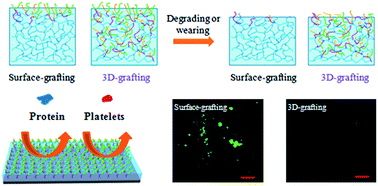
In this paper, we employed 3D polymer grafting method to get long-lasting nonfouling polyurethane (PU) coatings. The strategy is shown in Scheme 1. In this approach, novel nonfouling triblock copolymer with PEG, hydroxyethyl methylacrylate (HEMA) and zwitterionic MPC segments was first synthesized via ATRP polymerization. The triblock copolymer solution was sprayed on the pre-cured acrylic-based PU coatings. 3D grafting thereafter took place through the diffusion of triblock copolymer and subsequently the chemical reaction between the pendant hydroxyl group of triblock copolymer and the remained isocyanate groups in the pre-cured acrylic-based PU coatings. The above 3D grafting procedure is similar to conventional spray-painting of organic coatings and thus rather simple. The obtained coatings had a superior suppressive effect on the adsorption of proteins and human platelet cells. More importantly, these coatings can recover their antifouling effect, even if they were degraded or damaged, exhibiting long-term anti-fouling ability.


image file: c5ra22596e-s1.tif
Scheme 1 The 3D-grafting strategy to self-repairing nonfouling polyurethane coatings.

2. Experimental

2.1 Materials

Methoxy polyethylene glycol (MPEG, Mn = 5000 g mol−1, ≥ 99%) was purchased from Aladdin Chemical Reagent Co. Ltd. (China) and dried at 60 °C under vacuum overnight prior to use. Hydroxyethyl methylacrylate (HEMA, ≥ 99%) was purchased from Aladdin Chemical Reagent Co. Ltd. (China) and passed through a basic alumina column before use. 2-Methacryloyloxyethyl phosphorylcholine (MPC, 99%) was purchased from Nanjing Joynatural Institute of Science and Technology Co., Ltd. (China) and was used as received. Triethylamine (TEA, 99%), 2-bromoisobutyryl bromide (98%), 2,2′-bipyridine (Bpy, 98%) and copper(I) bromide (CuBr, 99%) were purchased from Aladdin Chemical Reagent Co. Ltd. (China). Tetrahydrofuran (THF), methanol, dichloromethane, and ethyl acetate were purchased from Sinopharm Chemical Reagent Co. Ltd. (China) and the former two solvents were refluxed and distilled over sodium or calcium hydride before use. Acrylic polyol resin (SM516) and 1,6-hexamethylene diisocyanate trimer (t-HDI) were obtained from Shanghai Huarong Chemical Co. Ltd. (China). Bovine serum albumin (BSA, >96%) and fluorescein isothiocyanate (FITC, 95%) were purchased from Aladdin Chemical Reagent Co. Ltd. (China). Human platelets plasma was purchased from Beijing Bersee Science and Technology Co. Ltd. (China). These materials were used as received. Deionized water was used throughout the experiment.

2.2 Preparation of PEG-Br macroinitiator

PEG-Br macroinitiator was synthesized via the esterification of PEG-OH with 2-bromoisobutyl bromide according to previous literatures.38,39 In a typical example, MPEG (10.0 g, 2 mmol) was dissolved in 150 mL of dry THF in a 250 mL tree-neck flask, and then TEA (4 mmol) was added and the mixture was cooled to 0 °C. Subsequently, 2-bromoisobutyl bromide (0.92 g, 4 mmol) in 50 mL of dry THF was added dropwise over 1 h and the reaction mixture was further stirred at room temperature overnight. The stirred solution was subsequently filtered and most of THF was removed by rotary evaporation prior to precipitation into excess of diethyl ether. The crude product was dissolved in 100 mL of CH2Cl2 and washed successively with saturated NaHCO3 aqueous solution (150 mL) and brine (50 mL). The organic phase was then dried over anhydrous MgSO4 and precipitated into diethyl ether again. The obtained white solid was dried in vacuo at 40 °C overnight.

2.3 Preparation of PEG-b-PHEMA-b-PMPC triblock copolymer

The poly(ethylene glycol)-block-poly(hydroxyethyl methylacrylate)-block-poly(2-methacryloyloxyethyl phosphorylcholine) (PEG-b-PHEMA-b-PMPC) triblock copolymer was synthesized via ATRP. The synthetic route was outlined in Scheme 2. In a typical procedure, a dry 50 mL Schlenk flask (flame-dried under vacuum before use) with a magnetic stirrer was charged with PEG-Br macroinitiator (1.0 g, 0.2 mmol), HEMA (0.5 g, 3.8 mmol), and methanol (3.0 mL). The mixture was degassed by three freeze–pump–thaw cycles, and then CuBr and Bpy were added to the flask to start the polymerization under N2 atmosphere at room temperature. After the HEMA conversion had reached more than 95% (as judged by 1H NMR), the solution was poured into excess ether to precipitate the polymer (Mn,GPC = 7200 g mol−1, Mw/Mn = 1.12). The precipitate was diluted with dichloromethane and passed though a silica gel column to eliminate the copper catalyst, then precipitated again in ether to get PEG-b-PHEMA copolymer. The PEG-b-PHEMA copolymer (1.0 g), MPC (0.8 g, 2.8 mmol) and methanol (4.0 mL) were added into a 50 mL dry Schlenk flask (flame-dried under vacuum before use) with a magnetic stirrer. The mixture was carefully degassed by three freeze–pump–thaw cycles, and then CuBr and Bpy were added to the flask to start the polymerization under N2 atmosphere at 40 °C. The polymerization was conducted for 12 h and terminated by immersing the flask into liquid N2 (Mn,GPC = 13[thin space (1/6-em)]100 g mol−1, Mw/Mn = 1.18). The product was diluted with methanol and passed though a short neutral alumina column to remove the residual copper complex. The filtrate was concentrated under vacuum and precipitated with cold diethyl ether twice. The crude product was dried in vacuo at 40 °C overnight.
image file: c5ra22596e-s2.tif
Scheme 2 Synthetic route of PEG-b-PHEMA-b-PMPC triblock copolymer.

2.4 Preparation of nonfouling coatings with 3D polymer grafting

SM516 and t-HDI were dissolved in ethyl acetate, and the mixture was coated on a glass slide and cured at 80 °C for 5 min to get pre-cured PU base coats. Triblock copolymer solution (dichloromethane as solvent) was thereafter sprayed on the above polyurethane base coats and kept at room temperature for 30 min and subsequently cured at 80 °C for 30 min. The cured coatings were rinsed with water for three times to remove the unreacted copolymer. For comparison, PEG-b-PHEMA diblock copolymer was also grafted to the polyurethane base coats with the same procedure. Both the triblock copolymer and the diblock copolymer-grafted polyurethane coatings were regarded as the 3D-polymer grafting coatings (3D-coating). The surface-polymer grafting coatings (S-coating) were also prepared using PEG-b-PHEMA-b-PMPC triblock polymer with the same procedure except that 30 min of pre-curing time was adopted for the base coatings. In addition, the blend type of coatings (B-coating) was prepared by mixing SM516, t-HDI, triblock copolymer and ethyl acetate, casting the mixture, and drying at 80 °C for 30 min.

2.5 Characterization

Molecular weight and its distribution was determined by gel permeation chromatography (GPC) performed in 0.1 M NaNO3 aqueous solution at 40 °C with an elution rate of 0.5 mL min−1 on an Agilent 1100 equipped with a G1310A pump, a G1362A refractive index detector, and a G1315A diode-array detector. Three TSK gel PW columns in series (molecular weight ranges from 0 to 5 × 10⁴ and 5 × 10⁴ to 8 × 10⁶ g mol−1) were calibrated with PEO standards. 1H NMR measurements were carried out on a Bruker (500 MHz) NMR instrument, using D2O as the solvent. Attenuated total reflectance Fourier transform infrared (ATR-FTIR) spectra were recorded on Nicolet Nexus 470 spectrometer in the 400–4000 cm−1 range, with a resolution of 0.5 cm−1 and an accumulation of 32 scans. Field-emission scanning electron microscopy (FESEM) was conducted with a Zeiss Ultra 55 field emission microscope at an accelerating voltage of 2 kV. Elemental analysis was accomplished by energy-dispersive X-ray spectroscopy (EDX) attached to FESEM. Atomic force microscopy (AFM) (Dimension 3100, Digital Instruments) was used to probe the samples under ambient conditions in tapping mode with a silicon cantilever (40 N m−1). Water contact angle (WCA) was determined with an OCA15 contact angle analyzer (Data-physics, Germany), using a 5 μL deionized water droplet. Average value from more than five parallel measurements on different sites of the same coatings was adopted. The surface composition of the film was measured using X-ray photoelectron spectroscopy (XPS, PerkinElmer PHI 5000C ECSA) with Al Kα radiation at a 90° take off angle. All binding energy values were calibrated using the reference peak of C 1s at 284.6 eV.

2.6 Durability tests

The durability of the copolymer-grafted coatings was evaluated by both water immersing experiments and abrasion tests. In water immersing experiment, the samples were put into phosphate buffered solution (PBS) (pH = 7.4) at 37 °C for 30 days. Afterward, the surfaces of coatings were rinsed with PBS and distilled water. WCA and surface chemistry (by ATR-FTIR) were monitored as a function of immersing time. The abrasion test of coatings was conducted by a homemade polish tester using a piece of 1500-mesh sandpaper and a weight of 1 kg. After abrasion test, the sample was immediately immersed in water for 30 min and thereafter taken out of the water bath. The sample was air-dried for the next WCA and XPS analysis.

2.7 Protein adsorption test

The coating samples (size: 4 × 5 cm2) were immersed in BSA solution (1 mg mL−1, in PBS buffer solution, pH 7.4) at 25 °C and 70% humidity for 6 h and then rinsed with PBS three times. The amounts of BSA concentration before and after adsorption were determined by a UV-vis (U-4100, Hitachi) spectroscope at a wavelength of 280 nm and calculated according to a standard curve. The reported data were the mean value of triplicate samples for each film.

Fluorescein isothiocyanate-labeled BSA (BSA-FITC) was used as a model to evaluate the protein adsorption resistance. The synthesis, purification and storage of the BSA-FITC and protein adsorption tests were all conducted in the dark. BSA (10.0 mg) and FITC (1.0 mg) were together dissolved in NaHCO3 buffer solution (0.1 M, pH 9) at 25 °C. After 3 h, the solution was dialyzed against PBS buffer solution (pH 7.4) for 3 days at 4 °C to remove the uncreated FITC. Subsequently, the purified BSA-FITC solution was diluted with PBS buffer solution to a concentration of 20 μg mL−1 and stored at 4 °C prior to use. In a typical protein adsorption test, a membrane sample (1 × 2 cm2) was immersed into 4 mL of the BSA-FITC solution in a tube and shaken in a dark place at 25 °C for 7 h. Then, the sample was rinsed with PBS for at least three times to remove the loosely absorbed BSA-FITC. The morphology of adhered BSA-FITC on the sample was observed by a confocal laser scanning microscope (CLSM, Nikon, Japan) at a 200× magnification.

2.8 Platelet adhesion test

The coating samples (size: 1 × 1 cm2) were placed in individual wells of a 24-well tissue culture plate and equilibrated with PBS overnight. Platelet rich plasma (PRP) containing about 1 × 10⁵ blood cells per mL was prepared by concentrating the blood at 20 Hz (1200 rpm) for 10 min. Five hundred microliters (500 μL) of PRP was added into each well and incubated at 37 °C for 120 min under static conditions. After being rinsed with PBS three times, the substrates surface were immersed into 2.5% glutaraldehyde in PBS for 120 min, which was subjected to a series of graded alcohol-water solutions (25%, 50%, 75%, 95%, and 100%) for 20 min in each step and dried in air. Finally, the samples were sputtering-coated with gold and photographed using FESEM.

3. Results and discussion

3.1 Synthesis and characterization of PEG-b-PHEMA-b-PMPC triblock copolymer

The synthesis of the PEG-b-PHEMA-b-PMPC triblock copolymer was monitored by GPC, as shown in Fig. 1. A stepwise increase in molecular weight is revealed from the curves. It indicates the living feature of the polymerization as well as the successful synthesis of the block copolymer via ATRP. Fig. 2 shows the 1H NMR spectrum of the triblock copolymer. All the peaks match well with the protons of the triblock copolymer. The results of GPC and 1H NMR both suggest that the triblock copolymers, PEG-b-PHEMA-b-PMPC, has been successfully synthesized. Additionally, the polymerization degree of the PHEMA segment is designed to be about 15. This special design allows the multi-anchoring points between the copolymers and the pre-cured PU base coats and thus increases the grafting efficiency and the durability of the grafted copolymer.
image file: c5ra22596e-f1.tif
Fig. 1 GPC monitoring of ATRP using PEG-Br as macroinitiator.

image file: c5ra22596e-f2.tif
Fig. 2 1H NMR spectrum of PEG-b-PHEMA-b-PMPC triblock copolymer.

3.2 Characterization of 3D-coatings

The surface compositions of the 3D-coating and the pre-cured PU coating were characterized by ATR-FTIR analysis. Their spectra are shown in Fig. 3. An absorption peak at 2280 cm−1 due to –NCO stretching mode is clearly observed in the spectrum of the pre-cured PU coating. However, it disappeared after 3D polymer grafting. Instead, compared to the absorption peaks at 1248 cm−1 and 1134 cm−1 of pre-cured PU coating, two new peaks at 1245 cm−1 and 1150 cm−1 corresponding to the P[double bond, length as m-dash]O and C–O–C stretching vibrations occurred in the FT-IR spectrum of 3D-coating. These results demonstrate that the copolymer chains have been successfully anchored onto the surface of the PU coating.
image file: c5ra22596e-f3.tif
Fig. 3 ATR-FTIR spectra for the pre-cured PU coating and 3D-coating.

Further, the cross-section of the 3D-grafted coats was analyzed using EDX mapping measurement. The images of EDX mapping are presented in Fig. 4. Except for C, O, and N elements, P element is exhibited in the coatings. Since the atomic P only comes from the PEG-b-PGMA-b-PMPC triblock copolymer, it directly proved the successful grafting of the triblock copolymer. More interestingly, the P atom presents a concentration gradient distribution from top to bottom. This composition profile suggests that the copolymer chains are grafted onto the top layer of the film within a certain thickness range. Namely, PEG-b-PGMA-b-PMPC triblock copolymer was anchored to the PU coatings in 3D-grafting mode.


image file: c5ra22596e-f4.tif
Fig. 4 (a) SEM image, (b) EDX spectrum and (c) EDX mapping images of the cross-section of 3D-coating.

Fig. 5 shows the topographies of PU coating, S-coating, and 3D-coating. The S-coating reveals ordered pattern, which must be attributed to the copolymer on the surface (Fig. 5b). Nevertheless, the 3D-coating presents no features (Fig. 5c). This suggests that the triblock copolymer diffuses into the PU coating in the 3D-coating.


image file: c5ra22596e-f5.tif
Fig. 5 AFM topography images of the PU coating (a), S-coating (b) and 3D-coating (c).

The WCAs were determined and given in Fig. 6 for PU coating, B-coating, and 3D-coating. The WCA of pure PU coating is about 78.9°. When the PU coating was 3D grafted with the triblock copolymer (i.e. 3D-coating), its WCA remarkably decreased to 33°. In contrast, the control sample (B-coating) displayed 69.4° of WCA, although its composition is the same as that of 3D-coating. This could be explained by the high hydrophilicity of PEG-b-PGMA-b-PMPC. Generally, the hydrophilic polymers uniformly distribute in the interior of coatings rather than at the surface, driven by its high surface free energy. Therefore, 3D-grafting method is favorable for the enrichment of hydrophilic polymer at the surface.


image file: c5ra22596e-f6.tif
Fig. 6 The WCA of the PU coating, B-coating and 3D-coating.

3.3 Durability of 3D-coatings

Durability of coatings is important for their practical application. To inspect the durability of the 3D-coating in water, it was immersed in PBS. Fig. 7 shows the WCA of the coatings as a function of immersion time. The 3D-coating displayed a slight change in WCA, and always maintained high hydrophilicity (WCA < 35°) even after 30 days immersion. However, the WCA of surface-grafting coatings rose to 72°, being close to that of PU coatings (WCA: 75°). These results indicate that 3D-coatings are durable in retaining its surface hydrophilicity underwater. The high durability should be due to its 3D-grafting structure with which the degraded hydrophilic chains at the surface can be offset by the hydrophilic segments inside the coatings.
image file: c5ra22596e-f7.tif
Fig. 7 The WCA of the PU coating, S-coating and 3D-coating as a function of incubation time in PBS at 37 °C.

Furthermore, the ATR-FTIR spectra of the coatings surface before and after 30 days' immersion were compared in Fig. 8. The absorption peaks of P[double bond, length as m-dash]O (1245 cm−1) and C–O–C (1150 cm−1) did not change for 3D-coatings, and on the contrary, weakened for the S-coatings. These results further demonstrated that the hydrophilic copolymers at the surface of the S-coatings were almost degraded after incubation in PBS for 30 days. However, because of the enrichment of the interior hydrophilic polymeric chains at the surface of 3D-coatings underwater, its surface chemical composition little changed.


image file: c5ra22596e-f8.tif
Fig. 8 ATR-FTIR spectra for the surfaces of 3D-coating (a) and S-coating (b) as a function of incubation in PBS at 37 °C.

The coatings were suffered to polishing with a piece of sandpaper in order to evaluate their mechanical durability. The results are shown in Fig. 9. The WCA of 3D-coating did not exhibit significant change, whereas the WCA of S-coating remarkably increased from 33 to 67° (Fig. 9c). These mean that most of hydrophilic polymers have been worn off. Although 3D-coating was also worn, they can recover the original hydrophilicity because of 3D polymer grafting. Further, the atomic compositions in Table 1 from XPS analysis display that the polished surface had a comparable atomic surface composition to its original one. After polishing, P atomic concentration of S-coating sharply decreased to 0.07, but the P atomic concentration of 3D-coating nearly unchanged, assured the durability of the polymer 3D-grafted coatings.


image file: c5ra22596e-f9.tif
Fig. 9 SEM images of the polished coatings ((a) S-coating, (b) 3D-coating) after 10 cycles of abrasion. (c) The WCA of the different coatings before and after 10 cycles of abrasion. (d) The working principle of self-repairing coatings with 3D polymer grafting.
Table 1 Surface chemical composition of the different coatings by XPS analysis
Samples Atomic composition (mol%)
C O N P
3D-coating 66.27 28.50 5.03 0.20
S-coating 66.36 28.35 5.08 0.21
3D-coating after polishing 66.84 27.82 5.15 0.19
S-coating after polishing 67.65 27.43 4.85 0.07


The self-repairing mechanism of the 3D polymer grafted coating is schematically described in Fig. 9d. When antifouling coatings or membranes serve in the underwater environment, degradation and physical abrasion of the grafted hydrophilic polymeric chains would lead to loss of antifouling effect. However, the proposed 3D-coating has the potential to sustain the antifouling effect for a long time, even if a substantial fraction of the grafted hydrophilic polymers is degraded and abraded. Because segments of polymeric chains stored inside the coating can replenish the lost hydrophilic polymeric chains at the liquid/solid interface driven by an emerging gradient in a chemical potential, and the antifouling effect of damaged area can thus be recovered by itself.37

3.4 Anti protein properties of 3D-coatings

Herein, BSA protein was used as a model foulant to investigate the anti-fouling properties of the coatings. The resistance of the grafted surfaces incubating in PBS to BSA protein was also investigated. As shown in Fig. 10a, S-coating and 3D-coating all have excellent resistance to protein at first. Nevertheless, the protein adsorption of S-coating increased with the increase of incubation time, and reached to 120 μg cm−2 after immersing in PBS for 30 days. But the protein adsorption of 3D-coating was still low (<20 μg cm−2) after 30 days incubation, demonstrating that 3D-coating has higher stability than S-coating in the underwater environment. From Fig. 10b, it can be seen that 3D-coating after polishing exhibits BSA adsorption of about 10 μg cm−2. This value is considered to be low fouling surface.27 In contrast, protein adsorption on S-coating after polishing is increased and close to the protein adsorption on PU coating, suggesting that S-coating after polishing has lost its antifouling properties.
image file: c5ra22596e-f10.tif
Fig. 10 (a) Adsorbed amount of protein on the grafted coatings as a function of incubation time in PBS at 37 °C and (b) protein adsorption on the coatings after polishing (note: PU coating without polishing was presented for comparison).

Fig. 11a and b presented the fluorescence microscopy images of PU coating and B-coating after exposed to BSA-FITC solution for 7 h. Brilliant and intense fluorescence was observed for the surfaces, indicating a significant BSA-FITC adsorption on the coatings. Compared with PU coating and B-coating, the fluorescence intensities of the S-coating and 3D-coating decreased obviously (Fig. 11c and d). It suggests that the adsorbed BSA-FITC on these coatings was dramatically reduced. However, as evidenced in Fig. 11e and f, it was found that brilliant fluorescence was again observed for the S-coating after incubating in PBS (37 °C) for 30 days, whereas no brilliant fluorescence was observed for the 3D-coating after incubating in PBS (37 °C) for 30 days (Fig. 11g). After polishing the initial S-coating, brilliant fluorescence was again observed, while no fluorescence was observed for the 3D-coating (Fig. 11h and i), indicating the easy loss of antifouling properties for the S-coating after long-term incubating or damaged. These results are consistent with the wettability and the BSA adsorption results as presented above.


image file: c5ra22596e-f11.tif
Fig. 11 CLSM images of FITC-labeled BSA attached onto (a) PU coating; (b) B-coating; (c) S-coating; (d) 3D-coating; (e) S-coating after immersing in PBS for 15 days; (f) S-coating after immersing in PBS for 30 days; (g) 3D-coating after immersing in PBS for 30 days; (h) S-coating after polishing; (i) 3D-coating after polishing. The scale bare is 100 μm.

3.5 Anti blood platelet properties of 3D-coatings

Zwitterionic materials have received growing attention in the field of nonbiofouling because of their excellent inhibition in plasma protein and blood platelet cells adhesion, and thrombus formation in vitro.6,40,41 As shown in Fig. 12a and b, large amounts of platelets are observed on the surfaces of PU coating and diblock polymer-grafted coating after platelet adhesion tests, suggesting their inability to inhibit platelet cells. For the 3D-coating after immersing in PBS for 30 days (Fig. 12c), nearly no platelets can be seen on the surface, which is attributed to the MPC chain block in copolymer. However, we can observe increases in the adhesion and activation of platelets on the S-coating after immersing in PBS for 30 days (Fig. 12d). The result indicates that S-coating easily loses the antifouling properties and does not possess long-lasting antifouling ability underwater. Moreover, as shown in Fig. 12e and f, it was found that no platelets adhered on the 3D-coating after polishing, whereas a number of platelets clearly observed on the S-coating after polishing. The results further support that 3D-coating can not only resist blood platelets adhesion but also possess self-repairing antifouling ability.
image file: c5ra22596e-f12.tif
Fig. 12 SEM images of blood platelet attached onto (a) PU coating; (b) diblock polymer-grafted coating; (c) 3D-coating after immersing in PBS for 30 days; (d) S-coating after immersing in PBS for 30 days; (e) 3D-coating after polishing; (i) S-coating after polishing.

4. Conclusions

In this work, PEG-b-PHEMA-b-PMPC triblock copolymers were synthesized via ATRP, and grafted onto both the surface and the interior of the acrylic-based polyurethane base coatings to form hydrophilic polymer 3D-grafted coatings. The obtained 3D-coatings were shown to have inhibition ability for the adhesion of protein and human platelet cells. Furthermore, after the surfaces were degraded or mechanically damaged, the hydrophilic polymer chains stored inside the coatings can repair the surfaces and maintain long-term anti-fouling ability in the underwater environment. The 3D-coatings can be large-scale fabricated on various substrates, such as biomedical implants and devices, ships, marine equipments, and so on.

Acknowledgements

Financial supports from Specialized Research Fund for the Doctoral Program of Higher Education (20130071110002) were appreciated. We also thank Yunjiao Gu for CLSM tests and Shuyan Zhao for EDS characterization.

Notes and references

  1. R. Yang, J. Xu, G. Ozaydin-Ince, S. Y. Wong and K. K. Gleason, Chem. Mater., 2011, 23, 1263–1272 CrossRef CAS.
  2. H. O. Ham, S. H. Park, J. W. Kurutz, I. G. Szleifer and P. B. Messersmith, J. Am. Chem. Soc., 2013, 135, 13015–13022 CrossRef CAS PubMed.
  3. A. L. Lewis, L. A. Tolhurst and P. W. Stratford, Biomaterials, 2002, 23, 1697–1706 CrossRef CAS PubMed.
  4. L. Chen and Y. M. Wen, Int. J. Oral Sci., 2011, 3, 66–73 CrossRef CAS PubMed.
  5. N. Hoiby, O. Ciofu, H. K. Johansen, Z. J. Song, C. Moser, P. O. Jensen, S. Molin, M. Givskov, T. Tolker-Nielsen and T. Bjarnsholt, Int. J. Oral Sci., 2011, 3, 55–65 CrossRef PubMed.
  6. Y. Chang, Y. J. Shih, C. J. Lai, H. H. Kung and S. Jiang, Adv. Funct. Mater., 2013, 23, 1100–1110 CrossRef CAS.
  7. T. Goda, M. Tabata, M. Sanjoh, M. Uchimura, Y. Iwasaki and Y. Miyahara, Chem. Commun., 2013, 49, 8683–8685 RSC.
  8. K. T. Meilert, D. Laub and J. Kiwi, J. Mol. Catal. A: Chem., 2005, 237, 101–108 CrossRef CAS.
  9. C. Yang, G. L. Liang, K. M. Xu, P. Gao and B. Xu, J. Mater. Sci., 2009, 44, 1894–1901 CrossRef CAS.
  10. M. M. Teoh, T. S. Chung and Y. S. Yeo, Chem. Eng. J., 2011, 171, 684–691 CrossRef CAS.
  11. A. Conte, G. G. Buonocore, A. Bevilacqua, M. Sinigaglia and M. A. Del Nobile, J. Food Prot., 2006, 69, 866–870 CAS.
  12. X. H. Li, Y. Xing, Y. H. Jiang, Y. L. Ding and W. L. Li, Int. J. Food Sci. Technol., 2009, 44, 2161–2168 CrossRef CAS.
  13. M. Simões, L. C. Simões and M. J. Vieira, LWT--Food Sci. Technol., 2010, 43, 573–583 CrossRef.
  14. P. Asuri, S. S. Karajanagi, R. S. Kane and J. S. Dordick, Small, 2007, 3, 50–53 CrossRef CAS PubMed.
  15. J. Zhang, Z. Xu, W. Mai, C. Min, B. Zhou, M. Shan, Y. Li, C. Yang, Z. Wang and X. Qian, J. Mater. Chem. A, 2013, 1, 3101–3111 CAS.
  16. J. Peng, Y. Su, W. Chen, X. Zhao, Z. Jiang, Y. Dong, Y. Zhang, J. Liu and X. Fan, Ind. Eng. Chem. Res., 2013, 52, 13137–13145 CrossRef CAS.
  17. J. A. Callow and M. E. Callow, Nat. Commun., 2011, 2, 244 CrossRef PubMed.
  18. F. Hong, L. Xie, C. He, J. Liu, G. Zhang and C. Wu, J. Mater. Chem. B, 2013, 1, 2048–2055 RSC.
  19. M. S. N. Idora, M. Ferry, W. B. W. Nik and S. Jasnizat, Prog. Org. Coat., 2015, 81, 125–131 CrossRef.
  20. I. Banerjee, R. C. Pangule and R. S. Kane, Adv. Mater., 2011, 23, 690–718 CrossRef CAS PubMed.
  21. L. D. Chambers, K. R. Stokes, F. C. Walsh and R. J. K. Wood, Surf. Coat. Technol., 2006, 201, 3642–3652 CrossRef CAS.
  22. M. S. A. S. Shah, M. Nag, T. Kalagara, S. Singh and S. V. Manorama, Chem. Mater., 2008, 20, 2455–2460 CrossRef CAS.
  23. B. Mizrahi, X. Khoo, H. H. Chiang, K. J. Sher, R. G. Feldman, J. J. Lee, S. Irusta and D. S. Kohane, Langmuir, 2013, 29, 10087–10094 CrossRef CAS.
  24. A. Venault, Y. Chang, H. H. Hsu, J. F. Jhong, H. S. Yang, T. C. Wei, K. L. Tung, A. Higuchi and J. Huang, J. Membr. Sci., 2013, 439, 48–57 CrossRef CAS.
  25. W. Yandi, S. Mieszkin, P. Martin-Tanchereau, M. E. Callow, J. A. Callow, L. Tyson, B. Liedberg and T. Ederth, ACS Appl. Mater. Interfaces, 2014, 6, 11448–11458 CAS.
  26. C. Yang, X. Ding, R. J. Ono, H. Lee, L. Y. Hsu, Y. W. Tong, J. Hedrick and Y. Y. Yang, Adv. Mater., 2014, 26, 7346–7351 CrossRef CAS PubMed.
  27. A. Venault, H. S. Yang, Y. C. Chiang, B. S. Lee, R. C. Ruaan and Y. Chang, ACS Appl. Mater. Interfaces, 2014, 6, 3201–3210 CAS.
  28. Z. Zhang, T. Chao, S. Chen and S. Jiang, Langmuir, 2006, 22, 10072–10077 CrossRef CAS PubMed.
  29. Y. F. Zhao, L. P. Zhu, Z. Yi, B. K. Zhu and Y. Y. Xu, J. Membr. Sci., 2013, 440, 40–47 CrossRef CAS.
  30. T. Cai, M. Li, K. G. Neoh and E. T. Kang, J. Mater. Chem. B, 2013, 1, 1304–1315 RSC.
  31. W. J. Yang, K. G. Neoh, E. T. Kang, S. L. M. Teo and D. Rittschof, Prog. Polym. Sci., 2014, 39, 1017–1042 CrossRef CAS.
  32. S. Lowe, N. M. O'Brien-Simpson and L. A. Connal, Polym. Chem., 2015, 6, 198–212 RSC.
  33. A. M. Alswieleh, N. Cheng, I. Canton, B. Ustbas, X. Xue, V. Ladmiral, S. Xia, R. E. Ducker, O. E. Zubir, M. L. Cartron, C. N. Hunter, G. J. Leggett and S. P. Armes, J. Am. Chem. Soc., 2014, 136, 9404–9413 CrossRef CAS PubMed.
  34. W. J. Yang, T. Cai, K. G. Neoh, E. T. Kang, S. L. M. Teo and D. Rittschof, Biomacromolecules, 2013, 14, 2041–2051 CrossRef CAS.
  35. B. Yuan, Q. Chen, W. Q. Ding, P. S. Liu, S. S. Wu, S. C. Lin, J. Shen and Y. Gai, ACS Appl. Mater. Interfaces, 2012, 4, 4031–4039 CAS.
  36. P. M. Imbesi, N. V. Gohad, M. J. Eller, B. Orihuela, D. Rittschof, E. A. Schweikert, A. S. Mount and K. L. Wooley, ACS Nano, 2012, 6, 1503–1512 CrossRef CAS PubMed.
  37. H. Kuroki, I. Tokarev, D. Nykypanchuk, E. Zhulina and S. Minko, Adv. Funct. Mater., 2013, 23, 4593–4600 CrossRef CAS.
  38. X. Jiang, S. Luo, S. P. Armes, W. Shi and S. Liu, Macromolecules, 2006, 39, 5987–5994 CrossRef CAS.
  39. L. Yuan, W. Chen, J. Li, J. Hu, J. Yan and D. Yang, J. Polym. Sci., Part A: Polym. Chem., 2012, 50, 4579–4588 CrossRef CAS.
  40. S. Chen and S. Jiang, Adv. Mater., 2008, 20, 335–338 CrossRef CAS.
  41. S. Jiang and Z. Cao, Adv. Mater., 2010, 22, 920–932 CrossRef CAS PubMed.

This journal is © The Royal Society of Chemistry 2015
Click here to see how this site uses Cookies. View our privacy policy here.