The effects of viscoelastic properties on the cellular morphology of silicone rubber foams generated by supercritical carbon dioxide

Xia Liao*a, Hao Xua, Shaojie Lia, Chuanjian Zhoub, Guangxian Lia and Chul B. Park*c
aCollege of Polymer Science and Engineering, State Key Laboratory of Polymer Materials Engineering, Sichuan University, Chengdu, Sichuan 610065, China. E-mail: xliao@scu.edu.cn; Tel: +86 28 8540 8361
bKey Laboratory of Special Functional Aggregated Materials, Ministry of Education, Shandong University, Jinan, Shandong 250100, China
cMicrocellular Plastics Manufacturing Laboratory, Department of Mechanical and Industrial Engineering, University of Toronto, 5 King's College Road, Toronto, Ontario M5S 3G8, Canada. E-mail: park@mie.utoronto.ca; Tel: +1 416 978 3053

Received 23rd October 2015 , Accepted 3rd December 2015

First published on 7th December 2015


Abstract

Supercritical fluid foaming technology has been investigated for use in silicone rubber foam production due to its many unique properties. The viscoelastic properties of silicone rubber play a vital role in the supercritical carbon dioxide (scCO2) foaming process. This paper investigated for the first time the effect of silica content, saturation temperature and pressure on the viscoelastic properties of silicone rubber compounds. Further, the cellular morphology of silicone rubber foams generated by scCO2 was investigated with rheological analysis, which will be helpful for uncovering the connection between the cellular structure and the viscoelastic properties. This study could provide an environmentally-friendly and convenient way to better control the cellular morphology of rubber by adjusting experimental conditions.

1. Introduction

Silicone rubbers are a special kind of elastomer, which are based on polyorganosiloxanes with a high molecular weight. The backbone is a silicon–oxygen (Si–O) bond and organic groups, which are directly attached to the silicon atom via silicon–carbon (Si–C) bonds. This unique structure results in silicone rubbers with superior performance properties, including superb chemical resistance, good electrical insulation capacity, and excellent ultraviolet and ozone resistance.1 These characteristics provide the perfect balance of mechanical and chemical properties required by many applications, such as in curing ovens, gaskets, and acoustic absorbers in automotive floorboards.2,3 Silicone rubber foams combine the characteristics of silicone rubber and foam materials, such as good resilience, high thermal stability, shape conformity, low density, and light weight.3 Silicone rubber foams exhibit enhanced temperature range suitability (that is, from −60 °C to 250 °C for long-term performance and up to 400 °C for short-term application), which offers a wider range of operating temperature compared with other organic rubber foams.4 Hence, silicone rubber foams have been widely used in many fields such as thermal shielding, vibration mounts, and press pads.

The foaming of silicone rubber usually relies on the expansion of the gaseous phase's dispersion through the rubber melt. Solvent and chemical foaming methods are mostly used in foaming silicone rubbers.2,5 In solvent foaming methods, silicone elastomer is mixed with an inert component, such as NaNO3, or KNO3, which can be dissolved in a specific solvent. However, this kind method consumes more blowing agents and need a time-consuming washing process, which lowers their production efficiency.6 In chemical foaming methods, the foaming agents consist of an organic and inorganic thermally unstable component, which then decomposes to gas components when heated to a certain temperature.6 The decomposed material is environmentally harmful, and it can generate solid residue and sublimate, which remain in the rubber matrix. In addition, it is very difficult to control the cellular structure of silicone rubber foams produced by the above two methods.

In recent years, supercritical carbon dioxide (scCO2), as a new kind blowing agent, has been broadly investigated in the microcellular foam production because of its unique properties.7–9 The low supercritical temperature of CO2 allows for an easy and complete separation from the rubber matrix, without presenting residual problems during foaming. On the other hand, scCO2, as a green physical blowing agent, avoids the environmental problems generated by chemical blowing agents. Most importantly, foams generated by scCO2 own well-defined cells, and the cellular structure can be controlled by adjusting the process parameters.10

To date, most studies on scCO2 polymer foaming have focused on plastic materials, and little attention has been paid on cross-linked resins such as rubbers.11,12 The balance between cell growth and cross-linking progress is important in rubber foaming. The foaming and vulcanization of rubber take place simultaneously in chemical foaming technology. However, simultaneously controlling foaming and vulcanization is difficult in scCO2 foaming, because these two processes progress separately.13 Furthermore, compared with thermal plastic foaming, vulcanization counterbalances the plasticization of the scCO2 and its effect on the viscoelastic properties, which increases the complexity of silicone rubber foaming process by scCO2. In recent years, Lee et al. endeavored to investigate the effect of the curing degree before foaming on the final cell size of silicone rubber foams.14 Song et al. also made preliminary attempts to uncover the effect of the pre-curing time on foam morphology and density.15 It has been reported that the viscoelastic properties of the polymer matrix had a great effect on the final foam structure during the foaming process by scCO2.16,17 However, in previous studies, the relationship between the viscoelastic property of silicone rubber and its cellular structure had not been clearly illuminated.

Silicone rubber foam's performance and its potential applications depend strongly not only on the physical and chemical properties of the rubber matrix, but also on its cellular structure. The cellular structure includes the foam morphology, cell size, cell density, and other cell features, e.g., cell size distribution.18 In this study, we investigated the effect of the silica content, temperature, and pressure on the viscoelastic properties of silicone rubber compounds. Then, the cellular structure of silicone rubber foams prepared by scCO2 under different experimental conditions was investigated in further detail. The same condition of rheology measurement and foaming make it possible for us to relate the viscoelastic properties of silicone rubber to its cellular morphology. We are trying to uncovering the relationship between the viscoelastic properties and the cellular structure through rheological analysis, which guided us toward more effective control of the cellular structure.

2. Experimental

2.1 Preparation of silicone rubber foams

Polymethylvinylsiloxane (PMVS) with 0.15–0.18% vinyl was supplied by China Bluestar Chengrand Research & Design Institute of Chemical Industry. The molecular weight of the silicone rubber was about 500[thin space (1/6-em)]000–700[thin space (1/6-em)]000. Precipitated silica (921, specific surface area = 150 m2 g−1) was obtained from Nanchang Nanji Chemical Industry Co. Limited.

PMVS, precipitated silica and hydroxyl silicone oil were mixed at 100 °C for about 30 min. After cooling to the room temperature, silicone rubber was finally formulated with the addition of dicumyl peroxide (DCP) at an ambient temperature for 15 min. Pre-curing specimens, with a 2 mm thickness, were prepared by compression molding at 120 °C for 6 min or 18 min. Then disk specimens were placed in an autoclave linked to a CO2 cylinder, and they were saturated with CO2 at a specific saturation temperature and pressure. After saturation for 1 h, the high pressure CO2 was rapidly released to atmospheric conditions. Finally, foamed sheets were quickly placed into a heated oven for a complete post-curing. Fig. 1 shows the schematic of the foaming strategy used in this study.


image file: c5ra22242g-f1.tif
Fig. 1 Schematic of the foaming strategy utilized in this study.

2.2 Rheology measurements

Disk-shaped samples were used to measure the rheological properties. The rheological functions, complex viscosity (η*), storage (G′) and loss modulus (G′′), of the silicone rubber compounds in high pressure CO2 atmosphere were measured using high-pressure rotational rheometer (MCR-102, Anton Paar). All time sweep tests under high pressure were performed at a frequency of 1 Hz, strain amplitude of 1% for 1 h. The temperatures were set at 40 °C, 50 °C, 60 °C and 80 °C, and the saturation pressure was set under 10, 12 and 14 MPa. A schematic of rheological analysis under high pressure gas in this study is shown in Fig. 2.
image file: c5ra22242g-f2.tif
Fig. 2 Schematic of rheology analysis under high pressure atmosphere.

2.3 Cell structure observation

The foamed samples' morphology was observed with a Quanta 250 (FEI Company, America) scanning electron microscope (SEM). First, the samples were freeze-fractured in liquid nitrogen and then sputter-coated with gold. The cell size and its distribution were determined from the SEM micrographs.

2.4 Statistics of cell density (Nf) and mean cell diameter (Φ)

Nf is the cell density defined as the number of bubbles per cubic centimeter of silicone rubber and is given as follows:19
 
Nf = (nM2/A)3/2 × 1/(1 − Vf) (1)
 
Vf = 1 − ρ/ρf (2)
where n is the number of bubbles in the micrograph of the foam sample, A is the area of the micrograph (cm2), Vf is the volume fraction occupied by the voids, ρ is the density of silicone rubber, ρf is the density of silicone rubber foams and M is the magnification factor of the micrograph. The mean cell diameter (Φ) was determined from the scanning electron microscope (SEM) micrographs, and it was analyzed by software Image Pro Plus.

3. Results and discussion

3.1 Viscoelastic properties of silicone rubber compounds with various silica contents

High molecular weight polymethylvinylsiloxane (PMVS), as the matrix of silicone rubber compounds, has a combination of unique properties such as high thermal and oxidative stability, low surface energy, hydrophobicity, and good physiological inertness. These attractive properties explain why PMVS is widely applied in so many fields. However, a major drawback of PMVS is its extremely low mechanical properties, which are caused by the low Tg and the weak intermolecular forces between the PMVS chains.20 To achieve reasonable mechanical properties, PMVS must be cross-linked and filled with reinforcing agents, such as precipitated silica.21

The interaction of PMVS with reinforcing agent through the hydrogen bonding between the filler and the matrix. The oxygen atoms attached to the chain skeleton bond to the silanol groups of the silica surface, which leads to the formation of a physical network between the filler particles and the rubber matrix.22–24 As shown in the schematic diagram of the interaction between the silicone rubber chains and the silica (in Fig. 3), the interaction would be enhanced and the distance between the rubber molecule chains decreases with increasing silica content. Thus, the motility of molecule chains would be restricted at the higher silica content.


image file: c5ra22242g-f3.tif
Fig. 3 Schematic of interaction between silicone rubber chains and silica.

As Fig. 4 shows, the effect of silica content on the viscoelastic properties was investigated under high pressure. When sample saturated in a high-pressure CO2 atmosphere of 10 MPa for 1 h, both the G′ and η* decreased gradually during the testing process. It is well-known, scCO2 has the plasticization effect on polymer, which would then enhance the mobility of molecule chains.25 The interaction between the silica and the PMVS would further weaken, which breaks the physical network of silicone rubber compounds. However, both η* and G′ increased with increasing the silica content from 30 to 50 phr. The effect of the silica content in this context counterbalanced the plasticization of the scCO2.


image file: c5ra22242g-f4.tif
Fig. 4 Time dependence of complex viscosity (η*) and storage modulus (G′) at a frequency of 1 Hz of silicone rubber compounds with various silica content at 50 °C for 1 h under 10 MPa.

3.2 Viscoelastic properties of silicone rubber compounds at different temperatures

Saturation temperature (Ts) is a key factor during the foaming process.26 In this research, the silicone rubbers were not fully cross-linked before foaming. Besides the effect of the Ts on the mobility of molecule chains and on the solubility of scCO2 in rubber matrix,27–29 it also strongly affects the decomposition of DCP. This would then affect the viscoelastic properties of the silicone rubber compounds as well, which could further lead to different cell morphologies for samples saturated at different temperatures. To assess the effect of Ts on the viscoelastic properties, dynamic time sweeps of samples were measured at various temperatures for 1 h under atmospheric pressure. As Fig. 5 shows, both the η* and G′ of all the specimens increased but the G′′ decreased during the entire testing period. It shows that DCP decomposes at all testing temperatures from 40 °C to 80 °C. This leads to increasing viscosity and promotes the formation of a cross-linked network.30 At the same time, the temperature also affected the mobility of the molecule chains. With an increased temperature, the silicone rubber chains could move more easily, and the interaction between the silica and the rubber chains weakened. Consequently, both the η* and G′ decreased when the temperature increased from 40 °C to 80 °C.
image file: c5ra22242g-f5.tif
Fig. 5 Time dependence of (a) complex viscosity (η*), (b) storage (G′) and loss (G′′) modulus at a frequency of 1 Hz of silicone rubber (40 phr) at various temperatures for 1 h under atmosphere pressure.

Next, we looked at the effect of Ts on the viscoelastic properties under high pressure CO2 (shown in Fig. 6). As a result of the plasticization of scCO2, the η* and G′ of the specimens at different Ts all decreased during the saturation process. Compared with the η* and G′, the changes in G′′ were sufficiently small to be negligible. Meanwhile, Ts had an effect on the decomposition of curing agent and the solubility of scCO2 in polymer,31,32 which was related to the viscoelastic properties of the silicone rubber compounds. At a higher Ts, the decreasing degrees of the η* and G′ gradually became smaller. This was a result of increased DCP decomposition and the lower scCO2 permeability,27–29 which restricted the movement of molecule chains. All of these factors influenced the viscoelastic properties of the silicone rubber. At the end of the saturation, specimens that experienced 40 °C and 80 °C (or those at 50 °C and 60 °C) had such similar viscoelastic properties that their viscosity and modulus were almost the same.


image file: c5ra22242g-f6.tif
Fig. 6 Time dependence of (a) complex viscosity (η*), (b) storage (G′) and loss (G′′) modulus at a frequency of 1 Hz of silicone rubber (40 phr) at various temperatures for 1 h under 10 MPa.

3.3 Viscoelastic properties of silicone rubber compounds under different pressures

Silicone rubber specimens with two kinds of pre-curing time were tested under various pressures at 50 °C for 1 h through dynamic time sweep measurements. Fig. 7 presents the η* and G′ of specimens as a function of the measurement time. During the saturation process, both the η* and G′ decreased due to the scCO2's permeation into the silicone rubber. When the pre-curing time increased from 6 min to 18 min, the chemical cross-linked network enhanced, thus further increased the η* and G′. Meanwhile, Fig. 7 also demonstrates the effect of the scCO2 saturation pressure (Ps) on the silicone rubber viscoelastic properties. When the Ps was increased from 10 to 14 MPa, both the η* and G′ decreased because a greater amount of scCO2 could permeate into the silicone rubber matrix.33 This drastically increased the rubber chains' motility and broke the interaction between the silica and the PMVS. At the same time, the scCO2's permeation into the polymer also had a relationship with time, so that the difference between specimens under various pressures enlarged as time progressed.
image file: c5ra22242g-f7.tif
Fig. 7 Time dependence of (a) complex viscosity (η*); (b) storage modulus (G′) of silicone rubber (40 phr) with different precuring time under various CO2 pressures at 50 °C for 1 h.

3.4 Effect of silica content on the cellular morphology of silicone rubber foams

Silicone rubber samples with different silica contents were saturated at 50 °C, 10 MPa, for 1 h. The pore morphology was investigated by SEM and different analytical methods were used, such as cell size distribution, mean cell diameter, and cell density. As Fig. 8 shows, foams with a silica content from 30 to 50 phr have distinct cellular morphologies. When the silica content was 30 phr, the foams' cell size was large, and even some bubble coalescence was seen. After increasing the silica content to 40 or 50 phr, the foam appeared to form smaller and more uniform cells.
image file: c5ra22242g-f8.tif
Fig. 8 Effect of silica content on cellular morphology of silicone rubber foams generated at 50 °C, 10 MPa for 1 h: (a) 30 phr; (b) 40 phr; (c) 50 phr.

Based on the software analysis of the SEM photographs, Table 1 correlates the mean cell diameter (Φ) and the cell density (Nf) of silicone rubber foams with different silica contents. The calculation results indicate that increasing the reinforcing filler content from 30 to 50 phr would improve the cell density from 0.42 × 10⁶ to 3.78 × 10⁶ cells per cm3 and would decrease the mean cell diameter from 77.11 to 28.06 μm.

Table 1 Effect of the silica content on the cell density and the mean cell diameter
Silica content (phr) Nf (cells per cm3) Φ (μm)
30 0.4 × 10⁶ 77.1
40 3.7 × 10⁶ 37.1
50 3.8 × 10⁶ 28.1


Statistical analysis of the cell size revealed a connection between the foam structure and the silica content. The effect of the silica content on the viscoelastic properties of silicone rubbers has been illustrated in the already noted rheological measurements, as shown from Fig. 3 to 4. The increasing silica content would enhance the interaction between the silica and the PMVS, thus increase the viscosity and modulus.34,35 With the increasing viscosity, the mobility of molecule chains in the silicone rubber matrix is restricted. Consequently, cell growth in the silicone rubber compounds would slow down with increasing the silica content. On the other hand, based on the heterogeneous nucleation theory,36–38 silica particles can act as heterogeneous cell nucleation sites. With a higher silica content, the heterogeneous nucleation site's concentration would increase, thus promoting cell nucleation.39 In brief, the silica content affects both cell nucleation and cell growth, and thus changes the cellular structure of silicone rubber foams.

3.5 Effect of saturation temperature on the morphology of silicone rubber foam

The saturation temperature (Ts) is a vital factor during the foaming process of silicone rubber by scCO2. The same silicone rubber specimens were saturated at 40 °C, 50 °C, 60 °C and 80 °C, 10 MPa for 1 h. The cell morphology of silicone rubber foams generated at different Ts is shown in Fig. 9. It is clearly seen that the cell size became larger and non-uniform and that more bubble coalescence occurred when the Ts was increased from 40 °C to 80 °C.
image file: c5ra22242g-f9.tif
Fig. 9 SEM micrographs of silicone rubber foams (40 phr) saturated at 10 MPa for 1 h at (a) 40 °C; (b) 50 °C; (c) 60 °C; (d) 80 °C.

The mean cell diameter (Φ) and the cell density (Nf) of silicone rubber foams produced at different Ts are calculated and listed in Table 2. Clearly the cell density dropped from 9.0 × 10⁶ to 4.2 × 10⁵ cells per cm3, and the average cell diameter increased from 21.8 to 76 μm when the temperature was increased from 40 °C to 80 °C.

Table 2 Effect of saturation temperature on cell density and mean cell diameter
Ts (°C) Nf (cells per cm3) Φ (μm)
40 9.0 × 10⁶ 21.8
50 2.6 × 10⁶ 38.8
60 1.5 × 10⁶ 51.0
80 0.4 × 10⁶ 76.0


Based on the classical nucleation theory,40,41 the Ts would affect the cell nucleation rate. An increased temperature would enhance the nucleation energy barrier, thus cell nucleation would be restricted.42 Hence, more cell nuclei are generated at a low temperature, resulting in a larger cell density. On the other hand, the Ts could also influence the viscoelastic properties of silicone rubber compounds, as shown in Fig. 5 and 6. With the increasing temperatures, the viscosity decreased, thus benefited the cell growth and the coalescence. These investigations7,42 are in agreement with our results, and they demonstrate that the effect of the temperature on the cellular structure depends much more strongly on cell nucleation than on cell growth.

3.6 Effect of saturation pressure on the morphology of silicone rubber foam

The effect of Ps on the cellular morphology of thermal plastic foams has been widely reported in the literature and is in agreement with the classical nucleation theory.7,39,42 To understand the influence of Ps on silicone rubber foams, firstly specimens with a 6 min pre-curing time are saturated under different pressures (10, 12 and 14 MPa). As the initial line of Fig. 10 shows, only the foam generated under 10 MPa has a uniform and well-defined cellular structure. After the pressure was increased to 12, or even 14 MPa, the silicone rubber's structure became unstable because of the low viscosity and modulus, as Fig. 7 shows. This would lead to a further weakening of the matrix strength of silicone rubber compounds during the foaming process. Consequently, under higher pressures of 12 and 14 MPa, non-uniform cells and bubble collapse easily occur, as shown in (b1) and (c1) in Fig. 10. If we only research specimens with a 6 min pre-curing time, it is unclear to find the change trend of cellular morphology varied with the saturation pressure. To enhance the matrix strength of silicone rubber under higher pressure, we increased the specimens' pre-curing time from 6 to 18 min. Fig. 7 shows that both the η* and G′ increased a great deal when increasing the pre-curing time. Then these specimens were foamed under different pressures. Their cellular morphologies are demonstrated in the second line of Fig. 10. The cell size clearly decreased, and the cell density seemed to increase a great deal when the Ps was increased from 10 to 14 MPa.
image file: c5ra22242g-f10.tif
Fig. 10 SEM images of silicone rubber foams (40 phr) with pre-curing time (1) 6 min; (2) 18 min saturated at 50 °C for 1 h under (a) 10 MPa; (b) 12 MPa; (c, d) 14 MPa.

Further, to accurately analyze the cellular structure, the cell density and the mean cell diameter were calculated, as shown in Table 3. It is clear that both the cell density and the cell diameter differed significantly under various pressures. When the saturation pressure was increased from 10 to 14 MPa, the cell density increased from 2.93 × 10⁶ to 1.40 × 10⁹ cells per cm3. Meanwhile, the mean cell diameter decreased from 50.33 to 4.24 μm. In comparing this with the effect of the silica content and the saturation temperature on the cell density and the cell size, the effect of pressure on silicone rubber foams' structure is much greater.

Table 3 Effect of saturation pressure on cell density and mean cell diameter
Ps (MPa) Nf (cells per cm3) Φ (μm)
10 2.93 × 10⁶ 50.33
12 9.95 × 10⁷ 15.68
14 1.40 × 10⁹ 4.24


Based on the classical nucleation theory, Ps affects both homogeneous and heterogeneous nucleation.39,42,43 The energy barrier for cell nucleation is a function of 1/ΔP2, where ΔP is the magnitude of the pressure drop. As the Ps increases, it decreases the energy barrier for cell nucleation. Meanwhile, the interaction between silica and PMVS chains would weaken when increasing the Ps. Then more silica particles could be released from the silicone matrix and act as the heterogeneous cell nucleation sites. Thus, there is a corresponding increase in the cell nucleation rate. At the same time, as Fig. 7 shows, the viscosity and modulus of the silicone rubber matrix decreased at a higher pressure, which assists the diffusion of the CO2 into the rubber matrix as well as the molecule chains' motility. As a result, both cell nucleation and cell growth would be enhanced with increased Ps. In conjunction with the analysis of cellular morphology, the pressure has a stronger effect on cell nucleation than on cell growth. Hence, if silicone rubber has sufficient matrix strength during the foaming process, the specific cell size and the cell density of its foams could be designed and generated by changing the Ps.

4. Conclusions

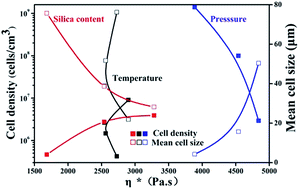
First, we tested the viscoelastic properties of silicone rubber compounds under ambient pressure and in high pressure CO2 atmosphere. Next, we further investigated the foaming behavior of silicone rubber compounds with scCO2 under different conditions. The relationship between the cellular structure and the viscoelastic properties of the silicone rubber compounds is expressed in Fig. 11. The variation of silica content could affect the interaction between the silica particles and the silicone rubber chains, thus changing the viscoelastic properties of the silicone rubber compounds. Cell growth was affected by the viscosity changes that resulted from the silica content. On the other hand, the silica content influenced cell nucleation because the silica particles acted as heterogeneous nucleation sites. Consequently, the cellular morphology of silicone rubbers with different silica content is decided by both cell growth and nucleation. Compared with the effects of the silica content and the saturation pressure, the effect of the saturation temperature (Ts) on the viscoelastic properties of silicone rubber is much more complex. The curing agent's decomposition and the plasticization of the scCO2, have two opposite effects on the viscoelastic properties. These are both affected simultaneously by the temperature. Hence, the final viscosities of the silicone rubber compounds at different Ts vary in only a very small range, when compared to the effect of the silica content and the pressure. At a low Ts (40 °C), in which a large supply of CO2 molecules were provided, cell nucleation was dominant. At a high Ts (60 °C and 80 °C), cell growth and cell coalescence were prominent compared with cell nucleation in the low temperature range. This could lead to the production of silicone rubber foams with larger cell sizes and smaller cell densities at a higher temperature. Increasing the saturation pressure enhances the plasticization effect of scCO2. Thus, it decreases the silicone rubber compounds' viscosity, which benefits cell growth. At the same time, cell nucleation would also be enhanced as a result of a lower energy barrier for cell nucleation at a higher pressure. Combined with a cellular morphology analysis, the effect of pressure on cell nucleation is dominant in the foaming process. It is well-known that the cellular structure is closely connected with the performance and application of silicone rubber foams. The results in this study could guide us to easily generate silicone rubber foams with a specific cellular structure by adjusting the experimental conditions.
image file: c5ra22242g-f11.tif
Fig. 11 Relationship between cellular structure and complex viscosity of silicone rubber compounds saturated with CO2.

Acknowledgements

This research was supported by the National Natural Science Foundation of China (No. 51373103, 51103091 and 51421061), Science and Technology Department of Sichuan Province (No. 2015HH0026), and the Key Laboratory of Special Functional Aggregated Materials, Ministry of Education, China.

References

  1. J. Wen, Y. Li, Y. Zuo, G. Zhou, J. Li, L. Jiang and W. Xu, Mater. Lett., 2008, 62, 3307–3309 CrossRef CAS .
  2. J. B. Grand, A. S. Fawcett, A. J. McLaughlin, F. Gonzaga, T. P. Bender and M. A. Brook, Polymer, 2012, 53, 3135–3142 CrossRef .
  3. E.-S. Park, J. Appl. Polym. Sci., 2008, 110, 1723–1729 CrossRef CAS .
  4. R. Romanowski, B. A. Jones and T. J. Netto, Rubber World, 2004, 230(3), 22–25 CAS .
  5. J. J. Chruściel and E. Leśniak, J. Appl. Polym. Sci., 2011, 119, 1696–1703 CrossRef .
  6. M. A. Jacobs, M. F. Kemmere and J. T. F. Keurentjes, Polymer, 2004, 45, 7539–7547 CrossRef CAS .
  7. Z.-M. Xu, X.-L. Jiang, T. Liu, G.-H. Hu, L. Zhao, Z.-N. Zhu and W.-K. Yuan, J. Supercrit. Fluids, 2007, 41, 299–310 CrossRef CAS .
  8. D. L. Tomasko, A. Burley, L. Feng, S.-K. Yeh, K. Miyazono, S. Nirmal-Kumar, I. Kusaka and K. Koelling, J. Supercrit. Fluids, 2009, 47, 493–499 CrossRef CAS .
  9. X. Liao and A. V. Nawaby, Ind. Eng. Chem. Res., 2012, 51, 6722–6730 CrossRef CAS .
  10. D. Bao, X. Liao, T. He, Q. Yang and G. Li, J. Polym. Res., 2013, 20, 290–299 CrossRef .
  11. Y.-W. Chang, D. Lee and S.-Y. Bae, Polym. Int., 2006, 55, 184–189 CrossRef CAS .
  12. J. J. A. Barry, S. N. Nazhat, F. R. A. J. Rose, A. H. Hainsworth, C. A. Scotchford and S. M. Howdle, J. Mater. Chem., 2005, 15, 4881–4888 RSC .
  13. M. Shimbo, T. Nomura, K. Muratani and K. Fukumura, The Third International Conference on Axiomatic Design (ICAD2004), 21–24 June, 2004 Search PubMed .
  14. I.-K. Hong and S. Lee, Korean J. Chem. Eng., 2013, 31, 166–171 CrossRef .
  15. L. Song, A. Lu, P. Feng and Z. Lu, Mater. Lett., 2014, 121, 126–128 CrossRef CAS .
  16. A. Rizvi and C. B. Park, Polymer, 2014, 55, 4199–4205 CrossRef CAS .
  17. Z. Xu, Z. Zhang, Y. Guan, D. Wei and A. Zheng, J. Cell. Plast., 2013, 49, 317–334 CrossRef CAS .
  18. A. Salerno and C. D. Pascual, RSC Adv., 2013, 3, 17355–17363 RSC .
  19. X. Xu, C. B. Park, D. Xu and R. Pop-Iliev, Polym. Eng. Sci., 2003, 43, 1378–1390 CAS .
  20. J.-N. Paquien, J. Galy, J.-F. Gérard and A. Pouchelon, Colloids Surf., A, 2005, 260, 165–172 CrossRef CAS .
  21. H. Cochrane and C. S. Lin, Rubber Chem. Technol., 1993, 66, 48–60 CrossRef CAS .
  22. A. Şerbescu and K. Saalwächter, Polymer, 2009, 50, 5434–5442 CrossRef .
  23. S. E. Shim and A. I. Isayev, Rheol. Acta, 2004, 43, 127–136 CrossRef CAS .
  24. J. K. Krüger, U. Müller, B. Zielinski, M. Philipp and R. Sanctuary, J. Adhes., 2012, 88, 649–663 CrossRef .
  25. M. Lee, C. B. Park and C. Tzoganakis, Polym. Eng. Sci., 1999, 39, 99–109 Search PubMed .
  26. W. Zhai, Y. Ko, W. Zhu, A. Wong and C. B. Park, Int. J. Mol. Sci., 2009, 10, 5381–5397 CrossRef CAS PubMed .
  27. G. Li, J. Wang, C. B. Park and R. Simha, J. Polym. Sci., Polym. Phys. Ed., 2007, 45, 2497–2508 CrossRef CAS .
  28. Y. G. Li and C. B. Park, Ind. Eng. Chem. Res., 2009, 48, 6633–6640 CrossRef CAS .
  29. M. M. Hasan, Y. G. Li, G. Li, C. B. Park and P. Chen, J. Chem. Eng. Data, 2010, 55, 4885–4895 CrossRef CAS .
  30. C. W. Macosko, Br. Polym. J., 1985, 17, 239–245 CrossRef CAS .
  31. X. Liao, Y. G. Li, C. B. Park and P. Chen, J. Supercrit. Fluids, 2010, 55, 386–394 CrossRef CAS .
  32. J. Lee, L.-S. Turng, E. Dougherty and P. Gorton, Polymer, 2011, 52, 1436–1446 CrossRef CAS .
  33. S. Mahmood, M. Keshtkar and C. B. Park, J. Chem. Thermodyn., 2014, 70, 13–23 CrossRef CAS .
  34. H. E. Naguib, C. B. Park and S.-W. Song, Ind. Eng. Chem. Res., 2005, 44, 6685–6691 Search PubMed .
  35. M. Nofar, A. Tabatabaei, A. Ameli and C. B. Park, Polymer, 2013, 54, 6471–6478 CrossRef CAS .
  36. S. N. Leung, A. Wong, L. C. Wang and C. B. Park, J. Supercrit. Fluids, 2012, 63, 187–198 CrossRef CAS .
  37. M. Yuan and L.-S. Turng, Polymer, 2005, 46, 7273–7292 Search PubMed .
  38. W. Zhai, J. Yu, L. Wu, W. Ma and J. He, Polymer, 2006, 47, 7580–7589 CrossRef CAS .
  39. K. Goren, L. Chen, L. S. Schadler and R. Ozisik, J. Supercrit. Fluids, 2009, 51, 420–427 CrossRef .
  40. L. M. Matuana and C. A. Diaz, Ind. Eng. Chem. Res., 2010, 49, 2186–2193 CrossRef CAS .
  41. A. Wong, S. F. Wijnands, T. Kuboki and C. B. Park, J. Nanopart. Res., 2013, 15, 1–15 CrossRef .
  42. S. K. Goel and E. J. Beckman, Polym. Eng. Sci., 1994, 34, 1137–1147 CAS .
  43. X. Liao, H. Zhang, Y. Wang, L. Wu and G. Li, RSC Adv., 2014, 4, 45109–45117 RSC .

Footnote

Electronic supplementary information (ESI) available. See DOI: 10.1039/c5ra22242g

This journal is © The Royal Society of Chemistry 2015
Click here to see how this site uses Cookies. View our privacy policy here.