DOI:
10.1039/C5RA21132H
(Paper)
RSC Adv., 2015,
5, 101186-101192
Synthesis of Mn2O3/poly(styrene-co-butyl methacrylate) resin composites and their oil-absorbing properties†
Received
12th October 2015
, Accepted 17th November 2015
First published on 18th November 2015
Abstract
This paper reports the synthesis of Mn2O3/poly(styrene-co-butyl methacrylate) resin composites by using a combined biotemplate technology and microwave polymerization method, as well as their application in oil absorption. In this synthesis, the hollow Mn2O3 fibers were prepared via a simple biotemplate method employing cotton fibers as templates. And the resin composites with good thermal stability and excellent recyclability were synthesised by a microwave polymerization route. The morphology, structure and thermal stability of as-synthesized resin composites were characterized by scanning electron microscopy (SEM), powder X-ray diffraction (XRD), and thermogravimetry (TGA). An L9 orthogonal array of the Taguchi method was implemented to optimize the oil absorption properties of resin composites. The results indicated that the oil absorption properties were strongly influenced by the ratio of monomers and the content of crosslinking agents. The saturated resin composites can be effectively desorbed in anhydrous ethanol, and the regenerated resin composites can be reused in the subsequent absorption–regeneration cycles without significant loss of the absorption capacities.
1. Introduction
Oil pollutants, derived from petroleum industry, marine oil transportation, and industrial effluents,1 are stable and very difficult to decompose and degrade in biological and environmental systems, which can cause health problems to animals and human beings. Several treatment processes such as absorption,2–4 solvent extraction,5 biodegradation,6–8 and floating booms techniques9,10 are available for oil removal. Among the various presented technologies, absorption method is intensively investigated due to the advantage of simple operation and low cost,11–13 which offers satisfactory results and seems to be a more attractive method for oil removal. To date, a variety of oil-absorbing materials with various surface properties have been used to deal with oil pollutions. Generally, the traditional oil-absorbing materials can be classified into three categories: (i) polymer materials, which contain polyethylene,14 poly(ethylene-propylene-diene/α-methylstyrene/itaconic acid),15 polyurethane foam16 and so on; (ii) inorganic materials, which contain diatomite,17 perlite,18 pumice,19 bentonite20 and so on; (iii) cellulose-based materials, including the wheat straw,21 cellulose aerogels,22 wood chips and reeds.23 However, traditional oil-absorbing materials have low oil absorption capacity and slow oil absorption rate. Therefore, it is important to prepared high oil-absorbing materials with fast absorption rate and good reusability.
As a novel class of functional polymer, oil-absorbing resins are considered a potentially efficient oil-absorbing materials for oil absorption due to their high oil retention ability and good reusability.24 However, low oil absorption capacity, high cost and complex synthesis process are still the main factors that hinder the practical applications in oil pollution control. To overcome these restrictions, several groups have employed various surface modification strategies to enhance the oil absorption capacities. Shuai et al.25 fabricated a novel superhydrophobic poly(dimethylsiloxane) (PDMS)-TiO2 coated polyurethane (PU) sponge by sol–gel growth of TiO2 nanoparticles on the surface of PU sponge, followed by in situ polymerization of PDMS. The as-prepared PDMS-TiO2-PU sponge shows a superhydrophobic surface with a water contact angle of 154° and exhibits high sorption capacities of more than 16.7 g g−1 for the studied oils and organic compounds, such as pump oil, diesel oil, silicone oil, edible oil, kerosene, dichloromethane, and chloroform. Shuai et al.25 fabricated a robust superhydrophobic and superoleophilic CNTs-SiO2 coated polyurethane sponge through a solution-immersion process. The as-prepared polyurethane sponge can be used to separate oil from water efficiently with high oil absorption capacity and high selectivity, and it also exhibited good reusability. In addition, several functional nanomaterials were used for oil absorption due to their highly porous nature. Yuan et al.26 used superwetting nanowires for selectively oil absorption through a combination of superhydrophobicity and capillary action and reported a maximum oil absorption of organic solvents and oil reaching 20 mg g−1. Utilizing the surface modification of self-assembled graphene oxide aerogels, Hong et al.27 prepared the functionalized graphene aerogel with high porosity and hydrophobicity for eliminating spilled oils and other toxic organic pollutants. However, poor mechanical properties and insufficient reusability of these nanomaterials have long been the major obstacles for practical applications. A major challenge is controlled fabrication of oil-absorbing materials with the desirable combination of high oil absorption capacity, high oil retention ability and good reusability.
In the present work, we take advantage of oil-absorbing resins and porous inorganic materials and design a novel route to fabricate high performance oil-absorbing resin composites by combined biotemplate method and suspension polymerization. Firstly, hollow Mn2O3 fibers are prepared by template-directed synthesis employing cotton fibers as templates. Then, oil-absorbing Mn2O3/poly(styrene-co-butyl methacrylate) resin composites are synthesized by microwave polymerization in the presence of functional coupling agents. The synthesized resin composites exhibit excellent oil-absorbing properties, offering the combined benefit of the oil absorption capacity of porous Mn2O3 and good reusability of oil-absorbing resins, which have promising application in oil absorption.
2. Materials and methods
2.1. Materials
The absorbent cotton was chosen as the biotemplates in this study. After being washed several times with absolute ethanol, it was cleaned by distilled water and dried in air at 80 °C for 12 h. Gasoline was obtained from the local market, Qinhuangdao, China. Other reagents (analytical grade) were used as received from commercial suppliers without any further purification. Manganese acetate (Mn(CH3COO)2·4H2O) was purchased from Kermel Chemical Reagent Company of Shanghai. Butyl methacrylate (BMA), N,N′-methylene-bis-acrylamide (MBA), cetyl trimethyl ammonium bromide (CTAB) and polyvinyl alcohol (PVA) were supplied by Tianjin Guangfu Fine Chemical Research Institute. Styrene (St), benzoyl peroxide (BPO), ethyl acetate, toluene and CCl4 were purchased from Tianjin Damao Chemical Reagent Factory.
2.2. Preparation of biomorphic Mn2O3 fibers
The biomorphic Mn2O3 fibers were prepared by template-directed synthesis employing cotton fibers as templates. In a typical synthesis, 5 g of Mn(CH3COO)2·4H2O was dissolved in 100 mL absolute ethanol, and then distilled water was added to the above solution until the volume of solution reach 200 mL. After stirring for 2 h, 0.2 g of cleaned cotton was immersed into the precursor sol for 12 h at room temperature, followed by ultrasonic treatment for 1 h. The infiltrated cotton fibers were washed with distilled water to remove non-adsorbed manganese ions. After being dried at 80 °C for 12 h, the samples were calcined in air at 400–800 °C for 4 h to remove the organic templates. Finally, the obtained products were grinded into powders for further surface treatment.
2.3. Surface hydrophobic modification of biomorphic Mn2O3 fibers
The surface hydrophobic of Mn2O3 fibers was performed by grafting the long-chain alkyl group on the surfaces of inorganic fibers. Firstly, 0.35 g of CTAB was dissolved in 50 mL of distilled water. Then, 0.1 g of as-prepared Mn2O3 fibers was added into above solution, and the system was irradiated by a temperature-controlled microwave synthesis system at 85 °C for 70 min. The resulting CTAB modified Mn2O3 fibers were filtered, washed thoroughly with distilled water and finally dried at 80 °C for 24 h. The dynamic contact angle of the CTAB modified Mn2O3 fibers was measured by the washburn capillary rise (WCR) technique and the results are presented in ESI (Fig. S1†).
2.4. Preparation of Mn2O3/poly(styrene-co-butyl methacrylate) resin composites
The Mn2O3/poly(styrene-co-butyl methacrylate) resin composites with different molar ratios were synthesised by a microwave polymerization route. Firstly, the PVA was dissolved in two-neck flask at 90 °C with a mechanical stirrer. Then the mixture, containing the monomers (BMA and St), pore-forming agent (ethyl acetate), initiator (BPO), cross-link agent (MBA), hydrophobic Mn2O3 fibers (The optimal amount of Mn2O3 fibers was 4 wt%, at which higher oil absorption properties could be reached, ESI, Fig. S2†), were injected into the PVA aqueous solution under nitrogen atmosphere in a microwave chemical reactor, with a 2.45 GHz working frequency. After completion of the microwave reaction at 800 W for 60 min, the product was collected and sequentially washed with deionized water and anhydrous ethanol. Finally, the obtained product was dried under vacuum at 80 °C for 24 h. The optimum preparation conditions were obtained using orthogonal experimental design and the variables (concentrations of PVA, BPO, MBA and the molar ratio of BMA/St) were summarized in Table 1.
Table 1 The factors and levels of orthogonal experiment
| i |
Level |
| A |
B |
C |
D |
| BMA/St |
PVA wt% |
MBA wt% |
BPO wt% |
| 1 |
10 : 0.5 |
5 |
1 |
0.5 |
| 2 |
10 : 1 |
10 |
2 |
1 |
| 3 |
10 : 2 |
15 |
3 |
1.5 |
2.5. Sample characterization
The morphologies and microstructures of the prepared products were characterized by obtaining scanning electron microscope (SEM) images using a Supra55 Field Emission SEM at an acceleration voltage of 20 kV. The general structure of the samples was characterized using an X-ray diffraction measurement on a Bruker-AXS D8 X-ray diffractometer system with Cu Kα radiation at 40 kV and 40 mA. Thermogravimetric analysis (TGA) and differential thermal analysis (DTA) were carried out on a TGA-50 thermal analyzer with the heating rate of 10 °C min−1 in flowing air. The surface areas and pore-size distributions of biomorphic Mn2O3 fibers were analyzed by nitrogen adsorption measurements, operated at 77 K on a Micromeritics ASAP 2020 adsorption analyzer.
2.6. Oil absorption test
Oil absorption was determined by a weighing method: the filter bag was first immersed in oil for saturated absorption, the weight of the filter bag was measured before and after oil absorption. Then, 0.1 g of oil absorbent sample was put into a filter bag and immersed in oil (CCl4, toluene and gasoline) at room temperature for 12 h. After that, the filter bag containing the sample was taken out from the oil, drained for 3 min to remove residual oil, and then weighed immediately. The oil absorption properties of absorbent sample were calculated by the deduction of the weight of the saturated filter bag, and calculated by the following formula:| | |
Q (g g−1) = (mt − m0)/m0
| (1) |
where mt and m0 are the weight of the oil absorbents dispersed in oil for time t and the dry weight of the oil absorbent, respectively.
2.7. Regeneration experiments
To test the regeneration capacity of the oil absorbent, the saturated resin composites were immersed in anhydrous ethanol for desorption. In a typical procedure, 0.1 g of resin composites were immersed in 20 mL of oil for saturated absorption. Then, the exhausted resin composites were immersed in 50 mL anhydrous ethanol to release the absorbed oil. Finally, the samples were dried in an oven and then heat treated at 80 °C in an ambient atmosphere for 12 h. The process of oil absorption–desorption was repeated 3 times to confirm the reusability of resin composites. For each cycle, the resin composites were weighed before and after oil absorption.
3. Results and discussion
3.1. Preparation of biomorphic Mn2O3 fibers
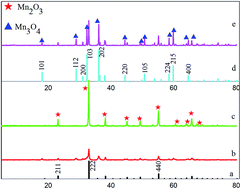
In the impregnation process, the Mn2+ ions were adsorbed on the surface of cellulose fibers via electrostatic attraction between the metal ions and organic functional groups of cellulose. Then, the adsorbed Mn2+ ions were decomposed into manganese oxide during the calcination. The structure transformation of the samples observed at different calcination temperatures are displayed in Fig. 1. As can be seen in Fig. 1b that the diffraction peaks can be attributed to α-Mn2O3 (JCPDS 41-1442) with the tetragonal crystal structure. However, the peak intensities of Mn2O3 are enhanced by increasing calcination temperature from 400 °C to 600 °C, implying that the recrystallization process occurs at moderate temperatures. The sharp and narrow peaks showed that the products obtained to be well in a crystallized form. No other diffraction peaks are found in Fig. 1c, indicating that the products are pure Mn2O3 and the cellulose fiber templates are completely removed. The products obtained at calcination temperature of 600 °C, however, contains a new impurity phase, best assigned as Mn3O4 (JCPDS 24-0734) in addition to the main phase of Mn2O3 still present. At the higher calcination temperatures, the impurity phase of Mn3O4 could be produced according to the following reactions:
 |
| | Fig. 1 XRD patterns of the products obtained at various calcination temperatures ((a) JCPDS 41–1442, (b) 400 °C, (c) 600 °C, (d) JCPDS 24-0734 and (e) 800 °C). | |
However, it should be noted that the characteristic reflections of Mn2O3 are slightly decreased as the calcination temperatures increased from 600 °C to 800 °C. The peak intensities of Mn2O3 gradually became weaker as the calcination temperature increased, which may originate from the phase transformation from Mn2O3 to Mn3O4. Considering the purity of calcined products, the Mn2O3 fibers obtained at calcination temperature of 600 °C have been chosen for synthesis of oil-absorbing resin composites.
The cotton fibers have excellent oil absorption characteristics due to the unique fiber structures. The Mn2O3 fibers have a hollow structure by removal of the cotton fiber templates. The absorbed oil can be stored in the hollow architectures of the inorganic fibers. Typical morphologies of the natural cotton fibers and as-prepared biomorphic Mn2O3 are displayed in Fig. 2, showing that the fibrous structures are retained in inorganic replicas. As can be seen from Fig. 2A, the cotton fibers has tubular structure with the smooth surfaces. The magnified SEM images (Fig. 2B) of a single fiber clearly show that the outer diameter of the cotton fibers can be up to 10–15 μm, higher than that of the cellulose of papers as reported by previous research in our group.13,28 Fig. 2C shows the morphology of biomorphic Mn2O3 fibers, the sample consists mainly of Mn2O3 with fibrous structure and a small amount of Mn2O3 with an irregular shape (lumpy). The irregular fragments should be derived from the structural shrinkage and collapse in calcination and grinding of the samples. It is evident that the Mn2O3 fibers have a hollow structure by removing the cotton fiber template. The magnified surface images (Fig. 2D) of biomorphic Mn2O3 fibers showed that the hollow tube has an irregular macropore structure rather than the smooth surfaces. In addition, the macropore structures can be confirmed by the N2 adsorption–desorption isotherms of Mn2O3 fibers (ESI, Fig. S3†). The hollow and macropore structures are beneficial for oil absorption and storage.
 |
| | Fig. 2 SEM images of raw cotton fibers (A and B) and biomorphic Mn2O3 fibers (C and D). | |
3.2. Preparation of Mn2O3/poly(styrene-co-butyl methacrylate) resin composites
The biomorphic Mn2O3/poly(styrene-co-butyl methacrylate) resin composites possess unique oil absorption properties distinct from those of the individual components due to synergistic effects of the oil-absorbing resin and hierarchical porous Mn2O3. Utilizing the self-swelling properties, oil-absorption resins can absorb oil on the surfaces of materials and store it in three-dimensional (3D) network structure of resins. However, the oil absorption process is changed by adding the biomorphic Mn2O3 fibers into the resins. The hierarchical porous Mn2O3 with macropores may provide a fast oil absorption owing to the lowering of absorption energy and diffusion length. In addition, the large internal volume of porous Mn2O3 may provide an oil storage space that can enhance the oil absorption properties. Fig. 3 shows the SEM images of oil-absorbing resin and Mn2O3/resin composites. As shown in Fig. 3A and B, the surfaces of oil-absorbing resin are smooth, which made oil molecules not easy to diffuse into the interiors of resins. However, it can be seen in Fig. 3C and D that the surface structures are changed greatly by adding the hierarchical porous Mn2O3. The resin composites exhibited very rough surfaces, which are beneficial for oil molecules absorption and diffusion into the interiors of materials.
 |
| | Fig. 3 SEM images of oil-absorbing resin (A and B) and resin composites (C and D). | |
The thermal analysis was used to measure the thermal stability of as-synthesized products and determine the amount of porous Mn2O3 in resin composites. Fig. 4 shows the TGA-DTA curves of the pure oil-absorbing resin and resin composites. As can be seen in Fig. 4A, the strong exothermic peak located in the vicinity of 355 °C is assigned to the thermal decomposition of polymers, corresponding to about 78.2% weight loss. However, the exothermic peak is located in the vicinity of 390 °C in the DTA curve (Fig. 4B) of the resin composites, corresponding to about 65% weight loss. It is demonstrated that the thermal stability of resin composites is improved. A similar phenomenon has been observed in MnO2 and acrylic ester resin composites as reported in our previous work.29 As shown in TGA curves, the main weight losses of two samples starts at 200 °C and 230 °C, respectively. The enhanced thermal stability may originate from the interactions between metal oxides and polymer chains. In addition, it should be noted that the resin composites are completely decomposed at 500 °C to leave 21.8% (by mass) inorganic products.
 |
| | Fig. 4 TGA-DTA curves of oil-absorbing resin (A) and resin composites (B). | |
3.3. The optimum synthesis parameters
In the present system, the content of crosslinking agent may play a critical role in formation of 3D network structure of resins and further determines the oil absorption properties of the final products. In addition, the content of initiator and dispersant, and the ratios of monomers strongly influence the polymer chains, structures, sizes and shapes of resin composites, thus affecting the oil absorption process. In order to regulate various parameters of synthesis process for obtaining high oil-absorbing resin composites, a Taguchi orthogonal array design was utilized. In this study, four factors (variables) were considered: the ratios of monomers, crosslinking agent content, initiator and dispersant concentration. For each factor, three levels were selected in order to eliminate the influence and validate the results. An L9 orthogonal array design is applied in order to investigate the influence of oil absorption properties of resin composites and the results list in Table 2.
Table 2 Orthogonal experimental arrangement and test resulta
| Trial number |
Factors |
Oil absorbency (g g−1) |
| A |
B |
C |
D |
Chloroform |
Gasoline |
| K1–K3: estimates value of the level 1–3, k1–k3: general average of level 1–3, R: range (the influence of variables on the results). |
| 1 |
1 |
1 |
1 |
1 |
16.59 |
5.18 |
| 2 |
1 |
2 |
2 |
2 |
10.65 |
3.40 |
| 3 |
1 |
3 |
3 |
3 |
18.28 |
1.93 |
| 4 |
2 |
1 |
2 |
3 |
20.08 |
5.04 |
| 5 |
2 |
2 |
3 |
1 |
24.02 |
7.11 |
| 6 |
2 |
3 |
1 |
2 |
6.35 |
1.43 |
| 7 |
3 |
1 |
3 |
2 |
33.99 |
9.32 |
| 8 |
3 |
2 |
1 |
3 |
29.21 |
8.28 |
| 9 |
3 |
3 |
2 |
1 |
28.71 |
8.97 |
| K1 |
45.52 |
70.66 |
52.15 |
69.32 |
— |
— |
| K2 |
50.45 |
63.88 |
59.44 |
50.99 |
— |
— |
| K3 |
91.91 |
53.34 |
76.29 |
67.57 |
— |
— |
| k1 |
15.17 |
23.55 |
17.38 |
23.11 |
— |
— |
| k2 |
16.82 |
21.29 |
19.81 |
17.00 |
— |
— |
| k3 |
30.64 |
17.78 |
25.43 |
22.52 |
— |
— |
| R |
15.47 |
5.77 |
8.05 |
6.11 |
— |
— |
With the direct observation analysis from the results (RA > RC > RD > RB), the influence factors of oil absorption properties are listed in a decreasing order as follows: the ratio of monomers (A) > crosslinking agent content (C) > initiator content (D) > dispersant content (B), namely, the ratio of monomers has the strongest impact on the oil absorption, followed by crosslinking agent content and initiator content, the content of dispersant has the weakest impact. According to the values of R and Kj, i.e. K13 > K12 > K11, K21 > K22 > K23, K33 > K32 > K31, K41 > K42 > K41, the optimal combination of experimental conditions is A3B1C3D1. The optimal conditions for synthesis of resin composites have been determined: the ratio of BMA/St is 10
:
2, the contents of crosslinking agent, dispersant and initiator are 3 wt%, 5 wt% and 1 wt%, respectively. As expected, the resin composites synthesized under the optimal conditions exhibit excellent oil absorption properties and good selectivities (ESI, Fig. S4 and S5†).
The oil absorption properties of resin composites are strongly affected by the ratio of monomers and the content of crosslinking agent. Therefore, the effect of the molar ratio of BMA/St and content of crosslinking agent on oil absorption are further investigated by a univariate optimization approach. Fig. 5A displays the molar ratio of BMA/St on oil absorption properties. As can be seen in Fig. 5A, the maximum absorption capacity of carbon tetrachloride onto resin composites is 34.0 g g−1 with BMA/St molar ratio of 10
:
2, higher than the absorption capacity of gasoline (9.3 g g−1). The oil absorption properties of both carbon tetrachloride and gasoline are enhanced by increasing BMA/St molar ratio from 10
:
0.5 to 10
:
2. The increased oil absorption properties may be attributed to the increased oil storage space by introducing the benzene to polymer chains. It should also be noted that oil absorption properties are slightly decreased by further increasing the BMA/St molar ratio. The introduction of the bulky molecules to the polymer chains possibly facilitates the storage space. However, the swelling properties of resin composites are limited by rigidity of the polymer chains. The decreased oil absorption properties may be attributed to the rigidity backbone of benzene in polymer chains.
 |
| | Fig. 5 Oil absorption properties of resin composites affected by the molar ratio of BMA/St and content of crosslinking agent. | |
One of the most characteristic features of oil absorbing polymers is that they have crosslinked 3D hydrophobic networks in oil. The crosslinking agent not only control the degree of crosslinking, but also determine the swelling properties of resin composites. Fig. 5B displays the content of crosslinking agent on oil absorption properties. As can be seen in Fig. 5B, the oil absorption capacity increases with increased crosslinking agent content, reaches a maximum absorption capacity of 33.9 g g−1 at the content of crosslinking agent of 3 wt%. As the degree of crosslinking increased, the oil storage space with certain swelling properties can be formed by the crosslinked polymer chains. This may explain the increased oil absorption properties with increasing the content of crosslinking agent. However, it is also noticed from Fig. 5B that the oil absorption properties are decreased from 33.9 g g−1 to 18.44 g g−1 as the content of crosslinking agent increased from 3 wt% to 5 wt%. The highly crosslinked polymer chains may decrease the swelling properties of resin composites, resulting in the decrease of oil absorption. The optimal crosslinking agent content is 3 wt%, at which higher oil absorption could be reached. The optimal conditions for obtaining high oil-absorbing resin composites are in agreement with the orthogonal experiments.
3.4. Reusability of resin composites
In order to evaluate the reusability of resin composites, the as-synthesized resin composites were immersed in oil (CCl4 and toluene) for saturated absorption. Then the saturated resin composites were immersed in anhydrous ethanol to release the absorbed oil. After being dried in an oven, the resultant samples could be reused in the next absorption–regeneration cycle. Fig. 6 shows the oil absorption capacities of resin composites in three absorption–regeneration cycles. It is seen that the oil absorption capacities of resin composites were almost constant in the three cycles, indicating that the desorption or regeneration of the resin composites was quite effective. It can be seen from Fig. 6 that the resin composites can be used at least three cycles without any loss of absorption capacity for toluene, indicating that the resin composites was regenerated completely during the regeneration process. However, the absorption capacity of CCl4 was slightly decreased after each absorption–regeneration cycle, implying that CCl4 was not completely desorbed from the surfaces of the resin composites in each of the regeneration processes.
 |
| | Fig. 6 Comparison of oil absorption capacities of resin composites in three absorption–regeneration cycles. | |
4. Conclusions
We have used a novel strategy consisting of biomorphic synthesis and microwave polymerization method to synthesize the Mn2O3/poly(styrene-co-butyl methacrylate) resin composites. The results indicate that the resin composites exhibit good thermal stability and excellent recyclability. The oil absorption properties of resin composites were optimized by an orthogonal experimental design method. The optimal conditions for synthesis of resin composites have been determined: the ratio of BMA/St is 10
:
2, the contents of crosslinking agent, dispersant and initiator are 3 wt%, 5 wt% and 1 wt%, respectively. Regeneration studies showed that the resin composites can be used at least three cycles without loss of oil absorption properties. We believe that this novel resin composites will be promising material for oil/water separation, pollution control and other applications.
Acknowledgements
The authors are grateful for the financial support from the Natural Science Foundation of Hebei Province (B2014203143) (China) and the Fundamental Research Funds for the Central Universities (CXZZ13-0091).
References
- J. Wang, Y. Zheng and A. Wang, J. Appl. Polym. Sci., 2013, 127, 2184–2191 CrossRef CAS.
- Y. Wang, Q. Li, L. Bo, X. Wang, T. Zhang, S. Li, P. Ren and G. Wei, Chem. Eng. J., 2016, 284, 989–994 CrossRef CAS.
- Y. Jin, P. Jiang, Q. Ke, F. Cheng, Y. Zhu and Y. Zhang, J. Hazard. Mater., 2015, 300, 175–181 CrossRef CAS PubMed.
- J. Wang, Q. Wang, Y. Zheng and A. Wang, Polym. Compos., 2013, 34, 274–281 CrossRef CAS.
- G. Severa, G. Kumar, M. Troung, G. Young and M. J. Cooney, Sep. Purif. Technol., 2013, 116, 265–270 CrossRef CAS.
- Y.-M. He, X.-G. Duan and Y.-S. Liu, J. Chem. Technol. Biotechnol., 2014, 89, 1785–1792 CrossRef CAS.
- G. Lan, Q. Fan, Y. Liu, Y. Liu, Y. Liu, X. Yin and M. Luo, Biochem. Eng. J., 2015, 103, 219–226 CrossRef CAS.
- M. Kristensen, A. R. Johnsen and J. H. Christensen, J. Hazard. Mater., 2015, 300, 75–83 CrossRef CAS PubMed.
- F. Muttin, Appl. Ocean Res., 2008, 30, 107–112 CrossRef.
- G. Iglesias, A. Castro and J. A. Fraguela, Ocean Eng., 2010, 37, 1513–1521 CrossRef.
- T. Zhang, Q. Li, H. Xiao, H. Lu and Y. Zhou, Ind. Eng. Chem. Res., 2012, 51, 11490–11498 CrossRef CAS.
- T. Zhang and Y. Zhou, J. Dispersion Sci. Technol., 2015, 36, 1059–1065 CrossRef CAS.
- T. Zhang, Z. Mei, Y. Zhou, S. Yu, Z. Chen and X. Bu, J. Chem. Technol. Biotechnol., 2014, 89, 1705–1711 CrossRef CAS.
- M. Seddighi and S. M. Hejazi, Mar. Pollut. Bull., 2015, 96, 286–293 CrossRef CAS PubMed.
- X.-M. Zhou and C.-Z. Chuai, J. Polym. Eng., 2013, 53, 540–545 CrossRef CAS.
- M. Zieleniewska, M. K. Leszczyński, M. Kurańska, A. Prociak, L. Szczepkowski, M. Krzyżowska and J. Ryszkowska, Ind. Crops Prod., 2015, 74, 887–897 CrossRef CAS.
- İ. Özen, S. Şimşek and G. Okyay, Appl. Surf. Sci., 2015, 332, 22–31 CrossRef.
- D. Bastani, A. A. Safekordi, A. Alihosseini and V. Taghikhani, Sep. Purif. Technol., 2006, 52, 295–300 CrossRef CAS.
- K. Sharafi, A. M. Mansouri, A. A. Zinatizadeh and M. Pirsaheb, Environ. Eng. Manage. J., 2015, 14, 1067–1078 CAS.
- S. Salem, A. Salem and A. A. Babaei, J. Ind. Eng. Chem., 2015, 23, 154–162 CrossRef CAS.
- D. Sidiras, F. Batzias, I. Konstantinou and M. Tsapatsis, Chem. Eng. Res. Des., 2014, 92, 1781–1791 CrossRef CAS.
- J. Feng, S. T. Nguyen, Z. Fan and H. M. Duong, Chem. Eng. J., 2015, 270, 168–175 CrossRef CAS.
- J.-M. Chyan, D.-B. Senoro, C.-J. Lin, P.-J. Chen and I. M. Chen, Int. Biodeterior. Biodegrad., 2013, 85, 638–645 CrossRef CAS.
- L. Fan, H. Chen, S. Wei and F. Cao, React. Funct. Polym., 2014, 75, 56–62 CrossRef CAS.
- Q. Shuai, X. Yang, Y. Luo, H. Tang, X. Luo, Y. Tan and M. Ma, Mater. Chem. Phys., 2015, 162, 94–99 CrossRef CAS.
- J. Yuan, X. Liu, O. Akbulut, J. Hu, S. L. Suib, J. Kong and F. Stellacci, Nat. Nanotechnol., 2008, 3, 332–336 CrossRef CAS PubMed.
- J.-Y. Hong, E.-H. Sohn, S. Park and H. S. Park, Chem. Eng. J., 2015, 269, 229–235 CrossRef CAS.
- T. Zhang, Z. Mei, Y. Zhou, X. Bu, Y. Wang, Q. Li and X. Yang, CrystEngComm, 2014, 16, 1793–1801 RSC.
- Q. Zhang, Q. Li, Y. Luo, S. Xin and H. Xiao, Polym.-Plast. Technol. Eng., 2014, 53, 298–305 CrossRef CAS.
Footnote |
| † Electronic supplementary information (ESI) available. See DOI: 10.1039/c5ra21132h |
|
| This journal is © The Royal Society of Chemistry 2015 |
Click here to see how this site uses Cookies. View our privacy policy here.