
Sulfonated Schiff base copper(II) complexes as efficient and selective catalysts in alcohol oxidation: syntheses and crystal structures

Susanta Hazra*a, Luísa M. D. R. S. Martins*ab, M. Fátima C. Guedes da Silva*a and Armando J. L. Pombeiroa
aCentro de Química Estrutural, Instituto Superior Técnico, Universidade de Lisboa, Av. Rovisco Pais, 1049–001, Lisboa, Portugal. E-mail: h.susanta@gmail.com; fatima.guedes@tecnico.ulisboa.pt
bChemical Engineering Department, Instituto Superior de Engenharia de Lisboa, Instituto Politécnico de Lisboa, R. Conselheiro Emídio Navarro, 1959-007, Lisboa, Portugal. E-mail: lmartins@deq.isel.ipl.pt

Received 21st September 2015 , Accepted 15th October 2015

First published on 15th October 2015


Abstract

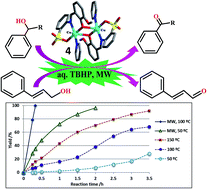
The reaction between 2-aminobenzenesulfonic acid and 2-hydroxy-3-methoxybenzaldehyde produces the acyclic Schiff base 2-[(2-hydroxy-3-methoxyphenyl)methylideneamino]benzenesulfonic acid (H2L·3H2O) (1). In situ reactions of this compound with Cu(II) salts and, eventually, in the presence of pyridine (py) or 2,2′-bipyridine (2,2′-bipy) lead to the formation of the mononuclear complexes [CuL(H2O)2] (2) and [CuL(2,2′-bipy)]·DMF·H2O (3) and the diphenoxo-bridged dicopper compounds [CuL(py)]2 (4) and [CuL(EtOH)]2·2H2O (5). In 2–5 the L2− ligand acts as a tridentate chelating species by means of one of the O-sulfonate atoms, the O-phenoxo and the N-atoms. The remaining coordination sites are then occupied by H2O (in 2), 2,2′-bipyridine (in 3), pyridine (in 4) or EtOH (in 5). Hydrogen bond interactions resulted in R22(14) and in R44(12) graph sets leading to dimeric species (in 2 and 3, respectively), 1D chain associations (in 2 and 5) or a 2D network (1). Complexes 2–5 are applied as selective catalysts for the homogeneous peroxidative (with tert-butylhydroperoxide, TBHP) oxidation of primary and secondary alcohols, under solvent- and additive-free conditions and under low power microwave (MW) irradiation. A quantitative yield of acetophenone was obtained by oxidation of 1-phenylethanol with compound 4 [TOFs up to 7.6 × 10³ h−1] after 20 min of MW irradiation, whereas the oxidation of benzyl alcohol to benzaldehyde is less effective (TOF 992 h−1). The selectivity of 4 to oxidize the alcohol relative to the ene function is demonstrated when using cinnamyl alcohol as substrate.

Introduction

Over the past few decades there has been a marked development in the coordination chemistry of Schiff base metal complexes,1 encouraged by the variety of their solid state structures,2 magnetic,3,4 fluorescence5 and catalytic6 properties. Though a large number of Schiff bases of various types,1–7 including those containing the carboxylic acid group,7 have been reported, sulfonated Schiff bases are rare and only a few metal complexes are known,8 although covalent or non-covalent (H-bonding) interactions via sulfonate oxygen atoms could generate interesting multinuclear8a–e or supramolecular structures.8a–c Catalytic properties of sulfonated Schiff base metal complexes have also been rarely investigated.8a,b,e Thus, the syntheses of a new sulfonated Schiff base and their copper complexes which could be useful for further catalytic studies, deserve to be explored and constitute a general aim of the current study.

The oxidation of alcohols to carbonyl compounds is one of the most important reactions in synthetic organic chemistry as well as in chemical industry.9,10 Moreover, it is of interest for the development of environmentally benign production processes of new materials and energy sources.9e,10a

Many catalytic methods have been developed for the oxidation of alcohols.10 A recent environmentally compatible approach concerns oxidations with copper catalysts and dioxygen, hydrogen peroxide or tert-butylhydroperoxide (TBHP) as oxidants.10c,10g,11 Hence, inspired by our previous catalytic applications of a few sulfonated Schiff base copper complexes in the peroxidative oxidation of cyclohexane8a,e and in the nitro-aldol reaction,8b we have anticipated that the new copper(II) complexes bearing a sulfonated Schiff base could be active in alcohol oxidation catalysis.

In accord, the new sulfonated Schiff base 2-[(2-hydroxy-3-methoxyphenyl)methylideneamino]benzenesulfonic acid H2L·3H2O (1) (Scheme 1) is prepared from the condensation reaction of 2-hydroxy-3-methoxybenzaldehyde and 2-aminobenzenesulfonic acid. Addition of Cu(II) salt(s) to the same reactant mixtures in different solvents (MeOH, EtOH or DMF) and in the absence or in the presence of an N-heterocycle [pyridine (py) or 2,2′-bipyridine (2,2′-bipy)] produces the mononuclear copper complexes [CuL(H2O)2] (2) and [CuL(2,2′-bipy)]·DMF·H2O (3) and the diphenoxo-bridged dicopper complexes [CuL(py)]2 (4) and [CuL(EtOH)]2·2H2O (5). Hence, herein we report the syntheses, crystal structures and catalytic alcohol oxidation studies of these four new copper(II) complexes (2–5).


image file: c5ra19498a-s1.tif
Scheme 1 Syntheses of 1–5.

Results and discussion

Syntheses and characterization

The [1 + 1] condensation of 2-hydroxy-3-methoxybenzaldehyde and 2-aminobenzenesulfonic acid in aqueous ethanol leads to the formation of the Schiff base H2L·3H2O (1) (Scheme 1), which can be isolated or used in situ for further syntheses of copper(II) complexes (Scheme 1). Hence, addition of an aqueous methanol (1[thin space (1/6-em)]:[thin space (1/6-em)]1) solution of Cu(OAc)2·H2O and CuCl2·2H2O (in 1[thin space (1/6-em)]:[thin space (1/6-em)]1 molar ratio) to that solution of H2L (1) prepared in situ produces the mononuclear copper(II) complex [CuL(H2O)2] (2). When the reaction is performed in aqueous ethanol (1[thin space (1/6-em)]:[thin space (1/6-em)]1) and only with Cu(OAc)2·H2O as the copper(II) salt, the diphenoxo bridged dicopper(II) complex [CuL(EtOH)]2·2H2O (5) is obtained. The mononuclear complex [CuL(2,2′-bipy)]·DMF·H2O (3) is synthesized similarly from the in situ reaction of 1, Cu(OAc)2·H2O and 2,2′-bipyridine (2,2′-bipy) in aqueous DMF (1[thin space (1/6-em)]:[thin space (1/6-em)]1) solution, while the analogous reaction with pyridine (py) instead of 2,2′-bipy using aqueous methanol solution generates the diphenoxo bridged dicopper(II) complex [CuL(py)]2 (4). As no product was isolated from the attempted distinct in situ reactions of 1 with either Cu(OAc)2·H2O or CuCl2·2H2O in aqueous methanol, we tried the reaction with both salts together in this solvent and thus compound 2 was isolated.

All the compounds (1–5) were characterized by elemental analysis, IR spectroscopy and single crystal X-ray diffraction study. The Schiff base 1 was also characterized by the 1H NMR spectrum. They were isolated in moderate to good yields (69–82%).

The IR spectrum of the Schiff base H2L·3H2O (1) exhibits the expected bands at 1629 and 1375 cm−1 which are indicative of the C[double bond, length as m-dash]N bond and the sulfonate group, respectively. In the IR spectra of the metal complexes (2–5), ν(C[double bond, length as m-dash]N) is observed in the range of 1609–1618 cm−1, whereas the sulfonate groups are evidenced by the medium intense bands at the 1375–1386 cm−1 range.8a–d

Description of the crystal structures

The crystal structures of the Schiff base and its mono- or dicopper derivatives (1–5) are shown in Fig. 1. Important bond distances and angles are presented in Table 1. Compound 1 is approximately planar as measured by the angle between the least square planes of the aromatic rings (4.77°, Table 1). Upon O2N chelation to the metal cation by means of the phenolic O-, the imine N- and a sulfonate O-atoms, the basic form of 1 (L2−) becomes highly distorted as evidenced by the angle values (30.25–61.63°, Table 1) of those ls planes, following the order 2 < 5 < 4 < 3. Such a distortion is also envisaged through the N–C–C–S and C–N–C–CSO3 torsion angles which, however, trail in a different way (Table 1; 5 < 4 < 2 < 3 for the former, and 3 < 5 < 4 < 2 for the latter). Despite all these variances, the Nimine–Csp2 bond distances in 1–5 are similar and vary in the 1.290(4)–1.315(4) Å range.
image file: c5ra19498a-f1.tif
Fig. 1 Idealized ball and stick presentation of the crystal structure of 1–5 with atom labeling schemes. Crystallization solvent molecules in 1, 3 and 5 as well as hydrogen atoms in 4 and 5 are omitted for clarity. Symmetry codes to generate equivalent atoms: 1 − x, 1 − y, 1 − z (4) and −x, 2 − y, 2 − z (5).
Table 1 Selected bond distances (Å), bond angles and torsion angles (°) for H2L (1) and the metal complexes 2–5
  1 2 3 4 5
Involving the anionic ligand L2−
N–Csp2 1.290(4) 1.315(4) 1.295(3) 1.289(4) 1.299(2)
N–CAr 1.432(4) 1.432(4) 1.430(3) 1.440(4) 1.432(2)
∠N–C–C–S −0.8(4) −3.4(5) −11.7(3) −1.0(4) −0.3(2)
∠C–N–C–CSO3 −172.9(3) 145.9(3) 119.9(3) 141.6(3) 137.6(2)
∠ls planes of aromatic rings 4.77 39.25 61.63 53.21 52.48
[thin space (1/6-em)]
Involving the metal
Cu coordination sphere O4N1 O2N3 O2N3 O4N1
τ5 descriptor   0.08 0.36 0.15 0.14
M–OSO3 1.931(2) 2.359(2) 1.951(2) 1.9573(15)
M–Ophenoxo(equatorial) 1.876(2) 1.893(2) 1.910(2) 1.9085(14)
M–Ophenoxo(axial) 2.352(2) 2.5057(15)
M–Oother 1.974(3) 1.9912(14)
2.932(3)
M–NL 1.956(3) 1.995(2) 2.012(3) 1.9841(16)
M–Nother 2.019(2) 2.032(3)
2.075(2)
OSO3–M–Ophenoxo 161.87(12) 116.12(8) 175.55(10) 169.37(7)
NL–M–O(N) 156.90(12) 175.05(9) 166.69(11) 177.79(6)
∠Cu–N–C–CSO3 −37.3(4) −58.6(3) −39.5(4) 42.9(2)
M⋯M (intramolecular) 3.2720(11) 3.3606(6)
M⋯M (intermolecular) 5.188 7.8678(5) 6.534(2) 6.0889(8)


To accomplish the pentacoordination sphere of the metal, the copper cations in 2–5 are then bound to two water molecules (in 2), one 2,2′-bipy chelator (in 3), one py (in 4) and one ethanol molecule (in 5). Probably as a result of the chelating mode of bipyridine, the L2− ligand in 3 occupies both equatorial (O-phenoxo and N-imine atoms) and apical (O-sulfonate) sites, thus contrasting with the other complexes (2, 4 and 5) in which it occupies three of the equatorial positions. The τ5 descriptor values,12 between 0.08 (in 2) and 0.36 (in 3), may be a result of steric interferences involving the ligands. Compounds 2 and 3 are mononuclear, while 4 and 5 are dinuclear species with an inversion centre in the middle of the Cu2O2 core. Consequently, the copper cation in the complexes are involved in 4-membered (in 4 and 5), 5-membered (in 3) and 6-membered (in all cases) metallacycles.

The Cu–NL bond distances lie in the 1.956(3)–2.012(3) Å range (Table 1) and are slightly shorter than those involving the other N-ligands [2.019(2)–2.075(2) Å]. The equatorial Cu–Ophenoxo distances [1.876(2)–1.910(2) Å] are shorter than the axial [2.352(2) and 2.5057(15) Å in 4 and 5, respectively] and the Cu–Osulfonate ones [1.931(2)–2.359(2) Å]. Although the Cu–Owater bond distance of 2.932(4) Å in 2 is the longest found in this work, and slightly longer than the sum of the Van der Waals radii of copper and oxygen atoms (2.92 Å), all the parameters are comparable to those found in the literature.8a–d

Several H-bond interactions stabilize structures 1–3 and 5. The molecule of 1 is involved in two intramolecular H-bond cycles (Table S2) with graph set S11(6) linking the imino nitrogen atom (as donor) and both the phenolic and sulfonate oxygen atoms (as acceptors). However, the most interesting feature of the crystal structure of 1 is the extensive H-bond interactions of the crystallization water molecules leading to the formation of infinite chains along the crystallographic b axis (Fig. 2A). These are further interlinked by H-bonds to the Schiff base, generating 2D layers (Fig. 2B) which are stabilized by π⋯π stacking interactions. Also resulting from the presence of crystallization water molecules, compounds 2 and 3 form ring graph sets of type R22(14) and R44(12), respectively, the former involving one of the H-atoms of the water molecule (as donor) and an O-methoxide (as acceptor), and the latter linking both H-atoms of water to two O-sulfonate atoms of the same moiety (Fig. S1). The structure of 2 further generates infinite 1D double chains involving the coordinated water molecules and vicinal sulfonate O-atoms (Fig. 3). The strongest H-interactions in 5 include the crystallization water molecule, both as donor and as acceptor, and the coordinated ethanol molecule (as donor), giving rise to R22(9) graph sets. Overall a 1D chain is formed in the crystal packing of 5 (Fig. S2).


image file: c5ra19498a-f2.tif
Fig. 2 (A) Representation (along the crystallographic b axis) of an infinite chain of hydrogen-bonded (dotted lines) water molecules in the structure of 1, and (B) fragment of the 2D supramolecular packing diagram of 1 constructed by hydrogen bonds between the Schiff base and the lattice water molecules, also evidencing the π⋯π stacking between adjacent aromatic rings.

image file: c5ra19498a-f3.tif
Fig. 3 H-bond supported double chain 1D association in 2.

It is worthwhile mentioning that sulfonated Schiff bases are of great interest due to their versatile complex formation abilities; they can form monomers, dimers, tetramers and polymers (both 1D and 2D).8 In one of our earlier studies we have reported that the Schiff base 2-[(2-hydroxyphenyl)methylideneamino]benzenesulfonic acid can form solvatomorphs which have identical basic structure but with different non-coordinated solvents.8d We have also introduced a bis(μ4-(ae)-cyclohexane-1,4-dicarboxylato-O,O′,O′′,O′′′′)-tetracopper8a,e and three pseudohalide bridged copper complexes8b containing 2-(2-pyridylmethyleneamino)benzenesulfonate. The tetracopper complex was an efficient catalyst for the cyclohexane oxidation in both conventional (CH3CN/H2O)8a and non-conventional (ionic liquid) solvents,8e while pseudohalide complexes8b were found to catalyze the Henry reaction in aqueous medium.

The interesting molecular structures and catalytic properties of such compounds inspired us (i) to synthesize copper complexes of the new sulfonated Schiff base ligand 2-[(2-hydroxy-3-methoxyphenyl)methylideneamino]benzenesulfonate (L2−), as described above, and (ii) to apply them in alcohol oxidation studies (see below).

Alcohol oxidation catalyzed by copper complexes 2–5

Complexes 2–5, as well as their salt precursors Cu(OAc)2·H2O and CuCl2·2H2O, were tested as catalysts for the homogeneous oxidation of 1-phenylethanol and benzyl alcohol (chosen as models) to acetophenone or benzaldehyde, respectively, using aqueous tert-butyl hydroperoxide (ButOOH, TBHP) as oxidizing agent, under optimized conditions of 100 °C, low power (10 W) microwave irradiation (MW), 20 (or 150 for benzaldehyde) min reaction time and in a solvent- and additive-free medium (Scheme 2, Table 2). The eventual organocatalytic ability of the Schiff base H2L (1) was also evaluated (entries 1 and 9, Table 2). Under the assayed conditions, acetophenone or benzaldehyde for the oxidation of 1-phenylethanol or benzyl alcohol, respectively, were the only products detected by GC–MS analysis, thus revealing a very selective oxidation system.
image file: c5ra19498a-s2.tif
Scheme 2 Neat homogeneous oxidation of 1-phenylethanol (R = CH3) or benzyl alcohol (R = H), by the 2–5/TBHP/MW system.
Table 2 Selected data for the optimized MW-assisted solvent- and additive-free homogeneous oxidation of 1-phenylethanol (entries 1–8) or benzyl alcohol (entries 9–16) using 1–5, Cu(OAc)2·H2O or CuCl2·2H2Oa
Entry Catalyst Product Yieldb (%) TOFc (h−1) Selectivityd (%)
a Reaction conditions unless stated otherwise: 2.5 mmol of alcohol, 1 μmol (0.04 mol% vs. substrate) of catalyst, 5 mmol of TBHP (2 eq., 70% in H2O), 100 °C, 20 min (1-phenylethanol) or 150 min (benzyl alcohol) of MW irradiation (10 W).b Moles of ketone or aldehyde per 100 moles of alcohol.c TOF = number of moles of ketone or aldehyde per mole of catalyst (TON) per hour.d Moles of ketone or aldehyde per mole of converted alcohol.
1 1 image file: c5ra19498a-u1.tif 5.2 394 67
2 2 64.0 4.9 × 10³ 98
3 3 52.3 4.0 × 10³ 99
4 4 99.6 7.6 × 10³ >99
5 5 94.3 7.1 × 10³ 98
6 Cu(OAc)2·H2O 18.7 1.4 × 10³ 51
7 CuCl2·2H2O 16.4 1.2 × 10³ 42
8 4.9 83
9 1 image file: c5ra19498a-u2.tif 4.1 41 80
10 2 57.6 576 99
11 3 78.8 788 97
12 4 99.2 922 98
13 5 91.7 917 >99
14 Cu(OAc)2·H2O 16.3 163 63
15 CuCl2·2H2O 12.1 121 70
16 2.3 76


The copper(II) complex catalysts 2–5 exhibit good performance (best TOF value of 7.60 × 10³ h−1 with 4, entry 4 of Table 2) leading to yields (based on the alcohol) of acetophenone or benzaldehyde in the 52.3–99.6% or 57.6–99.2% ranges, respectively (Table 2, Fig. 4). However, the oxidation of benzyl alcohol was significantly slower as shown by the lower TOF values obtained (Table 2). For example, in the presence of 4, 2.5 h are needed to achieve the quantitative conversion of the said alcohol into benzaldehyde whereas acetophenone is obtained in a 99.6% yield after only 20 min of MW irradiation on 1-phenylethanol.


image file: c5ra19498a-f4.tif
Fig. 4 MW-assisted, solvent- and additive-free acetophenone (image file: c5ra19498a-u3.tif) or benzaldehyde (image file: c5ra19498a-u4.tif) production (see Table 2) by oxidation of 1-phenylethanol or benzyl alcohol, respectively, catalyzed by 1–5.

As shown in Table 2 and Fig. 4, the best results, both for acetophenone and benzaldehyde, under the above ecofriendly conditions, were obtained with the diphenoxo bridged dicopper compounds 4 and 5. The presence of pyridine in the coordination sphere of Cu(II) (in 4), when compared to the EtOH ligand (in 5), appears to slightly enhance the catalytic activity (compare entries 4 and 5 or 12 and 13 of Table 2), as observed in other cases.11e,j

The reactions performed under the same conditions but in the presence of the mononuclear complexes (2 and 3) resulted in lower yields in acetophenone, between 52.3 and 64.0% (entries 2 and 3, Table 2), and also in benzaldehyde, between 57.6 and 78.8% (entries 10 and 11, Table 2). However, if nuclearities are considered, the mononuclear compounds 2 and 3 become the most effective ones (higher TOFs per metal atom) under the used conditions.

Blank tests were performed under the same reaction conditions but in the absence of the copper compounds: no significant conversion of 1-phenylethanol or benzyl alcohol was observed (entry 8 or 16, Table 2). Moreover, the replacement of the copper(II) complexes (2–5) by their inorganic salt precursors resulted in a drastic decrease of activity (compare e.g., entries 6 or 7 with entries 5 or 2, respectively, Table 2).

The used low power (10 W) MW irradiation provides a much more efficient synthetic method than conventional heating (open atmosphere or non-pressurized refluxing, see Experimental section below), allowing the attainment of similar or better yields in much shorter times (Fig. 5, for the oxidation of 1-phenylethanol in the presence of 4). The promoting effect of MW methods was observed in other cases.11c–g,11j,l,m,13 At 100 °C, the MW-assisted method with 4 leads to the almost quantitative oxidation of 1-phenylethanol to acetophenone in only 20 min, whereas by the conventional method of heating, even at the higher temperature of 150 °C, the quantitative conversion was not yet approached after 3.5 h. Attempts to perform the oxidation at room temperature (without MW or conventional heating) failed, and the minimum required temperature is 50 °C. The overall temperature coefficient (in the 50–100 °C range) of the MW oxidations is ca. 1.2.


image file: c5ra19498a-f5.tif
Fig. 5 Influence of the temperature and reaction time on the yield of acetophenone obtained by MW-assisted (–) or conventional (--) oxidation of 1-phenylethanol in the presence of 4.

Our system affords acetophenone upon oxidation of 1-phenylethanol, in the presence of 4 or 5, in comparable yields with those of other successful MW-assisted oxidations of secondary alcohols involving a Cu(II) complex with a Schiff base and diethanolamine ligands (yields up to 85%, TON = 850),11c alkoxy-1,3,5-triazapentadienate Cu(II) complexes (yields up to 100%, TON = 500),11f,i but in much higher yields than in the presence of various mononuclear Cu(II) complexes bearing azathia macrocycles (yields up to 30%, TON = 150)11g,j or aryhydrazones (yields up to 40%, TON = 98),11l copper-containing metal–organic frameworks (MOFs) based on 5-(4-pyridyl)tetrazole building blocks (yields up to 79%, TON = 397)11d or coordination polymers with pyrazolato-based tectons (yields up to 43%, TON = 680).11m Similar yields are also observed with bi- or tetranuclear cage-like Cu(II) silsesquioxanes (yields up to 100%, TON = 475)11h,k with conventional heating.

Moreover, the almost quantitative conversion of benzyl alcohol to benzaldehyde, obtained with the 4/TBHP/MW system (entry 12, Table 2), is also noticeable, since previous Cu(II) catalyst/TBHP/MW methods led to lower benzaldehyde yields (up to 75%)11m and also needed higher reaction temperatures (120 °C (ref. 11m) or 150 °C (ref. 11l)). Thus, our system could constitute a faster and eco-friendly alternative to the usually preferred aerobic oxidation in the presence of the additive nitrosyl TEMPO (2,2,6,6-tetramethyl-piperidinyloxyl) radical and using conventional heating.10a,11b,13

The selectivity of our best catalytic system 4/TBHP/MW was further investigated by using cinnamyl alcohol as substrate and water as solvent, under the above optimized conditions (100 °C, 150 min reaction time, 10 W MW irradiation). Cinnamaldehyde (85% yield, TOF of 851 h−1) was the unique product detected (Scheme 3), clearly revealing the preference of our oxidation system for the alcohol function. Moreover, the reported yield in the present work is considerably higher than the previously obtained (66%)11n by H5IO6, in water, in the presence of Ru(III) compounds immobilized on silica, at room temperature.


image file: c5ra19498a-s3.tif
Scheme 3 Homogeneous oxidation of cinnamyl alcohol, by the 4/TBHP/MW system in water.

The alcohol peroxidative oxidation is believed to proceed mainly via a radical mechanism as proposed for other copper complexes,11 which involves both carbon- and oxygen-centred radicals.9a,11b,14 In fact, a strong inhibition effect was observed when it is carried out in the presence of either the carbon-radical trap CBrCl3 or the oxygen-radical trap Ph2NH (e.g., acetophenone yield decreases to 5.8 and 4.9%, respectively). It may involve e.g., tBuO˙ and tBuOO˙ radicals produced in the Cu promoted decomposition of TBHP11h,15 according to the following eqn (1)–(6):

 
CuII + tBuOOH → CuI + tBuOO˙ + H+ (1)
 
CuI + tBuOOH → CuII–OH + tBuO˙ (2)
 
CuII–OH + tBuOOH → CuII–OO–tBu + H2O (3)
 
tBuO˙ + R2CHOH → tBuOH + R2C˙–OH (4)
 
tBuOO˙ + R2CHOH → tBuOOH + R2C˙–OH (5)
 
CuII–OO–tBu + R2C˙–OH → R2C[double bond, length as m-dash]O + tBuOOH + CuI (6)

However, it was not possible to detect any oxygenated intermediate species, conceivably due to their high reactivity.

It is worth to mention that, to our knowledge, the present 4/TBHP/MW and 5/TBHP/MW catalytic systems are among the fastest and most effective copper catalyzed MW-assisted, solvent- and additive-free oxidations of 1-phenylethanol and benzylalcohol and this type of sulfonated Schiff base copper systems has been applied in alcohol oxidation only for the second time after a mononuclear copper complex containing 2-(((1-hydroxynaphthalen-2-yl)methylene)amino)benzenesulfonate.11c

In view of the achieved results, the heterogenization of compounds 4 and 5 at different supports (carbon and zeolitic materials) in order to render them heterogeneous, and therefore reusable catalysts, is envisaged.

Conclusions

By taking advantage of the coordinating ability of the sulfonate group of the acyclic Schiff base 2-[(2-hydroxy-3-methoxyphenyl)methylideneamino]benzenesulfonic acid H2L·3H2O (1), two mononuclear copper complexes [CuL(H2O)2] (2), [CuL(2,2′-bipy)]·DMF·H2O (3) and two diphenoxo-bridged dicopper compounds [CuL(py)]2 (4) and [CuL(EtOH)]2·2H2O (5) have been synthesized. The crystal lattices of all compounds are stabilized by non-covalent H-bond and π⋯π stackings interactions that generated 2D polymeric networks (in 1) and a 1D double chain (in 2).

These metal complexes (2–5) efficiently catalyze the neat microwave assisted 1-phenylethanol oxidation reaction to acetophenone, under mild conditions and in the absence of any additive. Overall 99.6 and 94.3% yields were obtained with the catalysts 4 and 5, respectively. To our knowledge, the catalytic systems 4/THBP/MW and 5/THBP/MW are among the fastest and most effective copper catalyzed MW-assisted, solvent- and additive-free oxidations of secondary alcohols and this type of sulfonated Schiff base systems has been investigated in alcohol oxidation only for the second time.

The in situ synthetic methodology for the copper(II) complexes 2–5 in different solvents is quite easy.

In summary, a simple and efficient protocol for the synthesis of four effective and selective copper(II) catalysts for alcohol oxidation is presented and the extension of this study to the preparation of further copper complexes with these types of ligands and to their applications in oxidation catalysis deserves to be explored.

Experimental section

Materials and physical methods

All the reagents and solvents were purchased from commercial sources and used as received. The water used for all preparations and analyses was double-distilled and de-ionised. Elemental analyses were performed by the Microanalytical Service of the Instituto Superior Técnico. FT-IR spectra were recorded in the region 400–4000 cm−1 on a Bruker Vertex 70 spectrophotometer with samples as KBr disks. The 1H NMR spectrum was recorded at ambient temperature on a Bruker 400 UltraShield™ spectrometer. The chemical shifts are reported in ppm using tetramethylsilane as an internal reference.

Syntheses

H2L·3H2O (1). To a hot and stirred water solution (10 mL) of 2-aminobenzenesulfonic acid (0.692 g, 4.0 mmol) was added dropwise an ethanol solution (20 mL) of 2-hydroxy-3-methoxybenzaldehyde (0.608 g, 4.0 mmol). The resulted yellow solution was filtered and kept at room temperature overnight. After 1 day, yellow crystals, suitable for X-ray diffraction analysis, formed which were collected by filtration and washed with ethanol. Yield 1.185 g (82%). Anal. calcd for C14H19NO8S (361.36): C 46.53, H 5.30, N 3.88%; found: C 46.63, H 5.27, N 3.84%. FT-IR (cm−1, KBr): ν(OH), 3449br; ν(N–H), 2923br; ν(C[double bond, length as m-dash]N), 1629s; ν(C–O), 1228s; ν(sulfonate), 1375s, 1173 s. 1H NMR (DMSO-D6) δ (ppm): 10.29 (s, Ar-OH); 9.33 (s, CH[double bond, length as m-dash]N); 6.92–7.79 (m, 7-Ar-H); 5.90 (br, N–H); 3.85 (s, O–CH3).
[CuL(H2O)2] (2). To a hot and stirred aqueous methanol (1[thin space (1/6-em)]:[thin space (1/6-em)]1) solution (10 mL) of 2-aminobenzenesulfonic acid (0.173 g, 1.0 mmol) and 2-hydroxy-3-methoxybenzaldehyde (0.152 g, 1.0 mmol), an aqueous methanol (1[thin space (1/6-em)]:[thin space (1/6-em)]1) solution (10 mL) of Cu(OAc)2·H2O (0.100 g, 0.5 mmol) and CuCl2·2H2O (0.085 g, 0.5 mmol) was added dropwise to obtain a brown solution. The solution was filtered and kept at room temperature. After 2 days brown crystals, suitable for X-ray diffraction analysis, formed which were collected by filtration and washed with cold aqueous methanol solution (1[thin space (1/6-em)]:[thin space (1/6-em)]1). Yield: 0.292 g (72%). Anal. calcd for C14H15CuNO7S (404.89): C 41.53, H 3.73, N 3.46%; found C 41.63, H 3.76, N 3.42%. FT-IR (cm−1, KBr): ν(OH), 3449br; ν(C[double bond, length as m-dash]N), 1618; ν(C–O), 1283s; ν(sulfonate), 1383m, 1174s.
[CuL(2,2′-bipy)]·DMF·H2O (3). To a hot and stirred aqueous DMF (1[thin space (1/6-em)]:[thin space (1/6-em)]1) solution (10 mL) of 2-aminobenzenesulfonic acid (0.173 g, 1.0 mmol) and 2-hydroxy-3-methoxybenzaldehyde (0.152 g, 1.0 mmol), was added dropwise a DMF solution (5 mL) of Cu(OAc)2·H2O (0.199 g, 1.0 mmol). After 30 min, to the resulted green solution was added dropwise a DMF solution (5 mL) of 2,2′-bipyridine (0.234 g, 1.5 mmol) affording a dark green solution. After one hour, the solution was filtered and kept at room temperature. After a few days dark green crystalline compounds, suitable for X-ray diffraction analysis, formed which were collected by filtration. Yield: 0.468 g (76%). Anal. calcd for C27H28CuN4O7S (616.14): C 52.63, H 4.58, N 9.09%; found C 52.69, H 4.62, N 9.04%. FT-IR (cm−1, KBr): ν(OH), 3440br; ν(C[double bond, length as m-dash]N), 1614; ν(C–O), 1274m; ν(sulfonate), 1386m, 1171s.
[CuL(py)]2 (4). To a hot and stirred aqueous methanol (1[thin space (1/6-em)]:[thin space (1/6-em)]1) solution (15 mL) of 2-aminobenzenesulfonic acid (0.173 g, 1.0 mmol) and 2-hydroxy-3-methoxybenzaldehyde (0.152 g, 1.0 mmol) was added dropwise a methanol solution (2 mL) of pyridine (0.316 g, 4.0 mmol). After 2 h, was added dropwise an aqueous methanol (1[thin space (1/6-em)]:[thin space (1/6-em)]1) solution (10 mL) of Cu(OAc)2·H2O (0.199 g, 1.0 mmol) to obtain a green solution. The solution was filtered and kept at room temperature. After one day green crystals, suitable for X-ray diffraction analysis, formed which were collected by filtration and washed with cold methanol. Yield: 0.309 g (69%). Anal. calcd for C38H32Cu2N4O10S2 (895.90): C 50.94, H 3.60, N 6.25%; found C 50.99, H 3.65, N 6.21%. FT-IR (cm−1, KBr): ν(C[double bond, length as m-dash]N), 1609; ν(C–O), 1279s; ν(sulfonate), 1381m, 1170s.
[CuL(EtOH)]2·2H2O (5). To a hot and stirred aqueous ethanol (1[thin space (1/6-em)]:[thin space (1/6-em)]1) solution (10 mL) of 2-aminobenzenesulfonic acid (0.173 g, 1.0 mmol) and 2-hydroxy-3-methoxybenzaldehyde (0.152 g, 1.0 mmol) was added dropwise an aqueous ethanol (1[thin space (1/6-em)]:[thin space (1/6-em)]1) solution (10 mL) of Cu(OAc)2·H2O (0.199 g, 1.0 mmol) to obtain a green solution. After two hours, the solution was filtered and kept at room temperature. After 1 day green crystals, suitable for X-ray diffraction analysis, formed which were collected by filtration and washed with cold ethanol. Yield: 0.311 g (75%). Anal. calcd for C32H38Cu2N4O10S2 (829.89): C 46.31, H 4.62, N 6.75%; found C 46.37, H 4.66, N 6.71%. FT-IR (cm−1, KBr): ν(OH), 3445br; ν(C[double bond, length as m-dash]N), 1612s; ν(C–O), 1278m; ν(sulfonate), 1385m, 1176s.

Crystal structure determinations

X-ray quality single crystals of the compounds were immersed in cryo-oil, mounted in a nylon loop and measured at room temperature (1–5). Intensity data were collected using a Bruker APEX-II PHOTON 100 diffractometer with graphite monochromated Mo-Kα (λ 0.71069) radiation. Data were collected using phi and omega scans of 0.5° per frame and a full sphere of data was obtained. Cell parameters were retrieved using Bruker SMART software and refined using Bruker SAINT16a on all the observed reflections. Absorption corrections were applied using SADABS.16a Structures were solved by direct methods by using the SHELXS-97 package16b,c and refined with SHELXL-2014.16b,c Calculations were performed using the WinGX System-Version 1.80.03.16d The hydrogen atoms attached to carbon atoms and to the nitrogen atoms were inserted at geometrically calculated positions and included in the refinement using the riding-model approximation; Uiso(H) were defined as 1.2Ueq of the parent nitrogen atoms or the carbon atoms for phenyl and methylene residues, and 1.5Ueq of the parent carbon atoms for the methyl groups. Least square refinements with anisotropic thermal motion parameters for all the non-hydrogen atoms and isotropic ones for the remaining atoms were employed. Crystallographic data are summarized in Table S1 (ESI file) and selected bond distances and angles are presented in Table 1. CCDC 1411065–1411069 for 1–5, respectively, contain the supplementary crystallographic data for this paper.

General procedures for the oxidation of alcohols

MW-assisted method. The catalytic tests under microwave irradiation (MW) were performed in a focused Anton Paar Monowave 300 microwave reactor using a sealed 5 mL capacity cylindrical Pyrex reaction tube with a 10 mm internal diameter, fitted with a rotational system and an IR temperature detector. The alcohol (2.5 mmol), TBHP (70% aqueous solution, 5.0 mmol) and catalyst precursor (1–10 μmol, 0.04–0.4 mol% vs. substrate) were introduced in the tube which was then placed in the microwave reactor. In the experiments with radical traps, CBrCl3 (2.5 mmol) or NHPh2 (2.5 mmol) was added to the reaction mixture. The system was stirred and irradiated (5–25 W) for 0.15–1.5 h at 50–150 °C.
Conventional heating method. The catalytic assays were carried out with conventional heating (oil bath) in air, using 25 mL round-bottomed flasks equipped with a reflux condenser. The alcohol (2.5 mmol), TBHP (70% aqueous solution, 5.0 mmol) and the catalyst (1 μmol, 0.04 mol% vs. substrate) were introduced in the flask and vigorous stirred during the desired reaction time.
Products extraction and analysis. After the reaction, the mixture was allowed to cool down to room temperature. 150 μL of benzaldehyde (internal standard) and 2.5 mL of CH3CN (to extract the substrate and the organic products from the reaction mixture) were added. The obtained mixture was stirred for ca. 10 min and then a sample (1 μL) was taken from the organic phase and analysed by GC or GC-MS. The internal standard method was used to quantify the organic products.

Chromatographic analyses were undertaken by using a Fisons Instruments GC 8000 series gas chromatograph with a DB-624 (J&W) capillary column (DB-WAX, column length: 30 m; internal diameter: 0.32 mm), FID detector, and the Jasco-Borwin v.1.50 software. The temperature of injection was 240 °C. The initial temperature was maintained at 140 °C for 1 min, then raised 10 °C min−1 to 220 °C and held at this temperature for 1 min. Helium was used as the carrier gas. The products were identified by comparison of their retention times with those of known reference compounds.

GC-MS analyses were performed using a Perkin Elmer Clarus 600 C instrument (He as the carrier gas). The ionization voltage was 70 eV. Gas chromatography was conducted in the temperature-programming mode, using a SGE BPX5 column (30 m × 0.25 mm × 0.25 μm). Reaction products were identified by comparison of their retention times with those of known reference compounds, and by comparing their mass spectra to fragmentation patterns obtained from the NIST spectral library stored in the computer software of the mass spectrometer.

Acknowledgements

Financial supports from the Fundação para a Ciência e a Tecnologia (FCT), Portugal, for the postdoc grant SFRH/BPD/78264/2011 (S. H.) and for the UID/QUI/00100/2013 project, are acknowledged. The authors acknowledge the Portuguese NMR Network (IST-UL Centre) for the access to the NMR facility.

References

  1. (a) E. L. Gavey and M. Pilkington, Coord. Chem. Rev., 2015, 296, 125 CrossRef CAS PubMed; (b) W.-L. Man, W. W. Y. Lam and T.-C. Lau, Acc. Chem. Res., 2014, 47, 427 CrossRef CAS PubMed; (c) M. Rezaeivala and H. Keypour, Coord. Chem. Rev., 2014, 280, 203 CrossRef CAS PubMed; (d) R. Ganguly, B. Sreenivasulu and J. J. Vittal, Coord. Chem. Rev., 2008, 252, 1027 CrossRef CAS PubMed; (e) P. A. Vigato, S. Tamburini and L. Bertolo, Coord. Chem. Rev., 2007, 251, 1311 CrossRef CAS PubMed; (f) F. Lam, J. X. Xu and K. S. Chan, J. Org. Chem., 1996, 61, 8414 CrossRef CAS; (g) C. Camp, V. Mougel, P. Horeglad, J. Pécaut and M. Mazzanti, J. Am. Chem. Soc., 2010, 132, 17374 CrossRef CAS PubMed; (h) J. Xiao, C.-X. Chen, Q.-K. Liu, J.-P. Ma and Y.-B. Dong, Cryst. Growth Des., 2011, 11, 5696 CrossRef CAS; (i) M. G. Schwab, B. Fassbender, H. W. Spiess, A. Thomas, X. Feng and K. Müllen, J. Am. Chem. Soc., 2009, 131, 7216 CrossRef CAS PubMed.
  2. (a) S. Hazra, R. Koner, M. Nayak, H. A. Sparkes, J. A. K. Howard and S. Mohanta, Cryst. Growth Des., 2009, 9, 3603 CrossRef CAS; (b) S. Hazra, S. Sasmal, M. Nayak, H. A. Sparkes, J. A. K. Howard and S. Mohanta, CrystEngComm, 2010, 12, 470 RSC; (c) M. Nayak, A. Jana, M. Fleck, S. Hazra and S. Mohanta, CrystEngComm, 2010, 12, 1416 RSC.
  3. (a) S. Hazra, S. Bhattacharya, M. K. Singh, L. Carrella, E. Rentschler, T. Weyhermueller, G. Rajaraman and S. Mohanta, Inorg. Chem., 2013, 52, 12881 CrossRef CAS PubMed; (b) S. Hazra, S. Sasmal, M. Fleck, F. Grandjean, M. T. Sougrati, M. Ghosh, T. D. Harris, P. Bonville, G. J. Long and S. Mohanta, J. Chem. Phys., 2011, 134, 174507 CrossRef PubMed; (c) O. Kahn, Acc. Chem. Res., 2000, 33, 647 CrossRef CAS PubMed; (d) R. Herchel, R. Boča, M. Gembický, K. Falk, H. Fuess, W. Haase and I. Svoboda, Inorg. Chem., 2007, 46, 1544 CrossRef CAS PubMed.
  4. (a) D. Zhang, H. Wang, Y. Chen, Z.-H. Ni, L. Tian and J. Jiang, Inorg. Chem., 2009, 48, 11215 CrossRef CAS PubMed; (b) M. Zhao, C. Zhong, C. Stern, A. G. M. Barrett and B. M. Hoffman, J. Am. Chem. Soc., 2005, 127, 9769 CrossRef CAS PubMed; (c) S. Sasmal, S. Hazra, P. Kundu, S. Majumder, N. Aliaga-Alcalde, E. Ruiz and S. Mohanta, Inorg. Chem., 2010, 49, 9517 CrossRef CAS PubMed.
  5. (a) C. Redshaw, M. R. J. Elsegood, J. W. A. Frese, S. Ashby, Y. Chao and A. Mueller, Chem. Commun., 2012, 48, 6627 RSC; (b) X. Yang and R. A. Jones, J. Am. Chem. Soc., 2005, 127, 7686 CrossRef CAS PubMed; (c) S. Liao, X. Yang and R. A. Jones, Cryst. Growth Des., 2012, 12, 970 CrossRef CAS; (d) S. Majumder, L. Mandal and S. Mohanta, Inorg. Chem., 2012, 51, 8739 CrossRef CAS PubMed.
  6. (a) J.-Q. Wu, L. Pan, Y.-G. Li, S.-R. Liu and Y.-S. Li, Organometallics, 2009, 28, 1817 CrossRef CAS; (b) K. K. Bania, D. Bharali, B. Viswanathan and R. C. Deka, Inorg. Chem., 2012, 51, 1657 CrossRef CAS PubMed; (c) S. Handa, V. Gnanadesikan, S. Matsunaga and M. Shibasaki, J. Am. Chem. Soc., 2010, 132, 4925 CrossRef CAS PubMed; (d) S. Majumder, S. Sarkar, S. Sasmal, E. C. Sañudo and S. Mohanta, Inorg. Chem., 2011, 50, 7540 CrossRef CAS PubMed.
  7. (a) A. Burkhardt, E. T. Spielberg, H. Görls and W. Plass, Inorg. Chem., 2008, 47, 2485 CrossRef CAS PubMed; (b) C. Redshaw and M. R. J. Elsegood, Chem. Commun., 2001, 2016 RSC; (c) Z. Puterová, J. Valentová, Z. Bojková, J. Kožíšek and F. Devínsky, Dalton Trans., 2011, 40, 1484 RSC.
  8. (a) S. Hazra, S. Mukherjee, M. F. C. Guedes da Silva and A. J. L. Pombeiro, RSC Adv., 2014, 4, 48449 RSC; (b) S. Hazra, A. Karmakar, M. F. C. Guedes da Silva, L. Dlhán, R. Boca and A. J. L. Pombeiro, New J. Chem., 2015, 39, 3424 RSC; (c) S. Hazra, A. Karmakar, M. F. C. Guedes da Silva, L. Dlhán, R. Boca and A. J. L. Pombeiro, Inorg. Chem. Commun., 2014, 46, 113 CrossRef CAS PubMed; (d) S. Hazra, A. Karmakar, M. F. C. Guedes da Silva and A. J. L. Pombeiro, RSC Adv., 2015, 5, 28070 RSC; (e) A. P. C. Ribeiro, L. M. D. R. S. Martins, S. Hazra and A. J. L. Pombeiro, C. R. Chim., 2015, 18, 758 CrossRef CAS PubMed; (f) S.-H. Zhang, Y. Song, H. Liang and M.-H. Zeng, CrystEngComm, 2009, 11, 865 RSC; (g) B. Sreenivasulu, M. Vetrichelvan, F. Zhao, S. Gao and J. J. Vittal, Eur. J. Inorg. Chem. 2005, 4635 Search PubMed.
  9. (a) Modern oxidation methods, ed. J.-E. Backvall, Wiley, 2nd edn, 2010 Search PubMed; (b) R. A. Sheldon, I. Arends and U. Hanefeld, Green Chemistry and Catalysis, Wiley-VCH, Weinheim, 2007 Search PubMed; (c) Ullmann's Encyclopedia of Industrial Chemistry, Wiley-VCH, Weinheim, 6th edn, 2002 Search PubMed; (d) R. A. Smiley and H. L. Jackson, Chemistry and the Chemical Industry, CRC Press, Boca Raton FL, 2002 Search PubMed; (e) S. Albonetti, R. Mazzoni and F. Cavani, Homogeneous, Heterogeneous and Nanocatalysis, in Transition Metal Catalysis in Aerobic Alcohol Oxidation, 2014, Ch. 1, pp. 1–39 Search PubMed.
  10. (a) Y. Y. Karabach, M. N. Kopylovich, K. T. Mahmudov and A. J. L. Pombeiro, Microwave-assisted catalytic oxidation of alcohols to carbonyl compounds, in Advances in Organometallic Chemistry and Catalysis, ed. A. J. L. Pombeiro, Wiley-VCH, Weinheim, 2014, Ch. 18, p. 233 Search PubMed; (b) M. N. Kopylovich, A. P. C. Ribeiro, E. C. B. A. Alegria, N. M. R. Martins, L. M. D. R. S. Martins and A. J. L. Pombeiro, Adv. Organomet. Chem., 2015, 63, 91 CrossRef PubMed; (c) G. Tojo and M. Fernandez, Oxidation of alcohols to aldehydes and ketones, Springer, 2006 Search PubMed; (d) R. A. Sheldon, I. W. C. E. Arends, G.-J. T. Brink and A. Dijksman, Acc. Chem. Res., 2002, 35, 774 CrossRef CAS PubMed; (e) G. E. Dobereiner and R. H. Crabtree, Chem. Rev., 2010, 110, 681 CrossRef CAS PubMed; (f) M. S. Sigman and D. R. Jensen, Acc. Chem. Res., 2006, 39, 221 CrossRef CAS PubMed; (g) B. L. Ryland and S. S. Stahl, Angew. Chem., Int. Ed. Engl., 2014, 53, 8824 CrossRef CAS PubMed; (h) M. Sutradhar, L. M. D. R. S. Martins, M. F. C. Guedes da Silva and A. J. L. Pombeiro, Coord. Chem. Rev., 2015, 301–302, 200–239 CrossRef CAS PubMed.
  11. (a) S. E. Allen, R. R. Walvoord, R. Padilla-Salinas and M. C. Kozlowski, Chem. Rev., 2013, 113, 6234 CrossRef CAS PubMed; (b) Z. Ma, L. Wei, E. C. B. A. Alegria, L. M. D. R. S. Martins, M. F. C. Guedes da Silva and A. J. L. Pombeiro, Dalton Trans., 2014, 43, 4048 RSC; (c) A. Sabbatini, L. M. D. R. S. Martins, K. T. Mahmudov, M. N. Kopylovich, M. G. B. Drew, C. Pettinari and A. J. L. Pombeiro, Catal. Commun., 2014, 48, 4048 CrossRef PubMed; (d) R. Nasani, M. Saha, S. M. Mobin, L. M. D. R. S. Martins, A. J. L. Pombeiro, A. M. Kirillov and S. Mukhopadhyay, Dalton Trans., 2014, 43, 9944 RSC; (e) K. T. Mahmudov, M. N. Kopylovich, A. Sabbatini, M. G. B. Drew, L. M. D. R. S. Martins, C. Pettinari and A. J. L. Pombeiro, Inorg. Chem., 2014, 53, 9946 CrossRef CAS PubMed; (f) P. J. Figiel, M. N. Kopylovich, J. Lasri, M. F. C. Guedes da Silva, J. J. R. Fraústo da Silva and A. J. L. Pombeiro, Chem. Commun., 2010, 46, 2766 RSC; (g) R. R. Fernandes, J. Lasri, A. M. Kirillov, M. F. C. Guedes da Silva, J. A. L. da Silva, J. J. R. Fraústo da Silva and A. J. L. Pombeiro, Eur. J. Inorg. Chem., 2011, 3781 CAS; (h) M. S. Dronova, A. N. Bilyachenko, A. I. Yalymov, Y. N. Kozlov, L. S. Shul'pina, A. A. Korlyukov, D. E. Arkhipov, M. M. Levitsky, E. S. Shubina and G. B. Shul'pin, Dalton Trans., 2014, 43, 872 RSC; (i) M. N. Kopylovich, Y. Y. Karabach, M. F. C. Guedes da Silva, P. J. Figiel, J. Lasri and A. J. L. Pombeiro, Chem.–Eur. J., 2012, 18, 899 CrossRef CAS PubMed; (j) R. R. Fernandes, J. Lasri, M. F. C. Guedes da Silva, J. A. L. da Silva, J. J. R. Fraústo da Silva and A. J. L. Pombeiro, Appl. Catal., A, 2011, 402, 110 CrossRef CAS PubMed; (k) A. N. Bilyachenko, M. S. Dronova, A. I. Yalymov, A. A. Korlyukov, L. S. Shul'pina, D. E. Arkhipov, E. S. Shubina, M. M. Levitsky, A. D. Kirilin and G. B. Shul'pin, Eur. J. Inorg. Chem., 2013, 5240 CrossRef CAS PubMed; (l) K. T. Mahmudov, M. Sutradhar, M. F. C. Guedes da Silva, L. M. D. R. S. Martins, A. Ribera, A. V. M. Nunes, S. I. Gahramanova, F. Marchetti and A. J. L. Pombeiro, RSC Adv., 2015, 5, 25979 RSC; (m) I. Timokhin, C. Pettinari, F. Marchetti, R. Pettinari, F. Condello, S. Galli, E. C. B. A. Alegria, L. M. D. R. S. Martins and A. J. L. Pombeiro, Cryst. Growth Des., 2015, 15, 2303 CrossRef CAS; (n) S. Ganesamoorthy, M. M. Tamizh, K. Shanmgassundaram and R. Karvembu, Tetrahedron Lett., 2013, 54, 7035 CrossRef CAS PubMed.
  12. M.-A. Munoz-Hernandez, T. S. Keizer, P. Wei, S. Parkin and D. A. Atwood, Inorg. Chem., 2001, 40, 6782 CrossRef CAS PubMed.
  13. (a) M. Sutradhar, L. M. D. R. S. Martins, M. F. C. Guedes da Silva, E. C. B. A. Alegria, C.-M. Liu and A. J. L. Pombeiro, Dalton Trans., 2014, 43, 3966 RSC; (b) M. Alexandru, M. Cazacu, A. Arvinte, S. Shova, C. Turta, B. C. Simionescu, A. Dobrov, E. C. B. A. Alegria, L. M. D. R. S. Martins, A. J. L. Pombeiro and V. B. Arion, Eur. J. Inorg. Chem., 2014, 120 CrossRef CAS PubMed.
  14. (a) J. A. Howard, Free Radicals, ed. J. K. Kochi, Wiley, New York, 1973, Vol. II, p. 3 Search PubMed; (b) R. E. Huie and C. L. Clifton, Int. J. Chem. Kinet., 1989, 21, 611 CrossRef CAS PubMed; (c) I. N. Moiseeva, A. E. Gekham, V. V. Minin, G. M. Larin, M. E. Bashtanov, A. A. Krasnovskii and I. I. Moiseev, Kinet. Catal., 2000, 41, 170 CrossRef; (d) J. M. Mattalia, B. Vacher, A. Samat and M. Chanon, J. Am. Chem. Soc., 1992, 114, 4111 CrossRef CAS.
  15. (a) L. Feldberg and Y. Sasson, Tetrahedron Lett., 1996, 37, 2063 CrossRef CAS; (b) V. Mahdavi and M. Mardani, J. Chem. Sci., 2012, 124, 1107 CrossRef CAS; (c) L. Lin, M. Juanjuan, J. Liuyan and W. Yunyang, J. Mol. Catal. A: Chem., 2008, 291, 1 CrossRef PubMed.
  16. (a) Bruker, APEX2 & SAINT, Bruker, AXS Inc., Madison, Wisconsin, USA, 2004 Search PubMed; (b) G. M. Sheldrick, Acta Crystallogr., Sect. C: Struct. Chem., 2015, 71, 3 CrossRef PubMed; (c) G. M. Sheldrick, Acta Crystallogr., Sect. A: Found. Crystallogr., 2008, 64, 112 CrossRef CAS PubMed; (d) L. J. Farrugia, J. Appl. Crystallogr., 2012, 45, 849 CrossRef CAS.

Footnote

Electronic supplementary information (ESI) available: Fig. S1 and S2. Tables S1 and S2. CCDC 1411065–1411069 for 1–5, respectively. For ESI and crystallographic data in CIF or other electronic format see DOI: 10.1039/c5ra19498a

This journal is © The Royal Society of Chemistry 2015
Click here to see how this site uses Cookies. View our privacy policy here.