

Synthesis of a crosslinked polymer with a benzyl(triphenyl)phosphonium ionic liquid moiety and its catalytic activity
Xuezheng
Liang
*
School of Chemistry and Chemical Engineering, Shaoxing University, Shaoxing, 312000, China. E-mail: xzliang@usx.edu.cn
First published on 13th November 2015
Abstract
A novel crosslinked polymer with a benzyl(triphenyl)phosphonium ionic liquid moiety was synthesized from triphenylphosphine and p-xylylene dichloride. The bulky IL molecules were inlaid in the polymeric framework, which avoided pore blocking and IL moiety release. The polymer had a high BET surface area and accessible active sites. The polymer was applied to catalyze the aza-Michael additions and gave average yields over 95.0% in several minutes. The polymer had several advantages such as high BET surface area, high activity and high stability, which hold great potential for green chemical processes.
1. Introduction
Ionic liquids (ILs) have received much attention due to their special properties such as non-volatility, nonflammability and wide liquid range, which are widely used in various areas.1 Functional ILs were obtained by designing proper cations and anions to introduce into the active sites, which could be used as catalysts for various reactions.2–5 Although numerous ILs were developed and applied for various processes, the widespread application of ILs in the chemical industry is still limited by several drawbacks. ILs had high solubility, thus forming the well-dispersed reaction mixture. The homogeneous reaction system benefited the mass transfer. However, the recovery of ILs was quite difficult. The high viscosity of ILs also added the difficulty in industrial operation. Furthermore, the biodegradability and toxicity of ILs restricted their application. Recently, the supported ionic liquid phase catalysts (SILPCs) were the good choice to solve the abovementioned problems.6 SILPCs combined the advantages of solid catalysts and the ILs with easy recovery and high activities. Therefore, SILPCs attracted much interest in heterogeneous catalysis. The suitable supports were the most important factor for immobilization, which determined the grafting bonds and the BET surface area. The commercial silica gel was the most popular supports for ILs due to their high surface area and low cost. The imidazolium-based IL was supported onto silica gel, which was very efficient for the epoxidation of olefins.7 Sulfonic acid functionalized IL was grafted to silica gel, which had high activity for the hydrolysis of cellulose.8 Although silica gel was widely used, the IL loading amount was limited (below 1.0 mmol g−1). The bulky IL molecules greatly reduced the BET surface area, which limited the loading amount. The multilayered supported structure was formed using bisvinylimidazolium IL to increase the IL loading amount.9 However, the ILs in internal layer were useless for reactions, which caused the serious waste of active sites. Mesoporous molecular sieves with higher surface area and order mesopore structure were also used as support. IL supported on SBA-15 showed high activity for Knoevenagel–Michael-cyclization reactions.10 MCM-41 was also used to support the phosphomolybdic acid IL.11 However, the expensive supports added the catalysts cost. The amorphous silica pore walls in molecular sieves were easily collapsed during the reaction process, which caused the active sites embedding. The periodic mesoporous organosilica with alkylimidazolium IL inlaid in framework was synthesized, which had high activity for Suzuki–Miyaura reactions.12 However, the expensive organosilicon monomer and complex synthetic route greatly added the cost. Furthermore, the expensive organosilicon was needed to connect the silica supports and IL. The organic porous polymers with high affinity for organic reactants were the proper supports for IL and the simple copolymerization could be used for immobilization. IL grafted onto the highly cross-linked polymer displayed high activity for CO2 cycloaddition.13 Xiao developed the simple solvothermal fabrication of nanoporous polydivinylbenzene (PDVB), which were widely used as the supports.14,15 Our group supported the acidic IL onto PDVB, which showed high activities for biodiesel synthesis from waste oils.16 However, the surface area decreased greatly when the bulky ILs grafted, which affected the loading amount. The low BET surface area caused the high mass transfer hindrance and the active sites could not be fully used during the reaction. The porous hypercrosslinked polymers could be obtained via the simple self-condensation of p-xylylene dichloride catalyzed by the SnCl4.17 In order to improve both the IL amount and BET surface area, the novel porous crosslinked polymer with IL moiety embedded in framework was present (Scheme 1). The bulky IL molecules were inlaid in polymeric framework, which effectively avoid the pore blocking. Furthermore, the high BET surface area provided enough space for mass transfer, which made the active IL easily accessible to reactants. The novel polymer was synthesized via two steps. First, triphenylphosphine and p-xylylene dichloride were reacted to form the benzyl(triphenyl)-phosphonium IL. Then, the crosslinked network was obtained by the SnCl4-catalyzed condensation of IL and excess p-xylylene dichloride. The catalytic activity of the novel polymer was investigated through aza-Michael addition. The results showed that the polymer had even higher activity than IL with the advantages of easy recovery. | ||
| Scheme 1 The synthesis of the crosslinked polymer with IL moiety. | ||
2. Experimental
All organic reagents were commercial products of the highest purity available and used for the reaction without further purification.2.1 Synthesis of the crosslinked polymer with IL moiety
Triphenylphosphine (1.05 g, 10 mmol), p-xylylene dichloride (7.00 g, 40 mmol, for polymer (a); 3.50 g, 20 mmol, for polymer (b); 1.75 g, 10 mmol, for polymer (c)) and 1,2-dichloroethane (DCE 20 mL) were stirred at 75 °C for 4 h, affording the benzyl(triphenyl)phosphonium IL. Then, SnCl4 (1 mL) was added to catalyze the alkylation between IL and excess p-xylylene dichloride. The reaction mixture immediately turned clear when SnCl4 was added, which indicated the good interaction of the catalyst with reactants. The mixture was stirred at 75 °C for another 10 h to complete the polycondensation. The resulting brown gel was grinded and washed with acetone for three times. The crosslinked polymer with IL moiety was obtained after drying at room temperature (25 °C) overnight and 80 °C in an oven for 12 h.2.2 The procedure for aza-Michael addition
Amines (20 mmol) and alkenes (24 mmol) were mixed and stirred at RT (25 °C). Then, the polymer (20 mg) was added. The reaction process was monitored by GC analysis. The reaction mixture was extracted with ethyl acetate and the products were isolated and confirmed using GC-MS and NMR, which was shown in our previous report.18 After reactions, the catalyst was filtrated, washed with ethanol and dried at 80 °C. The recycled catalytic activity was investigated. The quantitative analysis of the product was carried out on a temperature programmed Shimadzu (GC-14C) with OV-17 column using nitrogen as carrier gas and FID detector.The typical procedure for double substituted product: ethylamine (20 mmol), methyl acrylate (50 mmol) and polymer (20 mg) were mixed and stirred at 70 °C for 4 h. The reaction process was monitored by GC analysis. Both the single and double substituted products formed at the beginning of the reaction. The double substituted product was obtained with the yield of 98% after 4 h.
3. Results and discussion
3.1 Characterization of the crosslinked polymer with IL moiety
In order to form the porous polymer with high IL loading amount, the IL moiety was inlaid in polymeric framework. First, triphenylphosphine and p-xylylene dichloride were quaternized to form phosphonium IL. For the low triphenylphosphine amount and the poor solubility of IL in DCE, the monosubstituted IL formed instead of doublesubstituted product. The IL also owned the chloromethyl groups for the following alkylation, which benefited the formation of crosslinked structures. Then, the polycondensation of IL and excess p-xylylene dichloride was carried out to fabrication the porous crosslinked polymer. Here p-xylylene dichloride was used as functional monomer to form the rigid hypercrosslinked structure via alkylation reaction, which was the typical monomer to construct polymers with high BET surface area. The p-xylylene dichloride amount is important to the BET surface area of the polymer, while IL moiety provided the active sites. Although benzyl(triphenyl)phosphonium IL had four benzyl rings, the aromatic rings were less reactive for alkylation due to the strong electron-drawing effect of phosphonium cations, which decreased the electron density of phenyl rings and caused the low electrophilic attraction by p-xylylene dichloride. On the other hand, the self-condensation of p-xylylene dichloride with high reactivity occurred drastically with too much excess p-xylylene dichloride amount. The molar ratio of triphenylphosphine and p-xylylene dichloride was investigated (Fig. 1). The morphology of the polymers changed clearly with the molecular ratio. The polymer with molar ratio of 0.25 showed the small sphere structures (Fig. 1a). The spheres gathered together with the diameter of about 20 nm. Nitrogen physic-sorption experiment showed a BET surface area of 827.3 m2 g−1. The IL loading amount was 1.40 mmol g−1 based on the elemental analysis, which provided enough active sites for reactions. The sphere structures were replaced with connected pieces when increasing triphenylphosphine amount to the molar ratio of 0.5 (Fig. 1b). This indicated that the IL amount greatly affected the polymer structure. The particles gathered together without clear boundaries. The BET surface area analysis of the polymer gave the result of 377.7 m2 g−1, which decreased greatly. This further confirmed that the amount of p-xylylene dichloride greatly influenced the surface are. Although the IL loading amount increased to 1.98 mmol g−1, the low BET surface area added the mass transfer hindrance. Further increasing the triphenylphosphine amount to molar ratio of 1.0, bulky blocks formed instead of small particles (Fig. 1c). The low p-xylylene dichloride amount resulted in low crosslinking degree. The phase separation occurred slowly to form the large particles. The polymer had very low BET surface area of 5.5 m2 g−1. The IL loading amount was as high as 2.49 mmol g−1, but most active sites were embedded inside. Therefore, the molar ratio should be carefully controlled. Both the IL amount and BET surface area were important for high catalytic activity. Therefore, the polymer with triphenylphosphine and p-xylylene dichloride molar ratio of 0.25 was chosen.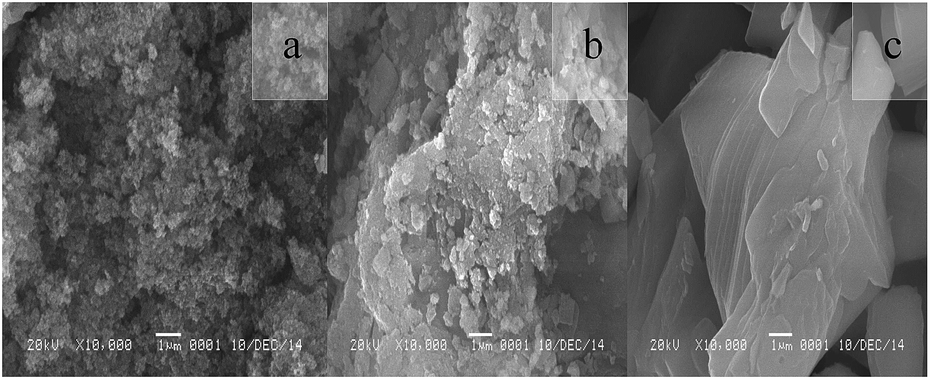 | ||
| Fig. 1 The SEM images of the polymers with different molar ratio ((a, b and c) n(triphenylphosphine)/n(p-xylylene dichloride) = 0.25, 0.5, 1.0). | ||
FT-IR spectrum of the polymer was shown in Fig. 2. The peaks at 2932–3002 cm−1 were assigned to the stretching vibration of the aromatic C–Hs in the polymer. The strong absorption at 1579 cm−1 was attributed to P–C bonds, which indicated the phosphonium IL moiety in polymer. The FT-IR also showed the strong absorption at 1423 cm−1, which was derived from C![[double bond, length as m-dash]](https://www.rsc.org/images/entities/char_e001.gif) C bonds in aromatic rings. The C–H stretching vibration at 1156 cm−1 confirmed the methylene groups in p-xylylene dichloride. The peaks at 860, 689, 649 and 619 cm−1 showed the multi-substituted structures of the aromatic rings in the polymer, which derived from the crosslinked structure in polymer. The rigid crosslinked structure was essential to the high BET surface area in polymer, which was very important for catalytic activity.
C bonds in aromatic rings. The C–H stretching vibration at 1156 cm−1 confirmed the methylene groups in p-xylylene dichloride. The peaks at 860, 689, 649 and 619 cm−1 showed the multi-substituted structures of the aromatic rings in the polymer, which derived from the crosslinked structure in polymer. The rigid crosslinked structure was essential to the high BET surface area in polymer, which was very important for catalytic activity.
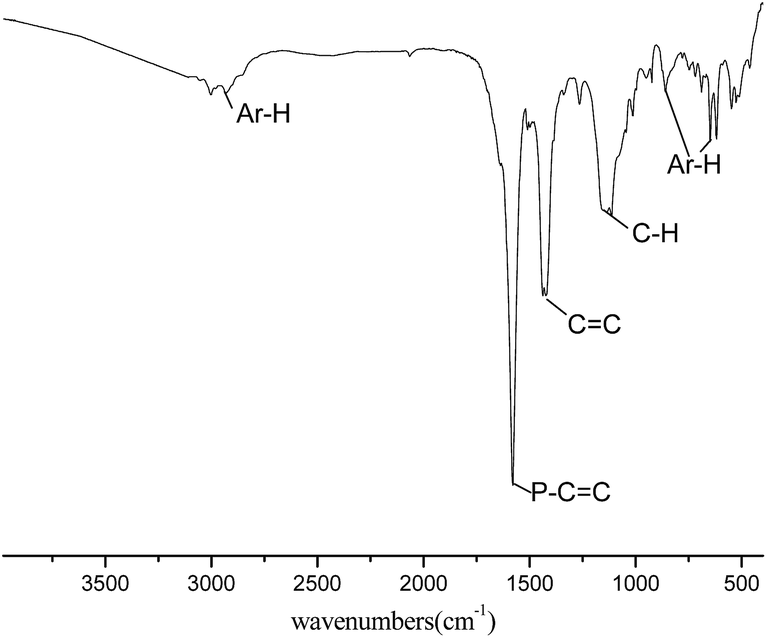 | ||
| Fig. 2 The FT-IR spectrum of the polymers. | ||
The element analysis gave the results: C 84.12%, H 6.53%, P 4.31% (found); C 84.09%, H 6.58%, P 4.34% (calculated). The element analysis agreed well with the structure given in Scheme 1, which indicated that the quaternization and condensation occurred smoothly during the synthetic process. Based on P content, the IL loading amount was 1.40 mmol g−1. In addition, the C and H content indicated that almost all the aromatic rings were connected via the methylene groups, which formed the highly crosslinked structures in polymer. The IL moiety was embedded in polymeric framework and acted as the composition of the polymeric skeleton, which benefited to IL loading amount and BET surface area. Also, the ICP analysis of the polymer showed little Sn content (below the minimum detectability), which indicated that SnCl4 was totally removed from the polymer during the synthetic process.
3.2 The catalytic activities for aza-Michael addition
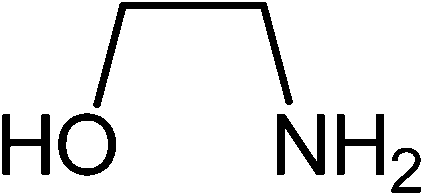
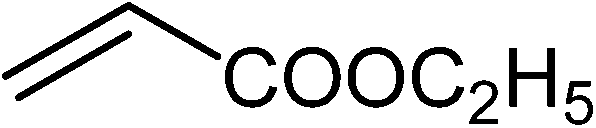
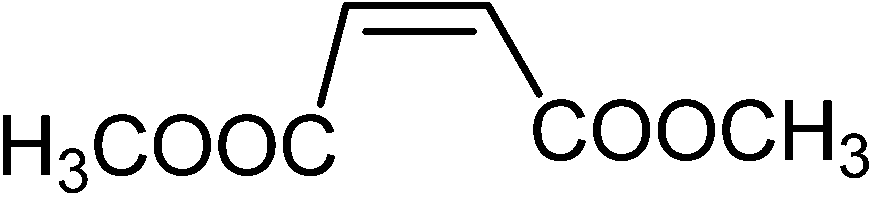
The aza-Michael additions of amines and electron deficient alkenes using polymer were investigated (Table 1). The polymer was very efficient for the reactions with average yields over 95% in several minutes. The dimethylamine with low steric hindrance showed very high reactivity with almost complete conversion in 4 minutes (entry 1). The yield decreased a little for the higher steric hindrance of diethylamine (entry 2). As to diisopropylamine, the reaction is much slower, but a 95.8% conversion yield was still obtained after 20 min (entry 3). Besides secondary amines, the primary amines were also efficiently transformed. Ethylamine had the yield of 98.7% only after 6 min (entry 4). The single substituted product was obtained in high selectivity. The product owned much higher steric hindrance than ethylamine, which hindered the multi-substitution. In addition, the mild reaction condition such as low temperature and low alkene amount benefited the high selectivity of single substitution. The double substituted product formed with more methyl acrylate amount and higher reaction temperature. Both amino groups of ethylenediamine reacted with methyl acrylate with the yield of 97.3% in 10 min (entry 5). This further confirmed the high activity of the polymer. The amine with hydroxyl group also gave high yield after 15 min, which indicated that the functionalities such as hydroxyl group would not affect the reaction (entry 6). As to the cyclic amines, the yields were quite high due to the low steric hindrances (entries 7 and 8). Besides amines, the electron deficient alkenes also affected the yields. Ethyl acrylate owned relatively lower reactivity than the methyl acrylate for longer carbon chains (entries 9–13). As to dimethyl maleate, morpholine showed high yield of 98.7% in 8 min (entry 16). For the fixation of the morpholine ring, the amino group was easily attacked by dimethyl maleate, which resulted in high yield. Ethylenediamine showed the high yield of 95.3% in 16 min (entry 14). Both amino groups were substituted by dimethyl maleate, which further confirmed the high activity of polymer. For the reactions between diisopropylamine and dimethyl maleate, the yield decreased to 92.8% after 25 min (entry 15). The polymer owned high BET surface area, which provided enough space for mass transfer. As a result, active sites were easily accessible to reactants even with high steric hindrance. For dibutyl maleate, the yield was still over 90% (entries 17 and 18). For the acrylonitrile with low steric hindrance, diisopropylamine also showed the high yield of 99.1% in 5 min (entry 19).|
|
||||
|---|---|---|---|---|
| Entry | Amine | Alkene | Reaction time/min | Yielda,b/% |
| a The reaction conditions: amine 20 mmol, alkene 24 mmol, catalyst 50 mg, RT (25 °C). b The yield was calculated on GC using methyl laurate as internal standard. c Ethylenediamine 10 mmol was used with double amino groups. | ||||
| 1 |

|

|
4 | 99.3 |
| 2 |

|

|
8 | 98.7 |
| 3 |

|

|
20 | 95.8 |
| 4 |

|

|
6 | 98.7 |
| 5c |

|

|
10 | 97.3 |
| 6 |
|

|
15 | 96.4 |
| 7 |

|

|
4 | 99.2 |
| 8 |

|

|
4 | 99.1 |
| 9 |

|

|
10 | 98.2 |
| 10c |

|

|
12 | 97.1 |
| 11 |

|

|
17 | 96.3 |
| 12 |

|

|
22 | 94.7 |
| 13 |

|
|
5 | 99.1 |
| 14c |

|

|
16 | 95.3 |
| 15 |

|
|
25 | 92.8 |
| 16 |

|

|
8 | 98.7 |
| 17 |

|

|
30 | 90.5 |
| 18 |

|

|
10 | 97.5 |
| 19 |

|

|
5 | 99.1 |
| 20 |

|

|
3 | 99.3 |

3.3 The recycled activity of the catalyst
Compared to ILs, recovery of the polymer was quite simple. After reactions, the catalyst was recycled by filtration. The recycled activity of the polymer was investigated carefully via the reaction between diisopropylamine and dibutyl maleate (Fig. 3). The results showed that the polymer was very stable in the reaction. The yield of 89% was obtained after the polymer recycled for seven times, while the fresh catalyst showed the yield of 90.5%. Little decrease in the catalytic activity confirmed the high stability of the polymer. Furthermore, the polymer recycled for seven times showed the intermediate yield of 75% after 15 min, while the fresh polymer gave the similar yield of 76%. The results indicated that the high activity of the polymer remained during the recycle. The IL moiety was inlaid in polymeric framework with more than two chemical bonds, which effectively avoided the active sites releasing. Furthermore, the inlaid structure effectively prevent the pore blocking, which ensured the accessible active sites to reactants. The BET surface area of the recycled polymer was 813.2 m2 g−1 after seven times, which remained unchanged (fresh polymer: 827.3 m2 g−1). The results indicated that the carbon deposition did not occur due to the high BET surface area and accessible active sites. The FT-IR also showed no obvious changes of the recycled polymer. These results further confirmed the high stability of the polymer. | ||
| Fig. 3 The recycled catalytic activity of the polymer. | ||
3.4 Comparative study of different catalysts
The catalytic activities of different catalysts were compared through the reactions between diisopropylamine and dibutyl maleate (Table 2). The IL was also used for the reaction, which was synthesized through the quaternization of triphenylphosphine and benzyl chloride. Table 1 displayed that polymer owned the highest activity for the reaction. For the IL with similar structure to polymer, the catalytic activity was even lower with the yield of 85.2% in 60 min. The IL owned high solubility with reactants, which caused the recovery of the IL quite difficult. As to the traditional acidic IL [SO3H-Bmim][HSO4], the catalytic activity was comparable to IL. The acidic IL owned stronger acidity, which hold great trend to interact with diisopropylamine to form the quaternary ammonium salt instead of activation the alkene. As a result, the acid IL showed lower activity. The widely-used acidic resin Amberlyst-15 was also applied for the reaction. However, the activity was not so high for the high steric hindrance of reactants. The yield was only 70.5% with the catalyst amount of 300 mg and reaction time of 210 min. This result indicated that most active sites in the resin were inaccessible to reactants. The resin owned low BET surface area, which caused the active sites useless. The polymer had the high BET surface, which provided enough mass transfer space for reactants. The reactants could easily enter into the active sites. As a result, the polymer owned the highest activity with the yield of 90.5% in 30 min. The simple recycle process added the advantages of the polymer.| Catalyst | Catalyst amount/mg | Reaction time/min | Yield/% |
|---|---|---|---|
| a The reaction conditions: diisopropylamine 20 mmol, dibutyl maleate 24 mmol, catalyst 50 mg, RT (25 °C). b The yield was calculated on GC using methyl laurate as internal standard. | |||
| Polymer | 50 (0.069 mol) | 30 | 90.5 |
| IL | 100 (0.257 mmol) | 60 | 85.2 |
| [SO3H-Bmim][HSO4] | 120 (0.759 mmol) | 110 | 82.3 |
| Amberlyst-15 | 300 (0.45 mmol) | 210 | 70.5 |
4. Conclusion
The novel crosslinked polymer with IL moiety was synthesized by quaternization and alkylation of triphenylphosphine and p-xylylene dichloride. The IL moiety was inlaid in polymeric framework, which effectively avoided the pore blocking and active sites releasing. The polymer had the high BET surface area of 827.3 m2 g−1 and the active sites of 1.40 mmol g−1. The polymer showed high activity for aza-Michael additions with the average yields over 95% in several minutes. The polymer was more efficient than traditional ILs with the advantages of simple recovery. High activity, high BET surface area and high stability were the key advantages of the polymer, which hold great potential for the replacement of the homogeneous catalysts in green chemical processes.Acknowledgements
The work was supported by National Natural Science Foundation of China No. 21103111.Notes and references
- T. L. Greaves and C. J. Drummond, Chem. Rev., 2008, 108, 206 CrossRef CAS PubMed.
- P. Wasserscheid and W. Keim, Angew. Chem., Int. Ed., 2000, 112, 3926 CrossRef.
- R. Sheldon, Chem. Commun., 2001, 2399 RSC.
- D. Zhao, M. Wu, Y. Kou and E. Min, Catal. Today, 2002, 74, 157 CrossRef CAS.
- J. Dupont, R. F. Souza and P. A. Z. Suarez, Chem. Rev., 2002, 102, 3667 CrossRef CAS PubMed.
- J. Li, X.-Y. Shi, Y.-Y. Bi, J.-F. Wei and Z.-G. Chen, ACS Catal., 2011, 1, 657 CrossRef CAS.
- K. Yamaguchi, C. Yoshida, S. Uchida and N. Mizuno, J. Am. Chem. Soc., 2005, 127, 530 CrossRef CAS PubMed.
- A. S. Amarasekara and O. S. Owereh, Catal. Commun., 2010, 11, 1072 CrossRef CAS.
- P. Agrigento, S. M. Al-Amsyar, B. Sorée, M. Taherimehr, M. Gruttadauria, C. Aprile and P. P. Pescarmona, Catal. Sci. Technol., 2014, 4, 1598 CAS.
- S. Rostamnia, A. Hassankhani, H. G. Hossieni, B. Gholipour and H. Xin, J. Mol. Catal. A: Chem., 2014, 395, 463 CrossRef CAS.
- B. Wang, J. Zhang, X. Zou, H. Dong and P. Yao, Chem. Eng. J., 2015, 260, 172 CrossRef CAS.
- B. Karimi, D. Elhamifar, J. H. Clark and A. J. Hunt, Chem.–Eur. J., 2010, 16, 8047 CrossRef CAS.
- Y. Xie, Z. Zhang, T. Jiang, J. He, B. Han, T. Wu and K. Ding, Angew. Chem., Int. Ed., 2007, 46, 7255 CrossRef CAS PubMed.
- Y. Zhang, S. Wei, F. Liu, Y. Du, S. Liu, Y. Ji, T. Yokoi, T. Tatsumi and F.-S. Xiao, Nano Today, 2009, 4, 135 CrossRef CAS.
- F. Liu, L. Wang, Q. Sun, L. Zhu, X. Meng and F.-S. Xiao, J. Am. Chem. Soc., 2012, 134, 16948 CrossRef CAS.
- X. Liang, H. Xiao and C. Qi, Fuel Process. Technol., 2013, 110, 109 CrossRef CAS.
- M. P. Tsyurupa and V. A. Davankov, React. Funct. Polym., 2002, 53, 193 CrossRef CAS.
- X. Liang, Y. Wang, G. Gong and J. Yang, Catal. Commun., 2008, 10, 281 CrossRef CAS.
| This journal is © The Royal Society of Chemistry 2015 |