Green synthesis of a natrolite zeolite/palladium nanocomposite and its application as a reusable catalyst for the reduction of organic dyes in a very short time

Arezo Hatamifard a, Mahmoud Nasrollahzadeh *a and Janusz Lipkowski b
aDepartment of Chemistry, Faculty of Science, University of Qom, PO Box 37185-359, Qom, Iran. E-mail: mahmoudnasr81@gmail.com; Fax: +98 25 32103595; Tel: +98 25 32850953
bCardinal Stefan Wyszynski University in Warsaw, Faculty of Mathematical and Natural Sciences, Wójcickiego 1/3, 01-938 Warszawa, Poland

Received 9th September 2015 , Accepted 20th October 2015

First published on 20th October 2015


Abstract

A natrolite zeolite/palladium (natrolite zeolite/Pd) nanocomposite has been successfully synthesized applying a simple in situ reduction method using an aqueous extract of fruits of Piper longum as a reducing and stabilizing agent. The natrolite zeolite/Pd nanocomposite is characterized using Fourier transform infrared spectroscopy (FT-IR), field emission scanning electron microscopy (FESEM) equipped with an energy dispersive X-ray spectroscopy (EDS), X-ray diffraction analysis (XRD) and transmission electron microscopy (TEM). The crystal structure of natrolite zeolite is determined by single-crystal X-ray diffraction analysis. The catalytic activity of the natrolite zeolite/Pd nanocomposite is excellent for organic dye reduction at room temperature and remains the same for several cycles. The present strategy gives a promising way to prepare heterogeneous nanocatalysts composed by metal nanoparticles for broad applications in catalysis and organic transformations.

Introduction

Organic dyes and nitroarene compounds are highly hazardous upon their release in the environment and have potential toxicity toward humans, animals and plants.1 These compounds are stable in the environment, hardly biodegradable unless in the presence of a catalyst.1 Therefore, it is highly desirable to develop eco-friendly treatment methods for waste effluents of textile and dye industries.

Generally, several methods such as chemical, physico-chemical, biological are reported for treatment of dye containing effluents.2 However, some of these techniques is usually costly and reaction process is slow. Therefore, the development of mild, highly efficient and environmentally benign methods for organic dyes reduction is an important objective.

In recent years, there has been great interest in using metal nanoparticles (MNPs) such as Pd, Pt, Au, Ag, and Ru as catalyst in the dye degradation due to their large specific surface area, high activity and efficiency.2b,3 However, due to the instability of small size MNPs such nanoparticles usually need suitable stabilizers. In addition, nanoparticles aggregation during catalytic reactions limits their catalytic activity. To prevent the agglomerate problem caused by high surface energy and van der Waals force between the nanoparticles, the supporting agents are used, such as TiO2 NPs, perlite, graphene oxide, CuO, gum, carbon and Fe3O4.4

Generally, MNPs are produced by chemical and physical methods.5 However, many of them require the usage of stabilizers to prevent agglomeration of nanoparticles and hazardous chemicals, which are unacceptable in medicine, pharmaceutical and cosmetics industry, as well as large amounts of energy. Therefore, environmentally benign production methods of MNPs are very desirable.

Compared to the chemical and physical methods, biological synthesis does not require the usage of the complicated and expensive apparatus and hazardous chemicals, large amounts of energy, high temperature or pressure.6 Biological methods do not generate hazardous waste and the products usually do not need purification. The biological methods use the ability of natural reducing agents present in plant extracts for the reduction metal ions. Our recent studies have shown that the nanoparticles synthesized using plant extracts display greater stability over prolonged period of time and do not require the addition of the stabilizing agents, probably due to the presence of natural stabilizers like proteins and polyols.6

Quite recently, we reported the green synthesis of Pd NPs using extract of fruits of Piper longum without any stabilizer or surfactant and investigated their good catalytic efficiency in the ligand- and copper-free Sonogashira coupling reactions in water.6i In this circumstance, we have successfully prepared a simple protocol to fabricate natrolite zeolite/Pd nanocomposite using extract of fruits of Piper longum as a reducing cum stabilizing agent. Also, in this article, we discuss the study of the catalytic activity of natrolite zeolite/Pd nanocomposite for organic dyes reduction at room temperature. The results show that the organic dyes (such as 4-nitrophenol (4-NP), Methyl Orange (MO), Congo Red (CR), Methylene Blue (MB) and Rhodamine B (RhB)) reduction reaction catalyzed by the natrolite zeolite/Pd nanocomposite can be completed in few seconds, to the best of our knowledge, which is the shortest time reported in the literatures, so far.

Results and discussion

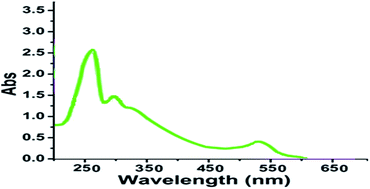
A facile in situ reduction process is introduced to prepare the natrolite zeolite/Pd nanocomposite in which the reduction of PdII to Pd0 is achieved using extract of fruits of Piper longum. The presence of flavonoid and other phenolics in the extract could be responsible for the reduction of PdII ions and formation of Pd NPs. The stable Pd NPs obtained were fully characterized in our previous report by UV-vis, TEM and FT-IR.6i The more precise analysis of Pd NPs formation in the presence of extract of fruits of Piper longum was carried out by measuring the UV-vis spectra (Fig. 1). In the course of time the maximum of absorbance shifted from 415 nm to 270–330 nm. Reduction of PdII to Pd0 was completed around 30 min.
image file: c5ra18476b-f1.tif
Fig. 1 UV-vis spectrum of green synthesized Pd NPs using extract of fruits of Piper longum, reprinted with permission from ref. 6i.

Characterization of natrolite zeolite

The natrolite zeolite was fully characterized in our previous reports by SEM, XRD, XRF, TG-DTA and FT-IR.7 The framework structure of zeolite consists of a three dimensional network of SiO4 and AlO4 tetrahedra linked together by oxygen (Fig. 2) which the ordered Na+ ions and H2O molecules fill the voids of the framework.7d Our recent studies have shown that the natrolite zeolite can be selected as a novel support due to good chemical and thermal stability, low cost, low toxicity and excellent catalytic activity, ease of handling, high reusability, and benign character.7a
image file: c5ra18476b-f2.tif
Fig. 2 Aluminosilicate framework of zeolite, reprinted with permission from ref. 7d.

The crystal structure of natrolite zeolite has been characterized in the solid phase by a single crystal X-ray diffraction study. Crystallographic data and parameters concerning data collection and structure refinement are summarized in Table 1. Selected bond lengths (Å) and angles (°) are listed in Table 2. An ORTEP view of the natrolite zeolite is shown in Fig. 3.

Table 1 Crystallographic data and structure refinement details for natrolite zeolite
  Natrolite zeolite
Empirical formula Si3Al2O12Na2H4
Formula weight 380.24
T/K 100(1)
Wavelength/Å 0.71073
Crystal system Orthorhombic
Space group F2dd
a 6.5880(2)
b 18.2780(2)
c 18.6130(2)
α 90
β 90
γ 90
V3 2241.29(8)
Z 8
µ (mm−1) 0.718
D cal/Mg m−3 2.254
F(000) 1520
Crystal size (mm) 0.28 × 0.22 × 0.19
θ range/° 3.12–50.56
Limiting indices −12 ≤ h ≤ 14, −38 ≤ k ≤ 39, −39 ≤ l ≤ 40
Reflections collected/unique 16[thin space (1/6-em)]556/5590 [R(int) = 0.0446]
Completeness to theta = 50.56 99.8%
Absorption correction None
Refinement method Full-matrix least-squares on F2
Data/restraints/parameters 5590/1/95
Goodness-of-fit on F2 0.976
Final R indices R 1 = 0.0350, wR2 = 0.0769
R indices (all data) R 1 = 0.0402, wR2 = 0.0807
Absolute structure parameter 0.06(8)
Largest diff. peak and hole 0.546 and −0.711 e A−3


Table 2 Bond lengths (Å), and angles (°) for natrolite zeolite
Atoms Bond lengths
Si(1)–O(1) 1.6147(7)
Si(1)–O(4) 1.6175(7)
Si(1)–O(2) 1.6394(8)
Si(1)–Na(1) 3.0584(5)
Si(2)–O(2) 1.6320(8)
Al(3)–O(1) 1.7378(7)
Al(3)–Na(1) 3.5618(5)
Na(1)–O(1) 2.3643(8)
Na(1)–O(3) 2.5977(9)
O(1W)–H(1) 0.77(3)

  Bond angles
O(1)–Si(1)–O(4) 111.64(4)
O(1)–Si(1)–O(2) 109.93(4)
O(4)–Si(1)–O(2) 109.60(4)
O(3)–Si(1)–O(2) 107.21(4)
O(1)–Si(1)–Na(1) 49.83(3)
O(4)–Si(1)–Na(1) 120.59(3)
O(2)–Si(1)–Na(1) 129.74(3)
O(5)–Si(2)–O(2) 107.73(4)
O(1)–Al(3)–Na(1) 35.20(3)
O(1)–Na(1)–O(1W) 92.84(3)
O(1)–Na(1)–Si(1) 31.457(18)
O(3)–Na(1)–Si(1) 32.041(16)
O(1)–Na(1)–Al(3) 25.066(19)
O(3)–Na(1)–Al(3) 87.984(19)
Si(1)–Na(1)–Al(3) 55.973(10)
Si(1)–O(1)–Al(3) 138.78(5)
Si(1)–O(1)–Na(1) 98.71(3)
Al(3)–O(1)–Na(1) 119.74(4)
Si(2)–O(2)–Si(1) 144.20(5)
Si(1)–O(3)–Na(1) 89.82(3)
Na(1)–O(1W)–H(1) 119(2)
H(1)–O(1W)–H(2) 107(3)


image file: c5ra18476b-f3.tif
Fig. 3 The asymmetric packing of the zeolite.

The natrolite zeolite is one example of fibrous zeolites whose structures are composed of T5O10 (T = Al and Si) units connected along the c axis to form infinite chains (Fig. 4) that link to form a two-dimensional eight-membered ring pore system along the a and b axes connected by further eight-membered ring pores along the c axis. The adjacent chains are connected by outer oxygen ions of the rings, forming a three-dimensional framework. Ordered Na+ ions and H2O molecules fill the voids of the framework.


image file: c5ra18476b-f4.tif
Fig. 4 The asymmetric unit of the zeolite.

Characterization of natrolite zeolite/Pd nanocomposite

In this paper, we prepared a novel nanocomposite with in situ growth of Pd NPs attached on natural natrolite zeolite as supporting material. The natrolite zeolite/Pd nanocomposite was characterized by XRD, FESEM, EDS, FT-IR and TEM.

Fig. 5 shows the typical FT-IR spectra of natrolite zeolite/Pd nanocomposite. The absorption in the range of 900–1200 cm−1 can be attributed to the Si–O–Si and Si–O–Al stretching vibration. The peaks at 3619, 3440 and 1640 cm−1 are correspondent to the zeolitic water. The peaks at 500–800 cm−1 belong to the pseudo-lattice vibrations. As shown in Fig. 3, the band at around 1640 cm−1 is caused by the bending vibration of O–H while the peaks at 3440, and 3619 cm−1 corresponds to the asymmetric and symmetric stretching of the O–H group.


image file: c5ra18476b-f5.tif
Fig. 5 FT-IR spectrum of natrolite zeolite/Pd nanocomposite.

The formation of Pd NPs on the natrolite zeolite surface was confirmed by XRD analysis (Fig. 6). The sharp, strong peaks confirm the natrolite zeolite/Pd nanocomposite is well crystallized. The actual phases for this nanocomposite were silicon oxide cristabolite–SiO2 (cubic) and aluminium silicate zeolite. Fig. 6 clearly shows that the immobilization of Pd NPs on the zeolite surface does not cause any observable alteration in the framework lattice or any loss in the crystallinity of natrolite zeolite. The XRD peaks were observed at 39.9, 46.4, 67.7, 81.2 and 86.7 2θ, which were assigned to the (111), (200), (220), (311) and (222) Bragg's reflections of face-centered Pd NPs, which are consistent with JCPDS (no. 05-0681). According to the literature, from the wide angle X-ray diffraction peaks, 33.9, 41.9, 54.8° can be indexed as (101), (110), and (112) faces of the PdO nanoparticles.8 As shown in Fig. 6, no other diffraction peaks arising from PdO (the oxidation state of Pd) present in the XRD pattern, which indicate the high phase purity of synthesized sample. This confirms that Pd2+ or PdO are to be avoided. I think Pd2+ ions were reduced to Pd(0) by aqueous extract of fruits of Piper longum in the preparation of catalyst step and NaBH4 in the reduction reaction of dyes.


image file: c5ra18476b-f6.tif
Fig. 6 XRD pattern of natrolite zeolite/Pd nanocomposite.

The morphology and size of Pd NPs were studied by FESEM and TEM. The FESEM images of natrolite zeolite/Pd nanocomposite reveals that Pd NPs are attached on the surface of the natrolite zeolite (Fig. 7). Fig. 8 shows the TEM images of natrolite zeolite/Pd nanocomposite. Particle size distribution is represented in Fig. 9. As observed in Fig. 8 and 9, the Pd NPs with a wide distribution and small average size of about 12.5 nm were decorated on natrolite zeolite. The plant extract was involved as capping and stabilizing the size of the Pd NPs.


image file: c5ra18476b-f7.tif
Fig. 7 FESEM images natrolite zeolite/Pd nanocomposite.

image file: c5ra18476b-f8.tif
Fig. 8 TEM images natrolite zeolite/Pd nanocomposite.

image file: c5ra18476b-f9.tif
Fig. 9 Size distribution histogram of natrolite zeolite/Pd nanocomposite.

The particle size of palladium was much larger than the known diameter of the pores (i.e. Ø < 4.5 Å). Thus the nanoparticles detected by the TEM measurements were not able to exist inside the pores of the zeolite and was immobilized on the zeolite surface.7d

The EDS analysis further confirms the presence of palladium on natrolite zeolite. In the EDS spectrum of catalyst, peaks related to C, O, Al, Si, Ca and Pd were observed. The atomic and weight ratios are listed in Table 3.

Table 3 Atomic and weight ratios of natrolite zeolite/Pd nanocomposite
Element Series [W%] [A%]
C 22.29 38.19
O 36.23 46.60
Al 5.26 4.01
Si 6.74 4.94
Ca 3.12 1.60
Pd 21.38 4.14
Au 4.98 0.52
    100.00 100.00


Catalytic properties of natrolite zeolite/Pd nanocomposite

We also evaluated the catalytic activities of the natrolite zeolite/Pd nanocomposite through reduction of various types of dyes such as 4-NP, MO, MB, RhB and CR in the presence of excess sodium borohydride (NaBH4) and the reactions were monitored by UV-vis spectroscopy.

4-NP in aqueous medium has a maximum absorption at 317 nm as shown in Fig. 10A. However, the light yellow color of the solution changed to intense yellow when NaBH4 was added into 4-NP solution and showed an absorption peak at about 400 nm and it did not change as time passed (Fig. 10B). This was due to the formation of 4-nitrophenolate ions in alkaline conditions caused by the addition of NaBH4. The peak at 400 nm remains unchanged even for 24 h in the absence of any catalyst. As shown in Fig. 9, when the natrolite zeolite/Pd nanocomposite was added into the solution containing 4-NP and NaBH4, the intensity of the strong absorption peak at 400 nm gradually decreased and a new peak appeared at about 300 nm (Fig. 10C) which corresponded to the formation of 4-AP. After about 50 s, the whole peak disappeared and the color became transparent, which indicated that 4-NP was almost turned to 4-AP.


image file: c5ra18476b-f10.tif
Fig. 10 UV-vis absorption spectra of 4-NP (A); 4-NP + NaBH4 (B) and 4-AP (C), conditions: [4-NP] = 2.5 × 10⁻³ M; [NaBH4] = 187.5 mM; natrolite zeolite/Pd nanocomposite = 7.0 mg.

The effects of the amount of the catalyst and NaBH4 were determined for reduction reaction. As shown in Table 4, no product was obtained in the absence of the catalyst. Thus, indicating that the catalytic reduction occurs at the surface of catalyst. In the absence of catalyst, no significant color change was observed within the reaction time and the peak at 400 nm remained unaltered for a long duration. On the other hand, in the absence of NaBH4, no reduction occurred in the presence of catalyst. Nevertheless, the best results were achieved in the presence of 7.0 mg of catalyst and 75 equivalents of NaBH4. No significant improvement on the reaction time was observed using higher amounts of the catalyst or NaBH4.

Table 4 Optimization of reaction conditions for reduction of 4-NP
4-NP (mM) NaBH4 (mM) Natrolite zeolite/Pd (mg L−1) Time (s)
a No reaction.
2.5 250 0.0 24 ha
2.5 0.0 100.0 1 ha
2.5 250 100.0 89
2.5 250 140.0 50
2.5 250 200.0 50
2.5 187.5 140.0 50
2.5 125 140.0 97


In the present work, when the natrolite zeolite/palladium nanocomposite was added to a mixed solution of 4-NP and NaBH4, 4-nitrophenolate ions and BH4 were first adsorbed on the surface of the catalyst via physical adsorption. After electron transfer (ET) to the metal nanoparticles, the hydrogen atom forms from the hydride, and then attacks 4-nitrophenolate ions to reduce it. This ET-induced hydrogenation of 4-NP occurred spontaneously at the surface of the metal catalyst. Finally, the generated product was desorbed from the surface of the catalyst.

In our reaction system, the concentration of sodium borohydride was much higher than that of 4-NP and could be considered as a constant during the reaction period. Therefore, the reduction kinetics can be described as pseudo-first-order with respect to 4-NP alone.

As the absorbance of 4-NP is proportional to its concentration in the medium, the ratio of At/A0 is proportional to the ratio of Ct/C0 (At is the absorbance at any time t, A0 is the absorbance at time t = 0, Ct is the concentration of 4-NP in the reaction time t and C0 is the initial concentration of 4-NP). Pseudo-first-order rate constant could be calculated by the following rate law equation:

ln(Ct/C0) = ln(At/A0) = −kt
where, k is the rate constant. From the linear relations of ln(At/A0), shown in Fig. 11, we found that the rate constant for this reaction is 0.067 s−1, which is comparable to those reported previously.9


image file: c5ra18476b-f11.tif
Fig. 11 Plot of ln(At/A0) versus time for the reduction of 4-NP with natrolite zeolite/Pd nanocomposite, conditions: [4-NP] = 2.5 × 10⁻³ M; [NaBH4] = 187.5 mM; catalyst = 7.0 mg.

In order to test the catalytic ability and application of synthesized natrolite zeolite/Pd nanocomposite, we also investigated their catalytic effects for the reduction of four different dyes, namely CR, MO, MB and RhB with 25 mL of fresh NaBH4 aqueous solution (5.3 × 10⁻³ M). As shown in Table 5, it was observed that reduction of organic dyes occurred within 1–120 s in the presence of 1–7 mg of catalyst, depending upon the dye. This showed that the natrolite zeolite/Pd nanocomposite displayed good catalytic activities on the reduction of various dyes.

Table 5 Optimization of reaction conditions for reduction of organic dyesa
Organic dye (M) NaBH4 (M) Natrolite zeolite/Pd (mg L−1) Time
a Not completed.
CR (1.44 × 10⁻⁵) 5.3 × 10⁻³ 20.0 27 s
CR (1.44 × 10⁻⁵) 5.3 × 10⁻³ 60.0 27 s
MO (3.0 × 10⁻⁵) 5.3 × 10⁻³ 20.0 2 min
MO (3.0 × 10⁻⁵) 5.3 × 10⁻³ 60.0 2 min
MB (3.1 × 10⁻⁵) 5.3 × 10⁻³ 20.0 1 s
RhB (2.09 × 10⁻⁵) 5.3 × 10⁻³ 100.0 20 s
RhB (2.09 × 10⁻⁵) 5.3 × 10⁻³ 140.0 8 s
RhB (2.09 × 10⁻⁵) 5.3 × 10⁻³ 200.0 8 s


A Hitachi, U‐2900 spectrophotometer was employed to monitor the progress of the reduction of CR, MO, MB and RhB at room temperature by scanning a range of 200–700 nm. As shown in Fig. 12, when natrolite zeolite/Pd nanocomposite was added into the solution containing 1.44 × 10⁻⁵ M of CR (in case of MO, MB and RhB the concentrations were 3.0 × 10⁻⁵, 3.1 × 10⁻⁵ and 2.09 × 10⁻⁵ M, respectively) and 5.3 × 10⁻³ M of NaBH4, the intensity of the strong absorption peak at 493 nm (in case of MO, MB and RhB the λmax was 465, 663 and 554 nm, respectively) gradually decreased and within 27 s (in case of MO, MB and RhB the reaction times were 2 min, 50 s and 8 s, respectively), the whole peak disappeared.


image file: c5ra18476b-f12.tif
Fig. 12 The evolution of the UV-vis spectra of dye aqueous solution in the presence of NaBH4 and natrolite zeolite/Pd nanocomposite. (A) Congo red; (B) methyl orange; (C) methylene blue; (D) rhodamine B.

The efficiency of the natrolite zeolite/Pd nanocomposite was determined by comparison with other catalytic systems (Table 6). This is the shortest time for the reduction of organic dyes reported in the literatures, so far.

Table 6 Comparison of various catalysts in the reduction of 4-NP, MB, RhB, CR and MO
Substrate Catalyst Time Ref.
4-NP GA–Pt NPs 8 h 9a
Pd–FG 12 min 9b
Au@PZS@CNTs 16 min 9c
Ni–PVAm/SBA-15 85 min 9d
TiO2–G1% 60 min 9e
Fe3O4@C@Pt 60 min 9f
Cu NPs 2 h 9g
HMMS–NH2–Pd 60 min 9h
p(AMPS)–Ni composite 5.5 h 9i
PdCu/graphene 1.5 h 9j
KCC-1/Au 12 min 9k
Ag/KCC-1 510 s 9l
Resin–Au NPs 20 min 9m
NAP–Mg–Au(0) 7 min 9n
Polymer-anchored Pd(II) complex 5.5 h 9o
Au–GO 30 min 9p
Au/graphene hydrogel 720 s 9q
p(AMPS)–Co composite 28 min 9r
Cu NPs/perlite 2.5 min 4c
Natrolite zeolite/Pd nanocomposite 160 s This work
MB Porous Cu microspheres 8 min 10a
SiNWAs–Cu 10 min 10b
Au/Fe3O4@C 10 min 10c
Ag NPs on silica spheres 7.5 min 10d
Aucore–PANIshell 5 min 10e
Copper nanocrystals 200 s 10f
Natrolite zeolite/Pd nanocomposite 1 s This work
RhB SiNWAs–Cu 14 min 10b
Fe3O4@PANI@Au 18 min 10g
Au–PANI nanocomposite 15 min 10h
Fe3O4/Ag 15 min 10i
Ag/HLaNb2O7 47 min 10j
PS/Ag 10 min 10k
Copper nanocrystals 300 s 10f
Natrolite zeolite/Pd nanocomposite 8 s This work
CR Copper nanocrystals 500 s 10f
Cu@SBA-15 7 min 10l
Natrolite zeolite/Pd nanocomposite 27 s This work
MO Cu@SBA-15 5 min 10l
Natrolite zeolite/Pd nanocomposite 2 min This work


Catalyst recyclability

One of the main advantages of using a heterogeneous catalyst is the ease of separation from the reaction mixture and reuse in several runs. For the reuse of the catalyst, the reduction of 4-NP to 4-AP was chosen as a model reaction. Natrolite zeolite works under heterogeneous conditions. The catalyst was recovered easily by centrifugation, washed with deionized water to remove any absorbed products and dried in an oven, then reused it for seven repeated runs. The XRD patterns before and after the reaction revealed that the natrolite zeolite retained its crystallinity throughout. ICP-AES (Inductively Coupled Plasma Atomic Emission Spectroscopy) analyses of Pd in the reaction filtrates did not detect the metal in any of the seven runs, indicating the absence of metal leaching, high stability and turnover of catalyst under operating conditions. In addition, the catalytic efficiency of the catalyst remained almost constant up to seven cycle of operation and the time required for 100% reduction of RhB, MO, CR and MB was found to be almost same up to the 7th cycle.

Also, the nature of the recovered catalyst was investigated by EDS and TEM (Fig. 13 and 14). The TEM analysis of the recovered natrolite zeolite/Pd nanocomposite revealed that Pd particles are identical in shape and size even after the 7th run.


image file: c5ra18476b-f13.tif
Fig. 13 EDS spectrum of recovered natrolite zeolite/Pd nanocomposite.

image file: c5ra18476b-f14.tif
Fig. 14 TEM image of recovered natrolite zeolite/Pd nanocomposite.

Conclusion

The natrolite zeolite/Pd nanocomposite was successfully prepared by the in situ reduction process by using extract of fruits of Piper longum without any stabilizer or surfactant and hazardous chemicals. The natrolite zeolite/Pd nanocomposite showed a remarkably enhanced catalytic activity in the reduction of organic dyes. To the best of our knowledge, natrolite zeolite/Pd nanocomposite can catalyze the reduction of organic dyes in the shortest time compared to the catalysts reported in literatures. In addition, the catalyst could be easily separated from the reaction mixture and recycled several times without any significant loss of catalytic activity. Moreover, the synthesized catalyst by this method is quite stable and can be encouraged for a broader range of applications.

Experimental

High-purity chemical reagents were purchased from the Merck and Aldrich chemical companies. All materials were of commercial reagent grade. FT-IR spectra were recorded on a Nicolet 370 FT/IR spectrometer (Thermo Nicolet, USA) using pressed KBr pellets. The natrolite zeolite used in this study originated from Hormak area, Sistan and Baluchestan province, Iran. X-ray diffraction (XRD) measurements were carried out using a Philips powder diffractometer type PW 1373 goniometer (Cu Kα = 1.5406 Å). The scanning rate was 2° min−1 in the 2θ range from 10 to 80°. UV-visible spectral analysis was recorded on a double‐beam spectrophotometer (Hitachi, U‐2900) to ensure the formation of nanoparticles. The shape and size of natrolite zeolite/Pd nanocomposite was identified by transmission electron microscope (TEM) using a Philips EM208 microscope operating at an accelerating voltage of 90 kV. The chemical composition of the prepared nanostructures was measured by EDS (Energy Dispersive X-ray Spectroscopy) performed in SEM.

Preparation of extract of fruits of Piper longum

Extract of Piper longum was prepared according to our recent report.6i

Preparation of palladium nanoparticles

Pd NPs were prepared according to our recent report.6i

Preparation of natrolite zeolite/Pd nanocomposite

50 mL of aqueous extract of fruits of Piper longum was added to 20 mL of 0.08 M PdCl2 solution and 1.0 g of natrolite zeolite and stirred for 15 h at 100 °C. The formed precipitate was filtered and collected over a round dish. Then it was heated at 100 °C for 5 h under oven and then characterized.

Catalytic reduction of 4-NP

In a typical run, 25 mL of 4-NP aqueous solution (2.5 mM) was mixed with 7.0 mg of natrolite zeolite/Pd nanocomposite. Subsequently, 25 mL of fresh NaBH4 aqueous solution (187.5 mM) was added and the solution mixture was kept stirring during the reaction at room temperature until the deep yellow solution became colorless. The progress of the reaction could be directly monitored by the change of the absorption intensity in UV-vis spectroscopy. The reaction was completed in 50 seconds. At the end of the reaction, the catalyst was recovered by centrifugation, washed with deionized water and then dried for the next cycle.

Catalytic reduction of MO

In a typical procedure, 1.0 mg of catalyst was added to 25 mL of MO aqueous solution (3.0 × 10⁻⁵ M). Then, 25 mL of fresh NaBH4 aqueous solution (5.3 × 10⁻³ M) was added and the mixture was allowed to stir at room temperature. The progress of the reaction could be directly monitored by the change of the absorption intensity in UV-vis spectroscopy. The change of the absorption peak at 465 nm was recorded to reflect the successive information about the reduction of MO. This reaction was complete in 120 seconds. After completion of reaction, the catalyst was collected by centrifugation. Thereafter, the catalyst was washed with deionized water, and then dried for the next run.

Catalytic reduction of MB

In a typical procedure, 1.0 mg of catalyst was added to 25 mL of MB aqueous solution (3.1 × 10⁻⁵ M). Then, 25 mL of fresh NaBH4 aqueous solution (5.3 × 10⁻³ M) was added and the mixture was allowed to stir at room temperature. The progress of the reaction could be directly monitored by the change of the absorption intensity in UV-vis spectroscopy. The change of the absorption peak at 663 nm was recorded to reflect the successive information about the reduction of MB. This reaction was complete in 1 second. After completion of reaction, the catalyst was collected by centrifugation. Thereafter, the catalyst was washed with deionized water, and then dried for the next run.

Catalytic reduction of RhB

In a typical procedure, 1.0 mg of catalyst was added to 25 mL of RhB aqueous solution (2.09 × 10⁻⁵ M). Then, 25 mL of fresh NaBH4 aqueous solution (5.3 × 10⁻³ M) was added and the mixture was allowed to stir at room temperature. The progress of the reaction could be directly monitored by the change of the absorption intensity in UV-vis spectroscopy. The change of the absorption peak at 554 nm was recorded to reflect the successive information about the reduction of RhB. This reaction was complete in 8 seconds. After completion of reaction, the catalyst was collected by centrifugation. Thereafter, the catalyst was washed with deionized water, and then dried for the next run.

Catalytic reduction of CR

In a typical procedure, 1.0 mg of catalyst was added to 25 mL of CR aqueous solution (1.44 × 10⁻⁵ M). Then, 25 mL of fresh NaBH4 aqueous solution (5.3 × 10⁻³ M) was added and the mixture was allowed to stir at room temperature. The progress of the reaction could be directly monitored by the change of the absorption intensity in UV-vis spectroscopy. The change of the absorption peak at 493 nm was recorded to reflect the successive information about the reduction of CR. This reaction was complete in 27 seconds. After completion of reaction, the catalyst was collected by centrifugation. Thereafter, the catalyst was washed with deionized water, and then dried for the next run.

Acknowledgements

We gratefully acknowledge the Iranian Nano Council, University of Qom and Polish academy of sciences for the support of this work.

References

  1. (a) I. M. Banat, P. Nigam, D. Singh and R. Marchant, Bioresour. Technol., 1996, 58, 217 CrossRef CAS; (b) C. A. Martinez-Huitle and E. Brillas, Appl. Catal., B, 2009, 87, 105 CrossRef CAS; (c) V. K. Vidhu and D. Philip, Micron, 2014, 56, 54 CrossRef CAS PubMed.
  2. (a) B. Manu and S. Chaudhari, Bioresour. Technol., 2002, 82, 225 CrossRef CAS PubMed; (b) R. Patel and S. Suresh, J. Hazard. Mater., 2006, 137, 1729 CrossRef CAS PubMed; (c) L. G. Devi, S. G. Kumar, K. M. Reddy and C. Munikrishnappa, J. Hazard. Mater., 2009, 164, 459 CrossRef PubMed.
  3. (a) N. Pradhan, A. Pal and T. Pal, Langmuir, 2001, 17, 1800 CrossRef CAS; (b) A. K. Sinha, M. Basu, S. Sarkar, M. Pradhan and T. Pal, J. Colloid Interface Sci., 2013, 398, 13 CrossRef CAS PubMed; (c) N. Gupta, H. M. Singh and R. K. Sharma, J. Mol. Catal. A: Chem., 2011, 335, 248 CrossRef CAS; (d) S. M. El-Sheikh, A. A. Ismail and J. F. Al-Sharab, New J. Chem., 2013, 37, 2399 RSC; (e) X. Zhang, M. Lin, X. Lin, C. Zhang, H. Wei, H. Zhang and B. Yang, ACS Appl. Mater. Interfaces, 2014, 6, 450 CrossRef CAS PubMed.
  4. (a) M. Nasrollahzadeh, S. M. Sajadi, A. Rostami-Vartooni and M. Bagherzadeh, J. Colloid Interface Sci., 2015, 448, 106 CrossRef CAS PubMed; (b) M. Nasrollahzadeh, S. M. Sajadi, A. Rostami-Vartooni and M. Khalaj, J. Mol. Catal. A: Chem., 2015, 396, 31 CrossRef CAS; (c) M. Nasrollahzadeh, S. M. Sajadi, A. Rostami-Vartooni, M. Bagherzadeh and R. Safari, J. Mol. Catal. A: Chem., 2015, 400, 22 CrossRef CAS; (d) M. Nasrollahzadeh, M. Maham, A. Rostami-Vartooni, M. Bagherzadeh and S. M. Sajadi, RSC Adv., 2015, 5, 64769 RSC; (e) M. Nasrollahzadeh, B. Jaleh, P. Fakhri, A. Zahraei and E. Ghadery, RSC Adv., 2015, 5, 2785 RSC; (f) M. Nasrollahzadeh, New J. Chem., 2014, 38, 5544 RSC.
  5. (a) C. Guang, T. Yong-jian, L. Wei, L. Jiang-shan, L. Jun and Y. Tian-zu, Met. Funct. Mater., 2005, 12(3), 18 Search PubMed; (b) C. Qing-chun, Fine Chemicals, 2005, 22(6), 417 Search PubMed; (c) G. Xin-ling and S. Zheng-tao, Appl. Chem. Ind., 2005, 34(10), 615 Search PubMed; (d) W. Xiao-li, X. Bin-shi, Y. He-long and X. Yi, China Surf. Eng., 2005, 18(5), 24 Search PubMed; (e) H. Feng, Z. Zheng-yi, X. Yao-fu, W. Wu-xiang, H. Ya-fang and W. Run, Acta Metall. Sin., 2000, 36(6), 659 Search PubMed; (f) W. Qi-feng and Z. Qi-xiu, Non-ferrous Smelting, 2003, 6(3), 10 Search PubMed; (g) H. Li-jun, H. Cai-xia and W. Yong-hong, Nat. Sci., 2005, 19(4), 49 Search PubMed; (h) T. Ling-hua and L. Feng-sheng, Journal of Nanjing Institute of Technology, 2005, 3(1), 6 Search PubMed.
  6. (a) E. S. Abdel-Halim, M. H. El-Rafie and S. S. Al-Deyab, Carbohydr. Polym., 2011, 85, 692 CrossRef CAS; (b) D. Philip, Spectrochim. Acta, Part A, 2009, 73, 374 CrossRef PubMed; (c) D. Philip, Spectrochim. Acta, Part A, 2009, 73, 374 CrossRef PubMed; (d) M. Nasrollahzadeh, S. M. Sajadi and M. Khalaj, RSC Adv., 2014, 4, 47313 RSC; (e) M. Nasrollahzadeh, S. M. Sajadi, A. Rostami-Vartooni and M. Khalaj, RSC Adv., 2014, 4, 43477 RSC; (f) M. Nasrollahzadeh, M. Maham and S. M. Sajadi, J. Colloid Interface Sci., 2015, 455, 245 CrossRef CAS PubMed; (g) M. Nasrollahzadeh, S. M. Sajadi and M. Maham, J. Mol. Catal. A: Chem., 2015, 396, 297 CrossRef CAS; (h) M. Nasrollahzadeh, S. M. Sajadi, F. Babaei and M. Maham, J. Colloid Interface Sci., 2015, 450, 374 CrossRef CAS PubMed; (i) M. Nasrollahzadeh, S. M. Sajadi, M. Maham and A. Ehsani, RSC Adv., 2015, 5, 2562 RSC.
  7. (a) M. Nasrollahzadeh, S. M. Sajadi and A. Hatamifard, J. Colloid Interface Sci., 2015, 460, 146 CrossRef CAS PubMed; (b) M. Nasrollahzadeh, M. Enayati and M. Khalaj, RSC Adv., 2014, 4, 26264 RSC; (c) D. Habibi, M. Nasrollahzadeh and H. Sahebekhtiari, J. Mol. Catal. A: Chem., 2013, 378, 148 CrossRef CAS; (d) M. Nasrollahzadeh, A. Ehsani and A. Rostami-Vartouni, Ultrason. Sonochem., 2014, 21, 275 CrossRef CAS PubMed.
  8. (a) Y. Bi and G. Lu, Appl. Catal., B, 2003, 41, 279 CrossRef CAS; (b) Y.-J. Kim, J. G. Kang, S.-H. Lim and J. H. Song, Bull. Korean Chem. Soc., 2005, 26, 1129 CrossRef CAS.
  9. (a) B. Sreedhar, D. K. Devi and D. Yada, Catal. Commun., 2011, 12, 1009 CrossRef CAS; (b) Z. Wang, C. Xu, G. Gao and X. Li, RSC Adv., 2014, 4, 13644 RSC; (c) X. Wang, J. Fu, M. Wang, Y. Wang, Z. Chen, J. Zhang, J. Chen and Q. Xu, J. Mater. Sci., 2014, 49, 5056 CrossRef CAS; (d) R. Javad Kalbasi, A. A. Nourbakhsh and F. Babaknezhad, Catal. Commun., 2011, 12, 955 CrossRef; (e) C. Xu, Y. Yuan, R. Yuan and X. Fu, RSC Adv., 2013, 3, 18002 RSC; (f) M. Xie, F. Zhang, Y. Long and J. Ma, RSC Adv., 2013, 3, 10329 RSC; (g) Z. Duan, G. Ma and W. Zhang, Bull. Korean Chem. Soc., 2012, 33, 4003 CrossRef CAS; (h) P. Wang, F. Zhang, Y. Long, M. Xie, R. Li and J. Ma, Catal. Sci. Technol., 2013, 3, 1618 RSC; (i) N. Sahiner, H. Ozay, O. Ozay and N. Aktas, Appl. Catal., A, 2010, 385, 201 CrossRef CAS; (j) A. K. Shil, D. Sharma, N. R. Guha and P. Das, Tetrahedron Lett., 2012, 53, 4858 CrossRef CAS; (k) H. Yang, S. Li, X. Zhang, X. Wang and J. Ma, J. Mater. Chem. A, 2014, 2, 12060 RSC; (l) Z. Dong, X. Le, X. Li, W. Zhang, C. Dong and J. Ma, Appl. Catal., B, 2014, 158–159, 129 CrossRef CAS; (m) D. Shah and H. Kaur, J. Mol. Catal. A: Chem., 2014, 381, 70 CrossRef CAS; (n) K. Layek, M. L. Kantam, M. Shirai, D. Nishio-Hamane, T. Sasaki and H. Maheswaran, Green Chem., 2012, 14, 3164 RSC; (o) M. Islam, P. Mondal, A. S. Roy and K. Tuhina, Transition Met. Chem., 2010, 35, 427 CrossRef CAS; (p) Y. Choi, H. S. Bae, E. Seo, S. Jang, K. H. Park and B.-S. Kim, J. Mater. Chem., 2011, 21, 15431 RSC; (q) J. Li, C.-Y. Liu and Y. Liu, J. Mater. Chem., 2012, 22, 8426 RSC; (r) N. Sahiner, Prog. Polym. Sci., 2013, 38, 1329 CrossRef CAS.
  10. (a) Y. Zhang, P. Zhu, L. Chen, G. Li, F. Zhou, D. (Daniel) Lu, R. Sun, F. Zhou and C.-p. Wong, J. Mater. Chem. A, 2014, 2, 11966 RSC; (b) X. Yang, H. Zhong, Y. Zhu, H. Jiang, J. Shen, J. Huang and C. Li, J. Mater. Chem. A, 2014, 2, 9040 RSC; (c) Z. Gan, A. Zhao, M. Zhang, W. Tao, H. Guo, Q. Gao, R. Mao and E. Liu, Dalton Trans., 2013, 42, 8597 RSC; (d) Z. J. Jiang, C. Y. Liu and L. W. Sun, J. Phys. Chem. B, 2005, 109, 1730 CrossRef CAS PubMed; (e) S. Dutt, P. F. Siril, V. Sharma and S. Periasamy, New J. Chem., 2015, 39, 902 RSC; (f) P. Zhang, Y. Sui, C. Wang, Y. Wang, G. Cui, C. Wang, B. Liu and B. Zou, Nanoscale, 2014, 6, 5343 RSC; (g) S. Xuan, Y. X. J. Wang, J. C. Yu and K. C. F. Leung, Langmuir, 2009, 25(19), 11835 CrossRef CAS PubMed; (h) B. Zhang, B. Zhao, S. Huang, R. Zhang, P. Xu and H. L. Wang, CrystEngComm, 2012, 14, 1542 RSC; (i) L. Ai, C. Zeng and Q. Wang, Catal. Commun., 2011, 14, 68 CrossRef CAS; (j) Z.-J. Jiang, C.-Y. Liu and L.-W. Sun, J. Phys. Chem. B, 2005, 109, 1730 CrossRef CAS PubMed; (k) Z. Deng, H. Zhu, B. Peng, H. Chen, Y. Sun, X. Gang, P. Jin and J. Wang, ACS Appl. Mater. Interfaces, 2012, 4, 5625 CrossRef CAS PubMed; (l) B. K. Ghosh, S. Hazra, B. Naik and N. N. Ghosh, Powder Technol., 2015, 269, 371 CrossRef CAS.

Footnote

CCDC 1421016. For crystallographic data in CIF or other electronic format see DOI: 10.1039/c5ra18476b

This journal is © The Royal Society of Chemistry 2015
Click here to see how this site uses Cookies. View our privacy policy here.