
DOI:
10.1039/C5RA18316B
(Paper)
RSC Adv., 2015,
5, 94084-94090
High selectivity and sensitivity fluorescence sensing of melamine based on the combination of a fluorescent chemosensor and molecularly imprinted polymers†
Received
8th September 2015
, Accepted 16th October 2015
First published on 20th October 2015
Abstract
In this study, a sensitive and efficient approach was developed for the determination of melamine (MEL) based on the combination of molecularly imprinted polymers (MIPs) with a synthesized fluorescent chemosensor. The fluorescent chemosensor was designed ingeniously based on the open loop of a rhodamine B (RB) derivative. The MIPs were prepared by precipitation polymerization with MEL as a template, nano-CaCO3 as a porogenic agent, ethylene glycol dimethacrylate as a crosslinking agent and methacrylic acid as a functional monomer. The specific recognition ability of the MIPs was investigated by static adsorption, kinetic adsorption, and selective and competitive adsorption, respectively. The resultant materials showed an outstanding affinity and selectivity to MEL. An imprinting factor of 3.072 could be obtained. The fluorescence intensity of the chemosensor displayed an outstanding linear relationship to the concentration of MEL in the range of 6.25 × 10⁻⁴–8 × 10⁻² mmol L−1. The limit of detection (LOD) was found to be 1.55 × 10⁻⁴ mmol L−1. The recovery for MEL was in the range of 86.48–89.12% for milk samples, with RSDs ranging from 3.18 to 4.91%. The proposed approach was successfully applied to determine MEL in milk samples.
Introduction
Melamine (MEL, C3H6N6) is an industrially important chemical and has been widely and massively used in the production of resins, glues and plastics as a heat tolerant.1 Because MEL has a substantial nitrogen content (ca. 66% w/w) and a low cost, it is usually added into milk and other products aiming to cause a false increase in the apparent protein content worldwide.2 Experimental studies show that MEL can interact with cyanuric acid, and lead to insoluble matter, which can damage the urinary and reproductive systems in children and babies especially.3 In 2008, melamine-tainted milk power caused the death of some infants in China.4 According to the World Health Organization (WHO), the maximum residue level for MEL is 1 mg kg−1 in infant formula.5 However, it is difficult to detect low levels of MEL in the complex milk matrix. Therefore, a credible and sensitive approach for detecting MEL residues in infant formula and milk powder is urgent.
So far, lots of analytical approaches have been developed for the determination of MEL, such as gas chromatography (GC),6 high performance liquid chromatography (HPLC),7 electrospray ionization tandem mass spectrometry (ESI-MS),8 surface enhanced Raman spectroscopy (SERS)9 and capillary zone electrophoresis (CZE).10 These approaches have some advantages, but also have some disadvantages such as high-cost analytical equipment, complicated sample pre-concentration treatments and the extensive use of harmful organic solvents. Recently, fluorescence approaches including fluorescence enhancement and fluorescence quenching11–13 have been reported. Among them, the fluorescence turn-on mode is fascinating due to its excellent sensitivity, such as for fluorescent nanomaterials.14 In addition to fluorescent nanomaterials, a fluorescent dye which is a derivative of RB was also found to have a new type of turn-on mode for melamine in experiments.
Molecular imprinting technology is an interesting approach to synthesize materials with molecular recognition sites, which are complementary in shape, dimension and functionality with the target molecule, and the resultant materials exhibit an extraordinary high affinity and selectivity to the given target.15 MIPs have received much attention, particularly with respect to separation and solid phase extraction,16 and for their applications in drug delivery and release.17
Different methods have been employed to prepare MIPs based on MEL, such as precipitation polymerization,3,18 bulk polymerization19 and surface photopolymerization.20 MIPs prepared by bulk polymerization need to be crushed, ground and sieved, which is time-consuming and leads materials waste. Due to three-dimensional to two-dimensional transformation, the loss of the dimension makes the adsorption capacity of the MIPs prepared by surface photopolymerization decrease. Precipitation polymerization has received increasing attention because the MIPs prepared by this approach exhibit high selectivity, the shapes of the polymer microspheres are uniform and the size is easy to control.
Herein, we aim to recognize and combine MEL by using MIPs as an adsorbing material. MEL will be separated from complex coexisting substances and selectively adsorbed on the MIPs, followed by detection with a new fluorescence probe of rhodamine B derivative, called RB1 for short. RB1 exhibits a very low fluorescence background, which provides favorable conditions for the fluorescence enhancement. The combination of both enable the present approach to be further applied to detect MEL in real samples to demonstrate its practicality. However, to the best of our knowledge, this is the first time that a fluorescent chemosensor for the detection of MEL after being enriched and separated by MIPs is reported.
Experiment section
Materials and measurements
Rhodamine B (RB) was purchased from Sigma-Aldrich (Shanghai, China). Melamine (MEL), benzoguanamine (BEN) and cyromazine (CYR) were obtained from J&K Chemical (Beijing, China). Ethylene glycol dimethacrylate (EGDMA) and methacrylic acid (MAA) were purchased from Alfa Aesar (Tianjin, china). Hydrazine hydrate, nano-CaCO3, citric acid, 2,2′-azo-bis-isobutyronitrile (AIBN), methanol, acetonitrile and ethanol were provided by Damao Chemical (Tianjin, China). Chromatographic grade acetonitrile, sodium octane sulfonate and methanol were obtained from Fisher Scientific. The pure milk was purchased from a local supermarket.
Fluorescence spectra were acquired on a Lumina spectrofluorometer (Thermo, USA). Absorption spectra were monitored by an UV-vis spectrophotometer (Thermo, USA). SEM images were obtained on a scanning electron microscope (SEM; SU1510; Hitachi, Japan). Thermogravimetric (TG) analysis of the thermal stability was performed by a Q50 thermal analyzer (TA, USA). 1H and 13C NMR spectra were measured on a NMR spectrometer with CDCl3 at 400 MHz (Bruker BioSpin, Switzerland). The HPLC analysis was conducted on an Agilent 1260 infinity series equipped with a UV-vis detector, an incubator chamber and a quaternary pump.
Preparation of MIPs
A schematic diagram of the preparation process is shown in Scheme 1. The MIPs were prepared by precipitation polymerization. Briefly, MEL (3.5 mmol, 0.3 mL) as the template, MAA (3.5 mmol, 0.3 mL) as the functional monomer, and nano-CaCO3 as the porogen were all added into a mixture of acetonitrile (10 mL) and methanol (50 mL) in a 100 mL of round flask. The round flask was stored at 4 °C in a refrigerator for 2 h to promote the formation of hydrogen bonds between the template and the monomer in the mixed system. Then, EGDMA (26.5 mmol, 5 mL) as a crosslinking agent and AIBN (0.18 mmol, 30 mg) as the initiator were added into the round flask. After being purged with nitrogen gas for 15 min, the above pre-polymerization system was placed in the water-bath at 60 °C for 24 h. The obtained polymer particles were subsequently eluted with methanol containing 10% (v/v) acetic acid to remove the template molecules, nano-CaCO3 and unreacted reagents by soxhlet extraction until no template was detected from the recovered solutions in a UV spectrum (λ = 230 nm). Then the MIPs were washed with methanol three times to remove residual acetic acid. Finally, the particles were dried in a vacuum oven to a constant weight at 40 °C. For comparison, the non-imprinted polymers (NIPs) were also prepared under the identical conditions in the absence of any template molecule.
 |
| | Scheme 1 Schematic representation of MIPs preparation. | |
Static adsorption experiments
The static adsorption measurements were carried out by adding certain amounts of MIPs or NIPs to centrifuge tubes containing various concentrations of MEL. Briefly, MIPs or NIPs (20 mg) were mixed with 4 mL of various concentrations of melamine methanol solution (0.1, 0.15, 0.2, 0.3, 0.4, 0.6, 0.8, 0.9, 1.0, and 1.2 mmol L−1) in 5 mL centrifuge tubes, and then oscillated for 24 h at room temperature. After centrifugation for 10 min at 2000 rpm, the concentration of free MEL in the supernatant was analyzed with UV detection at a wavelength of 230 nm.
Adsorption kinetics experiments
MIPs or NIPs particles (20 mg) were added into the centrifugal tubes containing 4 mL of 0.9 mmol L−1 of MEL. The centrifugal tubes were oscillated gently and the supernatant was then taken out at different intervals of 5, 10, 20, 30, 40, 60, 80, 120, 180, 210 and 240 min at room temperature to measure the concentration of MEL with UV absorption spectroscopy.
Selective and competitive adsorption experiments
The selective adsorption recognition was measured to make use of several substances with similar chemical structure to MEL, such as benzoguanamine (BEN) and cyromazine (CYR). The experiment was finished by adding MIPs or NIPs particles (20 mg) into the centrifugal tubes containing 4 mL of 0.3 mmol L−1 of MEL (or BEN or CYR) methanol solution. The centrifugal tubes were oscillated gently for 24 h at room temperature. The suspension was separated through centrifugation and then the MEL in the suspension solution was detected by UV absorption spectroscopy.
The competitive adsorption recognition ability was evaluated by adding MIPs or NIPs (20 mg) into the centrifugal tubes containing 4 mL of the mixture of MEL, BEN and CYR with the concentration of each being 0.3 mmol L−1. The centrifugal tubes were oscillated gently for 24 h at room temperature. The suspension was separated through centrifugation and then tested with HPLC. HPLC conditions: chromatographic column: C18 (5 μm particle size, 150 Å, 250 mm × 4.6 mm); mobile phase: buffer solution (sodium octane sulfonate/citric acid, pH 3.00)/acetonitrile = 85/15 (v/v); flow rate: 1.0 mL min−1; detection wavelength: 240 nm; injection volume: 20 μL.
Synthesis of RB1
RB1 was synthesized with reference to the literature21 and the synthetic route is shown in Scheme 2. 0.5 g of RB was dissolved in 20 mL of ethanol through ultrasound in a single flask (150 mL), and then 1 mL of hydrazine hydrate (80%, v/v) was added while agitating vigorously. In the heating reflux system, the mixed solution was heated at 85 °C until the pink color became transparent (about 24 h; Scheme 2A). The mixture was cooled down and then the remaining ethanol was evaporated by a rotary evaporator at reduced pressure. Afterwards, 20 mL of ultrapure water and 20 mL of dichloromethane were all added to the mixture. The under layer, consisting of dichloromethane and rhodamine B hydrazide (RBH), was then separated and evaporated under vacuum to eliminate the dichloromethane, and RBH was obtained. Then, 0.3 g of RBH, 10 mL of absolute ethanol and 1.5 mL of 40% glyoxal were all added into a single flask (100 mL), and the mixed solution was stirred for 8 h under nitrogen protection at room temperature (Scheme 2B). When the reaction was done, saturated salt water was added to the mixture immediately, subsequently a lot of khaki precipitate appeared. The precipitate was filtered, and washed using 20 mL of absolute ethanol three times. Finally, the RB1 product was obtained. RBH (Fig. S1†) and RB1 (Fig. S2†) were identified by 1H NMR and 13C NMR as well as LC-MS.
 |
| | Scheme 2 Synthetic route of RBH and RB1. | |
Analytical procedure
Generally, RB1 methanol solution (0.01 g L−1) was mixed with different concentrations of MEL and then phosphate buffer solution (citric acid/disodium hydrogen phosphate, pH = 4.0) was added into the mixture to adjust the pH. The solution was incubated for 30 min by heating in a water bath at 60 °C. Herein, we chose 530 nm as the excitation wavelength, and an emission band peak at 590 nm appeared and obviously increased with the increasing concentration of MEL. The free RB1 was weakly fluorescent, so a calibration curve for MEL was established by the relationship between the fluorescence intensities (F) of RB1 and the concentration (C) of MEL.
Enrichment procedure
MIPs were added into a centrifugal tube and then activated using methanol (4.0 mL) and water (4.0 mL) in sequence. Then the supernatant was discarded after centrifugation. 4.0 mL of the spiked milk sample of MEL was put into another centrifugal tube and 16.0 mL of ultrapure water (or acetonitrile or methanol or ethanol or methanol aqueous) was added as the extractant. When the extraction was finished, the mixture was centrifuged and the protein precipitation was discarded. Afterwards the MIPs were added, and then the mixture was stirred for 30 min. The enrichment was completed and the MIP contained MEL were separated quickly from the mixed solution by centrifugation. After that the MIP contained MEL was cleaned with 2.0 mL of 20% methanol aqueous for the sake of eliminating the interference. Then the MEL was eluted from the MIPs with 6 × 1 mL of methanol-acetic (95
:
5) under ultrasonic treatment to improve the recoveries during each elution process. The eluate was collected and dried at 50 °C by using a nitrogen blowing instrument, the residue was then re-dissolved with 4 mL of methanol, and detected using RB1 with a fluorescence method.
Application
All the selected pure milk samples from the local supermarket were free of melamine, and the spiking concentrations of MEL were 1 and 5 mg L−1. Briefly, 4 mL of pure milk was extracted with 16 mL of ultrapure water. After the protein was discarded through centrifuging, 120 mg MIPs were added to the solution and stirred for 30 min. MIPs were collected from the solution, followed by cleaning with 2.0 mL of 20% methanol aqueous and eluted with 6 × 1 mL of methanol–acetic (95
:
5). The eluate was collected and dried at 50 °C, the residue was then re-dissolved with 4 mL of methanol, and detected using RB1 with a fluorescence method.
Results and discussion
Characterization
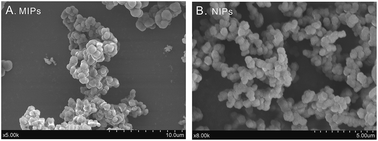
Fig. 1 shows SEM images of the MIPs and NIPs. As seen, the MIPs seemed rough and dense compared to the NIPs. The influence of the template molecule on the surface topography is obvious. The more uniform particles of the MIPs are very helpful for the adsorption of MEL than the NIPs.
 |
| | Fig. 1 SEM images of MIPs (A) and NIPs (B). | |
Fig. 2A shows the weight curves of the MIPs and NIPs. In this research, the MIPs and NIPs were heated from 30 °C to 700 °C under nitrogen. The MIPs or NIPs had three weight loss gradations. The initial loss (30–100 °C) was mainly due to the release of physically adsorbed water. A second gradation is observed from 100 to 260 °C, the rate of weight loss for MIPs or NIPs was very slow, which indicated that the polymers were gradually decomposed. However, a more severe rate of weight loss appeared at temperatures ranging from 260 to 450 °C. The weight loss was 30% for MIPs at 327 °C and for NIPs at 274 °C. As shown in Fig. 2B, the peak temperature can reflect the fastest rate of decomposition of the polymers. The amount of remaining materials was 43.57% for MIPs at 372 °C, whereas it was 42.62% for NIPs at 326 °C. Thus, compared with NIPs, MIPs showed better thermal stability.
 |
| | Fig. 2 Weight analysis curves of MIPs and NIPs. (A) Thermal gravity analysis (TG). (B) Differential thermal gravity analysis (DTG). | |
Static adsorption and adsorption kinetics evaluation
Both static adsorption and adsorption kinetics experiments were applied to evaluate the combining abilities of the polymers. Fig. 3A and B shows the experimental adsorption isotherms of MEL onto two types of MIPs and NIPs, respectively. One type of polymer was prepared with nano-CaCO3 as a porogen, another without nano-CaCO3. The curves plotted in Fig. 3A show that equilibrium adsorption amounts obviously increase with an increase of the original concentration of the MEL. When the original concentration of MEL reached to 0.6 mmol L−1, the amount of adsorption of the NIPs became stable, but the amount of adsorption of the MIPs still maintained a growth trend. In addition, the MIPs exhibited a significantly higher adsorption capacity than the NIPs under the same conditions. The imprinting factor, calculated by QMIPs/QNIPs, which is usually applied to characterize the selectivity of the MIPs, is 3.072 for the present MIPs. Fig. 3B shows that the polymers had the same tendency compared to the polymers with nano-CaCO3 used as a porogen, whereas the amount of adsorption was slightly lower than that of the later ones under the same conditions.
 |
| | Fig. 3 (A) Isotherm of MEL adsorption on the polymers with nano-CaCO3 as a porogen. (B) Isotherm of MEL adsorption on the polymers without nano-CaCO3 as a porogen. (C) Effect of adsorption time on the amount of adsorption on the polymers with nano-CaCO3 as a porogen. (D) The effect of adsorption time on the amount of adsorption on the polymers without nano-CaCO3 as a porogen. Experimental conditions: the volume of solution: 4 mL; mass of polymers: 20 mg. | |
In order to measure the combining rate of MIPs or NIPs for MEL, the concentration of MEL was fixed in 0.9 mmol L−1 and a static equilibrium binding assay was used to determine the adsorption at different time intervals. Fig. 3C shows that the polymers with nano-CaCO3 as a porogen reached the adsorption equilibrium within 30 min. Fig. 3D shows that the combining rate of the polymers without nano-CaCO3 as a porogen became slow and the equilibrium time was three times that of the polymers with nano-CaCO3 as a porogen. This is because the nano-CaCO3 could be removed together with the template while eluting in the preparation of the polymer, and thus left cavities in the polymers to accelerate the rate of mass transfer. Polymers mentioned later were all prepared with nano-CaCO3 as a porogen.
Scatchard analysis
In the study of molecular imprinting, the Scatchard model was commonly used to further evaluate the binding specificity. As can be seen from Fig. 4A, the relationship between Q/C and Q was obviously nonlinear according to the Scatchard equation, which indicated that the MIPs binding site of MEL was heterogeneous.22 However, there are two distinct parts with good linear relations in the two ends of the graph, which suggests that the MIPs had two main classes of binding sites with different adsorption properties. The two linear regression equations were fitted according to the relationship of the two linear segments. The linear regression equation for the left part of the curve was Q/C = −2.947Q + 184.3, the Kd (equilibrium dissociation constant) and Qmax (maximum adsorption capacity) were calculated to be 0.3393 mmol L−1 and 62.53 μmol g−1, respectively. The right part of the curve was Q/C = −0.8523Q + 109.5, the Kd and Qmax were calculated to be 1.173 mmol L−1 and 128.4 μmol g−1, respectively. This phenomenon was presumably due to the presence of multiple interactions between the template molecule and the functional monomer, which could form a variety of different compositions. Different types of complexes lead to the formation of different properties for the recognition sites in the MIPs.
 |
| | Fig. 4 Scatchard analysis of combining MEL onto the MIPs (A) and NIPs (B). | |
The combining of MEL to the NIPs was also tested in the same way. As can be seen from Fig. 4B, the relationship between Q/C and Q was obviously linear, the linear regression equation was Q/C = −7.0866Q + 145.8671. The Kd and Qmax were calculated to be 0.1411 mmol L−1 and 20.58 μmol g−1, respectively. These results indicate that the adsorption capacity of MIPs to MEL is higher than that of NIPs.
Selectivity and competitive measurements
MEL and its structural analogues (BEN or CYR) were used to evaluate the specificity of the MIPs. The selectivity experiment was carried out by adding the MIPs or NIPs particles (20 mg) into centrifugal tubes containing 4 mL of 0.3 mmol L−1 of MEL (or BEN or CYR). As shown in Fig. 5, the amount of MEL combined with the MIPs was significantly higher than that of the NIPs. Moreover, the MIPs displayed a better combining capability for MEL than the other chemical compounds, which indicated that the MIPs showed excellent selectivity for MEL.
 |
| | Fig. 5 The adsorption selectivity of the MIPs and NIPs for each chemical compound. Experimental conditions: mass of polymers: 20 mg; volume: 4 mL; adsorption time: 24 h; adsorption temperature: 25 °C; concentration of each compound: 0.3 mmol L−1. | |
Competitive adsorption was evaluated by using a mixture of MEL, BEN and CYR with a concentration of each being 0.3 mmol L−1. As seen from Table 1, the MIPs also displayed an outstanding specificity to MEL in the mixed solution. Compared to MEL, the other substances, BEN and CYR, lost the competitive edge, which is summarized by higher α to MEL than that of other compounds in the mixture. This further proved that the synthesized MIPs had a good specificity for MEL.
Table 1 Competitive adsorption capacities (Q) of MIPs and NIPs in the mixed solution and their imprinting factors (α)
| Compounds |
QMIPs (μmol g−1) |
QNIPs (μmol g−1) |
α |
| MEL |
16.02 |
6.831 |
2.345 |
| BEN |
5.023 |
4.603 |
1.091 |
| CYR |
10.13 |
6.726 |
1.506 |
Fluorescence detection of MEL
The changes in the fluorescence spectra with an increase in the concentration of MEL added to the RB1 methanol solution are shown in Fig. 8. When the maximum excitation wavelength was chosen at 530 nm, the maximum emission peak appeared at 590 nm. The inset in Fig. 6 shows the fluorescence intensity of RB1, displaying an outstanding linear relationship to the concentration of MEL in the range of 6.25 × 10⁻⁴–8 × 10⁻² mmol L−1, which indicated that MEL could be accurately tested within a certain range based on the linear equation. The possible reaction principle is shown in Fig. 7. When MEL is added into the RB1 solution, a ring-opening reaction is triggered. In the acid system, hydrogen ions can promote hydrolysis of the unstable compound, which leads to the release of strong fluorescence. The limit of detection (LOD) of the present approach is 1.55 × 10⁻⁴ mmol L−1 by adopting 3δ/S (a signal to noise ratio of 3), where δ is the standard deviation of the blank solution and S is the slope of the linear calibration curve. For the sake of comparison, the previously reported approaches8,9,23–25 for the determination of MEL are summarized in Table 2. It highlights that the present approach provided a much lower detection limit.
 |
| | Fig. 6 Fluorescence spectra of RB1 methanol solution with an increase in the concentration of MEL (6.25 × 10⁻⁴–8 × 10⁻² mmol L−1). Inset: the linear calibration curve. | |
 |
| | Fig. 7 The possible reaction principle of the fluorescence examination for MEL. | |
Table 2 Comparison of different approaches for the examination of MEL
| Approaches |
Linear range (mmol L−1) |
LOD (mmol L−1) |
References |
| SERS |
5.00 × 10⁻³–5.00 × 10⁻² |
1.2 × 10⁻² |
9 |
| ESI-MS |
3.97 × 10⁻³–7.94 × 10⁻² |
7.94 × 10⁻⁴ |
8 |
| Colorimetric |
3.90 × 10⁻⁴–3.97 × 10⁻³ |
2.38 × 10⁻⁴ |
23 |
| Fluorescence |
3.20 × 10⁻⁵–5.00 × 10⁻⁴ |
1.80 × 10⁻⁴ |
24 |
| Visual and absorption spectroscopic |
4.76 × 10⁻³–3.33 × 10⁻¹ |
3.17 × 10⁻³ |
25 |
| Fluorescence |
6.25 × 10⁻⁴–8 × 10⁻² |
1.55 × 10⁻⁴ |
This work |
Optimization of extraction conditions
In order to evaluate the ability of the MIPs for the enrichment and separation of MEL from pure milk, several factors including the extraction solvent, amount of MIPs, adsorption time and elution solution were investigated. The amount of MEL in the elution was detected using RB1. When one factor was changed, the other factors were fixed.
A. Extraction solvent. The extraction solvent has a significant impact on the rebinding of the target molecules. Several different extraction solvents including water, methanol aqueous (50%), methanol, acetonitrile and ethanol were taken into account. As seen from Fig. 8A, water was the optimum extraction solvent at a recovery rate of 89.05% ± 1.49%. It may be explained by the MEL molecule not being as easily dissolved in water as in other solvents, which makes it favorable for the MIPs to take the MEL away from the water.
 |
| | Fig. 8 Optimization of the extraction conditions (n = 3). (A) The influence of the extraction solvent on the recovery of MEL. (B) The influence of the amount of MIPs on the recovery of MEL. (C) The influence of the adsorption time on the recovery of MEL. (D) The influence of the elution solution on the recovery of MEL. | |
B. Amounts of MIPs. In order to obtain the maximum recovery rate with the minimum amount of MIPs, different amounts of MIPs ranging from 20 to 140 mg were evaluated. As seen from Fig. 8B, the rate of recovery increased with the increase in the amount of MIPs, ranging from 20 to 120 mg, whereas the rate of recovery decreased slightly when the amount was 140 mg. The results demonstrate that increasing the amounts of MIPs is not very helpful for improving the recovery, so 100 mg MIPs was just right.
C. Adsorption time. Different adsorption times ranging from 10 to 50 min were evaluated respectively. As seen from Fig. 8C, 30 min might be a better option due to it being the least time with a larger recovery rate. So 30 min was chosen for the extraction, which offered a recovery rate of 88.17% ± 0.99%.
D. Elution solution. The elution solution is also an important factor for affecting the recovery rate. For the sake of obtaining the maximum recovery rate, different kinds of elution solution including methanol, ethanol, acetonitrile, water and methanol-acetic (95
:
5) were evaluated. As seen from Fig. 8D, methanol-acetic (95
:
5) could provide a satisfactory recovery.
Validation
In order to demonstrate the applicability of this proposed approach for real sample detection, the recovery test was carried out by spiking MEL into pure milk samples at two levels, 1 and 5 mg L−1 (about 7.936 × 10⁻³ and 3.968 × 10⁻² mmol L−1). Table 3 shows that the recovery of the spiked samples varied from 86.48 to 89.12% and the RSDs varied from 3.18 to 4.91%, respectively. It can be seen that the proposed fluorescence sensing approach based on the MIPs enrichment is highly feasible.
Table 3 Detection of MEL in milk samples
| Sample |
Added (mg L−1) |
Found (mg L−1) |
Recovery (%) |
RSD (%, n = 3) |
| Milk |
1 |
0.8648 |
86.48% |
4.91% |
| 5 |
4.456 |
89.12% |
3.18% |
Conclusions
In summary, we provided a satisfactory approach relying on the use of MIPs with nano-CaCO3 as a porogen for the enrichment and separation of MEL from milk samples. Notably, the MEL eluted from the MIPs was detected by a fluorescent chemosensor, RB1. The prepared MIPs were seen to be selective and efficient for the enrichment of MEL, and an imprinting factor of 3.072 could be obtained. The synthesized fluorescent chemosensor RB1 was shown to be sensitive for MEL detection, and it displayed an outstanding linear relationship to the concentration of MEL in the range of 6.25 × 10⁻⁴–8 × 10⁻² mmol L−1. Combining the advantages mentioned above, this system of detection of MEL was shown to give good performance.
Acknowledgements
The authors are grateful for the financial support provided by the Ministry of Science and Technology of China (Project No. 2012AA101609-2) and the National Natural Science Foundation of China (Project Nos. 21375094 and 31225021).
Notes and references
- H. Guan, J. Yu and D. Chi, Food Control, 2013, 32, 35–41 CrossRef CAS.
- J. Zhang, M. Wu, D. Chen and Z. Song, J. Food Compos. Anal., 2011, 24, 1038–1042 CrossRef CAS.
- H. Yan, X. Cheng, N. Sun, T. Cai, R. Wu and K. Han, J. Chromatogr. B: Anal. Technol. Biomed. Life Sci., 2012, 908, 137–142 CrossRef CAS PubMed.
- Y. L. Ji, X. W. Chen, Z. B. Zhang, J. Li and T. Y. Xie, J. Sep. Sci., 2014, 37, 3000–3006 CrossRef CAS PubMed.
- A. Fashi, M. R. Yaftian and A. Zamani, Food Chem., 2015, 188, 92–98 CrossRef CAS PubMed.
- J. Li, H. Qi and Y. Shi, J. Chromatogr. A, 2009, 1216, 5467–5471 CrossRef CAS PubMed.
- G. Venkatasami and J. R. Sowa, Anal. Chim. Acta, 2010, 665, 227–230 CrossRef CAS PubMed.
- S. K. Kailasa and H. Wu, J. Ind. Eng. Chem., 2015, 21, 138–144 CrossRef CAS.
- Y. Hu, S. Feng, F. Gao, E. C. Y. Li-Chan, E. Grant and X. Lu, Food Chem., 2015, 176, 123–129 CrossRef CAS PubMed.
- J. Xia, N. Zhou, Y. Liu, B. Chen, Y. Wu and S. Yao, Food Control, 2010, 21, 912–918 CrossRef CAS.
- B. The Huy, M. Seo, X. Zhang and Y. Lee, Biosens. Bioelectron., 2014, 57, 310–316 CrossRef PubMed.
- X. Cao, F. Shen, M. Zhang, J. Guo, Y. Luo, X. Li, H. Liu, C. Sun and J. Liu, Food Control, 2013, 34, 221–229 CrossRef CAS.
- M. Zhang, X. Cao, H. Li, F. Guan, J. Guo, F. Shen, Y. Luo, C. Sun and L. Zhang, Food Chem., 2012, 135, 1894–1900 CrossRef CAS PubMed.
- S. Han, S. Zhu, Z. Liu, L. Hu, S. Parveen and G. Xu, Biosens. Bioelectron., 2012, 36, 267–270 CrossRef CAS PubMed.
- S. Chou and M. Syu, Biomaterials, 2009, 30, 1255–1262 CrossRef CAS PubMed.
- X. Pan, P. Wu, D. Yang, L. Wang, X. Shen and C. Zhu, Food Control, 2013, 30, 545–548 CrossRef CAS.
- D. Cunliffe, A. Kirby and C. Alexander, Adv. Drug Delivery Rev., 2005, 1836–1853 CAS.
- Z. Zhang, Z. Cheng, C. Zhang, H. Wang and J. Li, J. Appl. Polym. Sci., 2012, 123, 962–967 CrossRef CAS.
- M. Curcio, F. Puoci, G. Cirillo, F. Iemma, U. G. Spizzirri and N. Picci, J. Agric. Food Chem., 2010, 58, 11883–11887 CrossRef CAS PubMed.
- A. Khlifi, S. Gam-Derouich, M. Jouini, R. Kalfat and M. M. Chehimi, Food Control, 2013, 31, 379–386 CrossRef CAS.
- P. Li, G. Ding, Y. Deng, D. Punyapitak, D. Li and Y. Cao, Free Radicals Biol. Med., 2013, 65, 224–231 CrossRef CAS PubMed.
- X. Song, J. Li, J. Wang and L. Chen, Talanta, 2009, 80, 694–702 CrossRef CAS PubMed.
- J. Xin, L. Zhang, D. Chen, K. Lin, H. Fan, Y. Wang and C. Xia, Food Chem., 2015, 174, 473–479 CrossRef CAS PubMed.
- Q. Wu, Q. Long, H. Li, Y. Zhang and S. Yao, Talanta, 2015, 136, 47–53 CrossRef CAS PubMed.
- H. Cai, X. Yu, H. Dong, J. Cai and P. Yang, J. Food Eng., 2014, 142, 163–169 CrossRef CAS.
Footnotes |
| † Electronic supplementary information (ESI) available: Fig. S1: 1H NMR, 13C NMR and LC-MS spectroscopy of RBH. Fig. S2: 1H NMR, 13C NMR and LC-MS spectroscopy of RB1. See DOI: 10.1039/c5ra18316b |
| ‡ These authors contributed equally to this work. |
|
| This journal is © The Royal Society of Chemistry 2015 |
Click here to see how this site uses Cookies. View our privacy policy here.