Self-assembly of amine-functionalized gold nanoparticles on phosphonate-functionalized graphene nanosheets: a highly active catalyst for the reduction of 4-nitrophenol

Xueqing Gao a, Guangrui Xub, Yan Zhaoc, Shuni Li*a, Feng Shi*b and Yu Chenb
aKey Laboratory of Macromolecular Science of Shaanxi Province, School of Chemistry & Chemical Engineering, Shaanxi Normal University, Xi'an 710062, PR China. E-mail: lishuni@snnu.edu.cn
bSchool of Materials Science and Engineering, Shaanxi Normal University, Xi'an 710062, PR China. E-mail: shifeng@snnu.edu.cn
cNational Coal Inspection Centre, Shaanxi Institute of Energy Quality Supervision and Inspection, Xi'an, Shaanxi 710054, PR China

Received 7th September 2015 , Accepted 30th September 2015

First published on 30th September 2015


Abstract

Graphene nanosheet (GNS) supported gold nanoparticle (Au-NP) composites (Au-NP/GNS) have attracted a lot of attention due to their important applications in catalysis, sensing, optics, medicine, and fuel cells. In this study, based on the strong electrostatic and/or hydrogen bonding interactions between the amine-functionalized Au-NP (Au-NP@NH2) and phosphonate-functionalized GNS (GNS-PO3H2), a self-assembly strategy was used to synthesize Au-NP/GNS composites. The physical and chemical properties of Au-NP@NH2, GNS-PO3H2, and the Au-NP/GNS composites were fully investigated using various physical characterization, including X-ray powder diffraction, X-ray photoelectron spectroscopy, ultraviolet-visible spectroscopy, transmission electron microscopy, and zeta potential analysis. The experimental results demonstrate that the phosphonate-functionalization of GNS was critical for the generation of high-quality Au-NP/GNS composites. The as-prepared Au-NP/GNS composites show improved catalytic activity for the degradation of 4-nitrophenol compared to functionalized Au-NP, which was ascribed to the amine-functionalization of the Au-NP and the introduction of the GNS with high electrical conductivity and large surface area.

Introduction

Chemically functionalized gold nanoparticles (Au-NP), consisting of a small Au-NP core and a monolayer of the functional molecule, have attracted a lot of attention in fields of catalysis, sensor and medicine due to the unique physical and chemical properties imparted by the functional molecule.1–6 For example, the apo-glucose dehydrogenase enzyme can be reconstituted on pyrroloquinoline quinine functionalized Au-NP and displays excellent bioelectrocatalytic activity for glucose oxidation.2 Bipyridine functionalized Au-NP can interact with EuIII/TbIII ions to yield phosphorescent nanomaterials.3 Polyvalent DNA-functionalized Au-NP selectively enhanced ribonuclease H activity, making the DNA-functionalized Au-NP ideal gene regulation agents.4 Glutathione functionalized Au-NP can serve as a carrier of a platinum(IV) drug used for the treatment of prostate cancer.5 Flavin-functionalized Au-NP can act as an efficient catalyst for aerobic organic transformations.6

It is well known that the support materials generally affect the catalytic activity and stability of metal NP.7–13 Recent reports demonstrate that two-dimensional graphene nanosheets (GNS) have a high surface area as well as excellent mechanical and electronic properties, which make them a promising support material for the anchorage of metal NP.14–19 During a catalytic reaction, the high electrical conductivity of the GNS facilitates electron transfer. Moreover, the large surface area of the GNS efficiently decreases the aggregation of the metal NP. These two favorable factors improve the catalytic activity and stability of metal NP.15–19 Consequently, considerable efforts have been made to incorporate Au-NP into a GNS matrix and explore their potential applications in photothermal energy conversion,20 plasmonic devices,21 photoacoustic imaging,22 photothermal therapy,23 surface-enhanced Raman scattering,24–29 organic photovoltaic devices,30 fuel cells,31–35 heterogeneous catalysis,36,37 and electrochemical sensors.38–43 At present, the self-assembly method is an efficient strategy for the synthesis of Au-NP/GNS composites.23,25,26,32,36,40 However, GNS tends to lead to irreversible aggregation in an aqueous solution due to strong π–π stacking interactions and the pristine surface of GNS lacking enough active sites for the anchorage of the metal NP.27 Therefore, various aromatic molecules with amino groups,44–46 sulfonic groups,47–50 and carboxyl groups51,52 have been widely used to functionalize GNS. Although the dibasic phosphonic acid groups (–PO3H2) have good biocompatibility, high hydrophilicity, adjustable charge density, and strong coordination ability,53–56 little attention has been paid towards the phosphonate-functionalization of GNS to date.

4-Nitrophenol (4-NP), one of the most common nitroaromatic compounds, is widely used in industrial synthesis and exhibits great solubility and high chemical stability in water.57–62 The ingestion of 4-NP has been linked to several public health problems such as fervescence, methemoglobinemia, and liver and kidney damage.57 Thus, 4-NP is regarded as a highly hazardous and toxic pollutant by the US Environmental Protection Agency.57 For remediating 4-NP contamination, the reductive transformation of 4-NP to less toxic 4-aminophenol (4-AP) is a simple and efficient method.58,59,63–66 To date, the Au-catalyzed reduction of 4-NP using NaBH4 has been extensively investigated due to the high catalytic activity of Au-NP.57,58,60,62,67,68 However, the effect of surface groups in the Au-NP on catalytic activity of the Au-NP is rarely reported.

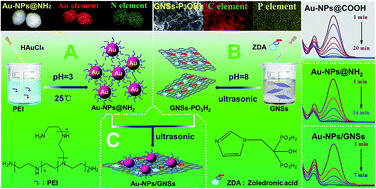
In our study, we have successfully synthesized amine-functionalized Au-NP composites (Au-NP@NH2) using polyethyleneimine (PEI, Fig. 1) as both a reducing agent and stabilizing agent, which show remarkably improved catalytic activity for the reduction of 4-NP when compared to carboxylate-functionalized Au-NP composites (Au-NP@COOH). Moreover, phosphonate-functionalized GNS composites (GNS-PO3H2) were easily obtained based on the π–π stacking interactions between zoledronic acid (ZDA, Fig. 1) and the GNS. Furthermore, Au-NP@NH2 can efficiently self-assemble on the GNS-PO3H2 surface due to strong electrostatic and/or hydrogen bonding interactions. The introduction of GNS further enhances the catalytic activity of the Au-NP@NH2 in the reduction of 4-NP.


image file: c5ra18228j-f1.tif
Fig. 1 A schematic of the synthetic route used to prepare the Au-NPs@NH2/GNS-PO3H2 composites.

Experimental

Reagents and chemicals

PEI (Mw ≈ 600) was obtained from Aladdin Industrial Corporation. Graphene nanosheet (GNS) was purchased from Nanjing XFNANO Materials TECH Co., Ltd. Zoledronic acid (ZDA, Fig. 1), hydrogen tetrachloroaurate(III) tetrahydrate (HAuCl4·4H2O), 4-nitrophenol (4-NP), and sodium borohydride (NaBH4) were purchased from Sinopharm Chemical Reagent Co., Ltd.

Synthesis of Au-NP@NH2 and Au-NP@COOH

Au-NP@NH2 composites were synthesized using PEI as both the reducing agent and stabilizing agent at room temperature (Fig. 1A). In a typical synthesis, 1.0 mL of 24.2 mM HAuCl4 solution was added to 41.0 mL of 12.1 mM PEI aqueous solution. After adjusting the solution pH to 3.7, the mixture was allowed to stand for 2 h at room temperature until the color of the mixture changed to a red color.

For comparison, 13.0 nm Au-NP@COOH composites (ESI Fig. S1, zeta potential: −42.9 mV at pH 4.8) were synthesized via the sodium citrate reduction method.69 In a typical synthesis, 30.0 mL of 0.4 mM HAuCl4 aqueous solution was charged into a three-neck flask equipped with a reflux condenser and heated at 100 °C. Then, 0.5 mL of 0.2 M sodium citrate solution was added rapidly into HAuCl4 aqueous solution. The reaction was allowed to run until the solution turned wine red.

Synthesis of GNS-PO3H2

GNS-PO3H2 composites were synthesized using the π–π stacking interactions between GNS and ZDA (Fig. 1B). In a typical procedure, 10 mg of GNS was dispersed in 50 mL of 8.7 mM ZDA solution (pH 8.5) using ultrasonic treatment for 30 min. Then, the GNS-PO3H2 composites were separated by centrifugation.

Synthesis of Au-NPs@NH2/GNS-PO3H2 composites

Au-NPs@NH2/GNS-PO3H2 composites were obtained by the self-assembly of Au-NP@NH2 on the surface of GNS-PO3H2 (Fig. 1C). In a typical procedure, 21.0 mL of 0.1 mg mL−1 Au-NP@NH2 solution was added into 10.0 mL of 1.0 mg mL−1 GNS-PO3H2 suspension with ultrasonic treatment for 60 min at room temperature. After self-assembly, the Au-NPs@NH2/GNS-PO3H2 composites were separated by centrifugation/washing cycles and then dried in a vacuum dryer. ICP-AES analysis shows that the Au-NPs@NH2/GNS-PO3H2 composites contain 36.5 wt% of Au metal.

Catalytic reduction of 4-NP

For the catalytic reduction of 4-NP to 4-aminophenol (4-AP), 2.7 mL of 0.037 M NaBH4 was added into 0.3 mL of 2.0 × 10⁻³ M 4-NP aqueous solution. Then, 15.0 μL of the Au-NPs@NH2/GNS-PO3H2 composite (0.3 g L−1) aqueous suspension was added to the abovementioned solution at room temperature. The reaction progress was monitored using time-dependent ultraviolet-visible spectroscopy (UV-vis).

For comparison, the Au-NP@NH2 and Au-NP@COOH composites were also used as heterogeneous catalysts for the reduction of 4-NP using the same experimental procedure and reagent concentrations (including the concentration of Au-NP) as those employed for the Au-NPs@NH2/GNS-PO3H2 composites.

Instrumentation

X-ray powder diffraction (XRD, Model D/max-rC), X-ray photoelectron spectroscopy (XPS, AXIS ULTRA), transmission electron microscopy (TEM, EOL JEM-2100F), and a zeta potential analyzer (Malvern Zetasizer Nano ZS90) were used to investigate the structure, surface composition, morphology and surface charge of the samples studied. Scanning electron microscopy-energy dispersive spectroscopy (SEM-EDX, FEI Quanta 200) and scanning transmission electron microscopy-energy dispersive spectroscopy (STEM-EDX, EOL JEM-2100F) were used to investigate the element distribution of the samples. The accurate Au loading in the Au-NPs@NH2/GNS-PO3H2 composites was determined using inductively coupled plasma atomic emission spectrometry (ICP-AES, Prodigy 7). UV-vis spectrophotometer (UV2600) was used to monitor the real-time variation of the concentration of 4-NP.

Results and discussion

Characterization of Au-NPs@NH2

The reduction of HAuCl4 was first confirmed by a color change of the solution (Fig. 2A). After adjusting the solution to pH 3.7, a sequence of color changes was observed and a wine-red color solution was finally obtained at 2 h, indicating the formation of stable Au-NP. The interaction between HAuCl4 and PEI was further investigated using UV-vis measurements (Fig. 2B). As the reaction progressed, the plasmon peak of the Au-NP around 528 nm gradually increased with time, which is characteristic for spherical Au-NP.70 At 2 h, the plasmon peak value of the Au-NP reached a maximum value and the peak position was finally fixed at 526 nm, implying the HAuCl4 was completely reduced by the PEI reagent. After storing for two months, the UV-vis spectrum of the Au-NP@NH2 composite remained constant (data not shown), indicating the PEI also acts as an efficient stabilizing agent.
image file: c5ra18228j-f2.tif
Fig. 2 (A) Images and (B) UV-vis spectra of the HAuCl4 and PEI mixture at different reaction times. Inset: a plot of the absorbance intensity around 528 nm as a function of time.

The crystal structure and chemical composition of the Au-NP@NH2 composite were investigated using XRD and XPS. The XRD pattern clearly shows the four diffraction peaks at 38.3°, 44.4°, 64.7° and 77.7° (Fig. 3A), which agrees well with standard diffraction data of face-centered cubic (fcc) crystal Au (JCPDS standard 04-0784). The binding energies of Au 4f5/2 and Au 4f7/2 were located at 86.8 and 83.1 eV (Fig. 3B), respectively, which are the typical values of metallic Au. This fact further confirms that HAuCl4 was completely reduced by PEI. Importantly, the N 1s signal at 399.6 eV was detected in the Au-NP@NH2 composite (Fig. 3B) and originated from the –NH2 groups in the PEI. The appearance of the N 1s peak indicates the adsorption of PEI on the Au-NP surface. Furthermore, the zeta potential of the Au-NP@NH2 composite was measured to be +49 mV at pH 5.0. It was clear that the –NH2 group will be protonated due to its weak basic nature. Thus, the positive zeta potential value of the Au-NP@NH2 composite confirms the PEI functionalization of the Au-NP.


image file: c5ra18228j-f3.tif
Fig. 3 (A) XRD pattern of the Au-NPs@NH2 and (B) XPS spectra of the Au-NPs@NH2 in the N 1s and Au 4f regions.

The morphology and size distribution of the Au-NP@NH2 composite were characterized using TEM. As observed, all particles are nearly spherical and well separated from each other (Fig. 4A). The selected area electron diffraction (SAED) image show an irregular spot pattern (inset in Fig. 4A), implying their polycrystalline properties. According to the size distribution histogram (Fig. 4B), the average size of the Au-NP@NH2 was estimated to be 33 nm. The high resolution TEM (HRTEM) image of an individual Au-NP@NH2 particle showed clear lattice fringes (Fig. 4C). In the further magnified HRTEM images, Au (111) planes with a d-spacing of 0.24 nm and Au (100) planes with a d-spacing of 0.21 nm were observed (Fig. 4D), which confirm their polycrystalline nature. EDX element mapping measurements show that the N element pattern was very similar to the Pt element pattern (Fig. 4F), demonstrating the uniform distribution of PEI on the surface of the Au-NP.


image file: c5ra18228j-f4.tif
Fig. 4 (A) A typical TEM image of the Au-NPs@NH2. Inset: the SAED pattern of the Au-NPs@NH2. (B) The size distribution histogram of the Au-NPs@NH2. (C) HRTEM image of an individual Au-NPs@NH2. (D) Magnified HRTEM images obtained from the regions (1, 2, 3, and 4) marked by white squares in (C). (F) High-angle annular dark-field scanning TEM image of the Au-NPs@NH2 and corresponding EDX element mapping patterns.

Characterization of GNS-PO3H2

The π–π stacking interactions between ZDA and the GNS were confirmed by UV-vis spectra (Fig. 5A). GNS has no obvious absorption peak in the range of 200–600 nm, whereas ZDA has a strong absorption peak at 209 nm. Moreover, the GNS-PO3H2 composites show an obvious peak at 211 nm, corresponding to ZDA with a red-shift (ca. 2 nm). The appearance of the characteristic peak of ZDA and its red-shift suggest the successful functionalization of GNS by ZDA.71 The phosphonate-functionalization of GNS was further chemically confirmed using XPS (Fig. 5B). The appearance of the characteristic N 1s peak at 401.2 eV and P 2p peak at 134.1 eV demonstrate the successful self-assembly of ZDA on the surface of the GNS surface via π–π stacking interactions. The distribution of ZDA on the surface of the GNS was investigated using EDX elemental mapping (Fig. 5C). As observed, C, N, and P elements are evenly distributed in the same region, demonstrating the uniform distribution of ZDA on the surface of the GNS. Moreover, the zeta potential of the GNS-PO3H2 composite was measured to be −18.6 mV at pH 5.0, indicating the negatively charged phosphonate groups were exposed on the outside of the GNS.
image file: c5ra18228j-f5.tif
Fig. 5 (A) UV-vis spectra of (a) ZDA, (b) GNS and (c) GNS-PO3H2. (B) N 1s and P 2p XPS spectra of GNS-PO3H2. (C) A representative SEM image of GNS-PO3H2 and its corresponding EDX elemental mapping.

Characterization of the Au-NPs@NH2/GNS-PO3H2 composites

Due to the strong electrostatic and/or hydrogen bonding interactions between the –PO3H2 groups and –NH2 groups,72–74 Au-NP@NH2 can anchor easily on the surface of the GNS-PO3H2 via self-assembly. As observed, the wine-red color of the Au-NP@NH2 and GNS-PO3H2 mixture completely disappears after sonication for 0.5 h (Fig. 6A), indicating the efficient anchorage of the Au-NP@NH2 on the surface of the GNS-PO3H2. In contrast, the wine-red color of the Au-NP@NH2 and pristine GNS mixture was retained after sonication for 0.5 h (Fig. 6B), indicating the Au-NP@NH2 were not completely anchored on the pristine GNS surface due to the absence of interactions. The self-assembly of Au-NP@NH2 on GNS-PO3H2 was confirmed by TEM. As observed, the spherical Au-NP@NH2 particles were uniformly dispersed on the GNS-PO3H2 surface (Fig. 7A). In contrast, the few Au-NP@NH2 anchored on the pristine GNS surface (Fig. 7B), was consistent with the abovementioned experimental observations. These experimental results confirm the phosphonate-functionalization of GNS facilitates the anchoring of the Au-NP@NH2, which originates from the strong electrostatic and/or hydrogen bonding interactions present.
image file: c5ra18228j-f6.tif
Fig. 6 (A) Images of the Au-NPs@NH2 and GNS-PO3H2 mixture (a) before and (b) after sonication for 30 min. (B) Images of the Au-NPs@NH2 and pristine GNS mixture (a) before and (b) after sonication for 30 min.

image file: c5ra18228j-f7.tif
Fig. 7 Representative TEM images of the obtained Au-NPs@NH2/GNS-PO3H2 composites using (A) GNS-PO3H2 and (B) pristine GNS as the support materials.

Catalytic activity of the Au-NPs@NH2/GNS-PO3H2 composites

The catalytic activity of the Au-NPs@NH2/GNS-PO3H2 composites for the reduction of 4-NP was investigated using time-dependent UV-vis spectra.75–79 For comparison, the catalytic activities of the Au-NP@NH2 and Au-NP@COOH composites were also evaluated. In the 4-NP/NaBH4 reaction system, the absorbance peak at 400 nm was the characteristic absorbance peak of 4-nitrophenolate in an alkaline solution.80,81 UV-vis spectra of the 4-NP/NaBH4 mixture remained constant within 4 h, indicating the reduction of 4-NP was not complete in the absence of a catalyst (data not shown). Upon the introduction of the Au-NP@NH2, Au-NP@COOH, and Au-NPs@NH2/GNS-PO3H2 composites into the reaction solution; however, the absorbance peak of 4-nitrophenolate decreases gradually with time and finally disappears, indicating the complete conversion of 4-NP to 4-AP (Fig. 8A–C). The Au-NP@NH2-catalyzed reduction of 4-NP was finished within 14 min (Fig. 8A), which was much shorter than that found for the Au-NP@COOH-catalyzed reduction of 4-NP (20 min) (Fig. 8B). Mainly, the positively charged Au-NP@NH2 can sufficiently attract the negatively charged nitrophenolate and BH4 ions through electrostatic interactions, resulting in their enrichment on the Au-NP surface. Furthermore, it was observed that the Au-NPs@NH2/GNS-PO3H2-catalytic reduction of 4-NP was finished within 7 min (Fig. 8C), showing an enhanced catalytic activity compared to Au-NP@NH2 (Fig. 8A). According to the linear plots of ln(Ct/C0) versus time t (insets in Fig. 8A–C),80,81 the reaction rate constants were calculated to be 0.19, 0.126, and 0.325 min−1 for the 4-NP reduction reactions catalyzed by Au-NP@NH2, Au-NP@COOH and Au-NPs@NH2/GNS-PO3H2, respectively.
image file: c5ra18228j-f8.tif
Fig. 8 UV-vis spectra for the successive reduction of 4-NP using NaBH4 in the presence of (A) Au-NPs@NH2, (B) Au-NPs@COOH, (C) Au-NPs@NH2/GNS-PO3H2, and (D) GNS-PO3H2 as catalysts.

Because GNS-PO3H2 do not show any obvious catalytic behaviour for the reduction of 4-NP within 5 h (Fig. 8D), the enhanced catalytic activity of the Au-NPs@NH2/GNS-PO3H2 composites can be ascribed to the synergistic effect between the Au-NP@NH2 and GNS-PO3H2. On the one hand, the highly conjugated sp2 network of GNS provides excellent electrical conductivity for the composite, which accelerates electron transfer in the course of the 4-NP reduction. On the other hand, the introduction of GNS efficiently avoids the aggregation of Au-NP in the course of the 4-NP reduction, which also contributes to the improved catalytic activity of the Au-NPs@NH2/GNS-PO3H2 composites. The adsorption of the substrate molecule on the GNS support with high surface area also likely facilitates the catalytic reduction of 4-NP.82 Furthermore, the recyclability of the Au-NPs@NH2/GNS-PO3H2 composites for the reduction of 4-NP was also investigated by repeatedly adding a 4-NP solution. After undergoing six catalytic cycles, the Au-NPs@NH2/GNS-PO3H2 composites exhibited an almost constant catalytic activity for the reduction of 4-NP within 7 min, indicating the Au-NPs@NH2/GNS-PO3H2 composites possesses good stability.

Conclusions

We have successfully synthesized Au-NP@NH2 and GNS-PO3H2 composites. By means of strong electrostatic and/or hydrogen bonding interactions between the –PO3H2 groups and –NH2 groups, Au-NP@NH2 can effectively self-assemble on the surface of GNS-PO3H2 to generate the high-quality Au-NP/GNS composites. On the one hand, the PEI-functionalization of Au-NP can enhance the catalytic activity of Au-NP for the reduction of 4-NP due to the enrichment of the reactant on the Au-NP surface. On the other hand, the introduction of GNS further improves the catalytic activity of Au-NP due to the high conductivity of GNS and good dispersibility of the Au-NP on the GNS surface. Due to the high catalytic activity of Au-NPs@NH2/GNS-PO3H2 composites, we expect that the composites may have wide applications in the fields of catalysis and the environment.

Acknowledgements

This study was sponsored by the National Natural Science Foundation of China (21301114), the Natural Science Foundation of Shaanxi Province (2013JQ2009), and the Fundamental Research Funds for the Central Universities (GK201503036).

Notes and references

  1. S. Dhar, W. L. Daniel, D. A. Giljohann, C. A. Mirkin and S. J. Lippard, J. Am. Chem. Soc., 2009, 131, 14652–14653 CrossRef CAS PubMed.
  2. M. Zayats, E. Katz, R. Baron and I. Willner, J. Am. Chem. Soc., 2005, 127, 12400–12406 CrossRef CAS PubMed.
  3. B. I. Ipe, K. Yoosaf and K. G. Thomas, J. Am. Chem. Soc., 2006, 128, 1907–1913 CrossRef CAS PubMed.
  4. A. E. Prigodich, A. H. Alhasan and C. A. Mirkin, J. Am. Chem. Soc., 2011, 133, 2120–2123 CrossRef CAS PubMed.
  5. A. Kumar, S. Huo, X. Zhang, J. Liu, A. Tan, S. Li, S. Jin, X. Xue, Y. Zhao, T. Ji, L. Han, H. Liu, X. Zhang, J. Zhang, G. Zou, T. Wang, S. Tang and X. J. Liang, ACS Nano, 2014, 8, 4205–4220 CrossRef CAS PubMed.
  6. M. Xiao, S. Li, X. Zhao, J. Zhu, M. Yin, C. Liu and W. Xing, ChemCatChem, 2014, 6, 2825–2831 CrossRef CAS PubMed.
  7. M. Wang, J. Ma, C. Chen, F. Lu, Z. Du, J. Cai and J. Xu, Chem. Commun., 2012, 48, 10404–10406 RSC.
  8. M. Wang, F. Wang, J. Ma, M. Li, Z. Zhang, Y. Wang, X. Zhang and J. Xu, Chem. Commun., 2014, 50, 292–294 RSC.
  9. S. Shi, C. Chen, M. Wang, J. Ma, H. Ma and J. Xu, Chem. Commun., 2014, 50, 9079–9082 RSC.
  10. B. Habibi and N. Delnavaz, RSC Adv., 2015, 5, 73639–73650 RSC.
  11. M. Veerapandian and S. Neethirajan, RSC Adv., 2015, 5, 75015–75024 RSC.
  12. Z. Ma, Y. Qiu, Y. Huang, F. Gao and P. Hu, RSC Adv., 2015, 5, 79456–79462 RSC.
  13. J. H. Min, S. Y. Jang, K. Y. Kim, S. B. Choi, W. S. Seong and D. S. Lee, RSC Adv., 2015, 5, 75325–75332 RSC.
  14. X. Chen, X. Tian, B. Su, Z. Huang, X. Chen and M. Oyama, Dalton Trans., 2014, 43, 7449–7454 RSC.
  15. Q. Wang, M. Song, C. Chen, W. Hu and X. Wang, ChemPlusChem, 2012, 77, 432–436 CrossRef CAS PubMed.
  16. G. R. Xu, J. J. Hui, T. Huang, Y. Chen and J.-M. Lee, J. Power Sources, 2015, 285, 393–399 CrossRef CAS PubMed.
  17. G. Fu, L. Tao, M. Zhang, Y. Chen, Y. Tang, J. Lin and T. Lu, Nanoscale, 2013, 5, 8007–8014 RSC.
  18. J. Zhao, H. Li, Z. Liu, W. Hu, C. Zhao and D. Shi, Carbon, 2015, 87, 116–127 CrossRef CAS PubMed.
  19. K. Qu, L. Wu, J. Ren and X. Qu, ACS Appl. Mater. Interfaces, 2012, 4, 5001–5009 CAS.
  20. A. F. Zedan, S. Moussa, J. Terner, G. Atkinson and M. S. El-Shall, ACS Nano, 2013, 7, 627–636 CrossRef CAS PubMed.
  21. G. R. S. Iyer, J. Wang, G. Wells, S. Guruvenket, S. Payne, M. Bradley and F. Borondics, ACS Nano, 2014, 8, 6353–6362 CrossRef CAS PubMed.
  22. H. Moon, D. Kumar, H. Kim, C. Sim, J. H. Chang, J. M. Kim, H. Kim and D. K. Lim, ACS Nano, 2015, 9, 2711–2719 CrossRef CAS PubMed.
  23. Z. Zhu, L. Ma, M. Su, D. Liu and Z. Wang, J. Mater. Chem. B, 2013, 1, 1432–1438 RSC.
  24. Y. Qin, J. Li, Y. Kong, X. Li, Y. Tao, S. Li and Y. Wang, Nanoscale, 2014, 6, 1281–1285 RSC.
  25. H. Yao, L. Jin, H. J. Sue, Y. Sumi and R. Nishimura, J. Mater. Chem. A, 2013, 1, 10783–10789 CAS.
  26. Y. H. Lee, L. Polavarapu, N. Gao, P. Yuan and Q.-H. Xu, Langmuir, 2012, 28, 321–326 CrossRef CAS PubMed.
  27. J. Xiang and L. T. Drzal, ACS Appl. Mater. Interfaces, 2011, 3, 1325–1332 CAS.
  28. R. Lu, A. Konzelmann, F. Xu, Y. Gong, J. Liu, Q. Liu, M. Xin, R. Hui and J. Z. Wu, Carbon, 2015, 86, 78–85 CrossRef CAS PubMed.
  29. Y. Wang, L. Polavarapu and L. M. Liz-Marzán, ACS Appl. Mater. Interfaces, 2014, 6, 21798–21805 CAS.
  30. M. K. Chuang, S. W. Lin, F. C. Chen, C. W. Chu and C. S. Hsu, Nanoscale, 2014, 6, 1573–1579 RSC.
  31. H. Yin, H. Tang, D. Wang, Y. Gao and Z. Tang, ACS Nano, 2012, 6, 8288–8297 CrossRef CAS PubMed.
  32. J. Zhou, M. Chen and G. Diao, J. Mater. Chem. A, 2013, 1, 2278–2285 CAS.
  33. X. R. Li, X. L. Li, M. C. Xu, J. J. Xu and H. Y. Chen, J. Mater. Chem. A, 2014, 2, 1697–1703 CAS.
  34. S. S. Li, A. J. Wang, Y. Y. Hu, K. M. Fang, J. R. Chen and J. J. Feng, J. Mater. Chem. A, 2014, 2, 18177–18183 CAS.
  35. S. Xu, L. Yong and P. Wu, ACS Appl. Mater. Interfaces, 2013, 5, 654–662 CAS.
  36. Y. Ling, X. Li, S. Zhou, X. Wang and R. Sun, J. Mater. Chem. A, 2015, 3, 7422–7428 CAS.
  37. K. Qu, L. Wu, J. Ren and X. Qu, Nano Res., 2013, 6, 693–702 CrossRef CAS.
  38. Y. Zhang, G. M. Zeng, L. Tang, J. Chen, Y. Zhu, X. X. He and Y. He, Anal. Chem., 2015, 87, 989–996 CrossRef CAS PubMed.
  39. J. Ju and W. Chen, Anal. Chem., 2015, 87, 1903–1910 CrossRef CAS PubMed.
  40. P. Zhang, X. Zhang, S. Zhang, X. Lu, Q. Li, Z. Su and G. Wei, J. Mater. Chem. B, 2013, 1, 6525–6531 RSC.
  41. Z. Juanjuan, L. Ruiyi, L. Zaijun, L. Junkang, G. Zhiguo and W. Guangli, Nanoscale, 2014, 6, 5458–5466 RSC.
  42. G. Yang, L. Li, R. K. Rana and J. J. Zhu, Carbon, 2013, 61, 357–366 CrossRef CAS PubMed.
  43. J. Zhou, M. Chen, J. Xie and G. Diao, ACS Appl. Mater. Interfaces, 2013, 5, 11218–11224 CAS.
  44. D. Liu, L. Yang, J. S. Huang, Q. H. Guo and T. Y. You, RSC Adv., 2014, 4, 13733–13737 RSC.
  45. X. Li, Y. Zhao, H. Wang, H. Tang, J. Tian and Y. Fan, Mater. Chem. Phys., 2014, 144, 107–113 CrossRef CAS PubMed.
  46. X. H. Zhou, X. R. Huang, L. H. Liu, X. Bai and H. C. Shi, RSC Adv., 2013, 3, 18036–18043 RSC.
  47. Z. Jiang, Y. Shi, Z. J. Jiang, X. Tian, L. Luo and W. Chen, J. Mater. Chem. A, 2014, 2, 6494–6503 CAS.
  48. S. Zhou, D. Wei, H. Shi, X. Feng, K. Xue, F. Zhang and W. Song, Talanta, 2013, 107, 349–355 CrossRef CAS PubMed.
  49. D. S. Yu, T. Kuila, N. H. Kim, P. Khanra and J. H. Lee, Carbon, 2013, 54, 310–322 CrossRef CAS PubMed.
  50. J. S. Yeo, J. M. Yun, Y. S. Jung, D. Y. Kim, Y. J. Noh, S. S. Kim and S. I. Na, J. Mater. Chem. A, 2014, 2, 292–298 CAS.
  51. J. Li, G. Xiao, C. Chen, R. Li and D. Yan, J. Mater. Chem. A, 2013, 1, 1481–1487 CAS.
  52. Y. Kuang, J. Chen, X. Zheng, X. Zhang, Q. Zhou and C. Lu, Nanotechnology, 2013, 24, 395604 CrossRef PubMed.
  53. P. Li, H. Liu, Y. Ding, Y. Wang, Y. Chen, Y. Zhou, Y. Tang, H. Wei, C. Cai and T. Lu, J. Mater. Chem., 2012, 22, 15370–15378 RSC.
  54. Y. Chen, X. J. Yang, B. Jin, L. R. Guo, L. M. Zheng and X. H. Xia, J. Phys. Chem. C, 2009, 113, 4515–4521 CAS.
  55. Y. Chen, B. Jin, L. R. Guo, X. J. Yang, W. Chen, G. Gu, L. M. Zheng and X. H. Xia, Chem.–Eur. J., 2008, 14, 10727–10734 CrossRef CAS PubMed.
  56. Y. Brahmi, N. Katir, J. A. M. Agullo, A. Primo, M. Bousmina, J. P. Majoral, H. Garcia and A. El Kadib, Dalton Trans., 2015, 44, 15544–15556 RSC.
  57. P. S. da Silva, B. C. Gasparini, H. A. Magosso and A. Spinelli, J. Hazard. Mater., 2014, 273, 70–77 CrossRef PubMed.
  58. V. Evangelista, B. Acosta, S. Miridonov, E. Smolentseva, S. Fuentes and A. Simakov, Appl. Catal., B, 2015, 166–167, 518–528 CrossRef CAS PubMed.
  59. Z. Dong, X. Le, C. Dong, W. Zhang, X. Li and J. Ma, Appl. Catal., B, 2015, 162, 372–380 CrossRef CAS PubMed.
  60. J. Zhang, G. Chen, M. Chaker, F. Rosei and D. Ma, Appl. Catal., B, 2013, 132–133, 107–115 CrossRef CAS PubMed.
  61. K. Dong, Z. Liu and J. Ren, CrystEngComm, 2013, 15, 6329–6334 RSC.
  62. S. Li, S. Guo, H. Yang, G. Gou, R. Ren, J. Li, Z. Dong, J. Jin and J. Ma, J. Hazard. Mater., 2014, 270, 11–17 CrossRef CAS PubMed.
  63. M. Liang, L. Wang, R. Su, W. Qi, M. Wang, Y. Yu and Z. He, Catal. Sci. Technol., 2013, 3, 1910–1914 CAS.
  64. H. G. Lee, G. Sai Anand, S. Komathi, A. I. Gopalan, S. W. Kang and K. P. Lee, J. Hazard. Mater., 2015, 283, 400–409 CrossRef CAS PubMed.
  65. B. K. Barman and K. K. Nanda, Dalton Trans., 2015, 44, 4215–4222 RSC.
  66. Y. Jia, Y. Yang, Y. Guo, W. Guo, Q. Qin, X. Yang and Y. Guo, Dalton Trans., 2015, 44, 9439–9449 RSC.
  67. M. M. Nigra, J. M. Ha and A. Katz, Catal. Sci. Technol., 2013, 3, 2976–2983 CAS.
  68. X. Yang, J. Wang, D. Su, Q. Xia, F. Chai, C. Wang and F. Qu, Dalton Trans., 2014, 43, 10057–10063 RSC.
  69. P. CooperáStevenson, Discuss. Faraday Soc., 1951, 11, 55–75 RSC.
  70. M. Yamamoto, Y. Kashiwagi, T. Sakata, H. Mori and M. Nakamoto, Chem. Lett., 2007, 36, 1348–1349 CrossRef CAS.
  71. L. Zhou, X. Lin, T. Huang and A. Yu, J. Mater. Chem. A, 2014, 2, 5117–5123 CAS.
  72. A. Ojida, M. Inoue, Y. Mito-oka, H. Tsutsumi, K. Sada and I. Hamachi, J. Am. Chem. Soc., 2006, 128, 2052–2058 CrossRef CAS PubMed.
  73. L. N. Johnson and R. J. Lewis, Chem. Rev., 2001, 101, 2209–2242 CrossRef CAS PubMed.
  74. S. Anderson, U. Neidlein, V. Gramlich and F. Diederich, Angew. Chem., Int. Ed., 1995, 34, 1596–1600 CrossRef CAS PubMed.
  75. R. Ren, S. Li, J. Li, J. Ma, H. Liu and J. Ma, Catal. Sci. Technol., 2015, 5, 2149–2156 CAS.
  76. Y. Zhang, S. Liu, W. Lu, L. Wang, J. Tian and X. Sun, Catal. Sci. Technol., 2011, 1, 1142–1144 CAS.
  77. J. Zhou and Q. Yang, Chem.–Asian J., 2012, 7, 2045–2050 CrossRef CAS PubMed.
  78. F. Coccia, L. Tonucci, D. Bosco, M. Bressan and N. d'Alessandro, Green Chem., 2012, 14, 1073–1078 RSC.
  79. J. Kou, C. Bennett-Stamper and R. S. Varma, ACS Sustainable Chem. Eng., 2013, 1, 810–816 CAS.
  80. S. Sarkar, A. K. Sinha, M. Pradhan, M. Basu, Y. Negishi and T. Pal, J. Phys. Chem. C, 2010, 115, 1659–1673 Search PubMed.
  81. G. Fu, L. Ding, Y. Chen, J. Lin, Y. Tang and T. Lu, Crystengcomm, 2014, 16, 1606–1610 RSC.
  82. M. Wang, F. Wang, J. Ma, C. Chen, S. Shi and J. Xu, Chem. Commun., 2013, 49, 6623–6625 RSC.

Footnotes

Electronic supplementary information (ESI) available. See DOI: 10.1039/c5ra18228j
These two authors made an equal contribution to this work.

This journal is © The Royal Society of Chemistry 2015
Click here to see how this site uses Cookies. View our privacy policy here.