Overview of catalyst application in petroleum refinery for biomass catalytic pyrolysis and bio-oil upgrading

Zhongyi Ma a, Lin Wei *b, Wei Zhou *c, Litao Jiaa, Bo Houa, Debao Li *a and Yongxiang Zhaoc
aState Key Lab of Coal Conversion, Institute of Coal Chemistry, Chinese Academy of Sciences, Taiyuan, 030001 China. E-mail: dbli@sxicc.ac.cn; Tel: +86-351-4121793
bDepartment of Agricultural and Biosystems Engineering, South Dakota State University, Brookings, SD 57007, USA. E-mail: Lin.wei@sdstate.edu
cCollege of Chemistry & Chemical Engineering, Shanxi University, Taiyuan, 030006 China. E-mail: Zhouwei@sxu.edu.cn

Received 26th August 2015 , Accepted 9th October 2015

First published on 9th October 2015


Abstract

Biomass is considered as an alternative source to fossil fuels for production of renewable liquid fuels and chemicals. Biomass fast pyrolysis integrated with bio-oil catalytic upgrading for liquid biofuel production has attracted much attention in recent years. Catalysts play critical roles in this process. Although many efforts have been made, the selectivity and deactivation of catalysts still remain challenges. Various catalysts have achieved great success and led to significant improvements in petroleum refining processes. The success and lessons of catalyst applications in petroleum refinery may help to make a breakthrough in biomass conversion, because there are some similarities in the reaction pathway and feedstock of the two processes. In this review, several catalysts used in petroleum refining and biofuel production are summarized and compared. Additionally, their functions and applications are discussed. The possibility of applying petroleum refining catalysts in catalytic pyrolysis and catalytic bio-oil upgrading processes are explored. The challenges and opportunities of petroleum refining catalysts for biofuel production are also summarized.
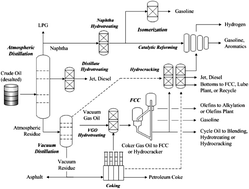

image file: c5ra17241a-p1.tif

Zhongyi Ma

Dr Zhongyi Ma is an associate professor at Institute of Coal Chemistry, Chinese Academy of Science. He got his bachelor degree at Qufu Normal University in 2000 and his PhD at Institute of Coal Chemistry, Chinese Academy of Science in 2005. Zhongyi Ma has 10 years of industrial experience in the petrochemical industry. He worked as postdoctoral at South Dakota State University during 2011-2012. From 2015 till now, he worked as associate professor in Institute of Coal Chemistry. His research fields include Fischer–Tropsch synthesis, biomass conversion, and fine chemicals synthesis.

image file: c5ra17241a-p2.tif

Lin Wei

Dr Lin Wei is an assistant professor of biomass and bioenergy at South Dakota State University in USA. He received his Bachelor Degree of Agricultural Engineering from China Agricultural University and M.S. and PhD in Biological Engineering from Mississippi State University in USA. He has worked on biomass conversion and bioenergy, agricultural engineering, and food engineering over 20 years. Currently, his researches mainly focus on biomass catalytic fast pyrolysis, bio-oil upgrading, bio-char utilization, gasification, and catalytic synthesis of syngas for advanced biofuels.

image file: c5ra17241a-p3.tif

Wei Zhou

Dr Wei Zhou is a senior lecturer of School of Chemistry and Chemical Engineering at Shanxi University in China. She received her Bachelor Degree of Science from Sichuan University in China and M.S. and PhD in Shanxi Institute of Coal Chemistry, Chinese Academy of Sciences. She has worked on green chemistry and industrial catalysis over 10 years. Currently, her researches mainly focus on syngas conversion for advanced biofuels and acid–base redox catalysis.

image file: c5ra17241a-p4.tif

Debao Li

Dr Debao Li is a professor at Institute of Coal Chemistry, Chinese Academy of Science. He got his bachelor degree at Taiyuan University of Technology in 1995 and his PhD at Institute of Coal Chemistry, Chinese Academy of Science in 2004. His current research interests are Fischer–Tropsch synthesis, syngas conversion, CO2 conversion and acid–base catalysis, and methanol conversion. Debao Li is coauthor of more than 100 articles and 60 patents on these subjects. He has been awarded with Distinguished Young Scientists of Chinese Academy of Science (2012).

1. Introduction

Considering the facts that energy consumption is continually increasing but fossil fuel resources are finite and environmental issues have attracted more and more concern, renewable energy should be widely explored to meet the energy increase and for sustainable development. Due to its low cost and high availability, biomass is considered as the only sustainable carbon source that can produce renewable liquid fuels and chemicals.1,2 Lots of work has been done to convert forest residues, wood chips, corn stover, wheat straw or even trash to drop-in fuels.3 So far, there have been exciting achievements in producing liquid fuels from biomass, among which fast pyrolysis is considered as one good approach to convert biomass to bio-oil, but upgrading bio-oil to high quality fuel is the biggest challenge.4,5

Bio-oil produced from fast pyrolysis contains more than 400 different compounds, including acids, alcohols, aldehydes, esters, ketones, and aromatic compounds.6 Because of higher oxygen content, high viscosity, high acidity and immiscibility with petroleum-derived fuels, bio-oil should be upgraded to be more compatible with current fuel and chemical manufacturing infrastructure.7 During the upgrading process, catalysts play a key role in producing high quality renewable fuels. Several catalytic approaches toward this end are currently being studied, including hydrotreating,8 hydrodeoxygenation and catalytic cracking.9,10 The breakthrough of catalyst will result in the extensive utilization of renewable fuels derived from biomass.

In this respect, heterogeneous catalyst has the potential to break through the engineering and scientific barriers to produce the biofuels economically. Heterogeneous catalyst has achieved great success in petroleum refinery and been widely used in many processes, such as fluid catalytic cracking (FCC), hydrocracking, hydrotreating and so on. As one of the important catalysts in petroleum refinery, ZSM-5 and other zeolites are wildly applied in FCC process or other processes in petroleum refinery. Hydrotreating catalyst is also taking a significant role in petrochemical process. In this process, NiMo, CoMo and NiW catalysts are used to remove sulfur, nitrogen, metals (HDM), and oxygen. Bio-oil has some similar properties with petroleum fractions. Thus, some petroleum refining catalysts can be used to improve the quality of pyrolysis bio-oil to meet the requirement of blending with petroleum-derived fuels. Some efforts have been done by using petroleum refining catalysts to convert biomass and upgrade bio-oil.1 The catalysts used in bio-oil upgrading require special modification and treatment compared to petroleum refining catalysts because some different properties of bio-oil in acidity and oxygen content compared to petroleum fractions.11

As mentioned above, heterogeneous catalysts can be applied to produce biofuels and chemicals from biomass. This is similar to what they have done in petroleum refinery where heterogeneous catalysts play about 90% of role in petroleum and chemical processes.12 It is highly likely that the heterogeneous catalysts will also play important roles in the future biorefinery, where biomass feedstocks can be convert to energy, fuel, and chemical products. Hence, the comparison of heterogeneous catalysts used in biomass conversion with those in petroleum refining process will project lights on the future development of catalysts in biomass conversion and bio-oil upgrading.

In this overview some heterogeneous catalysts used in petroleum refinery will be discussed and its function will be summarized. The focus will be mainly placed on several routes which can probably be used in biomass conversion, such as fluid catalytic cracking, hydrotreating and hydrodeoxygenation (HDO). Then, the catalysts currently used in bio-oil upgrading via FCC, hydrotreating and HDO process will be reviewed and compared with those used in petroleum refining process. We finally discuss the opportunities and impact of petroleum refining catalyst on developing economical process to produce liquid biofuels and chemicals from biomass.

2. Catalysts in petroleum refinery

As Fig. 1 showed, modern petroleum refinery is a complicated process and many types heterogeneous catalyst are required and play the important roles, such as FCC catalysts, hydrocracking catalysts and hydrotreating catalysts. The composite and properties of three catalysts are listed in Table 1. FCC catalysts are used to improve the yield of higher octane gasoline from crude oil because heavy oil is more and more popular. Hydrotreating and hydrocracking catalysts are applied to improve fuels quality by saturating the olefin and remove the impurities in petroleum feedstocks. Hydrotreating and hydrocracking catalysts become more important due to more and more tightened environment protection.
image file: c5ra17241a-f1.tif
Fig. 1 Layout of a typical high-conversion oil refinery.13
Table 1 Properties of petroleum refinery catalystsa
Catalysts Active metals Supports Reaction condition Function Feed
a Notes: VGO-vacuum gas oil; CGO-coker gas oil; AGO-atmospheric gas oil; DAO-deasphalted oil; HAGO-heavy atmospheric gas oil; AR-atmospheric residue; VR-vacuum residue.
FCC Ultra stable Y, ZSM-5 T = 450–550 °C, P = 0.1–0.3 MPa Cracking, isomerization, aromatization VGO, CGO, AR, VR
Hydrotreating catalyst Ni–W; Ni–Mo; Co–Mo; Pt/Pd Al2O3, Al2O3–SiO2 T = 300–450 °C, P = 1.0–10.0 MPa HDS, HDN, HDO, HDM and hydrogenation, saturation Diesel, gasoline, kerosene, lubricant wax
Hydrocracking catalyst Ni–Mo; Co–Mo; Ni–W Y, β T = 260–400 °C, P = 10.0–15.0 MPa Hydrogenation, cracking and isomerization AGO, VGO, CGO, DAO, HAGO


2.1 Catalytic cracking catalysts

FCC is one of the most important processes used in petroleum refinery. It is widely applied to convert alkanes or residuum fractions of crude oils to more valuable gasoline, olefin, and other products.14 The reactor and regenerator are considered to be the hearts of the fluid catalytic cracking unit. In the reactor, hydrocarbon feedstock is contacted with the hot and tiny catalysts and then converted to cracked products. Meanwhile, the FCC catalyst is coked and deactivated. Sequentially, the coked catalysts and cracked products are separated by cyclone, and then the coked catalysts are burned with coke to regenerate in the regenerator with air at 650–760 °C. The regenerated catalysts are then moved to the reactor for recycle cracking.

Cracking, hydrogen transfer, isomerization and coking reactions are occurred in the FCC process and the acid sites are needed to provide the active sites.15 The X zeolite was used as first generation of FCC catalysts in gas oil cracking. The limitation of lead in gasoline increases the need for a high octane number fuel.16 Thus, an ultra stable Y (USY) zeolite catalyst was developed by dealumination process to remove aluminum atoms from the zeolite framework.17 At present petroleum refinery, almost all of the FCC catalysts are formulated with USY zeolite due to its better thermal and hydrothermal stability. With the increasing demand of light olefins, ZSM-5 is added to FCC catalyst as an additive to increase the yield of light olefins and enhance the gasoline octane number.18

The main role of ZSM-5 zeolite is to crack high molecular fractions to light olefins.19 The small hydrogen transfer activity of the ZSM-5 zeolite favors the production of light olefin which results in decrease of the n-paraffins formation. The surface acidity and particle size of ZSM-5 zeolite have great effect on the product yield and gas as well as gasoline compositions.20 With the increasing of the total acidity, ZSM-5 showed stronger cracking and isomerization activity.

2.2 Hydrocracking catalysts

Hydrocracking is the process that heavier hydrocarbon fraction is broken up into lighter hydrocarbon molecules and sulfur and nitrogen is removed. In addition, olefins and aromatics are saturated in the presence of hydrogen.21 Pre-treating and cracking are two types of reactions taken place in hydrocracking process. During the pre-treating reaction, sulfur, nitrogen, organometallic compound, halides and oxygen are removed. Cracking, isomerization, aromatics saturation, polynuclear aromatics formation and coke formation will take place during the cracking reaction.13 Carbon–carbon single bond is broken up and hydrogen is added to a carbon–carbon double bond, so high quality fuel is obtained.22 The roles of hydrogen and temperature are very important because all hydrocracking reactions involve hydrogen contact with the reactants at a pressure above 7.0 MPa and temperature up to 470 °C.23

There are two active sites needed in conventional hydrocracking catalyst: acidic site and hydrogenation–dehydrogenation site. The former is provided by the support and the later is formed by metal. The cracking reaction takes place on the acidic site, whereas the hydrogen transfer is activated on hydrogenation–dehydrogenation site. High activity of acidic site is likely to coke and make the catalyst deactivate. In order to prepare a suitable hydrocracking catalyst, a good balance between two activity sites should be well tuned.

In the early days of hydrocracking catalysts, acidic clays and amorphous silica alumina were employed as the acid function. Synthesis of the first manmade analogue of the natural mineral was first accomplished with introduction of synthetic X and Y zeolites by the workers at Union Carbide Corporation in the 1940's and early 1950's.24 Some zeolite modification methods are developed to enable a significant shift in the selectivity of zeolite-based hydrocracking catalysts to produce high quality middle distillates. Zeolite dealumination, as measured by the shrinkage in the unit cell size (UCS), was discovered by workers at Union Carbide to reduce acidity with a consequent reduction in catalyst activity and increase in selectivity to jet and diesel products. This improvement in selectivity to heavier products is attributed to a reduction in the number of acid sites and an increase in the distance between them as a result of severe hydrothermal treatment.

The steam dealumination process can generate mesoporous of zeolite Y, which enhances the accessibility together with high activity and stability.25 Additionally, the Y zeolite is highly flexible by adjusting the Si/Al ratio through dealumination process, which results the regulated selectivity of the zeolite containing catalyst. With the decrease of Al content, cracking activity decreases and the selectivity of diesel increases.

In the recent years, advances in zeolite science have led to a much better understanding of the structure-function requirements of zeolites. High activity hydrocracking catalysts has been achieved through optimizing the catalyst formulation and synthesis steps. It allows for much more precise tailoring of their properties to more precisely match their acidity and framework composition to their functional requirement. An illustration of these advancements can be found in the breadth of application of Y zeolites in hydrocracking, ranging from maximum production of naphtha all the way to production of high quality distillates. More importantly, the art of hydrocracking catalyst development has also progressed due to an improved understanding of how to optimize the use of zeolitic and amorphous acidic components and their interaction with the hydrogenation metals to deliver the desired performance.

2.3 Hydrotreating catalysts

Hydrogenation and impurity remove are the main projects of hydrotreating catalysts in a petroleum refinery. The traditional hydrotreating catalysts are composed of group VI and group VIII metal deposited on alumina supported.26 Sulfidation is the key step for this catalyst prior to being used in hydrotreating process.

Typical hydrotreating catalysts are sulfided CoMo and NiMo. CoMo catalyst is preferred for hydrodesulfurization (HDS) reactions, while NiMo catalysts are good at hydrodenitrogenation (HDN) and hydrogenation. NiW catalysts are very promising for hydrocracking, aromatics hydrogenation at low H2S concentrations and conversion of alkylated dibenzothiophenes. Noble metal catalysts have drawn much attention due to their high hydrogenation activity.27 However, these catalysts are sensitive towards poisoning by sulfur compounds. Interestingly, sulfided CoW catalysts seem somehow not to be a good combination for application in industrial hydrotreating processes. A number of excellent reviews summarize most of the literature on hydrotreating catalysts.28

The dispersion and morphology of the active phase, which are influenced by the interaction of the transition metal sulfide with the support, are the two important factors for the activity of hydrotreating catalysts.26 Al2O3 is the most commonly applied support because of its strong interaction with Mo, which results in a high dispersion and high stability of the active phase.26 Other supports, like SiO2 and TiO2, also have been studied and reviewed by various authors.29 In general, SiO2 leads to poor dispersion of MoS2 due to a weak Mo–support interaction and hence it results in a low HDS activity. TiO2 has a stronger interaction with Mo than Al2O3 and has proven to be a promising support for HDS catalysts. Especially, the relatively high activity of Mo/TiO2 vs. Mo/Al2O3 is interesting, and has been attributed to differences in morphology, dispersion or sulfidability.29 It is proposed that Ti-species, sulfided and/or reduced during heat treatment, act as promoter and thus increase the activity.30 However, this has not been proven yet. Another interesting aspect is the relative small promotion effect for TiO2-promoted catalysts compared to Al2O3.31

The active phase of HDS catalyst has been considered as CoMoS,32 and two different CoMoS structures on CoMo/Al2O3 were proposed.33 The type I phase is thought to be incompletely sulfided and to consist mainly of MoS2 monolayer interacting with the support via Mo–O–Al bonds. The other phase weakly interacts with the support via van der Waals interactions, which is consider to be fully sulfided and consist often of stacked MoS2 particles. The difference in activity between these two kinds phase seems to be dependent on the type of reactant.

3. Catalysts for pyrolysis and bio-oil upgrading

Similar to the petroleum refining process, biomass conversion also requires many kinds of heterogeneous catalysts to produce the biofuels which can meet the requirements of transportation fuel. Unfortunately, there are no suitable catalysts for conversion the biomass economically and efficiently so far. Many efforts have being done to this field and some exciting results are achieved. With the aid of commercial heterogeneous catalysts used in petroleum refinery, the development of biorefinery catalyst will be quickened and broadened. The common processes used in biofuel production are catalytic cracking and hydrodeoxygenation. Some zeolites and hydrogenation catalysts were tested by many workers.

3.1 Catalytic cracking catalysts

In order to reduce the oxygen content and increase high thermal stability, bio-oils should be upgraded by proper catalysts.34 The catalytic cracking process is preferred because no H2 is required and reaction conditions are similar to pyrolysis reaction. The main products of this process are hydrocarbons, aqueous organics, water, gases and coke, which show significant processing and economic advantages.35 Poor yields of hydrocarbons and high yields of coke are the main disadvantages of this process, though these can be improved with good performance catalyst at proper conditions. The reaction pathway of catalytic cracking process is shown as Fig. 2.
image file: c5ra17241a-f2.tif
Fig. 2 Reaction pathway of catalytic cracking process.

The catalysts used in catalytic cracking process are mainly zeolites, similar to those used in petroleum refinery. ZSM-5, Y, silica-alumina, SAPO, MCM-41, SBA-15 and other zeolites were applied in this process to remove oxygen from bio-oils.17,36 ZSM-5 is considered as a promising catalyst because of the highest amount of liquid organic products among SiO2–Al2O3, silicalites and mixtures of ZSM-5 with silica-alumina.37–39 In addition, the products from ZSM-5 are most aromatics which are the important commodity chemical product. CO2, CO, light alkanes and light olefins are the gaseous products produced in this process. Also like petroleum FCC catalyst, large amounts of coke (30–50 weight percent) were formed during bio-oil catalytic cracking process. In petroleum FCC process, coked catalyst is periodically burned off to regenerate catalyst and provide heat for the process. In view of this point, coke formation during bio-oil catalytic cracking process is not bad. However, a good heat balance has not yet been demonstrated for bio-oil catalytic cracking.

In order to study the reaction pathway of bio-oil over ZSM-5 catalyst, some model compounds have been tested.40–42 Alcohols are first converted to olefins followed by formation of paraffin and aromatics at high temperature over ZSM-5. Phenol and 2-methoxyphenol have low reactivity and undergo thermal decomposition to coking problems and only small amounts of propylene and butanes are detected. Acetic acid can be hydrogenated to acetone, which shows different performance to alcohols. Acetone is first converted to isobutene and then to C5+ olefins followed by gasoline-range paraffin, aromatics, and alkenes. More coke is formed from acetic acid and acetone than that from alcohol feedstocks. Thus different compounds in the bio-oils show different reaction pathway, which cause a great difficulty in development of proper catalytic cracking catalysts.

Catalytic fast pyrolysis, incorporating catalyst into fast pyrolysis, is considered as one promising option for conversion biomass to targeted fuels and chemicals.43 The incorporation of catalysts with pyrolysis could temper the reaction conditions and increase the biomass conversion. Though the yield of bio-oil decreases, more hydrocarbons are obtained and the quality of pyrolysis bio-oil is improved.44 High heating rates and short residence times are important factors to maximize the yield of bio-oils.45 ZSM-5 is the common catalyst used in catalytic fast pyrolysis process. Olefins and aromatics are the main compounds in gas phase and liquid phase.46–49

Huber and co-worker recently made a breakthrough to produce p-xylene from biomass by catalytic fast pyrolysis with ZSM-5 catalysts.50,51 A simple zeolite surface modification method accounts for the increase of p-xylene selectivity, in addition, proper reaction conditions are resulted in the high yields. They also found that catalytic pyrolysis was shape-sensitive reaction, and the optimizations of active site type and the pore shape were the key points for high p-xylene selectivity.52

Due to the strong acidity, high activity and shape selectivity, ZSM-5 catalysts have good catalytic performance to convert pyrolysis bio-oils to biofuels and chemicals.53 However, ZSM-5 catalyst has several disadvantages, such as low yield, easy coking and short life.54 In order to reduce the catalyst deactivation rate and get the higher yield of organic oil, some zeolites catalysts with a larger pore size have been achieved more and more attentions for their potential use in catalytic fast pyrolysis.47 It is believed that larger pores sized zeolites will facilitate larger molecular products to pass and convert easily, which will weaken the coke formation and catalyst deactivation.55

3.2 Hydrotreating catalysts

Just like what they have done in petroleum refining process, hydrotreating catalysts can be used to remove oxygen and upgrade the quality of pyrolysis bio-oil, the reaction pathway of hydrotreating process is shown as Fig. 3. The thermal stability and the compatibility to transportation fuels are enhanced.56,57 Hydrogenation, hydrogenolysis, hydrodeoxygenation, decarboxylation, decarbonylation and cracking reactions involve in hydrotreating process. Polymerization reaction occurs at the same time and results in the coke formation. Multifunctional catalysts are needed and multiple active sites should be provided on one catalyst. It is a big challenge to develop good performance catalysts for hydrotreating of bio-oils.
image file: c5ra17241a-f3.tif
Fig. 3 Reaction pathway of hydrotreating process.

Many type heterogeneous catalysts were tested in this process including typical petroleum hydrotreating catalysts and noble-metal hydrogenation catalysts. Sulfided NiMo and CoMo catalysts are firstly tested in the rigor conditions and then a two-step hydrotreating process at moderate conditions is developed.58,59 The first step is hydrogenation of pyrolysis bio-oil at low temperature. During this process the thermally unstable bio-oil compounds are hydrogenated and become stable, which diminish the thermal decomposition and reduce the coke formation in the further step. The second step is the further hydrogenation at relative high temperature. High quality upgraded bio-oils can be obtained with high octane and low oxygen content. Catalyst deactivation caused by coke deposition on active sites and support instability induced by water at high temperature is a big issue.60,61 More attentions should be paid to the effect of water on hydrotreating catalysts in bio-oil process than that in petroleum refinery process because higher oxygen content in pyrolysis bio-oils.

A great progress was made by integrating noble metal hydrogenation catalysts with zeolites catalyst in the two-steps hydrotreating process.50 Noble metal catalysts are used to the first hydrogenation step to increase the stability of bio-oil and decrease coke formation. The reaction temperature and pressure are relative low because of good activity of noble metal catalysts. During the first step, the intrinsic hydrogen content of the pyrolysis bio-oil increases. ZSM-5 is used as catalyst to converts these hydrogenated bio-oil at second step to light olefins and aromatic hydrocarbons. The liquid yield is as much as three times higher than that treated by same ZSM-5 catalyst with the normal pyrolysis bio-oil. The compounds with carbonyl and unsaturated carbon bonds in bio-oil are converted to thermally stable compounds during the first hydrogenation reaction, which reduces the coke formation in zeolites reaction. The second hydrogenation step is also proposed to further saturate double carbon bonds and increases the H/C ratio of bio-oil, which further reduces the formation of coke over zeolites and result in higher liquid yield. Ru catalyst is consider as the most active and selective catalyst for acetic acid hydrogenation and the Pt catalyst have high C–O hydrogenation and low C–C bond cleavage activity.62

3.3 Hydrodeoxygenation catalysts

During the hydrotreating process of pyrolysis bio-oil, the oxygen is removed by combining with hydrogen and saturated C–C bonds are achieved by hydrogenation reaction. HDO is the process that can minimize hydrogen consumption because phenol rings are not fully saturated in this process. The reaction pathway of HDO process is shown as Fig. 4. In petroleum refining process HDS, HDN and HDM reactions are used to remove sulfur, nitrogen and metal in petroleum fractions. Additionally, olefins saturation is applied to enhance the quality of petroleum fuels.63 In the case of bio-oil HDO process, remove of oxygen and increase of energy content are the main purposes, which results in significant increase of stability and decrease of oil viscosity.64 The oxygen content can decrease to less than 5 wt%, which is required for biofuels applications.65 The advantage of HDO process is the unsaturation of aromatics in the presence of hydrogen, which avoid the decrease of octane number of the upgraded bio-oil and increase of H2 consumption.
image file: c5ra17241a-f4.tif
Fig. 4 Reaction pathway of HDO process.

Because of almost same mechanism of HDO in bio-oil upgrading as HDS in petroleum refining process, sulfided CoMo and NiMo hydrotreating catalysts are also used in HDO of pyrolysis bio-oil. These catalysts have good performance for bio-oils upgrading compared to copper-chromite and supported Ni catalysts.66 Many commercial hydrotreating catalysts were tested and the detailed could refer to the review by Elliott.11

The constant addition of sulphur precursor or H2S is necessary for sulfided CoMo and NiMo catalysts to maintain the high catalytic activity, otherwise the catalyst will deactivate. Nevertheless, the addition of sulfur causes several problems, not only to selectivity, but also causing an undesired sulfidation of some oxygenated species. Hydrogen sulfide shows positive effect on the hydrogenation activity at low concentrations, while its inhibiting effect is obvious at higher concentration. Hence, sulfur content will need to be carefully controlled. The results show that the hydrogen sulfide has negative effect on dehydroxylation of guaiacol and carbonyl hydrogenation, which also shifts the selectivity toward catechol production.67

Many model bio-oil compounds are also used to determine the reaction pathways of main compounds. The mixture of guaiacol, 4-methylacetophenone, and ethyldecanoate is commonly used as model bio-oil feedstock to ensure the similar functional groups as pyrolysis bio-oils. The ketone group can be easily and selectively hydrogenated to methylene group at low temperature, while carboxylic groups and guaiacol groups are hydrogenated at higher temperature.68,69 The reaction pathway of carboxylic groups is different to that of guaiacol. Hydrogenation and decarboxylation are the parallel process for carboxylic group,70 while guaiacol group only converts to catechol and sequentially to phenol. Guaiacol easily cokes on acidity sites and causes deactivation of catalyst. Increased rates of decarboxylation and hydrogenation of ethyl decanoate are observed by increasing acidity of the catalyst support, which also leads to the formation of coke from guaiacol.

The catalytic performance of CoMo and NiMo catalysts were compared by HDO of guaiacol in a batch system.71 The results show that the conversion of guaiacol and the amount of hydrodeoxygenation products are higher on the NiMo than on the CoMo catalyst at the low temperature. Thus, NiMo catalyst has a better activity for the conversion of guaiacol than CoMo catalyst.

Though sulfided CoMo/Al2O3 and NiMo/Al2O3 catalysts are useful for HDO process,72 the instability of the alumina supports in the presence of the high levels of water is considered as a serious shortcoming,73 and a high level of coking is observed because of high acidity of alumina support. Some catalyst with non-alumina supports such as carbon, titanium and molecular sieves are test. Activated carbon is considered as a good catalytic support for HDO reaction because its low acidity weakens undesired coke formation. However, carbon-supported CoMo and NiMo catalysts have lower catalytic activity for the HDO of carbonyl, carboxyl, and methoxyl groups than that of alumina-supported catalysts.74 Intermediary thermal or sulfidation treatment and the order of metal impregnation are used to modify carbon supported catalysts.75 The alternation of the order of Co and Mo impregnation causes higher dispersion of active phase, which increases HDO activity for methoxy and carboxy groups while decreases the activity for carbonyl groups. Additionally, the increase of hydrogenation selectivity is observed. The change of impregnation order also leads to the metals appear on the surface of the catalysts.76 It is observed that cobalt is preferentially deposited on the surface of the support while molybdenum penetrated more deeply into the pore structure. First deposition of cobalt on the surface of support produces the metal sites for sequent impregnation of molybdenum, which accounts for the active sites on the surface of catalysts. On the other hand, large pore structure of activated carbon makes the active phase highly dispersed and accessible, which leads to higher catalytic activity.

MCM-41 with different Si/Al ratio is also investigated as CoMo catalysts support for HDO of bio-oils.77 The results show that the CoMo/MCM-41 has lower catalytic activity than CoMo/Al2O3 and CoMo supported on organized mesoporous alumina.78 SBA-15, HMS, SBA-16 and DMS-1 are also used as support for HDO of bio-oil.79 It was found that SBA-15/SBA-16 and DMS were effective catalyst supports for HDO of bio-oil. The selectivity for paraffin production decreases in the following order: SBA-15 > HMS > SBA-16 ≫ DMS.

Noble metal catalysts are proved to be more active than the sulfided CoMo catalysts in hydrogenation reaction even at moderate reaction conditions,79–81 which results in the less coke formation. Meanwhile, it is easy to formulate noble metal catalysts with non-alumina supports to avoid the instability of alumina at high water level. Hence, noble metal catalysts are considered as better choice in HDO process because of lower sulfur content in bio-oils than that in petroleum fractions. Many efforts have been done to explore the noble metal catalysts for HDO of bio-oils, such as Pt,82 Ru83 and Rh84 catalysts. Ru/C is considered as a promising catalyst for acetic acid and furfural hydrogenation.11 ZrO2 supported Rh, Pd, and Pt catalysts are also investigated in the guaiacol hydrotreating process and Rh/ZrO2 catalyst shows the best activity among three catalysts.84 Al2O3 supported noble metal catalysts have also been investigated for bio-oil upgrading and Pt/Al2O3 is found with good activity in this process.85 The effect of different supports on the catalytic performance of noble catalysts for bio-oil HDO is not very clear because different model bio-oils were used as feedstocks.

The decomposition and polymerization of compounds in bio-oil occur rapidly in HDO reaction because of the thermal instability. The free radicals generated in this process agglomerate quickly on surface of catalysts to cause catalyst deactivation.86 Alcohols in bio-oil can be thermally dehydrated to olefins, which may lead to the difficulties with bio-oil polymerization at hydrotreatment conditions. At lower severity, the upgraded oil becomes more and more soluble in water, which leads to separation problems.87

In bio-oil HDO process, the polymerization is the common phenomenon even at relative low temperature and hydrogen atmosphere with hydrogenation catalysts.88 On the other hand, the small molecular bio-oils can be easily hydrogenated to compounds with lower oxygen content at relative low temperature. In these two aspects, the two-step hydrogenation process is proposed to produce lower oxygen content biofuels. In first step, pyrolysis bio-oil is hydrotreated using Ru catalysts at very low temperature. Small molecular bio-oils are hydrogenated and the polymerization is depressed. The hydrogenated bio-oils are then hydrotreated by NiW catalyst at a moderate temperature. The advantage of this process is the high liquid yield with low oxygen content. Very slighter char/coke production is observed compared to that without the low-temperature step.89 A low-temperature stabilization step is proved to be necessary in the HDO process at relative higher temperatures.90

4. Apply petrochemical technologies in biomass conversion

There many efforts have been made to use existing refinery catalysts to produce renewable biofuels from biomass conversion. The combination of biofuels production with exiting petroleum refinery will decrease the developing period and increase the economical efficiency. If the feasibility of pyrolysis bio-oil co-process with traditional petroleum refineries are confirmed, the biofuels will develop quickly and easily to meet the increasing demand for petroleum. As a matter of the fact, several famous petroleum companies are already improving the commercialization of biofuels using existing petroleum refinery technologies.91

There are at least three options for using petroleum refinery technologies to convert biomass into fuels and chemicals: (1) utilization of biomass-derived syngas or hydrogen, (2) FCC process, and (3) hydrotreating–hydrocracking.92 Biomass-derived syngas or hydrogen can be used to methanol synthesis, F–T synthesis and other products which produced from coal-derived or nature gas-derived syngas. The utilization of biomass-derived syngas or hydrogen will not discuss in this article, which can refer to.93,94 As mentioned above, FCC is a widely used technology to convert heavy fractions of petroleum to light fraction hydrocarbons.95 Hydrotreating is the effective methods to remove sulfur, nitrogen, metals, and oxygen by hydrogenation of different feedstocks. These two approaches are now being used as feasible process to remove oxygen from pyrolysis bio-oil. The traditional catalysts applied in these two approaches are also being tested.

The co-feeding of pyrolysis bio-oil with VGO feedstock was investigated in different parts of FCC reactor. Hydrogen transference is observed between VGO feed stock and bio-oil feedstocks.49 It was proved that glycerol can be co-fed with VGO feedstock without significantly altering the product selectivity. The interactions between the glycerol and petroleum hydrocarbon lead to better selectivity than those calculated by considering a simple additive effect. These results suggest that bio-oils can be co-fed with petroleum fractions in an industrial FCC reactor. However, there many results showed that co-feeding of bio-oil with petroleum fractions will result in the quick formation of coke and plugging the FCC reactor.96 Hence more efforts should be made to clarify the influence of bio-oil co-feeding with petroleum fractions on FCC process, especially on FCC catalysts and product distribution.

The HDO process is the combination of hydrotreating process used in petroleum refinery with bio-oil upgrading process. As mentioned above, many different kinds of traditional hydrotreating catalysts were applied in HDO of bio-oil, including CoMo, NiMo and noble metal catalysts. But the differences have been identified between HDO process of bio-oil and HDS process of petroleum refinery. The addition of sulfur donor compounds is necessary to keep the catalyst activity because of low sulfur content in bio-feedstocks. In this case, the inhibition of activity of catalyst is found during HDO process of bio-oil. Hence, the adjustments are required not only to conventional hydroprocessing but also to conventional hydrotreating catalysts. The adjustments to HDO can be seen as an extension of petroleum processing but not far outside the range of petroleum processing if the combination is more feasible. While the adjustments to conventional hydrotreating catalyst can be done in a large extent base on the difference between bio-oil and petroleum fractions.

5. Summary and prospective

With improvement of preparation technologies, various catalysts have been developed and widely used in petroleum refining processes to get high quality transportation fuel. Some zeolites such as USY, ZSM-5 and MCM series are used to increase the yield of light olefins from large molecules crude oil. Meanwhile, hydrotreating catalysts such as CoMo, NiW and noble metal catalysts are applied to HDS, HDO, HDN and HDM process for upgrading the quality of petroleum fuel to meet environmental protection.

Many kinds of catalysts are currently being tested for production of biofuels and chemicals from biomass, such as catalytic cracking catalyst, hydrotreating catalyst and HDO catalyst. The most promising catalyst for catalytic cracking is ZSM-5, which possesses suitable properties to produce biofuels from pyrolysis bio-oils. CoMo and NiMo catalysts successfully used in petroleum refining are applied in the HDO process for bio-oil upgrading. In addition, noble metal catalysts show a great potential in the HDO of bio-oils. This group catalyst may lead to a great progress because there is lower sulfur and other contaminants in bio-oil feed than petroleum feedstocks. Some achievements have also been made in two steps process by integrating two different catalysts in one process. For example, integration of hydrogenation catalyst with HDO catalyst will alleviate the carbon deposition on HDO catalyst and increase the yield of hydrocarbon. The combination of hydroprocessing with catalytic cracking will get a distinct strategy for bio-oil deoxygenation into high-yield commodity chemicals.

Though various catalysts were applied in bio-fuel production, the limitations are still presented and needed to be overcome. The physical and chemical properties of bio-oils are fundamentally different from petroleum feedstocks, which make great challenges in applying petroleum refining catalysts to upgrade bio-oils. The biggest research challenge is how to formulate the efficient catalysts for removing oxygen from bio-oil at moderate conditions with low consumption of hydrogen.

At present, more attentions are just focused on the yield and quality of the upgraded bio-oil, while the catalytic cycle is not emphasized, especially on the catalytic cracking process. During bio-oil upgrading, carbon deposition on the catalyst is serious problem and leads to quick deactivation of catalysts, the regeneration methods of catalyst is not very clear. There many efforts have been done to study petroleum refining catalyst catalysts with bio-oils model compounds. Nevertheless, processing whole bio-oil is far more challenging than processing model compounds. At the same time, few studies have focused on the integration biorefinery with petrochemical infrastructures, especially on the improvement of petroleum refinery catalyst to biomass conversion. These essential studies are critical for advanced improvements in biofuels quality and process optimization. Efficient catalysts for bio-oil upgrading with high selective and stable activity must be developed by combining fundamental with applied research.

Some new preparation methods were applied to formulate the high-performance catalyst in petroleum refinery with the advance in nanoscience over the last decades, which have given an unprecedented ability to understand and control catalyst at the molecular scale. These methods also could be applied in developing of biorefinery catalyst. For HDO process, some new supports will be investigated to replace the alumina support of hydrotreating catalysts because more water is formed during HDO process. Also careful selections of appreciate catalyst preparation methods and proper reaction conditions should be made to noble metal catalysts for HDO process. In the case of cracking catalyst, ZSM-5 shows suitable properties to convert bio-oil to hydrocarbon biofuels, while the deactivation and the low yield are the main limitations. Hence, the future focus may be place on the new methods to modify the surface properties of ZSM-5 zeolites to reduce carbon deposition and enlarge the catalyst life. In addition, some metal additions hopefully could do its work like it does in FCC catalysts. Some mix crystal zeolites possessed special properties were produced and used in the petroleum refinery, which may be enlightenment for bio-oil catalytic cracking.

Some kind of integration with different kind catalyst will be the suitable route to produce biofuel. The efforts may be placed on the combination of noble metal hydrogenation catalysts with catalytic cracking catalyst or HDO catalysts, because prior hydrogenation of bio-oil will reduce the unstable components and sequentially alleviate the carbon deposition on catalysts.

Generally, which reaction processes are the most suitable for producing biofuels and chemicals should be selected base on petroleum refining process. More efforts should be made to develop the efficient catalysts to remove oxygen from bio-oils to enhance the catalyst activity and long-term stability. And the systematic investigation of catalyst deactivation and regeneration should be studied. In particular, the advanced characterization should be emphasized on the used catalysts at different stages of deactivation, and the deactivation mechanism should be investigated carefully. The effects of contaminants in bio-oils on catalyst deactivation should be evaluated completely.

Acknowledgements

This study was funded by the U.S. Department of Energy through NC Sun Grant Initiative under Award No. DE-FG36-08GO88073. All the supports are gratefully acknowledged. However, only the authors are responsible for the opinions expressed in this paper and for any possible error.

References

  1. G. W. Huber, S. Iborra and A. Corma, Chem. Rev., 2006, 106, 4044–4098 CrossRef CAS PubMed.
  2. J. N. Chheda, G. W. Huber and J. A. Dumesic, Angew. Chem., Int. Ed., 2007, 46, 7164–7183 CrossRef CAS PubMed.
  3. L. D. Schmidt and P. J. Dauenhauer, Nature, 2007, 447, 914–915 CrossRef CAS PubMed.
  4. T. Dickerson and J. Soria, Energies, 2013, 6, 514–538 CrossRef CAS PubMed.
  5. Y. B. Huang, L. Wei, J. Julson, Y. Gao and X. H. Zhao, J. Anal. Appl. Pyrolysis, 2015, 111, 148–155 CrossRef CAS PubMed.
  6. S. Czernik and A. V. Bridgwater, Energy Fuels, 2004, 18, 590–598 CrossRef CAS.
  7. A. V. Bridgwater, D. Meier and D. Radlein, Org. Geochem., 1999, 30, 1479–1493 CrossRef CAS.
  8. L. Liguori and T. Barth, J. Anal. Appl. Pyrolysis, 2011, 92, 477–484 CrossRef CAS PubMed.
  9. J. D. Adjaye and N. N. Bakhshi, Fuel Process. Technol., 1995, 45, 161–183 CrossRef CAS.
  10. J. D. Adjaye and N. N. Bakhshi, Fuel Process. Technol., 1995, 45, 185–202 CrossRef CAS.
  11. D. C. Elliott, Energy Fuels, 2007, 21, 1792–1815 CrossRef CAS.
  12. C. H. Bartholomew and R. J. Farrauto, Fundamentals of industrial catalytic processes, Wiley, New Jersey, 2011 Search PubMed.
  13. C. S. Hsu and P. R. Robinson, Practical advances in petroleum processing, Springer, New York, 2006 Search PubMed.
  14. J. Biswas and I. E. Maxwell, Appl. Catal., 1990, 63, 197–258 CrossRef CAS.
  15. A. Corma, P. J. Miguel and A. V. Orchilles, J. Catal., 1994, 145, 171–180 CrossRef CAS.
  16. C. Song, Catal. Today, 2003, 86, 211–263 CrossRef CAS.
  17. Y. K. Ong and S. Bhatia, Energy, 2010, 35, 111–119 CrossRef CAS PubMed.
  18. N. Y. Chen, Ind. Eng. Chem. Res., 2001, 40, 4157–4161 CrossRef CAS.
  19. N. Rahimi and R. Karimzadeh, Appl. Catal., A, 2011, 398, 1–17 CrossRef CAS PubMed.
  20. C. S. Triantafillidis, N. P. Evmiridis, L. Nalbandian and I. A. Vasalos, Ind. Eng. Chem. Res., 1999, 38, 916–927 CrossRef CAS.
  21. W. J. Roth and J. C. Vartuli, Stud. Surf. Sci. Catal., 2005, 157, 91–110 CrossRef CAS.
  22. T. F. Degnan and C. R. Kennedy, AIChE J., 1993, 39, 607–614 CrossRef CAS PubMed.
  23. R. A. Meyers, Handbook of petroleum refining processes, McGraw-Hill, New York, 2004 Search PubMed.
  24. E. M. Flanigen, Stud. Surf. Sci. Catal., 1991, 58, 13–34 CrossRef CAS.
  25. S. van Donk, A. H. Janssen, J. H. Bitter and K. P. Jong, Catal. Rev.: Sci. Eng., 2003, 45, 297–319 CAS.
  26. H. Topsøe, B. S. Clausenand and F. E. Massoth, Hydrotreating Catalysis, Springer, Berlin, 1996 Search PubMed.
  27. A. Stanislaus and B. H. Cooper, Catal. Rev.: Sci. Eng., 1994, 36, 75–123 CAS.
  28. R. Prins, V. H. J. de Beer and G. A. Somorjai, Catal. Rev.: Sci. Eng., 1989, 31, 1–41 CAS.
  29. M. Breysse, J. L. Portefaix and M. Vrinat, Catal. Today, 1991, 10, 489–505 CrossRef CAS.
  30. J. Ramirez, L. Cedeno and G. Busca, J. Catal., 1999, 184, 59–67 CrossRef CAS.
  31. J. Ramirez, S. Fuentes, G. Diaz, M. Vrinat, M. Breysse and M. Lacroix, Appl. Catal., 1989, 52, 211–224 CAS.
  32. S. Eijbouts, Appl. Catal., A, 1997, 158, 53–92 CrossRef.
  33. J. A. R. V. Veen, H. A. Colijn, P. A. J. M. Hendriks and A. J. V. Welsenes, Fuel Process. Technol., 1993, 35, 137–157 CrossRef.
  34. A. V. Bridgwater, Catal. Today, 1996, 29, 285–295 CrossRef CAS.
  35. A. V. Bridgwater, Appl. Catal., A, 1994, 116, 5–47 CrossRef CAS.
  36. N. Y. Chen, J. T. F. Degnan and L. R. Koenig, CHEMTECH, 1986, 16, 506–511 CAS.
  37. R. K. Sharma and N. N. Bakhshi, Energy Fuels, 1993, 7, 306–314 CrossRef CAS.
  38. S. T. Srinivas, A. K. Dalai and N. N. Bakhshi, Can. J. Chem. Eng., 2000, 78, 343–354 CrossRef CAS PubMed.
  39. J. D. Adjaye, S. P. R. Katikaneni and N. N. Bakhshi, Fuel Process. Technol., 1996, 48, 115–143 CrossRef CAS.
  40. A. G. Gayubo, A. T. Aguayo, A. Atutxa, R. Aguado and J. Bilbao, J. Chem. Technol. Biotechnol., 2005, 80, 1244–1251 CrossRef CAS PubMed.
  41. A. G. Gayubo, A. T. Aguayo, A. Atutxa, R. Aguado and J. Bilbao, Ind. Eng. Chem. Res., 2004, 43, 2610–2618 CrossRef CAS.
  42. A. G. Gayubo, A. T. Aguayo, A. Atutxa, R. Aguado and J. Bilbao, Ind. Eng. Chem. Res., 2004, 43, 2619–2626 CrossRef CAS.
  43. T. R. Carlson, T. P. Vispute and G. W. Huber, ChemSusChem, 2008, 1, 397–400 CrossRef CAS PubMed.
  44. M. Samolada, A. Papafotica and I. Vasalos, Energy Fuels, 2000, 14, 1161–1167 CrossRef CAS.
  45. D. Mohan, C. U. Pittman and P. H. Steele, Energy Fuels, 2006, 20, 848–889 CrossRef CAS.
  46. M. Olazar, R. Aguado and J. Bilbao, AIChE J., 2000, 46, 1025–1033 CrossRef CAS PubMed.
  47. A. Pattiya, J. O. Titiloye and A. V. Bridgwater, J. Anal. Appl. Pyrolysis, 2008, 81, 72–79 CrossRef CAS PubMed.
  48. A. A. Lappas, M. C. Samolada, D. K. Iatridis, S. S. Voutetakis and I. A. Vasalos, Fuel, 2002, 81, 2087–2095 CrossRef CAS.
  49. A. Corma, G. W. Huber, L. Sauvanaud and P. O’Connor, J. Catal., 2007, 247, 307–327 CrossRef CAS PubMed.
  50. T. P. Vispute, H. Y. Zhang, A. Sanna, R. Xiao and G. W. Huber, Science, 2010, 330, 1222–1227 CrossRef CAS PubMed.
  51. Y. T. Cheng, J. Jae, J. Shi, W. Fan and G. W. Huber, Angew. Chem., 2012, 124, 1416–1419 CrossRef PubMed.
  52. Y. T. Cheng, Z. P. Wang, C. J. Gilbert, W. Fan and G. W. Huber, Angew. Chem., Int. Ed., 2012, 51, 11097–11100 CrossRef CAS PubMed.
  53. P. T. Williams and N. Nugranad, Energy, 2000, 25, 493–513 CrossRef CAS.
  54. H. J. Park, J. I. Dong, J. K. Jeon, K. S. Yoo, J. H. Yim and J. M. Sohn, J. Ind. Eng. Chem., 2007, 13, 182–189 CAS.
  55. X. Guo, Y. Yan and T. Li, Chin. J. Process Eng., 2004, 4, 53–58 CAS.
  56. F. Goudriaan and D. G. R. Peferoen, Chem. Eng. Sci., 1990, 45, 2729–2734 CrossRef CAS.
  57. S. P. Zhang, Energy Sources, 2003, 25, 57–65 CrossRef PubMed.
  58. D. C. Elliott and A. Oasmaa, Energy Fuels, 1991, 5, 102–109 CrossRef CAS.
  59. D. C. Elliott, E. G. Baker, J. Piskorz, D. S. Scott and Y. Solantausta, Energy Fuels, 1988, 2, 234–235 CrossRef CAS.
  60. P. Horne and P. Williams, Fuel, 1996, 75, 1043–1050 CrossRef CAS.
  61. S. Vitolo, B. Bresci, M. Seggiani and M. Gallo, Fuel, 2001, 80, 17–26 CrossRef CAS.
  62. N. Li and G. W. Huber, J. Catal., 2010, 270, 48–59 CrossRef CAS PubMed.
  63. R. G. Leliveld and S. E. Eijsbouts, Catal. Today, 2008, 130, 183–189 CrossRef CAS PubMed.
  64. A. E. Farrell and A. R. Gopal, MRS Bull., 2008, 33, 373–380 CrossRef CAS.
  65. P. M. Mortensen, J. D. Grunwaldt, P. A. Jensen, K. G. Knudsen and A. D. Jensen, Appl. Catal., A, 2011, 407, 1–19 CrossRef CAS PubMed.
  66. M. Balat, M. Balat, E. Kirtay and H. Balat, Energy Convers. Manage., 2009, 50, 3147–3157 CrossRef CAS PubMed.
  67. M. Ferrari, S. Bosmans, R. Maggi, B. Delmon and P. Grange, Catal. Today, 2001, 65, 257–264 CrossRef CAS.
  68. M. Ferrari, R. Maggi, B. Delmon and P. Grange, J. Catal., 2001, 198, 47–55 CrossRef CAS.
  69. A. Centeno, E. Laurent and B. Delmon, J. Catal., 1995, 154, 288–298 CrossRef CAS.
  70. E. Laurent and B. Delmon, Appl. Catal., A, 1994, 109, 77–96 CrossRef CAS.
  71. A. Gutierrez, M. E. Domine and Y. Solantausta, Co-processing of upgraded bio-liquids in standard refinery units-fundamentals, in Proceedings of the 15th European biomass conference and exhibition, Berlin, 2007 May 7-11 Search PubMed.
  72. Y. C. Lin, C. L. Li, H. P. Wan, H. T. Lee and C. F. Liu, Energy Fuels, 2011, 25, 890–896 CrossRef CAS.
  73. R. M. Ravenelle, J. R. Copeland, W. G. Kim, J. C. Crittenden and C. Sievers, ACS Catal., 2011, 1, 552–561 CrossRef CAS.
  74. A. Centeno, O. David, C. Vanbellinghen, R. Maggi and B. Delmon, Developments in Thermochemical Biomass Conversion, 1997, vol. 1, pp. 589–601 Search PubMed.
  75. A. Centeno, C. VanBellinghen, O. David, R. Maggi and B. Delmon, Developments in Thermochemical Biomass Conversion, 1997, vol. 1, pp. 602–610 Search PubMed.
  76. M. Ferrari, B. Delmon and P. Grange, Carbon, 2002, 40, 497–511 CrossRef CAS.
  77. D. Kubicka, M. Bejblova and J. Vlk, Top. Catal., 2010, 53, 168–178 CrossRef CAS.
  78. D. Kubicka, P. Simacek and N. Zilkova, Top. Catal., 2009, 52, 161–168 CrossRef CAS.
  79. R. Nava, B. Pawelec, P. Castano, G. M. C. Alvarez, C. V. Loricera and J. L. G. Fierro, Appl. Catal., B, 2009, 92, 154–167 CrossRef CAS PubMed.
  80. S. Ramanathan and S. T. Oyama, J. Phys. Chem., 1995, 99, 16365–16372 CrossRef CAS.
  81. J. Wildschut, F. H. Mahfud, R. H. Venderbosch and H. J. Heeres, Ind. Eng. Chem. Res., 2009, 48, 10324–10334 CrossRef CAS.
  82. Y. H. E. Sheu, R. G. Anthony and E. J. Soltes, Fuel Process. Technol., 1988, 19, 31–50 CrossRef CAS.
  83. T. V. Choudhary and C. B. Phillips, Appl. Catal., A, 2011, 397, 1–12 CrossRef CAS PubMed.
  84. A. Gutierrez, R. K. Kaila, M. L. Honkela, R. Slioor and A. O. I. Krause, Catal. Today, 2009, 147, 239–246 CrossRef CAS PubMed.
  85. C. A. Fisk, T. Morgan, Y. Ji, M. Crocker, C. Crofcheck and S. A. Lewis, Appl. Catal., A, 2009, 358, 150–158 CrossRef CAS PubMed.
  86. J. J. Meng, T. Smirnova, X. Song, A. Moore, X. Y. Ren, S. Kelley, S. Parka and D. Tilotta, RSC Adv., 2014, 4, 29840–29846 RSC.
  87. M. Al-Sabawi, J. Chen and S. Ng, Energy Fuels, 2012, 26, 5355–5372 CrossRef CAS.
  88. J. Gagnon and S. Kaliaguine, Ind. Eng. Chem. Res., 1988, 27, 1783–1788 CrossRef CAS.
  89. D. C. Elliott and T. R. Hart, Energy Fuels, 2009, 23, 631–637 CrossRef CAS.
  90. D. C. Elliott, D. Beckman, A. V. Bridgwater, J. P. Diebold, S. B. Gevert and Y. Solantausta, Energy Fuels, 1991, 5, 399–410 CrossRef CAS.
  91. F. D. M. Mercader, M. J. Groenevelda, S. R. A. Kerstena, N. W. J. Way, C. J. Schaverienb and J. A. Hogendoorn, Appl. Catal., B, 2010, 96, 57–66 CrossRef PubMed.
  92. Y. C. Lin and G. W. Huber, Energy Environ. Sci., 2009, 2, 68–80 CAS.
  93. M. M. Yung, W. S. Jablonski and K. A. Magrini-Bair, Energy Fuels, 2009, 23, 1874–1887 CrossRef CAS.
  94. A. Abuadala and I. Dincer, Int. J. Energy Res., 2012, 36, 415–455 CrossRef CAS PubMed.
  95. A. Corma and B. W. Wojciechowski, Catal. Rev.: Sci. Eng., 1985, 27, 29–150 CAS.
  96. A. R. Pinho, M. B. B. Almeida, F. L. Mendes and V. L. Ximenes, Pure Appl. Chem., 2014, 86, 859–865 CAS.

This journal is © The Royal Society of Chemistry 2015
Click here to see how this site uses Cookies. View our privacy policy here.