
DOI:
10.1039/C5RA17234A
(Paper)
RSC Adv., 2015,
5, 92055-92060
Temperature for curing phthalonitrile-terminated poly(phthalazinone ether nitrile) reduced by a mixed curing agent and its curing behavior†
Received
26th August 2015
, Accepted 12th October 2015
First published on 12th October 2015
Abstract
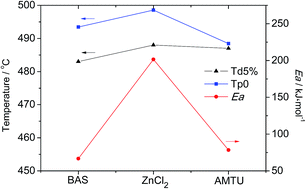
A mixture of ammonium molybdate tetrahydrate and urea (AMTU) was developed successfully to catalyze phthalonitrile to afford 2,4,6-tris(2-cyanophenyl)-1,3,5-triazine. Then AMTU was employed as a curing agent to promote the curing reaction of phthalonitrile-terminated poly(phthalazinone ether nitrile) (PPEN-Ph), and the effect of the novel curing agent was studied by differential scanning calorimetry (DSC) and thermogravimetric analysis (TGA). The initial curing temperature and apparent activation energy Ea (based on the Kissinger equation) were reduced from 268.5 °C and 201.5 kJ mol−1 using the common curing agent ZnCl2, to 223.0 °C and 78.4 kJ mol−1 using AMTU, respectively, under identical curing conditions. Moreover, the resulting thermosetting resin over AMTU showed excellent thermal stability; the Td5% and Td10% were 487 °C and 540 °C, respectively, and the char residue was up to 75% at 800 °C. These results indicated that AMTU could reduce the curing temperature for PPEN-Ph effectively, and it may be a good candidate as a curing agent for phthalonitrile resins.
1. Introduction
Three-dimensional polymers containing aryl-s-triazine moieties have superior thermal stability, excellent mechanical properties, unique optical and electrical properties; they have found many applications in advanced technologies, such as aerospace and marine.1–5 These polymers are synthesized via the thermal curing reaction of phthalonitrile-terminated oligomers at high temperature. Usually, there are two common curing agents for this reaction: Lewis acids such as ZnCl2;6,7 and aromatic diamines such as 1,3-bis(3-aminophenoxy)benzene (m-APB), bis[4(4-aminophenoxy)phenyl]sulfone (p-BAPS), and bis(4-aminophenyl)-sulfone (BAS).8–11 However, relatively high curing temperature and long curing time are the major problems concerning the current state of research and application. Thus, several methods have been developed to improve this situation.12–18 Amir et al. successfully synthesized some new amino- and imide-containing phthalonitrile compounds with a 1
:
1 molar ratio of amino group to phthalonitrile unit, and they were thermally polymerized even in the absence of curing additives.12 Selvakumar et al. reported that the use of ionic liquid as solvent and microwave irradiation significantly increased the rate and yield of the reaction.13 One of the powerful approaches is to design high-performance curing agent, it is also benefit to enhance the properties of phthalonitrile resins and extend their application, however, there are a few papers on this area to date.19–22 4-Aminophenoxy phthalonitrile has been synthesized and utilized to catalyze the curing of resorcinol-based phthalonitrile monomer, this strategy was limited by the design of monomer structure.19 Graphene oxide (GO) possessing hydroxyl and epoxy groups was prepared and examined as a curative agent for amino novolac phthalonitrile, however, the dispersion of GO in monomers should be improved at higher GO loading.20
The mixture of metal salt, urea, ammonium chloride and ammonium molybdate have been employed as catalyst to synthesize perfluoroalkyl phthalocyanine from phthalonitrile successfully.23,24 Our research has demonstrated that the mixture of ammonium molybdate tetrahydrate and urea (AMTU) also could effectively catalyze phthalonitrile to afford 2,4,6-tris(2-cyanophenyl)-1,3,5-triazine (TCPT) with NMP as solvent at 200 °C under air atmosphere (Scheme 1). In this article, we attempted to employ AMTU as a curing agent of phthalonitrile-terminated oligomers to reduce the curing temperature.
 |
| | Scheme 1 Synthesis of TCPT from phthalonitrile over catalyst. | |
Our laboratory has synthesized a series of organosoluble poly(phthalazinone ether nitrile) (PPEN), these polymers showed high mechanical strengths and good thermal properties. Moreover, they can be easily cast into tough and creasable films, their applications such as proton exchange membrane and high-temperature coating have been successfully studied.25,26 In order to improve the thermal stability of PPEN and extend its application, two phthalonitrile (Ph) moieties were introduced to the chain terminal of the polymers to afford PPEN-Ph, and the curing reaction can be proceeded between the terminal cyano groups over curing agent.27–29 With increasing molecular weight, the glass transition temperature (Tg) of PPEN-Ph will be risen and the number of terminal cyano groups will be declined. Thus, the collision rate of cyano groups will be reduced and the curing temperature will be increased, furthermore, the curing peaks in differential scanning calorimetry (DSC) will not be obvious. According to preliminary studies, PPEN-Ph with molecular weight of 800 was employed in this work, to test its curing behavior over various curing agents.
2. Experimental
2.1. Materials
DHPZ was purchased from Dalian Polymer New Material Co., Ltd and recrystallized with DMAc. Anhydrous K2CO3 was ground and dried in vacuum at 110 °C for 24 h prior to use. All solvents and other reagents were purchased from commercial sources and used as received.
2.2. Measurement and characterization
High performance liquid chromatogram (HPLC) was performed on an HP1100 liquid chromatography. Electrospray ionization-mass spectrometry (ESI-MS) was performed on a HP1100LC/MSD mass spectrometer equipped with an Agilent Extend C18 column in a liquid chromatography mode. Samples were determined by selected ion monitoring with ESI negative ionization mode (CID = 50 V). Infrared spectra were recorded on a Thermo Nicolet Nexus 470 Fourier transform infrared spectrometer, using potassium bromide pellets of solids. 1H NMR (400 MHz) spectra were obtained on a Bruker Avance II 400M nuclear magnetic resonance spectrometer operating at 25 °C using CDCl3 as solvent and listed in parts per million downfield from tetramethylsilane (TMS). Thermogravimetric analysis (TGA) curves were measured on a Mettler TGA/SDTA851 thermal gravimetric analysis instrument in flowing nitrogen (50 mL min−1) at a heating rate of 20 °C min−1 from 50 to 800 °C. Glass transition temperature (Tg) and curing temperature of maximum peaks (Tp and T′p) were determined with a Mettler DSC822 differential scanning calorimeter (DSC) under nitrogen flow at a heating rate of 10 °C min−1 from 100 to 400 °C. The Tg value was taken at the inflection point, and Tp and T′p were recorded at the exothermal peak of DSC curves.
2.3. Synthesis of TCPT
TCPT can be prepared from phthalonitrile over ZnCl2, BAS or AMTU, a procedure with ZnCl2 was given as a typical example. A 100 mL three-necked round-bottom flask equipped with mechanical stirrer under reflux was charged with a mixture of phthalonitrile (1.28 g, 10 mmol) and ZnCl2 (0.064 g, 0.47 mmol) at a mass ratio of 20
:
1. Then, N-methyl pyrrolidone (NMP) (5 mL) was added. The reaction mixture was stirred at 200 °C for 8 h under air atmosphere. The reaction solution was diluted with NMP and analyzed by HPLC and HPLC-MS. In the case of AMTU, the mass ratio of ammonium molybdate tetrahydrate and urea was 1
:
1. The reaction mixture was stirred at 150 °C for 1 h firstly, and then hold at 200 °C for another 7 h under air atmosphere.
2.4. Synthesis of PPEN-Ph
The preparation of PPEN-Ph24,25 was carried out under nitrogen atmosphere. DHPZ (23.80 g, 0.10 mmol), ground anhydrous K2CO3 (19.35 g, 0.14 mmol), DMSO (30 mL), and toluene (50 mL) were placed in a 250 mL three-necked round-bottomed flask equipped with mechanical stirring and reflux as well as a water segregator. The mixture was stirred and refluxed at 140–150 °C until the water was completely removed via azeotropic distillation with toluene. After eliminated the excess toluene via elevating the temperature to 165 °C, the system was cooled to room temperature.
Then 2,6-difluorobenzonitrile (DFBN, 6.96 g, 0.05 mol) was added into the mixture, and the reaction was hold at 110 °C for 1 h, 160 °C for 3 h, and 190 °C for 2 h, respectively. After that, the system was cooled down to 80 °C, and 4-nitrophthalonitrile (NPh, 19.04 g, 0.11 mol) was added. Then reaction temperature was maintained at 80 °C for 12 h. The final solution was poured into hot water. The crude product was washed three times with hot water and dried. The crude product was refined with CHCl3 and Soxhlet extracted with methanol for 24 h. A yellow product was recovered after vacuum drying at 150 °C for 24 h. Yield: 39.6 g (95.7%). FT-IR (KBr, cm−1): 3080 (
C–H), 2233 (C
N), 1675 (C
O), 1593, 1508 (C
C), 1487, 1461, 1323, 1249 (Ph–O), 1168, 1020, 977, 857, 783, 695. 1H NMR (400 MHz, DMSO-d6, ppm): 8.64 (br, 2H), 8.49 (br, 2H), 7.92 (br, 4H), 7.85 (br, 6H), 7.77 (br, 1H), 7.70 (br, 2H), 7.41 (br, 2H), 7.34 (br, 4H).
2.5. General procedure for thermal curing
Thermosetting resins were prepared by the direct thermal curing of PPEN-Ph in the presence of curing agents, a typical experiment was carried out as following. A mixture of PPEN-Ph and curing agent with a mass ratio of 20
:
1 was blended, ground, and pressed into a sheet. This sheet was then cured successively at 250 °C for 2 h, 280 °C for 2 h, and 300 °C for 8 h under air atmosphere, to afford a black solid. In the case of AMTU, the mixture was heated at 150 °C for 1 h prior to curing.
3. Results and discussion
3.1. Synthesis of TCPT over AMTU
To check the feasibility of employing AMTU as curing agent for phthalonitrile-terminated oligomers, herein, trimerization of phthalonitrile was chosen as the model reaction to compare the activity of formation of 1,3,5-triazine over various catalysts. The distribution of products and corresponding structures were detected via HPLC and HPLC-MS. In the cases of AMTU and ZnCl2, products of TCPT and compound 2 with molecular weight of 384 and 402 were identified, respectively. Moreover, the mole ratio of TCPT/compound 2 was 1/1.68 in the system with AMTU, whereas this value was 1.38/1 with ZnCl2. This result indicated that AMTU was more beneficial to afford compound 2 than ZnCl2 under the present reaction conditions. Burchill et al.30 have reported that TCPT was produced from phthalonitrile through route A (Scheme 2) under the presence of organic amine or ammonium salt. In the case of AMTU, the phenomenon probably can be explained by the existence of weak base urea, which induced the reaction of route B to afford compound 2 from 1, and the dehydration of compound 2, acted as the rate-determining step, should need higher temperature to promote the reaction. It is noted that neither TCPT nor compound 2 was detected in the reaction with BAS, which illustrated that trimerization of phthalonitrile can't be proceeded smoothly under the present reaction conditions. Based on these results, it is worth to make attempt to employ AMTU as a curing agent for phthalonitrile-terminated oligomers.
 |
| | Scheme 2 Reaction route to afford TCPT and compound 2 over AMTU. | |
3.2. Preparation of PPEN-Ph
As mentioned above, phthalonitrile-terminated PPEN has been synthesized successfully in our lab (Scheme 3). Higher density of terminal cyano groups will be benefit for thermal curing, in this work, the chain length was tuned by regulating the feed ratio, and the molecular weight of PPEN-Ph was fixed around 800. The structure of obtained PPEN-Ph was confirmed by FT-IR and 1H NMR. In the FT-IR spectrum (Fig. 1a), the band for Ph–O–Ph at 1249 cm−1 was the evidence for reaction between DFBN and DHPZ. And the peaks attribute to N–H (δ = 12.64) and O–H (δ = 9.70) in DHPZ disappeared in the 1H NMR spectrum of resulting oligomer (see Fig. S1 in ESI†). Combined these results, it can be concluded that PPEN was completely terminated by NPh.24 The thermal behavior of PPEN-Ph was investigated by DSC. As seen in Fig. 2, the Tg of PPEN-Ph was 165 °C (10 °C min−1, second scan), and this supply the feasibility of conducting the curing reaction at low temperature.
 |
| | Scheme 3 Preparation of PPEN-Ph and its curing route. | |
 |
| | Fig. 1 IR spectra of PPEN-Ph (a) and cured PPEN-Phs with various curing agents ((b) BAS; (c) ZnCl2; and (d) AMTU). | |
 |
| | Fig. 2 DSC curve of PPEN-Ph. | |
3.3. Thermal curing of PPEN-Ph
With the designed molecular weight PPEN-Ph in our hands, two common curing agents BAS and ZnCl2 were employed as reference to compare the curing behavior over AMTU. As the products in curing of PPEN-Ph were insoluble in the tested solvents, FT-IR has been confirmed to be a powerful characterization approach to detect the structure. As shown in Fig. 1b–d, the spectra of the mixture after curing over three curing agents were similar, which indicated that the curing products over AMTU were close to those with BAS and ZnCl2. However, compared with the IR spectrum of pristine PPEN-Ph, the intensity of peak around 2234 cm−1 attribute to C
N was declined, and some new peaks appeared. For example, two peaks at 1773 cm−1 and 1728 cm−1 were assigned to the new bonds of C
N and C–N, respectively, while peaks at 1405 cm−1 and 1358 cm−1 can be considered as evidence for formation of aryl-s-triazine moieties. Thus, it can be said that the thermal curing of PPEN-Ph can be proceeded smoothly over AMTU as other common curing agents.
Thermal stability of the resulting thermosetting resin also is the criteria to evaluate the performance of curing agent. TGA curves of the cured PPEN-Ph over various curing agents were illustrated in Fig. 3. The main data including the temperature at weight loss 5% (Td5%) and 10% (Td10%), as well as the char yields at 800 °C (Cy800), were summarized in Table 1. Although the Cy800 of cured PPEN-Ph over AMTU (75%) was little lower than that over BAS (79%), the values of Td5% and Td10% over former were higher than those over latter, respectively, and the Td10% was enhanced by 28 °C. Actually, the thermal properties of cured PPEN-Ph with AMTU were very close to those with ZnCl2 under identical curing conditions. Therefore, it is reasonable to assume that AMTU should be a competitive curing agent for phthalonitrile resins compared with other agents.
 |
| | Fig. 3 TGA curves (20 °C min−1, N2) of cured PPEN-Ph over different curing agents. | |
Table 1 The main data of TGA curves of resulting PPEN-Ph over various curing agents
| Curing agents |
Td5%/°C |
Td10%/°C |
Cy800/% |
| BAS |
483 |
512 |
79 |
| ZnCl2 |
488 |
536 |
76 |
| AMTU |
487 |
540 |
75 |
3.4. Curing kinetics
To further study the performance of curing PPEN-Ph over AMTU, curing kinetics were determined by DSC. PPEN-Ph was blended with different curing agents with a mass ratio of 20
:
1, then the mixtures were successively scanned at different heating rates (5 °C min−1, 10 °C min−1, 15 °C min−1, and 20 °C min−1) from 100 °C to 400 °C on DSC. The DSC curves of the reactions with different curing agents were presented in Fig. S2–S4 (ESI†), and the main data were listed in Tables S1–S3 (ESI†).
It is noted that two distinct curing peaks appear in the DSC curves: the first one (Tp) was around 230–300 °C and another one (T′p) was in the range of 340–400 °C. The curing reaction was began from 230–300 °C, as the reaction proceeded, the movement of molecular chain segments was blocked, and the collision rate between terminal cyano groups on the molecular chain was declined. However, the molecular chain segments can be continued to move with increasing curing temperature and the curing reactions can be proceeded again. Therefore, the curing reaction was divided into two steps, and there were two distinct curing peaks in the DSC curves. Herein, the DSC curves were analyzed based on the following assumption: the exothermic heat evolved during curing is proportional to the conversion of cyano groups.31 In the cases of BAS and AMTU, the intensities of peaks around 230–300 °C were much higher than those around 340–400 °C. However, the intensities of these two peaks were similar on ZnCl2. Therefore, it can be said that the curing reaction of PPEN-Ph with AMTU mainly occurred in the low temperature range. Based on the DSC curves, the temperature of the two maximum peaks (Tp and T′p) was listed in Tables S1–S3 (ESI†). Then linear graphs of the heating rate versus Tp and T′p were made in Fig. S5–S7 (ESI†), respectively. With these in hands, the curing temperature under isothermal conditions (Tp0 and T′p0) can be determined as the value of Y while extending the X axis to zero in Fig. S5–S7,† and the calculation results were summarized in Table 2. It is clear that the lowest Tp0 was obtained with AMTU as curing agent, which means that curing of PPEN-Ph on AMTU under real experimental conditions needed lower initial temperature compared with BAS and ZnCl2.
Table 2 Tp0 and T′p0 of curing reactions with different curing agents
| Curing agents |
Tp0/°C |
T′p0/°C |
| BAS |
245.5 |
332.0 |
| ZnCl2 |
268.5 |
360.5 |
| AMTU |
223.0 |
338.5 |
The apparent activation energy Ea of the curing reaction also can be considered as the reference to evaluate the performances of various curing agents for curing PPEN-Ph. Usually, it could be calculated via the Kissinger equation32,33 and the Ozawa equation34 (calculation details can be seen in ESI†). Herein, the Ea based on Tp was taken as the sample for calculation, and the results were summarized in Table 3. It is clear that the Ea on BAS and AMTU were much lower than that on ZnCl2 based on the two calculation methods. Thus, the curing reactions with BAS and AMTU as curing agents can be much more easily proceeded under mild reaction conditions compared with ZnCl2.
Table 3 Ea of curing reactions with different curing agents
| Curing agents |
Ea/kJ mol−1 |
| Kissinger equation |
Ozawa equation |
| BAS |
66.7 |
72.2 |
| ZnCl2 |
201.5 |
200.3 |
| AMTU |
78.4 |
82.9 |
4. Conclusion
Easily available AMTU has been successfully employed as the catalyst for trimerization of phthalonitrile. Furthermore, introduction of AMTU as curing agent into phthalonitrile-terminated poly(phthalazinone ether nitrile) (PPEN-Ph) oligomers resulted in considerable reduction of cure temperature without compromise in their thermal properties, compared with present common curing agents (BAS and ZnCl2). Although the curing pathway of PPEN-Ph over AMTU and other properties of resulting thermosetting resins are studied currently under way, this work still can supply some valuable information for the researchers in this field to explore high-performance curing agent on phthalonitrile resins.
Acknowledgements
We gratefully acknowledge the financial support of National Natural Science Foundation of China (21074017, 51273029), the Fundamental Research Funds for the Central Universities (DUT15RC(3)032) and General Project of Scientific Research of the Education Department of Liaoning Province (L2015116).
References
- S. B. Sastri and T. M. Keller, J. Polym. Sci., Part A: Polym. Chem., 1998, 36, 1885 CrossRef CAS.
- T. M. Keller and D. D. Dominguez, Polymer, 2005, 46, 4614 CrossRef CAS PubMed.
- W. H. Zhu and G. S. Wu, J. Phys. Chem. A, 2001, 105, 9568 CrossRef CAS.
- J. H. Zhong, K. Jia, R. Zhao and X. B. Liu, J. Appl. Polym. Sci., 2010, 116, 2668 CAS.
- Z. J. Pu, X. Huang, L. Chen, J. Yang, H. L. Tang and X. B. Liu, J. Mater. Sci.: Mater. Electron., 2013, 24, 2913 CrossRef CAS.
- H. A. Vogel, U.S. Pat. 3,654,192, April 4, 1972.
- G. P. Yu, J. Y. Wang, C. Liu, E. C. Lin and X. G. Jian, Polymer, 2009, 50, 1700 CrossRef CAS PubMed.
- T. M. Keller, Chem. Mater., 1994, 6, 302 CrossRef CAS.
- M. Laskoski, D. D. Dominguez and T. M. Keller, J. Polym. Sci., Part A: Polym. Chem., 2005, 43, 4136 CrossRef CAS PubMed.
- X. Y. Yu, K. Naito, C. Kang, X. W. Qu and Q. X. Zhang, Macromol. Chem. Phys., 2013, 214, 361 CrossRef CAS PubMed.
- X. Fu, G. P. Yu, C. Liu, J. Y. Wang, C. Y. Pan and X. G. Jian, High Perform. Polym., 2014, 26, 540 CrossRef PubMed.
- B. Amir, H. Zhou, F. Liu and H. Aurangzeb, J. Polym. Sci., Part A: Polym. Chem., 2010, 48, 5916 CrossRef CAS PubMed.
- P. Selvakumar, M. Sarojadevi and P. Sundararajan, J. Polym. Eng., 2011, 31, 105 CAS.
- H. Zhou, A. Badashah, Z. Luo, F. Liu and T. Zhao, Polym. Adv. Technol., 2011, 22, 1459 CrossRef CAS PubMed.
- M. Z. Xu, M. D. Liu, S. H. Dong and X. B. Liu, J. Mater. Sci., 2013, 48, 8108 CrossRef CAS.
- A. Badshah, M. R. Kessler, Z. Heng, J. H. Zaidi, S. Hameed and A. Hasan, Polym. Chem., 2013, 4, 3617 RSC.
- K. Zeng, H. B. Hong, S. H. Zhou, D. M. Wu, P. K. Miao, Z. F. Huang and G. Yang, Polymer, 2009, 50, 5002 CrossRef CAS PubMed.
- H. Zhang, T. Liu, W. Yan, Y. Su, H. Y. Yu, Y. H. Yang and Z. H. Jiang, High Perform. Polym., 2014, 26, 1007 CrossRef PubMed.
- H. T. Sheng, X. G. Peng, H. Guo, X. Y. Yu, K. Naito, X. W. Qu and Q. X. Zhang, Thermochim. Acta, 2014, 577, 17 CrossRef CAS PubMed.
- T. M. Robert, D. Augustine, S. M. Chandran, D. Mathew and C. P. R. Nair, RSC Adv., 2015, 5, 1198 RSC.
- M. Laskoski, A. Neal, T. M. Keller, D. Dominguez, C. A. Klug and A. P. Saab, J. Polym. Sci., Part A: Polym. Chem., 2014, 52, 1662 CrossRef CAS PubMed.
- W. T. Li, F. Zuo, K. Jia and X. B. Liu, Chin. Chem. Lett., 2009, 20, 348 CrossRef CAS PubMed.
- T. Qiu, X. Y. Xu, J. W. Liu and X. H. Qian, Dyes Pigm., 2009, 83, 127 CrossRef CAS PubMed.
- T. Qiu, X. Y. Xu and X.
H. Qian, J. Chem. Technol. Biotechnol., 2009, 84, 1051 CrossRef CAS PubMed.
- Q. L. Yan, J. Y. Wang, M. J. Wang, Z. Y. Liu and X. G. Jian, J. Funct. Mater., 2005, 36, 1347 CAS.
- J. Y. Wang, M. J. Wang, C. Liu, H. X. Zhou and X. G. Jian, Polym. Bull., 2013, 70, 1467 CrossRef CAS.
- G. P. Yu, C. Liu, J. Y. Wang, G. H. Li, Y. Han and X. G. Jian, Polymer, 2010, 51, 100 CrossRef CAS PubMed.
- C. Liu, J. Y. Wang, E. C. Lin, L. S. Zong and X. G. Jian, Polym. Degrad. Stab., 2012, 97, 460 CrossRef CAS PubMed.
- G. P. Yu, C. Liu, X. P. Li, J. Y. Wang, X. G. Jian and C. Y. Pan, Polym. Chem., 2012, 3, 1024 RSC.
- P. J. Burchill, J. Polym. Sci., Part A: Polym. Chem., 1994, 32, 1 CrossRef CAS PubMed.
- T. Zhang, J. Wang, M. Derradji, N. Ramdani, H. Wang, Z. W. Lin and W. B. Liu, Thermochim. Acta, 2015, 602, 22 CrossRef CAS PubMed.
- H. E. Kissinger, Anal. Chem., 1957, 29, 1702 CrossRef CAS.
- A. Catalani and M. G. Bonicelli, Thermochim. Acta, 2005, 438, 126 CrossRef CAS PubMed.
- T. Ozawa, Bull. Chem. Soc. Jpn., 1965, 38, 1881 CrossRef CAS.
Footnote |
| † Electronic supplementary information (ESI) available. See DOI: 10.1039/c5ra17234a |
|
| This journal is © The Royal Society of Chemistry 2015 |
Click here to see how this site uses Cookies. View our privacy policy here.