Highly dispersed cobalt oxide nanoparticles on CMK-3 for selective oxidation of benzyl alcohol

Xiaoyuan Yanga, Shujie Wua, Ling Penga, Jing Hua, Xiufang Wanga, Xiaoran Fua, Qisheng Huob and Jingqi Guan*a
aCollege of Chemistry, Jilin University, Changchun, 130023, P. R. China. E-mail: guanjq@jlu.edu.cn
bState Key Laboratory of Inorganic Synthesis and Preparative Chemistry, College of Chemistry, Jilin University, Changchun 130012, P. R. China

Received 24th August 2015 , Accepted 16th November 2015

First published on 17th November 2015


Abstract

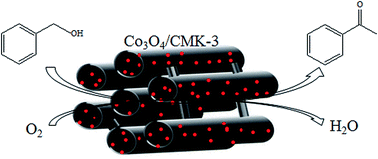
Nano cobalt oxide particles supported on ordered mesoporous carbon CMK-3 (CMK: carbon material from Korea) were prepared by a hydrothermal synthesis method. The catalysts were characterized by various characterization methods such as XRD, FT-IR, TEM, FESEM, N2 adsorption and desorption, XPS, Raman and ICP-AES, which indicated that the size of the cobalt oxide nanoparticles was estimated to be ∼2 nm and that they were uniformly dispersed on CMK-3. The approach obtained smaller and narrow distributed cobalt oxide nanoparticles which was the key to complete the reaction with 82.1% conversion and 97.7% benzaldehyde selectivity within 6 h. The average TOF of Co3O4/CMK-3 can reach as high as 25.4 h−1 in the initial two hours, which was far higher than that of the unsupported nano Co3O4 (less than 1.0 h−1) and so far reported cobalt-based catalysts (e.g. 1.34 h−1 for Co3O4/RGON). In addition, the catalytic activity of Co3O4/CMK-3 was not obviously deteriorated after 4 runs.

1. Introduction

Selective oxidation of benzyl alcohol to the corresponding aldehyde is a promising and important organic reaction because its product is used in many fields, e.g. drugs, the agrochemical industry, perfumery, and dyestuffs, etc.1 The traditional industrial method to synthesize benzaldehyde was hydrolysis of benzyl chloride2 or vapor/liquid-phase oxidation of toluene.3 These methods not only need a long period and but also reach low efficiency. In addition, heavy metals4 or peracetic acid5 are frequently applied to the process of oxidation that are increasingly threatening the environment. In contrast with these traditional routes, direct oxidation of benzyl alcohol to benzyl aldehyde with oxygen is a sustainable protocol. Such transformation with molecular oxygen as the terminal oxidant and water as the sole by-product is highly desired for improving reaction atom efficiency.6

Up to now, much effort has been made in the heterogeneous systems based on noble metals including Pt7, Pd,8 Au,9 and Ru.10 Most of them have good catalytic performances. However, these catalysts not only have high cost but also need the addition of non-green alkaline promoters (NaOH11 or K2CO3[thin space (1/6-em)]12) in the reaction system to control the selectivity. Therefore, it is urgent to design and develop new catalysts to resolve these problems. Alternatively, low-cost transition metals (Fe,13 Cu,14 Mn,15 etc.) have been used as catalysts for the oxidation of alcohols without promoters in recent years. For example, Geng16 et al. found that the catalyst of iron oxide supported on CMK-3 treated with HNO3 was active in the selective oxidation of benzyl alcohol with oxygen. It exhibited 72% conversation of benzyl alcohol with nearly 100% benzaldehyde selectivity after 8 h. Meanwhile, cobalt-based catalysts have shown considerable performance in catalysis such as in alcohol oxidation reactions17 and other oxidation reduction reactions.18,19 Zhu and co-workers20 reported that Co3O4/AC was a catalyst for the oxidation of alcohols. Recently, Xiao’s group21 reported a one-step synthesis of a sandwich N-doped graphene/Co3O4 hybrid catalyst which possessed good conversion for alcohols and olefins. The non-noble metal provides a new pattern for heterogeneous catalysis. However, although most of the catalysts could obtain a high conversion for the selective oxidation of benzyl alcohol, the TOF of the total metal sites is still at a low level state due to the poor utility of the active sites. Therefore, the design of high efficiency heterogeneous catalysts for the oxidation of benzyl alcohol by oxygen is still a great challenge.

Carbonaceous materials exhibit high specific surface areas, large adsorption capacities, and high chemical stability.22,23 The ordered mesoporous material CMK-3 is a very popular material in the catalysis field since it can provide large surface areas for the immobilization of metal active sites.24 Nanomaterials are widely used in various fields, especially for catalysis. The catalyst preparation parameters influence the morphology eventually affecting the catalytic activity. In this study, we attempt to prepare a novel and high efficiency catalyst, nano Co3O4/CMK-3, by a simple hydrothermal reaction, which was tested to show excellent catalytic performance in the aerobic oxidation of benzyl alcohol.

2. Experimental

2.1 Materials

All chemicals used in the experiment were of analytical grade, and were used without further purification. Pluronic P123 (EO20PO70EO20, Aldrich), tetraethyl orthosilicate (Si(OC2H5)4, 99%), HCl, H2SO4, sucrose, benzyl alcohol, NH3·H2O (28 wt%), Co(NO3)2·6H2O and all organic solvents were of AR grade.

2.2 Catalyst preparation

Ordered mesoporous silica material SBA-15 (SBA: santa barbara amorphous) was prepared using the triblock copolymer, EO20–PO70–EO20 (P123), as the surfactant and tetraethyl orthosilicate (TEOS) as the silica source, following the synthesis procedure reported by Zhao et al.25 Typically, 4.68 mL of TEOS was added to 60 mL of 2 M HCl containing 2 g of P123 at 35 °C. The mixture was stirred with magnetic stirring until P123 was completely dissolved. The mixture was placed in an oven at 35 °C for 24 h, and subsequently at 100 °C for 3 d. The product was filtered, dried at 100 °C for 12 h, and calcined at 550 °C for 6 h.

The ordered mesoporous carbon material CMK-3 was prepared with SBA-15 as a hard template and sucrose as the carbon source.24 Typically, 1.0 g of SBA-15 silica was added to a solution containing 1.25 g of sucrose, 0.14 g of sulphuric acid and 5.0 g of distilled water. The mixture was kept in an oven at 80 °C for 6 h and then the temperature was increased to 160 °C, and maintained at this temperature for another 6 h. The heating procedure was repeated after the addition of the carbon precursor (0.8 g of sucrose, 0.09 g of H2SO4 and 5.0 g of H2O), aiming to completely infiltrate the internal pores of SBA-15 silica. The carbon–silica composite was obtained after pyrolysis under argon flow at 900 °C for 6 h and successive washing in 10 wt% hydrofluoric acid aqueous solution to remove the silica template.

The Co3O4/CMK-3 catalyst was prepared through a simple one-pot hydrothermal reaction in a solution of NH3.21 Before being added to the solution, CMK-3 supports were treated in a 4 M HNO3 solution at 60 °C for 6 h (denoted as H-CMK-3). Then, H-CMK-3 (125 mg) was dispersed in ethanol (EtOH) (189 mL) and pretreated with ultrasonication for 2 h. Subsequently, 13 mg of Co(NO3)2·6H2O in aqueous solution (0.2 M) was added to the above suspension, followed by the addition of 0.093 mL NH3·H2O (28 wt%) and 0.13 mL of water at room temperature. The reaction mixture was kept at 80 °C with stirring for 10 h. Then, it was transferred to a 500 mL autoclave with a Teflon inner layer for a hydrothermal reaction at 150 °C for 3 h. The hybrid, labelled as 1.3-Co3O4/CMK-3 (1.3 wt% Co, measured by ICP-AES), was then filtered, washed, and finally dried overnight. Bare Co3O4 was made through the same steps as 1.3-Co3O4/CMK-3 without adding CMK-3 in the first step. In addition, we also prepared different contents of nano cobalt oxide (2.4 wt% Co, 3.3 wt% Co, and 4.0 wt% Co, measured by ICP-AES) supported on CMK-3 to compare their catalytic performance for the oxidation of benzyl alcohol. These catalysts were marked as 2.4-Co3O4/CMK-3, 3.3-Co3O4/CMK-3, and 4.0-Co3O4/CMK-3, respectively.

2.3 Characterization

X-ray diffraction (XRD) was carried out on a RIGAKU D/MAX2550/PC diffractometer at 40 kV and 100 mA with Cu Kα radiation (λ = 1.5406 Å) in the 2θ range of 10 to 70°. N2 adsorption–desorption isotherms were measured with a Micromeritics ASAP 2020 system at liquid N2 temperature. Before measurements, the sample was out-gassed at 130 °C for 6 h. The BET surface area was calculated using the Brunauer–Emmett–Teller (BET) method. Transmission electron microscopy (TEM) images were observed by an Hitachi HT7700. Field emission scanning electron microscopy (FESEM) images were observed by an Hitachi S-5500. The infrared spectra were recorded in KBr disks using a UICOLET impact 410 spectrometer in the range 400–4000 cm−1. X-ray photoelectron spectroscopy (XPS) was measured on an ESCALAB 250 X-ray electron spectrometer using Al Kα radiation. The metal content was estimated by inductively coupled plasma atomic emission spectroscopy (ICP-AES) analysis conducted on a PerkinElmer emission spectrometer. Raman spectra were collected from 100 to 2000 cm−1 on a Renishaw 2000 Confocal Raman Microprobe (Renishaw Instruments, England) using a 532 nm argon ion laser.

2.4 Catalytic reaction evaluation

In a typical reaction, a varying amount of the substrate (benzyl alcohol), a certain amount of catalyst (50 mg) and 10 mL of solvent were added into a flask, followed by bubbling O2 at a flow rate of 20 mL min−1 under magnetic stirring (500 rpm). After the reaction, the solid catalyst was separated by being filtered off and the liquid phase was analysed by gas chromatography with a Shimadzu GC-8A (Japan) instrument equipped using an HP-5 capillary column and FID detector.

3. Results and discussion

3.1 Characterization of catalysts

As shown in Fig. 1, the low-angle XRD pattern of CMK-3 exhibits an intense diffraction peak (100) and two weak peaks (110) and (200), which demonstrates that the sample has a two-dimensional hexagonal mesoporous structure.26 It is remarkable that CMK-3 still holds the hexagonal mesoporous structure even after supporting a high cobalt oxide content (4.0 wt% Co). Compared with the CMK-3 support, all catalysts show a peak of (100) at 2θ = 1.0°, and the intensity of the XRD peaks are weaker than that of CMK-3, while the (110) and (200) peaks are hardly seen, which may be due to the destruction of the pores during the process of hydrothermal synthesis or the introduction of cobalt oxide into the mesopores.
image file: c5ra17118k-f1.tif
Fig. 1 Low-angle XRD patterns of (a) CMK-3, (b) 1.3-Co3O4/CMK-3, (c) 2.4-Co3O4/CMK-3, (d) 3.3-Co3O4/CMK-3, and (e) 4.0-Co3O4/CMK-3.

Fig. 2 shows the wide-angle XRD patterns of CMK-3, the catalysts with a different cobalt content and the bare nano Co3O4. CMK-3 (Fig. 2a) shows two broad peaks at 24.5° and 44° corresponding to (002) and (100), representing the graphite structure.27 The two broad diffraction peaks are also observed in the patterns of the other different cobalt-containing catalysts (Fig. 2b–e), which suggests that the structure of the mesoporous carbon is well kept after supporting cobalt oxide. In addition, the peaks at 2θ = 37°, 44° and 63° are detected, which are attributed to (311), (400), (511) of Co3O4 with a face-centered cubic structure (JCPDS no. 421467).21 Compared with the pure nano Co3O4 (Fig. 2B), it fails to show the characteristics of the cobalt oxide nanoparticles with the low content (1.3–2.4 wt%), demonstrating that the cobalt oxide particles are too small to be detected by XRD or the high dispersion of the cobalt oxide nanoparticles. With the cobalt content increasing, the intensity of the peaks increases, which indicates that larger cobalt oxide particles are present as the cobalt content increases. It could be confirmed by the following TEM characterization.


image file: c5ra17118k-f2.tif
Fig. 2 The wide-angle XRD patterns of (A) (a) CMK-3, (b) 1.3-Co3O4/CMK-3, (c) 2.4-Co3O4/CMK-3, (d) 3.3-Co3O4/CMK-3, and (e) 4.0-Co3O4/CMK-3, and (B) nano Co3O4.

FT-IR is used to detect the surface structure of the materials. As shown in Fig. 3a, the pure support CMK-3 exhibits a broad adsorption band at 3420 cm−1 corresponding to the O–H stretching vibration.28 Meanwhile, the bands at 1729 cm−1 and 1595 cm−1 are assigned to C[double bond, length as m-dash]O stretching vibrations of non-aromatic carboxyl groups and aromatic ring stretching coupled to highly conjugated keto groups, respectively. Moreover, a broad band centered at around 1236 cm−1 can be ascribed to the C–O–C vibration. Furthermore, some weak desorption bands appear at 2983–2874 cm−1, which can be attributed to the stretching of C–H bonds.29 The spectrum of 1.3-Co3O4/CMK-3 (Fig. 3b) is very similar to that of CMK-3 except that the intensity of the C[double bond, length as m-dash]O bond peak at 1729 cm−1 decreases. Moreover, 2.4-Co3O4/CMK-3, 3.3-Co3O4/CMK-3 and 4.0-Co3O4/CMK-3 (Fig. 3c–e) exhibit two additional bands at 667 and 580 cm−1 which are assigned to the Co–O vibrations in the cobalt oxide lattice.30 It is interesting that the strength of the two peaks increases with the increase of the cobalt loading.


image file: c5ra17118k-f3.tif
Fig. 3 FT-IR spectra of (a) CMK-3, (b) 1.3-Co3O4/CMK-3, (c) 2.4-Co3O4/CMK-3, (d) 3.3-Co3O4/CMK-3, and (e) 4.0-Co3O4/CMK-3.

The morphology and structure of all the samples are further characterized by transmission electron microscopy (TEM). From Fig. 4a, CMK-3 exhibits ordered mesopores parallel to each other, which is in agreement with the result of low-angle XRD. When the cobalt loading is low (1.3–2.4 wt%), the cobalt oxide nanoparticles are highly dispersed in the channel of CMK-3 or on the surface of CMK-3, and the size of the cobalt oxide nanoparticles is ca. 2 nm. However, when the cobalt loading increases to 3.3 wt% or 4.0 wt% (Fig. 4d and e), the particle size of the cobalt oxide is about 5 nm, which is still less than that of the pure Co3O4 with an average particle size of ca. 10 nm. Field emission scanning electron microscope technology (FESEM) technology is used to further investigate the size of the cobalt oxide nanoparticles. From Fig. 4g, the size of the cobalt oxide nanoparticles is about 2 nm, which is coincident with the result of TEM. Moreover, some aggregation of the cobalt oxide nanoparticles is also found from Fig. 4g.


image file: c5ra17118k-f4.tif
Fig. 4 TEM images of (a) CMK-3, (b) 1.3-Co3O4/CMK-3, (c) 2.4-Co3O4/CMK-3, (d) 3.3-Co3O4/CMK-3, (e) 4.0-Co3O4/CMK-3, and (f) nano Co3O4, and (g) FESEM image of 1.3-Co3O4/CMK-3. The circles and squares in the figures represent the single cobalt oxide nanoparticles and the aggregation of the cobalt oxide nanoparticles, respectively.

From Fig. 5, the N2 adsorption–desorption isotherms show that all samples possess a type IV curve according to the IUPAC classification, indicating the characterization of the ordered mesoporous material. The isotherms of all the cobalt-based catalysts are similar to that of CMK-3, suggesting that the mesoporous structure is kept well. The sharp rise at a relative pressure (P/P0) of about 0.4 demonstrates the existence of mesopores with a narrow pore size distribution.16 The structural parameters of CMK-3 and the cobalt-based samples are listed in Table 1. It is remarkable that the specific surface areas of all the Co3O4/CMK-3 catalysts (1480, 1235, 1190 and 1168 m2 g−1) are lower than that of CMK-3 (1506 m2 g−1) and the BET specific surface area decreases gradually with the increasing cobalt loading. In the meantime, the pore diameter also decreases, which suggested that cobalt oxide has been successfully loaded into CMK-3.


image file: c5ra17118k-f5.tif
Fig. 5 N2 adsorption–desorption isotherms of (a) CMK-3, (b) 1.3-Co3O4/CMK-3, (c) 2.4-Co3O4/CMK-3, (d) 3.3-Co3O4/CMK-3, and (e) 4.0-Co3O4/CMK-3 (inset: pore size distribution).
Table 1 The BET parameters of the samples
Sample SBET (m2 g−1) Pore size (nm)
CMK-3 1506 3.90
1.3-Co3O4/CMK-3 1480 3.72
2.4-Co3O4/CMK-3 1235 3.67
3.3-Co3O4/CMK-3 1190 3.50
4.0-Co3O4/CMK-3 1168 3.70


XPS measurements are further characterized to demonstrate the oxidation state of cobalt in the mesoporous carbon supported catalyst. Fig. 6a shows the peak of Co 2p3/2 located at ∼781 eV and that of Co 2p1/2 located at ∼796 eV. In addition, the energy between the Co 2p3/2 peak and the Co 2p1/2 peak is approximately 15 eV.31 The XPS spectrum of the Co 2p peak is deconvoluted to six peaks. The main four peaks are located at 780.6 eV, 782.5 eV, 796.4 eV and 798.0 eV, which are assigned to CoIII3/2, CoII3/2, CoIII1/2 and CoII1/2.32 The peaks at 787 eV and 803 eV are Co2+ shake-up satellite peaks, which are coincident with Co3O4.33,34 After deconvolution, the O 1s peak (Fig. 6b) is split into four peaks.35 The first peak is located at 531.2 eV, which is due to the surface lattice oxygen in the Co3O4 crystal.36 The other three peaks situated at 532.0 eV, 532.7 eV, and 533.7 eV belong to adsorbed oxygen, adsorbed H2O and oxygenic groups,31,32 respectively.


image file: c5ra17118k-f6.tif
Fig. 6 XPS spectra of (a) Co 2p, and (b) O 1s in 1.3-Co3O4/CMK-3.

Raman spectroscopy is a frequently used technique to study the properties of carbon materials. Fig. 7A displays the Raman spectra of CMK-3 and a series of different contents of cobalt oxide supported catalysts. All the samples possess two main peaks at 1335 cm−1 and 1590 cm−1. The peak around 1335 cm−1 (D band) is attributed to the vibrations of sp3 carbon atoms of the disordered graphite structure in CMK-3, while the peak near 1590 cm−1 (G band) is assigned to the E2g stretching mode of graphite and reflects the structural intensity of the sp2 carbon atoms in CMK-3. The ratios of ID/IG of the samples (Fig. 7A(a–e)) are 2.0, 2.2, 2.1, 2.2, and 2.2, respectively. Compared with that of CMK-3, the value of ID/IG for the Co3O4/CMK-3 catalysts slightly increases which suggests the increase of defects after the hydrothermal reaction. As shown in Fig. 7B, the weak peaks at 189, 471, 512, 608, and 677 cm−1 are detected in the catalysts of 2.4-Co3O4/CMK-3, 3.3-Co3O4/CMK-3, 4.0-Co3O4/CMK-3 and nano Co3O4, represented by the five Raman-active modes (A1g, Eg and 3F2g), which are coincident with Co3O4 (ref. 37). What is noted is that the A1g peak position of nano Co3O4 is higher than that of a series of cobalt-based catalysts because of the combined effects of strain and phonon confinement, and a similar phenomenon has been reported previously in ref. 21. In addition, compared with pure nano Co3O4, the peak position of these supported catalysts shifts to a low wavenumber, suggesting that there may be some interaction between Co3O4 and CMK-3. Moreover, 1.3-Co3O4/CMK-3 doesn’t show the peaks since the cobalt oxide nanoparticles are very small and are highly dispersed on the CMK-3, in good agreement with the above TEM and HRSEM results.


image file: c5ra17118k-f7.tif
Fig. 7 Raman spectra of (A) (a) CMK-3, (b) 1.3-Co3O4/CMK-3, (c) 2.4-Co3O4/CMK-3, (d) 3.3-Co3O4/CMK-3, (e) 4.0-Co3O4/CMK-3 and (B) (b) 1.3-Co3O4/CMK-3, (c) 2.4-Co3O4/CMK-3, (d) 3.3-Co3O4/CMK-3, (e) 4.0-Co3O4/CMK-3, and (f) nano Co3O4.

3.2 Catalytic oxidation of benzyl alcohol

Selective oxidation of benzyl alcohol by oxygen is carried out as a model reaction for the as-prepared catalyst. Acetonitrile, toluene and DMF are the common solvents for many oxidation reactions. Toluene is a non-polar solvent, while acetonitrile and DMF are polar solvents. From Table 2, toluene and acetonitrile are not the desired solvents, in which just 2.4% and 12.5% conversion are obtained after 8 h in the benzyl alcohol oxidation reaction. However, when DMF is used as the solvent for the reaction, the conversation of benzyl alcohol could reach as high as 83.5% after 8 h. The influence of the reaction temperature on the catalytic reaction is also investigated as listed in Table 2. The conversion decreased to 75.5% with the decrease in the temperature to 100 °C. In the meantime, the conversion slightly increases when the reaction temperature rises to 120 °C, while the selectivity to benzaldehyde obviously decreases. Considering the above information, the optimal reaction temperature should be 110 °C. Additionally, the effect of reaction time on the catalytic behavior has also been studied. The average TOF value of benzyl alcohol has reached 25.4 h−1 in the initial 2 h. On prolonging the reaction time, the conversion of benzyl alcohol achieves a superior value at 6 h and the average TOF value decreases to 12.7 h−1. With further prolonging of the reaction time, the selectivity to benzaldehyde would decrease.
Table 2 Catalytic performance of oxidation of benzyl alcohola
Catalyst Solvent Time (h) Temperature (°C) Conversion (%) Co contentb (wt%) TOFc (h−1) Selectivity (%)
Benzaldehyde Benzoic acid
a Reaction conditions: 1.3-Co3O4/CMK-3 (50 mg), benzyl alcohol (1 mmol), solvent (10 mL), and flow rate of O2 (20 mL min−1).b The metal content was tested by ICP-AES analysis.c TOF = turnover frequency, moles of substrate converted per mole metal ion per hour.
1.3-Co3O4/CMK-3 Toluene 8 110 12.5 1.3 1.4 98.5 1.5
1.3-Co3O4/CMK-3 Acetonitrile 8 110 2.5 1.3 0.3 >99
1.3-Co3O4/CMK-3 DMF 2 110 55.3 1.3 25.4 98.8 1.3
1.3-Co3O4/CMK-3 DMF 4 110 67.7 1.3 15.6 98.3 1.7
1.3-Co3O4/CMK-3 DMF 6 110 82.1 1.3 12.7 97.7 2.3
1.3-Co3O4/CMK-3 DMF 8 110 83.5 1.3 9.6 94.4 5.6
1.3-Co3O4/CMK-3 DMF 6 100 75.5 1.3 11.6 98.0 2.0
1.3-Co3O4/CMK-3 DMF 6 120 87.7 1.3 13.4 83.5 16.5
1.3-Co3O4/CMK-32nd DMF 6 110 83.5 1.3 12.8 97.0 3.0
1.3-Co3O4/CMK-33rd DMF 6 110 81.6 1.3 12.5 97.4 2.6
1.3-Co3O4/CMK-34th DMF 6 110 80.2 1.3 12.3 98.0 2.0


Under the optimized conditions, the catalytic performance of the pure CMK-3, Co3O4 and different cobalt content catalysts was evaluated. As seen from Table 3, within the series of catalysts prepared by the hydrothermal method, the order of catalytic activity decreases as the cobalt content increases, namely, 1.3-Co3O4/CMK-3 (83.5%) > 2.4-Co3O4/CMK-3 (80.2%) > 3.3-Co3O4/CMK-3 (73.3%) > 4.0-Co3O4/CMK-3 (67.7%). The catalytic performance of 2.4-Co3O4/CMK-3 is close to that of 1.3-Co3O4/CMK-3, while 4.0-Co3O4/CMK-3 is evidently less active than 1.3-Co3O4/CMK-3, which is possibly caused by the less active sites of the larger size of cobalt oxide. A similar phenomenon has been reported for supported (SBA-15) cobalt oxide catalysts for the oxidation of cyclohexanol.38 Nano Co3O4 exhibits a relatively lower conversion (79.5%) and selectivity to benzaldehyde (80.3%) and a lower TOF (0.4 h−1) after a 6 h reaction. It can be found that the TOF of 1.3-Co3O4/CMK-3 exceeds that of Co3O4 by more than 31.7 times. The catalytic activity of 1.3-Co3O4/CMK-3 for selective oxidation of benzyl alcohol is compared with the previously reported Co-containing catalysts. It is obviously seen that 1.3-Co3O4/CMK-3 has a higher turnover frequency than those catalysts. For example, the TOF of 1.3-Co3O4/CMK-3 is 42.3 times higher than that of Co3O4/AC and 254 times higher than that of Co3O4/CTF.20 Co3O4/RGON21 was also examined for benzyl alcohol catalytic performance, while its TOF value just reaches 1.34 h−1. Although the homogeneous catalyst of Co(TPP)Cl possesses a high conversion of benzyl alcohol, its selectivity to benzaldehyde is just 42%.39 In the meantime, the selectivity to benzaldehyde is 20% when solid Co3O4 is used as the catalyst.40

Table 3 Catalytic performance of oxidation of benzyl alcohol of Co-containing catalysts
Catalysta Conversion (%) TOF (h−1) Selectivity (%) Reference
Benzaldehyde Benzoic acid
a Reaction conditions: a series of Co3O4/CMK-3 (50 mg) or nano Co3O4 (25 mg), benzyl alcohol (1 mmol), DMF (10 mL), temperature (110 °C) and flow rate of O2 (20 mL min−1).
No catalyst 2.0 >99 This study
Nano Co3O4 79.5 0.4 80.3 20.7 This study
CMK-3 5.0 >99 This study
1.3-Co3O4/CMK-3 82.1 12.7 97.7 2.3 This study
2.4-Co3O4/CMK-3 80.2 6.6 96.6 3.4 This study
3.3-Co3O4/CMK-3 73.3 4.4 97.0 3.0 This study
4.0-Co3O4/CMK-3 66.7 3.3 96.4 3.6 This study
Co3O4/AC 99 0.3 87.3 20
Co3O4/CTF 17.8 0.05 25.1 20
Co3O4/RGON 93.9 1.34 >99   21
Co(TPP)Cl 99 42 58 39
Solid Co3O4 100 0.19 20 80 40


The stability and reusability of the 1.3-Co3O4/CMK-3 catalyst is investigated. After a reaction run, the catalyst was collected by filtration, washed thoroughly with water and ethanol, dried under vacuum and reused for the next reaction. The reactions have been repeated for 4 runs (Table 2). It is found that the conversion and selectivity almost remain intact. The slight decrease in the conversion might be due to a little loss of catalyst by filtration and washing.

In order to assess the stability of 1.3-Co3O4/CMK-3 during the catalytic process, a leaching test was carried out, as shown in Fig. 8. The catalyst was filtered after the reaction for 2 h and the resulting clear solution was further stirred for another 4 h at 110 °C. The result shows that there is no obvious improvement in benzyl alcohol conversion after removal of the catalyst, which suggests that the catalyst is rather stable in the catalytic process and no metal leaching happens.


image file: c5ra17118k-f8.tif
Fig. 8 Leaching experiment of 1.3-Co3O4/CMK-3.

Based on the relevant literatures about the selective oxidation of alcohol,41,42 the surface of the carbon materials could activate oxygen and also regenerate to the original state during the course of the reactions (Scheme 1). Meanwhile, Co3O4 is a good material in the dehydrogenation reaction.43 During the reaction process, the mesoporous CMK-3 provides defects, which originated from thermal decomposition (or are due to the HNO3 solution), and the surface groups act as the adsorbed and activated sites for oxygen. Then benzyl alcohol is adsorbed on the highly distributed and small cobalt oxide nanoparticles and is transformed into benzaldehyde. The collaboration of CMK-3 with Co3O4 is the key to improve the catalytic activity.


image file: c5ra17118k-s1.tif
Scheme 1 The proposed catalytic mechanism of the oxidation of benzyl alcohol over Co3O4/CMK-3.

4. Conclusions

In summary, we have successfully synthesized a range of cobalt oxide nanoparticles supported on CMK-3 with different cobalt contents by a simple hydrothermal method, as characterized by XRD, TEM, FESEM, FT-IR, N2 adsorption–desorption, XPS, Raman and ICP-AES techniques. The results showed that very small Co3O4 nanoparticles (∼2 nm) had been formed inside the mesoporous CMK-3 or on the CMK-3 surface with a low cobalt concentration (1.3–2.4 wt%). The low cobalt content catalysts possessed a smaller cobalt oxide size and a better distribution on CMK-3 than that of the high content cobalt-containing catalysts. As a heterogeneous catalyst, 1.3-Co3O4/CMK-3 exhibited a more excellent catalytic activity (82.1% conversion and 97.7% selectivity to benzaldehyde) than that of other high content cobalt-containing catalysts in the aerobic oxidation of benzyl alcohol. The TOF of 1.3-Co3O4/CMK-3 was 31.8 times higher than that of nano Co3O4 (∼10 nm) in the selective oxidation of benzyl alcohol using DMF as the solvent.

Acknowledgements

This work was supported by the National Natural Science Foundation of China (21303069) and Jilin province (20150520013JH).

Notes and references

  1. D. I. Enache, J. K. Edwards, P. Landon, B. Solsona-Espriu, A. F. Carley, A. A. Herzing, M. Watanabe, C. J. Kiely, D. W. Knight and G. J. Hutchings, Science, 2006, 311, 362–365 CrossRef CAS PubMed.
  2. M. Prieto-Blanco, P. López-Mahía and D. Prada-Rodríguez, J. Chromatogr. Sci., 2009, 47, 121–126 CAS.
  3. C.-C. Guo, Q. Liu, X.-T. Wang and H.-Y. Hu, Appl. Catal., A, 2005, 282, 55–59 CrossRef CAS.
  4. G. Wu, X. Wang, J. Li, N. Zhao, W. Wei and Y. Sun, Catal. Today, 2008, 131, 402–407 CrossRef CAS.
  5. S.-I. Murahashi, N. Komiya, Y. Oda, T. Kuwabara and T. Naota, J. Org. Chem., 2000, 65, 9186–9193 CrossRef CAS PubMed.
  6. V. R. Choudhary, A. Dhar, P. Jana, R. Jha and B. S. Uphade, Green Chem., 2005, 7, 768–770 RSC.
  7. M. Besson and P. Gallezot, Catal. Today, 2000, 57, 127–141 CrossRef CAS.
  8. C. Keresszegi, D. Ferri, T. Mallat and A. Baiker, J. Phys. Chem. B, 2005, 109, 958–967 CrossRef CAS PubMed.
  9. J. Zhu, J. L. Figueiredo and J. L. Faria, Catal. Commun., 2008, 9, 2395–2397 CrossRef CAS.
  10. Z. Opre, J. D. Grunwaldt, M. Maciejewski, D. Ferri, T. Mallat and A. Baiker, J. Catal., 2005, 230, 406–419 CrossRef CAS.
  11. J. Zhu, S. A. Carabineiro, D. Shan, J. L. Faria, Y. Zhu and J. L. Figueiredo, J. Catal., 2010, 274, 207–214 CrossRef CAS.
  12. M. Mahyari and A. Shaabani, Appl. Catal., A, 2014, 469, 524–531 CrossRef CAS.
  13. F. Shi, M. K. Tse, M.-M. Pohl, J. Radnik, A. Brückner, S. Zhang and M. Beller, J. Mol. Catal. A: Chem., 2008, 292, 28–35 CrossRef CAS.
  14. S. Velu, L. Wang, M. Okazaki, K. Suzuki and S. Tomura, Microporous Mesoporous Mater., 2002, 54, 113–126 CrossRef CAS.
  15. V. Choudhary, D. Dumbre, V. Narkhede and S. Jana, Catal. Lett., 2003, 86, 229–233 CrossRef CAS.
  16. L. Geng, X. Zhang, W. Zhang, M. Jia and G. Liu, Chem. Commun., 2014, 50, 2965–2967 RSC.
  17. Y. Liang, Y. Li, H. Wang, J. Zhou, J. Wang, T. Regier and H. Dai, Nat. Mater., 2011, 10, 780–786 CrossRef CAS PubMed.
  18. J. Deng, P. Ren, D. Deng, L. Yu, F. Yang and X. Bao, Energy Environ. Sci., 2014, 7, 1919–1923 CAS.
  19. J. Wang, D. Gao, G. Wang, S. Miao, H. Wu, J. Li and X. Bao, J. Mater. Chem. A, 2014, 2, 20067–20074 CAS.
  20. J. Zhu, K. Kailasam, A. Fischer and A. Thomas, ACS Catal., 2011, 1, 342–347 CrossRef CAS.
  21. R. Nie, J. Shi, W. Du, W. Ning, Z. Hou and F.-S. Xiao, J. Mater. Chem. A, 2013, 1, 9037–9045 CAS.
  22. Y. Gao, D. Ma, C. Wang, J. Guan and X. Bao, Chem. Commun., 2011, 47, 2432–2434 RSC.
  23. R. Ryoo, S. H. Joo, M. Kruk and M. Jaroniec, Adv. Mater., 2001, 13, 677–681 CrossRef CAS.
  24. S. Jun, S. H. Joo, R. Ryoo, M. Kruk, M. Jaroniec, Z. Liu, T. Ohsuna and O. Terasaki, J. Am. Chem. Soc., 2000, 122, 10712–10713 CrossRef CAS.
  25. D. Zhao, Q. Huo, J. Feng, B. F. Chmelka and G. D. Stucky, J. Am. Chem. Soc., 1998, 120, 6024–6036 CrossRef CAS.
  26. L. Solovyov, A. Shmakov, V. Zaikovskii, S. Joo and R. Ryoo, Carbon, 2002, 40, 2477–2481 CrossRef CAS.
  27. H. Zhou, S. Zhu, M. Hibino, I. Honma and M. Ichihara, Adv. Mater., 2003, 15, 2107–2111 CrossRef CAS.
  28. M. Anbia and R. Dehghan, J. Environ. Sci., 2014, 26, 1541–1548 CrossRef CAS PubMed.
  29. J. He, K. Ma, J. Jin, Z. Dong, J. Wang and R. Li, Microporous Mesoporous Mater., 2009, 121, 173–177 CrossRef CAS.
  30. H. Xu, J. X. Wu, Y. Chen, W. J. Jing and B. Q. Zhang, Ionics, 2015, 21, 1495–1500 CrossRef CAS.
  31. J. Li, G. Lu, G. Wu, D. Mao, Y. Guo, Y. Wang and Y. Guo, Catal. Sci. Technol., 2014, 4, 1268 CAS.
  32. L. Fu, Z. Liu, Y. Liu, B. Han, P. Hu, L. Cao and D. Zhu, Adv. Mater., 2005, 17, 217–221 CrossRef CAS.
  33. X. Wang, X. Chen, L. Gao, H. Zheng, Z. Zhang and Y. Qian, J. Phys. Chem. B, 2004, 108, 16401–16404 CrossRef CAS.
  34. M. Long, W. Cai, J. Cai, B. Zhou, X. Chai and Y. Wu, J. Phys. Chem. B, 2006, 110, 20211–20216 CrossRef CAS PubMed.
  35. S. Xiong, C. Yuan, X. Zhang, B. Xi and Y. Qian, Chem.–Eur. J., 2009, 15, 5320–5326 CrossRef CAS PubMed.
  36. B. Varghese, C. Teo, Y. Zhu, M. V. Reddy, B. V. Chowdari, A. T. S. Wee, V. Tan, C. T. Lim and C. H. Sow, Adv. Funct. Mater., 2007, 17, 1932–1939 CrossRef CAS.
  37. J. Jiang and L. Li, Mater. Lett., 2007, 61, 4894–4896 CrossRef CAS.
  38. J. Taghavimoghaddam, G. P. Knowles and A. L. Chaffee, J. Mol. Catal. A: Chem., 2012, 358, 79–88 CrossRef CAS.
  39. H.-B. Ji, Q.-L. Yuan, X.-T. Zhou, L.-X. Pei and L.-F. Wang, Bioorg. Med. Chem. Lett., 2007, 17, 6364–6368 CrossRef CAS PubMed.
  40. M. Ilyas and M. Saeed, Int. J. Chem. React. Eng., 2010, 8, A77 Search PubMed.
  41. J. Zhu, J. L. Faria, J. L. Figueiredo and A. Thomas, Chem.–Eur. J., 2011, 17, 7112–7117 CrossRef CAS PubMed.
  42. A. Abad, A. Corma and H. García, Chem.–Eur. J., 2008, 14, 212–222 CrossRef CAS PubMed.
  43. C. Ma, D. Wang, W. Xue, B. Dou, H. Wang and Z. Hao, Environ. Sci. Technol., 2011, 45, 3628–3634 CrossRef CAS PubMed.

This journal is © The Royal Society of Chemistry 2015
Click here to see how this site uses Cookies. View our privacy policy here.