DOI:
10.1039/C5RA17011G
(Communication)
RSC Adv., 2015,
5, 96205-96212
NiO hierarchical hollow nanofibers as high-performance supercapacitor electrodes
Received
22nd August 2015
, Accepted 2nd November 2015
First published on 5th November 2015
Abstract
NiO hierarchical hollow nanofibers (hhNFs) consisting of nanosized NiO particles have been synthesized with electrospun poly(amic acid) nanofiber templates through a simple ion-exchange process and subsequent thermal annealing. By virtue of the hierarchical porous fiber-like morphology, as confirmed by the microstructure analysis, the hhNFs possess dense ion transportation channels, interconnected electron diffusion paths, as well as good structure stability, which are conducive to electrochemical capacitor (i.e., supercapacitor) applications. Electrochemical measurements have validated the excellent electrochemical performance of as-prepared hhNFs, including a high specific capacitance of 700 F g−1 at a discharge current of 2 A g−1, a good cyclic stability (96% capacity retention after 5000 cycles at 5 A g−1), and a remarkable rate capability (80% capacitance retention with the current density increasing from 1 to 5 A g−1). These results along with the simplicity and high efficiency of the material preparation demonstrate that NiO hhNFs are promising electrode materials for high-performance supercapacitor applications. The method presented in this work could be extended to the fabrication of other hierarchical fiber-like nanomaterials for applications including electrochemical capacitors and secondary batteries.
1. Introduction
Efficient utilization of sustainable and renewable energy sources such as ocean tidal, wind and solar relies on robust energy storage technologies due to their intermittent nature. On the other hand, clean-energy civil transportations and mobile electronics demand safe and compact power supplies.1 Electrochemical capacitors (ECs),2–4 also known as supercapacitors or ultracapacitors, have recently been identified as promising energy storage system candidates to meet these urgent needs because of their combination of high energy and power densities and outstanding reliability.5 While batteries are still dominating the market of energy storage technologies, they have intrinsically low power densities and unsatisfactory service lifetime and safety. ECs feature fast energy intake and delivery (tens to hundreds of times those of lithium ion batteries) and almost unlimited cyclability, and are therefore adopted in power electronics to meet peak load requirements and as reliable back-up power supplies.2,4
One of the major challenges so far for ECs lies in low energy densities that are only about one tenth those of batteries.1,2,4,6 As such, the search for high capacitance materials as EC electrodes has been a hot topic in the past years. On the basis of charge storage mechanisms, ECs can be divided into two primary categories, i.e., electrical double-layer capacitors (EDLCs) and pseudocapacitors. EDLCs store charges electrostatically through physical charge adsorption at the electrode/electrolyte interface using electrically conductive electrodes with large surface areas.7–10 The specific capacitance of EDLCs is usually no more than 300 F g−1. Pseudocapacitors employ electrochemically active electrodes that store charges upon faradaic reactions occurring both on the surface and in the bulk near the surface of the electrodes, and thereby possess much higher specific capacitances compared to those of EDLCs.2–4,11–13,16,19 Metal oxides are recognized as promising electrode materials for pseudocapacitor applications due to their high specific capacitance and good electrochemical stability. Up to date, the materials investigated include RuO2·xH2O,14–16 MnO2,17–19 CoOx,20,21 V2O5,22,23 NiO24–32 etc., among which NiO is of particular interest because of its high theoretical specific capacitance (2584 F g−1 within 0.5 V),33 low cost and non-toxicity.4
In pseudocapacitors, the structure of electrode materials plays an important role in determining the electrolyte accessibility and electrode stability, and thus the device performance.4 To this end, extensive research efforts have been devoted to the control of structures of NiO electrode materials. Uniform NiO structures in a variety of forms, such as nanospheres,28,30 nanoflowers,25,27 quasi-tubular nanostructures,29 nanoflakes31 and nanowalls24,26 have been reported. Indeed, the performance has been greatly improved relative to that of the bulk materials. For instance, NiO nanoflowers derived from Ni(OH)2 nanostructures that were fabricated by a sol–gel method could deliver a specific capacitance of 381 F g−1 at a discharge current of 1 A g−1 and 252 F g−1 at 5 A g−1;27 NiO porous micro/nanospherical superstructures were obtained using β-Ni(OH)2 microspheres as the template precursor and exhibited ∼710 F g−1 specific capacitance at 1 A g−1;28 NiO quasi-tubular nanostructures fabricated by a hydrothermal process and subsequent thermal decomposition displayed a specific capacitance of 405 F g−1 at a current density of 0.5 A g−1;29 NiO hollow nanospheres were synthesized through a microwave-assisted solvothermal procedure. The materials showed excellent electrochemical properties with a specific capacitance of 585 F g−1 at 5 A g−1.30
In this contribution we report a new type of NiO pseudocapacitor electrode materials with a hollow nanofiber-like hierarchical structure consisting of ultra-fine NiO nanoparticles (termed as hierarchical hollow nanofibers (hhNFs) hereafter). The hhNFs were prepared via a facile yet efficient procedure involving electrospinning of a template poly(amic acid) (PAA) nanofiber and subsequent adsorption and annealing of metal ion precursors, i.e., the as-spun PAA nanofiber membranes were directly immersed into a Ni(NO3)2 solution, followed by subsequent thermal treatment to remove the polymer constituent and to allow the formation of NiO hhNFs. The prepared highly crystallized NiO hhNFs consist of integrated nanosized NiO particles and can provide abundant ion transportation channels and good electrochemical stability. As a result, the NiO hhNFs electrode exhibits a high specific capacitance (700 F g−1 at 2 A g−1), the excellent cyclic stability (96% capacitance retention after 5000 charge–discharge cycles at 5 A g−1), and good rate capability (80% capacitance retention with the current density increasing from 1 to 5 A g−1); these successfully demonstrate the viability of adopting NiO hhNFs as electrode materials in ECs.
2. Experimental
2.1 Materials
Pyromelliticdianhydride (PMDA), 4,4′-oxidianiline (ODA), N,N-dimethylformamide (DMF) and Ni(NO3)2 were obtained from China Medicine Co. All reactants were of analytical purity and used as received.
2.2 Preparation of PAA nanofiber membranes
The precursor of PAA was synthesized from PMDA and ODA with 1
:
1 molar ratio.34 The polycondensation performed in DMF was carried out in an ice bath at the temperature of 0–5 °C to yield the pristine PAA solution with a solid content of 15%. PAA nanofibers were electrospun from the PAA solution with a feeding rate of 1.2 mL h−1 through a stainless steel syringe pipette needle under a potential of 16 kV. The distance between the tip of the needle and the collector was 16 cm.
2.3 Synthesis of NiO hhNFs
The as-spun PAA fiber membrane was first immersed in 80 mL of oversaturated Ni(NO3)2 solution for 2 h to produce the PAA–Ni2+ nanofiber membrane. Afterwards, the membrane was rinsed with deionized water for several times to remove the residual Ni(NO3)2 solution. Then, the PAA–Ni2+ nanofiber membrane was dried at 120 °C for 12 h. Finally, the PAA–Ni2+ nanofiber membrane was annealed in a tube furnace at 600 °C for 2 h in air at a heating rate of 2 °C min−1 to obtain the NiO hhNFs.
2.4 General characterizations
Crystal structures of the hollow NiO nanofibers were characterized by powder X-ray diffraction (XRD) on a Bruker D8 Advance diffractometer using Cu Kα (λ = 1.5418 Å) radiation. TGA analysis was conducted by using an integrated thermal analyzer (STA 449F3) with a heating rate of 10 °C min−1 in air. Field-emission scanning electron microscopy (FESEM) images were obtained on a Zeiss Ultra Plus microscope. Transmission electron microscopy (TEM) images were taken on a JEM 2100F microscope. The surface area, pore size and pore size distribution were analyzed by Brunauer–Emmett–Teller (BET) nitrogen adsorption–desorption and Barrett–Joyner–Halenda (BJH) methods (Micromeritics. ASAP2020).
2.5 Electrochemical characterizations
Electrochemical studies on NiO hhNFs electrodes were carried out on a CHI 660E electrochemical working station (Shanghai Chenhua Instrument, Inc.). All electrochemical performances were measured in a conventional three-electrode system equipped with a platinum electrode and a saturated calomel electrode (SCE) as counter and reference electrodes, respectively. Working electrodes were prepared by mixing electroactive materials, acetylene black and poly(tetrafluoroethylene) in a mass ratio of 80
:
15
:
5 to obtain the slurry. Then the slurry was pressed onto the nickel foam current collector (1 cm2) and dried at 120 °C for 12 h. The mass loading for active materials is about 3.5 mg cm−2. The cyclic voltammetry (CV), charge–discharge tests, and electrochemical impedance spectroscopy (EIS) measurements were performed in 6 M KOH electrolyte solution without removal of oxygen from the solution. EIS measurements of all the samples were conducted in the frequency range from 100 kHz to 0.01 Hz with the AC voltage amplitude of 5 mV.
3. Results and discussion
3.1 Mechanistic understanding
Fig. 1a is the schematic diagram of the preparation of the NiO hhNFs. Electrospinning is a versatile and efficient technique to produce polymeric, ceramic, and composite nanofibers with large specific surface area and high porosity. PAA, a hydrophilic polymer, presents abundant functional groups (–COOH) that offer cationic exchangeable sites to incorporate various metal ions. Therefore the electrospun PAA nanofibers possess the ability to accommodate a good deal of Ni2+ on the surface through ion exchange with the precursor metal salt which, upon further thermal treatment, could be converted to metal oxides. Simultaneously, PAA, synthesized readily from PMDA and ODA,34 is transformed to polyimides (PI) via thermal imidization reaction as shown in Fig. 1b, which then decomposes with further increase of temperature.
 |
| | Fig. 1 (a) Schematic diagram of the preparation of the NiO hhNFs. (b) Chemical reactions taking place during the preparation. | |
3.2 Structure characterization
In order to determine the condition of the thermal treatment, thermogravimetric analysis (TGA) was performed on the as-prepared PAA–Ni2+ nanofibers. Fig. 2a shows the TGA curve of PAA–Ni2+ composite nanofibers within the temperature range of 35–600 °C. A weight loss of 5.9 wt% occurred before 157 °C, which was attributed to the residual solvents (water and DMF) and absorbed moisture. Further decrease in weight between 157 °C and 326 °C most probably resulted from the imidization process. Complete decomposition of the polymer materials was observed above 550 °C and hence, temperature of the thermal treatment was set to 600 °C to remove polymer moieties and derive the NiO hhNFs.
 |
| | Fig. 2 (a) TGA trace of PAA–Ni2+ composite nanofibers. (b) XRD pattern of hollow NiO nanofibers annealed at 600 °C for 2 h. | |
The crystallographic phases of the nanofibers calcined at 600 °C were determined by XRD as shown in Fig. 2b. The diffraction peaks at 37.26°, 43.30°, 62.88°, 75.42° and 79.44° can be assigned to (111), (200), (220), (331) and (222) planes of a cubic phase NiO, respectively, which implies that the thermal treatment at 600 °C yields well crystallized NiO. The results of TGA and XRD together confirmed that the template PAA nanofibers were removed and the anchored metal ions were converted to metal oxides upon the thermal treatment. It is thought that the well crystallized structure might be helpful to improving the material stability during electrochemical processes.35 The size of the formed particles can be calculated by using the Scherer equation:
D = 0.89λ/β cos θ |
where
D is the particle size,
λ is X-ray wavelength (0.15418),
θ is diffraction angle,
β is full width at half the maximum (FWHM). The crystal size of the NiO was determined to be about 20.61 nm, which was calculated from the spacing of (111) plane.
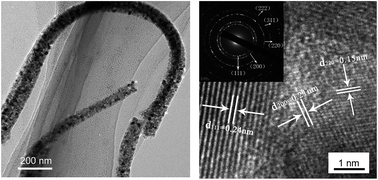
Morphology of the produced NiO materials, i.e., the NiO hhNFs, was investigated by SEM and TEM measurements (Fig. 3). SEM images of the as-spun PAA nanofibers and NiO hhNFs were shown in Fig. 3a and b, respectively. It is clear that the fiber structure was reserved in the yielded material after thermal treatment, whereas the average diameter of the nanofibers changed from ∼200 nm of the template PAA nanofibers to ∼80 nm of the NiO hhNFs, because of the shrinkage of PAA–Ni2+ nanofibers during the thermal treatment. In addition to the change in diameter, it is also interesting to note that, after thermal treatment, the nanofibers became rough on the surface and hollow inside, which was strikingly different from those of the as-spun nanofibers. The structure of these hollow nanofibers was further investigated by TEM (Fig. 3c–f). It is evident from Fig. 3c that the continuous nanofibers were comprised of nanosized particles. A higher magnification TEM image (Fig. 3d) revealed that these nanoparticles had a narrow size distribution ranging from 10 to 30 nm, and constituted a hierarchical porous hollow fiber-like structure. While the porous and hollow morphology would provide dense ion transportation channels, the one-dimensional nature favored the electron diffusion by offering interconnected pathways in the nanofiber entanglement. The high-resolution TEM (HR-TEM) images of the nanoparticles showing clearly the lattice fringes are displayed in Fig. 3e and f. The distance between adjacent lattice planes (d-spacing) were 0.24, 0.21 and 0.15 nm, corresponding to (111), (200) and (220) lattice planes of cubic phase NiO, respectively. In addition, selected-area electron diffraction (SAED) pattern (inset Fig. 3e) of the hollow NiO nanofibers could be indexed to (111), (200), (220), (311) and (222) crystal planes of the cubic NiO phase, which agrees well with the XRD result.
 |
| | Fig. 3 SEM images of (a) as-spun PAA nanofibers and (b) NiO hhNFs. (c and d) TEM images of NiO hhNFs with different magnifications. (e and f) HR-TEM images of the nanoparticles constituting NiO hhNFs. Inset (e), SAED pattern of the nanoparticles. | |
Fig. 4 shows the adsorption–desorption isotherm and pore size distribution for NiO hhNFs. The isotherm exhibit type IV characteristics with small hysteresis loop in a relative pressure range of 0.7–1.0. Nitrogen adsorption–desorption results indicate that NiO hhNFs have a high BET surface area of 117.1 m2 g−1 with a pore volume of 0.66 cm3 g−1. The pore size distribution (inset Fig. 4) calculated from desorption data indicates that NiO hhNFs have a bimodal size distribution at 2.4 and 22.3 nm due to the gap of nanoparticles and hollow nanofibers structure. It is reckoned that the unique structures will improve electrolyte permeability and possibility of efficient transport of ions and electrons in electrode, which leads to high electrochemical performance.
 |
| | Fig. 4 Adsorption and desorption isotherms for nitrogen of NiO hhNFs. The inset shows corresponding BJH pore size distribution curve calculated from desorption branch. | |
3.3 Electrochemical properties of NiO hhNFs
To assess the viability of adopting NiO hhNFs as supercapacitor electrode materials, we first investigated the electrochemical properties of the as-prepared electrodes incorporating NiO hhNFs by cyclic voltammetry (CV) measurements (Fig. 5a) at different scan rates (3–50 mV s−1). A pair of well-defined redox peaks was observed in the CV curves, indicating that the measured capacitance resulted from the faradaic reaction pseudocapacitance.36–39 The redox reactions can be expressed as follows:
 |
| | Fig. 5 Electrochemical performance of NiO hhNFs electrodes. (a) CV curves at different scan rates. (b) Galvanostatic charge–discharge curves at different current densities. (c) Variation in specific capacitance at different scan rates. (d) Specific capacitances at controlled current densities. (e) Cyclic performance at a current density of 5 A g−1. (f) The corresponding charge–discharge curves at different cycles. | |
The specific capacitance of NiO hhNFs electrode can be calculated according to the following equation:
where
Cm (F g
−1) is the specific capacitance,
m (g) is the mass of the active material,
v (V s
−1) is the scan rate,
i(
E) (A) is the current at each potential, and
E2 −
E1 (V) is the potential window. The value of
Cm was calculated to be 769 F g
−1 at a scan rate of 3 mV s
−1 (
Fig. 5c). Low scan rates facilitate diffusion of OH
−1 into NiO hhNFs, thereby resulting in higher specific capacitance. However, at a scan rate of 50 mV s
−1,
Cm was measured to be 285 F g
−1 because the ions movement is limited only to the surfaces of active material.
Fig. 5b shows the charge–discharge profiles of NiO electrodes between 0 and 0.4 V (vs. SCE) at different galvanostatic current densities (1–20 A g−1) in 6 M KOH solution. Obviously, the electrodes exhibited a typical pseudocapacitive behavior as suggested by the shape of the charge–discharge curves, which was in agreement with the CV results. The corresponding specific capacitance of the electrodes was calculated from the galvanostatic charge–discharge curves following the equation,
where
Cm (F g
−1) is the specific capacitance,
C (F) is the total capacitance,
I (A) is the discharge current, Δ
t (s) is the discharge time, Δ
V (V) represents the potential window, and
m (g) is the mass of the active material. The specific capacitance values recorded for NiO hhNFs electrode as a function of current density is shown in
Fig. 5d. Remarkably, it is found that the specific capacitance value of 700 F g
−1 obtained at a current density of 2 A g
−1 was higher than those of most of the recently reported electrode materials based on NiO nanostructures.
24–32 More interestingly, at a higher current density,
i.e., 5 A g
−1, the specific capacitance was still as high as 610 F g
−1 which represented a 80% preservation of that attained at 1 A g
−1 (766 F g
−1), suggesting that the NiO hhNFs electrode can deliver promising energy density at high charge/discharge rates. While the high specific capacitance of NiO hhNF electrodes is rationalized by the high electrolyte accessibility associated with their hierarchical porous and hollow structures, the good rate capability is inferred to originate from the large pore fractions and one-dimensional feature of the materials. This is because nanofiber entanglement would provide interconnected electron diffusion pathways, and nanopore structures could serve as buffering reservoirs to accommodate electrolyte ions, both of which are able to improve kinetics of the reversible faradaic reactions responsible for energy storage.
27,40
The cyclic performance was then studied to evaluate the stability of the NiO hhNFs electrodes (Fig. 5e) since it is an important characteristic for energy storage devices. After 5000 continuous charge–discharge cycles at a current density of 5 A g−1, the NiO hhNFs electrode retained 96% of the initial capacitance value. As shown in inset Fig. 5f, the shape of galvanostatic charge–discharge curves after 5000 cycles keeps almost unchanged, which demonstrates that NiO hhNFs possesses good stability. It is believed that the excellent cyclability of NiO hhNFs electrodes is due mainly to the integrated hierarchical architecture as well as the stable crystal phase.
EIS measurements of NiO hhNFs electrodes were carried out at room temperature and detailed characteristics were analyzed using the Zview software. An equivalent circuit was used to fit the impedance curve (inset Fig. 6), where Rs is the solution resistance of the electrochemical system, Cdl is a double layer capacitor, Rct is faradaic interfacial charge transfer resistance, and Zw is Warburg impedance. Rs and Rct values can be extracted from the real axis intercepts of the semicircle at high-frequency region in the Nyquist plot. As shown in Fig. 6, the Rs value was calculated to be ∼0.46 and 0.42 Ω for both the fresh and cycled NiO hhNFs electrodes. However, Rct were measured to be ∼0.91 and 13.5 Ω, respectively. The NiO hhNFs electrodes after 1000 cycles exhibited a larger semicircle at high-frequency region than that of as-prepared electrodes, indicating a higher charge transfer resistance, which was possibly caused by loss of adhesion of some active materials with the current collector during the cycling.32 On the other hand, at the medium frequency region NiO hhNFs electrodes after 1000 cycles possessed almost the same slope to that of the as-prepared ones, implying similar resistances for the faradaic redox process after intensive cycling.27
 |
| | Fig. 6 Nyquist plots of NiO hhNFs electrodes before and after 1000 cycles measured at the open circuit potential. The inset is the proposed equivalent circuit for the EIS spectrum. | |
4. Conclusions
We have reported the preparation of NiO hierarchical hollow nanofibers using electrospun poly(amic acid) nanofibers as sacrificial templates via direct ion-exchange process followed by annealing in air at 600 °C. The unique morphology of the as-prepared hierarchical hollow nanofibers comprised of nanosized NiO particles with diameters varying from 10 to 30 nm was confirmed by microstructure analysis. The electrochemical performance of these materials with novel architecture were proved advantageous as pseudocapacitor electrodes. The high specific capacitance and remarkable cyclic performance were attributed to the hierarchical porous and hollow structures, and the good rate capability probably originates from the large pore fractions and one-dimensional feature of the materials. These results demonstrate that the NiO hierarchical hollow nanofibers are of significant potential as electrode materials for pseudocapacitors.
Conflict of interest
The authors declare no competing financial interest.
Acknowledgements
This work was supported by the National Natural Science Foundation of China (No. 51373132, 51173139, 51273157), Foundation of State Key Laboratory of Advanced Technology for Materials Synthesis and Processing (No. 47150013), Key program of Natural Science Foundation of Hubei Province of China (No. 2013CFA020) and the China Postdoctoral Science Foundation (No. 2012M521481, 2013M540610). I. A. A. acknowledges the support by a fellowship funded by Republic of Turkey Ministry of National Education for graduate programs.
References
- M. S. Whittingham, Materials Challenges Facing Electrical Energy Storage, MRS Bull., 2008, 33, 411–419 CrossRef CAS.
- P. Simon and Y. Gogotsi, Materials for Electrochemical Capacitors, Nat. Mater., 2008, 7, 845–854 CrossRef CAS PubMed.
- P. J. Hall, M. Mirzaeian, S. I. Fletcher, F. B. Sillars, A. J. R. Rennie, G. O. Shitta-bey, G. Wilson, A. Cruden and R. Carter, Energy Storage in Electrochemical Capacitors: Designing Functional Materials to Improve Performance, Energy Environ. Sci., 2010, 3, 1238–1251 CAS.
- G. P. Wang, L. Zhang and J. J. Zhang, A Review of Electrode Materials for Electrochemical Supercapacitors, Chem. Soc. Rev., 2012, 41, 797–828 RSC.
- US Department of Energy, Basic Research Needs for Electrical Energy Storage, http://www.sc.doe.gov/bes/reports/abstracts.html#EES2007, 2007 Search PubMed.
- Y. M. Zhang, W. X. Zhang, Z. H. Yang, H. Y. Gu, Q. Zhu, S. H. Yang and M. Li, Self-Sustained Cycle of Hydrolysis and Etching at Solution/Solid Interfaces: A General Strategy to Prepare Metal Oxide Micro/Nanostructured Arrays for High-Performance Electrodes, Angew. Chem., Int. Ed., 2015, 54, 3932–3936 CrossRef CAS PubMed.
- Y. P. Zhai, Y. Q. Dou, D. Y. Zhao, P. F. Fuluio, R. T. Mayes and S. Dai, Carbon Materials for Chemical Capacitive Energy Storage, Adv. Mater., 2011, 23, 4828–4850 CrossRef CAS PubMed.
- K. H. An, W. S. Kim, Y. S. Park, J. M. Moon, D. J. Bae, S. C. Lim, Y. S. Lee and Y. H. Lee, Electrochemical Properties of High-Power Supercapacitors Using Single-Walled Carbon Nanotube Electrodes, Adv. Funct. Mater., 2001, 11, 387–392 CrossRef CAS.
- M. D. Stoller, S. J. Park, Y. W. Zhu, J. H. An and R. S. Ruoff, Graphene-Based Ultracapacitors, Nano Lett., 2008, 8, 3498–3502 CrossRef CAS PubMed.
- N. Xiao, D. M. Lau, W. H. Shi, J. X. Zhu, X. C. Dang, H. H. Hng and Q. Y. Yan, A Simple Process to Prepare Nitrogen-Modified Few-Layer Graphene for a Supercapacitor Electrode, Carbon, 2013, 57, 184–190 CrossRef CAS.
- Y. G. Wang, H. Q. Li and Y. Y. Xia, Ordered Whiskerlike Polyaniline Grown on the Surface of Mesoporous Carbon and Its Electrochemical Capacitance Performance, Adv. Mater., 2006, 18, 2619–2623 CrossRef CAS.
- K. R. Prasad, K. Koga and N. Miura, Electrochemical Deposition of Nanostructured Indium Oxide:
High-Performance Electrode Material for Redox Supercapacitors, Chem. Mater., 2004, 16, 1845–1847 CrossRef CAS. - L. Fan and J. Maier, High-Performance Polypyrrole Electrode Materials for Redox Supercapacitors, Electrochem. Commun., 2006, 8, 937–940 CrossRef CAS.
- I. H. Kim and K. B. Kim, Electrochemical Characterization of Hydrous Ruthenium Oxide Thin-Film Electrodes for Electrochemical Capacitor Applications, J. Electrochem. Soc., 2006, 153, 383–389 CrossRef.
- R. Vellacheri, V. K. Pillai and S. Kurungot, Hydrous RuO2–Carbon Nanofiber Electrodes with High Mass and Electrode-Specific Capacitance for Efficient Energy Storage, Nanoscale, 2012, 4, 890–896 RSC.
- C.-C. Hu, K.-H. Chang, M.-C. Lin and Y.-T. Wu, Design and Tailoring of the Nanotubular Arrayed Architecture of Hydrous RuO2 for Next Generation Supercapacitors, Nano Lett., 2006, 6, 2690–2695 CrossRef CAS PubMed.
- J. Jiang and A. Kucernak, Electrochemical Supercapacitor Material Based on Manganese Oxide: Preparation and Characterization, Electrochim. Acta, 2002, 27, 2381–2386 CrossRef.
- B. Babakhani and D. G. Ivey, Anodic Deposition of Manganese Oxide Electrodes with Rod-Like Structures for Application as Electrochemical Capacitors, J. Power Sources, 2010, 195, 2110–2117 CrossRef CAS.
- J. Zhu and J. He, Facile Synthesis of Graphene-Wrapped Honeycomb MnO2 Nanospheres and Their Application in Supercapacitors, ACS Appl. Mater. Interfaces, 2012, 4, 1770–1776 CAS.
- S. G. Kandalkar, J. L. Gunjakar and C. D. Lokhande, Preparation of Cobalt Oxide Thin Films and Its Use in Supercapacitor Application, Appl. Surf. Sci., 2008, 254, 5540–5544 CrossRef CAS.
- H. Cheng, Z. G. Lu, J. Q. Deng, C. Y. Chung, K. Zhang and Y. Y. Li, A Facile Method to Improve the High Rate Capability of Co3O4 Nanowire Array Electrodes, Nano Res., 2010, 3, 895–901 CrossRef CAS.
- D. L. Silva, R. G. Delattore and G. Pattanaik, Electrochemical Synthesis of Vanadium Oxide Nanofibers, J. Electrochem. Soc., 2008, 155, 14–17 CrossRef.
- C. C. Hu, C. M. Huang and K. H. Chang, Anodic Deposition of Porous Vanadium Oxide Network with High Power Characteristics for Pseudocapacitors, J. Power Sources, 2008, 185, 1594–1597 CrossRef CAS.
- X. H. Xia, J. P. Tu, X. L. Wang, C. D. Gu and X. B. Zhao, Hierarchically Porous NiO Film Grown by Chemical Bath Deposition via a Colloidal Crystal Template as an Electrochemical Pseudocapacitor Material, J. Mater. Chem., 2011, 21, 671–679 RSC.
- Y. Ren and L. Gao, From Three-Dimensional Flower-Like α-Ni(OH)2 Nanostructures to Hierarchical Porous NiO Nanoflowers: Microwave-Assisted Fabrication and Supercapacitor Properties, J. Am. Ceram. Soc., 2010, 93, 3560–3564 CrossRef CAS.
- J. H. Zhu, J. Jiang, J. P. Liu, R. M. Ding, H. Ding, Y. M. Feng, G. M. Wei and X. T. Huang, Direct Synthesis of Porous NiO Nanowall Arrays on Conductive Substrates for Supercapacitor Application, J. Solid State Chem., 2011, 184, 578–583 CrossRef CAS.
- S. I. Kim, J. S. Lee, H. J. Ahn, H. K. Song and J. H. Jang, Facile Route to an Efficient NiO Supercapacitor with a Three-Dimensional Nanonetwork Morphology, ACS Appl. Mater. Interfaces, 2013, 5, 1596–1603 CAS.
- C. Z. Yuan, X. G. Zhang, L. H. Su, B. Gao and L. F. Shen, Facile Synthesis and Self-Assembly of Hierarchical Porous NiO Nano/Micro Spherical Superstructures for High Performance Supercapacitors, J. Mater. Chem., 2009, 19, 5772–5777 RSC.
- S. Xiong, C. Yuan, X. Zhang and Y. Qian, Mesoporous NiO with Various Hierarchical Nanostructures by Quasi-Nanotubes/Nanowires/Nanorods Self-Assembly: Controllable Preparation and Application in Supercapacitors, CrystEngComm, 2011, 13, 626–632 RSC.
- C. Y. Cao, W. Guo, Z. M. Cui, W. G. Song and W. Cai, Microwave-Assisted Gas/Liquid Interfacial Synthesis of Flowerlike NiO Hollow Nanosphere Precursors and Their Application as Supercapacitor Electrodes, J. Mater. Chem., 2011, 21, 3204–3209 RSC.
- S. Vijayakumar, S. Nagamuthu and G. Muralidharan, Supercapacitor Studies on NiO Nanoflakes Synthesized Through a Microwave Route, ACS Appl. Mater. Interfaces, 2013, 5, 2188–2196 CAS.
- J. W. Lee, T. Ahn, J. H. Kim, J. M. Ko and J. D. Kim, Nanosheets Based Mesoporous NiO Microspherical Structures via Facile and Template-Free Method for High Performance Supercapacitors, Electrochim. Acta, 2011, 56, 4849–4857 CrossRef CAS.
- T. Nathan, A. Aziz, A. F. Noor and S. R. S. Prabaharan, Nanostructured NiO for Electrochemical Capacitors: Synthesis and Electrochemical Properties, J. Solid State Electrochem., 2008, 12, 1003 CrossRef CAS.
- Q. T. Li, X. J. Yang, W. Q. Chen, C. F. Yi and Z. S. Xu, Preparation of Poly(amic acid) and Polyimide via Microwave-Assisted Polycondensation of Aromatic Dianhydrides and Diamines, Macromol. Symp., 2008, 261, 148–156 CrossRef CAS.
- Y. J. Zhang, Y. Y. Liu, J. Chen, Q. F. Guo, T. Wang and H. Pang, Cobalt Vanadium Oxide Thin Nanoplates: Primary Electrochemical Capacitor Application, Sci. Rep., 2014, 4, 5687 CAS.
- Z. H. Yang, F. F. Xu, W. X. Zhang, Z. S. Mei, B. Pei and X. Zhu, Controllable Preparation
of Multishelled NiO Hollow Nanospheres via Layer-by-Layer Self-Assembly for Supercapacitor Application, J. Power Sources, 2014, 246, 24–31 CrossRef CAS.
- G. H. Cheng, Q. G. Bai, C. H. Si, W. F. Yang, C. Q. Dong, H. Wang, Y. L. Gao and Z. H. Zhang, Nickel Oxide Nanopetal-Decorated 3D Nickel Network with Enhanced Pseudocapacitive Properties, RSC Adv., 2015, 5, 15042–15051 RSC.
- C. Q. Dong, Y. Wang, J. L. Xu, G. H. Cheng, W. F. Yang, T. Y. Kou, Z. H. Zhang and Y. Ding, 3D Binder-Free Cu2O@Cu Nanoneedle Arrays for High-Performance Asymmetric Supercapacitors, J. Mater. Chem. A, 2014, 2, 18229–18235 CAS.
- G. H. Cheng, W. F. Yang, C. Q. Dong, T. Y. Kou, Q. G. Bai, H. Wang and Z. H. Zhang, Ultrathin Mesoporous NiO Nanosheet-Anchored 3D Nickel Foam as An Advanced Electrode for Supercapacitors, J. Mater. Chem. A, 2015, 3, 17469–17478 CAS.
- J. G. Wen, X. Y. Ruan and Z. T. Zhou, Preparation and Electrochemical Performance of Novel Ruthenium–Manganese Oxide Electrode Materials for Electrochemical Capacitors, J. Phys. Chem. Solids, 2009, 70, 816–820 CrossRef CAS.
|
| This journal is © The Royal Society of Chemistry 2015 |
Click here to see how this site uses Cookies. View our privacy policy here.