
Large-scale R2R fabrication of piezoresistive films (Ni/PDMS) with enhanced through thickness electrical and thermal properties by applying a magnetic field

Yuwei Chenab, Yuanhao Guoa, Saurabh Batraa, Emre Unsala, Enmin Wanga, Yanping Wangb, Xueqing Liuc, Yimin Wangb and Miko Cakmak*a
aPolymer Engineering Department, The University of Akron, Akron, OH 44325-0301, USA. E-mail: cakmak@uakron.edu
bState Key Laboratory for Modification of Chemical Fibers and Polymer Materials, College of Materials Science and Engineering, Donghua University, Shanghai 201620, P. R. China
cKey Laboratory of Optoelectronic Chemical Material and Devices of Ministry of Education, Jianghan University, Wuhan 430056, P. R. China

Received 22nd August 2015 , Accepted 8th October 2015

First published on 9th October 2015


Abstract

The first successful development of a roll to roll (R2R) process that applies an external magnetic field to orient and organize magnetic nanoparticles along nanocolumns in the thickness direction of thin films to obtain high electrical and thermal conductivities in the thickness direction is reported. Utilizing a R2R machine that includes an in-line electromagnet, we orient and organize Ni nanoparticles in nanocolumns inside a flexible poly(dimethylsiloxane) matrix. In these films, the nanocolumns of Ni particles point in the magnetic field/thickness direction which leads to enhancement of the electrical and thermal conductivity in the thickness direction while maintaining optical transparency as the space between the nanocolumns is depleted of nanoparticles facilitating unimpeded light transmission. Exhibiting piezoresistivity, the electrical conductivity in these films increases by as much as 7 orders under moderate pressures. The thermal conductivity of the aligned composite films filled with 14 vol% Ni flakes was found to increase to 50 times the conductivity of the polymer matrix, or 13 times the conductivity of the non-aligned composite with the same concentration. This R2R method facilitates the manufacture of unique films with enhanced functional properties in the thickness direction to be used in a range of applications including Z direction heat spreaders, transparent switches, privacy protection screens and piezoresistive sensors.

Introduction

As electronics become thinner and more flexible, the demand on the properties of their components increases particularly for their multifunctionality.1,2 In the past decade, a great deal of research has been devoted to obtain the organization and preferred orientation of particles and disperse phases in polymer films, creating beneficial thickness direction (“Z”) anisotropy that is not commonly achievable by traditional polymer film processing operations. Oriented pathways can be created through directional alignment to enhance the selectivity and flux of polymer films for various applications such as sensors, heat spreaders, slow electric discharge microelectronic packaging, ultrahigh density information storage systems, capacitors, solar cells, ion exchange, and fuel cell membranes.3–5

The alignment and assembly of particles or phases have been studied previously, usually by the application of electric fields,6–10 magnetic fields,11–18 shear force,19–21 and thermal gradient.22–24 Magnetic fields are particularly attractive for the realization of an externally imposed magnetic driving force in any shape mold without any geometrical constraints encountered with either an electric field or mechanical shear, moreover, the general space pervasive nature of the magnetic field enables the formation of “Z” (thickness direction) aligned structures in thin film geometries in the absence of direct contact with electrodes and does not have upper electrical operational limitations caused by a breakdown in electric fields.25,26

The mechanism and magnetic field-induced assembly of molecular chains,27–29 phases,25,30 diamagnetic anisotropy,11,31,32 and ferromagnetism in nickel, cobalt, and iron,2,33,34 have been well investigated. The main driver for ferromagnetic particles for alignment in an external field along the nanocolumns made up of entrained particles is the lowering of the magnetostatic energy in a unidirectional magnetic field.33,34 Particles form chains due to the magnetic dipole–dipole attraction induced by the external magnetic field.35 Magnetic field-induced alignment of non-ferromagnetic systems only can proceed at relatively high magnetic fields to provide the required driving force for reorientation since the anisotropy of susceptibility is usually a vanishingly small number. However, a relatively low magnetic field is required for aligning ferromagnetic particles in a polymer matrix since the magnetic susceptibility of ferromagnetic particles is far higher than the non-ferromagnetic ones. Therefore the magnetic field-induced alignment of ferromagnetic particles is an effective and low cost pathway to an ordered morphology and high conductivity at relatively low particle loading.

There are few reports on particle alignment to obtain anisotropic electrical and thermal conductivities. Knaapila and co-workers2 aligned Ni particles in a polymer matrix by placing the uncured samples between two rectangular oppositely placed magnets. The uniformly distributed particles are aligned by a magnetic field to form chain like pathways through the sample which make the material directionally conductive and reversibly piezoresistive. Another prominent example was provided by Jin and co-workers,33 who aligned silver coated-Ni spheres in a thin layer of a transparent polymer and formed a chain-of-spheres configuration under a vertical magnetic field. When the polymer was solidified, the resultant composite contained vertically aligned but laterally isolated columns of particles. The sheet material is highly anisotropic in both optical and electrical properties. However, the batch methods used in these studies are not suited for mass production.

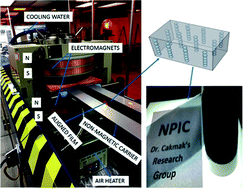
In order to realize the large-scale continuous fabrication of vertically oriented Ni particles in PDMS by aligning Ni in PDMS assisted by a magnetic field, we developed a R2R procedure where the 6′′ wide non-magnetic metal carrier passes through the gap between the two poles of an electromagnet that is equipped with an air heating mechanism.

In this paper, we investigate the alignment behavior of Ni nanoparticles and nanoflakes dispersed in a PDMS matrix continuously by applying a magnetic field to form a number of conductive paths along the thickness direction in the polymer matrix to obtain functional films with enhanced through thickness electrical and thermal conductivities. This anisotropic structure is more sensitive to the applied pressure than uniform composite films, thereby resulting in a sharper positive stress coefficient effect of composite resistance.

Results and discussion

Morphology of aligned nanocomposites

Ni particles can easily be magnetized in relatively low magnetic fields. When applied to a dispersion the particles organize along chains due to magnetic dipole interactions which are attractive when the dipoles are head-to-tail and repulsive when they are side-by-side.36 Fig. 1 shows scanning electron micrographs of aligned and cured films for Ni particles (both flakes and spheres) at selected particle concentrations. For low particle-fraction samples (0.11 vol%), the alignment results in short particle chains (Fig. 1a and d). When the particle fraction is increased to an intermediate level (2.5 vol%), they remain well separated but form aligned chains long enough to run continuously through the film thickness direction (Fig. 1b and e). Columnar structures are formed as the particle fraction is increased (Fig. 1c and f). The morphology of non-aligned Ni particles/PDMS can be found in the ESI.
image file: c5ra17005b-f1.tif
Fig. 1 Scanning electron micrographs of Ni/PDMS anisotropic composite films obtained by magnetic alignment. (a–c) show Ni flakes aligned in PDMS with various loadings at 0.11 vol%, 2.45 vol%, and 14 vol% respectively. (d–f) show Ni powder aligned in PDMS with 0.11 vol%, 2.45 vol%, and 14 vol% loading respectively (scale bar: 50 μm. H = 200 mT, nickel particles are shown with false color).

As shown in Fig. 2, in the absence of an external magnetic field, in zone 1, the particles have no magnetic dipole and chains of nanoparticles (nanocolumns) do not form. In zone 2, those Ni particles acquire a certain magnetization M(H) in the presence of a magnetic field H,35,37 a behavior governed by the particle’s ferromagnetic nature. Hence they attain a magnetic dipole moment ms pointing in the direction of the applied magnetic field (which we will take as the Z axis). The strength of the magnetic interaction between particles can be characterized by the magnetic coupling parameter Γ defined as,37

image file: c5ra17005b-t1.tif


image file: c5ra17005b-f2.tif
Fig. 2 A schematic model showing the roll to roll magnetic alignment process.

The behavior of magnetized particles under external fields is controlled by the values of two parameters: the filler content ϕ0 and magnetic coupling parameter Γ. Linear chains of magnetic particles have been found in simulations and experimentally for Γ between 40 and 3 × 10³ and ϕ0 < 0.15.37–39 For lower values of Γ, an equilibrium state is possible, in which colloids aggregate in linear (nonbranched) chains with an equilibrium length given by image file: c5ra17005b-t2.tif.37 For larger values of ϕ0 and Γ, different aggregate structures can be formed including thick chains which leads to lateral aggregation of linear chains, and more complex fibrous structures.39

Micro-CT confirms the formation of columns with their primary axes aligned in the thickness direction. As these columns span the whole thickness, they connect the two surfaces while they lack connectivity in the plane as they do not exhibit any side “branches”. This translates into a unique and efficient “directed percolation” leading to anisotropy in the electrical conductivity in these films (Fig. 3).


image file: c5ra17005b-f3.tif
Fig. 3 Micro computed tomography of the preferential orientation of Ni particles (2.45 vol% Ni flakes/PDMS) in the thickness direction (Micro-CT of non-aligned 2.45 vol% Ni flakes/PDMS available in the ESI).

Electric conductivity measurements

As illustrated in Fig. 4, in the film plane, the films are essentially insulating as they exhibit the same resistivity as the unfilled polymer while through thickness resistivity decreases very rapidly with particle concentration by almost 9 decades with increase of 12% filler. As the filler content is increased, the resistivity of the aligned Ni/PDMS films decreased drastically, to as low as 100 ohm m at 14 vol%, while for the non-aligned Ni/PDMS composite, the resistivity remained greater than 109 ohm m, even at 14 vol%. The aligned Ni flake/PDMS film shows lower resistivity than the Ni sphere/PDMS film as the flakes form better connections (effective contact area) than spheres.
image file: c5ra17005b-f4.tif
Fig. 4 Resistivity in the through thickness direction of Ni/PDMS composite films.

In order to assess the piezoresistivity, we developed a custom testing system attached to a stretching device that tracks the conductivity in real time during compression.40 The square sample is compressed in the device (Fig. 5) while we monitor the load on the specimen which is converted to a real time pressure while conductive electrodes at the top and bottom of the sample continuously monitor the resistivity (Fig. 5), using a Keithley 6487 Picoammeter connected to a computer.


image file: c5ra17005b-f5.tif
Fig. 5 Piezoresistivity measurement system.

The resistivity decreases dramatically with increasing pressure (Fig. 6) and eventually reaches a plateau value as low as 100 ohm m under 3 MPa pressure. As mentioned earlier, as Ni flakes form better connections between particles, we can see a lower resistivity was observed for the Ni powder/PDMS composite at the same loading. The durability of piezoresistivity has not yet been measured because our custom made device can not currently perform cyclic compression testing.


image file: c5ra17005b-f6.tif
Fig. 6 Resistivity of the composite in the film thickness direction under compression. (a) Ni powder/PDMS; (b) Ni flake/PDMS.

Piezoresistivity behavior may be described by tunneling conduction theory. In a tunneling transport process the charge carriers travel through the sample across insulating gaps between conductive particles. It has been shown that the conductivity of a composite can be reasonably well described by the behavior of a single tunnel junction. The conductance Gij between two grains, i and j, can be expressed by eqn (1),41–43

 
Gij = e2γ0/kT[thin space (1/6-em)]exp(−2λSijEij/kT) (1)
where λ = (2mV(T)/h2)1/2 is the tunneling parameter; Eij depends on electron energy at sites i and j, and Sij denotes the distance between the grain surface along the line joining their centers (tunneling distance). By analyzing eqn (1), the relationship between resistivity and tunneling distance can be derived as44,45
 
ρ(P) = ρ(0)exp(−2λΔd) = ρ(0)exp(−2λdP/E) (2)
where ρ(P) is the composite resistivity under uniaxial pressure P and ρ(0) is the resistivity of a composite without pressure, d is the interparticle gap and E is the Young’s modulus. Thus the plot of ln[thin space (1/6-em)]ρ(P) versus P should be a straight line of slope −2λd/E. We can see from Fig. 6 that the dependence is not linear over the range of measurements. However, a straight line can be fitted to the low-pressure data (P < 0.2 MPa). Although eqn (2) is simplistic for modeling the piezoresistive behavior of aligned Ni/PDMS samples, it still captures the change in resistivity with pressure.

Fig. 6 also shows the piezoresistive behavior of the composite with various Ni concentrations. As expected, the resistivity decreases with increasing pressure, as the conducting particles are forced closer together. We note that the transition becomes sharper for composites with higher loadings of Ni. There are two main reasons for this behavior: since the modulus of Ni is higher than PDMS, the pressure on the small gaps between the Ni particles (where the tunneling takes place) is much higher than for PDMS between the Ni chains, which leads to a sensitive piezoresistivity effect. Another reason that the transitions are sharper for the composites with high loading, is that the number of conducting paths increases with increasing Ni loading.

Thermal conductivity measurements

The thermal conductivity of the Ni/PDMS composites prepared from both particle and flake fillers is measured over a wide range of filler loadings. The experimental data are shown in Fig. 7 as a function of volume fraction. The reported thermal conductivities are average values of 3 measurements. We can see that the thermal conductivity of the non-aligned Ni powder/PDMS composites only increases slightly even at concentrations as high as 14 vol% (60 wt%) Ni loading, while for the aligned Ni powder/PDMS composites, the thermal conductivity increases as Ni sphere loading is increased (Fig. 7a), to as high as 3.5 times that of the non-aligned one (Fig. 7b). This occurs as the connected paths created by the Ni powder chains lead to efficient thermal transfer channels through the polymer matrix. Once the Ni chains are formed, the thermal conductivity of the composite increases drastically along the chain direction. We also can see that the thermal conductivity of the field aligned composite film filled with 14 vol% Ni flakes is as high as 50 times the conductivity of the polymer matrix, or 13 times the conductivity of the non-aligned composite containing the same concentration of conductive filler (Fig. 7c). The effective contact area between powders is small compared to flakes. The flakes with a high aspect ratio are particularly effective in providing good particle-to-particle contact to efficient heat transfer.
image file: c5ra17005b-f7.tif
Fig. 7 (a) Thermal conductivity of Ni/PDMS composites; (b) Kaligned/Knon-aligned; (c) Kaligned/Kpolymer matrix.

Hatta and Taya46,47 used an equivalent inclusion method to develop a model for the prediction of heat conduction in two-phase composites according to the equation:

image file: c5ra17005b-t3.tif
where Kc,i is the thermal conductivity of the composite along one defined axis direction, i (i = x, y, z), and Si is the factor dependent on filler shape and direction.

For spheres,

image file: c5ra17005b-t4.tif

For flakes, for measurements made parallel to the plane of the aligned platelets in a composite, (defined as the x- and y-directions), and for measurements made perpendicular to the plane of aligned flakes in a composite, defined as the z-direction:

image file: c5ra17005b-t5.tif

In this paper, for Ni powder/PDMS, S = 1/3; for Ni flake/PDMS, T = 1 μm, D = 37 μm, S = 0.02. The model prediction is also plotted in Fig. 8. The experimental data for the non-aligned Ni powder/PDMS composite exceed the model’s prediction (Fig. 8a), because the Ni powder we used does not have particles that are perfect spheres, they have spiky surfaces with a high aspect ratio (see SEM images in ESI), which increase the thermal conductivity. For the aligned Ni powder/PDMS composites, the experimental data is greater, which is because the Hatta and Taya model does not consider chain structure formation, which provides an efficient heat conduction pathway in the thickness direction. In this structure the chains increase the effective length of the thermal path through the particles uninterrupted by thick polymer interfaces, which therefore enhances the thermal conductivity. Since the Hatta and Taya model considers orientation without chain formation, the model’s prediction for the Ni flake/PDMS composite should be greater than the experimental data of the non-aligned (no chains and no orientation) and lower than the aligned Ni flake/PDMS composites, and this was demonstrated with our experiment data (Fig. 8b).


image file: c5ra17005b-f8.tif
Fig. 8 Comparison of experimental data with the Hatta and Taya model: (a) sphere model, (b) flake model.

Fig. 9 shows the schematic of a 70 feet roll to roll manufacturing line with an in-line electromagnet. During this process, the solution premixed with nanoparticles is cast on to a polymer film on a carrier using a double doctor blade casting system with a desired solution thickness. As the film carrying this solution is transported by the carrier it enters the gap between the poles of the electromagnets. The magnetic field inside this gap is reasonably uniform when measured as reported earlier.5 During this process, the nanoparticles are organized into columns made up of the nanoparticles. The PDMS is thermally cured while the film is being passed through the magnetic field by the machine. (Video available in ESI.)


image file: c5ra17005b-f9.tif
Fig. 9 A schematic model showing the roll to roll magnetic alignment process.

To establish that the magnetic field induced alignment can be accomplished using the roll-to-roll setup with realistic manufacturing conditions, we were able to cast films of oriented Ni flake and Ni powder (3′′ wide and 200′′ long) nanocomposites at 2.5 vol% filler concentration with an applied strength of 200 mT at 5 cm min−1 speed. The Ni/PDMS films aligned by the magnetic field show a higher optical transmittance than the non-aligned ones, as shown in Fig. 10. SEM proved the anisotropic structure, as shown in Fig. 10 and 11. More importantly, the optical transmittance of the aligned samples shows dependence on the incident angle (Fig. 12). As the nanoparticle columns form and grow into long chains, they also “sweep” all the particles between them creating particle free depletion zones that run along the thickness direction. When light is shone with an incidence angle of 0°, it passes through these “clear” pathways and hence we achieve reasonable transparency at higher loadings. Because the columns of nanoparticles are oriented and as they span the thickness direction, off normal angles lead to the absorption of light as illustrated in Fig. 12.


image file: c5ra17005b-f10.tif
Fig. 10 Optical transmittance of Ni/PDMS film. (a) 2.5 vol% Ni flake/PDMS non-aligned, (b) 2.5 vol% Ni flake/PDMS aligned, (c) 2.5 vol% Ni powder/PDMS non-aligned, and (d) 2.5 vol% Ni powder/PDMS aligned (scale bar: 20 μm).

image file: c5ra17005b-f11.tif
Fig. 11 Ni particles aligned in PDMS by the roll to roll process (scale bar: 20 μm).

image file: c5ra17005b-f12.tif
Fig. 12 Incident angle dependence of optical transmittance.

Experimental

Sylgard 184 Silicone Elastomer base and curing agent was purchased from Dow Corning Corporation and used as obtained. Ni powders and flakes (Type 123 and HCA-1 were kindly provided by Novamet Specialty Products Corp. USA) and used as received. The Ni powders have a characteristic spiky surface and a particle size of 3–6 μm. The Ni flakes have an average 400 mesh diameter and 1 μm thickness. Both the matrix and the fillers were used as is without any further modifications. PDMS resin was chosen because it is a liquid and a heat curable polymer, thus making the mixing and the fixing of the alignment possible.

Ni powders and flakes were mixed and defoamed with PDMS by a Thinky planetary vacuum mixer at varied particle loadings. For the square samples, the blends was casted into glass cells, and then cured by hot air at 150 °C for 30 min, the thickness of samples was 1 cm. While for the long films the blends were casted by a doctor blade onto the substrate carried by the stainless steel belt in the roll to roll processing line.5 The magnetic field and hot air were applied when the film passed by the two poles of the electromagnets assembled on the machine, and the thickness of the roll films was 0.2 mm. The roll to roll speed was set at 5 cm min−1. 150 °C hot air was applied at the same time to when the film was passing through the electromagnets to cure the PDMS resin, it took around 5 min to pass through electromagnets (200 mT) and that was enough time to cure the 0.2 mm PDMS film at 150 °C.

The morphologies of the cured films were characterized using a scanning electron microscope (JEOL JSM 5310) and a Skyscan 1172 Micro Computed Tomography Scanner.

Piezoresistivity was real-time tested under increasing pressure by a homemade machine named A2, which can measure an electric current as fast as 100 scans per second. Samples were placed between two aluminum plates. The resistance measurements were carried out using a Keithley 6487 Picoammeter. A uniaxial pressure was applied perpendicular to the planes of the test samples (along the thickness direction) to get a good conductive contact.

The thermal conductivities were measured by a FOX 50 Series Thermal Conductivity Analyzer.

Conclusions

We have demonstrated a novel R2R process with a magnetic field assisted alignment technique to fabricate vertically oriented Ni particles along nanocolumns in a flexible polymer matrix which exhibits very high electrical and thermal conductivities in the thickness direction. Piezoresistivities of the anisotropic polymer composite films with aligned particles inside were analyzed by a real-time compression test method and it was found that the range and sensitivity of the polymer composite film properties can be tuned by particle loading. This is the first successful scale-up of the alignment of Ni particles in polymers on a prototype custom-built 70 ft × 1 ft R2R machine with electromagnets units, and therefore the polymer composites can be designed with anisotropic electric, thermal, optical and mechanical properties. These anisotropic films can be used for a wide range of applications such as touch sensors, “Z direction” heat spreaders, and privacy protection films.

Acknowledgements

This work was financially supported by Third frontier of state of Ohio that provided funding to develop the roll to roll manufacturing line. In addition the authors gratefully acknowledge the doctoral innovation fund and scholarship of Donghua University and China scholarship council.

Notes and references

  1. J. R. Lu, W. G. Weng, X. F. Chen, D. J. Wu, C. L. Wu and G. H. Chen, Adv. Funct. Mater., 2005, 15, 1358–1363 CrossRef CAS PubMed.
  2. H. Høyer, M. Knaapila, J. Kjelstrup-Hansen, X. Liu and G. Helgesen, Appl. Phys. Lett., 2011, 99, 213106 CrossRef PubMed.
  3. A. Oliva-Avilés, F. Avilés and V. Sosa, Carbon, 2011, 49, 2989–2997 CrossRef PubMed.
  4. J. A. Beardslee, B. Sadtler and N. S. Lewis, ACS Nano, 2012, 6, 10303–10310 CrossRef CAS PubMed.
  5. M. Cakmak, S. Batra and B. Yalcin, Polym. Eng. Sci., 2015, 55, 34–46 CAS.
  6. C. Martin, J. Sandler, A. Windle, M.-K. Schwarz, W. Bauhofer, K. Schulte and M. Shaffer, Polymer, 2005, 46, 877–886 CrossRef CAS PubMed.
  7. J. Ramón-Azcón, S. Ahadian, M. Estili, X. Liang, S. Ostrovidov, H. Kaji, H. Shiku, M. Ramalingam, K. Nakajima and Y. Sakka, Adv. Mater., 2013, 25, 4028–4034 CrossRef PubMed.
  8. F. Du, J. E. Fischer and K. I. Winey, Phys. Rev. B: Condens. Matter Mater. Phys., 2005, 72, 121404 CrossRef.
  9. S. U. Khan, J. R. Pothnis and J.-K. Kim, Composites, Part A, 2013, 49, 26–34 CrossRef CAS PubMed.
  10. H. Wang, H. Zhang and G. Chen, Composites, Part A, 2007, 38, 2116–2120 CrossRef PubMed.
  11. T. Kimura, H. Ago, M. Tobita, S. Ohshima, M. Kyotani and M. Yumura, Adv. Mater., 2002, 14, 1380–1383 CrossRef CAS.
  12. E. Sancaktar and N. Dilsiz, J. Adhes. Sci. Technol., 1999, 13, 679–693 CrossRef CAS PubMed.
  13. M. V. Jose, B. W. Steinert, V. Thomas, D. R. Dean, M. A. Abdalla, G. Price and G. M. Janowski, Polymer, 2007, 48, 1096–1104 CrossRef CAS PubMed.
  14. D. Wang, P. Song, C. Liu, W. Wu and S. Fan, Nanotechnology, 2008, 19, 075609 CrossRef PubMed.
  15. E. Moaseri, M. Karimi, M. Baniadam and M. Maghrebi, Composites, Part A, 2014, 64, 228–233 CrossRef CAS PubMed.
  16. N. Li, G.-W. Huang, H.-M. Xiao and S.-Y. Fu, Composites, Part A, 2015, 77, 87–95 CrossRef CAS PubMed.
  17. P. Goh, A. Ismail and B. Ng, Composites, Part A, 2014, 56, 103–126 CrossRef CAS PubMed.
  18. S. G. Prolongo, B. G. Meliton, G. Del Rosario and A. Ureña, Composites, Part B, 2013, 46, 166–172 CrossRef CAS PubMed.
  19. B. Z. Tang and H. Xu, Macromolecules, 1999, 32, 2569–2576 CrossRef CAS.
  20. C. Mao, J. Huang, Y. Zhu, W. Jiang, Q. Tang and X. Ma, J. Phys. Chem. Lett., 2012, 4, 43–47 CrossRef PubMed.
  21. H. Wu, J. Liu, X. Wu, M. Ge, Y. Wang, G. Zhang and J. Jiang, Int. J. Adhes. Adhes., 2006, 26, 617–621 CrossRef CAS PubMed.
  22. S. Darling, Prog. Polym. Sci., 2007, 32, 1152–1204 CrossRef CAS PubMed.
  23. Y. Lin, A. Böker, J. He, K. Sill, H. Xiang, C. Abetz, X. Li, J. Wang, T. Emrick and S. Long, Nature, 2005, 434, 55–59 CrossRef CAS PubMed.
  24. B. Sohn and B. Seo, Chem. Mater., 2001, 13, 1752–1757 CrossRef CAS.
  25. P. W. Majewski, M. Gopinadhan, W.-S. Jang, J. L. Lutkenhaus and C. O. Osuji, J. Am. Chem. Soc., 2010, 132, 17516–17522 CrossRef CAS PubMed.
  26. M. Gopinadhan, P. W. Majewski and C. O. Osuji, Macromolecules, 2010, 43, 3286–3293 CrossRef CAS.
  27. A. Anwer and A. Windle, Polymer, 1993, 34, 3347–3357 CrossRef CAS.
  28. S. A. Kossikhina, T. Kimura, E. Ito and M. Kawahara, Polym. Eng. Sci., 1998, 38, 914 CAS.
  29. M. Gopinadhan, P. W. Majewski, E. S. Beach and C. O. Osuji, ACS Macro Lett., 2011, 1, 184–189 CrossRef.
  30. C. Osuji, P. J. Ferreira, G. Mao, C. K. Ober, J. B. Vander Sande and E. L. Thomas, Macromolecules, 2004, 37, 9903–9908 CrossRef CAS.
  31. T. Pullawan, A. N. Wilkinson and S. J. Eichhorn, Biomacromolecules, 2012, 13, 2528–2536 CrossRef CAS PubMed.
  32. E. Choi, J. Brooks, D. Eaton, M. Al-Haik, M. Hussaini, H. Garmestani, D. Li and K. Dahmen, J. Appl. Phys., 2003, 94, 6034–6039 CrossRef CAS PubMed.
  33. S. Jin, T. Tiefel and R. Wolfe, IEEE Trans. Magn., 1992, 28, 2211–2213 CrossRef CAS.
  34. S. Jin, R. Sherwood, J. Mottine, T. Tiefel, R. Opila and J. Fulton, J. Appl. Phys., 1988, 64, 6008–6010 CrossRef PubMed.
  35. J. S. Andreu, C. Calero, J. Camacho and J. Faraudo, Phys. Rev. E: Stat., Nonlinear, Soft Matter Phys., 2012, 85, 036709 CrossRef.
  36. J. W. Swan, P. A. Vasquez, P. A. Whitson, E. M. Fincke, K. Wakata, S. H. Magnus, F. de Winne, M. R. Barratt, J. H. Agui and R. D. Green, Proc. Natl. Acad. Sci. U. S. A., 2012, 109, 16023–16028 CrossRef CAS PubMed.
  37. J. Faraudo, J. S. Andreu and J. Camacho, Soft Matter, 2013, 9, 6654–6664 RSC.
  38. P. Domínguez-García, S. Melle, J. Pastor and M. Rubio, Phys. Rev. E: Stat., Nonlinear, Soft Matter Phys., 2007, 76, 051403 CrossRef.
  39. M. Fermigier and A. P. Gast, J. Colloid Interface Sci., 1992, 154, 522–539 CrossRef CAS.
  40. T. L. Kwa, Development of On-Line True Stress-Strain-Electrical Conductivity Uniaxial Tensile Stretching System and its Utility in Thermo-Mechano-Electrical Behavior of Carbon Black(CB) Filled Polylactic Acid(PLA) Binary and its Nanoclay Ternary Nanocomposites, University of Akron, 2006 Search PubMed.
  41. P. Sheng and J. Klafter, Phys. Rev. B: Condens. Matter Mater. Phys., 1983, 27, 2583 CrossRef.
  42. M. Mehbod, P. Wyder, R. Deltour, C. Pierre and G. Geuskens, Phys. Rev. B: Condens. Matter Mater. Phys., 1987, 36, 7627 CrossRef CAS.
  43. V. K. S. Shante, Phys. Rev. B: Solid State, 1977, 16, 2597 CrossRef CAS.
  44. T. A. Ezquerra, M. Kulescza, C. S. Cruz and F. J. Baltá-Calleja, Adv. Mater., 1990, 2, 597–600 CrossRef CAS PubMed.
  45. J. Dawson and C. Adkins, J. Phys.: Condens. Matter, 1996, 8, 8321 CrossRef CAS.
  46. H. Hiroshi and T. Minoru, Int. J. Eng. Sci., 1986, 24, 1159–1172 CrossRef.
  47. R. F. Hill and P. H. Supancic, J. Am. Ceram. Soc., 2002, 85, 851–857 CrossRef CAS PubMed.

Footnote

Electronic supplementary information (ESI) available. See DOI: 10.1039/c5ra17005b

This journal is © The Royal Society of Chemistry 2015
Click here to see how this site uses Cookies. View our privacy policy here.