
Unanticipated favoured adsorption affinity of Th(IV) ions towards bidentate carboxylate functionalized carbon nanotubes (CNT–COOH) over tridentate diglycolamic acid functionalized CNT: density functional theoretical investigation

A. K. Singha Debab, Sk. M. Ali*ab and K. T. Shenoya
aChemical Engineering Division, Bhabha Atomic Research Centre, Mumbai, India – 40085
bHomi Bhabha National Institute, Mumbai, India – 40085. E-mail: musharaf@barc.gov.in

Received 18th August 2015 , Accepted 11th September 2015

First published on 11th September 2015


Abstract

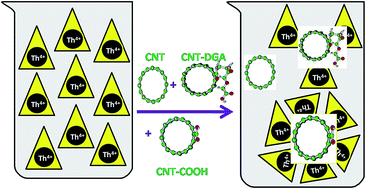
The hybrid B3LYP density functional and TZVP basis set in conjunction with COSMO solvation approach have been used successfully to predict the free energy of adsorption for Th4+ ions with pristine CNTs, oxidized CNTs (CNT–COOH) and diglycolamic acid functionalized CNTs (CNT–DGA). Experimentally reported values of adsorption capacities of Th4+ by the above three types of CNT indicate that CNT–COOH has the strongest binding with Th4+, whereas p-CNT has the lowest; CNT–DGA shows less adsorption than CNT–COOH, although the former has tridentate ligands on CNTs' surfaces. This experimental observation has been demonstrated by DFT theoretical studies: gas phase calculation does not match with the above experimental fact, whereas, solvent phase calculation in the presence of nitrate ions, a more realistic approach, is able to explain. Free energy of complexation between Th4+ and CNT–COOH is higher than that of CNT–DGA in all available models of complexation reaction viz. bare Th4+ in aqueous nitrate medium, octahydrated Th4+ in nitrate and thorium nitrate ion pair in aqueous solution. The experimental fact that the presence of oxidized fullerene C60 enhances the Th4+ adsorption by oxidized CNT has also been theoretically corroborated as oxidized C60 has a quite high binding energy for Th4+. Present computational calculation in the search for the best nano carbon based Th4+ adsorbent parallel with experimental verification might be helpful for the design of effective nanomaterials to be used in the treatment of radioactive liquid waste.

Introduction

Thorium is a long-lived naturally occurring radionuclide widely distributed over the earth's crust. The use of thorium as a source of fissile material for the manufacture of nuclear fuel as well as the reprocessing of nuclear fuel can also concentrate this element.1 The presence of thorium metal ions in the environment is of important concern due to its toxicity and health effects on human. Although direct toxicity of thorium is low due to its stability at ambient temperature, when nitrate enters living organisms, it is mainly localized in the liver, spleen and marrow and precipitates in hydroxide form.2 Efficient removal of thorium from waste streams before discharge to the environment is, hence, an essential field to explore. One indirect importance of thorium separation studies is that, it has only +IV stable oxidation state in solution and hence, has been selected as a chemical analogue for other tetravalent actinides.3

In recent years, attention has been paid to the use of nano-structured materials, especially carbon nanotubes (CNTs), as a high capacity adsorbent material.4 Due to their large specific surface area, hollow and porous structures along with high mechanical, chemical and thermal stability, CNTs are widely being used as a promising adsorbent for metal ions and organic pollutants.5–9 The adsorption capacities of these hydrophobic materials have been enhanced by introducing hydrophilic sites on its surfaces by chemical oxidation process which results in the introduction of the oxygen-containing electro-donating functional groups such as COOH, OH or C[double bond, length as m-dash]O. The improved adsorption by oxidized CNTs compared to its pristine form has been reported by several studies.10–17 Oxidation thus by incorporating of carboxylic or phenolic hydroxyl group on the surface of CNTs provides active sites for further chemical modifications. Desired functionalities, e.g., amine,18 thiol,19 histidine,20 tannic acid,21 hydroquinone,22 EDTA,23 phosphinic acid,24 starch,25 polyacrylamide26 etc., have been covalently introduced on to the surface of CNTs for selective and more sensitive separation of metal ions and organics.

Separation of tetravalent thorium, Th(IV), from aqueous solution by pristine multi-walled carbon nanotues (MWCNTs) and oxidized MWCNTs have been reported.27–30 Diglycolamic acid (DGA), a tridentate and CHON based ligand, -functionalized CNTs31 were used for separation of Th(IV) from aqueous solution in our previous paper. From these studies it has been seen that oxidized CNTs have better adsorption performances than that of pristine and DGA functionalized CNTs. The presence of bi-dentate carboxylic acid ligands on the surface of the CNT enhances the Th(IV) binding up to adsorption capacity of 132 mg g−1.30 Whereas tridentate DGA ligand on CNT have shown nearly ten time lower adsorption.31 These interesting observations may be understood by considering the molecular approach of complexation of Th(IV) metal ion with pristine, oxidized and DGA-functionalized CNTs. Recent research has revealed that the presence of oxidized (carboxylated) fullerene enhances the Th(IV) adsorption efficiency of oxidized CNTs.30 This interesting observations can also be theoretically examined parallel with above calculations to understand the nature of binding of Th(IV) with different kinds of carbon nanomaterials.

In this paper, quantum chemical calculations for the interaction of Th(IV) ion with pristine (p-CNT), oxidized or carboxylic acid (COOH) functionalized (CNT–COOH) and DGA functionalized CNTs (CNT–DGA) have been extensively studied by density functional theory (DFT). Electronic structures, energetics and thermodynamics of the interaction of Th(IV) ions with pristine CNT, CNT–COOH and CNT–DGA were described to look insight the complexation and hence, adsorption efficiencies of these carbon nano-structures towards Th(IV). The trend of variation of adsorption capacities of two types of CNTs is successfully correlated with theoretically calculated structural and thermodynamic parameters. The interactions of Th(IV) with oxidized fullerene was compared with the oxidized CNT.

Computational methodology

The optimized geometry, total energy and vibrational IR frequency of tetravalent thorium ion complexes with different type of CNTs were computed by generalized gradient approximation (GGA) using BP86 density functional employing SVP basis set32 as implemented in Turbomole suite of program33,34 i.e. O(7s4p1d)/[3s2p1d], N(7s4p1d)/[3s2p1d], C(7s4p1d)/[3s2p1d], H(4s1p)/[2s1p], Th(14s13p10d8f1g)/[10s9p5d4f1g]. Small-core pseudopotentials with 60 electrons as the core for Th has been included in the basis set using relativistic effective core potential (ECP)35 approach, while for light atoms C, H, O, and N the polarized all-electron basis set was considered. The zero point energy and thermodynamic correction to the total energy were made to compute the free energy at T = 298.15 K. Further, single point energy calculation was performed on all the optimized complexes using hybrid B3LYP functional36 and TZVP basis set33 i.e. O(11s6p2d1f)/[5s3p2d1f], N(11s6p1d)/[5s3p1d], C(11s6p2d1f)/[5s3p2d1f], H(5s2p1d)/[3s2p1d]. BP86 functional consists of Becke B88 exchange functional37 and Perdew P86 correlation functional38 and was found to be successful in predicting molecular geometries of lanthanides and actinides complexes.39 The solvent effect in the energetic was incorporated employing conductor like screening model (COSMO).40

The complexation ability of CNTs (p-CNT or o-CNT or f-CNT) with metal ions can be evaluated from the gas phase binding energy (ΔE). The ΔE of the metal ion (M4+) and CNTs (L) complexation reaction,

 
M4+ + L = M4+L (1)
is defined by the following general relation,
 
ΔE = EM4+–CNT − (EM4+ + ECNT) (2)
where, EM4+–CNT, EM4+ and ECNT refer to the energy of M4+–CNT complex, M4+ ion and the free CNT system, respectively.

The thermal correction to the electronic energy (Eel), enthalpy (H) and free energy (G) of the optimized structures has been performed to predict the thermodynamic parameters.41 The thermal and zero point energy corrected binding energy is

 
ΔU = UM4+–CNT − (UM4+ + UCNT) (3)
where UM4+–CNT, UM4+, and UCNT represent the internal energy of the M4+–CNT complex, M4+ ion and the free CNT system, respectively.

The binding enthalpy (ΔH) and binding free energy (ΔG) for the metal ion–CNT complexation reaction in eqn (1) are calculated using the following standard thermodynamic relations.

 
ΔH = ΔU + ΔnRT (4)
 
ΔG = ΔHTΔS (5)

One of the key properties to be calculated in the metal ion–ligand complexation is the free energy of extraction (ΔGext). The metal ion–ligand complexation reaction is modelled using three schemes. In the Scheme–1, the metal ion and the nitrate ion is considered to be separately hydrated species as follows:

 
image file: c5ra16651a-t1.tif(6)

In Scheme–2, the complexation environment is similar as in Scheme–1, barring the Th4+ which is considered to be explicitly octa hydrated.

In Scheme–3, the thorium metal cation and nitrate anion is considered to be in the ion pair forms as frequently used by Wang et al.42 by citing the presence of high HNO3 concentration.

 
image file: c5ra16651a-t2.tif(7)

We have performed single point energy calculation using optimized structures obtained from the BP86 functional with hybrid B3LYP functional as it includes the non-local HF contribution. Hybrid DFT was found to be superior to GGA functional for thermochemistry of actinides as reported earlier.43 Relativistic effects, which are mandatory to include for heavy elements such as lanthanides and actinides, were accounted for by relativistic pseudopotentials, similar to previous studies.42,43

Most of the metal ion extraction takes place from the aqueous solution phase aided by ligand. Hence, the consideration of solvent effect on the complexation of the ligand moiety with metal ion in the QM calculation is thus indispensable. COSMO is an improved solvation model, where the polarization charges of the solute is calculated in a continuum solvent using scaled conducting boundary condition and has been used successfully for the free energy calculation in solution containing the first solvation shell.44 Further, there is very little effect on the solvation energy using the optimized geometry at the solvent phase.45 Hence, the aqueous solvent effect was inducted by performing single point energy calculation using the optimized geometry obtained from BP86 level of theory employing COSMO solvation model as implemented in Turbomole quantum chemistry package.

The MOLDEN graphical program46 was used for the visualization of various molecular geometry and structural parameters. Orbital population analysis was performed using natural population analysis (NPA)47 which exhibits improved numerical stability and describes better the electron distribution in compound containing metal ions. Population analysis has also been performed by the natural bond orbital method48 at B3LYP/TZ2P level of theory using natural bond orbital (NBO) program49 under ADF program package.50 NBO analysis focuses on the intermolecular orbital interaction between the filled donor and empty acceptor NBOs of M–L complexes by estimating their energy by second-order perturbation theory. For each donor NBO (i) and acceptor NBO (j), the stabilization energy E(2) associated with electron delocalization between donor and acceptor is estimated as,

 
image file: c5ra16651a-t3.tif(8)
where qi is the orbital occupancy, εi, εj are the diagonal elements and Fi,j is the off diagonal NBO Fock matrix element.

Strength of M–L interaction can also be evaluated by the amount of change transfer (ΔN)51 which can be calculated by equation eqn (9) as,

 
image file: c5ra16651a-t4.tif(9)

The χ and η, represent absolute electronegativity and absolute hardness of M or L, respectively, estimated as.

 
image file: c5ra16651a-t5.tif(10)
I and A correspond to ionization potential and electron affinity respectively and can be obtained using Koopmans' theorem52 as,
 
I = −EHOMO, A = −ELUMO (11)
EHOMO and ELUMO are the energy of highest occupied and lowest unoccupied molecular orbital of the M or L respectively and can be determined from the DFT calculation. Point to be noted that the Koopmans' theorem does not include the orbital relaxation in the calculation of I and A, and is quite accurate only for restricted Hartree–Fock system.

Recent literature reports on DFT based theoretical studies of adsorption of gases53–56 and drug molecules on CNTs57 have revealed that dispersion-corrected-DFT should be used instead of DFT for studying the interactions between CNT surface and gases/drug molecules. Long-range electron correlation which is responsible for van der Waals (dispersive) forces is very important for the interaction of organic molecules on surfaces. As the dispersive interactions play a key role for determining the orientation of the organic molecules on the CNT surfaces, it is necessary to add the dispersion-corrected energy term with the standard DFT energy. Our study involves the adsorption of tetra positive charged thorium metal ion on CNTs. To study the effect of dispersion interaction, we have carried out dispersion-corrected DFT calculation of interaction of Th4+ ion with CNT-side surface, CNT-open end, CNT–COOH and CNT–DGA in absence of nitrate anions. Initially, all the structures were optimized at BP86/SVP level of theory with dispersion-corrected DFT of Grimme's D3 scheme as implemented in Turbomole suit of program. The single point energy was calculated at two level of theory – (i) B3LYP/TZVP, and (ii) Grimme's D3 scheme dispersion-corrected B3LYP/TZVP. Adsorption binding energies of Th4+ with all CNT structures were calculated and compared with the same calculated from DFT without dispersion-correction.

Results and discussion

Structural parameters

The chemical species of interest are hydrated thorium and hydrated thorium nitrate, and hence these species are optimized and the structures are presented in Fig. 1. In hydrated Th4+–(H2O)8, the central Th metal ion was coordinated to 8 water molecules in distorted octa coordinated fashion. The calculated Th–O (see Table 1) bond distance of 2.48 Å was found to be very close to the experimental results of 2.45 Å and hence confirm the reliability of the present method of calculation. The coordination of 8 water molecules was reported earlier using LUX experiment.58 But, EXAFS studies reported a varied coordination number of Th4+ ion of 9–11 with a Th–O distance of about 2.45Å.59–61 Hence, further, hydrated Th4+ with 9, 10 and 11 numbers of H2O molecules were optimized and shown in Fig. 1. The calculated Th–O (see Table 1) bond distances of 2.52 Å (Th4+–(H2O)9) and 2.55 Å (Th4+–(H2O)10) were found to be higher compared to the experimental results. It can clearly be seen from the structure of Th4+–(H2O)11 that 11 water molecules cannot be accumulated in the first sphere of solvation shell; 9 water molecules reside in the first shell and rest 2 nest in the second solvation shell. The average Th–O bond distances of the H2O's of first solvation shell are same (2.52 Å) as Th4+–(H2O)9 which is higher compared to the experimentally reported value. Owing to the impact of second water coordination sphere in the hydration of Th4+, a structure of 24H2O hydrated Th4+ was optimized and it is seen that 8H2O molecules occupy the first coordination sphere with 2.45 Å Th–O bond length which is exactly same with experimental results. In order to find out the most stable hydrated species, free energy of hydration was calculated after inclusion of standard state entropy correction.62 The calculated results are presented in Table 2. From the table it is seen that the free energy of hydration for Th4+–(H2O)8 ion is higher than that of Th4+–(H2O)9 (by −0.15 kcal mol−1), Th4+–(H2O)10 (by −7.18 kcal mol−1) and Th4+–(H2O)24 (by −19.90 kcal mol−1) indicating its higher stability and hence higher chance of occurrence in the aqueous environment. Although the difference in Gibb's hydration energy between Th4+–(H2O)8 and Th4+–(H2O)9 or Th4+–(H2O)10 is small, Th–O bond length of latter does not tally with the experimental one whereas former shows very similar length. On the other hand, although the Th–O bond length is very good match with experimental one for Th4+–(H2O)24, the free energy of hydration is quite lower than that of Th4+–(H2O)8. Therefore, aqueous Th4+ ion is modelled using Th4+–(H2O)8 species. The coordination of 8 water molecules in the first solvation shell was further confirmed performing ab initio molecular dynamics simulation (AIMD) using VASP package (ESI, Fig. S7). In presence of nitric acid, the nitrate ions displace the water molecules from the first shell of solvation leading to the formation of Th(NO3)4 which is confirmed from the free energy of reaction (Table 2). The optimized structure of Th(NO3)4 is presented in Fig. 1. All four nitrate ions are found to be coordinated in bidentate mode. It is interesting to check whether the Th(NO3)4 species remains as hydrated form in the aqueous environment. In view of this, di-hydrated structure of Th(NO3)4 is optimized and the structure is shown in Fig. 1. In Th(NO3)4(H2O)2, the central Th metal ion was coordinated to the 4 nitrate ion in bidentate mode and 2 water molecules leading to deca coordination. The formation of Th(NO3)4(H2O)2 was confirmed by the negative free energy of reaction (Table 2).
image file: c5ra16651a-f1.tif
Fig. 1 Optimized structures of hydrated Th4+ ions and Th(NO3)4 at BP/SVP level of theory.
Table 1 Structural parameters of hydrated species of Th4+ and Th(NO3)4
Chemical species M–OH (Å) M–ON (Å)
a Experimental values are given in parenthesis.
Th4+(H2O)8 2.48  
(2.45)a,49
Th4+(H2O)9 2.52  
Th4+(H2O)10 2.55  
Th4+(H2O)24 2.45, 4.54  
(1st shell, 2nd shell)
Th(NO3)4   2.44
Th(NO3)4(H2O)2 2.59 2.48
(2.57)48 (2.46)48


Table 2 Free energy of hydration (in kcal mol−1) for hydrated species of Th4+ and Th(NO3)4 at B3LYP/TZVP level of theory
Chemical reaction Gas phase Aqueous phase
Th4+ + 8H2O = Th4+–(H2O)8 −693.92 −1325.39
Th4+ + 9H2O = Th4+–(H2O)9 −716.41 −1325.24
Th4+ + 10H2O = Th4+–(H2O)10 −725.12 −1318.21
Th4+ + 24H2O = Th4+–(H2O)24 −932.73 −1305.49
Th4+–(H2O)8 + 4NO3 = Th(NO3)4 + 8H2O −913.29 −60.23
Th(NO3)4 + 2H2O = Th(NO3)4–(H2O)2 −13.91 −13.23


For our modelling studies, we have considered pristine CNT, COOH and DGA functionalized CNT. The CNT considered here is a (8, 0) zigzag single-walled CNT which consists of four unit cells with tubular length of 5.78 Å width of 6.40 Å. We have considered one COOH and DGA unit anchored on the open pore of the (8, 0) zig-zag CNT with 4 unit cells as earlier studied.63 The optimized geometries of pristine and COOH and DGA functionalized CNT are displayed in Fig. 2. In the optimized structures, the C–C and C–H bond distance of CNT unit was found to be 1.44 Å and 1.10 Å. In CNT–COOH, the COOH group was found to be aligned along the axis of the CNT. It has been seen that the diglycolamic acid group was wrapping around the cylindrical backbone of nanotubes (Fig. 2). In the DGA unit, the carbonyl, C[double bond, length as m-dash]O bond distance was found to be 1.22 Å and carboxylate C[double bond, length as m-dash]O bond distance was found to be 1.31 Å. The ethereal C–O bond distance was found to be 1.39 Å. Three oxygen donor atoms are projecting in similar directions like in free diglycolamic acid. The bond length of two C[double bond, length as m-dash]O groups of DGA unit was found to be 1.21 Å and 1.22 Å respectively.


image file: c5ra16651a-f2.tif
Fig. 2 Optimized geometries of pristine and COOH and DGA functionalized CNT at BP/SVP level of theory.

The optimized structures of complexes of Th4+ with p-CNT with and without nitrate ions are presented in Fig. 3 and S1, respectively. Although open edges are more reactive than the sidewall surface of p-CNT, we have considered the binding of thorium from both directions. The Th(NO3)4(H2O)2 species was found to be lying outside of the side surface and open end of the CNT. The calculated Th–O (O from NO3 and H2O) and Th–C are displayed in Table 3.


image file: c5ra16651a-f3.tif
Fig. 3 Optimized structure of complexes of Th4+ with non-functionalized/pristine CNT along with nitrate ion: (a) interaction from sidewall of CNT (CNTS) and (b) from open edges of CNT (CNTO).
Table 3 Bond distances in Å from Th4+ metal centre for complexes/system under consideration
Bond System of Th4+ bonded with
CNT-side surface (in presence of NO3 and H2O) CNT-open end (in presence of NO3 and H2O) CNT–COOH (in absence of NO3 & H2O) CNT–DGA (in absence of NO3 & H2O) CNT–COOH (in presence of NO3 & H2O) CNT–DGA (in presence of NO3 & H2O)
a M–C: distances between metal and nearest six carbon atoms of a hexagon the CNT.b First one is the distance of M–O[double bond, length as m-dash]C bond and second one is of M–O–C of –COOH group.c Average bond distance of two Th–Ocarbonyl of DGA unit of CNT–DGA.
Th–O(NO3) 2.49 2.49 2.52 2.47
Th–O(H2O) 2.56 2.58 2.63 2.45
Th–Ca(CNT) 5.451
Th–H(CNTedge) 4.703
Th–Ob(COOH) 2.11, 2.42 2.36, 3.82
Th–Ocarbonylc(DGA) 2.21 2.62
Th–Oether(DGA) 2.48 2.71


The optimized structures of complex of Th4+ with functionalized CNT–COOH and CNT–DGA in absence of nitrate ion are presented in Fig. 4 and the characteristic bond distances are shown in the figure as well as given in Table 3. From the Fig. 4(a) it is seen that the COOH group is little tilted from the axis of the CNT after complexation with Th4+ ion. Th–O bond distance was found to be 2.11 Å and 2.42 Å. In Fig. 4(b), the Th4+ ion is found to be directly coordinated to the three donors O atoms of the DGA moiety. All three donor O atoms and the coordinated metal ion are lying in the same plane. It is interesting to mention that though the metal ions and three donor O atoms are lying in the same plane, the M–O bond length with three O atoms are not same in length. The M–O (O of C[double bond, length as m-dash]O group) bond length were found to be 2.20 and 2.21 Å and one M–O (ethereal O) bond length was found to be 2.48 Å. The shorter M–O bond length for C[double bond, length as m-dash]O group compared to M–O bond length of ethereal O suggest that former has stronger interaction ability than the later. In order to find out the effect of CNT on the interaction, we have performed the calculation by replacing CNT with H atom in the CNT–COOH and CNT–DGA motifs. The optimized structures are presented in Fig. S2 and characteristics bond distances are shown in Table S1.


image file: c5ra16651a-f4.tif
Fig. 4 Optimized structures of Th4+ complex with (a) COOH and (b) DGA functionalized CNT in absence of nitrate ions at BP/SVP level of theory.

The optimized structures of complex of Th4+ ion with functionalized CNT–COOH and CNT–DGA in presence of nitrate ion are presented in Fig. 5 and the characteristic bond distances are shown in the figure as well as given in Table 3. From the Fig. 5(a) it is seen that the only the carbonyl O of COOH group (unlike in case of Th4+ complex with CNT–COOH in absence of nitrate ions where both the O centres were bonded to metal ions) is coordinated to the Th4+ ion and it is lengthened to 2.36 Å in presence of nitrate ion from 2.11 Å in absence of nitrate ions. The presence of nitrate ions and water molecules made the carboxylic group to bind in monodentate mode with more electro-donating carbonyl O centre. Thorium ion coordinated to four nitrate ion in bidentate mode and one each with water and carbonyl O of COOH group. The Th–O (O of NO3) bond distance was lengthened due to the strong coordination from the carbonyl O atom of CNT–COOH adsorbent. In CNT–DGA complex, Fig. 5(b), The Th4+ ion is found to be directly coordinated to the three donor O atoms of the DGA moiety, six donor atoms from four nitrate ions (two bidentate and two monodentate mode) and one from aqua leading to deca coordination. The Th–O (oxygen of NO3) is found to be varied from 2.32 Å to 2.59 Å and the Th–O (carbonyl oxygen of DGA) is found to be varied from 2.53 to 2.72 Å indicating asymmetrical nature of bonding from the identical carbonyl bonding. The Th–O (etheric oxygen of DGA) is found to be 2.71 Å. Further, the M–O bond length in hydrated species was found to be larger than the M–O bond length of H2O attached to the CNT–DGA–Th complex. The M–O bond distance of NO3 ion is found to be smaller than the M–O of H2O indicating the stronger interaction of metal ions with NO3 ion group than H2O. In the complex of Th4+ ion with CNT–DGA, the elongation of the of the two carbonyl C[double bond, length as m-dash]O bonds (1.31, 1.30 Å) from free CNT–DGA (1.21, 1.22 Å) and ethereal C–O bonds (1.45 Å) from free CNT–DGA (1.39 Å) refers to its participation in the binding, whereas the same carboxylic C[double bond, length as m-dash]O bond distance before (1.30 Å) and after (1.31 Å) binding refers its non-participation in the complexation. The shorter Th–O bond of the C[double bond, length as m-dash]O (2.36 Å) of the CNT–COOH than that of C[double bond, length as m-dash]O (2.62 Å) of CNT–DGA clearly aimed towards the greater affinity of CNT–COOH for Th4+ adsorption than CNT–DGA.


image file: c5ra16651a-f5.tif
Fig. 5 Optimized structures of Th4+ complex with (a) CNT–COOH and (b) CNT–DGA in presence of nitrate ion at BP/SVP level of theory.

Binding energy/free energy of complexation in absence of nitrate ions

The gas phase binding energy, which plays an important role in the initial screening as well as predicting adsorption capacity of an adsorbent material towards metal ions, is calculated using different possible reaction routes. The calculated values of binding energy are presented in Table 4. The gas phase binding energy of p-CNT with bare metal ion was found to be quite high; the interaction of Th4+ from sidewall and open edge surface of p-CNT have nearly similar binding energy. The aqueous phase free energy of the binding is four times higher for sidewall interaction than that of open edges of p-CNT; may be the consequence of interaction of water molecules with the reactive dangling bonds at the open edges of CNT. It is seen that the binding energy of bare Th4+ ion with CNT–COOH and CNT–DGA in gas phase in absence of nitrate ion is very high. The CNT–DGA shows more electronic binding capacity than CNT–COOH. This might be due to the more number of donor atom (3 in CNT–DGA) than CNT–COOH (2 donor atoms). In order to have further insights, NPA (Table 5), HOMO–LUMO (Table S2) and NBO (Table 6) analysis were performed. There is a considerable transfer of charge to the ligands as evident from the residual charge values in Table 5 on the metal centre leading to higher interaction energy. Increase of electronic population in the s, d and f orbitals of the metal ions after complexation signals to the strong covalent bonding between the metal and ligands. The absolute electronegativity and absolute hardness of CNT–COOH and CNT–DGA are almost close, the HOMO–LUMO gap of CNT–COOH and CNT–DGA is also identical (Table S2). These has also been reflected in the identical values of ΔN which indicates that their interaction with Th4+ ion should be very close (Table S2). But actually, the gas phase interaction energy of CNT–DGA is higher that of CNT–COOH and hence, ΔN unable to correlate the interaction energy values. Further it was seen that the higher interaction of CNT–DGA compared to CNT–COOH is reflected neither from the residual charge on the thorium metal ion which is found to be higher for the former than of latter (NPA analysis) nor from the stabilization energy by NBO analysis in Table 6. NBO analysis resulted higher stabilization energy for Th4+–CNT–COOH interaction than that of Th4+–CNT–DGA establishing higher binding energy for the former. In order to investigate the role of CNT in the functionalized CNT–COOH and CNT–DGA unit, the interaction energy of the metal ions was further evaluated by replacing the CNT unit with H atom in the CNT–COOH and CNT–DGA motif. The gas phase interaction energies were found to be reduced considerably in absence of CNT (see Table S3). The selectivity trend remains the same.
Table 4 Electronic and thermodynamic energies (in kcal mol−1) of Th4+ ion with non-functionalized and functionalized CNT in absence of nitrate ion at B3LYP/TZVP level of theorya
Complexation reaction ΔE ΔS ΔH ΔG ΔGaq
a CNTS and CNTO refers to the surface side and open end of CNT; unit of ΔE, ΔH and ΔG = kcal mol−1; ΔS = kcal mol−1 K−1.
Th4+ + CNTS = CNTS–Th4+ −759.60 −0.029 −759.23 −750.49 −86.82
Th4+ + CNTO = CNTO–Th4+ −754.57 −0.03 −754.19 −745.22 −22.31
CNT–COOH + Th4+ = CNT–COOH–Th4+ −792.84 −0.02 −792.00 −783.86 −105.64
CNT–DGA + Th4+ = CNT–DGA–Th4+ −875.61 −0.04 −874.29 −861.90 −114.57
Th4+(H2O)8 + CNTS = CNTS–Th4+ + 8H2O 24.94 0.238 14.63 −56.59 33.35
Th4+(H2O)8 + CNTO = CNTO–Th4+ + 8H2O 29.98 0.238 19.66 −51.32 97.86
CNT–COOH + Th4+(H2O)8 = CNT–COOH–Th4+ + 8H2O −8.21 0.239 −18.53 −89.98 48.82
CNT–DGA + Th4+(H2O)8 = CNT–DGA–Th4+ + 8H2O −90.98 0.225 −100.83 −168.02 39.89


Table 5 Gas phase NPA for complexes/system under consideration
NPA parameters System of Th4+ bonded with
CNT-side surface CNT-open end CNT–COOH CNT–DGA
Charge on Th4+ metal ion 1.902 1.892 1.719 1.768
Electron population on the orbital of s 4.201 4.20 5.312 5.179
Electron population on the orbital of p 11.998 11.998 11.973 11.962
Electron population on the orbital of d 11.056 11.059 10.643 10.788
Electron population on the orbital of f 0.835 0.844 0.349 0.299
Electron population on the orbital of g 0.004 0.004 0.002 0.002


Table 6 Average second order stabilization energies E(2)ij for the complexes of Th4+ with CNT–COOH and CNT–DGA using NBO analysis at B3LYP/TZ2P level of theory as implemented in ADF packagea
Complex Donor nbo (i) Acceptor nbo (j) Avg. E(2)ij kcal mol−1
a LP = lone pair; LV = energy-sorted lone vacant orbitals.
CNT–COOH LP-O LV-Th 10.38
CNT–DGA LP-O LV-Th 7.43


In aqueous phase, though the CNT–DGA shows higher free energy, the value has been reduced considerably due to the solvent dielectric screening on the interaction (Table 4). Since the metal ion mainly exist in hydrated form in the solution, the binding energy was evaluated using the stable hydrated Th4+–(H2O)8 ion species. The gas phase interaction as well as free energy was found to be reduced considerably. Even, the free energy of complexation has become positive indicating no adsorption of metal ion from the solution either by CNT–COOH or CNT–DGA if the modelling is carried out without nitrate ion in the complexation reaction. In addition, The HOMO–LUMO analysis in the aqueous phase is also not in accord with the calculated interaction energies values; the fraction of electron transfer should have been more for CNT–DGA than that of CNT–COOH (Table S2).

One interesting observation can be seen from entropy change values of the eight reactions considered in Table 4. The first four reactions where Th4+ taken as a bare metal ions ΔS values are negative whereas in the next four reactions where Th4+ taken as octa-hydrated it is positive. The adsorption of Th4+ metal ions from aqueous to the surface of the CNTs involve two steps: (i) partial or complete dehydration of the hydrated Th4+ metal ions, and (ii) condensation of the dehydrated metal ion onto the surface of CNTs by chemical and/or physical adsorption process. The ΔS of the first step is positive as it releases the bonded water molecules from the hydrated cluster, whereas, ΔS of the second step is negative. The dehydration step is not required for the initial four reactions of Table 4 and hence owing to the condensation of random bare Th4+ ions onto the CNT surface the entropy change turn as negative. The negative free energy of these entropy disfavoured reactions has come from the high and negative enthalpy change values (Table 4). In the case of the reactions involving the octa-hydrated Th4+, although reactions are entropy favoured due to the positive or less negative values of electronic enthalpy change, the free energy change turned to be positive. Thus for the complexation reactions of hydrated Th4+ with CNTs the electronic effect dominate over the entropy effect in the calculation of Gibb's free energy.

Binding energy/free energy of complexation in presence of nitrate ions

In view of the failure of the model without nitrate ion, next we have calculated the binding/free energy for the above complexation reaction in presence of nitrate ion and the calculated values are presented in Table 7. In case of p-CNT, for both the surface and open face of CNT, the interaction energy of thorium nitrate species in gas phase was found to be negative whereas the free energy was found to be positive. Further, the CNT surface have slightly higher electronic interaction energy compared to open face of the CNT. Furthermore, the free energy of adsorption for thorium nitrate with either type of pristine CNT shows positive value confirming its inability to adsorb in solution phase which is also observed from experiments.27,28 The next question arises whether oxidised CNT can adsorb Th4+ metal ion from the solution or not. In view of that, the binding energy and free energy for bare Th4+ metal ion in presence of nitrate ion in gas phase is evaluated and the values are presented in Table 7. It is interesting to note that both the binding energy and free energy of complexation of Th4+ ion was found to be higher with CNT–COOH than that of CNT–DGA in presence of nitrate ion which was inverse in absence of nitrate ion (Scheme – 1). Although, the role of entropy is similar as observed in the absence of nitrate ion (see Table 4). Even in solution phase also, CNT–COOH shows higher adsorption capacity than CNT–DGA and matter of fact is that the experimental results also show the same trend of adsorption capacity by this two CNT-based sorbents.27–31 As we know that the metal ion in solution phase remains as hydrated form and hence next calculation is performed using stable hydrated Th4+–(H2O)8 ion species. The binding and free energy both in gas and solution phase follows the same trend i.e. CNT–COOH shows higher binding capacity over CNT–DGA (Scheme – 2). Recently, there is a practice of considering hydrated ion pair of actinide nitrate instead of their isolated species in higher nitric acid concentration.42 In view of this, we have also calculated the binding and free energy of complexation using hydrated ion pair (Scheme – 3). The calculated results are presented in Table 7. The calculated binding and free energy values both in gas and solution phase for thorium nitrate with CNT–COOH is shown to be negative. For CNT–DGA, binding energy is negative but the free energy is positive either in gas and solution phase. This clearly indicates that the hydrated nitrate ion pair of Th4+ ion seems to be unsuitable for modeling the adsorption reaction of ions with functionalized CNT.
Table 7 Electronic and thermodynamic energies (in kcal mol−1) of Th4+ ion with non-functionalized and functionalized CNT in presence of nitrate ion at B3LYP/TZVP level of theorya
Complexation reaction ΔE ΔS ΔH ΔG ΔGaq
a Unit of ΔE, ΔH and ΔG = kcal mol−1; ΔS = kcal mol−1 K−1.
Th(NO3)4(H2O)2 + CNTS = CNT–Th(NO3)4(H2O)2 −8.21 −0.04 −8.40 4.02 11.12
Th(NO3)4(H2O)2 + CNTO = CNT–Th(NO3)4(H2O)2 −5.70 −0.03 −6.12 4.14 16.47
[thin space (1/6-em)]
Scheme – 1
CNT–COOH + Th4+ + 4NO3 + H2O = CNT–COOH–Th(NO3)4(H2O) −1699.0 −0.22 −1695.24 −1629.35 −200.98
CNT–DGA + Th4+ + 4NO3 + H2O = CNT–DGA–Th(NO3)4(H2O) −1696.83 −0.23 −1691.37 −1620.54 −188.98
[thin space (1/6-em)]
Scheme – 2
CNT–COOH + Th4+(H2O)8 + 4NO3 = CNT–COOH–Th(NO3)4(H2O) + 7H2O −914.46 0.047 −921.36 −935.45 −46.40
CNT–DGA + Th4+(H2O)8 + 4NO3 = CNT–DGA–Th(NO3)4(H2O) + 7H2O −912.27 0.03 −917.50 −926.64 −34.40
[thin space (1/6-em)]
Scheme – 3
Th(NO3)4(H2O)2 + CNT–COOH = CNT–COOH–Th(NO3)4(H2O) + H2O −9.28 −0.009 −10.94 −8.23 −7.23
Th(NO3)4(H2O)2 + CNT–DGA = CNT–DGA–Th(NO3)4(H2O) + H2O −7.09 −0.02 −6.48 1.16 5.35


Effect of presence of C60–COOH

Oxidized/carboxylated form of fullerene has also been emerging as more efficient adsorbent in recent times. Presence of hydroxylated and carboxylated fullerene (C60) enhances the adsorption capacity of oxidized CNT has been established by experimentation.30 Calculations have been performed for the interactions of Th4+ with carboxylated C60 fullerene (C60–COOH), the optimized structure of the related complex has been shown in Fig. S3, characteristic Th–O bond lengths are shown in Table S1, and energetic results are displayed in Table S3. It is evident from the binding energy values that C60–COOH can enhance the adsorption while companying CNT; interaction energy (−697 kcal mol−1) is more than twice as compared with formic acid, replacing C60 with H in C60–COOH, (−292 kcal mol−1). The higher absolute electronegativity and HOMO–LUMO gap (see Table S2) of C60–COOH also indicate for the strong interaction with thorium ions. It can also be seen that for the complexation with Th4+ or hydrated Th4+ the C60–COOH has lower ΔN values than that of CNT–COOH and CNT–DGA. This supports the fact that former have lower binding energy (−627.06 kcal mol−1) than the later (−792.84 and −930.24 kcal mol−1, respectively) (Table S3) but the considerable binding energy of C60–COOH is sufficient to increase the adsorption capacity of CNT–COOH (or CNT–DGA) for Th4+ adsorption when C60–COOH would be added with the functionalized CNT.

Comparison with dispersion-corrected DFT (DFT-D)

The DFT-D optimized geometric structures of pristine-CNT, CNT–COOH and CNT–DGA are shown in Fig. S4 and their complexes with Th4+ ion are shown in Fig. S5 and S6. It is seen that all structures are similar with the DFT optimization, except the orientation of the DGA unit on CNTs is different in free CNT–DGA structure; although the Th4+ complexes of CNT–DGA structures are similar for both the cases (see Fig. 4(b) and S6(b)). Due to the dispersive interaction the DGA molecule has taken a different orientation from the DFT optimized structure. Other conformations of the CNT–DGA may also possible owing to the flexible nature of the DGA unit attached with the CNT. But once Th4+ ion bonded with the DGA unit through tridentate chelation, the flexibility of the unit would be nearly diminished and that is why geometrical structures of Th4+ complex of CNT–DGA are similar at DFT and DFT-D level of optimization. Table S4 compares the characteristic bond distances of Th4+ complexes with CNTs, CNT–COOH and CNT–DGA without and without optimization at DFT and DFT-D. It is found that all the bond lengths are almost same and refers to identical binding environment around the metal ion.

Adsorption binding energies of CNTs, CNT–COOH and CNT–DGA with Th4+ were calculated by considering bare and hydrated metal ions. The results are depicted in Table 8. It is clearly found that the binding energy values are very close to the DFT based calculations. Difference in the energy values between DFT and DFT-D calculation is more when hydrated metal ions are considered for the complexation. This is evident as, in case of hydrated model, the presence of water molecules near the CNT surface create more dispersion interaction compared to bare Th4+ ions. Binding energy of the interactions were also compared between the energy calculations at DFT level after structural optimization at DFT-D level and the energy calculations at DFT-D level after structural optimization at DFT-D of theory (Table S5) and it is seen that the difference in the adsorption binding energy values are not significant. Although the adsorption binding energy values are not same, but the trend of binding energy of adsorption of Th4+ by CNT-open edge, CNT-side surface, CNT–COOH and CNT–DGA are identical with the DFT calculation. Hence, there would not be any difference in the adsorption preferences of Th4+ towards above four types of CNTs considered between computational calculations done at DFT and DFT-D.

Table 8 Electronic and thermodynamic energies (in kcal mol−1) of Th4+ ion with non-functionalized and functionalized CNT in absence of nitrate ion at B3LYP/TZVP level of theory with dispersion-corrected DFT of Grimme's D3 scheme
Complexation reaction ΔE
Th4+ + CNTS = CNTS–Th4+ −764.28
Th4+ + CNTO = CNTO–Th4+ −765.84
CNT–COOH + Th4+ = CNT–COOH–Th4+ −793.96
CNT–DGA + Th4+ = CNT–DGA–Th4+ −884.54
Th4+(H2O)8 + CNTS = CNTS–Th4+ + 8H2O 35.14
Th4+(H2O)8 + CNTO = CNTO–Th4+ + 8H2O 33.58
CNT–COOH + Th4+(H2O)8 = CNT–COOH–Th4+ + 8H2O 5.46
CNT–DGA + Th4+(H2O)8 = CNT–DGA–Th4+ + 8H2O −85.11


Conclusion

The structures, interaction, bonding and thermodynamic parameters for the complexation of Th4+ ion with pristine CNT, oxidized CNT or CNT–COOH and CNT–DGA using DFT levels of theory are reported here. The free energy of adsorption for Th4+ ion by the three CNT based ligands was computed using the hybrid B3LYP density functional and TZVP basis set in conjunction with COSMO solvation approach. The coordination number of hydrated Th4+ ion in gas phase was determined to be 8 and was further corroborated by performing AIMD simulation using PW91 density functional. Gas phase results though provide qualitative idea about the complexation reaction it is not realistic as it does not represent the real system which takes place in solution phase. Results of aqueous phase calculation are comparable with the experimentally obtained trend of adsorption capacity of Th4+ with p-CNT, CNT–COOH and CNT–DGA. The p-CNT has positive free energy of adsorption implying zero interaction with Th4+ in aqueous phase. DGA being tridentate ligand compared to bidentate COOH, CNT–DGA was expected to be shown higher interaction/complexation with Th4+ metal ion. But, CNT–COOH has higher free energy of adsorption than that of CNT–DGA; same is reflected from their experimental Th4+ adsorption capacity values. Carboxylated C60 fullerene has quite high value of binding energy with Th4+ indicating enhancement of adsorption by CNT–COOH in presence of C60–COOH. Inclusion of the Grimme's dispersion correction in the calculation does not alter the preferences of adsorption of Th4+ towards all three types of CNTs studied. The present study was a modest attempt to model the complex chemical problem like the complexation reaction of Th4+ ion pristine as well as COOH and DGA functionalized CNT and can be used further for future design of functionalized CNT for the removal of Th4+ and other radionuclides from nuclear waste.

Acknowledgements

Computer Division BARC is acknowledged for providing ANUPAM Supercomputing facility.

References

  1. M. G. Salinas-Pedroza and M. T. Olguín, Thorium removal from aqueous solutions of Mexican erionite and X zeolite, J. Radioanal. Nucl. Chem., 2004, 260, 115–118 CrossRef CAS.
  2. M. Metaxas, V. Kasselouri-Rigopoulou, P. Galiatsatou, C. Konstantopoulou and D. Oikonomou, Thorium removal by different adsorbents, J. Hazard. Mater., 2003, 97, 71–82 CrossRef CAS.
  3. G. R. Choppin, Utility of oxidation state analogs in the study of plutonium behaviour, Radiochim. Acta, 1999, 85, 89–95 CAS.
  4. N. Savage and M. S. Diallo, Nanomaterials and water purification: opportunities and challenges, J. Nanopart. Res., 2005, 7, 331–342 CrossRef CAS.
  5. A. V. Herrera-Herrera, M. Á. González-Curbelo, J. Hernández-Borges and M. Á. Rodríguez-Delgado, Carbon nanotubes applications in separation science: a review, Anal. Chim. Acta, 2012, 734, 1–30 CrossRef CAS PubMed.
  6. V. K. Gupta, R. Kumar, A. Nayak, T. A. Saleh and M. A. Barakat, Adsorptive removal of dyes from aqueous solution onto carbon nanotubes: a review, Adv. Colloid Interface Sci., 2013, 193–194, 24–34 CrossRef CAS PubMed.
  7. X. Liu, M. Wang, S. Zhang and B. Pan, Application potential of carbon nanotubes in water treatment: a review, J. Environ. Sci., 2013, 25, 1263–1280 CrossRef CAS.
  8. X. Ren, C. Chen, M. Nagatsu and X. Wang, Carbon nanotubes as adsorbents in environmental pollution management: a review, Chem. Eng. J., 2011, 170, 395–410 CrossRef CAS PubMed.
  9. V. K. K. Upadhyayula, S. Deng, M. C. Mitchell and G. B. Smith, Application of carbon nanotube technology for removal of contaminants in drinking water: a review, Sci. Total Environ., 2009, 408, 1–13 CrossRef CAS PubMed.
  10. S. Yang, J. Li, D. Shao, J. Hu and X. Wang, Adsorption of Ni(II) on oxidized multi-walled carbon nanotubes: effect of contact time, pH, foreign ions and PAA, J. Hazard. Mater., 2009, 166, 109–116 CrossRef CAS PubMed.
  11. Y. H. Li, S. G. Wang, Z. K. Luan, J. Ding, C. L. Xu and D. H. Wu, Adsorption of cadmium(II) from aqueous solution by surface oxidized carbon nanotubes, Carbon, 2003, 41, 1057–1062 CrossRef CAS.
  12. C. L. Chen, J. Hu, D. Xu, X. L. Tan, Y. D. Meng and X. K. Wang, Surface complexation modeling of Sr(II) and Eu(III) adsorption onto oxidized multiwall carbon nanotubes, J. Colloid Interface Sci., 2008, 323, 33–41 CrossRef CAS PubMed.
  13. J. Hu, C. L. Chen, X. X. Zhu and X. K. Wang, Removal of chromium from aqueous solution by using oxidized multi-walled carbon nanotubes, J. Hazard. Mater., 2009, 162, 1542–1550 CrossRef CAS PubMed.
  14. Y. C. Chen and C. Lu, Kinetics, thermodynamics and regeneration of molybdenum adsorption in aqueous solutions with NaOCl-oxidized multiwalled carbon nanotubes, J. Ind. Eng. Chem., 2014, 20, 2521–2527 CrossRef CAS PubMed.
  15. S. U. Rehman, N. Ullah, A. R. Kamali, K. Ali, C. Yerlikaya and H. U. Rehman, Study of thallium(III) adsorption onto multiwall carbon nanotubes, New Carbon Mater., 2012, 27(6), 409–415 CrossRef CAS.
  16. S. S. Bayazit and I. Inci, Adsorption of Cu(II) ions from water by carbon nanotubes oxidized with UV-light and ultrasonication, J. Mol. Liq., 2014, 199, 559–564 CrossRef CAS PubMed.
  17. Z. S. Veličković, A. D. Marinković, Z. J. Bajić, J. M. Marković, A. A. Perić-Grujić, P. S. Uskokovic and M. D. Ristic, Oxidized and Ethylenediamine-Functionalized Multi-Walled Carbon Nanotubes for the Separation of Low Concentration Arsenate from Water, Sep. Sci. Technol., 2013, 48, 2047–2058 CrossRef PubMed.
  18. G. D. Vukovic, A. D. Marinkovic, M. Colic, M. D. Ristic, R. Aleksic, A. A. Peric-Grujic and P. S. Uskokovic, Removal of cadmium from aqueous solutions by oxidized and ethylenediamine-functionalized multi-walled carbon nanotubes, Chem. Eng. J., 2010, 157, 238–248 CrossRef CAS PubMed.
  19. M. Hadavifar, N. Bahramifar, H. Younesi and Q. Li, Adsorption of mercury ions from synthetic and real wastewater aqueous solution by functionalized multi-walled carbon nanotube with both amino and thiolated groups, Chem. Eng. J., 2014, 237, 217–228 CrossRef CAS PubMed.
  20. Y. Liu, Y. Li and L. Yang, Histidine functionalized multi-walled carbon nanotubes as sorbent for flow injection-electrothermal atomic absorption spectrometric ultrasensitive determination of trace vanadium (V) in biological and environmental samples, Microchem. J., 2012, 104, 56–61 CrossRef CAS PubMed.
  21. S. T. Tong, S. Zhao, W. Ahou, R. Li and Q. Jia, Modification of multi-walled carbon nanotubes with tannic acid for adsorption of La, Tb and Lu ions, Microchim. Acta, 2011, 174, 257–264 CrossRef CAS.
  22. S. A. Kosa, G. Al-Zhrani and M. A. Salam, Removal of heavy metals from aqueous solutions by multi-walled carbon nanotubes modified with 8-hydroxyquinoline, Chem. Eng. J., 2012, 181–182, 159–168 CrossRef CAS PubMed.
  23. H. Hossini, A. Rezaee, S. O. Rastegar, S. Hashemi and M. Safari, Equilibrium and kinetic studies of chromium adsorption from wastewater by functionalized multi-wall carbon nanotubes, React. Kinet., Mech. Catal., 2014, 112, 371–382 CrossRef CAS; N. Sankararamakrishnan, A. Gupta and S. R. Vidyarthi, Enhanced arsenic removal at neutral pH using functionalized multiwalled carbon nanotubes, J. Environ. Chem. Eng., 2014, 2, 802–810 CrossRef PubMed.
  24. A. N. Turanov, V. K. Karandashev, A. N. Yarkevich, Z. V. Safronova and A. G. Tkachev, Preconcentration of U(VI), Th(IV), and REE(III) from nitric acid solution using carbonnanotubes modified with bis(dioctylphophinylmethyl)phosphinic acid, Radiochemistry, 2011, 53, 383–388 CrossRef CAS.
  25. P. R. Chang, P. Zheng, B. Liu, D. P. Anderson, J. Yu and X. Ma, Characterization of magnetic soluble starch-functionalized carbon nanotubes and its application for the adsorption of the dyes, J. Hazard. Mater., 2011, 186, 2144–2150 CrossRef CAS PubMed; H. Y. Zhu, Y. Q. Fu, R. Jiang, J. Yao, L. Liu, Y. W. Chen, L. Xiao and G. M. Zeng, Preparation, characterization and adsorption properties of chitosan modified magnetic graphitized multi-walled carbon nanotubes for highly effective removal of a carcinogenic dye from aqueous solution, Appl. Surf. Sci., 2013, 285(B), 865–873 CrossRef PubMed.
  26. J. G. Yu, X. H. Zhao, H. Yang, X. H Chen, Q. Yang, L. Y. Yu, J. H. Jiang and X. Q. Chen, Aqueous adsorption and removal of organic contaminants by carbon nanotubes, Sci. Total Environ., 2014, 482–483, 241–251 CrossRef CAS PubMed.
  27. C. L. Chen, X. L. Li and X. K. Wang, Application of oxidized multi-wall carbon nanotubes for Th(IV) adsorption, Radiochim. Acta, 2007, 95(5), 261–266 CrossRef CAS.
  28. C. Chen, X. Li, D. Zhao, X. Tan and X. Wang, Adsorption kinetic, thermodynamic and desorption studies of Th(IV) on oxidized multi-wall carbon nanotubes, Colloids Surf., A, 2007, 302, 449–454 CrossRef CAS PubMed.
  29. M. Wang, X. Tao and X. Song, Effect of pH, ionic strength and temperature on sorption characteristics of Th(IV) on oxidized multiwalled carbon nanotubes, J. Radioanal. Nucl. Chem., 2011, 288, 859–865 CrossRef CAS.
  30. J. Wang, P. Liu, Z. Li, W. Qi, Y. Lu and W. Wu, Th(IV) Adsorption onto Oxidized Multi-Walled Carbon Nanotubes in the Presence of Hydroxylated Fullerene and Carboxylated Fullerene, Materials, 2013, 6, 4168–4185 CrossRef CAS PubMed.
  31. A. K. Singha Deb, B. N. Mohanty, P. Ilaiyaraja, K. Sivasubramanian and B. Venkatraman, Adsorptive removal of thorium from aqueous solution using diglycolamide functionalized multi-walled carbon nanotubes, J. Radioanal. Nucl. Chem., 2013, 295, 1161–1169 CrossRef.
  32. A. Schaefer, H. Horn and R. J. Ahlrichs, Fully optimized contracted Gaussian basis sets for atoms Li to Kr, J. Chem. Phys., 1992, 97, 2751–2777 CrossRef PubMed.
  33. R. Ahlrichs, M. Bar, M. Haser, H. Horn and C. Kolmel, Electronic structure calculations on workstation computers: the program system Turbomole, Chem. Phys. Lett., 1989, 162, 165–169 CrossRef CAS.
  34. A. Schaefer, C. Huber and R. J. Ahlrichs, Fully optimized contracted Gaussian basis sets of triple zeta valence quality for atoms Li to Kr, J. Chem. Phys., 1994, 100, 5829–5835 CrossRef CAS PubMed.
  35. W. Kuchle, M. Dolg, H. Stoll and H. Preuss, Energy-adjusted pseudopotentials for the actinides. Parameter sets and test calculations for thorium and thorium monoxide, J. Chem. Phys., 1994, 100, 7535–7542 CrossRef PubMed.
  36. A. D. Becke, Density functional thermochemistry. III. The role of exact exchange, J. Chem. Phys., 1993, 98, 5648–5652 CrossRef CAS PubMed; C. Lee, W. Wang and R. G. Parr, Development of the Colle-Salvetti correlation-energy formula into a functional of the electron density, Phys. Rev. B: Condens. Matter, 1988, 37, 785–789 CrossRef.
  37. A. D. Becke, Density-functional exchange-energy approximation with correct asymptotic behaviour, Phys. Rev. A, 1988, 38, 3098–3100 CrossRef CAS.
  38. J. P. Perdew, Density-functional approximation for the correlation energy of the inhomogeneous electron gas, Phys. Rev. B: Condens. Matter Mater. Phys., 1996, 33, 8822–8824 CrossRef.
  39. J. P. Justin, M. Sundararajan, M. A. Vincent and I. H. Hiller, The geometric structures, vibrational frequencies and redox properties of the actinyl coordination complexes ([AnO2(L)n]m; An = U, Pu, Np; L = H2O, Cl, CO32−, CH3CO2−, OH) in aqueous solution, studied by density functional theory methods, Dalton Trans., 2009, 5902–5909 Search PubMed; N. K. Jena, M. Sundarajan and S. K. Ghosh, On the interaction of uranyl with functionalized fullerenes: a DFT investigation, RSC Adv., 2012, 2, 2994–2999 RSC; M. Sundararajan, V. V. Sinha, T. Bandyopadhyay and S. K. Ghosh, Can functionalized cucurbituril bind actinyl cations efficiently? A density functional theory based investigation, J. Phys. Chem. A, 2012, 116, 4388–4395 CrossRef CAS PubMed; D. Manna and T. K. Ghanty, Complexation behavior of trivalent actinides and lanthanides with 1,10-phenanthroline-2,9-dicarboxylic acid based ligands: insight from density functional theory, Phys. Chem. Chem. Phys., 2012, 14, 11060–11069 RSC.
  40. A. Klamt, Conductor-like screening model for real solvents: a new approach to the quantitative calculation of solvation phenomena, J. Phys. Chem., 1995, 99, 2224–2235 CrossRef CAS.
  41. M. Adrian-Scotto, G. Mallet and D. Vasilescu, Hydration of Mg++: a quantum DFT and ab initio HF study, J. Mol. Struct.: THEOCHEM, 2005, 728, 231–242 CrossRef CAS PubMed; S. de, A. Boda and S. M. Ali, Preferential interaction of charged alkali metal ions (guest) within a narrow cavity of cyclic crown ethers (neutral host): a quantum chemical investigation, J. Mol. Struct.: THEOCHEM, 2010, 941, 90–101 CrossRef PubMed.
  42. C. Z. Wang, J. H. Lan, Q. Y. Wu, Y. L. Zhao, X. K. Wang, Z. F. Chai and W. Q. Shi, Density functional theory investigations of the trivalent lanthanide and actinide extraction complexes with diglycolamides, Dalton Trans., 2014, 43, 8713–8720 RSC.
  43. G. A. Shamov, G. Schreckenbach and T. N. Vo, A Comparative relativistic DFT and ab initio study on the structure and thermodynamics of the oxofluorides of uranium(IV), (V) and (VI), Chem.–Eur. J., 2007, 13, 4932–4947 CrossRef CAS PubMed.
  44. G. Schreekenbach and G. A. Shamov, Theoretical Actinide Molecular Science, Acc. Chem. Res., 2010, 43, 19–29 CrossRef PubMed.
  45. G. A. Shamov and G. Schreckenbach, Density functional studies of actinyl aquo complexes studied using small-core effective core potentials and a scalar four-component relativistic method, J. Phys. Chem. A, 2005, 109, 10961–10974 CrossRef CAS PubMed; S. M. Ali, J. M. Joshi, A. K. Singha Deb, A. Boda, K. T. Shenoy and S. K. Ghosh, Dual mode of extraction for Cs+ and Na+ ions with dicyclohexano-18-crown-6 and bis(2-propyloxy)calix[4]crown-6 in ionic liquids: density functional theoretical investigation, RSC Adv., 2014, 4, 22911–22925 RSC; S. M. Ali, Design and screening of suitable ligand/diluents systems for removal of Sr2+ ion from nuclear waste: density functional theoretical modelling, Comput. Theor. Chem., 2014, 1034, 38–52 Search PubMed; S. M. Ali, Thermodynamical criteria of the higher selectivity of zirconium oxycations over hafnium oxycations towards organophosphorus ligands: density functional theoretical investigation, Eur. J. Inorg. Chem., 2014, 2014, 1533–1545 CrossRef PubMed.
  46. G. Schaftenaar and J. H. Noordik, Molden: a pre-and post-processing program for molecular and electronic structures, J. Comput.-Aided Mol. Des., 2000, 14, 123–134 CrossRef CAS.
  47. A. E. Reed and F. Weinhold, Natural bond orbital analysis of near-Hartree-Fock water dimer, J. Chem. Phys., 1983, 78, 4066–4073 CrossRef CAS PubMed; A. E. Reed and F. Weinhold, Natural population analysis, J. Chem. Phys., 1985, 83, 735–746 CrossRef PubMed.
  48. A. E. Reed, L. A. Curtiss and F. Weinhold, Intermolecular interactions from a natural bond orbital, donor–acceptor viewpoint, Chem. Rev., 1988, 88, 899–926 CrossRef CAS.
  49. E. D. Glendening, C. R. Landis and F. Weinhold, NBO 6.0: Natural Bond Orbital Analysis Program, J. Comput. Chem., 2013, 34, 1429–1437 CrossRef CAS PubMed.
  50. G. te Velde, F. M. Bickelhaupt, S. J. A. van Gisbergen, C. Fonseca Guerra, E. J. Baerends, J. G. Snijders and T. Ziegler, Chemistry with ADF, J. Comput. Chem., 2001, 22, 931 CrossRef CAS PubMed.
  51. A. Szabo and N. S. Ostlund, Modern Quantum Chemistry: Introduction to Advanced Electronic Structure Theory, Dover Publications, 1996 Search PubMed.
  52. T. Koopmans, Über die Zuordnung von Wellenfunktionen und Eigenwerten zu den einzelnen Elektronen eines Atoms, Physica, 1933, 1, 104 CrossRef CAS.
  53. M. Moradi, A. Aghakhani, M. J. Eshraghi, Dispersion-corrected DFT study on the carbon monoxide sensing by B2 C nanotubes: effects of dopant and interferences, Struct. Chem.,  DOI:10.1007/s11224-015-0582-z.
  54. S. Krishnan, R. Vadapoo, K. E. Riley and J. P. Velev, Dispersion-corrected density functional theory comparison of hydrogen adsorption on boron-nitride and carbon nanotubes, Phys. Rev. B: Condens. Matter Mater. Phys., 2011, 84, 165408 CrossRef.
  55. I. D. Mackie and G. A. DiLabio, CO2 adsorption by nitrogen-doped carbon nanotubes predicted by density-functional theory with dispersion-correcting potentials, Phys. Chem. Chem. Phys., 2011, 13, 2780–2787 RSC.
  56. D. G. A. Smith and K. Patkowski, Benchmarking the CO2 adsorption energy on carbon nanotubes, J. Phys. Chem. C, 2015, 119, 4934–4948 CAS.
  57. M. D. Piane, M. Corno and P. Ugliengo, Does dispersion dominate over H-bonds in drug–surface interactions? The case of silica-based materials as excipients and drug-delivery agents, J. Chem. Theory Comput., 2013, 9, 2404–2415 CrossRef.
  58. G. Johansson, M. Magini and H. J. Ohtaki, Coordination around thorium(IV) in aqueous perchlorate, chloride and nitrate solutions, J. Solid State Chem., 1991, 20, 775–792 CAS.
  59. H. Moll, M. A. Denecke, F. Jalilehvand, M. Sandstrom and I. Grenthe, Structure of the aqua ions and fluoride complexes of uranium(IV) and thorium(IV) in aqueous solution an EXAFS study, Inorg. Chem., 1999, 38, 1795 CrossRef CAS PubMed.
  60. C. Hennig, K. Schmeide, V. Brendler, H. Moll, S. Tsushima and A. C. Scheinost, EXAFS Investigation of U(VI), U(IV), and Th(IV) sulfato complexes in aqueous solution, Inorg. Chem., 2007, 46, 5882 CrossRef CAS PubMed.
  61. N. Torapava, I. Persson, L. Eriksson and D. Lundberg, Hydration and hydrolysis of thorium(IV) in aqueous solution and the structures of two crystalline thorium(IV) hydrates, Inorg. Chem., 2009, 48, 11712 CrossRef CAS PubMed.
  62. V. S. Bryantsev, M. S. Diallo and W. A. Goddard III, Calculation of solvation free energies of charged solutes using mixed cluster/continuum models, J. Phys. Chem. B, 2008, 112, 9709–9719 CrossRef CAS PubMed.
  63. A. K. Singha Deb, S. M. Ali, K. T. Shenoy and S. K. Ghosh, Adsorption of Eu3+ and Am3+ ion towards hard donor-based diglycolamic acid-functionalised carbon nanotubes: density functional theory guided experimental verification, Mol. Simul., 2015, 41, 490–503 CrossRef CAS PubMed.

Footnote

Electronic supplementary information (ESI) available: Tables S1–S5 and Fig. S1–S5. See DOI: 10.1039/c5ra16651a

This journal is © The Royal Society of Chemistry 2015
Click here to see how this site uses Cookies. View our privacy policy here.