Sandeep J. Sonawane,
Rahul S. Kalhapure,
Mahantesh Jadhav,
Sanjeev Rambharose,
Chunderika Mocktar and
Thirumala Govender*
Discipline of Pharmaceutical Sciences, School of Health Sciences, University of KwaZulu-Natal, Private Bag X54001, Durban 4000, KwaZulu-Natal, South Africa. E-mail: govenderth@ukzn.ac.za; Fax: +27 31 260 7792; Tel: +27 31 260 7357 Tel: +27 31 260 7358
First published on 19th October 2015
The activity of antibacterial agents can be enhanced by transforming them into the nano form. The aim of this study was therefore to enhance the antibacterial activity of linoleic acid (LA) against Staphylococcus aureus and methicillin-resistant S. aureus (MRSA) by formulating it as a nanoemulsion (NE). The mean globule diameter, polydispersity index and zeta potential of the optimized LA NE containing benzalkonium chloride (BAC) as a stabilizer were 75.14 ± 3 nm, 0.145 ± 0.01 and 45.7 ± 1.27 mV respectively. The turbidity absorbance, conductivity and viscosity were 1.773 ± 0.69, 0.0508 ± 0.006 mS cm−1 and 92.74 ± 2.17 mPas respectively, and the formulation was stable at 4 °C for 3 months. The LA NE was non-toxic and exhibited a 205-fold greater increase in the antibacterial activity than plain LA against S. aureus and MRSA. The fractional inhibitory concentration values indicated that the combination of LA and BAC had a synergistic effect. The molecular modeling studies revealed better stability of the LA–BAC system than LA with other surfactants. Bacterial protein degradation and cell morphology studies confirmed that the antibacterial activity of LA NE was due to cell membrane damage. These findings suggest that the developed LA NE could be a promising non-antibiotic drug containing antibacterial nano delivery system.
Another problem in antimicrobial therapy is that frequent high doses of intravenous antibiotics may produce toxic plasma drug concentrations, making complete suppression of the infection under such conditions difficult to achieve due to the bacteria's ability to form biofilms.6 Novel approaches for treating microbial infections are therefore necessary, due to the increasing spread of resistance to currently used antibiotics, the slow development rate of newer antibacterials, and the possibility of resistance to future new antimicrobial drugs.7
Nanotechnology, the science dealing with the design, production and application of materials in the nano-scale,8 is an attractive strategy to effectively control and optimize infectious diseases treatment.2 The physicochemical properties that make nano sized drug delivery systems an effective tool to overcome bacterial infections and challenges associated with them are: (a) small size and high surface area-to-mass ratio;8 (b) significant interaction with microorganisms; and (c) possibility of structural and functional system modification.9 Apart from metal nanoparticles (NPs), different antibiotic loaded nanosystems, such as nanoemulsions (NEs), solid lipid nanoparticles (SLNs), liposomes, polymer nanoparticles (PNPs), dendrimers, lipid polymer hybrid nanoparticles (LPHNs), micellar systems, nanostructures made up of pure carbon [carbon nanotubes (CNTs), nanosheets, and nanorods] and nanohybrids, have been reported to address the problem of bacterial infections. The details of these nanoantibiotics can be found elsewhere in the literature.2,9–11
NEs, which are heterogeneous metastable submicron oil-in-water dispersions with globule diameter in the range of 10–100 nm,12 are increasingly being used to treat bacterial infections13–15 due to their important properties namely: biodegradability, biocompatibility, ease of preparation and physical stability.10 The NEs long-term physical stability, high bioavailability and low turbidity are properties that make them superior to conventional emulsions, and therefore extensively used as attractive systems in the food, cosmetics and pharmaceutical industries.15 The antimicrobial NEs are an oil-in water type, with nano-sized positively charged globules having a broad spectrum activity against enveloped virus, fungi and bacteria.16 High energy methods, such as ultrasonication, shearing and homogenization, can be employed to prepare antibacterial NEs.14
Surfactants form an integral part of NEs by acting as stabilizers for the formed globules, a critical factor being their concentration, with higher levels possibly causing systemic and topical toxicity. Large quantities of surfactants in NEs may result in irritation of the gastrointestinal tract and skin when administered orally and topically respectively.17 It is therefore important to optimize the surfactant level in NEs and to use the minimum concentration. Another important criterion for NE formulation is selecting a surfactant with the correct hydrophilic–lipophilic balance (HLB) value to improve its stability, this being greater than 10.18 Two types of surfactants viz., non-ionic and ionic (cationic and anionic), have been reported to formulate essential oil NE,13,19 with the former being comparatively less toxic than the latter.17 The toxicity order of surfactants is cationic > anionic > nonionic,20 and although more toxic than nonionic, various ionic surfactants, such as sodium lauryl sulfate (anionic) and benzalkonium chloride (cationic), have been reported as antibacterials themselves.19,21 Although ionic surfactants are comparatively more toxic than nonionic surfactants, they may influence the antibacterial activity of essential oil NE by changing the electrical characteristics of the oil droplets.19 Cationic surfactants may increase the antibacterial activity of NE by electrostatically attracting themselves to the surface of negatively charged bacterial cell walls.19 The application of cationic surfactants in formulating essential oil or fatty acid NE could therefore be an attractive strategy to enhance the antibacterial activity, either by altering the electrical characteristics of the oil droplets or by a synergistic effect with an antibacterial fatty acid.
Linoleic acid (LA), an essential diunsaturated fatty acid, is the major component of many common seed oils.22 It has been reported to be an effective antibacterial unsaturated fatty acid (FA) against Staphylococcus aureus and MRSA in combination with vancomycin (VCM)7 as well as alone.23 The FAs have been reported to act by various mechanisms, including disrupting the electron transport chain and oxidative phosphorylation,24 decreasing the transfer frequency of conjugal DNA25 and inhibiting bacterial enoyl-acyl carrier protein reductase (FabI).23 It has been reported that the antibacterial activity of antibacterial agents can be enhanced by transforming them into the nano form.26 While the antibacterial activity applications of LA have been reported either alone as an antibacterial agent23 or as an adjuvant in drug loaded nanosystems,7 its transformation into a nanoemulsion has not been reported. Following an extensive literature search, it appears that only the liposomal formulation of LA alone for enhanced skin whitening effect has been reported,27 and that the antibacterial activity of LA alone in its nanoform remains to be exploited.
NEs as a drug carrier have a number of advantages over liposomal formulations, including ease of manufacture, formulation stability, high loading capacity, and relatively low complexity.28,29 The purpose of the present investigation was therefore to prepare LA as a NE, and to characterize it in terms of its physical and antibacterial properties.
:
0.25, 1
:
0.5, 1
:
0.75, 1
:
1, followed by adding water to obtain a coarse emulsion. This was further sonicated using a probeOmni Sonic Ruptor 400 Ultrasonic Homogenizer (Kennesaw, USA) for 20 min (30% amplitude) at 20 °C. The temperature of the emulsification process was monitored by using a thermometer, and an ice bath was used to control the heat generated in this high energy process.
000× using an accelerating voltage of 100 kV.
000 rpm) at 25 ± 2 °C for 30 min, and the resistance of emulsion to centrifugation was studied by measuring its MGD, PI and ZP.
| FIC(LA) = MIC of LA in combination with BAC/MIC of LA alone | (1) |
| FIC(BAC) = MIC(BAC) in combination with LA/MIC of BAC alone | (2) |
| ΣFIC = FIC(LA) + FIC(BAC) | (3) |
| Index | Synergy | Additive | Indifference | Antagonism |
|---|---|---|---|---|
| FIC | ≤0.5 | >0.5–1 | >1 to < 2 | ≥2 |
:
1), according to a previously reported procedure.32 The cultures of the S. aureus and MRSA strains were grown for overnight incubation at 37 °C. An aliquot (0.1 ml) of the overnight grown (1 × 10⁹ cfu ml−1) bacterial suspension (S. aureus and MRSA) was inoculated into 10 ml of fresh MHB and incubated at 37 °C for 24 h. The bacterial cells separated by centrifugation (8000 rpm) at 25 ± 2 °C for 2 min were re-suspended into 10 ml of sterile saline solution (8.5 g NaCl l−1). To this sterile suspension of S. aureus and MRSA, 3.05 μg ml−1 and 1.52 μg ml−1 (quantities equivalent to MIC against respective bacteria) of LA NE (1
:
1) were added respectively. The untreated suspension of S. aureus and MRSA were used as controls and incubated at 37 °C for 24 h. An aliquot of 50 μl of the bacterial suspension was heated at 100 °C for 10 min after being combined with 25 μl of the sample buffer pH-6.8 (1 M Tris–HCl, 50% glycerol, 10% SDS, 10% β-mercaptoethanol, 0.1% bromophenol blue). The treated aliquot was loaded in 3% and 12% SDS-PAGE for the preparation of stacking and resolving gel respectively. After running the plates at 10 mA and 20 mA on the stacking gel and resolving gel respectively, protein bands were visualized on the gels by Coomassie brilliant blue R250.
:
1) against S. aureus and MRSA, an analysis of the morphological changes in the bacterial cells after treatment with the LA NE was undertaken according to a literature reported method.33,34 In brief, bacterial cell suspensions were prepared as described under Section 2.2.2.6.3, while the pellets were prepared from untreated and LA NE (1
:
1) treated cell suspensions by centrifugation (8000 rpm) at 25 ± 2 °C for 2 min. The supernatant solution was immediately replaced by 2.5% (w/v) glutaraldehyde solution in 0.1 M phosphate buffer (pH 7.2) to re-suspend the formed pellets and pre-fix the bacterial cells. The samples were again centrifuged (13
000 rpm) at 25 ± 2 °C for 30 min to obtain the pellets, and allowed to stand overnight at 4 °C. The following day, the pellets were washed thrice with 0.1 M phosphate buffer solution (pH 7.2), after which they were embedded in 2% agarose, cut into small pieces and post fixed for 1 h in 4% osmium tetroxide (OsO4) in 0.1 M phosphate buffer solution (pH 7.2). After 1 h, the samples were washed thrice with 0.1 M phosphate buffer solution (pH 7.2). The dehydration of the cells was performed using increasing concentrations of aqueous acetone solutions (30, 50, 75, and 100%). These dehydrated samples were embedded in Spurr's resin, cut into thin sections using a diamond knife, and placed on a 3 mM forman (0.5% plastic powder in amyl acetate) coated copper grid (300 mesh). Finally, the samples were stained with uranyl acetate and analyzed using a TEM (Jeol, JEM-1010, Tokyo, Japan) at an accelerating voltage of 100 kV.
| Eint = ELAS − (ELA + ES) | (4) |
The molecular stability was determined by comparing the total potential energies of the isolated and complexed systems. The complex formation and its stability were favored with a reduction in the complex interaction energy (Eint).38
:
1) against human liver hepatocellular carcinoma (HepG2), human breast adenocarcinoma (MCF 7) and human cervix adenocarcinoma (HeLa) cell lines was determined using an MTT assay. All three cell lines were harvested from the exponential growth phase and seeded equivalently (2.5 × 10³) into a 96-well plate and incubated for 24 h to allow for adherence. Thereafter, the culture medium was removed and replaced with the fresh medium (100 μl per well), and the LA NE was added to the wells to achieve final concentrations ranging from 20 to 100 μg ml−1. The control wells were prepared by adding the culture medium only, and wells containing the culture medium without cells were used as blanks. The plate was further incubated for 48 h, after which the culture medium and compounds were removed, replaced with the fresh medium (100 μl) and 5 mg ml−1 MTT solution in PBS (100 μl). The MTT solution was removed, and DMSO (100 μl) was added to each well to solubilize the MTT formazan after 4 h incubation. The optical density of each well was measured on a microplate spectrophotometer (Mindray MR-96A) at a wavelength of 540 nm.39 The percentage cell viability was calculated as follows:| % cell survival = [A540 nm treated cells]/[A540 nm untreated cells] × 100 | (5) |
:
0.25 (% w/w) ratio of LA to surfactant showed the highest MGD (Table 2) and NEs with 1
:
1 (w/w) ratio of LA to surfactant exhibited the lowest MGD (Table 2). The results obtained in this study were consistent with previous findings, where the MGD decreased with an increase in surfactant concentration.15,40 ZP measurement of the LA NEs prepared by various surfactants at different concentrations exhibited an increase in ZP with an rise in surfactant concentration (Table 2). Surfactants play an important role in solubilization or stabilization of drugs in colloidal drug delivery system, such as NEs.41 It has been reported that a higher value of ZP reduces the chances of coalescence, and thereby helps to keep the NEs stable by maintaining uniformity of globule size.42 The LA NEs prepared using nonionic (Tween80 and Lutrol F68) and anionic surfactants (SLS) showed negative values of ZP, whereas the LA NE prepared using cationic surfactant (BAC) showed positive values of ZP. These negative and positive zeta potential values are the result of adsorbing ionic surfactants onto the surfaces of the droplets.19
| Surfactant | LA : surfactant (w/w) |
MGD (nm) | PI | ZP (mV) |
|---|---|---|---|---|
| Tween 80 | 1 : 0.25 |
168.2 ± 8.80 | 0.240 ± 0.075 | −35.5 ± 3.08 |
1 : 0.5 |
112.7 ± 1.70 | 0.161 ± 0.012 | −28.5 ± 3.32 | |
1 : 0.75 |
81.95 ± 0.50 | 0.189 ± 0.018 | −29.3 ± 2.10 | |
1 : 1 |
65.07 ± 0.27 | 0.199 ± 0.009 | −23.3 ± 3.36 | |
| Lutrol F68 | 1 : 0.25 |
171.0 ± 1.07 | 0.144 ± 0.009 | −31.8 ± 0.51 |
1 : 0.5 |
163.8 ± 1.71 | 0.144 ± 0.005 | −28.9 ± 1.08 | |
1 : 0.75 |
148.5 ± 2.27 | 0.146 ± 0.020 | −27.0 ± 1.01 | |
1 : 1 |
140.3 ± 3.31 | 0.098 ± 0.028 | −24.8 ± 1.00 | |
| SLS | 1 : 0.25 |
250.1 ± 1.88 | 0.308 ± 0.032 | −55.9 ± 2.15 |
1 : 0.5 |
192.6 ± 0.89 | 0.138 ± 0.012 | −54.7 ± 0.70 | |
1 : 0.75 |
181.5 ± 2.29 | 0.103 ± 0.015 | −48.3 ± 1.97 | |
1 : 1 |
152.0 ± 1.17 | 0.079 ± 0.013 | −46.8 ± 0.75 | |
| BAC | 1 : 0.25 |
151.3 ± 1.15 | 0.097 ± 0.010 | 28.2 ± 1.50 |
1 : 0.5 |
136.8 ± 1.15 | 0.197 ± 0.035 | 36.5 ± 3.79 | |
1 : 0.75 |
94.27 ± 3.68 | 0.156 ± 0.028 | 39.9 ± 5.20 | |
1 : 1 |
75.14 ± 3.02 | 0.145 ± 0.011 | 45.7 ± 1.27 |
| Surfactant | LA : surfactant (w/w) |
MICb (μg ml−1) | |
|---|---|---|---|
| Microbial strain | |||
| S. aureus | MRSA | ||
| a NA = no activity.b p < 0.05 when compared to plain LA. | |||
| Tween 80 | 1 : 0 |
625 | 312.5 |
1 : 0.25 |
3125 | 6250 | |
1 : 0.5 |
3125 | 6250 | |
1 : 0.75 |
1562.5 | 6250 | |
1 : 1 |
1562.5 | 1562.5 | |
0 : 1 |
NA | NA | |
| Lutrol F68 | 1 : 0.25 |
6250 | 1562.5 |
1 : 0.5 |
3125 | 781.25 | |
1 : 0.75 |
3125 | 3125 | |
1 : 1 |
1562.5 | 3125 | |
0 : 1 |
NA | NA | |
| SLS | 1 : 0.25 |
3125 | 3125 |
1 : 0.5 |
781.25 | 3125 | |
1 : 0.75 |
1562.5 | 3125 | |
1 : 1 |
1562.5 | 781.25 | |
0 : 1 |
3125 | 6250 | |
| BAC | 1 : 0.25 |
781.25 | 195.31 |
1 : 0.5 |
48.82 | 24.41 | |
1 : 0.75 |
24.41 | 3.05 | |
1 : 1 |
3.05 | 1.52 | |
0 : 1 |
6.10 | 6.10 | |
While it was expected that the antibacterial surfactants SLS and BAC could result in enhancing antibacterial activity by synergistic action, in this study, this only occurred in BAC. This may be due to the adsorption of the antimicrobial surfactants onto the surfaces of oil droplets in NE decreasing the amount of surfactant present to interact with the bacteria, thereby affecting their efficacy. The cell wall of S. aureus is negatively charged, and the NE, prepared by using BAC containing positively charged droplets, might therefore be expected to be electrostatically attracted to their surfaces, whereas the NE prepared by using SLS containing negatively charged droplets would be expected to be repelled.19 Although Tween 80 alone did not show any antibacterial activity, when combined with the LA NEs containing different concentrations, it exhibited antibacterial activity. The highest antibacterial activity (lowest MIC) was observed for NE with a 1
:
1 (% w/w) ratio of LA and Tween 80 (MIC value of 1562.5 μg ml−1 against both S. aureus and MRSA) in this series. These results are therefore indicative of the fact that Tween 80 leads to a decrease in antibacterial activity (increased MIC value) of LA. This is similar to previous findings, where loss of effectiveness of triclosan against MRSA was observed when Tween 80 was added.43 LA acts against Gram-positive bacteria by inhibiting FabI,23 and its loss of effectiveness against both S. aureus and MRSA in NE could be attributed to Tween 80 interfering with the mechanism of antibacterial action.43
Similarly, LA NEs prepared using Lutrol F68 and SLS also affected the antibacterial activity of LA (Table 3). The NE, with a 1
:
1 (% w/w) ratio of LA and Lutrol F68, was the most effective formulation in the series against S. aureus, exhibiting a MIC of 1562.5 μg ml−1, while an NE with a 1
:
0.5 (% w/w) ratio of LA and Lutrol F68 was the most active formulation against MRSA, with a MIC value of 781.25 μg ml−1 (Table 3), and bare Lutrol F68 exhibited no activity against both S. aureus and MRSA. The NE formulation containing SLS as a surfactant was expected to be the most effective as SLS on its own has antibacterial activity against S. aureus,13 and it may be possible to obtain a synergistic effect with LA. In our study, MIC values for SLS were found to be 3125 and 6250 μg ml−1 against S. aureus and MRSA respectively, while in the literature against S. aureus it is 156.25 μg ml−1.13 In the SLS series, the NE with a 1
:
0.5 (w/w) ratio of LA and SLS showed the lowest MIC value against S. aureus (781.25 μg ml−1), and the NE with a 1
:
1 (w/w) ratio of LA and SLS showed the lowest MIC value against MRSA (781.25 μg ml−1) (Table 3).
The NEs prepared using BAC as a surfactant exhibited positive effect on the bacterial inhibition capacity of LA, while the MIC value for BAC against both S. aureus and MRSA was 6.10 μg ml−1. BAC was selected as a surfactant because it is used as a preservative in pharmaceutical formulations and has antimicrobial activity on its own.21 MIC values for BAC have been reported to be 2–4 and 2–16 μg ml−1 against S. aureus and MRSA respectively.44 The most effective formulation in the BAC series was LA NE with a LA
:
BAC ratio of 1
:
1 (% w/w), as evident by the lowest MIC value against both S. aureus and MRSA. The MIC values for this formulation were 3.05 and 1.52 μg ml−1 against S. aureus and MRSA respectively (Table 3), and were significantly lower (p < 0.05) than plain LA and BAC. This enhancement in antibacterial activity could be attributed to the combined antibacterial effect of LA and BAC, which acts by different modes of action. LA inhibits the FabI enzyme,23 and BAC exerts its activity by disruption and dissociation of cell membrane,45 thereby forming a nanoparticulate drug delivery system with a dual mechanisms of action. With these different modes of action of LA and BAC, as well as the intrinsic ability of nanosystems to overcome microbial resistance,46 the development of resistance to this nano system may not be possible for bacteria, as it would require multiple simultaneous gene mutations in the same microbial cell.7
The transformation of LA into a nanosized delivery system, i.e. NE, therefore enhanced its antibacterial activity against both sensitive (S. aureus) and resistant (MRSA) strains. An increase in the surface area of LA by transforming it into nanodroplets might have contributed to better a interaction with the bacterial membrane.14 This enhanced antibacterial activity of LA thus further expands its applicability as a drug delivery system. Furthermore, this study has highlighted the critical role that surfactants play, not only in providing effective size and zeta potential, but also in affecting the antibacterial activity of the LA NE. More specifically, the LA NE with BAC enhanced antibacterial activity, while those with other surfactants reduced antibacterial activity.
Therefore, LA NEs prepared using BAC as a surfactant were considered as optimized, and further studies were performed using this formulation.
:
1 (w/w) ratio of LA and BAC exhibited pseudoplastic flow characteristics. Pseudoplastic behavior has also been reported for a small droplet sized benznidazole loaded soybean o/w emulsion.49 One cannot express the viscosity of a pseudoplastic material by any single value, as no part of the consistency curve is linear for a pseudoplastic material.50 The viscosity of LA NE decreased from 322.44 ± 8.72 to 92.74 ± 2.17 mPas, with an increase in the rate of shear from 1 to 100 s−1. The viscosity for LA NE with a 1
:
1 (w/w) ratio of LA and BAC was 92.74 ± 2.17 mPas at a shear rate 100 s−1. The viscosity of LA NE decreased with an increase in the rate of shear, which could be due to the alignment of the long axes of normally disarranged LA molecules in the direction of flow, and the subsequent disorientation of the NE system, with the release of some associated solvents resulting in a lowering of the micellar concentration and size of dispersed molecules.50
000 rpm) at 25 ± 2 °C for 30 min. These findings confirm the stability of the formulated LA NE.
LA : BAC (w/w) |
Before centrifugation | After centrifugation | ||||
|---|---|---|---|---|---|---|
| MGD (nm) | PI | ZP (mV) | MGD (nm) | PI | ZP (mV) | |
1 : 0.25 |
151.3 ± 1.15 | 0.097 ± 0.010 | 28.2 ± 1.50 | 148.9 ± 2.01 | 0.101 ± 0.013 | 24.8 ± 1.01 |
1 : 0.5 |
136.8 ± 1.15 | 0.197 ± 0.035 | 36.5 ± 3.79 | 131.2 ± 1.53 | 0.198 ± 0.006 | 29.3 ± 6.05 |
1 : 0.75 |
94.27 ± 3.68 | 0.156 ± 0.028 | 39.9 ± 5.20 | 92.1 ± 1.79 | 0.155 ± 0.020 | 36.6 ± 1.44 |
1 : 1 |
75.14 ± 3.02 | 0.145 ± 0.011 | 45.7 ± 1.27 | 74.3 ± 0.35 | 0.163 ± 0.010 | 43.1 ± 1.72 |
:
1 (w/w) ratio of LA and BAC stored at RT for a period greater than 30 days. LA NE stored at RT also showed visual changes, such as phase separation and an increase in turbidity. The results thereby confirm the selection of 4 °C as a preferred storage condition for the LA NE with a 1
:
1 (w/w) ratio of LA and BAC.
LA : BAC (w/w) |
Time (days) | MGD (nm) | PI | ZP (mV) | |||
|---|---|---|---|---|---|---|---|
| 4 °C | RT | 4 °C | RT | 4 °C | RT | ||
1 : 1 |
0 | 75.14 ± 3.02 | 75.14 ± 3.02 | 0.145 ± 0.011 | 0.145 ± 0.011 | 45.7 ± 1.27 | 45.7 ± 1.27 |
| 30 | 84.22 ± 2.64 | 120.3 ± 0.51 | 0.186 ± 0.009 | 0.181 ± 0.007 | 45.2 ± 5.35 | 41.8 ± 8.80 | |
| 60 | 90.39 ± 1.99 | 267.6 ± 2.48 | 0.188 ± 0.064 | 0.336 ± 0.025 | 44.4 ± 3.30 | 30.6 ± 7.56 | |
| 90 | 91.3 ± 1.64 | 325 ± 8.21 | 0.199 ± 0.029 | 0.510 ± 0.183 | 45.8 ± 6.30 | 27.4 ± 6.29 | |
:
1 (w/w) ratio had greater activity amongst all the formulations with MIC values of 3 μg ml−1 and 1.5 μg ml−1 against S. aureus and MRSA respectively (Table 3). Therefore, the LA NE with a 1
:
1 (w/w) ratio was considered to be optimized, and further microbiological evaluation studies were performed using this formulation.
LA : BAC (w/w) |
ΣFIC | Results | ||
|---|---|---|---|---|
| S. aureus | MRSA | S. aureus | MRSA | |
1 : 1 |
0.5 | 0.25 | Synergy | Synergy |
| Entry | ELAS | Eint kcal mol−1 |
|---|---|---|
| 1 | ELA–BAC | −109.34 |
| 2 | ELA–SLS | −81.21 |
| 3 | ELA–Tween 80 | −35.01 |
| 4 | ELA–Lutrol F68 | −60.26 |
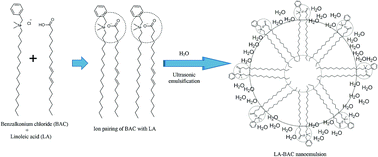
LA is a polyunsaturated carboxylic acid with an 18-carbon chain and two cis double bonds, and the cationic surface-acting agent BAC is a heterogeneous mixture of alkyl benzyl dimethyl ammonium chloride with an 18-carbon alkyl chain. In the NE system, the carboxylate group of LA molecules could have formed an ionic bond with the positively charged quaternary ammonium nitrogen of BAC molecule by Coulomb attraction without forming a covalent bond,53,54 which is clearly observed in the LA–BAC complex system (Fig. 4). The carboxylate group of LA is laid in between the chloride ion and quaternary ammonium nitrogen of BAC, which indicates the formation of a strong ionic bond between LA and BAC. Sarveiya et al. proved that the diffusion of drug molecules across a lipophilic membrane can be increased by the formation of ion-pairs.54,55 The formation of an LA ion pair with BAC (stable complex) in the NE may have facilitated its diffusion through the bacterial cell membrane. The enhanced penetration of LA along with the biocidal BAC into the bacterial cell might therefore have contributed to the increased antibacterial activity. In this system, it is proposed that the lipophilic hydrocarbon chains of LA and BAC formed the micellar hydrophobic central core, while the ion paired hydrophilic heads formed the hydrophilic surface of the micellar shell.
:
1, an in vitro cell culture system was used to determine the biological efficacy of optimized LA NE. Cytotoxicity evaluations were performed against Hep G2, MCF 7 and HeLa cells using the MTT assay. The cell viability within the concentration range studied (20 to 100 μg ml−1) was between 80.98 to 58.70% for Hep G2 cells, 77.21 to 64.25% for MCF 7 cells, and 78.51 to 57.92% for HeLa cells (Fig. 5). These findings displayed a dose dependent effect of the LA NE on cell viability, as a similar trend was observed across all cell lines. At a low concentration (20 μg ml−1), the LA NE (1
:
1) showed minimal cell death, however, as the concentration of LA NE (1
:
1) increased, the cell viability decreased significantly (p < 0.05). As the formulation studied contained equal amounts of LA and BAC, these results directly correlate with other studies that reported a dose dependent toxicity of BAC when studied against multiple cell lines.57,58 The results showed that LA NE, at a concentration of 20 μg ml−1, presented a cell viability of between 77.21 to 80.98% (Fig. 5), which is considered to be of low toxicity level.59 Interestingly, this formulation with a 1
:
1 ratio also had the greatest antimicrobial activity, with MIC values of 3.05 μg ml−1 and 1.52 μg ml−1 against S. aureus and MRSA respectively (Table 3).
![]() | ||
| Fig. 5 Cytotoxicity assay displaying percentage cell viability after exposure of cells (Hep G2, MCF-7 and HeLa) to optimized LA NE (n = 6). | ||
This data therefore suggests that the antibacterial dosage of LA NE against S. aureus and MRSA are well below the toxic dosage studied (20 μg ml−1), and could therefore be considered safe due to their nontoxicity to mammalian cells. The cytotoxicity of BAC to various mammalian cells is well documented in the literature58,60,61 with the highest tolerated dose against HepG2 cell lines reported as 1 μg ml−1.62,63 In this study, its cytotoxicity was reduced greatly in the presence of LA in the developed NE at the different concentration levels tested. This drastic lowering of the BAC cytotoxicity in combination with LA could be due to its ion pairing with oppositely charged LA molecules (as discussed under molecular modeling studies), and its partitioning into micelles. These effects collectively reduced the concentration of the free BAC molecules in the NE system. It has been reported that free BAC concentration in the NE is less due to its partitioning in the micelles.64 The optimized LA NE formulation therefore displays the ideal characteristics of an antimicrobial to be used for biomedical and pharmaceutical applications by displaying both good antimicrobial activity and non-toxicity against the mammalian cells studied.
| This journal is © The Royal Society of Chemistry 2015 |