Structure-activity investigations on amphiphilic cationic copolymers of vinyl N,N-dimethylethylglycinate with vinyl alkanoate esters as highly effective antibacterial agents

Ashish Puniaab and Nan-Loh Yang*ab
aCenter for Engineered Polymeric Materials, Department of Chemistry, College of Staten Island of the City University of New York, Staten Island, NY 10314, USA. E-mail: Nanloh.yang-cepm@csi.cuny.edu
bPh.D. Program in Chemistry, The Graduate Center of the City University of New York, New York, NY 10016, USA

Received 10th August 2015 , Accepted 18th September 2015

First published on 18th September 2015


Abstract

Synthetic amphiphilic poly(vinyl ester) copolymers of vinyl N,N-dimethylethylglycinate with vinyl alkanoate esters can show very high antibacterial activities. The copolymers contain a positive charge one carbon away from the ester group and alkane side chains in the size range from methyl to hexyl groups. A copolymer (degree of polymerization as 9) with 37 mole% of hexyl side chains showed high antibacterial activities in terms of minimum inhibitory concentrations (31 μg mL−1 against Escherichia coli and 16 μg mL−1 against Staphylococcus aureus) and an unusually high hemolytic activity. Compared with its isomeric polymethacrylates, this extremely high hemolytic power of poly(vinyl ester) can be attributed to its more accessible C[double bond, length as m-dash]O dipole orientation for hydrogen bond formation and dipole–dipole interaction with the cell surface.

Introduction

Incidents of infections involving multi drug resistant bacteria are increasing worldwide at an alarming rate.1 Outbreaks of drug resistant bacteria (superbugs) in hospitals are becoming dangerously common, which leads to a huge strain on health care budgets and thousands of casualties in the United States alone.2 Hospital acquired infections are largely associated with the growth of bacteria on medical implants, devices, catheters, and other surfaces.3 Coating of medical devices and other surfaces with antibacterial agents may prevent the proliferation of harmful bacteria. Bactericidal polymers that kill bacteria by leaching bioactive agents such as silver ion have attracted significant research interest in the last decade.4 These polymers suffer from the problems of releasing toxic agents into environment, and leaching of bioactive agents renders them ineffective after a period of time.3a,5 In another approach to synthesize antibacterial materials, conventional antibiotics have been attached to polymer backbone to achieve antibacterial activity.6 These polymers may not be active against drug resistant bacteria, and widespread use of such materials may further intensify the rate of bacterial resistance development.

Development of bacterial resistance towards natural host defense antimicrobial peptides (AMPs) is known to be unlikely or highly thwarted.7 A variety of AMPs have been identified in numerous organisms, such as: magainin in African clawed frog and LL 37 in humans.8 AMPs, despite their diverse type and sources, have the common amphiphilic structure with cationic and lipophilic groups.8,9 AMPs are believed to primarily target and disrupt the negatively charged cell surface of bacteria through non-specific electrostatic and lipophilic interactions, although other intercellular targets have also been identified.7–9 The attachment of cationic AMPs and their subsequent permeabilization into bacterial cell membrane leads to membrane depolarization, pore formation, and leaking of cytoplasm resulting in the bacterial cell death.8,10 This mechanism of action distinguishes AMPs from conventional antibiotics which inhibit the replication of specific enzymes or DNA.11 Costly and time consuming synthesis of sequence specific AMPs, or their isolation from natural sources severely limit their widespread therapeutic or biomedical application.12 On the other hand, synthetic amphiphilic polymers mimicking the fundamental cationic amphiphilic feature of AMPs can have large scale applications due to their facile and economical synthesis. It has been reported that bacterial resistance does not develop towards synthetic amphiphilic polymers, whereas substantial bacterial resistance evolves towards conventional antibiotics.13 Hence the attributes of synthetic amphiphilic polymers establish them as promising candidates to curb the burgeoning problem of multidrug resistant bacteria.

Focus of synthetic antimicrobial polymer research in the last decade have been on examining the effects of various structural parameters on the antibacterial and hemolytic activities of synthetic amphiphilic polymers including nylon,14 polymethacrylates,11 poly(vinyl pyridines),15 polynorbornenes,16 polyacrylamides,17 and polycarbonates.18 However, to the best of our knowledge, the antimicrobial activities of cationic amphiphilic poly(vinyl esters) have not been reported. Poly(vinyl acetate), a poly(vinyl ester), is a widely used biocompatible polymer.19 Cationic amphiphilic poly(vinyl esters), mimicking AMPs, can have potentially significant applications in the field of antimicrobial coatings, paints, and disinfectants, thus contributing to the reduction of the spread of drug resistant bacteria in healthcare settings.

Our ongoing investigations in the area of synthetic antibacterial polymers have been focussing on polyacrylate systems.20 We recently described a series of cationic amphiphilic acrylate copolymers representing one of the most encouraging synthetic polymer antibacterial systems reported.20a The subject of synthetic polymer for antimicrobial application is still at a developing stage. It would be desirable to explore a broad spectrum of macromolecular structures to develop a framework for structure-activity relationships. We report here our findings on the poly(vinyl ester) systems. Their ester functionality differs from that of polyacrylate in that its carbonyl group, a hydrogen bonding acceptor, is one bond further away from the polymer backbone. The polymers contain isomeric esters functionalities differing only in the orientation of the carbonyl group due to C–O vs. C–C bonding to chain back bone (Fig. 1), resulting in their difference in dipole direction with respect to the main chains. The poly(vinyl ester) is a better hydrogen bonding donor than polymethacrylate.21 Compared with polyacrylates, poly(vinyl esters) should assume more extended conformations in aqueous medium. On hydrolysis, the former polymer would carry hydroxyl groups; the latter, carboxylates.


image file: c5ra16006e-f1.tif
Fig. 1 The carbonyl group is further away from the polymer backbone in (A) poly(vinyl ester), as compared with (B) polyacrylate.

In this report we describe the design and synthesis of cationic amphiphilic poly(vinyl ester) copolymers bearing pendent quaternary ammonium and lipophilic alkyl side groups. A library of amphiphilic poly(vinyl ester) random copolymers with three molecular weight levels and lengths of alkyl side chain was synthesized to probe the structure-biological activity relationships in poly(vinyl ester) copolymers. Our study found that majority of these copolymers displayed high antibacterial activity towards both gram negative Escherichia coli (E. coli) and gram positive Staphylococcus aureus (S. aureus) bacteria.

Experimental

Materials

Butyric acid (>99%), heptanoic acid (>99%), mercuric acetate (98%), vinyl acetate (>99%), vinyl propionate (>98%), sulfuric acid (99.99%), silica gel, tetrahydrofuran (anhydrous), 2,2′-azobis(2-methylpropionitrile) (99%), methyl 3-mercaptopropionate (98%), acetonitrile (anhydrous), and N,N-dimethylethylamine (99%) were purchased from Sigma-Aldrich. Vinyl acetate and vinyl propionate were stirred with inhibitor remover for 20 minutes and filtered prior to use. All other chemicals were used without further purification. Valeric acid (99%) and hexanoic acid (>98%) were obtained from Alfa Aesar and were used as received. Dichloromethane, hexanes, and diethyl ether were purchased from BDH Chemicals.

Instrumentation

1H NMR spectra for monomers and polymers were obtained on a Varian unity NMR spectrometer (600 MHz) using CDCl3 or DMSO-d6 as solvents. Molecular weights of precursor polymers were estimated using linear polystyrene standards on an EcoSec HLC-83220 gel permeation chromatography instrument (RI detector, TSKgel SuperHZ-N (3 μm 4.6 mm ID) and TSKgel Super HZ-M (3 μm 4.6 mm ID) columns) by Tosoh Bioscience, using tetrahydrofuran as eluent (flow rate of 0.35 mL minute−1). To measure bacterial growth in E. coli and S. aureus cell culture, OD600 was obtained on an Agilent 8453 spectrophotometer using 1 cm path length plastic cuvette. OD595 (antibacterial test) and OD414 (hemolysis test) were obtained on a SpectraMax 340 PC microplate reader from Molecular Devices.

Synthesis of copolymers20

A representative copolymer synthesis is as follows. Vinyl heptanoate (1.56 g, 10 mmol) and vinyl chloroacetate (1.20 g, 10 mmol) were added into a 100 mL 3 neck round bottom flask already charged with AIBN (0.0328 g) and tetrahydrofuran (12 mL). The reaction mixture was degassed (using stainless steel needle) with nitrogen for 5 minutes, followed by stirring under reflux at 65 °C for 20 h. Excess solvent was evaporated using rotavapor, and resulting viscous polymer solution was precipitated in hexane 3 times (58% yield). The mole percentage of comonomers was calculated from 1H NMR and found to be in close agreement with feed mole percentage. Degree of polymerization was calculated using end group analysis from 1H NMR. Molecular weights were estimated using gel permeation chromatography.

Quaternization of copolymers

0.4 g of poly(vinyl heptanoate-co-vinyl chloroacetate) was dissolved in 30 mL anhydrous acetonitrile and added into a 100 mL single neck round bottom flask. The mixture was sealed and degassed with nitrogen (using stainless steel needle) for 5 minutes. N,N-Dimethylethylamine (10 mL) was added while stirring, and the mixture was left under stirring at room temperature for 72 h. Excess solvent was evaporated using rotavapor under reduced pressure, and polymer was dissolved in 2 mL methanol and precipitated in diethyl ether three times. Resulting polymer was kept under vacuum for 2 days and subsequently lyophilized to obtain quaternized polymer as a white powder (0.456 g). Complete quaternization was observed within the detection limit of NMR (Fig. 1b).

Preparation of copolymer dilutions for antibacterial and hemolytic tests20,22

Each copolymer was dissolved in dimethyl sulfoxide (DMSO) to prepare a stock solution (20 mg mL−1). Two fold serial dilutions and some intermediate concentrations (14.29 mg mL−1, 7.143 mg mL−1, and 3.846 mg mL−1) were then obtained by adding deionized water. Similarly, control solutions (without polymers) were prepared by diluting DMSO with deionized water.

Antibacterial test

Antibacterial activity of each copolymer was assessed against E. coli (TOP 10, ampicillin resistant) and S. aureus ATCC 25923, using a micro dilution assay protocol as described in literature.20,22 E. coli was incubated at 37 °C in Luria Bertani (LB) broth, containing ampicillin, for 24 h. 1 mL of this cell suspension was diluted with 9 mL fresh LB broth (OD600 = 0.1), and incubated under shaking at 37 °C for approximately 1.5 h (OD600 = 0.5–0.6) to obtain bacteria cell suspension in log phase growth. This cell culture was further diluted with LB broth to obtain the final cell suspension with OD600 = 0.001. This E. coli suspension (90 μL) and 10 μL of polymer solutions, or control solutions, were added (in triplicate) into each well of a 96 well sterile tissue culture plate (REF 353916, BD falcon, flat bottom). Assay plates were incubated for 18 h at 37 °C. Bacterial growth was measured as turbidity at λ = 595 nm (OD595) using a SpectraMax 340 PC microplate reader. The Minimum Inhibitory Concentrations (MIC) is defined as the lowest polymer concentration required to completely inhibit bacterial cell growth. MIC values of copolymers were similarly obtained against S. aureus. Mueller-Hinton (MH) broth was used as the growth medium for S. aureus in place of LB broth. MIC values reported here are the averages of three independent experiments performed on different days.

Hemolytic test

Hemolytic activities of copolymers were determined against freshly drawn mouse red blood cells (RBCs) as per literature.20,22 RBCs were obtained by centrifuging the freshly drawn mouse blood at 3000 rpm for 15 minutes followed by removal of plasma and white blood cells. 9 mL TBS (10 mM Tris buffer, 150 mM NaCl, pH = 7) was then added into 1 mL RBCs. This RBCs' suspension was further diluted by adding TBS to obtain a final cell stock suspension of 0.25% RBCs. 120 μL of this stock suspension, 15 μL polymer solution, and 15 μL TBS were added into 0.6 mL centrifugation tubes. The tubes were then incubated at 37 °C for 1 h followed by centrifugation of tubes at 4000 rpm for 5 minutes. The supernatant (30 μL) was added (in triplicate) into each well of the 96 well tissue culture plates containing 70 μL TBS in each well. Hemoglobin concentration as optical density at λ = 414 nm (OD414) was obtained on a microplate reader. Control solutions (without polymer) were used as a reference for 0% hemolysis, and 1% triton was used as a positive control, a reference for 100% hemolysis. Hemolytic concentration-50% (HC50) is defined as the minimum polymer concentration required to lyse 50% RBCs within an incubation period of 1 h. HC50 values reported are the averages of three separate experiments performed on different days.

Results and discussion

Synthesis and characterization of copolymers

We synthesized a library of cationic amphiphilic poly(vinyl ester) random copolymers by free radical polymerization of vinyl ester monomers (Scheme 1). Vinyl chloroacetate was copolymerized in equimolar feed ratio (1[thin space (1/6-em)]:[thin space (1/6-em)]1) with a range of vinyl ester monomers with side group length varying from methyl to hexyl. The range of side group lengths from one carbon to six carbons serves to examine the effect of polymer amphiphilicity on antibacterial and hemolytic activities of these copolymers. Vinyl chloroacetate was used as a precursor to provide cationic groups in copolymers, as alkyl chloride bond can be readily quaternized with a tertiary amine to obtain cationic amphiphilic copolymers. Each copolymer was synthesized at three molecular weight levels through adjusting the feed mole ratio of monomers to methyl 3-mercaptopropionate, a chain transfer agent (Table 1). Molecular weights of precursor (before quaternization) copolymers were estimated by gel permeation chromatography using linear polystyrenes as standard. The molecular weight levels of copolymers were found to be approximately 2.3k g mol−1, 4k g mol−1, and 7k g mol−1 (Table 1). The chain transfer agent was not added in the synthesis of copolymers at the highest size level (7k g mol−1). Precursor copolymers were quaternized with excess of N,N-dimethylethylamine to ensure complete quaternization. Complete quaternization was observed within the detection limit of 1H NMR (Fig. 2b). Notation of CP-alkylxk is used to represent copolymers, e.g. CP-butyl7k denoting the copolymer having n-butyl group in the side chain and the molecular weight (Mw, GPC) of approximately 7k g mol−1. The monomers, precursor copolymers, and the quaternized copolymers were characterized using 1H NMR (Fig. 2 and ESI). Furthermore, 1H NMR was also used to calculate degree of polymerization (ESI; results in agreement with GPC molecular weights) and actual mole ratio of hydrophobic to cationic repeat units in copolymers (ESI).
image file: c5ra16006e-s1.tif
Scheme 1 Synthesis of copolymers through free radical polymerization and subsequent quaternization reaction.
Table 1 Characterization and biological activities of poly(vinyl ester) copolymers
Copolymer fHBa MMPb [mL] Mw [g mol−1] DPc MIC E. coli [μg mL−1] MIC S. aureus [μg mL−1] HC50 RBC [μg mL−1]
a Actual mole% of the hydrophobic comonomer.b MMP is methyl 3-mercaptopropionate.c DP is degree of polymerization as calculated through 1H NMR (ESI).
CP-methyl2.3k 39% 0.443 1878 6 1810 2000 >2000
CP-ethyl2.3k 43% 0.443 2076 7 2000 1620 >2000
CP-propyl2.3k 41% 0.443 2363 10 250 125 41
CP-butyl2.3k 36% 0.443 2216 7 62 31 20
CP-pentyl2.3k 42% 0.443 2722 12 52 16 <7
CP-hexyl2.3k 37% 0.443 2780 9 31 16 <7
CP-methyl4k 37% 0.110 3487 37 2000 1810 >2000
CP-ethyl4k 44% 0.110 3469 40 2000 714 1000
CP-propyl4k 45% 0.110 3188 33 125 62 31
CP-butyl4k 41% 0.110 4230 47 62 31 <7
CP-pentyl4k 44% 0.110 4163 36 125 31 <7
CP-hexyl4k 43% 0.110 5269 37 125 62 <7
CP-methyl7k 45% 0 6382 >2000 2000 >2000
CP-ethyl7k 45% 0 6315 2000 571 >2000
CP-propyl7k 47% 0 7097 104 167 <7
CP-butyl7k 47% 0 5134 83 62 <7
CP-pentyl7k 48% 0 10[thin space (1/6-em)]141 125 31 <7
CP-hexyl7k 48% 0 10[thin space (1/6-em)]498 125 31 <7


image file: c5ra16006e-f2.tif
Fig. 2 1H NMR (600 MHz) spectrum of CP-hexyl7k (A) before quaternization and (B) after quaternization.

Antibacterial activity

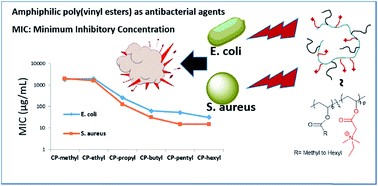
Antibacterial activities of quaternized copolymers were assessed against gram negative E. coli and gram positive S. aureus. MIC values of copolymers against E. coli are as shown in Fig. 3 and Table 1. Activity of 2.3k g mol−1 series copolymers against E. coli increased, as the length of side chain was increased from methyl (MIC = 1809 μg mL−1) to hexyl (MIC = 31 μg mL−1). CP-methyl2.3k and CP-ethyl2.3k were inactive against E. coli. Further increasing the length of side chain to three carbon atoms (CP-propyl2.3k) led to marked increase in antibacterial activity. This observation likely reflects the membrane rupture mechanism of cationic amphiphilic polymers, as a certain degree of hydrophobicity is required to penetrate through the hydrophobic core of lipid bilayer.22 Further increase in the length of hydrophobic side chain led to gradual improvement in antibacterial activity towards E. coli with CP-hexyl2.3k displaying highest antibacterial activity in the 2.3k g mol−1 series. While 2.3k g mol−1 series copolymers displayed continuous increase in activity against E. coli as the length of side chain increased from methyl to hexyl, 4k and 7k g mol−1 series copolymers demonstrated a different trend in activity against E. coli. In 4k and 7k g mol−1 series, an increase in side group length from methyl to propyl led to increase in antibacterial activity against E. coli, reached a maximum at butyl, but further increase in side group length led to reduction of antibacterial activity (Table 1 and Fig. 3). These results indicate that a certain length of side group is required to enhance the bacterial cell membrane permeability of these copolymers, but higher than optimum hydrophobic side chain length may hamper the interactions of copolymers with negatively charged bacterial cell surface. Higher hydrophobicity of copolymers due to longer side chain length may lead to association of highly hydrophobic amphiphilic copolymers in aqueous assay medium.22 Such hydrophobic copolymer associations can reduce the effective concentration of copolymers available to interact with the bacterial cells, with large chains, as in 4k and 7k g mol−1, showing more reduction. Aggregation of antimicrobial peptides has been reported to result in reduction of their antimicrobial activity.23a Moreover, the steric hindrance from long alkyl side chains can hinder the attachment of cationic groups to the negatively charged bacterial cell surface. Thus, a synergistic balance of cationic and hydrophobic components in polymers would be favorable for high antibacterial activity. CP-hexyl2.3k displayed the highest activity against E. coli among all copolymers. In copolymers with similar compositions of large hydrophobic side groups, a shorter copolymer chain with lower number of lipophilic side chains can have lower hydrophobicity, as compared with longer polymers chains with larger number of long hydrophobic side groups. In a recent report, adhesion of highly charged nanoparticles on bacterial cells has been to shown to result in the sedimentation of bacterial and nanoparticle suspension.23b Such aggregation and subsequent settling down of nanoparticle suspension and bacterial cells resulted in huge error and disqualification of MIC tests.23b However, the polymers reported here are readily soluble in water and aqueous nutrient media and form clear solutions rather than suspension. We did not observe any polymer or polymer-bacterial cell aggregates. Hence, a significant error or disqualification of MIC values due to aggregation in not expected in our case.
image file: c5ra16006e-f3.tif
Fig. 3 Antibacterial activities of (a) 2.3k g mol−1, (b) 4k g mol−1, and (c) 7k g mol−1 series copolymers against E. coli and S. aureus, as a function of length of alkyl side chain. Error bars represent standard deviation.

The MIC values of these quaternized copolymers against S. aureus are as shown in Fig. 3 and Table 1. Similar to activity against E. coli, a combination of low molecular weight (2.3k g mol−1) and long alkyl side chain (hexyl) led to highest antibacterial activity against S. aureus. CP-pentyl2.3k and CP-hexyl2.3k manifested the lowest MIC value (15 μg mL−1) among all the copolymers reported here. CP-methyl2.3k and CP-ethyl2.3k were inactive against S. aureus, similar to their activity against E. coli. However, with increase in molecular weight (4k and 7k g mol−1), CP-ethyl displayed a slight increase in antibacterial activity against S. aureus. An increase in alkyl side chain length from ethyl to propyl led to substantial increase in antibacterial against S. aureus at all molecular weight levels (Fig. 3). Therefore, three carbon atoms in the side chain appears to be the threshold, below which no significant antibacterial activity was observed in these copolymers.

As apparent from Table 1 and Fig. 3, copolymers with alkyl side chain from propyl to hexyl are more antibacterial towards S. aureus than E. coli. Similar observation of bacterial cell selectivity have been reported in case of “facially amphiphilic” polynorbornenes by Tew et al.24 Difference in the cell surface morphology of E. coli and S. aureus may be the reason behind this observation.24 Double membrane structure of E. coli may be more difficult to penetrate as compared with single membrane structure of the S. aureus. Moreover, the negatively charged peptidoglycan or murein layer is only 6–8 nm thick in E. coli, and is also sandwiched between the outer and inner membrane. In comparison with E. coli, the surface of S. aureus is covered by a 20–80 nm thick negatively charged murein layer. Therefore, cationic copolymers may have more electrostatic interactions with S. aureus cell surface, as compared with E. coli.

Hemolytic activity

To ascertain the toxicity of our quaternized copolymers towards mammalian cells, we evaluated the hemolytic activity of these quaternized copolymers against freshly drawn mouse RBCs. HC50 values for quaternized copolymers are as shown in Fig. 4 and Table 1. All copolymers, except CP-methyl and CP-ethyl, displayed high toxicity towards RBCs. The lack of significant hemolytic and antibacterial activity in case of CP-methyl and CP-ethyl suggests that they do not have the ability to rupture cell membranes of either erythrocytes or bacteria. CP-propyl2.3k and CP-butyl2.3k displayed slightly lower hemolytic activity as compared to their higher molecular weight counterparts, but CP-pentyl and CP-hexyl were highly hemolytic (HC50 < 7 μg mL−1) at all three molecular weight levels.
image file: c5ra16006e-f4.tif
Fig. 4 Hemolytic activities copolymers as a function of copolymer molecular weight and length of alkyl side chain. Error bars represent standard deviation.

These results indicate that these poly(vinyl ester) copolymers are highly active against erythrocytes. A reason behind high hemolytic activity of these copolymers can be their more accessible C[double bond, length as m-dash]O dipole orientation for hydrogen bonding formation and dipole–dipole interaction with the cell surface. The hemolytic activity of cationic amphiphilic polymers also requires hydrophobic interactions between the lipophilic core of lipid bilayer and the hydrophobic moieties in the amphiphilic copolymers.11 CP-methyl and CP-ethyl with very short hydrophobic side groups are non-hemolytic, whereas copolymers with four to six-carbon atoms are highly hemolytic. A comparison of hemolytic activities of these poly(vinyl esters) with similar quaternized polymethacrylate copolymers25 indicates that poly(vinyl ester) have substantially higher hemolytic activity than polymethacrylates, while displaying similar antibacterial activities as polymethacrylates. In comparison with polymethacrylates, the carbonyl groups in poly(vinyl esters) are further away from the backbone (Fig. 1), which may result in more effective hydrogen bonding and/or dipole–dipole interactions of polymers with glycoproteins and zwitterionic lipids on RBCs' cell surface. On individual cell basis, the RBC surface is much larger than that of a bacterial cell. Level of membrane rupture per unit surface area required for RBC hemoglobin leakage should be much lower than that for bacterial cell death. Thus, the impact of higher tendency of association of poly(vinyl esters) with RBC can be greatly accentuated, leading to high hemolytic activity but much lower impact on antibacterial activities on smaller cells.

Conclusions

In this study, a library of cationic amphiphilic poly(vinyl ester) random copolymers were synthesized and their antibacterial and hemolytic activities were investigated as a function of copolymer amphiphilicity and molecular weight. Majority of our quaternized copolymers displayed high activity against both gram negative E. coli and gram positive S. aureus. A combination of lower molecular weight and six carbon atoms in the lipophilic alkane side group resulted in highest antibacterial activity, whereas copolymers with very short side groups did not demonstrate antibacterial activity. Therefore, a control of molecular weight and length of alkyl side group is essential to achieve superior antibacterial activity in these quaternized poly(vinyl esters). Most of these copolymers were more active towards S. aureus as compared with E. coli. Our studies found that majority of these poly(vinyl esters) demonstrated high hemolytic activity. The hemolytic activities of poly(vinyl esters) are found to be substantially higher than the hemolytic activities reported for similar polymethacrylates. Thus, the isomeric structural difference between poly(vinyl ester) and polymethacrylates can have significant impact on the biological interactions by amphiphilic polymers. Due to high antibacterial activity of these polymers against both gram negative E. coli and gram positive S. aureus, these polymers can be useful to prevent growth of harmful and drug resistant bacteria on surfaces in health care settings, and numerous other areas where the surfaces do not come in extended direct contact with human RBCs.

Acknowledgements

We acknowledge the support from Center for Engineered Polymeric Materials, CUNY Graduate Center, Department of Chemistry at College of Staten Island (CSI) of CUNY, and CUNY RF 68464-00 46. We thank Ms Sultana Begum for providing the freshly drawn mice RBCs.

Notes and references

  1. (a) D. Jabes, Curr. Opin. Microbiol., 2011, 14, 1 CrossRef PubMed; (b) H. W. Boucher, Clin. Infect. Dis., 2010, 50, S4 CrossRef PubMedhttp://www.cdc.gov/drugresistance/threat-report-2013/.
  2. (a) A. Y. Peleg and D. C. Hooper, N. Engl. J. Med., 2010, 362, 1804 CrossRef CAS PubMed; (b) R. M. Klevens, J. R. Edwards, C. J. Richards Jr, T. C. Horan, R. P. Gaynes, D. A. Pollock and D. M. Cardo, Public Health Rep., 2007, 122, 160 Search PubMed; (c) H. C. Kung, D. L. Hoyert, J. Xu and S. L. Murphy, Natl. Vital Stat. Rep., 2008, 56, 1 Search PubMed; (d) P. W. Stone, E. C. Hedblom, D. M. Murphy and S. B. Miller, Am. J. Infect. Control, 2005, 33, 542 CrossRef PubMed.
  3. (a) A. E. Madkour and G. N. Tew, Polym. Int., 2008, 57, 6 CrossRef CAS PubMed; (b) B. D. Ratner, Polym. Int., 2007, 56, 1183 CrossRef CAS PubMed.
  4. (a) P. Sonntag, P. Hoerner, A. Cheymol, G. Argy, G. Riess and G. Reiter, Nat. Mater., 2004, 3, 311 CrossRef CAS PubMed; (b) G. L. Y. Woo, M. W. Mittelman and J. P. Santerre, Biomaterials, 2000, 21, 1235 CrossRef CAS; (c) V. Acharya, C. R. Prabha and C. N. Murthy, J. Polym. Mater., 2003, 20, 83 CAS; (d) C. H. Ho, J. Tobis, S. Christina, R. Thomas and J. C. Tiller, Adv. Mater., 2004, 16, 957 CrossRef CAS PubMed; (e) V. Sambhy, M. M. MacBride, B. R. Peterson and A. Sen, J. Am. Chem. Soc., 2006, 128, 9798 CrossRef CAS PubMed.
  5. (a) P. H. Sellenet, B. Allison, B. M. Applegate and J. P. Youngblood, Biomacromolecules, 2007, 8, 17 CrossRef PubMed; (b) Y. Ye, Q. Song and Y. Mao, J. Mater. Chem., 2011, 21, 257 RSC.
  6. (a) W. Kohnen, C. Kolbenschlag, S. T. Keiser and B. Janser, Biomaterials, 2003, 24, 4865 CrossRef CAS; (b) R. Maeyama, I. K. Kwon, Y. Mizunoe, J. M. Anderson, M. Tanaka and T. J. Matsuda, J. Biomed. Mater. Res., Part A, 2005, 75, 146 CrossRef PubMed; (c) B. Dizman, M. O. Elasri and L. J. Mathias, Biomacromolecules, 2005, 6, 514 CrossRef CAS PubMed.
  7. M. Zasloff, Nature, 2002, 415, 389 CrossRef CAS PubMed.
  8. K. A. Brogden, Nat. Rev. Microbiol., 2005, 3, 238 CrossRef CAS PubMed.
  9. (a) H. G. Boman, Immunol. Rev., 2000, 173, 5 CAS; (b) R. E. W. Hancock and R. Lehrer, Biotechnol. J., 1998, 16, 82 CAS.
  10. (a) N. Y. Yount, A. S. Bayer, Y. Q. Xiong and M. R. Yeaman, Biopolymers, 2006, 84, 435 CrossRef CAS PubMed; (b) L. Yang, A. Mishra, K. Purdy, A. Som, G. N. Tew and G. C. L. Wong, J. Am. Chem. Soc., 2007, 129, 12141 CrossRef CAS PubMed.
  11. K. Kuroda and G. A. Caputo, WIREs Nanomed. Nanobiotechnol., 2013, 5, 49 CrossRef CAS PubMed.
  12. (a) A. K. Marr, W. J. Gooderham and R. E. W. Hancock, Curr. Opin. Pharmacol., 2006, 6, 468 CrossRef CAS PubMed; (b) J. L. Fox, Nat. Biotechnol., 2013, 31, 379 CAS.
  13. I. Sovadinova, E. F. Palermo, M. Urban, P. Mpiga, G. A. Caputo and K. Kuroda, Polymers, 2011, 3, 1512 CrossRef CAS PubMed.
  14. (a) B. P. Mowery, S. E. Lee, D. A. Kissounko, R. F. Epand, R. M. Epand, B. Weisblum, S. S. Stahl and S. H. Gellman, J. Am. Chem. Soc., 2007, 129, 15474 CrossRef CAS PubMed; (b) R. Liu, X. Chen, S. Chakraborty, J. J. Lemke, Z. Hayouka, C. Chow, R. A. Welch, B. Weisblum, K. S. Masters and S. H. Gellman, J. Am. Chem. Soc., 2014, 136(11), 4410 CrossRef CAS PubMed.
  15. (a) B. C. Allison, B. M. Applegate and J. P. Youngblood, Biomacromolecules, 2007, 8, 2995 CrossRef CAS PubMed; (b) T. R. Stratton, J. A. Howarter, B. C. Allison, B. M. Applegate and J. P. Youngblood, Biomacromolecules, 2010, 11, 1286 CrossRef CAS PubMed.
  16. (a) K. Lienkemp and G. N. Tew, Chem.–Eur. J., 2009, 15, 11784 CrossRef PubMed; (b) K. Lienkamp, A. E. Madkour, A. Musante, C. F. Nelson, K. Nüsslein and G. N. Tew, J. Am. Chem. Soc., 2008, 130, 9836 CrossRef CAS PubMed; (c) M. F. Ilker, K. Nüsslein, G. N. Tew and E. B. Coughlin, J. Am. Chem. Soc., 2004, 126, 15870 CrossRef CAS PubMed.
  17. (a) L. C. Paslay, B. A. Abel, T. D. Brown, V. Koul, V. Choudhary, C. L. McCormick and S. E. Morgan, Biomacromolecules, 2012, 13(8), 2472 CrossRef CAS PubMed; (b) E. F. Palermo, I. Sovadinova and K. Kuroda, Biomacromolecules, 2009, 10, 3098 CrossRef CAS PubMed.
  18. A. C. Engler, J. P. K. Tan, Z. Y. Ong, D. J. Coady, V. W. L. Ng, Y. Y. Yang and J. L. Hedrick, Biomacromolecules, 2013, 14, 4331 CrossRef CAS PubMed.
  19. A. Sadato, W. Taki, Y. Ikada, I. Nakahara, K. Yamashita, K. Matsumoto, M. Tanaka, H. Kikuchi, Y. Doi, T. Noguchi and T. Inada, Neuroradiology, 1994, 36(8), 634 CrossRef CAS.
  20. (a) A. Punia, E. He, K. Lee, P. Banerjee and N.-L. Yang, Chem. Commun., 2014, 50, 7071 RSC; (b) A. Punia, A. Mancuso, P. Banerjee and N.-L. Yang, ACS Macro Lett., 2015, 4, 426 CrossRef CAS.
  21. H. Lee and T. Chang, Macromolecules, 2001, 34(4), 937 CrossRef CAS.
  22. K. Kuroda and W. F. DeGrado, J. Am. Chem. Soc., 2005, 127(12), 4128 CrossRef CAS PubMed.
  23. (a) R. Feder, A. Dagan and A. Mor, J. Biol. Chem., 2000, 275, 4230 CrossRef CAS PubMed; (b) B. Fang, Y. Jiang, K. Nusslein, V. M. Rotello and M. M. Santore, Colloids Surf., B, 2015, 125, 255 CrossRef CAS PubMed.
  24. K. Lienkemp, K.-N. Kumar, A. Som, K. Nusslein and G. N. Tew, Chem.–Eur. J., 2009, 15, 11710 CrossRef PubMed.
  25. E. F. Palermo and K. Kuroda, Biomacromolecules, 2009, 10, 1416 CrossRef CAS PubMed.

Footnote

Electronic supplementary information (ESI) available: Synthesis of monomers, NMR spectra, and GPC results. See DOI: 10.1039/c5ra16006e

This journal is © The Royal Society of Chemistry 2015
Click here to see how this site uses Cookies. View our privacy policy here.