
Ammonia removal from water using sodium hydroxide modified zeolite mordenite

Jennifer Pieter Soetardji a, Jeannete Cindy Claudiaa, Yi-Hsu Jub, Joseph A. Hriljacc, Tzu-Yu Chenc, Felycia Edi Soetaredjo*a, Shella Permatasari Santosob, Alfin Kurniawanb and Suryadi Ismadji*a
aDepartment of Chemical Engineering, Widya Mandala Surabaya Catholic University, Kalijudan 37, Surabaya 60114, Indonesia. E-mail: felyciae@yahoo.com; suryadiismadji@yahoo.com; Fax: +62 31 389 1267; Tel: +62 31 389 1264
bDepartment of Chemical Engineering, National Taiwan University of Science and Technology, No. 43, Sec. 4, Keelung Rd., Taipei City 106, Taiwan, Republic of China
cSchool of Chemistry, University of Birmingham, Edgbaston, Birmingham B15 2TT, UK

Received 3rd August 2015 , Accepted 24th September 2015

First published on 25th September 2015


Abstract

Natural and modified mordenite zeolites were used to remove ammonium ions from aqueous solution and Koi pond water. The zeolite modification was conducted using sodium hydroxide solutions of different strengths at 75 °C for 24 h. Langmuir, Freundlich, Sips, and Toth equations with their temperature dependent forms were used to represent the adsorption equilibria data. The Langmuir and its temperature dependent forms could represent the data better than the other models. The pseudo-first order model has better performance than the pseudo-second order model in correlating the adsorption kinetic data. The controlling mechanism of the adsorption of NH4+ from aqueous solution onto the natural zeolite and the one treated with 6 M sodium hydroxide solution was dominated by physical adsorption. The competition with other ions occurred through different reaction mechanisms so it decreases the removal efficiency of ammonium ions by the zeolites. For the treated zeolite, the removal efficiency decreased from 81% to 66.9%. A Thomas model can represent the experimental data for both adsorption of ammonia from aqueous solution or from Koi pond water.

Introduction

The presence of ammonia in aquatic environments causes a serious problem for aquatic biota, especially fish. In water, the ammonia can be present in the ionized form (NH4+) and un-ionized form (NH3), and both of these substances are present under equilibrium conditions according to the following equation:1
 
NH3 + H2O ↔ NH4+ + OH (1)

The total concentration of the ionized ammonia (NH4+) and un-ionized ammonia (NH3) in water is defined as the total ammonia nitrogen (TAN), and at a certain concentration the un-ionized ammonia (NH3) is lethal for fish. The equilibrium concentration of ammonia in the water is affected by both the pH and temperature. At high pH, the equilibrium condition (eqn (1)) will shift towards the formation of ammonia, while at low pH the formation of ammonium ion (NH4+) is dominant. For aquatic biota such as fish, the ammonium ion is relatively non-toxic compared to the ammonia. Ammonia also predominates when temperature is high while the ammonium ion predominates at low temperature.

In the aquaculture industry the quality of water is the most important parameter for the continuation of the industry. One of the important parameters for the quality of water is TAN as it is the major nitrogenous waste product of fish and also results from the decomposition of organic matter. As a natural byproduct of fish metabolism, ammonia can accumulate easily in an aquatic system and it has the tendency to block the transfer of oxygen from gills to the blood nerve system and cause gill damage. The excess ammonia in water also destroys the mucous producing membrane in fish and damages the internal intestinal surfaces. The presence of excessive amounts of ammonia in the aquatic environment causes eutrophication.

A number of processes are currently available for the removal of TAN from the aquatic environment, and the most widely used process is the adsorption process. This process offers several advantages over other available processes, such as high removal efficiency, the adsorbent can be re-used, it can be applied for a wide range of concentrations, and is a cost effective process. One of the available natural adsorbents which is widely employed for the removal of ammonia from aquatic environment is a zeolite. A zeolite is a microporous aluminosilicate mineral which possesses a structure like a three-dimensional honeycomb with an overall negatively charged framework. The presence of hydrated alkali and/or alkaline earth cations (Na+, K+, Ca2+, Mg2+) in the pores of the aluminosilicate framework stabilizes the structure, and in the aquatic condition, these cations are also exchangeable with other cations from the solution.2,3

The disadvantage of using a natural zeolite as an adsorbent for the removal of NH4+ ion from aqueous solution is a low adsorption capacity; most have a value less than 10 mg g−1.4–10 The low adsorption capacity and removal efficiency are still the main problem for industrial application of natural zeolites in aquaculture, water and wastewater processes. In order to improve the adsorption capacity, a modification using a chemical treatment processes is necessary such as using an acid, alkali or salt.11–14 Microwave irradiation15 and heat treatment16 methods have also been employed to increase the adsorption capacity of natural zeolites. Leyva-Ramos et al.14 modified natural zeolite chabazite with sodium chloride to remove ammonium from aqueous solution and the result clearly indicates that chabazite enriched with Na+ is more preferentially exchanged by NH4+ than the other alkali cations. The modification using acid solution is seldom used because acid treatment causes de-alumination, the removal of Al3+ ions from the zeolite structure degrades it and decreases the ion exchange capacity.1

In this study a modification of natural mordenite with sodium hydroxide combined with a thermal treatment is investigated. To the best of our knowledge, this is the first of the use of such a modified zeolite as the adsorbent for removal of the ammonium ion from aqueous solution in an aquaculture system (Koi pond). Since the final goal of this study was to treat the ammonia from the Koi pond, therefore all of the adsorption experiments were conducted at a pH similar to the water of Koi pond system (6.5). The adsorption isotherms of ammonium ion onto natural and modified mordenite were obtained at three different temperatures (303.15, 308.15, and 313.15 K). The temperature-dependent forms of the Langmuir, Freundlich, Sips, and Toth equations were used to correlate the experimental adsorption data. The adsorption kinetics of ammonium ions onto the natural and modified zeolite was also studied. Well known pseudo first- and second-order kinetic models were employed to represent the kinetic data. The removal of ammonium ion from the Koi pond system was conducted in dynamic mode. The breakthrough adsorption performances were correlated by a Thomas equation.

Material and method

Materials

The natural zeolite used in this study was obtained from Ponorogo, East Java, Indonesia. The zeolite was crushed in a mortar and sieved using a Retsch Haan vibrator screener to particle size of about 0.85–1.70 mm (−12 + 20 US mesh). All of the chemicals used in this study were obtained as pure analysis reagents from Sigma Aldrich Singapore and used without any further treatment or purification.

Modified zeolite preparation

The modification of the natural zeolite was performed under alkaline condition using sodium hydroxide solution at concentrations of 1 M, 3 M, and 6 M at 75 °C for 24 h. Subsequently the modified zeolite was washed using tap water to remove excess sodium hydroxide solution. Then, the solid sample was dried at 110 °C for 24 h.

Characterization of solid samples

The characterization of the natural (NatZ) and modified zeolites (1M-Z, 3M-Z, and 6M-Z) used scanning electron microscopy (SEM), X-ray diffraction (XRD), and nitrogen sorption. The SEM analysis was conducted to study the surface topography and texture of the adsorbents. The SEM analysis was conducted on a JEOL JSM-6390 field emission SEM operated at an accelerating voltage of 15 kV. Prior to analysis the samples were coated with ultra-thin layer of conductive platinum on the specimens using an auto fine coater (JFC-1200, JEOL, Ltd, Japan) for 120 s in an argon atmosphere. The X-ray diffraction analysis was conducted on a Philips PANalytical X'Pert powder X-ray diffractometer with monochromated high intensity Cu Kα1 radiation (λ = 0.15406 nm). The diffractograms were obtained at 40 kV, 30 mA and with a step size of 0.05° s−1. The elemental compositions of the adsorbents were analyzed using a Bruker S8 Tiger X-ray fluorescence spectrophotometer.

The pore structures of NatZ, 1M-Z, 3M-Z, and 6M-Z were characterized by nitrogen sorption method. The nitrogen sorption measurements were carried out at boiling point of liquid nitrogen (77 K) on automated Micromeritics ASAP2010 sorption equipment. Prior to the analysis, the solid samples were degassed at 473.15 K for 24 h. The specific surface area of the samples were calculated by the Brunauer–Emmett–Teller (BET) method at a range of relative pressure of 0.05 to 0.3, while the total pore volume was determined at a relative pressure of 0.995.

Adsorption isotherm study

The adsorption isotherm study was conducted in batch mode at three different temperatures (303, 308, and 313 K) and pH of 6.5. A known amount of adsorbent (0.1 to 1.0 g) was added in a series of Erlenmeyer flasks containing 100 mL ammonium chloride solution with a concentration of 10 mg L−1. The flasks were moved to a Memmert type WB-14 thermostatic shaker water bath. The temperature of the thermostatic shaker water bath was adjusted to a desired temperature and then the system was shaken at 100 rpm for 24 h (equilibrium condition). The equilibrium condition was determined at temperature of 303 K, pH of 6.5, and initial solution concentration of 10 mg L−1. After the equilibrium time was reached, the solid adsorbent was removed from the solution by centrifugation. The concentration of ammonium in the solution was measured quantitatively at maximum wavelength (699.5 nm) based on Nessler method17 using Shimadzu UV/Vis-1700 Pharma Spectrophotometer. The amount of ammonium ion adsorbed by the adsorbent at equilibrium condition was calculated by the following equation:
 
image file: c5ra15419g-t1.tif(2)
where qe is the equilibrium condition (mg g−1), Co (mg L−1) and Ce (mg L−1) are the initial and equilibrium concentration of ammonium in the solution, respectively. The amount of adsorbent (g) and the volume of solution (L) are represented by symbols m and V. The adsorption isotherm experiments were conducted in triplicate.

Adsorption kinetic study

The adsorptions kinetic of ammonium from aqueous solutions onto natural and modified zeolites were also conducted isothermally at three different temperatures (303, 308, and 313 K) and pH of 6.5. A similar procedure to the adsorption isotherm study was employed for the kinetic study. In the kinetic study, the fixed amount of adsorbent (1 g) was added to each Erlenmeyer containing 100 mL ammonium solution (10 mg L−1). At a certain interval of time (1 h) one of the available flasks was taken from the thermostatic water bath. The amount of the ammonium adsorbed by the adsorbent at time t was determined by the following equation
 
image file: c5ra15419g-t2.tif(3)
where Ct is the concentration of ammonium in the solution at time interval of t. The adsorption kinetic experiments were conducted in triplicate.

Continuous adsorption experiment

Continuous adsorption of ammonium ion from aqueous solution and Koi pond onto modified zeolites were conducted as follow: the modified zeolites were packed in glass columns of 1 cm diameter and 16.5 cm height. Synthetic ammonium chloride solution and fish pond wastewater were pumped into the column using a Masterflex 7550-62 peristaltic pump. This experiment was performed to obtain breakthrough curves of ammonium from aqueous solution and real aquaculture system (in this case Koi pond). The flow rate of the solution entering the column was 6.5 mL min−1 and the height of modified zeolite in the column was 5 cm. The solution was collected at the outlet of the column after certain intervals of time and the concentration of ammonium was measured spectrophotometrically using the Nessler method.17

Results and discussion

Characterization of natural and modified zeolite

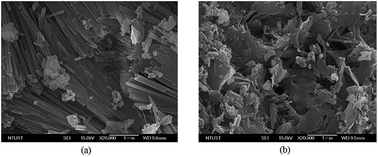
The SEM micrographs of the surface morphology of NatZ and 6M-Z are depicted in Fig. 1. It can be seen that the modification using a strong sodium hydroxide solution (6 M) did not affect the surface topography of the zeolite. The breakdown of some of the particles from a needle-like shape into smaller and less uniform particles is attributed to the mechanical force used during the grinding of the zeolite.
image file: c5ra15419g-f1.tif
Fig. 1 Surface topography of (a) natural zeolite (NatZ), and (b) modified zeolite (6M-Z).

The XRD patterns of NatZ and 6M-Z are given in Fig. 2. The identification of the mineral content by comparing to the standard of JCPDS 80-0642 indicates it consists mainly of mordenite. The modification of the natural zeolite using sodium hydroxide solution did not change or degrade the mordenite as seen in the XRD patterns in Fig. 2. This evidence clearly indicates that the sodium hydroxide modification exerted little or no influence on the crystallinity of the mordenite. The chemical composition of the natural zeolite and its modified form obtained from XRF analysis are summarized in Table 1. The increase of Na2O composition in modified zeolite indicates that the incorporation of exchangeable sodium ions to the natural zeolite occurred during the modification process. Partial exchange of several cations such as Ca2+, K+ and, to a lesser extent, Mg2+ with Na+ was observed. With increasing NaOH concentration, the amount of CaO decrease from 2.43 to 0.11%, while the composition of Na2O increase from 1.87 to 3.85%. The modification using 6 M NaOH almost completely transformed the Ca-zeolite into a Na-zeolite with, as stated earlier, no obvious change in crystallinity.


image file: c5ra15419g-f2.tif
Fig. 2 XRD diffractograms of natural zeolite (NatZ) and its modified form (6M-Z) with the pattern reported for mordenite in the ICSD JCPDS database.
Table 1 Chemical composition of natural and NaOH modified zeolites as determined by XRF
Element % Weight
NatZ 1M-Z 3M-Z 6M-Z
SiO2 60.85 60.14 62.05 58.47
Al2O3 11.78 12.03 12.6 13.41
CaO 2.43 1.92 0.93 0.11
Fe2O3 2.07 2.02 2.01 1.78
Na2O 1.87 2.34 3.05 3.85
K2O 1.05 0.95 0.92 0.51
MgO 0.52 0.51 0.51 0.42
Other 19.43 20.09 17.93 21.45


As illustrated in Fig. 3, the modification of the natural zeolite using sodium hydroxide solution improved the porosity. The hysteresis loops in NatZ, 1M-Z, 3M-Z, and 6M-Z confirms the presence of mesopores in the pore structure. The BET surface area, micropore volume and total pore volume of the zeolites are summarized in Table 2. It can be seen that the micropores did not have significant contribution to the total pore since the values were almost equal to zero. The modification of zeolite using sodium hydroxide at 75 °C brought the formation of more mesopores due to the clearing of the pore channels and voids of the natural zeolite. The increased NaOH concentration also increased the formation of pores, leading to the increase of BET surface area and total pore volume as indicated in Table 2 and Fig. 3.


image file: c5ra15419g-f3.tif
Fig. 3 Nitrogen sorption isotherms of natural and modified zeolites.
Table 2 The pore characteristics of natural and modified zeolites
Sample SBET, m2 g−1 Vmicro, cm3 g−1 Vtotal, cm3 g−1
NatZ 30.2 0.002 0.116
1M-Z 38.9 0.002 0.138
3M-Z 49.5 0.002 0.153
6M-Z 58.6 0.002 0.182


Effect of sodium hydroxide concentration to adsorption capacity

Initial adsorption experiments showed that the adsorption of ammonium ions had reached equilibrium after 24 h. For subsequent adsorption experiments, 24 h was chosen as the equilibrium time. Fig. 4 shows the removal efficiency of NH4+ from the solution using natural and NaOH modified zeolites as the adsorbents. This figure clearly indicates that NaOH modification effectively improved the adsorption capability of the zeolite for removal of NH4+ from aqueous solution. According to Table 1, the removal efficiency of NH4+ is closely related to the content of Na and Ca; the zeolite with higher Na and less Ca content removed more NH4+. Since the 6M-Z has the highest removal efficiency; this modified zeolite was used for subsequent adsorption experiments.
image file: c5ra15419g-f4.tif
Fig. 4 Removal efficiency of natural and modified zeolites.

Adsorption equilibria

The equilibrium relation between the ammonium ion on the surface of the adsorbent and in the solution could be related through an adsorption isotherm. Different kind of adsorption models have been developed and are currently used for the interpretation of liquid phase adsorption experimental data. The adsorption of chemical compounds onto the surface of adsorbents is affected by temperature. For physical adsorption, the temperature gives a negative effect on the adsorption capacity of adsorbent, while for chemical adsorption the uptake increases with the increase of temperature. The influence of temperature on the amount uptake can be represented in the adsorption models through the inclusion of temperature dependent forms.18–20 In this study, the Langmuir, Freundlich, Sips, and Toth models with their temperature dependent forms were employed to correlate the adsorption equilibria of NH4+ onto NatZ and 6M-Z.

The Langmuir equation is one of the most widely used adsorption equations to correlate liquid phase adsorption experimental data of various systems. Based on the theory of the adsorption on a flat surface, Langmuir developed an adsorption model which has the form as follows

 
image file: c5ra15419g-t3.tif(4)
where qmax is the maximum amount of adsorbate adsorbed by the adsorbent to achieve complete monolayer coverage of the adsorbent surface (mg g−1), and KL is the adsorption affinity (L mg−1). The parameters qmax and KL are affected by temperature, and the mathematical forms of these parameters as function of temperature are as follow:
 
qmax = q0max[thin space (1/6-em)]exp(δ(T0T)) (5)
 
image file: c5ra15419g-t4.tif(6)

Parameter q0max represents the maximum adsorption capacity at a reference temperature T0, while temperature coefficient of expansion of the adsorbate is represented by parameter δ. The affinity constant of Langmuir equation at reference temperature and heat of adsorption are given by symbols K0L and E, respectively.

The second equation used in this study to represent the adsorption equilibria data is the Freundlich isotherm. This equation is the earliest known empirical adsorption equation and widely used for heterogeneous systems and reversible adsorption processes. The Freundlich isotherm has the form

 
qe = KFCe1/n (7)
where KF ((mg g−1)(mg L−1)n) and n are parameters represent adsorption capacity and the adsorption intensity, respectively. Parameter n also indicates the heterogeneity of the system. The temperature dependent forms of Freundlich equation are
 
image file: c5ra15419g-t5.tif(8)
 
image file: c5ra15419g-t6.tif(9)
where K0F is the adsorption capacity at the reference temperature, α/A0 is a constant.

The Sips equation was developed for predicting adsorption in heterogeneous systems, and this model is a combination of the Langmuir and Freundlich adsorption isotherm. The advantage of Sips equation is it has a finite limit. The Sips equation can be written as follows:

 
image file: c5ra15419g-t7.tif(10)
where KS (L mg−1)n is the adsorption affinity of Sips model, and n characterizes the heterogeneity of the system. When the value of n become unity, eqn (10) reduces to eqn (4). The temperature dependent forms of Sips equation are represented by parameter qmax, KS and n. The temperature dependent of qmax follows eqn (5) while for KS and n are as follow
 
image file: c5ra15419g-t8.tif(11)
 
image file: c5ra15419g-t9.tif(12)

The parameter K0S is a measure of the affinity between the adsorbate and the adsorbent at the reference temperature, while n0 characterizes the heterogeneity of the system at reference temperature. The parameter η is a constant of Sips temperature dependent form.

The last model used in this study is the Toth equation. This equation was developed on the basis of potential theory and provides a good description of many systems with sub-monolayer coverage.21 Similar to Langmuir equation, Toth equation has finite saturation limit for high concentration and follows Henry's law at very low concentration.19

 
image file: c5ra15419g-t10.tif(13)

The adsorption affinity of the Toth equation is given by parameter KTh (mg L−1)t, and t is a parameter represents the system heterogeneity. Both of these parameters are affected by temperature and can be written as:

 
image file: c5ra15419g-t11.tif(14)
 
image file: c5ra15419g-t12.tif(15)
where K0Th and t0 are adsorption affinity constant and parameter characterizes system heterogeneity at reference temperature, respectively.

Temperature has a pronounced effect on the removal capacity of the zeolite as shown in Fig. 5 for NatZ and 6M-Z. The uptake of NH4+ ions by both of the adsorbents decreased as the temperature increased. The main mechanism of the adsorption of NH4+ ions by the zeolite is ion exchange and the process can be written as

 
NaxZ + xNH4+ ↔ (NH4)xZ + xNa+ (16)


image file: c5ra15419g-f5.tif
Fig. 5 Effect of temperature on ammonium removal using: (a) NatZ, (b) 6M-Z.

In most cases, ammonium exchange onto a zeolite is an exothermic process,5,8,22 therefore the increase of temperature will shift the equilibrium condition towards endothermic, and less NH4+ ions adsorbed by the NatZ and 6M-Z.

Fig. 6 and 7 depict the adsorption equilibria of ammonium ions onto NatZ and 6M-Z at three different temperatures. The experimental data were fitted by temperature dependent forms of Langmuir, Freundlich, Sips, and Toth equations. The parameters of each model were obtained by the non-linear least-squares method, and the fitting was conducted for all the experimental data at various temperatures simultaneously using T0 = 298 K. The Toth equation with its temperature dependent forms failed to correlate the adsorption equilibria data of ammonium onto NatZ. The values of parameters of Langmuir, Freundlich, Sips, and Toth equations obtained from the fitting of the adsorption experimental data are summarized in Table 3. Since the Toth equation failed to represent the adsorption equilibria data of ammonium onto NatZ, it will be excluded for further discussions of the validity of the adsorption equations in representing the adsorption experimental data.


image file: c5ra15419g-f6.tif
Fig. 6 Adsorption experimental data of ammonium ion into NatZ and the model fitted by: (a) Langmuir, (b) Freundlich, and (c) Sips.

image file: c5ra15419g-f7.tif
Fig. 7 Adsorption experimental data of ammonium ion into 6M-Z and the model fitted by: (a) Langmuir, (b) Freundlich, (c) Sips, and (d) Toth.
Table 3 The parameters of Langmuir, Freundlich, Sips and Toth equations as fitted to the adsorption of ammonium onto NatZ and 6M-Z
Isotherm model Parameters NatZ 6M-Z
Langmuir q0max (mg g−1) 7.9462 53.9169
δ (K−1) 0.00203 0.00218
K0L (L mg−1) 0.1111 0.4044
E (kJ mol−1) 1.575 18.234
R2 0.9851 0.9882
Freundlich K0F (mg g−1)(mg L−1)n 1.2505 1.676
α/A0 0.029 −0.0412
A0 37.82 36.63
R2 0.9835 0.9925
Sips q0max (mg g−1) 0.1166 0.5633
δ (K−1) 0.00251 0.00243
K0S (L mg−1) 4.0834 7.0279
E (kJ mol−1) 0.8499 10.36
n0 1.4735 1.333
η −0.3281 −1.8641
R2 0.9835 0.9724
Toth q0max (mg g−1) 528.567
K0Th (L mg−1) 5.3859
E (kJ mol−1) 31.327
t0 0.4155
η −2.6879
R2 0.929


Visually (Fig. 6 and 7), Langmuir, Freundlich, and Sips isotherm equations could represent the experimental data well with good value of R2 (Table 3). However, the decision of the suitability of the models in representing the experimental data should not be based on the visual appearance of the model or the value of R2 but should be based on the physical meaning of the parameters obtained through the fitting of the data. The parameter q0max in the Langmuir and Sips models and the parameter K0F in the Freundlich model represent the adsorption capacity of the adsorbent at 298 K. Since the values of adsorption capacity of NatZ and 6M-Z were in the range of the adsorption capacity of common zeolites,15,23 therefore, the value of parameter q0max and K0F of those models were physically consistent and reasonable.

The affinity parameter in the Langmuir and Sips models is expressed as K0L and K0S, respectively. This parameter measures how strong the adsorbate (ammonium ion) is attracted to the adsorbent (zeolite) surface. A higher value of the affinity parameter means more adsorbate molecules cover the adsorbent surface. The experimental results revealed that 6M-Z zeolite has better adsorption capability than NatZ as seen in Fig. 6 and 7. It indicates that 6M-Z zeolite had higher affinity value than NatZ. Based on the affinity parameter values listed in Table 3, all of three model used still capable to correlate the adsorption experimental data.

The parameter δ in the Langmuir and Sips equations is the temperature coefficient of adsorbate expansion. The value this parameter is specific for different component and independent with type of adsorbent.24 From Table 5, the fitted values of parameter δ of ammonium ion obtained from both adsorbents and equations were essentially constant and consistent with the value of most liquids and independent on the type of adsorbent. Therefore, the Langmuir and Sips models still had plausible reason for further discussion.

In the Freundlich and Sips models, the heterogeneity of a given system is represented by A0 (Freundlich) and n0 (Sips). The attachment and exchange of the sodium ion into the zeolite framework would increase the system heterogeneity, and therefore increase the A0 and n0 value. The inconsistency of the heterogeneity parameter values with the physical meaning of this parameter is observed as indicated in Table 3. Since both of the Freundlich and Sips models failed to predict a correct value, both of these are excluded in the subsequent discussion.

Fig. 6 and 7 show that the temperature had a negative effect on the amount of ammonium ion uptake by both of NatZ and 6M-Z. This phenomenon indicates that physical adsorption is more dominant than chemisorption. Comparing the heat of adsorption value (E) with adsorption bonding type is necessary to verify the adequacy of Langmuir isotherm model. An adsorption process can be classified into physical adsorption if the adsorption energy is less than 40 kJ mol−1 and chemisorption when the adsorption energy is between 40-80 kJ mol−1. In physical adsorption, increasing temperature would weaken the interaction between adsorbate and adsorbent therefore less amount of ammonium ion adsorbed onto zeolite. The fitted adsorption heat value in Langmuir model was found to be consistent with the theory. Accordingly, Langmuir model can represent the adsorption data better than any other models.

Adsorption kinetic study

The adsorption kinetic information is important for the design of an adsorption system. The rate of ammonium ion adsorbed into NatZ and 6M-Z are represented by pseudo-first order25 and pseudo-second order26–28 models. The pseudo-first order has the form
 
q(t) = qe(1 − exp (−k1t)) (17)

While the pseudo-second order has the following form

 
image file: c5ra15419g-t13.tif(18)

While k1 (h−1) and k2 (g mg−1 h−1) are time scaling factor for pseudo-first and pseudo second order, respectively. Time scaling factor describes how fast the system reaches the equilibrium.

The adsorption kinetic data of NH4+ onto NatZ and 6M-Z are given in Fig. 8 and 9. Fig. 8 depicts the experimental data and plots of pseudo-first order while the plots of pseudo-second order are given in Fig. 9. The fitted parameters of pseudo-first and pseudo-second order are given in Table 4. From Fig. 8 and 9 and Table 4, it can be seen that pseudo-first order gave better performance in representing the experiment kinetic data than pseudo-second order. The deviation of qe obtained from the fitting and experimental data in the pseudo first order is smaller than the pseudo-second order. Based on this evidence, the controlling mechanism of the adsorption of NH4+ from aqueous solution onto NatZ and 6M-Z was dominated by physical adsorption.


image file: c5ra15419g-f8.tif
Fig. 8 Pseudo first order reaction kinetics for the adsorption of NH4+ ion on (a). NatZ and (b). 6M-Z.

image file: c5ra15419g-f9.tif
Fig. 9 Pseudo second order reaction kinetics for the adsorption of NH4+ ion on (a) NatZ and (b) 6M-Z.
Table 4 Fitted parameters for pseudo-first order and pseudo-second order for adsorption kinetic of NH4+ onto NatZ and 6M-Z
T (K) Pseudo-first order Pseudo-second order
k1 (h−1) qe (mg g−1) R2 k2 (g mg−1 h−1) qe (mg g−1) R2
Using natural zeolite as adsorbent
303 0.2399 2.9457 0.9785 0.0485 4.0609 0.9691
308 0.1929 2.9243 0.9602 0.0335 4.2665 0.9525
313 0.1837 2.7522 0.9656 0.0326 4.0744 0.9580
[thin space (1/6-em)]
Using modified zeolite as adsorbent
303 0.4102 20.7974 0.9796 0.0167 25.6145 0.9644
308 0.3764 20.3851 0.9733 0.0147 25.5650 0.9568
313 0.3480 20.1977 0.9698 0.0130 25.7437 0.9550


Depending on the adsorption mechanism, the time scaling parameter k1 in pseudo-first order and k2 in pseudo-second order is also as a function of temperature. At a temperature higher than 30 °C, the physical adsorption gave a quite dominant effect in the adsorption of NH4+ onto NatZ and 6M-Z. In both kinetic models, the value of this time scaling parameter decreased with increasing of temperature, obviously, the higher temperature of the system, the longer time was needed for the system to reach equilibrium state.

Adsorption of ammonia from real aquaculture water

In order to test the effectiveness of the modified zeolite for removal of NH4+ from an aquatic environment, an adsorption study using a real aquaculture system, a Koi pond, was also conducted. The water capacity of the Koi pond was 2 m3 and it was equipped with a filtering and biological system. The number of Koi in the pond was 45 Koi carp with an average weight of 2.0 kg per Koi. With this high density of Koi, the average ammonia concentration in the Koi pond after 1 h feeding was 4.2 mg L−1. The pH in the Koi pond was 6.5. The zeolites used for the adsorption of NH4+ from the Koi pond were NatZ, 1M-Z, 3M-Z, and 6M-Z. The adsorption experiments were conducted at 30 °C in a batch mode.

The water analysis of the Koi pond before and after zeolite adsorption is given in Table 5. It can be seen that the adsorption in this real system also involved the adsorption of other ions. The competition with other ions occurred through different reaction mechanisms so it decreases the removal efficiency of ammonium ions by the zeolites. For 6M-Z zeolite, the removal efficiency decrease from 81% to 66.9%. The comparison of the adsorption capacity of sodium hydroxide modified zeolite mordenite with other zeolite adsorbents toward the ammonium ion is given in Table 6. From this table it can be seen that the sodium hydroxide modified zeolite mordenite has better ammonium adsorption capacity than other zeolites.

Table 5 Water analysis report of Koi pond before and after adsorption using zeolites
  Original NatZ 1M-Z 3M-Z 6M-Z
pH 6.5 ± 0.0 6.5 ± 0.0 6.5 ± 0.0 6.5 ± 0.0 6.5 ± 0.0
Alkalinity total as CaCO3, mg L−1 121 ± 4.1 121 ± 3.2 120 ± 5.5 121 ± 3.8 119 ± 2.1
CO32− as CaCO3, mg L−1 1.21 ± 0.04 1.21 ± 0.06 1.18 ± 0.05 1.11 ± 0.05 1.05 ± 0.03
Fe2+, mg L−1 0.12 ± 0.01 0.11 ± 0.01 0.11 ± 0.02 0.08 ± 0.01 0.06 ± 0.0
Mn2+, mg L−1 0.01 ± 0.0 0.01 ± 0.0
Cl, mg L−1 4.50 ± 0.08 4.42 ± 0.05 4.34 ± 0.07 4.24 ± 0.09 4.14 ± 0.21
SO42−, mg L−1 3.74 ± 0.14 3.69 ± 0.10 3.61 ± 0.09 3.43 ± 0.11 3.11 ± 0.23
NO3, mg L−1 0.09 ± 0.0 0.08 ± 0.0 0.07 ± 0.01 0.02 ± 0.0
Total ammonia, mg L−1 4.20 ± 0.17 3.91 ± 0.13 3.25 ± 0.20 2.61 ± 0.05 1.39 ± 0.06
NO2, mg L−1 0.01 ± 0.0
PO43−, mg L−1 0.15 ± 0.01 0.14 ± 0.02 0.12 ± 0.01 0.11 ± 0.01 0.08 ± 0.01


Table 6 Adsorption capacity of sodium hydroxide modified zeolite mordenite and several zeolites samples toward ammonium ion
Sample Adsorption capacity, mg g−1 References
Zeolite mordenite 7.94 This study
Sodium hydroxide modified zeolite mordenite 53.91 This study
New Zealand mordenite 8.70 7
Natural calcium rich zeolite 9.72 15
Sodium salt modified zeolite 15.44  
NaA zeolite from halloysite 44.30 29
Zeolite 13X 8.61 30


Continuous adsorption experiment

A breakthrough curve for ammonium provides the performance of adsorption in a packed bed column system. A number of models with different kinds of assumptions have been developed and tested for various adsorption systems. One of the models is the Thomas equation:
 
image file: c5ra15419g-t14.tif(19)
where KTh is Thomas rate constant (mL min−1 mg−1) and qmax is maximum adsorption capacity (mg g−1).

The zeolite used for the breakthrough curve experiments was 6M-Z. The breakthrough curves of the adsorption of NH4+ from aqueous solution and from Koi pond water are given in Fig. 10. The symbols represent the adsorption data while the solid lines represent the Thomas model. From this figure it can be seen that the Thomas model can represent the experimental data well for both system. The values of parameters KTh and qmax for adsorption of NH4+ from the aqueous solution are 0.0082 mL min−1 mg−1 and 45.47 mg g−1, respectively, while for the real system (Koi pond water) the values are KTh and qmax of 0.0080 mL min−1 mg−1 and 38.40 mg g−1, respectively.


image file: c5ra15419g-f10.tif
Fig. 10 Breakthrough curve for NH4+ adsorption from aqueous solution and Koi pond water.

The Thomas parameter KTh for both systems is essentially the same, this parameter represents the interaction between adsorbent and adsorbate in a dynamic system. Since the breakthrough experiments for both systems were conducted at the same operating conditions (temperature, initial concentration, column diameter, and amount of adsorbent) it is not surprising that the parameter of KTh for both systems should be the same. As mentioned before, the parameter qmax represent the adsorption capacity of the adsorbent, the fitted value of qmax for adsorption of NH4+ from aqueous solution is higher than from the Koi pond water. As seen in Table 5, the Koi pond water contains other ions besides NH4+. During the adsorption of NH4+ in the packed bed column the competition for active sites or for exchangeable cations (especially Na+) occurred; therefore less NH4+ could be adsorbed/exchanged on the surface of 6M-Z. The breakthrough condition was achieved after 800 min.

Conclusions

The modification of natural zeolite from Ponorogo, predominantly mordenite, using NaOH as a modifying agent has been successfully conducted. The natural zeolite and its modified forms were used for the removal of ammonium ions from aqueous solution and Koi pond water. The adsorption and kinetic experiments were conducted at three different temperatures at static mode conditions. Temperature-dependent forms of Langmuir, Freundlich, Sips, and Toth adsorption equations were used to analyse the experimental data and among these models the Langmuir model could best represent the data with reasonable values of the fitted parameters. For the kinetic study, well-known pseudo-first order and pseudo-second order equations were used to represent the kinetic data. Pseudo-first order gave better performance than pseudo-second order model. The Thomas model also successfully represents the dynamic adsorption data.

Acknowledgements

The authors would like to acknowledge financial support for this work provided by Directorate of Higher Education, Indonesia Ministry of Research, Technology, and Higher Education through Competency Research Grant with project number 003/SP2H/P/K7/KM/2015.

References

  1. Canadian Environmental Protection Act, Ammonia in the Aquatic Environment, 1999 Search PubMed.
  2. A. Arslan and S. Veli, J. Taiwan Inst. Chem. Eng., 2012, 43, 393–398 CrossRef CAS PubMed.
  3. M. Rozic, S. Cerjan-Stefanovic, S. Kurajica, V. Vancina and E. Hodzic, Water Res., 2000, 34, 3675–3681 CrossRef CAS.
  4. R. Malekian, J. Abedi-Koupai, S. S. Eslamian, S. F. Mousavi, K. C. Abbaspour and M. Afyuni, Appl. Clay Sci., 2011, 51, 323–329 CrossRef CAS PubMed.
  5. K. Saltali, A. Sari and M. Aydin, J. Hazard. Mater., 2007, 141, 258–263 CrossRef CAS PubMed.
  6. H. Huo, H. Lin, Y. Dong, H. Cheng, H. Wang and L. Cao, J. Hazard. Mater., 2012, 229–230, 292–297 CrossRef CAS PubMed.
  7. L. Zhou and C. E. Boyd, Aquaculture, 2014, 432, 252–257 CrossRef CAS PubMed.
  8. A. Alshameri, A. Ibrahim, A. M. Assabri, X. Lei, H. Wang and C. Yan, Powder Technol., 2014, 258, 20–31 CrossRef CAS PubMed.
  9. G. Moussavi, S. Talebi, M. Farrokhi and R. M. Sabouti, Chem. Eng. J., 2011, 171, 1159–1169 CrossRef CAS PubMed.
  10. M. Li, X. Zhu, F. Zhu, G. Ren, G. Cao and L. Song, Desalination, 2011, 271, 295–300 CrossRef CAS PubMed.
  11. Y. P. Zhao, T. Y. Gao, S. Y. Jiang and D. W. Cao, J. Environ. Sci., 2004, 16, 1001–1004 CAS.
  12. Y. Watanabe, H. Yamada, J. Tanaka and Y. Moriyoshi, J. Chem. Technol. Biotechnol., 2005, 80, 376–380 CrossRef CAS PubMed.
  13. H. B. Wang, Y. M. Bao, J. Zhang, H. Y. Chen, L. Z. Ma and M. Yang, Energy Procedia, 2011, 11, 4236–4241 CrossRef CAS.
  14. R. Leyva-Ramos, J. E. Monsivais-Rocha, A. Aragon-Pina, M. S. Berber-Mendoza, R. M. Guerrero-Coronado, P. Alonso-Davila and J. Mendoza-Barron, J. Environ. Manage., 2010, 91, 2662–2668 CrossRef CAS PubMed.
  15. Z. Liang and J. R. Ni, J. Hazard. Mater., 2009, 166, 52–60 CrossRef CAS PubMed.
  16. L. Lei, X. J. Li and X. W. Zhang, Sep. Purif. Technol., 2008, 58, 359–366 CrossRef CAS PubMed.
  17. APHA, Water Environment Federation, Washington DC, USA, 1998 Search PubMed.
  18. I. K. Chandra, Y.-H. Ju, A. Ayucitra and S. Ismadji, Int. J. Environ. Sci. Technol., 2013, 10, 359–370 CrossRef CAS.
  19. Yesi, F. P. Sisnandy, Y.-H. Ju, F. E. Soetaredjo and S. Ismadji, Adsorpt. Sci. Technol., 2010, 28, 846–868 Search PubMed.
  20. A. C. Suwandi, N. Indraswati and S. Ismadji, Desalin. Water Treat., 2012, 41, 342–355 CrossRef CAS PubMed.
  21. D. D. Do, Adsorption Analysis: Equilibria and Kinetics, Imperial College Press, London, UK, 1998 Search PubMed.
  22. M. Zhang, H. Zhang, D. Xu, L. Han, D. Niu, B. Tian, J. Zhang, L. Zhang and W. Wu, Desalination, 2011, 271, 111–121 CrossRef CAS PubMed.
  23. V. K. Jha and S. Hayashi, J. Hazard. Mater., 2009, 169, 29–35 CrossRef CAS PubMed.
  24. S. Ismadji and S. K. Bhatia, Langmuir, 2001, 17, 1488–1498 CrossRef CAS.
  25. S. Lagergren, K. Sven. Vetenskapsakad. Handl., 1898, 24, 1–39 Search PubMed.
  26. Y. C. Sharma, G. S. Gupta, G. Prasad and D. C. Rupainwar, Water, Air, Soil Pollut., 1990, 49, 69–79 CrossRef CAS.
  27. M. Essandoh, B. Kunwar, C. U. Pittman Jr, D. Mohan and T. Misna, Chem. Eng. J., 2015, 265, 219–227 CrossRef CAS PubMed.
  28. C. Gan, Y. Liu, X. Tan, S. Wang, G. Zeng, B. Zheng, T. Li, Z. Jiang and W. Liu, RSC Adv., 2015, 5, 35107–35115 RSC.
  29. Y. Zhao, B. Zhang, X. Zhang, J. Wang, J. Liu and R. Chen, J. Hazard. Mater., 2010, 178, 658–664 CrossRef CAS PubMed.
  30. H. Zheng, L. Han, H. Ma, Y. Zheng, H. Zhang, D. Liu and S. Liang, J. Hazard. Mater., 2008, 158, 577–584 CrossRef CAS PubMed.

Footnote

These authors contribute equally.

This journal is © The Royal Society of Chemistry 2015
Click here to see how this site uses Cookies. View our privacy policy here.