Potential use of alginate beads as a chondrocyte delivery vehicle and stepwise dissolving porogen in a hydrogel scaffold for cartilage tissue engineering

Changjiang Fanab and Dong-An Wang*a
aDivision of Bioengineering, School of Chemical and Biomedical Engineering, Nanyang Technological University, 70 Nanyang Drive, N1.3-B2-13, Singapore 637457, Singapore. E-mail: DAWang@ntu.edu.sg; Fax: +65 6791 1761; Tel: +65 6316 8890
bInstitute for Translational Medicine, College of Medicine, Qingdao University, Qingdao, P. R. China

Received 2nd August 2015 , Accepted 15th September 2015

First published on 15th September 2015


Abstract

The submicron- or nano-sized pores and uncontrollable degradation of conventional hydrogels have severely constrained cell growth and neo-tissue formation. In this study, alginate beads are explored as both delivery vehicles of chondrocytes and stimuli-responsive porogens within hydrogel scaffolds for cartilage tissue engineering. A typical chondroitin sulfate (CS)–alginate beads composite gel (CS–ABG) is fabricated by photo-encapsulating alginate beads into the CS gel, and subsequently batch-wise dissolution and leaching out of the alginate beads is achieved by twice exposing CS–ABG to chelating agents. The combining and gradual removal of alginate beads effectively modulate the gel's physical properties (e.g. swelling ratio, crosslink density) as well as create macro-scale cavities within CS–ABG. The efficacy of CS–ABG as a scaffold for cartilage tissue engineering is compared with a conventional photocrosslinked CS gel (CS-G). The CS–ABG constructs are developed by co-encapsulating chondrocytes and cell-laden alginate beads within the CS gel body and undergo EDTA treatment on day 7 and 14 of culture, respectively, for stepwise removal of the alginate beads. The chondrocytes cultured in CS–ABG constructs exhibit higher cell viability and proliferation, enhanced cartilage-specific gene expressions as well as ECM production compared with those in CS-G constructs. This study demonstrates the potential of alginate beads as cell delivery vehicles and gradually dissolving porogens within gel scaffolds for cartilage tissue engineering.

1 Introduction

Articular cartilage defects, resulting from congenital abnormalities, aging, disease, and trauma, always lead to joint pain and even loss of movement due to limited regenerative capabilities.1–3 Tissue engineering seems to hold great promise to generate cartilage substitutes in vitro for repairing damaged cartilage in reconstructive surgery.4,5

Due to the physiochemical similarity to cartilage matrix and hydrophilic nature as well as the capability for well-distributed cell encapsulation, hydrogels are widely considered as preferred three-dimensional (3-D) scaffolds for cartilage tissue engineering.6–9 Various hydrogel-based scaffolds have been developed with different raw materials (e.g. poly(ethylene glycol),7 hyaluronic acid,10 gellan gum,11 alginate,12 chondroitin sulfate,9 etc.) and crosslinking strategy (e.g. photocrosslinking,13 redox polymerization,14 Michael addition,15 enzymatic crosslinking,16 etc.). However, an inherent bottleneck of such conventional hydrogel scaffolds is the submicron- or nano-sized polymer networks that give rise to severe physical constraints for cell proliferation, neo-tissue formation, and even the transport of nutrients and oxygen.

To address this problem, biodegradable hydrogels have been developed based on the hypothesis that continuous degradation of materials over culture time may produce micro-cavities within gel body.17 They can improve mass transport within gel and offer living space for cell growth and extracellular matrix (ECM) accumulation. The incorporation of biodegradable moieties (such as polyester,18,19 polycarbonate,20,21 and phosphate groups22) onto the backbone of precursors is the most commonly used method to fabricate biodegradable gels. Studies have indicated that the increasing porosity of cell-laden gel occurs via hydrolysis or enzymolysis at the early stages of culture, facilitating cell metabolic activity.18,20 However, it is difficult to match the degradation kinetics and new space formation with neo-tissue generation.21 In addition, the cell-laden biodegradable gel is often stabilized against degradation along with the increase of ECM deposition.18,20 Besides degradation, the employment of sacrificial porogens is another strategy to create cavities within gel scaffolds. In our previous studies, the micro-cavitary gel (MCG) has been designed and developed as cartilage tissue engineering scaffold and artificial stem cell niche, using temperature-sensitive gelatin microspheres as the porogens as well as cell carriers within gel body.21,23–26 The creation of cavities within gels, even for biodegradable gels, not only improves nutrients transport efficiency but also provides more living space for cell proliferation and ECM deposition.21,27 The similar observations are also reported by other groups.28,29 The gelatin microsphere-based MCG scaffold system has achieved preliminary but promising outcomes in directing neo-cartilage formation.23–25 However, gelatin microspheres are generally prepared by emulsion technique (such as water-in-oil single emulsion, oil-water-oil double emulsion), which requires skill and laborious optimization; moreover, the use of oil and complex processes appear a bit non-cell-friendly for cell encapsulation. Besides, more importantly, gelatin microspheres undergo rapid and uncontrollable dissolution when the temperature is elevated to about 37 °C, which cannot provide a relatively long-term and effective support for proliferation of encapsulated cells and construction of ECM networks.

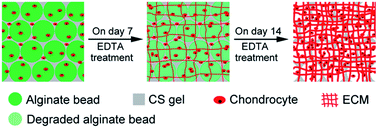
In this study, we aim to develop easily prepared alginate hydrogel beads as cell delivery vehicles and gradually dissolving porogens within hydrogel scaffolds for cartilage tissue engineering. We hypothesize that alginate beads encapsulated within hydrogel will suffer stepwise dissociation and removal by controllable multiple exposure to chelating agents, such as disodium ethylenediaminetetraacetic acid (EDTA) solution. In order to test this hypothesis, the typical chondroitin sulfate (CS)–alginate beads composite gel (CS–ABG) is fabricated in a cylindrical mold (Fig. 1A), and the stepwise dissolution and leaching out of the alginate beads under treatments with EDTA solution is examined in detail. Chondrocytes are encapsulated into CS–ABG scaffolds, including alginate beads and photocrosslinked CS gel body, and then subjected to periodic EDTA treatments (Fig. 1B). Cell viability, cartilage-related gene expression, and cartilaginous ECM deposition is evaluated.


image file: c5ra15376j-f1.tif
Fig. 1 (A) Schematic fabrication of acellular CS–ABG and the removal of alginate beads: first, freshly prepared alginate beads are packed in a cylindrical mold (a); subsequently, the CS-MA precursor solution is filled and then subjected to UV-induced polymerization to obtain CS–ABG (b); last, the resultant CS–ABG is treated twice using EDTA solution to remove alginate beads (c). (B) Schematic diagram of the protocol and timeline for cell culture within CS–ABG scaffold: the CS–ABG constructs (a) are fabricated with chondrocyte–laden alginate beads and cell suspended CS-MA precursor solution as described above; the cells proliferate and secrete cartilaginous ECM, and on day 7 (marked on the timeline), the CS–ABG construct is treated with EDTA solution (b); subsequently, the construct is subjected to a second EDTA treatment on day 14 (marked on the timeline) to achieve the removal of alginate beads, and the increasing cartilaginous ECM is deposited within CS–ABG construct over culture time (c).

2 Materials and methods

2.1 Synthesis of methacrylated chondroitin sulfate (CS-MA)

The CS-MA precursor is synthesized according to previous work with slight modification.30 20 mL of chondroitin sulfate (CS, C9819, Sigma-Aldrich) solution (7.5%, g mL−1) is placed into a 100 mL round bottom flask, and the pH value is tuned to ∼8.0 with 5 M NaOH solution. 5.0 mL of methacrylic anhydride (MA, 276685, Sigma-Aldrich) is added dropwisely under stirring. The reaction solution is stirred for 24 hours, at the same time, the pH value is maintained at ∼8.0. Subsequently, the mixture solution is dialyzed against deionized (DI) water for three days, and lyophilized, and stored at −20 °C. The resultant CS-MA precursor is characterized by 1H NMR spectrum recorded on a Bruker Avance-300 spectrometer with D2O as the solvent.

2.2 Synthesis of alginate–FITC conjugate

The fluorescein isothiocyanate (FITC, F2502, Sigma-Aldrich) is grafted onto alginate according to the literature with slight modification.31 120 mg of sodium alginate (A2158, Sigma-Aldrich) is dissolved in 20 mL of phosphate-buffered saline (PBS, pH 7.4) in a 100 mL round bottom flask, and then the pH value is adjusted to ∼5.0 with 2 M HCl solution. 50 mg of ethyl-dimethyl-aminopropylcarbodiimide (EDC, E7750, Sigma-Aldrich) and 30 mg of N-hydroxy-succinimide (NHS, 130672, Sigma-Aldrich) is added and constantly stirred for 30 minutes. Subsequently, 50 mg of lysine (L5501, Sigma-Aldrich) is added, followed by 14 hours' stirring at room temperature. The mixture solution is precipitated in 2-propanol twice, dissolved in 15 mL of PBS and then the pH value is adjusted to ∼8.5. 0.5 mg of FITC is added and stirred for 4 hours in darkness, precipitated in acetone, and dried in vacuum at room temperature to obtain alginate–FITC conjugate.

2.3 Preparation of alginate beads

Alginate beads are fabricated by needle extrusion method. Briefly, 1.5% (g mL−1) solution of sodium alginate (1.0 mL) in 0.9% sodium chloride (NaCl) is manually extruded through a 23-gauge needle into the solution of 100 mM CaCl2 dissolved in 150 mM NaCl solution (20 mL). The resultant alginate beads are incubated in the CaCl2 solution for 10 minutes to complete the crosslinking of the alginate hydrogel. Similarly, the fluorescent alginate beads are prepared with a mixture solution of sodium alginate (1.4%, g mL−1) and alginate–FITC (0.1%, g mL−1). The width and height of the bead is manually measured on micrograph, and whose mean value is defined as the diameter of alginate bead.

2.4 Fabrication of hydrogels

A mixture solution of CS-MA (10%, g mL−1) and Irgacure 2959 (0.1%, g mL−1), dissolved in 0.9% NaCl, is pipetted into cylindrical molds (diameter 5.3 mm), and then subjected to 365 nm ultraviolet (UV) light at 30 mW cm−2 for 5 minutes for gelation, obtaining CS gel (named as CS-G).

For the fabrication of CS gel containing macro-cavities (CS-MCG), as-synthesized alginate beads are placed into cylindrical molds (diameter 5.3 mm), the mixture solution of CS-MA precursor (10%, g mL−1) and Irgacure 2959 (0.1%, g mL−1) is injected till just covering the alginate beads, and followed by the exposure to UV light for 5 minutes to obtain CS–alginate beads composite gels (CS–ABG). The resultant CS–ABG are immersed into 50 mM EDTA (USB Corporation) solution (dissolved in 0.9% NaCl) at 37 °C for predetermined time to remove alginate beads for obtaining CS-MCG (Fig. 1A).

2.5 Analysis of alginate beads removal

The CS–ABG, freshly prepared from fluorescent alginate beads by using the above-mentioned method, are immersed in 150 mM NaCl for 48 hours to leach out uncrosslinked polymers. Each CS–ABG is transferred into a centrifuge tube containing 2 mL of 50 mM EDTA solution for 10 minutes at 37 °C, and then incubated in 4 mL of 0.9% NaCl for 24 hours, allowing the diffusion of dissociated alginate molecules. This is the first EDTA treatment cycle. Subsequently, they undergo the second EDTA treatment cycle, by incubating each CS–ABG in another centrifuge tube containing 2 mL of fresh 50 mM EDTA solution for 10 minutes at 37 °C, and followed by the incubation in another 4 mL of 0.9% NaCl for 24 hours. The gels are then placed into 2 mL of EDTA solution for 24 hours to completely leach alginate molecules out. The CS–ABG are observed using the fluorescence microscope (OLYMPUS-IX71) and the relative fluorescence intensity is analyzed using ImageJ software. The concentration of alginate–FITC in each release medium, namely EDTA solution and 0.9% NaCl, is measured by collecting the fluorescence intensity at 485 nm (excitation) and 535 nm (emission) with the Fluorescence Microplate Reader (Bio-tek Synergy MX, USA) and used to estimate the release kinetics of alginate molecules after each EDTA treatment cycle. The whole operation is conducted in darkness. The cumulative release amount of alginate molecule after the first and the second EDTA treatment cycle is calculated, respectively, and expressed as a fraction of total cumulative release amount.

2.6 Swelling ratio and crosslink density

Freshly synthesized alginate beads, CS-G, and CS–ABG, and the CS–ABG treated with EDTA solution once or twice are immersed in 0.9% NaCl for two days, respectively. The samples are weighed (Ww) after removing the solution on the surfaces with filter paper and then dried under vacuum (Wd), respectively. The swelling ratio is calculated by the following equation:
Swelling ratio = Ww/Wd

Compression testing of swollen hydrogels is carried out on an Instron mechanical tester (Model 5543) equipped with a 100 N load cell. The tests are carried out at a compression rate of 1.0 mm min−1. The crosslink density (νe) of hydrogel, defined as active network chains per unit volume, is estimated using the following equation:32

σ = νekT(αα−2)
where σ, k, T, α is the stress, Boltzmann constant, absolute temperature in Kelvin degrees, and strain, respectively.

2.7 Isolation and culture of chondrocytes

Chondrocytes are isolated from porcine articular cartilage. Briefly, articular cartilage tissues are obtained from 4–5 months old pigs, and cut into small chips (approximately 1 mm3) in a sterile hood, followed by washing with sterile PBS for five times. The tissue chips are digested in a 0.15% (g mL−1) solution of type II collagenase (17101-015, Gibco) in high glucose Dulbecco's Modified Eagles Medium (DMEM, Gibco) supplemented with 5% (v/v) fetal bovine serum (FBS, Gibco) for 14 hours with 100 rpm shaking in an incubator at 37 C. The cell suspension is filtered through a 70 μm cell strainer, centrifuged for 5 minutes at 1000 rpm, washed three time with DMEM, counted in a hemocytometer, and re-suspended in chondrocyte culture medium (CCM) (DMEM supplemented with 10 mM HEPES (Hyclone), 0.1 mM nonessential amino acids (Hyclone), 0.4 mM proline (Hyclone), 50 mg L−1 vitamin C (Invitrogen), 20% FBS (Gibco), and 1% penicillin–streptomycin (Invitrogen)). Cell suspension in CCM is seeded in 175 mL tissue culture flask (CELLSTAR) at a seeding density of 3 × 10⁴ cells per cm2 and incubated in an incubator with 5% CO2 at 37 °C.

2.8 Cell encapsulation and culture

Upon reaching 70–80% confluence, the chondrocytes are trypsinized, and counted using a hemocytometer. A predetermined volume of cell suspension is centrifuged at 1100 rpm for 6 minutes, and re-suspended in 1.5% (g mL−1) alginate solution or mixture solution of CS-MA (10%, g mL−1) and Irgacure 2959 (0.1%, g mL−1) at a cell density of 15 × 106 cells per mL.

Cell-laden alginate beads are prepared with cell-suspended alginate solution via the needle extrusion method as described above. The cell-laden alginate beads are transferred into sterile molds (diameter 5.3 mm), and the cell-suspended CS-MA solution is added with a pipette. They are exposed to the UV light for 5 minutes to achieve gelation. The resultant CS–ABG constructs are placed into a 24-well plate containing 1.0 mL of CCM per well, and incubated at 37 °C in a 5% CO2 atmosphere. In addition, each 60 μL of cell-suspended CS-MA solution is pipetted into a same mold and exposed to 365 nm UV light for 5 minutes to obtain cell-laden CS-G constructs, serving as the control.

After seven days of culture, the cell-laden CS–ABG constructs are rinsed with 0.9% NaCl and incubated in sterile 50 mM EDTA solution for 10 minutes at 37 °C. By 14 days of culture, the constructs are again treated with 50 mM EDTA solution for 10 minutes to obtain CS-MCG constructs. To facilitate description, unless stated otherwise, they are named as CS–ABG constructs during the whole period of cultivation.

2.9 Cell viability

The cell-laden constructs are evaluated with a live/dead assay kit (Invitrogen). Thin slices of the samples collected at predetermined time points are incubated in 0.5 mL of DMEM solution containing 0.25 μL of Calcein-AM and 1.0 μL of ethidium homodimer-1 for 30 minutes at 37 °C, rinsed twice using PBS solution, and observed using a fluorescence microscope (OLYMPUS-IX71). The live/dead assay is carried out before treating with EDTA solution on day 7 and 14, respectively.

2.10 Biochemical assay

At predetermined time intervals, the constructs are harvested, freeze dried, and weighed, respectively. The samples are crushed and digested, respectively, in 1.0 mL of papain (P3375, Sigma-Aldrich) solution (300 μg mL−1), dissolved in PBE buffer (pH 6.5) containing 1.0 mM EDTA and 300 μg mL−1 of dithiothreitol (D9163, Sigma-Aldrich), for 16 hours at 60 °C. After centrifugation at 1000 rpm for one minutes, the supernatant is collected for determining the contents of DNA, glycosaminoglycan (GAG), and total collagen, respectively. The DNA content is measured with Hoechst 33258 (Invitrogen) by following the protocol given by the manufacturers. GAG content is determined with dimethylmethylene blue (341088, Sigma-Aldrich), using CS as the standard. Total collagen content is determined by hydroxyproline assay.33

2.11 Gene expression analysis

The constructs are collected and total RNA are extracted with TRIzol® reagent (Invitrogen) by following the protocol suggested by the manufacturer. RNA concentration is determined using NanoDrop 2000c spectrophotometer. 500 ng of RNA from each sample is reverse transcribed to cDNA, followed by the execution of real-time quantitative PCR (RT-qPCR). The RT-qPCR is carried out with iQ SYBR Green Supermix (Bio-Rad) by using a CFX Real-Time system (Bio-Rad). The gene expression values relative to housekeeping gene (TATA-binding protein 1, TBP1) were calculated using comparative CT method, and then normalized to gene expression of the CS-G constructs on day one, respectively. All reverse transcription and PCR reagents are purchased from Promega (Madison, MI, USA) and used according to the instructions. The primers are engineered by AIT Biotech (Singapore), and their sequences are presented in Table 1.
Table 1 qRT-PCR primer sequences for gene markers: forward (F) and reverse (R)
Gene Primer sequences Annealing temperature (°C) Product size/base pairs
Aggrecan F: 5′-CGAGGAGCAGGAGTTTGTCAAC-3′ 58 177
R: 5′-ATCATCACCACGCAGTCCTCTC-3′
Collagen II F: 5′-GCTATGGAGATGACAACCTGGCTC-3′ 58 256
R: 5′-CACTTACCGGTGTGTTTCGTGCAG-3′
Collagen I F: 5′-CCTGCGTGTACCCCACTCA-3′ 58 84
R: 5′-ACCAGACATGCCTCTTGTCCTT-3′
COMP F: 5′-GGCACATTCCACGTGAACA-3′ 58 127
R: 5′-GGTTTGCCTGCCAGTATGTC-3′
TBP1 F: 5′-ACAGTTCAGTAGTTATGAGCCAGA-3′ 58 152
R: 5′-AGATGTTCTCAAACGCTTCG-3′


2.12 Histological and immunohistochemical analysis

Construct samples collected are fixed in 4% (g mL−1) of paraformaldehyde solution, embedded in Tissue freezing medium (Leica) after rinsing with PBS, sectioned at a thickness of 8 μm using a freezing microtome, and mounted on glass slides. The sections are stained with hematoxylin and eosin (H&E) (Sigma-Aldrich) for histological observation and Safranin O (Sigma-Aldrich) for GAG observation, by following the protocols suggested by the manufacturer, respectively. For immunofluorescent staining, sections are firstly incubated in a solution of 0.1% (v/v) Triton X-100 (Sigma-Aldrich) and 3% (w/v) bovine serum albumin (Sigma-Aldrich) for 30 minutes to prevent nonspecific binding of IgG. The sections are incubated in the solution of collagen II (5 μg mL−1 in PBS, ab34712, Abcam) or collagen I (5 μg mL−1, sc-59772, Santa Cruz Biotechnology) primary antibody, respectively, for one hour at room temperature, and washed twice with PBS solution (15 minutes each time), respectively. Subsequently, they are incubated with 5 μg mL−1 of secondary antibodies (Alexa Fluor® 546 (A-11010) for collagen II, Alexa Fluor® 546 (A-11060) for collagen I, Life Technologies) in PBS, respectively for one hour at 37 °C in the dark. Cell nuclei are counterstained by 4′,6-diamidino-2-phenylindole (DAPI, Sigma-Aldrich) solution (1 μg mL−1) in PBS. The sections are observed using a fluorescence microscope (OLYMPUS-IX71).

2.13 Statistical analysis

Results are expressed as mean ± standard deviation of triplicates. Student's t-test is performed to analyze the statistical significance between the results of two groups, and a statistically significant difference is defined as p ≤ 0.05.

3 Results and discussion

Alginate, isolated from natural brown algae, is a linear polysaccharide, which consists of (1-4)-linked α-L-guluronate (G) and β-D-mannuronate (M) units and organized with sequential G units (named as G-blocks), sequential M units (named as M-blocks), and atactic G and M units (named as GM-blocks).34,35 The G-blocks in adjacent alginate molecules can be bridged through Ca2+ ions, by forming coordination complexes between the carboxylate groups and Ca2+ ions.34 This coordination reaction will lead to a rapid sol–gel transition of alginate solution in the presence of Ca2+ ion. Therefore, alginate hydrogel beads can be readily prepared by dropping droplets of alginate solution into CaCl2 solutions, and which have been widely used as culture scaffolds of anchorage-independent cells, such as chondrocytes,36 hepatocytes,37 mesenchymal stem cells,38 and embryonic stem cells.39 CS is composed of repeating D-glucuronic acid and N-acetyl galactosamine units; it is one major glycosaminoglycan (GAG) component of native cartilage matrix.40 To enable polymerization, the photocrosslinkable CS-MA precursor is synthesized based on the reaction between MA and the primary hydroxyl group of CS (Fig. S1-A). The degree of methacrylation of CS-MA is 4.8%, calculated according to the relative integral of methyl protons and acrylate protons in 1H NMR spectrum of CS-MA precursor (Fig. S1-B).

The alginate beads are easily prepared by dropping alginate solution into CaCl2 solution; their diameter is 1.3 ± 0.1 mm (Fig. S2-a). As shown in Fig. 1A, the alginate beads are packed in a cylindrical mold (Fig. 1A-a). The CS-MA precursor solution containing photoinitiator Irgacure 2959 is added and infiltrated into interspaces among alginate beads and the mold. They are exposed to 365 nm UV light for 5 minutes to achieve the polymerization of CS-MA precursor solution, forming intact CS–alginate beads composite gels (CS–ABG) (Fig. 1A-b and S2-b). Due to the reversibility of complexation, the Ca2+ ions, complexed with alginate molecules, can be eluted when exposing alginate beads to more strong chelating agents of Ca2+ ion such as EDTA, resulting in the dissociation of alginate–Ca2+ coordination complexes and dissolution of alginate beads. Similarly, the alginate beads in the CS–ABG can also be removed by incubating CS–ABG within EDTA solution.41 However, only under gradual degradation can alginate beads play the role of scaffolding materials. As can be seen in Fig. 2A, the stepwise removal of fluorescent alginate beads from the CS–ABG is first qualitatively illustrated. Notably, the alginate beads are always kept the original volume and alginate molecules are relatively evenly distributed. This bulk-degradation-like process of encapsulated alginate beads cannot be achieved for the naked alginate beads (Fig. S3). The relative fluorescence intensity of the encapsulated fluorescent alginate beads is analyzed over time. It is up to 219[thin space (1/6-em)]368 ± 14[thin space (1/6-em)]751 in untreated CS–ABG (Fig. 2A-a). After the first treatment with EDTA solution for 10 minutes, the relative fluorescence intensity is reduced to 29[thin space (1/6-em)]992 ± 4748 (Fig. 2A-b), and then it is further decreased to only 273 ± 79 after the second EDTA treatment for 10 minutes (Fig. 2A-c). The alginate beads within the CS–ABG are almost completely removed via the two cycles of EDTA treatments, forming CS-MCG. Meanwhile, the resultant macroporous CS–ABG (CS-MCG) remains intact with the original overall shape (Fig. S2-c). During these treatments, the amount of fluorescent alginate molecules released from the CS–ABG is quantitatively measured. As shown in Fig. 2B, the cumulative release ratio after the first and the second EDTA treatment is 37.7 ± 4.0% and 97.4 ± 3.5%, respectively. These results have further demonstrated that the alginate beads can serve as the porogens for the gradual establishment of macro-cavities within gel body via multiple incubating the CS–ABG into EDTA solution.


image file: c5ra15376j-f2.tif
Fig. 2 (A) Representative fluorescence images of CS–ABG after 0 (a), one (b), and two (c) cycles of EDTA treatments, scale bar is 500 μm; (B) cumulative release ratio of alginate molecules from CS–ABG after EDTA treatments; (C) swelling ratio and (D) crosslink density of conventional CS-G, freshly fabricated CS–ABG, and the CS–ABG treated once and twice with EDTA solution, respectively. Statistical significance is indicated with * (p ≤ 0.05) and ** (p ≤ 0.01).

The combining-and-removal of alginate beads within gel body produces a great effect on the physical properties (e.g. swelling ratio, crosslink density) of hydrogels. As shown in Fig. 2C, the introduction of alginate beads into CS gel body greatly increases the swelling ratio from 30.3 ± 0.7 to 44.4 ± 0.9 for CS-G and CS–ABG, respectively, which can be attributed to the much higher swelling capacity of alginate hydrogel beads (49.7 ± 1.4) compared with the CS gel body (30.3 ± 0.7). The swelling ratio of the CS–ABG increases to 48.2 ± 1.0 after the first treatment with EDTA solution, which can be ascribed to the dissolution and leaching out of alginate molecules. And, as expected, the swelling ratio is further increased to 53.1 ± 1.7 after the second EDTA treatment. The increasing swelling ratio suggests the gradual decrease of the crosslink density of CS–ABG. These results indicate that the gradual enhancements of swelling capacity of hydrogels can be achieved by introduction and subsequent stepwise removal of alginate beads that serve as the porogens, using the treatments of EDTA solution.

Average crosslink density is a key structural parameter for hydrogel scaffolds; it is negatively correlated with the diffusion of solute into and out of hydrogel, namely hydrogel' permeability. As may be seen in Fig. 2D, the average crosslink density decreases from 9.2 ± 0.5 to 5.1 ± 0.2 mol m−3 for CS-G and CS–ABG, respectively. The significant decrease of crosslink density, caused by the introduction of alginate beads, will increase the permeability of hydrogel from CS-G to CS–ABG. After the first EDTA treatment, the crosslink density of CS–ABG decreases from 5.1 ± 0.2 to 2.9 ± 0.2 mol m−3, and that is further decreased to 2.1 ± 0.3 mol m−3 after the second treatment with EDTA solution. These results can be attributed to the dissociation of alginate–Ca2+ coordination complexes (namely alginate beads) and subsequent leaching out of the alginate molecules (Fig. 2A and B). However, it is interesting to note that the relative reduction ratio of crosslink density caused by the first EDTA treatment (43.1%) is obviously higher than that caused by the second EDTA treatment (27.6%), albeit the EDTA treatment is the same. More interestingly, the larger decrease of crosslink density is accompanied by lesser alginate molecules release by the first EDTA treatment. As mentioned above, the cumulative release of alginate molecule is 37.7 ± 4.0% and 97.4 ± 3.5%, respectively, after the first and the second EDTA treatment; in other words, the alginate release by means of the second EDTA treatment is about 59.7%. This phenomenon can be attributed to the leaching out of Ca2+ ions. In the course of the first treatment, the major Ca2+ ions in alginate beads are removed by chelating effect of small-molecule EDTA, and which greatly decreases the crosslink density of alginate beads and the whole CS–ABG; at the same time, however, most of the high-molecule-weight alginate molecules are still complexed by the residual Ca2+ ions and cannot diffuse out. All above results have demonstrated that the alginate beads can be combined into photocrosslinked gel system to serve as stepwise dissolving porogens. Their introduction can greatly enhance the permeability of hydrogel; subsequently, the gradual removal of alginate beads from CS–ABG can be achieved through two cycles of EDTA treatments, which further enhances hydrogel' permeability, and meanwhile create macro-pores in gel body.

The efficacy of facilely prepared alginate beads as chondrocyte vehicles and the potential of CS–ABG, bearing stepwise alginate beads-leaching, as scaffolding material for cartilage tissue engineering have been evaluated. The chondrocytes are encapsulated into alginate beads by dropping cell-suspended alginate solution into CaCl2 solution, the resultant cell-laden alginate beads are packed into a cylindrical mold, and then the cell-laden CS–ABG constructs are fabricated by photocrosslinking the cell-suspended CS-MA solution filled into the mold, as illustrated in Fig. 1A-a and b. The conventional CS-G constructs are fabricated and served as control. Cell viability is a crucial assessment for the cells 3-D cultured in hydrogel scaffolds, which can be utilized to evaluate cell growth and proliferation throughout the whole period of culture. At predetermined time points, the viability of chondrocytes encapsulated in constructs is assessed by live/dead two-color fluorescence assay, in which the live and dead cells are stained green and red, respectively. As shown in Fig. 3, after one day of encapsulation, the chondrocytes within CS–ABG show slightly higher cell viability than those in CS-G constructs. This result indicates the procedures for chondrocytes encapsulation into CS–ABG construct, including alginate encapsulation and photo-encapsulation, does not cause further cytotoxicity compared with the widely recognized one-step photocrosslinking strategy. However, interestingly, the cell density of alginate beads in CS–ABG construct is visually distinctly higher than that of CS-G construct and CS gel body of CS–ABG, albeit the cell seeding density in alginate solution and CS-MA solution is the same. This result can be attributed to the shrink of alginate hydrogel beads during gel formation that leads to the loss of solvent and the increase in concentration of alginate molecules and cell density.42 After seven days' culture, increased dead cells are observed within both CS-G and CS–ABG constructs, especially for CS-G constructs. However, it is interesting to find that a great deal of chondrocyte clusters emerge in CS–ABG constructs. The cell clusters are mainly formed within alginate beads, and whose formation is beneficial to enhance cell proliferation and ECM secretion. At the same time, the similar cell clusters are not observed within CS-G constructs; the density of live cells in CS-G constructs is significantly decreased from day 1 to 7. The different observations of cell viability and population can be attributed to the difference in hydrogel microenvironments of CS-G and CS–ABG constructs. Some studies have demonstrated that alginate gel beads can provide superior conditions for chondrocytes proliferation.36,43 Significantly, the higher permeability (namely lower average crosslink density) of CS–ABG constructs facilitates nutrients transport and cell expansion, benefiting the formation of cell clusters;27 meanwhile, cell viability and proliferation within CS-G constructs is seriously suppressed by the lower permeability.21,27 The emergence of cell clusters within alginate gel beads on day 7 should also be attributed to another critical scaffold parameter, living space;27 the higher swelling ratio endows alginate gel beads with relatively larger pores, compared with CS gel body, that provide more living space for cell proliferation. Above results has indicated that the cell-laden alginate beads, served as porogens, not only improve the permeability of CS–ABG constructs (Fig. 2) but also retain their advantages in promoting cell proliferation (Fig. 3). By 14 days of culture, the viabilities of cells within both CS-G and CS–ABG constructs are obviously improved compared with those on day 7, respectively. However, the density of live cells within CS-G construct is not significantly increased compared with that on day 7, albeit a few small cell clusters are observed. The increased cell viability of CS–ABG constructs from day 7 to 14 denotes that the EDTA treatment of CS–ABG constructs and the accompanying alginate-leaching on day 7 does not produce obvious cytotoxicity to encapsulated chondrocytes. Interestingly, we note that the cell clusters observed in CS–ABG constructs become a little loose after EDTA treatment, which may be resulted from the leaching out of alginate molecules that ever produce spatial limitations on cell expansion. In addition, significantly, cell clusters are also observed in the CS gel body of CS–ABG constructs. The removal of partial alginate molecules increases the permeability of CS–ABG construct and decrease the physical constraints on cell growth,27 thereby promoting cell proliferation. After 21 days of culture, both CS-G and CS–ABG constructs still possess high cell viability. Unfortunately, the cell density and number of small cell clusters within CS-G constructs is comparable to that on day 14, respectively, which can be attributed to the limited living space and lower permeability as before. At the same time, more larger cell clusters are formed and they are nearly evenly distributed throughout CS–ABG constructs, which may be resulted from the further removal of alginate molecules fulfilled on day 14. The leaching out of alginate molecules not only again improves permeability of CS–ABG constructs for facilitating nutrients transport, but more importantly, creates more living space for cell proliferation and cell cluster formation. Collectively, these results have clearly shown that the alginate gel beads can be used as chondrocyte vehicles and porogens within photocrosslinked CS hydrogel scaffolds and whose introduction and stepwise removal can improve cell viability and proliferation throughout CS–ABG constructs.


image file: c5ra15376j-f3.tif
Fig. 3 Live/dead fluorescent staining of chondrocytes cultured in CS-G and CS–ABG constructs. Scale bar is 500 μm.

The biosynthetic activities of chondrocytes, cultured within CS-G and CS–ABG constructs, are first estimated by investigating the expression of relevant cartilaginous markers at transcriptional level using RT-qPCR. As can be seen from Fig. 4, after the first seven days of culture, the chondrocytes within CS-G constructs show higher expression of collagen II, aggrecan, and cartilage oligomeric matrix protein (COMP) genes than those within CS–ABG constructs. This result may be resulted from the relatively more appropriate or suitable biological cues provided by pure CS gel body in CS-G constructs compared with CS–ABG constructs. Along with the extension of culture time, the encapsulated chondrocytes secrete their own ECM, and the hydrogel physical environments, namely permeability and macropore structure, play increasingly important roles for cellular activities. The expression levels of collagen II, aggrecan, and COMP genes are exhibited increasing trend within CS–ABG constructs from day 7 to 21, respectively, however, the similar trend is not detected within CS-G constructs. The gene expression levels of these cartilage markers within CS–ABG constructs are basically higher than those within CS-G constructs on day 14 and 21, respectively. The higher cell proliferation and cell clusters formation within CS–ABG constructs, caused by the introduction and removal of alginate bead porogens, increases the level of cell–cell contact as observed in Fig. 3g and h, and then enhance the gene expression of the cartilage markers. In addition, the gene expression of collagen I is evaluated to assess the presence of fibro-cartilaginous component (Fig. 4c). Collagen I is minimal in articular hyaline cartilage, and whose increased gene expression (compared with applied passage one chondrocytes) is considered as an indication of fibrosis.24 Significantly, the gene expression levels of collagen I within CS–ABG constructs is gradually down regulated from day 1 to 21, which indicates the CS–ABG constructs are capable of providing suitable cellular microenvironment for chondrocytes to maintain their chondrocytic phenotype. The collagen I gene expression level is also decreased from day 1 to 7 within CS-G constructs, however, it is gradually up regulated from day 7 to 21. In particular, its expression on day 21 is significantly higher than that on day 1, though passage one chondrocytes expanded in monolayer culture are applied herein. This phenomenon likely be attributed to the long-term spatial constraints for cell growths, imposed by nano-sized polymer networks of hydrogel. The constraints lead to the degradation of the chondrocytes and micro-neo-cartilage. On the contrary, the gradual removal of alginate beads within CS–ABG constructs leaves increasing living spaces behind for cellular metabolism and proliferation, which is beneficial to maintain chondrocyte phenotype and then stimulate gene expressions of the cartilaginous markers as well as prohibit collagen I expression. Taken together, the CS–ABG scaffolds, bearing gradual removal of alginate bead porogens, are more in favor of chondrocytes to express hyaline cartilage markers as well as depress fibrosis compared to CS-G scaffolds.


image file: c5ra15376j-f4.tif
Fig. 4 Gene expression of relevant cartilaginous markers in chondrocytes cultured within CS-G and CS–ABG constructs over culture time. Statistical significance is indicated with * (p ≤ 0.05) and ** (p ≤ 0.01).

The deposition of cartilaginous ECM within CS-G and CS–ABG constructs after 21 days of culture is qualitatively analyzed using various histological and immunofluorescence stainings (Fig. 5). The positive staining for hematoxylin and eosin (H&E) is observed for both CS-G and CS–ABG constructs, in which the lacunae is distinctively stained, indicating the deposition of ECM. The ECM is more densely stained and extensively fused within CS–ABG constructs compared with that in CS-G constructs, suggesting more ECM is deposited within the former. The enhanced positive staining for Safranin O compared with the CS gel body within constructs demonstrates the accumulation of proteoglycan secreted by cultured chondrocytes within both constructs. Similar to the observation in H&E staining, the dramatically denser Safranin O staining is visibly detected within CS–ABG constructs compared to CS-G constructs, which confirms more proteoglycan deposition in the CS–ABG constructs. Besides, it is important to note that the proteoglycan accumulation is connected together and formed proteoglycan networks within CS–ABG constructs. Meanwhile, the similar proteoglycan networks are not present in CS-G constructs, where the proteoglycan is separately accumulated and distributed around each cell clusters. The presence of collagen II within both CS-G and CS–ABG constructs is illustrated by immunofluorescent staining. It is, however, clear that collagen II is much more abundant within CS–ABG constructs as evidenced by their denser staining compared to CS-G counterpart. Compare to proteoglycan depositions, more compact networks of collagen II accumulation surrounding the remarkable lacunae are observed within CS–ABG constructs. The similar phenomenon, however, is unseen in CS-G constructs, in which the collagen II deposition is sparsely distributed similar to the proteoglycan deposition shown by Safranin O staining. Contrary to abundant accumulation of collagen II, collagen I deposition is negligible in CS–ABG constructs, which is consistent with gene expression studies (Fig. 4). This result directly proves the insignificance of fibrosis. Furthermore, the collagen I deposition in CS–ABG constructs is visually much less than that in CS-G constructs, albeit more cells reside within CS–ABG constructs demonstrated by higher density of nuclei stained with DAPI (blue). These results of histochemical and immuno staining have clearly shown that the CS–ABG scaffolds can strikingly promote chondrocyte growth and the secretion of hyaline cartilage-specific ECM compared with conventional CS-G scaffolds.


image file: c5ra15376j-f5.tif
Fig. 5 Histological and immunohistochemical staining of CS-G and CS–ABG constructs after 21 days of culture. Scale bar is 200 μm.

Cell proliferation and two primary components of cartilaginous ECM, collagen and GAG, within both constructs are determined by biochemical assays (Fig. 6). On day one, cell density in CS–ABG constructs is significantly higher than that in CS-G constructs (Fig. 6a), as observed in live/dead assay (Fig. 3a and e), which can be attributed to the shrink of alginate beads during formation as well as higher water content (namely higher swelling ratio) of alginate beads than CS gel body. Cell density within CS–ABG constructs is significantly increased from day 1 to 7, in contrast, which is significantly decreased in CS-G constructs. This phenomenon is mainly resulted from the presence of alginate beads within the CS–ABG constructs that provide more living space for the proliferation of delivered chondrocytes as well as enhance the permeability of CS–ABG constructs than CS-G constructs. This result is in agreement with previous observations.21,27 The continuing increase of cell density in CS–ABG constructs is not observed from day 7 to 14, which may be attributed to the treatment of EDTA solution and the increased dry weight of constructs caused by ECM deposition (Fig. 6b and c). The cell clusters that facilitate cell proliferation to some degree, should be disaggregated via the EDTA treatment on day 7, as demonstrated by the looser cell clusters even until day 14 (Fig. 3g). However, interestingly, the cell density is significantly increased from day 14 to 21 in CS–ABG constructs, which might be ascribed to the creation of living space and increased permeability of CS–ABG constructs caused by removing the alginate molecules with EDTA treatments. The relatively separated cells after the first EDTA treatment gradually re-form small cell clusters by day 14 (Fig. 3g); they greatly promote cell proliferation in the created macro-cavities and then generate much bigger and connected cell clusters within CS–ABG constructs on day 21 (Fig. 3h). The increase of cell density in CS-G constructs from day 7 to 21 should be attributed to the edge flourish of chondrocytes (Fig. S4),23 since the significant cell proliferation is not observed in the interior of CS-G constructs (Fig. 3b–d). Collagen and GAG is secreted by 3-D cultured chondrocytes and deposited within both constructs. The contents of total collagen and GAG are measured and presented after normalizing to dry weights of the corresponding constructs, respectively. As shown in Fig. 6c, the GAG content, measured with CS as the standard, in CS-G constructs (based on pure CS gel scaffold) is obviously higher than that in CS–ABG constructs (based on CS–alginate beads composite gel) on day 1, due to a higher percentage of CS gel body in the former. Nevertheless, it exhibits a decreasing tendency in CS-G constructs from day 1 to 21, which probably stems from the insignificant GAG production and the degradation of CS-G body by chondrocyte secreted enzymes within CS-G constructs. The GAG content in CS–ABG constructs is significantly increased from day 1 to 7, shows the increasing trend from day 7 to 14, and then significantly decreased from day 14 to 21. Its non-significant increase and obvious decrease from day 7 to 21 might be derived from enzyme degradation of CS gel body and GAG secreted by cells, as well as the increasing permeability of CS–ABG constructs that is caused by EDTA treatments and CS gel body' degradation. GAG is highly soluble in aqueous solution and can relatively easily diffuse out of constructs. The clearly increased permeability of CS–ABG constructs greatly enhances the release of GAG from the constructs into culture medium. The similar observations are also reported by Anseth et al. and Zhang et al. when they employ degradable hydrogels as cartilage tissue engineering scaffolds.18,20 Compare to water-soluble GAG, the collagen with stronger intermolecular forces and higher molecular weight is readily to be confined in the constructs. As can be seen in Fig. 6b, the collagen content is increased in both CS-G and CS–ABG constructs over culture time. At the same time, the collagen content within CS–ABG constructs is statistically significantly higher than that within CS-G constructs at any time points from day 7 to 21. The results quantitatively illustrate that the chondrocytes cultured in CS–ABG constructs show higher proliferation and cartilaginous ECM secretion compared with those in CS-G constructs.


image file: c5ra15376j-f6.tif
Fig. 6 Cell proliferation and cartilaginous ECM accumulation within CS-G and CS–ABG constructs over culture time: (a) cell density, (b) collagen content, and (c) GAG content normalized to dry weight of corresponding constructs. Statistical significance is indicated with * (p ≤ 0.05) and ** (p ≤ 0.01).

4 Conclusion

Alginate hydrogel beads, prepared by simple dropping alginate solution into CaCl2 solution, have been employed as chondrocyte carriers as well as stepwise dissolving porogens within photocrosslinked CS hydrogel. CS–ABG is facilely fabricated via two steps: (1) packing alginate beads into a mold; (2) filling CS-MA precursor solution into the spaces among alginate beads, followed by UV polymerization. The stepwise dissolution and removal of alginate beads is achieved by twice incubating CS–ABG within EDTA solution. The introduction and removal of alginate beads endows CS–ABG constructs with better hydrogel microenvironments (such as increasing permeability, and formation of macropores) for chondrocytes culture. The intriguing cellular microenvironments of CS–ABG constructs have significantly heightened cell viability, proliferation, cartilage-specific gene expression and ECM production compared with conventional CS-G constructs. Significantly, fibrosis as a result of collagen I deposition is minimal in CS–ABG constructs. These data demonstrate the promising potential of alginate beads as chondrocyte delivery vehicles and stepwisely dissolving porogens within gel scaffolds for cartilage tissue engineering. Similar gel–alginate beads composite hydrogel may be developed for encapsulation of chondrocytes or other types of non-anchorage-dependent cells.

Acknowledgements

The work is financially supported by AcRF Tier 2 ARC 1/13, Ministry of Education, Singapore, and NSFC (51328301), China.

References

  1. T. M. Simon and D. W. Jackson, Sports Med. Arthrosc. Rev., 2006, 14, 146 CrossRef PubMed.
  2. S. Lefevre, A. Knedla, C. Tennie, A. Kampmann, C. Wunrau, R. Dinser, A. Korb, E. M. Schnaeker, I. H. Tarner, P. D. Robbins, C. H. Evans, H. Stuerz, J. Steinmeyer, S. Gay, J. Schoelmerich, T. Pap, U. Mueller-Ladner and E. Neumann, Nat. Med., 2009, 15, 1414 CrossRef CAS PubMed.
  3. A. M. Loening, I. E. James, M. E. Levenston, A. M. Badger, E. H. Frank, B. Kurz, M. E. Nuttall, H. H. Hung, S. M. Blake, A. J. Grodzinsky and M. W. Lark, Arch. Biochem. Biophys., 2000, 381, 205 CrossRef CAS PubMed.
  4. C. Chung and J. A. Burdick, Adv. Drug Delivery Rev., 2008, 60, 243 CrossRef CAS PubMed.
  5. M. Ochi, N. Adachi, H. Nobuto, S. Yanada, Y. Ito and M. Agung, Artif. Organs, 2004, 28, 28 CrossRef PubMed.
  6. J. L. Drury and D. J. Mooney, Biomaterials, 2003, 24, 4337 CrossRef CAS.
  7. S. J. Bryant and K. S. Anseth, J. Biomed. Mater. Res., 2002, 59, 63 CrossRef CAS PubMed.
  8. S. C. Skaalure, S. O. Dimson, A. M. Pennington and S. J. Bryant, Acta Biomater., 2014, 10, 3409 CrossRef CAS PubMed.
  9. C. R. Nuttelman, M. A. Rice, A. E. Rydholm, C. N. Salinas, D. N. Shah and K. S. Anseth, Prog. Polym. Sci., 2008, 33, 167 CrossRef CAS PubMed.
  10. M. N. Collins and C. Birkinshaw, Carbohydr. Polym., 2013, 92, 1262 CrossRef CAS PubMed.
  11. J. T. Oliveira, L. Martins, R. Picciochi, I. B. Malafaya, R. A. Sousa, N. M. Neves, J. F. Mano and R. L. Reis, J. Biomed. Mater. Res., Part A, 2010, 93, 852 CAS.
  12. C. C. Wang, K. C. Yang, K. H. Lin, H. C. Liu and F. H. Lin, Biomaterials, 2011, 32, 7118 CrossRef CAS PubMed.
  13. K. T. Nguyen and J. L. West, Biomaterials, 2002, 23, 4307 CrossRef CAS.
  14. J. S. Temenoff, H. Park, E. Jabbari, D. E. Conway, T. L. Sheffield, C. G. Ambrose and A. G. Mikos, Biomacromolecules, 2004, 5, 5 CrossRef CAS PubMed.
  15. A. Metters and J. Hubbell, Biomacromolecules, 2005, 6, 290 CrossRef CAS PubMed.
  16. R. Jin, L. S. M. Teixeira, P. J. Dijkstra, C. A. van Blitterswijk, M. Karperien and J. Feijen, Biomaterials, 2010, 31, 3103 CrossRef CAS PubMed.
  17. D. Seliktar, Science, 2012, 336, 1124 CrossRef CAS PubMed.
  18. S. J. Bryant and K. S. Anseth, J. Biomed. Mater. Res., Part A, 2003, 64, 70 CrossRef PubMed.
  19. S. Atzet, S. Curtin, P. Trinh, S. Bryant and B. Ratner, Biomacromolecules, 2008, 9, 3370 CrossRef CAS PubMed.
  20. C. Zhang, N. Sangaj, Y. Hwang, A. Phadke, C. W. Chang and S. Varghese, Acta Biomater., 2011, 7, 3362 CrossRef CAS PubMed.
  21. C. Fan and D. A. Wang, Eur. Polym. J.,  DOI:10.1016/j.eurpolymj.2015.02.038.
  22. D. A. Wang, C. G. Williams, Q. Li, B. Sharma and J. H. Elisseeff, Biomaterials, 2003, 24, 3969 CrossRef CAS.
  23. Y. Gong, K. Su, T. T. Lau, R. Zhou and D. A. Wang, Tissue Eng., Part A, 2010, 16, 3611 CrossRef CAS PubMed.
  24. K. Su, T. T. Lau, W. Leong, Y. Gong and D. A. Wang, Adv. Funct. Mater., 2012, 22, 972 CrossRef CAS PubMed.
  25. W. Leong, T. T. Lau and D. A. Wang, Acta Biomater., 2013, 9, 6459 CrossRef CAS PubMed.
  26. T. T. Lau, L. W. Ho and D. A. Wang, Biomaterials, 2013, 34, 6659 CrossRef CAS PubMed.
  27. C. Fan and D. A. Wang, Macromol. Biosci., 2015, 15, 535 CrossRef CAS PubMed.
  28. C. M. Hwang, S. Sant, M. Masaeli, N. N. Kachouie, B. Zamanian, S. H. Lee and A. Khademhosseini, Biofabrication, 2010, 2, 035003 CrossRef PubMed.
  29. L. H. Han, J. H. Lai, S. Yu and F. Yang, Biomaterials, 2013, 34, 4251 CrossRef CAS PubMed.
  30. S. J. Bryant, K. A. Davis-Arehart, N. Luo, R. K. Shoemaker, J. A. Arthur and K. S. Anseth, Macromolecules, 2004, 37, 6726 CrossRef CAS.
  31. H. G. Zhu, R. Srivastava and M. J. McShane, Biomacromolecules, 2005, 6, 2221 CrossRef CAS PubMed.
  32. C. Zhang, A. Aung, L. Liao and S. Varghese, Soft Matter, 2009, 5, 3831 RSC.
  33. C. Fan, L. Liao, C. Zhang and L. Liu, J. Mater. Chem. B, 2013, 1, 4251 RSC.
  34. M. M. Stevens, H. F. Qanadilo, R. Langer and V. P. Shastri, Biomaterials, 2004, 25, 887 CrossRef CAS PubMed.
  35. V. Rocher, J. M. Siaugue, V. Cabuil and A. Bee, Water Res., 2008, 42, 1290 CrossRef CAS PubMed.
  36. D. A. Lee, T. Reisler and D. L. Bader, Acta Orthop. Scand., 2003, 74, 6 CrossRef PubMed.
  37. M. Khalil, A. Shariat-Panahi, R. Tootle, T. Ryder, P. McCloskey, E. Roberts, H. Hodgson and C. Selden, J. Hepatol., 2001, 34, 68 CrossRef CAS.
  38. H. L. Ma, S. C. Hung, S. Y. Lin, Y. L. Chen and W. H. Lo, J. Biomed. Mater. Res., Part A, 2003, 64, 273 CrossRef PubMed.
  39. Y. S. Hwang, J. Cho, F. Tay, J. Y. Y. Heng, R. Ho, S. G. Kazarian, D. R. Williams, A. R. Boccaccini, J. M. Polak and A. Mantalaris, Biomaterials, 2009, 30, 499 CrossRef CAS PubMed.
  40. I. Strehin, Z. Nahas, K. Arora, T. Nguyen and J. Elisseeff, Biomaterials, 2010, 31, 2788 CrossRef CAS PubMed.
  41. J. Kim, S. A. Bencherif, W. A. Li and D. J. Mooney, Macromol. Rapid Commun., 2014, 35, 1578 CrossRef CAS PubMed.
  42. P. Rayment, P. Wright, C. Hoad, E. Ciampi, D. Haydock, P. Gowland and M. F. Butler, Food Hydrocolloids, 2009, 23, 816 CrossRef CAS PubMed.
  43. H. J. Hauselmann, R. J. Fernandes, S. S. Mok, T. M. Schmid, J. A. Block, M. B. Aydelotte, K. E. Kuettner and E. Thonar, J. Cell Sci., 1994, 107, 17 Search PubMed.

Footnote

Electronic supplementary information (ESI) available. See DOI: 10.1039/c5ra15376j

This journal is © The Royal Society of Chemistry 2015
Click here to see how this site uses Cookies. View our privacy policy here.