

Mild water-promoted ruthenium nanoparticles as an efficient catalyst for the preparation of cis-rich pinane†
Shengli Houa,
Congxia Xie*a,
Hua Zhonga and
Shitao Yub
aState Key Laboratory Base of Eco-chemical Engineering, College of Chemistry and Molecular Engineering, Qingdao University of Science and Technology, Qingdao, 266042, China. E-mail: xiecongxia@126.com; Fax: +86 532 8402 3927; Tel: +86 532 8402 3927
bCollege of Chemical Engineering, Qingdao University of Science and Technology, Qingdao, 266042, China
First published on 8th October 2015
Abstract
Ruthenium (Ru) nanoparticles were prepared using polyoxyethylene–polyoxypropylene–polyoxyethylene triblock copolymer (P123) micelles in water as a stabilizing agent. The P123–Ru micellar catalyst was first used in the hydrogenation of α-pinene to pinane, and the selectivity for cis-pinane reached 98.9%. This result is attributed to the formation of vesicles. The isolated catalyst phase could be used seven times with no treatment, and its catalytic activity and selectivity were almost unchanged. The preparation process of the catalyst and hydrogenation reaction of α-pinene was under mild and environmentally friendly conditions. This research offers an effective method for the hydrogenation of α-pinene and provides a reference for other hydrophobic natural products in hydrogenation reactions.
1. Introduction
Biomass is the only renewable carbon resource that can be converted into liquid chemicals and liquid fuels, biomass and biomass derived compounds hold great potential in the synthesis of high value-added chemicals.1 For instance, α-pinene, mainly obtained from pine trees, is a valuable raw material for fine organic synthesis.2 cis-Pinane is produced by the hydrogenation of α-pinene, it can be used for the synthesis of specialty chemicals and pharmaceuticals such as linalool, dihydromyrcenol and other terpene series spices.3 The hydrogenation of other biomass, Pd/C4,5 and other supported metallic catalysts6,7 are commonly applied in the hydrogenation of α-pinene. However, conventional hydrogenation technology yields a mixture of cis- and trans-pinanes (Scheme 1), furthermore, the processes for such reactions are usually conducted under high reaction temperatures and pressures, and the catalysts are generally not suitable for reuse. Recently, Pd/C8,9 was used to catalyze the hydrogenation of α-pinene under carbon dioxide of high pressure. The results showed that although the yield of pinane was very high, the selectivity of cis-pinane was poor. In order to obtain superior product selectivity, the hydrogenation reaction medium and catalyst are key factors. | ||
| Scheme 1 Hydrogenation of α-pinene. | ||
It has been known since the 1980s that water as a reaction medium can greatly accelerate reactions.10 Thus, scientists have been extensively exploring this usage. Some researchers11,12 have determined that the hydrophobic effect and the donor–acceptor hydrogen bonding ability of water enhance productivity and enantioselectivity and catalyst recycling in several catalytic reactions. Our team investigated13 the effect of water on the hydrogenation of α-pinene catalyzed by RuCl3. The results showed that water significantly promoted hydrogenation; the rate of reaction and the molar ratio of cis- and trans-pinane were significantly improved. However, the catalyst was not suitable for reuse.
Amphiphilic surfactants tend to mediate between two phases in the presence of water and immiscible organic species. When the amount of surfactant is more than a certain minimum concentration (CMC) in water, nanoscale micelles can be formed by the aggregation of monomers. Similar to enzymes, nanoscale micelles can cause the acceleration of a chemical reaction, which has been recognized since 1975.14 Subsequent studies have determined that surfactants can improve catalytic activity and chemoselectivity in addition to the reusability of catalysts through the formation of vesicles or micelles in aqueous solutions.15,16 The activity and selectivity depended strongly on the properties of the surfactants in a given chemical reaction.17 Because weak inhibition effects occur by the unfavorable interactions of the functional groups of the surfactant, which compete with the substrate for the binding site of the catalyst, the distribution of substrate and product within the microheterogeneous medium strongly affects both the reaction rate and the separation procedure of the products.18 Block copolymers with the type (PEO)n–(PPO)m–(PEO)n have many excellent properties, such as the lack of toxicity, low price, and the wide range of solubilities.19 These non-ionic amphiphiles can be used for micellar reactions similar to surfactants. Toshio Sakai and co-workers20 reported that 10 nm gold nanoparticles were obtained at ambient temperature by simply mixing an aqueous hydrogen tetrachloroaurate(III) hydrate (HAuCl4·3H2O) solution with an aqueous pluronic block copolymer (P123) solution. We designed a catalyst of Ru nanoparticles protected by P123 micelles in aqueous solution. The catalytic system was used in the hydrogenation of α-pinene to produce cis-pinane, and the mechanism of the reaction was explored. The reaction conditions, such as temperature, hydrogen pressure, reaction time and so on, were also optimized herein.
2. Experimental
2.1 Materials
α-Pinene (purity: 98%) was supplied by Jiangxi Hessence (China) Chemicals Co. Ltd., RuCl3 (Ru content ≥ 37.5%) was supplied by Aladdin (China) Industrial Corporation, PdCl2, RhCl3 and PtCl4 were supplied by CIVI-Chem (China) Industrial Corporation, Ru(NO)(NO3)3 was supplied by Alfa Aesar (China) Chemicals Co. Ltd. Ru3(CO)12 was supplied by Tokyo Chemical Industry Co. Ltd. P123 and other surfactants were purchased from Sigma-Aldrich (China) Co. H2 (purity ≥ 99.9%) was supplied by Heli (China) Co. Water was double distilled and deionized before use. Other reagents were of analytical grade purity.2.2 Preparation of the Ru nanoparticles
In a typical experiment, P123 (PEO20–PPO70–PEO20, Mw: 5800, 30 mg), RuCl3 (2.1 mg, 0.01 mmol) and water (2 mL) were placed in a stainless steel autoclave (75 mL) equipped with a Teflon-liner. The mixture was stirred for 2 h at 25 °C. Then the autoclave was sealed, and the air in the autoclave was replaced four times with 1 MPa H2. The autoclave was pressurized to 0.5 MPa H2 and placed in a 40 °C water bath. After stirring for 1 h, the reactor was cooled to ambient temperature and vented. The obtained dark homogeneous solution was used directly for the hydrogenation of α-pinene.2.3 Hydrogenation of α-pinene
In a typical experiment, α-pinene (0.272 g, 2 mmol) was added into the catalytic system as described above (Section 2.2). The autoclave was sealed, and the air in the autoclave was replaced four times with 1 MPa H2. Then H2 was admitted to the system at a constant pressure up to 0.7 MPa. The mixture was stirred for 2 h at 40 °C. After the reaction, the products were extracted by n-heptane and analyzed by using gas chromatography (GC). The GC analysis was performed using a GC9790 (Fuli) gas chromatograph equipped with a flame ionization detector (FID) and an OV 1701 (50 m, 0.25 mm i.d.) column. Under these conditions, the conversion of α-pinene was 99.9%, and the selectivity of cis-pinane was 98.9%. For the recycling procedure, the n-heptane remaining in the autoclave was evaporated under vacuum, and the α-pinene was charged into the autoclave for subsequent recycling.2.4 Characterization
The reaction time was determined according to the ultraviolet-visible absorption spectra (UV-Vis, Varian Cary 500); 1 mL of the micellar solution was diluted to 20 mL with distilled water before measurement. The UV-Vis absorption spectra are shown in Fig. S1.†The particle sizes and shapes of the Ru nanoparticles were measured using transmission electron microscopy (TEM, Hitachi-7650). The specimens were prepared by placing a drop of the micellar dispersion on a copper grid and then evaporating the solvent. The particle diameters were measured from the enlarged TEM photographs. A particle size distribution histogram was obtained on the basis of the measurements of about 400 particles.
The valence of the Ru nanoparticles was tested using X-ray photoelectron spectroscopy (XPS, Kratos Axis Ultra DLD). A mono Al Kα (hv = 1486.6 eV) X-ray source was used at a power of 150 W (15 kV). Binding energies were calibrated by using the C1s hydrocarbon peak at 284.60 eV. The samples were prepared by drying the Ru nanoparticles by rotary evaporation. The results are shown in Fig. S2.†
The amount of Ru leaching during the reaction was measured using inductively coupled plasma-atomic emission spectrometry (ICP-AES, Prodigy XP, Leeman). A certain amount of sample was dissolved in 5 mL aqua regia. The mixture was then transferred to a 10 mL volumetric flask, diluted to 10 mL, and tested using ICP analysis.
The mean diameter of the P123 micelles containing the Ru nanoparticles was determined using dynamic light scattering (DLS, Nano ZS90, Malvern). The analysis of the recorded correlation functions was conducted by using the cumulant method.
The vesicle-microreactor photographs were captured by using a confocal laser scanning microscope (CLSM, TCS-SP5-II, Leica).
3. Results and discussion
3.1 Influence of various molecular weights of P123
A series of Ru nanoparticles was prepared with different molecular weights of P123 under the same conditions. Their properties and selectivity upon the hydrogenation of α-pinene were investigated, the results are listed in Table 1.| Molecular weight | Average diametera (nm) | Average diameterb (nm) | Conversion (%) | Selectivityc (%) |
|---|---|---|---|---|
| a Measured using TEM (Fig. 2).b Measured using DLS (Fig. 3).c Selectivity: the percentage of cis-pinane in the product.d Reaction conditions: P = 1.0 MPa, T = 40 °C, t = 1 h. α-Pinene: 2 mmol, metal precursor: RuCl3 (0.01 mmol), surfactants: 30 mg and reaction medium: water (2 mL). | ||||
| 1100 | — | — | 27.1 | 95.9 |
| 2900 | 3.15 ± 0.7 | 26.3 | 60.1 | 97.1 |
| 5800 | 2.8 ± 0.4 | 23.5 | 90.3 | 98.4 |
| 8400 | 2.8 ± 0.4 | 20.4 | 89.5 | 98.4 |
13![[thin space (1/6-em)]](https://www.rsc.org/images/entities/char_2009.gif) 000 000 |
3.0 ± 0.5 | 22.4 | 88.2 | 98.1 |
The conversion of α-pinene was low when the molecular weight of P123 was 1100. Because the chain length of P123 was too short to stabilize the particles, the Ru nanoparticles aggregated and precipitated.20,21 With an increase in the molecular weight, P123 provided effective protection against agglomeration, thus enabling increases in the conversion of α-pinene and the selectivity for cis-pinane. When the molecular weight of P123 was 5800, the conversion of α-pinene reached a maximum, 90.3%. Further increases in the molecular weight of P123, only slightly reduced the conversion of α-pinene and selectivity for cis-pinane. The results may be related to the particle size of the nanoparticles and the diameter of the micelles in the reaction. The diameter of the P123–Ru micelles was measured using DLS. As shown in Table 1, the average diameter of all the micelles was about 20–30 nm. Because the micelles were in thermodynamic equilibrium where monomers rapidly exchanged among aggregates, these differences were too small to affect the reaction. The particle size of the Ru nanoparticles was measured using TEM; the results are shown in Table 1 and Fig. 1. All of the particles had small sizes of about 2.0–4.0 nm on average. The Ru nanoparticles were dispersed evenly in the system, as shown in Fig. 1(B). However, as described in Fig. 1(A), (C), and (D), some of the nanoparticles gathered into clumps, which decreased the number of active sites of the catalyst and reduced the catalytic activity.22,23 Therefore, the conversion of α-pinene decreased. All of the nanoparticles were extremely stable without precipitation for at least six months at room temperature, because the amphiphilic block copolymers were able to self-assemble into micelles in the aqueous solution and on the surface of the nanoparticles. These micelles could be exploited as nanocontainers to protect the Ru nanoparticles.24,25 The vesicle-microreactor formed during the hydrogenation of α-pinene was observed using CLSM, as shown in Fig. 2. Dispersion for vesicles in samples (B)–(D) was better than that for (A); those in (B), with a molecular weight of 5800, had the best distribution. These results are consistent with those of TEM and catalytic reactivity. Thus, we selected P123 with a molecular weight of 5800 as the stabilizer for subsequent experiments. We also explored the use of several commercially available surfactants; our experiment showed that P123 is the best among those tested (Table S1†).
 | ||
| Fig. 1 TEM images of Ru nanoparticles protected by P123 with various molecular weights. (A) 2900, (B) 5800, (C) 8400 and (D) 13000. | ||
 | ||
| Fig. 2 CLSM images of vesicles during the hydrogenation of α-pinene with various molecular weights of P123. (A) 2900, (B) 5800, (C) 8400 and (D) 13000. | ||
3.2 Influence of various reaction media
A series of Ru nanoparticles protected by P123 was prepared with various reaction media. The size and conversion of α-pinene are shown in Table 2.| Entry | Reaction medium | Average diameterb (nm) | Conversion (%) | Selectivity (%) | TOF (h−1) |
|---|---|---|---|---|---|
| a 1 mL ethanol and 1 mL water.b Measured using TEM, TEM images are shown in Fig. S3.c TOF: turnover frequency measured in [mol product] per [mol metal] per h. Reaction conditions: P = 1.0 MPa, T = 40 °C, t = 2 h, α-pinene: 2 mmol, metal precursor: RuCl3 (0.01 mmol), surfactants: P123 (Mw: 5800, 30 mg) and reaction medium: 2 mL. | |||||
| 1 | n-Heptane | — | — | — | — |
| 2 | Carbon tetrachloride | — | — | — | — |
| 3 | Ethanol | 3.8 ± 0.5 | 6.0 | 95.2 | 6 |
| 4 | Ethyl acetate | 2.7 ± 0.4 | 17.5 | 97.3 | 17.5 |
| 5 | Methanol | 3.2 ± 0.4 | 33.2 | 98.6 | 33.2 |
| 6 | Ethanol:water (1:1)a |
2.4 ± 0.4 | 36.0 | 97.8 | 36.0 |
| 7 | Water | 2.8 ± 0.4 | 99.9 | 98.9 | 99.9 |
As shown in Table 2, RuCl3 in nonpolar reaction media such as n-heptane and CCl4 (entries 1 and 2) cannot be reduced to Ru nanoparticles. In polar organic reaction media such as ethanol, ethyl acetate, and methanol and in an aqueous solution, varied diameters of nanoparticles were obtained. Despite their similar particle sizes, the stability of the Ru nanoparticles and the conversion of α-pinene in the aqueous reaction medium were markedly better than those in the organic reaction media. When the concentration of P123 in the aqueous solution was higher than its CMC,26 the hydrophilic PEO blocks extended into the water, and the hydrophobic PPO blocks pointed to the interior. Then, the polymer assembled into a spherical micelle with a core27,28 that protected the Ru nanoparticles. In the hydrogenation reaction, microreactors were formed. α-Pinene was dissolved in the hydrophobic interior of the microreactors, and the Ru nanoparticles were enriched in the interface of the microreactors.29 It was beneficial to promote the substrate to transfer to the interface and to contact the Ru nanoparticle catalyst, thereby accelerating the reaction rate. We accordingly selected water as the reaction medium for subsequent experiments. The influence of the amount of water on the catalytic activity and selectivity of the Ru nanoparticles was also studied; the data are plotted in Table S2.†
3.3 The influence of various metal precursors
We sequentially examined the catalytic performances of various metal precursors in the P123 system; the results are shown in Table 3. Ru3(CO)12 displayed bad solubility in water and negligible reaction. Nearly identical catalytic reactivity was observed for three different metal precursors: RhCl3, PtCl4 and RuCl3. Although all exhibited a better performance than PdCl2 and Ru(NO)(NO3)3, the selectivity obtained in the presence of RuCl3, 98.6%, was markedly better than that with the other catalysts. This result could be related to the higher surface hydrophilicity caused by adsorbed Cl,30 which increased the mobility of the interface between two phases, thereby increasing the mass transfer rate and the reaction rate.27,29 We hence selected RuCl3 as the metal precursor for subsequent experiments.| Entry | Metal precursors | Conversion (%) | Selectivity (%) | TOF (h−1) |
|---|---|---|---|---|
| a TOF: turnover frequency measured in [mol product] per [mol metal] per h. Reaction conditions: P = 1.0 MPa, T = 40 °C, t = 1 h, α-pinene: 2 mmol, metal precursor: 0.01 mmol, surfactants: P123 (Mw: 5800, 30 mg) and reaction medium: water (2 mL). | ||||
| 1 | PdCl2 | 86.6 | 91.2 | 173.2 |
| 2 | RhCl3 | 91.2 | 96.1 | 182.4 |
| 3 | PtCl4 | 92.0 | 96.2 | 184.0 |
| 4 | RuCl3 | 90.5 | 98.6 | 181.0 |
| 5 | Ru(NO)(NO3)3 | 81.6 | 96.9 | 163.2 |
| 6 | Ru3(CO)12 | 3.6 | 0 | 7.2 |
3.4 Influence of P123 concentration on α-pinene hydrogenation
The influence of P123 concentration on the catalytic activity and selectivity of the Ru nanoparticles was studied; the data are plotted in Fig. 3. When the P123 concentration increased from 0 to 2.6 × 10⁻³ mol L−1, the conversion of α-pinene rose from 21.7% to 92.8%. Conversions decreased with further increases in P123 concentration. Interestingly, the selectivity for cis-pinane increased from 93.5% to 98.9% as the concentration of P123 increased from 0 to 2.6 × 10⁻³ mol L−1, and no obvious decrease in selectivity was noted when the concentration of P123 further increased to 5.3 × 10⁻³ mol L−1. | ||
| Fig. 3 Influence of P123 concentration on α-pinene hydrogenation. Reaction conditions: P = 1.0 MPa, T = 40 °C, t = 1 h, α-pinene: 2 mmol, metal precursor: RuCl3 (0.01 mmol), surfactants: P123 (Mw: 5800) and reaction medium: water (2 mL). | ||
To explain this phenomenon, we performed a series of experiments; the results are shown in Table S3.† These phenomena are attributed mainly to the formation of P123 micelles. After the concentration of P123 reached its CMC, the number of micelles increased along with the concentration of P123. As the reaction progressed, the number of vesicle-microreactors increased. As a result, the interfacial area between two phases enlarged during the reaction. The local concentration of α-pinene in the vesicles increased significantly, and the concentration of the Ru nanoparticles increased obviously in the interfacial layer. These conditions are more favorable for the coordination of α-pinene with the Ru nanoparticles; thus, the reaction was accelerated. However, the decreased reactivity observed as the P123 concentration exceeded a certain value is due likely to the dilution effect of the substrate in the micelles and an increase in the viscosity of the solution, which may have interfered with the impingement of the reactant molecules.31–33 Therefore, the best concentration of P123 in the reaction was 2.6 × 10⁻³ mol L−1.
3.5 The mechanism of reaction
In the procedure of catalyst preparation, P123 was added to water. When the concentration reached its CMC, the hydrophilic PEO blocks extended into the water, and the hydrophobic PPO blocks pointed to the interior. Then, the polymer assembled into a spherical micelle with a core, as described in Scheme 2(a). With the addition of RuCl3 and H2 to the mixture, Ru3+ was reduced under certain conditions to Ru0, and the Ru nanoparticles were subsequently formed and were protected in the core by the P123 micelles (Scheme 2(b)).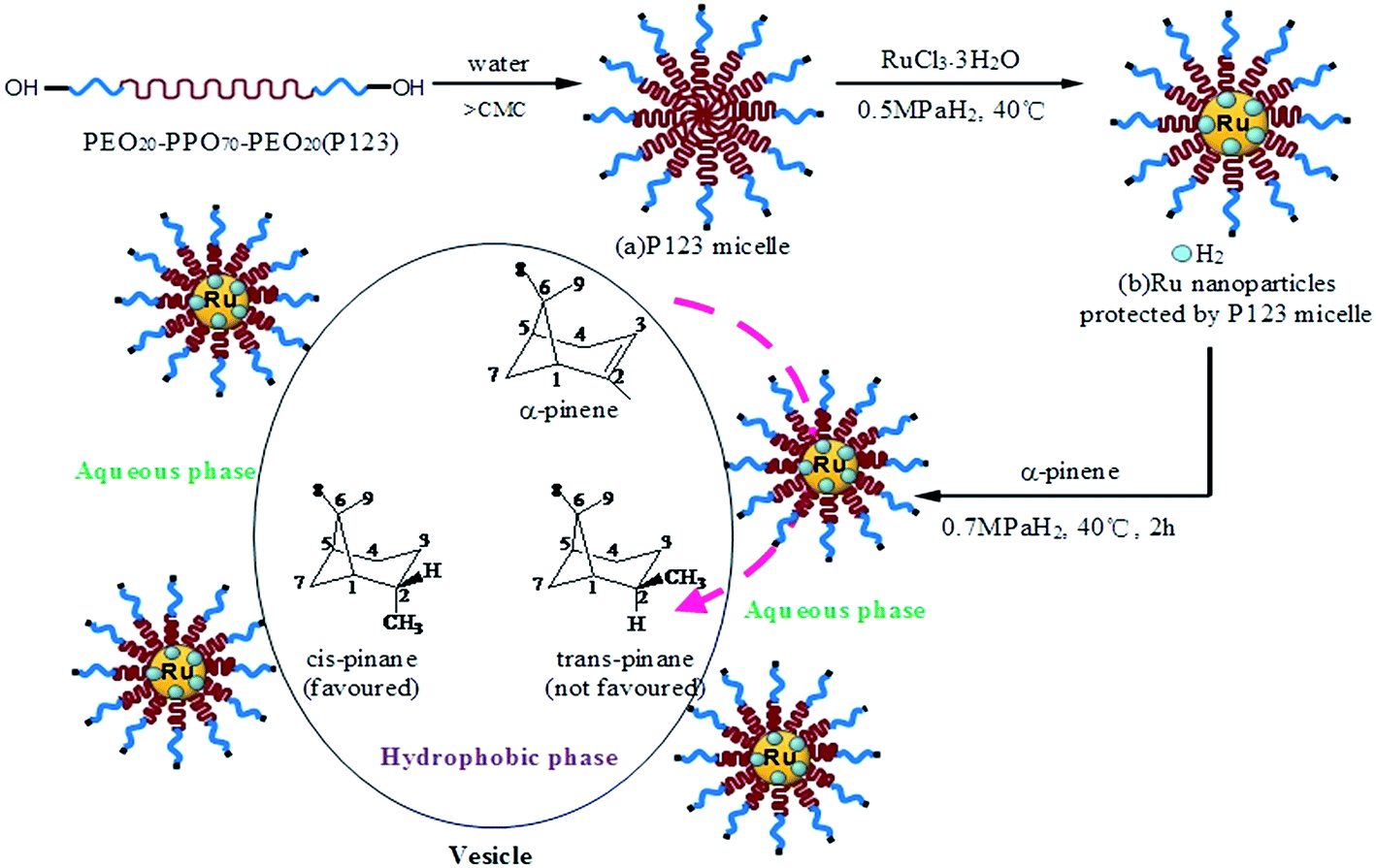 | ||
| Scheme 2 Mechanism of the hydrogenation of α-pinene. | ||
In the procedure of reducing the substrate, the vesicles were formed in the reaction system when the hydrogenation of α-pinene occurred. The structures of internal and external phases were separated by the vesicles. As described in Scheme 2, every vesicle can be considered as a microreactor in the reaction. The Ru nanoparticles protected by the P123 micelles in the vesicle-microreactor system are similar to enzymes in cells.34 A special role was played by the vesicle-microreactor for the separated reaction spaces. Bulk α-pinene and H2 were easily solubilized in the hydrophobic interior of the vesicle-microreactor; thus, the local concentration of α-pinene in vesicles was extremely high. The Ru nanoparticles were enriched in the interface of the vesicle-microreactor.35 In this micro-circumstance, the distance of α-pinene from the interior of the vesicle to the interface was shortened, which was beneficial for promoting the substrate to contact the Ru catalyst. Furthermore, this structure significantly increased the biphasic interface area, and the energy barrier of phase transfer was effectively minimized. The combination of the aforementioned factors created highly advantageous conditions for the acceleration of the reaction.36 In addition, the special spatial structure of the P123 micelles protected the Ru nanoparticles. This allowed only the endo surface of α-pinene with a small steric space to contact the catalyst, which increased the selectivity of cis-pinane. In addition, compared with other precious metals (Table 3), Ru is more suitable for the highly selective hydrogenation of α-pinene.13
3.6 Optimal conditions of α-pinene hydrogenation
To further study the influence of the catalyst on the hydrogenation of α-pinene, several parameters such as temperature, H2 pressure, reaction time, and catalyst amount were studied; the results are shown in Fig. 4. The conversion of α-pinene increased with increasing temperature. When the temperature was higher than 40 °C, the influence of temperature on the conversion was not obvious. Chou and co-workers37 demonstrated that low temperature favors the production of cis-pinane from α-pinene. Thus, we selected the temperature of 40 °C for subsequent experiments. The conversion and selectivity increased with increasing H2 pressure. However, the use of high pressure would increase the capital costs for the hydrogenation plant facility. The examination of the catalyst amount revealed 0.01 mmol as the best value. Considering the analysis results of the four factors, the optimum conditions were determined to be: P = 0.7 MPa, T = 40 °C, t = 2 h, 0.01 mmol of RuCl3 and 2 mmol of α-pinene. Furthermore, the influence of the stirring rate on α-pinene hydrogenation was also studied, the data are plotted in Table S4.† Our experiment showed that 500 rpm min−1 is the best stirring rate. Under these conditions, the conversion of α-pinene was 99.9%, and the selectivity of cis-pinane was 98.9%. | ||
| Fig. 4 The influence of reaction time, temperature, pressure of H2 and catalyst amount on the reaction. Reaction conditions: P = 0.5–2.0 MPa, T = 30–60 °C, t = 0.5–2.5 h, α-pinene: 2 mmol, metal precursor: RuCl3 (0.005–0.015 mmol), surfactants: P123 (Mw: 5800, 30 mg) and reaction medium: water (2 mL). | ||
3.7 Recyclability of the catalyst
After the reaction, the product phase was separated from the catalyst phase. The catalyst was directly recycled by the addition of fresh α-pinene. As shown in Fig. 5, the catalyst can be reused more than seven times with no significant decline in selectivity or activity. Nearly no appreciable Ru leaching into the organic phase was observed, as indicated by the ICP analysis results of 0.79 ppm. The selectivity remained almost unchanged during the experiments. These results occurred because the P123 micelles protected the Ru nanoparticles from poisoning and accumulation.18 Therefore, the new catalytic system of P123–Ru shows excellent stability. | ||
| Fig. 5 Catalyst recycling data for the hydrogenation of α-pinene promoted by the Ru nanoparticles. Reaction conditions: P = 0.7 MPa, T = 40 °C, t = 2 h. [substrate]:[catalyst] = 200:1, α-pinene: 2 mmol, metal precursor: RuCl3 (0.01 mmol), surfactants: P123 (Mw: 5800, 30 mg) and reaction medium: water (2 mL). | ||
After eight catalytic cycles, the aggregation of the Ru nanoparticles was confirmed using TEM (Fig. S4†). The freshly prepared Ru nanoparticles had an average particle size of 2.8 ± 0.4 nm, and the nanoparticles displayed a homogeneous distribution. After eight catalytic cycles, the particle size of the Ru nanoparticles increased, and aggregation occurred. After 14 reaction cycles, an average particle size of 4.0 ± 0.5 nm was observed, presumably leading to the decrease in catalytic activity during the recycling experiments.
The amount of Ru leaching determined using ICP was 5.0 ppm (Table S5†) after 14 catalytic cycles, which might be attributed to damaged micelles. The Ru nanoparticles without the protection of the P123 micelles were exposed to water, and they easily entered the product phase. With the loss of the Ru catalyst, the catalytic activity gradually decreased. Furthermore, the residual extractant may also have an impact on catalytic activity.
This theory might partly account for the loss of activity as well as the possible deactivation of the catalyst during the recycling procedure. As described in Table 2, the catalytic activity was very poor when the Ru nanoparticles were dispersed in n-heptane instead of water. When 0.5–2.0 mL of excess n-heptane was added to the prepared catalytic system of P123–Ru in water, the conversation of α-pinene decreased from 6.3% and 24.4%, respectively (Table S6†). These results indicate that residual n-heptane in the emulsions likely affects the assembling behavior of polymer-based catalysts, resulting in negative effects for the reduction of substrates. Furthermore, this substance destroys the structure of micro-reactors to some extent.
4. Conclusions
In summary, a new mild and environmentally beneficial methodology has been developed for the efficient hydrogenation of α-pinene in an aqueous medium based on the generation of Ru nanoparticles protected by P123 micelles. This new catalytic system has been demonstrated to be suitable for the environmentally clean reduction of α-pinene. The hydrogenation of α-pinene by the P123–Ru micellar catalyst in the aqueous phase resulted in the effective conversion of α-pinene and selectivity for cis-pinane under very mild conditions. The catalyst can be reused more than seven times with no significant decline in selectivity or activity. The P123 micelles can protect the Ru nanoparticles from poisoning and accumulation. This study provides a reference for the study of other hydrophobic natural products in hydrogenation reactions.Acknowledgements
This work was financially supported by the National Natural Science Foundation of China (No. 31270615).Notes and references
- X. R. Liu, X. C. Wang, S. X. Yao, Y. J. Jiang, J. Guan and X. D. Mu, RSC Adv., 2014, 4, 49501 RSC.
- P. Mäki-Arvela, B. Holmbom, T. Salmi and D. Y. Murzin, Catal. Rev., 2007, 49, 197 Search PubMed.
- S. Tanielyan, N. Biunno and R. Bhagat, Top. Catal., 2014, 57, 1564 CrossRef CAS.
- V. A. Semikolenov, I. I. Ilyna and I. L. Simakova, Appl. Catal., A, 2001, 211, 91 CrossRef CAS.
- I. L. Simakova, Y. Solkina, I. Deliy, J. Wärnå and D. Y. Murzin, Appl. Catal., A, 2009, 356, 216 CrossRef CAS PubMed.
- M. L. Casella, G. F. Santori, A. Moglioni, V. Vetere, J. F. Ruggera, G. M. Iglesias and O. A. Ferretti, Appl. Catal., A, 2007, 318, 1 CrossRef CAS PubMed.
- S. H. Ko and T. C. Chou, Can. J. Chem. Eng., 1994, 72, 862 CrossRef CAS PubMed.
- D. Chouchi, D. Gourgouillon, M. Courel, J. Vital and M. N. Ponte, Ind. Eng. Chem. Res., 2001, 40, 2551 CrossRef CAS.
- A. Milewska, A. B. Osuna, I. M. Fonseca and M. N. Ponte, Green Chem., 2005, 7, 726 RSC.
- D. C. Rideout and R. Breslow, J. Am. Chem. Soc., 1980, 102, 7816 CrossRef CAS.
- M. B. Gawande, V. D. B. Bonifácio, R. Luque, P. S. Branco and R. S. Varma, Chem. Soc. Rev., 2013, 42, 5522 RSC.
- A. Chanda and V. V. Fokin, Chem. Rev., 2009, 109, 725 CrossRef CAS PubMed.
- X. Yang, S. W. Liu, C. X. Xie, S. T. Yu and F. S. Liu, Chin. J. Catal., 2011, 32, 643 CAS.
- J. H. Fendler and E. J. Fendler, Catalysis in Micellar and Macromolecular Systems, Academic Press, New York, 1975 Search PubMed.
- A. Cavarzan, A. Scarso and G. Strukul, Green Chem., 2010, 12, 790 RSC.
- L. M. Wang, N. Jiao, J. Qiu, J. J. Yu, J. Q. Liu, F. L. Guo and Y. Liu, Tetrahedron, 2010, 66, 339 CrossRef CAS PubMed.
- S. L. Huang, K. R. Voigtritter, J. B. Unger and B. H. Lipshutz, Synlett, 2010, 13, 2041 Search PubMed.
- M. Schwarze, J. S. Milano-Brusco, V. Strempel, T. Hamerla, S. Wille, C. Fischer, W. Baumann, W. Arlt and R. Schomäcker, RSC Adv., 2011, 1, 474 RSC.
- P. Alexandridis, Curr. Opin. Colloid Interface Sci., 1996, 1, 490 CrossRef CAS.
- T. Sakai and P. Alexandridis, Langmuir, 2004, 20, 8426 CrossRef CAS PubMed.
- M. H. Liu, M. F. Han and W. W. Yu, Environ. Sci. Technol., 2009, 43, 2519 CrossRef CAS.
- W. Liu, X. Yang and W. Huang, J. Colloid Interface Sci., 2006, 304, 160 CrossRef CAS PubMed.
- M. Liu, B. He, H. Liu and X. Yan, J. Colloid Interface Sci., 2003, 263, 461 CrossRef CAS.
- Y. Lin and P. Alexandridis, J. Phys. Chem. B, 2002, 106, 10834 CrossRef CAS.
- P. Alexandridis and R. J. Spontak, Curr. Opin. Colloid Interface Sci., 1999, 4, 130 CrossRef CAS.
- P. Alexandridis, J. F. Holzwarth and T. A. Hatton, Macromolecules, 1994, 27, 2414 CrossRef CAS.
- T. Dwars, E. Paetzold and G. Oehme, Angew. Chem., Int. Ed., 2005, 44, 7174 CrossRef CAS PubMed.
- C. G. P. H. Schroen, M. A. C. Stuart, K. V. D. V. Maarschalk, A. V. D. Padt and K. V. Riet, Langmuir, 1995, 11, 3068 CrossRef CAS.
- M. S. Goedheijt, B. E. Hanson, J. N. H. Reek, P. C. J. Kamer and P. W. N. M. van Leeuwen, J. Am. Chem. Soc., 2000, 122, 1650 CrossRef CAS.
- C. Milone, G. Neri, A. Donato, M. G. Musolino and L. Mercadante, J. Catal., 1996, 159, 253 CrossRef CAS.
- F. Wang, H. Liu, L. F. Cun, J. Zhu, J. G. Deng and Y. Z. Jiang, J. Org. Chem., 2005, 70, 9424 CrossRef CAS PubMed.
- F. Trentin, A. M. Chapman, A. Scarso, P. Sgarbossa, R. A. Michelin, G. Strukul and D. F. Wass, Adv. Synth. Catal., 2012, 354, 1095 CrossRef CAS PubMed.
- J. H. Li, X. F. Li, Y. P. Ma, J. S. Wu and J. G. Deng, RSC Adv., 2013, 3, 1825 RSC.
- G. L. Sorella, G. Strukula and A. Scarso, Green Chem., 2015, 17, 644 RSC.
- L. Wang, H. X. Ma, L. Song, L. Li and H. D. Wang, RSC Adv., 2014, 4, 1567 RSC.
- H. Y. Fu, M. Li and H. Chen, J. Mol. Catal. A: Chem., 2006, 259, 156 CrossRef CAS PubMed.
- S. H. Ko and T. C. Chou, Ind. Eng. Chem. Res., 1995, 34, 457 CrossRef CAS.
Footnote |
| † Electronic supplementary information (ESI) available. See DOI: 10.1039/c5ra15283f |
| This journal is © The Royal Society of Chemistry 2015 |