DOI:
10.1039/C5RA14931B
(Paper)
RSC Adv., 2015,
5, 76588-76598
Effect of the molecular structure and surface charge of a bismuth catalyst on the adsorption and photocatalytic degradation of dye mixtures
Received
28th July 2015
, Accepted 28th August 2015
First published on 28th August 2015
Abstract
[Bi6O6(OH)3](NO3)3·1.5H2O plates were prepared by a facile hydrothermal method. The effect of the pH value, hydrothermal temperature, reaction time, and concentration of Bi(III) ion and additives on the morphology and properties of the samples were investigated. The as-synthesized samples were characterized by X-ray diffraction (XRD), scanning electron microscopy (SEM), high-resolution transmission electron microscopy (HRTEM), Brunauer–Emmett–Teller (BET) surface area and UV-vis diffuse reflectance spectroscopy (UV-DRS). It was found that under ultraviolet light irradiation (≤420 nm), the sample prepared at pH = 0.72 displays a higher photocatalytic activity than those prepared at higher pH values, which has been mainly ascribed to the promoted oxygen adsorption at low pH values. Moreover, we investigated the effects of the molecular structure and surface charge on the adsorption and photocatalytic degradation of dye mixtures (methyl orange (MO)–methylene blue (MB) and MO–rhodamine B (RhB)). The results show that in the MB–MO mixture, the adsorption and degradation of both MO and MB are promoted greatly by electrostatic forces; while in the RhB–MO mixture, the degradation of RhB is greatly reduced by MO due to competitive adsorption. These findings help us to understand degradation processes for real wastewater samples containing more than one pollutant.
1. Introduction
Today, water pollution has become a serious issue due to the development of chemical industries. Since the discovery of photocatalysis,1 a large number of photocatalysts have been investigated. However, it remains a big challenge to develop efficient photocatalysts for practical applications. Among various photocatalysts, bismuth-containing compounds have been researched intensively as efficient photocatalysts.2–9 In addition, bismuth compounds are easier to recover from aqueous systems than TiO2 due to their higher molecular weight. To the best of our knowledge, however, only a few studies10–13 have reported a plate-like [Bi6O6(OH)3](NO3)3·1.5H2O photocatalyst. In their pioneering work, Christensen et al.10 analyzed the composition of [Bi6O6(OH)3](NO3)3·1.5H2O using thermogravimetric analysis. Xie et al.11 synthesized [Bi6O6(OH)3](NO3)3·1.5H2O by a microwave-assisted hydrothermal method. Later, Xie et al.12 synthesized a [Bi6O6(OH)3](NO3)3·1.5H2O photocatalyst via a hydrothermal method, and investigated the degradation activity of malachite green (MG). Recently, Yang et al.13 have investigated the photocatalytic activity of [Bi6O6(OH)3](NO3)3·1.5H2O for the degradation of phenol. In the above studies, however, the influence of the synthetic conditions on the properties of [Bi6O6(OH)3](NO3)3·1.5H2O was not intensively investigated. It is well known that synthetic conditions have a great influence on the performance of materials. It is desirable to investigate in detail the influence of various synthetic parameters so as to understand the formation of [Bi6O6(OH)3](NO3)3·1.5H2O.
Moreover, real wastewater generally contains more than one pollutant. As a result, photocatalytic degradation processes in real wastewater become complicated. It is important to clearly understand the interaction between different pollutants. However, this area has been scarcely studied. In this work, we have systematically investigated the influence of various synthetic parameters on the formation of [Bi6O6(OH)3](NO3)3·1.5H2O, so as to determine what parameters play a crucial role in the formation of[Bi6O6(OH)3](NO3)3·1.5H2O. Moreover, we have studied the interaction between different dyes in methyl orange (MO)–methylene blue (MB) and MO–rhodamine B (RhB) mixtures. The study could be useful to promote the development of photocatalysts for real samples.
2. Experimental
2.1 Sample preparation
All reagents were of analytical grade, purchased from Beijing Chemical Reagents Industrial Company in China, and were used without further purification.
Typically, 1 mmol of Bi(NO3)3·5H2O was dissolved in 20 mL of distilled water, and then 3 mL of a 1 M diluted HNO3 solution was added to the above solution under magnetic stirring, followed by the addition of distilled water to form 40 mL of solution. After being magnetically stirred for 30 min, the resulting white suspension was transferred into a Teflon-sealed autoclave and maintained at 180 °C for 24 h. After cooling to room temperature naturally, the product was separated by centrifugation, washed with distilled water and ethanol several times, and dried at 60 °C for 5 h. The experimental parameters, including pH value, hydrothermal temperature, reaction time, concentration of Bi(III) ions and ethylene glycol/water ratio, were varied to gain insight into the formation of [Bi6O6(OH)3](NO3)3·1.5H2O, as listed in Tables 1–3.
Table 1 Samples prepared at different pH values
| Sample |
Bismuth(III) (mmol) |
Reagent |
pH |
Temperature (°C) |
Reaction time (h) |
| BS1 |
1 |
HNO3 |
0.72 |
180 |
24 |
| BS2 |
1 |
HNO3 |
0.95 |
180 |
24 |
| BS3 |
1 |
— |
1.15 |
180 |
24 |
| BS4 |
1 |
HNO3 + NH3·H2O |
3.51 |
180 |
24 |
| BS5 |
1 |
HNO3 + NH3·H2O |
5.38 |
180 |
24 |
| BS6 |
1 |
HNO3 + NH3·H2O |
7.36 |
180 |
24 |
| BS7 |
1 |
HNO3 + NH3·H2O |
9.05 |
180 |
24 |
Table 2 Samples prepared at different temperatures, reaction times and Bi(III) concentrations
| Sample |
Bismuth(III) (mmol) |
Temperature (°C) |
Reaction time (h) |
| BS8 |
1 |
90 |
24 |
| BS9 |
1 |
120 |
24 |
| BS10 |
1 |
150 |
24 |
| BS11 |
1 |
180 |
24 |
| BS12 |
1 |
180 |
30 |
| BS13 |
1 |
180 |
18 |
| BS14 |
1 |
180 |
12 |
| BS15 |
0.5 |
180 |
24 |
| BS16 |
1.5 |
180 |
24 |
| BS17 |
2.0 |
180 |
24 |
Table 3 Samples prepared with different volumetric ratios of ethylene glycol (EG) to water (W)
| Sample |
Bismuth(III) (mmol) |
Solvent (VEG/VW) |
Temperature (°C) |
Reaction time (h) |
| BS21 |
1.0 |
1 : 0 |
180 |
24 |
| BS22 |
1.0 |
3 : 1 |
180 |
24 |
| BS23 |
1.0 |
2 : 1 |
180 |
24 |
| BS24 |
1.0 |
1.5 : 1 |
180 |
24 |
| BS25 |
1.0 |
1 : 1 |
180 |
24 |
| BS26 |
1.0 |
0.67 : 1 |
180 |
24 |
| BS27 |
1.0 |
0.5 : 1 |
180 |
24 |
| BS28 |
1.0 |
0.33 : 1 |
180 |
24 |
| BS29 |
1.0 |
0 : 1 |
180 |
24 |
2.2 Characterization
The crystal structures of the samples were determined in an X-ray powder polycrystalline diffractometer (Rigaku D/max-2550VB) using graphite monochromatized Cu Kα radiation (λ = 0.154 nm) operating at 40 kV and 50 mA. The XRD patterns were obtained in the range of 20–80° (2θ) at a scanning rate of 5° min−1. The samples were characterized on a scanning electron microscope (SEM, Hitachi SU-1510) with an acceleration voltage of 15 keV. The samples were coated with a 5 nm-thick gold layer before observation. The fine surface structure of the samples was determined by high-resolution transmission electron microscopy (HRTEM, JEOL JEM-2100F) equipped with an electron diffraction (ED) attachment with an acceleration voltage of 200 kV. UV-vis diffused reflectance spectra of the samples were obtained using a UV-vis spectrophotometer (UV-2550, Shimadzu, Japan). BaSO4 was used as a reflectance standard in a UV-vis diffuse reflectance experiment. Nitrogen sorption isotherms were obtained at 77 K and <10−4 bar on a Micromeritics ASAP2010 gas adsorption analyzer. Each sample was degassed at 150 °C for 5 h before measurements. The surface area was calculated by the Brunauer–Emmett–Teller (BET) method.
2.3 Photocatalytic activity evaluation
The photocatalytic activities of the samples were evaluated through the degradation of MO, MB, RhB, MO–RhB and MB–MO aqueous solutions under ultraviolet light irradiation (λ ≤ 420 nm), using a 500 W Xe arc lamp (CEL-HXF 300) equipped with an ultraviolet cut-off filter as the light source. The reaction system was placed in a sealed black box with an open top, and a distance of 15 cm was maintained between the solution surface and the light source. 100 mg of powder was dispersed in 200 mL of MO (12.5 mg L−1), MB (4.5 mg L−1), RhB (7.5 mg L−1), MO (12.5 mg L−1)–RhB (7.5 mg L−1) and MO (12.5 mg L−1)–MB (4.5 mg L−1) aqueous solutions in a Pyrex beaker at room temperature, respectively. Before the lamp was turned on, the suspension was continuously stirred for 30 min in the dark to ensure the establishment of an adsorption–desorption equilibrium between the powder and the dye molecules. During degradation, 3 mL of solution was collected at intervals of irradiation with a pipette, and subsequently centrifuged to remove the catalysts. UV-vis spectra were recorded on a Spectrumlab 722sp spectrophotometer to determine the concentration of dyes. The photocatalytic reaction was normalized by an apparent first-order kinetic equation as follows:| | |
ln(C0/C) = ka × t, or C = C0 × exp(−ka × t)
| (1) |
where C0 is the initial concentration of the dye solution, and C is the concentration of the dye molecule at different irradiation times, ka represents the apparent first-order rate constant.
3. Results and discussion
3.1 Effect of pH value on the samples
Table 1 shows the synthetic conditions studied to assess the effect of the pH value on the properties of the samples. The crystal phases of the products were determined by X-ray powder diffraction (XRD) (Fig. 1a). At pH ≤ 5.38, all the diffraction peaks of the samples can be well indexed to tetragonal [Bi6O6(OH)3](NO3)3·1.5H2O (a = b = 3.8175 Å, c = 17.149 Å, JCPDS: 53-1038). At pH = 0.72 and 1.15, the intensity of the diffraction peaks of the samples does not change significantly. At pH = 3.51, the intensity of the diffraction peaks of the sample increases obviously. Generally, a high pH value favours the hydrolysis of Bi(III). Nevertheless, at too high pH values (7.36, 9.05), Bi2O3 and NH4NO3 form. Herein, the hydrolysis of Bi(III) can be described with eqn (2) as follows:| | |
Bi(NO3)3 + H2O → [Bi6O6(OH)3](NO3)3·1.5H2O + H+.
| (2) |
Herein, the pH value of the precursor solution was adjusted by addition of HNO3 or NH3·H2O. The pH value would affect the crystal nucleation and growth.14 When HNO3 was added, the hydrolysis of Bi(III) was restrained. As a result, large particles consisting of plate subunits were formed (Fig. 1b). Henry et al.15 have reported that OH− and NO3− bond to Bi(III) downward (Bi–OH bonds) and upward (Bi–ONO2 bonds), respectively; and the inserted OH− and NO3− between the [Bi2O2]2+ layers are connected through hydrogen bonds. Nevertheless, Li et al.16 have reported that both OH− and NO3− layers stack together along the c-axis via van der Waals forces (non-bonding interactions). Herein we propose that the formation of plate-like subunits could result from the intrinsic anisotropic layered structure of [Bi6O6(OH)3](NO3)3·1.5H2O. At low pH values, the number of nuclei is low, and then the nuclei slowly grow to form [Bi6O6(OH)3](NO3)3·1.5H2O plates (Fig. 1b and c).17 At moderate pH values (3.51, 5.38), [Bi6O6(OH)3](NO3)3·1.5H2O plates agglomerate or assemble to form thick biscuits (Fig. 1d). At high pH values (7.36 and 9.05), thin plates form (Fig. 1e and f), but an impure phase is also formed. The high pH value can not only promote crystal nucleation and growth, but also favour the dehydration of Bi–OH to form Bi2O3. It is obvious that the pH value plays a crucial role in the formation of [Bi6O6(OH)3](NO3)3·1.5H2O.
 |
| | Fig. 1 XRD patterns (a) and SEM images (b–f) of the as-synthesized samples at different pH values: (b) 0.72; (c) 1.15; (d) 5.38; (e) 7.36; (f) 9.05. | |
The sample prepared at pH = 0.72 (BS1) was further characterized by high-resolution electron emission microscopy (HRTEM) and selected area electron diffraction (SAED) (Fig. 2). As shown in Fig. 2c, the lattice spacings of 0.317 nm, 0.286 nm and 0.271 nm are consistent with the literature data of d103 = 3.173 Å, d006 = 2.855 Å and d110 = 2.697 Å for [Bi6O6(OH)3](NO3)3·1.5H2O, respectively. Furthermore, the diffraction rings result from the (1010) and (006) Bragg reflections (Fig. 2d), revealing the polycrystalline nature of [Bi6O6(OH)3](NO3)3·1.5H2O.
 |
| | Fig. 2 XRD patterns (a), TEM images (b), lattice fringe images (c) and SAED pattern (d) of the BS1 sample. | |
3.2 Effect of temperature, reaction time, Bi(III) concentration and VEG/VW ratio on the samples
In order to understand the evolution process of [Bi6O6(OH)3](NO3)3·1.5H2O, experiments at different reaction temperatures, reaction times, and Bi(III) concentrations were carried out (Table 2).
Fig. 3a shows the XRD patterns of the samples prepared at different temperatures. All the as-prepared samples are phase-pure [Bi6O6(OH)3](NO3)3·1.5H2O (JCPDS: 53-1038) (Fig. 3a), and large aggregates of plates have formed (Fig. 3b and c). It is obvious that with the increasing temperature, the intensity of the peaks increases. A high crystallinity indicates less bulk defects.18 Usually, bulk defects in photocatalysts are considered to be the recombination centers for photogenerated holes and electrons, resulting in low photocatalytic activity.18 Thus, a high temperature synthesis could be beneficial to improve the photocatalytic activity. Fig. 3d shows the XRD patterns of the samples at different reaction times (12–30 h). All the samples are well indexed to phase-pure [Bi6O6(OH)3](NO3)3·1.5H2O (JCPDS: 53-1038) (Fig. 3d). At 12 and 18 h, the intensity of the peaks of the samples does not vary obviously. At 24 and 30 h, the peak intensity of the samples increases, indicating an increase in the crystallinity. No obvious differences can be observed from their SEM images (Fig. 3e and f). Fig. 3g–i present the XRD patterns and SEM images of the samples at different Bi(III) concentrations. All the samples can also be well indexed to phase-pure [Bi6O6(OH)3](NO3)3·1.5H2O, but the product yield increases with the increasing Bi(III) concentration. It is obvious that the temperature, reaction time and Bi(III) concentration have little influence on the phase purity and morphology of the sample.
 |
| | Fig. 3 XRD patterns of the samples prepared at different reaction temperatures (a), reaction times (d), Bi(III) concentration (g); SEM images of the samples prepared at different conditions: (b) 120 °C; (c) 180 °C; (e) 12 h; (f) 30 h; (h) 0.5 mmol Bi(III); (i) 2.0 mmol Bi(III). | |
Table 3 and Fig. 4a–f present the effect of the volumetric ratio of ethylene glycol/water (VEG/VW) on the samples. In pure ethylene glycol, only Bi metal form, in which Bi(III) has been reduced by ethylene glycol.19,20 When VEG/VW decreases from 3
:
1 to 1
:
1, Bi2O2CO3, Bi2O3 and an unknown impure phase form. When VEG/VW is smaller than 1, the diffraction peaks of metal bismuth disappear. Phase-pure [Bi6O6(OH)3](NO3)3·1.5H2O can only be obtained in pure water. Fig. 4b and c show that, in the presence of glycol, the formed microspheres are assembled by thin plates. With the increasing VEG/VW ratio, the sample tends to form microspheres. At VEG/VW = 1, most of the microspheres have cracked and a few hollow microspheres have formed (Fig. 4d). At VEG/VW < 1, plates with different thicknesses have formed. It is obvious that in the presence of ethylene glycol, phase-pure [Bi6O6(OH)3](NO3)3·1.5H2O cannot be obtained.
 |
| | Fig. 4 XRD patterns (a) and SEM images of the as-synthesized samples at different volumetric ratios of ethylene glycol (EG) to water (W): (b) 1 : 0; (c) 3 : 1; (d) 1 : 1; (e) 1 : 3; (f) 0 : 1. | |
3.3 Photodegradation activity of a single dye
Fig. 5a presents the photodegradation curves of RhB by the samples prepared at different pH values. After 30 min, 93.13% of RhB can be removed by sample BS1 (pH = 0.72), while 83.31%, 73.25%, 65.54% and 36.76% are removed by the samples prepared at pH = 0.95, 1.15, 5.38 and rutile TiO2, respectively. Meanwhile, the self-degradation of RhB is 23.44%. We have measured the activity of Degussa P25 TiO2. It was found that RhB can be degraded completely by Degussa P25 TiO2 after 10 min UV irradiation. Its activity is higher than that of [Bi6O6(OH)3](NO3)3·1.5H2O, since it is a mixture of anatase and rutile, with high BET area and light absorbance, and so on.21 Fig. 5c further gives their reaction kinetic curves. The apparent degradation kinetic rate (kBS1 = 0.08481 min−1) of RhB over BS1 is 1.53, 2.11, 2.60 and 6.90 times higher than those over the samples prepared at pH = 0.95, 1.15, 5.38 and rutile TiO2, respectively. The photocatalytic degradation efficiency of RhB over these samples follows the order: BS1 > BS2 > BS3 > BS5. It seems that the activity of the samples prepared at low pH values is higher than that of the samples prepared at high pH values. It should be pointed out that the BET areas of all the samples are lower than 2.0 m2 g−1. Similar results have also been reported in other works.11–13 Thus, in our study, the BET area has little influence on the activity. As discussed above, the phase purity of the product is sensitive to the pH value. We believe that under acidic preparation conditions, H+ ions endow [Bi6O6(OH)3](NO3)3·1.5H2O with a positively charged surface. The surface charge properties would then affect the surface adsorption nature of the catalyst.
 |
| | Fig. 5 Photodegradation (a and b) and reaction kinetic curves (c and d) of RhB under ultraviolet light irradiation (λ ≤ 420 nm) of the samples at different conditions. UV-vis diffuse reflectance spectra (e) and Tauc plots (f) for the samples prepared at different pH values. | |
Generally, surface oxygen vacancies are the active sites for molecular oxygen adsorption, thus the formation of oxygen vacancies on a material’s surface is a prerequisite for molecular oxygen activation. Li et al. have reported that, under standard conditions, few oxygen vacancies are present on the surface of TiO2.16 On the other hand, oxygen vacancies, as one kind of point defects, can promote the separation of photo-induced electrons and holes, leading to high activities. Ye et al.22 have reported that because of the low bond energy and long bond length of Bi–O, the unique atomic structure of bismuth facilitates the formation of oxygen vacancies under UV light irradiation. [Bi6O6(OH)3](NO3)3·1.5H2O consists of both [Bi2O2]2+ and anion (OH−, NO3−) layers,15 thus oxygen vacancies could form through the breakage of Bi–O bonds under UV irradiation. Herein, whether oxygen vacancies form or not is still unknown. Limited by our research conditions, however, it is difficult for us to quantitatively investigate defects at present. Cui et al.23 have reported that, after phosphate modification, an increase in the surface acidity favours the O2 adsorption on the TiO2 surface, which enhances the photogenerated charge separation. What is more, they also demonstrated that, after being modified by different sodium phosphates (Na3PO4, Na2HPO4, NaH2PO4, and H3PO4), the crystal phase and crystallinity of TiO2 had not changed, although phosphate groups had been anchored to the TiO2 surface. They further reported that the surface modification of TiO2 by H3PO4 or H2SO4 can chemically adsorb a large amount of O2.23 Therefore, we could infer that the surface acidity of [Bi6O6(OH)3](NO3)3·1.5H2O prepared at low pH values (with HNO3) favours the adsorption of O2, leading to photogenerated charge separation. In summary, the surface acidity of [Bi6O6(OH)3](NO3)3·1.5H2O is an important factor affecting its photocatalytic activity.
Typically, the light absorption properties of the samples prepared at different pH values were characterized by UV-vis diffuse reflection spectroscopy (UV-DRS) (Fig. 5e and f). The BS1 sample, prepared at pH = 0.72, has a higher absorbance than the others prepared at pH = 1.15, 0.95 and 0.83 in the UV region. The band gap of [Bi6O6(OH)3](NO3)3·1.5H2O can be calculated using eqn (3) as follows:24
where
α,
hν,
A, and
Eg are the optical absorption coefficient, the photonic energy, the proportionality constant and the band gap, respectively. By extrapolating the straight lines to the
x-axis in the Tauc plots (
Fig. 5f), the band gaps are estimated to be 3.33 eV, 3.38 eV, 3.35 eV and 3.32 eV for the samples prepared at pH = 0.83, 0.72, 0.95 and 1.15, respectively. For layered BiOCl, Zhang
et al. have reported that the typical layered structure can provide a space large enough to polarize the related atoms and orbitals, resulting in the formation of dipoles.
25 The induced dipoles favour the efficient separation of hole–electron pairs. From the Tauc plots in
Fig. 5f, we can infer that [Bi
6O
6(OH)
3](NO
3)
3·1.5H
2O has an indirect-transition band gap. For an indirect-transition band gap, the excited electrons have to travel a certain distance to reach the conduction band.
25,26 Although extra energy is needed, the recombination probability of the photogenerated electrons and holes can be reduced greatly, leading to an improved photocatalytic activity.
25,26 To conclude, there is no obvious difference in their UV-DRS spectra.
Also, we have investigated the photoactivity of the samples prepared at different temperatures for the degradation of RhB (Fig. 5b and d). After reaction for 30 min, the removal efficiency of RhB by the BS8, BS9, BS11, BS13 and BS14 samples was 37.18%, 87.95%, 93.13%, 90.01% and 67.79%, respectively. The apparent reaction rate constant of BS11 is 0.08481 min−1, which is 6.3, 1.29, 1.17 and 2.47 times as high as those of BS8, BS9, BS13 and BS14, respectively. It is obvious that the BS11 sample obtained at 180 °C for 24 h shows the highest activity among them. Due to their similar BET surface areas (<2 m2 g−1), its high activity can be attributed to a high crystallinity, which means that the sample possesses less bulk defects18 that could reduce the recombination rate, leading to an improved activity.
3.4 Photocatalytic reaction mechanism and cycle stability
In previous studies,27,28 Honda et al. have demonstrated that the primary step of RhB degradation is N-deethylation, in which the electrons from the excited singlet RhB* are transferred to CdS in the RhB/CdS system under visible light irradiation. Further, they have confirmed that RhB can undergo a one-electron oxidation by investigating the cyclic voltammogram of RhB. Besides, Hu et al.29 have reported that for a single electron transfer (SET) mechanism, the N-deethylation process is initiated by the excitation of the dye, followed by an electron transfer to the catalyst. Subsequently, the resultant dye radicals are hydrolyzed to lose one alkyl group. Further, they have proved that N-deethylation of RhB arises from the hydrolysis of the cationic dye radical in the absence of active oxygen species.29 In our study, there is no hypsochromic shift of the absorption maximum of RhB (Fig. 6a), but an obvious hypsochromic shift can be observed in the VO2+/RhB system.29 Thus, in our study, the cleavage of the whole conjugated chromophore structure of RhB may occur, instead of the N-deethylation. Previous reports have reported that the mineralization of dyes is mainly attributed to the formation of active oxygen species.22,26–29 Thus, oxygen species (O2−˙) could be formed in our experiments.
 |
| | Fig. 6 UV-vis absorption spectra of rhodamine B (RhB) (a), degradation curves of RhB by the BS1 sample while adding dimethyl sulphoxide (DMSO) and Na2C2O4 (b), degradation pathways of RhB (c) and the cycle experiment (d). | |
Herein, trapping experiments were conducted to determine the active species, in which Na2C2O4 and dimethyl sulphoxide (DMSO) were employed as the scavengers of holes and hydroxyl radicals, respectively (Fig. 6b). When adding DMSO to the reaction solution, 34.3% of RhB was degraded, while 38.5% of RhB was degraded when adding Na2C2O4. We could deduce that RhB is oxidized simultaneously by both holes and hydroxyl radicals over [Bi6O6(OH)3](NO3)3·1.5H2O.
Thus, a degradation pathway of RhB is proposed, as shown in Fig. 6c. It is well-known that the organic radical species (RhB*) resulted from the photosensitization of RhB can facilely react with O2 to produce peroxide free radicals, which can further initiate a series of radical chain reactions, and finally mineralize organic compounds. At the same time, the conduction band (−0.9 V vs. N.H.E.) of [Bi6O6(OH)3](NO3)3·1.5H2O is more negative than the reduction potential (E0(O2/O2−˙) = −0.33 V vs. N.H.E.) of O2, indicating that oxygen species (O2−˙) could be generated during the degradation process; whereas its less positive valence band (+2.48 V vs. N.H.E.) indicates that H2O cannot be oxidized to form ˙OH (E0(˙OH/H2O) = +2.68 V vs. N.H.E.).12,30 As reported in the literature,31 O2−˙ is unstable in aqueous solution and it is easily decomposed into ˙OH. In our experiments, both h+ and ˙OH are the main active species, but the generation of O2−˙ could be a prerequisite step for the generation of ˙OH.
To investigate the stability of [Bi6O6(OH)3](NO3)3·1.5H2O under UV light irradiation, the degradation reaction of RhB dye over the BS1 sample was cycled for three times (Fig. 6d). It is worth noting that, after three cycles, its degradation efficiency was only reduced by 4.2%, indicating the good stability of [Bi6O6(OH)3](NO3)3·1.5H2O.
3.5 Photodegradation of MB–MO and RhB–MO dye mixtures
Generally, real wastewater contains more than one dye. In order to simulate real wastewater, the degradation of MB–MO and RhB–MO dye mixtures were investigated over the BS1 sample. As shown in Fig. 6a and 7a–d, the maximum absorption peak positions of MB, MO and RhB do not change in single dye or dye mixture solutions, suggesting that no intermediates are produced. After 30 min UV irradiation, the removal ratios of MB (single dye), MO (single dye), MB (MB–MO), and MO (MB–MO) are 56%, 27.68%, 73.87%, and 47.86%, respectively (Table 4). Specifically, the removal ratio of MB (MB–MO) reaches 71% after 10 min UV irradiation. It is surprising that the removal efficiency of MB and MO in the MB–MO mixture solution is greatly higher than those in the single dye solutions, respectively. It is obvious that a mutual promoting effect may be occurring between MO and MB. In Fig. 7e and g, the adsorption value of MB is 55.88% in the MB–MO mixture solution, which is 3.9 times higher than that in the single MB solution (14.5%). Here, adsorption is mainly a physical process, in which dye molecules are adsorbed on the catalyst surface to reach an adsorption–desorption balance before irradiation. Generally, the adsorption of dye molecules on the catalyst surface is a prerequisite for a degradation reaction. At the same time, the adsorption value of MO is 14.23% for the MB–MO mixture solution, which is 13.3 times higher than that for the single MO solution. We propose that the negatively-charged MO (or positively-charged MB) may improve the adsorption of positively-charged MB (or negatively-charged MO) on the [Bi6O6(OH)3](NO3)3·1.5H2O surface. Thus, there is a strong interaction between the components in the MB–MO mixture solution.
Table 4 Adsorption and degradation ratios for single methylene blue (MB), single methylene orange (MO), single rhodamine B (RhB), and MB–MO and RhB–MO solutions
| Dye |
Adsorption (at 30 min) |
Degradation (at 30 min) |
Degradation (at 60 min) |
| MB |
14.34% |
56.00% |
— |
| MO |
1.07% |
27.68% |
— |
| RhB |
2.62% |
57.46% |
— |
| MB (MB–MO) |
55.88% |
73.87% |
76.30% |
| MO (MB–MO) |
14.23% |
47.86% |
63.78% |
| RhB (RhB–MO) |
2.51% |
42.78% |
73.02% |
| MO (RhB–MO) |
1.25% |
28.51% |
46.75% |
 |
| | Fig. 7 UV-vis absorption spectra of (a) methylene blue (MB), (b) methyl orange (MO), MB–MO (c) and RhB–MO (d) solutions at different reaction times; photodegradation curves (e and f) of different dye solutions after 30 min; adsorption (g) and removal ratio (h) histograms of different dye solutions after 30 min. | |
However, such a mutual promoting effect is not obvious in the RhB–MO mixture solution. Compared to the single dye solutions, however, the adsorption ability of both RhB and MO in the RhB–MO solution do not clearly change, but the degradation activity towards RhB decreases. Fig. 7h clearly shows that the photocatalytic removal ratio decreases in the order: MB (MB–MO) > RhB > MB > MO (MB–MO) > RhB (RhB–MO) > MO (RhB–MO) ≈ MO. After 60 min irradiation, the removal ratio of the MB (MB–MO), MO (MB–MO), RhB (RhB–MO) and MO (RhB–MO) dye mixture solutions is 76.30%, 63.78%, 73.02% and 46.75%, respectively. It is easily understood that in the RhB–MO mixture solution, the reduced activity results primarily from the competitive adsorption on the catalyst surface.
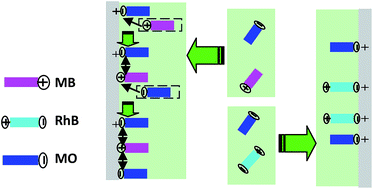
Our experiment results show that in the MB–MO solution, the mutual promotion effect of both MB and MO on the adsorption and degradation could mainly be a result of the electrostatic interactions between the cationic MB and anionic MO. Our zeta potential measurements show that the surface of [Bi6O6(OH)3](NO3)3·1.5H2O is positively charged. Thus, the anionic dye molecules are adsorbed on the catalyst and are activated by the catalyst preferentially, as shown in Fig. 8. It should be pointed out that the adsorption of MB in the single MB dye solution may happen through two donor atoms (S, N) with lone electron pairs. As shown in Fig. 8, we have assumed that in the MB–MO solution, the adsorption of MB can be greatly improved through the electrostatic interactions with MO, which is preferentially adsorbed on the catalyst. In turn, the adsorbed MB on the catalyst can also promote the further adsorption of MO on the catalyst. On the other hand, when comparing the RhB–MO mixture with the single dye solution, the adsorption ability of RhB or MO does not change much (Fig. 7f). However, the degradation ratio of RhB is reduced, while that of MO does not change obviously (Fig. 7h). We therefore deduce that the electrostatic interaction between MO and RhB may be weaker than that between MO and MB. This could be because MB and RhB have different molecular structures (Fig. 8). It has been reported that the degradation efficiency of MO is high under acidic conditions.30 As an anionic dye, MO contains an azo group (–N
N–) that links to aromatic sp2-hybridized C-atoms (Fig. 8). As a cationic dye, RhB contains a carboxyl group that can be hydrolyzed to release H+. The adsorption of H+ increases the positive charge of the catalyst, thus slightly promoting the adsorption of MO. At the same time, the hydrolyzed RhB is endowed with a negative charge due to the COO− groups, thus competitive adsorption could occur between them. As a result, the degradation ratio of RhB is decreased. To conclude, it is the molecular structure and the charge properties of the dyes that lead to different removal efficiencies. It should be pointed out that the true mechanism for the degradation of dye mixture solutions needs further study in the future.
 |
| | Fig. 8 Schematic diagram of the interactions of MO with MB and RhB. | |
4. Conclusions
The pH value of the precursor solution has a significantly influence on the properties of [Bi6O6(OH)3](NO3)3·1.5H2O. In the MB–MO mixture solution, the adsorption and degradation of MB have been greatly improved by the presence of MO, which has been mainly attributed to electrostatic interactions; while the degradation of RhB has been refrained clearly by the presence of MO due to the competitive adsorption between RhB and MO. The different results for cationic MB and RhB are mainly ascribed to their different molecular structures. These findings are useful to promote the application of photocatalysis in the decontamination of real wastewater.
Acknowledgements
This work was financially supported by the National Science Foundation of China (21377060), the Project Funded by the Science and Technology Infrastructure Program of Jiangsu (BM201380277), Jiangsu Science Foundation of China (BK2012862), Six Talent Climax Foundation of Jiangsu (20100292), Jiangsu Province of Academic Scientific Research Industrialization Projects (JHB2012-10, JH10-17), the Key Project of Environmental Protection Program of Jiangsu (2013016, 2012005), A Project Funded by the Priority Academic Program Development of Jiangsu Higher Education Institutions (PAPD) sponsored by SRF for ROCS, SEM (2013S002) and “333” Outstanding Youth Scientist Foundation of Jiangsu (2011015).
References
- A. Fujishima, Nature, 1972, 238, 37–38 CrossRef CAS PubMed.
- H. Suzuki, N. Komatsu, T. Ogawa, T. Murafuji, T. Ikegami and Y. Matano, Organobismuth chemistry, Elsevier, 2001 Search PubMed.
- S. Shimada, O. Yamazaki, T. Tanaka, M. L. Rao, Y. Suzuki and M. Tanaka, Angew. Chem., Int. Ed., 2003, 115, 1889–1892 CrossRef PubMed.
- P. K. Koech and M. J. Krische, J. Am. Chem. Soc., 2004, 126, 5350–5351 CrossRef CAS PubMed.
- H. Qin, N. Yamagiwa, S. Matsunaga and M. Shibasaki, J. Am. Chem. Soc., 2006, 128, 1611–1614 CrossRef CAS PubMed.
- A. Gagnon, M. St-Onge, K. Little, M. Duplessis and F. Barabé, J. Am. Chem. Soc., 2007, 129, 44–45 CrossRef CAS PubMed.
- S.-F. Yin, M. Bao and S. Shimada, The 32nd Symposium on Heteroatom Chemistry, ed. T. H. L. Michael, Asahi Publishing Company, Tsukuba, 2005, pp. 228–229 Search PubMed.
- N. M. Leonard, M. C. Oswald, D. A. Freiberg, B. A. Nattier, R. C. Smith and R. S. Mohan, J. Org. Chem., 2002, 67, 5202–5207 CrossRef CAS PubMed.
- N. Srivastava, S. K. Dasgupta and B. K. Banik, Tetrahedron Lett., 2003, 44, 1191–1193 CrossRef CAS.
- A. N. Christensen, M.-A. Chevallier, J. Skibsted and B. B. Iversen, Dalton Trans., 2000, 265–270 RSC.
- L. Xie, J. Wang, Y. Hu, Z. Zheng, S. Weng, P. Liu, X. Shi and D. Wang, Mater. Chem. Phys., 2012, 136, 309–312 CrossRef CAS PubMed.
- L. Xie, J. Wang, Y. Hu, S. Zhu, Z. Zheng, S. Weng and P. Liu, RSC Adv., 2012, 2, 9881–9886 RSC.
- Y. Yang, H. Liang, N. Zhu, Y. Zhao, C. Guo and L. Liu, Chemosphere, 2013, 93, 701–707 CrossRef CAS PubMed.
- Y. Li, J. Liu and X. Huang, Nanoscale Res. Lett., 2008, 3, 365–371 CrossRef CAS.
- N. Henry, M. Evain, P. Deniard, S. Jobic, F. Abraham and O. Mentré, Z. Naturforsch., B: J. Chem. Sci., 2005, 60, 322–327 CAS.
- J. Li, Y. Yu and L. Zhang, Nanoscale, 2014, 6, 8473–8488 RSC.
- L. Xiao, Y. Zhao, J. Yin and L. Zhang, Chem.–Eur. J., 2009, 15, 9442–9450 CrossRef CAS PubMed.
- B. Ohtani, J. Photochem. Photobiol., C, 2010, 11, 157–178 CrossRef CAS PubMed.
- D. H. Kim, S. H. Kim, K. Lavery and T. P. Russell, Nano Lett., 2004, 4, 1841–1844 CrossRef CAS.
- J. Zhao, Q. Han, J. Zhu, X. Wu and X. Wang, Nanoscale, 2014, 6, 10062–10070 RSC.
- J. Zhang, Q. Xu, Z. Feng, M. Li and C. Li, Angew. Chem., Int. Ed., 2008, 47, 1766–1769 CrossRef CAS PubMed.
- L. Ye, L. Zan, L. Tian, T. Peng and J. Zhang, Chem. Commun., 2011, 47, 6951–6953 RSC.
- H. Cui, Y. Cao, L. Jing, Y. Luan and N. Li, ChemPlusChem, 2014, 79, 318–324 CrossRef CAS PubMed.
- Y. Ohko, K. Hashimoto and A. Fujishima, J. Phys. Chem. A, 1997, 101, 8057–8062 CrossRef CAS.
- K.-L. Zhang, C.-M. Liu, F.-Q. Huang, C. Zheng and W.-D. Wang, Appl. Catal., B, 2006, 68, 125–129 CrossRef CAS PubMed.
- L. Ye, K. Deng, F. Xu, L. Tian, T. Peng and L. Zan, Phys. Chem. Chem. Phys., 2012, 14, 82–85 RSC.
- T. Watanabe, T. Takizawa and K. Honda, J. Phys. Chem., 1977, 81, 1845–1851 CrossRef CAS.
- T. Takizawa, T. Watanabe and K. Honda, J. Phys. Chem., 1978, 82, 1391–1396 CrossRef CAS.
- X. Hu, T. Mohamood, W. Ma, C. Chen and J. Zhao, J. Phys. Chem. B, 2006, 110, 26012–26018 CrossRef CAS PubMed.
- K. Wang, J. Xu, X. Hua, N. Li, M. Chen, F. Teng, Y. Zhu and W. Yao, J. Mol. Catal. A: Chem., 2014, 393, 302–308 CrossRef CAS PubMed.
- M. Yin, Z. Li, J. Kou and Z. Zou, Environ. Sci. Technol., 2009, 43, 8361–8366 CrossRef CAS PubMed.
|
| This journal is © The Royal Society of Chemistry 2015 |
Click here to see how this site uses Cookies. View our privacy policy here.