DOI:
10.1039/C5RA14614C
(Paper)
RSC Adv., 2015,
5, 86945-86953
Facile synthesis of a polythiophene/TiO2 particle composite in aqueous medium and its adsorption performance for Pb(II)†
Received
23rd July 2015
, Accepted 8th October 2015
First published on 8th October 2015
Abstract
A polythiophene/TiO2 (PTh/TiO2) particle composite was synthesized by a facile and green method via (NH4)2S2O8-catalyzed oxidative polymerization of thiophene in acidic aqueous medium to adsorb Pb2+ ions from aqueous solution, and the synthesis mechanism was proposed. The particle composite was carefully characterized by Fourier transform infrared spectroscopy (FT-IR), X-ray diffraction (XRD), thermogravimetric (TG) analysis, transmission electron microscopy (TEM), scanning electron microscopy (SEM) and zeta potential analysis, and it showed that the composite prepared had a high specific surface area of 229.66 m2 g−1. Various factors such as adsorbent dosage and solution pH influencing the adsorption were investigated. The isotherm results indicated that the adsorption performance of Pb2+ on the composite fitted the Langmuir model, and the maximum adsorption capacity reached 151.52 mg g−1 at 25 °C, 170.36 mg g−1 at 35 °C and 173.61 mg g−1 at 45 °C. The present adsorption system can be described most favorably by a pseudo-second-order model, confirming that chemisorption such as chelation may be the adsorption rate-limiting step. Meanwhile, adsorption was a spontaneous and endothermic process with increased entropy. In addition, regeneration by HCl-elution and NaOH-activation was possible, and the composite could be used repeatedly without any significant reduction in its adsorption capacity after 6 adsorption–desorption cycles. Furthermore, the adsorption mechanisms were investigated.
1. Introduction
Lead, which exists extensively in the metal finishing industry, plating plants, battery factories, fertilizer industry, mining operations and military facilities' sewage, is toxic and carcinogenic.1 Excessive lead ion exposure has been reported to cause kidney, liver, central nervous and reproductive system damage. Lead is also bio-cumulative through food or water, further causing chronic low-grade toxic symptoms such as headaches, irritability, anemia, weakness of muscles and renal damage.2,3 Much effort has been paid for lead treatment, and the traditional methods including ion-exchange,4,5 membrane filtration,6,7 chemical precipitation,8 solvent extraction,9 electrochemical treatment,10 etc. have been applied to remove Pb2+ from aquatic recipients. However, large scale applications of these methods are difficult to implement due to drawbacks such as large sludge volume generation, high maintenance and operation costs, strict operation conditions, being time consuming, and secondary pollution risks.2 Compared with these methods, adsorption, which offers the advantages such as low initial cost, easy operation, and insensitivity to toxic substances, appears to be one of the most promising way to remove Pb2+ from aqueous solution.11 A great number of studies have been conducted on lead ion removal by using various low-cost and effective adsorbents, including activated carbons,12 carbon nanotubes,13 resins,14 minerals,15 bio-adsorbents16 and agricultural waste materials.17
The composites of conjugated polymers and metal oxides have drawn much attention in recent years owning to their perfect properties in electricity, optic and mechanical application.18–20 TiO2 is widely applied as a carrier in adsorbent synthesis due to its low cost, good stability, high specific surface area, catalytic and non-toxic nature.20 Meanwhile, the hydroxyl groups attaching on the surface of TiO2 can interact with many function groups and metal ions, bringing new prospects for adsorption application and adsorbent modification.19 Conducting polymers including polyaniline, polypyrrole, polythiophene, etc. have attracted considerable attention in many applications. Rathinam Karthik et al.21 described the possibility of using chemically modified chitin with polypyrrole (PPy-g-Ch) as an adsorbent for the removal of Pb(II) and Cd(II) ions from aqueous solution. They found that the adsorption capacity of lead onto the PPy-g-Ch reached 8.64 mg g−1. Li Yeyun et al.22 successfully synthesized polyaniline modified graphene oxide (PANI/GO) composites by dilute polymerization technique, and the adsorption capacity onto Co(II), Ni(II), Pb(II) and U(VI) ions on PANI/GO composites calculated from Langmuir models were obtained to be 22.28, 25.67, 65.40 and 1552.31 mg g−1, respectively. However, the adsorption capacity for lead onto polypyrrole and polyaniline in the above research is not high enough for practical application. Among these conducting polymers, polythiophene (PTh) has been extensively used in many fields owning to its dramatic optical, semiconducting and electronic characteristics and mechanical properties. Besides, metal ions could be adsorbed by the abundant of sulfur atoms with free lone pairs of electrons in PTh molecule, allowing PTh to be a more excellent adsorbent to uptake metal ions from the wastewater. However, the polymerization of the unsubstituted thiophene was usually carried out in toxic or expensive solvents23–25 or aqueous medium with the aid of surfactants and complex oxidizing agents due to the low water solubility and an extremely low conversion of thiophene.26,27 As a result, a new facile and environmental friendly synthetic method of the polythiophene is urgent to be proposed.
In this study, we proposed a facile and environmental friendly synthetic route for the PTh/TiO2 particle composite by (NH4)2S2O8-catalyzed oxidative polymerization of thiophene in acid aqueous medium, and the composite was carefully characterized. Batch adsorption experiments were carried out to investigate the adsorption performance of PTh/TiO2 for Pb2+ ions. The adsorption isotherm, kinetics, thermodynamics and desorption studies were conducted as well. Furthermore, the adsorption mechanism was proposed according to the results obtained.
2. Materials and experiments
2.1. Materials
Thiophene (98%, Zhejiang Qingquan Pharmaceutical & Chemical Ltd.) was distilled and refrigerated in the dark at 0 °C. HCl (30–33%) and HNO3 (65–68%) obtained from Beijing Chemical Reagent Co. NaOH, (NH4)2S2O8, citric acid, EDTA-2Na, titanium(IV) isopropoxide (98%) and CH3COOH purchased from Sinopharm Chemical Reagent Co. Ltd. were of analytical reagent grades. Pb(NO3)2 (AR) acquired from Tianjin Dengfeng Chemical Reagent Factory was used for the Pb2+ solution preparation. The deionized water was gained from an ultrapure water preparation system (EPED-40TF, China).
2.2. Synthesis of the PTh/TiO2 composite
The typical synthesized process of the composite was in a 500 mL three-jacketed glass reactor with a mechanical stirrer. 0.8 mL of HNO3 was added in 400 mL of deionized water at 60 °C to prepare the acid solution, and 20 mL of titanium(IV)isopropoxide (0.066 mol) was added in the solution. After being stirred for 60 min, the solution was cooled to room temperature. Then 3.6 mL of thiophene (0.05 mol) was added to the mixture and stirred for 60 min. After that, 20.704 g of (NH4)2S2O8 (0.1 mol) was directly added in, and the mixed solution was stirred for another 24 h at 50 °C. Finally, the powder obtained was filtrated and dried at 50 °C for 24 h. For comparison, TiO2 was synthesized via the same process but without thiophene and (NH4)2S2O8.
2.3. Characteristic analysis
FT-IR spectra were tested by the KBr pellet method on a BRUKER TENSOR 37 FT-IR spectrophotometer in the region between 400 and 4000 cm−1. X-ray diffraction (XRD) patterns of samples were obtained with an X'Pert PRO MRD Diffractometer using Cu Kα radiation. The thermogravimetric (TG) analysis was performed on a Setaram Labsys Evo in N2 flow and at a heating rate of 10 °C min−1. Transmission electron microscopy (TEM) was performed on a JEM model 2100 electron microscope. The samples were prepared by mixing the sample with ethanol and being ultrasonic vibrated for 1 min, followed by dropcasting 1 to 2 drops of the mixture onto the carbon-coated copper grids and allowed to dry in air. The scanning electron microscopy (JSM-6700F, Japan) was applied to investigate the morphology of sample. Zeta potentials of the composite were obtained via a Malvern a Zetasizer Nano ZS90, and the samples were pretreated by adding 5 mg of sample in 10 mL of solutions with various pH values (pH = 1–13, adjusting by 0.1 M HNO3 or 0.1 M NaOH solution) and being ultrasonic vibrated for 30 min. The BET specific surface area and pore size distribution were determined by a Builder SSA-4200 (Beijing, China) at 77 K. Pore distribution was calculated based on the BJH method using the desorption branch of the N2 isotherms.
2.4. Influencing factors study
All adsorption experiments were carried out at ambient temperature. The suspension containing adsorbent and 100 mg L−1 of Pb2+ solution was stirred with speed of 200 rpm for 24 h. Then the suspension was centrifuged at 4000 rpm for 5 min. The concentrations of Pb2+ were determined by inductive coupled plasma emission spectrometer (ICPE-9000, Japan).
The influence of adsorbent dosage on the adsorption was carried out by adding various amounts (0.5–3 g L−1) of adsorbent in the Pb2+ solution. The effect of pH on adsorption was performed in the Pb2+ solutions with different pH values ranging from 1.0 to 6.0. The adsorption capacity qe (mg g−1) and removal efficiency (%) were calculated according to the equation as follows:
| |
 | (1) |
| |
 | (2) |
where
C0 or
Ce (mg L
−1) is the concentration of Pb
2+ in the solution at initial or equilibrium state;
m (g) is the mass of adsorbent, and
V (L) is the solution volume.
The optimal conditions were employed in the investigations below.
2.5. Batch adsorption and desorption studies
Isotherm experiments were conducted in Pb2+ solutions with various initial concentrations ranging from 100 to 1000 mg L−1 at 25 °C, 35 °C and 45 °C, respectively. The contact time was 3 h. Kinetics studies were carried out at 25 °C in the Pb2+ solution with different initial concentrations (100, 400, 700 mg L−1) in various contact time (0–180 min). 400 mg L−1 of Pb2+ solution was employed in the thermodynamics procedures for 3 h at different temperature (25, 35, 40, 45 °C). The adsorption amount qt (mg g−1) was calculated according to the equation as follows:| |
 | (3) |
where Ct (mg L−1) is the concentration of Pb2+ in the solution at time t (min).
In regeneration investigation, dry adsorbents were added to 20 mL metal ion solution (400 mg L−1) and the mixture was agitated continuously at optimum pH values and equilibrium time to reach its adsorption equilibrium. The adsorbents were withdrawn from the solution, and then 20 mL, 1 mol L−1 of HNO3, HCl, NaOH, citric acid, EDTA-2Na and CH3COOH were applied separately as elution agents to regenerate the adsorbent for 60 min. The Pb2+ concentrations of the supernatants were measured after 5 min centrifugation. The regeneration efficiency (%) was obtained according to the following equations:
| |
 | (4) |
where
qd (mg g
−1) is the desorbed amount of Pb
2+ in the elution agent, and
qa (mg g
−1) is the adsorbed amount of Pb
2+ on the PTh/TiO
2 composite.
3. Results and discussion
3.1. Synthesis mechanism of the PTh/TiO2 composite
The mechanism was proposed for the synthesis of PTh/TiO2 particle composite in this study (please see Scheme S1†). TiO2, which may play a role of a micron adsorbent for adsorbing thiophene monomers on its surface or a catalyst, provides a reaction interface or motive promotion for the thiophene polymerization to promote the polymerization process. The polymerization process includes three steps as follows: (a) micron adsorbent (TiO2) adsorbs thiophene on its surface, (b) the diffusion of S2O82− from bulk to the reaction interface which is full of thiophene, (c) the redox reaction between S2O82− and thiophene to induce the polymerization of thiophene. The acknowledged mechanism for the polymerization of thiophene can be described as follows: the thiophene monomers are oxidized by (NH4)2S2O8 and transformed into their cationic radical forms, followed by combination, deprotonation and polymerization process with the aid of S2O82−.28
3.2. Characterization of the PTh/TiO2 particle composite
Fig. 1 shows the FT-IR spectra of TiO2 and PTh/TiO2 composite. For comparison, the spectra of thiophene/TiO2 (Th/TiO2) were obtained by testing the thiophene added as-prepared TiO2 (Fig. S1†). From the results, there is little difference between the spectra of Th/TiO2 and TiO2 except that the 1491 and 1443 cm−1 bands ascribed to C![[double bond, length as m-dash]](https://www.rsc.org/images/entities/char_e001.gif) C symmetric stretching vibrations of the thiophene ring and the peak situated in 774 cm−1 ascribed to C–H out-of-plane stretching vibrations are detected in the spectra of Th/TiO2.24,29 The possible is that the peaks of thiophene were merged or covered by that of TiO2. In the spectra of PTh/TiO2 composite, the absorbances at 659 cm−1 suggest C–S in the thiophene ring.24,29,30 The bands at 1108 and 1047 cm−1 belonging to C–H aromatic bending vibrations of the polythiophene31 may be merged with the bands at 1201, 1134 and 1065 cm−1 which attributed to the stretch vibration of SO42−, implying the doping of SO42− into the PTh/TiO2 composite.31 Meanwhile, the peaks ascribed to CC symmetric and C–H out-of-plane stretching vibrations of the thiophene are also found in the spectra. Besides, adsorption bands at 500–700 cm−1 are ascribed to the Ti–O–Ti stretching vibration, indicating the existence of TiO2.32 It can be noted that the peak located at 1386 cm−1 belonging to stretching vibration of N–O are slightly shifted to 1395 cm−1, and its intensity decreased largely compared to the spectra of TiO2 and Th/TiO2, indicating that the TiO2 may be coated with polymer through the interaction of PTh and –NO3 groups,33 and the PTh/TiO2 composite has been obtained.
C symmetric stretching vibrations of the thiophene ring and the peak situated in 774 cm−1 ascribed to C–H out-of-plane stretching vibrations are detected in the spectra of Th/TiO2.24,29 The possible is that the peaks of thiophene were merged or covered by that of TiO2. In the spectra of PTh/TiO2 composite, the absorbances at 659 cm−1 suggest C–S in the thiophene ring.24,29,30 The bands at 1108 and 1047 cm−1 belonging to C–H aromatic bending vibrations of the polythiophene31 may be merged with the bands at 1201, 1134 and 1065 cm−1 which attributed to the stretch vibration of SO42−, implying the doping of SO42− into the PTh/TiO2 composite.31 Meanwhile, the peaks ascribed to CC symmetric and C–H out-of-plane stretching vibrations of the thiophene are also found in the spectra. Besides, adsorption bands at 500–700 cm−1 are ascribed to the Ti–O–Ti stretching vibration, indicating the existence of TiO2.32 It can be noted that the peak located at 1386 cm−1 belonging to stretching vibration of N–O are slightly shifted to 1395 cm−1, and its intensity decreased largely compared to the spectra of TiO2 and Th/TiO2, indicating that the TiO2 may be coated with polymer through the interaction of PTh and –NO3 groups,33 and the PTh/TiO2 composite has been obtained.
 |
| | Fig. 1 FT-IR spectra of TiO2 and PTh/TiO2 composite. | |
The XRD patterns of TiO2 and PTh/TiO2 composite are illustrated in Fig. 2, and the results show that PTh/TiO2 composite prepared are purely anatase for the diffraction peaks at 25.3, 37.8 and 48.1 corresponding well to the (101), (004) and (200) planes of anatase TiO2, respectively,34 while TiO2 obtained is a mixture of anatase and rutile. Meanwhile, the peak intensities decease after modification and no new peaks appear in the PTh/TiO2 pattern, conforming that PTh is all mainly amorphous, and the polymer only covers on the surface of TiO2 instead of incorporating into the TiO2 layers.35
 |
| | Fig. 2 XRD patterns of the TiO2 and PTh/TiO2 composite. | |
Fig. 3 shows the TG analysis results of the PTh/TiO2 composite. The TG curve of the prepared TiO2 was also investigated. The TG curve of the as-prepared TiO2 can be divided into two stages. The first stage is from room temperature to 150 °C, over which the mass loss of 6.01% was observed due to the adsorbed water on the surface.36 The second stage is from 150 to 400 °C, where the mass loss is 7.04%. This can be assigned to the strongly bound water or surface hydroxyl groups.37 Then the mass remains constant from 500 to 800 °C. While the TG curve of the PTh/TiO2 composite can be divided into three stages. The first step has about 6.01 wt% below 150 °C.36 The second step between 150 °C and 450 °C is probably assigned to the loss of the strongly bound water or surface hydroxyl groups and the decomposition of PTh.37 The amount of PTh is approximately calculated to be 4.51 wt% after taking off the amount of the strongly bound water or surface hydroxyl groups. The final weight loss (>450 °C) is possibly ascribed to the decomposition of the sulfated anions chemically adsorbed on the surface of self-prepared TiO2.34
 |
| | Fig. 3 TG analysis of the prepared TiO2 and PTh/TiO2 composite (heating rate of 10 °C min−1, under N2 gas flow). | |
The zeta potentials have great impact on the adsorption capacity of adsorbent for heavy metal ions. According to the literature,38 some ion exchange occurred on the surface of polymers when the composite is added in a solution, and the composites may be positively or negatively charged according to the following equations:
| PThX + H+ ↔ PThXH+, (pH < pHpzpc), |
| PThX + OH− ↔ PThXOH−, (pH > pHpzpc), |
where X is the counter anion. As a result, when the solution pH is higher or lower than the pH of zero point charge (pH
pzpc), the composite can be negatively or positively charged, leading heavy metal ions to be adsorbed easier or more difficult due to electrostatic force.
38 The zeta potential results of PTh/TiO
2 composite are shown in
Fig. 4. It can be seen that the pH
pzpc is about 4.17, indicating that the composite is easy to carry negative charges on its surface, and it may more easier to adsorb Pb
2+ by the electrostatic force.
 |
| | Fig. 4 Zeta potential of the PTh/TiO2 composite (pH of pretreatment solution, 1–12; dosage, 5 mg; volume, 10 mL; ultrasonic vibrating, 30 min). | |
TEM and SEM were conducted to characterize the as-prepared PTh/TiO2 composite, and the images were shown in Fig. 5. The analysis shows that the microstructure of the composite is particle, with agglomerated diameter of about 100–200 nm. Meanwhile, the core of the composite with crystal lattice structure covered with amorphous shell is detected in Fig. 5(b), which is consisted with the XRD results, implying successful fabrication of the PTh/TiO2 nanocomposite.
 |
| | Fig. 5 TEM (a and b) and SEM (c and d) images of the PTh/TiO2 composite in different scale. | |
Textural properties of the composite prepared were evaluated by BET analysis (shown in Fig. S2†). From the N2 adsorption–desorption isotherms, it can be concluded that there are quantities of micropores existing on the surface of the particle from the fact that the adsorption–desorption isotherms separate slightly.39 This result is consistent with that of pore size distribution analysis (please see inset of Fig. S2†). The pore size distribution is narrow in the range of 1–5 nm, leading to a high BET surface area of 229.66 m2 g−1.40
3.3. Batch adsorption experiments
3.3.1. Effect of adsorbent dosage. The adsorbent dosage is an important factor influencing the operation cost. The results are depicted in Fig. 6. At the beginning, the removal efficiency increases with the increase of adsorbent amount used due to the more adsorption sites available. However, the adsorption driving force and the adsorbate amount in aqueous solution are limited, leading to an adsorption cease if a certain dosage is applied. Meanwhile, the adsorption capacity decreases as dosage increases due to the decrease of surface area.41 Taking all things into consideration, the 2 g L−1 of dosage was chosen, and it was applied in the following studies.
 |
| | Fig. 6 Effect of adsorbent dosage on the adsorption capacity and removal efficiency of Pb2+ onto the PTh/TiO2 composite (initial concentration, 100 mg L−1; volume, 20 mL; contact time, 24 h; temperature, 25 °C; oscillator speed, 200 rpm; pH value, 6; adsorbent dosage, 0.5, 1.0, 1.5, 2.0, 2.5, 3.0 g L−1). | |
3.3.2. Effect of pH. In this study, effect of solution pH on the adsorption is depicted in Fig. 7. It can be seen that the adsorption capacity and removal efficiency both increased at pH < 3, and changed little at pH > 3. The results indicate that pH plays an important role on adsorption capacity of the as-prepared composite for Pb2+. According to the zeta potential results, when pH value is lower than pHpzpc, the surface of adsorbent is positively charged, while their surface is negatively charged when the pH is larger than pHpzpc.38 As a result, the electrostatic repulsion occurred between the positive charges and Pb2+ at pH < pHpzpc. Meanwhile, the pH of the metal ion solution affects the adsorptive process through protonation and deprotonation of functional groups of the ligands in the adsorbent. When the pH of the solution increases, the removal capacity of metal ion is improved due to the lower competition between the protons and metal ions.15,17 It can be noted that the composite still can adsorb Pb2+ at pH < pHpzpc (4.17), indicating that the electrostatic attraction was not the only adsorption mechanism in this system. The optimal pH of 6 was applied in the further experimental studies.
 |
| | Fig. 7 Effect of solution pH on the adsorption capacity and removal efficiency of the PTh/TiO2 composite for Pb2+ (initial concentration, 100 mg L−1; volume, 20 mL; contact time, 24 h; temperature, 25 °C; oscillator speed, 200 rpm; pH value, 1, 2, 3, 4, 5, 6; adsorbent dosage, 2.0 g L−1). | |
3.3.3. Adsorption isotherm. Adsorption isotherm plays an important role in describing the adsorption capacity and the information about the adsorption sites of adsorbents. Many adsorption models such as the Langmuir,42 Freundlich,43 Dubinin–Radushkevich44 and Temkin45 models are widely employed to describe the adsorption characteristic between adsorbent and adsorbate (please see ESI†).The linear forms of four models were used for modeling the adsorption isotherm data. The fitting parameters are listed in Table 1. From the result, the data is fitted better to the Langmuir model (R2 > 0.990), indicating that the adsorption of Pb2+ on the PTh/TiO2 composite is a monolayer adsorption.46,47 Meanwhile, the maximum adsorption capacity reaches 151.52 mg g−1 (25 °C), 170.36 mg g−1 (35 °C) and 173.61 mg g−1 (45 °C) from Langmuir model, showing a great promise that the PTh/TiO2 composite is a good adsorbent for Pb2+ removal. The adsorption of Pb2+ on the as-prepared TiO2 was also conducted. The maximum monolayer adsorption capacity reaches 79.63 mg g−1 at 25 °C, which was low than that of the composite, indicating a synergetic adsorption and the enhanced adsorption capacity of PTh (please see Table S1†). From the fitting data of Freundlich model, we conclude that the adsorption for Pb2+ is favorable due to the small value of 1/n (1/n < 1).48 The free adsorption energies (E) calculated from the Dubinin–Radushkevich model ranges from 8 to 16 kJ mol−1, suggesting that the adsorption process may be mainly related to ionic exchange or weak chemisorption such as chelation.49,50 The results obtained from Temkin model show that adsorbates interact with each other during adsorption. The binding energies between adsorbent and adsorbate decrease as temperature increasing, indicating that the adsorption is easier to conduct at higher temperature.51
Table 1 Adsorption equilibrium parameters acquired from different models in the adsorption of Pb2+ onto PTh/TiO2 compositea
| |
Langmuir model |
Freundlich model |
D–R model |
Temkin model |
| qm/mg g−1 |
KL/L mg−1 |
R2 |
KF/L1/n mg1/n−1 g−1 |
1/n |
R2 |
KD/kJ mol−1 |
qm/mg g−1 |
E/J mol−1 |
R2 |
BT/mg g−1 |
AT/L mg−1 |
R2 |
| Condition: initial concentration, 100–1000 mg L−1; volume, 20 mL; contact time, 3 h; oscillator speed, 200 rpm; temperature, 25, 35, 45 °C; pH value, 6; adsorbent dosage, 2.0 g L−1. |
| 25 °C |
151.52 |
0.0075 |
0.991 |
7.80 |
0.44 |
0.985 |
0.0033 |
132.56 |
12.31 |
0.923 |
44.50 |
3.38 |
0.987 |
| 35 °C |
170.36 |
0.011 |
0.995 |
10.54 |
0.43 |
0.957 |
0.0027 |
162.97 |
13.61 |
0.931 |
36.85 |
2.13 |
0.959 |
| 45 °C |
173.61 |
0.025 |
0.997 |
26.04 |
0.30 |
0.859 |
0.0025 |
169.59 |
14.14 |
0.989 |
29.99 |
0.90 |
0.990 |
The maximum adsorption capacity qm obtained from Langmuir model for Pb2+ was compared with that of various common adsorbents reported as shown in Table 2. More generally, the adsorption capacity of the PTh/TiO2 composite for Pb2+ is much higher than that of activated carbon (AC), carbon nanotubes, polypyrrole, and polyaniline, and slightly lower than that of commercial exchange resins. In spite of that, the much lower cost and easier synthesis of the PTh/TiO2 composite in this study make itself more attractive as an adsorbent to remove Pb2+.
Table 2 Adsorption capacity of Pb2+ on various common adsorbents
| Adsorbents |
Adsorption capacity of Pb2+ (mg g−1) |
Ref. |
| Chemically modified chitin with polypyrrole |
8.64 |
21 |
| AC granular |
16.58 |
12 |
| AC powder |
26.94 |
12 |
| Commercial TiO2 nanoparticle |
21.70 |
52 |
| AC fibers |
30.46 |
53 |
| Kaolinite |
12.10 |
54 |
| Mesoporous silica |
38.02 |
55 |
| Chitosan–alginate beads |
60.27 |
56 |
| PANI/GO |
65.40 |
22 |
| As-prepared TiO2 |
79.63 |
This work |
| Activated alumina |
83.32 |
57 |
| Carbon nano tube |
118.26 |
58 |
| PTh/TiO2 |
151.52 |
This work |
| Lewatit TP 207 |
198.91 |
59 |
| Amberlite IRC-718 |
190.08 |
14 |
3.3.4. Adsorption kinetic. The effect of contact time is shown in Fig. 8. It can be seen that the adsorbed amounts increases sharply in the first 20 min as time and reaches the equilibrium after 60 min. The Pb2+ adsorption rate is fast in the first stage owning to the large number of adsorption sites and the high concentration gradient of Pb2+. As the process carries on, the adsorption rate reduces due to the loss of adsorption sites and concentration gradient at the latter stage.48
 |
| | Fig. 8 Contact time versus the adsorption behavior of Pb2+ onto PTh/TiO2 composite at various initial concentrations (initial concentration, 100, 400, 700 mg L−1; volume, 20 mL; contact time, 2, 5, 7, 10, 15, 20, 25, 30, 40, 50, 60, 80, 100, 120, 150, 180 min; temperature, 25 °C; oscillator speed, 200 rpm; pH value, 6; adsorbent dosage, 2.0 g L−1). | |
The kinetic of Pb2+ adsorption was studied to investigate the adsorption behavior of PTh/TiO2 composite. The pseudo-first-order model which relates to concentration diffusion, and pseudo-second-order model which determines whether the adsorption process is controlled by chemisorption mechanism, are applied extensively to analyze the kinetic data60 (please see ESI†).
The fitting parameters for the pseudo-first-order and pseudo-second-order models are listed in Table 3. The experimental results shows that the data is fitted better with the pseudo-second-order model (R2 > 0.999), confirming that the adsorption process is limited by the chemisorption. However, the chemisorption would be weak according to the results obtained from Dubinin–Radushkevich model, and it may involve valency forces through electron sharing or electron transferring such as chelation between the PTh/TiO2 composite and Pb2+.61
Table 3 Kinetic parameters of Pb2+ adsorption onto the PTh/TiO2 compositea
| C0/mg L−1 |
The pseudo-first-order model |
The pseudo-second-order model |
| k1/min−1 |
qe/mg g−1 |
R2 |
k2/g (mg min)−1 |
qe/mg g−1 |
h/mg (g h)−1 |
R2 |
| Condition: initial concentration, 100, 400, 700 mg L−1; volume, 20 mL; contact time, 2, 5, 7, 10, 15, 20, 25, 30, 40, 50, 60, 80, 100, 120, 150, 180 min; temperature, 25 °C; oscillator speed, 200 rpm; pH value, 6; adsorbent dosage, 2.0 g L−1. |
| 100 |
0.30 |
12.92 |
0.937 |
44.50 |
103.84 |
4665.34 |
0.999 |
| 400 |
0.018 |
23.88 |
0.734 |
36.85 |
113.38 |
7922.98 |
0.999 |
| 700 |
0.039 |
75.39 |
0.981 |
29.99 |
137.55 |
9460.00 |
0.999 |
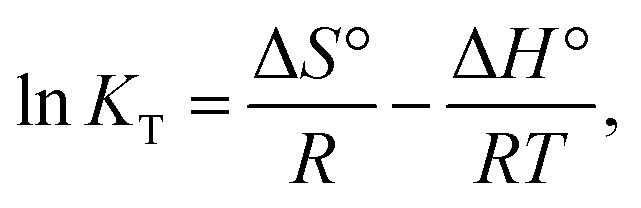
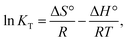
3.3.5. Thermodynamic. The thermodynamic parameters such as Gibbs free energy (ΔG°/kJ mol−1), entropy (ΔS°/J K−1 mol−1) and enthalpy (ΔH°/kJ mol−1) obtained from the following equations were applied to determine whether the adsorption process is spontaneous:| |
 | (6) |
| |
ΔG° = −RT![[thin space (1/6-em)]](https://www.rsc.org/images/entities/char_2009.gif) lnKT, lnKT,
| (7) |
where KT (L mg−1) is the adsorption equilibrium constant equaling (C0 − Ce)/Ce, R (J mol−1 K−1) is the gas constant. The fitting results were calculated from the thermodynamics equation and listed in Table 4. The negative values of Gibbs free energy suggest that the adsorption process is spontaneous, and the spontaneity increases with temperature for the ascending number of available adsorption sites and weakening of the boundary layer at higher temperature.62 The positive value of entropy indicates that the adsorption is a randomness-growth process attributed to the structure changes of adsorbents such as enlargement of pore size during the adsorption. Meanwhile, the adsorption process is endothermic by considering the positive value of the enthalpy, and it might be due to the endothermic diffusion process, deprotonation process and reaction between Pb2+ and PTh/TiO2 composite.46 The results acquired from thermodynamic showing that heat promotes the adsorption of Pb2+ on PTh/TiO2 composite are consisted with that obtained in the adsorption isotherm and adsorption kinetics investigations.34
Table 4 Thermodynamic parameters of Pb2+ adsorption onto the PTh/TiO2 compositea
| ΔH°/kJ mol−1 |
ΔS°/J K−1 mol−1 |
Temperature/K |
ΔG°/kJ mol−1 |
| Condition: initial concentration, 400 mg L−1; volume, 20 mL; contact time, 3 h; temperature, 25, 35, 40, 45 °C; oscillator speed, 200 rpm; pH value, 6; adsorbent dosage, 2.0 g L−1. |
| 0.265 |
17.08 |
298 |
−4.82 |
| 308 |
−5.00 |
| 313 |
−5.08 |
| 318 |
−5.17 |
3.3.6. Desorption experiments. In a practical circumstance, excellent regeneration property of an adsorbent is crucial to its application. In this study, 1 mol L−1 HNO3, HCl, NaOH, citric acid, EDTA-2Na and CH3COOH were applied to extract Pb2+ from the composite, and their regeneration and removal efficiency after eluting were also studied (Fig. S3†). It can be found that HCl or HNO3 have the highest regeneration efficiency but the lowest removal rate while NaOH is the worst elution agent but the best adsorption activator. This result is agreed well with that of pH effect. Based on these facts, 1 mol L−1 HCl or HNO3 was applied as the elution agent and NaOH as the activator afterwards. The adsorption stability of PTh/TiO2 composite was investigated, as shown in Fig. 9. It revealed that the regeneration efficiency are kept over 90% after regeneration for six times, and the removal rate of Pb2+ increase after regeneration for three times dramatically. This may be due to the increase of BET surface area and the enlargement of pore size by treating with the alkali and acid solutions repeatedly. Furthermore, HCl is more suitable to elute the Pb2+ ions adsorbed than HNO3 due to the formation of complex specials such as PbCl+, PbCl2, PbCl3− and PbCl4−. Results obtained in this experiment suggest that the as-prepared PTh/TiO2 composite has stable physical and chemical properties, and can be reused almost without significant decreasing the adsorption capacity.
 |
| | Fig. 9 Adsorption stabilities by HCl/HNO3-elution and NaOH-activation method of the PTh/TiO2 composite (initial concentration, 400 mg L−1; volume of Pb2+ solution, 20 mL; pH value, 6; adsorbent dosage, 2.0 g L−1; contact time, 3 h; temperature, 25 °C; agitation speed, 200 rpm; recycle time, 6; c(HCl) = 1 mol L−1; c(NaOH) = 1 mol L−1; volume of HCl/NaOH solution, 20 mL). | |
3.3.7. Adsorption mechanism. FT-IR was applied to investigate the adsorption sites as shown in Fig. 10. It can be seen that the peaks of the O–H, and C–S vibrations shifted from 1597, 659 cm−1 to 1502, 635 cm−1, respectively after adsorption. Therefore, we can deduce that Pb2+ ions are adsorbed by PTh/TiO2 composite through interaction of the hydroxyl groups or chelation with S atoms situating in the PTh matrix.63
 |
| | Fig. 10 FT-IR spectra of the PTh/TiO2 composite before and after adsorption of Pb2+ in the region between 400 and 2000 cm−1 (KBr pellet method; BRUKER TENSOR 37 FT-IR spectrophotometer). | |
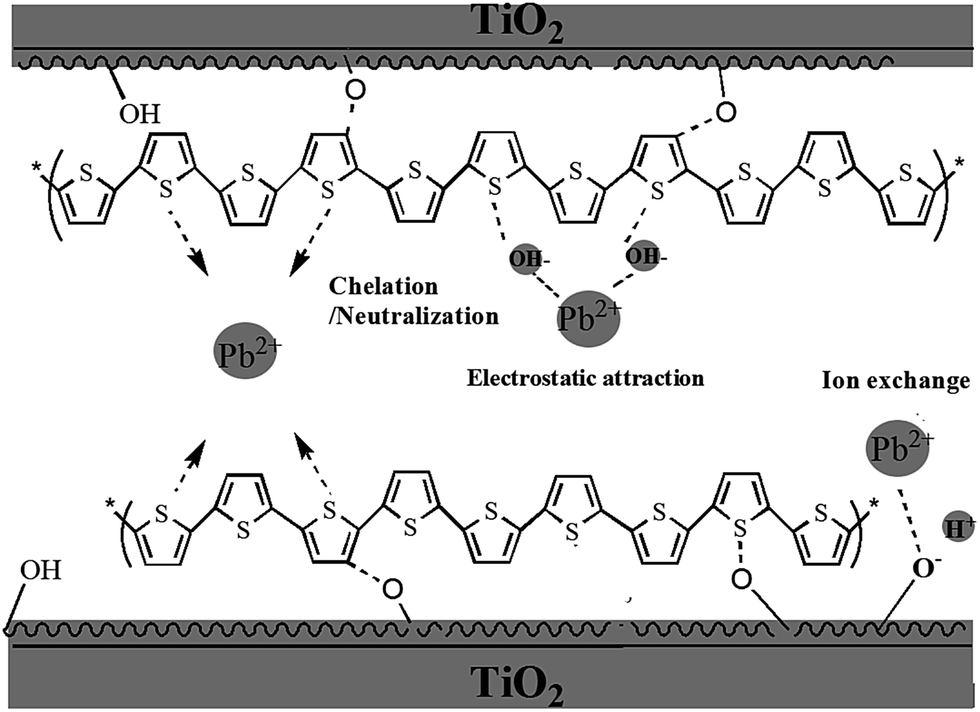
In conclusion, taking the adsorption isotherm and kinetics results into consideration, the adsorption may proceed through the mechanisms as followed. Pb2+, which has unoccupied 5d orbitals, may be adsorbed by chelating with the lone pair electrons of Cπ or S atom in PTh through electron pair sharing, and form coordination compounds with a tetrahedral configuration according to the ligand field theory.64 Besides, the ion exchange between H+ and Pb2+ and electrostatic attraction would be involved by considering the results of pH effect study and desorption experiments.17 Furthermore, the physical adsorption such as pore adsorption cannot be neglected as well because there are rich pores on the as-prepared PTh/TiO2 composite. The plausible adsorption mechanism of the PTh/TiO2 composite for Pb2+ was proposed and shown in Scheme 1.
 |
| | Scheme 1 The possible mechanism for the adsorption of Pb2+ onto the as-prepared PTh/TiO2 composite from aqueous solution. | |
4. Conclusions
In summary, the PTh/TiO2 particle composite was successfully synthesized in acid aqueous medium by an environmental-friendly and facile way and carefully characterized. In this process, TiO2 plays a role of a micron adsorbent for adsorbing thiophene monomers on its surface or catalyst, and provides a reaction interface and motive promotion for the polymerization of thiophene to promote the polymerization process. Its adsorption characteristic for Pb2+ was studied with the optimal dosage of 2 g L−1 in the solution with optimal pH of 6. The as-prepared PTh/TiO2 particle composite exhibited a high BET specific surface area reaching 229.66 m2 g−1. The Pb2+ removal efficiency was highly pH dependent, and it increased with pH of Pb2+ solution. The adsorption data was fitted well with the Langmuir model, and the maximum adsorption capacities gained from Langmuir model were 151.52 mg g−1 at 25 °C, 170.36 mg g−1 at 35 °C and 173.61 mg g−1 at 45 °C, which were much higher than that of many other commercial adsorbents. Kinetic data were described appropriately by the pseudo-second-order model. The thermodynamic parameters showed that the adsorption is a spontaneous and endothermic process with increased entropy. Results obtained from the desorption experiments proved that the regeneration method by HCl-elution and NaOH-activation was available and the PTh/TiO2 composite could be used repeat without any significant reduction in its adsorption capacity after 6 adsorption–desorption cycles, suggesting that the PTh/TiO2 composite was a promising adsorbent for Pb2+ removal. Furthermore, the adsorption mechanism investigation suggested that the adsorption of Pb2+ onto PTh/TiO2 composite may mainly through ion exchange and chemisorption such as chelation. Physical adsorption and electrostatic attraction were also involved.
Acknowledgements
The authors gratefully acknowledge the financial supports from the National Natural Science Foundation of China (Grant No. 21307098) and the Specialized Research Fund for the Doctoral Program of Higher Education of China (20090201110005).
References
- F. Ge, M. M. Li, H. Ye and B. X. Zhao, J. Hazard. Mater., 2012, 211–212, 366–372 CrossRef CAS PubMed.
- F. Fu and Q. Wang, J. Environ. Manage., 2011, 92, 407–418 CrossRef CAS PubMed.
- R. Naseem and S. S. Tahir, Water Res., 2001, 35, 3982–3986 CrossRef CAS.
- J. B. Diatta, Pol. J. Environ. Stud., 2006, 15, 219–227 CAS.
- A. Wojtowicz and A. Stoklosa, Pol. J. Environ. Stud., 2002, 11, 97–101 CAS.
- E. Samper, M. Rodriguez, M. A. de la Rubia and D. Prats, Sep. Purif. Technol., 2009, 65, 337–342 CrossRef CAS PubMed.
- H. Ozaki, K. Sharma and W. Saktaywin, Desalination, 2002, 144, 287–294 CrossRef CAS.
- V. C. Taty-Costodes, H. Fauduet, C. Porte and A. Delacroix, J. Hazard. Mater., 2003, 105, 121–142 CrossRef CAS PubMed.
- C. H. Yun, R. Prasad, A. K. Guha and K. K. Sirkar, Ind. Eng. Chem. Res., 1993, 32, 1186–1195 CrossRef CAS.
- M. Belkacem, M. Khodir and S. Abdelkrim, Desalination, 2008, 228, 245–254 CrossRef CAS PubMed.
- K. G. Bhattacharyya and S. Sen Gupta, Adv. Colloid Interface Sci., 2008, 140, 114–131 CrossRef CAS PubMed.
- H. K. An, B. Y. Park and D. S. Kim, Water Res., 2001, 35, 3551–3556 CrossRef CAS.
- H. J. Wang, A. L. Zhou, F. Peng, H. Yu and J. Yang, J. Colloid Interface Sci., 2007, 316, 277–283 CrossRef CAS PubMed.
- T. Vaughan, C. W. Seo and W. E. Marshall, Bioresour. Technol., 2001, 78, 133–139 CrossRef CAS.
- J. Peric, M. Trgo and N. Vukojevic Medvidovic, Water Res., 2004, 38, 1893–1899 CrossRef CAS PubMed.
- R. S. Juang and H. J. Shao, Water Res., 2002, 36, 2999–3008 CrossRef CAS.
- Z. Reddad, C. Gerente, Y. Andres and P. le Cloirec, Environ. Sci. Technol., 2002, 36, 2067–2073 CrossRef CAS.
- K. Bourikas, M. Stylidi, D. I. Kondarides and X. E. Verykios, Langmuir, 2005, 21, 9222–9230 CrossRef CAS PubMed.
- S. Asuha, X. G. Zhou and S. Zhao, J. Hazard. Mater., 2010, 181, 204–210 CrossRef CAS PubMed.
- M. Janus, E. Kusiak, J. Choina, J. Ziebro and A. W. Morawski, Desalination, 2009, 249, 359–363 CrossRef CAS PubMed.
- R. Karthik and S. Meenakshi, Int. J. Biol. Macromol., 2015, 78, 157–164 CrossRef CAS PubMed.
- Y. Li, Z. Liu, J. Yang, C. Li, J. Li, Y. Jiang and Y. Dong, Korean Chem. Eng. Res., 2014, 52, 781–788 CrossRef.
- S. K. Kang, J.-H. Kim, J. An, E. K. Lee, J. Cha, G. Lim, Y. S. Park and D. J. Chung, Polym. J., 2004, 36, 937–942 CrossRef CAS.
- A. Gok, M. Omastova and A. G. Yavuz, Synth. Met., 2007, 157, 23–29 CrossRef PubMed.
- Y. Zhu, S. Xu, L. Jiang, K. Pan and Y. Dan, React. Funct. Polym., 2008, 68, 1492–1498 CrossRef CAS PubMed.
- S. S. Jeon, S. J. Yang, K.-J. Lee and S. S. Im, Polymer, 2010, 51, 4069–4076 CrossRef CAS PubMed.
- Z. Zhang, F. Wang, F. e. Chen and G. Shi, Mater. Lett., 2006, 60, 1039–1042 CrossRef CAS PubMed.
- J. Roncali, Chem. Rev., 1992, 92, 27 CrossRef.
- M. R. Karim, C. J. Lee and M. S. Lee, J. Polym. Sci., Part A: Polym. Chem., 2006, 44, 5283–5290 CrossRef CAS PubMed.
- A. Gök, M. Omastová and A. G. Yavuz, Synth. Met., 2007, 157, 23–29 CrossRef PubMed.
- X. F. Ma, G. Li, H. Z. Xu, M. Wang and H. Z. Chen, Thin Solid Films, 2006, 515, 2700–2704 CrossRef CAS PubMed.
- X. Y. Li, D. S. Wang, G. X. Cheng, Q. Z. Luo, J. An and Y. H. Wang, Appl. Catal., B, 2008, 81, 267–273 CrossRef CAS PubMed.
- X. Zhang and R. B. Bai, J. Mater. Chem., 2002, 12, 2733–2739 RSC.
- J. Li, Q. Zhang, J. Feng and W. Yan, Chem. Eng. J., 2013, 225, 766–775 CrossRef CAS PubMed.
- X. Jin, M. Jiang, J. Du and Z. Chen, J. Ind. Eng. Chem., 2014, 20, 3025–3032 CrossRef CAS PubMed.
- J. Xu, P. Yao, X. Li and F. He, Mater. Sci. Eng., B, 2008, 151, 210–219 CrossRef CAS PubMed.
- K. Nagaveni, G. Sivalingam, M. S. Hedge and G. Madras, Appl. Catal., B, 2004, 48, 83–93 CrossRef CAS PubMed.
- X. Zhang and R. B. Bai, Langmuir, 2003, 19, 10703–10709 CrossRef CAS.
- Y. Junjie, W. Decheng and Y. Zhenglong, J. Phys. Chem. C, 2008, 112, 17156–17160 Search PubMed.
- C. Zhang, J. Sui, J. Li, Y. Tang and W. Cai, Chem. Eng. J., 2012, 210, 45–52 CrossRef CAS PubMed.
- Y. S. Ho, Water Res., 2006, 40, 119–125 CrossRef CAS PubMed.
- I. Langmuir, J. Am. Chem. Soc., 1918, 40, 1361–1403 CrossRef CAS.
- H. Freundlich, Z. Phys. Chem., Stoechiom. Verwandtschaftsl., 1906, 57, 385–470 CAS.
- M. M. Dubinin, E. D. Zaverina and L. V. Radushkevich, Zh. Fiz. Khim., 1947, 21, 1351–1362 CAS.
- M. Temkin and V. Pyzhev, Acta Physicochim. URSS, 1940, 12, 327–356 CAS.
- T.-t. Li, Y.-g. Liu, Q.-q. Peng, X.-j. Hu, T. Liao, H. Wang and M. Lu, Chem. Eng. J., 2013, 214, 189–197 CrossRef CAS PubMed.
- A. H. Chen, C. Y. Yang, C. Y. Chen, C. Y. Chen and C. W. Chen, J. Hazard. Mater., 2009, 163, 1068–1075 CrossRef CAS PubMed.
- D. L. Zhao, G. D. Sheng, J. Hu, C. L. Chen and X. K. Wang, Chem. Eng. J., 2011, 171, 167–174 CrossRef CAS PubMed.
- I. Mobasherpour, E. Salahi and M. Pazouki, J. Saudi Chem. Soc., 2011, 15, 105–112 CrossRef CAS PubMed.
- M. Islam, P. C. Mishra and R. Patel, Chem. Eng. J., 2011, 166, 978–985 CrossRef CAS PubMed.
- M. L. Zhang, H. Y. Zhang, D. Xu, L. Han, D. X. Niu, B. H. Tian, J. A. Zhang, L. Y. Zhang and W. S. Wu, Desalination, 2011, 271, 111–121 CrossRef CAS PubMed.
- S. Mahdavi, M. Jalali and A. Afkhami, Chem. Eng. Commun., 2013, 200, 448–470 CrossRef CAS PubMed.
- K. Kadirvelu, C. Faur-Brasquet and P. le Cloirec, Langmuir, 2000, 16, 8404–8409 CrossRef CAS.
- S. Sen Gupta and K. G. Bhattacharyya, J. Environ. Manage., 2008, 87, 46–58 CrossRef PubMed.
- Y. Liu, Z. C. Liu, J. Gao, J. D. Dai, J. A. Han, Y. Wang, J. M. Xie and Y. S. Yan, J. Hazard. Mater., 2011, 186, 197–205 CrossRef CAS PubMed.
- W. S. W. Ngah and S. Fatinathan, J. Environ. Sci., 2010, 22, 338–346 CrossRef CAS.
- T. K. Naiya, A. K. Bhattacharya and S. K. Das, J. Colloid Interface Sci., 2009, 333, 14–26 CrossRef CAS PubMed.
- M. A. Tofighy and T. Mohammadi, J. Hazard. Mater., 2011, 185, 140–147 CrossRef CAS PubMed.
- P. Brown, I. A. Jefcoat, D. Parrish, S. Gill and E. Graham, Adv. Environ. Res., 2000, 4, 19–29 CrossRef.
- A. R. Kul and H. Koyuncu, J. Hazard. Mater., 2010, 179, 332–339 CrossRef CAS PubMed.
- C. Septhum, S. Rattanaphani, J. B. Bremner and V. Rattanaphani, J. Hazard. Mater., 2007, 148, 185–191 CrossRef CAS PubMed.
- A. M. El-Toni, M. A. Habila, M. A. Ibrahim, J. P. Labis and Z. A. Alothman, Chem. Eng. J., 2014, 251, 441–451 CrossRef CAS PubMed.
- R. B. Shubo Deng and J. Paul Chen, Langmuir, 2003, 19, 5058–5064 CrossRef.
- J. Zhu, J. Yang and B. Deng, Environ. Chem. Lett., 2009, 8, 277–282 CrossRef.
Footnote |
| † Electronic supplementary information (ESI) available. See DOI: 10.1039/c5ra14614c |
|
| This journal is © The Royal Society of Chemistry 2015 |
Click here to see how this site uses Cookies. View our privacy policy here.