
Synthesis and electrochemical performance of Ni and F doped LiMn2O4 cathode materials

Qingqing Wanga, Xiusheng Zhanga, Yunlong Xu*a, Dong Liub, Hui Donga and Yang Zhanga
aKey Laboratory for Ultrafine Materials of Ministry of Education, Shanghai Key Laboratory of Advanced Polymeric Materials, School of Materials Science and Engineering, East China University of Science and Technology, Shanghai 200237, P. R. China
bDepartment of Materials Science and Engineering, University of Texas at Arlington, Arlington, TX 76019, USA

Received 19th July 2015 , Accepted 28th August 2015

First published on 28th August 2015


Abstract

A series of Ni and F ion doped LiMn2O4 composite cathode materials are synthesized via a sol–gel method with citric acid as the chelating agent. The morphology and structure of LiNixMn2−xO4−yFy were characterized by XRD, SEM, EDS and the electrochemical performance was tested and characterized by CV and EIS. The results showed that Ni and F ions were uniformly dispersed in the lattice without changing the structure and morphology of LiMn2O4. LiNi0.03Mn1.97O3.95F0.05 exhibits an excellent electrochemical performance among all the samples, and delivers an initial discharge capacity of 120.3 mA h g−1 at 1C and with a retention of 94.5% (25 °C) and 80.4% (55 °C) after the 100th cycle respectively. The results demonstrated that the dual-doping of Ni and F ions in lithium manganate can prevent the manganate from dissolving in the electrolyte and enhance the cycling performance at elevated temperatures, exhibiting excellent performance at different discharge rates.

Introduction

With the depletion of traditional fossil fuels such as coal and oil and the deteriorating environment, the exploration and utilization of new energy types such as lithium-ion batteries are receiving more and more attention.1–4 Under intensive study worldwide, the cathode is generally regarded as the capacity-determining component of a LIB. Ideally, the cathode should deliver high specific capacity, high operating voltage, low cost, superior safety and long cycle life within a wide working temperature range in order to meet the requirements for applications.5,6 Among the numerous cathode materials being studied, spinel LiMn2O4 is one of the most promising candidates to meet the above requirements.7,8

However, spinel LiMn2O4 suffers from severe capacity decay after long-term cycling and deprived rate capability under high rates, particularly at elevated temperatures.9,10 Researchers discovered a series of causes contributing to the capacity fading: (i) gradual manganate deficiency because of the dissolution of Mn3+ to the active electrolyte via disproportionation reaction.11,12 (ii) The degradation of the electrolyte LiPF6, whose decomposition leads to accelerated dissolution of Mn3+ and electrode active material.13,14 (iii) Jahn–Teller distortion of the cubic spinel structure of LiMn2O4 during the battery charge/discharge.15

In order to mitigate these problems, various approaches such as doping and electrode surface coating,16 have been proposed and employed and remarkable results were achieved by doping different elements in the material.17,18 Because Mn3+ is known to be responsible for manganese dissolution and Jahn–Teller distortion, many attempts have been made to substitute small amounts of Mn3+ with other metal cations. Many research groups have investigated the properties of manganese-substituted spinels LiMxMn2−xO4 (M = Al, Cr, Ti, Fe, Co, Zn, Mg) and it shows that doping can efficiently improve the cathode materials electrochemical properties.19–23 Chen announced that La2+ and F could replace the Mn3+ and O2− in LiMn2O4 structure and strengthen the structural stability of spinel.24 Ben-Lin reported that substitution of manganese by aluminum decreases the unit cell volume and the decrease of Mn3+ concentration reduces the Jahn–Teller distortion and also stabilizes the structure integrity of the active, improved electrochemical stability.25,26 Although there are plenty of doping modification methods in references aimed to improve the electrochemical property of LiMn2O4 materials, most of them were simplex cation or anion doping and the doping of Ni and F still remain in skimp and worth study. We considered if the Ni and F dual-doping can further enhance the electrochemical performance and in this study, Ni and F ions were adopted as the doping elements in LiMn2O4 and obtained a preferable modification result.

In this study, we conducted the recombine doping of Ni and F to LiMn2O4 materials modification research and synthesized several of dual-doped LiNixMn2−xO4−yFy via a sol–gel method. We studied the effect of F Ni ions dual-doping to the LiMn2O4 materials on its structure and electrochemical properties systematically and obtained the best doping ratio of F Ni ions. It turned out that F and Ni ions dual-doping can improve the cycling stability and discharge performance under the high-rate of LiMn2O4.

Experimental section

Sample preparation

The stoichiometric amount of Li(OH)·H2O (Sinopharm Chemical Reagent Co. Ltd, Shanghai) and LiF (Aladdin Industrial Inc., Shanghai) were firstly dissolved in deionized water at 50 °C and then C6H8O7·H2O (Shanghai China Lithium Industrial Co. Ltd, Shanghai) was added into such solution as the chelation agent. C4H6NiO4·4H2O (Chemical Reagent Co. Ltd, Shanghai) and C4H6MnO4·4H2O (Sinopharm Chemical Reagent Co. Ltd, Shanghai) were slowly added into the solution and heated to 80 °C under vigorous stirring. During the stirring, NH3·H2O (Chemical Reagent Co. Ltd, Shanghai) was used to adjust the pH value of the above solution. After the pH reaches to 8, the mixture appeared as a red brown sol. Then the sol was dried in a microwave oven (2.5 GHz, 500 W) until a transparent gel was obtained. After fully grinding, the gel was transferred to a tube furnace and pre-heated at 400 °C for 3 h, followed by the calcination at 800 °C for 10 h in ambient atmosphere. The heating rate and cooling rate used in the heat treatment were both 2 °C min−1. After the calcination, the black dual-doped spinel LiNixMn2−xO4−yFy (x = 0, 0.01, 0.03 and y = 0, 0.03, 0.05) powder was achieved. In order to study the effect of doping, various samples LiMn2O4, LiMn2O3.95F0.05, LiNi0.03Mn1.97O4, LiNi0.01Mn1.99O3.97F0.03, LiNi0.01Mn1.99O3.95F0.05, LiNi0.03Mn1.97O3.97F0.03 and LiNi0.03Mn1.97O3.95F0.05 were synthesized and they are denoted as 0N-0F, 0N-5F, 3N-0F, 1N-3F, 1N-5F, 3N-3F and 3N-5F for the sake of discussion. The pure LiMn2O4 was also synthesized under the same condition for the control experiment.

Sample characterization

Powder X-ray diffraction (XRD, D/MAX, 2550 V, Japan) using Cu Kα radiation (λ = 1.54056 Å) was used to identify the phase composition of synthesized materials and MDI Jade software was used to calculate the lattice parameters. The field emission scanning electron microscopy (FE-SEM, Hitachi S-4800, Japan) was used to evaluated the morphology and the distribution while species of the elements were analyzed by energy dispersive spectrometer (EDS). The electrochemical performance of the synthesized material was evaluated by assembling CR2032 coin cells. The cathode slurry was firstly prepared by dispersing 80 wt% active material, 10 wt% acetylene black (Shanghai Haohua Chemical Co. Ltd, Shanghai) and 10 wt% polyvinylidene fluoride (PVDF, Shanghai Ofluorine Chemical Technology Co. Ltd, Shanghai) in N-methyl-2-pyrrolidone (NMP, Sinopharm Chemical Reagent Co. Ltd, Shanghai) solvent and coated onto Al foil, then dried in a vacuum oven at 120 °C for overnight. Lithium foil was used as the counter electrode and Celgard 2400 microporous polyethylene membrane as the separator. 1 M LiPF6 in ethylene carbonate (EC) and diethyl carbonate (DEC) (1[thin space (1/6-em)]:[thin space (1/6-em)]1, v/v) (Guangzhou Tinci Materials Technology Co. Ltd, Guangzhou) was used as the electrolyte. The cells were assembled in an argon-filled glove box and left to age for 12 h before the charge/discharge test performed on a battery test instrument (CT2001A, LAND Battery Program-control Test System, China) over the voltage range of 3.0–4.4 V (vs. Li/Li+) at both room temperature (25 °C) and elevated temperature (55 °C). Cyclic voltammetry (CV) was performed between 3.0–4.4 V on an electrochemical workstation (CHI660D, Shanghai Chenhua Co. Ltd, China) at the scan rate of 0.1 mV s−1. Electrochemical impedance spectroscopy (EIS) of the cells was also potentiostatically conducted on an electrochemical workstation (CHI, 660B, CHENHUA, China) between 10−2 and 105 Hz with an AC oscillation amplitude of 5 mV to investigate the charge transfer of synthesized materials. The collected EIS spectra were fitted using ZSimpWin software.

Results and discussion

Structure and morphology

The X-ray diffraction patterns of various synthesized dual-doped LiNixMn2−xO4−yFy (x = 0, 0.01, 0.03, y = 0, 0.03, 0.05) are shown in Fig. 1. The diffraction peaks of all samples are in accordance with the diffraction pattern of the cubic spinel structure LiMn2O4 (JCPDS card no. 35-782) with the Fd[3 with combining macron]m space group. All samples show the same diffraction patterns and the doping of Ni and F ions do not appear to affect the crystal structure of the samples.27 No impurity peaks were detected as well. This indicates that the Ni2+ and F substituting have seated at Mn3+ and O2− site in LiMn2O4 and thus no other phase is formed.
image file: c5ra14231h-f1.tif
Fig. 1 XRD patterns of various Ni2+ and F dual-doped LiMn2O4 samples.

Rietveld refinement of the XRD data of the samples is carried out and the result is shown in Fig. 2. Table 1 shows the crystal parameters of various synthesized samples calculated from the XRD patterns. The structural information can be found in Table 1. According to the Fig. 2, as well as the R factors in Table 1, the calculated curve (black) matches well with the experimental data (red) which confirmed that the samples are coincident with the diffraction pattern of LiMn2O4.


image file: c5ra14231h-f2.tif
Fig. 2 Observed (red) and calculated (black) XRD patterns for the (3N-5F) sample. The tick marks represent the position of all possible Bragg reflections of LiMn2O4.
Table 1 Crystal parameters of various synthesized samples
Sample a (Å) Space Rwp (%) Rp (%)
0N-0F 8.2465(2) Fd[3 with combining macron]m 7.48 5.14
0N-5F 8.2493(4) Fd[3 with combining macron]m 8.05 5.86
3N-0F 8.2386(2) Fd[3 with combining macron]m 6.47 4.01
1N-3F 8.2452(3) Fd[3 with combining macron]m 6.39 3.97
1N-5F 8.2473(5) Fd[3 with combining macron]m 7.16 4.86
3N-3F 8.2412(3) Fd[3 with combining macron]m 7.22 4.93
3N-5F 8.2435(2) Fd[3 with combining macron]m 8.41 6.11


As can be seen from Table 1, that the doping of Ni2+ leads to the shrinkage of lattice parameter and the doping of F goes to the opposite result. It was mainly attributed to the increase of average valence of manganese due to the Ni2+ doping while the radius of Mn4+ (0.067 nm) is smaller than the radius of Mn3+ (0.072 nm) meanwhile the energy of Ni2+ site preference is higher, thus forming the stronger bond of Ni–O after doping which leads to the shrinkage of cell volume and the decreasing of lattice parameters.28 The radius of F is smaller than the O2− which indicates that the lattice parameters should be decreased with the amount of F doping according to the Vegard rules, but the average valence would be decreased due to the doping of F which increase the content of Mn3+ causing the augment of lattice parameters.18 The lattice parameters were joint influenced by the Ni2+ and F doping for the dual-doping samples and the lattice parameters of different doping ratio demonstrated that the Ni2+ and F ions were doped into the structure cell of LiMn2O4 further.

Fig. 3 shows the FE-SEM images of the pristine LiMn2O4 sample and doped LiNixMn2−xO4−yFy (x = 0.03, y = 0.05) sample. Both samples have uniform and nearly polyhedral structure morphology and all particles show a quite uniform distribution with the size ranging from 100 to 500 nm. The elemental mapping of the LiNixMn2−xO4−yFy sample by EDS was given in Fig. 4 where Fig. 4a shows the integral distribution of the observed element O, Mn, Ni and F and Fig. 4b and c represent the SEM image of selected test area and the mapping result of individual elements respectively. As shown in Fig. 4b, all observed elements have homogeneous distributions, which suggests that Ni2+ and F ions were doped into LiMn2O4 crystal structure uniformly via the sol–gel route.


image file: c5ra14231h-f3.tif
Fig. 3 SEM images of (a) pristine LiMn2O4 sample and (b) (3N-5F) sample.

image file: c5ra14231h-f4.tif
Fig. 4 EDS mapping result of the LiNi0.03Mn1.97O3.95F0.05 sample.

Electrochemical measurements

In order to investigate the impact of dual-doped of Ni2+ and F ions on the electrochemical performance of LiMn2O4 cathode material, the constant charge–discharge test was carried out on the synthesized samples. Fig. 5 shows the initial charge/discharge profile of pristine and doping LiMn2O4 samples at 1C between the potential range 3.0–4.3 V (vs. Li/Li+) at room temperature. There are two voltage platforms on both charge and discharge curves of all samples, representing the typical electrochemical performance of single-phased spinel LiMn2O4 structure. It shows that the doping of Ni2+ and F ions have no impact on the charge/discharge profile of the doped LiMn2O4 material. As seen from Fig. 5, the doping of Ni2+ intends to lower the discharge capacity. This is because of the Ni2+ ion insertion to the 16d site of LiMn2O4 unit cell, causing the increase of manganese average valence and the decrease of Mn3+ ions electrochemical activity. However, the F ions doping mainly appears to increase the discharge capacity due to the insertion of the F ions into the 32e sites partially replacing the O2−, leading to the decrease of manganese average valence and the increase of Mn3+ ions electrochemical activity. Meanwhile, the radius of F ion is smaller than O2− ion, which enables easier replacement of oxygen atom by F ions. This in turn, will broaden insertion/extraction channels of Li+ ions and enhance its migration rate and thus increase the discharge capacity of LiMn2O4 cathode material. The charge–discharge capacity were influenced by the doping of Ni2+ and F together and range from sample (0N-5F) to sample (3N-0F). In conclusion, the doping of Ni2+ leads to the reduction of capacity to a certain degree while doping the F would promote the capacity and the dual-doping of Ni2+and F can remedy the capacity loss of the single doping of Ni2+. The results show that the (3N-5F) was the optimum ratio for its electrochemical performance.
image file: c5ra14231h-f5.tif
Fig. 5 Initial charge–discharge curves of various Ni2+ and F dual-doped LiMn2O4 samples.

The long-term cyclic performance of all synthesized LiMn2O4 samples was firstly evaluated at room temperature (25 °C) under 1C charge/discharge rate and the results are exhibited in Fig. 6. Clearly, the improvement on the battery cyclic performance was achieved on all doped samples and the dual-doped samples even show more superior capability than un-ion doped samples. Especially, the 3N-5F sample delivers the highest capacity retention ratio (94.5%) while the pristine LiMn2O4, 0N-5F and 3N-0F samples preserve only 77.8%, 86.7% and 88.3% capacity retention ratio respectively. It is expected that the dual-doped sample might possess better crystal structure stability to realize higher electrochemical performance.29 Such structure stabilization of LiMn2O4 stems from two contributions: (i) stronger bond strength of the Ni–O (1029 kJ mol−1) than it of the Mn–O bond (946 kJ mol−1), which is expected to mitigate Jahn–Teller structure distortion effect, (ii) larger electronegativity thus greater attraction force, of F ions than O2− ions to the cations. Note that slightly higher capacity retention achieved on single Ni doped sample (3N-0F) than single F doped sample (0N-5F) is likely due to increased Mn3+ amount which results in aggravated Jahn–Teller effect regardless of the enhanced structure stability by F doping.30 However, the dual-doped sample (3N-5F) manifests a synergistic effect to improve the electrochemical performance of LiMn2O4 compared to either undoped sample or single ion doped sample.


image file: c5ra14231h-f6.tif
Fig. 6 Cyclic performances of Ni2+ and F dual-doped LiMn2O4 samples at rate of 1C at room temperature (25 °C).

We also studied cyclic performance of doped samples at elevated temperature (55 °C) under 1C discharge rate and the results are revealed in Fig. 7. As expected, all samples tested, especially undoped LiMn2O4, show inferior long-term cyclic performance at elevated temperature than when they were tested at room temperature. This is mainly because of aggravated Jahn–Teller effect caused by the high temperature along with the dissolution of Mn3+.7 Compared to undoped sample however, all doped sample show great improvement in terms of the capacity retention. To further elaborate, the first and 100th cycle discharge capacity together with the capacity retention ratio of all tested samples at both room and elevated temperatures are summarized in Table 2. Similar as its remarkable long-term cyclic performance at room temperature, the Ni and F dual-doped sample (3N-5F) exhibits the highest capacity retention rate (80.4%) even at elevated temperature. It is suspected that the synergistic effect of dual-doping, which suppresses the Jahn–Teller effect and the dissolution of Mn3+, leads to more stable crystal structure of LiMn2O4 and therefore enhanced long-term cyclic performance at both room and elevated temperatures.29,31–33 This further proves that dual element doping may be rendered as an effective approach to elongate the long-term cyclic performance of LiMn2O4 material.


image file: c5ra14231h-f7.tif
Fig. 7 Cyclic performances of Ni2+ and F dual-doped LiMn2O4 samples at rate of 1C at elevated temperature (55 °C).
Table 2 (a) The specific capacity and retention rates of various Ni2+ and F dual-doped LiMn2O4 samples at 25 °C. (b) The specific capacity and retention rates of various Ni2+ and F dual-doped LiMn2O4 samples at 55 °C
Sample Initial discharge capacity/mA h g−1 100th discharge capacity/mA h g−1 Retention rate/%
(a)
0N-0F 116.3 90.4 77.8%
0N-5F 122.5 106.2 86.7%
3N-0F 114.6 101.2 88.3%
3N-5F 120.3 113.7 94.5%
[thin space (1/6-em)]
(b)
0N-0F 117.2 74.9 63.9%
0N-5F 121.1 90.6 74.8%
3N-0F 120.6 92.3 76.5%
3N-5F 127.1 102.2 80.4%


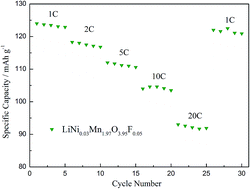
Whether the battery material maintains significant capacity under high discharge rate is another criteria to rationalize doped LiMn2O4 samples with high electrochemical performance. To this end, the high rates (1C, 2C, 5C, 10C, 20C) cyclic performances of various doped samples were carried out and the results are as shown in Fig. 8. All samples display deteriorated capacity as the discharge current increases. This is well-known due to delayed/unaccommodated migration rate of Li ion as a result of abrupt extraction force subject to high discharge rate, i.e., high electrode polarization.33 When comparing the discharge capacity of all samples at high rates, the dual-doped sample (3N-5F) exhibits the best rate capability, delivering 118.4 mA h g−1, 115.3 mA h g−1, 110.5 mA h g−1, 102 mA h g−1 and 90.5 mA h g−1 at 1C, 2C, 5C, 10C and 20C respectively of the constant discharge capacity and it was 90.5 mA h g−1 even at 20C while the pristine LiMn2O4 declined to 75.8 mA h g−1. It can be seen that the capacity of the dual-doped sample (3N-5F) can recover to the initial value as long as the current density reverses back to a low rate. As the high discharge rate also causes electrode resistance ohmic polarization that reduces the electronic conductivity of the active material, it is believed that the synergistic effect of Ni and F dual-doping not only increases the migration rate of Li ion inside the active materials, but also gives rise to enhanced electronic conductivity, thus superior high rate electrochemical performance.


image file: c5ra14231h-f8.tif
Fig. 8 Rate performance of various Ni2+ and F dual-doped LiMn2O4 samples at room temperature (25 °C).

The high rates (1C, 2C, 5C, 10C, 20C) cyclic performances of various doped samples at elevated temperature (55 °C) were carried out and the results are as shown as Fig. 9. All samples showed deteriorated capacity as the discharge current increases at elevated temperature. It can be seen that the dual-doped sample (3N-5F) exhibits the best rate capability among the samples and it was 78.9 mA h g−1 even at 20C with a bit of capacity fading when it returned to 1C. Note that the capacities fading on all samples under high discharge rate and temperature are due to the aggravated Jahn–Teller effect and the Ni and F dual-doping can suppresses the Jahn–Teller effect and the dissolution of Mn3+ leading to the preferable electrochemical property.


image file: c5ra14231h-f9.tif
Fig. 9 Rate performance of various Ni2+ and F dual-doped LiMn2O4 samples at elevated temperature (55 °C).

Electrochemical impedance spectroscopy (EIS) was further performed on various samples at certain periods of time (the 1st, 25th, 50th, 75th and the 100th cycles) during long-term cycle to probe the charge transfer kinetics within the battery material. The Nyquist plots along with the fitted equivalent circuit of the samples were shown in Fig. 10 and Table 3. In Fig. 10a, a high-frequency semi-circle and a low-frequency slope are seen as the typical spectrum of LiMn2O4 material. The semicircle in the high frequency region is attributed to dual-effect of the interface impedance that Li ions migration through the SEI film (Rf) along with the charge transfer resistance (Rct) while the inclined line in the low frequency region represents the Warburg impedance (W),31 which is associated with the diffusion of Li ion in electrode. It can be seen from Table 3 that the values of Rct for the doped samples are much lower than the undoped sample in despite of slight change of film resistance Rf. This is especially true for the dual-doped sample (3N-5F). On the other hand, the great reduction of Warburg impedance on doped samples over undoped one is an indicative of easier Li ion diffusion in bulk electrode materials.34 The above analysis is especially true for Ni and F dual-doped sample as it is capable of dwindling the charge transfer resistance and Warburg impedance by 62% and 53% respectively compared to pristine LiMn2O4 sample. This is believed due to increased migration rate and expanded diffusion channels for Li ions through Ni and F dual-doping and thus better electrochemical performance. Such finding is corroborated with Fig. 10b that shows the impedance growth rate of pristine LiMn2O4 is considerably higher than the doped samples, indicating that the doping would strengthen the structure stability of LiMn2O4 material and lead to more admirable electrochemical performance.24 Note that the EIS results are in good agreement with previous charge/discharge characteristic results of all samples.


image file: c5ra14231h-f10.tif
Fig. 10 (a) The Nyquist plots of various Ni2+ and F dual-doped LiMn2O4 samples during the first discharge (b) impedance changes with cycle.
Table 3 The AC impedance analysis of various Ni2+ and F dual-doped LiMn2O4 samples during the first discharge
Sample Rf Rct W/Ω cm2 s−1
0N-0F 10.9 107.5 78.9
0N-5F 9.2 52.3 45.6
3N-0F 9.5 55.8 51.7
3N-5F 8.9 41.2 37.8


In order to explore the effect of dual-doping of Ni2+ and F on spinel LiMn2O4, the typical cyclic voltammograms of the samples were performed using lithium as a counter and reference electrode in the voltage range of 3.0–4.4 V at a scan rate of 0.1 mV s−1 as shown in Fig. 11. The two obvious redox peaks were observed in all the samples stating that the insert–extract reaction of Li ion ended in two parts which conformed to the distinct characteristics of spinel LiMn2O4 and attested that the doping would not change its structure and reaction characteristics.6,18 It was observed that the potential difference between reduction and oxidation peak decreased of the doping samples and the potential difference represents the degree of reversibility of the insert–extract reaction which indicated that the degree of reversibility of the reaction was increased.15,35 The results implying that the dual-doping of Ni2+ and F accelerated the diffusion velocity, enhanced the stability of LiMn2O4 crystal structure and the redox peak of the sample (3N-5F) was the sharpest demonstrating the fastest reaction velocity and the best electrochemical property which is in the accordance with the charge–discharge performance test results. These results indicate that the dual-doping samples enhanced the electrochemical property of LiMn2O4 materials.


image file: c5ra14231h-f11.tif
Fig. 11 CV curves of various Ni2+ and F dual-doped LiMn2O4 samples during the first discharge.

Conclusions

In summary, the spinel LiMn2O4 with various amounts of Ni2+ and F doping compound was successfully synthesized via a sol–gel route. The doping would not change the crystal structure and morphology, the doping ions distribution uniformly as well. The dual-doping of Ni2+ and F enhanced the electrochemical property more than the single Ni2+ or F doped samples. Compared with the other samples, the sample (3N-5F) exhibits much better cycle performance at room and elevated temperature. The capacity retention ratio were 94.5% (25 °C) and 80.4% (55 °C) after 100 cycles and it delivered 90.5 mA h g−1 of the discharge capacity even at 20C rate. The dual-doping of Ni2+ and F could enhance the Li ion migration rate and structure stability ascribe to the synergistic effect of dual-doping leading to better electrochemical performance. The as-obtained results indicate the Ni2+ and F dual-doping receive an attractive application for practical high-power Li-ion battery.

Acknowledgements

This work is supported by Shanghai Leading Academic Discipline Project (B502) and Shanghai Key Laboratory Project (08DZ2230500).

Notes and references

  1. M. Armand and J. M. Tarascon, Nature, 2008, 451, 652–657 CrossRef CAS PubMed.
  2. M. S. Whittingham, J. Cheminf., 2004, 35, 4271–4301 Search PubMed.
  3. K. Amine, J. Liu, S. Kang, I. Belharouak, Y. Hyung, D. Vissers and G. Henriksen, J. Power Sources, 2004, 129, 14–19 CrossRef CAS PubMed.
  4. E. Hosono, T. Kudo, I. Honma, H. Matsuda and H. Zhou, Nano Lett., 2009, 9, 1045–1051 CrossRef CAS PubMed.
  5. H. W. Chan, J. G. Duh, S. R. Sheen, S. Y. Tsai and C. R. Lee, Thin Solid Films, 2005, 200, 1330–1334 CAS.
  6. D. W. Shin, J.-W. Choi, Y. S. Cho and S.-J. Yoon, J. Electroceram., 2009, 23, 200–205 CrossRef CAS.
  7. E. Iguchi, Y. Tokuda, H. Nakatsugawa and F. Munakata, J. Appl. Phys., 2002, 91, 2149–2154 CrossRef CAS PubMed.
  8. J. Wang, W. Lin, B. Wu and J. Zhao, Electrochim. Acta, 2014, 245–253 Search PubMed.
  9. L. Xiong, Y. Xu, C. Zhang, Z. Zhang and J. Li, J. Solid State Electrochem., 2011, 15, 1263–1269 CrossRef CAS.
  10. W. Zhu, D. Liu, J. Trottier, C. Gagnon, A. Guerfi, C. M. Julien, A. Mauger and K. Zaghib, J. Power Sources, 2014, 264, 290–298 CrossRef CAS PubMed.
  11. R. Jiang, C. Cui and H. Ma, Phys. Chem. Chem. Phys., 2013, 15, 6406–6415 RSC.
  12. J. P. Tu, H. M. Wu, Y. Z. Yang and W. K. Zhang, Mater. Lett., 2007, 61, 864–867 CrossRef CAS PubMed.
  13. A. Yamada, J. Solid State Chem., 1996, 122, 160–165 CrossRef CAS.
  14. G.-M. Song, W.-J. Li and Y. Zhou, Mater. Chem. Phys., 2004, 87, 162–167 CrossRef CAS PubMed.
  15. H. W. Lee, P. Muralidharan, R. Ruffo, C. M. Mari, Y. Cui and D. K. Kim, Nano Lett., 2010, 10, 3852–3856 CrossRef CAS PubMed.
  16. D. Guan, J. A. Jeevarajan and Y. Wang, Nanoscale, 2011, 3, 1465–1469 RSC.
  17. L. Xiao, Y. Zhao, Y. Yang, Y. Cao, X. Ai and H. Yang, Electrochim. Acta, 2008, 54, 545–550 CrossRef CAS PubMed.
  18. R. Thirunakaran, R. Ravikumar, S. Gopukumar and A. Sivashanmugam, J. Alloys Compd., 2013, 556, 266–273 CrossRef CAS PubMed.
  19. Y.-S. Lee, N. Kumada and M. Yoshio, J. Power Sources, 2001, 96, 376–384 CrossRef CAS.
  20. D. Qian, Y. S. Meng, B. Xu and Z. Wang, Mater. Sci. Eng., R, 2012, 73, 51–65 CrossRef PubMed.
  21. T.-F. Yi, C.-Y. Li, Y.-R. Zhu, R.-S. Zhu and J. Shu, Russ. J. Electrochem., 2010, 46, 227–232 CrossRef CAS.
  22. T. Dumont, T. Lippert, M. Döbeli, H. Grimmer, J. Ufheil, P. Novák, A. Würsig, U. Vogt and A. Wokaun, Appl. Surf. Sci., 2006, 252, 4902–4906 CrossRef CAS PubMed.
  23. B. Xu, D. Qian, Z. Wang and Y. S. Meng, J. Cheminf., 2013, 44, 51–65 Search PubMed.
  24. M. Chen, S. Li and C. Yang, J. Univ. Sci. Technol. Beijing, 2008, 15, 468–473 CrossRef CAS.
  25. B.-L. He, S.-J. Bao, Y.-Y. Liang, W.-J. Zhou, H. Li and H.-L. Li, J. Solid State Chem., 2005, 178, 897–901 CrossRef CAS PubMed.
  26. M. Prabu, M. V. Reddy, S. Selvasekarapandian, G. V. S. Rao and B. V. R. Chowdari, Electrochim. Acta, 2013, 88, 745–755 CrossRef CAS PubMed.
  27. T. Yang, K. Sun, Z. Lei, N. Zhang and Y. Lang, J. Solid State Electrochem., 2011, 15, 391–397 CrossRef CAS.
  28. Q. Wei, X. Wang, X. Yang, B. Ju, B. Hu, H. Shu, W. Wen, M. Zhou, Y. Song and H. Wu, J. Mater. Chem. A, 2013, 1, 4010–4016 CAS.
  29. J. Liu and A. Manthiram, J. Phys. Chem. C, 2009, 113, 15073–15079 CAS.
  30. H. R. Lee, B. Lee, K. Y. Chung, B. W. Cho, K. Y. Lee and H. O. Si, Electrochim. Acta, 2014, 136, 396–403 CrossRef CAS PubMed.
  31. D. Arumugam and G. P. Kalaignan, Thin Solid Films, 2011, 520, 338–343 CrossRef CAS PubMed.
  32. Z. Zheng, Z. Tang, Z. Zhang, W. Shen and Y. Lin, Solid State Ionics, 2002, 148, 317–321 CrossRef CAS.
  33. T. F. Yi, X. G. Hu and K. Gao, J. Power Sources, 2006, 162, 636–643 CrossRef CAS PubMed.
  34. W. Wen, B. Ju, X. Wang, C. Wu, H. Shu and X. Yang, Electrochim. Acta, 2014, 147, 271–278 CrossRef CAS PubMed.
  35. S. Zhao, Y. Bai, Q. Chang, Y. Yang and W. Zhang, Electrochim. Acta, 2013, 727–735 CrossRef CAS PubMed.

This journal is © The Royal Society of Chemistry 2015
Click here to see how this site uses Cookies. View our privacy policy here.