DOI:
10.1039/C5RA12765C
(Paper)
RSC Adv., 2015,
5, 77217-77226
Selective colorimetric sensing of Co2+ and Cu2+ using 1-(2-pyridylazo)-2-naphthol derivative immobilized polyvinyl alcohol microspheres†
Received
1st July 2015
, Accepted 27th August 2015
First published on 27th August 2015
Abstract
An optical analytical naked-eye sensor was proposed based on the complexation reactions of the 1-(2-pyridylazo)-2-naphthol derivative with heavy metals in aqueous solutions. The prepared colorimetric sensor was characterized by scanning electron microscopy, energy-dispersive X-ray fluorescence spectrometry, and Fourier transform infrared spectroscopy, which indicated a spherical sensor and its molecular composition. In the sensing experiment, notable changes in color and absorbance intensity of the colorimetric sensor for Co2+ and Cu2+ were observed at pH 5 and 4, respectively. The proposed method provided consistent data reliability, with a detection limit of 1 and 5 μM by the naked eye and 0.23 and 0.95 μM by UV-vis spectrometry for Co2+ and Cu2+, respectively. The prepared chemosensor can be used as a colorimetric sensor to monitor Co2+ and Cu2+ with satisfactory results, which validate its value in practical applications in environmental systems.
1. Introduction
Heavy metal contamination in aqueous solutions originates from many sources, such as metal plating facilities, mining operations, pigment manufacturing, petroleum refining, and tanneries.1–3 Inductively coupled plasma atomic emission spectroscopy, electrochemistry, atomic absorption spectroscopy, atomic fluorescence spectrometry, and UV-vis spectroscopy are the most routinely used methods to detect heavy metals.4–8 These methods are well established, but many require preconcentration or separation steps prior to detection, cannot be easily deployed directly in the field, lack portability, and rely on trained personnel because of their complexity.9 As such, these methods are costly, time consuming, and labor intensive. Therefore, easy to use and rapid monitoring tools for the determination of heavy metals in aqueous solutions are of essential relevance, particularly in sensitive environments, such as drinking water and industrial wastewater effluents. Simple colorimetric methods are extremely attractive because they can eliminate the need for analytical instruments and can be easily read with the naked eye.10–13
Colorimetric techniques have been commonly used to determine trace heavy metals based on the use of reagents for decades.14,15 Increasing number of colorimetric sensors has been developed using available chromophores immobilized surfaces of matrix materials.16–19 Azo compounds are well-known aromatic dyes that have the ability to form colored complexes with heavy metals.20–23 Taking advantage of this ability, we employed 4-(2-pyridylazo)-1,3-benzenediol for the detection of Cu2+ and developed a sensor with excellent detection performance.24 Sedghi et al.25 prepared a colorimetric sensor based on TiO2/poly(acrylamide-co-methylenebisacrylamide) nanocomposites, which could simultaneously detect Hg2+ and Pb2+. In the present work, 1-(2-pyridylazo)-2-naphthol (PAN) was selected as a chromophore because it is a heterocyclic azo compound and has been extensively used as a highly sensitive photometric reagent for the determination of metal ions.26,27 PAN can coordinate through the azo group and the nitrogen atom of pyridyl with metal ions to form a chelate, which results in a significant change in the absorbance intensity and color of the solution.
Metal nanoparticles and organic polymers are selected as matrix materials of colorimetric sensors. Gold and silver nanoparticles are often used as matrix materials of colorimetric sensors because of their excellent optical properties.28–30 These sensors have advantageous selectivity and low detection limit (LD), but expensive metal nanoparticles are unstable and have poor repeatability.31,32 In comparison, organic materials are stable and possess an adequate number of groups by nature, which have the advantage of modification of other functional groups.33–35 Polyvinyl alcohol (PVA), which is common, inexpensive, nontoxic, and biodegradable and has high mechanical strength, physical and chemical properties of stability, and large specific surface area, can provide sufficient sites for immobilization of functional groups. PVA also contains a large number of hydroxyl groups that can be easily modified with various functional groups.36–38
In this study, we proposed a method for developing colorimetric sensors for the determination of low concentrations of heavy metals based on PAN derivative immobilized PVA microspheres. The synthesis route of the sensor was simple, and the reaction conditions of the experiment were mild. The approach was based on the creation of heavy metal complexes and detection of their optical properties. The prepared colorimetric sensor can simultaneously detect Co2+ and Cu2+ and has significant potential as a novel method for practical application.
2. Experimental
2.1. Materials
All reagents and chemicals used in the probe synthesis process and subsequent analytical studies were of analytical grade and used without further purification. PVA (1750 ± 50), paraffin, Span 80, ethanol, epichlorohydrin, NaNO3, AgNO3, MgSO4·7H2O, Pb(NO3)2, CuSO4·5H2O, Zn(NO3)2·6H2O, CdCl2·2.5H2O, MnSO4·H2O, CoCl2·6H2O, HgCl2, NiSO4·6H2O, FeSO4·7H2O, Fe(NO3)3·9H2O, and NaHSO3 were obtained from Sinopharm Chemical Reagent Co., Ltd (Beijing, China). Tetrabutylammonium bromide (TBAB), glutaraldehyde (GA), and PAN were purchased from Sigma-Aldrich Reagent Company (Shanghai, China).
2.2. Instruments
Scanning electron microscopy (SEM) was performed using a Hitachi S-4800 microscope (Hitachi Co., Tokyo, Japan), with an accelerating voltage of 5 kV. Energy-dispersive X-ray (EDX) analysis was conducted using an Octane Plus EDX fluorescence spectrometer (Ametek Co., Berwyn, PA, USA) attached to a scanning electron microscope. Fourier transform infrared spectroscopy (FTIR) spectra were recorded with a Nicolet iS10 FTIR spectrometer (Nicolet Co., Madison, WI, USA). 1H NMR measurement was performed using JNM-ECS 400 spectrometer (JEOL Ltd, Japan) with TMS as an internal standard and CD3SOCD3 as solvent. Mass spectra were recorded on Bruker-MicrOTOF II (USA). The absorption spectra of the colorimetric sensor were recorded using a DR 5000 spectrophotometer (HACH Co., Loveland, CO, USA). Absorbance can directly affect the perceived color of the involved chemicals in the visible range.
2.3. Sensor fabrication
Scheme 1 shows that the fabrication process of the colorimetric sensor (PVA–PAN) involved the following steps. Step 1: the PAN derivative was prepared by adding sodium bisulfite (3 g) and ammonium hydroxide (40 mL) to PAN (3 g) and heating the stirred mixture to 60 °C for at least 8 h. The extract was washed with distilled water and left to dry completely. Then the crude product was added into hydrochloric acid (0.3 M, 60 mL) with stirring. After about 10 min, the filtrate was collected by suction filtration and NaOH (1 M, 20 mL) was added into the filtrate under stirring for 10 min. The precipitate was collected by suction filtration, washed with distilled water and left to dry completely. Step 2: PVA (4 g) was dissolved in distilled water (40 mL) with mechanical stirring in a water bath at 90 °C for 1 h. After cooling to 60 °C, liquid paraffin (80 mL) and Span 80 (2 g) were added into the flask with continuous stirring for 2 h. HCl (10 mM, 2 mL) and GA (50%, 4 mL) were then dropped into the flask rapidly with continuous stirring at 80 °C for 30 min. Finally, the PVA microspheres were rinsed repeatedly with petroleum ether and left to dry completely. Step 3: the chlorine-functionalized PVA microspheres (PVA–Cl) were prepared by mixing PVA (2 g), epichlorohydrin (8 mL), and HCl (1 mM, 100 mL) in the flask and heating the stirred mixture to 80 °C for 2 h. Subsequently, PVA–Cl was washed with distilled water and left to dry completely. Step 4: PVA–Cl (1 g), the prepared PAN derivative (2 g), TBAB (0.1 g), and NaOH (125 mM, 40 mL) were heated at 80 °C in the flask for 6 h. The PVA–PAN extract was rinsed with ethanol and left to dry.
 |
| | Scheme 1 Synthesis routes of the colorimetric sensor (PVA–PAN). | |
2.4. Detection procedures
The tested water was distilled water spiked with heavy metals at the desired concentrations. The desired solution pH was adjusted by adding NaOH or HCl. The pH was rechecked at the end of the measurement and observed to be unchanged. The prepared PVA–PAN was added to the tested water. We can qualitatively identify the metal ions in the tested water with color changes. Absorbance intensity was detected quantitatively using UV-vis spectrometry.
3. Results and discussion
3.1. Sensor characterization
The SEM images of the PVA and PVA–PAN microspheres are shown in Fig. 1. The microspheres had an approximately spherical shape. Compared with the SEM image of PVA microspheres shown in Fig. 1a, the SEM images shown in Fig. 1b and c clearly revealed that the reaction of PAN and PVA microspheres resulted in PVA-microsphere-loaded PAN with a rougher surface.
 |
| | Fig. 1 (a) SEM image of the PVA microsphere, (b and c) SEM image of the PVA–PAN microsphere, and (d) EDX analysis of the PVA–PAN microsphere. | |
EDX analysis was also performed to investigate the surface characteristic of the PVA–PAN microsphere further. The results are shown in Fig. 1d. The elemental composition of the PVA–PAN microsphere was identified through EDX elemental mapping. The elements carbon and oxygen were mainly attributed to the PVA components. EDX analysis showed that the N content of the microsphere surfaces was 1.72% on the PVA–PAN microsphere. EDX analysis also showed that PAN was distributed in the PVA microsphere because the PVA microsphere did not contain nitrogen.
The FTIR spectra of the PVA and PVA–PAN microspheres are shown in Fig. 2. The presence of a band at approximately 3395 cm−1 was attributed to the –OH groups of the PVA microsphere. The presence of bands at 2918 and 2857 cm−1 was attributed to the –CH2– groups. The peak at 1502 cm−1, which was a characteristic of the PVA–PAN microsphere, correlated with the C![[double bond, length as m-dash]](https://www.rsc.org/images/entities/char_e001.gif) C groups of the benzene ring. Fig. 2b shows a broad band at approximately 3360 cm−1, which was attributed to the –NH– groups and indicated the successful linkage of PAN to the surface of the PVA microsphere.
C groups of the benzene ring. Fig. 2b shows a broad band at approximately 3360 cm−1, which was attributed to the –NH– groups and indicated the successful linkage of PAN to the surface of the PVA microsphere.
 |
| | Fig. 2 FTIR spectra of (a) PVA and (b) PVA–PAN microspheres. | |
The receptor was characterized by NMR and MS spectra. The 1H NMR peaks (Fig. S1†) were found at (CD3SOCD3, 400 MHz) (δ, ppm (J, Hz)): 8.33–8.38 (m, 2H), 7.92–7.93 (m, 2H), 7.87 (d, J = 9.6, 1H), 7.65 (dd, J = 7.7, 1.1, 1H), 7.51–7.55 (m, 1H), 7.43 (td, J = 7.5, 1.3, 1H), 7.20–7.23 (m, 1H), 6.64 (d, J = 9.7, 1H) and supported the structure of the receptor as shown in Scheme 1. Further, HRMS spectra (Fig. S2†) showing a prominent peak at 271.0762 due to L + Na+ also supported the alleged structure of the receptor as given in Scheme 1.
3.2. Evaluation of selectivity
The main aim associated with the fabrication of the proposed sensor was to investigate its sensing ability for heavy metal ions. The selectivity of PVA–PAN toward various metal ions (100 μM), for example, Na+, Ag+, Mg2+, Pb2+, Cu2+, Zn2+, Cd2+, Mn2+, Co2+, Hg2+, Ni2+, Fe2+ and Fe3+, was investigated at pH 6.0 by UV-vis absorption studies. Fig. 3 shows that Co2+ and Cu2+ were easily observed by naked-eye inspection. Thus, PVA–PAN had a high selectivity toward Co2+ and Cu2+, which can be used to detect Co2+ and Cu2+ in wastewater. The UV-vis absorption spectra of PVA–PAN with different metal ions (100 μM) at pH 6.0 were shown in Fig. 4a and as shown in Fig. 4b, PVA–PAN exhibited an absorption peak at 480 nm. Upon adding Co2+ ions, two new and strong absorption bands appeared at 450 and 575 nm, which were responsible for the change of the solution color from orange to dark green. Upon adding Cu2+ ions, the low-energy band was Δλ = 70 nm redshifted (Fig. 4c), resulting in the change of the solution color from orange to purple.
 |
| | Fig. 3 Visible color change of PVA–PAN to various metal ions (100 μM) at pH 6.0. | |
 |
| | Fig. 4 UV-vis spectra of PVA–PAN with (a) different metal ions, (b) Co2+ ions and (c) Cu2+ ions. | |
3.3. Effect of pH
The pH response of PVA–PAN with Co2+ (100 μM) and Cu2+ (100 μM) ions was evaluated. When the pH value ranged from 5 to 14, the absorbance intensity of PVA–PAN with Co2+ ions significantly decreased at pH 5 to 10 and stabilized at pH 10 to 14. When the pH value varied from 5 to 1, the absorbance intensity significantly decreased (Fig. 5a). As such, the optimal pH was 5. A similar phenomenon was used to describe the effect of pH on the absorbance intensity of PVA–PAN with Cu2+ ions. Fig. 5b shows that the optimal pH was 4 in detecting Cu2+ ions with PVA–PAN. In acidic solutions (pH < 3), the PAN molecules were protonated (Scheme 2). The protonated pyridyl exhibited a decreased electron-donating ability. The electric charge repulsion between protonated pyridyl and positively charged Co2+ or Cu2+ ions resulted in decreased interaction between PVA–PAN and Co2+ or Cu2+ ions, which indeed prevented the receptor from capturing Co2+ or Cu2+ ions. In alkaline solution, the precipitates of cobalt hydroxide and copper hydroxide also hindered the interaction between PVA–PAN and Co2+ ions and between PVA–PAN and Cu2+ ions, respectively.
 |
| | Fig. 5 Effect of pH on the absorbance intensity of PVA–PAN (a) with Co2+ ions at 450 nm and (b) Cu2+ ions at 550 nm. | |
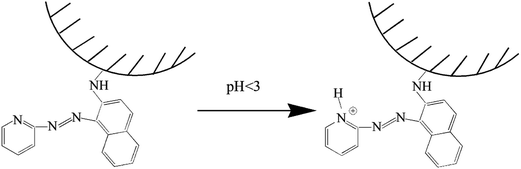 |
| | Scheme 2 PVA–PAN species at various pH ranges. | |
3.4. Sensitivity and calibration graph
The experiments were conducted at optimum pH for each metal, and the sensing signal responses of Co2+ and Cu2+ ions were obtained after 10 min of contact. Fig. 6a shows two new peaks that appeared at 450 and 575 nm. With the increase in Co2+ ion concentration from 0 μM to 100 μM, the two new absorption bands that appeared at 450 and 575 nm were gradually enhanced. In addition, the percentage of the absorbance intensity at 575 nm gradually increased compared with that of the absorbance intensity at 450 nm, resulting in the change of the solution color from orange to dark green. However, at low Co2+ ion concentrations, the absorption spectra were characterized by a weak band at 575 nm and a strong band at 450 nm, resulting in the change of the solution color to brown (Fig. 6b). Fig. 6b also shows that the LD of PVA–PAN for Co2+ ions is 1 μM by naked-eye inspection. With the increase in Cu2+ ion concentration from 0 μM to 100 μM, the intensity of the new peak that appeared at 550 nm increased (Fig. 6c). The results indicated that a stable complex was formed between PVA–PAN and Cu2+ ions. As shown in Fig. 6d, the naked-eye LD of PVA–PAN for Cu2+ ions was 5 μM.
 |
| | Fig. 6 Absorbance spectra of PVA–PAN at different concentrations of (a) Co2+ and (c) Cu2+ ions and sequential color response for the sensor at different concentrations of (b) Co2+ and (d) Cu2+ ions. | |
The absorbance spectra were recorded individually for various concentrations of Co2+ and Cu2+ ions. The relationship was linear at low concentrations, which indicated the potential for analyte detection over an extensive range of concentrations. The calibration graph (Fig. 7) showed that a linear response was maintained in the range of 0 μM to 10 μM of Co2+ and Cu2+ ions, with R2 values of 0.9977 and 0.9942, respectively. From the linear graph, LD was calculated as 0.23 and 0.95 μM for Co2+ and Cu2+ ions, respectively, using eqn (1):
where
Sb is the standard deviation of the blank and
K is the slope of the linear calibration range. PVA–PAN can be used to detect the low concentration of Co
2+ and Cu
2+ ions by UV-vis spectroscopy.
 |
| | Fig. 7 Calibration plots of the absorbance spectra of PVA–PAN for various concentrations of (a) Co2+ and (b) Cu2+ ions. Measurements were made at a specific wavelength for each metal. | |
The obtained detection limit was found to be good in simultaneous determination Co2+ and Cu2+ ions. For comparison, the experimental results for the determination of Co2+ and Cu2+ ions obtained by some other methods were listed in Table 1.
Table 1 Comparison of PVA–PAN as a colorimetric sensor for the detection of Co2+ and Cu2+ ions with previously reported methods
| Reagent |
LOD |
References |
| Co2+ |
Cu2+ |
| PVA–PAN |
2.3 × 10⁻⁷ M |
9.5 × 10⁻⁷ M |
Present work |
| Triazolyl monoazo derivative |
— |
1.36 × 10⁻⁵ M |
17 |
| Ninhydrin–quinoxaline derivative |
— |
3.43 × 10⁻⁷ M |
39 |
| Dicarboxylate-1,5-diphenyl-3-thiocarbazone functionalized core/multi-shell silica nanoparticles |
2.8 × 10⁻⁸ M |
2.9 × 10⁻⁸ M |
18 |
| PAR–MPVA |
— |
1.6 × 10⁻⁷ M |
24 |
| Anthraquinone derivative/2,6-dimethoxyl anthraquinone derivative |
— |
4.0 × 10⁻⁷ M/6.0 × 10−8 M |
13 |
3.5. Sensing mechanism
The Job plot experiment was carried out (Fig. 8) to determine the sensing mechanism of the receptor for Co2+ and Cu2+. The absorbance at 450 nm shown in Fig. 8a and at 550 nm shown in Fig. 8b reached its maxima when the molar fractions of Co2+ and Cu2+ were 0.3 and 0.5, respectively. The results indicated that a 1![[thin space (1/6-em)]](https://www.rsc.org/images/entities/char_2009.gif) :2 complex was formed between the receptor and Co2+ and a 1:1 complex was formed between the receptor and Cu2+. The most significant spectroscopic and visual response was observed upon the addition of Co2+ and Cu2+. This significant response was attributed to the high thermodynamic affinity of Co2+ and Cu2+ for typical N-donor ligands and rapid metal-to-ligand binding kinetics. The binding mode of the receptor with Co2+ and Cu2+ is shown in Scheme 3.
:2 complex was formed between the receptor and Co2+ and a 1:1 complex was formed between the receptor and Cu2+. The most significant spectroscopic and visual response was observed upon the addition of Co2+ and Cu2+. This significant response was attributed to the high thermodynamic affinity of Co2+ and Cu2+ for typical N-donor ligands and rapid metal-to-ligand binding kinetics. The binding mode of the receptor with Co2+ and Cu2+ is shown in Scheme 3.
 |
| | Fig. 8 Job plot for the receptor versus (a) Co2+ and (b) Cu2+ ions. The total concentration of the receptor and Co2+ (Cu2+) is 50 μM. We put the amount of PVA–PAN equivalent to the concentration of receptor and the amount of PVA–PAN is indirectly represented by the concentration of receptor. | |
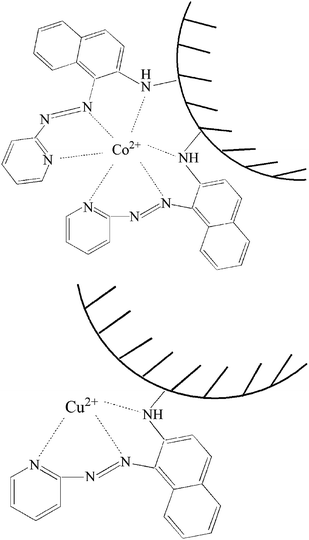 |
| | Scheme 3 Binding mode of the receptor with Co2+ and Cu2+. | |
The binding constant K was calculated by Benesi–Hildebrand eqn (2):40,41
| |
 | (2) |
where
A is the absorbance measured with different concentration of the metal ions,
A0 is the absorbance of the free receptor,
Amax is the maximum absorbance of the receptor and metal ions,
K is the binding constant, [M
m+] is the concentration of the metal ions added and
n is the binding stoichiometry for the receptor and metal ion. According to the colorimetric titration and the Job plot experiment, the binding constant calculated by Benesi–Hildebrand method was 1.21 × 10
8 M
−2 for the receptor and Co
2+ and 1.66 × 10
4 M
−1 for the receptor and Cu
2+.
3.6. Effect of coexisting ions
Na+, Mg2+, Pb2+, Cu2+, Zn2+, Cd2+, Mn2+, Hg2+, Ni2+, Fe2+ and Fe3+ (100 μM) were added to the PVA–PAN/Co2+ (100 μM) solution and Na+, Mg2+, Zn2+, Cd2+, Mn2+, Co2+, Ni2+, Fe2+ and Fe3+ (100 μM) were added to the PVA–PAN/Cu2+ (100 μM) solution to analyze the influence of coexisting ions on the detection of Co2+ and Cu2+ further. UV-vis absorption spectra were recorded, and the results were shown in Fig. 9. The coexisting ions exhibited negligible interference to the detection of Co2+ and Cu2+.
 |
| | Fig. 9 Effects of coexisting ions on the absorbance of (a) PVA–PAN/Co2+ at 450 nm and (b) PVA–PAN/Cu2+ at 550 nm. | |
Calibration graphs of interference of Co2+ and Cu2+ (Fig. S3†) were made in the presence of Cu2+ and Co2+ ions, respectively. Fig. S3† showed that a linear response was maintained in the range of 0 μM to 10 μM of Co2+ and Cu2+ ions, with R2 values of 0.9976 and 0.9929, respectively. And the limit of detection was calculated as 0.22 and 0.91 μM for Co2+ and Cu2+ ions from the linear graph, respectively. The results indicated that Cu2+ and Co2+ ions had negligible interference to the detection of Co2+ and Cu2+, respectively.
3.7. Reusability of the colorimetric sensor
The PVA–PAN/Co2+ and PVA–PAN/Cu2+ solutions were decomplexed by adding ethylenediaminetetraacetic acid (EDTA) to analyze the reusability of the sensing system. Upon adding EDTA to the PVA–PAN/Co2+ and PVA–PAN/Cu2+ solutions, the colors of the solutions changed from dark green to orange and from purple to orange, respectively. These results confirmed that EDTA can adequately regenerate PVA–PAN, and this process was repeated six times. This slight change in absorbance intensity (Fig. 10) indicated the reusability of the sensor.
 |
| | Fig. 10 Absorption spectra changes of (a) PVA–PAN/Co2+ at 450 nm and (b) PVA–PAN/Cu2+ at 550 nm at different times. | |
3.8. Responses to heavy metals in real samples
To determine the efficiency of PVA–PAN in practical application, we collected an untreated water sample from Qinhuai River in Nanjing, China. As shown in Fig. 11a and b, the significant change of the solution color from orange to brown with the addition of Co2+ (10 μM) could be observed by the naked eye. When the pH level was adjusted to 5, the color change became increasingly distinct (Fig. 11c). Fig. 11d and e showed that the solution changed in color from orange to purple when Cu2+ (10 μM) was added into the aqueous solution. The color change became significant when the pH level was adjusted to 4 (Fig. 11f). The results illustrated that the PVA–PAN has the potential to be an excellent practical sensor for heavy metal detection.
 |
| | Fig. 11 Absorbance and color changes of PVA–PAN in river water ((a) pH 6, no addition of Co2+; (b) pH 6, addition of 10 μM Co2+; (c) pH 5, addition of 10 μM Co2+; (d) pH 6, no addition of Cu2+; (e) pH 6, addition of 10 μM Cu2+; and (f) pH 4, addition of 10 μM Cu2+). | |
4. Conclusion
In summary, a highly selective and sensitive PVA–PAN was developed based on absorption changes, which can detect Co2+ and Cu2+ over other metal ions. The detection of Co2+ and Cu2+ led to color changes from orange to dark green and from orange to purple, respectively, which were clearly visible to the naked eye. And the PVA–PAN was stable and can be reused. In this sensing system, the effect of pH was considered a key factor to achieve flexibility by controlling the electron-donating ability of pyridyl and the developed precipitates of cobalt hydroxide and copper hydroxide. The design strategy of the sensor could extend the development of colorimetric sensors for common heavy metal ions. The developed sensor has significant potential application in industrial monitoring because of its selectivity, reusability, and sensitivity.
Acknowledgements
We are grateful for grants from National Natural Science Foundation of China (Grant No. 51308183, 51379060), Natural Science Foundation of Jiangsu Province of China (Grant No. BK20130828), Major Science and the Fundamental Research Funds for the Central Universities (Grant No. 2013B32214, 2014B07414) and A Project Funded by the Priority Academic Program Development of Jiangsu Higher Education Institutions.
References
- S. E. Bailey, T. J. Olin, R. M. Bricka and D. D. Adrian, Water Res., 1999, 33, 2469–2479 CrossRef CAS.
- S. Rose, S. Melnyk, A. Savenka, A. Hubanks, S. Jernigan, M. Cleves and S. J. James, Am. J. Biochem. Biotechnol., 2008, 4, 85 CrossRef CAS.
- S. A. El-Safty, M. A. Shenashen and M. Khairy, Talanta, 2012, 98, 69–78 CrossRef CAS PubMed.
- L. Zhang, Z. Li, X. Du, R. Li and X. Chang, Spectrochim. Acta, Part A, 2012, 86, 443–448 CrossRef CAS PubMed.
- M. A. Alvarez and G. Carrillo, Talanta, 2012, 97, 505–512 CrossRef CAS PubMed.
- D. Sanchez-Rodas, W. Corns, B. Chen and P. Stockwell, J. Anal. At. Spectrom., 2010, 25, 933–946 RSC.
- E. Santoyo, S. Santoyo-Gutiérrez and S. P. Verma, J. Chromatogr. A, 2000, 884, 229–241 CrossRef CAS.
- S. Tatay, P. Gaviña, E. Coronado and E. Palomares, Org. Lett., 2006, 8, 3857–3860 CrossRef CAS PubMed.
- F. Meziane, V. Raimbault, H. Hallil, S. Joly, V. Conédéra, J. Lachaud, L. Béchou, D. Rebière and C. Dejous, Sens. Actuators, B, 2014, 209, 1049–1056 CrossRef PubMed.
- M. R. Awual, M. Ismael and T. Yaita, Sens. Actuators, B, 2014, 191, 9–18 CrossRef CAS PubMed.
- D. Kim and B. F. Chmelka, RSC Adv., 2015, 5, 16549–16553 RSC.
- Y. Zhou, F. Wang, Y. Kim, S.-J. Kim and J. Yoon, Org. Lett., 2009, 11, 4442–4445 CrossRef CAS PubMed.
- R.-L. Liu, H.-Y. Lu, M. Li, S.-Z. Hu and C.-F. Chen, RSC Adv., 2012, 2, 4415–4420 RSC.
- E. B. Sandell, Soil Sci., 1959, 59, 481 CrossRef.
- S. PhilipáAnthony, RSC Adv., 2013, 3, 16765–16774 RSC.
- M. R. Awual, T. Yaita, S. A. El-Safty, H. Shiwaku, S. Suzuki and Y. Okamoto, Chem. Eng. J., 2013, 221, 322–330 CrossRef CAS PubMed.
- P. Kaur, D. Sareen and K. Singh, Talanta, 2011, 83, 1695–1700 CrossRef CAS PubMed.
- M. Shenashen, S. El-Safty and E. Elshehy, J. Hazard. Mater., 2013, 260, 833–843 CrossRef CAS PubMed.
- A. K. Mahapatra, G. Hazra, N. K. Das and S. Goswami, Sens. Actuators, B, 2011, 156, 456–462 CrossRef CAS PubMed.
- Y. Sumi and T. Suzuki, Microsc. Res. Tech., 2002, 56, 332–340 CrossRef CAS PubMed.
- M. Omar and G. G. Mohamed, Spectrochim. Acta, Part A, 2005, 61, 929–936 CrossRef CAS PubMed.
- C. R. T. Tarley, W. N. L. dos Santos, C. M. dos Santos, M. A. Z. Arruda and S. L. C. Ferreira, Anal. Lett., 2004, 37, 1437–1455 CrossRef CAS PubMed.
- H. A. Hadar, V. Bulatov, B. Dolgin and I. Schechter, J. Hazard. Mater., 2013, 260, 652–659 CrossRef CAS PubMed.
- Z. Hua, B. Yang, W. Chen, X. Bai, Q. Xu and H. Gu, Appl. Surf. Sci., 2014, 317, 226–235 CrossRef CAS PubMed.
- R. Sedghi, B. Heidari and M. Behbahani, J. Hazard. Mater., 2015, 285, 109–116 CrossRef CAS PubMed.
- X.-m. Kou and H.-l. Yin, Chem. Res. Appl., 2001, 13, 180–181 CAS.
- D. Wang, H. Q. Luo and N. B. Li, Instrum. Sci. Technol., 2005, 33, 427–436 CrossRef CAS PubMed.
- M. Annadhasan, T. Muthukumarasamyvel, V. R. S. Babu and N. Rajendiran, ACS Sustainable Chem. Eng., 2014, 2, 887–896 CrossRef CAS.
- H. K. Sung, S. Y. Oh, C. Park and Y. Kim, Langmuir, 2013, 29, 8978–8982 CrossRef CAS PubMed.
- S. M. Taghdisi, N. M. Danesh, P. Lavaee, A. S. Emrani, M. Ramezani and K. Abnous, RSC Adv., 2015, 5, 43508–43514 RSC.
- M. S. Wong, P. J. J. Alvarez, Y.-l. Fang, N. Akcin, M. O. Nutt, J. T. Miller and K. N. Heck, J. Chem. Technol. Biotechnol., 2009, 84, 158–166 CrossRef CAS PubMed.
- Y.-L. Hung, T.-M. Hsiung, Y.-Y. Chen and C.-C. Huang, Talanta, 2010, 82, 516–522 CrossRef CAS PubMed.
- D. Prabhakaran, H. Nanjo and H. Matsunaga, Anal. Chim. Acta, 2007, 601, 108–117 CrossRef CAS PubMed.
- M. Kumar, B. P. Tripathi and V. K. Shahi, J. Hazard. Mater., 2009, 172, 1041–1048 CrossRef CAS PubMed.
- A. R. Fajardo, L. C. Lopes, A. F. Rubira and E. C. Muniz, Chem. Eng. J., 2012, 183, 253–260 CrossRef CAS PubMed.
- X. Bai, Z.-f. Ye, Y.-f. Li, L.-c. Zhou and L.-q. Yang, Process Biochem., 2010, 45, 60–66 CrossRef CAS PubMed.
- X. Bai, H. Gu, W. Chen, H. Shi, B. Yang, X. Huang and Q. Zhang, Appl. Biochem. Biotechnol., 2014, 173, 1097–1107 CrossRef CAS PubMed.
- S. J. Sarma, K. Pakshirajan and B. Mahanty, J. Chem. Technol. Biotechnol., 2011, 86, 266–272 CrossRef CAS PubMed.
- A. Kumar, V. Kumar, U. Diwan and K. Upadhyay, Sens. Actuators, B, 2013, 176, 420–427 CrossRef CAS PubMed.
- H. A. Benesi and J. Hildebrand, J. Am. Chem. Soc., 1949, 71, 2703–2707 CrossRef CAS.
- M. Hariharan, S. C. Karunakaran and D. Ramaiah, Org. Lett., 2007, 9, 417–420 CrossRef CAS PubMed.
Footnote |
| † Electronic supplementary information (ESI) available. See DOI: 10.1039/c5ra12765c |
|
| This journal is © The Royal Society of Chemistry 2015 |
Click here to see how this site uses Cookies. View our privacy policy here. 


