Hierarchically porous polystyrene membranes fabricated via a CO2-expanded liquid selective swelling and in situ hyper-cross-linking method

Haozong Wanga, Hua Baia and Lei Li*ab
aCollege of Materials, Xiamen University, Xiamen 361005, People’s Republic of China. E-mail: lilei@xmu.edu.cn; Fax: +86-592-2183937; Tel: +86-592-2186296
bState Key Laboratory for Modification of Chemical Fibers and Polymer Materials, Donghua University, Shanghai 201620, People’s Republic of China

Received 27th June 2015 , Accepted 3rd August 2015

First published on 3rd August 2015


Abstract

Hierarchically porous polymeric materials represent a new class of materials that have attracted both industrial and academic interest. This paper presents a novel, etching-free and versatile preparation methodology, using commercially available polystyrene and a CO2-expanded liquid selective swelling process combined with a hyper-cross-linking reaction. The morphology of the membranes was observed with electron microscopes, and the chemical structure of the membranes was investigated using Fourier transform infrared spectrometry and solid-state nuclear magnetic resonance measurements. One level of macroporous structures was produced by a CO2-expanded methanol selective swelling process, while the other level of micropores was created via the hyper-cross-linking reaction. The cross-linked membranes possessed large specific surface areas and excellent thermal stability, and have potential applications in catalysis, separation and gas storage.

Introduction

Over the past decades, the preparation of hierarchically porous materials has attracted both industrial and academic interest due to their desirable properties combined with their characteristic structures.1–5 Although a mass of hierarchically porous inorganic materials have been prepared, it is still a challenge to fabricate hierarchical porous polymeric materials.6–11 Currently, the most widely used methodology for creating porosity in polymers is based on the micro-phase separation of block copolymers (BCPs),12–18 thus several techniques for preparing hierarchical porous polymeric materials have been devised. For example, Russell et al. prepared hierarchically porous polymeric membranes with diblock copolymer polystyrene-b-poly(n-butyl methacrylate) (PS-b-PnBMA). They first constructed PS-b-PnBMA membranes with micrometer-scale pores via breath figure processing, and then degraded the PnBMA component using UV irradiation, to produce nanoscale pores. As a result, hierarchically porous polymer membranes in the micro/nano-scale were obtained.19 In another example, Sai et al. put forward a method for acquiring hierarchically porous BCP-derived materials dubbed the spinodal-decomposition induced macro- and mesophase separation plus extraction by rinsing process. A BCP was first dissolved in an organic solvent with a small molecule additive, which could selectively swell one of the blocks of the BCP. Then the solvent was evaporated in a controlled manner. The dried film was then placed in a rinsing solution in order to remove the oligomeric additive. After the processes aforementioned, hierarchical and continuous porosity in the polymer matrix was generated.8

Although the above methods can be used to prepare hierarchical porous polymeric materials, they are confronted with several drawbacks. The synthesis parameter window of BCPs during their synthesis processes is narrow, and the phase separation process of BCPs needs careful control of the experimental conditions. Besides, an additional chemical reaction is needed to decompose the specific segments of the BCPs. These disadvantages strongly limit the development of hierarchically porous polymeric materials, thus an easy and etching-free method is desired.

Recently some novel template-free strategies for creating pores in polymer matrices have been developed,20–22 and they are inspiring us to design new strategies for preparing hierarchical porous polymeric materials. CO2-expanded liquid (CXL) is a mixed solvent composed of compressible CO2 dissolved in an organic solvent.23 By increasing the CO2 pressure, the properties of the mixed solvent change from those of a pure organic solvent to those of supercritical CO2 (scCO2). Compared with scCO2, CXLs possess the ability to dissolve polar compounds,23,24 thus CXLs are applicable to the construction of porous structures in a variety of polymers with a low affinity to scCO2.22,25 Therefore, CO2-expanded methanol was used in our group to construct nanostructures in an amphiphilic BCP of PS-b-PVP.22 Though neither polystyrene (PS) nor poly(vinylpyridine) (PVP) has a high affinity to CO2, methanol is a good solvent for the PVP segments. Thus, CO2-expanded methanol could plasticize the PS matrix and selectively swell the PVP component simultaneously, inducing a phase transition and generating a nano-network. After isobar quenching and depressurization, porous structures were formed in the polymer matrix. Another commonly used method to introduce micropores into polymer films and monoliths is a hyper-cross-linking reaction, which is most frequently performed by Friedel–Crafts alkylation.26 The hyper-cross-linking reaction produces cross-linking bonds between polymer chains, leaving molecular-sized pores between them. Therefore, the hyper-cross-linked polymers exhibit attractive properties such as ultra-high surface area and excellent adsorbing ability.26–32

Herein we report a new strategy to prepare hierarchically porous membranes with commercially available PS, combining CO2-expanded methanol processing with sequent hyper-cross-linking post-treatment. One level of the pores was first generated with CO2-expanded liquid processing, and the other level was produced by a sequent Friedel–Crafts hyper-cross-linking reaction. Compared with the above-mentioned methods involving BCP templates, our strategy has the following advantages: firstly, commercially available polymer instead of BCPs is used, thus no complex synthesis is needed; secondly, a phase separation process is unnecessary in this method; lastly, no etching processing is required to generate porosity. Thus this strategy provides a novel, etch-free and versatile way to prepare hierarchically porous polymeric membranes.

Materials and methods

Materials

A commercially available PS sample with a molecular weight (Mw) of 214.8 kDa and a polydispersity index (PDI) of 1.67, was purchased from Asahi Chemical Company. Dimethoxymethane (FDA) was bought from Tokyo Chemical Industry Co., Ltd, and iron(III) chloride (98%) was the product of Alfa Aesar Company and used without further purification. Toluene, Tween-85 and 1,2-dichloroethane (DCE) (analytically pure) was purchased from Sinopharm Chemical Reagent Co., Ltd. DCE was washed with concentrated H2SO4, aqueous Na2CO3 and water several times, then refluxed with CaH2 and fractionally redistilled. Methanol (chromatographically pure) was bought from J&K Chemical. CO2 with 99.99% purity was supplied by Xinhang Gas (Fuzhou, China). All the chemical reagents were used as received without further purification unless specifically noted.

Preparation of nonporous polystyrene membranes

A PS solution was prepared by stirring PS pellets in toluene at room temperature. A certain amount of non-ionic surfactant Tween-85 was then added into the PS solution, and the mixture was stirred for at least 30 min to obtain a homogeneous solution. The solution was cast onto a clean glass substrate. After the evaporation of the solvent, a transparent membrane was formed. The membrane was further dried under vacuum for 24 h.

The dry membrane was cut into small pieces (10 × 30 mm) and transferred into a high-pressure vessel containing 1 mL of methanol. CO2 was added using a high performance liquid chromatography pump (Jasco PU-2086 plus, Japan) to expand the methanol and swell the membrane. A back-pressure regulator (Jasco BP-2080 plus, Japan) was used to control the vessel pressure at a dynamic balance. The temperature of the vessel was controlled by a thermostatic water bath (±0.5 °C) (Jinghong DK-S22, Shanghai, China). The processing time for each sample was 30 min. Before releasing the CO2, the vessel was quenched by transferring into an ice bath. The release of CO2 was controlled by the back-pressure regulator with a speed of 0.5 MPa min−1.

Hierarchically porous polymeric membranes via hyper-cross-linking

FeCl3 (1.625 g, 0.005 mol), FDA (0.38 g, 0.005 mol) and 5 mL of DCE were combined and stirred in a flask until completely mixed. Several pieces of PS macroporous membranes from the CXL process were added to the mixture, and then the mixture was heated and kept at 80 °C for 8 h without stirring to hyper-cross-link the membranes. The resulting membranes were collected and washed with methanol three times, extracted with a Soxhlet extractor for 12 h, and finally dried under vacuum at 60 °C for 24 h.

Characterization

The morphology of the honeycomb membranes was observed using scanning electron microscopy (SEM) (SU-70, Hitachi) under an electron beam with an accelerating voltage of 10 kV and a working distance of 15 mm. For the cross-section observation, the membrane was frozen and fractured in liquid nitrogen. All of the samples were coated with a thin layer of gold before observation. The hierarchically porous structures of the membranes were characterized using high-resolution transmission electron microscopy (TEM) (JEM-2100) with an acceleration voltage of 200 kV. Thermal Gravimetric Analysis (TGA) of the cross-linked membranes was performed on a thermal analyzer (Q500 V6.7 Build 203) under an air atmosphere with a heating rate of 10 °C min−1. The specific surface areas of the membranes were measured on a surface and porosity analyzer (TRISTAR II3020). Fourier transform infrared spectra (FT-IR) were obtained with a NICOLET iS10 spectrometer. Solid-state nuclear magnetic resonance (NMR) spectra were collected on a BRUKER AV 400 spectrometer.

Results and discussion

The preparation of the hierarchically porous PS membranes is schematically shown in Scheme 1. A PS/Tween-85 blend membrane was obtained by casting the corresponding solution, and then transferring into a high-pressure vessel containing methanol inside in order to carry out the CXL process, during which macropores were generated in the PS matrix. The macroporous PS membranes were then hyper-cross-linked in DCE using FDA, to produce micropores. Eventually, a hierarchically porous PS membrane was obtained.
image file: c5ra12438g-s1.tif
Scheme 1 Illustration of the preparation of hierarchically porous PS membrane.

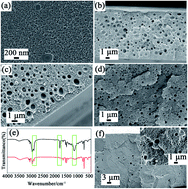
Firstly, the distribution of Tween-85 in the PS membrane was examined. The as-prepared PS/Tween-85 blended membrane was fractured in liquid nitrogen and the fracture surface was extracted with methanol for 24 h. After drying, the cross-section was observed using SEM and is shown in Fig. 1a. The image evidently demonstrates that uniform and dense pores with a diameter of 26 ± 8 nm and a density of 1.16 × 10¹⁵ cells per cm3 are formed. The porosity is the result of the Tween-85 embedded inside the film being washed out of the fractured surface after extraction, indicative of a uniform distribution of Tween-85 in the PS matrix.33 In addition, because of the amphiphilicity of Tween-85, it is reasonable to believe that Tween-85 forms micelles in the PS matrix, with hydrophobic groups oriented toward the PS matrix.


image file: c5ra12438g-f1.tif
Fig. 1 (a) Cross-sectional SEM image of the blend membrane after methanol extraction. (b–d) Cross-sectional SEM images of the blend membrane processed after CO2-expanded methanol processing (b: global view, c: edge of the membrane and d: center of the membrane). (e) FT-IR spectra of the raw PS membrane (black curve) and the PS membrane after CXL treatment (red curve). (f) Cross-sectional view of the blend membrane after 3 minutes of CXL treatment (inset: a magnified cross-sectional view).

The PS/Tween-85 blend membrane (containing 3 wt% Tween-85) was then treated with CO2-expanded methanol at 45 °C and 10 MPa for 30 min, following the procedures mentioned in the Experimental Section, to produce the macropores. After the CXL process, the macrostructure in the film was confirmed with SEM, as shown in Fig. 1b. Usually, the conventional scCO2 foaming process always results in a dense unfoamed skin as thick as dozens of micrometers. In our case, the surface skin is less than 2 μm, which is similar to that produced by a surface constrained foam process.34 The characteristic thin surface skin and macrostructures are attributed to the surfactants near the membrane surface diffusing from the matrix into the liquid phase prior to the foaming step, while the surfactants inside the film work as porogens, as discussed below.

It is found that the Tg of the matrix polymer significantly influences the rearrangement time, which can be reduced from 30 min to 10 seconds when the Tg decreased from 95 °C to −69 °C.35,36 The saturation temperature of 45 °C is well above the Tg of PS in CO2 under 10 MPa pressure.37 Therefore, upon charging the vessel with CO2, the PS matrix is significantly plasticized. Additionally, the effective interaction between PS and the additives can also be significantly reduced. Thus, the CO2–methanol mixture can penetrate into the bulk material through the film and selectively swells the Tween-85 micelles beneath the top PS layer. In the following isobar quenching, the PS matrix is frozen and the trapped CO2 droplets are fixed in the PS matrix. Therefore, macrocellular structures are obtained after depressurization.38 In Fig. 1d, macropores with an average diameter of 500 ± 280 nm and density of 1.30 × 10¹² cells per cm3 are observed (a histogram of the pore size distribution after the CXL process calculated according to the SEM image is shown in Fig. S1a). The increasing pore size and decreasing aggregation number (number density), compared with that in the membrane after methanol extraction indicate rapid structural reconstruction during the CXL process.

The comparison of the FT-IR spectra of the films before and after CXL treatment is plotted in Fig. 1e. It is found that the intensity of the bands associated with the C–O–C groups, ester groups and C[double bond, length as m-dash]C groups of Tween-85 at 1109 cm−1, 1757 cm−1 and 2856 cm−1 become much weaker after CXL processing, indicating that Tween-85 is mostly removed from the PS matrix during CXL processing. Furthermore, a contrast experiment was completed after 3 min of CXL treatment. A similar porous morphology is observed in the cryo-fractured cross-section, as shown in Fig. 1f. It should be noted that the pore size (162 ± 86 nm) is smaller and uniform and the number density (8.7 × 10¹⁵ cells per cm3) is higher compared with that in the film after 30 min of CXL treatment as shown in Fig. 1f, while the thickness of the surface skin remains unchanged. Therefore, we can conclude that the Tween-85 molecules close to the surface are washed out at the beginning of the CXL treatment, while the Tween-85 micelles in the middle of the film firstly trap the CO2 droplets and then gradually merge. With the elongation of the processing time, the Tween-85 molecules inside the film are also extracted by the methanol through the swollen PS matrix. The trapped CO2 droplets remain intact because of the isotropic chemical potential inside the high-pressure vessel until the morphology is fixed by isobar quenching. A detailed investigation of the influence of the ratio of Tween-85 to PS, experimental conditions and species of surfactant on the morphology of the porous membrane will be described elsewhere.

The N2 adsorption isotherm of the blend membrane after CXL processing was measured at liquid nitrogen temperature and is shown in Fig. 2. The membranes were frozen with liquid nitrogen and fractured into small pieces before the experiment in order to expose the pores. However, a rather low BET specific surface area of 1.73 m2 g−1 was obtained, although the membranes are highly porous. Such a low specific surface area reveals that the CXL membrane has a closed-pore structure.39


image file: c5ra12438g-f2.tif
Fig. 2 N2 adsorption isotherm of the blend membrane after CO2-expanded methanol treatment.

In order to produce additional micropores in the porous PS membrane, a hyper-cross-linking reaction was performed. The cross-linking process of the PS membranes was realized by soaking the membranes in a mixture of FeCl3, FDA and DCE at 80 °C for 8 h. After the cross-linking reaction the hyper-cross-linked membranes were washed with methanol several times and then Soxhlet extracted with methanol overnight followed by drying under vacuum for 12 h. The hyper-cross-linking mechanism has been investigated by several researchers.40–46 During the cross-linking process, FDA acted as an external cross-linker to connect the benzene rings on the PS backbones, through a Friedel–Crafts reaction. To confirm the chemical structure of the hierarchically porous PS membrane, the FT-IR spectra of the PS membrane before and after hyper-cross-linking reaction were obtained, as shown in Fig. 3. In the spectrum of the cross-linked membrane, a new band appears at 817 cm−1, which is assigned to a multi-substituted benzene ring and in line with the data reported by Law et al.43 The intensity of the band associated with a mono-substituted benzene ring at 710 cm−1 becomes weaker compared with that of the uncross-linked membrane. These data demonstrate that the hydrogens on the benzene rings were substituted in the reaction. The intensity of the bands at 3059 and 3080 cm−1, which is associated with the hydrogens on the aromatic rings, are obviously reduced, also verifying the substitution reaction on the benzene rings. Besides, a new strong band at 1701 cm−1 is found in the spectrum of the cross-linked PS membrane, and can be assigned to C[double bond, length as m-dash]O groups, as reported by Dai et al.,40 the oxidation product of the FDA residual segments formed by the presence of catalytic Fe(III).40,43 The structure of the cross-linked PS membrane was further confirmed using solid-state NMR. In Fig. 4, the solid-state 13C cross-polarization magic angle spinning NMR spectrum shows resonance peaks near 138 and 128 ppm, which belong to aromatic carbon and non-substituted aromatic carbon, respectively. The resonance peak near 40 ppm can be assigned to the carbon in the methylene linker formed in the cross-linking reaction. These results are completely consistent with the data reported by Tan et al.47 Besides, the resonance peaks between 150 and 200 ppm indicate the formation of the C[double bond, length as m-dash]O group; this phenomenon is consistent with the observation reported by Dai et al., as well as the results of the FT-IR spectra.40 All of the above spectral data confirm that the PS membranes have reacted with FDA, and that the hyper-cross-linked structure has formed.


image file: c5ra12438g-f3.tif
Fig. 3 FT-IR spectra of the PS membrane before (red curve) and after (blue curve) the hyper-cross-linking reaction.

image file: c5ra12438g-f4.tif
Fig. 4 Solid-state NMR spectrum of the hyper-cross-linked PS membrane.

The membranes after the hyper-cross-linking reaction were observed by SEM and TEM. From the morphology of the cross-linked PS membrane shown in Fig. 5a, we can find that although PS is soluble in DCE, the porous structural features of the CXL processed membranes are well preserved after the hyper-cross-linking reaction (a histogram of macropore size distribution after the hyper-cross-linking process calculated according to the SEM image is shown in Fig. S1b). The reason is that the hyper-cross-linking reaction is very rapid,40 and the cross-linked layer formed quickly on the membrane surface, preventing further deformation and dissolution of the membrane. Slight deformation of the pores is observed, due to the plasticization effect of DCE on the PS matrix. Dai et al. confirmed that a membrane with a thickness of 50 μm is completely cross-linked after a 6 h reaction, owing to the faster mass transport in the PS membrane.40 Therefore, it is safe to conclude that the micropores are distributed throughout the entire membrane after an 8 h hyper-cross-linking reaction. The structure generated during the hyper-cross-linking reaction was observed using TEM, as shown in Fig. 5b. Obviously, small pores were found throughout the sample, confirming that micropores were generated during the hyper-cross-linking reaction.


image file: c5ra12438g-f5.tif
Fig. 5 (a) Cross-sectional SEM image and (b) TEM image of the hyper-cross-linked PS membrane.

We further used the N2 adsorption technique to investigate the surface area and pore size of the cross-linked PS membrane.48 The N2 adsorption–desorption isotherms of the membranes (Fig. 6a, black curve) exhibit a Type I reversible sorption profile with a slight hysteresis loop at higher relative pressures, indicating the presence of an abundance of micropore structures accompanied with a few mesopores in the membrane. According to the isotherms, the BET surface area of the membrane is calculated to be 270.8 m2 g−1. Such a high specific surface area indicates that the micropores in the membrane are interconnected and accessible to gas molecules. The pore size distribution calculated using the Barrett–Joyner–Halenda (BJH) method is shown in Fig. 6b. The membrane shows a dominant pore size of 0.87–2.0 nm, in good agreement with the results of the TEM image. Also a small number of mesopores are observed in Fig. 6b. The results of the N2 adsorption analysis further confirm the microporous structures in the cross-linked PS membrane. In summary, the electron microscopic images reveal that the cross-linked PS membranes are hierarchically porous materials, with macropores formed in the CXL process, and micropores of 1–2 nanometers generated by the hyper-cross-linking reaction.


image file: c5ra12438g-f6.tif
Fig. 6 (a) N2 adsorption–desorption curves of the cross-linked PS membrane before (black) and after (red) heating at 150 °C for 0.5 h. (b) Pore size distribution of the hierarchically porous PS membrane.

The cross-linking reaction not only generates micropores in the membrane, but also increases the thermal stability of the membrane. The N2 adsorption–desorption curves of the cross-linked PS membrane after heating at 150 °C for 0.5 h are shown in Fig. 6a (red line), and the specific surface area is calculated to be 244.5 m2 g−1. Thus the surface area hardly changes after thermal treatment, indicating that the micropore structures are well preserved after thermal treatment. Noticing that the glass transition point of PS is 100 °C, the above results clearly demonstrate that the thermal stability of the PS membrane is significantly improved by the cross-linking structure. The cross-linking reaction also increases the decomposition temperature of the PS membrane, as shown in the TGA curves (Fig. S1). The residual weight of the hyper-cross-linked PS membrane at 550 °C is 32.9%, while that of the uncross-linked membrane is only 1.29%.

Conclusions

In conclusion, we prepared hierarchically porous polymeric films with a commercially available polymer. The first level of macro-scale structures was produced by selectively swelling the surfactant micelles embedded in the polymer matrix with CXL treatment, while the second level of micropores was created via a sequent hyper-cross-linking reaction. The hierarchical porosity is confirmed using SEM, TEM and BET measurements. It should be noted that the hyper-cross-linking reaction not only increases the specific surface area, but also improves the thermal stability of the hierarchical porosity. This method is not only suitable for PS and PS-based copolymers, but also applicable to many other polymers which bear aromatic rings and are active in Friedel–Crafts reactions.26 Since PS can also be cross-linked by UV irradiation,49,50 photochemical reaction is an alternative strategy for the formation of hyper-cross-linked structures, which is currently under investigation. Moreover, other types of surfactants, such as amphiphilic block copolymers, can also be used in our method, and are expected to generate different pore structures and further functionalization. We believe that this etching-free and versatile methodology will demonstrate promising applications in catalysis, separation and gas storage.

Acknowledgements

L.L. gratefully acknowledges the National Natural Science Foundation of China (No. 51373143 and 21174116), the Natural Science Foundation of Fujian Province (No. 2014J0105), the fund of State Key Lab for Modification of Chemical Fibers and Polymer Materials and the Fundamental Research Funds for the Central Universities (No. 2013SH003).

Notes and references

  1. T. Nishikawa, J. Nishida, R. Ookura, S. I. NiShimura, S. Wada, T. Karino and M. Shimomura, Mater. Sci. Eng., C, 1999, 8–9, 495–500 CrossRef.
  2. D. L. Gin and R. D. Noble, Science, 2011, 332, 674–676 CrossRef CAS PubMed.
  3. R. M. Dorin, H. Sai and U. Wiesner, Chem. Mater., 2014, 26, 339–347 CrossRef CAS.
  4. Y. Li, Z. Y. Fu and B. L. Su, Adv. Funct. Mater., 2012, 22, 4634–4667 CrossRef CAS PubMed.
  5. X. Y. Yang, A. Léonard, A. Lemaire, G. Tian and B. L. Su, Chem. Commun., 2011, 47, 2763–2786 RSC.
  6. S. Valkama, A. Nykänen, H. Kosonen, R. Ramani, F. Tuomisto, P. Engelhardt, G. ten Brinke, O. Ikkala and J. Ruokolainen, Adv. Funct. Mater., 2007, 17, 183–190 CrossRef CAS PubMed.
  7. D. Lee, C. Zhang, C. Y. Wei, B. L. Ashfeld and H. F. Gao, J. Mater. Chem. A, 2013, 1, 14862–14867 CAS.
  8. H. Sai, K. W. Tan, K. Hur, E. Asenath-Smith, R. Hovden, Y. Jiang, M. Riccio, D. A. Muller, V. Elser, L. A. Estroff, S. M. Gruner and U. Wiesner, Science, 2013, 341, 530–534 CrossRef CAS PubMed.
  9. M. G. Schwab, I. Senkovska, M. Rose, N. Klein, M. Koch, J. Pahnke, G. Jonschker, B. Schmitz, M. Hirscher and S. Kaskel, Soft Matter, 2009, 5, 1055–1059 RSC.
  10. L. L. C. Wong, P. M. B. Villafranca, A. Menner and A. Bismarck, Langmuir, 2013, 29, 5952–5961 CrossRef CAS PubMed.
  11. J. Gao, J. S. P. Wong, M. J. Hu, W. Li and R. K. Y. Li, Nanoscale, 2014, 6, 1056–1063 RSC.
  12. C. Park, J. Yoon and E. L. Thomas, Polymer, 2003, 44, 6725–6760 CrossRef CAS PubMed.
  13. Z. S. Ge and S. Y. Liu, Macromol. Rapid Commun., 2009, 30, 1523–1532 CrossRef CAS PubMed.
  14. B. D. Olsen and R. A. Segalman, Mater. Sci. Eng., 2008, 62, 37–66 Search PubMed.
  15. F. S. Bates and G. H. Fredrickson, Phys. Today, 1999, 52, 32–38 CrossRef CAS PubMed.
  16. J. T. Chen, E. L. Thomas, C. G. Zimba and J. F. Rabolt, Macromolecules, 1995, 28, 5811–5818 CrossRef CAS.
  17. Z. S. Ge and S. Y. Liu, Chem. Soc. Rev., 2013, 42, 7289–7325 RSC.
  18. A. Horechyy, B. Nandan, N. E. Zafeiropoulos, P. Formanek, U. Oertel, N. C. Bigall, A. Eychmueller and M. Stamm, Adv. Funct. Mater., 2013, 23, 483–490 CrossRef CAS PubMed.
  19. R. Takekoh and T. P. Russell, Adv. Funct. Mater., 2014, 24, 1483–1489 CrossRef CAS PubMed.
  20. T. Jin, Z. C. Xiong, X. Zhu, N. Mehio, Y. J. Chen, J. Hu, W. B. Zhang, H. F. Zou, H. L. Lai and S. Dai, ACS Macro Lett., 2015, 4, 570–574 CrossRef CAS.
  21. K. W. Tan, B. Jung, J. G. Werner, E. R. Rhoades, M. O. Thompson and U. Wiesner, Science, 2015, 349, 54–58 CrossRef CAS PubMed.
  22. J. L. Gong, A. J. Zhang, H. Bai, Q. K. Zhang, C. Du, L. Li, Y. Z. Hong and J. Li, Nanoscale, 2013, 5, 1195–1204 RSC.
  23. A. J. Zhang, Q. K. Zhang, H. Bai, L. Li and J. Li, Chem. Soc. Rev., 2014, 43, 6938–6953 RSC.
  24. P. G. Jessop and B. Subramaniam, Chem. Rev., 2007, 107, 2666–2694 CrossRef CAS PubMed.
  25. R. Zhang and H. Yokoyama, Macromolecules, 2009, 42, 3559–3564 CrossRef CAS.
  26. S. J. Xu, Y. L. Luo and B. E. Tan, Macromol. Rapid Commun., 2013, 34, 471–484 CrossRef CAS PubMed.
  27. N. Fontanals, M. Galià, P. A. G. Cormack, R. M. Marcé, D. C. Sherrington and F. Borrull, J. Chromatogr. A, 2005, 1075, 51–56 CrossRef CAS PubMed.
  28. Y. Sun, J. L. Chen, A. M. Li, F. Q. Liu and Q. X. Zhang, React. Funct. Polym., 2005, 64, 63–73 CrossRef CAS PubMed.
  29. J. Germain, J. M. J. Frechet and F. Svec, J. Mater. Chem., 2007, 17, 4989–4997 RSC.
  30. Y. H. Zhang, Y. D. Li, F. Wang, Y. Zhao, C. Zhang, X. Y. Wang and J. X. Jiang, Polymer, 2014, 55, 5746–5750 CrossRef CAS PubMed.
  31. M. P. Tsyurupa and V. A. Davankov, React. Funct. Polym., 2002, 53, 193–203 CrossRef CAS.
  32. B. C. Pan, Y. Xiong, A. M. Li, J. L. Chen, Q. X. Zhang and X. Y. Jin, React. Funct. Polym., 2002, 53, 63–72 CrossRef CAS.
  33. S. Wang and M. L. Robertson, ACS Appl. Mater. Interfaces, 2015, 7, 12109–12118 CAS.
  34. S. Siripurapu, J. A. Coughlan, R. J. Spontak and S. A. Khan, Macromolecules, 2004, 37, 9872–9879 CrossRef CAS.
  35. K. Senshu, S. Yamashita, H. Mori, M. Ito, A. Hirao and S. Nakahama, Langmuir, 1999, 15, 1754–1762 CrossRef CAS.
  36. K. Senshu, S. Yamashita, M. Ito, A. Hirao and S. Nakahama, Langmuir, 1995, 11, 2293–2300 CrossRef CAS.
  37. M. W. Matsen and F. S. Bates, Macromolecules, 1996, 29, 1091–1098 CrossRef CAS.
  38. L. Li, T. Nemoto, K. Sugiyama and H. Yokoyama, Macromolecules, 2006, 39, 4746–4755 CrossRef CAS.
  39. H. Yokoyama and K. Sugiyama, Macromolecules, 2005, 38, 10516–10522 CrossRef CAS.
  40. Z. A. Qiao, S. H. Chai, K. Nelson, Z. G. Bi, J. H. Chen, S. M. Mahurin, X. Zhu and S. Dai, Nat. Commun., 2014, 5, 3705 CAS.
  41. Q. Q. Liu, L. Wang, A. G. Xiao, H. J. Yu and Q. H. Tan, Eur. Polym. J., 2008, 44, 2516–2522 CrossRef CAS PubMed.
  42. G. Q. Xiao, R. M. Wen, D. M. Wei and D. Wu, J. Hazard. Mater., 2014, 280, 97–103 CrossRef CAS PubMed.
  43. R. V. Law, D. C. Sherrington, C. E. Snape, I. Ando and H. Kurosu, Macromolecules, 1996, 29, 6284–6293 CrossRef CAS.
  44. G. Q. Xiao, L. C. Fu and A. M. Li, Chem. Eng. J., 2012, 191, 171–176 CrossRef CAS PubMed.
  45. B. Y. Li, X. Huang, L. Y. Liang and B. E. Tan, J. Mater. Chem., 2010, 20, 7444–7450 RSC.
  46. B. Y. Li, F. B. Su, H. K. Luo, L. Y. Liang and B. E. Tan, Microporous Mesoporous Mater., 2011, 138, 207–214 CrossRef CAS PubMed.
  47. B. Y. Li, R. N. Gong, W. Wang, X. Huang, W. Zhang, H. M. Li, C. X. Hu and B. E. Tan, Macromolecules, 2011, 44, 2410–2414 CrossRef CAS.
  48. S. J. Gregg and K. S. W. Sing, Adsorption, Surface Area and Porosity, Academic Press, London, UK, 1982 Search PubMed.
  49. L. Li, Y. W. Zhong, J. Li, C. K. Chen, A. J. Zhang, J. Xu and M. Zhi, J. Mater. Chem., 2009, 19, 7222–7227 RSC.
  50. L. Li, Y. W. Zhong, C. Y. Ma, J. Li, C. K. Chen, A. J. Zhang, D. L. Tang, S. Y. Xie and M. Zhi, Chem. Mater., 2009, 21, 4977–4983 CrossRef CAS.

Footnote

Electronic supplementary information (ESI) available. See DOI: 10.1039/c5ra12438g

This journal is © The Royal Society of Chemistry 2015
Click here to see how this site uses Cookies. View our privacy policy here.