
One-step facile fabrication of sea urchin-like zirconium oxide for efficient phosphate sequestration

Sufeng Wang a, Mengxuan Ma a, Wencang Man a, Qingrui Zhang *a, Xiaolong Niu a, Guiqing Sun b, Wen Zhang a and Tifeng Jiao *a
aHebei Key Laboratory of Applied Chemistry, School of Environmental and Chemical Engineering, Yanshan University, Qinhuangdao 066004, PR China. E-mail: zhangqr@ysu.edu.cn; tfjiao@ysu.edu.cn
bHebei Ocean & Fisheries Science Research Institute, Qinhuangdao 066200, PR China

Received 25th June 2015 , Accepted 12th October 2015

First published on 12th October 2015


Abstract

Phosphate is a worldwide environmental issue, due to possibly causing serious eutrophication and subsequently blue-green algae blooms. Sequestrating phosphate by exploitation of advanced materials with a hierarchical morphology will be an important pathway. Herein, we fabricated a new sea urchin-like zirconium(IV) oxide (Ur-Zr) using a one step facile alcoholysis solvothermal reaction for efficient phosphate removal. The as-obtained material exhibits adsorption properties in a wide range of pH conditions with the optimal pH ranging from 1.0 to 6.0; competition results reveal that the Ur-Zr displays remarkable sorption selectivity for phosphate removal with coexisting common anions (SO42−, NO3 and Cl ions) at high concentrations, which can be ascribed to the unique hierarchical morphology and strong sorption affinity between Zr–O and phosphate species. Besides, the resultant Ur-Zr also shows a gradual sorption kinetics behavior, which can be well described by the pseudo-first-order model with the maximum sorption capacity of 74.8 mg g−1. Additionally, the exhausted materials can be recycled by alkaline treatment and used repeatedly. All of the results demonstrate that the sea urchin-like zirconium(IV) oxide is a competent candidate for enhanced phosphate removal.

1. Introduction

Phosphate is an important nutritive substance in modern agriculture and industry, but the excessive presence of nitrogen and phosphorus in water bodies can bring about serious eutrophication and subsequently stimulate blue-green algae blooms. The past 37 years of research has demonstrated that nitrogen-fixing cyanobacteria are increasingly favored for reducing nitrogen inputs, while extreme nitrogen limitation still remains highly eutrophic, due to phosphate inputs.1 To diminish eutrophication, a focus on decreasing inputs of phosphorus is required. To date, the World Health Organization (WHO) recommended a maximum phosphate discharge of 0.5–1.0 mg L−1,2 and the rigorous regulation of a 0.5 mg L−1 limit has been implemented in China for the new-built urban sewage treatment plant. In order to meet the strict standards, various technologies, including chemical precipitation, membranes, coagulation and adsorption,3 have been proposed for efficient sequestrating of phosphate in water. Among the available methods, adsorption technology might be an optimal choice and platform for reducing eutrophication.

To date, the traditional adsorbents, e.g. silica,4 biochar,5 carbon,6 zeolite7etc. display inefficient phosphate sorption capability and lack applicability for enhancing phosphate removal, particularly for trace levels. In recent decades, nano-sized transition metal hydro (oxide) adsorbents have stimulated a wide research enthusiasm for phosphate removal and environmental remediation,8–10 owing to their strong inner-sphere complexation formation of metal-phosphate, size-dependent performances and environmentally friendly properties.11 Zirconium oxide (ZrO2) is a promising inorganic functional material, which is widely used as a catalyst,12 adsorbent13 and proton conductive membrane.14 To date, various methods have been explored to achieve nanoscale fabrication for application improvements, e.g. solvothermal,15 chemical precipitation16 and sol–gel procedures17 for diverse nanorod,18 particle,19 nanowire20,21 and fiber22 formation. Particularly, for adsorbents for pollutant sequestration,23 efficient adsorption performances are not merely dependent on the main chemical compositions or crystalline phase; the unique morphology and fine nanostructures will endow significant contributions.24 Thus, achieving a specific morphology will be an important direction for efficient zirconium oxide fabrication.

Recently, a three-dimensional (3D) hierarchically layered nanostructure has been constructed using a large micro-meter size structure with nanoscale laminated sheets. The large micro-meter shapes can achieve excellent separation/recycling features and mechanical strength; while the fine nano-laminated sheets will provide sufficient surface areas/activated sites for improving the adsorption performances.25–29 Therefore, a new functional material with a hierarchical nanostructure is a desired option. Nevertheless, the ZrO2-based 3D hierarchical micro/nanostructure, e.g. flower like or sea urchin arrangement, is rarely reported, possibly ascribing to the high valence-states and different crystalline densities.

Herein, we successfully report a new sea urchin-like zirconium oxide (denoted Ur-Zr) for phosphate sequestration. The unique structure is achieved by a facile alcoholysis reaction in a solvothermal vessel, which does not require the additional complex ethylene glycol (EG) or poly(vinylpyrrolidone) (PVP) mediation as compared to the traditional solvothermal synthesise. The obtained unique needle-like structure can provide large surface areas and abundant active sites for phosphate removal. More important is that the as-obtained Ur-Zr material also exhibits a superior adsorption capacity (∼74.8 mg g−1), which can be well compared to the results from the previously published literature. A series of batch sorption tests were also carried out to evaluate the phosphate sorption performance for reducing eutrophication.

2. Materials and methods

2.1. Preparation of sea urchin-like zirconium oxide

All of the chemicals are of analytical grade from Aladdin Reagent Station (Beijing, China). The urchin-like zirconium oxide was synthesized as follows: briefly, 3 g of zirconium oxychloride and 2 g of urea were dissolved in 50 mL glycol solution (50% mass fraction) for complete mixing. The above mixture was then poured into a Teflon-lined autoclave for an 8 h reaction at 120 °C; and then naturally cooled to room temperature, the resultant ZrO2 precipitates were then obtained and washed with distilled water to remove any excess glycol solution. Finally, the white powder was desiccated successively at 60 °C for 24 h and at 90 °C for 12 h in a vacuum drying oven to obtain the desired sea urchin-like nano-ZrO2 particles (Ur-Zr).

2.2. Batch phosphate adsorption tests

Phosphate uptake was investigated by conventional bottle-point methods.30 To be specific, 0.05 g of Ur-Zr sample was introduced into flasks containing 50 mL phosphate solution at the desired concentrations. Solution pH values were adjusted using 1% HNO3 or 1% NaOH, and the above flasks were then transferred into an incubator shaker (SHZ-85, China) at preferred temperatures for a 24 hour reaction to reach sorption equilibrium. Finally, the solutions were filtrated and the concentration of phosphate and its corresponding solution pH were determined. Sorption competition evaluation was also conducted by similar methods. It is noteworthy that common anions (SO42−/NO3/Cl) were also involved, in different amounts, when necessary.

Kinetics experiments were carried out by introducing 0.2 g of Ur-Zr sample into a 1000 mL vessel with a known content of phosphate solution. Magnetic stirring was used to ensure homogeneous reaction. 0.5 mL of the solution was sampled at various time intervals and the kinetics data were obtained by determining the sampling phosphate concentration versus the corresponding time.

Sorption–regeneration tests were also performed to assess the sorption stability. 0.05 g of Ur-Zr particles were used for the adsorption test in a 50 mL solution containing known concentrations of phosphate as well as the common competing anions. The regeneration test was performed in the same vessel with 20 mL 5% NaOH solution as the regenerant for a 5 h reaction. Note that, prior to the next cycles, complete washing is necessary to remove any excess alkaline solution to avoid possible influences on the adsorption cycles.

2.3. Analysis and characterization

The concentrations of the phosphate samples were determined by the molybdenum blue spectrophotometric method. The sea urchin-like morphology of Ur-Zr was observed by SEM and TEM analysis. The urchin structure was observed using a high-resolution transmission electron microscope (HRTEM), equipped with a Gatan CCD camera working at an accelerating voltage of 200 kV; the corresponding morphology was obtained on a Hitachi S-4800 field emission scanning electron microscope (FESEM) coupled with energy dispersive spectroscopy with an accelerating voltage of 5–20 kV. X-ray diffraction (XRD) of the resultant Ur-Zr samples was achieved using an XTRA X-ray diffractometer (Switzerland) with Cu Kα radiation (λ = 1.5418 Å). N2 sorption–desorption isotherms were obtained for determining the pore structure parameters and surface areas using micrometrics ASAP 2020 (U.S.), the surface areas were calculated using the multipoint BET equation and the pore volumes were obtained using the Barrett–Joyner–Halenda (BJH) method.

3. Results and discussion

3.1. Characterization of sea urchin-like zirconium oxide

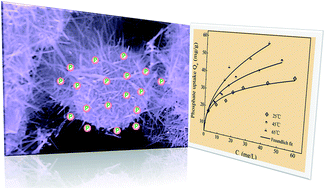
The morphology and structure of the prepared Ur-Zr was well characterized by SEM, TEM and XRD investigation. As depicted in Fig. 1a, the as-obtained Ur-Zr material exhibits a spherical shape with unique sea urchin structural morphology. Further observation indicates that the formed structure is covered in many needle-like aggregates approximately 300–400 nm in length and 10–20 nm in width, such unique morphology indicates potential large surface areas and efficient phosphate adsorption enhancement. Moreover, BET analysis (Table S1) further proves that the surface area of the prepared Ur-Zr is approximately 64.5 m2 g−1.
image file: c5ra12329a-f1.tif
Fig. 1 Characterization of the sea urchin-like zirconium oxide (a) SEM image; (b) TEM image; (c) magnification of image (b).

TEM images, Fig. 1b and S1, reveal that the formation of the sea urchin sphere is a gradual process, a small sized zirconium oxide nanostructure (about 200 nm) tends to aggregate or grow into a larger one (about 1–2 μm). Fig. 1c further demonstrates that the ageing particles of Ur-Zr display a micro/nanometer structure. The particle size is approximately 1 μm and the extended needle-like structure has a size of 20–30 nm wide. This result coincides with the SEM investigation. Such unique morphology formation can be ascribed to the traditional “Ostwald ripening process”, i.e. during the reaction process, a large number of nuclei are first formed in a short period of time through the well-known “Ostwald ripening process”, followed by a slow crystal growth process. The aggregates continuously grow in size and density to form spheres with solid cores. Similar research has been observed and demonstrated in previous studies.31–34 The XRD pattern (Fig. S2) proves that the obtained Ur-Zr particles are highly crystalline samples. The major diffraction peaks belong to the ZrO2 tetragonal phase, while minor diffraction peaks belong to the ZrO2 monoclinic phase. Such results agree with previous studies on tetragonal ZrO2 fabrication35,36 and the standard ZrO2 spectrum.

3.2. Effects of solution pH on phosphate adsorption

The effects of solution pH on phosphate removal were investigated, and the results are shown in Fig. 2a. Observably, phosphate uptake onto Ur-Zr was a pH-dependent sorption process with the optimal pHs ranging from 1.0 to 6.0. Such powerful adsorption behaviors can be ascribed to the present species of zirconium oxide and its sea urchin-like structure. As depicted in Fig. 2b, the zeta potential distribution reveals that the obtained Ur-Zr samples display highly positive charges at acidic or neutral environments (pHzpc = 6.4), thus the protonated Zr–OH2+ species will form in aqueous solutions, which can evidently exert preferential adsorption toward negatively charged HPO42−/H2PO4 species (Fig. 2c).
image file: c5ra12329a-f2.tif
Fig. 2 (a) The effect of solution pH on phosphate removal onto Ur-Zr (conditions: dose 0.05 g, 50 mL solution containing 10 mg L−1 phosphate at 298 K); (b) the zeta potential charge of Ur-Zr with various solution conditions; (c) the phosphate species distributions at different solution pHs.

Moreover, a remarkable adsorption in strong acidic conditions (pHs = 1–2) was also detected, which differs from the conventional metal oxides for phosphate sequestration. Generally, in strong acidic conditions, the positively charged H2PO4 will tend to transform into the neutral H3PO4 species, which will exhibit unfavorable adsorption onto protonated zirconium oxide surfaces. Such efficient adsorption can be attributed to the urchin-like morphology with abundant activated sorption sites and the strong inner-sphere complexation between Ur-Zr and phosphate species.13,37 The possible reactions (Fig. 3) were presented as follows.


image file: c5ra12329a-f3.tif
Fig. 3 Schematic diagram of possible phosphate adsorption reaction.

Moreover, in alkaline conditions, the decreasing adsorption can be ascribed to the deprotonated ZrO species formation, which will apply strong repulsion towards HPO42− or PO43− species. Besides, the strong competition from OH additions will also further restrain the phosphate uptake. It is noteworthy that the negligible adsorption at pH > 13 further indicates possible regeneration properties.

3.3. Present competition influences on phosphate removal

It is known that common anions, including SO42−, NO3 and Cl ions, are usually present in natural water and industrial wastewater in high concentrations. Therefore, it is necessary to estimate the sorption selectivity towards phosphate removal onto Ur-Zr. The commercial hybrid adsorbent FerrIX™ (Purolite, UK) was used as a reference. As is illustrated in Fig. 4, the referred FerrIX™ exhibits a gradual decrease and then a steady sorption process with common ion addition; the available phosphate removal efficiency is approximately 42–48%. Considering the chemical composition of the quaternary ammonium (–CH2N(CH3)3Cl) and ferric oxides of FerrIX™, it is believed that the modified ammonium groups will exert phosphate removal by non-specific electrostatic adsorption, and the encapsulated ferric oxides can be assigned to the stabilized strong phosphate uptake by Fe–O–P bond formation. Comparatively, the as-obtained Ur-Zr displays satisfactory phosphate sorption performances. The slight influence of common anion addition and distinguished sorption efficiency of over 95% further proves the remarkable selectivity and promising applicability toward phosphate sequestration.
image file: c5ra12329a-f4.tif
Fig. 4 Effect of competing anions on phosphate uptake by Ur-Zr and the commercial FerrIX™ at 298 K. The adsorbent dose was 1.0 g L−1 with 10.0 mg L−1 of phosphate ions.

To further elucidate the potential sorption selectivity onto the Ur-Zr material, the distribution ratio Kd (L g−1) was determined by the following equation and the results are presented in Table S2.

 
image file: c5ra12329a-t1.tif(1)
where C0 (mg L−1) is the initial phosphate concentration of the solution, V (L) represents the volume of the solution, and m (g) is the mass of the adsorbent. Evidently, the remarkably larger Kd values, than those for the commercial FerrIX™, further verify its preferential sorption performances.

To further elucidate the possible selective adsorption mechanism, an XPS investigation (Fig. 5) was also performed to gain some new insights into the phosphate uptake process. The presence of a distinct peak at ∼133.5 eV after phosphate uptake onto Ur-Zr suggests successful phosphate intercalation, while the standard P 2p peak from the purified KH2PO4 appears at ∼134.0 eV (Fig. 5b). The significant ∼0.5 eV binding energy shift to a lower energy level indicates the presence of a strong affinity between phosphate and the prepared Ur-Zr. Moreover, the Zr 3d spectrum is displayed in Fig. 5c. The prominent peaks from Zr 3d3/2 and Zr 3d5/2 were located at ∼183.5 eV and ∼181.3 eV, respectively, while after phosphate uptake, the originated Zr 3d peaks are significantly weakened and two new peaks appear at ∼184.3 eV and ∼182.1 eV, respectively (Fig. 5d). The newly emerged peaks might be ascribed to the formation of the new phosphate–zirconium complex and the corresponding large binding energy shift of 0.8 eV indicates the presence of the powerful affinity of Zr and phosphate species and favorable adsorption.


image file: c5ra12329a-f5.tif
Fig. 5 XPS spectra analysis. (a) The XPS survey of the Ur-Zr and phosphate loaded Ur-Zr; (b) a comparison of the P 2p peaks of phosphate loaded Ur-Zr samples and purified K2H2PO4; (c) Zr 3d spectrum of the bare Ur-Zr; (d) Zr 3d spectrum of the phosphate loaded Ur-Zr sample; (e) O 1s analysis of Ur-Zr; (f) O 1s variations of phosphate loaded Ur-Zr samples.

Additionally, the variation in the O 2p binding energy for the prepared Ur-Zr samples is shown in Fig. 5e and f. Based on the different oxygen species, the O 1s spectra are separated into two peaks of M–O (∼529.2 eV) and M–OH (∼530.7 eV). As for the primitive Ur-Zr, the area fractions of M–O and M–OH occupy approximately ∼66.2% and ∼33.8%, respectively. Whereas, the phosphate uptake can lead to an obvious increase in M–OH species (∼47.1%) and a binding energy shift of ∼0.3 eV, which implies the possibly preferential adsorption. In theory, the phosphate adsorption can evoke the replacement of M–OH species by the formation of M–O–P bonds, considering the possible hydroxyl contributions from one or two P–OH groups by different H2PO4/HPO4 species, it is believed that zirconium hydroxyl sites are capable of exerting robust interaction with the target phosphates spontaneously.

3.4. Sorption kinetics and isotherms

Sorption kinetics tests were conducted and the results are shown in Fig. 6a. It can be seen that phosphate uptake exhibits a continuous adsorption process, with equilibrium times of approximately 250 min. Such gradual adsorption can be ascribed to the sea urchin-like structure i.e. the diffusion of phosphate onto Ur-Zr samples is a slow-moving adsorption process, at the initial stage, the phosphate uptake is dominated by the surface and needle-like structure, and a further increase in contact time will bring about inner pore/surface diffusion into the sea urchin Ur-Zr to reach sorption equilibrium.
image file: c5ra12329a-f6.tif
Fig. 6 (a) Sorption kinetics curves by pseudo-first/second order fittings; (b) intraparticle diffusion model fittings for the kinetics data; (c) adsorption isotherms at different temperatures; (d) sorption–regeneration tests (adsorption conditions: 0.5 g L−1, initial phosphate 10 mg L−1 at 298 K, NO3 = SO42− = Cl = 200 mg L−1, pH = 5.8–6.2; regeneration: 5% NaOH solution at 298 K).

To further elucidate the adsorption process, the classic adsorption models for kinetics evaluation were performed and the relevant equations are as follows.38,39

The pseudo-first-order model:

 
image file: c5ra12329a-t2.tif(2)

The pseudo-second-order model:

 
image file: c5ra12329a-t3.tif(3)

The intraparticle diffusion model:

 
qt = kp × t0.5 + C(4)
where qe and qt represent the amount of phosphate adsorbed (mg g−1) at equilibrium and time t, respectively, and k or kp values are the kinetics rate constant. The detailed fitting parameters for the models are shown in Table S3. Evidently, the kinetics data can be well described by the pseudo-first-order model with a high correlation coefficient (R2 > 0.987). Additionally, the well fitted intraparticle diffusion model (Fig. 6b, R2 > 0.990) further proves that phosphate adsorption onto Ur-Zr is dominated by the inner pore diffusion process.

Adsorption isotherms (Fig. 6c) reveal that phosphate uptake is a temperature-relevant endothermic process and that high temperatures will be favored for phosphate sequestration. Additionally, the representative models, i.e. Langmuir, Freundlich and Temkin, were also applied to describe sorption process with the following equations.

Langmuir model:

 
image file: c5ra12329a-t4.tif(5)

Freundlich model:

 
Qe = kFCe1/n(6)

Temkin model:

 
image file: c5ra12329a-t5.tif(7)
where Ce represents the concentrations of phosphate at equilibrium and Qe is assigned to the corresponding adsorption capacity; Qmax is the maximum phosphate capacity per gram, and kL, kF and n as well as A and b of the Temkin model are constants to be determined. The detailed fitting results are shown in Table S4, the larger R2 values suggest that the sorption process can be well described by the Freundlich model and that the maximum sorption capacity is approximately 74.8 mg g−1, which can be compared well with the performances in the published literature (Table 1).

Table 1 Phosphate sorption capacity comparison from the published literature
Adsorbent Q max (mg g−1) Optimal pH Temperature (K) References
Granular ferric hydroxide 1.6 6.5–7.5 298 K 40
Modified chitosan beads 60.6 1.0–3.5 298 K 41
Mg–Al hydrotalcite-loaded kaolin clay 11.92 2.5–9.5 298 K 42
Pyromellitic acid intercalated ZnAl–LDHs 41.45 7.0 303 K 43
Cerium–zirconium binary oxide nanoadsorbents 112.23 2.0–6.0 298 K 44
Modified iron oxide-based sorbents 38.8 7.0 298 K 45
Cu(II) – loaded polyethersulfone-type metal affinity membrane 74.0 4.0–7.0 293 K 46
Mesoporous silica spheres loaded with lanthanum 42.76 3.0–6.0 298 K 47
Zirconium(IV) loaded cross – linked chitosan particles 71.68 3.0 303 K 48
La-modified tourmaline 108.7 7.0 298 K 49
Sea urchin-like ZrO 2 74.8 1.0-6.0 298 K This work


3.5. Sorption–regeneration cycles

To estimate the sorption stability of the prepared Ur-Zr material, sorption–regeneration tests were conducted and the results are depicted in Fig. 6d. The results indicate that the sea urchin structural Ur-Zr is an effective and recyclable adsorbent for phosphate removal using 5% NaOH solution as a regenerant. The slight capacity lost after five cycles might be partly ascribed to possible irreversible sites and morphology variations caused by alkaline treatments.

4. Conclusions

In the present study, we successfully prepared a new sea urchin-like zirconium oxide by a one step facile alcoholysis solvothermal reaction for efficient phosphate removal. The unique hierarchical structure and strong sorption affinities grant a wide pH sorption range, fast kinetics, remarkable sorption selectivity and comparative phosphate sorption capacity. Additionally, the exhausted material can also be recycled and used repeatedly after alkaline treatment. This work provides a new approach for high valence hierarchically structured metal oxide synthesis and its potentially distinguished environmental application.

Acknowledgements

We greatly acknowledge the financial support from the National Natural Science Foundation of China (Grant No. 40830746, 41271102, 21207112, 21473153 and 51578476), the National Science Technology Support Program (Grant No. 2011BAD13B06), Natural Science Foundation of Hebei Province of China (Grant No. 2014203207), and Key Laboratory of Reservoir Aquatic Environment, Chongqing Institute of Green and Intelligent Technology, Chinese Academy of Science (Grant No. RAE2014CE03B).

Notes and references

  1. D. W. Schindler, R. Hecky, D. Findlay, M. Stainton, B. Parker, M. Paterson, K. Beaty, M. Lyng and S. Kasian, Proc. Natl. Acad. Sci. U. S. A., 2008, 105, 11254–11258 CrossRef CAS PubMed.
  2. W. H. Organization, Guidelines for drinking-water quality: recommendations, World Health Organization, 2004 Search PubMed.
  3. T. Almeelbi and A. Bezbaruah, J. Nanopart. Res., 2012, 14, 1–14 CrossRef.
  4. Y. Yu, R. Wu and M. Clark, J. Colloid Interface Sci., 2010, 350, 538–543 CrossRef CAS PubMed.
  5. Y. Yao, B. Gao, J. Chen, M. Zhang, M. Inyang, Y. Li, A. Alva and L. Yang, Bioresour. Technol., 2013, 138, 8–13 CrossRef CAS PubMed.
  6. L. Zhang, L. Wan, N. Chang, J. Liu, C. Duan, Q. Zhou, X. Li and X. Wang, J. Hazard. Mater., 2011, 190, 848–855 CrossRef CAS PubMed.
  7. J. Chen, H. Kong, D. Wu, Z. Hu, Z. Wang and Y. Wang, J. Colloid Interface Sci., 2006, 300, 491–497 CrossRef CAS PubMed.
  8. P. Z. Ray and H. J. Shipley, RSC Adv., 2015, 5, 29885–29907 RSC.
  9. M. Hua, S. Zhang, B. Pan, W. Zhang, L. Lv and Q. Zhang, J. Hazard. Mater., 2012, 211, 317–331 CrossRef PubMed.
  10. P. Xu, G. M. Zeng, D. L. Huang, C. L. Feng, S. Hu, M. H. Zhao, C. Lai, Z. Wei, C. Huang and G. X. Xie, Sci. Total Environ., 2012, 424, 1–10 CrossRef CAS PubMed.
  11. D. G. Strawn and D. L. Sparks, J. Colloid Interface Sci., 1999, 216, 257–269 CrossRef CAS PubMed.
  12. A. M. Hengne and C. V. Rode, Green Chem., 2012, 14, 1064–1072 RSC.
  13. Y. Su, H. Cui, Q. Li, S. Gao and J. K. Shang, Water Res., 2013, 47, 5018–5026 CrossRef CAS PubMed.
  14. G. Nawn, G. Pace, S. Lavina, K. Vezzù, E. Negro, F. Bertasi, S. Polizzi and V. Di Noto, ChemSusChem, 2015, 8, 1381–1393 CrossRef CAS PubMed.
  15. G. Li, Z. Hong, H. Yang and D. Li, J. Alloys Compd., 2012, 532, 98–101 CrossRef CAS PubMed.
  16. C. Huang, Z. Tang and Z. Zhang, J. Am. Ceram. Soc., 2001, 84, 1637–1638 CrossRef CAS PubMed.
  17. Q. Mahmood, A. Afzal, H. M. Siddiqi and A. Habib, J. Sol-Gel Sci. Technol., 2013, 67, 670–674 CrossRef CAS.
  18. Y. Liu, C. Zheng, W. Wang, Y. Zhan and G. H. Wang, J. Am. Ceram. Soc., 2002, 85, 3120–3122 CrossRef CAS PubMed.
  19. T. S. Sreeremya, A. Krishnan, L. N. Satapathy and S. Ghosh, RSC Adv., 2014, 4, 28020–28028 RSC.
  20. W.-S. Dong, F.-Q. Lin, C.-L. Liu and M.-Y. Li, J. Colloid Interface Sci., 2009, 333, 734–740 CrossRef CAS PubMed.
  21. B. Xu and X. Wang, Dalton Trans., 2012, 41, 4719–4725 RSC.
  22. M. Biswas and S. Bandyopadhyay, Mater. Lett., 2013, 101, 13–16 CrossRef CAS PubMed.
  23. L. A. Rodrigues, L. J. Maschio, L. D. S. Cividanes Coppio, G. P. Thim and M. L. Caetano Pinto da Silva, Environ. Technol., 2012, 33, 1345–1351 CrossRef CAS PubMed.
  24. Z. Shu, X. Jiao and D. Chen, CrystEngComm, 2012, 14, 1122–1127 RSC.
  25. C. Cao, J. Qu, F. Wei, H. Liu and W. Song, ACS Appl. Mater. Interfaces, 2012, 4, 4283–4287 CAS.
  26. E.-J. Kim, C.-S. Lee, Y.-Y. Chang and Y.-S. Chang, ACS Appl. Mater. Interfaces, 2013, 5, 9628–9634 CAS.
  27. H. Wang, Q. Liang, W. Wang, Y. An, J. Li and L. Guo, Cryst. Growth Des., 2011, 11, 2942–2947 CAS.
  28. W. Li, Y. Bu, H. Jin, J. Wang, W. Zhang, S. Wang and J. Wang, Energy Fuels, 2013, 27, 6304–6310 CrossRef CAS.
  29. F. Wang, H. Dai, J. Deng, G. Bai, K. Ji and Y. Liu, Environ. Sci. Technol., 2012, 46, 4034–4041 CrossRef CAS PubMed.
  30. Q. Zhang, Q. Du, M. Hua, T. Jiao, F. Gao and B. Pan, Environ. Sci. Technol., 2013, 47, 6536–6544 CAS.
  31. W. Ostwald, Z. Phys. Chem., 1900, 34, 495–503 Search PubMed.
  32. S. J. Bao, Q. L. Bao, C. M. Li, T. P. Chen, C. Q. Sun, Z. L. Dong, Y. Gan and J. Zhang, Small, 2007, 3, 1174–1177 CrossRef CAS PubMed.
  33. B. Li, G. Rong, Y. Xie, L. Huang and C. Feng, Inorg. Chem., 2006, 45, 6404–6410 CrossRef CAS PubMed.
  34. W. Wang, T. F. Jiao, Q. R. Zhang, X. N. Luo, J. Hu, Y. Chen, Q. M. Peng, X. H. Yan and B. B. Li, RSC Adv., 2015, 5, 56279–56285 RSC.
  35. H. Cui, Y. Su, Q. Li, S. Gao and J. K. Shang, Water Res., 2013, 47, 6258–6268 CrossRef CAS PubMed.
  36. V. G. Deshmane and Y. G. Adewuyi, Microporous Mesoporous Mater., 2012, 148, 88–100 CrossRef CAS PubMed.
  37. J. Lǚ, H. Liu, R. Liu, X. Zhao, L. Sun and J. Qu, Powder Technol., 2013, 233, 146–154 CrossRef PubMed.
  38. H. Qiu, L. Lv, B. C. Pan, Q. J. Zhang, W. M. Zhang and Q. X. Zhang, J. Zhejiang Univ., Sci., A, 2009, 10, 716–724 CrossRef CAS.
  39. Z. W. Xu, L. Cheng, J. Shi, J. G. Lu, W. M. Zhang, Y. L. Zhao, F. Y. Li and M. D. Chen, Environ. Sci. Pollut. Res., 2014, 21, 6574–6577 Search PubMed.
  40. M. Kartashevsky, R. Semiat and C. G. Dosoretz, Desalination, 2015, 364, 53–61 CrossRef CAS PubMed.
  41. X. Liu and L. Zhang, Powder Technol., 2015, 277, 112–119 CrossRef CAS PubMed.
  42. L. Deng and Z. Shi, J. Alloys Compd., 2015, 637, 188–196 CrossRef CAS PubMed.
  43. Q. Q. Yu, Y. Q. Zheng, Y. P. Wang, L. Shen, H. T. Wang, Y. M. Zheng, N. He and Q. B. Li, Chem. Eng. J., 2015, 260, 809–817 CrossRef CAS PubMed.
  44. Y. Su, W. Y. Yang, W. Z. Sun, Q. Li and J. K. Shang, Chem. Eng. J., 2015, 268, 270–279 CrossRef CAS PubMed.
  45. J. Lalley, C. Han, X. Li, D. D. Dionysiou and M. N. Nadagouda, Chem. Eng. J., 2016 DOI:10.1016/j.cej.2015.08.114 , inpress.
  46. L. Z. Song, J. B. Huo, X. L. Wang, F. F. Yang, J. He and C. Y. Li, Chem. Eng. J., 2016, 284, 182–193 CrossRef CAS PubMed.
  47. W. Huang, X. Yu, J. Tang, Y. Zhu, Y. Zhang and D. Li, Microporous Mesoporous Mater., 2015, 217, 225–232 CrossRef CAS PubMed.
  48. Q. Liu, P. Hu, J. Wang, L. Zhang and R. Huang, J. Taiwan Inst. Chem. Eng., 2015 DOI:10.1016/j.jtice.2015.08.012 , in press.
  49. G. Li, D. Chen, W. Zhao and X. Zhang, J. Environ. Chem. Eng., 2015, 3, 515–522 CrossRef CAS PubMed.

Footnote

Electronic supplementary information (ESI) available. See DOI: 10.1039/c5ra12329a

This journal is © The Royal Society of Chemistry 2015
Click here to see how this site uses Cookies. View our privacy policy here.