
Characterization and properties of organo-montmorillonite modified lignocellulosic fibers and their interaction mechanisms

Ru Liuab, Yu Chena and Jinzhen Cao*a
aMOE Key Laboratory of Wooden Material Science and Application, Beijing Forestry University, Qinghua East Road 35, Haidian 100083, Beijing, China. E-mail: caoj@bjfu.edu.cn; Fax: +86 010 62337381; Tel: +86 010 62337381
bResearch Institute of Wood Industry, Chinese Academy of Forestry, Haidian 100091, Beijing, China

Received 25th June 2015 , Accepted 28th August 2015

First published on 28th August 2015


Abstract

In this study, lignocellulosic natural fibers (NFs), namely, cellulose fiber/flour (CF) and lignin flour (LF) separated from poplar wood flour (WF) as well as xylan as a representative of hemicellulose flour (HF), were modified with organo-montmorillonite (OMMT) through a two-step method. Some physical and mechanical properties of the thus-modified materials were investigated. Besides this, the interaction mechanisms between OMMT and these NFs were studied. The results showed that OMMT partly intercalated with HF and completely exfoliated in LF. However, it hardly penetrated into CF. Owing to that, OMMT reduced the moisture content of HF and LF and improved their mechanical properties. But for CF, OMMT showed negative/little effect on its physical/mechanical properties. No reaction was found between OMMT and CF. It mainly reacted with the amorphous constituents of the NFs by basically forming links with the carboxyl/phenolic hydroxyl end groups of the HF/LF molecular chains.
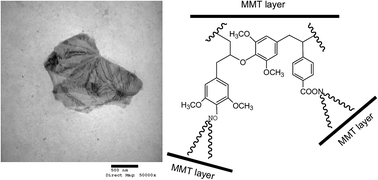

Introduction

The use of renewable natural fibers (NFs) like wood, bamboo, straw, cereal, cotton, hemp, jute, and so on, as fillers or reinforcements in composites to reduce the need of fossil products has attracted much attention.1–3 Compared with conventional inorganic fibers, NFs possess many advantages like abundance, a relatively low cost, biodegradability, low density, and high specific strength.4 The NF reinforced composites have been widely used in various applications such as fencing, flooring, decking, railing, and so on in recent years.5 Although there are thousands of types of NF, the primary chemical components of NFs are almost the same. NFs all consist of cellulose, hemicelluloses, and lignin, forming a very complex structure in their cell wall.6 Cellulose is the main component in a linear polysaccharide form with high regularity and a high degree of crystallinity, giving the NF its characteristic strength.7 Hemicelluloses consist of heteropolysaccharides made up of pentoses, hexoses and sugar acids with a random and amorphous structure.8 Lignin is a phenol propane-based amorphous resin that fills the spaces between the polysaccharide fibers, occupying mainly the middle lamella of NF cells and providing shape and structure to the NF.9 These constituents differ among NF species and affect the physical, mechanical, and thermal properties of the resulting polymer composites.10

With the development of nanotechnology, the incorporation of layered silicate nanoclays as in situ reinforcements has been intensively investigated on the modification of NF products in recent years.11–14 Owing to the nanoscale dimensions of nanoclays, the modified products exhibit dramatic improvements in modulus, strength, gas barrier property, and flame resistance even if the filler amount is small.15 Besides, nanoclays are also a promising enhancer for polymers by increasing the crystallinity, strength and thermal stability.16–18 Among nanoclays, montmorillonite (MMT) is one of the most widely used types because of its natural abundance and beneficial properties including its high cationic exchange capacity, high specific surface area, and large aspect ratio etc.19 The simple chemical composition of layered MMT is Al2O3·4SiO2·3H2O and its mean layer thickness is 0.96 nm. To achieve high performance in modified NF composite products, it is essential to completely separate MMT into individual silicate layers.20 Compared with natural sodium-MMT (Na-MMT), organo-montmorillonite (OMMT) has a better effect on improving the physical and mechanical properties of composites because of its large interlayer distance and compatibility with non-polar polymers.21 In previous studies,22,23 Na-MMT and didecyl dimethyl ammonium chloride (DDAC) were used to modify WF in a two-step impregnation process to form OMMT in situ, also scanning electron microscopy (SEM) and transmission electron microscopy (TEM) were used to confirm the existence of OMMT inside the WF. As a result, the properties of the modified WF and its composite with poly(lactic acid) were highly improved.

As mentioned above, the incorporation of OMMT into NFs can improve the physical and mechanical properties of NFs, which is beneficial for preparing high-performance NF based composites. However, the interaction mechanism of OMMT with the NF components is unknown and the properties of OMMT-modified NF components have not been studied yet. Therefore, this study further investigated the interaction mechanisms between OMMT and the NF components, which was helpful to understand the reinforcing mechanism and efficient use of NF. Considering that the hemicellulose flour (HF) is impossible to completely separate from the NFs at present, it was replaced by xylan due to the large share of xylan (about 80–90%) in hemicelluloses,24 while the CF and LF were separated, by a nitric acid–methanol method and ball-milling coupled with a dioxane extraction method, from poplar WF, which is a fast growing wood species widely available in northern China. The NF components were modified with OMMT by the same two-step method. The thus-modified NF components were characterized by X-ray diffraction (XRD), Fourier transform infrared spectroscopy (FTIR), SEM, and TEM studies. The moisture adsorption, modulus of elasticity, and hardness of the modified and neat NF components were tested. To understand the reaction mechanisms between OMMT and the NF components, 13C solid-state nuclear magnetic resonance (13C NMR) analysis was carried out.

Materials and methods

Materials

WF of poplar (Populus tomentosa Carr.) with a mesh size of 40 to 60 was kindly donated by Xingda Wood Flour Company, Gaocheng, China. Xylan, and was used as a representative of HF, which was purchased from Nanjing Oddfoni Biological Technology Co., Ltd, Nanjing, China. It is a white powder with an average diameter of 38 μm. Na-MMT (PGV; Nanocor Inc., USA) was purchased from Nanocor Inc., USA. It is a hydrophilic clay powder with a specific gravity of 2.6 and its pH at 5% w/w in distilled water is 9–10. The mean interlayer distance of Na-MMT is 1.417 nm. The cation exchange capacity of Na-MMT is 145 mmol/100 g. The modifier used in this study was DDAC (70%), which was purchased from Shanghai 3D, Bio-chem Co., Ltd, Shanghai, China. The reagents used in this study were all bought from Tianjin Jinke Fine Chemical Institute, China.

Preparation of CF and LF

The CF and LF were prepared according to TAPPI standards25 and the protocol that Holtman et al.26 used in wood chemistry.

Prior to separation, WF was extracted in a Soxhlet extractor with a mixture of 1[thin space (1/6-em)]:[thin space (1/6-em)]2 ethanol and toluene (v/v) for 6 h, followed by a second extraction with ethanol for 4 h to remove the extractives. The extracted WF was dried in an oven at 103 ± 2 °C to reach a constant weight. The yield of the extracted WF was about 97%.

The CF was separated as follows: 5 g of extracted WF was placed in a 1000 mL beaker, in which 25 mL of HNO3 (68%) and 100 mL of ethanol were added. The mixture was refluxed under shaking in a water bath at 100 °C for 60 min. After that, the sample was filtered using a G2 sand core funnel. The 60 min refluxing cycle was repeated 4 times. Finally, the sample was washed with hot water until it reached a neutral pH and was then washed with ethanol. The sample was dried in an oven at 103 ± 2 °C until the weight was constant. The yield of the CF was about 40%. The average diameter and length of the CFs were about 62.17 and 500 μm, respectively.

The LF was separated as follows: extracted WF was submerged in toluene and subjected to 48 h of milling at 250 rpm using agate balls with frequency conversion dual planetary ball-mill equipment (Chunlong Instrument SHQM-2L, China). The milled WF was extracted with a mixture of 1,4-dioxane and water (v/v) at a ratio of 9[thin space (1/6-em)]:[thin space (1/6-em)]1. After filtration, the liquor was collected and dried in an oven at 35 ± 2 °C. The residue obtained was dissolved in a solution of acetic acid and water (9[thin space (1/6-em)]:[thin space (1/6-em)]1, v/v) and then precipitated with water. The precipitated residue was separated by centrifugation. The residue was then dissolved in 1,2-dichloromethane and ethanol (1[thin space (1/6-em)]:[thin space (1/6-em)]2, v/v) and precipitated with diethyl ether to obtain the purified LF. The sample was dried in an oven at 35 ± 2 °C to reach a constant weight. The yield of the LF was about 8%. The average diameter of the LFs was about 47.06 μm.

Modification of NF components

The modification process of the NF components was carried out in a two-step method as described in a previous study.21 In detail, the NF components were first placed in a beaker in a treating tank and were vacuum-treated at 0.01 MPa for 30 min. Then, a 0.5% concentration Na-MMT dispersion was allowed to completely submerge these flours and was pressure treated at 0.6 MPa for 1 h. The average particle size of the Na-MMT dispersion was 634.8 nm as determined by a Laser Particle Analyzer (Delsa™ Nano C, Beckman coulter, USA). The impregnated materials were filtrated and vacuum dried at 60 ± 2 °C for 24 h. The weight percent gains of these flours ranged from 0.15–0.35%. In the second step, the treated NF components were placed in a beaker and submerged in a DDAC solution to form OMMT. The concentration of DDAC was calculated according to the concentration of Na-MMT at a ratio of the cation exchange capacity of Na-MMT of 0.7[thin space (1/6-em)]:[thin space (1/6-em)]1, which was 0.26%. The beaker was placed in a water bath at 60 °C for 2 h with mechanical stirring at a speed of 80 rpm. The modified flours were then filtrated and vacuum dried at 60 ± 2 °C to constant weight. Compared to the first step, there were additional 3–5% weight gains for the NF components.

Characterization of NF components

XRD analysis of the samples was carried out on an X-ray 6000 (Shimadzu, Japan) machine. The X-ray beam was Cu-Kα (λ = 0.1540 nm) radiation, operated at 40 kV and 30 mA. The scanning rate was 2° s−1 and 2θ ranged from 2° to 40° with the rotational speed of 30 rpm.

The chemical groups of the samples were examined by Fourier transform infrared spectroscopy (FTIR, BRUKER Vertex 70v, Germany), and potassium bromide (KBr) was used to collect the background. The air-dried sample powder was mixed with KBr in a weight ratio of 1[thin space (1/6-em)]:[thin space (1/6-em)]100 before spectrum collection. All spectra were displayed in wavelengths ranging from 400 to 2000 cm−1.

The morphologies of the samples were observed with SEM (Hitachi S-3400, Japan), operating at an acceleration voltage of 5 kV, after sputter-coating with gold.

Sections of the samples were observed with TEM (JEOL TEM 1010, Japan), used for visualizing the distribution of OMMT. Prior to testing, all the samples were embedded in an epoxy resin and cut transversely with an ultra-microtome knife to obtain ultrathin (50 nm) sections.

Moisture adsorption test

All the samples were dried in an oven at 103 ± 2 °C until they reached a constant weight prior to the moisture adsorption test. Four specimens from each unmodified and modified NF components (about 2 ± 0.01 g) were placed in a tinfoil box and then kept in a desiccator filled with distilled water at 23 ± 2 °C for 8 days. The weights of the NF components were recorded periodically and the weight percent gains (WPGs) were calculated to denote the moisture adsorption capacity.

Nanoindentation

The nanoindentation tests of the NF components were carried out using a Nano Indenter II (MTS Systems Corp., USA) with a diamond tip, as did Xing et al.27 All the samples were embedded in an epoxy resin prior to testing. The top faces were cross-sectioned and smoothed with a knife, and the specimens were then mounted on an iron plateau. Once the tip contacted the sample surface, a constant strain rate of 0.05 s−1 was applied until an indentation depth of 2 μm was reached. The maximum loading force was held for 10 s prior to unloading. A total of 10 indents were made on the samples, and the modulus of elasticity and hardness of the NF components were obtained.

Interaction mechanism analysis

13C NMR experiments were carried out to further understand the interaction mechanisms between OMMT and the NF components using a 400 MHz WB Solid-State NMR spectrometer (Bruker Avance III, Switzerland) at 100.6 MHz. Each dry sample was packed in a 4 mm zirconium oxide rotor. The rotation frequency was 5 kHz. The acquisition was performed with a CP pulse and a 2 s delay between repetitions. The temperature was kept at 28 °C.

Results and discussion

XRD analysis

Fig. 1a shows the XRD patterns for the neat NF components. CF exhibited peaks at 2θ = 17°, 22.5° and 35°, corresponding to a typical crystalline structure of native cellulose I at the crystal plane diffraction peaks of (101), (002), and (040), respectively.28 HF bared a broad peak at around 2θ = 20° due to some short-range order in the amorphous polymeric structures.29 LF showed a very broad peak at 2θ = 5–35°. Thus, suggesting that LF had an amorphous structure.
image file: c5ra12245g-f1.tif
Fig. 1 XRD patterns of neat (a), Na-MMT modified (b) and OMMT modified (c) NF components.

After treating with Na-MMT, two new peaks appeared in all the samples at around 2θ = 6° and 19° which were related to the (001) and (200) planes of the crystalline structure of MMT (Fig. 1b). By calculation using the (001) lattice plane diffraction peak with Bragg’s equation, the interlayer distance of MMT could be obtained.30 The value was 1.417 nm which is equal to neat Na-MMT, suggesting the presence of Na-MMT.

After the second modification step, there were some differences in the XRD results (Fig. 1c). In the samples of OMMT modified CF and HF, the peaks shifted to low regions at 2θ = 3.46° and 3.32°, corresponding to the interlayer distances of 2.551 and 2.568 nm, respectively. These values are larger than neat Na-MMT (1.417 nm) and DDAC modified Na-MMT (2.323 nm).21 The enlarged interlayer distance suggested a successful intercalation of DDAC between the MMT layers during the second modification process. Accordingly, OMMT was synthesized in CF and HF. Besides, the CF and HF were also contributing factors to the broadening of the MMT layers, suggesting that the OMMT underwent partial intercalation with CF and HF. But in the OMMT modified LF sample, the two peaks at around 2θ = 6° and 19° disappeared. Liao and Wu31 added 7 wt% of clay into WF/poly(ethylene-octene) elastomer and also found no apparent peaks. They suggested that the clay had been fully exfoliated into individual and collapsed silicate layers, thus no regular crystalline structure could be obtained from the XRD patterns. Similarly, the OMMT in LF might have been completely exfoliated and homogeneously dispersed in LF. This might be expected because LF is the most hydrophobic component in NF and is more compatible with non-polar OMMT than other components. Due to the high crystallinity of CF, OMMT layers were difficult to effectively intercalate with CF. Thus, OMMT modified CF exhibited the narrowest interlayer distance. The modification process did not change the crystal structure of CF but affected HF significantly. The magnitude of the broad peak around 2θ = 20° decreased a lot, indicating reaction of HF during the OMMT modification.

FTIR analysis

The FTIR results give evidence to identify the chemical constituents and structures of the NF components as well as the existence of OMMT. In Fig. 2a, LF does not bare the peak at 1240 cm−1 ascribed to the C–O ester stretching vibration of hemicelluloses found for HF.32 For both the CF and LF samples, the peak at 1735 cm−1 corresponding to the ester C[double bond, length as m-dash]O stretching vibration was weak,33 indicating the removal of HF, due to the separation of the NF components. The neat CF and HF samples did not bare peaks at 1267 cm−1 (C–OH stretching of phenolic group), 1460 cm−1 (C–H bending of methyl and methylene groups in lignin), 1510 and 1610 cm−1 (C[double bond, length as m-dash]C stretching of aromatic ring skeleton), and 1121 cm−1 (aromatic C–H deformation),34 indicating the absence of lignin. As for the LF sample, the cellulose characteristic peaks including the C–O–C stretching and asymmetric stretching vibrations at 1066 and 1114 cm−1, CH2 or C–OH vibrations at 1312 cm−1, C–H bending at 1371 and 1338 cm−1, and intermolecular –OH bond bending at 1430 cm−1,35 were sharply weakened due to the absence of cellulose. Both the CF and HF samples retained peaks at 894, 972, 1042, and 1168 cm−1, indicating the presence of β-glycosidic linkages between sugar units.36 The peak at 1647 cm−1 was associated with absorbed water due to the strong water affinity of CF and HF.32 It should be mentioned that pure xylan contained very few ester bonds, therefore, for the neat HF sample, the peak at 1735 cm−1 was not obvious.37
image file: c5ra12245g-f2.tif
Fig. 2 FTIR spectra of neat (a), Na-MMT modified (b) and OMMT modified (c) NF components.

The FTIR results of the Na-MMT treated NF components are shown in Fig. 2b. Compared with Fig. 2a, all the samples retain their own characteristic peaks, indicating that the Na-MMT treatment did not influence the main chemical structures of these materials. Besides, two new peaks appeared at 460 and 515 cm−1 which were attributed to Al–O–Si and Si–O deformations,38 indicating the existence of MMT. Also, in the Na-MMT modified LF sample, a peak at 1033 cm−1 related to Si–O–Si stretching emerged.39 However, this peak was overlapped by the C–O–C stretching in the Na-MMT treated CF and HF samples. The peaks at 1647 cm−1 sharply increased after modification with Na-MMT, indicating more absorbed water in the Na-MMT treated samples than in the original ones due to the hydrophilic character of Na-MMT.

The FTIR results of the OMMT modified NF components are shown in Fig. 2c. Compared with Fig. 2b, the two new peaks at 460 and 515 cm−1 have remained. Also, in the OMMT modified LF sample, the peak at 1033 cm−1 was still apparent. But the peak at 1647 cm−1 had decreased, suggesting that the hydrophilic Na-MMT had been transformed into hydrophobic OMMT. A peak at 1735 cm−1 was found in the HF sample after modifying with OMMT, indicating that some –COOH groups had formed during HF hydrolyzation, which may be caused by oxidation of –CH2OH groups.40

SEM analysis

The SEM images of neat, Na-MMT modified and OMMT modified, NF components are shown in Fig. 3. The structures of the neat materials can be clearly seen from Fig. 3a–c. For example, the surface of the neat CF appears very clean (Fig. 3a). For the CF and HF samples containing Na-MMT (Fig. 3d and e), there were some flocculated substances precipitated on the surfaces of CF and HF (see arrows in Fig. 3d and e), which might be Na-MMT. Na-MMT modified LF (Fig. 3f) did not show much difference compared with its original appearance. LF has a much rougher surface and smaller particle size than CF and HF, which can absorb more MMT on its surface or in the micro-pores. The morphologies of the NF components were different, which might affect the impregnation of MMT. After the second modification, some differences could be observed in the CF and HF samples while LF again remained almost the same. The OMMT particles were rarely found attached on the LF surface (Fig. 3i), indicating that the intercalated OMMT layers might have evenly distributed into the LF matrix. However, for the OMMT modified CF sample, big particles of OMMT were attached to CF (Fig. 3g), but they seemed to be separated rather than agglomerated. The HF particles after modification (Fig. 3h) seemed to become more rigid compared with neat HF. Some small protuberances (see arrow in Fig. 3h) could be the micro-sized OMMT particles encapsulated by the HF matrix.
image file: c5ra12245g-f3.tif
Fig. 3 SEM images of neat (a–c), Na-MMT modified (d–f) and OMMT (g–i) modified NF components: CF (a, d and g), HF (b, e and h), LF (c, f and i).

TEM analysis

The high-magnification TEM images illustrate the dispersion and location of OMMT in the NF components. From Fig. 4a–c, the structures of neat CF, HF and LF can be seen clearly.
image file: c5ra12245g-f4.tif
Fig. 4 TEM images of neat (a–c), Na-MMT modified (d–f) and OMMT (g–i) modified NF components: CF (a, d and g), HF (b, e and h), LF (c, f and i).

In both the Na-MMT and OMMT modified CF samples (Fig. 4d and g), a great amount of MMT layers stacked with thick MMT agglomeration were attached to the CF surface due to the high crystallinity of CF. The MMT attached to the CF embrittled the CF, resulting in breakage of the embedding agent of epoxy resin. For the HF and LF samples containing Na-MMT (Fig. 4e and f), most of the Na-MMT layers were not individually separated, but existed in small gathered particles. After modifying with the DDAC modifier, although some of the MMT particles could also been found in HF, a large amount of intercalated OMMT could be seen (Fig. 4h). And for the LF sample, it was interesting that OMMT was highly exfoliated in LF (Fig. 4i). A single silicate layer has a thickness of 1 nm and an average length of 100 nm.21 But the length of OMMT in LF was much longer than that value, which could be explained by hydroxylated edge–edge interactions of the OMMT layers which promoted silicate layer flocculation. The TEM analysis confirmed the assumption that the OMMT was intercalated with an amorphous constitution in the NF cell wall while LF was the main component for the exfoliation of OMMT.

Moisture adsorption

The moisture adsorption tests for the neat, Na-MMT modified and OMMT modified CF, HF, and LF samples are shown in Fig. 5. All the samples adsorbed moisture fast, initially, and then slowed down to reach a constant value. On comparing the moisture contents at each stage and the moisture adsorption speeds of all the samples, irrespective of adding MMT, the following order is clear: HF > CF > LF. This was expected since LF was the most hydrophobic component, while HF was the most hydrophilic component. The equilibrium moisture content of CF was lower than HF but a little higher than LF. It is known that CF is a kind of hemi-crystal polymer with lots of hydroxyl groups (more than LF). However, in the crystal region, the hydroxyl groups are mostly bonded with each other, which results in less accessible hydroxyl groups to adsorb moisture. The results of the moisture adsorption study correlate with the FTIR analysis.
image file: c5ra12245g-f5.tif
Fig. 5 Equilibrium moisture contents of neat, Na-MMT modified and OMMT modified NF components.

With the incorporation of Na-MMT, all the NF components showed big improvements in the equilibrium moisture content with values of 16.00%, 53.21%, and 11.29% for CF, HF and LF, which gained about 5%, 3%, and 0.2%, respectively. It was reasonable to expect this to be due to the high hydrophilic character of Na-MMT. In the SEM analysis, we found lots of Na-MMT precipitated on the surface of CF and HF. Therefore, their moisture contents increased significantly. But for LF, the moisture content only changed a little, probably because the silicate filler was well encapsulated by the hydrophobic LF.

After modification, it was apparent that OMMT restricted the hygroscopicities of the HF and LF samples, especially HF with a final moisture content of 46.09%, which showed a 4% and 7% loss of weight compared to neat and Na-MMT modified HF. Seethamraju et al.41 added OMMT into a Surlyn matrix by using a copolymer of vinyl alcohol and ethylene as a dispersant and found that high dispersion and interaction between OMMT and the polymer matrix could reduce the water vapor permeability of the composite. Therefore, the results of the decreased moisture content could be also associated with the intercalated or exfoliated structure of OMMT in HF and LF, causing a barrier effect on moisture adsorption. However, the moisture content of the OMMT modified CF sample was higher than neat CF at each stage, though these values were lower than Na-MMT treated CF. This might be explained by agglomeration of OMMT on the CF surface, which could not reduce the moisture content. Adversely, the OMMT itself could adsorb some moisture through capillaries in the inner space of OMMT.

Nanoindentation

The nanoindentation results for the mechanical properties of the neat, Na-MMT modified and OMMT modified, NF components are summarized in Table 1. Irrespective of deviations, the modulus of elasticity of Na-MMT treated CF, HF, and LF were slightly increased from 1.27 GPa to 1.65 GPa, 0.34 GPa to 0.37 GPa and 2.33 GPa to 2.48 GPa, respectively. Simultaneously, the hardness values increased from 0.12 GPa to 0.14 GPa, 0.03 GPa to 0.04 GPa and 0.21 GPa to 0.24 GPa, respectively, suggesting little influence of the Na-MMT treatment on the mechanical properties of the NF components. This was because Na-MMT did not disperse well into the NF components but gathered on their surfaces, based on the SEM and TEM results. OMMT modified HF and LF exhibited higher values of the modulus of elasticity and hardness than neat and Na-MMT treated HF and LF, especially the LF group with relatively high modulus of elasticity and hardness values of 4.13 GPa and 0.54 GPa, which indicated that the intercalated or exfoliated silicate layers in HF and LF significantly improved the mechanical properties of HF and LF. Gurunathan et al.42 added OMMT into a polyurethane matrix and tested the tensile property of the composite. In their study, with the addition of clay from 0 to 2 wt%, the Young’s modulus of the composites increased from 22.3 MPa to 134.8 MPa. Our results are consistent with theirs. These enhancements of the mechanical properties are associated with the interfacial interaction between OMMT and the NF polymer. The strong bond interaction allowed load transfer capability from the NF polymer to the stiff OMMT and then reduced the slippage of the NF molecular chains during compression, thus resulting in improvement in the mechanical properties. The modulus of elasticity and hardness of OMMT modified CF were 1.88 GPa and 0.16 GPa, which showed little change compared with neat or Na-MMT treated CF. As confirmed by the SEM and TEM analyses, lots of OMMT gathered on the surface of CF. Consequently, the filler–filler interaction was effective over the filler–polymer interaction, which was helpless to the improve the mechanical properties.
Table 1 Mechanical properties of neat, Na-MMT modified and OMMT modified NF componentsa
Labels Mechanical properties
Modulus of elasticity (GPa) Hardness (GPa)
a Values in parentheses are standard deviations of 10 replicates.
CF 1.27 (0.06) 0.12 (0.04)
Na-MMT/CF 1.65 (0.12) 0.14 (0.01)
OMMT/CF 1.88 (0.33) 0.16 (0.03)
HF 0.34 (0.04) 0.03 (0.01)
Na-MMT/HF 0.37 (0.17) 0.04 (0.01)
OMMT/HF 1.87 (0.12) 0.10 (0.02)
LF 2.33 (0.44) 0.21 (0.08)
Na-MMT/LF 2.48 (0.53) 0.24 (0.04)
OMMT/LF 4.13 (0.32) 0.54 (0.08)


13C NMR analysis

The 13C NMR analysis was carried out to further understand the interaction mechanisms between OMMT and the NF components. The spectra of the neat, Na-MMT treated, and OMMT modified NF components are shown in Fig. 6. The chemical shift assignments of the spectra of the NF components and OMMT were made on the basis of literature data.40,43–49 Overall, CF, HF and LF gave characteristic signals in the 13C NMR spectra as shown in Fig. 6a–c, respectively. In these figures, the peaks of the Na-MMT treated NF components were very similar to those of the neat NF components, showing that no reactions were found between Na-MMT and the NF components.
image file: c5ra12245g-f6.tif
Fig. 6 13C NMR spectra of neat, Na-MMT treated and OMMT modified CF (a), HF (b), and LF (c).
Cellulose. As shown in Fig. 6a, the peaks assigned to the carbons in the cellulose backbone at 103.87 (C1), 87.80 (C4 of crystalline CF), 83.04 (C4 of amorphous CF), 73.71, 70.89 (C2, C3 and C5), 64.13 (C6 of crystalline CF), and 61.40 (C6 of amorphous CF) ppm, respectively,43 were evidently detected in both neat CF and OMMT modified CF. Two small signals at 20.36 and 13.50 ppm, which were related to the –CH3 groups in the acetyl groups of hemicellulose residues were also observed in the neat CF sample.

After modifying with OMMT, a new small peak at 28.79 ppm existed, which was associated with the long alkyl chains from C2 to C10 of OMMT.44 A second peak at 22.08 ppm was apparent in the OMMT modified CP sample, either due to the C11 methylene group of OMMT overlapping the –CH3 group signal of CF, or some reaction which had happened. These two peaks suggest the existence of OMMT in CF. However, it was not bonded to the molecular chains of CF because no extra changes were found.

Hemicelluloses. Fig. 6b revealed that there were four important groups in neat HF, namely, (1,4)-β-D-Xylp, (1,4)-α-D-Xylp, O-acetyl-β-D-Xylp, and 4-O-methyl-α-D-GlcpA groups. The peaks detected at 101.26 (C1), 72.30 (C2, C3 and C4), and 63.65 (C5) ppm are characteristic of D-Xylp units.43 The signals at 96.48 and 91.69 ppm proved that the linkage of HF had both (1,4)-β-D-Xylp and (1,4)-α-D-Xylp units.45 Some weak peaks were found at 103.07 and 99.55 ppm, indicating a small amount of O-acetyl-β-D-Xylp units at the positions of C3 and C2, respectively.43 A peak at 58.46 ppm corresponding to C4 of 4-O-methyl-α-D-GlcpA was also detected in the spectra analysis, the group was linked at the positions of C3 and C2 of the xylan backbone.40 Based on the NMR results, the structure of neat HF before modifying with OMMT mainly consisted of both (1,4)-β and (1,4)-α-D-Xylp units with some O-acetyl groups at the positions of C3 and C2, and 4-O-methyl-glucuronic acid groups linked at the positions C3 and C2 of the xylan backbone.

Compared with neat HF, most of the signals in the OMMT modified HF sample were detected. However, there were four differences: (1) the intensity of the peaks at 96.48 and 63.65 ppm decreased, indicating breakage of the short-ranged (1,4)-β-D-Xylp linkage and ring-opening of the D-Xylp units; (2) the signals at 103.07 and 99.55 ppm disappeared, which was caused by the removal of the unstable O-acetyl units from the HF backbone; (3) the peak at 58.46 ppm disappeared and a new small peak at 81.03 ppm was found, suggesting the reaction of 4-O-methyl-α-D-GlcpA and formation of a small amount of 4-O-methyl-α-D-GalUA during hydrolyzation;46 (4) the peak at 101.26 was shifted to a higher chemical shift at 102.17 ppm, due to overlapping between the generated –COOH groups of the formed COON(CH3)2(C12H26)2, and the cationic chains in OMMT. Thus, some HF molecular chains entered into the gallery of OMMT, enlarging the interlayer distance of OMMT. Scheme 1 shows the interaction mechanism of OMMT with HF, and can be described as followed: a number of short-ranged (1,4)-β-D-Xylp linkages of HF broke, liberating more end hydroxyl groups. Under the DDAC alkaline conditions, the end hydroxyl groups of HF became an open-ring structure and were then oxidized to carboxyl groups. Simultaneously, some unstable units were removed from the HF main chains. The carboxyl groups were easily ionized and reacted with the ammonium cationic chains in OMMT, thus enlarging the interlayer distance of OMMT. It should be mentioned that the differences between neat HF and OMMT modified HF were ambiguous due to the low concentration of OMMT (0.5%).


image file: c5ra12245g-s1.tif
Scheme 1 Suggested formation of HF intercalated OMMT structures.
Lignin. The structures of LF were more complicated than CF and HF. As shown in Fig. 6c, the spectrum of LF can be divided into several regions: (1) the broad region between 155 and 110 ppm was specific for the aromatic carbons of LF; (2) the small peaks from 90 to 60 ppm were β-O-4 linkages for LF benzene units; (3) the signal at 55 ppm was ascribed to the C–H in the methoxyl side groups of LF; (4) the signals around 28 ppm were associated with the alkyl chains of LF.47–49 The regions of 155–110 and 90–60 ppm were used to characterize the structures of neat LF. Since the separation of LF was carried out by a ball-milling process, some polysaccharides of HF may remain. So some small signals at 174 ppm and 22 ppm, assigned to the carboxylic groups and methyl groups of the acetyl functions of hemicellulose residues, were found.

After modifying with OMMT, the signals at 132 and 128 ppm related to the hydroxybenzoate substructures and hydroxycinnamyl alcohol end groups disappeared and a new strong peak at 130 ppm appeared. Thus, the phenolic carboxyl groups and phenolic hydroxyl groups of LF had reacted with OMMT. Besides, the signal at 73 ppm (β-O-4 linkage) decreased, suggesting the cleavage of lignin, which made more phenolic hydroxyl groups available. Moreover, a signal at 170 ppm appeared which was induced by the reaction between the carboxyl groups and the ammonium salt. Thus, the reaction between LF and OMMT can be concluded as follows (shown in Scheme 2): during modification, some molecular chains of LF broke and left more phenolic hydroxyl groups and carboxyl groups available, which reacted with the ammonium cationic chains of OMMT. Therefore, the OMMT layers were bonded onto LF. Owing to the network structure of LF, the OMMT layers exfoliated into individual sheets and uniformly dispersed into the LF matrix.


image file: c5ra12245g-s2.tif
Scheme 2 Suggested formation of LF exfoliated OMMT structures.

Conclusions

For the different NF components, although their different morphologies might have an influence on the MMT dispersion, a more important factor should be the different chemical structures of the NF components. OMMT mainly reacted with the amorphous constituents of the NF cell wall, namely, it can be intercalated with HF while completely exfoliated in LF. The reactions took place under basic conditions at the end carboxyl or phenolic hydroxyl groups of HF and LF chains. Due to the successful reactions, a decrease in the moisture contents and an increase in the mechanical properties were found for both the OMMT modified HF and LF samples. However, no reactions were found to occur between OMMT and CF, a large amount of OMMT just physically absorbed and attached to the CF surface, which had a negative effect on the reduction of the moisture adsorption behaviour and had little effect on the improvement of the mechanical properties.

Acknowledgements

This study was financially supported by the National Natural Science Foundation of China (No. 31170524).

References

  1. D. Roy, M. Semsarilar, J. T. Guthrie and S. Perrier, Chem. Soc. Rev., 2009, 38, 2046–2064 RSC.
  2. M. N. Mirvakili, S. G. Hatzikiriakos and P. Englezos, ACS Appl. Mater. Interfaces, 2013, 5, 9057–9066 CAS.
  3. J. Song, A. Tang, T. Liu and J. Wang, Nanoscale, 2013, 5, 2482–2490 RSC.
  4. P. Wambua, J. Ivens and I. Verpoest, Compos. Sci. Technol., 2003, 63, 1259–1264 CrossRef CAS.
  5. M. R. Pelaez-Samaniego, V. Yadama, E. Lowell and R. Espinoza-Herrera, Wood Sci. Technol., 2013, 47, 1285–1319 CrossRef CAS.
  6. A. K. Bledzki and J. Gassan, Prog. Polym. Sci., 1999, 24, 221–274 CrossRef CAS.
  7. M. Ibrahim, Cellulose, 2002, 9, 337–349 CrossRef CAS.
  8. F. Peng, P. Peng, F. Xu and R. Sun, Biotechnol. Adv., 2012, 30, 879–903 CrossRef CAS PubMed.
  9. T. Saito, R. H. Brown, M. A. Hunt, D. L. Pickel, J. M. Pickel, J. M. Messman, F. S. Baker, M. Keller and A. K. Naskar, Green Chem., 2012, 14, 3295–3303 RSC.
  10. R. Liu, Y. Peng and J. Cao, Compos. Sci. Technol., 2014, 103, 1–7 CrossRef CAS PubMed.
  11. C. Zhou, Z. Shen, L. Liu and S. Liu, J. Mater. Chem., 2011, 21, 15132–15153 RSC.
  12. C. Aulin, G. Salazar-Alvarez and T. Lindström, Nanoscale, 2012, 4, 6622–6628 RSC.
  13. D. L. Schrijvers, F. Leroux, V. Verney and M. K. Patel, Green Chem., 2014, 16, 4969–4984 RSC.
  14. S. P. Kumar, S. Takamori, H. Araki and S. Kuroda, RSC Adv., 2015, 5, 34109–34116 RSC.
  15. F. O. Cheng, T. H. Mong and R. L. Jia, J. Polym. Res., 2003, 10, 127–132 CrossRef.
  16. J. F. Timmerman, B. S. Hayes and J. C. Seferis, Compos. Sci. Technol., 2002, 62, 1249–1258 CrossRef CAS.
  17. N. A. Siddiqui, R. S. C. Woo, J. K. Kim, C. C. K. Leung and A. Munir, Composites, Part A, 2007, 38, 449–460 CrossRef PubMed.
  18. P. Chen, L. Jiang and D. Han, Small, 2011, 7, 2825–2835 CrossRef CAS PubMed.
  19. J. Wang, Q. Cheng, L. Lin, L. Chen and L. Jiang, Nanoscale, 2013, 14, 6356–6362 RSC.
  20. H. M. Park, X. Liang, A. K. Mohanty, M. Misra and L. T. Drzal, Macromolecules, 2004, 37, 9076–9082 CrossRef CAS.
  21. L. A. Utracki, M. Sepehr and E. Boccaleri, Polym. Adv. Technol., 2007, 18, 1–37 CrossRef CAS PubMed.
  22. R. Liu, S. Luo, J. Cao and Y. Peng, Composites, Part A, 2013, 51, 33–42 CrossRef CAS PubMed.
  23. R. Liu, Y. Peng and J. Cao, Ind. Crops Prod., 2014, 62, 387–394 CrossRef CAS.
  24. P. Mäki-Arvela, T. Salmi, B. Holmbom, S. Willför and D. Y. Murzin, Chem. Rev., 2011, 111, 5638–5666 CrossRef PubMed.
  25. Technical Association of the Pulp and Paper Industry, TAPPI Test Method T 203 om-99, TAPPI, Atlanta, Georgia, USA, 2004 Search PubMed.
  26. K. M. Holtman, H. M. Cheng, H. Jameel and J. F. Kadla, J. Wood Chem. Technol., 2006, 26, 21–34 CrossRef CAS PubMed.
  27. C. Xing, S. Wang, G. M. Pharr and L. H. Groom, Holzforschung, 2008, 62, 230–236 CrossRef CAS.
  28. H. Zhao, J. H. Kwak, Z. C. Zhang, H. M. Brown, B. W. Arey and J. E. Holladay, Carbohydr. Polym., 2007, 68, 235–241 CrossRef CAS.
  29. P. D. Carà, M. Pagliaro, A. Elmekawy, D. R. Brown, P. Verschuren, N. R. Shiju and G. Rothenberg, Catal. Sci. Technol., 2013, 3, 2057–2061 Search PubMed.
  30. H. M. Park, W. K. Lee, C. Y. Park, W. J. Cho and C. S. Ha, J. Mater. Sci., 2003, 38, 909–915 CrossRef CAS.
  31. H. T. Liao and C. S. Wu, Macromol. Mater. Eng., 2005, 290, 695–703 CrossRef CAS PubMed.
  32. M. Kačuráková, A. Ebringerová, J. Hirsch and Z. Hromádková, J. Sci. Food Agric., 1994, 66, 423–427 CrossRef PubMed.
  33. D. K. Shen, S. Gu and A. V. Bridgwater, J. Anal. Appl. Pyrolysis, 2010, 87, 199–206 CrossRef CAS PubMed.
  34. O. Derkacheva and D. Sukhov, Macromol. Symp., 2008, 265, 61–68 CrossRef CAS PubMed.
  35. X. Jiang, J. Gu, X. Tian, Y. Li and D. Huang, Bioresour. Technol., 2012, 104, 473–479 CrossRef CAS PubMed.
  36. F. Peng, J. Bian, J. Ren, P. Peng, F. Xu and R. Sun, Biomass Bioenergy, 2012, 39, 20–30 CrossRef CAS PubMed.
  37. O. Gordobil, I. Egüés, I. Urruzola and J. l. Labidi, Carbohydr. Polym., 2014, 112, 56–62 CrossRef CAS PubMed.
  38. W. Xue, H. He, J. Zhu and P. Yuan, Spectrochim. Acta, Part A, 2007, 67, 1030–1036 CrossRef PubMed.
  39. L. Bromberg, C. M. Straut, A. Centrone, E. Wilusz and T. A. Hatton, ACS Appl. Mater. Interfaces, 2011, 3, 1479–1484 CAS.
  40. Y. Luo, S. Shen, J. Luo, X. Wang and R. Sun, Nanoscale, 2015, 7, 690–700 RSC.
  41. S. Seethamraju, P. C. Ramamurthy and G. Madras, RSC Adv., 2014, 4, 11176–11187 RSC.
  42. T. Gurunathan, S. Mhanty and S. K. Nayak, RSC Adv., 2015, 5, 11524–11533 RSC.
  43. H. Kim and J. Ralph, Org. Biomol. Chem., 2010, 8, 576–591 CAS.
  44. M. A. Osman, M. Ploetze and P. Skrabal, J. Phys. Chem. B, 2004, 108, 2580–2588 CrossRef CAS.
  45. T. Yuan, S. Sun, F. Xu and R. Sun, J. Agric. Food Chem., 2011, 59, 10604–10614 CrossRef CAS PubMed.
  46. H. Tang, P. S. Belton, A. Ng and P. Ryden, J. Agric. Food Chem., 1999, 47, 510–517 CrossRef CAS PubMed.
  47. H. Yuzawa, M. Aoki, H. Itoh and H. Yoshida, J. Phys. Chem. Lett., 2011, 2, 1868–1873 CrossRef CAS.
  48. X. Du, G. Gellerstedt and J. Li, Plant J., 2013, 74, 328–338 CrossRef CAS PubMed.
  49. R. Kumar, F. Hu, P. Sannigrahi, S. Jung, A. J. Ragauskas and C. E. Wyman, Biotechnol. Bioeng., 2013, 110, 737–753 CrossRef CAS PubMed.

This journal is © The Royal Society of Chemistry 2015
Click here to see how this site uses Cookies. View our privacy policy here.