Multifunctional magnetic graphene hybrid architectures: one-pot synthesis and their applications as organic pollutants adsorbents and supercapacitor electrodes

Zheye Zhang, Yue Dong, Fei Xiao* and Shuai Wang*
School of Chemistry & Chemical Engineering, Huazhong University of Science and Technology, Wuhan, 430074, P. R. China. E-mail: chmsamuel@mail.hust.edu.cn; xiaofei@hust.edu.cn

Received 22nd June 2015 , Accepted 28th September 2015

First published on 28th September 2015


Abstract

A multifunctional magnetic 3D graphene/Fe3O4 architecture (GFA) has been fabricated by a facile and scalable one-pot self-assembled strategy through hydrothermal treatment of a mixed aqueous precursor solution of graphene oxide (GO) and Fe3O4 nanoparticles (NPs). Benefiting from the 3D porous structure and synergistic effects of the assembled graphene nanosheets and Fe3O4 NPs, the resultant GFA exhibits excellent adsorption capacities of not only organic dyes such as methylene blue (MB), but also toxic solvents such as toluene and chloroform, and improved electrochemical capacitive performances in comparison with pristine graphene architectures and Fe3O4 NPs. The impressive results presented here may have high impact on the future fabrication of functional graphene based architectures for practical applications.

Introduction

Graphene, a single layer of carbon atoms patterned in a hexagonal lattice, has attracted great attention all over the world due to its unique two-dimensional (2D) structure, excellent electronic and mechanical properties.1–4 Assembly of 2D graphene nanosheets into 3D porous architectures has been recognized as one of the most effective strategies to realize the practical applications of graphene materials. These 3D architectures exhibit high specific surface areas, strong mechanical strengths and fast mass and electron transport kinetics due to the combination of 3D porous structures and the excellent intrinsic properties of graphene.5–11 Furthermore, tremendous efforts have been devoted to the development of 3D porous graphene hybrid architectures modified with functional nanomaterials, which have potential applications in catalysis, sensor, energy storage and environmental protection fields.12–16 Among various approachs of fabricating graphene hybrid architectures, self-assembly has been considered as one of the most powerful techniques for integrating graphene composites into macroscopic level and provides new chances to produce 3D graphene hybrid architectures with industrial interests.5,12,13

Fe3O4 nanoparticles (NPs) as a functional nanomaterial has gained much interest because of their magnetic properties, low toxicity, and biocompatibility in physiological environments.17,18 Incorporating Fe3O4 NPs into graphene nanosheets will impart desirable magnetic properties to the graphene, making the composites promising for a variety of applications including biomedicine, catalysis, energy storage, and environmental remediation.19–23 However, most of them were synthesized by in situ growth, which often lacks good control over the reaction process. Furthermore, the multi-step process restricts the scalable production of graphene/Fe3O4 composites. Inspired by the attractive 3D porous structure and widespread applications of 3D graphene hybrid architectures, it is desired to homogeneously incorporate the Fe3O4 NPs into graphene structures via a facile and scalable method to form 3D graphene/Fe3O4 architectures.

Herein, we report a facile yet scalable and environmental friendly one-pot hydrothermal self-assembly approach for the fabrication of multifunctional magnetic 3D graphene/Fe3O4 architectures (GFAs) and explored its environmental and energy applications as superior adsorbents and high-performance supercapacitor electrodes. Considering that dyes and toxic solvents, which have been usually used in industries, are two kinds of major contaminations in water, in this work, we choose the methylene blue (MB) and common organic solvents as model probes. As a result, the as-prepared magnetic GFAs exhibit excellent capability for the adsorption of MB (100 mg g−1) and organic solvents such as toluene and chloroform (11 to 27 times of its own weight), and can be repeatedly used for many times without obvious performance degradation. Furthermore, as an active electrode material for supercapacitor, the GFAs can also achieve a high specific capacitance (211.4 F g−1), acceptable rate capability, and remarkable cycling stability.

Experimental section

Synthesis of Fe3O4 NPs

Fe3O4 NPs were prepared based on the method reported before.24 In a typical synthesis, 0.86 mL of 12 M HCl aqueous solution was added to 25 mL deionized (DI) water, then 5.2 g FeCl3 and 2.6 g FeCl2·4H2O were dissolved into the solution. Finally, 250 mL of 1.5 M NaOH aqueous solution was dropwise added into the mixture under magnetic stirring. The black precipitation was obtained by centrifugation at 3000 rpm for 10 min at the first time, then the precipitation was collected, washed with DI water several times. After that, 250 mL of 0.01 M HCl solution was added to neutralize the anionic charges on the NPs. The Fe3O4 NPs were at last collected by centrifugation at 6000 rpm for 10 min and dried at 60 °C overnight.

Preparation of GFAs

Graphene oxide (GO) was synthesized from graphite powder according to Hummer's method.25 GFAs were prepared by adding a certain amount of Fe3O4 NPs into 2 mg mL−1 homogeneous GO aqueous dispersion (the mass ratio of GO to Fe3O4 is 1[thin space (1/6-em)]:[thin space (1/6-em)]1) under sonication for about 1 h. Then the mixture was sealed in a 50 mL Teflon-lined autoclave and maintained at 180 °C for 2 h. After the autoclave was naturally cooled to room temperature, a black gel-like 3D cylinder (i.e., GFA) was obtained. The size of GFAs can be freely adjusted by changing the volume or concentration of GO aqueous dispersion. 3D graphene architectures (GAs) were prepared under the same conditions. The as-prepared GAs and GFAs were finally freeze-dried overnight for following experiment.

Characterizations

The morphology and structure of the as-prepared samples were characterized with a field-emission scanning electron microscope (SEM, FEI, Nova NanoSEM 450) and transmission electron microscopy (TEM, FEI, Tecnai G2 20). X-ray diffraction (XRD) patterns were recorded using a diffractometer (X'Pert PRO, Panalytical B.V., Netherlands) equipped with a Cu Kα radiation source (λ = 1.5406 Å). Fourier transform infrared (FT-IR) spectra were obtained on Bruker VERTEX 70 FT-IR spectrophotometer (Germany). X-ray photoelectron spectroscopy (XPS) measurements were performed on VG ESCALAB 250 spectrometer with monochromatic Al Kα (1486.71 eV) X-ray radiation (15 kV and 10 mA) and hemispherical electron energy analyzer. The magnetic properties of the samples were investigated using a superconducting quantum interface device (SQUID) magnetometer (Quantum Design MPMS XL). The specific surface areas were measured with Micromeritics ASAP2020 Surface Area and Porosity Analyser and calculated using the Brunauer–Emmett–Teller (BET) equation. The optical absorption spectra of the samples were obtained using a UV-2550 spectrophotometer (Shimadzu, Japan).

Dye adsorption and recycling tests

Freeze-dried GAs, GFAs and Fe3O4 NPs were individually dispersed in 5 mL MB (C16H18ClN3S·3H2O, molecular weight: 373.9, analytical grade purity, from Sinopharm Chemical Reagent Co. Ltd) aqueous solution. The amounts of GAs, GFAs and Fe3O4 NPs were chosen as 3.33 mg mL−1 in the MB solution for each measure. The suspensions were stirred for 90 min in the dark at room temperature to achieve the adsorption and desorption equilibration. Then each MB suspension was recorded in the UV-vis spectrophotometer. The stability and regeneration ability of the GFAs were investigated by performing several adsorption–desorption study. Typically, 4 mg of GFA adsorbent was added to 4 mL of MB aqueous solution (50 ppm) under vigorous stirring at room temperature for 20 min. After magnetic separation, the supernatant dye solution was discarded and the adsorbent alone was used. Then the MB-adsorbed GFA adsorbent was added to 4 mL of ethanol and stirred for 10 min. Finally, the adsorbent was collected using a magnet and reused. The solution was analyzed by recording the UV-vis spectrum of MB at the maximum absorbance of 665 nm.

Organic solvents-uptake experiments

The organic solvents-adsorbent capacity of the GFAs were determined by weight measurements. The weighed samples were put into different kinds of organic solvents (pure) and taken out by tweezers after 2 h. After removing the organic solvent on the surface of the samples with filter paper, the samples were weighed again. The organic solvent adsorption values were calculated from the differences of mass.

Electrochemical measurements

All the electrochemical measurements were performed with a CHI 760E electrochemical workstation (CH Instruments Inc. US). For single electrode tests, a conventional three electrode system was adopted. The as-obtained GAs and GFAs were cut into pieces, and directly used as the working electrode. To prepare the Fe3O4 electrode, Fe3O4, acetylene black and polytetrafluoroethylene (85[thin space (1/6-em)]:[thin space (1/6-em)]10[thin space (1/6-em)]:[thin space (1/6-em)]5, w/w) were mixed in absolute ethanol and the resulting mixture was pressed on macroporous nickel current collector under 12 MPa. The gauze platinum and saturated calomel electrode (SCE) were choosen as counter and reference electrode, respectively. A 0.5 M Na2SO4 aqueous solution served as electrolyte at room temperature.

Results and discussion

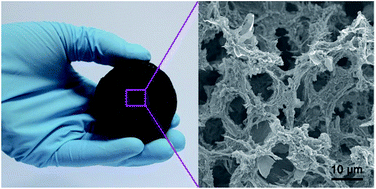
The fabrication process for 3D GFAs is illustrated in Scheme 1. As is known, GO is considered as an excellent surfactant with a largely hydrophobic basal plane and hydrophilic edge to disperse many other nanomaterials in water homogeneously.26–28 Inspired by this phenomenon, Fe3O4 NPs were firstly added into the GO aqueous suspensions. Then, stable mixed suspensions could be obtained by ultrasonication. After that, the vials with suspensions were put into a Teflon-lined autoclave and heated to 180 °C for 2 h. Finally, a black gel-like GFA was obtained (Fig. 1a). The morphology of the as-prepared GFA was investigated by means of SEM and TEM. As shown in Fig. 1b, the GFA exhibits an well-defined and interconnected 3D porous framework with continuous macropores in the micrometer size range. From the high magnified SEM image (Fig. 1c), it is found that spherical nanostructured Fe3O4 NPs are densely anchored onto the graphene nanosheets. TEM characterization further validates that Fe3O4 NPs with sizes of 10–20 nm are uniformly distributed on the graphene nanosheets (Fig. 1d).
image file: c5ra11997a-s1.tif
Scheme 1 Illustration of the preparation of GFAs.

image file: c5ra11997a-f1.tif
Fig. 1 (a) The photograph of the as-formed GFA. (b and c) Low- and high resolution SEM images of GFA. (d) TEM image of GFA.

Fig. 2a shows the XRD profile of the GFA. All the obvious diffraction peaks can be assigned to Fe3O4 (JCPDS no.65-3107). Nevertheless, the diffraction peak for graphene is unconspicuous, revealing a decreased layer-stacking regularity and a highly disordered overlay of individual graphene nanosheets formed in the GFA.29 FT-IR spectra of GO, GA and GFA are shown in Fig. 2b. The spectrum of GO shows the presence of C[double bond, length as m-dash]O in carboxylic acid and carbonyl moieties (ν (carbonyl)) at 1726 cm−1, C[double bond, length as m-dash]C at 1624 cm−1, C–O (ν (epoxy or alkoxy)) at 1070 cm−1 and C–OH (ν (carboxyl)) at 1395 cm−1.30 But for GA, the adsorption bands of oxygen functionalities disappear, only the peak of C[double bond, length as m-dash]C at 1580 cm−1 remains, indicating a high degree of deoxygenating from GO to GFA via self-assembly by hydrothermal process. However, in the as-prepared GFA, two low frequency bands appear around 575 and 636 cm−1, which corresponds to the vibration of the Fe–O functional group.19 The absorption band appearing at 1650 cm−1 clearly shows the skeletal vibration of the graphene sheets, indicating the successful integration of graphene and Fe3O4 NPs. Fig. 2c exhibits the curve fit of C 1s spectra for GO and GFA. The spectra of GO and GFA display a predominant peak associated with C[double bond, length as m-dash]C/C–C (284.8 eV) and a relative weak peak attributed to C–O (286.6 eV), comparing to the presence of two main types of carbon bonds of C[double bond, length as m-dash]C/C–C (284.8 eV) and C–O (286.6 eV) in original GO sample. The significant decreases of the C–O signals in GFA further demonstrate successful reduction of GO during the hydrothermal process.31 The core-level XPS signals of Fe 2p in GFA reveals the Fe 2p3/2 and 2p1/2 centered at 707 and 721 eV, respectively, with a spin-energy separation of 14 eV (Fig. 2d), which is the characteristic of a Fe3O4 phase and in good agreement with previously reported data.32 These XPS surveys also confirm the successful preparation of GFAs. To investigate the magnetic properties, the magnetic hysteresis curves of the Fe3O4 and GFA are recorded at room temperature (Fig. 2e). The saturation magnetization values of Fe3O4 and GFA are 69.5 and 32.6 emu g−1, respectively. Though the saturation magnetizations of GFA is less than that of the precursor magnetite particles, but they are strong enough for effectively magnetic separation (the inset of Fig. 2e). Nitrogen adsorption–desorption tests show the BET specific surface area of GFA is 284.53 m2 g−1 (Fig. 2f), which is much higher than that of GH (148.58 m2 g−1, Fig. S1). Therefore, the decoration of Fe3O4 NPs on graphene nanosheets not only functionalizes the as-prepared GFA, but also acts as the spacer to partially prevent the aggregation of the graphene sheets, which to a great extend increase the specific surface area of GFA. These properties will give priority to potential applications range from superior adsorbents to supercapacitor electrodes.


image file: c5ra11997a-f2.tif
Fig. 2 (a) XRD pattern of GFA. (b) FT-IR spectra of GO, GA and GFA. (c) Curve fits of C 1s spectra of GO and GFA. (d) Curve fit of Fe 2p spectrum. (e) Room temperature magnetization curves of Fe3O4 and GFA. (f) N2 adsorption/desorption isotherms for GFA. Inset is the pore size distribution diagram.

The potential application of 3D GFAs as a reusable organic pollutant scavenger was investigated by chosen the MB as model probe. Before measurement, the same amount of GA, GFA and Fe3O4 NPs was added into MB solutions. After that, all suspensions were stirred for 90 min in the dark to achieve the adsorption and desorption equilibration. The UV-vis optical absorption of GA, GFA and Fe3O4 NPs is shown in Fig. 3a. The GFA shows the highest efficiency and exhibits an efficiency of 100% for the adsorption of MB solution. The adsorption capacity of dye molecules as a function of MB concentration on GFA is shown in Fig. 3b. The maximum adsorption capacity (Qmax) of GFA is found to be almost 100 mg g−1, which outperforms many other currently available adsorbents.33–36 The excellent adsorptivity can mainly be ascribed to the large surface area of porous GFA, which provides much more active sites for the effective adsorption of MB. The stability and regeneration ability of the adsorbent is crucial for its practical application. Considering the magnetic property of GFA, we employed a solvent regeneration method, as shown in Fig. 3c. It can be seen that through the adsorption–desorption process, the pollutants in the water were completely removed and the GFA is easily regenerated by a magnetic field. The recyclability of the hybrid was also measured using the same process. After five cycles of the adsorption–desorption process, about 91% of the dye removal efficiency still remained (Fig. 3d). Another advantage of the GFA is that it is superhydrophobic and porous to adsorb organic solvents. To measure the adsorption capability of the GFAs, they were sucked into a wide range of organic solvents and weighed. As shown in Fig. 4, the GFAs exhibit a well uptake capacity ranges from 11 to 27 times of its weight. These promising results demonstrate the potential of GFA as a superior adsorbent for practical applications in environmental pollutant managements.


image file: c5ra11997a-f3.tif
Fig. 3 (a) UV-vis absorption spectra of original MB solution, and the adsorptive MB solutions in the presence of Fe3O4 NPs, GA, and GFA. Inset is the photograph of original MB solution, adsorptive MB solutions in the presence of different adsorbents. (b) Adsorption curve for MB in water by GFA (concentration for GFA = 3.33 mg mL−1, C(MB) initial = 10–1000 ppm, T = 298 K). (c) A schematic of the procedure for the recyclability study. (d) Dye adsorption efficiency of GFA after different sequential cycles (concentration for GFA = 1 mg mL−1, C(MB) = 50 ppm, T = 298 K).

image file: c5ra11997a-f4.tif
Fig. 4 Adsorption capacities of the GFAs for a range of organic solvents in terms of its weight gain. Weight gain is defined as the ratio between the mass of the absorbate and the dry weight of GFAs.

The electrochemical studies for the GFAs were conducted in a three-electrode configuration in 0.5 M aqueous Na2SO4 electrolyte, with gauze platinum and SCE as the counter and reference electrode, respectively. Fig. 5a shows the cyclic voltammogram (CV) curves of GFA electrode at different scan rates (5, 10, 20, 50, 100 and 200 mV s−1). It is found that the curves present a rectangular-like shape even at the high scan rate of 200 mV s−1, indicating a perfect electrical double-layer capacitance behavior. The redox peaks exhibit the pseudocapacitive behavior of Fe3O4 NPs in GFA, which might arise from a reversible Fe3+/Fe2+ couple.37 To explore the advantages of GFA as an ideal electrochemical capacitive electrode, we investigated its CV response at a scan rate of 5 mV s−1 with GA and Fe3O4 electrodes as contrast (Fig. 5b). As expected, the GFA electrode exhibits substantially larger current density than GA and Fe3O4 electrodes because of the double layer contribution along with the pseudocapacitive contribution in GFA. To reveal exactly the electrochemical capacitive performances of GFA electrode, the galvanostatic charge/discharge measurements at different current densities were carried out, as shown in Fig. 5c. During the charging and discharging steps, the charge curve of GFA electrode exhibits a linear profile, which is almost symmetric to its corresponding discharge counterpart and can be maintained even at a low current density of 1 A g−1, demonstrating good capacitive behavior for GFA. Fig. 5d demonstrates the specific capacitance of Fe3O4, GA and GFA electrodes calculated from the charge/discharge curves (Fig. S2) as a function of current density. The specific capacitance of GFA electrode can achieve 211.4 F g−1 at a current density of 1 A g−1, which is much higher than those of the GA (137.5 F g−1) and the Fe3O4 electrodes (102 F g−1). Without consideration of the synergistic effect between Fe3O4 and graphene, the theoretical capacitance value should be lower than 137.5 F g−1. Thus, the enhanced capacitance of GFA can be mainly ascribed to the key effect of the interactions between the Fe3O4 NPs and the graphene nanosheets. Furthermore, even at a high current density of 20 A g−1, the specific capacitance of GFA retains at 126.6 F g−1, showing good rate capabilitiy of 60%. However, the rate capability for Fe3O4 and GA is only about 39% and 45%, respectively, which is relatively lower than that of GFA electrode. The superior rate capability of GFA electrode can be attributed to 3D porously conductive network structure of the GFA and the intercalation of Fe3O4 NPs as spaces to broad the distance between the graphene nanosheets, which provide a facile transfer pathways for electrons and short diffusion length for ions.


image file: c5ra11997a-f5.tif
Fig. 5 (a) CV curves for GFA electrode at different scan rates (5, 10, 20, 50, 100, and 200 mV s−1). (b) CV curves for Fe3O4, GA and GFA electrodes at the same scan rate of 5 mV s−1. (c) The galvanostatic charge/discharge curves of GFA electrode at different current densities. (d) The specific capacitances of Fe3O4, GA and GFA electrodes as a function of current densities. (e) Nyquist plot of GFA electrode (10−2 Hz to 100 kHz). (f) Cycling stability of GFA electrode. Inset is the galvanostatic charge/discharge curves during the cycling times (20 A g−1).

The electrochemical performance of the GFA electrode has been further studied by electrical impedance spectroscopy (EIS). Fig. 5e displays the Nyquist plots of our GFA electrode. In the high frequency region, the ESR is estimated to be 10 Ω, indicating good conductivity and a low internal resistance for the GFA. In the low frequency region, it exhibits a straight line that corresponds to the diffusion limited electron transfer process, indicating a nearly ideal capacitive behavior.38 Cycling performance is another key factor in determining the supercapacitor electrodes for many practical applications. In this study, the cycle stability of the GFA electrode is evaluated by repeating the charge/discharge tests in the voltage window from −0.2 to 0.8 V at a high current density of 20 A g−1. As shown in Fig. 5f, the GFA electrode exhibits a stable cycle life and remains at 90.5% of the initial capacitance after 2000 charge/discharge cycles. The discharge curves also exhibits almost symmetric with charge counterparts between −0.2 and 0.8 V during the cycling times (the inset of Fig. 5f).

Conclusions

In summary, a multifunctional magnetic 3D porous GFA has been successfully prepared by one-pot hydrothermal reduction and self-assembly of a mixture of GO in the presence of Fe3O4 NPs. The method developed here is facile, scalable, and environmental friendly. Due to the large surface area of 3D porous structure and synergistic properties of graphene nanosheets and Fe3O4 NPs, the as-formed magnetic GFAs exhibit excellent capability for the removal of pollutants and improved electrochemical capacitive performances for supercapacitor. These promising properties and the merits of the proposed synthetic strategy may open a new way to prepare functional graphene hybrid architectures for wide applications in future.

Acknowledgements

This research was financially supported by the National Natural Science Foundation of China (Project No. 51173055, No. 51572094 and No. 21305048), and National Program on Key Basic Research Project (973 Program, Grant No. 2013CBA01600).

Notes and references

  1. K. S. Novoselov, A. K. Geim, S. V. Morozov, D. Jiang, Y. Zhang, S. V. Dubonos, I. V. Grigorieva and A. A. Firsov, Science, 2004, 306, 666 CrossRef CAS PubMed.
  2. A. K. Geim and K. S. Novoselov, Nat. Mater., 2007, 6, 183 CrossRef CAS PubMed.
  3. A. K. Geim, Science, 2009, 324, 1530 CrossRef CAS PubMed.
  4. M. J. Allen, V. C. Tung and R. B. Kaner, Chem. Rev., 2010, 110, 132 CrossRef CAS PubMed.
  5. Y. X. Xu, K. X. Sheng, C. Li and G. Q. Shi, ACS Nano, 2010, 4, 4324 CrossRef CAS PubMed.
  6. M. A. Worsley, P. J. Pauzauskie, T. Y. Olson, J. Biener, J. H. Satcher and T. F. Baumann, J. Am. Chem. Soc., 2010, 132, 14067 CrossRef CAS PubMed.
  7. W. F. Chen and L. F. Yan, Nanoscale, 2011, 3, 3132 RSC.
  8. Z. P. Chen, W. C. Ren, L. B. Gao, B. L. Liu, S. F. Pei and H. M. Cheng, Nat. Mater., 2011, 10, 424 CrossRef CAS PubMed.
  9. M. F. EI-Kady, V. Strong, S. Dubin and R. B. Kaner, Science, 2012, 335, 1326 CrossRef PubMed.
  10. U. N. Maiti, J. Lim, K. E. Lee, W. J. Lee and S. O. Kim, Adv. Mater., 2014, 26, 615 CrossRef CAS PubMed.
  11. C. Li and G. Q. Shi, Nanoscale, 2012, 4, 5549 RSC.
  12. H. P. Cong, X. C. Ren, P. Wang and S. H. Yu, ACS Nano, 2012, 6, 2693 CrossRef CAS PubMed.
  13. Z. Y. Zhang, F. Xiao, Y. L. Guo, S. Wang and Y. Q. Liu, ACS Appl. Mater. Interfaces, 2013, 5, 2227 Search PubMed.
  14. X. C. Dong, H. Xu, X. W. Wang, Y. X. Huang, M. B. C. Park, H. Zhang, L. H. Wang, W. Huang and P. Chen, ACS Nano, 2012, 6, 3206 CrossRef CAS PubMed.
  15. Y. F. Wang, X. W. Yang, L. Qiu and D. Li, Energy Environ. Sci., 2013, 6, 477 Search PubMed.
  16. Z. Y. Zhang, T. Sun, C. Chen, F. Xiao, Z. Gong and S. Wang, ACS Appl. Mater. Interfaces, 2014, 6, 21035 Search PubMed.
  17. S. W. Cao, Y. J. Zhu, M. Y. Ma, L. Li and L. Zhang, J. Phys. Chem. C, 2008, 112, 1851 CrossRef CAS.
  18. S. H. Xuan, Y. J. Wang, J. C. Yu and K. C. Leung, Chem. Mater., 2009, 21, 5079 CrossRef CAS.
  19. X. Y. Yang, X. Y. Zhang, Y. F. Ma, Y. Huang, Y. Wang and Y. S. Chen, J. Mater. Chem., 2009, 19, 2710 RSC.
  20. G. M. Zhou, D. W. Wang, F. Li, L. Zhang, N. Li, Z. S. Wu, L. Wen, G. Q. Lu and H. M. Cheng, Chem. Mater., 2010, 22, 5306 CrossRef CAS.
  21. H. P. Cong, J. J. He, Y. Lu and S. H. Yu, Small, 2010, 6, 169 CrossRef CAS PubMed.
  22. Y. H. Xue, H. Chen, D. S. Yu, S. Y. Wang, M. Yardeni, Q. B. Dai, M. M. Guo, Y. Liu, F. Lu, J. Qu and L. M. Dai, Chem. Commun., 2011, 47, 11689 RSC.
  23. C. Y. Hou, Q. H. Zhang, M. F. Zhu, Y. G. Li and H. Z. Wang, Carbon, 2011, 49, 47 CrossRef CAS.
  24. Y. S. Kang, S. Risbud, J. F. Rabolt and P. Stroeve, Chem. Mater., 1996, 8, 2209 CrossRef CAS.
  25. S. William, J. Hummers and E. Richard, J. Am. Chem. Soc., 1958, 80, 1339 CrossRef.
  26. J. Kim, L. J. Cote, F. Kim, W. Yuan, K. R. Shull and J. X. Huang, J. Am. Chem. Soc., 2010, 132, 8180 CrossRef CAS PubMed.
  27. V. C. Tung, J. H. Huang, I. Tevis, F. Kim, J. Kim, C. W. Chu, S. I. Stupp and J. X. Huang, J. Am. Chem. Soc., 2011, 133, 4940 CrossRef CAS PubMed.
  28. J. Kim, L. J. Cote and J. X. Huang, Acc. Chem. Res., 2012, 45, 1356 CrossRef CAS PubMed.
  29. H. Zhang, X. J. Lv, Y. M. Li, Y. Wang and J. H. Li, ACS Nano, 2010, 4, 380 CrossRef CAS PubMed.
  30. J. Xu, L. Wang and Y. F. Zhu, Langmuir, 2012, 28, 8418 CrossRef CAS PubMed.
  31. O. C. Compton, B. Jain, D. A. Dikin, A. Abouimrane, K. Amine and S. T. Nguyen, ACS Nano, 2011, 5, 4380 CrossRef CAS PubMed.
  32. T. Fujii, F. M. F. de Groot, G. A. Sawatzky, F. C. Voogt, T. Hibma and K. Okada, Phys. Rev. B: Condens. Matter Mater. Phys., 1999, 59, 3195 CrossRef CAS.
  33. B. S. Girgis, A. M. Soliman and N. A. Fathy, Microporous Mesoporous Mater., 2011, 142, 518 CrossRef CAS.
  34. J. F. Wang, T. Tsuzuki, B. Tang, X. L. Hou, L. Sun and X. G. Wang, ACS Appl. Mater. Interfaces, 2012, 4, 3084 Search PubMed.
  35. L. H. Ai and J. Jiang, Chem. Eng. J., 2012, 192, 156 CrossRef CAS.
  36. A. Banerjee, R. Gokhale, S. Bhatnagar, J. Jog, M. Bhardwaj, B. Lefez, B. Hannoyer and S. Ogale, J. Mater. Chem., 2012, 22, 19694 RSC.
  37. M. B. Sassin, A. N. Mansour, K. A. Pettigrew, D. R. Rolison and J. W. Long, ACS Nano, 2010, 4, 4505 CrossRef CAS PubMed.
  38. P. Simon and Y. Gogotsi, Nat. Mater., 2008, 7, 845 CrossRef CAS PubMed.

Footnote

Electronic supplementary information (ESI) available: Additional supplementary figures. See DOI: 10.1039/c5ra11997a

This journal is © The Royal Society of Chemistry 2015
Click here to see how this site uses Cookies. View our privacy policy here.