Ionic liquids as buffer additives in ionic liquid-polyacrylamide gel electrophoresis separation of mixtures of low and high molecular weight proteins

Farhana Hasana, Punprabhashi Vidanapathiranaa, Susmita Dasa, Vivian E. Fernandac, Noureen Siraja, Jack N. Lossob and Isiah M. Warner*a
aDepartment of Chemistry, Louisiana State University, Baton Rouge, LA-70803, USA. E-mail: iwarner@lsu.edu; Fax: +1-225-5783971; Tel: +1-225-5782829
bDepartment of Food Science, Louisiana State University, Baton Rouge, LA-70803, USA
cDepartment of Chemistry and Physics, LeTourneau University, TX 75602, USA

Received 16th June 2015 , Accepted 6th August 2015

First published on 6th August 2015


Abstract

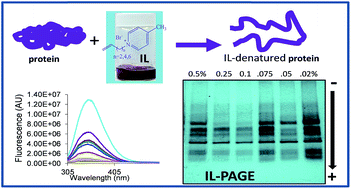
This study aims at investigating methodologies for better separation of proteins using novel hydrophobic ionic liquids (ILs). In this regard, hydrophobic ILs [CnPBr] (n = 4, 6, 8) were synthesized and examined in ionic liquid-polyacrylamide gel electrophoresis (IL-PAGE) as buffer additives for separation of catalase (Cat), transferrin (Tf), bovine serum albumin (BSA), ovalbumin (Ova) and α-lactalbumin (α-Lact). The influence of alkyl chain length of the cation of these ILs and their concentration in running and sample buffers on protein separation was investigated. Separation using ILs as additives was achieved at lower concentrations as compared to standard sodium dodecyl sulfate-polyacrylamide gel electrophoresis (SDS-PAGE). The IL concentrations were 100-fold less in sample buffer and 5-fold less in running buffer as compared to conventional SDS-PAGE. The results demonstrated that ILs additives played a role in improving some protein separation, IL-PAGE provided higher resolution and separation efficiency than SDS-PAGE for Tf and Ova. Fluorescence studies were performed in order to understand protein–IL interactions and were used to determine the appropriate IL for use as a buffer additive in PAGE. When compared with standard SDS-PAGE, no heating of sample buffer was required in IL-PAGE, which revealed that proteins could be efficiently denatured by use of IL, which was later confirmed by use of circular dichroism (CD) studies.

1. Introduction

Large scale studies of proteins have received widespread public attention because of the significance of proteomics for medical diagnosis and treatment. The progress of proteomics is strongly dependent on the development of protein separation techniques and MS technology.1 Many classical approaches become inefficient because of the complexity of protein structures and their sequence and folding motifs.2 A number of methods have been used for protein separations, which includes liquid chromatography,3–5 size exclusion chromatography,6 capillary electrophoresis7–9 and gel electrophoresis.10–13 The ordinary gel-based electrophoresis techniques, SDS-PAGE14–17 and 2-DE,15,16,18 Blue-native19,20 and Native-PAGE21,22 are important and the most commonly used methods for protein separation.

SDS-PAGE has become and remains the standard method for identification, purification, and structural analyses of proteins. SDS, as a solubilizing agent for proteins, was first introduced by Laemmli in 1970.23–25 The amphiphilic properties of SDS are very important to the separation because at concentrations greater than the critical micelle concentration (CMC), surfactant monomers spontaneously self-assemble into micellar structures. Such micelles denature, solubilize and bind to proteins.26 Negatively charged SDS–protein complexes are formed having the same charge to mass ratio; therefore, charge is eliminated from the migration mechanism and separation is solely based on relative molecular masses.27 Although SDS has been used in PAGE for decades, there are some limitations of PAGE due to joule heating and long measurement times. In addition, some proteins migrate anomalously in SDS-PAGE.28,29 In addition, the presence of long chained alkyl sulfates in unpurified SDS may lead to multiple bands as single protein complexes with one or more SDS monomer.29 Even by use of pure SDS, carbohydrate-bearing, highly basic and highly acidic proteins migrate anomalously in gel electrophoresis.30–33 Another deficiency in SDS-PAGE is that SDS may crystallize at low temperatures,34,35 producing artifacts in gels, which then affect the resolution of proteins.36 In matrix-assisted laser desorption ionization mass spectrometry (MALDI MS), SDS forms sodium adducts with proteins and thus reduces the accuracy of protein identification.37 To overcome these limitations, various other detergents have been used to replace SDS. For example, in 1984 two cationic detergents, cetyltrimethylammonium bromide (CTAB) and cetylpyridinium chloride were used to replace SDS.38 However, these cationic detergents required a ten-fold increase in concentration as compared to SDS. In another study by Ross and coworkers,34 an acid labile surfactant (ALS) reportedly exhibited similar denaturing and electrophoretic properties as SDS. The authors revealed that ALS decomposes at low pH and that the negative charge on the ALS–protein complex may not be as high as with SDS. Such limitations of SDS-PAGE require development of new surfactants that can discriminate protein types and molecular weights; therefore, a simple modification of SDS-PAGE for complex protein sample separation may provide great potential for widely used applications for protein analysis.

Ionic liquids are a group of organic salts consisting of ions (cations and anions), having appreciable liquid ranges and melting points below 100 °C. These salts have low melting points because of the larger size of one or both ions and thus low symmetry.39 There are two broad categories of ILs: room temperature ILs (RTILs) for those that melt below 25 °C and frozen ILs (FILs) which are typically solids at room temperature (>25 °C) but melt below 100 °C. ILs have attracted extensive attention in recent years and have aroused considerable interest in biological catalysis40 and protein separations41,42 due to their unique properties i.e. low volatility, negligible vapor pressure, nonflammability, high thermal stability, and wide electrochemical window. The chemical and physical properties of these salts can be selected by choosing suitable cationic and/or anionic constituent. Thus, ILs are regarded as “designer solvents” because of the tunability, which increases their potential applications. ILs which are considered as cationic surfactants because of the amphiphilicity of their cation,43 play an important role in separation, such that they have been used either in the stationary phase of HPLC,44 reverse phase liquid chromatography (RPLC)45 and gas chromatography (GC)46,47 or as a buffer modifier in capillary electrophoresis (CE).48–50 ILs based monolithic column for CE have been reported recently.51 In mass spectrometry, ILs have been used as MALDI matrices and ion pairing reagents in electrospray ionization.52

Herein, we report the first IL-PAGE technique, in which hydrophobic ILs were used as buffer additives in both sample and running buffers for separation of five acidic proteins: Cat, Tf, BSA, Ova, α-Lact. The ILs used in this study were chosen based on their significant physiochemical properties, i.e. solubility in aqueous solution, good conductivity, and good hydrophobicity. For this purpose, novel, N-alkyl-4-methylpyridinium bromide ionic liquids with different alkyl chain lengths i.e. 1-butene-4-methylpyridinium bromides (C4PBr), 1-octene-4-methylpyridinium bromide (C8PBr) and 1-undecene-4-methylpyridinium bromide (C11PBr) have been synthesized. These ionic liquids are categorized as RTILs because they are viscous at room temperature and follow the normal temperature requirements for IL salts. In this regard, the influences of chain lengths and concentration of these ILs in sample and running buffers on protein separation have been investigated. As compared to standard Laemmli protocol for SDS-PAGE, no heating of sample buffer was required in IL-PAGE. Therefore, we report CD studies which prove that these ILs denature the protein without heating. Fluorescence studies were performed in order to understand ionic liquid–protein interactions. In studies of surfactant–protein interactions, BSA was used as a model protein due to its well-established primary structure, water solubility, and versatile binding capacity.53

2. Experimental section

2.1. Materials

Cat (bovine liver, 250 kDa, pI 5.4), Tf (human, 80 kDa, pI 5.5), BSA (bovine, 66 kDa, pI 4.7), Ova (egg, 45 kDa, pI 4.9), α-Lact (bovine milk, 14 kDa, pI 4.2). All proteins were purchased from Sigma Aldrich (St. Louis, MO, USA), each protein was ≥95% pure. Proteins were reconstituted into 3 mg mL−1 aliquots with 10 mM phosphate buffer at pH 7.4 and stored at −20 °C. Standard precast 4–20% Tris–HCl gradient polyacrylamide mini gels were obtained from Bio Rad Laboratories (Hercules, CA, USA). Tris/glycine buffer was used for 1D-gel electrophoresis and all other studies. Reagents used to prepare the running buffer, sample buffer and the destaining solution were purchase from Invitrogen Corporation (Carlsbad, CA, USA). Ultrapure water (18.2 MΩ) was obtained using an Elga PURELAB Ultra purifier (Lowell, MA, USA). All reagents were used as received without further purification.

2.2. Synthesis and characterization of ionic liquids

Pyridinium based ILs with different alkyl chain lengths i.e. C4PBr, C8PBr, C11PBr were synthesized and characterized by use of nuclear magnetic resonance (1H-, 13C-NMR) and mass spectrometry. The detailed synthetic procedure, 1H-, 13C-NMR and ESI/MS data is available in the ESI (Fig. S1, page S-3 and S-4). The instruments used for ESI/MS and NMR were Agilent 6210 TOF LC/MS and Bruker AV 400 respectively.

2.3. Critical micelle concentration (CMC)

The CMCs of the ILs, C4PBr, C8PBr and C11PBr, were determined by use of surface tension measurements at room temperature with KSV Sigma 703 digital tensiometer. These CMCs were determined in both deionized water and 25 mM Tris/192 mM glycine buffer (pH 8.4).

2.4. Instrumentation

Fluorescence studies were performed using a SPEX Fluorolog-3 spectrofluorimeter (model FL3-22TAU3; Jobin Yvon, Edison, NJ) equipped with a 450 W xenon lamp and R928P photomultiplier tube (PMT) emission detector. A quartz cuvette with an optical path length of 0.4 cm was used and bandwidths for both the excitation and emission monochromators were set at 3 nm. Excitation was performed at 295 nm (tryptophan (Trp)) while emission spectra were measured in the range of 300–500 nm. Fluorescence spectra reported here were obtained from protein at concentration of 1 mg mL−1 in 25 mM Tris/192 mM glycine, pH 8.4. CD data were obtained using an AVIV Model 62DS (AVIV Associates, Lakewood, NJ) spectrophotometer at 25 °C, fitted with a 1 mm path length quartz cell. The CD spectra of native protein samples in 25 mM Tris/192 mM glycine, pH 8.4, were acquired at concentrations that produced optimal CD signal. All CD scans were conducted in triplicate using the far UV (200–240 nm) and near UV (240–320 nm) regions of the spectrum, respectively, and average spectra were recorded. All CD spectra were also corrected for background intensity of the buffer. The CD response is reported as ellipticity and displayed in units of millidegree (mdeg).

A Bio-Rad Laboratories Mini-PROTEAN 3 Electrophoresis Module was used for PAGE separations (Hercules, CA, USA). A constant voltage of 200 V was applied for each separation. During staining and destaining, gels were placed in plastic containers and set on a rocker (Midwest Scientific, St. Louis, MO, USA). Typical staining and destaining times for SDS-PAGE were used. Protein bands were analyzed for each gel using a Kodak Gel Logic 200 Image Analyzer (Rochester, NY, USA).

2.5. Binding parameters

Binding parameters of C4PBr, C8PBr, C11PBr, interacting with BSA were determined by use of fluorometric titration method. Each protein (1 mg mL−1) was allowed to equilibrate for 30 min with concentrations of C4PBr, C11PBr (0–35 mM), and C8PBr (0–95 mM) in 25 mM Tris/192 mM glycine, pH 8.4 at 25 °C. In biological systems where a ligand binds to a receptor (macromolecule), Scatchard analysis54,55 is usually used to determine the binding properties from different regions of the isotherm, binding constant for each region, and number of ligands binding sites. The details of various parameters characteristic of such analyses are available in ESI (page S-4).

2.6. Electrophoretic separation

The details of preparation of sample and running buffers are available in the ESI (page S-5). The running buffer was loaded into the inner and outer chambers of the Mini-PROTEAN 3 module. For ILs, no heating of samples was needed. However, for SDS, each sample was heated at 95 °C for 5 minutes on a dry bath incubator purchased from Fisher Scientific (Pittsburgh, PA, USA). Fifteen microliters (15 μL) of sample were loaded into each well of the 4–20% Tris–HCl gradient mini gels. Migration time was 40 minutes for all separations. After each separation, gels were rinsed with ultrapure water (18.2 MΩ), stained with approximately 20 mL of Colloidal Blue Stain, and placed on a rocker. Gels were destained using ultrapure water (18.2 MΩ) until a clear background was visible.

3. Results and discussion

3.1. Critical micelle concentration

Surface tension measurements were performed to evaluate the surface activity of three pyridinium ILs in water and in 25 mM Tris/192 mM glycine buffer (pH 8.4). Fig. S2 (in the ESI) depicts the surface tension (γ) versus concentration (C) plots for CnPBr (n = 4, 8, 11) in water and in buffer at 25 °C. The surface tension of ILs both in water and in buffer progressively decreases with an increase in concentration and then reaches a plateau region, indicating that micelles are formed and the concentration of the break point corresponds to the CMC. The values of CMC decreases in order of C4PBr > C8PBr > C11PBr, in accordance with increased hydrophobicity owing to an extension of the hydrocarbon chain. Increasing the hydrophobic chain length decreases the water solubility of IL and causes close packing of the IL within micelles, which facilitates the formation of micelles at lower concentration.56 The CMC also depends on the ionic strength or salt effect. Hydrophobic interactions can be enhanced by an increase in ionic strength.57 The reduction in CMC in the presence of electrolyte for ionic detergent is likely due to a reduction in the electronic environment surrounding the ionic head groups. Addition of electrolyte decreases the repulsion between similarly charged ionic head groups within a micelle and therefore, the detergent monomers can pack more tightly and thus the CMC is reduced.58 The overall critical micelle concentration in buffer is lower as compared to CMC in water (Table 1).
Table 1 CMC of ionic liquids; 1-butene-4-methylpyridiniumbromide (C4PBr), 1-octene-4-methylpyridiniumbromide (C8PBr), and 1-undecene-4-methylpyridiniumbromide (C11PBr)
Ionic liquids CMC in water (mM) CMC in buffer (mM)
C4PBr 46.36 27.60
C8PBr 21.50 9.10
C11PBr 11.24 7.73


3.2. Separation of proteins by IL-PAGE

Separation of a mixture of five proteins, i.e. Cat, Tf, BSA, Ova, α-Lact (pI 4–6), has been evaluated by using ionic liquids in PAGE. ILs with C4, C8, C11 alkyl chains (C4PBr), (C8PBr) and (C11PBr) were used as buffer additives in both sample and running buffers. SDS was completely replaced by use of ionic liquids in PAGE. The electrophoretic migration patterns of proteins in mixtures as well as in purified form were studied. The electropherogram displayed in Fig. 1, was obtained by use of 0.025% m/v C4PBr in sample buffer and 0.025% m/v C4PBr in running buffer. Cat (250 kDa) in lane 2, appeared as a single band while Tf (80 kDa) (lane 3) separated as two highly stained bands which could be its β1 and β2 isoforms.59 BSA (66 kDa) in lane 4 appeared as multiple bands, which may be due to the formation of oligomers.60 Ova (45 kDa, lane 5) separated as two bands of its S and I isoforms61 and lastly a single band of α-Lact (14 kDa, lane 6). A similar pattern for individual protein migrations was observed in bands analyzed in mixture (lane 1).
image file: c5ra11559k-f1.tif
Fig. 1 IL-PAGE with 0.025% C4PBr of protein mixture (1), Cat 250 kDa (2), Tf 80 kDa (3), BSA 66 kDa (4), Ova 45 kDa (5), α-Lact 14 kDa (6).

3.3. Comparison of IL-PAGE and SDS-PAGE

The resolution and migration distance of individual proteins, separated by optimum concentration of 0.025% m/v C4PBr in running buffer, 0.025% sample buffer and ordinary SDS-PAGE was compared (Fig. 2). In standard SDS-PAGE, all samples were heated to 95 °C for 5 minutes, while no heating was involved in IL-PAGE. The difference was observed in the separation pattern of Cat, Tf, BSA and Ova. Cat is a homotetrameric enzyme, composed of four subunits,62 there is one major band of each subunit (approximately 62.5 kDa) appeared63 in SDS-PAGE, having same Rf value as BSA, while in C4PBr-PAGE, Cat (A1) separated as a single band in the range of 250 kDa.
image file: c5ra11559k-f2.tif
Fig. 2 Separation of Cat (1), Tf (2), BSA (3), Ova (4) and α-Lact (5) in C4PBr-PAGE (lanes A) and SDS-PAGE (lanes B).

Tf exist in isoforms (β1, β2), due to small variations in their carbohydrate structures. Separation of isoforms is difficult because of the smaller difference in their Rf values and involved multiple steps of separation (chromatographic and electrophoretic etc.).59 Ova also has S and I isoforms.61 The unique property of IL-PAGE is that the isoforms of Tf and Ova could easily be separated as shown in A2 and A4 respectively, while SDS-PAGE failed to separate these isoforms. In SDS, if closely observed, Ova appeared as two bands (B4) which were very close and difficult to separate. Tf isoforms also appeared as a single band in SDS-PAGE (B2). BSA showed multiple bands (A3) in IL-PAGE, which could be due to the formation of oligomers.60 In SDS-PAGE, BSA is separated as a single band (B3). Examination of the results showed that the mobility distance of a lower molecular weight protein (α-Lact) in IL-PAGE was decreased as compared to SDS-PAGE. The mobility distance could be increased by varying the conditions of PAGE, which are concentration of surfactant, running time of the gel and voltage.

In standard SDS-PAGE, all samples were heated to 95 °C for 5 minutes, while no heating was involved in IL-PAGE. This may indicate that IL itself solubilizes the protein in its hydrophobic environment, thus disrupting its tertiary structure and denaturing the protein, which was later confirmed by CD studies. In IL-PAGE, sample buffer concentration was 0.025% w/v, which was 100-fold less than the standard SDS-PAGE concentration (2% w/v). In IL-PAGE, running buffer concentration was 0.025% w/v, while in SDS-PAGE, the running buffer concentration of SDS used is 0.1% w/v, which is 5-fold more than IL-PAGE. Higher separation resolution of Tf and Ova was achieved in case of IL-PAGE, eventhough the migration distance of α-Lact decreased. In IL-PAGE, separation was achieved by using lesser amounts of surfactant as compared to SDS-PAGE. No heating of sample buffer will have a direct impact on reduction in time and energy usage when multiple samples are being prepared simultaneously.

3.4. Factors affecting the separation of protein mixture in IL-PAGE

Different factors which affect the separation of mixtures of five acidic proteins, i.e. (pI 4–6), Cat, Tf, BSA, Ova, α-Lact, have been studied, which are as follows:
3.4.1. Different concentration in sample buffer and alkyl chain length of ILs cation. We examine the effect of different alkyl chain length of CnPBr (n = 4, 8, 11) as a buffer additive on the separation of a mixture of five proteins (Cat, Tf, BSA, Ova, α-Lact). The concentration of ILs in the sample buffer was varied while it was held constant (0.025% w/v) for the running buffer. In Fig. 3A, 0.025% w/v of C4PBr, C8PBr and C11PBr were used as sample buffer additives respectively, which produced separation of five proteins. α-Lact (14 kDa) exhibited shorter migration distance in case of C4 and C8 as compared to C11. This indicated that low molecular weight protein migration was retarded by C4 and C11 ILs. At lower concentration, 0.025%, 0.05%, of C4PBr–C8PBr gave clear separation (Fig. 3A and B). Geng et al. have reported that ILs with long alkyl chain form complex with protein by hydrophobic and electrostatic interactions.64 Stronger hydrophobic interactions could damage the IL–protein complex, so at higher concentration 0.25–1% m/v, of C8PBr and C11PBr in running buffer damage the IL–protein complex which deteriorate the separation of protein mixture (Fig. 3E). The results indicate that, at higher concentrations of longer alkyl chain ILs, as buffer additive in IL-PAGE results poor separation of proteins. This could be due to stronger hydrophobic interactions between ILs alkyl chains and hydrophobic amino acid residues within the interior of proteins and this could damage protein separation. Overall, shorter alkyl chain (C4, C8) ILs at lower concentration as buffer additive were suitable for protein mixture separation.
image file: c5ra11559k-f3.tif
Fig. 3 IL-PAGE of protein mixture (Cat 250 kDa, Tf 80 kDa, BSA 66 kDa, Ova 45 kDa, α-Lact 14 kDa) with C4–C11PBr concentration (w/v) of (A) 0.025% (B) 0.05% (C) 0.25% (D) 0.5% (E) 1% in sample buffer, running buffer concentration is 0.025% (w/v) of C4PBr–C11PBr.
3.4.2. Different concentration of ILs in running buffer. The effect of different concentrations of IL (0.1–0.0125% m/v) in running buffer on the separation of protein mixture (Cat, Tf, BSA, Ova, α-Lact) and their migration pattern have also been investigated. With higher 0.1–0.05% m/v and very low (0.012%) concentrations of C4PBr in the running buffer, the resolution of proteins was poor and the higher molecular weight protein exhibited shorter migration distance. The higher concentration of IL made the Ova (45 kDa) band virtually disappear while α-Lact (14 kDa) appeared as a dark condense band (Fig. 4A and B). These results showed that using lower concentration, 0.025% m/v of C4PBr, gave better performance, resolution and mobility distance of proteins was improved (Fig. 4C), and this was the optimized concentration of IL in running buffer. As compared to ordinary SDS-PAGE, 0.025% m/v of C4PBr in running buffer enhanced the mobility distance of all proteins except α-Lact, which could be modified by changing the parameters of gel electrophoresis, and by running the gel at lower voltage and for longer time periods. The change in electrophoretic mobility of proteins in IL-PAGE could be due to the positive charge and hydrophobic alkyl chain in the ILs cation, which produces electrostatic and hydrophobic interactions with the proteins, which then play an important role in changing their electrophoretic mobility.
image file: c5ra11559k-f4.tif
Fig. 4 Effect of different concentration of C4PBr in running buffer (A) 0.1%, (B) 0.05%, (C) 0.025%, (D) 0.0125% for separation of protein mixture, sample buffer concentrations is 0.025%, comparing 0.025% (C) with ordinary SDS (E).

3.5. Separation mechanism of IL-PAGE

In SDS-PAGE, protein separation is entirely dependant upon the molecular mass of proteins.27,65,66 In contrast, in IL-PAGE, separation is based on the charge on the proteins and their molecular masses. Based on this study, we have proposed the following mechanism of proteins separation in IL-PAGE. ILs in solution first interact or form complex with protein and induce conformational changes in protein structure, which results in protein unfolding, exposing the acidic amino acids on the surface of protein and thus proteins acquire negative charges due to the alkaline pH of the electrode buffer. Geng, et al. have reported that IL with long alkyl chain form complexes with proteins by electrostatic and hydrophobic interactions.64,66 The charge strengths of proteins depend upon the difference in buffer pH and pI of the protein. Thus, the migration of proteins in IL-PAGE could be the function of their net charge and molecular size.67 Electrophoretic mobility is directly related to net charge and inversely related to mass of protein.

Other factors that could be involved in protein separation are hydrophobic and electrostatic interactions, as well as hydrogen bonding. Better resolution of Tf and Ova was achieved in IL-PAGE, due to the stronger hydrophobic interactions between pyridine possessing longer alkyl-chain ionic liquids and proteins,57,68 even though the concentrations of ILs used in sample and running buffer were far below the CMC of this IL. Hydrophobic interaction increases from C4PBr > C8PBr > C11PBr. Electrostatic interactions also play a role, possibly between the negatively charged sites on proteins and IL-cation. ILs can also bind to proteins by H-bonding interactions, which are between their cationic head groups and amino acid residue at the surface of protein. Fluorescence and CD studies which are discussed later, also support this supposition for this phenomenon. In conclusion, ILs could be promising alternative surfactants to perform electrophoresis separations in the future. However, these surfactants are not yet ready to replace SDS without optimization of other separation parameters (e.g. buffer composition, voltage and running time of gel).

3.6. Fluorescence studies

For macromolecules, fluorescence measurements can provide information regarding binding mechanism of the ligand to protein.69 The fluorescence of intrinsic Trp residue was used to determine the binding of BSA to three ligands, i.e. C4PBr, C8PBr and C11PBr. The binding properties of SDS to BSA has been reported earlier.70,71 BSA has two Trp residues in the native state, one buried in the hydrophobic pocket and the other located towards the outer surface (solvent accessible). To examine whether CnPBr binds to BSA, fluorescence measurements were performed in 25 mM Tris/192 mM glycine buffer, pH 8.4 at 25 °C. In this study, a titration method was adopted in which BSA concentration was held constant (10 μM), while varying the concentration of CnPBr (n = 4, 8, 11). The excitation wavelength for Trp is 295 nm, while the maximum emission wavelength (i.e. λmax) is 352 nm in the absence of CnPBr (n = 4, 8, 11). The Trp emission of BSA was gradually quenched with increasing concentration of ILs. The initial blue shift was accompanied by a red shift of the maximum emission peak until the point of saturation was reached, after which there was no additional quenching or shifting of emission maxima even by further increasing the concentration of IL (Fig. 5 and S3). The red shift and quenching in the Trp emission maxima of BSA with increasing concentration of the ligand are attributed to changes in the native conformation of the proteins.72 Such a conformational change induced by binding of ligand to the protein leads to exposure of Trp residue to a relatively hydrophobic domain. The fluorescence quenching increases with increasing the alkyl chain length of CnPBr (n = 4, 8, 11), so hydrophobic interaction increases from C4PBr to C11PBr.57 Hence, it is speculated that hydrophobic interactions play an important role in the interaction of CnPBr with protein. In order to confirm this, NaCl was added to Tris–glycine buffer (pH 8.4), and the concentration was increased from 0.1 to 1.0 M. At higher NaCl concentration (1.0 M), fluorescence intensity of Trp dramatically decreases with increasing C11PBr concentration (from 1.5 to 4.0 mM) compared to system containing 0.1 M NaCl (Fig. 6). The ionic strength of the system increases due to the addition of NaCl, which could enhance hydrophobic interactions between ionic liquid and protein.57,73 This is attributed to a contention that hydrophobic interactions between IL and protein plays an important role in protein separation by IL-PAGE.
image file: c5ra11559k-f5.tif
Fig. 5 Fluorescence wavelength maxima shift of Trp in the presence of increasing concentration of C11PBr in association with BSA (10 μM), determined by steady state fluorescence (λex = 295 nm, 25 °C).

image file: c5ra11559k-f6.tif
Fig. 6 Effect of C11PBr on the fluorescence intensity of BSA at different NaCl concentration (0.1, 1 M L−1).
3.6.1. Binding studies and Scatchard analysis. Scatchard plots demonstrate the types of binding, particularly when multi-site ligand binding is suspected.74 Generally, there are four characteristic binding regions: (a) specific binding to high energy sites on the protein, which are believed to be electrostatic, (b) noncooperative binding, (c) cooperative binding, where protein unfolding is believed to occur and a marked increase in binding, and (d) saturation, in which micelles co-exist with the saturated protein and no further binding occurs.71

The binding isotherms for IL to BSA suggest that the concentration for saturation binding was determined by the alkyl chain length of the IL. Fig. 7 suggests that for the IL with the longest alkyl chain length, saturation binding was attained at much lower concentration followed by the other two ILs in the order of decreasing chain length. This observation indicates that hydrophobicity of the IL is a very important factor which directs IL-BSA complexation. Also, interaction between IL and BSA is found to be primarily hydrophobic.


image file: c5ra11559k-f7.tif
Fig. 7 Fraction bound of C11PBr (circles), C8PBr (triangles) and C4PBr (solid diamonds) to BSA (10 μM) with increasing concentration of C11PBr, C8PBR, (0–30 mM), C4PBr (0–80 mM).

Scatchard plots for binding of C11PBr, C8PBr, and C4PBr suggest that the binding mechanism of the three ionic liquids to BSA is significantly different from each other. For SDS, Scatchard analysis with BSA was reported earlier by Das, et al.70 Scatchard plots characteristic at different concentration regions suggest that binding of these ILs to BSA follows separate mechanism in various concentration regions.

Scatchard analysis (Fig. 8 and S4 in ESI, Table 2) revealed that ILs produce a highly cooperative binding mechanism in low concentration regions. The binding mechanism of ILs to BSA is in direct opposition to what has been reported earlier for conventional anionic surfactant SDS.70 The concave downward Scatchard plot revealed that C11PBr shows positive cooperative binding with BSA in the low concentration region (0–1 mM) (Fig. 8), while SDS showed negative cooperative binding with BSA in a similar low concentration region. Below 2 mM, C11PBr showed positive cooperative binding which revealed that binding of IL to one site on BSA increases the C11PBr binding affinity to subsequent sites of the protein.


image file: c5ra11559k-f8.tif
Fig. 8 Scatchard plots of BSA with C11PBr. The inset expands the low concentration regions of the corresponding plot.
Table 2 Types of cooperative binding for ILs in the low concentration regiona
ILs Regions BSA
a sp = specific binding, + = positive cooperative binding, − = negative cooperative binding, n. sp = nonspecific binding.
C11PBr Region 1 sp, +
Region 2 +
Region 3
Region 4 n.sp
C8PBr Region 1 sp
Region 2
Region 3
Region 4 n.sp
C4PBr Region 1 sp
Region 2 +
Region 3
Region 4 n.sp


Above 2 mM, C11PBr exhibited negative cooperative binding which revealed that in this concentration region, BSA was saturated with IL and thus binding at one site lowers the binding affinity at adjacent site. At higher concentration (3.4–5.4 mM), SDS showed positive cooperative binding followed by a linear region characteristic of non-specific binding.54 The highest binding of SDS with BSA occurs in this region (4.1–5.4 mM) because of micellization. At higher concentration (7–15 mM), C11PBr exhibited nonspecific binding which revealed that with increasing surfactant concentration, BSA saturated with IL, no further binding occurs and micelles co-exist with saturated protein.71 Summarizing the results from intrinsic fluorescence data for all ILs studied for BSA, it is apparent that C11PBr binding to protein is more cooperative than C8PBr and C4PBr at lower concentrations. We attribute this phenomenon to hydrophobicity (hydrophobic domain) that exists in C11PBr more than C8PBr and C4PBr. Therefore for BSA, binding occurs primarily through hydrophobic interactions.

3.7. Protein denaturation monitored by CD studies

In order to investigate the influence IL (C11PBr) on protein conformation as compared to the conventional surfactant SDS, CD spectra of BSA in the absence and presence of C11PBr were obtained from 200–250 nm (Fig. 9). CD spectrum of BSA consists of two negative bands in the ultraviolet region at 208 (π–π* transition) and 222 nm (n–π* transition), which is a characteristic of α-helical structure of a protein.75 In this study, we found that interaction of C11PBr with BSA caused a dramatic increase in band intensity at all wavelengths of far UV CD with a significant shift in peak position (Fig. 9A). This clearly indicates that there was a significant conformational change occurring and BSA begins to unfold.76
image file: c5ra11559k-f9.tif
Fig. 9 The CD spectra of BSA (10 μM) with increasing concentration of C11PBr (A) SDS (B), in the presence of heated sample of 0.025% w/v (0.86 mM) SDS and unheated 0.025% w/v (0.86 mM) C11PBr (C). The buffer was 25 mM Tris/192 mM glycine at pH 8.4 and 25 °C.

The shift in CD signal for the 208 nm minimum at 2 mM suggests a decrease in α-helical content in the presence of C11PBr. The change in secondary structure of BSA is quite significant as the ellipticity increases at both wavelengths (208, 222 nm) as the concentration of IL increases from 0–7 mM (Fig. 9A), while in the case of SDS (Fig. 9B), there was a small increase in ellipticity from 0–5 mM concentration, which suggests that SDS did not appreciably change the conformation of BSA. This clearly indicates major changes in the protein structure, namely a significant decrease in α-helical content in protein. This may be caused by interactions between the IL and BSA which leads to a swelling of biomacromolecule and exposing of hydrophobic residues.77 Thus, some of the original α-helices are broken to give a more open disordered structure.

One of the denaturation processes of protein in standard SDS-PAGE is to heat the sample buffer at 95 °C for 5 minutes. However, in IL-PAGE, it was observed that IL itself denature the protein without heating and this was confirmed by CD studies. The CD spectra in Fig. 9C showed that there is an increase in ellipticity along with a significant shift at 208 nm for unheated 0.86 mM (0.025% w/v) C11PBr. The heated 0.86 mM (0.025% w/v) SDS showed a smaller increase in ellipticity with no shift at 208 nM. The above results suggest that C11PBr denatured the protein at lower concentration without heating as compared to the conventional surfactant which required heating of sample buffer.

4. Conclusions

In this manuscript, an IL-PAGE method is established for the separation of low and higher molecular weight, acidic proteins, using CnPBr (n = 4, 8, 11) as buffer additives in both sample and running buffers. The effects of IL surfactants with four, eight, and eleven carbons have been evaluated. Better separation was achieved with shorter carbon chain (C4, C8) ILs at lower concentration. The longer carbon chain (C11) IL at higher concentration gave poor separation. The stronger hydrophobic interactions between longer carbon chain ILs and protein could decrease the protein–IL complex which would deteriorate the separation of proteins. This method improves separation and resolution of transferrin and ovalbumin in comparison to ordinary SDS-PAGE. Overall resolution of proteins in IL-PAGE is improved even though the migration distance of α-Lact decreases. However, this can be improved by optimization of other separation parameters (e.g., buffer compositions, voltage of instrument and running time of gel). The experimental data obtained from intrinsic fluorescence studies show that binding of ILs to protein is more cooperative at low concentration, as compared to the mostly negative cooperative binding with SDS. In addition, CD studies revealed that ILs denature the protein without heating. Further studies are underway in our laboratory to explore the applications of these ILs and their molecular micelles for separation of hydrophobic proteins.

Acknowledgements

This material is based upon work supported by the National Science Foundation under Grant No. (CHE-1307611).

References

  1. C. H. Chen, Anal. Chim. Acta, 2008, 624, 16 CrossRef CAS PubMed.
  2. H. Wang, Y. He, X. He, W. Li, L. Chen and Y. Zhang, J. Sep. Sci., 2009, 32, 1981 CrossRef CAS PubMed.
  3. A. D'Attoma and S. Heinisch, J. Chromatogr. A, 2013, 1306, 27 CrossRef PubMed.
  4. G. Yang, X. Zhang, H. Lei, W. Niu and L. Bai, Anal. Lett., 2013, 46, 1477 CrossRef CAS PubMed.
  5. K. Wagner, K. Racaityte, K. Unger, T. Miliotis, L. Edholm, R. Bischoff and G. Marko-Varga, J. Chromatogr. A, 2000, 893, 293 CrossRef CAS.
  6. X. Chen and Y. Ge, Proteomics, 2013, 13, 2563 CrossRef CAS PubMed.
  7. R. Wu, Z. Wang, W. Zhao, W. S. Yeung and Y. S. Fung, J. Chromatogr. A, 2013, 1304, 220 CrossRef CAS PubMed.
  8. N. Iki and E. Yeung, J. Chromatogr. A, 1996, 731, 273 CrossRef CAS.
  9. M. N. Albarghouthi, T. M. Stein and A. E. Barron, Electrophoresis, 2003, 24, 1166 CrossRef CAS PubMed.
  10. D. W. Dodd and R. H. Hudson, Electrophoresis, 2007, 28, 3884 CrossRef CAS PubMed.
  11. H. Schägger and G. von Jagow, Anal. Biochem., 1987, 166, 368 CrossRef.
  12. W. Wang, J. J. Lu, C. Gu, L. Zhou and S. Liu, Anal. Chem., 2013, 85, 6603 CrossRef CAS PubMed.
  13. J.-F. Hsieh and S.-T. Chen, Biomicrofluidics, 2007, 1, 014102 CrossRef PubMed.
  14. J. Burre, T. Beckhaus, H. Schagger, C. Corvey, S. Hofmann, M. Karas, H. Zimmermann and W. Volknandt, Proteomics, 2006, 6, 6250 CrossRef CAS PubMed.
  15. X. Li, J. Cao, Q. Jin, C. Xie, Q. He, R. Cao, J. Xiong, P. Chen, X. Wang and S. Liang, J. Cell. Biochem., 2008, 104, 965 CrossRef CAS PubMed.
  16. X. Yang, J. Clifton, F. Huang, S. Kovac, D. C. Hixson and D. Josic, Electrophoresis, 2009, 30, 1185 CrossRef CAS PubMed.
  17. V. G. Zgoda, S. A. Moshkovskii, E. A. Ponomarenko, T. V. Andreewski, A. T. Kopylov, O. V. Tikhonova, S. A. Melnik, A. V. Lisitsa and A. I. Archakov, Proteomics, 2009, 9, 4102 CrossRef CAS PubMed.
  18. M. F. Addis, A. Tanca, D. Pagnozzi, S. Rocca and S. Uzzau, Proteomics, 2009, 9, 4329 CrossRef CAS PubMed.
  19. I. Wittig, H.-P. Braun and H. Schägger, Nat. Protoc., 2006, 1, 418 CrossRef CAS PubMed.
  20. M. Aivaliotis, M. Karas and G. Tsiotis, J. Proteome Res., 2007, 6, 1048 CrossRef CAS PubMed.
  21. C. Arndt, S. Koristka, H. Bartsch and M. Bachmann, in Protein Electrophoresis, Springer, 2012, p. 49 Search PubMed.
  22. G. M. Rothe and H. Purkhanbaba, Electrophoresis, 1982, 3, 43 CrossRef CAS PubMed.
  23. S. Ghosh, Colloids Surf., B, 2008, 66, 178 CrossRef CAS PubMed.
  24. S. Ghosh, J. Colloid Interface Sci., 2001, 244, 128 CrossRef CAS.
  25. U. K. Laemmli, Nature, 1970, 227, 680 CrossRef CAS PubMed.
  26. P. Jungblut, B. Thiede, U. Zimny-Arndt, E. Müller, C. Scheler, B. Wittmann-Liebold and A. Otto, Electrophoresis, 1996, 17, 839 CrossRef CAS PubMed.
  27. A. L. Shapiro, E. Vinuela and J. V. Maizel Jr, Biochem. Biophys. Res. Commun., 1967, 28, 815 CrossRef CAS.
  28. J. A. Reynolds and C. Tanford, Proc. Natl. Acad. Sci. U. S. A., 1970, 66, 1002 CrossRef CAS.
  29. M. Malhotra and D. Sahal, Int. J. Pept. Protein Res., 1996, 48, 240 CrossRef CAS PubMed.
  30. R. C. Allen, C. A. Saravis and H. R. Maurer, Gel electrophoresis and isoelectric focusing of proteins, de Gruyter, Berlin, 1984 Search PubMed.
  31. M. M. Margulies and H. L. Tiffany, Anal. Biochem., 1984, 136, 309 CrossRef CAS.
  32. A. T. Andrews, Electrophoresis: theory, techniques, and biochemical and clinical applications, Clarenden Press, 1986 Search PubMed.
  33. B. D. Hames and D. Rickwood, Gel electrophoresis of proteins: a practical approach, IRL Press, 1981 Search PubMed.
  34. A. R. Ross, P. J. Lee, D. L. Smith, J. I. Langridge, A. D. Whetton and S. J. Gaskell, Proteomics, 2002, 2, 928 CrossRef CAS.
  35. H. Furthmayr and R. Timpl, Anal. Biochem., 1971, 41, 510 CrossRef CAS.
  36. S. Cannon-Carlson and J. Tang, Anal. Biochem., 1997, 246, 146 CrossRef CAS PubMed.
  37. N. Zhang and L. Li, Anal. Chem., 2002, 74, 1729 CrossRef CAS.
  38. R. Zardoya, A. Diez, P. J. Mason, L. Luzzatto, A. Garrido-Pertierra and J. M. Bautista, BioTechniques, 1994, 16, 270 CAS.
  39. I. Krossing, J. M. Slattery, C. Daguenet, P. J. Dyson, A. Oleinikova and H. Weingärtner, J. Am. Chem. Soc., 2006, 128, 13427 CrossRef CAS PubMed.
  40. F. van Rantwijk and R. A. Sheldon, Chem. Rev., 2007, 107, 2757 CrossRef CAS PubMed.
  41. Y. Shu, X.-W. Chen and J.-H. Wang, Talanta, 2010, 81, 637 CrossRef CAS PubMed.
  42. L. Ge, X.-T. Wang, S. N. Tan, H. H. Tsai, J. W. Yong and L. Hua, Talanta, 2010, 81, 1861 CrossRef CAS PubMed.
  43. H. Qiu, Q. Zhang, L. Chen, X. Liu and S. Jiang, J. Sep. Sci., 2008, 31, 2791 CrossRef CAS PubMed.
  44. K. R. Chitta, D. S. Van Meter and A. M. Stalcup, Anal. Bioanal. Chem., 2010, 396, 775 CrossRef CAS PubMed.
  45. Y. Wang, M. Tian, W. Bi and K. H. Row, Int. J. Mol. Sci., 2009, 10, 2591 CrossRef CAS PubMed.
  46. M. Zhang, X. Liang, S. Jiang and H. Qiu, TrAC, Trends Anal. Chem., 2014, 53, 60 CrossRef CAS PubMed.
  47. B. Buszewski and S. Studzińska, Chromatographia, 2008, 68, 1 CAS.
  48. D. Corradini, I. Nicoletti and G. K. Bonn, Electrophoresis, 2009, 30, 1869 CrossRef CAS PubMed.
  49. X. Wu, W. Wei, Q. Su, L. Xu and G. Chen, Electrophoresis, 2008, 29, 2356 CrossRef CAS PubMed.
  50. V. Kašička, Electrophoresis, 2010, 31, 122 CrossRef PubMed.
  51. S. Tang, S. Liu, Y. Guo, X. Liu and S. Jiang, J. Chromatogr. A, 2014, 1357, 147 CrossRef CAS PubMed.
  52. M. D. Joshi and J. L. Anderson, RSC Adv., 2012, 2, 5470 RSC.
  53. Y.-J. Hu, Y. Liu, Z.-B. Pi and S.-S. Qu, Bioorg. Med. Chem., 2005, 13, 6609 CrossRef CAS PubMed.
  54. A. C. Notides, N. Lerner and D. E. Hamilton, Proc. Natl. Acad. Sci. U. S. A., 1981, 78, 4926 CrossRef CAS.
  55. B. Perlmutter-Hayman, Acc. Chem. Res., 1986, 19, 90 CrossRef CAS.
  56. R. Zana, M. Benrraou and R. Rueff, Langmuir, 1991, 7, 1072 CrossRef CAS.
  57. H. Yan, J. Wu, G. Dai, A. Zhong, H. Chen, J. Yang and D. Han, J. Lumin., 2012, 132, 622 CrossRef CAS PubMed.
  58. M. J. Rosen and J. T. Kunjappu, Surfactants and interfacial phenomena, John Wiley & Sons, 2012 Search PubMed.
  59. T. Görögh, P. Rudolph, J. E. Meyer, J. A. Werner, B. M. Lippert and S. Maune, Clin. Chem., 2005, 51, 1704 Search PubMed.
  60. J. Babcock and L. Brancaleon, Int. J. Biol. Macromol., 2012, 53, 42 CrossRef PubMed.
  61. M. Covaciu, F. Olaru and I. Petrescu, Ovalbumin isoforms purification and denaturation/renaturation studies, vol. 5, 2004 Search PubMed.
  62. T. Aydemir and K. Kuru, Turk. J. Chem., 2003, 27, 85 CAS.
  63. P. Walicke, S. Varon and M. Manthrope, J. Neurosci., 1986, 6, 1114 CAS.
  64. F. Geng, L. Zheng, L. Yu, G. Li and C. Tung, Process Biochem., 2010, 45, 306 CrossRef CAS PubMed.
  65. T. L. James and N. C. Milos, Anal. Biochem., 2007, 367, 134 CrossRef CAS PubMed.
  66. N. A. Lacher, Q. Wang, R. K. Roberts, H. J. Holovics, S. Aykent, M. R. Schlittler, M. R. Thompson and C. W. Demarest, Electrophoresis, 2010, 31, 448 CrossRef CAS PubMed.
  67. Y. Ramos, E. Gutierrez, Y. Machado, A. Sánchez, L. Castellanos-Serra, L. J. González, J. Fernández-de-Cossio, Y. Pérez-Riverol, L. Betancourt and J. Gil, J. Proteome Res., 2008, 7, 2427 CrossRef CAS PubMed.
  68. T.-F. Jiang, Y.-L. Gu, B. Liang, J.-B. Li, Y.-P. Shi and Q.-Y. Ou, Anal. Chim. Acta, 2003, 479, 249 CrossRef CAS.
  69. B. Ojha and G. Das, J. Phys. Chem. B, 2010, 114, 3979 CrossRef CAS PubMed.
  70. S. Das, M. R. Sylvain, V. E. Fernand, J. N. Losso, B. El-Zahab and I. M. Warner, J. Colloid Interface Sci., 2011, 363, 585 CrossRef CAS PubMed.
  71. E. Gelamo, C. Silva, H. Imasato and M. Tabak, Biochim. Biophys. Acta, Protein Struct. Mol. Enzymol., 2002, 1594, 84 CrossRef CAS.
  72. T. Chakraborty, I. Chakraborty, S. P. Moulik and S. Ghosh, Langmuir, 2009, 25, 3062 CrossRef CAS PubMed.
  73. W. Melander and C. Horváth, Arch. Biochem. Biophys., 1977, 183, 200 CrossRef CAS.
  74. G. Ercolani, J. Am. Chem. Soc., 2003, 125, 16097 CrossRef CAS PubMed.
  75. N. Gull, S. Chodankar, V. Aswal, P. Sen and R. H. Khan, Colloids Surf., B, 2009, 69, 122 CrossRef CAS PubMed.
  76. V. Peyre, V. Lair, V. André, G. le Maire, U. Kragh-Hansen, M. le Maire and J. V. Møller, Langmuir, 2005, 21, 8865 CrossRef CAS PubMed.
  77. A. D. Nielsen, K. Borch and P. Westh, Biochim. Biophys. Acta, Protein Struct. Mol. Enzymol., 2000, 1479, 321 CrossRef CAS.

Footnote

Electronic supplementary information (ESI) available. See DOI: 10.1039/c5ra11559k

This journal is © The Royal Society of Chemistry 2015
Click here to see how this site uses Cookies. View our privacy policy here.