First investigation of polyoxoniobate and polyoxotantalate aqueous speciation by capillary zone electrophoresis

Gauthier J.-P. Deblonde*ab, Nathalie Delaunaycd, Dahye Leec, Alexandre Chagnesa, Gérard Cotea and Pierre Gareilce
aPSL Research University, Chimie ParisTech – CNRS, Institut de Recherche de Chimie Paris, 11 rue Pierre et Marie Curie, 75005 Paris, France. E-mail: gauthier.deblonde@chimie-paris.org
bEramet Research, Hydrometallurgy Department, F-78193 Trappes, France
cPSL Research University, ESPCI ParisTech, Laboratory of Analytical and Bioanalytical Sciences and Miniaturization, UMR CBI 8231, 10 rue Vauquelin, 75231 Paris Cedex 05, France
dCNRS, UMR CBI 8231, 75005, Paris, France
ePSL Research University, Chimie ParisTech, 75005, Paris, France

Received 16th June 2015 , Accepted 22nd July 2015

First published on 22nd July 2015


Abstract

Aqueous solutions of hexaniobate (HxNb6O19x−8, 0 ≤ x ≤ 3) and hexatantalate ions (HxTa6O19x−8, 0 ≤ x ≤ 3) have been probed by capillary zone electrophoresis (CE) for the first time. Taking advantage of the UV properties of HxTa6O19x−8 and HxNb6O19x−8, the detection of Nb(V) and Ta(V) could be performed without using toxic or expensive chelating reagents as reported in CE methods previously developed for Nb and Ta samples. The effective electrophoretic mobilities of the hexaniobate and hexatantalate ions were measured as a function of pH in Li+, Na+ and K+-based alkaline media at 25 °C. Although HxTa6O19x−8 and HxNb6O19x−8 have almost identical electronic and structural features, they were easily separated in a wide pH range (9 to 13) using standard bare-fused silica capillary. The separation of Nb and Ta was accomplished in 5 minutes, which affords a promising method for the analytical support of industrial processes. The striking difference observed in the mobilities of HxTa6O19x−8 and HxNb6O19x−8 also led to new insights regarding the ion-association behavior of these highly charged species.

Introduction

Niobium (Nb; Z = 41) and tantalum (Ta; Z = 73) are two group V metals that are used in several industries around the world. The primary use of niobium is the production of ferroniobium alloys but Nb is also a critical raw material for the manufacture of electronic components, superconducting magnets, catalysts, medical implants, commemorative coins etc.1–3 Tantalum is more expensive than niobium but it is a key element for catalyst, electronic and high temperature alloy industries. The two valuable elements are generally found together in the natural ores and their almost identical chemical properties render their separation very arduous. The conventional separation processes for Nb and Ta require strongly complexing agent, like fluoride ions.4–6 Due to environmental impact and health risks that fluoride reagents exhibit, new strategies are being developed to recover and purify Nb and Ta. In this regard, alkaline processes have recently caught growing attention owing to the high solubility of Nb and Ta in aqueous solutions of NaOH or KOH and thanks to the lower environmental impact of the alkaline reagents than the fluoride ones.

In aqueous solution Nb and Ta only exhibit the degree of oxidation +V. The thermodynamically stable species that Nb(V) and Ta(V) form in alkaline solutions are the hexaniobate (HxNb6O19x−8, 0 ≤ x ≤ 3) and hexatantalate (HxTa6O19x−8, 0 ≤ x ≤ 3) ions, respectively.7,8 These ions dominate the solution chemistry of Nb and Ta at pH higher than ∼9.9,10 The structure of these hexameric ions has been widely studied in solutions and in the solid-state. The M6O198− framework, also called Lindqvist ion, consists of a super octahedron of 6 edge-sharing octahedra MO6. The M6O198− cluster has 3 different types of oxygen with one central atom μ6-O inside an M6O octahedra, six terminal oxygens η = O and twelve bridging oxygens μ2-O (Fig. 1).


image file: c5ra11521c-f1.tif
Fig. 1 Representation of the M6O198− ion (red spheres: oxygen; blue spheres: niobium or tantalum) containing 1 central oxygen (μ6-O), 6 terminal oxygens (η = O) and 12 bridging oxygens (μ2-O). The corresponding metal–oxygen bond lengths in the solid-state reported by Anderson et al.11 and Balogh et al.12 are indicated. *: tantalum–oxygen bond lengths reported by Abramov et al.13

Even if the molar mass of Ta6O198− is about 60% higher than the one of Nb6O198− (1390 vs. 861 g mol−1), the two Lindqvist ions have almost the same size owing to the lanthanide contraction. The different metal–oxygen bond lengths found in the alkali salts A8M6O19·nH2O (A = Li, Na, K, Rb, Cs; M = Nb, Ta; 0 ≤ n ≤ 24.5) had been reported by Anderson et al.,11 Balogh et al.12 and Abramov et al.13 and are summarized in Fig. 1.

In the early development of Nb and Ta chemistry in alkaline media, HxNb6O19x−8 and HxTa6O19x−8 ions were studied by various techniques, including Raman spectroscopy,14 centrifugation15 and potentiometry.16 More recently the hexaniobate and hexatantalate speciation had been probed by ESI-MS,17 Small-Angle X-ray Scattering (SAXS),18 UV spectrophotometry19 and both solution and solid-state NMR.20 Surprisingly, HxNb6O19x−8 and HxTa6O19x−8 ions have never been investigated by capillary electrophoresis (CE).

More generally, only a handful of studies have probed Nb(V) and Ta(V) solutions by CE21–24 and these studies were all performed in acidic media. The results obtained by Timerbaev et al.21 with ceramic samples showed that Nb(V) and Ta(V) can be separated by capillary electrophoresis when they are complexed by Arsenazo-III at pH 7. Nonetheless, this ligand is known to be highly toxic and the migration times for Nb and Ta complexes were higher than 40 min. Later, Liu et al.22 used 4-(2-pyridylazo)resorcinol (PAR) as a chromophoric chelating reagent, which enables the detection of metal complexes (V, Nb and Ta) by UV spectrophotometry at 540 nm. Moreover, the method requires the addition of an excess of tartaric acid in order to prevent the hydrolysis of the metal ions which were stabilized as ternary complexes with PAR and tartaric acid at pH 6.5. Nonetheless, the analytical method developed by Liu et al.22 allows the separation of vanadium, niobium and tantalum within 10 min. In the second method published by the same group,23 the authors used α-hydroxyisobutyric acid (HIBA) for complexing Nb and Ta at pH 2.5 and a chemiluminescence detection using luminol and H2O2. In this case the separation of Nb and Ta was accomplished within 7 min. The same year, Vachirapatama et al.24 also investigated the separation of Nb and Ta by CE using PAR derivatives. In their method the best separation was obtained with the M-PAR-citrate system (M = Nb, Ta) at pH 6 and the separation of Nb and Ta was accomplished in 11 min. The four studies published on the CE analysis of Nb and Ta samples were focused on the separation and quantification of niobium and tantalum. As highlighted by this brief literature review, the previously developed methods require strongly complexing and/or chromophoric ligands due to the poor stability and silent spectral properties of Nb(V) and Ta(V) in acidic media.

We recently revisited the UV-visible properties of the hexaniobate and hexatantalate ions and showed that Nb6O198− has a strong absorbance band centered at ∼240 nm and Ta6O198− absorbs below 240 nm.19 Since Nb and Ta only form the hexameric ions in aqueous solutions at pH higher than ∼9, we took advantage of this feature to investigate the speciation of Nb and Ta in alkaline solutions by CE coupled with a direct UV detection. Therefore, the present paper presents the first study on the hexaniobate and hexatantalate ions performed by CE.

Experimental

Reagents

All stock solutions were prepared with Ultra-Pure water delivered by a Direct-Q3 UV system (Millipore, Molsheim, France). Na3PO4 (>99%), Na2HPO4 (>99%), NaCl (>99.5%), dimethylformamide (99.9%), 2-(cyclohexylamino)ethanesulfonic acid (CHES, >99%), 3-(cyclohexylamino)-1-propanesulfonic acid (CAPS, >99%) were purchased from Sigma-Aldrich and used without further purification. KCl (>99.5%, Prolabo Normapur), LiOH·H2O (>98%, Alfa Aesar), LiCl (>99%, Fluka) were used as received. NaOH solutions were prepared from standardized solutions (Prolabo Normadose). KOH solutions were prepared from a concentrated and CO2-free KOH stock solution obtained from Alfa Aesar (Selectipur®).

Na7HNb6O19·15H2O and Na8Ta6O19·24.5H2O were synthesized as previously reported.19,25 Stock solutions of Nb(V) and Ta(V) were prepared by dissolution of Na7HNb6O19·15H2O and Na8Ta6O19·24.5H2O in deionized water, respectively, and filtered at 0.25 μm with a syringe filter (Minisart® RC25, Sartorius) before CE experiments.

Materials

All CE experiments were carried out with an Agilent Technologies 7100 CE system (Massy, France) equipped with a diode array detector (deuterium lamp) set at 240 nm for Nb and 214 nm for Ta (bandwidth of 2 nm, reference wavelength at 340 nm with a bandwidth of 40 nm). Separations were performed in a 35 cm (effective length: 8.5 cm) × 50 μm id fused-silica capillary tube (Photonlines, Marly-le-Roi, France). A personal computer using HP 3D ChemStation controlled the HP 7100 CE instrument and allowed data analysis. New capillaries were activated by flushes under approximately 1 bar with 1 M NaOH, then 0.1 M NaOH and water (10 min each). Every day, the capillary was flushed under 1 bar for 10 min with 0.1 M NaOH followed by the desired background electrolyte (BGE) for 10 min. All the stock solutions were filtered using 0.20 μm syringe filters (Ministart®, Sartorius) before preparing the samples used for CE analysis. The BGE were prepared less than 24 h before their injection in the CE system. Nb and Ta stock solutions were stored at 4 °C and renewed every week. The samples were hydrodynamically injected at the anodic end (10 mbar, 3 s). Next, a voltage of 10 kV was applied at the injection end. The CE cartridge was thermostated at 25 °C. Before each experiment, the capillary was flushed with the BGE for 10 min. At the end of the day, the capillary was flushed with Ultra-Pure water for 15 min. pH measurements were performed with a 827 pH-lab (Metrohm) pH-meter and low alkaline error combined electrode (Unitrode, Metrohm). The pH-meter was calibrated with NIST standards at pH 4.00, 7.00 and 10.00.

Data treatment

The effective electrophoretic mobility values of the compounds of interest were calculated as follow:
 
image file: c5ra11521c-t1.tif(1)
where μeff and μobs are the effective and observed electrophoretic mobilities (cm2 V−1 s−1), respectively. μeof is the electroosmotic flow mobility, calculated with the peak of dimethylformamide (DMF). Ltot is the total capillary lengths (35 cm). Leff is the distance between the capillary inlet and the detection window (8.5 cm). V is the applied voltage (V). tobs is the measured migration time of the compound of interest (s) and teof is the migration time of the neutral marker (s), here DMF.

Results and discussion

So far, only four studies have been published on the capillary electrophoresis analysis of niobium and tantalum.21–24 These studies were all performed in acidic and highly chelating media where the hexaniobate and hexatantalate ions do not exist. Moreover, the authors had to use a chemiluminescence detection or a metallochromic ligand to overcome the lack of absorbance of Nb(V) and Ta(V) in acidic media.

We here took advantage of the absorbance properties of the hexameric ions, HxNb6O19x−8 and HxTa6O19x−8, that Nb(V) and Ta(V) naturally form in alkaline solutions.19 Therefore, the detection and stabilization of Nb and Ta can be accomplished without using complexing or chromophoric agents. The absorbance spectra of the solutions of hexaniobate and hexatantalate ions are given in Fig. 2. The UV spectra obtained through the detection window of the capillary by the CE system (inner diameter of the capillary of 50 μm) are in fairly good agreement with the recently reported UV properties of HNb6O197− and Ta6O198− measured with a classical centimeter-size UV cell.19


image file: c5ra11521c-f2.tif
Fig. 2 Absorbance spectra of a 0.50 mM solution of Na7HNb6O19·15H2O (orange line) and Na8Ta6O19·24.5H2O (purple line) measured with the CE apparatus. pH = 12, I = 75 mM (NaCl/NaOH). Internal diameter of the capillary: 50 μm. T = 25 °C.

The main difference between the UV spectra of HNb6O197− and Ta6O198− is that hexaniobate ions exhibit an absorbance band centered at 240 nm whereas the absorbance of the hexatantalate ions is very low at this wavelength. Hence, the CE analysis of Nb and Ta in alkaline media also affords the selective detection of niobium in samples contaminated with tantalum.

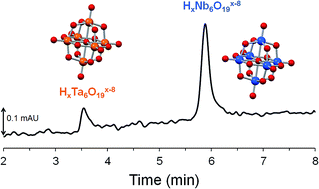
The electropherograms of Ta and Nb solutions at pH 11.7 (I = 50 mM) are given in Fig. 3. Surprisingly, even if the polyoxoanions Nb6O198− and Ta6O198− have an almost identical geometry (Fig. 1), their migration times are significantly different. This underlines the potential of capillary electrophoresis techniques for separating Nb(V) and Ta(V) under alkaline conditions. Moreover, the analysis time obtained with our experimental setting is shorter than those obtained with the previously reported methods, whereas the CE conditions have not been optimized yet. This means that Nb and Ta can be easily separated by capillary zone electrophoresis involving classical bare-fused silica capillary and without using any toxic or expensive additives in the background electrolyte.


image file: c5ra11521c-f3.tif
Fig. 3 Typical electropherograms of a 0.25 mM solution of Na8Ta6O19·24.5H2O (top) and a solution of 0.25 mM of Na7HNb6O19·15H2O (bottom). CE conditions: bare-fused silica capillary, 50 μm id × 35 cm (detection at 8.5 cm). BGE[thin space (1/6-em)]:[thin space (1/6-em)]LiOH/LiCl, pH = 11.7, I = 50 mM. Hydrodynamic injection at the anodic end: 3 s, 10 mbar. Applied voltage: 10 kV at the injection end. Temperature: 25 °C. Detection: UV at 214 nm. Concentration of DMF: 0.1% (v/v).

The separation of Nb and Ta was also confirmed by co-injecting the two metals. The analytical conditions of the two metals and the limit of detection of the method were not optimized in the present paper. The quantitation limits of this non-optimized method are 0.115 mM for HxTa6O19x−8(aq) ions and 0.093 mM for HxNb6O19x−8(aq) ions. For comparison, the usual concentrations found in industrials processes are higher than 0.09 mM for hexatantalate ions and higher than 1.8 mM for hexaniobate ions. The optimization of the method will be discussed in detail in a future study. Nonetheless, the results depicted in Fig. 3 show that capillary electrophoresis of Nb and Ta, in their hexameric form, could be a powerful tool for the separation and quantification of the two valuable metals. Moreover, as mentioned in the introduction, several industrial processes are being developed in alkaline media for the recovery of Nb and Ta and, as a consequence, capillary electrophoresis could be very helpful for the development and analytical support of such processes.

Thanks to their relatively fast migration time, the mobility of HxNb6O19x−8(aq) ions was determined in several buffers in the pH range ∼9 to ∼13 (Fig. 4). Indeed, the hexaniobate ions can be triply, doubly, simply protonated or fully deprotonated in aqueous solutions at pH higher than 9, hence, the mobility of these multiprotic species was expected to be strongly pH-dependent, as the electrophoretic mobility of an ion depends on its charge to solvated hydrodynamic radius ratio. The protonation constants of HxNb6O19x−8(aq) ions have been previously determined by potentiometry9,16 or UV spectrophotometry19 but only at high ionic strength (I ≥ 1 M). The previously reported values have been compiled elsewhere.19 The reported pKa's (I = 3 M, T = 25 °C) for the couples H3Nb6O195−/H2Nb6O196−, H2Nb6O196−/HNb6O197− and HNb6O197−/Nb6O198− are 9.37 (±0.03), 10.6 (±0.5) and 13.6 (±0.2), respectively.


image file: c5ra11521c-f4.tif
Fig. 4 Effective mobility measured for HxNb6O19x−8(aq) ions as a function of pH in Na+ media at I = 50 mM and T = 25 °C. [Nb6O19]total = 0.25 mM. BGE[thin space (1/6-em)]:[thin space (1/6-em)]CHES 40 mM + NaCl/NaOH (green circles); CAPS 40 mM + NaCl/NaOH (orange squares); NaCl/NaOH (purple triangles); Na3PO4/Na2HPO4 (red squares). Other conditions: see Fig. 3. The error bars correspond to standard deviation obtained from triplicate injection of the same sample.

We here expected to determine the protonation constants of HxNb6O19x−8(aq) ions by CE since this technique allows to work at low ionic strength and since CE has already proven its efficiency for such a purpose.26 As shown in Fig. 4, the evolution of μeff(Nb) with pH is not trivial.

While increasing the pH from 9.5 to 11 (at constant ionic strength), the absolute value of the effective mobility of HxNb6O19x−8(aq) decreases from 46 to 44 × 10−5 cm2 s−1 V−1. This was not expected taking into consideration a potential deprotonation of HxNb6O19x−8(aq), which should lead to an increase in the ionic charge of the species and thus in the electrophoretic mobility. On the contrary, while increasing the pH from 11 to 12.5, an increase of the absolute value of the effective mobility of HxNb6O19x−8(aq) from 44 to 47 × 10−5 cm2 s−1 V−1 is observed. Such a behavior is generally observed when association takes place between the species of interest and the counter-ions present in the background electrolyte. The formation of ion-pairs between the multiply charged ion Nb6O198− and alkaline ions (K+, Rb+, Cs+) has been observed experimentally by Antonio et al.18 in highly concentrated hydroxide solutions. Indeed, the formation of the contact ion-pairs [K10(Nb6O19)]2+, [K8(Nb6O19)], [Rb8(Nb6O19)] and [Cs8(Nb6O19)] in 3 M KOH, RbOH or CsOH was demonstrated based on Small-Angle X-ray Scattering experiments. We also recently reported19 that the concentration and nature of the alkali ions in the background electrolyte influences the acid–base properties of the couple HNb6O197−/Nb6O198−. The results obtained in the present study clearly suggest that the hexaniobate ions HxNb6O19x−8(aq) are associated to Na+ ions even when low concentrations are used, i.e. 50 mM of Na+. Moreover, the electropherograms obtained for solutions of HxNb6O19x−8(aq) in Na+-containing media confirm that the detected ions are anionic. This means that HxNb6O19x−8(aq) ions are not fully neutralized by the surrounding Na+ compared to what was observed by Antonio et al.18 in highly alkaline media.

The strong influence of the alkaline ion concentration on the mobility of the hexaniobate ions was confirmed by measuring the mobility in phosphate buffer, where the Na+ concentration was decreased to 30 mM (compared to 50 mM in other buffers) while the ionic strength was maintained to 50 mM (Fig. 4). The absolute value of the effective mobility of HxNb6O19x−8(aq) increases from ∼47 to ∼52 × 10−5 cm2 s−1 V−1 when decreasing the Na+ concentration from 50 to 30 mM at constant pH and ionic strength. Based on these observations, the protonation/deprotonation of HxNb6O19x−8(aq) ions should be seen as an exchange between proton(s) and alkali ion(s) rather than a simple protonation/deprotonation process. The stoichiometry of the ion-pairs formed between HxNb6O19x−8 and Na+ ions are still unknown but might be strongly dependent on pH and excess of alkali ions. As a consequence, the previously reported protonation constants, determined in concentrated media9,10,12,16,19,27,28 should also be viewed as apparent protonation constants rather than thermodynamic constants.

Similar measurements were performed with hexatantalate ions HxTa6O19x−8(aq) (Fig. S1). As expected, the effective mobility of hexatantalate ions follows a trend very similar to the one of hexaniobate ions. Association between Na+ and HxTa6O19x−8 ions seems also to take place even when a low concentration of Na+ is used and, as a consequence, the protonation constants of HxTa6O19x−8 could not be determined by CE. Nonetheless, it has to be underlined that, in the pH range investigated, the absolute value of the effective mobility of hexatantalate ions is always lower than that of hexaniobate ions. Such a difference was unexpected given the structural and electronic similarities between HxTa6O19x−8 and HxNb6O19x−8 ions (Fig. 1).

These results mean that hexatantalate ions are less mobile that the hexaniobate ions. While looking at the bare-ions, Ta6O198− and Nb6O198−, their identical charge and almost identical geometry would give a very similar charge density i.e. a very similar migration velocity. The striking difference between the effective mobilities of HxNb6O19x−8(aq) and HxTa6O19x−8(aq) could be explained by (i) a difference in the protonation state of the hexameric ions and thus a difference in their effective charges or (ii) the formation of solvated ion-pairs [Nay(HxM6O19)]x+y−8 (M = Nb, Ta) with different hydrodynamic radii.

Regarding the difference in the protonation state, while the reported values for the pKa's of HxNb6O19x−8(aq) are consistent with each other,19 there is a huge discrepancy among the reported values for HxTa6O19x−8(aq) (0 ≤ x ≤ 3). For example the published pKa of the couple HTa6O197−/Ta6O198− ranges from 11.5 to 13.9 and the one of H2Ta6O196−/HTa6O197− ranges from 9.3 to 12.0 (at T = 25 °C and I = 3 M KCl),10,12,28 so it is hard to establish a reliable predominance diagram for HxTa6O19x−8(aq). Nonetheless, it has to be underlined that protonated alkali hexaniobate salts can be isolated whereas only non-protonated alkali salts have been isolated for hexatantalate.29,30 This suggests that the hexaniobate ions are easier to protonate than the hexatantalate ions. Under these considerations, the effective charge would be lower for the hexaniobate than the hexatantalate ions and therefore HxNb6O19x−8(aq) should be less electrophoretically mobile than HxTa6O19x−8(aq), which is not in accordance with the obtained results.

We also measured the effective mobility of HxNb6O19x−8(aq) and HxTa6O19x−8(aq) ions as a function of the ionic strength at pH 12. The evolution of the effective mobility with the ionic strength is usually used to compare the effective charges of ions.31 In the case HxNb6O19x−8(aq) and HxTa6O19x−8(aq) ions, the influence of the ionic strength on the electrophoretic mobility is very similar (Fig. 5). This suggests that the striking difference in the mobilities of HxNb6O19x−8(aq) and HxTa6O19x−8(aq) is not due to a difference in their effective charges. This also suggests that HxNb6O19x−8(aq) and HxTa6O19x−8(aq) might have the same protonation state at pH 12, i.e. fully deprotonated or mono-protonated taking into account the various pKa values published for HxTa6O19x−8 and HxNb6O19x−8.19


image file: c5ra11521c-f5.tif
Fig. 5 Effective mobility measured for HxTa6O19x−8(aq) (purple circles) and HxNb6O19x−8(aq) (orange squares) as a function of the ionic strength. BGE[thin space (1/6-em)]:[thin space (1/6-em)]NaOH/NaCH3COO. pH = 12. T = 25 °C. CE conditions: see Fig. 4.

By contrast, the formation of solvated ion-pairs with different hydrodynamic radii could explain the lower electrophoretic mobility (in absolute value) observed for hexatantalate ions compared to hexaniobate. Indeed, Fullmer et al.32 recently observed, from SAXS experiments, that the ion-pairs formed between Ta6O198− and K+, Rb+ or Cs+ differ from the ion-pairs between Nb6O198− and K+, Rb+ or Cs+. The authors reported that, in presence of excess of alkali ions, contact ion-pairing dominates for Nb6O198− whereas solvent-separated or solvent-shared ion-pairing dominates for Ta6O198−. The presence of water molecules between the hexatantalate core (Ta6O198−) and alkali ions renders the alkali-hexatantalate ion-pairs bigger than their hexaniobate counterparts. This is in accordance with the lower effective mobility (in absolute value) measured for HxTa6O19x−8(aq) ions in the present studies.

The effective mobility of HxNb6O19x−8(aq) and HxTa6O19x−8(aq) was also measured in presence of lithium and potassium ions (Fig. S2). The behavior of hexatantalate and hexaniobate ions was similar to what was observed in Na+-based media. The protonation constants of the polyoxoanions cannot be derived from the electrophoretic measurements due to association with the alkali ions. It has to be noted than the absolute values of the effective mobilities of HxNb6O19x−8(aq) and HxTa6O19x−8(aq) are slightly higher in presence of potassium ions than with lithium or sodium ions. This is in accordance with the decrease of hydrated radius of the alkali ions with the atomic number, i.e. lighter alkali ions give larger ion-pairs.33,34 The increase in the size of the hexaniobate-alkali ion-pairs when the atomic number of the alkali ion decreases was also noted by Antonio et al.18 with hexaniobate ions and K+, Rb+ and Cs+.

Finally, we noted that the effect of the nature of the alkali ion on the electrophoretic mobility is more important for HxTa6O19x−8(aq) than for HxNb6O19x−8(aq). This might be, partly, due the formation of contact ion-pairs for hexaniobate and solvent-shared and solvent-separated ion-pairs in the case of hexatantalate. This difference can be used for obtaining a better separation between the two group V metals. As depicted in Fig. S3, the best separation between HxTa6O19x−8(aq) and HxNb6O19x−8(aq) is observed in lithium media. This is in agreement with the fact that lithium has the highest hydrated radius among the alkali ions and, as a consequence, Li+(aq) is the best candidate for influencing the size of the alkali-hexametalate aggregates. This feature will be further investigated in a future work for developing new analytical procedures for the separation and quantification of Nb(V) and Ta(V).

Conclusion

For the first time, alkaline solutions of Nb(V) and Ta(V) have been probed by capillary electrophoresis. Nb and Ta could be detected by UV in direct mode thanks to the formation of HxNb6O19x−8(aq) and HxTa6O19x−8(aq) (0 ≤ x ≤ 3) which avoids the use of toxic reagents as reported in previously developed methods. The effective mobilities of HxNb6O19x−8(aq) and HxTa6O19x−8(aq) have been determined as a function of pH in Li+, Na+ and K+-based media at 25 °C. Regardless the background electrolyte used for the separation, the hexaniobate ions are always more electrophoretically mobile than their tantalum analogues. This surprising difference is thought to be due to the formation of contact ion-pairs in the case of HxNb6O19x−8(aq) and solvent-shared or solvent-separated ion-pairs in the case of HxTa6O19x−8(aq). Optimization of the niobium-tantalum separation and the validation of an analytical procedure by CE will be at the centre of our future works.

Acknowledgements

Financial support from Eramet Research (France) is gratefully acknowledged.

Notes and references

  1. Roskill Information Services, The economics of niobium, Roskill Information Services, London, 2009 Search PubMed.
  2. E. E. Nikishina, D. V. Drobot and E. N. Lebedeva, Russ. J. Non-Ferr. Met., 2013, 54, 446–452 CrossRef.
  3. E. E. Nikishina, D. V. Drobot and E. N. Lebedeva, Russ. J. Non-Ferr. Met., 2014, 55, 130–140 CrossRef.
  4. A. Agulyanski, The chemistry of tantalum and niobium fluoride compounds, Elsevier, Amsterdam , Boston, 1st edn, 2004 Search PubMed.
  5. Z. Zhu and C. Y. Cheng, Hydrometallurgy, 2011, 107, 1–12 CrossRef CAS PubMed.
  6. M. Nete, W. Purcell and J. T. Nel, Hydrometallurgy, 2014, 149, 31–40 CrossRef CAS PubMed.
  7. M. Nyman, Dalton Trans., 2011, 8049 RSC.
  8. W. G. Klemperer and K. A. Marek, Eur. J. Inorg. Chem., 2013, 2013, 1762–1771 CrossRef CAS PubMed.
  9. N. Etxebarria, L. A. Fernandez and J. M. Madariaga, J. Chem. Soc., Dalton Trans., 1994, 3055 RSC.
  10. G. Arana, N. Etxebarria, L. A. Fernandez and J. M. Madariaga, J. Solution Chem., 1995, 24, 611–622 CrossRef CAS.
  11. T. M. Anderson, M. A. Rodriguez, F. Bonhomme, J. N. Bixler, T. M. Alam and M. Nyman, Dalton Trans., 2007, 4517–4522 RSC.
  12. E. Balogh, T. M. Anderson, J. R. Rustad, M. Nyman and W. H. Casey, Inorg. Chem., 2007, 46, 7032–7039 CrossRef CAS PubMed.
  13. P. A. Abramov, A. M. Abramova, E. V. Peresypkina, A. L. Gushchin, S. A. Adonin and M. N. Sokolov, J. Struct. Chem., 2011, 52, 1012–1017 CrossRef CAS.
  14. R. S. Tobias, Can. J. Chem., 1965, 43, 1222–1225 CrossRef CAS.
  15. J. Aveston and J. S. Johnson, Inorg. Chem., 1964, 3, 1051–1053 CrossRef CAS.
  16. G. Neumann, Acta Chem. Scand., 1964, 18, 278–280 CrossRef CAS.
  17. F. Sahureka, R. C. Burns and E. I. von Nagy-Felsobuki, Inorg. Chim. Acta, 2003, 351, 69–78 CrossRef CAS.
  18. M. R. Antonio, M. Nyman and T. M. Anderson, Angew. Chem., Int. Ed., 2009, 48, 6136–6140 CrossRef CAS PubMed.
  19. G. J.-P. Deblonde, A. Moncomble, G. Cote, S. Bélair and A. Chagnes, RSC Adv., 2015, 7619–7627 RSC.
  20. T. M. Alam, M. Nyman, B. R. Cherry, J. M. Segall and L. E. Lybarger, J. Am. Chem. Soc., 2004, 126, 5610–5620 CrossRef CAS PubMed.
  21. A. R. Timerbaev, O. P. Semenova, P. Jandik and G. K. Bonn, J. Chromatogr. A, 1994, 671, 419–427 CrossRef CAS.
  22. B.-F. Liu, L.-B. Liu, H. Chen and J.-K. Cheng, Fresenius. J. Anal. Chem., 2001, 369, 195–197 CrossRef CAS.
  23. E.-B. Liu, Y.-M. Liu and J.-K. Cheng, Anal. Chim. Acta, 2001, 443, 101–105 CrossRef CAS.
  24. N. Vachirapatama, P. Doble, Z. Yu, M. Macka and P. R. Haddad, Anal. Chim. Acta, 2001, 434, 301–307 CrossRef CAS.
  25. G. J.-P. Deblonde, A. Chagnes, S. Bélair and G. Cote, Hydrometallurgy, 2015, 156, 99–106 CrossRef PubMed.
  26. E. Lipka, M. Folly-Klan, J. Charton, M.-P. Vaccher, J.-P. Bonte and C. Vaccher, J. Pharm. Biomed. Anal., 2010, 53, 1267–1271 CrossRef CAS PubMed.
  27. B. Spinner, Rev. Chim. Miner., 1968, 839–868 CAS.
  28. B. Spinner and N. Kheddar, C. R. Seances Acad. Sci., Ser. C, 1969, 269, 1108–1111 CAS.
  29. M. Nyman, T. M. Alam, F. Bonhomme, M. A. Rodriguez, C. S. Frazer and M. E. Welk, J. Cluster Sci., 2006, 17, 197–219 CrossRef CAS.
  30. Y. Hou, D. B. Fast, R. E. Ruther, J. M. Amador, L. B. Fullmer, S. R. Decker, L. N. Zakharov, M. R. Dolgos and M. Nyman, J. Solid State Chem., 2015, 221, 418–425 CrossRef CAS PubMed.
  31. W. Friedl, J. C. Reijenga and E. Kenndler, J. Chromatogr. A, 1995, 709, 163–170 CrossRef CAS.
  32. L. B. Fullmer, P. I. Molina, M. R. Antonio and M. Nyman, Dalton Trans., 2014, 43, 15295–15299 RSC.
  33. B. E. Conway, Ionic Hydration in Chemistry and Biophysics (Studies in Physical and Theoretical Chemistry), Elsevier Sci., 1981 Search PubMed.
  34. P. M. Dove and C. J. Nix, Geochim. Cosmochim. Acta, 1997, 61, 3329–3340 CrossRef CAS.

Footnote

Electronic supplementary information (ESI) available. See DOI: 10.1039/c5ra11521c

This journal is © The Royal Society of Chemistry 2015
Click here to see how this site uses Cookies. View our privacy policy here.