Yuewen Ma,
Huan Sun,
Qi Sun and
Hui Zhang*
State Key Laboratory of Chemical Resource Engineering, Beijing University of Chemical Technology, Beijing 100029, China. E-mail: huizhang67@gst21.com; Tel: +86 10 6442 5872
First published on 31st July 2015
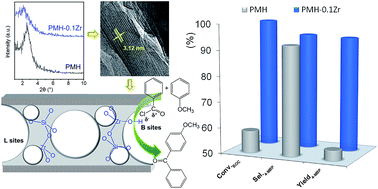
Novel zirconium-doped porous magadiite heterostructures (PMH-xZr, x = Zr/Si molar ratio) are fabricated by two-dimensional intragallery cosurfactant-directing in situ hydrolysis–condensation–polymerization method of TEOS and Zr-n-propoxide from synthetic Na-magadiite and characterized systematically by XRD, SEM/(HR)TEM, 29Si MAS NMR, BET, UV-vis DRS, NH3-TPD, pyridine FT-IR, and XPS techniques. The results indicate that the obtained PMH-xZr materials possess high surface area and high thermal stability upon effective assembly of interlayer Zr-doped meso-structural silica and the layers of magadiite. The PMH-xZr samples with x < 0.2 show successful incorporation of Zr into the lattice of interlayer mesostructural silica framework leading to considerably generated Brønsted sites Zr–O(H)–Si and obviously increased Lewis sites Zr–O–Si along with well-kept layered supermicro-mesostructure, while PMH-0.2Zr shows delaminated layers. PMH-0.1Zr exhibits the highest liquid-phase benzoylation activity of anisole with benzoyl chloride (Conv. 99.5%) and yield for 4-methoxybenzophenone (4-MBP) (94.1%) due to the strongest synergy between the high concentration of surface Brønsted sites and supermicro-mesostructure. PMH-0.1Zr can be reused by no further chemical treatment for at least five runs with a slightly reduced 4-MBP yield. These PMH-xZr materials can serve as a promising solid acid catalyst and/or acidic support with high surface area and thermal stability in broad range of catalysis applications.
Magadiite, a kind of hydrous sodium silicate found in lake beds at Lake Magadi,14 can be easily prepared by hydrothermal route in lab.15,16 Upon synthetic silicic magadiite, a good candidate for PCHs can be expected with excellent resistance to acid and hydrothermal stability compared to common clays.1 Pinnavaia et al.1 have ever mentioned magadiite in their first report on PCHs from various clay hosts but without detailed study. It is noted that Kwon et al.7,17 reported a mesoporous silica-pillared H+-magadiite via amine-catalyzed hydrolysis of TEOS without pre-swelling step, but the obtained silicic materials yet show very low or no acidity. Our recent study first reported the porous magadiite heterostructures (PMH) and its post-grafting aluminated derivatives (xAl-PMH) from NaAlO2 showing greatly enhanced Friedel–Crafts alkylation activity.18
Transition metal oxide ZrO2 with high corrosion resistance, low thermal conductivity and high melting point has attracted special attention in catalysis,19 but suffered from low surface area and non-shape selective nature. The common way to overcome these limitations lies in supporting ZrO2 onto high surface oxides.20,21 So far, there are a few reports on Zr–Si mixture pillared clays/PCHs. Kosuge et al.22 studied zirconia–silica-based pillared H-ilerite by intercalating octylamine and Zr-butoxide and found the formation of high surface products with uniform micropores and irregular gallery heights upon Zr contents. Han et al.23 reported microporous Si–Zr-based pillared clays upon the reaction of Na-montmorillonite with colloidal SiO2–ZrO2 particles showing limited pore size used for selective adsorption of toluene and mesitylene. Pinto et al.2 reported montmorillonite-based PCH modified with Zr by copolymerization of TEOS with Zr-ethoxide for separation of aromatic molecules but without detailed structure and acidity studies. While Cecilia et al.24 prepared natural montmorillonite-based PCHs with varied Zr contents by long time sol–gel process (10 days) of TEOS and Zr-propoxide in 1-propanol and studied their texture, structure and acidity by SEM, BET, XRD, FTIR, TG-DTA, NH3-TPD and 1-butene isomerization. To the best of our knowledge, there is no report on Zr-doped porous magadiite heterostructures, far from its acidic catalytic applications such as Friedel–Crafts acylation, which is highly desired to be explored.
In the present work, we report novel Zr-doped porous magadiite heterostructures (PMH-xZr) by cosurfactant-directing two-dimensional intragallery in situ hydrolysis–condensation–polymerization strategy of TEOS and Zr-n-propoxide from a synthetic Na-magadiite, which were studied by XRD, SEM/HRTEM, 29Si MAS NMR, BET, UV-vis DRS, XPS, NH3-TPD and pyridine FT-IR techniques. The effect of Zr-doping on the texture, acidity, and benzoylation performance of anisole with benzoyl chloride of PMH-xZr materials is thoroughly investigated. Moreover, the recycle efficiency of the PMH-xZr catalysts is also studied.
![]() | ||
| Fig. 1 XRD patterns of PMH (a) and PMH-xZr (b–f: x = 0.0125, 0.025, 0.05, 0.1, 0.2) at small (A) and wide (B) angle range. | ||
After calcination, the obtained pure PMH shows further expanded d001 as 3.38 nm, together with broadened peak shape, which is probably due to the stabilization role of the co-templates though with somewhat disturbance of layer ordering owing to the removal of the gallery cosurfactants during calcinations for the completion of dehydroxylation and cross-linking of intragallery assembled silica structure.1,12 This expanding effect is well-retained in the final PMH-xZr samples as revealed by a clear broad (001) peak in low 2θ angle though with reduced intensity probably due to the partial loss of crystallinity upon the thermal decomposition of interlayer organic moieties. With increasing Zr-doping (x = 0.0125–0.1), the (001) lines remain clear and the d001 value increases and reaches the maximum 3.82 nm for PMH-0.05Zr, and then slightly reduced to 3.69 nm for PMH-0.1Zr, implying the uniformly ordered incorporation of zirconium into the interlayer mesostructure of PMH. While PMH-0.2Zr shows almost completely disappeared (001) line, implying the delaminated structure due to its maximal Zr-doping, similar to previously reported PCHs with titanium and zirconium.12,24 These results indicate that the incorporation of Zr into the lattice of interlayer meso-structural silica strongly affects the order of the stacking layers along the c-axis, causing a dramatic decrease of the coherent diffraction domain along this direction with increased Zr-doping. Note that silica-based PMH with proper Zr-doping can hold well-retained layered structure assembled with intragallery mesostructure such as PMH-0.1Zr and PMH-0.05Zr.
Fig. 2 depicts the FT-IR spectra of PMH and PMH-xZr samples, while those of the intermediates and magadiite shown in Fig. S3B.† It can be seen from Fig. S3B† that magadiite shows a broad band at ∼3440 cm−1 assigned to ν(OH) and a small sharp one at 3663 cm−1 to free OH group,25,26 implying the presence of terminal silanol groups.27 The intense band at 1083 cm−1 can be assigned to νas(Si–O–Si), whereas two overlapped peaks at 820 and 781 cm−1 to νs(Si–O–Si) involving silicon motions, two ones at 620 and 573 cm−1 to the bending modes of single and double Si–O–Si rings of SiO4 unit,26,27 and a sharp one at 462 cm−1 to νs(Si–O–Si).26 For QM, two sharp peaks at 2852 and 2921 cm−1 are due to νs(C–H) and νas(C–H) of –CH2– groups, respectively, and a sharp one at 1469 cm−1 to CH3 antisymmetric deformation modes and CH2 scissoring modes, implying the intercalation of CTMA+. For QOTM and QOTM-xZr samples, strong IR bands for organic groups are clearly seen due to the introduction of cosurfactant and inorganic precursors. While the strong νas(Si–O–Si) at 1083 cm−1 of magadiite clearly reduces and slightly downshifts to ∼1079 cm−1, and two bands at 820 and 781 cm−1 to νs(Si–O–Si) show similar decrease in intensity and merge in one peak with gradually reduced wavenumbers from 808 cm−1 of QOTM to 803 cm−1 of QOTM-0.2Zr with Zr-doping. These phenomena may be due to the formation of Si–O–Zr linkages, similar to those occurred in aluminated LAPONITE®-derived PCHs28 or Zr-doped silica,29 upon the intercalation of silica or Zr-doped silica molecular sieve-like clusters between the magadiite layers.
![]() | ||
| Fig. 2 FT-IR spectra of PMH (a) and PMH-xZr samples (b–f: x = 0.0125, 0.025, 0.05, 0.1, 0.2) (inset refers to the amplified IR spectra between 4000–3200 cm−1). | ||
As for PMH and PMH-xZr (Fig. 2), a weak broad band in 3420–3450 cm−1 can be assigned to ν(OH) and a quite small sharp one at 3745 cm−1 (inset in Fig. 2) to the terminal Si–OH groups.27,30 While a strong band at 1086 cm−1 accompanied by a shoulder at 1206 cm−1 of PMH can be ascribed to νas(Si–O–Si) and Si–O–Si stretching modes of five-membered rings in calcined samples,25–27 respectively, implying considerable structure stability of magadiite sheets in PMH materials. Interestingly, the sharp Si–OH signals at ∼3745 cm−1 of PMH are variously reduced for the PMH-xZr samples with increasing Zr-doping, implying the incorporation of Zr into the interlayer space of PMH which may cause varied amount of Si/Zr–OH groups probably upon the formation of Si–O–Zr linkages. Moreover, the intensity of the band at 1083 cm−1 and its fair-defined shoulder (1237 cm−1) due to the Si–O–Si framework is greatly reduced, and gradually becomes narrow with slight downshift as Zr-doping is increased especially for the samples with high Zr content (x > 0.05). Typically for PMH-0.1Zr and PMH-0.2Zr, the νas(Si–O–Si) occurs at ∼1077 cm−1. Two other bands, at 811 and 454 cm−1 for PMH, characteristic of Si–O bonds in a ring structure,26,27,29 exhibit similar band downshifts and intensity decrease for PMH-xZr with Zr-doping, also reflecting a gradual increase of Zr in the Si–O network in forming Zr–O–Si hetero-linkages. While PMH-0.2Zr shows the minimum absorption intensity and the maximum band downshift in the ring structural Si–O bands (799 and 449 cm−1) corresponding to the delaminated structure of the sample. These results are probably due to the superimposition of stretching and rocking vibrations of Si–O–Si and Si–O–Zr bonds.20,31
Fig. 3 shows the 29Si MAS-NMR spectra of pure PMH and PMH-xZr samples. All the spectra present a broad signal between −80 and −140 ppm, which can be deconvoluted to three main components with chemical shifts at ca. −92, −102, and −111 ppm resulted from Q2, Q3 and Q4 silicon nuclei, respectively, where the Qi corresponds to silicon nuclei with i siloxane linkages, i.e., Q2 to disilanol Si(OSi)2(OR)2, where R is H or Zr, Q3 to silanol Si(OSi)3(OR), and Q4 to Si(OSi)4 in the framework. The pure PMH exhibits a prominent Q4 Si(OSi)4 signal near −111.1 ppm, a moderate Q3 Si(OSi)3(OH) one near −102.0 ppm and a weak Q2 Si(OSi)2(OH)2 near −92.3 ppm.17,18,32 The 29Si MAS NMR spectra of the PMH-xZr samples are quite similar to that of pure PMH. One may see that the samples modified with low Zr-doping (x < 0.2) show a larger population of the Q2 and Q3 coordination, thus a bigger value of (Q3 + Q2)/Q4, that strongly indicates more Si ions being replaced by Zr ions in interlayer silica framework. While the value of (Q3 + Q2)/Q4 of PMH-0.2Zr reduces to 0.33 (Table S2†), similar to the value of PMH, being attributed to the higher Zr-doping leading to small amount of extra-framework Zr oxides (also verified by later UV-vis DRS). Therefore, it can be deduced upon the 29Si MAS-NMR and FT-IR data that the zirconium atoms are incorporated into the silica framework via Si–O–Zr linkages in the PMH-xZr samples. This is the first report on the fabrication of Zr-doped PMH via in situ 2D intragallery cosurfactant-directing TEOS/Zr-nPro hydrolysis–condensation–polymerization method.
![]() | ||
| Fig. 3 29Si MAS NMR spectra for PMH (a), PMH-0.0125Zr (b), PMH-0.05Zr (c), PMH-0.1Zr (d) and PMH-0.2Zr (e). | ||
The N2 adsorption–desorption isotherms (Fig. S4a†) of the PMH-xZr samples clearly display a type IV isotherm with a H4 hysteresis loop, implying a certain mesoporosity related to the slit-shaped pores (IUPAC).33 Interestingly, a gradual increase in N2 sorption observed in the relative pressure (p/p0) of 0.05–0.3 suggests the presence of supermicropores and small mesopores.1,5,33 The BJH pore size distributions (PSD) indicate that the six distributions all mainly center at ∼1.89 nm (Fig. S4b†). Considering the tensile strength effect,34 that is, the current pore data ∼1.89 nm might be the combined effect of the micropores and mesopores, BJH model is not completely suitable for the samples. It is noted that all the desorption inflection points (Fig. S4a†) are very smooth and desorption hysteresis loops at p/p0 < 0.25 are not closed, strongly indicating the possible nitrogen fills in micropores.33,35 Therefore, another PSD calculation model, density functional theory (DFT) model usually applied to characterize mesoporous materials containing micropores such as mesoporous carbon,36 is used to illustrate the PSD. The DFT distributions (Fig. S4c†) show obvious existence of the multi-modal pore structure, involving some supermicropores with optimal size of ∼0.84, 0.92, and 1.15 nm, and small mesopores at ∼1.89–1.97 nm near to the gallery height of samples upon XRD. The quite similar average pore size implies the uniform Zr-incorporation into the interlayer meso-silica framework except PMH-0.2Zr with a little larger one possibly due to its delaminated layers.
The detailed textural data are listed in Table 1. The specific surface areas (SBET) of PMH-xZr samples are greatly increased with Zr-doping. The SBET reaches to the maximum 603.3 m2 g−1 with the relatively larger pore volume of 0.40 mL g−1 for PMH-0.05Zr, implying more terminal oxygen atoms from the bridging ones, leading to structural stabilization of SiO4 tetrahedral in an interlayer 3D silica network.29 Then the SBET is contrarily reduced with further increased Zr-doping probably due to the increased incorporation of larger Zr4+ ion (radius 0.084 nm) than Si4+ (0.026 nm) into the gallery SiO2 framework leading to obviously enhanced interlayer packing density of SiO2–ZrO2 molecule sieve-like clusters. The great SBET drop for PMH-0.2Zr, consistent with its lower amount of super-micropores than others, suggests the presence of some amorphous ZrO2-like species (verified by later UV-vis DRS) causes delamination of the layered PMH material as XRD showed. Clearly, PMH-0.05Zr and PMH-0.1Zr simultaneously possesses relatively larger SBET and Zr-doping and well-kept layered supermicro-mesoporous heterostructures.
| Samples | SBET/m2 g−1 | Smicoa/m2 g−1 | VT/cm3 g−1 | Vmicroa/cm3 g−1 | RBJH/nm | RDFT/nm | GHb/nm | Zr/Sic |
|---|---|---|---|---|---|---|---|---|
| a Microporous area and volume obtained by t-plot method.b Gallery height (GH) obtained by subtracting the thickness 1.12 nm of magadiite layer from d001 upon XRD analysis.c Based on EDX analysis. | ||||||||
| PMH-0.2Zr | 242.8 | 179.1 | 0.241 | 0.093 | 1.92 | 1.97 | — | 0.130 |
| PMH-0.1Zr | 401.6 | 340.8 | 0.288 | 0.174 | 1.89 | 0.92, 1.15, 1.89 | 2.571 | 0.056 |
| PMH-0.05Zr | 603.3 | 458.8 | 0.400 | 0.227 | 1.89 | 0.84, 0.92, 1.15, 1.89 | 2.705 | 0.038 |
| PMH-0.025Zr | 557.7 | 487.5 | 0.388 | 0.246 | 1.89 | 0.84, 0.92, 1.15, 1.89 | 2.492 | 0.021 |
| PMH-0.0125Zr | 533.6 | 457.8 | 0.395 | 0.231 | 1.89 | 0.84, 0.92, 1.16, 1.89 | 2.460 | 0.013 |
| PMH | 442.8 | 353.3 | 0.354 | 0.177 | 1.91 | 0.84, 0.92, 1.15, 1.90 | 2.260 | — |
On calcinations, the PMH (Fig. 4a) shows flake like layers with a smooth surface and regular packing probably due to the decomposition of interlayer organic groups and proper layer rearrangement during the calcinations. The EDX of PMH (inset in Fig. 4a) indicates the existence of Si and O with Si/O ratio of 4/8.1, higher than that of pristine magadiite (4/8.2), implying the intercalation of ordered meso-silica into the interlayer space of magadiite. However, the SEM images of PMH-xZr samples (Fig. 4(b)–(f)) clearly describe an irregularly shaped aggregate of rugged and irregular platy particles. Differently, PMH-0.2Zr shows obviously isolated irregularly shaped small platy particles, in line with its possible delaminated layer structure as the XRD shown. These morphological changes of the PMH-xZr samples are more likely due to the incorporation of Zr as silica–zirconia molecular sieve-like clusters into the interlayer space of the magadiite. A typical EDX of PMH-0.1Zr (inset in Fig. 4e) clearly indicates the incorporation of Zr in PMH.
Fig. 5 presents the TEM and HRTEM images of PMH-0.05Zr and PMH-0.1Zr. The HRTEM images indicate that the gallery space appears in light in contrast to the dark layers and the mean thickness of the dark layer is 1.25 and 1.23 nm for PMH-0.05Zr and PMH-0.1Zr, respectively, similar to ∼1.18 nm of magadiite layer (Fig. S5†) and literature value 1.12 nm,14,32 strongly implying the transformation of the precursors into PMH-0.05Zr and PMH-0.1Zr with no change of original layer structure of the starting magadiite. The (001) lattice fringes of 3.25 and 3.12 nm for PMH-0.05Zr and PMH-0.1Zr, respectively, are in good agreement with the XRD data.
![]() | ||
| Fig. 5 (HR)TEM images of PMH-0.05Zr (a and b) and PMH-0.1Zr (c and d) and their corresponding FFT diffractograms (insets). | ||
It is generally accepted that the acid strength depends on the NH3 desorption temperature: weak (100–200 °C), medium (200–400 °C) and strong (>400 °C).37 The NH3-TPD profile of PMH (Fig. 6) shows almost undetectable desorption peak, implying its very small amount (0.071 mmol g−1), similar to previously reported PCHs from montmorillonite and saponite et al.1,12 The removal of surfactant from the as-prepared PMH by calcination leads to the formation of protons, which are necessary to balance the clay layer charge, resulting in pure PMH intrinsically acid. However, all PMH-xZr samples (Fig. 6) exhibit clearly enhanced acidity. The low Zr-doped samples PMH-xZr (x = 0.0125 and 0.025) show only one maximum at ∼160 °C with clearly enhanced TCD signal, implying the formation of weaker acid sites. With increased Zr-doping, PMH-0.05Zr, PMH-0.1Zr and PMH-0.2Zr present appropriate two-maxima type of TPD-profile, i.e. two maxima at ∼190 °C and 360 °C, implying the formation of weak and medium-strong acid sites. These curves are broad and the complete NH3-desorption is not reached even at 500 °C, suggesting a heterogeneous distribution of acid strengths, though the weak-to-medium acid sites are majority considering the ammonia desorption mainly occurred between 100 and 450 °C. It is noted that the acidity is increased with the amount of Zr incorporated to the framework, being the PMH-0.1Zr the most acidic among the PMH-xZr samples (Table 2), and the lower acidity of PMH-0.2Zr with the most Zr-doping may be due to the delaminated layer structure. Clearly, all PMH-xZr samples exhibit a total acidity much higher than PMH, pure mesoporous silica,38 Zr-doped mesoporous silica,39 a hexagonal ordered mesoporous silica grafted with 20 wt% ZrO2 (ref. 40) and a ZrO2-pillared montmorillonite.41 The presence of acid sites is mainly due to the incorporation of Zr into the interlayer mesoporous silica network where superficial Zr4+ species with low coordination exist. Generally, the high concentration of acid sites exposed on the catalyst can be related to the high surface area. However, in the present system, the highest acid amount is found for PMH-0.1Zr (0.968 mmol g−1), though it only shows relatively larger SBET (401 m2 g−1). This phenomenon can be explained as that PMH-0.1Zr simultaneously holds higher Zr-doping and relatively higher SBET closely related to its ordered packing of interlayer SiO2–ZrO2 clusters in largely extended gallery space as FT-IR, XRD and HRTEM showed, thus the maximum concentration of acid sites. It should be noted that chemisorbed NH3 (assuming 0.15 nm2 occupied per NH3 molecule12) covers the fraction of the sample surface lower than 22% except delaminated PMH-0.2Zr assuming the formation of monolayer (Table 2).
| Samples | Weak-medium/mmol g−1 | Strong/mmol g−1 | Total acidity/mmol g−1 | Acidity densitya/NH3/nm2 | Coveragesurf. bby NH3/% | TDesorp./°C | B sites/mmol g−1 | L sites/mmol g−1 | B/L ratio |
|---|---|---|---|---|---|---|---|---|---|
| a Acidity density (NH3 molecules per nm2) = [acidity (mol g−1) × NA/SBET (nm2 g−1)].b Percentage of the surface covered by a monolayer of chemisorbed ammonia. It was assumed that the surface occupied by one NH3 molecule is 0.15 nm2.12 | |||||||||
| PMH | 0.071 | — | 0.071 | 0.097 | 1.4 | 200 | — | — | — |
| PMH-0.0125Zr | 0.480 | — | 0.480 | 0.542 | 8.1 | 200 | — | 0.223 | — |
| PMH-0.025Zr | 0.552 | — | 0.552 | 0.596 | 9.0 | 200 | 0.054 | 0.284 | 0.19 |
| 300 | — | 0.081 | — | ||||||
| PMH-0.05Zr | 0.506 | 0.238 | 0.744 | 0.743 | 11.1 | 200 | 0.065 | 0.358 | 0.18 |
| 300 | — | 0.155 | — | ||||||
| 400 | — | 0.127 | — | ||||||
| PMH-0.1Zr | 0.722 | 0.246 | 0.968 | 1.452 | 21.8 | 200 | 0.071 | 0.373 | 0.19 |
| 300 | 0.056 | 0.205 | 0.27 | ||||||
| 400 | — | 0.161 | — | ||||||
| PMH-0.2Zr | 0.565 | 0.23 | 0.795 | 1.972 | 29.6 | 200 | 0.070 | 0.351 | 0.20 |
| 300 | 0.040 | 0.180 | 0.22 | ||||||
Pyridine FT-IR was used to further probe the nature of the acidity of the samples (Fig. 7). The amount of both B and L sites was derived from the intensity of the band at 1540 cm−1 (PyH+ pyridinium ions) and 1445 cm−1 (pyridine bonded onto Lewis sites, PyL) with extinction coefficient 0.73 and 1.11 cm mol−1,39,42 respectively. The PMH-xZr samples with x in 0.025–0.2 contains both Brønsted and Lewis sites, however the former are much weaker than the latter. Particularly, PMH-0.1Zr shows the maximum amount and strength of acid sites of the PMH-xZr catalysts, in accordance with its NH3-TPD result.
![]() | ||
| Fig. 7 Concentration of surface acid sites determined for PMH-xZr (x = 0.025, 0.05, 0.1, 0.2). Insets, IR spectra of the samples pre-adsorbed with pyridine. | ||
Thermodesorption of pyridine was followed by FT-IR to estimate the acid strength of both Brønsted and Lewis sites. The position of the pyridine IR bands is independent on the strength of the site, and depends only on the type of bonding, therefore the relative intensities of the bands of pyridine were taken to estimate the relative acid strength of acid sites in the examined samples. The FT-IR of PMH (Fig. S7†), after pyridine adsorption and outgassing at 100 °C shows two weak absorptions at 1444 and 1592 cm−1, assigned to pyridine adsorbed on weak Lewis sites or to weakly hydrogen-bonded pyridine,39 which are nearly vanished after outgassing at 200 °C, indicating the trace or no acid sites on pure PMH. However, for PMH-xZr samples with x in 0.025–0.2 (Fig. 7), the IR spectra present not only greatly enhanced absorptions at 1445 and 1592 cm−1, but also a gradually strengthened band at ∼1538 cm−1 due to pyridine bonded to B sites (pyridinium ions), and a band at 1489 cm−1 to a combined contribution from both B and L sites,39,43 implying the formation of both B and L acid sites after Zr-doping. These bands can be clearly seen after evacuation at 200 °C. With further increased temperatures, the intensities of the characteristics of both B and L sites reduce, quite similar to the Zr-modified silica reported by Teo and Zeng.29
It is well-known that pure silica framework of MCM-41 and ZrO2 are Lewis solids without B acid site,44,45 and the fact that the pure PMH nearly does not hold B and L sites; therefore, the B and L sites of the PMH-xZr samples are caused by the presence of Zr atoms replaced the Si ones. Given that the Zr4+ ions has much larger radius (0.084 nm) than Si4+ (0.026 nm); when the smaller Si4+ ions are replaced by the larger Zr4+ ions in the framework, the bond length of Zr–O–Si clearly differs from that of Si–O–Si, and this phenomenon must leads to structural microstrain within the lattice cell. Changes in the electron density around Si, due to charge unbalance, or differences in electronegativity or local structure deformation resulting from the introduction of Zr4+ ion into the vicinity of the hydroxyls carrying Si, may weaken the SiO–H bond; this is one of the possible origins resulting in the B acid sites on the Zr-modified PMH materials. Table 2 gives the contributions of B and L sites of the PMH-xZr samples. The considerably created B sites and greatly increased L sites of the PMH-xZr are highly desirable for extended solid acid catalytic applications.
As a powerful technique to distinguish the nature of Zr ions presented in micro- and mesoporous Zr substituted molecular sieves and similar materials,19,50 XPS analysis was employed to further explore the nature of the acid sites of the catalysts. Fig. 9 shows the Zr 3d XPS spectra of PMH-xZr samples, while the corresponding Si 2p and O 1s XPS shown in Fig. S8.† With Zr-doping, Si 2p and O 1s binding energy (BE) maintain constant for low Zr-doped samples (x < 0.05) and slightly shift to lower BE for high Zr-doped samples compared to pure PMH, and Zr 3d exhibits similar changing trend, implying the slight change of electron density around Si, O and Zr cores with Zr-doping. In detail, obviously asymmetric O 1s peak can be deconvoluted into two components, implying varied environments for oxygen, i.e. Si–O–Si (∼533.04 eV) and Si–O–Zr (∼530.76 eV) (Table S3†). The intensity/area ratios of these two peaks closely match to the surface Si/Zr ratio. In such Zr-substituted analogues of siliceous PMH materials, the question arises as to the true insertion of Zr into the silica framework, as opposed to its presence as a segregated oxide phase. Here, the BE of O 1s for PMH-0.1Zr at ∼530.76 eV (Table S3†) is at least 0.56 eV higher than that of pure ZrO2 (530.2 eV),50 strongly evidencing the presence of framework Zr via Si–O–Zr linkage. Moreover, the Zr 3d5/2 peak shifts to high BE (183.47 eV) compared to ZrO2 (Zr 3d5/2 182.6 eV),51 also implying the formation of Si–O–Zr bond. Meantime, the higher Zr 3d5/2 BE of PMH-0.1Zr indicates a higher ionic character of the bonding Zr–O39,52 which benefits for creating a stronger acidity in the catalyst as pyridine-IR revealed.
Comparing with bulk composition Zr/Si ratio of the samples from EDX, the surface Zr/Si ratios (Table S3,† XPS peak area ratios normalized by the atomic sensitivity factors) upon XPS data suggests that Si-rich on the surface is observed for the low Zr-doping samples as PMH-0.0125Zr and PMH-0.025Zr, while Zr-rich on the surface for the highest Zr-doping sample PMH-0.2Zr, and PMH-0.05Zr and PMH-0.1Zr shows similar bulk and surface Zr/Si ratio, implying their best interlayer Zr-doping silica molecular sieve-like heterogeneous structure. Specially, the surface Zr/Si ratio of PMH-0.1Zr is 0.077, close to the theoretical bulk value 0.056, revealing no significant elemental enrichment on the surface and the homogeneous doping of Zr into the silica matrix. This result is quite similar to an XPS observation for the ZrO2–SiO2 system prepared using Zr-n-propoxide and TEOS in n-propanol,29 but different from the oxide gel system upon ZrOCl2 and TEOS in ethanol, in which a great enrichment of Si ions on the surface is found for the sample with Zr/Si ratio 0.1 (17.0 wt% as ZrO2), whereas a surface Zr enrichment is observed for the sample with Zr/Si ratio 0.05 (9.3 wt% as ZrO2).53
Based on above analysis, it can be deduced that the proper Zr-doping into interlayer silica framework renders the PMH-xZr materials unique layered supermicro-mesoporous structure and greatly enhanced B acid sites related to Si–O(H)–Zr linkage and L acid sites (Si–O–Zr), strongly implying the efficient acidic tunability of transition metal-doped PMH materials on in situ 2D-magadiite interlayer co-surfactant directing hydrolysis–condensation–polymerization method for acid catalysis process.
:
1, the BzCl conversion is increased from 75.6% at 110 °C to 93.5% at 140 °C after 3 h. The 4-MBP yield reaches ∼93.5% at 140 °C after 5 h, and slightly increases after 7 h of reaction. The BzCl conversion increases substantially with reaction temperature, suggesting that the reaction was intrinsically kinetically controlled. If one takes into account the higher conversion and shorter reaction time, the reaction temperature of 140 °C and the reaction time of 3 h should be the better option. Then, with a varied anisole/BzCl ratio (7
:
1), a significant decrease in both BzCl conversion and reaction rate is observed at 140 °C, and the conversion of BzCl only reaches 42.4% after 3 h, much lower than those with anisole/BzCl ratio of 40
:
1. This can be explained as that the lower anisole/BzCl ratio, i.e. the higher concentration of BzCl make the active sites of the catalyst become saturated with BzCl, leading to quantitatively low formation of active electrophilic benzoylinium to react with anisole existed in bulk phase, thus showing a decrease in conversion of BzCl and rate of reaction. Therefore, the reaction temperature of 140 °C, reaction time of 3 h and anisole/BzCl ratio of 40
:
1 is selected as the optimal reaction conditions.
A series of novel PMH-xZr catalysts was evaluated at optimal reaction conditions and the detailed activity data are summarized in Table 3 (entries 1–6). Beside the ketones, BA and PB were also formed as side-products. The pure PMH shows quite low BzCl conversion of 58.4% probably due to its quite low intrinsic B acidity. Then for the Zr-doped sample PMH-0.0125Zr, greatly enhanced BzCl conversion of 80.4% can be attributed to its greatly increased total acidity especially B sites resulting from the formation of Zr–OH and Zr–O–Si–OH linkages though pyridine IR fail to detect the B acid site due to steric hindrance for larger pyridine molecules. Then for PMH-0.025Zr, further increased BzCl conversion of 93.5% can be attributed to its further increased acidity especially detectable B sites. While further increasing Zr-doping, PMH-0.05Zr and PMH-0.1Zr show BzCl conversion of 98.5% and 99.5%, respectively. The comparable BzCl conversion of the former to the latter can be ascribed to the higher specific surface area thus more available B acid site to reactants compensated to its lower acidity than the latter. As for the contrarily reduced BzCl conversion of PMH-0.2Zr (89.1%), it can be attributed to its reduced available acid sites upon delaminated layer structures as XRD indicated. It is also noted hat the PMH-0.05Zr and PMH-0.1Zr even present BzCl conversion of 98.5% and 99.5%, quite near to conventional AlCl3 (99.9%), implying excellent distribution of acid sites on these two catalysts, in line with their NH3-TPD data. It is generally believed that benzoylation activity of anisole with BzCl is dependent on both typical Lewis acids (e.g. AlCl3) and Brønsted acids (e.g. H2SO4) in homogeneous phase. While in heterogeneous system, Quaschning et al.52 reported benzoylation activity of anisole with BzCl over SO42−/ZrO2 and pointed out that reaction exclusively proceeds at Brønsted acid sites, and Sakthivel et al.57 reported that sulfation of ZrO2 predominantly generates B acidity responsible for catalytic activity in the benzoylation reaction over SO4/Zr1−xSnxO2. Given that pure ZrO2 has no activity in the present reaction system, the excellent benzoylation activity of anisole with BzCl over the novel PMH-xZr catalysts can be attributed predominantly to the Brønsted acid sites generated upon Zr-doping to PMH, while the Lewis acids show less influence on conversion of the benzoylation agents into the desired aromatic ketones under the applied conditions.
| No. | Catalysts | Conv./% | Sel./% | P/O | Yield4-MBP/% | Activityb/mmol g−1 h−1 | Refs | |||
|---|---|---|---|---|---|---|---|---|---|---|
| 4-MBP | 2-MBP | BA | PB | |||||||
| a Reaction conditions: anisole 108 mmol (11.7 g), BzCl 2.65 mmol (0.373 g), catalysts loading (Wcat.) 0.2 g (0.016 g cm−3), reaction temperature 140 °C, reaction time 3 h.b Activity (mmol g−1 h−1) = [BzCl (mmol) × conversion]/[mass of catalyst (g) × reaction time (h)].c Anisole 108 mmol (11.7 g), BzCl 15.88 mmol (2.24 g), Wcat. 0.4 g, reaction temperature 110 °C, reaction time 1 h.d From ref. 52 reaction time 7 h, others same as this work.e From ref. 57 reaction temperature 60 °C, others same as this work.f From ref. 55, anisole 270 mmol (29.3 g), BzCl 39.7 mmol (5.59 g), Wcat. 1.05 g (0.03 g cm−3), 37% Conv. obtained at 70 °C and 2 h, 100% Conv. at 110 °C and 4 h. Activity was estimated upon 37% BzCl Conv. at 70 °C and 2 h. | ||||||||||
| 1 | PMH | 58.4 | 92.3 | 5.6 | 1.8 | 0.3 | 16.5 | 53.9 | 2.6 | This work |
| 2 | PMH-0.0125Zr | 80.4 | 92.2 | 5.6 | 1.9 | 0.3 | 16.5 | 74.1 | 3.6 | This work |
| 3 | PMH-0.025Zr | 93.5 | 93.7 | 4.6 | 1.5 | 0.2 | 20.4 | 87.6 | 4.1 | This work |
| 4 | PMH-0.05Zr | 98.5 | 94.3 | 4.0 | 1.6 | 0.1 | 23.6 | 92.9 | 4.4 | This work |
| 5 | PMH-0.1Zr | 99.5 | 94.6 | 3.7 | 1.5 | 0.2 | 25.6 | 94.1 | — | This work |
| 6 | PMH-0.2Zr | 89.1 | 93.1 | 5.9 | 0.8 | 0.2 | 15.8 | 83.0 | 3.9 | This work |
| 7 | PMH-0.05Zrc | 37.2 | 92.6 | 4.7 | 2.6 | 0.1 | 19.7 | 34.4 | 14.8 | This work |
| 8 | AlCl3 | 99.9 | 75.2 | 4.7 | 4.1 | 26.0 | 16 | 75.1 | — | This work |
| 9 | SO42−/ZrO2d | 86 | 96 | 4 | — | 24 | 85.6 | 1.6 | 52 | |
| 10 | SO42−/Zr0.95Sn0.05O2e | 38 | 78.9 | — | — | — | 30 | 1.7 | 57 | |
| 11 | 20% w/w Cs2.5H0.5PW12O40/K-10f | 37/100 | 100 | — | — | — | 37/100 | 7.0/— | 55 | |
The selectivity to 4-MBP of 92.2–94.6% over all the catalysts with varied Zr-doping seems to be owing to the similar PSD and optimal pore size. However, PMH-0.1Zr and PMH-0.05Zr with high yield of 4-MBP show much higher/comparable ratio of para- to ortho-MBP (P/O) as 26 and 24 than in AlCl3 system (16) and previously reported superacid SO42−/ZrO2 (24),52 reflecting the less diffusion resistance of the 4-MBP suffered in these catalysts. This is because the open gallery framework of PMH-xZr (x < 0.2) samples with considerable amounts of layered supermicropores near 0.84, 0.92 and 1.15 nm (Fig. S4†) affords to smaller diffusion resistance for narrow-shaped 4-MBP molecules (0.51 × 1.21 nm estimated from ChemOffice Ultra 2004 in Fig. S10†) than for near square-shaped 2-MBP (0.72 × 0.98 nm). Deutsch et al.58 have previously reported obvious pore size dependent performance of the sulfated-ZrO2 with larger mesopores (∼6.8 nm) for the acylation of anisole with benzoic anhydride compared to commercial microporous H-BEA (0.76 nm) and H-mordenite (0.70 nm) upon steric hindrance effect.
In order to further compare the activity of the present PMH-xZr catalysts with previous report, PMH-0.05Zr was also tested in the benzoylation of anisole with BzCl, under the reaction conditions of anisole/BzCl = 7
:
1, Wcat. 0.4 g, and 110 °C, similar to previous report,55 and shows extremely high activity of 14.8 mmol g−1 h−1 with much faster kinetics probably due the unique PMH structure (Table 3, entry 7). This value is much higher than those of previously reported superacid catalysts SO42−/ZrO2 (ref. 52) and SO42−/Zr0.95Sn0.05O2,57 and similar to WO3/Zr-SBA-15 (11.9 mmol g−1 h−1),59 though lower than heteropoly acid-loaded montmorillonite 20% Cs2.5H0.5PW12O40/K-10 (28.4 mmol g−1 h−1).55 These results strongly suggest the remarkably enhanced benzoylation activity of the present PMH-xZr catalyst, which can be mainly ascribed to considerably created Brønsted acidity along with the considerably high surface area.
Combined the characterization analyses, we can deduce that the Brønsted acid sites affect the benzoylation activity of anisole using PMH-xZr as the heterogeneous catalysts, along with the well-kept layered supermicro-mesoporosity. In view of these results and discussion, the schematic illustration of the PMH-xZr catalyst and the nature of the acid sites of the catalyst affording to the benzoylation mechanism of anisole with BzCl are tentatively proposed and presented in Fig. 10.
![]() | ||
| Fig. 10 Schematic structure of the PMH-xZr catalysts and the nature of Brønsted and Lewis acid sites on PMH-xZr. | ||
Footnote |
| † Electronic supplementary information (ESI) available. See DOI: 10.1039/c5ra10911f |
| This journal is © The Royal Society of Chemistry 2015 |