New understanding of the hierarchical distribution of isotactic polypropylene blends formed by microinjection-molded poly(ethylene terephthalate) and β-nucleating agent

Zhongguo Zhaoa, Qi Yang*a, Shuting Xia, Miqiu Kongb, Yajiang Huanga and Xia Liaoa
aCollege of Polymer Science and Engineering, The State Key Laboratory for Polymer Materials Engineering, Sichuan University, Chengdu 610065, PR China. E-mail: aaronqi418@126.com; Fax: +86 28 85405402; Tel: +86 28 85401841
bSchool of Aeronautics and Astronautics, Sichuan University, Chengdu 610065, PR China

Received 8th June 2015 , Accepted 10th July 2015

First published on 10th July 2015


Abstract

Blends of isotactic polypropylene (iPP) and poly(ethylene terephthalate) (PET) were prepared by using a special injection molding process named microinjection molding (MIM). Interestingly, a strong continuous shear flow imposed on the melt of iPP/PET directly promotes the formation of the in situ PET microfibrils under microinjection molding. The hierarchical structures, including the shish-kebab-like structure, β-cylindrite, β-spherulite and α-spherulite are simultaneously formed in the iPP/PET microparts, which are closely related to formation of row-nuclei induced by the strong shear flow that is further amplified by incorporating in situ PET microfibrils. A surprising synergetic effect is observed between PET microfibrils and β-NA, resulting in the coexistence of shish-kebab, shish-kebab-like β-cylindrite, β-cylindrite and oriented β-crystal epiphytic on the surface of PET fibers in PP/0.1/15 microparts for the first time. Mechanical properties (e.g., tensile strength increased by 10.4 MPa) of the specimen are significantly improved compared with that of the iPP microparts because of the abundant hierarchical structures. A schematic model of the formation of hierarchical distribution of β-crystals via PET and β-NA addition is thus proposed.

1. Introduction

Injection molding (IM) is a well-known process with a high potential for large-scale production of thermoplastic parts. Miniaturization of parts is necessary to integrate several functions into smaller space.1–3 Microinjection molding (MIM) was developed as an innovation of IM to achieve efficient and economical production of microsystems.4–6 Besides imparting weights in the milligram scale to microparts and achieving dimensions of only several micrometers, MIM provides high injection speed (1200 mm s−1) and shear rates (>105 s−1), short filling times, and large temperature gradients. Hierarchical structures, such as crystalline and oriented structures, feature MIM polymer products because of the unique and strong flow field, as well as complex temperature field.7 The effect of type and strength of melt flow has been examined using MIM to elucidate how the flow affects the crystallization behavior and crystalline morphologies of polymers.8,9 The effect of the chain architecture and composition of polymers with various types or contents of additives or even other polymers has also been investigated using MIM.9–11 Results of these studies indicate that MIM is an effective tool for investigating the effects of a complex flow field on the hierarchical structures of semicrystalline polymers during polymer processing. Nevertheless, information on MIM remains insufficient and its influence on polymers has not been clearly defined.3 Moreover, the phenomenon or general nature of β-crystallization of isotactic polypropylene (iPP) in different polymeric materials (i.e., single components, blends, hybrids, or composites) remain unclear and requires further investigation.12–14

iPP is an important engineering thermoplastic material commonly used to manufacture microparts. Compared with engineering plastics, iPP exhibit low mechanical properties (tensile modulus, tensile strength, and impact strength) and does not satisfy the high demands with regard to stiffness and strength for engineering applications. As such, iPP is modified to improve its mechanical properties, dimensional stability, thermal resistance, and absorption of humidity.15–21 A commonly used modification technique is to blend iPP with engineering plastics, such as PET,22 PC,16 PA,19 and PBT.15 Previous studies used the “slit-die-extrusion, hot-stretching, quenching” technique to tailor the morphology of PET dispersed in the iPP matrix and generate PET microfibrils.23,24 In the present work, MIM is applied, for the first time, to control the morphology and dispersion of PET in iPP and obtain in situ PET microfibrils through direct injection molding. The dispersed PET phase exhibits varied morphologies, such as spherical, ellipsoidal, and fibril or fibril-like morphology, which affect the properties of the blends. Meanwhile, the strong shear of MIM can dramatically influence the crystallization behavior of matrix iPP in blends. Meanwhile, the strong shear of MIM considerably influences the crystallization behavior of the iPP matrix in the blends. As reduced size of microparts and rapid cooling rate are employed in MIM, the melt often cools down and freezes before it fully fills the microcavity.25 Therefore, adding PET to the iPP matrix may facilitate the filling of the microcavity during MIM.26

Interestingly, iPP exhibits pronounced polymorphisms and morphologies, which can crystallize into several modifications known as α, β, γ, and smectic.27–31 Compared with crystals modified using other approaches, β-form is a metastable crystalline phase and can only be obtained under specific conditions, such as shearing,32,33 by using specific nucleating agents34,35 and directional crystallization in a thermal gradient.36 In this process, very low amounts of β-nucleating agent (β-NA) are required; as such, adding β-NA does not alter the processing conditions and can lead to high performance/cost ratios. Hence, this approach is commonly used to enhance β-crystallization of iPP.

In this study, the abundant dispersed phases were merged to form continuous and well-oriented in situ PET microfibrils across the whole microparts through MIM. Furthermore, β-NA was introduced into polypropylene/PET-nucleated iPP matrix under MIM conditions. Oriented β-crystals, β-cylindrites, and shish-kebab-like β-cylindrites on the surface of PET microfibrils were formed in PP/0.1/15 micropart. This study is the first to observe and investigate the hierarchical distribution of β-phase crystalline morphology and achieve in situ PET microfibrils by direct MIM. This study presents an important novel approach to achieve good mechanical properties in polypropylene.

2. Experimental

2.1 Materials

Isotactic polypropylene (iPP, trademarked as T30S) was bought from Lanzhou Petroleum Chemical Co, Ltd (PR China) with melt flow index (MFI) of 2.3 g/10 min (230 °C, 2.16 kg), weight average molecular weight ([M with combining macron]w) of ca. 5.87 × 10⁵ g mol−1, respectively. The PET is a commercial grade of textile polyester and was friendly donated by LuoYang Petroleum Chemical Co. (China) with a number average molecular weight of ca. 2.3 × 10⁴ g mol−1. Its melt flow index (MFI) and melting temperature is ca. 42 g/10 min (300 °C, 2.16 kg) and 255 °C. The chosen β-nucleating agent was aryl amide compounds (TMB-5), which had a similar chemical structure as some aromatic amine β-phase nucleating agent, such as N,N′-dicyclohexyl-2,6-naphthalenedicarboxamide.37 This agent was kindly provided by the Shanxi Provincial Institute of Chemical Industry, China. In order to avoid hydrolysis, PET was dried in a vacuum oven at 120 °C for at least 12 h prior to processing.

2.2 Sample preparation

PET granules were dried for 12 h at 120 °C to prevent hydrolytic degradation during extrusion. First, an internal mixer (XSS-300) was used to melt-mix TMB-5 with iPP and form a 5.0 wt% β-nucleating agent master batch at 200 °C. The rotation rate was set to 50 rpm. The iPP/PET composite were then injection molded into rectangular plates having dimensions of 15 × 3 × 0.3 mm3 using a micro-injection machine (Micropower 5, Battenfeld Co., Austria) and the injection speed, packing pressure, mold temperature, and cooling time were set to 200 mm s−1, 1200 MPa, 120 °C and 10 s, respectively.

Table 1 gave the detailed designations and compositions of samples of pure iPP and the blends. The preparation of specimens for testing and analysis was illustrated in Fig. 1.

Table 1 Interpretation of sample code for the samples of pure iPP and the blends
Code Composition
PP0 iPP
PP/0.1/0 99.9 wt% iPP + 0.1 wt% TMB-5
PP/0/15 85 wt% iPP + 15 wt% PET
PP/0.1/15 84.9 wt% iPP + 0.1 wt% TMB-5 + 15 wt% PET


image file: c5ra10832b-f1.tif
Fig. 1 Schematic of the microparts: (a) 3D view of the whole micropart; (b) schematic drawing of sampling methods for PLM, SEM, WAXD, and DSC analyses. FD: flow direction, TD: transverse direction, ND: normal direction.

2.3 Measurements

2.3.1 DSC analysis. The thermal properties of the materials were determined on Q20 apparatus (TA Instruments, USA) with the following standard procedure: the samples (5–10 mg) (Fig. 1) were heated to 200 °C with a heating rate of 10 °C min−1, then kept at this temperature for 5 min, and finally, cooled the sample down to 40 °C with a cooling rate of 10 °C min−1. The percentage of β-phase of a sample, φβ, can be obtained according to:38
 
image file: c5ra10832b-t1.tif(1)
where Xα and Xβ are the degrees of crystallinity of the α- and β-phases, respectively, and can be calculated separately according to:
 
image file: c5ra10832b-t2.tif(2)
where Xi is the degree of crystallinity of either the α- or β-phase; ΔHi is the calibrated specific fusion heat of the respective phase; and ΔHθi is the standard fusion heat of the α- and β-crystals of iPP, being 178 and 170 J g−1, respectively.34 Because the DSC curves of some samples exhibit both α- and β-crystal, the fusions were determined according to the following calibration method.39 A vertical line was drawn through the minimum between the α- and β-fusion peaks and the total fusion heat was divided into β-component, ΔHβ, and α-component, ΔHα. Since the less-perfect α-crystals melt before the maximum point during heating and contributed to the ΔHβ, the true value of β-fusion heat, ΔHβ, has approximated by a production of multiplying ΔHβ with a calibration factor A.
 
ΔHβ = A × ΔHβ (3)
 
image file: c5ra10832b-t3.tif(4)
 
ΔHα = ΔH − ΔHβ (5)

h1 and h2 are the heights from the base line to the β-fusion peak and minimum point respectively. Although the calibration method was applied, this method for determining the β-iPP content was an approximate method and the obtained φβ value was not equal to the real value.

2.3.2 Polarized light microscope (PLM). Thin slices cut by means of a microtome were used for optical morphology observations. The observation zones were located in the middle of samples along the flow direction (as shown in Fig. 1). Morphology observations were conducted using polarized light microscopy (PLM, Olympus BX51, Japan).
2.3.3 Scanning electron microscope (SEM). To further characterize the crystalline and phase morphologies that cannot be observed by PLM, a JEOL SJM-5900VL scanning electronic microscopy (SEM) with an acceleration voltage of 20 kV was used for studying the morphology of the specimens. For phase morphology observation, the microinjection molded parts were cryo-fractured in liquid nitrogen. To observe the crystalline and oriented morphologies of the MIM specimens better, the samples were chemically etched in a solution was a mixture 8[thin space (1/6-em)]:[thin space (1/6-em)]4[thin space (1/6-em)]:[thin space (1/6-em)]1 volume of concentrated sulfuric acid, phosphoric acid and distilled water (1.5 g of potassium permanganate in 100 mL of mixture). The sampling zones of microparts were the same as PLM observation (Fig. 1). All the specimens were coated with a thin gold layer prior to SEM analysis.
2.3.4 2D wide-angle X-ray diffraction (2D-WAXD). 2D-WAXD measurements were conducted at the beamline BL16B1 of Shanghai Synchrotron Radiation Facility (SSRF, Shanghai, China) to examine the superstructure of the molecular orientation distributions and crystalline structure in the thickness direction. The wavelength used was 1.24 nm and the sample-to-detector distance was 146 mm. The diameter of the X-ray spot was 0.5 mm and the samples were completely examined along the thickness. Specimens for 2D-WAXD were cut from the middle of a sample 300 μm thick as shown in Fig. 1. The direction normal to the MD-TD (the molding direction transverse direction) plane was defined as ND, and the X-ray beam was perpendicular to the MD-ND plane. The backgrounds of all 2D-WAXD patterns were extracted so as to allow qualitative comparison of different sample.

The 1D-WAXD profiles were obtained from circularly integrated intensities of 2D-WAXD image patterns. Then, by deconvoluting the peaks of the 1D-WAXD profiles, the relative content of the β-crystal, Kβ, can be calculated according to the Turner–Jones' equation:40

 
image file: c5ra10832b-t4.tif(6)
where Iβ1 is the diffraction intensity of the β(300) plane at diffraction angle 2θ = 16.1° and Iα1, Iα2, and Iα3 are the diffraction intensities of the α(110), α(040) and α(130) planes at diffraction angles 2θ = 14.1°, 16.9°, and 18.5°, respectively.

2.3.5 Mechanical tests. The tensile property of the composites were measured at room temperature using a miniature tensile testing system (TST 350, Linkam Scientific Instruments) with crosshead speed of 1 mm min−1 according to ASTM D638-03. The values of all the mechanical properties were calculated as averages of over five samples.

3. Results and discussion

3.1 Phase morphology of iPP/PET blends

The high-resolution SEM observations are first performed to visually exam whether the in situ PET microfibrils are formed in MIM samples. The microstructure of a common blend with a distinct interface is shown in Fig. 2a, which illustrates the discrete domains of the minor component dispersed within the continuous phase of the major component. No phase orientation or difference in the shape of the dispersed domains is observed, which agrees with published results.24 Moreover, no interfacial interactions or adhesions are found, which indicates that the two polymers are immiscible. By contrast, scanning electron micrographs of MIM samples reveal a reverse phenomenon. Fig. 2b shows that the abundant spherical domain is converted into fibril-like morphology because of shear stress. Various regions are magnified to determine the morphology of the PET phase. As illustrated in Fig. 2c and d, the dispersed phase eventually merges to form continuous and well-oriented PET microfibrils along the flow direction. This result is attributed to the extreme process conditions in MIM, which is characterized by high injection and shear rates, short filling times, and large temperature gradients. The shear stress changes the dispersed PET phase from spherical to fibril-like morphology, which is oriented along the flow direction. The morphology of the sample differs between the inner and outer regions. The largest shear rate in the outer region may lead to fibril breakage and formation of endless PET microfibers occurs. These findings are first observed in MIM and apparently differ from the results obtained using common injection molding.41,42 However, determining the length of microfibrils remains challenging, because the frozen fracture surfaces are not absolutely parallel to the microfibril direction. Thus, some parts of a specific single fiber are not observed.
image file: c5ra10832b-f2.tif
Fig. 2 SEM micrographs of samples containing 15 wt% of PET: (a) common blend, (b) the whole micropart, (c) the outer region of micropart, and (d) the inner region of micropart. “M” represents the flow direction.

3.2 Mechanical property

Changes in tensile strength with addition of PET phase and β-NA are illustrated in Fig. 3. Individual doping of β-NA decreases the tensile strength because of the loose structure of β spherulites.43 Addition of PET phases exerts the opposite effect because the abundance of the PET phases are merge to form the in situ PET fibers under microinjection molded process which can act as stress transfer agents and contribute to enhancement in tensile property. The simultaneous introduction of PET and β-NA improves the tensile strength significantly (ca. 10.4 MPa), that is, PET microfibrils makes up for the loss of tensile strength in the β-NA-nucleated samples. Hence, from the “morphology–property” relation perspective, it can be safely concluded that the addition of PET has influenced the morphology of β-NA nucleated iPP samples. Thus, comprehensive morphology observations and characterizations (such as WAXD and SEM) are carried out.
image file: c5ra10832b-f3.tif
Fig. 3 Tensile strength of β-NA nucleated and PET blended MIM samples.

3.3 Non-isothermal crystallization behaviors

The effect of PET and β-NA, separately and together, on nonisothermal crystallization of iPP is shown in Fig. 4. For pure iPP sample, the onset crystallization temperature (Tonset) and peak crystallization temperature (Tp) are about 120.15 °C and 113.58 °C, respectively. While, the sole addition of PET phases markedly improves the onset crystallization temperature (Tonset) from 120.15 °C (PP0) to 133.52 °C (PP/0/15) and the peak crystallization temperature (Tp) from 113.58 °C to 123.45 °C. At around 120.15 °C, the iPP matrix in iPP/PET blends has almost finished crystallization, whereas the neat iPP is just at the initial state of crystallization. These findings reveal the fine nucleating ability of the PET phases. The same phenomenon is observed in microparts with β-NA. Thus, the iPP melt can crystallize at increased temperatures during the cooling process.
image file: c5ra10832b-f4.tif
Fig. 4 DSC cooling curves of β-NA and PET nucleated samples after releasing the thermal history, reflecting the influence of β-NA and PET on the crystallization behaviours of the samples.

Additionally, a difference also exists in crystallization rate. The relative crystallinity, X(T), is calculated:44

 
image file: c5ra10832b-t5.tif(7)
where T0 and T2 are the onset and end of crystallization temperatures, respectively; and dH/dt is the heat-evolution rate. X(T)–T curve is achieved by this way. Then, using the expression, t = (T0T)/R (where T is the temperature at crystallization time t, and R is the cooling rate), the abscissa of temperature in Fig. 4 can be transformed into a time scale as shown in Fig. 5. All these curves have the same sigmoidal shape, indicating the lag effect of cooling rate upon crystallization. It is evident that iPP owns a lower crystallization rate than the one with PET phases, since the half-crystallization time (t1/2) decreases from about 134.58 s to 75.78 s; moreover, adding the β-NA also has the similar effect (ca. t1/2 decreases to 61.76 s). These discrepancies indicate that loading the PET phases and β-NA into iPP matrix can markedly accelerated the whole crystallization rate.


image file: c5ra10832b-f5.tif
Fig. 5 Plots of relative crystallinity (X(T)) vs. crystallization time for neat iPP and PET/iPP blend at a predetermined cooling rate of 10 °C min−1.

3.4 Hierarchical crystalline structure

To obtain a clear understanding of hierarchical crystalline structures of MIM samples developed in the intensive shear flow, Fig. 6 gives the direct observations by employing polarized light microscopy (PLM). As shown in Fig. 6a, the pure iPP sample possesses a typical “skin-core” morphological structure. It is evident that the core layer is remarkably different from the skin layer, that is, the core layer has sufficient time to improve the crystallization process. Consequently, the core layer is mainly dominated by a number of larger α spherulites. Moreover, a pronounced semi-cylindritic layer is observed between the skin and core layers [indicated by the red arrows in Fig. 6a]. Semi-cylindritic structures that are epiphytic on the surface of the skin layer and grow toward the core layer are composed of β cylindrites. In samples PP0 and PP/0.1/0, the core layers present an isotropic morphology. In other words, the morphology of these samples consists of numerous spherulites. Spherulite sizes in the PP/0.1/0 sample are markedly smaller than those in PP0 because β-NA exerts a strong heterogeneous nucleating effect on the iPP matrix and grain refinement occurs. Unfortunately, the crystalline structures in microparts with PET phases are indiscernible in the present case. To observe further the crystalline and oriented morphology, SEM experiments were conducted.
image file: c5ra10832b-f6.tif
Fig. 6 PLM images of the morphology of the MIM samples along the flow direction: (a) PP0; (b) PP/0.1/0; (c) PP/0/15; (d) PP/0.1/15. “M” represents the flow direction.

As we know, the hierarchical structures in polymer products are determined by the complex fields (mainly the flow and temperature fields) and macromolecular characteristics. Usually, the content or density of the stretched/oriented chains induced by the velocity gradient in the mold decreases remarkably as the location closes to the core layer for the higher temperature and faster relaxation than those at the layers close to the surface in injection molding, leading to different crystalline morphologies. As shown in Fig. 7a, the outmost skin layer of PP0 is typical shish-kebab structure, which has been widely reported,45,46 while the addition of PET and β-NA doesn't have obvious influence on this structure (Fig. 7b). Apart from that, the divergence among all the samples lies in the shear layer and core layer as has been observed by PLM method, which will be discussed in detail later.


image file: c5ra10832b-f7.tif
Fig. 7 SEM images reflecting the morphology of the skin layer of the MIM samples along the flow direction: (a) PP0; (b) PP/0.1/15. “M” represents the molding direction.

Fig. 8 displays the hierarchical crystalline structures of all MIM samples. Two interesting findings are worthy to be noted. First, many β-cylindrites are found along the shear direction in the shear layers of pure iPP and iPP/PET blends. The largest β-cylindrites are found in PP0 (Fig. 8a′), which implies that less dense row nuclei and a high melt temperature may produce large β-crystals. Second, Fig. 8d and d′ show that abundant hierarchical crystalline structures are formed in the PP/0.1/15 samples, which indicates the coexistence of oriented β-crystals, β-cylindrites, and shish-kebab-like structures. The abundant hierarchical crystalline structures are attributed to the synergetic effect of β-NA, shear stress, and PET microfibrils. The shear flow field exhibits an important function in flow-induced crystallization. Based on the Weissenberg number: We = τ[small gamma, Greek, dot above] ≫ 1 (where τ is the relaxation time of the polymer chain, and [small gamma, Greek, dot above] is the shear rate), increasing the shear rate or prolonging the relaxation time of the system can enhance the effect of shear.47,48 Thus, addition of PET and β-NA to iPP can increase the shear rate, relaxation time, or even both parameters, which are beneficial to maintain the chain orientation and initiate the formation of the oriented crystal structures. Further observation reveals the presence of abundant shish-kebab-like β-cylindrites, oriented β-crystals, and β-cylindrites on the surface of PET fibers (Fig. 8c–d′). This study is the first to reveal such structures in MIM parts.


image file: c5ra10832b-f8.tif
Fig. 8 SEM microphotographs of the crystalline morphologies of the MIM part: (a) and (a′) PP0; (b) and (b′) PP/0.1/0; (c) and (c′) PP/0/15; (d) and (d′) PP/0.1/15. “M” represents the molding direction.

3.5 Crystalline structure and molecular chain orientation

Fig. 9 shows 2D-WAXD diffraction patterns of all the MIM samples. As the thickness of the micropart is relatively small (300 μm), we cannot test them hierarchically but instead regarded the micropart as a whole for subsequent measurements. The diffraction rings of the MIM samples exhibit a sharp contrast. Varying arc-like diffractions indicate that the c-axes of the iPP lamellae are oriented along the flow direction. The diffraction intensity distribution of sample consists of five basic diffraction rings associated with different lattice planes of iPP, including (110), (040), (130), (111), and (−131)/(311), from the inner to outer circle, respectively, which are characteristics of α-crystals. An additional (300) lattice plane also appears, corresponding to the reflection of β-crystals. At the same time, all Debye rings are arc-like, indicating that the intensive orientation of molecular chains in these samples. Strong reflections of (hk0) planes of iPP on the equator indicate that the molecular chains of iPP are preferentially oriented along the shear direction, for all compositions. Four (110) reflections around the meridian also emerge in the (110) plane of iPP, indicating a lamellar branching through homoepitaxy between α-crystals themselves.49–52 These arise from the iPP component daughter lamellar regions (a-axis parallel to the meridional direction) and related to the iPP parent lamellar regions (c-axis parallel to the meridian). The epitaxial orientation relationship was first established in α-crystal quadrate some years ago and later explained on a molecular basis by Lotz et al.50 In daughter lamella, the molecular chains are oriented perpendicular to flow direction.
image file: c5ra10832b-f9.tif
Fig. 9 Comparison of 2D-WAXD diffraction patterns among various samples: (a) PP0; (b) PP/0.1/0; (c) PP/0/15; (d) PP/0.1/15.

In order to further verify the preferred distribution of β-crystals in the MIM sample, its thermal behavior was investigated using DSC and WAXD. Fig. 10 shows the DSC heating curves, and the WAXD profiles of the samples with the same thermal history. Note that multiple peaks emerge in the DSC heating profiles of all samples. According to previous reports,53 the melting peaks in the temperature range lower than 150 °C are classified as β-phase melting peaks, while the melting peaks that emerge above 165 °C are the α-phase melting peaks. Fig. 10a also shows that the β-phase crystals melting peak of PP/0.1/15 sample is strongest in all samples studied. Fig. 10b shows 1D-WAXD curves obtained from circularly integrated intensities of the corresponding 2D-WAXD patterns. An interesting phenomenon is observed in the MIM sample. The positions of the diffraction peaks (2θ = 16.1°) for MIM samples are similar, indicating the existence of β-form crystals in all the microparts, whereas addition of β-NAs can markedly increase the intensity of the β-crystal characteristic peaks.


image file: c5ra10832b-f10.tif
Fig. 10 (a) DSC heating curves of the microparts, and (b) the 1D-WAXD curves of micro-injection molded samples.

Table 2 shows the crystal content of the MIM samples as determined through wide-angle X-ray diffraction (WAXD) and differential scanning calorimetry (DSC). It is obvious that the values of β-crystal content obtained from WAXD analysis are relatively higher than that calculated from DSC analysis. Nevertheless, the values calculated from both DSC and WAXD methods are all available to make a relative comparison. This result may be ascribed to the low content of β-crystals in the intensive shear field and transition of the metastable β phase to the stable α-phase during DSC heating.54 Apparently, the intensive shear effect induced the formation of β-form crystals in PP0. However, due to weak shear and high temperature which results from low cooling rate, the PP0 possess the lowest β crystals content. With the addition of PET phases, the content increases because of the formation of a few β-cylindrites (Fig. 8). Moreover, the content of β-crystals increases when β-NA is loaded into the micropart probably because of the strong heterogeneous nucleating ability of β-NA to induce β-crystal formation. The β-crystal content in the sample simultaneously loaded with PET and β-NA is higher than that in the sample filled with β-NA alone. This characteristic indicates that the presence of PET may hinder the prohibitive effect of strong shear stress on the nucleating efficiency of β-NA to induce β-iPP. This finding can be attributed to two reasons. First, the addition of PET and β-NA increases the non-isothermal crystallization temperature of iPP. At this temperature, β-phase crystals grow faster than the α-phase. Second, the presence of PET efficiently prevents the relaxation of orientation-dependent iPP molecular chains during cooling. As such, more stable row nuclei survive and promote the overgrowth of iPP segments, thereby producing β-phase crystals.

Table 2 The β-crystal content of microparts obtained from their WAXD and DSC analyses
Sample β-crystal content (%)
DSC WAXD
PP0 5.2 13
PP/0/15 14.3 23
PP/0.1/0 43.1 68
PP/0.1/15 54.5 79


3.6 Mechanism

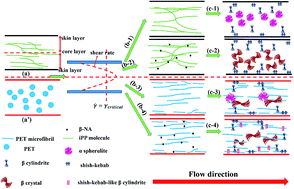
During the MIM process, iPP crystallized from a melt, which is exposed to complex flow and temperature variations. Furthermore, the additives can also dramatically alter the crystallization kinetics and the final morphology. As demonstrated, the combined effects of strong shear flow field and the additives PET microfibrils and β-NA are proven to produce the rich hierarchical structures in PP/0.1/15, more than their individual contribution. Fig. 11 shows the schematic illustration of the evolution of hierarchical structures during MIM. The random chains (Fig. 11a) that undergo strong shear are initially stretched along the flow direction. The oriented chains then suffer from relaxation because of high temperatures (Fig. 11b-1 and b-2). Thus, molecules of samples PP0 and PP/0.1/0 become irregularly oriented. Due to the faster relaxation of molecules in the core region, there are little shearing prenuclei and only some random point nuclei existed, and finally the core layer in PP0 is mainly dominated by large α spherulites (Fig. 11c-1 and 8a). In the presence of β-NA, the irregularly oriented chains of PP/0.1/0 are absorbed by β-NA and bundle-like β crystals are formed in the core region. As the absorbed chains exhibit irregular orientation, the lamellas of β crystals are nearly randomly oriented (Fig. 8c and 11c-2).
image file: c5ra10832b-f11.tif
Fig. 11 Schematic illustration of the hierarchical structures evolution in all MIM samples.

For iPP/PET, the common blend with a distinct interface reveals a typical and immiscible mixture of morphologies comprising spherical domains in the iPP matrix (Fig. 2a and 11a′). The abundant dispersed phase eventually merges to form continuous and well-oriented PET microfibrils along the flow direction under strong shear and temperature gradients in MIM (Fig. 11b-3 and b-4). Adding PET microfibrils can maintain the orientation of the iPP chains because the relaxation time the chains is prolonged, which is beneficial for initiating the formation of shish-kebab or shish-kebab-like cylindrite structures.55 As a result, some oriented β-crystals are formed in the core region in sample PP/0/15 and these crystals are surrounded by α spherulites (Fig. 11c-3 and 8c). When β-NA is further added to the PET-blended iPP, the oriented chains adjacent to β-NA are absorbed to form β spherulites during crystallization. Thus, the orientation is similar to the oriented β crystal in the core layer (Fig. 8d and 11c-4). The orientation-maintained iPP chains along the flow direction can generate anisotropic crystalline precursors, which function as a template in the succeeding crystallization and induce the oriented lamellar structure. During MIM, the PET microfibrils effectively function as a solid wall and redistribute the flow field. Thus, iPP molecules undergo confined flow on the surface of PET fibers. In addition to the oriented β crystals in the core layer, oriented β-cylindrites on the surface of PET fibers are formed (Fig. 8d and 11c-4). The synergetic effects of shear stress, PET fibers, and β-NA induce the formation of abundant shish-kebab-like β-cylindrites on the surface of PET fibers because of the increasing shear stress in the shear layer (Fig. 8d′). As the abundant hierarchical structures have been rarely and directly observed in iPP/PET microparts, we can surmise that the presence of these structures improves interfacial adhesion and, consequently, enhances tensile strength (Fig. 3). Fig. 11 also shows that shish-kebab structures exist in the skin layer of all samples, and these structures are not affected by the addition of PET and β-NA.

4. Conclusions and outlooks

In this study, a simple and novel approach has been developed to form the in situ PET microfibrils. The addition of β-NA significantly increases the crystallization process and the relative content of β-form crystals because of its strong heterogeneous nucleating effect on iPP matrix. In addition, introduction of PET microfibrils into β-NA nucleated iPP samples leads to the formation of oriented structures. It is observed for the first time that the combined effects of a strong shear flow field, β-NAs and PET microfibrils facilitate the formation of shish-kebab, shish-kebab-like β-cylindrite, β-cylindrite and oriented β-crystal epiphytic on the surface of PET fibers in PP/0.1/15 microparts. Such unique hierarchical structures improves adhesion between the fiber and the matrix and markedly improves the tensile property. Finally, a schematic illustration was proposed to interpret the formation mechanism of the unusual hierarchical distribution of β-crystals in MIM parts. It is worth mentioning that shear application effect is very interesting and important, which opens up a promising door for us toward achieving more rich hierarchical structure in polymer products. More importantly, our exploration suggests a promising routine to achieve in situ PET microfibrils, which might optimize the properties of MIM parts.

Acknowledgements

This paper was financially supported by State Key Laboratory of Polymer Materials Engineering (Grant No. sklpme2014-2-08), the National Science of China (51421061), Sichuan Youth Science and Technology Foundation (2015JQ0012). We are also indebted to the Shanghai Synchrotron Radiation Facility (SSRF) in Shanghai, China for WAXD experiments.

Notes and references

  1. Z. Lu and K. Zhang, Int. J. Adv. Des. Manuf. Technol., 2009, 40, 490–496 CrossRef.
  2. S. Abbasi, P. J. Carreau and A. Derdouri, Polymer, 2010, 51, 922–935 CrossRef CAS PubMed.
  3. J. Giboz, T. Copponnex and P. Mélé, J. Micromech. Microeng., 2007, 17, R96 CrossRef CAS.
  4. S. C. Tseng, Y. C. Chen, C. L. Kuo and B. Y. Shew, Microsyst. Technol., 2005, 12, 116–119 CrossRef CAS.
  5. H. Kim and J. S. Colton, J. Med. Eng. Technol., 2005, 29, 181–186 CrossRef CAS PubMed.
  6. A. W. McFarland, M. A. Poggi, L. A. Bottomley and J. S. Colton, Nanotechnology, 2005, 16, 1249 CrossRef CAS.
  7. M. Heckele and W. Schomburg, J. Micromech. Microeng., 2004, 14, R1 CrossRef CAS.
  8. H. Fukushima, Y. Ogino, G. Matsuba, K. Nishida and T. Kanaya, Polymer, 2005, 46, 1878–1885 CrossRef CAS PubMed.
  9. R. H. Somani, L. Yang and B. S. Hsiao, Polymer, 2006, 47, 5657–5668 CrossRef CAS PubMed.
  10. L. Xu, C. Chen, G. J. Zhong, J. Lei, J. Z. Xu, B. S. Hsiao and Z. M. Li, ACS Appl. Mater. Interfaces, 2012, 4, 1521–1529 CAS.
  11. H. Huo, S. Jiang, L. An and J. Feng, Macromolecules, 2004, 37, 2478–2483 CrossRef CAS.
  12. J. Giboz, T. Copponnex and P. Mélé, J. Micromech. Microeng., 2009, 19, 025023 CrossRef.
  13. F. Liu, C. Guo, X. Wu, X. Qian, H. Liu and J. Zhang, Polym. Adv. Technol., 2012, 23, 686–694 CrossRef CAS PubMed.
  14. Z. Lu and K. Zhang, Polym. Eng. Sci., 2009, 49, 1661–1665 CAS.
  15. N. Barhoumi, M. Jaziri, V. Massardier and P. Cassagnau, Polym. Eng. Sci., 2008, 48, 1592–1599 CAS.
  16. A. Leclair and B. Favis, Polymer, 1996, 37, 4723–4728 CrossRef CAS.
  17. C. Saujanya and S. Radhakrishnan, Polymer, 2001, 42, 4537–4548 CrossRef CAS.
  18. Y. J. Sun, G. H. Hu, M. Lambla and H. K. Kotlar, Polymer, 1996, 37, 4119–4127 CrossRef CAS.
  19. S. Wu, Polym. Eng. Sci., 1990, 30, 753–761 CAS.
  20. Y. T. Shieh, M. S. Lee and S. A. Chen, Polymer, 2001, 42, 4439–4448 CrossRef CAS.
  21. L. Xu, Y. F. Huang, J. Z. Xu, X. Ji and Z. M. Li, RSC Adv., 2014, 4, 1512–1520 RSC.
  22. W. Li, A. K. Schlarb and M. Evstatiev, J. Appl. Polym. Sci., 2009, 113, 3300–3306 CrossRef CAS PubMed.
  23. G. J. Zhong, L. Li, E. Mendes, D. Byelov, Q. Fu and Z. M. Li, Macromolecules, 2006, 39, 6771–6775 CrossRef CAS.
  24. G. J. Zhong, Z. M. Li, L. B. Li and E. Mendes, Polymer, 2007, 48, 1729–1740 CrossRef CAS PubMed.
  25. B. Sha, S. Dimov, C. Griffiths and M. Packianather, J. Mater. Process. Technol., 2007, 183, 284–296 CrossRef CAS PubMed.
  26. X. Yi, L. Xu, Y. L. Wang, G. J. Zhong, X. Ji and Z. M. Li, Eur. Polym. J., 2010, 46, 719–730 CrossRef CAS PubMed.
  27. B. Lotz, J. Wittmann and A. Lovinger, Polymer, 1996, 37, 4979–4992 CrossRef CAS.
  28. S. V. Meille and S. Brückner, Nature, 1989, 340, 455–457 CrossRef PubMed.
  29. J. Li, C. Zhou and W. Gang, Polym. Test., 2003, 22, 217–223 CrossRef CAS.
  30. J. Kang, G. Weng, Z. Chen, J. Chen, Y. Cao, F. Yang and M. Xiang, RSC Adv., 2014, 4, 29514–29526 RSC.
  31. C. Zhang, G. Liu, Q. Jiang, J. Yang, Y. Zhao and D. Wang, RSC Adv., 2015, 5, 44610–44617 RSC.
  32. X. Sun, H. Li, J. Wang and S. Yan, Macromolecules, 2006, 39, 8720–8726 CrossRef CAS.
  33. G. Lamberti, Chem. Soc. Rev., 2014, 43, 2240–2252 RSC.
  34. J. Li, W. Cheung and D. Jia, Polymer, 1999, 40, 1219–1222 CrossRef CAS.
  35. L. Wang and M. B. Yang, RSC Adv., 2014, 4, 25135–25147 RSC.
  36. T. Asano, Y. Fujiwara and T. Yoshida, Polym. J., 1979, 11, 383–390 CrossRef CAS.
  37. Y. H. Chen, Z. Y. Huang, Z. M. Li, J.-H. Tang and B. S. Hsiao, RSC Adv., 2014, 4, 14766–14776 RSC.
  38. Y. Shangguan, Y. Song, M. Peng, B. Li and Q. Zheng, Eur. Polym. J., 2005, 41, 1766–1771 CrossRef CAS PubMed.
  39. J. Li and W. Cheung, Polymer, 1998, 39, 6935–6940 CrossRef CAS.
  40. Y. Zhang, H. Liu, L. Zhang, X. Zhang and J. Zhang, J. Appl. Polym. Sci., 2013, 128, 3382–3389 CrossRef CAS PubMed.
  41. H. R. Yang, G. J. Zhong, J. Lei, X. Ji and Z. M. Li, Polym.-Plast. Technol. Eng., 2012, 51, 507–513 CrossRef CAS PubMed.
  42. X. Yi, C. Chen, G. J. Zhong, L. Xu, J. H. Tang, X. Ji, B. S. Hsiao and Z. M. Li, J. Phys. Chem. B, 2011, 115, 7497–7504 CrossRef CAS PubMed.
  43. Y. Zhang, L. Zhang, H. Liu, H. Du, J. Zhang, T. Wang and X. Zhang, Polymer, 2013, 54, 6026–6035 CrossRef CAS PubMed.
  44. G. J. Zhong, Z. M. Li, L. Li and K. Shen, Polymer, 2008, 49, 4271–4278 CrossRef CAS PubMed.
  45. Q. Zhou, F. Liu, C. Guo, Q. Fu, K. Shen and J. Zhang, Polymer, 2011, 52, 2970–2978 CrossRef CAS PubMed.
  46. Y. Zhang, J. Zhang, X. Qian, P. Deng and K. Shen, Polymer, 2012, 53, 4318–4327 CrossRef CAS PubMed.
  47. J. Varga, J. Macromol. Sci., Part B: Phys., 2002, 41, 1121–1171 CrossRef PubMed.
  48. J. Varga, J. Mater. Sci., 1992, 27, 2557–2579 CrossRef CAS.
  49. F. Padden Jr and H. Keith, J. Appl. Phys., 1973, 44, 1217–1223 CrossRef PubMed.
  50. B. Lotz and J. Wittmann, J. Polym. Sci., Part B: Polym. Phys., 1986, 24, 1559–1575 CrossRef CAS PubMed.
  51. R. Su, K. Wang, P. Zhao, Q. Zhang, R. Du, Q. Fu, L. Li and L. Li, Polymer, 2007, 48, 4529–4536 CrossRef CAS PubMed.
  52. B. He, X. Yuan, H. Yang, H. Tan, L. Qian, Q. Zhang and Q. Fu, Polymer, 2006, 47, 2448–2454 CrossRef CAS PubMed.
  53. M. Fujiyama and K. Azuma, J. Appl. Polym. Sci., 1979, 23, 2807–2811 CrossRef CAS PubMed.
  54. H. Chen, J. Karger-Kocsis, J. Wu and J. Varga, Polymer, 2002, 43, 6505–6514 CrossRef CAS.
  55. Y. An, L. Gu, Y. Wang, Y. M. Li, W. Yang, B. H. Xie and M. B. Yang, Mater. Des., 2012, 35, 633–639 CrossRef CAS PubMed.

This journal is © The Royal Society of Chemistry 2015
Click here to see how this site uses Cookies. View our privacy policy here.