DOI:
10.1039/C5RA10509A
(Paper)
RSC Adv., 2015,
5, 76392-76400
Development of a vegetable oil based plasticizer for preparing flame retardant poly(vinyl chloride) materials
Received
3rd June 2015
, Accepted 25th August 2015
First published on 25th August 2015
Abstract
A novel method was developed to prepare a castor oil based flame retardant plasticizer containing phosphaphenanthrene groups (PCOPE) for the preparation of poly(vinyl chloride) (PVC). The molecular structure of PCOPE was characterized with FT-IR, 1H NMR and 31P NMR spectroscopy. Flame retardant poly(vinyl chloride) materials were prepared via blending with PCOPE to substitute a petroleum-based plasticizer. The thermal stability and flame retardant performance of the PVC blends plasticized with different amounts of PCOPE were investigated by LOI, SEM, TGA, TGA-FTIR and cone calorimeter tests. The results showed that the plasticized PVC materials exhibited increased thermal stability and flame retardant performance. When all DOP was completely substituted with PCOPE in PVC blends, LOI value of the PVC materials increased from 23.6% to 36.7%, and the Td, T50, Tp1 and Tp1 values reached 289.4 °C, 318.2 °C, 293.8 °C and 444.3 °C, respectively. The pHRR value decreased from 379.0 kW m−2 to 262.3 kW m−2, whereas the av-HRR value decreased from 162.3 kW m−2 to 108.4 kW m−2. The THR value decreased from 31.8 MJ m−2 to 17.9 MJ m−2. This method provides a versatile way to prepare a bio-plasticizer from vegetable oils, and it is expected to partially or completely replace petroleum-based plasticizers in the manufacture of PVC materials.
1. Introduction
Environmental concerns and the increasing price of petroleum resources have triggered great interest in the development of chemical products based on renewable resources.1 Currently, the use of renewable raw materials in the preparation of chemical products has been gaining importance due to the excellent properties of these materials, including inherent sustainability, relatively low cost and ready availability.2 Among the raw renewable materials, vegetable oils are the most widely used renewable resources in chemical industries.3,4 Saturated and unsaturated fatty acids are the main components of triglyceride vegetable oils. The double bonds, hydroxyl, epoxy and carboxy groups of vegetable oils are capable of reacting with other chemical reagents.5–12 In an attempt to extend the use of vegetable oils in chemical industries, many flame retardant plasticizers derived from vegetable oils have been prepared and applied in flame retardant PVC materials. The flame retardant mechanism of PVC plasticized with these flame retardant plasticizers has also been explored. Flame retardant castor oil based plasticizer (PPC) has been synthesized from castor oil, formic acid, phosphate, hydrogen peroxide (H2O2) and diethyl phosphate.13 PPC has a flame retardant effect on PVC materials by promoting carbonization and forming a consolidated and thick flame retardant coating on the PVC matrix to stop further burning. To further improve the flame retardancy of the plasticizer, the phosphorus content of plasticizer was enhanced and a novel flame retardant plasticizer based on castor oil (FRC) has been developed, which has achieved the expected results.14 In addition, flame retardant plasticizer derived from soybean oil (SOPE) was prepared using the same diethyl phosphate-containing groups.15 All these synthesized vegetable oil based flame retardant plasticizers could improve the thermal stability and flame retardancy of PVC materials. However, the tensile properties of the PVC materials weakened gradually with increasing content of these plasticizers in the PVC blends due to the high number of hydroxyl groups connected to the molecular structure of these plasticizers, which reduced their plasticizing effect on PVC. They can only be used as secondary plasticizers mixed with DOP to plastify PVC resin. To improve the plasticizing effect of the plasticizer, a new flame retardant chlorinated phosphate ester based on castor oil (CPECO) was prepared and applied in PVC materials.16 No hydroxyl groups exist in its molecular structure. The results illustrated that the thermal stability and flame retardancy of PVC materials was improved, and migration stability was better than that of DOP. Therefore, novel flame retardant plasticizers derived from vegetable oil are expected to completely replace petroleum-based plasticizers in flame retardant materials.
For most of the PVC products, safety regulations call for materials with flame retardant properties among their key properties. The use of phthalate ester plasticizers for poly(vinyl chloride) (PVC) dates from the 1930s and, as of 2004, they account for 80% of all plasticizer production; di-2-ethylhexyl phthalate (DEHP) is used in over 50% of worldwide phthalate production, and remains the most widely used PVC plasticizer.17,18 Flammable phthalate plasticizers are the main commercial plasticizers widely used in PVC products, which make the plasticized PVC materials readily flammable. This restricts their application in fields where flame retardant properties are important requirements such as wires and cables. In addition, these phthalates easily diffuse into the surroundings and reduce the performance of the PVC products. The loss of plasticizer causes changes in the long-term properties of the PVC products, as well as increases potential toxicity to the human body.19–23 The raw materials of these plasticizers are derived from petroleum; the scarcity of petroleum resources and the rising cost of petroleum products has led to an increasing trend towards developing alternate sources of these materials for industrial uses.
Many researchers have paid considerable attention to DOPO because of its high reactivity and flame retardant performance. DOPO and its derivatives have been used as efficient flame retardants for epoxy resins, as reported in many studies;24–28 however, there are few reports suggesting their use as plasticizers due to their low plasticizing effects on PVC. The situation will be improved when DOPO would be modified with vegetable oils. The present study aims to develop a novel, biobased phosphaphenanthrene group-containing flame retardant plasticizer from castor oil (PCOPE). The molecular structure of PCOPE was characterized with FT-IR, 1H NMR and 31P NMR spectroscopy. The thermal properties, flame retardancy, and tensile properties of the flame retardant PVC materials were investigated. Finally, the flame retardant mechanism was also explored.
2. Experimental
2.1. Materials
Castor oil (CO), phosphate, dioctyl phthalate (DOP) and glacial acetic acid were obtained from Nanjing Chemical Reagent Co., Ltd. Hydrogen peroxide, DOPO, and acetic anhydride were supplied by Aladdin Chemical Co., Ltd. Polyvinyl chloride (PVC) with a K value of 65.0 and a degree of polymerization of 1300 ± 100 was supplied by Hanwha (South Korea).
2.2. Synthesis
2.2.1 Synthesis of ECO. The synthesis and characterization of ECO has been reported in our previous study.13,15
2.2.2 Synthesis of PCOP. 120 g of ECOP and 30 g of DOPO were mixed in a three-necked round-bottom flask, which was equipped with a mechanical stirrer, condenser pipe and thermometer. The mixture was stirred at 160 °C for 5 h to complete the reaction. A yellow transparent product was obtained.
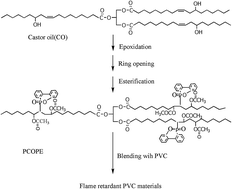
2.2.3 Synthesis of PCOPE. 80 g of PCOP and 60 g of acetic anhydride were mixed in a three-necked round-bottom flask, which was equipped with a mechanical stirrer, condenser pipe and thermometer. The mixture was stirred at 140 °C for 1 h to complete the esterification. Then, the reaction mixture was washed 3 times with distilled water and the water was removed with a rotary evaporator at 60 °C. The chemical reaction process of PCOPE is presented in Fig. 1.
 |
| | Fig. 1 The schematic route of the synthesis of PCOPE. | |
2.2.4 Preparation of PVC blends. PVC resin was mixed with PCOPE and DOP at different weight ratios using THF as the solvent. The mixture was agitated with mechanical stirring for 1 h. The samples were then casted into Petri dishes (diameter of 19 cm) and dried at 60 °C until the PVC and plasticizers were mixed completely. After removing the solvent, the PVC blends were obtained.29 The compositions of the PVC blends are shown in Table 1.
Table 1 Composition of PVC blends
| Samples |
A |
B |
C |
D |
E |
F |
| PVC (g) |
30 |
30 |
30 |
30 |
30 |
30 |
| DOP (g) |
0 |
12 |
9 |
6 |
3 |
0 |
| PCOPE (g) |
0 |
0 |
3 |
6 |
9 |
12 |
2.3. Characterizations
Fourier transform infrared (FT-IR) studies were performed with KBr pellets using a Nicolet iS10 FT-IR (Nicolet Instrument Corp., USA) Fourier transform infrared spectrophotometer. The spectra were acquired in the range from 4000 cm−1 to 500 cm−1 at a resolution of 4 cm−1.
Proton nuclear magnetic resonance (1H NMR) measurements were conducted on an AV-300 NMR spectrometer (Bruker, Germany) at a frequency of 400 MHz with CDCl3 as the solvent and tetramethylsilane (TMS) as an internal standard.
Phosphorus nuclear magnetic resonance (31P NMR) spectra for the plasticizers based on castor oil were recorded on an AV-300 instrument with tetramethylsilane as an internal standard and d6-DMSO as solvent.
Limiting oxygen index (LOI) values were measured on a JF-3 oxygen index measuring instrument (Nanjing Lei Instrument Co. Ltd, China) according to the standard of plastics – determination of burning behavior by oxygen index (GB/T 2406.1-2008, China).
The surface morphologies of the PVC blends after LOI tests were investigated with a Hitachi 3400-1 (Hitachi, Japan) scanning electron microscope (SEM) operated at 12 kV. The fractures of all the surfaces were sputtered with gold to avoid electrostatic charging during examination.
Thermogravimetric analysis (TGA) was carried out using a TG209F1 TGA thermal analysis instrument (Netzsch Instrument Corp., Germany) in N2 atmosphere (50 mL min−1) at a heating rate of 10 °C min−1. 5 mg of samples were placed in platinum pans and scanned from 30 °C to 600 °C.
TGA-FTIR measurements were carried out using a 409PC thermal analyzer (Netzsch, Germany) coupled with a Nicolet iS10 FT-IR spectrometer (Nicolet Instrument Corp., USA). About 10 mg of each sample was heated from 40 °C to 800 °C at a heating rate of 10 °C min−1 under N2. The spectra were acquired in the range from 4000 cm−1 to 500 cm−1 at a resolution of 4 cm−1.
Combustion properties were evaluated using a cone calorimeter. All the samples (100 × 100 × 2 mm3) were exposed to a FTT200 cone calorimeter (FTT Instrument Corp., UK) under a heat flux of 35 kW m−2 according to ISO-5660 standard procedures.
Tensile modulus, tensile strength, and elongation at break of all PVC blends were determined according to the GB/T 1040.1-2006 standard (China) under ambient conditions using an E43.104 Universal Testing Machine (MTS Instrument Corp., China).
3. Results and discussion
3.1. FT-IR
The FT-IR spectra of PCOP and PCOPE are presented in Fig. 2. The absorption band at about 3372 cm−1 corresponds to the hydroxyl groups connected to the fatty acid chains. The absorptions at about 2930 cm−1 and 2962 cm−1 are attributed to the methyl and methylene groups, respectively.30–32 In the FT-IR spectrum of PCOP, it can be seen that two new peaks appeared at 1595 cm−1 and 1462 cm−1 compared to the spectrum of epoxidized castor oil;13,15 the peak of epoxy group at 961 cm−1 could not be observed, and the appearance of other specific absorption peaks at 929, 1189 cm−1 (P–O–Ph), and 1442 cm−1 (P–Ph) implied that PCOP was obtained.33–36 The strong and broad band of hydroxyls disappeared at around 3468 cm−1 in the FT-IR spectra of PCOPE; a stronger absorption for the ester band at around 1740 cm−1 appeared compared to that of PCOP, illustrating that an esterification reaction of the C–OH groups of PCOP with acetic anhydride occurred.
 |
| | Fig. 2 FT-IR spectra of PCOP and PCOPE. | |
3.2. 1H NMR
Fig. 3 and 4 present the 1H NMR spectra of PCOP and PCOPE, respectively. In Fig. 3, the peak for methyl protons is at δ = 0.9 ppm (peak 1). The peak for fatty acid protons [(CH2)–CO–] (peak 6) is at δ = 2.35 ppm. The peak for methylene protons of glycerol is at δ = 4.21 ppm (peak 9). The peak for methine protons of glycerol is at δ = 5.41 ppm (peak 10) and the peak for methylene protons attached to the hydroxyl group (–CH–OH) is at δ = 3.6 ppm (peak 7), while the peak at δ = 2.1 ppm (peak 5) was assigned to the –CH2– group of HO–C–CH2– and the peak at δ = 1.25 ppm (peak 2) was assigned to the other –CH2– group.21,28–30 The multiple peaks around δ = 3.0 ppm corresponding to the protons on the epoxy groups disappeared completely compared to the spectrum of epoxidized castor oil;13,15 new multiple peaks appeared in the region of δ = 7.3–8.0 ppm (peak 11 in Fig. 3), corresponding to the protons on the phosphaphenanthrene groups, which implied that ring opening had occurred following the epoxidation with DOPO.37–39
 |
| | Fig. 3 1H NMR spectrum of PCOP. | |
 |
| | Fig. 4 1H NMR spectrum of PCOPE. | |
Fig. 4 shows the IH NMR spectra of PCOPE; the multiple peaks at δ = 3.65–3.92 ppm corresponding to the protons of hydroxyl groups could not be observed, and the peak at δ = 0.9 ppm appeared to be stronger than that of PCOP. The hydroxyl group peaks could not be found at around 3370 cm−1 in the FT-IR spectrum of PCOPE. Both the 1H-NMR and FT-IR spectra of PCOPE indicated that the esterification reaction of the hydroxyl groups of PCOP with acetic anhydride occurred.
3.3. 31P NMR
Fig. 5 shows the 31P NMR spectrum of PCOPE; a peak at 37.10 ppm was assigned to P–CH. In previous studies, a peak at 14.82 ppm, attributed to P–H, was found in the 31P NMR of DOPO.40,41 In the 31P NMR spectrum of PCOPE, no peak could be found at 14.82 ppm, which implied the success of the reaction between PCOP and DOPO.42,43
 |
| | Fig. 5 31P NMR spectrum of PCOPE. | |
3.4. Thermal stability of PCOPE
The thermal stability of PCOPE was estimated from its weight loss with temperature and compared to that of commercial plasticizer DOP. The thermogravimetric curves of PCOPE and DOP are shown in Fig. 6 and 7, respectively. The decomposition temperature (Td), the mass loss of 10% (T10), the mass loss of 50% (T50), the maximum weight-loss temperature rate (TP) and the char residue are summarized in Table 2. As can be seen from Fig. 6 and 7 and Table 2, the thermal degradation process of DOP has one stage. DOP begins to degrade at 255.1 °C. T10 and T50 only degrade at about 206.3 °C and 278.5 °C, respectively. The maximum mass loss occurred at about 302.4 °C. DOP degraded completely at about 310.0 °C, implying that DOP is not thermally stable at temperatures above 310.0 °C. Only 0.1% of the solid residue remained at 600 °C. For PCOPE, there were two stages of weight loss, and there were two different thermogravimetric (DTG) peaks. PCOPE begins to degrade at 348.4 °C, which is a higher temperature than that of DOP. T10, T50, Tp1 and Tp2 values were 274.9 °C, 348.8 °C, 367.1 °C and 354.2 °C, respectively. The stable solid residue at 600 °C is about 1.3%, which is greater than that of DOP. These results indicate that the thermal degradation of PCOPE produced more char residue DOP. More char residue can form a thick and compact carbon layer on the surface of PCOPE, which makes it thermally stable and more flame retardant than DOP.
 |
| | Fig. 6 TGA curves of DOP and PCOPE. | |
 |
| | Fig. 7 DTG curves of DOP and PCOPE. | |
Table 2 TGA and DTG parameters of DOP and PCOPE
| Samples |
Td (°C) |
T10 (°C) |
T50 (°C) |
Tp1 (°C) |
Tp2 (°C) |
Char yield (%) |
| DOP |
255.1 |
206.3 |
278.5 |
302.4 |
— |
0.1 |
| PCOPE |
348.4 |
274.9 |
348.8 |
367.1 |
454.9 |
1.3 |
3.5. LOI tests
Table 3 summarizes the LOI values of PVC blends. For pure PVC blends, large amounts of chlorine connected to the structure of PVC caused the highest LOI value (48%) among all the PVC blends. PVC blends plasticized only with DOP showed the lowest LOI value of 23.6% due to the flammability of DOP. An interesting phenomenon can be observed from Table 3; the LOI values of the PVC blends increased gradually with increasing content of PCOPE. LOI value increased from 23.6% to 36.7% when all the DOP was completely substituted with PCOPE in the PVC blends. These results suggest that PCOPE can improve the flame retardant performance of PVC blends.
Table 3 TGA, DTG and LOI data of PVC blends
| Samples |
Td (°C) |
T50 (°C) |
TP1 (°C) |
TP2 (°C) |
Char yield (%) |
LOI (%) |
| A |
246.9 |
294.6 |
277.1 |
467.2 |
9.6 |
48.0 |
| B |
258.6 |
302.8 |
284.2 |
461.2 |
6.5 |
23.6 |
| C |
264.2 |
308.6 |
290.5 |
457.7 |
6.9 |
28.3 |
| D |
266.5 |
312.3 |
282.4 |
457.3 |
9.1 |
31.9 |
| E |
272.3 |
318.1 |
289.1 |
455.6 |
11.7 |
34.2 |
| F |
289.4 |
318.2 |
293.0 |
444.3 |
13.2 |
36.7 |
3.6. SEM
Phosphorus-containing flame retardant enhances the flame retardancy of materials, such as PVC,13–16 polycarbonate (PC),44 epoxy resin25,26,45,46 and foam plastics,47 by promoting the formation of char residue and improving the quality of char residue. The morphologies of the residues after the LOI tests were investigated using SEM and are presented in Fig. 8. These images display the morphologies of the char residues of samples B, C, D and F. From direct observation, it can be inferred that the surface of the char residue of sample B, which was only plasticized with DOP, has many huge non-uniform holes, which resulted in the failure of the barrier to prevent heat and mass transfer to a large extent, as shown in Fig. 8(B). When DOP was gradually substituted by PCOPE in the PVC blends, these huge non-uniform holes became smaller until they disappeared, as shown in Fig. 8(C, D and F). The compact carbon layer could successfully prevent heat and mass transfer. These observations indicate that PCOPE had a flame retardant effect in the condensed phase. In addition, these results can explain why PVC plasticized with PCOPE exhibited better flame retardant performance than PVC plasticized with DOP. Thus, we can conclude that PCOPE has a flame retardant effect in the condensed phase.
 |
| | Fig. 8 SEM images of char residues after LOI tests. | |
3.7. Thermal stability of PVC blends
The weight loss behavior of all the PVC blends was detected by a TGA instrument to obtain their basic thermal degradation information. We can obtain some understanding of the thermal degradation route by observing the decomposition temperature, the corresponding temperature to the weight loss for different thermal degradation stages, and the weight of the char residue. The TGA and DTG curves are presented in Fig. 9 and 10, respectively, which mainly involve two stages of dehydrochlorination of PVC and thermal decomposition of plasticizer (DOP and PCOPE), which occur in the temperature range of 200–350 °C; the cyclization of the conjugated polyene sequences to form aromatic compounds occurred in the temperature range of 350–500 °C.48–50 The DTG curves of the PVC blends showed two peaks at around 290 °C and 460 °C, which corresponded to two faster thermal degradation steps. The relevant data are summarized in Table 3. As can be seen, the pure PVC blend exhibited poor thermal stability, probably caused by the dehydrochlorination of PVC at around 250–310 °C. The Td, T50, Tp1 and Tp2 values were 246.9 °C, 294.6 °C, 277.1 °C and 467.2 °C, respectively; all are lower than the values for the plasticized PVC blends. The reason is that the ester bonds and benzene groups of the plasticizer have high thermal stability.31 However, the plasticized PVC blends exhibit different thermal stabilities. When DOP was gradually substituted with PCOPE in the PVC blends, the Td, T50 and Tp values of the PVC blends increased gradually. When the DOP was entirely substituted by PCOPE, the Td, T50, Tp1 and Tp1 values reached 289.4 °C, 318.2 °C, 293.8 °C and 444.3 °C, respectively. These results proved that PCOPE can enhance the thermal stability of PVC blends more than DOP. An interesting result is observed for the char yield, which increased gradually from 6.46% (sample B) to 13.2% (sample F) with the substitution of DOP. The result further implied that PCOPE can promote the formation of char residue. This finding, combined with the conclusions from the LOI tests and SEM, could explain why thermal stability and flame retardancy can be improved by PCOPE. Phosphonate degraded first and formed phosphoric acid at around 300 °C.51,52 The obtained phosphoric acid acted as an acid catalyst to accelerate the chain scission of methylene linkages and the breaking of ester groups in PVC and plasticizer at around 300–460 °C. Moreover, phosphoric acid could further react with the decomposition products of PVC blends, resulting in the formation of a complex phosphorus-rich char. The char could protect the residues from oxygen and heat and promote the formation of a compact and consolidated char residue layer. The barrier effect of the compact and consolidated residual char layer enhanced the thermal stability and flame retardancy of the PVC blends.
 |
| | Fig. 9 The TGA curves of PVC blends. | |
 |
| | Fig. 10 The DTG curves of PVC blends. | |
3.8. TGA-FTIR
TGA-FTIR was used to analyze the gas products during thermal degradation. The 3D FTIR spectra of the gas phase in the thermal degradation of samples D and F are shown in Fig. 11 and 12, respectively. In our previous study,22 PVC blends plasticized with chlorinated phosphate ester based on castor oil were characterized with TGA-FTIR and TGA-MS. We found that the main pyrolysis products of the PVC blends were water (H2O), hydrogen chloride (HCl), carbon dioxide (CO2), carbon monoxide (CO) and toluene (C6H6). Only small amounts of P–O–C, P–OH and P–H components were found in the gas phase, which indicated that more phosphorous-containing components were retained in the solid phase. These phosphorous-containing components could dilute oxygen in the gas phase to restrict the burning of PVC materials. In this study, we found that the TGA-FTIR results for PVC blends D and F were consistent with those of the previous study.16 During the thermal degradation process of samples D and F, H2O (3582 cm−1), CO2 (2372 cm−1), CO (2150 cm−1), THF (2968 cm−1), C6H6 (3086 and 1585 cm−1), HCl (2885.9 cm−1), and esters (1743 cm−1, 1267 cm−1 and 1103 cm−1) are released.53–56 Weak peaks with absorbances at 930 cm−1, 933 cm−1 and 1639 cm−1 may correspond to the P–O–C and P–OH stretching vibrations, and the peak absorbance at 2361 cm−1 was assigned to P–H.53,57 The results illustrated that the main pyrolysis products of PVC blends plasticized with PCOPE were same as those observed in the previous study, as well as the flame retardant mechanism was similar. However, metaphosphorous acid (HPO2) was generated from the thermal degradation of compounds containing phosphaphenanthrene,24,25 which dehydrated the PVC blends and produced phosphoric-rich layers. The phosphoric-rich layer prevented oxygen and heat, making PVC blends more thermally stable and flame retardant. We can conclude that the flame retardant mechanism of the PVC blends plasticized with PCOPE mainly occurred in the condensed phase. The ester groups and long fatty acid chain of PCOPE are very thermally stable; they will not degrade until charring occurs. Then, they will become the char source and form a rigid char skeleton, which can prevent the char from collapsing. Subsequently, phosphaphenanthrene groups will break down and produce phosphorous-containing organic compounds such as HPO2, P–O–C, P–OH and P–H components, which can promote the dehydration reaction of PVC blends and form a phosphoric-rich thick char. Finally, the large amount of aromatic compounds generated from the cyclization of conjugated polyene sequences will turn into thickened rings as part of the char. Consequently, the thermal stability and flame retardant performance of PVC blends plasticized with PCOPE were improved by promoting the formation of char residue and improving the quality of the char residue.
 |
| | Fig. 11 3D FT-IR spectra of pyrolysis gas products of sample D. | |
 |
| | Fig. 12 3D FT-IR spectra of pyrolysis gas products of sample F. | |
3.9. Cone calorimeter test
Flammability parameters are considered to provide good data for studying fire degradation, smoke emission and heat release.58,59 These flammability parameters, including heat release rate (HRR), total heat release (THR), mass loss rate (MLR) and smoke production rate (SPR), were obtained in a cone calorimeter. To directly illustrate the flame retardant effect of PCOPE on PVC, we chose samples B and F to compare their flammability parameters. Fig. 13 presents the HRR, THR, MLR and SPR curves of samples B and F. The detailed cone calorimeter data are shown in Table 4. As can be seen from the HRR curves and MLR curves, we can observe some differences between samples B and F. First, the peak HRR (pHRR) and average HRR (av-HRR) values of sample F are less than those of sample B. As can be seen in Table 4, when DOP was entirely substituted with PCOPE, the pHRR value decreased from 379.0 kW m−2 to 262.3 kW m−2, and the av-HRR decreased from 162.3 kW m−2 to 108.4 kW m−2. Second, the time to pHRR (tpHRR) of sample F was 63 s, but 44 s for sample B. To some extent, the reason of the later tPHRR for sample F is the formation of a consolidated and compact char residue cover on the PVC matrix, which limited its burning. Third, a similar trend was observed for the MLR curves compared to the HRR curves. The MLR values of sample F showed a wider range than those of sample B. The peak MLR (pMLR) and average MLR (av-MLR) for sample F were lower than those of sample B. The pMLR and av-MLR for sample B were 0.4 g s−1 and 0.1 g s−1, respectively. When the PVC blends were plasticized only with PCOPE, the PMLR and av-MLR of sample F were as low as 0.3 g s−1 and 0.1 g s−1, respectively. These results indicated that PCOPE can promote the formation of char residue, which could firmly protect the underlying PVC material; thus, a flame retardant effect was observed.
 |
| | Fig. 13 The fire behavior of samples B and F. | |
Table 4 The detailed cone calorimeter data
| Sample |
pHRR (kW m−2) |
av-HRR (kW m−2) |
t-pHRR (s) |
pMLR (g s−1) |
av-MLR (g s−1) |
t-SPR (s) |
THR (MJ m−2) |
| B |
379.0 |
162.3 |
44 |
0.4 |
0.1 |
43 |
31.8 |
| F |
262.3 |
108.4 |
63 |
0.3 |
0.1 |
102 |
17.9 |
The smoke suppression in the PVC blends was evaluated; the evolution of smoke with time is provided in Fig. 13. There was a distinction of the smoke release behavior between samples B and F. The emergence of time to peak SPR (tSPR) of sample F was later than that of sample B. The SPR curves of sample F became flatter and lower than those of PVC sample B. These results implied that the thermal degradation of PCOPE promoted the formation of char residue; this char residue played the role of smoke-suppressant in the combustion of PVC blends. The smoke-suppressant effect caused the lag in the SPR peak of sample F.
In addition, the THR curves of sample B and F are shown in Fig. 13. It can be found that the THR decreased from 31.8 MJ m−2 (sample B) to 17.9 MJ m−2 (sample F). This indicated that PCOPE could reduce the flammability and improve the flame retardant properties of PVC blends.
3.10. Tensile tests
Table 5 summarizes the tensile strength, elongation at break and modulus of elasticity of all the PVC blends. Compared to the neat PVC blend, the tensile strength decreased and the elongation at break increased when the plasticizers were mixed with the PVC blends. When DOP was substituted with PCOPE gradually, the tensile strength increased from 13.1 MPa to 24.8 MPa, and the elongation at break decreased from 408.4% to 345.1%. Though the elongation at break decreased, the thermal stability and flame retardant performance of the PVC blends were improved.
Table 5 Tensile properties of PVC blends
| Sample |
Modulus of elasticity (MPa) |
Elongation at break (%) |
Tensile strength (MPa) |
| A |
197.1 ± 1.1 |
167.2 ± 5.2 |
26.6 ± 0.6 |
| B |
98.9 ± 2.3 |
408.4 ± 3.8 |
13.1 ± 0.5 |
| C |
113.2 ± 1.9 |
402.7 ± 2.7 |
17.7 ± 0.1 |
| D |
122.9 ± 2.6 |
396.7 ± 1.3 |
18.6 ± 0.6 |
| E |
128.3 ± 2.1 |
379.6 ± 2.3 |
23.3 ± 0.7 |
| F |
142.7 ± 0.9 |
345.1 ± 3.6 |
24.8 ± 0.3 |
4. Conclusions
A novel method has been developed to prepare a bio-based flame retardant plasticizer. The molecular structure of the synthesized flame retardant plasticizer, based on castor oil containing phosphaphenanthrene groups (PCOPE), was characterized. Flame retardant PVC materials were prepared via blending with different amounts of PCOPE to substitute a petroleum-based plasticizer, DOP. When DOP was completely substituted with PCOPE in the PVC blends, LOI value increased from 23.6% to 36.7%, and the Td, T50, Tp1 and Tp1 values reached 289.4 °C, 318.2 °C, 293.8 °C and 444.3 °C, respectively. The pHRR value decreased from 379.0 kW m−2 to 262.3 kW m−2, and the av-HRR value decreased from 162.3 kW m−2 to 108.4 kW m−2. The THR value decreased from 31.8 MJ m−2 to 17.9 MJ m−2. PCOPE played an important flame retardant effect on PVC, which mainly occurred in the solid phase. HPO2, P–O–C, P–OH and P–H components were generated from the thermal degradation of PCOPE, which can promote the dehydration reaction of the PVC blends and form phosphoric-rich thick char. Consequently, the thermal stability and flame retardant performance of PVC blends plasticized with PCOPE were improved by promoting the formation of char residue and improving the quality of char residue. The method provides a versatile way to prepare bio-plasticizers from vegetable oils, and it is expected to partially or completely replace petroleum-based plasticizer in the manufacture of PVC materials.
Acknowledgements
This study was supported by National 12th Five-year Science and Technology Support Plan (Grant No. 2015BAD15B08); Jiangsu Province Natural Science Foundation of China (Grant No. BK20141074).
Notes and references
- C. Zhang, Y. Xia, R. Chen, S. Huh, P. A. Johnston and M. R. Kessler, Green Chem., 2013, 15, 1477–1484 RSC.
- M. Moreno, G. Lligadas, J. C. Ronda, M. Galia and V. Cadiz, J. Polym. Sci., Part A: Polym. Chem., 2013, 51, 1808–1815 CrossRef CAS PubMed.
- U. Biermann, W. Friedt, S. Lang, W. Luhs, G. Machmuller, J. O. Metzger, M. R. Klaas, H. J. Schafer and M. P. Schneider, Angew. Chem., Int. Ed., 2000, 39, 2206–2224 CrossRef CAS.
- M. Moreno, G. Lligadas, J. C. Ronda, M. Galia and V. Cadiz, J. Polym. Sci., Part A: Polym. Chem., 2012, 50, 3206–3213 CrossRef CAS PubMed.
- M. Serrano, R. Oliveros, M. Sánchez, A. Moraschini, M. Martínez and J. Aracil, Energy, 2014, 65, 109–115 CrossRef CAS PubMed.
- S. T. Keera, S. M. E. Sabagh and A. R. Taman, Fuel, 2011, 90, 42–47 CrossRef CAS PubMed.
- C. Yildirim, A. T. Erciyes and Y. Yagci, J. Coat. Technol. Res., 2013, 10, 559–569 Search PubMed.
- H. Mutlu, R. Hofsäβ, R. E. Montenegro and M. A. R. Meier, RSC Adv., 2013, 3, 4927–4934 RSC.
- C. Vilela, L. Cruciani, A. J. D. Silvestre and A. Gandini, RSC Adv., 2012, 2, 2966–2974 RSC.
- T. Oku, M. Nonoguchi, T. Moriguchi, H. Izumi, A. Tachibana and T. Akatsuka, RSC Adv., 2012, 2, 8619–8622 RSC.
- T. M. Lacerda, A. J. F. Carvalho and A. Gandini, RSC Adv., 2014, 4, 26829–26837 RSC.
- M. Arshad, S. Saied and A. Ullah, RSC Adv., 2014, 4, 26439–26446 RSC.
- P. Jia, M. Zhang, L. Hu, C. Bo and Y. Zhou, J. Therm. Anal. Calorim., 2015 DOI:10.1007/s10973-015-4540-1.
- G. Feng, P. Jia, L. Zhang, L. Hu, M. Zhang and Y. Zhou, Korean J. Chem. Eng., 2014, 31, 1–6 CrossRef.
- P. Jia, M. Zhang, C. Liu, L. Hu and Y. Zhou, J. Appl. Polym. Sci., 2015 DOI:10.1002/app.42111.
- P. Jia, M. Zhang, C. Liu, L. Hu, G. Feng, C. Bo and Y. Zhou, RSC Adv., 2015, 5, 41169–41178 RSC.
- P. R. Graham, Environ. Health Perspect., 1973, 3, 3–12 CAS.
- J. Kastner, D. G. Cooper, M. Marić, P. Dodd and V. Yargeau, Sci. Total Environ., 2012, 432, 357–364 CrossRef CAS PubMed.
- J. A. Tickner, T. Schettler, T. Guidotti, M. McCally and M. Rossi, Am. J. Ind. Med., 2011, 39, 100–111 CrossRef.
- D. K. Agarwal, W. H. Lawrence, J. E. Turner and J. Autian, J. Toxicol. Environ. Health, 1989, 26, 71–84 CrossRef PubMed.
- S. Oishi, Arch. Toxicol., 1990, 64, 143–147 CrossRef CAS.
- H. A. Dirven, P. H. H. Broek and F. Jongeneelen, J. Toxicol., 1990, 65, 199–207 CrossRef CAS.
- K. A. Treinen and J. Heindel, Reprod. Toxicol., 1992, 6, 143–148 CrossRef CAS.
- L. Qian, L. Ye, G. Xu, J. Liu and J. Guo, Polym. Degrad. Stab., 2011, 96, 1118–1124 CrossRef CAS PubMed.
- L. Qian, L. Ye, Y. Qiu and S. Qu, Polymer, 2011, 52, 5486–5493 CrossRef CAS PubMed.
- X. Wang, L. Song, W. Xing, H. Lu and Y. Hu, Mater. Chem. Phys., 2011, 20, 209–219 Search PubMed.
- B. Perret, B. Schartel, K. Stöβ, M. Ciesielski, J. Diederichs, M. Doring, J. Kramer and V. Altstadt, Eur. Polym. J., 2011, 47, 1081–1089 CrossRef CAS PubMed.
- J. Jiang, Y. Cheng, Y. Liu, Q. Wang and Y. He, J. Mater. Chem. A, 2015 10.1039/c4ta06486k.
- P. Yang, J. Yan, H. Sun, H. Fan, Y. Chen, F. Wang and B. Shi, RSC Adv., 2013, 11, 1–3 Search PubMed.
- L. Zhang, M. Zhang, Y. Zhou and L. Hu, Ind. Crops Prod., 2014, 52, 380–388 CrossRef CAS PubMed.
- M. Zhang, H. Pan, L. Zhang, L. Hu and Y. Zhou, Ind. Crops Prod., 2014, 59, 135–143 CrossRef CAS PubMed.
- C. Liu, J. Li, W. Lei and Y. Zhou, Ind. Crops Prod., 2014, 52, 329–337 CrossRef CAS PubMed.
- X. Wang, L. Song, W. Xing, H. Lu and Y. Hu, Mater. Chem. Phys., 2011, 125, 536–541 CrossRef CAS PubMed.
- X. Wang, Y. Hu, L. Song, W. Xing, H. Lu, P. Lv and G. Jie, Polymer, 2010, 51, 2435–2445 CrossRef CAS PubMed.
- H. C. Chang, H. T. Lin and C. H. Lin, Polym. Chem., 2012, 3, 970–978 RSC.
- Y. Xiong, X. Zhang, J. Liu, M. Li, F. Guo, X. Xia and W. Xu, J. Appl. Polym. Sci., 2012, 125, 1219–1225 CrossRef CAS PubMed.
- C. H. Lin, Y. R. Wang, Y. R. Feng, M. W. Wang and T. Y. Juang, Polymer, 2013, 54, 1612–1620 CrossRef CAS PubMed.
- X. Wang, Y. Hu, L. Song, W. Xing and H. Lu, J. Anal. Appl. Pyrolysis, 2011, 92, 164–170 CrossRef CAS PubMed.
- B. Perret, B. Schartel, K. Stoß, M. Ciesielski, J. Diederichs, M. Doring, J. Kramer and V. Altstadt, Macromol. Mater. Eng., 2011, 296, 14–30 CrossRef CAS PubMed.
- J. Ye, G. Liang, A. Gu, Z. Zhang, J. Han and L. Yuan, Polym. Degrad. Stab., 2013, 98, 597–608 CrossRef CAS PubMed.
- N. Matthias Neisius, M. Lutz, D. Rentsch, P. Hemberger and S. Gaan, Ind. Eng. Chem. Res., 2014, 53, 2889–2896 CrossRef.
- L. Wang, J. Jiang, P. Jiang and J. Yu, J. Polym. Res., 2010, 17, 891–902 CrossRef CAS.
- C. Zúñiga, M. S. Larrechi, G. Lligadas, J. C. Ronda, M. Galià and V. Cádiz, Polym. Degrad. Stab., 2013, 98, 2617–2626 CrossRef PubMed.
- H. Li, J. Zhao, S. Liu and Y. Yuan, RSC Adv., 2014, 4, 10395–10401 RSC.
- S. Liu, H. Yan, Z. Fang, Z. Guo and H. Wang, RSC Adv., 2014, 4, 18652–18659 RSC.
- N. Tian, J. Gong, X. Wen, K. Yao and T. Tang, RSC Adv., 2014, 4, 17607–17614 RSC.
- M. Chen, Z. Shao, X. Wang, L. Chen and Y. Wang, Ind. Eng. Chem. Res., 2012, 51, 9769–9776 CrossRef CAS.
- M. A. Silva, M. G. A. Vieira, A. C. G. Maçumoto and M. M. Beppu, Polym. Test., 2011, 30, 478–784 CrossRef PubMed.
- J. Li, C. Ke, L. Xu and Y. Wang, Polym. Degrad. Stab., 2012, 97, 1107–1113 CrossRef CAS PubMed.
- Y. T. Pan and D. Wang, RSC Adv., 2015, 5, 27837–27843 RSC.
- X. Qian, L. Song, Y. Hu, R. K. K. Yuen, L. Chen, Y. Guo, N. Hong and S. Jiang, Ind. Eng. Chem. Res., 2011, 50, 1881–1892 CrossRef CAS.
- L. Zhang, M. Zhang, Y. Zhou and L. Hu, Polym. Degrad. Stab., 2013, 98, 2784–2794 CrossRef CAS PubMed.
- H. Qu, X. Liu, J. Xu, H. Ma, Y. Jiao and J. Xie, Ind. Eng. Chem. Res., 2014, 53, 8476–8483 CrossRef CAS.
- S. V. Levchik and E. D. Weil, Polym. Adv. Technol., 2004, 15, 691–670 CrossRef CAS PubMed.
- G. Botelho, A. Queiros, A. Liberal and S. Gijsman, Polym. Degrad. Stab., 2001, 74, 39–48 CrossRef CAS.
- A. Balabanovich, T. Zevaco and W. Schnabel, Macromol. Mater. Eng., 2004, 289, 181–190 CrossRef CAS PubMed.
- A. Balabanovich, Thermochim. Acta, 2005, 435, 188–196 CrossRef CAS PubMed.
- Y. Fang, Q. Wang, C. Guo, Y. Song and P. A. Cooper, J. Anal. Appl. Pyrolysis, 2013, 100, 230–236 CrossRef CAS PubMed.
- M. Scudmore, P. Briggs and F. Prager, Fire Mater., 1991, 15, 65–84 CrossRef PubMed.
|
| This journal is © The Royal Society of Chemistry 2015 |
Click here to see how this site uses Cookies. View our privacy policy here.