DOI:
10.1039/C5RA09555G
(Review Article)
RSC Adv., 2015,
5, 86631-86655
A comprehensive review on biodiesel cold flow properties and oxidation stability along with their improvement processes
Received
21st May 2015
, Accepted 7th October 2015
First published on 7th October 2015
Abstract
Biodiesel, which comprises fatty acid esters, is derived from different sources, such as vegetable oils from palm, sunflower, soybean, canola, Jatropha, and cottonseed sources, animal fats, and waste cooking oil. Biodiesel is considered as an alternative fuel for diesel engines. However, biodiesel has poor cold flow behavior (i.e., high cloud point & pour point) and oxidation stability compared with petroleum diesel because of the presence of saturated and unsaturated fatty acid esters. Consequently, the performance of biodiesel during cold weather is affected. When biodiesel is oxidized, the subsequent dregs can adversely affect the performance of the fuel system as well as clog the fuel filter, fuel lines, and injector. This phenomenon results in start-up and operability problems. Cold flow behavior is usually assessed through the pour point (PP), cloud point (CP), and cold filter plugging point (CFPP). Earlier studies on cold flow focused on reducing the devastating effect of poor cold flow problems, such as lowering the PP, CP, and CFPP of biodiesel. This present paper provides an overview of the cold flow behavior and oxidation stability of biodiesel, as well as their effect on the engine operation system. The improvements on the behavior of cold flow of biodiesel are also discussed.
1. Introduction
Biodiesel is increasingly becoming an alternative fuel for diesel engines1 because biodiesel use reduces the consumption of petroleum; thus, engine gas emissions are environmentally safer.2–4 Biodiesel is used as a renewable resource. It contains straightforward alkyl esters of fatty acids. As a future sustainable fuel, biodiesel needs to contend monetarily with diesel fuel. The cost of biodiesel generation, however, can be reduced by using a feedstock containing fatty acids, such as animal fats, inedible oils, waste oils, and refined vegetable oils.5–9 The feedstock used varies significantly with location because of climate and accessibility. For example, the common biodiesel feedstock used in the USA is soybean oil (SBO), whereas those in Europe and Malaysia are rapeseed oil and palm oil, respectively. However, no technical limitation exists for the use of different vegetable oils.10 The disadvantages of biodiesel are its poor cold flow behavior [i.e., high cloud point (CP) & pour point (PP)], high viscosity, low vitality content, and high nitrogen oxide (NOx) discharge.11 Among these disadvantages, the main problems are cold flow behavior and oxidation stability, which depend on the content of saturated and unsaturated fatty acid methyl esters (FAME) in oil.12–15 These properties are generally relatively opposite, that is, a biodiesel possesses good cold flow properties when it reveals poor oxidation stability16 and vice versa. The fatty acid compositions and properties of different biodiesel feedstock and biodiesel vary.17,18 Tables 2 and 3 show the fatty acid compositions of biodiesel feedstock and biodiesel, respectively. Biodiesel fuels have saturated and unsaturated (for examples, polyunsaturated & monounsaturated) fatty acid ester.19–23 The presence of high level unsaturated fatty acid esters in biodiesel makes it prone to autoxidation,24 and the linoleic and linolenic acids are the main factors that reduce biodiesel oxidation stability.25 When the concentration of linoleic and linolenic acids are increased, the oxidation stability is reduced. However, lowering the oxidation stability negatively affects acid value and kinematic viscosity. On the contrary, biodiesel containing high amount of unsaturated fatty acids has better flow properties.24 Jain and Sharma26 stated that biodiesel with long chain saturated (SFAE) or unsaturated fatty acid esters (USFAE) produced from various feedstock, such as animal fats and vegetable oils, is prone to autoxidation. Therefore, biodiesel can be degraded. Oxidation instability can produce oxidative products, such as aldehydes, alcohols, shorter chain carboxylic acids, insoluble gums, and sediments in the biodiesel. Teixeira et al.27 reported that high concentration of saturated fatty acid esters in tallow-based biodiesel causes unfavorable biodiesel properties. They combined the biodiesel and petroleum diesel properties to improve the cold flow properties of biodiesel. The cold flow behavior of biodiesel is generally assessed through its PP, CP, and cold filter plugging point (CFPP).16,20,28 These parameters are generally characterized by the temperature in which biodiesel starts to change from fluid to solid state, resulting in performance issues.16 Biodiesel has start-up and operability problems during cold weather because of its poor cold flow behavior.25,29,30 The temperature of biodiesel crystallization is significantly higher compared with that of mineral diesel fuel; thus, crystal formation at moderately high temperatures may clog fuel filters and fuel flow line, resulting in fuel starvation and operability problems in cold weather.31–33 Pour point occurs when the surrounding temperature decreases and forms additional solids.25,34 Several researchers reported that crystallization temperatures are enhanced by the presence of saturated FAME. Cold flow is also affected by alcohol, which is used for trans-esterification.35–37 The cold flow behavior is reduced by esters because of its long-chain alcohol.35,38,39
Table 1 Name of feedstocks for biodiesel production63,70,71
| Edible feedstocks |
Non-edible feedstocks |
Animal fats or waste |
Waste or recycled oil |
| Sunflower |
Jatropha |
Tallow |
— |
| Rice bran |
Karanjaor |
Yellow grease |
— |
| Coconut |
Pongamia |
Chicken fat |
— |
| Corn |
Neem |
Byproducts of the refining vegetables oils |
— |
| Palm |
Jojoba |
— |
— |
| Olive |
Cottonseed |
— |
— |
| Pistacia palestine |
Mahua |
— |
— |
| Sesame seed |
Tobacco seed oil |
— |
— |
| Peanut |
Karanja or Honge |
— |
— |
| Tallow |
Rubber seed |
— |
— |
| Rice bran |
Sea mango |
— |
— |
| Tea (camellia) |
Milk bush |
— |
— |
| Safflower oil |
Kusum |
— |
— |
| Wheat germ |
Orange |
— |
— |
| Opium poppy |
Nagchampa |
— |
— |
| Amaranth |
Rubber seed tree |
— |
— |
| Borneo tallow nut |
Deccan hemp |
— |
— |
| Prune kernel |
Algae |
— |
— |
| Coriander seed |
Linseed |
— |
— |
| Grape seed |
Halophytes and Xylocarpus moluccensis |
— |
— |
Table 2 Fatty acid composition of various biodiesel feedstock
| |
Fatty acid |
Palm oil |
Coconut oil |
Calophyllum inophyllum |
Aphanamixis polystachya |
Soybean oil |
Cottonseed oil |
Linseed oil |
Canola oil |
Castor oil |
Jatropha curcas L. |
Waste cooking oil |
Sesame oil |
Neem oil |
| C12:0 |
Lauric |
— |
45–51 |
— |
— |
— |
— |
— |
2.16 |
— |
— |
— |
— |
— |
| C14:0 |
Myristic |
— |
12–19 |
— |
— |
— |
— |
— |
5.46 |
— |
1.4 |
— |
— |
— |
| C16:0 |
Palmitic |
73.0 |
8–11 |
14.6 |
23.1 |
2–11 |
28 |
5 |
4 |
0.8–1.5 |
15.6 |
12.01 |
13.1 |
13.6–33 |
| C16:1 |
Palmitoleic |
— |
1–3 |
2.5 |
— |
|
— |
|
— |
— |
— |
— |
— |
— |
| C18:0 |
Stearic |
5.0 |
5–8 |
19.96 |
12.8 |
2–6 |
1 |
2 |
2 |
0.8–2 |
9.7 |
3.1 |
3.9 |
9–24 |
| C18:1 |
Oleic |
18.0 |
1–3 |
37.57 |
21.5 |
22–31 |
13 |
20 |
60 |
3.6 |
40.8 |
21.2 |
52.8 |
25–62 |
| C18:2 |
Linoleic |
4.0 |
— |
26.33 |
29.0 |
49–53 |
58 |
18 |
20 |
3.5–6.8 |
32.1 |
55.2 |
30.1 |
2.3–17.9 |
| C18:3 |
Linolenic |
— |
— |
0.27 |
13.6 |
2–11 |
— |
55 |
10 |
— |
— |
5.9 |
— |
— |
| C20:0 |
Arachidic |
— |
— |
0.94 |
— |
— |
— |
— |
|
— |
0.4 |
— |
— |
— |
| Ref. |
|
78 |
19 |
79 |
79 |
19 |
22 |
22 |
22 |
80 |
79 |
81 |
22 |
82 |
Table 3 Fatty acid methyl ester of biodiesel fuelsa
| |
C12:0 |
C14:0 |
C16:0 |
C16:1 |
C18:0 |
C18:1 |
C18:2 |
C18:3 |
C20:0 |
C20:1 |
C22:0 |
Saturated |
Monounsaturated |
Polyunsaturated |
Ref. |
| PME = palm oil methyl ester, CME = canola oil methyl ester, MOME = Moringa oleifera methyl ester, JOME = Jatropha oil methyl ester, BWCO = waste cooking oil based biodiesel, CoB = coconut biodiesel, APME = Aphanamixis polystachya methyl ester, CIME = Calophyllum inophyllum methyl ester, SME = sesame oil methyl ester, SFME = sunflower oil methyl ester. |
| PME |
0.3 |
1 |
38.1 |
0.2 |
4.1 |
44.2 |
11 |
0.3 |
0.4 |
0.2 |
0.1 |
44.1 |
44.6 |
11.3 |
130 |
| CME |
— |
— |
4.5 |
0.3 |
2.2 |
62.7 |
20.6 |
9.7 |
— |
— |
— |
6.7 |
63 |
30.3 |
18 |
| MOME |
0 |
0.1 |
2.9 |
1.7 |
5.5 |
74.1 |
4.1 |
0.2 |
2.3 |
1.3 |
2.8 |
18.6 |
77.1 |
4.3 |
88 |
| BWCO |
— |
0.54 |
14.18 |
0.74 |
3.77 |
47.51 |
24.83 |
4.97 |
0.80 |
— |
0.10 |
19.56 |
48.43 |
32.01 |
22 |
| JOME |
— |
0.1 |
17.7 |
0.8 |
6.4 |
41.8 |
32.9 |
0.2 |
0.1 |
— |
— |
24.3 |
42.6 |
33.1 |
130 |
| SOME |
— |
0.08 |
10.49 |
0.12 |
4.27 |
24.2 |
51.36 |
7.48 |
0.36 |
0.28 |
0.40 |
15.74 |
24.67 |
58.59 |
22 |
| CoB |
42.1 |
17.4 |
11.3 |
0.2 |
3.8 |
9.2 |
3 |
<0.1 |
0.2 |
<0.1 |
<0.1 |
75 |
9.4 |
3 |
131 |
| APME |
|
|
18.4 |
0.3 |
11.8 |
18.3 |
26.7 |
23.2 |
0.5 |
0.6 |
— |
30.7 |
19.4 |
49.9 |
23 |
| CIME |
— |
— |
12.01 |
— |
12.95 |
34.09 |
38.26 |
0.3 |
— |
— |
— |
24.96 |
34.09 |
38.56 |
23 |
| SME |
0.1 |
0.1 |
10.2 |
— |
3.7 |
22.8 |
53.8 |
8.6 |
0.3 |
— |
— |
14.5 |
22.8 |
62.3 |
23 |
| SFME |
|
0.5 |
6.6 |
0.5 |
4.3 |
66.1 |
17.2 |
2 |
0.4 |
0.5 |
0.5 |
12.3 |
67.1 |
19.2 |
18 |
Oxidation stability depicts the degradation propensity of biodiesel, which is significant in addressing conceivable issues with engine parts. Biodiesel is oxidized by the presence of unsaturated fatty acids, and subsequently the double bonds abnormally react with oxygen.40 When biodiesel is oxidized, the subsequent dregs can adversely affect the performance of the fuel flow system, as well as plug the fuel filter and cause injector fouling, thus resulting in engine start-up problem.41 One potential issue is maintaining the integrity of engine components, such as injectors and fuel pump parts.42 Sometimes oxidation leads to conversion of biodiesel compound structure into short chain fatty acids and aldehydes. Oxidation causes biodiesel to be acidic, causing fuel framework erosion and formation of insoluble gums, as well as dregs to clog fuel filters and damage formation on fuel framework segments. Oxidation influences fuel properties, such as viscosity and cetane number. Utilizing oxidized fuel can be harmful and thus contradicts the purpose of using biodiesel and the government's regulations for emanation accreditation.42–45 Therefore, the development of higher atomic weight items and viscosity increment can be prompted by the polymerization-sort reaction. Fuel filters, lines, and pumps can be clogged with insoluble materials.43–46 Several studies were conducted to improve the cold flow properties of biodiesel,47 such as the use of additives to reduce the intermolecular organization and decrease the crystallization temperature,48–50 and combining biodiesel with petroleum diesel,27,51,52 as well as the use of thermal cracking process,53 ozonation technique,54 and winterization techniques to reduce the concentration of saturated fatty acid esters.55–58 However, specific method or additive that can improve cold flow behavior of all types of biodiesel is not available. Cold flow enhancers are used to improve the cold flow properties of biodiesel, and this method is more effective compared with other methods. To improve the oxidation stability of biodiesel, some studies investigated methods, such as using additives, purifying biodiesel production, and modifying storage conditions.40
This review reports the cold flow behavior and oxidation stability of biodiesel, as well as their effect on engine operating system. This review also presents the efforts conducted to improve the cold flow behavior and oxidation stability of biodiesel.
2. Biodiesel and methods of production of biodiesel
Biodiesel is an alternative fuel for diesel engines59 generated from different sources, such as vegetable oils from palm, soybean, and mahua, animal fats, and waste cooking oil.60–69 Table 1 shows the various feedstocks for biodiesel production.63,70,71 Vegetable oil has a mixture of various types of saturated and unsaturated fatty acids.72 Biodiesel consists of FAME formed from the trans-esterification of vegetable oils with methanol, ethanol, and other alcohols. This characteristic makes biodiesel a promising alternative for fossil diesel.73 Biodiesel properties, such as cold flow, oxidation stability, viscosity, cetane number, calorific value, and lubricity (Table 4), are controlled by alkyl ester structures16,20 in biodiesel synthesis. Biodiesel cold flow behavior and oxidation stability have opposing characteristics because both depend on the compositions of saturated and unsaturated fatty acids present in oil.16,74–77
Table 4 Properties of various biodiesela
| Properties |
PME |
BWCO |
CFME |
JOME |
MOME |
CME |
SOME |
ROME |
SME |
CB |
CoB |
| PME = palm oil methyl ester, BWCO = waste cooking oil biodiesel, CFME = chicken fat methyl ester, JOME = Jatropha oil methyl ester, MOME = Moringa oleifera methyl ester, CME = canola methyl ester, SOME = soybean oil methyl ester, ROME = rapeseed oil methyl ester, CB = calophyllum biodiesel, CoB = coconut biodiesel. |
| Kinematic viscosity (cSt, 40 °C) |
1.792 |
4.54 |
5.3 |
5.11 |
5.073 |
4.528 |
4.374 |
4.6 |
4.399 |
4.017 |
3.18 |
| Density (g cm−3, 15 °C) |
0.860 |
0.879 |
0.889 |
0.875 |
0.886 |
0.912 |
0.869 |
0.872 |
0.885 |
0.859 |
0.877 |
| CFPP (°C) |
12 |
−9 |
3 |
10 |
18 |
−10 |
−3 |
|
−1 |
11 |
−1 |
| PP (°C) |
15 |
−11 |
|
−6 |
19 |
−9 |
1 |
−6 |
1 |
15 |
−4 |
| CP (°C) |
13 |
−8 |
|
10 |
21 |
−3 |
1 |
1, −3 |
1 |
16 |
1 |
| Oxidation stability (h, 100 °C) |
23.56 |
5.8 |
|
4.84 |
12.64 |
7.08 |
4.08 |
|
1.135 |
3.18 |
8.01 |
| Viscosity index |
203.6 |
403 |
|
194.6 |
206.7 |
236.9 |
257.8 |
|
229.0 |
183.2 |
|
| Heating value (MJ kg−1) |
40.01 |
40.11 |
39.69 |
39.65 |
40.12 |
40.19 |
39.97 |
39.76 |
39.99 |
39.91 |
38.30 |
| Flash point (°C) |
214.5 |
103 |
169 |
162 |
176 |
186.5 |
202.5 |
145 |
208.5 |
172.5 |
136.5 |
| Cetane number |
52 |
58.3 |
52.3 |
52.3 |
67.07 |
37 |
37 |
58 |
50.48 |
59 |
60 |
| Acid value (mg KOH g−1) |
0.184 |
0.28 |
0.43 |
0.27 |
0.185 |
0.31 |
0.48 |
0.3 |
0.3 |
|
0.106 |
| Ref. |
70,132–134 |
33 and 61 |
135 |
132,136 and 137 |
70,132 and 138 |
132,139 and 140 |
132,141 and 142 |
141,143 and 144 |
138,145 and 146 |
132 and 147 |
132 and 148 |
2.1 Methods of production of biodiesel
The developments in biodiesel technology are limited on certain properties of biodiesel, such as cold flow behavior.83 Various methods are employed to produce biodiesel, including direct use and blending, thermal cracking (pyrolysis), esterification, trans-esterification, and micro emulsion.84–86 Among these methods, trans-esterification of animal fats and vegetable oils is the most common.84
2.1.1 Trans-esterification process. Given that vegetable oils have high acid values (more than 4 mg KOH per g oil), direct trans-esterification process is not applicable. Several steps are necessary prior to the process, such as pre-treatment and esterification, subsequently followed by trans-esterification and fine post-treatment process. Trans-esterification can be directly applied if the acid value of vegetable oil is less than 4 mg KOH per g oil.24
2.1.1.1 Pre-treatment process. In this process, crude oil is subjected to rotary evaporation and heated up to 95 °C within 1 h to eliminate its moisture content.
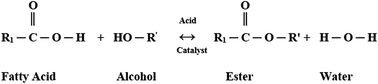
2.1.1.2 Esterification process. Esterification method is used to reduce the acid value of biodiesel feedstock prior to trans-esterification method. In this process, crude oil is subjected to esterification reaction shown in Fig. 1. Crude oil with 50% (v/v oil) of alcohol (methanol or ethanol) and 1% (v/v oil) H2SO4 are allowed to react in a flask for acid-catalyzed esterification. The reaction mixtures are maintained at a minimum temperature of 60 °C for 3 h with stirring at a speed of 400 rpm. When the primary phase of acid esterification is completed, the product is transferred to a separating funnel, and the excess methanol together with contaminations progressed to upper layer are withdrawn. The lower layer of the product is heated at 90 °C for 60 min to separate the methanol and water from the esterified oils. Afterward, the product is used for the trans-esterification.24
 |
| | Fig. 1 Esterification process of biodiesel production. | |
2.1.1.3 Trans-esterification process. Trans-esterification is a biodiesel production process that allows animal fats or vegetable oils to react chemically with an alcohol (either ethanol or methanol) to form esters and glycerol.66,84,87,88 The trans-esterification reaction is shown in Fig. 2. The reaction rate is improved after using a catalyst.84 These catalysts may be homogenous, such as NaOH, KOH, and NaOCH3, or heterogeneous, such as MgO, CaO, Na, and K.89–91 The last reaction mixture mainly contains esters and glycerols, as well as mono-, di-, and triacyl-glycerols, catalysts, and soaps. The crude biodiesel glycerol is separated after the trans-esterification reaction.85
 |
| | Fig. 2 Trans-esterification process of biodiesel production.84 | |
2.1.1.4 Post-treatment process. The product of trans-esterification is washed with distilled water at temperature higher than 65 °C to eliminate the glycerol content and contaminations. Subsequently, the biodiesel is subjected to rotary evaporation to eliminate the water and methanol/ethanol contents. Finally, moisture is absorbed using Na2SO4, and the product is filtered and then collected.24
Advantages of this method.
(1) Properties of biodiesel fuel almost same to the conventional petroleum diesel fuel.
(2) Production cost of BDF is low.
(3) For industrialized production this method is suitable.
(4) Conversion efficiency is high.
Limitation of this method.
(1) Low free fatty acid and water content are required.
(2) BDF can neutralized and washed for reason of pollutant.
(3) Difficult to separate the reacted product.
2.1.2 Direct use and blending of oils. Direct utilization of vegetable oils (VOs) for diesel engines has numerous intrinsic failures. This method has been studied extensively in recent decades, but utilization of vegetable oils for other purposes has been conducted for 100 years. Crude vegetable oils may be blended directly and alternately, weakened with diesel fuel to address the viscosity issues attributed to the secondary viscosities of vegetable oils in compression ignition engines.92,93 The energy consumption of clean vegetable oils was observed to be the same as to diesel fuel. However, polymerization of fatty acids, oxidation stability, and poor cold flow behavior of vegetable oils may cause gum formation during storage or cold weather.84,92 The cetane number (32–40) and heating values (39–40 MJ kg−1) of vegetable oils are lower than diesel fuel. The kinematic viscosity (30–40 cSt at 38 °C) and flash point (above 200 °C) of VOs are very high compared to diesel fuel.94,95 Blending and heating of VOs can improve the viscosity and volatility. However, molecular structure does not change and that is why, polyunsaturated behavior does not also change.84,92,96 The use of VOs in diesel engines obliges critical engine modifications, including evolving about piping and injector development materials, also addition of a heat exchanger and an extra fuel tank in fuel system97 otherwise, engine running times are decreased and maintenance costs are increased due to higher wear, resulting increased engine failure risk.98 However, direct or blending of VOs are not suitable for direct or indirect injection diesel engine.99,100 Micro-emulsification, pyrolysis, and trans-esterification have been used as remedies to solve the problems encountered due to high fuel viscosity.100
2.1.2.1 Advantages. (1) Easy to use and no need additional production cost.
2.1.2.2 Drawback. (1) High viscosity is the main problem of this process, as it creates poor fuel atomization.(2) Very high flash point attributes to lower volatility characteristics.
(3) Storage and CFP problems.
(4) High carbon deposits, scuffing of the engine liner, injection nozzle failure are the major problems.
(5) The engine fuel system requires modification, and therefore, it is expensive.
2.1.3 Hydrotreated vegetable oil (HVO). Hydrotreating of vegetable oils is an alternative method to esterification for evolving bio-based diesel fuels, which is also known as renewable diesel fuels. Hydrotreated Vegetable Oil (HVO) can be produced from vegetable oils such as rapeseed, soybean, and animal fat etc., through the hydrotreating of oils.101–103 Fig. 3 shows the production technique of HVO, which consists of three steps: first, pretreatment of the oils; then hydrotreatment of the oils to eliminate metals, N2 as well as other impurities; and finally, isomerization to absorb any other impurities left in oils.104,105 Fig. 4 shows chemical reaction, where the oils and hydrogen (triglycerides) are reacted under high pressure so as to evacuate oxygen, and the produced hydrocarbon chain is chemically comparable with diesel fuel.106 HVOs are chemical blends of paraffinic hydrocarbons and are free of sulfur and aromatics. The cold flow properties of HVO can be balanced to meet the nearby necessities up to −40 °C by isomerizing linear paraffins into isoparaffins. However, cetane number is found high (75 to 95), whereas the density is lower (770 to 790 kg m−3) of HVO,104,107–109 heating value is almost same104 and the stability is good compared to diesel fuel.104,110,111
 |
| | Fig. 3 Schematic diagram of hydrotreating processes.101 | |
 |
| | Fig. 4 Hydrotreating processes of HVO.102 | |
2.1.3.1 Advantages. (1) Fuel properties are almost same to diesel fuel.(2) HVO is superior to ester-type biodiesel (FAME) while considering stability, NOx emissions, tendency to dilute engine oil and winter condition.
(3) Based on Stumborg et al. statement cost of HVO is half to transesterification,112 although Kann et al. stated that cost of HVO is higher than transesterification.113
2.1.3.2 Limitation. (1) HVO has low torque, and low engine performance compared to FAME at high speed as well as low total energy.114(2) Any excess impurities left in HVO will cause premature deactivation of the catalysts.104
2.1.4 Influence of FAME on cold flow properties (CFPs) and oxidation stability (OS) of BDF. Fatty acid methyl esters are correlated with CFPs and OS of BDFs.115,116 CFP is depended on fatty ester chain length, while OS is depended on polyunsaturated fatty esters.117 OS is found good when saturated fatty acid methyl ester is high, while CFP is good when unsaturated fatty acid methyl ester is high.118 Melting point (MP) of long chain and saturated fatty compound is higher to short chain and unsaturated fatty compound which causes crystallization at higher temperature compared to short chain and unsaturated fatty compound.20,37 Pinzi et al.119 evaluated the effect of fatty acid chain length and unsaturation degree (UD) on physical properties of vegetable oil biodiesel. CFPP was reduced with increasing UD from saturated to monounsaturated fatty acid ester, because of the lower melting point of unsaturated fatty acid components. OS is increased with decreasing the polyunsaturated fatty esters. Autoxidation of UNSFAE depend on the double bond position such as linolenic acid (one bis-allylic position at C-11), as well as linolenic acid (two bisallylic positions at C-11 and C-14) and number such as 1 for methyl oleate, 41 for methyl linoleate and 98 for methyl linolenate. Maximum BDFs contain huge measure of oleate, linoleate or linolenate (methyl/ethyl esters), which influence OS of BDFs.20,36
2.1.5 Effect of biodiesel production on cold flow behaviors. Production methods of biodiesel are related to cold flow properties. Li et al.120 generated biodiesel from sunflower, soybean, peanut, cottonseed, and corn oils through trans-esterification and thermal cracking process. They examined the biodiesel for cementing point, CFPP, and thickness according to ASTM guidelines. The results indicated that the pour point for trans-esterified biodiesel increases extensively, whereas CFPP decreases in contrast to catalytic cracking biodiesel. The study showed that cold temperature affects the generation of biodiesel. Dunn121 derived biodiesel by using trans-esterification process with short chain monohydric alcohol. This procedure produced trace amounts of minor constituents, such as saturated mono-acylglycerols and free steryl glucosides. These materials have higher liquefying and low solubility properties permitting them to form robust residues that clog fuel filters throughout cool climate, and affected OS. Bouaid et al.10 used biobutanol as alcohol in the trans-esterification of rapeseed oil and frying oil to enhance the low temperature behavior, such as CP, PP, and CFPP without influencing the other biodiesel properties; therefore, the operability of biodiesel in cold regional areas was improved. Seames et al.53 generated canola oil- and SBO-based biodiesel through thermal cracking process and improved the behavior of cold flow and oxidation stability of biodiesel. Jurac et al.122 evaluated that ram material quality and compositions have significant effect on cold flow behavior and other biodiesel properties. Low temperature behavior serves as the physico-chemical qualities that determine biodiesel transformation from browning vegetable oil. Udomsap et al.123 produced BDF by trans-esterification using feedstock containing high concentrations of high melting point saturated long-chain fatty acids; however, BDF had a tendency to have moderately poor behavior of cold flow. Given this result, biodiesel has some impediments for engine use at cold areas.
2.1.6 Summary. Biodiesel is environmentally safe and a renewable resource, which makes it more viable alternative fuel. The cost of biodiesel mainly depends on the process used and its source or availability. It has various production methods, but trans-esterification process is more effective compared with other methods based on processing cost and fuel properties. Pyrolysis produces more gasoline than BDF, but thermal cracking and pyrolysis equipment are costly. Direct utilization of vegetable oils for diesel engines can be problematic and cause numerous intrinsic failures. Because of polymerization, poor cold flow behavior causes gum formation during storage or cold weather, as well as high viscosity, acid composition, and free fatty acid content. Cold flow properties and other properties of BDFs are dependent on the production method employed. This finding emphasizes the importance of methods used in biodiesel production.
3. Cold flow behaviors of biodiesel old flow behaviors
Cold flow behavior is an essential property of biodiesel, particularly when used at low temperatures.11 The cold flow behavior of biodiesel is normally assessed using PP, CP, and CFPP.16 PP is defined as the least temperature at which fuels may become pourable. CP refers to the temperature at which crystals begin to appear. CFPP corresponds to the temperature at which fuel crystals have agglomerated in sufficient amounts to cause a fuel filter to plug.124
3.1 Cold filter plugging point (CFPP)
CFPP t is defined as the temperature at which fuel filters clog because of solidified or gelled fuel component. CFPP is less progressive than CP and is recognized by some investigators to be a superior implication of low temperature operability. The CFPP of biodiesel can be measured according to the ASTM standard D6371-05,125 which is a standard test method for measuring CFPP of sample fuels. In this method, fuel samples are pipetted under vacuum condition and cooled with 1 °C temperature determination. The experiment is then continued until wax crystals and clogs at fuel filters are observed.
3.2 Pour point (PP)
PP is defined as the temperature at which a number of crystal agglomerations and gel formation are observed in the fuels, consequently preventing the fuel to flow. For practical measurement of PP, users determine the temperature before materials clog the fuel filter. The PP of biodiesel can be measured according to the ASTM standards D5949, D5950, D5985, D5985, D6749, D6892, and D97. ASTM D5949-02 is the standard test method for measuring the PP of petroleum products. In this method, an automatic pressure pulsing is used, which consists of a microprocessor in a controlled test chamber used to manipulate the heating and cooling temperatures of the test fuel, as well as sensors for recording temperature and optically detecting the test fuel movement. Peltier device controls heating or cooling rate. It is used to heat fuel samples and then allowed to cool at a fixed rate (for example, 1.5 ± 0.1 °C min−1). An optical sensor is employed to observe the movement of the fuel sample; it uses a light source to illuminate the sample. In this process, at a rate of 0.1 °C min−1, the temperature is reduced until movement of the fuel sample is not observed. The lowest temperature where no movement of fuel is observed indicates the pour point.126,127
3.3 Cloud point (CP)
Cloud point is defined as the temperature of the fuel at which wax crystals first appear as the fuel is cooled.128 This is the most reasonable estimation of CFPs. Because the solidified wax thickens the oil, the fuel filters and injectors of the engine are clogged. CP is always higher than PP. The CP of biodiesel can be measured according to the ASTM standards D5771, D5772, D5773, and D2500. ASTM D5771 is the standard test method for measuring the CP of petroleum products, in which optical detection cooling method is used. In this process, the temperature is measured within the range of −40 °C to 49 °C with 0.1 °C temperature determination. The temperature of one or more autonomous test cells can be controlled continuously with microprocessor-controlled CP devices at the base of the container. CP is determined using a light emitter on one side and light recipient at the opposite side of the container. In this process, temperature is continuously decreased until wax crystals are observed in the container of fuel samples. At present, automatic CP measuring instruments are available.129
3.4 Summary
Commonly measured cold flow properties of biodiesel are the values of CP, PP, and CFPP, because these properties vary according to the global climatic conditions. Several methods are employed to measure these parameters, including different automatic instruments that are in accordance with the ASTM and EN standards. In these instruments, the starting point is set with the help of software and the results are displayed automatically as well as an audible alert. The results obtained from these measurements are more accurate.
4. Effect of cold flow behaviors of biodiesel on engine operation
A number of studies have been attempted to solve the issues of engine operation during cold climate, such as clogging of fuel filters, inadequate burning, fuel fasting, and start-up problem. In cold climatic condition, diesel fuel start to crystallize. When ambient temperature is the same as the temperature required for crystallization, high-molecular weight paraffins (C18–C30 n-alkanes) in petrodiesel nucleate and create wax crystals, which cease at the fluid stage composed of shorter-chain-alkanes and aromatics. The fuel can be nucleated and developed into solid crystals with high-melting points at cold temperature.121 When solidified materials clog fuel lines and filters due to the crystallization of saturated FAME components34,48,123 and the precipitation of large crystals of high-melting fractions in BDFs,149 create problems of fuel starvation and operability. As the temperature is being reduced, crystals keep increasing in number and slowly develop to approximately 0.5–1 mm size. Subsequently, the crystals start to agglomerate; thus, the fuel flow systems cease to flow, thereby clogging the fuel lines and filters.117,150 Liquid molecules can produce adequate thermodynamic force by strong intermolecular force of interaction for causes of crystallization, which force is increased when liquid temperature reduce to below the melting points. Crystallization happen in two step 1st nucleation and 2nd crystal growth. Nucleation is occurred when liquid molecule come together to produce crystal lattices or crystallites. Crystal growth is subsequent to nucleation. It includes the growth of the crystal lattices formed. Meanwhile, the lattices grow by the nucleation of the layers of new lattices on the existing ones to form large crystals. This growth continues until a continuous network of crystals is formed which results in disruption of fuel flow causing fuel starvation in the engine, ultimately leading to incomplete combustion which is responsible for starting problem in vehicle during cold season.151–153 Table 5 shows for poor cold flow behaviors of biodiesel fuels crystal grow and clogs fuel filter and lead to engine disappointments. Fuel lines and filters are plugged because of the crystallization of the compounds.
Table 5 Effect of cold flow behaviors on engine operation system during cold weathera
| Biodiesel |
Properties |
Effect on engine operation system |
Ref. |
| CFPP = cold filter plugging point, PP = pour point, CP = cloud point. |
| Waste cooking oil biodiesel |
PP, CFPP |
Fuel starvation and operability problems as solidified material clogs fuel lines and filters. Diesel engine start-ability can be deteriorated |
34 |
| Biodiesel |
CP, PP, CFPP |
Clogged fuel filters and flow lines and created engine operability problem |
149 |
| Soybean biodiesel |
PP, CFPP |
Fuel starvation and operability issues as solidified materials clog fuel lines and fuel filters |
48 |
| Biodiesel |
CP, CFPP, PP |
The fuel nucleate and grow to form solid crystals. Clogs fuel filters bringing on startup and operability problems |
121 |
| Biodiesel, soybean biodiesel |
CFPP, PP, CP |
Crystal grow and clogs fuel filter and lead to engine disappointments |
117 and 156 |
| MME |
CP, PP |
The solid and crystal quickly develop and agglomerate. Clogging fuel lines and filters and creating significant operability issues |
20 |
| Palm biodiesel |
CP |
Grow wax crystals and clogging fuel lines and filters |
150 |
| Canola biodiesel |
PP, CFPP |
Plugging fuel line and fuel filter |
158 |
| Poultry fat biodiesel |
CFPP, CP |
Create crystal and cease the flow of fuel lines and filters |
159 |
| Peanut biodiesel |
CFPP, CP, PP |
The fuel lines and filters are plugged due to the crystallization |
55 |
| Palm biodiesel |
PP, CP |
Some impediment on biodiesel use in diesel engine at cold weather |
123 |
| Soybean, poultry fat, cottonseed oil based biodiesel |
CFPP, CP, PP |
The formation of precipitate |
157 |
| Pongamia biodiesel |
CP, PP |
Formation of crystals. Fuel starvation and operability problems as solidified material clog fuel lines and filter |
29 |
| FAME |
PP |
Formation of crystal clogging the fuel lines and filters |
154 |
4.1 ASEAN based
4.1.1 Palm oil methyl ester. Udomsap et al.123 found that BDF produced from feedstock containing high concentrations of high melting point saturated long-chain fatty acids tends to have relatively poor cold flow properties. Therefore, biodiesel has some impediments for diesel engine use at cold weather. For example, biodiesel derived from PME has a cloud point that ranges from 10 °C to 20 °C, which may cause trouble in cold seasons. Kleinová et al.154 used palm oil based biodiesel and confirmed that the cold flow behavior of FAME/FAEE is one of the few research problems at low temperature because of their crystallization properties. The formation of microscopic crystals is due to a decrease in temperature to achieve the saturation temperature of any of the FAME/FAEE components. In particular, the cold flow properties remarkably change because of the precipitation of large crystals of high-melting fractions in BDFs, subsequently clogging the fuel filters and flow lines and creating engine operability problems.149
4.1.2 Mahua methyl ester. Knothe et al.36 investigated the characteristics of cold flow performance and exhaust emissions of MME and ethanol-blended MME and reported that during cold seasons, solid crystals rapidly develop and agglomerate, clogging fuel lines and filters and creating significant operability issues.
4.1.3 Waste cooking oil methyl esters. Borugadda et al.155 stated that poor cold flow properties of biodiesel are the major problems in operating an engine at cold weathers. They investigated the low temperature properties of castor oil methyl esters and (WCOMEs) by using ASTM and DSC techniques. The findings confirmed that WCOME biodiesel had the most unfavorable cold flow properties because of the localization of long chain saturated fatty acids (18 wt%).34
4.2 EU based
4.2.1 Rapeseed oil methyl ester. Broatch et al.34 reported that diesel engine start ability can be deteriorated at under-zero ambient temperature, which also creates problems of fuel starvation and operability when solidified materials clog fuel lines and filters due to the crystallization of saturated FAME components. When ambient temperature decreases, additional solids are created.
4.3. North America based
4.3.1 Soybean oil methyl ester. Boshui et al.48 further confirmed these findings and attributed the problems to the high amount of saturated FAME segments. Chiu et al.156 and Serrano et al.117 report that when the temperatures diminished bellows the CP, grow the crystal and agglomerate continually until to achieve clog fuel systems. Tang et al.157 confirmed that the precipitate formation during cold temperature storage is dependent on the feedstock and blend concentrations. The dissolvability effects of biodiesel blends are maintained at low temperature and room temperature prompting a high amount of precipitates formed.
4.4 Influences of high blended biodiesel on engine system
When biodiesel increases the percentage in biodiesel blend, increased viscosity and carbon residue increases which can clog the fuel filter, coke the injector.160 Moreover, hydraulic behavior of the injector can be affected and consequently combustion process can be deteriorated.34 According to BMW Group Malaysia, B10 biodiesel have technical challenge to run the engine. Vehicles testing suggest that FAME, which boils at high temperatures, will move into the motor oil, as it does not evaporate when the engine runs at high temperatures causing it to thin and possibly leading to oil sludge. This reduces lubricity and increases the risk of engine damage. They also found that higher level of water in B10 biodiesel lead to corrosion of fuel system, which promotes oxidation in fuel tank, resulting fuel filter blockage. Incompatibility of additives with FAME forms the films deposit at fuel injector as well as creates injection invariance, resulting reduced idling cycle stability.161 The presence of steryl glucosides (SG), saturated monoacylglycerols (MAG) or free steryl glucosides (FSG) may create problem in case of flowability of biodiesel and blended biodiesel, because of high melting point of SG and insolubility in fuel. In biodiesel fuel, SG considered as a “dispersed fine solid particles”, which promotes the crystallization of other component.121 SG may promote the formation of aggregates in biodiesel, exacerbating problems caused by saturated monoglycerides and other known cold-crystallizing components.162 Due to the formation of aggregates while using biodiesel and biodiesel blend, the fuel filter may clog.121 Tang et al.157 demonstrated that fuel delivery systems of diesel engine may be affected by the formation of precipitates while using biodiesel blends. The formation of precipitates in PF- and SBO-based biodiesel is attributed to the mono-glycerides and steryl-glucosides, respectively. The formation of precipitates in CSO-based biodiesel is attributed to both mono-glycerides and steryl-glucosides.
4.5. Summary
Based on the above information, the following conclusions can be drawn:
(1) Poor cold flow behavior of biodiesel has negative effect on engine operation system in cold areas.
(2) Formation of crystals, as a result of poor cold flow behavior of biodiesel, causes clogged fuel filters and fuel system and creates operability problems in cold areas.
(3) Cold flow properties of biodiesel are significant, and the limitation of these properties varies with climatic condition.
(4) In cold climatic areas, such as Canada, a high CFPP will clog-up a diesel engine more easily; thus, the poor cold flow behavior of biodiesel needs to be improved.
5. Oxidation stability of biodiesel
Oxidation stability is a parameter that depicts the degradation propensity of biodiesel and is significant in solving conceivable issues with engine parts.26,40,163 Biodiesel is oxidized in the localized unsaturated fatty acids, and subsequently the double bonds offer an abnormal state of reactivity with oxygen.26,40,45 Oxidation is mostly performed on two stages, namely, primary and secondary oxidation. Primary oxidation occurs with a group of reaction categorized as initiation, propagation, and termination (Fig. 5) in the first set of carbon free radicals derived from carbon atom after removing the hydrogen. In the presence of diatomic oxygen, the formation of peroxy radicals becomes faster, even not allowing substantial alternatives for the carbon-based free radical.26,40 Carbon free radical is more active compared with peroxy free radical but is adequately responsive for rapid dynamic hydrogen reaction with a carbon structure to form carbon radical and ROOH. The derived carbon free radical can react with diatomic oxygen and undergo propagation steps. In the termination step, two free radicals react with each other to form a non-radical species (Fig. 5). If the radical species concentration is sufficient, peroxyl-linked molecules (R–OO–R) is formed from peroxyl radicals at low temperature.164| | |
ROO + ROO → R–OO–R + O2
| (1) |
 |
| | Fig. 5 Chemical reaction of primary oxidation.27,126 | |
During the induction period, the ROOH deposit remains for a certain period of time. This is determined by the relative sensitivity to oxidation stability and based on the stress conditions. The level of ROOH rapidly increases until the initial period is achieved.40
The hydroperoxide (ROOH) level can reach a peak and then reduce or increase and plateau at a steady state value. With insufficient amount of oxygen, the formation of ROOH can slow or even stop, while ROOH decomposition continues. Correspondingly, different elements (for example, higher temperature or increased presence of hydroperoxide-decomposing metal catalysts, such as copper and iron) that increase ROOH disintegration rate can result in ROOH fixation to peak. In any case of ROOH fixation profile, most extreme ROOH levels constructed are typically 300–400 meq. O2 per kg.164
Once shaped, hydroperoxides (ROOH) continue to decay and inter-react to shape various secondary oxidation items, including aldehydes, alcohols, short chain carboxylic acids, and higher atomic weight oligomers, even at ambient temperature.165 Numerous studies reported different secondary oxidation products. For example, vegetable oil oxidation produces 25 aldehyde components (hexenals, heptenals, propane, pentane, and 2,4-heptadienal).164,165 Polymeric species forms with the inclusion of unsaturated fat chains. Trimers or tetramers are smaller than polymeric flavors, but no explanation exists behind this distinction. Viscosity is enhanced by polymer developments, such as the establishment of C–O–C and C–C linkages, to form fatty acids, esters, and aliphatic alcohol.40,164 Hasenhuettl166 explained the hydroperoxide decomposition mechanism of formic acid. Fig. 6 shows the ethyl linoleate ester radical oxidation details as follows: step 1, hydrogen deliberation from the allyl group; step 2, oxygen assault at either end of the radical focus, creating intermediate peroxy radicals; step 3, monohydroperoxide formation; and step 4, partial decomposition of the initially formed monohydroperoxides into oxo-products and water.40
 |
| | Fig. 6 Scheme of radical oxidation of ethyl linoleate ester.40 | |
5.1 Principles and standard methods for measurements of oxidation stability of BDF
Various methods were reported to characterize the oxidation stability of biodiesel, such as compositional analysis (gas or liquid chromatography), free and total glycerol content, FFA, various structural indices (APE, OX, iodine value, BAPE, and electromagnetic spectroscopy), product levels of primary oxidation (peroxide value), product levels of secondary oxidation (anisidine value, aldehyde content, attendance of quantities of filterable insoluble materials, total acid number, and polymer levels), physical properties (density and viscosity), and accelerated oxidation (Rancimat IP or oil stability index and pressurized DSC).26,40 No single technique can characterize the biodiesel, and the probability that any new test will have the capacity to totally characterize biodiesel oxidation stability is low.40 Now several method are discussed below:
5.1.1 Rancimat method (EN14112). The Rancimat method is the most important process to determine the oxidation stability of biodiesel. The sample fuel (FAMEs) needs to be oxidized to peroxides. Afterward, the products are decomposed completely to produce secondary oxidation products, which incorporate volatile organic compounds as well as low molecular organic acids, including formic and acetic acids. Moreover, Rancimat strategy is the standard and official system for determining the oxidative stability of oils and fats by the American Oil Chemists' Society. In this technique, the temperature extent is typically restricted to 130 °C.89 Sample fuels (FAMEs) are heated to 110 °C, and the air in samples is bubbled and oxidized; removal of bubbled air also deionizes the H2O in the flask. An electrode is connected to determine the solution conductivity. The conductivity starts to increase with time, and the IP is determined by the oxidation curve formed after continues process. The IP is defined at the inflection point of the oxidation curve. Conductivity and IP measurements mainly depend on the volatile acidic gases, for example, formic acid, acetic acid, and other acids.89,167 The storage stability of sample fuel can be measured by a modified Rancimat method.
5.1.2 Pressure differential scanning calorimetry (PDSC) (ASTM D5483). Based on the pressure differential scanning calorimetry (PDSC), oxidation induction time of biodiesel can be measured. Oxidation induction time (OIT) needs to be measured in the event that the test is directed in an isothermal pathway, and the oxidation temperature (OT) needs to be measured as the steadiness parameter in the non-isothermal method.89 In this process, OIT is evaluated in isothermal curve and OT is evaluated in dynamic way.168 Yamane et al.169 Yamane et al.170 used PDSC to determine the OIT of biodiesel blends with antioxidant, which was calibrated with indium metal as standard. This method was conducted using an open 110/L platinum pan as sample. Test sample (3.0 mg) was used for each analysis at 551 kPa static air. The test sample was heated at an ambient temperature of 110 °C at 10 °C min−1 heating rate; this process was followed by isothermal pathway and continued until significant oxidation stability was attained in the sample.170
5.1.3 Analysis of the IR spectra. IR spectra analysis is used to measure oxidation stability. It is simple, easy, and fast compared with other methods. The FTIR is used to obtain the peak characteristics of biodiesel molecule with strong ester peaks at 1750 cm−1 (C
O vibration), C–O vibrations of approximately 1170 cm−1 to 1200 cm−1, and a signal at 1435 cm−1, which is the methyl ester group (–O–CH3) with its deformation vibration.89,171 Furlan et al.172 used infrared spectroscopy to characterize the oxidation stability of biodiesel. The degradation IR showed highly affected shapes of hydroxyperoxide, alcohol, acid, aldehyde, and ketone during oxidation. An extra carbonyl group was formed because of oxidation; a second harmonic of the carbonyl with band associated at 3400 cm−1 to 3500 cm−1 is beneficial in determining the oxidation stability of biodiesel. The FTIR measurements were performed in soybean- and Crambe-based biodiesel. The results showed that more carbonyl was produced in soybean-based biodiesel compared with Crambe-based biodiesel. Moreover, a minimum stable nature of soybean biodiesel to thermal stress was observed.89,173 The stability and quality of biodiesel and blended biodiesel can be analyzed using near infrared (NIR) and middle infrared (MIR) spectroscopy.40,174,175 Multivariate was calibrated with NIR and MIR spectroscopy to analyze the pure biodiesel quality and trans-esterification reaction, which is used to determine the BDF properties.40,176,177
5.2 Summary
The oxidation stability of biodiesel mainly depends on the SFAE or USFAE. Poor oxidation stability of biodiesel has negative effect on engine operation and performance. Oxidation is mostly performed in two stages, namely, primary and secondary oxidation. Several methods are employed to characterize biodiesel oxidation stability, but not applicable for all biodiesel. Rancimat method and IR spectra analysis are effective and easy methods used to measure biodiesel oxidation stability, in which IR spectra analysis is the best. However, all methods have some limitations in characterizing the oxidation stability of biodiesel.
6. Effect of oxidation stability on engine operation system
Oxidation stability is one of the important fuel properties. This property is lower in biodiesel than in diesel fuel.89 Many researches attempted to identify the problems of engine operation system during biodiesel oxidation. Waynick et al.42 reported that when biodiesel is oxidized, one potential issue is the propensity to form structures in engine components, for example, injectors and fuel pump parts. Oxidation can degrade BDF properties and seriously affect engine performance. Monyem et al.45 studied in some cases, oxidation brings about the compound structure of biodiesel breaking separated to frame shorter chain acids and aldehydes. In its propelled stages, oxidation causes biodiesel to end up acidic, bringing about fuel framework erosion also to form insoluble gums and sediments that can plug fuel filters and varnish affidavit on fuel framework segment. Oxidation influences fuel properties such as viscosity, cetane number etc. Westbrook et al.43 confirmed that at the point when biodiesel was oxidized to become acidic, destructive acids and storage conditions may cause increased wear in engine fuel pumps and injector.
Graboski et al.178 confirmed that the oxidation of biodiesel prompts the arrangement of hydro-peroxides, which can assault elastomers or polymerize to frame insoluble gums that clogged the fuel filters. Oxidation products, such as carboxylic and hydro-peroxides acids, can act as plasticizers of elastomers. For instability of oxidation flash point and other properties of biodiesel can be affected, possibly raising issues beyond the fuel conveyance framework. Introduction of water in the fuel can bring about the development of rust and consumption exacerbated by the localization of acids and hydro-peroxides shaped by fuel oxidation. Knothe44 noted that when biodiesel was oxidized at very high level, biodiesel mixed with petro-diesel (PD) can separate into two stages bringing on fuel pump and injector operational issues. Polymerization-sort reaction leads to the development of higher atomic weight items and an increment in viscosity. Insoluble species development can obstruct fuel lines and pumps. Furthermore, Leung et al.46 investigated polymerization-sort reaction, biodiesel engine lubricating oil, sludge formation, and increasing engine wear (Table 6).
Table 6 Effect of oxidation stability on engine operating system
| Biodiesel |
Effect on engine operation system |
Ref. |
| Twelve biodiesel samples. |
| Soybean oil biodiesel |
Plugged the fuel filter and injector fouling and create starting problem |
41 |
| Biodiesel |
Clogged the fuel filter pump and injector fouling |
42 |
| Soy biodiesel |
Wear in engine fuel pumps and injector |
43 |
| Fat and vegetable oil based biodiesel |
To frame insoluble gums and that clogged the fuel filters |
178 |
| Soybean oil biodiesel |
Create fuel pump and injector operational problem |
44 |
| Biodiesel |
Formation of polymers that can clog fuel filter, line and injectors |
179 |
| Biodiesela |
Debase engine lubricating oil, creating sludge and expanding engine wear |
46 |
6.1 Improvement process of oxidation stability of biodiesel
Several studies have investigated several techniques on improving the oxidation stability of biodiesel, such as using additives, purifying biodiesel production, and modifying storage conditions.40,89
6.1.1. By using additives. Previous studies examined the effect of different antioxidants on biodiesel oxidation stability. Two types of antioxidants are available, namely, chain breaker and hydroperoxide decomposers, to improve oxidation by increasing the IP. The chain breaker cooperates with peroxide radical, and an auto-oxidation response occurs and leads to the development of an antioxidant free radical, which effectively balances out without further activities. The hydroperoxides and hydroperoxide decomposers are reacted and converted into alcohols. In this situation, unnecessary oxidized structures are formed from antioxidant. The common antioxidants used include α-tocopherol, propyl gallate (PG), butylated hydroxyanisole (BHA), 3,5-di-tert-butyl-4-hydorxytoluene (BHT), pyrogallol (PY), and tert-butylhydroxyquinone (TBHQ).89,180–182 Fattah et al.183 used BHA, BHT, and TBHQ at 1000 and 2000 ppm in CIME as additives. The oxidation stability of biodiesel improved with all additives, but the best result was with TBHQ at 2000 ppm with CIME20. From antioxidants, lipid or ester radicals (LOO˙) consume abstracted hydrogen. Afterward, they create stable radical intermediates with moderate delocalization, which hinders oxidation in fuels, which is shown in Reaction (1).| |
 | (1) |
Peroxyl radicals react with TBQH to produce semiquinone reverberation half and half, which allows radical intermediates to create more stable products. These products are reacted with one another to create dimers, dismutate, and regenerate semiquinone. These products also react to peroxyl radical, as shown in Reactions (2)–(4).
| |
 | (2) |
| |
 | (3) |
| |
 | (4) |
The effect of these antioxidants can be arranged according to the stabilization factor BHA < BHT < TBQH (22.27 h < 25.82 h < 28.38 h).
These additives have a slight effect on other properties of biodiesel. Serrano et al.184 enhanced biodiesel oxidation stability using four commercial synthetic-based (AO1, AO2, and AO3) and one natural-based (AO4) antioxidants on SME, RME, PME and HOSME. All additives enhance the sample biodiesel oxidation stability. The best result was observed with AO3 at 1000 ppm with PME. Yang et al.185 investigated the effect of PY, PG, BHA, TBHQ, and alpha-T at 0 ppm to 8000 ppm on SME. All the antioxidants enhance the oxidation stability of biodiesel. IP of SME is 0.7 h. TBHQ and PY exhibit better enhancement at >3000 and <3000 ppm, respectively. They concluded the effectiveness of antioxidants in the order TBHQ > PY > PG > BHA > BHT with PY, TBHQ, and PG at 1500, 3000, and 8000 ppm, respectively; all were able to meet the EN 14112 standards. Several antioxidants have different efficiencies in different conditions. PY,186 BHA,187 BHT, TBHQ,183,188 or PG189 showed the best efficiency. α-T performance was always the least.185 Antioxidant performance is dependent on the fatty acid profile of the oil or fat, the amount of naturally occurring antioxidants, storage, or other conditions. Synthetic antioxidants exhibit better performance than natural antioxidants.187
6.1.2. Production purifying. Many researchers reported that oxidation stability of biodiesel can be enhanced using production purification.40,184,190 Biodiesel consists of fatty acid monoalkyl ester, which is generated through different techniques. Harmful phospholipids are contained in crude vegetable oil, which needs to be removed through hydration process.191 Free fatty acids, ketones, aldehydes, and unsaturated hydrocarbons of oils are removed using deodorization refining process, which is the most effective process to remove these properties.192 The high AV of free fatty acid reduces iodine as a catalyst. Homogeneous reagent or heterogeneous reagent can catalyze trans-esterification process. Homogeneous reagent consists of potassium hydroxide, hydrochloric acid, sodium hydroxide, and sulfuric acid. Heterogeneous reagents are enzymes heterogenized on organic polymers, alkaline earth metal compounds, anion exchange resins, titanium silicates, and guanidine. In the trans-esterification process, ethanol or methanol is used as an alcohol, and at the end of this process, selected products are eliminated either through citric acid wash or water wash step.184 Serrano et al.184 used two separate purification steps to eliminate the impurities of methyl ester phases. These purification steps use distilled water and citric acid solution. They found that citric acid-washed biodiesel met the standard specifications of EN 14214, whereas water-washed biodiesel failed. They also changed the values of biodiesel IPR to storage and compared citric acid-washed biodiesel with water-washed biodiesel. Cooke et al.193 also used purification process to eliminate impurities of ion interchange resin.
6.1.3. Modification of condition of storages. Biodiesel stability may increase by modifying the storage conditions. The storage processes of biodiesel are different, and many factors may affect the biodiesel stability.40,194 Rashed et al.40 suggested that pure biodiesel needs to be stored within 7 °C to 10 °C temperatures. Crystal formation can be avoided in cold climatic condition in contrast to underground storage, where storage temperatures need to be optimized.195 Biodiesel storage containers should be made of aluminum, steel, polypropylene, or Teflon; among which, aluminum is the most suitable because it has no catalytic effect on biodiesel.40 Biodiesel degradation increases with increasing temperature and air exposure. In addition, the water concentration in biodiesel can increase the degradation of biodiesel, which can be eliminated if BDFs are stored in tanks.196
6.1.4. Hydro-treating process. Biodiesel oxidation stability (OS) may be increased by using the partial hydrogenation.197–199 This method was used to modify the chemical structure of fatty acid chains197,199 as well as to convert polyunsaturated methyl esters to monounsaturated methyl esters under the mild reaction condition to enhance the fuel properties of biodiesel in terms of improved OS and cetane numbers (CN).41,197,200 Partial hydrogenation reactions catalyzed by Ni-based catalysts,200 rhodium sulfonated phosphite or Pd/HPM catalyst used to improve the OS and CN have been reported in the literatures.198,199 Hydrogenated FAME properties are depended on the time of hydrogenation. After 2 h hydrogenation, SFA increased by 46.9% and showed improved OS and cetane numbers as well as inferior cold flow performances (CP & PP was increased 2, −3 to 15 to 18 °C respectively).197,200 However, this results were better as compared to palm oil, tallow and grease methyl esters.200 Hydroxylation and epoxidation were used to diminish the UFAME percentages by 44% and 39% individually to improve OS, and CN; but CFPs of distilled biodiesel remained unchanged.197 However, CFP of biodiesel showed better result compared to palm oil, tallow or grease, and other methyl esters.200
6.2. Summary
Biodiesel oxidation stability is one of the problems in BDF. Polymers may form and can clog fuel filter and fuel lines and cause injector fouling, thereby resulting in engine start-up problem as well as sludge formation and increasing engine wear. Several techniques employed to solve these problems, and adding antioxidant technique is the most effective. Based on the above literature review, PY is the most effective antioxidant. The efficacy of antioxidants followed the order PG > TBHQ ≈ DBTHQ > BHT ≈ BHA > DPD ≈ OBPA. In addition, biodiesel oxidation stability linearly increases when the amount of antioxidants increases, and this amount varies within a level. In some cases, the complex antagonistic interaction present in the amine antioxidants causes destabilization. Furthermore, the water concentration in biodiesel can increase the degradation of biodiesel, which can be eliminated if BDFs are stored in tanks. Aluminum is the most effective container for the storage biodiesel. According to Section 6.1.4, hydro-treating process can improve cold flow properties of biodiesel. However, this process did not significantly improve all biodiesel cold flow properties.
7. Method of improvement of cold flow behavior of biodiesel
The methods provided by researchers to overcome cold flow operation problems are as follows:
Use of (1) additives and blending, (2) ozonization, (3) winterization.
7.1 By using additives and blending
Previous studies examined the effect of different cold flow improvers (CFIs) on biodiesel CFPs. CFIs are used to improve the CP, PP, and CFPP as well as CFIs relieve the influence of wax crystals on fuel by modifying their shape, size, growth rate and agglomeration, which result inhibits the formation of large crystals at low temperatures.33,34,48,156 Biodiesel blend improved CFPs and added additives to prevent fuel gelling.35,75,77,201,202 Boshui et al.48 investigated the effect of CFIs (OECP, EACP, and PMA) on cold flow properties and viscosity of soybean biodiesel at low temperature by using multi-functional low temperature tester and rheometer. OECP is the best and addition of 0.03% of OECP additive into the biodiesel at low temperature reduces the PP and CFPP and decreases viscosity. OECP represses wax crystals from developing to large sizes and inhibits crystal agglomeration at low temperatures; thus, the cold flow properties of soybean biodiesel are enhanced. Wang et al.203 evaluated the effect of EVAC, PMA, poly-alpha-olefin (PAO), and poly maleic anhydride, on low temperature properties. Others significant properties of biodiesel from waste cooking oil (BWCO) were also evaluated. The results showed that PMA best improved the cold flow properties and viscosity index of biodiesel from waste cooking oil without crumbling other imperative fuel properties of biodiesel. After the addition of 0.04% PMA, the PP and CFPP of BWCO decreased by 8 °C and 6 °C, respectively. At low temperature, PMA basically retarded crystal aggregation. Therefore, the low temperature properties as well as viscosity index of BWCO were enhanced. Schumacher et al.204 enhanced the cold climate functionality of biodiesel/diesel fuel by directly using vegetable oil additives. Specifically, they measured the CP, PP, and viscosity of methyl esters of soybean biodiesel and low sulfur diesel. Adding directly vegetable oil additives improved the PP and CP of soya methyl ester and its blend with low sulfur diesel. The 20% soy diesel mix treated with the SVO item at 0.75% should produce a safe working reach to most Midwest USA communities. Giraldo et al.150 evaluated the effect of three CFIs, namely, glycerol acetates, glycerol ketals, and branched alcohol-derived fatty esters, on the low temperature properties of palm biodiesel. Glycerol was chemically reacted with (CH3)2CO catalyzed by CH3C6H4SO3H to obtain glycerol ketals (Fig. 7). Glycerol was also allowed to react with CH3COOH catalyzed by CH3C6H4SO3H to obtain glycerol acetates (Fig. 8). Branched alcohol-derived fatty esters were acquired through the esterification of palm-inferred fatty acids with branched alcohols catalyzed by CH3C6H4SO3H (Fig. 9). Crystallization points of pure and blended palm biodiesels were determined by DSC. The results showed that 2-butyl ester of palm biodiesel is a better cold flow improver compared with the methyl esters. After adding of 5% of this additive, the PP and CP decreased by 6 °C. DSC investigations precisely demonstrated that all the improvers reduced the crystallization points of biodiesel. Molecule size investigations by element light scrambling demonstrated that the added substances reduced the crystal sizes. These findings demonstrated that CFIs improve the cold flow properties of biodiesel.
 |
| | Fig. 7 Reaction for glycerol ketals synthesis.150 | |
 |
| | Fig. 8 Reaction for glycerol acetates synthesis.150 | |
 |
| | Fig. 9 Branched alcohol-derived fatty esters synthesis scheme.150 | |
Dwivedi et al.29 improved the low temperature properties of Pongamia biodiesel by adding CFIs, namely, ethanol, blending, and winterization. Winterization reduced both PP and CP of Pongamia biodiesel by 5 °C, whereas blending with diesel and kerosene reduced the CP by 9 °C and 11.5 °C and PP by 11 °C and 12.5 °C, respectively. Similarly, when ethanol was used as a cold flow improver, the PP and CP of biodiesel were reduced from 19 °C to 9 °C and 20 °C to 10 °C, respectively. The result showed that adding cold flow improver is better compared with other methods in improving the cold flow properties of Pongamia biodiesel. Joshi et al.205,206 evaluated the effect of blending alcohols and CFIs with poultry fat methyl esters (PFMEs) on low temperature properties. They found that adding short-chain alcohols, such as ethanol, isopropanol, and butanol (5%, 10%, and 20%) improved the cold flow properties compared with pure PFME. Moreover, the blending of butanol–PFME was better compared with ethanol and isopropanol. Furthermore, adding 2.5, 5, 10, and 20 vol% of ethyl levulinate (ethyl 4-oxopentanoate) additive into biodiesel (from cottonseed oil and poultry fat) enhanced the cold flow properties at cold weather. The result showed that blending biodiesel with 20 vol% ethyl levulinate improved cold flow properties. The PP, CP, and CFPP of CSME were decreased to 3, 4, and 3 °C, respectively, whereas PFEM, PP, CP, and CFPP were decreased to 4, 5, and 3 °C, respectively. Torres et al.207 confirmed that the presence of synthesized additives and free fatty acids in the starting material for biodiesel production improves the cold flow properties. Esterification of stearic, oleic, and linoleic acids with bulky linear and cyclic alcohols was carried out to synthesize fatty acid derivatives. Up to 5% of CFI blended with biodiesel increased CFPP. Dunn208 investigated the effect of blending branched-chain alkyl alcohols and improvers with soybean oil FAME on cold flow properties of biodiesel. Admixtures of SMEs with 0–100 vol% tallow FAME and with n-propyl, isopropyl, n-butyl, isobutyl, and 2-butyl soyates were analyzed for CP and PP. Cold flow properties of biodiesel derived from the trans-esterification of soybean oil with propanol or butanol were better than those from traditional methyl esters. CP and PP of biodiesel blended with branching propyl or butyl ester head groups decreased more evidently than those with straight-chain head groups. The addition of 65 vol% of isopropyl in SME was better than those of other alcohols, and the cloud point was reduced by 5 °C.
Zuleta et al.16 evaluated the effect of blends of biodiesel from palm, sacha-inchi, Jatropha, and castor oil on biodiesel properties, such as oxidative stability and CFPP. These biodiesel properties are mainly dependent on the type of methyl-ester constituents and generally opposite. All biodiesel blends improved the CFPP; the best biodiesel blend was composed of 25% castor and 75% Jatropha. Furthermore, Park et al.209 conform that blended of biodiesel improved CFPs and OS of biodiesel (rapeseed, palm, and soybean biodiesel). The best biodiesel blend was found at 20 wt% palm, 60 wt% rapeseed, and 20 wt% soybean biodiesel. The CFPP of this blended biodiesel was −6 °C, and the oxidation stability was 6.56 h. Kleinová et al.154 also improved the cold flow properties of fatty esters by branched chain alcohols with fatty acids and blends of esters with fossil diesel fuel. Lv et al.210 evaluated the effects of CFIs, namely, commercial DEP, PGE, and self-made PA, on the cold flow properties of PME biodiesel. They found that the peak crystallization temperature of PME was near the CFPP. All CFIs were decreased PP, whereas reduced CFPP was observed only when the CFI fixation was 1% or higher. The best performance (CFPP PME reduced by 7 °C) was observed with CFI formulated from three components with the formulation ratio (DEP
:
PGE
:
PA) of 3
:
1
:
1 (60, 20, 20) or 2
:
2
:
1 (40, 20, 20). Soldi et al.211 evaluated the effect of using polymer additives to decrease issues caused by the crystallization of paraffin amid the creation and/or transportation of paraffin oils and derivatives. All the meth-acrylic copolymers reduced the PP of Brazilian diesel oil samples. The best result was observed when 50 ppm of the polymeric additives was used with the proportion of 70 mol% of octadecyl methacrylate, in which the PP was reduced by 22 °C. Moser et al.212 improved the cold flow properties and oxidation stability of soybean oil methyl esters (SME) by blending with branched chain ethers 1–4 (Fig. 10) using additives. Better CP and PP were observed in each of the four synthetic branched chain ethers 1–4 compared with SME. The most favorable cold flow properties were found at 2-ethylhexyl ether 4, which contained the most bulky ether (2-ethylhexyl) and ester (isobutyl); the CP and PP were −23 °C and −25 °C, respectively.
 |
| | Fig. 10 Synthesis of branched chain ethers 1–4.212 | |
Smith et al.213,214 evaluated the effect of alkoxylation with alcohols, including ethanol, methanol, n-propanol, n-pentanol, n-butanol, tert-butanol, n-hexanol, n-octanol, and 2-ethylhexanol, on the cold flow properties of biodiesel from canola oil. As shown in Fig. 10, the process involves the reaction for epoxidation and alkoxylation of methyl oleate. The best CP result was obtained for 2-ethylhexoxy butyl biodiesel at −6 °C, and CP was reduced by 6 °C than methyl biodiesel. CFPs of long-chain alkoxy biodiesel were improved because of protruding alkoxy chains, which likewise brought about an increase in viscosity (Fig. 11).
 |
| | Fig. 11 Process of reaction for epoxidation step 1 and alkoxylation step 2 of methyl oleate.213 | |
Hamada et al.149 evaluated the effect of cold flow of improvers (EVA and PGE) on CFPs PME, and a solid fat content was obtained. DSC thermograms showed that the PGE added substances reduced the crystallization temperature as well as actively smothered the crystal development. Polarized light microscopy demonstrated that the synchronous expansion of PGE and EVA prompted the development of extensively little and fine-scattered crystals of PME, which could enhance the viscosity at generally cold temperatures. Furthermore, Ming et al.215 improved the low-temperature performance of palm oil products [i.e., palm olein (PO), super olein (SO), palm oil methyl esters (POME), palm kernel oil methyl esters (PKOME)] by blending and using additives, namely, Tween-80, dihydroxy fatty acid (DHFA), acrylated polyester pre-polymer, palm-based polyol (PP). The result showed that all additives met the requirements for diesel fuel, with more significant reduction of PP and CP qualities observed for palm biodiesel tests. The best reduction result of CP and PP were observed around 10.5 °C (by addition of 1.0% DHFA + 1.0% PP to POME) and 7.5 °C (by addition of 1.0% DHFA to POMEPO), respectively.
Bhale et al.216 examined the cold flow characteristics of mahua biodiesel (MME) and evaluated the effect of CFIs (additives OS 110050 from Lubrizol, ethanol, and kerosene) on CFPs of biodiesel. It was observed that all CFIs improved the low temperature performance. The result of 20% ethanol blending and 2% commercial additives on low temperature behavior was the same, and the CP and PP of MME reduced from 10 °C and 11 °C to 12 °C, respectively. When 20% of kerosene was blended with MME, the CP and PP then decreased to 13 °C and 15 °C, respectively. Reduced emission without affecting the engine performance was also performed. Phung et al.217 investigated the use of triglyceride autoxidation using a homogeneous Co/Mn/Zr/bromide catalyst in a batch reactor at 150 °C for 2 h to improve the cold flow properties of tallow-, canola oil-, or soy bean oil-based biodiesel and produced lower molecular weight products compared to the fatty acids of the beginning triglycerides. The monoesters Me(CH2)mC(O)OMe (m = 5–12) and diesters MeOC(O)(CH2)nC(O)OMe (n = 7–12) were the main products in the autoxidation of tallow. The CP of all autoxidized tallow-, canola-, and soybean oil-based biodiesel were reduced by 13 °C, 16–11 °C, and 16–12 °C, respectively. Rasimoglu et al.218 evaluated the effect of trans-esterification parameters, such as trans-esterification temperature (in the range of 20–60 °C), reaction time (10–60 min), alcohol-to-oil ratio (3.15
:
1–12.85
:
1 in moles), amount of catalyst (0.25–2 g catalyst/100 mL corn oil) and stirring speed (300–800 rpm), on low temperature properties of corn oil-based biodiesel. The best result was observed when alcohol-to-oil ratio was maintained at 3.15
:
1–4.15
:
1, and the PP, CP, and CFPP were −10 °C, −4 °C, and −12 °C, respectively. Lin et al.124 evaluated the effect of thermal decomposition on cold flow properties and viscosity of fresh biodiesel, fresh diesel, and their blends performed in batch reactors at 250–425 °C for 3–63 min. CFPs and viscosity of biodiesel were measured by DSC and micro viscometer, respectively. Polymerization and pyrolytic reactions had critical effect on both properties of biodiesel; however, cis–trans isomerization reactions had a minimal effect on both properties. Yori et al.219 confirmed that the formation of crystals was restrained by isomerizing soy oil with methanol and using solid acid crystals at 125 °C to 275 °C to improve the cold flow quality of biodiesel. Furthermore, Jin et al.220 confirmed that poor flow properties at cold conditions were attributed to the long-chain fatty acids of biodiesel with an alcohol molecule attached. In the event that the double bond of unsaturated fatty acids in these long chain fatty acids could be cracked specifically, then it decreases the viscosity of BDF and subsequently improves the low temperature properties. Tables 7 and 8 shows the impact of CFIs on CP, PP, and CFPP, as well as the behavior of crystal.
Table 7 Effect of cold flow improvers on CP, PP and CFPP of biodieseld
| Biodiesel |
CFIs |
CP (°C) |
PP (°C) |
CFPP (°C) |
Ref. |
| BBa |
ABb |
BB |
AB |
BB |
AB |
Before used additives or blend. After used additives or blend. Alcohol to oil ratio 4.15 : 1. CB = Croton biodiesel, JB = Jatropha biodiesel, MB = Moringa biodiesel, FOBE = frying oil butyl esters, CME = canola methyl ester, SME = soybean oil methyl ester, BWC = waste oil biodiesel, PBD = Pongamia biodiesel, SFME = sunflower oil methyl esters (biodiesel), COME = cottonseed oil methyl esters, PFME = poultry fat methyl esters, CaB = castor biodiesel, SiB = sacha inchi biodiesel, PB = palm biodiesel, RBE = rapeseed butyl esters, RME = rapeseed methyl ester, MME = mahua methyl ester. |
| SB |
OECP (0.03%, m) |
|
|
−1 |
−9 |
0 |
−6 |
48 |
| PMA (0.03%, m) |
|
|
−1 |
0 |
0 |
2 |
| EACP (0.03%, m) |
|
|
−1 |
−1 |
0 |
−1 |
| 20% BWC |
0.04% EVAC |
−4 |
−12 |
−8 |
−18 |
−5 |
−16 |
203 |
| 40% BWC |
0.04% EVAC |
0 |
−6 |
−3 |
−8 |
−1 |
−7 |
| 60% BWC |
0.04% EVAC |
2 |
−5 |
−2 |
−7 |
0 |
−6 |
| 80% BWC |
0.04% EVAC |
4 |
3 |
1 |
−1 |
2 |
0 |
| 100% BWC |
0.04% EVAC |
5 |
4 |
2 |
1 |
4 |
3 |
| BWC |
0.04% PMA |
−8 |
−9 |
−11 |
−19 |
−9 |
−15 |
203 |
| BWC |
0.04% PAO |
−8 |
−9 |
−11 |
−14 |
−9 |
−10 |
| BWC |
0.04% HPMA |
−8 |
−8 |
−11 |
−12 |
−9 |
−9 |
| BWC |
0.04% EVAC |
−8 |
−8 |
−11 |
−17 |
−9 |
−11 |
| CB |
20% kerosene |
−4 |
−11 |
−9 |
−15 |
|
|
224 |
| JB |
20% kerosene |
1 |
−7 |
−2 |
−12 |
|
|
| MB |
20% kerosene |
10 |
−3 |
3 |
−7 |
|
|
| RO |
Biobutanol |
1 ± 2 |
−8 |
1 ± 3 |
−18 |
0 ± 2 |
−21 |
10 |
| RO |
Ethanol |
1 ± 2 |
−2 |
|
−15 |
|
−6 |
| RO |
Methanol |
1 ± 2 |
−3 |
|
−9 |
|
−14 |
| FO |
Biobutanol |
|
−8 |
|
−9 |
|
−21 |
| FO |
Methanol |
|
1 |
|
−3 |
|
−4 |
| FO |
Ethanol |
|
−3 |
|
−1 |
|
−1 |
| BCO |
Blended with diesel |
|
|
|
|
−3 |
−8 |
34 |
| BRO |
With improver |
|
|
|
|
−3 ± 1 |
−20 |
| PB |
5% 2-butyl esters |
16 |
10 |
14 |
8 |
|
|
150 |
| PB |
5% IbE |
16 |
12 |
14 |
10 |
|
|
150 |
| PB |
5% IpE |
16 |
11 |
14 |
10 |
|
|
150 |
| PB |
5% acetates |
16 |
11 |
14 |
9 |
|
|
150 |
| PB |
5% ketals |
16 |
11 |
14 |
9 |
|
|
150 |
| CME |
FAME |
1 |
−19 |
−9 |
−24 |
|
|
53 |
| SME |
FAME |
3 |
−11 |
−3 |
|
|
|
53 |
| 90% SB |
0.1% bio-flow-875 |
−1 |
−3 |
−12 |
−18 |
−2 |
−5 |
156 |
| 80% SB |
0.1% bio-flow-875 |
−3 |
−5 |
−15 |
−30 |
−4 |
−6 |
156 |
| 90% SB |
0.1% bio-flow-870 |
−1 |
−4 |
−12 |
−24 |
|
|
156 |
| 80% SB |
0.1% bio-flow-870 |
−3 |
−5 |
−15 |
−30 |
|
|
156 |
| 100%BWC |
0.5% flow fit k |
|
|
|
|
3 |
−1 |
50 |
| 90%BWC |
0.5% flow fit k |
|
|
|
|
−1 |
−4 |
50 |
| 80%BWC |
0.5% flow fit k |
|
|
|
|
−5 |
−10 |
50 |
| 60% BWC |
0.5% flow fit k |
|
|
|
|
−9 |
−17 |
50 |
| 40% BWC |
0.5% flow fit k |
|
|
|
|
−12 |
−24 |
50 |
| 20% BWC |
0.5% flow fit k |
|
|
|
|
−9 |
−25 |
50 |
| 10% BWC |
0.5% flow fit k |
|
|
|
|
−8 |
−26 |
50 |
| 100% PBD |
Ethanol |
20 |
10 |
19 |
9 |
|
|
29 |
| 100% PBD |
80% kerosene |
20 |
8.5 |
19 |
6.5 |
|
|
29 |
| 100% PBD |
80% diesel |
20 |
11 |
19 |
8 |
|
|
29 |
| PFME |
20% ethanol |
9 |
3 |
6 |
2 |
3 |
−1 |
205 |
| PFME |
20% butanol |
9 |
2 |
6 |
1 |
3 |
−1 |
205 |
| PFME |
20% isopropanol |
9 |
2 |
6 |
1 |
3 |
−1 |
205 |
| COME |
20% EL |
5 |
1 |
4 |
1 |
5 |
2 |
206 |
| PFME |
20% EL |
8 |
3 |
7 |
3 |
5 |
1 |
206 |
| SFME |
Ethanol |
|
|
−3 |
−9 |
|
|
202 |
| 100% PSME |
5% OFI-7650 |
19 |
|
18 |
15 |
|
|
123 |
| 100% PSME |
0.5% FA-205 |
19 |
|
18 |
14 |
|
|
123 |
| 100% PSME |
0.5% CH-6830 |
19 |
|
18 |
17 |
|
|
123 |
| 100% PSME |
0.5% D |
19 |
|
18 |
15 |
|
|
123 |
| 80% PSME |
1% OFI-7650 |
|
|
14 |
12 |
|
|
123 |
| 80% PSME |
1% FA-205 |
|
|
14 |
12 |
|
|
123 |
| 80% PSME |
1% CH-6830 |
|
|
14 |
13 |
|
|
123 |
| 80% PSME |
1% D |
|
|
14 |
12 |
|
|
123 |
| 75% JB |
25% CaB |
|
|
|
|
1 |
−12 |
225 |
| 25% PB |
75% SiB |
|
|
|
|
14 |
−5 |
225 |
| PB |
1% DEP |
18 |
|
13 |
13 |
16 |
12 |
226 |
| PB |
1% PGE |
18 |
|
13 |
112 |
16 |
11.5 |
226 |
| PB |
1% PA |
18 |
|
13 |
11 |
16 |
11 |
226 |
| SME |
2% 1 |
2 |
0 |
1 |
−1 |
|
|
212 |
| SME |
2% 2 |
2 |
0 |
1 |
−1 |
|
|
212 |
| SME |
2% 3 |
2 |
−1 |
1 |
−2 |
|
|
212 |
| SME |
2% 4 |
2 |
−1 |
1 |
−2 |
|
|
212 |
| BCO |
Butyl |
−3 |
−4 |
|
|
|
|
213 |
| BCO |
2-EH butyl |
−3 |
−6 |
3 |
−12 |
|
|
214 |
| 80% RBE |
20% butanol |
−7 |
−8 |
|
|
−14 |
−16 |
35 |
| 20% RBE |
80% butanol |
−7 |
−11 |
|
|
−14 |
−24 |
35 |
| 10% RBE |
90% butanol |
−7 |
−16 |
|
|
−14 |
−31 |
35 |
| 80% RME |
20% butanol |
−6 |
−8 |
|
|
−10 |
−13 |
35 |
| 20% RME |
80% butanol |
−6 |
−12 |
|
|
−10 |
−24 |
35 |
| 10% RME |
90% butanol |
−6 |
−16 |
|
|
−10 |
−30 |
35 |
| BCO |
Methanolc |
0 |
−4 |
−7 |
−10 |
−7 |
−12 |
159 |
| 40% PB |
60% JB |
16 |
6 |
12 |
2 |
|
|
116 |
| 20% PB |
80% JB |
16 |
2 |
12 |
−1 |
|
|
116 |
| 40% PB |
60% PBD |
16 |
2 |
12 |
−4 |
|
|
116 |
| 20% PB |
80% PBD |
16 |
−4 |
12 |
−6 |
|
|
116 |
| MME |
20% ethanol |
18 |
8 |
7 |
−4 |
|
|
216 |
| MME |
20% kerosene |
18 |
5 |
7 |
−8 |
|
|
216 |
| MME |
2% OS 110050 |
18 |
8 |
7 |
−5 |
|
|
216 |
| 5% CME |
Wintron XC30 |
−37 |
−43 |
|
|
|
|
227 |
Table 8 Effect of additives on crystal formationb
| Biodiesel |
CFIs |
Results |
Ref. |
| Flow fit, flow fit k. BD = biodiesel, CFP = cold flow properties, LFT = low temperature properties, CP = cloud point, PP = pour point, MME = mahua methyl ester, PAME = palm oil methyl ester, BBD = butyl biodiesel, SME = soybean oil methyl ester, VOBD = vegetable oils biodiesel, PB = palm oil based biodiesel, BC = Croton biodiesel, JB = Jatropha biodiesel, MB = Moringa biodiesel, ROBE = rapeseed oil butyl esters, FOBE = frying oil butyl esters, CME = canola methyl ester, SME = soybean oil methyl ester, BWC = waste oil biodiesel, PBD = Pongamia biodiesel, SFME = sunflower oil methyl esters. |
| SB |
OECP, EACP, PMA |
Repressing the wax crystals from developing to a larger size and gave an obstruction to crystal agglomeration at low temperatures |
48 |
| BWC |
PMA, EVAC, PAO, HPMA |
Shape of crystals modified and inhibiting the formation of larger crystals at LT |
203 |
| BC, JB, MB |
Kerosene |
The LTP of BD was enhanced by blending with kerosene. Improved the freezing and gelling point |
224 |
| BRO, BFO |
Biobutanol |
Biodiesel created utilizing biobutanol as alcohol as a part of the trans-esterification methodology enhanced CFP without fundamentally influencing the other fuel properties |
10 |
| BWC |
Diesel |
The CFPP of BD improved and the start ability of engine recovered |
34 |
| BRO |
Improvers |
Diminishing the exhaust gases opacity peak |
| SB |
20% diesel and 0.75 SVO |
Improve the PP and CP of BD and provide a safe operating range for most Midwest USA communities |
204 |
| PB |
2-Butyl esters, IbE, IpE, acetates, ketals |
Diminished the PP and CP of BD. Diminished de crystallization points of BD |
150 |
| CME, SME |
FAME |
Higher cracking temperatures brought about higher yields and enhanced CPP of the fuel delivered. The stability of fuel was enhanced |
53 |
| BWC |
10PD and improversa |
Enhanced crystallization onset temperature. The CFPP of BD diminished maximum at 0.5% FTK, WME/-10PD |
50 |
| PBD |
Ethanol, kerosene |
Improved the gum formation and crystallization point improved the CP and PP. But it have limitation to use in cold weather |
29 |
| PFME |
Ethanol, butanol, isopropanol |
Improved CFP of BD with increasing concentration of alcohol, and it have little effect on other BD properties |
205 |
| SB |
OS110050, Bio Flow-870, Bio Flow-875, and diesel fuel anti-gel |
Change the crystal shape and enhanced the CFP of BDFs |
156 |
| CSME, PFME |
EL |
Enhanced the CFP of biodiesel at cold weather. Blends of CSME and 20 vol% EL was best |
206 |
| SME |
65% of SiPrE |
Improved CP but no effect on PP |
208 |
| BD |
Ethanol, methanol |
Reducing crystal size and improve the PP of BD at cold climate |
75 |
| PME |
DEP, PGE, PA |
Improved the CFPP also peak crystallization temperatures |
210 |
| BBD |
2-Ethylhexoxy |
CFP of long-chain alkoxy BD was improved also increased viscosity |
214 |
| VOBD |
MRP |
CFPP reduced with increased of unsaturated degree |
119 |
| PB |
Hybrid PB |
Improved the cold flow properties of biodiesel |
201 |
| RBE, RME |
Butanol, mineral diesel |
Improved the CFP and it was possible to use biodiesel fuel in the arctic zone or at temperature −30 °C or below |
35 |
| MME |
OS 110050 from Lubrizol, ethanol, kerosene |
Improved the CFP of BD as well as diminishment of emission without affecting the engine performance |
216 |
7.2 Winterization technique
Several researchers provided methodologies to enrich cold flow properties of biodiesel in unsaturated esters by winterization techniques, which is performed by slowly cooling the biodiesel, and the products of crystallization are then separated from the fuel by filtration. Perez et al.55 reported that the improvement process of cold flow properties of peanut biodiesel at low temperature is attributed to its long chain-soaked compounds, for example, C20:0, C22:0 and C24:0, by using different winterization techniques. Crystallization filtration was found to be the best technique using methanol, which reduced the CFPP from 17 °C to −8 °C with losses of 8.93 wt% of biodiesel. Phase change material (PCM) can be used to enhance the cake from filtration with long-chain saturated methyl esters for thermo-regulated materials. In addition to these cold temperature tests, crystallization of multicomponent mixtures, such as biodiesel, is monitored using DSC. Kerschbaum et al.221 used the winterization technique to improve the cold flow properties of biodiesel derived from waste cooking oil. This technique reduced the saturated methyl esters from 21.3% to 9.6%, and the corresponding CFPP value was also reduced by 11 K.
Gomez et al.56 evaluated the winterization process to improve the cold flow properties of biodiesel production from WCOME. Filtration with slow cooling was used to remove the high saturated FAME by 1.5–6%. In this process, the CFPP value was reduced by 2 °C to 4 °C. Therefore, the cold flow properties were enhanced.
Dunn et al.57,58 studied blending glycerides with biodiesel and demonstrated that PP and CP can be increased at a concentration of 0.01 wt% of saturated mono-glycerides (SMG). Winterization and using additives were also investigated to improve the cold flow properties of triglyceride oil-derived fuels. Results confirmed that winterization was best for reducing CP, and additives significantly improved the PP of distillate/methyl ester blends. Lee et al.222 evaluated the crystallization temperature of BDF and decreased the crystallization temperature of biodiesel by winterizing methyl soyate. Saturated ester was removed by winterization, which decreased the crystallization temperature of methyl soyate.
7.3 Ozonation
The cold flow behavior of biodiesel improved using ozonation technique. Soriano et al.54 explored the effect of ozonized vegetable oil biodiesels (1–1.5 wt%) using sunflower oil, rapeseed oil, soybean oil, and palm oil. The result showed that PP was reduced. The PP of sunflower oil, soybean oil, rapeseed oil, based biodiesels were −12 °C, −24 °C, and −30 °C, respectively, but effect was not observed in CP. Similarly, the CP of palm oil-based biodiesel improved, but PP did not change. Other properties of treated biodiesel (with ozonized vegetable) were not changed.
Rafie and Nahed223 evaluated the effects of ozonated vegetable oil (1 wt%) on the cold flow properties of neat biodiesel. The result demonstrated that the PP from biodiesel produced with methanol trans-esterification of sunflower oil, linseed oil, and blended oil (from soy bean, sunflower, and oleen oils) may have been scattered to 0, −3, and 0, respectively. The CP remained insignificant, but blended oil showed a slight increment. Ozonated mixed oil showed a decrease of flash point of corresponding biodiesel when the ozonated sample was prepared with sunflower ozonated oil. Microscopic investigation in low temperature showed that ozonated mixed oil impeded agglomeration of biodiesel into a solidified material, giving crystals.
7.4. Effect of other properties for improving the cold flow properties
All techniques of cold flow properties improvement have a slight effect on other properties of biodiesel, which could either be positive or negative. Oxidation stability and cold flow properties are both dependent on saturated and unsaturated fatty acid concentrations of biodiesel.117 Methods for the reduction of the cloud point of biodiesel that reduce the proportion of saturated esters, thereby increasing the proportion of unsaturated esters, impact directly on the oxidative stability and cetane number of the fuel. Oxidative stability refers to the autoxidation of the double bonds in the tail-group of the fatty acid chains of biodiesel.20 CFIs, such as glycerol ketals, glycerol acetates, and branched alcohol-derived, were used in palm biodiesel to improve cold flow properties but exhibited a slight effect on other properties. For example, oxidation stability (14 h, at 110 °C) did not change after additives were used, cetane number increased from 57 to 58, viscosity increased from 4.85 mm2 s−1 to 4.90 mm2 s−1 at 40 °C, and flash point decreased from 117 °C to 111 °C.150 Melero et al.228 investigated the use of oxygenated compounds derived from glycerol for biodiesel. They concluded that adding compound improved the cold flow properties (PP, and CFPP), viscosity, and oxidation stability (4.97 h to 5 h) but did not impair other important biodiesel properties. Joshi et al.206 concluded that all tested values were acceptable when ≤15 vol% of ethyl levulinate was added. IP increased from 5.1 h to 6.9 h when 20 vol% of ethyl levulinate was used for cottonseed methyl esters. Rafie and Nahed223 investigated the effect of the addition of ozonated oil to biodiesel. They concluded that biodiesel degradation decreased in ozonated samples stored at room temperature nearly as much as those samples stored at 18 °C without ozonation. One approach for increasing resistance from autoxidation is to treat BDF with ozone as inhibitor for degradation. Similar results were obtained when using different antioxidants. Winterization procedure change the chemical composition of biodiesel,55,221 which may have an influence on the other properties of biodiesel (such as storage stability) because the concentrations of nearly all saturated fatty acid methyl esters are reduced.221 From the above literature review, it can be concluded that some CFIs have positive or negative effects on the oxidation stability of biodiesel, which is similar to ozonated and winterization techniques. The negative effect of CFI on oxidation stability is minimal.
7.5. Impacts of additives on the environment
This section describes the effect of additives on emission (such as NOx, CO, HC, PM and CO2).
7.5.1. NOx emission. NOx is one of the most poor emission parameters for CI engine. This emission parameter mainly depends on the internal temperature of engine cylinder, the presence of O2, equivalence ratio, and the reaction time of residence in engine cylinder.87 When methanol was used as an additive, NOx of biodiesel increased compared with diesel fuel at load condition, but decreased in no load condition.229 Some researcher was used methanol and ethanol as additives with biodiesel at variable load condition with fixed speed in four cylinder diesel engine to investigate the effect of emission parameters. NOx of biodiesel-methanol improved compared with diesel fuel.230,231 Roy et al.227 investigated the performance and emissions of biodiesel with additives and found that all load conditions of NOx emissions were enhanced when kerosene was used with biodiesel, but in other case, for example, additives with biodiesel and biodiesel with diesel, NOx increased. Suyin Gan and Hoon Kiat Ng232 used antioxidants (BHA, BHT, and TBQH) in B10 and B20 (palm biodiesel) to analyze the emission of diesel engine. They found that TBQH and BHA have minimum NOx emission, but NOx emission increased when the percentage of fuel blends increased.
7.5.2. HC and CO emission. HC is produced as a result of unburned fuels, whereas CO is produced as a result of incomplete oxidation of fuel hydrocarbons. Several researchers reported that HC and CO emissions of BDF are lower compared with diesel fuel.87 Few researchers examined HC and CO emissions of biodiesel with additives (ethanol) as well as diesel and reported that HC emission decreased at high engine load condition.229 Moreover, few investigators found that HC emission increases when biodiesel–diesel and biodiesel–diesel–additives are used.230,231 Roy et al.227 found that HC and CO of all blends of biodiesel with additives decrease at up to medium load condition.
7.6. Summary
According to the above information, the following conclusions were derived:
(1) Cold flow issues of biodiesel are improved through different techniques, such as the use of additives, blending with diesel, thermal cracking, winterization techniques, and ozonated techniques, as well as modification of production techniques. However, all methods have some limitations, and no single technique can be used for all biodiesels.
(2) Among the techniques, the addition of CFI is the most effective; Tables 7 and 8 show the effects of additives on CFP and crystallization behavior, respectively. It also shows that the most effective cold flow improver is PMA followed by EVAC, OECP. In the literature, PAO and HPMA are found to be less effective. However, based on table polymeric additives are more significantly effective than other additives, such as IbE, IpE, ethanol, and methanol. Although, based on economy and environmental benefit EVAC and Wintron XC30 are more effective, respectively.
(3) Crystallization temperature of biodiesel depends on the localized areas and the decrease rate of crystal formation; thus, the CFPP, PP, and CP of biodiesel are enhanced and the engine start-up and operation system are improved.
(4) Addition of additives in biodiesel has significant effect on emission, in which NOx emission decreased in some cases. Similarly, the CO and HC emission are reduced for pure biodiesel and blended biodiesel at some load conditions but are increased at some load and blended conditions.
(5) Some additives show effect on CP, PP, CFPP, and some on both or all the properties (Table 7), and this is the main limitation of additives.
8. Discussion
The studies presented demonstrate that poor cold flow behavior of biodiesel results in engine operation system problems in cold weather. BDF is confronted with engine start-up problem in cold weather because of its poor cold flow behavior. Engine fuel system and fuel filters are clogged because of the poor cold flow behavior of biodiesel. Cold flow behavior of biodiesel is less favorable than petroleum diesel fuels in cold areas. The cold flow behavior of biodiesel is generally assessed through its PP, CP, and CFPP. Oxidation stability is another problem of biodiesel, which can be influenced by IP, PV, density, and viscosity. Based on the review of this paper, the following discussion can be written:
(1) Poor cold flow properties and oxidation stability are some of the problems of biodiesel. These properties are strongly dependent on fatty acid compositions. Cold flow properties of biodiesel decrease when the concentration of unsaturated fatty increases, whereas biodiesel oxidation stability decreases when the concentrations of linoleic and linolenic acids increase.
(2) Many techniques and standard methods are used to determine the cold flow properties, such as CP, PP, and CFPP and oxidation stability.
(3) The poor cold flow behavior of BDFs has a negative effect on engine operation system, especially in cold areas, such as Canada and New Zealand. High values of CFPP and PP allow the formation of crystals more easily compared with diesel fuels, thus clogging fuel filters and fuel lines of petroleum diesel engine more easily and causing start-up and operability problems of engine.
(4) If influencing factors affecting CFP of biodiesel are controlled or enhanced, then the cold flow behavior of biodiesel is likewise enhanced.
(5) CFP of biodiesel can be enhanced through using additives, blending with diesel, thermal cracking, and using winterization and ozonated techniques, as well as modifying production techniques.
(6) Adding CFI as an additive to the biodiesel blends significantly reduces the CP, PP, and CFPP of biodiesel. Winterization technique is one of the important techniques used to enhance the cold flow behavior of BDFs. However, this technique is limited by its low yields. Ozonated technique also enhances the cold flow properties of BDFs. Thermal decomposition process is used to improve the cold flow properties of biodiesel, but some limitations exist in this process. When polymerization reactions are used, viscosity increases, in contrast to when used pyrolytic reactions are used. CFPs of biodiesel are also improved by changing the catalyst.
(7) Blending biodiesel with diesel is one of the significant processes to enhance the cold flow properties and oxidation stability of biodiesel. However, this process is only applicable up to B30 (up to 30% biodiesel) and does not change the chemical behavior of biodiesel. Nevertheless, adding additives is the best technique to reduce the CP, PP, and CFPP value of biodiesel and has a slight effect on other properties of biodiesel. Furthermore, using this technique significantly modifies crystal size, as shown in Tables 7 and 8.
(8) The outcome of the few added substances provides a restricted impression because the substances more unequivocally influence the PP than the CP or have just a slight effect on CP. CP is more vital than PP for enhancing low temperature stream attributes.
(9) Biodiesel is more inclined to the dissolvability effect when at low temperature, prompting the arrangement to hasten which causes genuine ramifications for the fuel conveying system.
(10) Biodiesel oxidation stability can be influenced by various parameters, such as IP, PV, AV, IV, density, viscosity, and temperatures; the main factors are IP and BAPE.
(11) Biodiesel oxidation stability is one of the problems in BDF. In this problem, biodiesel can form polymers that can clog fuel filter and fuel lines and cause injector fouling, resulting in engine start-up problem as well as sludge formation and increasing engine wear.
(12) Oxidation stability of biodiesel can be improved via different techniques, such as using antioxidants, purifying during production, and modifying storage condition; using antioxidants is the most effective.
(13) Based on the above literature, the efficacy of antioxidants followed the order PG > TBHQ ≈ DBTHQ > BHT ≈ BHA > DPD ≈ OBPA. Oxidation stability of biodiesel increases linearly with increasing amount of antioxidants. Synthetic antioxidants are more effective compared with natural antioxidants.
(14) The addition of additives in biodiesel significantly influences the environment; some load conditions and additives decrease the NOx, CO, and HC emissions.
(15) Biodiesel cold flow properties and oxidation stability are strongly dependent on fatty acid compositions. Cold flow properties of biodiesel decrease when the concentration of unsaturated fatty increases, whereas biodiesel oxidation stability decreases when the concentrations of linoleic and linolenic acids increase.
(16) Based on the review of this paper, it can be written that high-blended with additives are the best method for improvement of CFPs and OS of BDFs as well as hydrotreated process also improved compared to other method.
9. Recommendation
Based on the review of this paper, the following recommendation can be written
(1) Still it is necessary to investigate potential additives, which can significantly improve both the CFPs and OS of BDFs.
(2) Further studies are required to investigate the enhancement of biodiesel cold flow behavior using CFIs and blending with BDF and petroleum diesel fuel. Considerable number of experimental research is required for few potential additives to assess their comparative performance.
(3) Further studies are necessary to investigate the effect of CFI on engine combustion and emission because only a few number of studies have been carried out to evaluate the effect of CFI (for example, the use of ethanol, methanol, and kerosene as additives) on emission. Also need to investigate the effect of CFIs on oxidation stability of biodiesel fuel.
(4) Further studies are required to investigate the various methodologies for the improvement of cold flow properties and oxidation stability of new biodiesel which would be helped to develop the alternative fuels for cold climatic condition.
Nomenclature
| ASTM | American standard test method |
| AV | Acid value |
| BBD | Butyl biodiesel |
| BC | Croton biodiesel |
| BCO | Corn oil biodiesel |
| BDF | Biodiesel fuel |
| BHA | Butylated hydroxyanisole |
| BHT | 3,5-Di-tert-butyl-4-hydorxytoluene |
| BWC | Waste oil biodiesel |
| CB | Castor biodiesel |
| CO | Carbon monoxide |
| CFI | Cold flow improver |
| CFPP | Cold filter plugging point |
| CFPs | Cold flow properties |
| CME | Canola methyl ester |
| COME | Cottonseed oil methyl esters |
| CP | Cloud point |
| DSC | Differential scanning calorimetry |
| DEP | Trade name |
| EACP | Ethylene vinyl acetate copolymer |
| EVAC | Ethylene vinyl acetate copolymer |
| EL | Ethyl levulinate (ethyl 4-oxopentanoate) |
| FAME | Fatty acid methyl esters |
| FOBE | Frying oil butyl esters |
| HC | Hydro carbon |
| HPMA | Poly maleic anhydride |
| HVO | Hydrotreated vegetable oil |
| IbE | Isobutyl ester |
| IpE | Isopropyl esters |
| IP | Induction period |
| IV | Iodine value |
| JB | Jatropha biodiesel |
| LFT | Low temperature properties |
| MB | Moringa biodiesel |
| MME | Mahua methyl ester |
| NOx | Nitrogen oxides |
| OECP | Olefin-ester copolymers |
| OT | Oxidation temperature |
| OS | Oxidation stability |
| PAO | Poly-alpha-olefin |
| PB | Palm oil based biodiesel |
| PBD | Pongamia biodiesel |
| PFME | Poultry fat methyl esters |
| PG | Propyl gallate |
| PGE | Polyglycerol esters of fatty acids |
| PMA | Poly methyl acrylate |
| PP | Pour point |
| PY | Pyrogallol |
| RBE | Rapeseed butyl esters |
| RME | Rapeseed methyl esters |
| SFME | Sunflower oil methyl esters |
| SiB | Sacha inchi biodiesel |
| SME | Soybean oil methyl ester |
| SuBD | Sunflower based biodiesel |
| TBHQ | tert-Butylhydroxyquinone |
| VOBD | Vegetable oils biodiesel |
| α-T | α-Tocopherol |
Acknowledgements
The authors would like to appreciate University of Malaya for financial support through High Impact Research grant titled: Clean Diesel Technology for Military and Civilian Transport Vehicles having grant number UM.C/625/1/HIR/MOHE/07 and PRPUM grant number CG054-2013.
References
- A. K. Agarwal, T. Gupta, P. C. Shukla and A. Dhar, Energy Convers. Manage., 2015, 94, 311–330 CrossRef CAS PubMed.
- H. Imdadul, H. Masjuki, M. Kalam, N. Zulkifli, M. Rashed, H. Rashedul, I. Monirul and M. Mosarof, RSC Adv., 2015, 5, 67541–67567 RSC.
- B. Masum, M. Kalam, H. Masjuki, S. Palash and I. R. Fattah, RSC Adv., 2014, 4, 27898–27904 RSC.
- B. Masum, M. Kalam, H. Masjuki, S. A. Rahman and E. Daggig, RSC Adv., 2014, 4, 51220–51227 RSC.
- H. J. Berchmans and S. Hirata, Bioresour. Technol., 2008, 99, 1716–1721 CrossRef CAS PubMed.
- V. B. Veljković, S. H. Lakićević, O. S. Stamenković, Z. B. Todorović and M. L. Lazić, Fuel, 2006, 85, 2671–2675 CrossRef PubMed.
- S. Imtenan, H. Masjuki, M. Varman and I. R. Fattah, RSC Adv., 2015, 5, 17160–17170 RSC.
- Y. Teoh, H. Masjuki, M. Kalam, M. Amalina and H. How, RSC Adv., 2014, 4, 50739–50751 RSC.
- I. R. Fattah, M. Kalam, H. Masjuki and M. Wakil, RSC Adv., 2014, 4, 17787–17796 RSC.
- A. Bouaid, N. El Boulifi, K. Hahati, M. Martinez and J. Aracil, Chem. Eng. J., 2014, 238, 234–241 CrossRef CAS PubMed.
- P. Tinprabath, C. Hespel, S. Chanchaona and F. Foucher, Fuel, 2015, 144, 80–89 CrossRef CAS PubMed.
- L. M. Freire, R. José Filho, C. V. Moura, L. E. Soledade, L. Stragevitch, Â. M. Cordeiro, I. M. Santos and A. G. Souza, Fuel, 2012, 95, 126–130 CrossRef CAS PubMed.
- L. M. da Silva Freire, I. M. G. dos Santos, J. R. de Carvalho Filho, A. M. T. de Magalhães Cordeiro, L. E. B. Soledade, V. J. Fernandes, A. S. de Araujo and A. G. de Souza, Fuel, 2012, 94, 313–316 CrossRef PubMed.
- A. Sarin, R. Arora, N. Singh, M. Sharma and R. Malhotra, Energy, 2009, 34, 1271–1275 CrossRef CAS PubMed.
- H. Imahara, E. Minami and S. Saka, Fuel, 2006, 85, 1666–1670 CrossRef CAS PubMed.
- E. C. Zuleta, L. A. Rios and P. N. Benjumea, Fuel Process. Technol., 2012, 102, 96–101 CrossRef CAS PubMed.
- B. R. Moser, in Biofuels, Springer, 2011, pp. 285–347 Search PubMed.
- B. R. Moser, Fuel, 2014, 115, 500–506 CrossRef CAS PubMed.
- Á. Beck, G. Pölczmann, Z. Eller and J. Hancsók, Biomass Bioenergy, 2014, 66, 328–336 CrossRef PubMed.
- G. Knothe, Fuel Process. Technol., 2005, 86, 1059–1070 CrossRef CAS PubMed.
- S. Ahmed, M. H. Hassan, M. A. Kalam, S. M. Ashrafur Rahman, M. J. Abedin and A. Shahir, J. Cleaner Prod., 2014, 79, 74–81 CrossRef CAS PubMed.
- W. F. Fassinou, A. Sako, A. Fofana, K. B. Koua and S. Toure, Energy, 2010, 35, 4949–4954 CrossRef CAS PubMed.
- S. M. Palash, H. H. Masjuki, M. A. Kalam, A. E. Atabani, I. M. Rizwanul Fattah and A. Sanjid, Energy Convers. Manage., 2015, 91, 149–157 CrossRef CAS PubMed.
- A. Atabani and A. da Silva César, Renewable Sustainable Energy Rev., 2014, 37, 644–655 CrossRef CAS PubMed.
- K. A. Sorate and P. V. Bhale, Renewable Sustainable Energy Rev., 2015, 41, 777–798 CrossRef CAS PubMed.
- S. Jain and M. P. Sharma, Renewable Sustainable Energy Rev., 2010, 14, 667–678 CrossRef CAS PubMed.
- L. S. Teixeira, M. B. Couto, G. S. Souza, M. Andrade Filho, J. C. Assis, P. R. Guimarães, L. A. Pontes, S. Q. Almeida and J. S. Teixeira, Biomass Bioenergy, 2010, 34, 438–441 CrossRef CAS PubMed.
- M. Mittelbach and C. Remschmidt, Biodiesel: the comprehensive handbook, ed. Martin Mittelbach, 2004 Search PubMed.
- G. Dwivedi and M. P. Sharma, Waste Biomass Valorization, 2015, 6, 73–79 CrossRef CAS.
- G. Dwivedi and M. Sharma, Renewable Sustainable Energy Rev., 2014, 33, 316–322 CrossRef CAS PubMed.
- R. Misra and M. Murthy, Renewable Sustainable Energy Rev., 2010, 14, 3005–3013 CrossRef CAS PubMed.
- W.-H. Wu, T. A. Foglia, W. N. Marmer, R. O. Dunn, C. E. Goering and T. E. Briggs, J. Am. Oil Chem. Soc., 1998, 75, 1173–1178 CrossRef CAS.
- Y. Wang, S. Ma, M. Zhao, L. Kuang, J. Nie and W. W. Riley, Fuel, 2011, 90, 1036–1040 CrossRef CAS PubMed.
- A. Broatch, B. Tormos, P. Olmeda and R. Novella, Energy, 2014, 73, 653–660 CrossRef CAS PubMed.
- V. Makarevičienė, K. Kazancev and I. Kazanceva, Renewable Energy, 2015, 75, 805–807 CrossRef PubMed.
- G. Knothe, Energy Environ. Sci., 2009, 2, 759–766 CAS.
- G. Knothe, Energy Fuels, 2008, 22, 1358–1364 CrossRef CAS.
- M. Gautam, D. Martin and D. Carder, Proc. Inst. Mech. Eng., Part A, 2000, 214, 165–182 CrossRef.
- M. Gautam and D. Martin, Proc. Inst. Mech. Eng., Part A, 2000, 214, 497–511 CrossRef.
- M. Rashed, M. Kalam, H. Masjuki, H. Rashedul, A. Ashraful, I. Shancita and A. Ruhul, RSC Adv., 2015, 5, 36240–36261 RSC.
- H. Tang, N. Abunasser, A. Wang, B. R. Clark, K. Wadumesthrige, S. Zeng, M. Kim, S. O. Salley, G. Hirschlieb, J. Wilson and K. Y. Simon Ng, Fuel, 2008, 87, 2951–2955 CrossRef CAS PubMed.
- J. Waynick, AVFL-2b, National Renewable Energy Laboratory, 2005 Search PubMed.
- S. Westbrook, Contract No DEAC3699GO10337, Sub Contract No ACE3307501, 2005.
- G. Knothe, Fuel Process. Technol., 2007, 88, 669–677 CrossRef CAS PubMed.
- A. Monyem and J. H. van Gerpen, Biomass Bioenergy, 2001, 20, 317–325 CrossRef CAS.
- D. Leung, B. Koo and Y. Guo, Bioresour. Technol., 2006, 97, 250–256 CrossRef CAS PubMed.
- T. Q. Chastek, Biomass Bioenergy, 2011, 35, 600–607 CrossRef CAS PubMed.
- C. Boshui, S. Yuqiu, F. Jianhua, W. Jiu and W. Jiang, Biomass
Bioenergy, 2010, 34, 1309–1313 CrossRef PubMed.
- L. Cao, J. Wang, C. Liu, Y. Chen, K. Liu and S. Han, Appl. Energy, 2014, 132, 163–167 CrossRef CAS PubMed.
- X. Chen, Y. Yuan and Y. Lai, Remote Sensing, Environment and Transportation Engineering (RSETE), 2011 International Conference on, 2011 Search PubMed.
- G. Knothe, J. H. van Gerpen and J. Krahl, The biodiesel handbook, AOCS press Champaign, IL, 2005 Search PubMed.
- R. M. Joshi and M. J. Pegg, Fuel, 2007, 86, 143–151 CrossRef CAS PubMed.
- W. Seames, Y. Luo, I. Ahmed, T. Aulich, A. Kubátová, J. Št'ávová and E. Kozliak, Biomass Bioenergy, 2010, 34, 939–946 CrossRef CAS PubMed.
- N. U. Soriano Jr, V. P. Migo and M. Matsumura, Fuel, 2006, 85, 25–31 CrossRef PubMed.
- Á. Pérez, A. Casas, C. M. Fernández, M. J. Ramos and L. Rodríguez, Bioresour. Technol., 2010, 101, 7375–7381 CrossRef PubMed.
- M. E. González Gómez, R. Howard-Hildige, J. J. Leahy and B. Rice, Fuel, 2002, 81, 33–39 CrossRef.
- R. Dunn and B. Moser, The Biodiesel Handbook, AOCS Press, Urbana, IL, 2010, pp. 147–203 Search PubMed.
- R. Dunn, M. Shockley and M. Bagby, J. Am. Oil Chem. Soc., 1996, 73, 1719–1728 CrossRef CAS.
- S. Wahidin, A. Idris and S. R. M. Shaleh, Energy Convers. Manage., 2014, 84, 227–233 CrossRef CAS PubMed.
- J. Yano, T. Aoki, K. Nakamura, K. Yamada and S.-I. Sakai, Waste Manag., 2015, 38, 409–423 CrossRef CAS PubMed.
- Z. Ullah, M. A. Bustam and Z. Man, Renewable Energy, 2015, 77, 521–526 CrossRef CAS PubMed.
- S. E. Mahesh, A. Ramanathan, K. M. M. S. Begum and A. Narayanan, Energy Convers. Manage., 2015, 91, 442–450 CrossRef CAS PubMed.
- A. Talebian-Kiakalaieh, N. A. S. Amin and H. Mazaheri, Appl. Energy, 2013, 104, 683–710 CrossRef CAS PubMed.
- J. Garpen and M. Canakei, Pap.–Am. Soc. Agric. Eng., 2000, 44, 1429–1436 Search PubMed.
- Z. Helwani, N. Aziz, M. Z. A. Bakar, H. Mukhtar, J. Kim and M. R. Othman, Energy Convers. Manage., 2013, 73, 128–134 CrossRef CAS PubMed.
- J. Sáez-Bastante, S. Pinzi, F. J. Jiménez-Romero, M. D. Luque de Castro, F. Priego-Capote and M. P. Dorado, Energy Convers. Manage., 2015, 96, 561–567 CrossRef PubMed.
- J. H. van Gerpen and B. He, in Thermochemical Conversion of Biomass to Liquid Fuels and Chemicals, The Royal Society of Chemistry, 2010, pp. 382–415 Search PubMed.
- G. Knothe, Green Chem., 2011, 13, 3048–3065 RSC.
- S. V. Ghadge and H. Raheman, Biomass Bioenergy, 2005, 28, 601–605 CrossRef CAS PubMed.
- M. A. Wakil, M. A. Kalam, H. H. Masjuki, A. E. Atabani and I. M. Rizwanul Fattah, Energy Convers. Manage., 2015, 94, 51–67 CrossRef CAS PubMed.
- M. Mofijur, A. E. Atabani, H. H. Masjuki, M. A. Kalam and B. M. Masum, Renewable Sustainable Energy Rev., 2013, 23, 391–404 CrossRef CAS PubMed.
- H. Karabas, Renewable Energy, 2013, 53, 384–388 CrossRef CAS PubMed.
- M. Kouzu, T. Kasuno, M. Tajika, S. Yamanaka and J. Hidaka, Appl. Catal., A, 2008, 334, 357–365 CrossRef CAS PubMed.
- S. K. Hoekman, A. Broch, C. Robbins, E. Ceniceros and M. Natarajan, Renewable Sustainable Energy Rev., 2012, 16, 143–169 CrossRef CAS PubMed.
- M. Veríssimo and M. T. S. Gomes, Fuel, 2011, 90, 2315–2320 CrossRef PubMed.
- N. Usta, B. Aydoğan, A. Çon, E. Uğuzdoğan and S. Özkal, Energy Convers. Manage., 2011, 52, 2031–2039 CrossRef CAS PubMed.
- C. Echim, J. Maes and W. de Greyt, Fuel, 2012, 93, 642–648 CrossRef CAS PubMed.
- M. H. Najafi, S. Zeinoaldini, M. Ganjkhanlou, H. Mohammadi, D. L. Hopkins and E. N. Ponnampalam, Meat Sci., 2012, 92, 848–854 CrossRef CAS PubMed.
- A. E. Atabani, A. S. Silitonga, H. C. Ong, T. M. I. Mahlia, H. H. Masjuki, I. A. Badruddin and H. Fayaz, Renewable Sustainable Energy Rev., 2013, 18, 211–245 CrossRef CAS PubMed.
- R. Sawangkeaw and S. Ngamprasertsith, Renewable Sustainable Energy Rev., 2013, 25, 97–108 CrossRef CAS PubMed.
- A. Sanjid, H. H. Masjuki, M. A. Kalam, S. M. A. Rahman, M. J. Abedin and S. M. Palash, Renewable Sustainable Energy Rev., 2013, 27, 664–682 CrossRef CAS PubMed.
- A. Karmakar, S. Karmakar and S. Mukherjee, Renewable Sustainable Energy Rev., 2012, 16, 1050–1060 CrossRef CAS PubMed.
- H. Raheman and S. V. Ghadge, Fuel, 2007, 86, 2568–2573 CrossRef CAS PubMed.
- F. Ma and M. A. Hanna, Bioresour. Technol., 1999, 70, 1–15 CrossRef CAS.
- A. Hajinezhad, S. Abedi, B. Ghobadian and Y. Noorollahi, Energy Convers. Manage., 2015, 99, 132–140 CrossRef CAS PubMed.
- D. Y. C. Leung, X. Wu and M. K. H. Leung, Appl. Energy, 2010, 87, 1083–1095 CrossRef CAS PubMed.
- H. Rashedul, H. Masjuki, M. Kalam, A. Ashraful, S. A. Rahman and S. Shahir, Energy Convers. Manage., 2014, 88, 348–364 CrossRef CAS PubMed.
- M. Mofijur, H. H. Masjuki, M. A. Kalam, A. E. Atabani, M. I. Arbab, S. F. Cheng and S. W. Gouk, Energy Convers. Manage., 2014, 82, 169–176 CrossRef CAS PubMed.
- Z. Yaakob, B. N. Narayanan, S. Padikkaparambil, S. K. Unni and M. P. Akbar, Renewable Sustainable Energy Rev., 2014, 35, 136–153 CrossRef CAS PubMed.
- M. Agarwal, G. Chauhan, S. P. Chaurasia and K. Singh, J. Taiwan Inst. Chem. Eng., 2012, 43, 89–94 CrossRef CAS PubMed.
- M. Tariq, S. Ali and N. Khalid, Renewable Sustainable Energy Rev., 2012, 16, 6303–6316 CrossRef CAS PubMed.
- A. Abbaszaadeh, B. Ghobadian, M. R. Omidkhah and G. Najafi, Energy Convers. Manage., 2012, 63, 138–148 CrossRef CAS PubMed.
- M. Y. Koh and T. I. M. Ghazi, Renewable Sustainable Energy Rev., 2011, 15, 2240–2251 CrossRef CAS PubMed.
- A. Murugesan, C. Umarani, R. Subramanian and N. Nedunchezhian, Renewable Sustainable Energy Rev., 2009, 13, 653–662 CrossRef CAS PubMed.
- R.
D. Misra and M. S. Murthy, Renewable Sustainable Energy Rev., 2010, 14, 3005–3013 CrossRef CAS PubMed.
- M. F. Demirbas, M. Balat and H. Balat, Energy Convers. Manage., 2009, 50, 1746–1760 CrossRef CAS PubMed.
- https://www.en.wikipedia.org/wiki/Vegetable_oil_fuel, 2015.
- A. S. Ramadhas, S. Jayaraj and C. Muraleedharan, Renewable Energy, 2004, 29, 727–742 CrossRef CAS PubMed.
- A. E. Atabani, A. S. Silitonga, I. A. Badruddin, T. M. I. Mahlia, H. H. Masjuki and S. Mekhilef, Renewable Sustainable Energy Rev., 2012, 16, 2070–2093 CrossRef PubMed.
- N. Yusuf, S. Kamarudin and Z. Yaakub, Energy Convers. Manage., 2011, 52, 2741–2751 CrossRef CAS PubMed.
- H. Aatola, M. Larmi, T. Sarjovaara and S. Mikkonen, SAE [Tech. Pap.], 2008, 2500 Search PubMed.
- G. T. A. Westphal, J. R. Krahl, A. Munack, N. Rosenkranz, O. Schröder, J. Schaak, C. Pabst, T. Brüning and J. R. Bünger, Environ. Sci. Technol., 2013, 47, 6038–6046 CrossRef CAS PubMed.
- P. Y. Hsieh, J. A. Widegren, T. J. Fortin and T. J. Bruno, Energy Fuels, 2014, 28, 3192–3205 CrossRef CAS.
- T. Hartikka, M. Kuronen and U. Kiiski, Technical performance of HVO (Hydrotreated Vegetable Oil) in diesel engines, 0148–7191, SAE Technical Paper, 2012 Search PubMed.
- E-mail: http://www.f3centre.se/fact-sheet/HVO, 2015.
- M. Kuronen, S. Mikkonen, P. Aakko and T. Murtonen, Hydrotreated vegetable oil as fuel for heavy duty diesel engines, SAE Technical Paper, 2007 Search PubMed.
- J. Myllyoja, P. Aalto, P. Savolainen, V.-M. Purola, V. Alopaeus and J. Grönqvist, Google Patents, 2014.
- J. Myllyoja, P. Aalto and E. Harlin, Google Patents, 2012.
- J. Myllyoja, P. Aalto, P. Savolainen, V.-M. Purola, V. Alopaeus and J. Grönqvist, Google Patents, 2011.
- N.-O. Nylund, K. Erkkilä, M. Ahtiainen, T. Murtonen, P. Saikkonen, A. Amberla and H. Aatola, Optimized usage of NExBTL renewable diesel fuel: OPTIBIO, Kopijyvä Oy, 2011 Search PubMed.
- R. Arvidsson, S. Persson, M. Fröling and M. Svanström, J. Cleaner Prod., 2011, 19, 129–137 CrossRef CAS PubMed.
- M. Stumborg, A. Wong and E. Hogan, Bioresour. Technol., 1996, 56, 13–18 CrossRef CAS.
- J. Kann, H. Rang and J. Kriis, Proc. Est. Acad. Sci., 2002, 75–117 CAS.
- M. Pexa, J. Čedík, J. Mařík, V. Hönig, Š. Horníčková and K. Kubín, Agron. Res., 2015, 13, 613–620 Search PubMed.
- M. Sokoto, L. Hassan, S. Dangoggo, H. Ahmad and A. Uba, Nigerian Journal of Basic and Applied Sciences, 2011, 19, 81–86 CrossRef.
- A. Sarin, R. Arora, N. P. Singh, R. Sarin, R. K. Malhotra and K. Kundu, Energy, 2009, 34, 2016–2021 CrossRef CAS PubMed.
- M. Serrano, R. Oliveros, M. Sánchez, A. Moraschini, M. Martínez and J. Aracil, Energy, 2014, 65, 109–115 CrossRef CAS PubMed.
- C. Liu, M. Yang, J. Wang, M. Wang and F. Huang, The 12th International Rapeseed Congress, 2007 Search PubMed.
- S. Pinzi, D. Leiva, G. Arzamendi, L. M. Gandia and M. P. Dorado, Bioresour. Technol., 2011, 102, 7280–7288 CrossRef CAS PubMed.
- H. Li, B. Shen and P. Yu, Energy Sources, Part A, 2010, 32, 1195–1200 CrossRef CAS PubMed.
- R. O. Dunn, Prog. Energy Combust. Sci., 2009, 35, 481–489 CrossRef CAS PubMed.
- Z. Jurac and V. Zlatar, Fuel Process. Technol., 2013, 106, 108–113 CrossRef CAS PubMed.
- P. Udomsap, U. Sahapatsombat, B. Puttasawat, P. Krasae, N. Chollacoop and S. Topaiboul, J. Met., Mater. Miner., 2008, 18, 99–102 Search PubMed.
- R. Lin, Y. Zhu and L. L. Tavlarides, Fuel, 2014, 117, 981–988 CrossRef CAS PubMed.
- A. Standard, Standard test method for cold filter plugging point of diesel and heating fuels, ASTM, West Conshohocken, PA, USA, 2005 Search PubMed.
- A. Standard, in standard test method for pour point of petroleum products (automatic pressure pulsing method), American Society for Testing and Materials, West Conshohocken, PA (USA), 2001 Search PubMed.
- S. Tayal, Detection of cold flow properties of diesel and biodiesel fuel using optical sensor, PhD Diss.,University of Missouri, Columbia, 2006.
- A. L. Lown, L. Peereboom, S. A. Mueller, J. E. Anderson, D. J. Miller and C. T. Lira, Fuel, 2014, 117, 544–551 CrossRef CAS PubMed.
- A. S. D5771–12, in American Section of the International Association for Testing Materials, West Conshohocken, PA, 2012 Search PubMed.
- M. J. Abedin, H. H. Masjuki, M. A. Kalam, A. Sanjid, S. M. A. Rahman and I. M. R. Fattah, Ind. Crops Prod., 2014, 59, 96–104 CrossRef CAS PubMed.
- M. A. Iqbal, M. Varman, M. H. Hassan, M. A. Kalam, S. Hossain and I. Sayeed, J. Cleaner Prod., 2015, 101, 262–270 CrossRef CAS PubMed.
- A. E. Atabani, T. M. I. Mahlia, H. H. Masjuki, I. A. Badruddin, H. W. Yussof, W. T. Chong and K. T. Lee, Energy, 2013, 58, 296–304 CrossRef CAS PubMed.
- S. Senthilkumar, G. Sivakumar and S. Manoharan, Alexandria Eng. J., 2015, 54, 423–428 CrossRef PubMed.
- N. Kumar and S. R. Chauhan, Renewable Sustainable Energy Rev., 2013, 21, 633–658 CrossRef CAS PubMed.
- E. Alptekin, M. Canakci and H. Sanli, Waste Manag., 2014, 34, 2146–2154 CrossRef CAS PubMed.
- W. M. J. Achten, L. Verchot, Y. J. Franken, E. Mathijs, V. P. Singh, R. Aerts and B. Muys, Biomass Bioenergy, 2008, 32, 1063–1084 CrossRef CAS PubMed.
- R. Singh and S. K. Padhi, Natural Product Radiance, 2009, 8, 127–132 Search PubMed.
- M. Wakil, M. Kalam, H. Masjuki, I. R. Fattah and B. Masum, RSC Adv., 2014, 4, 56984–56991 RSC.
- M. G. Kulkarni, A. K. Dalai and N. N. Bakhshi, Bioresour. Technol., 2007, 98, 2027–2033 CrossRef CAS PubMed.
- A. N. Ozsezen, M. Canakci, A. Turkcan and C. Sayin, Fuel, 2009, 88, 629–636 CrossRef CAS PubMed.
- İ. Çelikten, A. Koca and M. Ali Arslan, Renewable Energy, 2010, 35, 814–820 CrossRef PubMed.
- R. C. R. Santos, R. B. Vieira and A. Valentini, Microchem. J., 2013, 109, 46–50 CrossRef CAS PubMed.
- J. Qian, Q. Yang, F. Sun, M. He, Q. Chen, Z. Yun and L. Qin, Bioresour. Technol., 2013, 128, 8–13 CrossRef CAS PubMed.
- S. A. Abo El-Enin, N. K. Attia, N. N. El-Ibiari, G. I. El-Diwani and K. M. El-Khatib, Renewable Sustainable Energy Rev., 2013, 18, 471–477 CrossRef CAS PubMed.
- L. Danielski, C. Zetzl, H. Hense and G. Brunner, J. Supercrit. Fluids, 2005, 34, 133–141 CrossRef CAS PubMed.
- A. Saydut, M. Z. Duz, C. Kaya, A. B. Kafadar and C. Hamamci, Bioresour. Technol., 2008, 99, 6656–6660 CrossRef CAS PubMed.
- A. Sanjid, H. Masjuki, M. A. Kalam, S. A. Rahman, M. Abedin and I. R. Fattah, RSC Adv., 2015, 5, 13246–13255 RSC.
- M. Arbab, H. Masjuki, M. Varman, M. Kalam, H. Sajjad and S. Imtenan, RSC Adv., 2014, 4, 37122–37129 RSC.
- H. Hamada, H. Kato, N. Ito, Y. Takase, H. Nanbu, S. Mishima, H. Sakaki and K. Sato, Eur. J. Lipid Sci. Technol., 2010, 112, 1323–1330 CrossRef CAS PubMed.
- S. Y. Giraldo, L. A. Rios and N. Suárez, Fuel, 2013, 108, 709–714 CrossRef CAS PubMed.
- R. O. Dunn, Improving the cold flow properties of biodiesel by fractionation, INTECH Open Access Publisher, 2011 Search PubMed.
- G. Dwivedi and M. Sharma, Renewable Sustainable Energy Rev., 2014, 31, 650–656 CrossRef CAS PubMed.
- O. Edith, R. B. Janius and R. Yunus, Pertanika Journal of Science & Technology, 2012, 20, 1–14 Search PubMed.
- A. Kleinová, J. Paligová, M. Vrbova, J. Mikulec and J. Cvengroš, Process Saf. Environ. Prot., 2007, 85, 390–395 CrossRef.
- V. B. Borugadda and V. V. Goud, Thermochim. Acta, 2014, 577, 33–40 CrossRef CAS PubMed.
- C.-W. Chiu, L. G. Schumacher and G. J. Suppes, Biomass Bioenergy, 2004, 27, 485–491 CrossRef CAS PubMed.
- H. Tang, S. O. Salley and K. S. Ng, Fuel, 2008, 87, 3006–3017 CrossRef CAS PubMed.
- H. Lin, D. M. Haagenson, D. P. Wiesenborn and S. W. Pryor, Fuel, 2011, 90, 1771–1777 CrossRef CAS PubMed.
- E. Ramalho, J. Carvalho Filho, A. Albuquerque, S. de Oliveira, E. Cavalcanti, L. Stragevitch, I. Santos and A. Souza, Fuel, 2012, 93, 601–605 CrossRef CAS PubMed.
- B. Terry, R. L. McCormick and M. Natarajan, Impact of biodiesel blends on fuel system component durability, SAE Technical Paper, 2006 Search PubMed.
- http://www.theedgemarkets.com/my/article/bmw-malaysia-b10-could-severely-damage-engines, 2015.
- http://www.biodieselmagazine.com/articles/1566/the-role-of-sterol-glucosides-on-filter-plugging/, 2015.
- H. Sulistyo, M. F. Almeida and J. M. Dias, Fuel Process. Technol., 2015, 132, 133–138 CrossRef PubMed.
- J. Pullen and K. Saeed, Renewable Sustainable Energy Rev., 2012, 16, 5924–5950 CrossRef CAS PubMed.
- R. McCormick, M. Ratcliff, L. Moens and R. Lawrence, Fuel Process. Technol., 2007, 88, 651–657 CrossRef CAS PubMed.
- G. L. Hasenhuettl and R. W. Hartel, Food emulsifiers and their applications, Springer, 2008 Search PubMed.
- M. M. Valle, R. Leonardo and J. Dweck, J. Therm. Anal. Calorim., 2014, 116, 113–118 CrossRef.
- M. Dantas, A. Albuquerque, L. Soledade, N. Queiroz, A. Maia, I. Santos, A. Souza, E. Cavalcanti, A. Barro and A. Souza, J. Therm. Anal. Calorim., 2011, 106, 607–611 CrossRef CAS.
- K. Yamane, K. Kawasaki, K. Sone, T. Hara and T. Prakoso, Int. J. Engine Res., 2007, 8, 307–319 CrossRef CAS.
- J. Xin, H. Imahara and S. Saka, Fuel, 2009, 88, 282–286 CrossRef CAS PubMed.
- M. M. Conceiçao, V. J. Fernandes, A. S. Araújo, M. F. Farias, I. M. Santos and A. G. Souza, Energy Fuels, 2007, 21, 1522–1527 CrossRef.
- P. Y. Furlan, P. Wetzel, S. Johnson, J. Wedin and A. Och, Spectrosc. Lett., 2010, 43, 580–585 CrossRef CAS PubMed.
- K. Arisoy, Energy Sources, Part A, 2008, 30, 1516–1522 CrossRef CAS PubMed.
- J. S. Oliveira, R. Montalvão, L. Daher, P. A. Suarez and J. C. Rubim, Talanta, 2006, 69, 1278–1284 CrossRef CAS PubMed.
- F. C. Oliveira, C. R. Brandao, H. F. Ramalho, L. A. da Costa, P. A. Suarez and J. C. Rubim, Anal. Chim. Acta, 2007, 587, 194–199 CrossRef CAS PubMed.
- P. Baptista, P. Felizardo, J. C. Menezes and M. J. Neiva Correia, Talanta, 2008, 77, 144–151 CrossRef CAS PubMed.
- P. Baptista, P. Felizardo, J. C. Menezes and M. J. N. Correia, Anal. Chim. Acta, 2008, 607, 153–159 CrossRef CAS PubMed.
- M. S. Graboski and R. L. McCormick, Prog. Energy Combust. Sci., 1998, 24, 125–164 CrossRef CAS.
- C. Bannister, C. Chuck, M. Bounds and J. Hawley, Proc. Inst. Mech. Eng., Part D, 2011, 225, 99–114 CrossRef CAS.
- A. Wojdyło, J. Oszmiański and R. Czemerys, Food Chem., 2007, 105, 940–949 CrossRef PubMed.
- E. C. R. Maia, D. Borsato, I. Moreira, K. R. Spacino, P. R. P. Rodrigues and A. L. Gallina, Fuel Process. Technol., 2011, 92, 1750–1755 CrossRef CAS PubMed.
- A. K. Domingos, E. B. Saad, W. W. Vechiatto, H. M. Wilhelm and L. P. Ramos, J. Braz. Chem. Soc., 2007, 18, 416–423 CrossRef CAS.
- I. M. Rizwanul Fattah, H. H. Masjuki, M. A. Kalam, M. A. Wakil, A. M. Ashraful and S. A. Shahir, Energy Convers. Manage., 2014, 83, 232–240 CrossRef CAS PubMed.
- M. Serrano, A. Bouaid, M. Martínez and J. Aracil, Fuel, 2013, 113, 50–58 CrossRef CAS PubMed.
- Z. Yang, B. P. Hollebone, Z. Wang, C. Yang and M. Landriault, Fuel Process. Technol., 2013, 106, 366–375 CrossRef CAS PubMed.
- M. Mittelbach and S. Schober, J. Am. Oil Chem. Soc., 2003, 80, 817–823 CrossRef CAS.
- R. O. Dunn, Fuel Process. Technol., 2005, 86, 1071–1085 CrossRef CAS PubMed.
- A. Sarin, R. Arora, N. Singh, R. Sarin and R. Malhotra, Energy Fuels, 2010, 24, 2652–2656 CrossRef CAS.
- S.-K. Loh, S.-M. Chew and Y.-M. Choo, J. Am. Oil Chem. Soc., 2006, 83, 947–952 CrossRef CAS.
- B. Bertram, C. Abrams and B. Cooke, Google Patents, 2004.
- G. F. Zagonel, P. Peralta-Zamora and L. P. Ramos, Talanta, 2004, 63, 1021–1025 CrossRef CAS PubMed.
- A. Demirbaş and H. Kara, Energy Sources, Part A, 2006, 28, 619–626 CrossRef PubMed.
- M. Berrios and R. Skelton, Chem. Eng. J., 2008, 144, 459–465 CrossRef CAS PubMed.
- R. L. McCormick, M. Ratcliff, L. Moens and R. Lawrence, Fuel Process. Technol., 2007, 88, 651–657 CrossRef CAS PubMed.
- G. Karavalakis, S. Stournas and D. Karonis, Fuel, 2010, 89, 2483–2489 CrossRef CAS PubMed.
- L. Das, D. K. Bora, S. Pradhan, M. K. Naik and S. Naik, Fuel, 2009, 88, 2315–2318 CrossRef CAS PubMed.
- K. Wadumesthrige, S. O. Salley and K. S. Ng, Fuel Process. Technol., 2009, 90, 1292–1299 CrossRef CAS PubMed.
- N. Nikolaou, C. E. Papadopoulos, A. Lazaridou, A. Koutsoumba, A. Bouriazos and G. Papadogianakis, Catal. Commun., 2009, 10, 451–455 CrossRef CAS PubMed.
- A. F. Pérez-Cadenas, F. Kapteijn, M. M. P. Zieverink and J. A. Moulijn, Catal. Today, 2007, 128, 13–17 CrossRef PubMed.
- B. R. Moser, M. J. Haas, J. K. Winkler, M. A. Jackson, S. Z. Erhan and G. R. List, Eur. J. Lipid Sci. Technol., 2007, 109, 17–24 CrossRef CAS PubMed.
- V. Plata, V. Kafarov and E. Castillo, Chem. Eng., 2012, 29 Search PubMed.
- H. Rahimi, B. Ghobadian, T. Yusaf, G. Najafi and M. Khatamifar, Renewable Energy, 2009, 34, 335–342 CrossRef CAS PubMed.
- J. Wang, L. Cao and S. Han, Fuel, 2014, 117, 876–881 CrossRef CAS PubMed.
- L. Schumacher, W. Wetherell and J. Fischer, ASAE/CSAE-SCGR Annual International Meeting, Toronto, Ontario, Canada, 18-21 July, 1999, 1999 Search PubMed.
- H. Joshi, B. R. Moser, J. Toler, W. F. Smith and T. Walker, Renewable Energy, 2010, 35, 2207–2210 CrossRef CAS PubMed.
- H. Joshi, B. R. Moser, J. Toler, W. F. Smith and T. Walker, Biomass Bioenergy, 2011, 35, 3262–3266 CrossRef CAS PubMed.
- M. de Torres, G. Jiménez-Osés, J. A. Mayoral and E. Pires, Bioresour. Technol., 2011, 102, 2590–2594 CrossRef CAS PubMed.
- R. O. Dunn, Energy Fuels, 2009, 23, 4082–4091 CrossRef CAS.
- J.-Y. Park, D.-K. Kim, J.-P. Lee, S.-C. Park, Y.-J. Kim and J.-S. Lee, Bioresour. Technol., 2008, 99, 1196–1203 CrossRef CAS PubMed.
- P. Lv, Y. Cheng, L. Yang, Z. Yuan, H. Li and W. Luo, Fuel Process. Technol., 2013, 110, 61–64 CrossRef CAS PubMed.
- R. A. Soldi, A. R. Oliveira, R. V. Barbosa and M. A. César-Oliveira, Eur. Polym. J., 2007, 43, 3671–3678 CrossRef CAS PubMed.
- B. R. Moser and S. Z. Erhan, Fuel, 2008, 87, 2253–2257 CrossRef CAS PubMed.
- P. Smith, Y. Ngothai, Q. Nguyen and B. O'Neill, Fuel, 2009, 88, 605–612 CrossRef CAS PubMed.
- P. C. Smith, Y. Ngothai, Q. D. Nguyen and B. K. O'Neill, Fuel, 2010, 89, 3517–3522 CrossRef CAS PubMed.
- T. C. Ming, N. Ramli, O. T. Lye, M. Said and Z. Kasim, Eur. J. Lipid Sci. Technol., 2005, 107, 505–512 CrossRef CAS PubMed.
- P. V. Bhale, N. V. Deshpande and S. B. Thombre, Renewable Energy, 2009, 34, 794–800 CrossRef CAS PubMed.
- P. Phung, W. N. Rowlands, A. Thiyakesan, P. Benndorf, A. F. Masters and T. Maschmeyer, Catal. Today, 2014, 233, 162–168 CrossRef CAS PubMed.
- N. Rasimoglu and H. Temur, Energy, 2014, 68, 57–60 CrossRef CAS PubMed.
- J. C. Yori, M. A. D'Amato, J. M. Grau, C. L. Pieck and C. R. Vera, Energy Fuels, 2006, 20, 2721–2726 CrossRef CAS.
- F. Jin, X. Zeng, J. Cao, K. Kawasaki, A. Kishita, K. Tohji and H. Enomoto, Fuel, 2010, 89, 2448–2454 CrossRef CAS PubMed.
- S. Kerschbaum, G. Rinke and K. Schubert, Fuel, 2008, 87, 2590–2597 CrossRef CAS PubMed.
- I. Lee, L. A. Johnson and E. G. Hammond, J. Am. Oil Chem. Soc., 1996, 73, 631–636 CrossRef CAS.
- S. El Rafie and N. Attia, Desalination, 2008, 228, 168–174 CrossRef CAS PubMed.
- G. Kafuku and M. Mbarawa, Int. J. Green Energy, 2010, 7, 434–444 CrossRef CAS PubMed.
- E. C. Zuleta, L. A. Rios and P. N. Benjumea, Fuel Process. Technol., 2012, 102, 96–101 CrossRef CAS PubMed.
- P. Lv, Y. Cheng, L. Yang, Z. Yuan, H. Li and W. Luo, Fuel Process. Technol., 2013, 110, 61–64 CrossRef CAS PubMed.
- M. M. Roy, W. Wang and M. Alawi, Energy Convers. Manage., 2014, 84, 164–173 CrossRef CAS PubMed.
- J. A. Melero, G. Vicente, G. Morales, M. Paniagua and J. Bustamante, Fuel, 2010, 89, 2011–2018 CrossRef CAS PubMed.
- P. Kwanchareon, A. Luengnaruemitchai and S. Jai-In, Fuel, 2007, 86, 1053–1061 CrossRef CAS PubMed.
- L. Zhu, C. S. Cheung, W. G. Zhang and Z. Huang, Sci. Total Environ., 2010, 408, 914–921 CrossRef CAS PubMed.
- C. H. Cheng, C. S. Cheung, T. L. Chan, S. C. Lee, C. D. Yao and K. S. Tsang, Fuel, 2008, 87, 1870–1879 CrossRef CAS PubMed.
- S. Gan and H. K. Ng, Energy Convers. Manage., 2010, 51, 1536–1546 CrossRef CAS PubMed.
|
| This journal is © The Royal Society of Chemistry 2015 |
Click here to see how this site uses Cookies. View our privacy policy here.