

Occurrence, distribution, and risk assessment of the metals in sediments and fish from the largest reservoir in China†
Bo Gao*ab,
Huaidong Zhouab,
Yang Yub and
Yuchun Wangab
aState Key Laboratory of Simulation and Regulation of Water Cycle in River Basin, China Institute of Water Resources and Hydropower Research, Beijing, 100038, China. E-mail: gaosky34@hotmail.com; Fax: +86 10 68781883; Tel: +86 10 68781891
bDepartment of Water Environment, China Institute of Water Resources and Hydropower Research, Beijing, 100038, China
First published on 6th July 2015
Abstract
The concentrations, distribution, and ecological risk assessment of the metals (Cr, Ni, Cu, Zn, Cd, Pb, As, and Hg) in sediments and fish were investigated in the mainstream and tributaries of the Three Gorges Reservoir (TGR) after a submergence period. The results showed that the metal levels in the sediments were above the geochemical background values of the Yangtze River, especially for Cd, which was 9.5-fold higher than the local soil background. The mean concentrations of As and Cd showed a significantly increasing tendency in the TGR after submergence. However, the mean concentrations of these metals were lower than the probable effect concentrations. The metal concentrations in the sediments from the mainstream were higher than those in the tributaries. The geoaccumulation index showed that Cr, Ni, and As were at uncontaminated levels, while Cu, Zn, Pb, and Hg were at uncontaminated to moderately contaminated levels, and Cd was at the moderately contaminated levels. The pollution level of the metals was in the order of Cd > Hg > Zn > Pb > Cu > As > Ni > Cr. The assessment of the potential ecological risk index of the metals suggested that the TGR exhibited low to moderate ecological risk in the sediments, with Cd and Hg as the predominant elements. Health risk analysis of the individual metals in the fish indicated that the total target hazard quotient for the general population did not exceed 1, demonstrating no evidence of unacceptable health risk to the residents' consuming TGR fish.
Introduction
Significant attention has been paid to toxic metals in the aquatic environment since metal pollution is a global problem. Sediments, as an important part of the aquatic environment, are the sinks for metal contaminants and reflect the quality of aquatic systems.1 With the continuous evolution of industries and an increase in anthropogenic activities, the source emissions of metals to aquatic environments have largely increased over time throughout the world. The accumulation of metal contaminants in sediments can pose serious environmental problems to the surrounding areas. The metals may be recycled back to the water column via chemical and biological processes, within the sedimentary compartment.2,3 Thus, the assessment of the metals in sediments plays an important role in evaluating the pollution status in the aquatic environment.4–6 Many methodologies have been developed in the past to assess the ecological risks of the metals.7–9 However, most popular methods used to evaluate the ecological risk posed by the metals in sediments rely on the calculations of the geoaccumulation index (Igeo)4,9–11 and potential ecological risk index (RI).5,6,12 Consensus-based sediment quality assessments also provide a reliable basis for evaluating the sediment quality conditions in freshwater ecosystems.13,14 Although the Target Hazard Quotient (THQ) based risk assessment method does not provide a quantitative estimate of the probability of an exposed population experiencing an adverse health effect; it does provide an indication of the risk level associated with pollution exposure. This method of risk estimation has been recently used by a number of researchers6,15 and has been shown to be valid and useful. This non-cancer risk assessment method was also used in the present study.The Three Gorges Dam, in China, is the world's largest dam. The construction of the Three-Gorge project took seventeen years. It was divided into three stages: preparation and the first stage (1993–1997), second stage (1998–2003) and third stage (2004–2009). With the completion of the Three Gorges Dam (2003), the Three Gorge Reservoir (TGR) became the biggest Reservoir in China, creating a total area of 1080 km2. In 2008, the water level of the reservoir fluctuated from 145 m in summer (May–September) to 172 m winter (October–April), resulting in the formation of the water-level-fluctuation zone with a total area of 350 km2 in the reservoir.16 The TGR plays an important role in economic development and national drinking water safety. However, the impacts of the dam on the local environment and the TGR is unknown. A recent research reported that increased shipping and industrial waste have deposited the metals, and that these were accumulating in the water-level-fluctuation zone during the submergence period.17 Other studies have reported that soils in upstream of the TGR were contaminated with industrial waste water and domestic sewage from Chongqing City, which has a population of 32 millions and industrial centres in the adjacent area.18 Downstream of the reservoir, intensive land use has increased nonpoint pollutants in the reservoir region.18 However, despite the addition of several contaminants, there is little information available about the metal contamination in the sediments and fish in the TGR and their recent changes after the submergence. The primary objectives of the present study were (1) to provide basic information on the concentration and distribution of the metal contamination in sediments and fish of the TGR after the submergence. (2) To perform sediment pollution assessment using the Igeo and the RI and (3) to evaluate the health risks associated with the metals in fish. This study provides relevant information on the metal contamination of the TGR sediments after submergence and the related effects in fish. These data will form the basis for comparisons with future data related to sediments and fish quality. They will also be useful for the development of management decisions, pollution-control, and sediment remediation strategies.
Materials and methods
Study area
The TGR area is located in China, west of the Hubei Province and east of Chongqing City (28° 32′–31° 44′N and 105° 44′–111° 39′E), covering an overall area of 58, 000 km2, including 20 districts and counties (cities). TGR is the largest hydroelectric project ever built in China, as well as in the world. After the Three Gorges Dam was constructed at Sandouping, a large dam was formed upstream, extending close to the Ban County of the Chongqing Municipality, with a length of over 600 km. The reservoir waters and their fringe areas are generally called the TGR Area of the Yangtze River.Sample collection
A total of seventy-three surface sediments (four sediments samples in the mainstream of TGR and sixty-nine sediment samples in the 18 tributaries) were collected along the mainstream and major tributaries of the TGR in March 2010 following the submergence period. The sampling locations were described in the Fig. 1. S represent sampling sites in the tributaries and A represent sampling sites in the mainstream. There were average three sediments samples collecting from each tributary in TGR. At each sampling site, surface samples were taken using core sampler (K–B type, Wildco, USA) near the middle of the flow of the stream. Surface sediment (20 cm) from each site was collected in clean polyethylene bags and treated immediately on returning to the laboratory. The sediment samples were wet sieved through an acid-washed 63 μm mesh nylon sieve in order to obtain the chemically active material, dried at 40 °C until they reached a constant weight and then ground in an agate mortar to ensure homogeneity. | ||
| Fig. 1 Location of the sampling sites in Three Gorges Reservoir, China (S represent sampling sites in the tributaries and A represent sampling sites in the mainstream). | ||
Fish samples were also collected from the tributaries of the TGR watershed. Based on the main species consumed by local residents, eight species of fish (Cyprinus carpio, Carassius auratus, Hypophthalmichthys molitrix, Aristichthys nobilis, Siniperca chuatsi, Silurus asotus, Culter dabryi, and Megalobrama amblycephala) were selected in this present study. There were eighty fish samples were collected from sampling sites in the three tributaries and four mainstreams in TGR. The numbers, sizes, weights and habitat sites of fish samples were listed in Table 1S.† All the fish samples were processed on the day of collection. Around 200 g of dorsal muscle was dissected from each individual and stored at −20 °C until analysis.
Analytical methods
The total metal concentrations in the sediments were measured using established method.19 Dry samples were weighted to 40 mg and placed in 10 ml Teflon bombs. About 2 ml concentrated HNO3 + 0.2 ml concentrated H2O2 were added to the samples. They were then transferred to a hot plate for 24 h. This step was performed in order to remove the organic materials from the sediment. The samples were then dried at 120 °C. The residue was dissolved in 1 ml HNO3 + 1 ml HF followed by 1 h ultrasonic treatment. The samples were then placed in a sealed bomb and transferred to an oven at 190 °C for 48 h. This procedure resulted in clear solutions for sediment sample. After evaporation at 120 °C, the samples were re-dissolved and diluted in 3% (v![[thin space (1/6-em)]](https://www.rsc.org/images/entities/char_2009.gif) :v) HNO3. Inductively coupled plasma-mass spectrometry (ICP-MS, Perkin Elmer Elan DRC-e) was used to determine the concentrations of As, Cd, Cr, Cu, Pb, Ni and Zn. Hg was measured using a Direct Mercury Analyzer (Milestone DMA-80). Fish tissue samples were free-dried, pulverized, and were analyzed using an ICP-MS.20 Free-dried muscle samples (0.5 g) from a single individual were placed in Teflon PFA tubes, to which 6 ml HNO3 and 2 ml H2O2 were then added. Fish samples were placed on a heat block (100 °C) for 24 h and then cooled to room temperature. Analytical quality control included the analysis of a 20% ultrapure nitric acid blank and Milli Q water, together with the procedural blank. Hg concentration in fish tissue samples (0.05 g) were analyzed using a direct Hg analyzer (Milestone DMA-80).
:v) HNO3. Inductively coupled plasma-mass spectrometry (ICP-MS, Perkin Elmer Elan DRC-e) was used to determine the concentrations of As, Cd, Cr, Cu, Pb, Ni and Zn. Hg was measured using a Direct Mercury Analyzer (Milestone DMA-80). Fish tissue samples were free-dried, pulverized, and were analyzed using an ICP-MS.20 Free-dried muscle samples (0.5 g) from a single individual were placed in Teflon PFA tubes, to which 6 ml HNO3 and 2 ml H2O2 were then added. Fish samples were placed on a heat block (100 °C) for 24 h and then cooled to room temperature. Analytical quality control included the analysis of a 20% ultrapure nitric acid blank and Milli Q water, together with the procedural blank. Hg concentration in fish tissue samples (0.05 g) were analyzed using a direct Hg analyzer (Milestone DMA-80).
Quality controls for the strong acid digestion method included reagent blanks, duplicate samples, and standard reference materials. The results of quality assurance and quality control showed no sign of contamination in all the analysis. The accuracy of the analytical procedures employed for the analysis of the trace elements in sediments was checked using the GSD-10 certified reference material, obtaining good agreement with the certified values (Table 1). To detect whether there was any contamination and drift, three different duplicate samples were used during the determination of elemental concentrations at five samples intervals for ICP-MS analysis. The relative standard deviation of each sample measurement was <0.5%.
| Cr | Ni | Cu | Zn | As | Cd | Pb | Hg | |
|---|---|---|---|---|---|---|---|---|
| Analytical value (mg kg−1) | 145.5 | 31.6 | 23.6 | 46.7 | 26.7 | 1.15 | 26.6 | 0.27 |
| Certified value (mg kg−1) | 136 | 30 | 22.6 | 46 | 25 | 1.12 | 27 | 0.28 |
| Recovery (%) | 107.0 | 105.3 | 104.4 | 101.5 | 106.8 | 102.7 | 98.5 | 96.4 |
Results and discussion
The level of metal concentrations
The results of the metal concentrations in TGR sediments are summarized in Table 2. The background values of the Yangtze River and soil background values, which are considered the reference values in this region, are listed in Table 2. According to Table 2, all average metal concentrations exceeded the background values in the sediments of the Yangtze River21 and soil background values.22 This was especially true for Cd, which was about 9.5-fold higher than the local soil background values. Compared with a previous study,21 the results showed that the mean concentrations of As and Cd had a significant increasing tendency in the TGR during the submergence period. Relatively higher values of relative standard deviations for Cu, Pb and Hg were founded in the sediments (>40%). This indicated that there might have been an anthropogenic influence that affected these results. Since China does not have its own regulatory guideline for sediments, probable effects concentration (PEC) and threshold effect concentration (TEC)13 were used to assess the ecotoxicological level of the observed metal concentrations. The mean concentrations of Cd and Hg in the TGR sediments were lower than the TECs, indicating that these metals are unlikely to cause harmful effects. However, the mean concentrations of other metals in the sediments samples found to be between PEC and TEC may be toxic for aquatic organisms.| Elements | Min (mg kg−1) | Max (mg kg−1) | Mean (mg kg−1) | RSDa (%) | Sediment background21 (mg kg−1) | Soil background22 (mg kg−1) | TECb 13 (mg kg−1) | PECc 13 (mg kg−1) |
|---|---|---|---|---|---|---|---|---|
| a Relative standard deviation (RSD).b Threshold effect concentration (TEC).c Probable effects concentration (PEC). | ||||||||
| As | 8.0 | 23.3 | 14.1 | 29.4 | 9.6 | 10.4 | 9.8 | 33.0 |
| Cd | 0.40 | 2.10 | 0.90 | 37.4 | 0.3 | 0.1 | 1.0 | 5.0 |
| Cr | 53.3 | 127.1 | 84.9 | 17.0 | 82.0 | 79.0 | 43.4 | 111.0 |
| Cu | 20.8 | 262.8 | 56.4 | 62.4 | 35.0 | 31.1 | 31.6 | 149.0 |
| Hg | 0.06 | 0.42 | 0.17 | 48.03 | 0.08 | 0.06 | 0.18 | 1.06 |
| Ni | 27.7 | 64.9 | 45.7 | 20.0 | 33.0 | 32.6 | 22.7 | 48.6 |
| Pb | 16.1 | 160.6 | 44.0 | 54.9 | 27.0 | 30.9 | 35.8 | 128.0 |
| Zn | 59.9 | 293.7 | 130.3 | 33.5 | 78.0 | 86.5 | 121.0 | 459.0 |
The spatial distribution of the metal concentrations in sediments was similar in the mainstream and tributaries for the TGR. In general, the order of total metal concentration was Zn > Cr > Cu > Pb > Ni > As > Cd > Hg in the mainstream and Zn > Cr > Cu > Ni > Pb > As > Cd > Hg in the tributaries. However, the mean concentrations of the metals in sediments from mainstream were higher than those from tributaries (Fig. 2), indicating that the mainstream may be subject to higher metal pollution inputs than the tributaries. In fact, the metals in the suspended particulates of the tributaries can enter into the mainstream with the water flowing. Moreover, river sediments in the mainstream were also polluted by industrial waste water and domestic sewage from Chongqing City in the upstream area of the TGR. The average concentrations of Cu, Zn, Pb, and Cd in downstream were relatively higher than those in the upstream of the TGR (Fig. 2). Interestingly, high Hg concentrations were found in the upstream sediments of the TGR. High Hg concentrations in the background environment and air deposition of high Hg coal combustion in upstream of the TGR may explain the unusual Hg distribution.23
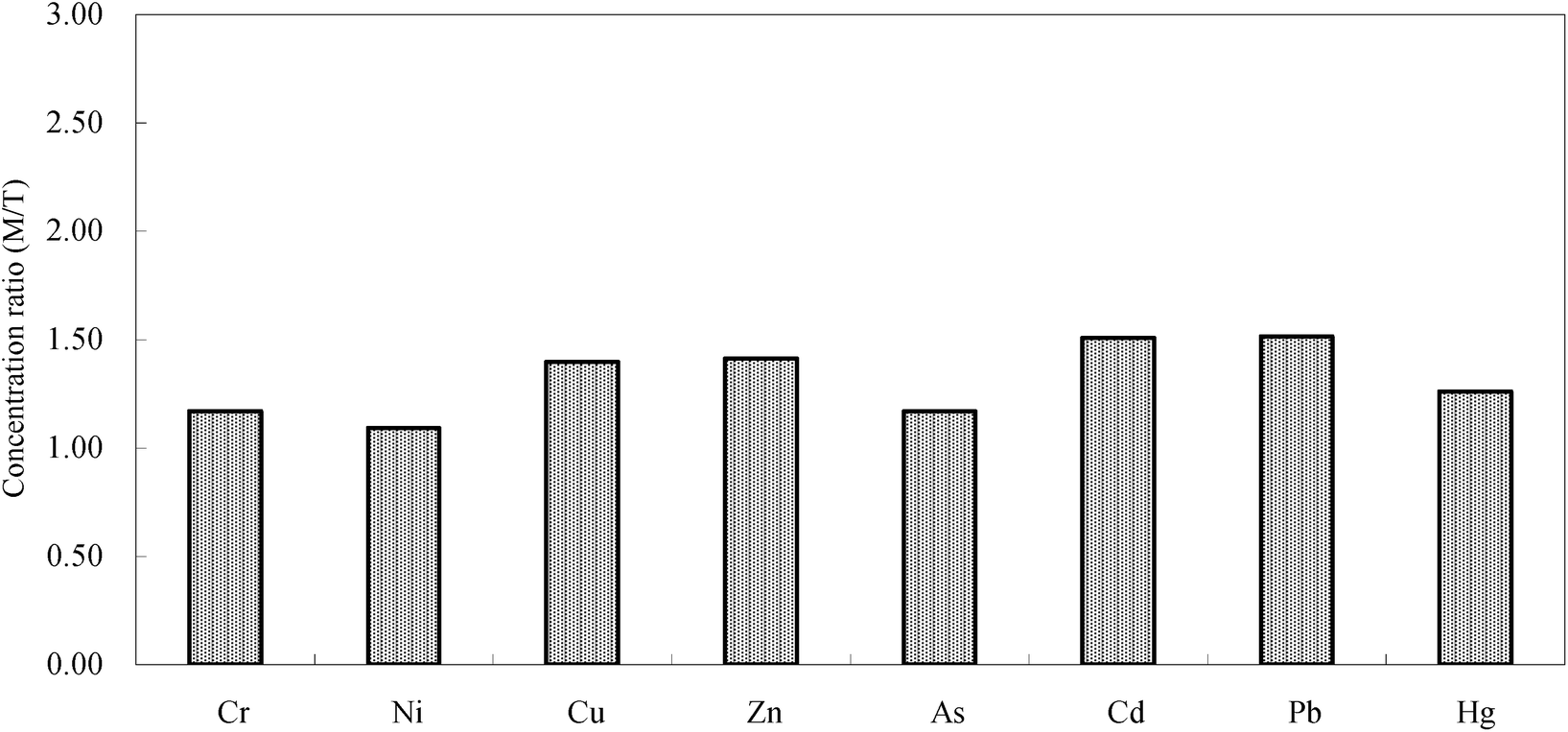 | ||
| Fig. 2 Metal concentration ratios in sediments between mainstream (M) and tributaries (T). | ||
Pollution assessment
The Igeo introduced by Müller10 was used to assess the metal pollution in the TGR sediments. Igeo is expressed as follows:
 | (1) |
Based on the Igeo data and Müller's geoaccumulation ranks, the contamination level for each metal is defined in Table 3. The assessment of Igeo suggested that the metals were unpolluted (Cr, Mn and Ni), unpolluted to moderately polluted (Cu, Zn, Pb, As and Hg), and moderately polluted level (Cd). The pollution level of the metals was in the orders: Cd > Hg > Zn > Pb > Cu > As > Ni > Mn > Cr. For the mainstream, the results of the average Igeo values of were −0.36 for Cr, −0.24 for Mn, 0.00 for Ni, 0.40 for Cu, 0.46 for Zn, 0.16 for As, 1.63 for Cd, 0.49 for Pb, and 0.89 for Hg. The order of average Igeo values was: Cd > Hg > Pb > Zn > Cu > As > Ni > Mn > Cr. The average Igeo of Cd had the highest value and was ranked as Class 2, indicating that Cd was accumulated in the TRG sediments. In term of Ni, Cu, Zn, As, Pb and Hg, the sediments were classified as Class 1, which indicated “unpolluted to moderately polluted”. On the other hand, the results revealed that the sediments were not polluted with Cr and Mn. For the tributaries, the Cd level in the sediments was also ranked as “moderately polluted” (Class 2). The average Igeo values of Hg (0.40) and Zn (0.02) were very low, suggesting that the tributaries of the TRG were moderately contaminated with these metals. In contrast, the average Igeo values of Cr (−0.56), Mn (−0.38), Ni (−0.24), Cu (−0.08), As (−0.09) and Pb (−0.07) were less than zero (Igeo ≤ 0), demonstrating that the TGR were not polluted with these metals.
| Sample site | Igeo (As) | Igeo (Cd) | Igeo (Cr) | Igeo (Cu) | Igeo (Hg) | Igeo (Mn) | Igeo (Ni) | Igeo (Pb) | Igeo (Zn) |
|---|---|---|---|---|---|---|---|---|---|
| Tributaries | |||||||||
| S1 | −0.09 | 1.36 | −0.58 | −0.1 | −0.11 | −0.33 | −0.14 | −0.39 | −0.07 |
| S2 | −0.12 | 1.58 | −0.59 | −0.05 | 0.41 | −0.29 | −0.14 | −0.04 | 0.35 |
| S3 | 0.47 | 1.45 | −0.32 | 0.71 | 0.89 | −0.19 | 0.18 | 0.72 | 0.56 |
| S4 | 0.13 | 1.46 | −0.33 | 0.29 | 0.59 | −0.13 | 0.17 | 0.57 | 0.51 |
| S5 | 0.17 | 1.26 | −0.47 | 0.32 | 0.72 | −0.21 | −0.04 | 0.45 | 0.34 |
| S6 | −0.31 | 1.37 | −0.59 | −0.55 | 0.11 | −0.51 | −0.24 | −0.71 | −0.29 |
| S7 | −0.23 | 0.72 | −0.71 | −0.52 | 0.38 | −0.33 | −0.27 | −0.61 | −0.34 |
| S8 | 0.28 | 1.57 | −0.41 | 0.51 | 0.78 | −0.25 | 0.08 | 0.54 | 0.38 |
| S9 | 0.06 | 0.87 | −0.42 | 0.21 | 0.49 | −0.51 | −0.02 | −0.06 | 0.12 |
| S10 | −0.27 | 0.98 | −0.57 | −0.22 | 0.07 | −0.56 | −0.23 | −0.04 | −0.05 |
| S11 | −0.14 | 0.78 | −0.86 | −0.44 | −0.06 | −0.29 | −0.39 | −0.12 | −0.34 |
| S12 | −0.33 | 0.68 | −0.61 | −0.43 | −0.13 | −0.48 | −0.24 | −0.39 | −0.14 |
| S13 | −0.18 | 1.42 | −0.51 | −0.04 | 0.29 | −0.36 | −0.03 | −0.07 | −0.05 |
| S14 | −0.34′ | 1.03 | −0.63 | −0.42 | 0 | −0.31 | −0.25 | −0.3 | −0.09 |
| S15 | −0.07 | 0.82 | −0.51 | 0.11 | 0.11 | −0.41 | −0.05 | −0.18 | −0.09 |
| S16 | −0.29 | 0.87 | −0.76 | −0.52 | 0.13 | −0.21 | −0.46 | −0.47 | −0.25 |
| S17 | 0.42 | 1.30 | −0.31 | 0.64 | 0.81 | −0.23 | 0.17 | 0.5 | 0.39 |
| S18 | −0.71 | 0.35 | −0.95 | −0.91 | 1.8 | −1.22 | −0.73 | −0.64 | −0.54 |
| Mean | −0.09 | 1.10 | −0.56 | −0.08 | 0.4 | −0.38 | −0.14 | −0.07 | 0.02 |
| S.D. | 0.3 | 0.36 | 0.18 | 0.46 | 0.48 | 0.24 | 0.24 | 0.45 | 0.33 |
|
|||||||||
| Mainstream | |||||||||
| 1 | 0.17 | 1.97 | −0.45 | 0.44 | 0.75 | −0.22 | 0.03 | 0.54 | 0.68 |
| 2 | 0.22 | 1.79 | −0.31 | 0.69 | 0.83 | −0.16 | 0.01 | 0.89 | 0.61 |
| 3 | 0.08 | 1.34 | −0.26 | 0.19 | 0.85 | −0.31 | −0.1 | 0.24 | 0.3 |
| 4 | 0.17 | 1.41 | −0.42 | 0.27 | 1.14 | −0.25 | 0.03 | 0.3 | 0.26 |
| Mean | 0.16 | 1.63 | −0.36 | 0.4 | 0.89 | −0.24 | 0 | 0.49 | 0.46 |
| S.D. | 0.06 | 0.30 | 0.09 | 0.22 | 0.17 | 0.06 | 0.06 | 0.29 | 0.21 |
Comparative ecological impact assessment
To further assess the effects of multiple metal pollution in the mainstream and tributaries of the TGR, the quantitative approach developed by Häkanson12 was used. According to this methodology, the RI is defined as follows:| RI = ∑Ei = ∑Ti (Cis/Cin) | (2) |
| Potential ecological risk for single regulators | RI | Ecological risk for all factors | |
|---|---|---|---|
| Ei < 40 | Low | RI < 150 | Low |
| 40 < Ei < 80 | Moderate | 150 < RI < 300 | Moderate |
| 80 < Ei < 160 | Considerable | 300 < RI < 600 | Considerable |
| 160 < Ei < 320 | High | RI ≥ 600 | Very high |
| Ei ≥ 320 | Very high |
| Sample site | Ei | RI | |||||||
|---|---|---|---|---|---|---|---|---|---|
| As | Cd | Cr | Cu | Hg | Ni | Pb | Zn | ||
| Tributaries | |||||||||
| S1 | 14.1 | 115.7 | 2.0 | 7.0 | 55.6 | 6.8 | 5.7 | 1.4 | 208.4 |
| S2 | 13.8 | 134.8 | 2.0 | 7.3 | 79.6 | 6.8 | 7.3 | 1.9 | 253.5 |
| S3 | 20.8 | 123.2 | 2.4 | 12.3 | 110.9 | 8.5 | 12.4 | 2.2 | 292.6 |
| S4 | 16.4 | 123.8 | 2.4 | 9.1 | 90.3 | 8.4 | 11.2 | 2.1 | 263.8 |
| S5 | 16.9 | 107.5 | 2.2 | 9.4 | 98.7 | 7.3 | 10.2 | 1.9 | 254.0 |
| S6 | 12.1 | 116.4 | 2.0 | 5.1 | 64.8 | 6.4 | 4.6 | 1.2 | 212.6 |
| S7 | 12.7 | 74.3 | 1.8 | 5.2 | 78.0 | 6.2 | 4.9 | 1.2 | 184.5 |
| S8 | 18.2 | 133.6 | 2.3 | 10.7 | 103.2 | 7.9 | 10.9 | 2.0 | 288.7 |
| S9 | 15.7 | 82.2 | 2.2 | 8.7 | 84.2 | 7.4 | 7.2 | 1.6 | 209.3 |
| S10 | 12.4 | 88.9 | 2.0 | 6.4 | 62.9 | 6.4 | 7.3 | 1.4 | 187.9 |
| S11 | 13.6 | 77.2 | 1.7 | 5.5 | 57.4 | 5.7 | 6.9 | 1.2 | 169.3 |
| S12 | 11.9 | 72.2 | 2.0 | 5.6 | 54.7 | 6.3 | 5.7 | 1.4 | 159.8 |
| S13 | 13.2 | 120.1 | 2.1 | 7.3 | 73.5 | 7.3 | 7.1 | 1.4 | 232.1 |
| S14 | 11.9 | 92 | 1.9 | 5.6 | 60.1 | 6.3 | 6.1 | 1.4 | 185.3 |
| S15 | 14.3 | 79.4 | 2.1 | 8.1 | 64.9 | 7.3 | 6.6 | 1.4 | 184.1 |
| S16 | 12.3 | 82.3 | 1.8 | 5.2 | 65.5 | 5.5 | 5.4 | 1.3 | 179.2 |
| S17 | 20.0 | 110.9 | 2.4 | 11.7 | 105.3 | 8.4 | 10.6 | 2.0 | 271.3 |
| S18 | 9.2 | 57.4 | 1.6 | 4 | 209.6 | 4.5 | 4.8 | 1.0 | 292.0 |
|
|||||||||
| Mainstream | |||||||||
| A1 | 16.9 | 176.2 | 2.2 | 10.2 | 101.1 | 7.7 | 10.9 | 2.4 | 327.5 |
| A2 | 17.4 | 155.9 | 2.4 | 12.1 | 106.6 | 7.6 | 13.9 | 2.3 | 318.1 |
| A3 | 15.9 | 114.1 | 2.5 | 8.6 | 107.9 | 7.0 | 8.8 | 1.9 | 266.7 |
| A4 | 16.8 | 119.4 | 2.2 | 9.0 | 132.0 | 7.7 | 9.2 | 1.8 | 298.2 |
| Average | 14.8 | 107.2 | 2.1 | 7.9 | 89.4 | 7.0 | 8.1 | 1.7 | 238.1 |
According to the RI data, Hg and Cd posed a considerable ecological risk in the TGR sediments. The high ecological risks of these two metals in the freshwater ecosystems are the consequence of their high toxic-response factors. The highest potential ecological risk for Hg was found in the Wu River (S18), which is an upstream branch of the TGR. Cd posed a moderate risk at site (A1), mainly upstream of the TGR. In terms of their spatial distribution, the potential ecological risk of Cu, Zn and Cd increased from upstream to downstream of the TGR mainstream. On the other hand, Hg had the opposite trend and the high Hg background concentration in upstream of the TGR was attributed to this trend. For the other metals (Cr, Ni, Cu, As Zn, As and Pb), the potential ecological risk indices were low. Generally, the Ei for single regulators indicated that the severity of pollution of the eight metals decreased in the following sequence: Cd > Hg > As > Pb > Cu > Ni > Cr > Zn.
The values of RI in most sampling sites (50% of samples from the mainstream, and 100% from tributaries) were lower than 300, suggesting that the majority of sediments from the TGR exhibited low to moderate ecological risks from the metals. However, 50% of sample sites (A1 and A2) from the mainstream had RI values ranging from 300 to 600, which indicates considerable ecological risk of the metals. In addition, the mainstream had a higher potential ecological risk than tributaries for all monitoring metals. The highest RI value was observed at sampling site A1 (Taipingxi), which is located in the downstream of the TGR; this result was likely caused by the effect of suspended particulates from industries discharge deposited upstream of this area.
The metal concentrations in fish muscle tissues
The results of the metal concentrations in each fish species are listed in Table 6. The mean metal concentrations for the different fish species varied for each metal, and can be summarized as follows: 0.031 to 0.125 Hg mg kg−1 (highest level in Silurus asotus); 0.13 to 0.45 Cu mg kg−1 (highest level in Carassius auratus); 2.85 to 9.84 Zn mg kg−1 (highest level in Carassius auratus); 0.002 to 0.009 Cd mg kg−1 (highest level in Hypophthalmichthys molitrix, Culter dabryi, and Megalobrama amblycephala); 0.18 to 0.79 Cr mg kg−1 (highest level in Hypophthalmichthys molitrix); 0.014 to 0.041 Ni mg kg−1 (highest level in Siniperca chuatsi); and 0.007 to 0.027 Pb mg kg−1 (highest level in Silurus asotus). The highest Hg, Cu, Pb, and Zn levels were found in Carassius auratus or Silurus asotus, which live at the bottom of the water body. Yi et al.6 found that fish inhabiting the lower zone of the water column (e.g., Silurus asotus) are likely to have higher metal concentrations than those inhabiting the upper water column. This is possibly because benthic fish have more contact with the polluted sediments than those inhabiting the upper water column.| Fish species | Cd | Cr | Cu | Hg | Ni | Pb | Zn |
|---|---|---|---|---|---|---|---|
| Cyprinus carpio | 0.005 ± 0.001 | 0.34 ± 0.08 | 0.37 ± 0.07 | 0.042 ± 0.014 | 0.024 ± 0.008 | 0.027 ± 0.002 | 7.46 ± 1.03 |
| Carassius auratus | 0.003 ± 0.001 | 0.36 ± 0.03 | 0.45 ± 0.05 | 0.068 ± 0.018 | 0.040 ± 0.016 | 0.010 ± 0.008 | 9.84 ± 1.67 |
| Hypophthalmichthys molitrix | 0.009 ± 0.002 | 0.79 ± 0.05 | 0.44 ± 0.03 | 0.034 ± 0.007 | 0.035 ± 0.012 | 0.024 ± 0.011 | 5.02 ± 1.46 |
| Aristichthys nobilis | 0.003 ± 0.001 | 0.18 ± 0.04 | 0.13 ± 0.03 | 0.035 ± 0.005 | 0.024 ± 0.018 | 0.011 ± 0.007 | 2.85 ± 2.31 |
| Siniperca chuatsi | 0.002 ± 0.001 | 0.35 ± 0.02 | 0.33 ± 0.08 | 0.076 ± 0.08 | 0.041 ± 0.013 | 0.011 ± 0.008 | 4.31 ± 2.11 |
| Silurus asotus | 0.003 ± 0.001 | 0.32 ± 0.03 | 0.18 ± 0.07 | 0.125 ± 0.028 | 0.014 ± 0.006 | 0.014 ± 0.003 | 4.15 ± 1.56 |
| Culter dabryi | 0.009 ± 0.002 | 0.30 ± 0.05 | 0.28 ± 0.10 | 0.045 ± 0.018 | 0.040 ± 0.008 | 0.007 ± 0.003 | 4.59 ± 0.83 |
| Megalobrama amblycephala | 0.009 ± 0.003 | 0.34 ± 0.10 | 0.17 ± 0.03 | 0.031 ± 0.011 | 0.027 ± 0.010 | 0.024 ± 0.009 | 6.51 ± 1.46 |
The metals concentrations in fish from the TGR were also compared with other studies from China. Except for Pb, the mean concentrations in the TGR fish were lower than those from the Pearl River.24 However, the results reported in this present study were generally higher than the metal concentrations in fish species from the Yellow River, with the exception of Pb.25 Yi et al.6 reported the concentrations of Cu, Zn, and Pb in fish collected from the Yangtze and Pearl Rivers were higher than they were ten years ago. However, the Hg concentrations of fish in the TGR areas did not increased when compared with the pre-impoundment data.
Compared with the previous results before the TGR impoundment, no obvious differences were found in the levels of the metal concentrations in fish.26 The results of this study were also lower than previous predictions.27 Although the mean concentrations of the metals showed an increasing tendency in sediments, the metal content levels in fish muscle after the impoundment did not notably increase. Other study also found that high concentrations of the metals in water environments did not always indicate high metal concentrations in fish.28 A simple food web structure and the biodilution effect at the base of the food chain in reservoirs may further explain this phenomenon.28
Health risk associated with fish consuming
In this study, the THQ was used to express the risk associated with consuming TGR fish, which is a ratio between the exposure and reference doses. If the ratio does not exceeded 1, then there is no obvious health risk for population consuming the fish. The method for determining THQ was provided by the U.S. Environmental Protection Agency29 and the models used in the present study followed those proposed by Chien et al.:30
 | (3) |
In this model, THQ is the target hazard quotient; EFr is the exposure frequency (365 days per year), EDtot is the exposure duration (70 years, average lifetime), FIR is the food ingestion rate (g per day), C is the metal concentration in fish (mg g−1), RfDo is the oral reference dose (mg kg−1 day),31 Bwa is the average adult body weight (55.9 kg), and ATn is the averaging exposure time for non-carcinogens (365 days per year × number of exposure years, assuming 70 years).
A previous study estimated the fish consumption in coastal cities of China, indicating that the residents eat 105 g fish per day.32 Table 7 shows the estimated THQ for individual metals from the consumption of fish by the TGR residents. The THQ of each metal from fish consumption was found to be less than 1, suggesting that residents in the TGR would not experience significant health risks from ingesting the metals accumulated in the fish. Among the six selected metals, the THQ value of Hg was highest. The potential health risk from Cr was the lowest, which may be attributed to its high oral reference dose. Hg is a major risk contributor in the TGR, accounting for more than 91.7% of the total THQ. The next highest risk contributor from the trace elements was Zn, contributing about 3.9% to the total THQ. In general, the estimated THQ for individual element decreased in following sequence Hg > Zn > Cu > Pb > Cd > Ni > Cr. The total THQ for the general population did not exceed 1, indicating that there is no evidence of an unacceptable health risk for the residents consuming TGR fish.
The results were also evaluated in the context of human dietary consumption compared with standardized tolerable weekly intake limits, based on the U.S. Environmental Protection Agency equivalents (2.1 μg kg−1 bw converted from the reference dose (RfD) of 0.3 μg kg−1 bw per day). Considering the average dietary fish composition, this study confirmed that people who eat more than 0.22 kg per day of fish are likely to exceed the tolerable weekly intake limits levels recommend by the U.S. Environmental Protection Agency. It is important to note that this analysis relates to the average dietary intakes and therefore does not take into account that a substantial number of people (e.g., fishermen) eat more than the average intake reported. Hence, there is also the potential risk that some residents may exceed the tolerable weekly intake limits levels.
Conclusions
The concentration, distribution, and accumulation of the selected metals (Cr, Ni, Cu, Zn, Cd, Pb, As, and Hg) in sediments and fish were investigated in the mainstream and tributaries of the TGR. The results showed that the metal levels in all samples were above the local soil background value and the mean concentrations of As and Cd had a significant increasing tendency in the TGR, following the submergence period. However, the mean concentrations of these metals were lower than the PEC. The assessment of Igeo suggested that Cr, Ni, and As were at uncontaminated levels, Cu, Zn, Pb, and Hg at uncontaminated to moderately contaminated levels, and Cd was at a moderately contaminated level. The pollution level of the metals was in the order Cd > Hg > Zn > Pb > Cu > As > Ni > Cr. The assessment of RI indicated that the TGR exhibited low and moderate ecological risks from the metals in the sediments, with Cd and Hg as the predominant elements. The assessment of Igeo and RI was different because the RI mainly considered the toxicity of the metals and Hg and Cd had highest toxicity among the studied metals. Health risk analysis of individual metal in fish indicated that the total THQ for the general population did not exceed 1, indicating no evidence of an unacceptable health risk for residents consuming TGR fish. The estimated THQ for the individual elements decreased in following sequence Hg > Zn > Cu > Pb > Cd > Ni > Cr. Hg posed the main risk to the inhabitants of the TGR areas and deserved considerable attention for government to take effective measures to prevent the high Hg risk in TGR.Acknowledgements
This work was jointly supported by the Special Scientific Fund sponsored by the Chinese Institute of Water Resources and Hydropower Research (Grant No. HJ1506, HJ1539), the Open Research Fund of State Key Laboratory of Simulation and Regulation of Water Cycle in River Basin, China Institute of Water Resources and Hydropower Research (Grant No. 2014QN02, 2014RC08, 2014ZY02), and China Postdoctoral Science Foundation (Grant No. 2014T70094).References
- U. Förstner, Contaminated Sediments: Lectures on Environmental Aspects of Particle-Associated Chemicals in Aquatic Systems, Springer-Verlag, Berlin, Germany, 1989, pp. 110–192 Search PubMed.
- Y. S. Hong, K. A. Kinney and D. D. Reible, Environ. Toxicol. Chem., 2011, 30, 1775–1784 CrossRef CAS PubMed.
- A. P. Zhang, S. H. Guo, F. M. Li, G. LI and K. M. Jiang, J. Environ. Sci., 2006, 18, 1216–1220 CrossRef.
- W. Z. Zhang, H. Feng, J. N. Chang, J. G. Qu, H. X. Xie and L. Z. Yu, Environ. Pollut., 2009, 157, 1533–1543 CrossRef CAS PubMed.
- Z. F. Yang, Y. Wang, Z. Y. Shen, J. F. Niu and Z. W. Tang, J. Hazard. Mater., 2009, 166, 1186–1194 CrossRef CAS PubMed.
- Y. J. Yi, Z. F. Yang and S. H. Zhang, Environ. Pollut., 2011, 159, 2575–2585 CrossRef CAS PubMed.
- S. Olivares-Rieumont, D. D. L. Rosa, L. Lima, D. W. Grahom, K. D. Alessandro, J. Borroto, F. Martinez and J. Sanchez, Water Res., 2005, 39, 3945–3953 CrossRef CAS PubMed.
- C. W. Chen, C. M. Kao, C. F. Chen and C. D. Dong, Chemosphere, 2007, 66, 1430–1440 Search PubMed.
- H. Feng, H. Y. Jinag, W. S. Gao, M. Weinstein, Q. F. Zhang, W. G. Zhang, L. Z. Yu, D. K. Yuan and J. H. Tao, J. Environ. Manage., 2011, 92, 1185–1197 CrossRef CAS PubMed.
- G. Müller, Umsch. Wiss. Tech., 1979, 79, 778–783 Search PubMed.
- X. Hu, C. Wang and L. M. Zou, J Environ Manage., 2011, 92, 742–748 CrossRef CAS PubMed.
- L. Häkanson, Water Res., 1980, 14, 975–1000 CrossRef.
- D. D. MacDonald, C. G. Ingersoll and T. A. Berger, Arch. Environ. Contam. Toxicol., 2000, 39, 20–31 CrossRef CAS PubMed.
- H. Y. Niu, W. J. Deng, Q. H. Wu and X. G. Chen, J. Environ. Sci., 2009, 21, 1053–1058 CrossRef CAS.
- X. L. Wang, T. SaTo, B. S. Xing and S. Tao, Sci. Total Environ., 2005, 350, 28–37 CrossRef CAS PubMed.
- Z. C. Zhong and D. H. Qi, The illustrated species catalog and biodiversity in the Hydro-fluctuation belt of Three Gorge Reservoir, Southwest China Normal University Press, Chongqing, 2008 Search PubMed.
- Y. Chen, S. Y. Li, Y. L. Zhang and Q. F. Zhang, J. Hazard. Mater., 2011, 191, 366–372 CrossRef PubMed.
- J. Tang, S. J. Wang, S. H. Fu, Y. D. Sun and J. L. Lei, Acta Pedol. Sin., 2008, 45, 601–607 Search PubMed , in Chinese.
- Y. Liu, H. C. Liu and X. H. Li, Geochimica, 1996, 25, 552–558 CAS , in Chinese.
- D. Mendil, Ö. F. Ünal, M. Tüzen and M. Soylak, Food Chem. Toxicol., 2010, 48, 1383–1392 CrossRef CAS PubMed.
- Q. H. Chi and M. C. Yan, Geochemistry of sediments of the China shelf sea, Science Press, Beijing, 1994 Search PubMed.
- CNEMC (China National Environmental Monitoring Center), The Backgrounds of Soil Environment in China, China Environmental Science Press, Beijing, 1990 Search PubMed.
- X. Q. Xu, G. Q. Deng, J. Y. Hui, X. H. Zhang and Q. Q. Qiu, Acta Hydrobiol. Sin., 1999, 23, 1–9 CAS , in Chinese.
- W. P. Xie, K. C. Chen, X. P. Zhu, X. P. Nie, G. M. Zhen, D. B. Pan and S. B. Wang, J. Agro-Environ. Sci., 2010, 29, 1917–1923 CAS , in Chinese.
- H. L. Ren, Y. H. Yang, L. Z. Wang and N. J. Yang, Journal of Hydroecology, 2008, 28, 88–90 Search PubMed , in Chinese.
- X. Q. Xu, X. H. Zhang, L. J. Jing and C. Q. Qiu, Resour. Environ. Yangtze Basin, 1999, 8, 198–204 Search PubMed , in Chinese.
- X. Q. Xu, C. Q. Qiu, G. Q. Deng, J. Y. Hui, L. J. Jing and X. H. Zhang, Resour. Environ. Yangtze Basin, 1998, 7, 267–273 Search PubMed , in Chinese.
- B. Liu, H. Y. Yan, C. P. Wang, Q. H. Li, S. Guédron, J. E. Spangenberg, X. B. Feng and J. Dominik, Environ. Pollut., 2012, 160, 109–117 CrossRef CAS PubMed.
- USEPA, Risk-based Concentration Table, United States Environmental Protection Agency, Philadelphia, PA, Washington DC, 2000 Search PubMed.
- L. C. Chien, T. C. Hung, K. Y. Choang, C. Y. Yeh, P. J. Meng, M. J. Shieh and B. C. Han, Sci. Total Environ., 2002, 285, 177–185 CrossRef CAS.
- USEPA, Risk-based Concentration Table, United States Environmental Protection Agency, Philadelphia PA, Washington DC, 2009 Search PubMed.
- Q. T. Jiang, T. K. M. Lee, K. Chen, H. L. Wong, J. S. Zheng, J. P. Giesy, K. K. W. Lo, N. Yamashitad and P. K. S. Lam, Environ. Pollut., 2005, 136, 155–165 CrossRef CAS PubMed.
Footnote |
| † Electronic supplementary information (ESI) available. See DOI: 10.1039/c5ra09220e |
| This journal is © The Royal Society of Chemistry 2015 |