
Structure–property relationship of isomeric diphenylethenyl-disubstituted dimethoxycarbazoles

Audrius Bucinskasa, Gintautas Bagdziunasa, Ausra Tomkevicienea, Dmytro Volynyuka, Nataliya Kostiva, Dalius Gudeikaa, Vygintas Jankauskasb, Martins Rutkisc and Juozas V. Grazulevicius*a
aDepartment of Polymer Chemistry and Technology, Kaunas University of Technology, Radvilenu St. 19, LT-50254 Kaunas, Lithuania. E-mail: juozas.grazulevicius@ktu.lt; Fax: +370 37 300152; Tel: +370 37 300193
bDepartment of Solid State Electronics, Vilnius University, Sauletekio St. 9, LT-10222 Vilnius, Lithuania
cInstitute of Solid State Physics, University of Latvia, 8 Kengaraga St., Riga LV-1063, Latvia

Received 16th May 2015 , Accepted 28th May 2015

First published on 28th May 2015


Abstract

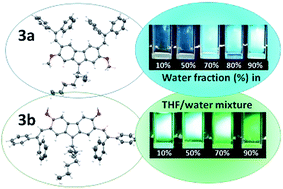
Isomeric 3,6-dimethoxy- and 2,7-dimethoxycarbazoles containing diphenylethenyl moieties were synthesized by condensation of the appropriate dimethoxycarbazoles with diphenylacetaldehyde. The solid-state structures and the molecular order of the compounds were proven by X-ray crystallography. Both compounds were found to be capable of glass formation with comparable glass transition temperatures (70–71 °C). They exhibited high thermal stabilities, with the 5% weight loss temperatures exceeding 375 °C. The isomer having diphenylethenyl groups at C-3 and C-6 positions and methoxy groups at C-2 and C-7 positions (3a) exhibited aggregation-induced emission (AIE), while its counterpart having diphenylethenyl groups at C-2 and C-7 positions and methoxy groups at C-3 and C-6 positions (3b) showed the opposite effect, i.e. aggregation-caused quenching (ACQ). The derivative 3b showed superior charge transporting properties. Time-of-flight hole drift mobilities in its layers approached 10−3 cm2 V−1 s−1 at high electric fields. A comparative theoretical analysis of the compounds was performed using density functional theory (DFT) and time-dependent DFT calculations. They proved more effective π-conjugation in the derivative of 3,6-dimethoxy carbazole (3b), which was also observed by UV and fluorescence spectroscopies. The theoretical study revealed relatively low ground state dipole moment of 0.69 D of the isomer 3b, while its counterpart (3a) showed much higher ground state dipole moment of 5.98 D. The difference in polarity was found to have the crucial effect on the molecular arrangement in the crystals and consequently, on the thermal transitions and charge-transporting properties.

Introduction

The search for new π-conjugated organic compounds with advanced properties is still a challenge for many laboratories working on the synthesis of organic electroactive materials for optoelectronic applications. Carbazole derivatives have attracted much attention because of their flexible synthesis and wide range of applications, such as organic light-emitting diodes (OLEDs), organic thin-film transistors, solid-state dye-sensitized solar cells.1–4 The carbazole moiety can be easily modified via its C-3 and C-6 positions.5 There is a substantial number of studies on 3,6-substituted carbazole derivatives and on their optoelectronic applications. Incomparably less research was done on 2,7-substituted carbazole derivatives. The main obstacle until recently was the lack of an efficient synthesis procedure for these compounds. The obstacle disappeared when the convenient synthetic pathways towards 2,7-dihalocarbazoles were reported.6,7 Since then ongoing studies of 2,7-disubstituted carbazole compounds revealed substantially higher hole mobilities compared to those of 3,6-disubstituted counterparts.8 In this work, we demonstrate the convenient synthetic method of 2,7-diphenylethenyl disubstituted carbazole derivative by the direct reaction of 3,6-dimethoxy substituted carbazole derivative with diphenylacetaldehyde. We also synthesized the isomeric derivative from 2,7-dimethoxy substituted carbazole derivative and performed the comparative study of the properties of the obtained materials by the theoretical and experimental tools.

Diphenylethenyl-disubstituted derivatives of carbazole were earlier prepared by the multi-step synthetic route, the last step of which was Pd-catalyzed Suzuki coupling of diphenylethenyl borolane with the corresponding dibromocarbazole derivatives.9,10 They showed good performance as hole-transporting blue emitters in electroluminescent devices.

In some fields of application, such as dye-sensitized solar cells, electrochemically stable hole-transporting materials with low ionization potentials are required. It is known that introduction of methoxy groups into the structures of aromatic amines as well as the attachment of methoxy-substituted diphenylamino groups to the carbazole moieties lead to the decrease of the ionization potential.11,12 The possibility to monitor ionization potentials is also important in the fabrication of OLEDs. The hole-injection barrier differences can strongly affect the efficiency of the devices. The role of the methoxy groups is found to be related to the mesomeric (p-donor) effect and the possibility to establish hydrogen bonds.13 The stronger influence was observed for para-methoxy substituted derivatives, as compared to ortho- and meta-methoxy substituted derivatives.12,13 The para-methoxy substituted derivatives also showed the highest hole mobilities.12,13 The effect of the methoxy substitution in carbazole derivatives on their photophysical and photoelectrical properties, to the best of our knowledge, has not yet been studied. Electrochemical and thermal stability is another important property of organic semiconductors. This can lead to the corresponding device degradation.14–17 It is known that 2,7-substituted derivatives of carbazole show irreversible oxidation with the formation of new carbazolyl derivative.18 By introducing methoxy or diphenylethenyl groups into C-3 and C-6 positions of carbazole moiety we obtain compounds which demonstrate reversible oxidation and higher electrochemical and thermal stability, in contrast to the non-substituted counterparts.8,9

Results and discussion

Synthesis

Diphenylethenyl-substituted dimethoxycarbazoles (3a, 3b) were synthesized by condensation of the appropriate derivative of dimethoxycarbazole with diphenylacetaldehyde (Scheme 1). This synthetic method of diphenylethenyl-disubstituted derivatives is superior with respect of that reported earlier for the synthesis of the similar derivatives containing no methoxy groups.9 It does not require the preparation of diphenylethenyl borolane and bromination of carbazole.
image file: c5ra09161f-s1.tif
Scheme 1 Synthesis of 3a and 3b.

The starting compound 2a was prepared by three steps. 2,7-Dimethoxycarbazole (1a) was obtained by an Ullmann-coupling followed by a Cadogan cyclization reaction using triphenylphosphine as reported in the literature.19,20 Alkylation with 2-ethylhexylbromide was performed by the conventional procedure.21 Compound 2b was synthesized starting from 3,6-dimethoxy carbazole (1b) which was prepared by bromination of carbazole with N-bromosuccinimide (NBS) in dimethylformamide (DMF), followed by the direct methoxide displacement of bromine22,23 and alkylation by the same procedure as mentioned above. The synthesized compounds were identified by elemental analysis, IR, 1H and 13C NMR, and MS. Compounds 3a, 3b were found to be soluble in common organic solvents such as tetrahydrofuran, toluene and chloroform.

Crystal structures

According to quantum chemical calculations, molecular structures of 2,7-dimethoxycarbazole derivatives (2a, 3a) exhibit relatively high ground state dipole moments (4.53 and 5.98 D, accordingly). At the same time the derivatives of 3,6-dimethoxy carbazole (2b, 3b) are non-polar with low ground state dipole moments (0.30 and 0.69 D). Therefore, one could expect much stronger intermolecular dipole–dipole interaction in case of crystals of 3a than for 3b, which in the absence of molecular dipole is built by weaker London dispersion forces. The ortep projections of 3a–b are shown in Fig. 1 and the crystallographic data is listed in Table S1. The racemic compound 3a crystallizes into the orthorhombic crystal system with space group Pbca. The π-frameworks of 3a have non-planar geometry and the alkyl chains are extended out of the molecular plane. The analysis of the packing pattern of the molecules of 3a in the crystalline state revealed that the molecules form columns of alternating opposite interactions, such as C–H⋯O bonding, which occurs between the enantiomers held together with the different kinds of weak hydrogen atom at C-15 and the oxygen atom O-44 of methoxy groups with the distance of 2.664 Å, C–H⋯C bonding, which occurs between the hydrogen atom at C-15 and the carbon atom C-45 or between the hydrogen atom at C-53 and the carbon atom C-16 with the distances of 2.712 Å and 2.738 Å, respectively. The distances along the different planes of carbazole rings vary from 3.54 to 3.63 Å. The crystal of 3b is formed from (S)-enantiomer only and is held by C–H⋯C interactions between the hydrogen atoms at C-29, C-31 and C-49, and carbon atoms C-8, C-6, C-3 and C-10 with the distances of 2.861, 2.899, 2.874 and 2.785 Å, respectively. The C–H⋯O interactions between the molecules of 3b was not observed. The angles between ethenyl double bond and the carbazole plane of the molecules 3a (28.5°, 22.4°) and 3b (26.1°, 22.5°) were measured. These values were found to be comparable to those of 2-methoxycarbazole 3,6-disubstituted with the diphenylethenyl moieties (30.11°, 23.78°).24
image file: c5ra09161f-f1.tif
Fig. 1 ORTEP diagrams, packing in the crystals and the possible intermolecular charge-hopping channels of 3a–b.

Thermal properties

The thermal properties of the synthesized compounds were estimated by differential scanning calorimetry (DSC) and thermogravimetric analysis (TGA). The thermal characteristics are collected in Table 1. Compounds 3a and 3b possess high thermal stability with 5% weight loss temperatures (Td) of 376 °C and 405 °C, respectively. The DSC measurements showed that 3a and 3b are able to form molecular glasses. Compounds 3a and 3b were isolated after the synthesis as crystalline substances and their first DSC heating scans revealed endothermal melting signals (Fig. 2). Due to the presence of stronger dipole–dipole interactions the crystals of 3a showed by 25 °C higher melting point than those of 3b. Compound 3b exhibited polymorphism which is rather often observed for organic glass forming molecular materials.25
Table 1 Thermal, optical and photophysical characteristics of compounds 3a and 3b
  Tm/Tga/Tdb, °C λabsmax sol/λabsmax film, nm λemmax sol/λemmax film, nm Stokes shift, nm Φsol/Φfilm, % τsol/τfilm, ns χsol2/χfilm2c,d kr sol/kr film, 108 s−1c knr sol/knr film, 108 s−1c
a Determined by DSC, scan rate 10 °C min−1, N2 atmosphere.b 5% weight loss determined by TGA, heating rate 10 °C min−1, N2 atmosphere.c Counted for the most prevalent state.d The chi-square values show the quality of the fit.
3a 168/70/405 362/365 473/476 111 1.20/2.20 0.10 (96%), 5.48 (4%)/0.28 (86%), 3.7 (14%) 1.08/1.18 1.2/0.8 98.8/34.9
3b 128, 143/71/376 392/396 501/510 109 34.9/11.8 3.96/0.69 (77%), 3.03 (23%) 1.07/1.21 0.9/1.7 1.6/12.8


image file: c5ra09161f-f2.tif
Fig. 2 DSC curves of 3a and 3b (scan rate 10 °C min−1, N2 atm.).

The ability to form more than one crystal structure could be the result of the weak dipole–dipole interaction between the molecules of 3b.26 No crystallization was observed during the cooling scans, which indicated the transition from the melt to the glassy state. In the second and the following DSC heating scans 3a and 3b exhibited glass transitions at 70 and 71 °C, respectively. This observation shows that the linking topology of 3a–b has no effect on their glass transition temperatures.

Optical and photophysical properties

The normalized absorption and fluorescence spectra of the dilute solutions in THF and the solid films of 3a and 3b are shown in Fig. 3. The optical and photophysical characteristics are summarized in Table 1. The absorption maxima of the dilute solutions of 3a and 3b were detected at 362 nm and 392 nm, respectively. UV-vis spectrum of 3b showed considerable bathochromic effect of 30 nm with respect to the spectrum of its counterpart 3a. These results provide evidence for more effective and prolonged conjugation length in 3b compared to 3a.27 Compounds 3a and 3b showed emission in a blue and green regions with the emission maxima at 473 and 501 nm, respectively. Fluorescence spectra of 3a and 3b exhibited considerable red shifts with respect to those of the starting compounds (2a and 2b, ESI Fig. S2).
image file: c5ra09161f-f3.tif
Fig. 3 UV-vis and fluorescence spectra of dilute THF solutions (10−5 M) and of the films of compounds 3a, 3b. λex = 350 nm.

The target compounds 3a and 3b are characterized by long Stokes shifts (∼110 nm) which implies that the structures of the emitting state and ground state are rather different. This difference apparently originates from the zwitterionic state of the excited molecules 3a–b.28,29 The absorption and emission spectra of the solvent casted solid amorphous films of 3a and 3b were found to be similar to the corresponding spectra of the solutions, but exhibited small red-shifts. Both the solid films and the dilute solutions of 3b showed higher fluorescence quantum yields as compared to those of 3a. This observation can be explained by the different zwitterionic states of 3,6-dimethoxy- and 2,7-dimethoxycarbazoles containing diphenylethenyl moieties.9 Compound 3a exhibited the phenomenon of aggregation induced emission which is illustrated by Fig. 4a.


image file: c5ra09161f-f4.tif
Fig. 4 Fluorescence spectra of the dispersions of 3a (a) and 3b (b) in water–THF mixtures (10−4–10−5 M). The inset depicts the changes of fluorescence peak intensity. λex = 350 nm.

The FL intensity of the THF solution was very low and was almost unchanged when water was added up to 60% (v/v), and then started to increase sharply upon further addition of water. These results indicate that the molecules of compound 3a started to aggregate when the volume fraction of water reached 70%. Clearly, the fluorescence behavior of 3a is typical of an AIE luminogen.30 The high ground state dipole moment and high dipole–dipole interaction between the molecules of compound 3a results the restrictions of the molecular motions which can be a key factor explaining the aggregation induced emission.31 The X-ray analysis data of 3a (Fig. 1) show that the neighboring dimers, which are arranged parallel but with the opposite induced dipole moments (IDM) of the excited state, can form configuration favorable for the formation of J-aggregates.32 This presumption is confirmed by fluorescence spectroscopy. The intensity maxima of aggregation induced emission are batochromically shifted by ca. 15 nm compared to the emission maxima of dilute solutions in THF. The totally opposite effect of aggregation-caused quenching was observed for isomer 3b (Fig. 4b). In case of 3b, the closest dimers are parallel and IDM (Fig. 1) are of the opposite direction. However, the ground state dipole moment of 3b is very small (0.69 D). Therefore IDM is also small and there has no substantial effect on IDM of the surrounding molecules. For this reason no shift in fluorescence spectra was observed and the aggregation induced quenching was monitored. Fig. 5 shows fluorescence decay curves of the dilute THF solutions and of the solid films of 3a and 3b.


image file: c5ra09161f-f5.tif
Fig. 5 Fluorescence decay curves of the dilute (10–5 M) solutions in THF and of the solid films of 3a (a and b) and 3b (c and d). Blue lines indicate single or double exponential fits to the experimental data. Fluorescence lifetimes (τ) are indicated.

The derivative 3a exhibited double exponential fluorescence decays originating from two different molecular excited states with the fluorescence life times (τ) of 0.10 and 5.48 ns for the solution and 0.28 ns 3.7 ns for the film with χ2 ranging from 1.08 to 1.18 respectively. The fluorescence decay of the film of compound 3b can also be described by the double exponential fit with the fluorescence lifetimes of 0.69 ns and 3.03 ns with χ2 value of 1.21, while fluorescence decay of the dilute solution of 3b was adequately described by the single exponential curve with the lifetime of 3.96 ns (χ2 = 1.07). We presume that the emission with the shorter life time (0.1–0.7 ns) originates from the excited dimethoxycarbazole moiety, while the emission with the longer life time (3.0–5.5 ns) originates from the excited zwitterionic states of 3a–b derivatives.

To unveil the contributions of the competing radiative and nonradiative relaxation processes, we calculated the radiative (kr) and nonradiative (knr) decay rate constants from the singlet excited state using the obtained values of Φ and τ by the following relations: kr = Φ/τ, knr = (1 − Φ)/τ. The results are summarized in Table 1. Interestingly, the calculated kr and knr values of 3a–b were found to be highly dependent on the position of methoxy and diphenylethenyl moieties. For both the isomers 3a–b the kr values obtained for the solutions and the solid films showed no any big differences, while the values of knr observed for the solutions and films of 3a were found to be significantly higher than those of 3b. Thus the nonradiative processes are predominant in the relaxation processes of excited states of compound 3a.

In order to get more insight on the nature of the absorption bands of 3a–b, TD-DFT calculations were performed. The significant similarities between the theoretical and experimental UV-vis spectra of 3a–b were observed (Fig. 6). The excitation energies and oscillator strengths for the molecules 3a–b are presented in Table 2.


image file: c5ra09161f-f6.tif
Fig. 6 Comparison of the experimental (black-dot) and calculated 3a and 3b (red) UV-vis spectra at the B3LYP/6-31G(d,p)/PCM(THF) level (σ = 0.25 eV); bars represent the oscillator strength.
Table 2 Properties of the selected transitions and their contribution to the UV-vis spectra of 3a–b calculated at the B3LYP/6-31G(d,p)/PCM(THF) level
  Exp UV λ, nm Cal UV λ, nm Tr. Osc. Stren. a.u. Contributions (more than 20%)
3a 362 376 1 0.637 H → L (95%)
362 2 0.254 H−1 → L (90%)
312 307 5 0.443 H → L+2 (77%)
296 6 0.265 H−1 → L+2 (63%)
3b 392 434 1 0.181 H → L (63%), H−1 → L (35%)
425 2 1.363 H → L (35%), H−1 → L (63%)
317 327 5 0.253 H−2 → L (67%)


The lowest energy band for 3a is influenced by two transitions S0 → S1 and S0 → S2 with the maxima of ε at 376 and 362 nm, respectively. The first excitation with the oscillator strength of 0.637 for 3a corresponds to the HOMO → LUMO transition (Fig. 7). This transition is localized on the diphenylethenyl and dimethoxycarbazole moieties. Therefore, this excitation corresponds to π–π* transition for both conjugated chromophores. The absorption band with the maximum at 312 nm of 3a corresponds to the calculated S0 → S5 and S0 → S6 transitions. The S0 → S5 transition, according to the nomenclature of Platt,33 is named as 1La transition because the orbitals on the carbazole moiety are oriented along the symmetry axis.34


image file: c5ra09161f-f7.tif
Fig. 7 The computed spatial distributions of HOMO and LUMO orbitals for 3a and 3b.

The absorption band with the similar wavelength for N-substituted 2,7-dimethoxycarbazole was observed experimentally.35 Therefore, these excitations are assigned to π–π* transition in the dimethoxycarbazole moiety.

The situation with 3b was found to be different. The lowest energy absorption band of 3b is influenced by two lower energy transitions compared to those of 3a, i.e. S0 → S1 and S0 → S2 transitions which manifest themselves at 434 and 425 nm, respectively. The attachment of methoxy groups at C-3 and C-6 positions of the carbazole ring generates the intramolecular charge transfer (ICT) from carbazole to diphenylethenyl moieties which subsequently results in the zwitterionic state. A positive charge is delocalized on C-3 or C-6 positions of the carbazole moiety and a negative charge is on diphenylethenyl moiety. The first S0 → S1 excitation with the oscillator strength of 0.181 a.u of 3b corresponds to the HOMO → LUMO and HOMO−1 → LUMO transitions with 63 and 35% contributions, respectively (Fig. 7). This excitation is a mixture of the π–π* transitions of both conjugated chromophores and ICT transition from carbazole to diphenylethenyl moieties. In other words, S0 → S1 can be regarded as zwitterionic transition in nature.9 The electron density in the carbazole ring is delocalized symmetrically because of the ICT transition. The second S0 → S2 excitation at 425 nm corresponds to the same S0 → S1 transition, but the orbital contributions are 35 and 63%, respectively. Similarly, this excitation is a mixture of the π–π* transition of both conjugated chromophores and ICT transition from the carbazole to the diphenylethenyl moiety. The obtained oscillator strength (0.181 a.u) of the first excitation of 3b is lower than that of 3a. The UV absorption band at 317 nm is influenced by S0 → S5 excitation which corresponds to the HOMO−2 → LUMO transition. This S0 → S5 excitation is the mixture of π–π* transitions in the diphenylethenyl and carbazole chromophores.

The energies of HOMO and LUMO of 3a–b were calculated using the same method as for UV-vis spectra. The energies of HOMO and LUMO for 3a were found to be −4.97 eV and −1.16 eV, respectively, and those observed for 3b were −4.93 eV and −1.60 eV, respectively. The calculated HOMO energy levels are in good agreement with the experimental values (Table 3).

Table 3 Electrochemical characteristics of 3a, 3b and 2a, 2b
  Eonseta, V Eox,paa, V Eox,pca, V EHOMO/EDFTHOMOb, eV Egc, eV IPd, eV
a Onset, oxidation and reduction potentials vs. Fc.b EHOMO (eV) = −1.4Eonset,ox (V) − 4.6, where Eonset,ox was determined by solution-based cyclic voltammetry.36c The optical bandgap energies estimated from the absorption edges.d Ionization energy (IP) for the solid films was measured by the electron photoemission in air method.e Irreversible oxidation.
2a 0.41 0.53 e −5.17/— 3.69 5.68
2b 0.35 0.51 0.33 −5.09/— 3.16 5.50
3a 0.33 0.45 0.35 −5.06/−4.97 3.05 5.38
3b 0.31 0.43 0.33 −5.03/−4.93 2.72 5.41


Electrochemical properties and ionization potentials

Electrochemical properties of the solutions of the compounds in dichloromethane with 0.1 M tetrabutylammonium hexafluorophosphate (TBAH) as supporting electrolyte were studied by the cyclic voltammetry (CV) using Ag/Ag+ as the reference electrode and a Pt wire counter electrode. The electrochemical characteristics are summarized in Table 3. The CV curves of 3a–b are shown in Fig. 8.
image file: c5ra09161f-f8.tif
Fig. 8 Cyclic voltammograms of 3a–b at 10−3 mol L−1 in a solution of argon-purged TBAH (0.1 M) in CH2Cl2. v = 50 mV s−1.

No reduction waves was observed down to ca. −1.5 V in CV curves of all the studied compounds. However, all the compounds showed the oxidation waves up to ca. 0.31 V. The oxidation was found to be irreversible only for compound 2a (Fig. S2), having unsubstituted C-3 and C-6 positions of carbazole ring. It was found to be quasi-reversible for 2b. Irreversible oxidation of 2a was followed by coupling of carbazole radical cations because of higher electron spin density at C-3 and C-6 positions37 and formation of new carbazolyl-containing compounds.18

The oxidation of 3a and 3b was found to be reversible up to ca. 0.55 V. Precursor 2b and compounds 3a–b showed oxidation peaks at 0.51 V, 0.45 V and 0.43 V, respectively, and after five repeated oxidation and reduction cycles their CV curves did not change. The oxidation of compound 2a started at 0.41 V and, subsequently, the oxidation peak at 0.53 V was observed. The HOMO energy levels were determined using the relationship EHOMO (eV) = −1.4Eonset,ox (V) − 4.6.38 The HOMO energy levels of the derivatives 3a and 3b were found to be comparable and a little higher with respect to those of compounds 2a–b.

The HOMO levels acquired from the DFT calculations and from CV measurements were found to be in good agreement for compounds 3a–b and showed higher values compared to the diphenylethenyl-substituted derivatives of carbazole containing no methoxy groups.9

The ionization potentials (IP) of the synthesized compounds were measured by the electron photoemission in air technique. The results are presented in Table 3. Usually the photoemission experiments are carried out in vacuum but, in our case, the investigated organic compounds were stable with respect to oxygen and the measurements could be carried out in air. All the synthesized compounds showed lower IP values compared to compounds containing electronically isolated carbazole moieties having no substituents at the aromatic rings.39 Methoxy-disubstituted carbazoles (2a,b) showed a little higher IP than the target compounds (3a,b). Compounds 3a and 3b were found to exhibit the comparable IP values. This observation proves our earlier finding that the alteration of the substitution patterns of carbazole moiety practically does not affect the ionization energy values.8

Charge-transporting properties

The hole-transporting properties of the layers of compounds 3a and 3b were studied by the xerographic time-of-flight (XTOF) and the time of flight (TOF) techniques. The sample of compound 3b for the XTOF measurements was prepared by drop casting technique with the layer thickness of ca. 2.5 μm. Because of high disposition to crystallization it was not possible to obtain good quality amorphous film of compound 3a using the same film preparation method. The value of hole drift mobilities of the layer 3b was found to be 4.1 × 10⁻³ cm2 V−1 s−1 at electric field of 1.23 × 10⁶ V cm−1. Fig. 9a shows hole photocurrent transients on log–log and linear (insets) scales that were observed for the layer of 3b. No transit times were detected in the linear plots, however, they were seen on log–log plots. This observation shows that dispersive hole transport is characteristic of the layer of 3b. Hole-transporting properties of compounds 3a and 3b were also investigated by the TOF technique using the vacuum deposited amorphous layers. The layer thickness was in the range of 0.65–2.8 μm. Fig. 9b and c show the hole photocurrent transients of 3a and 3b on log–log and linear (insets) scales. The different character of the transients is obvious. Compound 3a showed low dispersion hole transport, while compound 3b demonstrated high dispersion transport.
image file: c5ra09161f-f9.tif
Fig. 9 XTOF transients for the drop-casted layer of 3b (a) and TOF transients for the vacuum deposited layers of 3a (b) and 3b (c). The insets show transient curves in the linear plot.

Fig. 10 shows the electric field dependencies of hole-drift mobility values (μ) for the layers of 3a and 3b. The logarithm of the hole-drift mobility values showed linear dependencies on the square root of the electric field. The similar characteristic dependences were observed for many amorphous (disordered) organic semiconductors and were explained in terms of the Bassler and Borsenberger model.40


image file: c5ra09161f-f10.tif
Fig. 10 Electric field dependencies of hole mobilities in the layers of 3a and 3b.

The zero field hole drift mobility (μ0) and the field dependence parameter (α) was obtained by the extrapolation of the electric-field dependences of the hole drift mobilities to the zero electric field (Fig. 10, Table 4).

Table 4 The hole mobility data for compounds 3a and 3b
  μ0/μtheor0, cm2 V−1 s−1 μa, cm2 V−1 s−1 α, 10−3 cm V−1
a Mobility value at an electric field of 2.5 × 10⁵ V cm−1.
3a 1.8 × 10⁻⁵/7.7 × 10−6 2.6 × 10⁻⁴ 5.3
3b 1.4 × 10⁻⁴/1.5 × 10−4 6.2 × 10⁻⁴ 4.6


Compound 3b showed higher hole mobility and a little lower field dependence parameter than 3a.

To get deeper insight into the hole-transporting properties of the isomers 3a–b, the theoretical calculations were performed. The crystal structure to the large extent determines the charge carrier transport pathways and charge mobilities in organic molecular crystals.41 For some compounds the mesoscopically connected networks in the amorphous films are possible even without a periodic order.42

In this work, the crystal structures of 3a–b were used to generate a wide variety of possible hopping pathways (dimmers) showed in Fig. 1 and S4. According to the Holstein small polaron limit, the charge is localized on a single organic molecule. The standard Marcus–Hush model (1) describes the rate of charge transfer between molecules:43

 
image file: c5ra09161f-t1.tif(1)
where ki is the electron transfer rate constant for pathway i, Hi is the electronic coupling between the initial and final states, λ is the reorganization energy (λ = λin + λout, i.e. the sum of both inner and outer-sphere), ΔG0 is the total Gibbs free energy change for the electron transfer reaction, kb is the Boltzmann constant and T is the absolute temperature (298 K).

Many theoretical and experimental studies concerning λ of single molecules were reported.44 However, relevant for charge mobility is the charge reorganization energy of organic solids.

The charge reorganization energy is the sum of inter and intramolecular effects, where the intramolecular effects dominate the charge–phonon coupling. However, their energy is very small (10–100 meV) and the crucial point to access the impact to charge mobility in the solid state is not performed.45 The other factor is a charge carrier polarization energy. The polarization energy is significant for the organic materials and ranges between −0.1 eV and −1.0 eV.46 The polarization energy (P+ and P) measures the contribution from intermolecular interactions in the crystal to hole and electron transport levels and includes both an electrostatic and a polarization contribution.47 P+ energy is defined as the difference between the solid state and gas phase values of ionization potential.48 We assume that the Gibbs free energy (ΔG0) is approximately equal to the polarization energy for one dimension of the crystal for holes and can be described as ΔG0 ≈ −1/3P+. The P+ energy can be estimated theoretically from the stand-alone molecule ionization potential (it can be obtained from vertical IP calculation in vacuum) and the IP of the solid state (it can be obtained from vertical IP calculation in one crystal lattice) using the formula P+ = IPsolid − IPvacuum. The calculated P+ energy values were found to be −0.69 eV for 3a and −0.57 eV for 3b.

The internal reorganization energy (λin) values were calculated using the normal-mode analysis method.49 This value for the model compound was calculated at the B3LYP/6-311+G(d,p) level in vacuum according to the following equation:

 
λin = [E±(g0) − E±(g±)] + [E±(g0) − E0(g0)] (2)

In this equation, E corresponds to the energy of the neutral molecule (g0) in the geometry of the cationic/anionic species (g±). The reorganization energies of 3a and 3b for holes (λ+) were found to be 0.32 and 0.26 eV, and for electrons (λ) they were found to be 0.31 and 0.36 eV. These results show that the reorganization energies for holes and electrons of 3a–b are somewhat similar.

The electronic coupling (transfer) integrals Hi for the pathways (see Fig. 1) were estimated using the energy splitting in dimmer method50 (3) at the long-range corrected hybrid density functional wB97X-D51 and 6-31G(d) basis set using the Spartan'14 package52 in vacuum:

 
image file: c5ra09161f-t2.tif(3)
where EL[H] and EL+1[H−1] are the energies of the LUMO and LUMO+1 (HOMO and HOMO−1) levels taken from the neutral state from the crystal structures of 3a–b. The molecules in the crystal structures were not optimized. The 2-ethylhexyl chains were approximated by methyl groups to reduce computational time for the calculation of the reorganization energies and the electronic coupling integrals.

The diffusion coefficient (D) for migration of electrons or holes in the dimmers is given by the eqn (4):53

 
image file: c5ra09161f-t3.tif(4)
where N is the dimensionality of the crystal (N = 3) and di is the distance between the dimmers mass centers. Then, according to the Einstein eqn (5), the final drift mobility (μ0) in the absence of electric field was calculated using the single-step approximation:
 
image file: c5ra09161f-t4.tif(5)
where e is the electron charge, T = 298 K.

The electronic coupling (transfer) integrals are very sensitive to the relative positions of molecules in the solid state.50 The electronic couplings were evaluated using the dimmer model. Here, the single-crystal structures of 3a–b were used to generate a wide variety of possible intermolecular charge-hopping channels (transport pathways shown in Fig. 1 and S4). The distances between molecular mass centers and charge transfer integrals for all hopping pathways are listed in Table 5.

Table 5 The data of the theoretical calculation of hole mobility at 298 K
Dimension (N = 1) for 3a d, Å Angle, deg.a Hh, meV kh, 108 s−1 for holes μ0 h, 10−5 cm2 V−1 s−1
a The torsions angle between dipoles of the 1La transition of carbazole moiety in dimmers.
1 3.58 180 59 3.94 0.98
2 10.4 163 42 2.01 4.22
3 14.6 48 34 1.29 5.39
4 15.8 77 32 1.18 5.72
3a Dh, 10−6 cm2 s−1 μ0 h, 10−6 cm2 s−1 V−1
N = 3 0.25 7.65

Dimension (N = 1) for 3b d, Å Angle, deg.a Hh, meV kh, 107 s−1 for hole μ0 h, 10−5 cm2 V−1 s−1
1 6.00 180 110 672 47.1
2 11.5 122 11 5.79 1.49
3 17.2 58 31 47.7 27.4
4 22.7 180 0.2 0.002 0.0047
3b Dh, 10−6 cm2 s−1 μ0 h, 10−4 cm2 s−1 V−1
N = 3 3.89 1.51


The molecules of compound 3a in the channels 1 and 2 exhibit the close face-to-face stacking arrangement with the short interplanar distance of ca. 3.6 Å. This stacked fashion has provided high electronic coupling reaching 59 and 42 meV for holes. The channel 1 is not dominant in the charge carrier mobility between the molecules (Fig. 1, Table 5). The higher charge carrier mobilities were estimated for channels 2–4. This theoretical observation demonstrates that the orientation of dimmers is very important for charge carrier mobility. The orientation of dimmers was estimated from the torsion angle between dipoles of 1La transition in carbazole moiety. This transition dipole is parallel to the N–C(alkyl) bond and is located on the carbazole moiety. The transition dipoles of molecules 3a in channel 1 are parallel but with the opposite directions (Fig. 1 and S4). Taking into account the distances between dimmers, the molecular orientation has a crucial role in charge carrier mobility. This effect is even clearer in the case of compound 3b. The higher hole mobility was estimated for the channel 1 as compared with 2–4 channels. The transition dipoles of molecules 3b in channel 1 are parallel and with the same directions. These observations are well in line with the exciton coupling model in molecular spectroscopy.54 In other words, the excitonic coupling between the molecules plays a crucial role in charge carrier mobility. The calculated charge carrier mobilities are in good agreement with the experimental data (Table 4). Considering the different polarity we can explain the different charge carrier mobilities of the target compounds 3a–b. According to some authors,55,56 higher induced dipole moment may cause lower charge mobility.

Experimental

Instrumentation

1H and 13C NMR spectra were recorded using Varrian Unity Inova (300 MHz (1H), 75.4 MHz (13C)) and Bruker Avance III 400 spectrometer (400 MHz (1H), 100 MHz (13C)) apparatus. Chemical shifts (δ) are reported in parts per million (ppm) referenced to tetramethylsilane or internal (NMR) solvent signal. Infrared (IR) spectra were recorded on Perkin Elmer Spectrum GX spectrometer. The spectra of the solid compounds were recorded using KBr pellets. Mass (MS) spectra were obtained on Bruker maxis 4G. Elemental analysis was performed with an Exeter Analytical CE-440 Elemental. Melting points (m.p.) of the synthesized compounds were estimated using Electrothermal Mel-Temp apparatus. Elemental analysis was performed with an Exeter Analytical CE-440 Elemental.

For X-ray crystallography analysis diffraction data were collected on a Bruker-Nonius Kappa CCD single diffractometer using graphite monochromated Mo-Kα radiation (λ = 0.71073 Å). The crystal structure was solved by direct methods [SIR-97] and refined by full-matrix least squares [SHELXL-97]. Mercury 3.3 software57 was used for molecular graphics.

UV spectra were recorded with Aventes AvaSpec-2048XL spectrometer. Fluorescence (FL) spectra and fluorescence decay curves of the dilute THF solutions and of the solid films of the compounds were recorded by Edinburgh Instruments FLS980 spectrometer. Fluorescence quantum yields were measured using integrated sphere calibrated with two standards: quinine sulfate in 0.1 M H2SO4 and rhodamine 6G in ethanol.

DSC measurements were carried out in a nitrogen atmosphere with a Perkin Elmer at DSC 8500 equipment at heating rate of 10 °C min−1. TGA was performed on a Perkin Elmer TGA 4000 apparatus in a nitrogen atmosphere at a heating rate of 10 °C min−1.

Cyclic voltammetry measurements were carried out by a three-electrode assembly cell from a Bio-Logic SAS and a micro-AUTOLAB Type III potentiostat-galvanostat. The measurements were carried out with a glassy carbon electrode in dichloromethane solutions containing 0.1 M tetrabutylammonium hexafluorophosphate as electrolyte, Ag/Ag+ as the reference electrode, and a Pt wire counter electrode.

The ionization energies of the films of the synthesized compounds were measured by an electron photoemission in air method as described before.58 The samples for the measurements were prepared by dissolving materials in THF and by coating on Al plates pre-coated with ca. 0.5 μm thick methylmethacrylate and methacrylic acid copolymer adhesive layer.59 The measurement method was, in principle, similar to the described in literature.60

The charge transport properties of the drop-casted thin amorphous layer of the materials were investigated by xerographic time-of-flight (XTOF) method using the experimental setup described in literature.61,62 Furthermore, the charge carrier mobility (μ) measurements of the vacuum deposited layers of target materials were carried out by the time of flight method.63 The sandwich-like samples (ITO/compounds/Al) were used for the measurements. The layers of materials were prepared on precleaned ITO-coated glass substrates from Sigma-Aldrich with a sheet resistance of 70–100 Ω sq−1. Then Al electrodes were evaporated at a pressure below 5 × 10⁻⁵ mbar. ITO-coated glass substrates were cleaned by successive washing with deionized water, THF, and trichloroethene in an ultrasonic bath. Each operation lasted over 5 minutes. The deposition rates of materials and Al were 0.2–0.3 Å s−1 and ∼15 Å s−1, respectively. The thicknesses of the films of target compounds vary from 0.65 to 2.5 μm, respectively, and active area of that obtained samples was 6 mm2. The layers were undertaken by exciting materials through the ITO layer. The charge carriers were generated at the layer surface by illumination with a Nd:YAG laser EKSPLA NL300 (pulse duration was 3–6 ns, wavelength 355 nm). The total photogenerated charge was kept small enough to avoid space charge effects. The electronic time response of the measurement circuit (τ = RC) was always selected to be smaller than the transit time (τttr). The transit time was determined from the kink point in the transient photocurrent curves. The transit time ttr with the applied bias (V) indicates the passage of holes through the entire thickness of the cell (d) and enables determination of the hole mobility as μ = d2/U × ttr. The experimental setup consisted of a delay generator Tektronix AFG 3102C and a digital storage oscilloscope Tektronix TDS 3032C.

Computational details

Time dependent density function (TD-DFT) calculations of UV-vis spectra of 3a–b were performed with the Gaussian 09 software package.64 The geometries of the molecules of 3a and 3b were optimized from X-ray data as the starting point using B3LYP functional and 6-31G(d,p) basis set, followed by calculations of their harmonic vibrational frequencies to verify their stability. All the calculated vibrational frequencies are real, which indicates the true minimum of the total energy on the potential energy hypersurface. The alkyl chains were approximated by methyl groups to reduce the computational time. The simulations were performed for THF solutions using a polarizable continuum model (IEFPCM) to assess the influence of the solvent polarity onto the molecular vertical excitation energies. The half-width at 1/e of the peak maximum σ value of 0.25 eV was used in this work. Up to 10 lowest energies of the excited states were calculated.

Materials

Carbazole, N-bromosuccinimide, chloroform, potassium hydroxide, copper(I) iodide, dry methanol, dry dimethylformamide, sodium, 2-ethylhexylbromide, potassium carbonate, acetone, diphenylacetaldehyde, (rac)-camphor-10-sulfonic acid (CSA) were purchased from Aldrich and used as received without further purification.
2,7-Dimethoxycarbazole. 2,7-Dimethoxycarbazole (1a, FW = 227 g mol−1, m.p.: 270–272 °C, lit.: 272–274 °C) was achieved by an Ullmann-coupling and a Cadogan cyclization as reported in the literature.19,20 1H NMR (400 MHz, DMSO) δ 10.98 (s, 1H), 7.83 (d, J = 8.5 Hz, 2H), 6.93 (d, J = 2.2 Hz, 2H), 6.72 (dd, J = 8.5, 2.3 Hz, 2H), 3.82 (s, 6H). 13C NMR (101 MHz, DMSO) δ 157.6, 141.0, 120.0, 116.5, 107.3, 94.7, 55.2.
3,6-Dimethoxy carbazole. 3,6-Dimethoxy carbazole (1b, FW = 227 g mol−1, m.p.: 130–131 °C, lit.: 131–133 °C) was prepared by bromination and methoxylation reactions by the procedures described in literature.22,23 1H NMR (300 MHz, CDCl3) δ 7.74 (s, 1H), 7.49 (d, J = 2.5 Hz, 2H), 7.22 (dd, J = 8.8, 0.5 Hz, 2H), 7.03 (dd, J = 8.8, 2.5 Hz, 2H), 3.91 (s, 6H). 13C NMR (75 MHz, CDCl3) δ 153.7, 135.4, 123.8, 115.3, 111.7, 102.94, 56.2.
9-(2-Ethylhexyl)-2,7-dimethoxycarbazole (2a). 9-(2-Ethylhexyl)-2,7-dimethoxycarbazole (2a) was prepared by the reaction of 2,7-dimethoxycarbazole with an excess of 2-ethylhexylbromide under the basic conditions in the presence of a phase transfer catalyst. 2,7-Dimethoxycarbazole (1a, 0.40 g, 1.8 mmol), 2-ethylhexylbromide (0.38 g, 2.1 mmol), potassium carbonate (0.10 g, 0.70 mmol), potassium hydroxide (0.30 g, 5.3 mmol) and catalytic amount of tetrabutylammonium hydrogensulfate were refluxed (2 h) in acetone (14 mL). After TLC (acetone/hexane, 1[thin space (1/6-em)]:[thin space (1/6-em)]10) control, when the starting compound 1a disappeared, the reaction was terminated, cooled down to the room temperature, treated with ethyl acetate and washed with distilled water. The organic layer was dried over anhydrous Na2SO4, filtered and the solvents were removed. The residue was purified by silica-gel column chromatography using the mixture of hexane and acetone (20[thin space (1/6-em)]:[thin space (1/6-em)]1) as the eluent. The yield of yellowish crystals was 75% (0.45 g, FW = 339 g mol−1, m.p.: 86–88 °C). 1H NMR (400 MHz, CDCl3) δ 7.77 (dd, J = 7.9, 1.0 Hz, 2H), 6.75–6.72 (m, 4H), 3.99–3.92 (m, 2H), 3.84 (s, 6H), 2.00–1.93 (m, 1H), 1.33–1.18 (m, 8H), 0.84 (t, J = 7.4 Hz, 3H), 0.80 (t, J = 7.2 Hz, 3H). 13C NMR (75 MHz, CDCl3, δ, ppm): 158.0, 142.4, 120.0, 116.9, 106.5, 93.8, 55.6, 47.3, 39.1, 30.9, 28.8, 24.4, 23.0, 14.0, 10.9.
9-(2-Ethylhexyl)-3,6-dimethoxy carbazole (2b). 9-(2-Ethylhexyl)-3,6-dimethoxy carbazole (2b) was synthesized by the similar procedure as compound 2a using 3,6-dimethoxy carbazole (1b, 0.5 g, 2.2 mmol), 2-ethylhexylbromide (0.51 g, 2.6 mmol), potassium carbonate (0.12 g, 0.88 mmol), potassium hydroxide (0.37 g, 6.6 mmol), catalytic amount of tetrabutylammonium hydrogensulfate and 15 mL of acetone. The yield was 77% (0.58 g) of yellowish oil. 1H NMR (300 MHz, CDCl3, δ, ppm): 7.50 (s, 2H, Ar), 7.23 (d, J = 8.9 Hz, 2H, Ar), 7.05 (dd, J1 = 8.9 Hz, J2 = 2.5 Hz, 2H), 4.05 (d, J = 7.4 Hz, 2H, NCH2), 3.90 (s, 6H, OCH3), 2.02–1.93 (m, 1H, CH), 1.33–1.19 (m, 8H, CH2), 0.86 (t, J = 7.4 Hz, 3H, CH3), 0.83 (t, J = 7.3 Hz, 3H, CH3). 13C NMR (75 MHz, CDCl3, δ, ppm): 153.0, 136.5, 122.6, 114.9, 109.7, 102.8, 56.0, 47.5, 39.5, 30.9, 28.8, 24.3, 23.0, 14.0, 10.9.
3,6-Bis(2,2-diphenylethenyl)-9-(2-ethylhexyl)-2,7-dimethoxy-carbazole (3a). 9-(2-Ethylhexyl)-2,7-dimethoxy-carbazole (2a, 0.37 g, 1.08 mmol), diphenylacetaldehyde (0.46 g, 2.37 mmol) were dissolved in toluene (5 mL) at a reflux temperature and catalyzed by CSA (0.30 g, 1.29 mmol). Water generated during the course of the reaction (8 h) was removed by Dean–Stark trap. After TLC control (ethyl acetate/hexane, 1[thin space (1/6-em)]:[thin space (1/6-em)]10), when the starting compound 2a disappeared, the reaction was terminated, cooled down to the room temperature, treated with ethyl acetate and washed with distilled water. The organic layer was dried over anhydrous Na2SO4, filtered and concentrated under vacuum. The residue was purified by silica-gel column chromatography using the mixture of hexane and ethyl acetate (20[thin space (1/6-em)]:[thin space (1/6-em)]1) as the eluent and recrystallized from the mixture of hexane and ethylacetate. The yield of yellow crystals was 35% (0.26 g, FW = 695 g mol−1, m.p.: 166–167 °C). 1H NMR (300 MHz, CDCl3) δ 7.38–7.17 (m, 22H), 6.89 (s, 2H), 6.65 (s, 2H), 3.97–3.94 (m, 2H), 3.86 (s, 6H), 2.01–1.94 (m, 1H), 1.39–1.25 (m, 8H), 0.98–0.86 (m, 6H). 13C NMR (75 MHz, CDCl3, δ, ppm): 156.7, 144.3, 141.3, 141.2, 140.5, 130.6, 128.5, 128.2, 127.9, 127.0 (127.0), 124.0, 120.9, 119.2, 116.2, 91.2, 55.9, 47.3, 39.4, 31.1, 29.0, 27.1, 24.6, 23.2, 14.2, 11.1. νmax (KBr): 3080, 3051, 3024 (arene C–H, 3100–3000 cm−1); 2959, 2924, 2872, 2855 (aliphatic C–H, 3000–2850 cm−1); 1605, 1492, 1463, 1443 (C–C in Ar, 1600–1585, 1500–1400 cm−1); 1300, 1264, 1239 (C–N in Ar, 1335–1250 cm−1); 1195, 1166, 1127 (C–O–C, 1250–1050 cm−1); 807, 762, 697 (C–H in Ar, 900–675 cm−1) cm−1. EI-MS m/z 695.3751 (M+) (calcd 695.3763). Anal. calcd for C50H49NO2 (%): C 86.29, H 7.10, N 2.01, O 4.60. Found (%): C 86.21, H 7.16, N 2.06.
2,7-Bis(2,2-diphenylethenyl)-9-(2-ethylhexyl)-3,6-dimethoxy-carbazole (3b). It was synthesized by the similar procedure as compound 3a using 9-(2-ethylhexyl)-3,6-dimethoxy carbazole (2b, 0.50 g, 1.47 mmol), diphenylacetaldehyde (0.69 g, 3.53 mmol), (rac)-camphor-10-sulfonic acid (0.41 g, 1.767 mmol) and 5 mL of toluene. The residue was purified by silica-gel column chromatography using the mixture of hexane and ethyl acetate (20[thin space (1/6-em)]:[thin space (1/6-em)]1) as the eluent and recrystallized from hexane. The yield of yellow crystals was 31% (0.32 g, FW = 695 g mol−1, m.p.: 144–145 °C). 1H NMR (400 MHz, CDCl3) δ 7.32–7.16 (m, 24H), 6.59 (s, 2H), 3.89 (s, 6H), 3.19–3.07 (m, 2H), 1.53–1.47 (m, 1H), 1.14–1.05 (m, 3H), 0.97–0.87 (m, 3H), 0.79 (t, J = 7.3 Hz, 3H), 0.71–0.64 (m, 2H), 0.52 (t, J = 7.3 Hz, 3H). 13C NMR (100 MHz, CDCl3, δ, ppm): 152.1, 144.0, 141.8, 141.2, 136.2, 130.8, 128.8, 128.2, 128.0, 127.4, 127.2, 125.5, 124.3, 121.6, 110.8, 101.0, 56.5, 47.4, 38.5, 30.6, 28.4, 27.1, 24.0, 23.4, 14.3, 10.9. νmax (KBr): 3077, 3054, 3021 (arene C–H, 3100–3000 cm−1); 2954, 2930, 2870, 2858 (aliphatic C–H, 3000–2850 cm−1); 1597, 1490, 1470, 1429 (C–C in Ar, 1600–1585, 1500–1400 cm−1); 1310, 1269 (C–N in Ar, 1335–1250 cm−1); 1201, 1160, 1063 (C–O–C, 1250–1050 cm−1); 823, 774, 764, 696 (C–H in Ar, 900–675 cm−1) cm−1. EI-MS m/z 695.3740 (M+) (calcd 695.3763). Anal. calcd for C50H49NO2 (%): C 86.29, H 7.10, N 2.01, O 4.60. Found (%): C 86.19, H 7.17, N 2.08.

The structures of 3a–b were also proven by X-ray crystallography. The single-crystal of 3a suitable for X-ray diffraction was grown from dilute hexane/THF solution while the crystal for 3b was grown from the dilute methanol/THF solution at the room temperature. Crystal visualization and analysis were conducted using Mercury 3.3 (ESI).

Conclusions

2,7-Dimethoxy and 3,6-dimethoxy carbazole derivatives possessing diphenylethenyl moieties (3a–b) were synthesized by condensation of the corresponding derivative of dimethoxycarbazole (2a–b) with diphenylacetaldehyde. The structures of the synthesized compounds were proven by X-ray crystallography. Both of the isomers exhibit high thermal stability and form molecular glasses. Since the majority of molecules in crystal structure of 3a form J-aggregates, this compound showed the effect of aggregation induced emission, while the other isomer, i.e. 3b, showed the effect of aggregation-caused quenching. Both target compounds (3a–b) showed comparable ionization potentials of ca. 5.4 eV, which are lower compared to those of the parent dimethoxycarbazoles (2a–b). The derivative 3b showed superior charge transporting properties relative to its counterpart 3a. The time-of-flight hole drift mobilities in its amorphous layers exceeded 10−3 cm2 V−1 s−1 at high electric fields. The pronounced differences in charge carrier mobility, thermal and optical properties were justified by the theoretical study using DFT and TD-DFT calculations. According to them, the target molecules of 3a were found to be highly polar with the ground state dipole moment of 5.98 D, in contrast to the molecules of 3b having the ground state dipole moment of ca. 0.69 D. The polarity was shown to a crucial effect on the molecular arrangement in the crystals, consequently on the thermal transitions (polymorphism) and on the charge-transporting properties of the isomers.

Acknowledgements

This work has been financially supported by the Taiwan-Latvia-Lithuania cooperation project "Synthesis and studies of organic electroactive materials for effective and reliable optoelectronic devices" (Latvia IZM no. 11-13/IZM 13-2, Lithuania TAPLLT1/13). Nataliya Kostiv acknowledges European Union Structural Funds project “Postdoctoral Fellowship Implementation in Lithuania” for the financial support.

Notes and references

  1. K. Müllen and U. Scherf, Organic Light-Emitting Devices, Wiley-VCH, Heidelberg, 2005, p. 410 Search PubMed.
  2. (a) C. D. Dimitrakopoulos and P. R. L. Malenfant, Adv. Mater., 2002, 14, 99–117 CrossRef CAS; (b) M. Reig, J. Puigdollers and D. Velasco, J. Mater. Chem. C, 2015, 3, 506 RSC.
  3. (a) G. Puckyte, B. Schmaltz, A. Tomkeviciene, M. Degbia, J. V. Grazulevicius, H. Melhem, J. Bouclé and F. Tran-Van, J. Power Sources, 2013, 233, 86 CrossRef CAS PubMed; (b) P.-L. T. Boudreault, S. Beaupré and M. Leclerc, Polym. Chem., 2010, 1, 127 RSC.
  4. X. Guo, M. Baumgarten and K. Müllen, Prog. Polym. Sci., 2013, 38, 1832 CrossRef CAS PubMed.
  5. (a) J.-F. Morin, M. Leclerc, D. Adés and A. Siove, Macromol. Rapid Commun., 2005, 26, 761 CrossRef PubMed; (b) J. V. Grazulevicius, P. Strohriegl, J. Pielichowski and K. Pielichowski, Prog. Polym. Sci., 2003, 28, 1297 CrossRef CAS.
  6. G. Zotti, G. Schiavon, S. Zecchin, J.-F. Morin and M. Leclerc, Macromolecules, 2002, 35, 2122 CrossRef CAS.
  7. F. Dierschke, A. C. Grimsdale and K. Müllen, Synthesis, 2003, 16, 2470 Search PubMed.
  8. A. Tomkeviciene, J. V. Grazulevicius, K. Kazlauskas, A. Gruodis, S. Jursenas, T.-H. Ke and C.-C. Wu, J. Phys. Chem. C, 2011, 115, 4887 CAS.
  9. F.-I. Wu, P.-I. Shih, M.-C. Yuan, A. K. Dixit, C.-F. Shu, Z.-M. Chung and E. W.-G. Diau, J. Mater. Chem., 2005, 15, 4753 RSC.
  10. T.-T. Wang, S.-M. Chung, F.-I. Wu, C.-F. Shu and E. W.-G. Diau, J. Phys. Chem. B, 2005, 109, 23827 CrossRef CAS PubMed.
  11. J. H. Pan, Y. M. Chou, H. L. Chiu and B. C. Wang, Aust. J. Chem., 2009, 62, 483 CrossRef CAS.
  12. A. Sakalyte, J. Simokaitiene, A. Tomkeviciene, J. Keruckas, G. Buika, J. V. Grazulevicius, V. Jankauskas, C.-P. Hsu and C.-H. Yang, J. Phys. Chem. C, 2011, 115, 4856 CAS.
  13. J. Keruckas, R. Lygaitis, J. Simokaitiene, J. V. Grazulevicius, V. Jankauskas and G. Sini, J. Mater. Chem., 2012, 22, 3015 RSC.
  14. H. Aziz and Z. D. Popovic, Chem. Mater., 2004, 16, 4522 CrossRef CAS.
  15. F. Li, K. G. Yager, N. M. Dawson, Y.-B. Jiang, K. J. Malloy and Y. Qin, Chem. Mater., 2014, 26, 3747 CrossRef CAS.
  16. F. Li, K. G. Yager, N. M. Dawson, J. Yang, K. J. Malloy and Y. Qin, Macromolecules, 2013, 46, 9021 CrossRef CAS.
  17. F. Li, K. G. Yager, N. M. Dawson, Y.-B. Jiang, K. J. Malloy and Y. Qin, Polym. Chem., 2015, 6, 721 RSC.
  18. J. Qu, Y. Suzuki, M. Shiotsuki, F. Sanda and T. Masuda, Polymer, 2007, 48, 4628 CrossRef CAS PubMed.
  19. A. Dobarro, D. Velasco, V. v. Arnim and H. Finkelmann, Macromol. Chem. Phys., 1997, 198, 2563 CrossRef CAS PubMed.
  20. A. W. Freeman, M. Urvoy and M. E. Criswell, J. Org. Chem., 2005, 70, 5014 CrossRef CAS PubMed.
  21. H. Meng, Z.-K. Chen, X.-L. Liu, Y.-H. Lai, S.-J. Chua and W. Huang, Phys. Chem. Chem. Phys., 1999, 1, 3123 RSC.
  22. J. C. Li, Q. B. Meng, J. S. Kim and Y. S. Lee, Bull. Korean Chem. Soc., 2009, 30, 951 CrossRef CAS.
  23. Y. Kikugawa, Y. Aoki and T. Sakamoto, J. Org. Chem., 2001, 66, 8612 CrossRef CAS PubMed.
  24. G. Bubniene, T. Malinauskas, M. Daskeviciene, V. Jankauskas and V. Getautis, Tetrahedron, 2010, 66, 3199 CrossRef CAS PubMed.
  25. W. Ishikawa, H. Inada, H. Nakano and Y. Shirota, J. Phys. D: Appl. Phys., 1993, 26, 694 CrossRef.
  26. L. Yu, G. A. Stephenson, C. A. Mitchell, C. A. Bunnell, S. V. Snorek, J. J. Bowyer, T. B. Borchardt, J. G. Stowell and S. R. Byrn, J. Am. Chem. Soc., 2000, 122, 585 CrossRef CAS.
  27. M. Sonntag and P. Strohriegl, Chem. Mater., 2004, 16, 4736 CrossRef CAS.
  28. G. Duvanel, J. Grilj, H. Chaumeil, P. Jacques and E. Vauthey, Photochem. Photobiol. Sci., 2010, 9, 908 CAS.
  29. J. Morais, J. Ma and M. B. Zimmt, J. Phys. Chem., 1991, 95, 3885 CrossRef CAS.
  30. J. Mei, Y. Hong, J. W. Y. Lam, A. Qin, Y. Tang and B. Z. Tang, Adv. Mater., 2014, 26, 5429 CrossRef CAS PubMed.
  31. Y. Yang, X. Su, C. N. Carroll and I. Aprahamian, Chem. Sci., 2012, 3, 610 RSC.
  32. F. Würthner, T. E. Kaiser and C. R. Saha-Möller, Angew. Chem., Int. Ed., 2011, 50, 3376 CrossRef PubMed.
  33. J. R. Platt, J. Chem. Phys., 1949, 17, 484 CrossRef CAS PubMed.
  34. J. T. Yi, L. Alvarez-Valtierra and D. W. Pratt, J. Chem. Phys., 2006, 124, 244302 CrossRef PubMed.
  35. B. Zelent, T. Ganguly, L. Farmer, D. Gravel and G. Durocher, J. Photochem. Photobiol., A, 1991, 56, 165 CrossRef CAS.
  36. J. L. Brédas, R. Silbey, D. S. Boudreaux and R. R. Chance, J. Am. Chem. Soc., 1983, 105, 6555 CrossRef.
  37. J. F. Ambrose and R. F. Nelson, J. Electrochem. Soc., 1968, 115, 1159 CrossRef CAS PubMed.
  38. B. W. D'Andrade, S. Datta, S. R. Forrest, P. Djurovich, E. Polikarpov and M. E. Thompson, Org. Electron., 2005, 6, 11 CrossRef PubMed.
  39. R. Stanionyte, G. Buika, J. V. Grazulevicius and S. Grigalevicius, Polym. Int., 2008, 57, 1036 CrossRef CAS PubMed.
  40. P. M. Borsenberger and D. S. Weiss, Organic photoreceptors for xerography, New York, Dekker, 1998, p. 768 Search PubMed.
  41. Z. Shuai, L. Wang and C. Song, SpingerBriefs in Molecular Science, Theory of Charge Transport in Carbon Electronic Materials, Springer, 2012 Search PubMed.
  42. A. Wakamiya, H. Nishimura, T. Fukushima, F. Suzuki, A. Saeki, S. Seki, I. Osaka, T. Sasamori, M. Murata, Y. Murata and H. Kaji, Angew. Chem., Int. Ed., 2014, 53, 5800 CrossRef CAS PubMed.
  43. V. Coropceanu, J. Cornil, D. A. da Silva Filho, Y. Olivier, R. Silbey and J.-L. Brédas, Chem. Rev., 2007, 107, 926 CrossRef CAS PubMed.
  44. W.-C. Chen and I. Chao, J. Phys. Chem. C, 2014, 118, 20176 CAS.
  45. S. Duhm, Q. Xin, S. Hosoumi, H. Fukagawa, K. Sato, N. Ueno and S. Kera, Adv. Mater., 2012, 24, 901 CrossRef CAS PubMed.
  46. N. Sato, H. Inokuchi and E. A. Silinsh, Chem. Phys., 1987, 115, 269–277 CrossRef CAS.
  47. J. E. Norton and J.-L. Brédas, J. Am. Chem. Soc., 2008, 130, 12377 CrossRef CAS PubMed.
  48. S. M. Ryno, S. R. Lee, J. S. Sears, C. Risko and J.-L. Brédas, J. Phys. Chem. C, 2013, 117, 13853 CAS.
  49. M. Malagoli and J. L. Brédas, Chem. Phys. Lett., 2000, 327, 13 CrossRef CAS.
  50. E. F. Valeev, V. Coropceanu, D. A. da Silva Filho, S. Salman and J.-L. Brédas, J. Am. Chem. Soc., 2006, 128, 9882 CrossRef CAS PubMed.
  51. J.-D. Chai and M. Head-Gordon, Phys. Chem. Chem. Phys., 2008, 10, 6615 RSC.
  52. Spartan'14 for Windows Version 1.1.2, 1840 Von Karman Avenue, Suite 370, Irvine, CA Search PubMed.
  53. L. B. Schein and A. R. McGhie, Phys. Rev. B: Condens. Matter Mater. Phys., 1979, 20, 1631 CrossRef CAS.
  54. M. Kasha, H. R. Rawls and M. Ashraf El-Bayoumi, Pure Appl. Chem., 1965, 11, 371 CrossRef CAS.
  55. A. Goonesekera and S. Ducharme, J. Appl. Phys., 1999, 85, 6506 CrossRef CAS PubMed.
  56. A. Dieckmann, H. Bässler and P. M. Borsenberger, J. Chem. Phys., 1993, 99, 8136 CrossRef CAS PubMed.
  57. C. F. Macrae, I. J. Bruno, J. A. Chisholm, P. R. Edgington, P. McCabe, E. Pidcock, L. Rodriguez-Monge, R. Taylor, J. van de Streek and P. A. Wood, J. Appl. Crystallogr., 2008, 41, 466 CrossRef CAS.
  58. T. Malinauskas, M. Daskeviciene, K. Kazlauskas, H.-C. Su, J. V. Grazulevicius, S. Jursenas, C.-C. Wu and V. Getautis, Tetrahedron, 2011, 67, 1852 CrossRef CAS PubMed.
  59. G. Blazys, S. Grigalevicius, J. V. Grazulevicius, V. Gaidelis, V. Jankauskas and V. Kampars, J. Photochem. Photobiol., A, 2005, 174, 1 CrossRef CAS PubMed.
  60. E. Miyamoto, Y. Yamaguchi and M. Yokoyama, Electrophotography, 1989, 28, 364 CAS.
  61. E. Montrimas, V. Gaidelis and A. Pazera, Lith. J. Phys., 1966, 6, 569 CAS.
  62. S. M. Vaezi-Nejad, Int. J. Electron., 1987, 62, 361 CrossRef CAS PubMed.
  63. C. A. Amorim, M. R. Cavallari, G. Santos, F. J. Fonseca, A. M. Andrade and S. Mergulhão, J. Non-Cryst. Solids, 2012, 358, 484 CrossRef CAS PubMed.
  64. Gaussian 09, Revision A.02, Gaussian, Inc., Wallingford CT, 2009 Search PubMed.

Footnote

Electronic supplementary information (ESI) available. CCDC 1042467 and 1042468. For ESI and crystallographic data in CIF or other electronic format see DOI: 10.1039/c5ra09161f

This journal is © The Royal Society of Chemistry 2015
Click here to see how this site uses Cookies. View our privacy policy here.